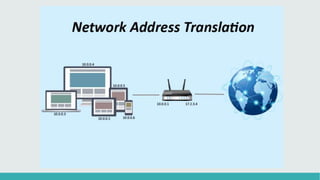
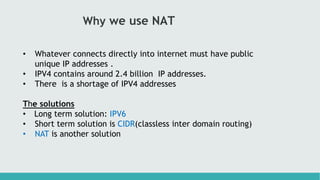
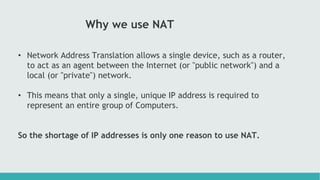
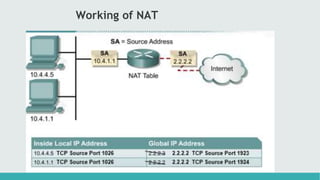
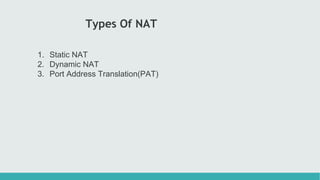
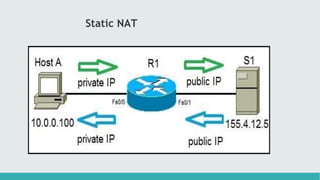
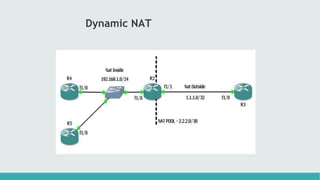
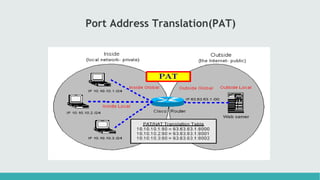
Network Address Translation (NAT) allows devices on a private network to use public IP addresses to access the Internet. NAT translates private IP addresses to public IP addresses to conserve the limited number of public addresses. There are three main types of NAT: static NAT assigns a public IP to a device; dynamic NAT uses a pool of public IPs; and port address translation uses ports of a single public IP for multiple private devices. NAT provides advantages like acting as a firewall and allowing unlimited private devices to share a single public IP. However, it also causes some applications to work less effectively and complicates troubleshooting when IP addresses change.