3 STEPS TO DETERMINE IF YOUR
GOODS ARE NAFTA ELIGIBLE
NAFTA offers many benefits:
• Reduced duty rates
• Bottom line savings
NAFTA eligibility can be complex.
You need:
• Detailed information about the entire production
process
• Correctly classified goods
We’ve identified three easy steps to help.
to help you determine
NAFTA eligibility
3 steps
We’ve identified
Determine the tariff schedule classification
number for the product, its components
and raw materials
1
NAFTA rules of origin are organized
by classification code with specific
rules for each one.
How to determine the classification:
• Use your Schedule B numbers to help determine
the classification
• First six digits of the Schedule B number are part
of the tariff classification code
Assess the duty rate for the product
2
U.S. duty rates are under the
General rate of duty.
In the U.S.:
• Look to the special column for the tariff
agreement code under the Harmonized Tariff
Schedule (HTS)
• This will indicate if your product is eligible for a
preferential tariff treatment
Canadian duty rates are under the
Most-Favoured-Nation (MFN) tariff
agreement.
In Canada:
• Look to the applicable preferential tariff column
under the Canadian HS
• This will indicate applicable trade agreements
and their associated duty rate
Qualify your goods
3
Chapter four of the NAFTA
agreement outlines requirements
for goods to qualify for
reduced duties.
If your goods qualify for NAFTA tariff
treatment :
• Complete the Certificate of Origin
• Submit it with your shipment to Customs
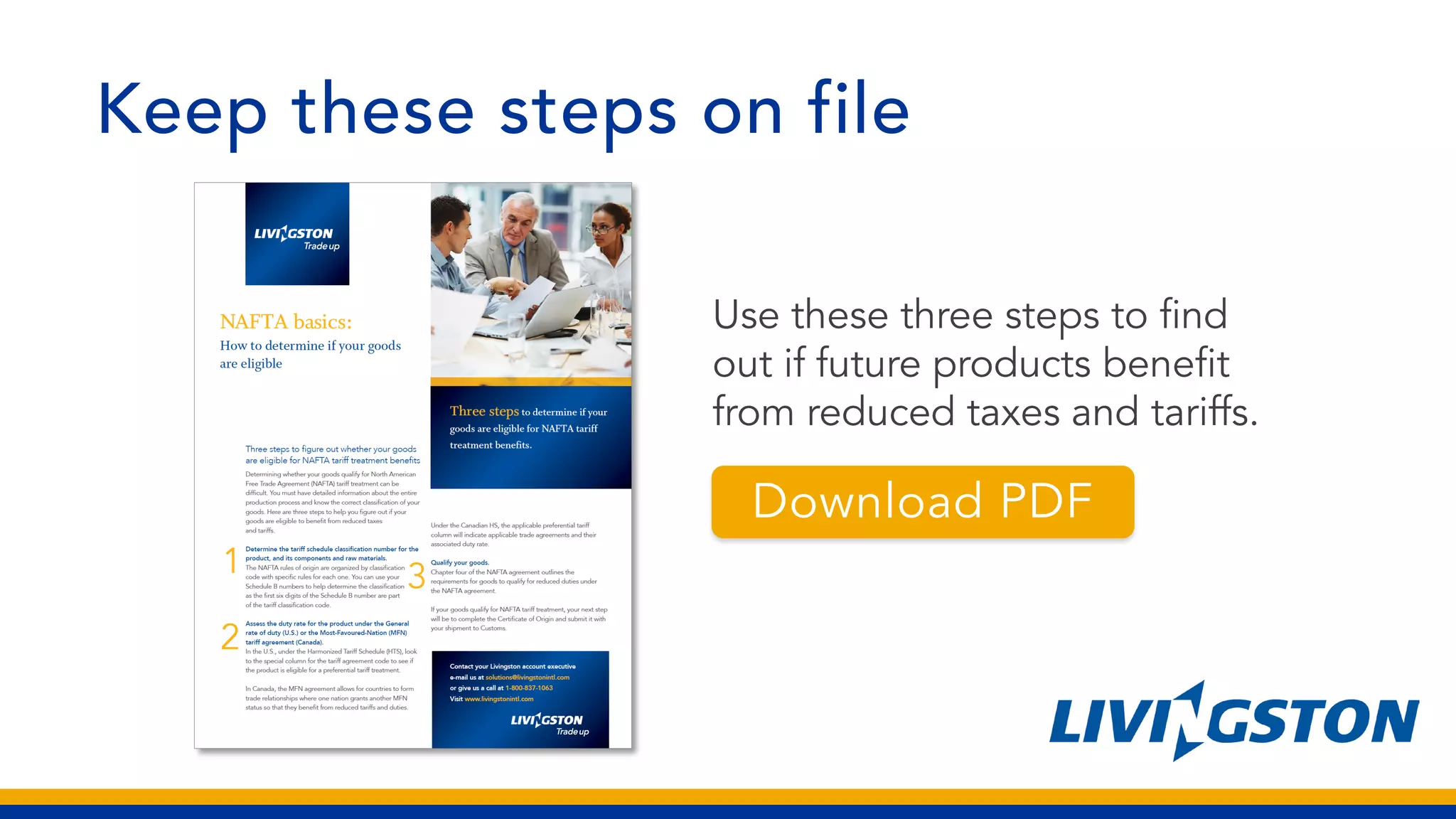
Keep these steps on file
Download PDF
Use these three steps to find
out if future products benefit
from reduced taxes and tariffs.
Determining if your goods qualify for
NAFTA tariff treatment can be difficult…
can help with that.
Contact Livingston

How to determine if your goods qualify for NAFTA

  • 1.
    3 STEPS TODETERMINE IF YOUR GOODS ARE NAFTA ELIGIBLE
  • 2.
    NAFTA offers manybenefits: • Reduced duty rates • Bottom line savings
  • 3.
    NAFTA eligibility canbe complex. You need: • Detailed information about the entire production process • Correctly classified goods We’ve identified three easy steps to help.
  • 4.
    to help youdetermine NAFTA eligibility 3 steps We’ve identified
  • 5.
    Determine the tariffschedule classification number for the product, its components and raw materials 1
  • 6.
    NAFTA rules oforigin are organized by classification code with specific rules for each one.
  • 7.
    How to determinethe classification: • Use your Schedule B numbers to help determine the classification • First six digits of the Schedule B number are part of the tariff classification code
  • 8.
    Assess the dutyrate for the product 2
  • 9.
    U.S. duty ratesare under the General rate of duty.
  • 10.
    In the U.S.: •Look to the special column for the tariff agreement code under the Harmonized Tariff Schedule (HTS) • This will indicate if your product is eligible for a preferential tariff treatment
  • 11.
    Canadian duty ratesare under the Most-Favoured-Nation (MFN) tariff agreement.
  • 12.
    In Canada: • Lookto the applicable preferential tariff column under the Canadian HS • This will indicate applicable trade agreements and their associated duty rate
  • 13.
  • 14.
    Chapter four ofthe NAFTA agreement outlines requirements for goods to qualify for reduced duties.
  • 15.
    If your goodsqualify for NAFTA tariff treatment : • Complete the Certificate of Origin • Submit it with your shipment to Customs
  • 16.
    Keep these stepson file Download PDF Use these three steps to find out if future products benefit from reduced taxes and tariffs.
  • 17.
    Determining if yourgoods qualify for NAFTA tariff treatment can be difficult… can help with that. Contact Livingston