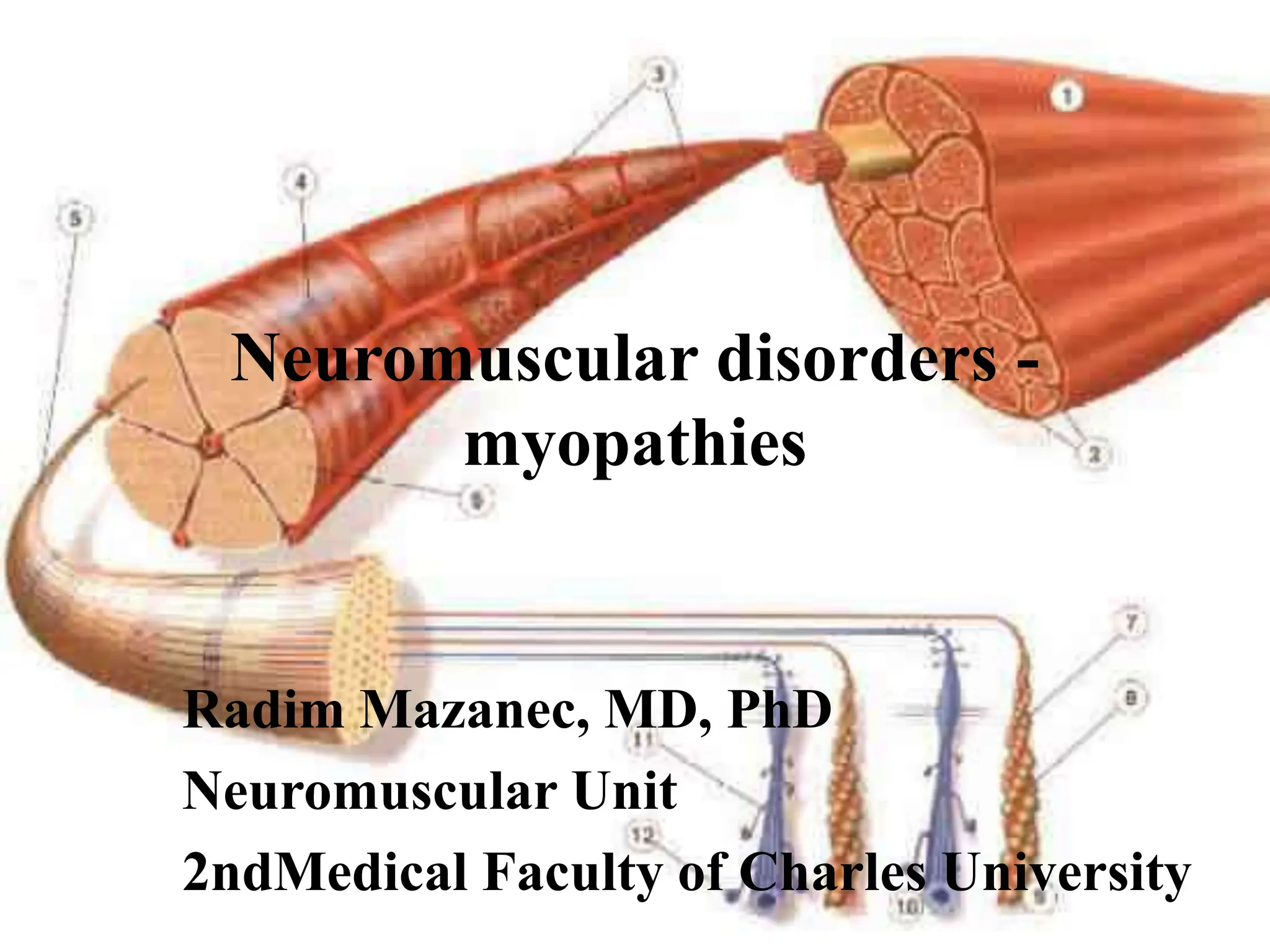
Neuromuscular disorders -
myopathies
Radim Mazanec, MD, PhD
Neuromuscular Unit
2ndMedical Faculty of Charles University
Neuromuscular disorders
• Radiculopathies
• Plexopathies
• Mononeuropathies
• Polyneuropathies
• Motoneuron diseases
• Myopathies
• Disorders of the neuromuscular junction
Symptoms of muscle disease
• Muscle fatigue, exercise intolerance in general
• Proximal and symmetric weakness
– Waddling gait; difficulty of rising from sitting, climbing
stairs; Gower’s sign
– Hyperextension of the knee
– Increased lordosis of the lumbar spine, scoliosis
– Contractures, tight Achilles tendons
• Myopathic face
• Muscle atrophy; pseudohypertrophy of calf
• Myotonia
• Tendon reflexes are normal or decreased
Diagnosis of muscle diseases
• Creatinine kinase levels increased in many
myopathies (sign of muscle fiber necrosis)
• ENG / EMG: differentiation between neurogenic
and myogenic weakness
• Muscle biopsy: signs of muscle fiber abnormality,
inflammation, immunostaining of muscle
constituents
• Genetic testing
Is it really myopathy ?
Types of muscle diseases
• Hereditary muscle diseases
– Muscle dystrophies
– Muscle channelopathies
– Mitochondrial myopathies
– Metabolic myopathies
• Acquired muscle diseases
– Inflammatory myopathies
– Endocrine and toxic myopathies
– Infectious muscle diseases
Muscle dystrophies
• Hereditary myopathies, characterized by
progressive weakness and muscle atrophy
• Genetic defect of proteins constituting the
sarcolemma-associated cytoskeleton system
Duchenne muscular dystrophy
Dystrophinopathy
• First described in 1881- dystrophin gene
discovered in the early 1980's
• Cause: deficiency of dystrophin, resulting in
progressive loss of muscle fibers
– Becker’s type: reduced amount of dystrophin; more
benign course
• X-chromosome linked
• 1 in 3500 live births, occurs in boys, girls are
carriers
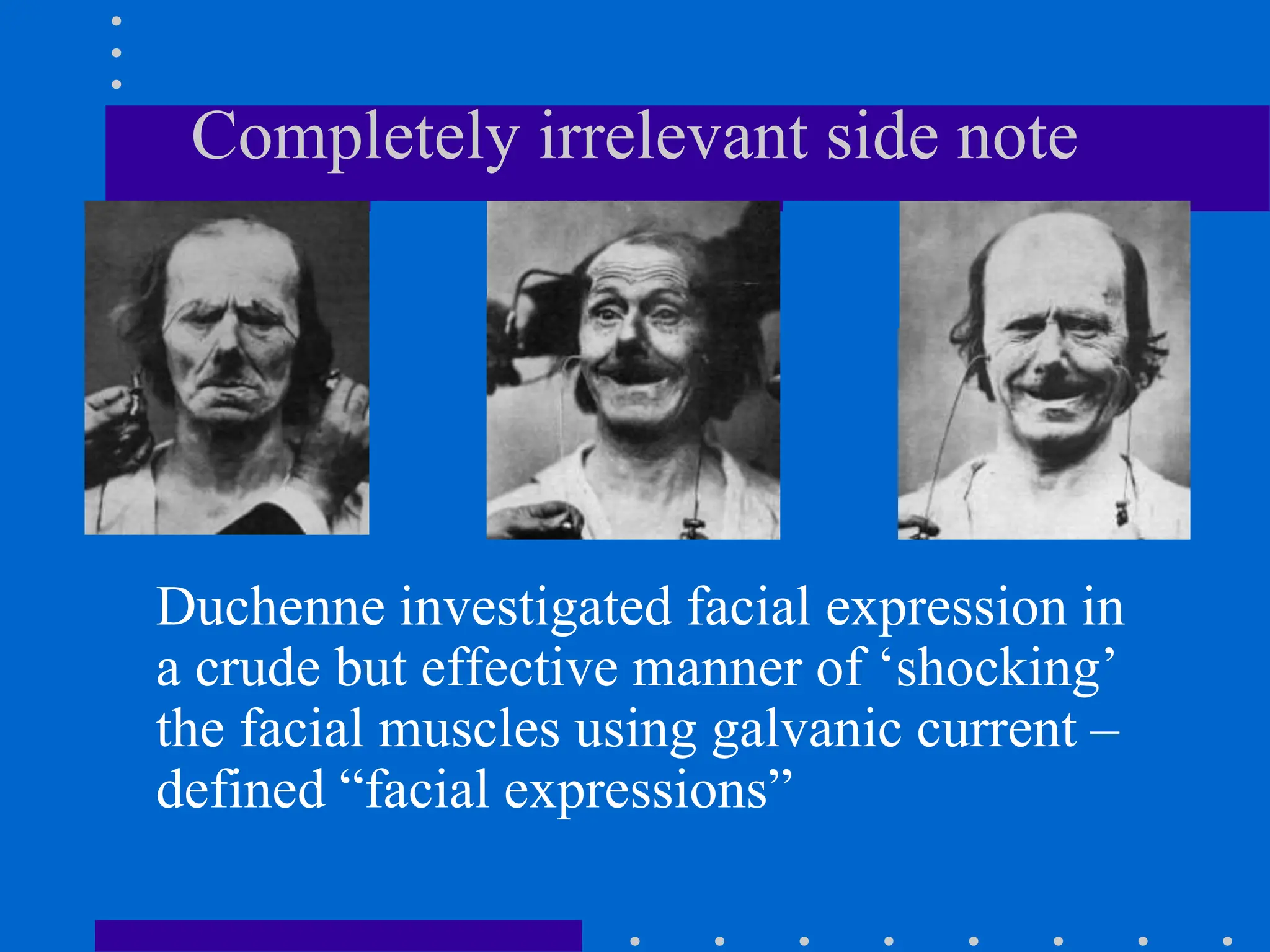
Completely irrelevant side note
Duchenne investigated facial expression in
a crude but effective manner of ‘shocking’
the facial muscles using galvanic current –
defined “facial expressions”
Duchenne muscular dystrophy
Diagnosis:
•Lack of immunostaining of dystrophin in muscle biopsy specimen
•Demonstration of deletion in the dystrophin gene
Normal Duchenne dystrophy
Duchenne muscular dystrophy
• Onset at 3-5 years
• Initial symptoms: difficulty getting up from deep
position and climbing steps, waddling gait
• Weakness most pronounced in limb-girdle muscles,
trunk erectors; craniobulbar muscles are spared
• Skeletal deformities
• Cardiomyopathy
• Inability to walk by 9-11 years
• Death occurs usually in the 3rd decade,
from respiratory insufficiency
Duchenne muscular dystrophy
Gower’s sign
Gowers’ Maneuver
Progressive disease course
Becker´s dystrophinopathy
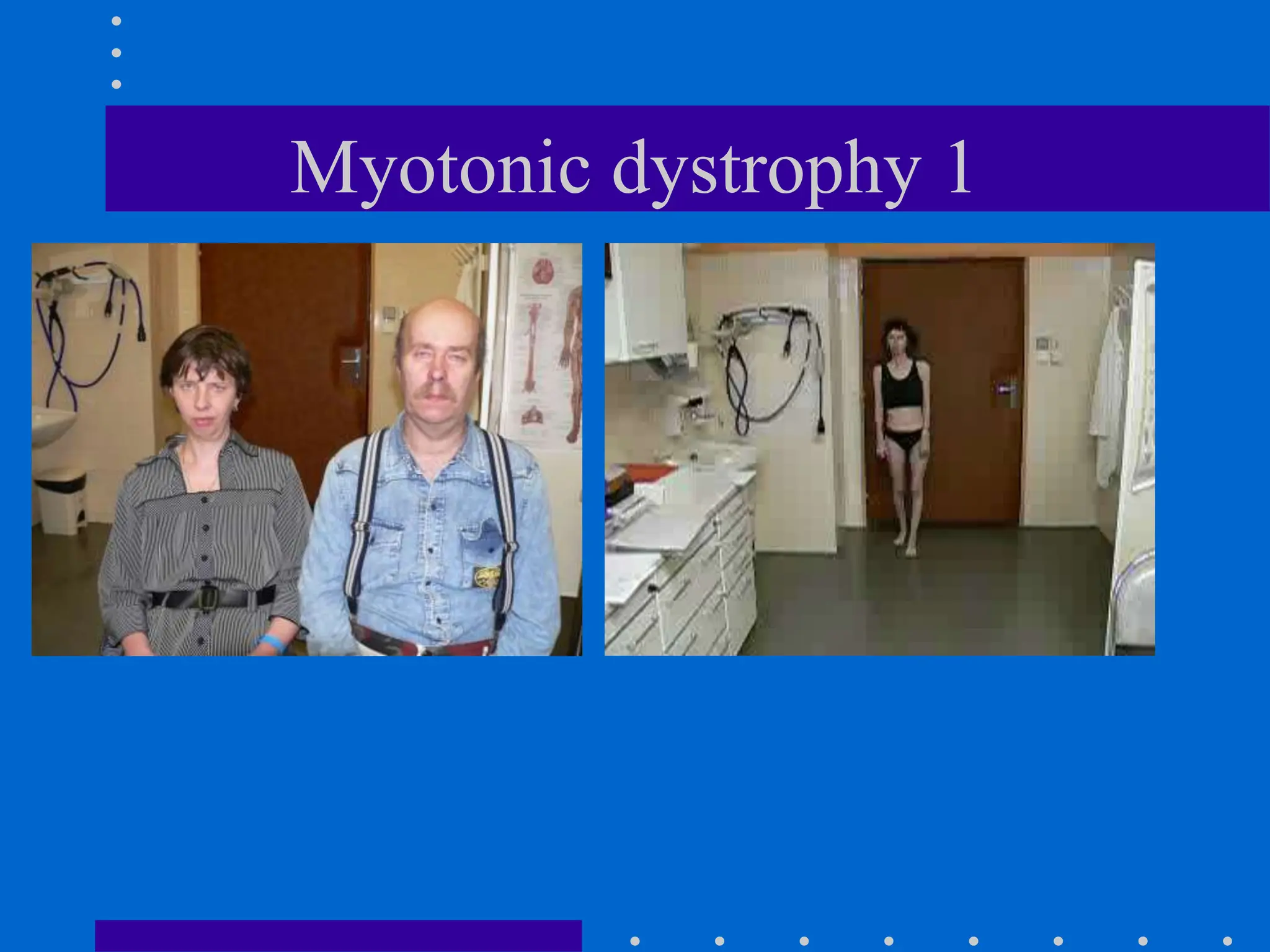
Myotonic dystrophy 1
• Prevalence: 1 in 8000
• Cause: CTG repeat expansion in a gene on chr. 19
• Autosomal dominant inheritance, with anticipation
• Multisystemic disease:
– Myotonia: hyperexcitability of muscle membrane 
inability of quick muscle relaxation
– Progressive muscular weakness and wasting, most
prominent in cranial and distal muscles
– Cataracts, frontal balding, testicular atrophy
– Cardiac abnormalities, mental retardation
Myotonic dystrophy 1
Limb-girdle dystrophies
• Causes:
– Sarcoglycanopathies
– Calpain deficiency
– Caveolin deficiency
– Dysferlin deficiency etc.
• Sarcoglycanopathies comprise about 10% of
autosomal recessive limb-girdle dystrophies
– α, β, γ, δ sarcoglycans
LGMD 2A – mild symptoms
LGMD2A – moderate symptoms
Muscle dystrophy LGMD 2I
Mutation of FKRP gene
Facioscapulohumeral dystrophy
• Prevalence: 1 in 20,000
• Autosomal dominant
• Age of onset: infancy to middle age
• Progressive muscular weakness and atrophy
involving the face, scapular, proximal arm and
peroneal muscles  myopathic face, winging of
the scapula, inability to raise the arms, foot drop
• Life span is not significantly affected
FSHD
FSHD - video
Muscle channelopathies
Na
channelopathies
Cl
channelopathies
Ca
channelopathies
Hyperkalemic
periodic paralysis
Myotonia
congenita
(Thomsen and
Becker type)
Malignant
hyperthermia
Paramyotonia
congenita
Hypokalemic
periodic paralysis
Potassium
aggravated
myotonia
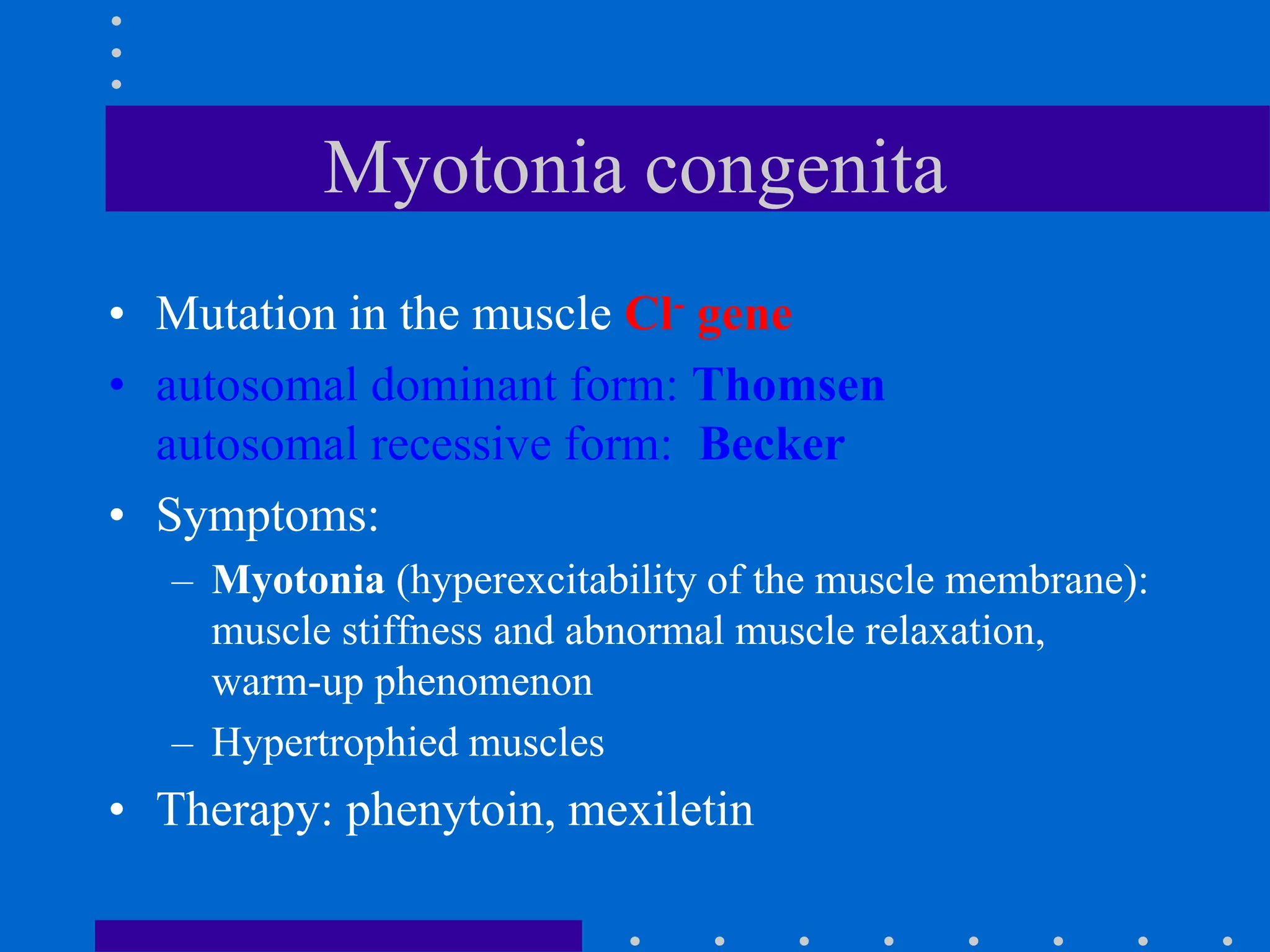
Myotonia congenita
• Mutation in the muscle Cl- gene
• autosomal dominant form: Thomsen
autosomal recessive form: Becker
• Symptoms:
– Myotonia (hyperexcitability of the muscle membrane):
muscle stiffness and abnormal muscle relaxation,
warm-up phenomenon
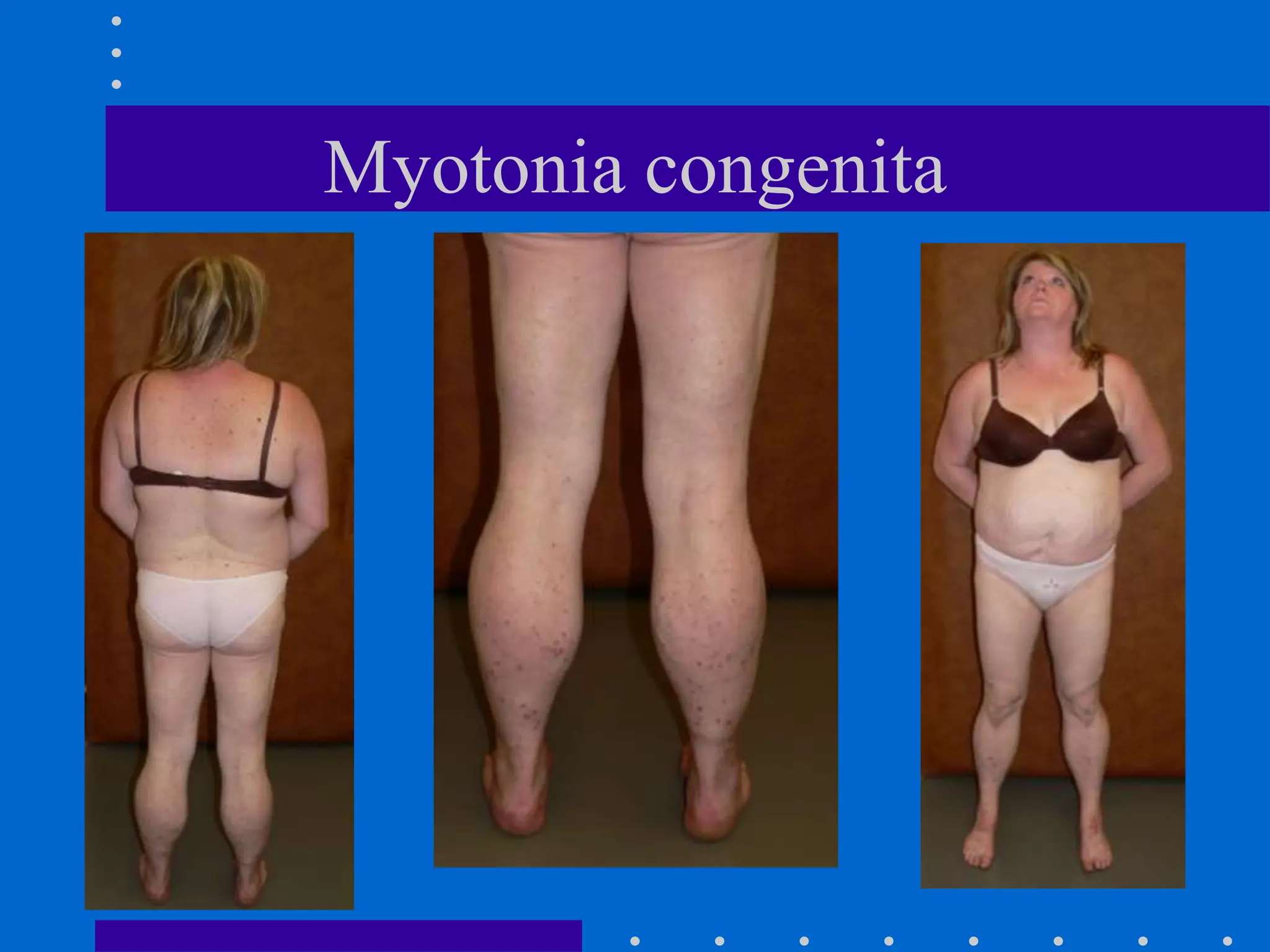
– Hypertrophied muscles
• Therapy: phenytoin, mexiletin
Myotonia congenita
Inflammatory muscle diseases
• Dermatomyositis
• Polymyositis
• Inclusion body myositis
• Other systemic autoimmun diseases (SLE,
Sjögren sy. etc.)
Dermatomyositis
• Humorally mediated autoimmune disease affecting the
muscles and skin (microangiopathy)
• Symptoms progress over weeks, months
• Rash on the face and neck
• Periorbital oedema
• Pain and weakness of proximal limb muscles, neck
flexors
• Dysphagia
• Cardiac abnormalities, interstitial lung disease
• Often paraneoplastic
Dermatomyositis
Dermatomyositis
Polymyositis
• Cell-mediated immune response against
muscle fibers
• Symptoms are similar to DM, no skin
involvement
• Less often paraneoplastic than DM
Diagnosis / therapy of DM, PM
• Blood CK levels are elevated
• EMG: myogenic findings
• Muscle biopsy: inflammation
– DM: perivascular infiltration, mainly in the perimysium
– PM: endomysial inflammation
• Therapy: immunosuppression, long-term treatment
with corticosteroids (1 mg/kg/day)
Endocrine and toxic myopathies
• Toxic myopathies:
– Drugs aimed at reducing blood lipid levels:
statins, clofibrate
– Corticosteroids – steroid myopathy
– Alcohol in a couple of days
– Heroin
Endocrine and toxic myopathies
• Endocrine myopathies
– Thyreotoxic myopathy
– Hypothyreodism
– Hyperparathyreodism
– Adrenal insufficiency
– Hypokalemia
Disorders of the Neuromuscular Junction
Myasthenia gravis
Definition
• An autoimmune disease due to an antibody
mediated attack directed against nicotinic
AchR at neuromuscular junction
• 10% have thymoma
• 70% have thymic hyperplasia
40
Synaptic antigens
nerve
muscle
VGCC
AChR
MuSK
Epidemiology
• Incidence 1 : 20 000 in USA
• Women slightly higher incidence 3 : 2
• Majority of the MG are young women in
the third decade and middle aged men in 5th
and 6th decade
• Children account for 11% of all patients
with MG
Clinical Features
• Fluctuated muscle weakness and excessive
fatiguability
• Diplopia and ptosis
• Bulbar weakness – swalloving, dysarthria
• Generalized weakness of the trunk and
extremities
Diagnostic algorhitm
• Electromyography
• Anti AChR antibodies
• MR of mediastinum – thymomas, hyperplasia
Low frequency stimulation - decrement
Treatment
• Thymectomy
• Plasma exchange in myasthenic crisis (TPE)
• Human immune globuline (IvIg)
• Corticosteroids + cytostatics
• AChE inhibitors (pyridostigmine, distigmine)
Myasthenic crisis
• Respiratory insuficiency – paralysis of
respiratory muscles
• Assisted ventilation required
• Affect 15-20% myasthenic patients
• Females : males = 2 : 1
• Average age : 55 years
Clinical features
• Respiratory tract infection, pneumonia ( 38%)
• Respiratory failure 99%
• Oropharyngeal or ocular weakness 86%
• Arms and legs weakness 76%
Complication of crisis
• Ateletactic pneumonia (40%)
• Hypotension
• Cardio-respiratory arrest
• Pneumothorax
Treatment
• ICU is required for assisted ventilation
• Cardiopulmonary monitoring
• Plasmapheresis ( 5 sessions) or IvIg 2g/kg in five
consecutive days
• Antithrombotic treatment
• Antibiotics
• Respiratory rehabilitation
Outcome
• Duration of intubation : 13 days
• Duration of hospitalization : 35 days
• Tracheostomy cca 40%
• Mortality cca 4%

myopathies...........................ppt

  • 1.
    Neuromuscular disorders - myopathies RadimMazanec, MD, PhD Neuromuscular Unit 2ndMedical Faculty of Charles University
  • 2.
    Neuromuscular disorders • Radiculopathies •Plexopathies • Mononeuropathies • Polyneuropathies • Motoneuron diseases • Myopathies • Disorders of the neuromuscular junction
  • 3.
    Symptoms of muscledisease • Muscle fatigue, exercise intolerance in general • Proximal and symmetric weakness – Waddling gait; difficulty of rising from sitting, climbing stairs; Gower’s sign – Hyperextension of the knee – Increased lordosis of the lumbar spine, scoliosis – Contractures, tight Achilles tendons • Myopathic face • Muscle atrophy; pseudohypertrophy of calf • Myotonia • Tendon reflexes are normal or decreased
  • 4.
    Diagnosis of musclediseases • Creatinine kinase levels increased in many myopathies (sign of muscle fiber necrosis) • ENG / EMG: differentiation between neurogenic and myogenic weakness • Muscle biopsy: signs of muscle fiber abnormality, inflammation, immunostaining of muscle constituents • Genetic testing
  • 5.
    Is it reallymyopathy ?
  • 6.
    Types of musclediseases • Hereditary muscle diseases – Muscle dystrophies – Muscle channelopathies – Mitochondrial myopathies – Metabolic myopathies • Acquired muscle diseases – Inflammatory myopathies – Endocrine and toxic myopathies – Infectious muscle diseases
  • 7.
    Muscle dystrophies • Hereditarymyopathies, characterized by progressive weakness and muscle atrophy • Genetic defect of proteins constituting the sarcolemma-associated cytoskeleton system
  • 8.
    Duchenne muscular dystrophy Dystrophinopathy •First described in 1881- dystrophin gene discovered in the early 1980's • Cause: deficiency of dystrophin, resulting in progressive loss of muscle fibers – Becker’s type: reduced amount of dystrophin; more benign course • X-chromosome linked • 1 in 3500 live births, occurs in boys, girls are carriers
  • 9.
    Completely irrelevant sidenote Duchenne investigated facial expression in a crude but effective manner of ‘shocking’ the facial muscles using galvanic current – defined “facial expressions”
  • 10.
    Duchenne muscular dystrophy Diagnosis: •Lackof immunostaining of dystrophin in muscle biopsy specimen •Demonstration of deletion in the dystrophin gene Normal Duchenne dystrophy
  • 11.
    Duchenne muscular dystrophy •Onset at 3-5 years • Initial symptoms: difficulty getting up from deep position and climbing steps, waddling gait • Weakness most pronounced in limb-girdle muscles, trunk erectors; craniobulbar muscles are spared • Skeletal deformities • Cardiomyopathy • Inability to walk by 9-11 years • Death occurs usually in the 3rd decade, from respiratory insufficiency
  • 12.
  • 13.
  • 14.
  • 15.
  • 16.
    Myotonic dystrophy 1 •Prevalence: 1 in 8000 • Cause: CTG repeat expansion in a gene on chr. 19 • Autosomal dominant inheritance, with anticipation • Multisystemic disease: – Myotonia: hyperexcitability of muscle membrane  inability of quick muscle relaxation – Progressive muscular weakness and wasting, most prominent in cranial and distal muscles – Cataracts, frontal balding, testicular atrophy – Cardiac abnormalities, mental retardation
  • 17.
  • 18.
  • 19.
    Limb-girdle dystrophies • Causes: –Sarcoglycanopathies – Calpain deficiency – Caveolin deficiency – Dysferlin deficiency etc. • Sarcoglycanopathies comprise about 10% of autosomal recessive limb-girdle dystrophies – α, β, γ, δ sarcoglycans
  • 20.
    LGMD 2A –mild symptoms
  • 21.
  • 22.
    Muscle dystrophy LGMD2I Mutation of FKRP gene
  • 23.
    Facioscapulohumeral dystrophy • Prevalence:1 in 20,000 • Autosomal dominant • Age of onset: infancy to middle age • Progressive muscular weakness and atrophy involving the face, scapular, proximal arm and peroneal muscles  myopathic face, winging of the scapula, inability to raise the arms, foot drop • Life span is not significantly affected
  • 24.
  • 25.
  • 26.
    Muscle channelopathies Na channelopathies Cl channelopathies Ca channelopathies Hyperkalemic periodic paralysis Myotonia congenita (Thomsenand Becker type) Malignant hyperthermia Paramyotonia congenita Hypokalemic periodic paralysis Potassium aggravated myotonia
  • 27.
    Myotonia congenita • Mutationin the muscle Cl- gene • autosomal dominant form: Thomsen autosomal recessive form: Becker • Symptoms: – Myotonia (hyperexcitability of the muscle membrane): muscle stiffness and abnormal muscle relaxation, warm-up phenomenon – Hypertrophied muscles • Therapy: phenytoin, mexiletin
  • 28.
  • 29.
    Inflammatory muscle diseases •Dermatomyositis • Polymyositis • Inclusion body myositis • Other systemic autoimmun diseases (SLE, Sjögren sy. etc.)
  • 30.
    Dermatomyositis • Humorally mediatedautoimmune disease affecting the muscles and skin (microangiopathy) • Symptoms progress over weeks, months • Rash on the face and neck • Periorbital oedema • Pain and weakness of proximal limb muscles, neck flexors • Dysphagia • Cardiac abnormalities, interstitial lung disease • Often paraneoplastic
  • 31.
  • 32.
  • 33.
    Polymyositis • Cell-mediated immuneresponse against muscle fibers • Symptoms are similar to DM, no skin involvement • Less often paraneoplastic than DM
  • 34.
    Diagnosis / therapyof DM, PM • Blood CK levels are elevated • EMG: myogenic findings • Muscle biopsy: inflammation – DM: perivascular infiltration, mainly in the perimysium – PM: endomysial inflammation • Therapy: immunosuppression, long-term treatment with corticosteroids (1 mg/kg/day)
  • 35.
    Endocrine and toxicmyopathies • Toxic myopathies: – Drugs aimed at reducing blood lipid levels: statins, clofibrate – Corticosteroids – steroid myopathy – Alcohol in a couple of days – Heroin
  • 36.
    Endocrine and toxicmyopathies • Endocrine myopathies – Thyreotoxic myopathy – Hypothyreodism – Hyperparathyreodism – Adrenal insufficiency – Hypokalemia
  • 37.
    Disorders of theNeuromuscular Junction Myasthenia gravis
  • 38.
    Definition • An autoimmunedisease due to an antibody mediated attack directed against nicotinic AchR at neuromuscular junction • 10% have thymoma • 70% have thymic hyperplasia
  • 40.
  • 41.
    Epidemiology • Incidence 1: 20 000 in USA • Women slightly higher incidence 3 : 2 • Majority of the MG are young women in the third decade and middle aged men in 5th and 6th decade • Children account for 11% of all patients with MG
  • 42.
    Clinical Features • Fluctuatedmuscle weakness and excessive fatiguability • Diplopia and ptosis • Bulbar weakness – swalloving, dysarthria • Generalized weakness of the trunk and extremities
  • 44.
    Diagnostic algorhitm • Electromyography •Anti AChR antibodies • MR of mediastinum – thymomas, hyperplasia
  • 45.
  • 46.
    Treatment • Thymectomy • Plasmaexchange in myasthenic crisis (TPE) • Human immune globuline (IvIg) • Corticosteroids + cytostatics • AChE inhibitors (pyridostigmine, distigmine)
  • 47.
    Myasthenic crisis • Respiratoryinsuficiency – paralysis of respiratory muscles • Assisted ventilation required • Affect 15-20% myasthenic patients • Females : males = 2 : 1 • Average age : 55 years
  • 48.
    Clinical features • Respiratorytract infection, pneumonia ( 38%) • Respiratory failure 99% • Oropharyngeal or ocular weakness 86% • Arms and legs weakness 76%
  • 49.
    Complication of crisis •Ateletactic pneumonia (40%) • Hypotension • Cardio-respiratory arrest • Pneumothorax
  • 50.
    Treatment • ICU isrequired for assisted ventilation • Cardiopulmonary monitoring • Plasmapheresis ( 5 sessions) or IvIg 2g/kg in five consecutive days • Antithrombotic treatment • Antibiotics • Respiratory rehabilitation
  • 51.
    Outcome • Duration ofintubation : 13 days • Duration of hospitalization : 35 days • Tracheostomy cca 40% • Mortality cca 4%