The Atmosphere
Module 3
Part 1
Molecules
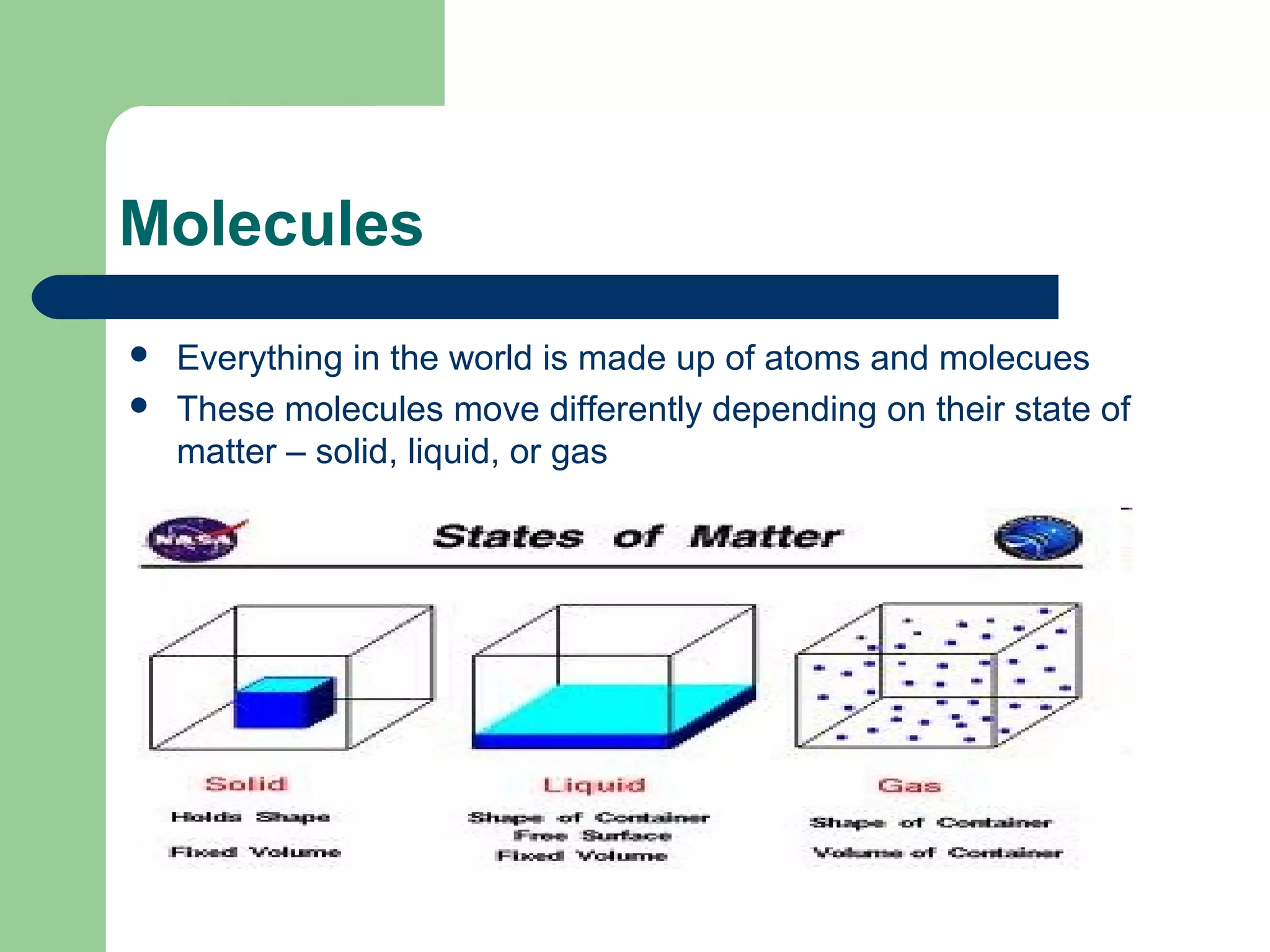
ïŹ Everything in the world is made up of atoms and molecues
ïŹ These molecules move differently depending on their state of
matter – solid, liquid, or gas
Density
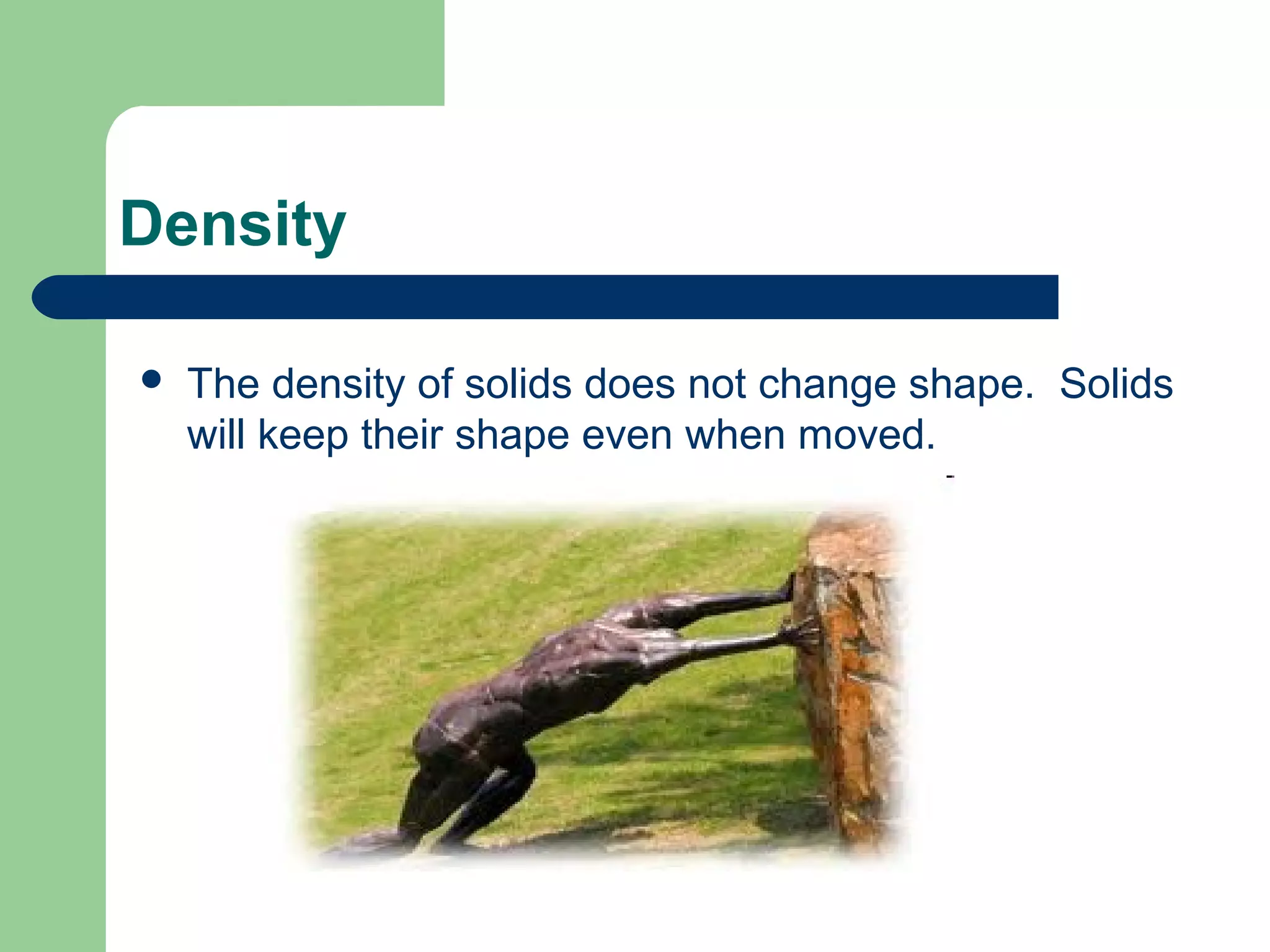
ïŹ The density of solids does not change shape. Solids
will keep their shape even when moved.
Liquids
ïŹ The density of liquids changes slightly
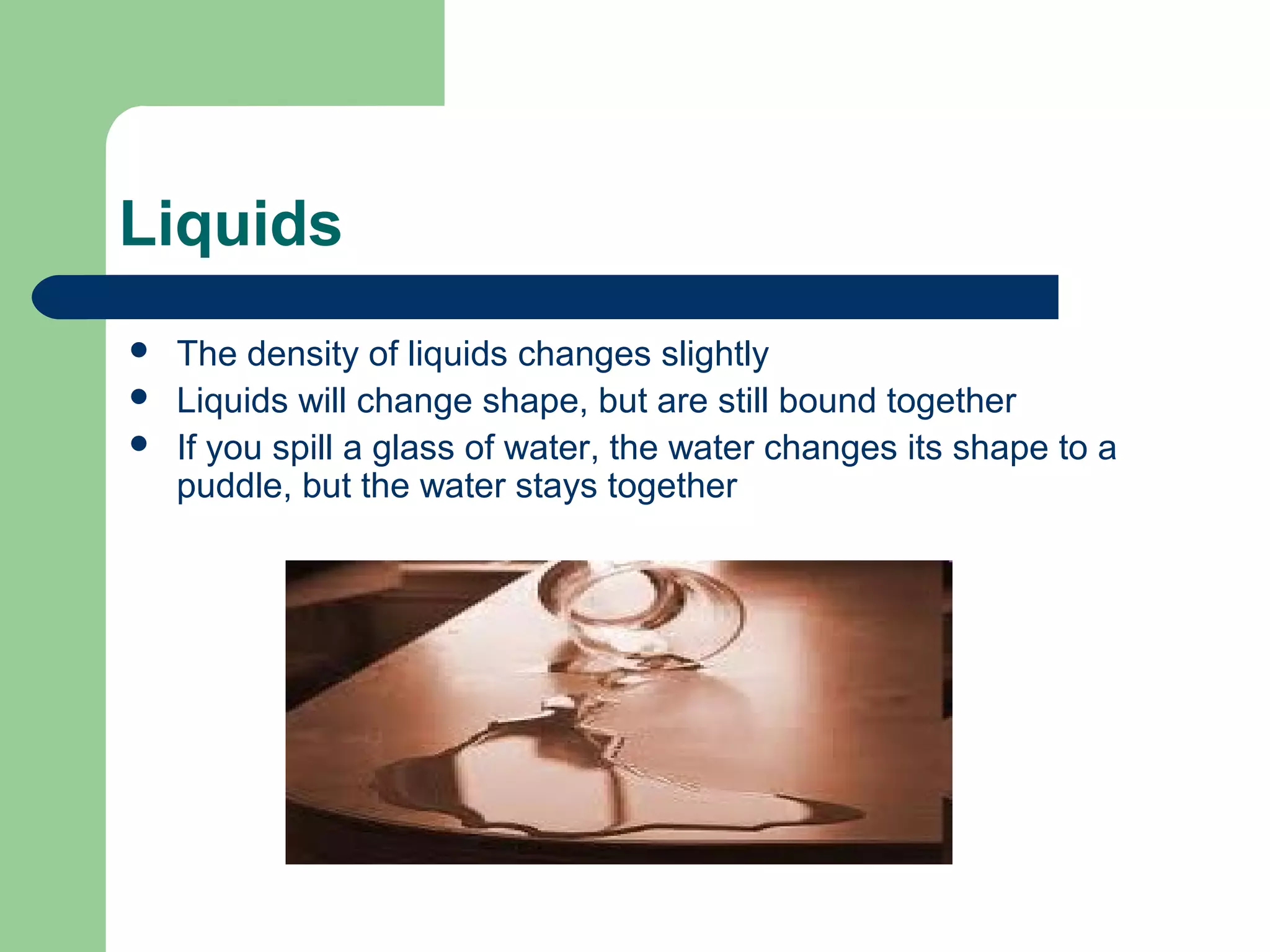
ïŹ Liquids will change shape, but are still bound together
ïŹ If you spill a glass of water, the water changes its shape to a
puddle, but the water stays together
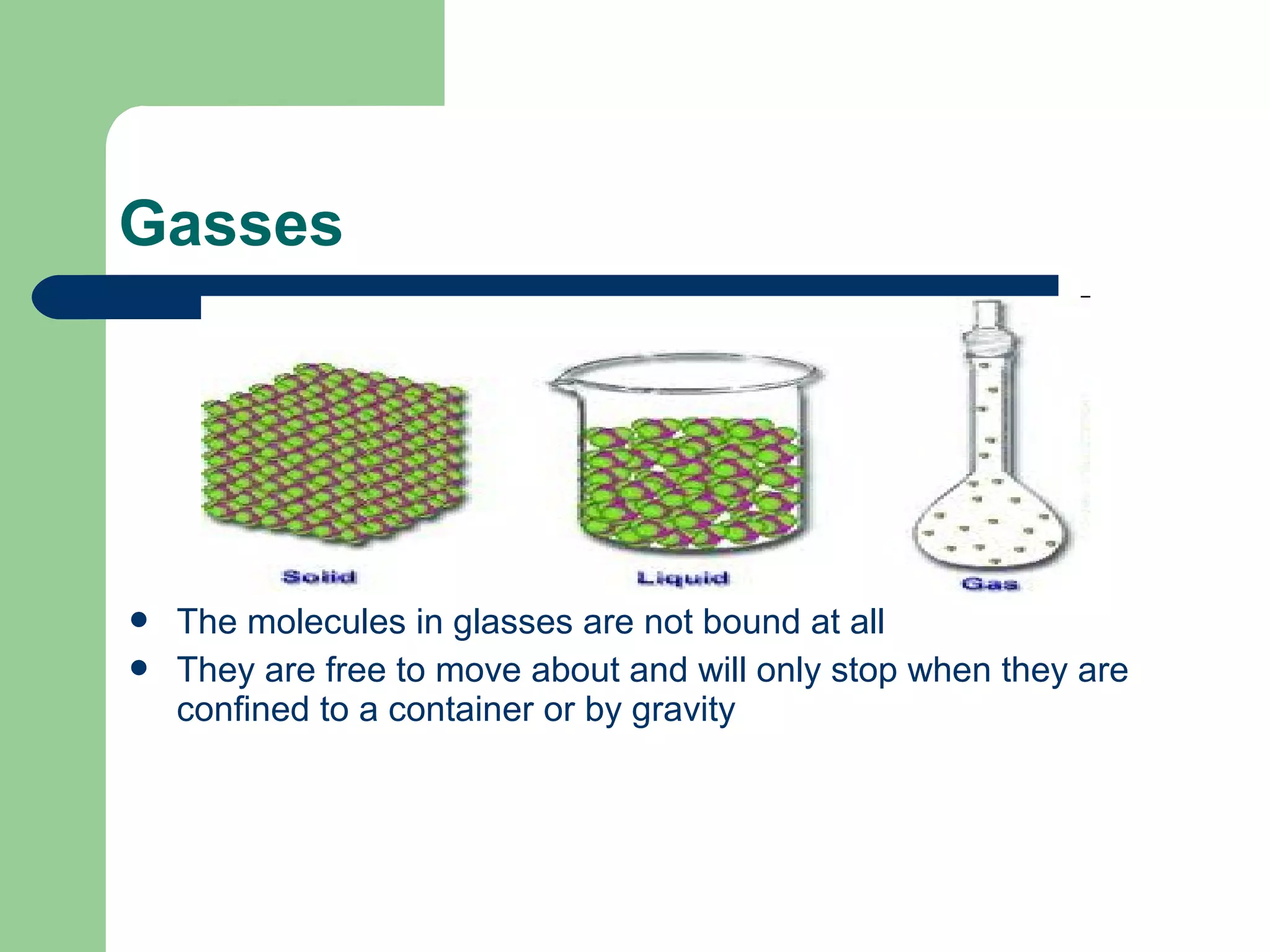
Gasses
ïŹ The molecules in glasses are not bound at all
ïŹ They are free to move about and will only stop when they are
confined to a container or by gravity
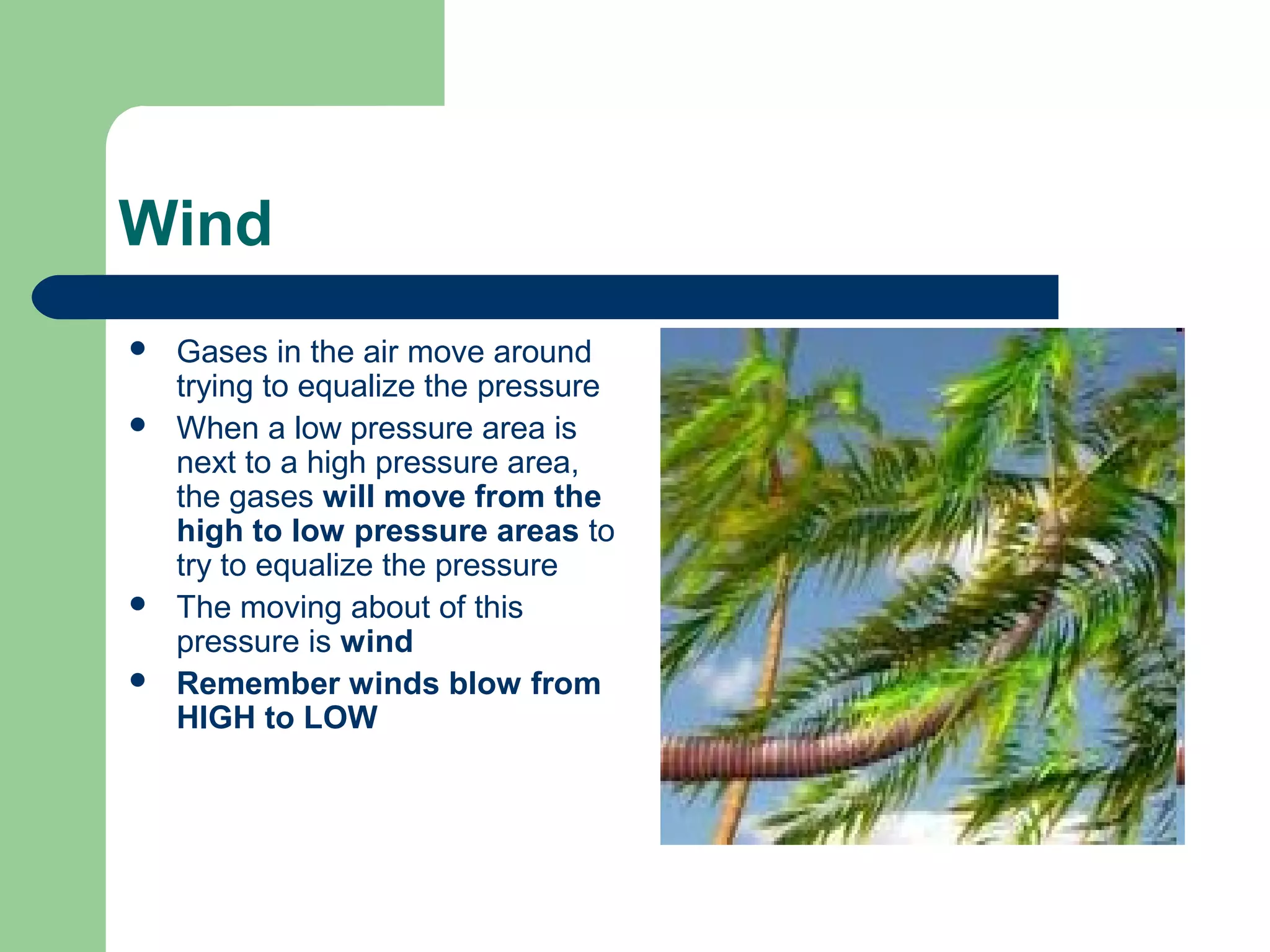
Wind
ïŹ Gases in the air move around
trying to equalize the pressure
ïŹ When a low pressure area is
next to a high pressure area,
the gases will move from the
high to low pressure areas to
try to equalize the pressure
ïŹ The moving about of this
pressure is wind
ïŹ Remember winds blow from
HIGH to LOW
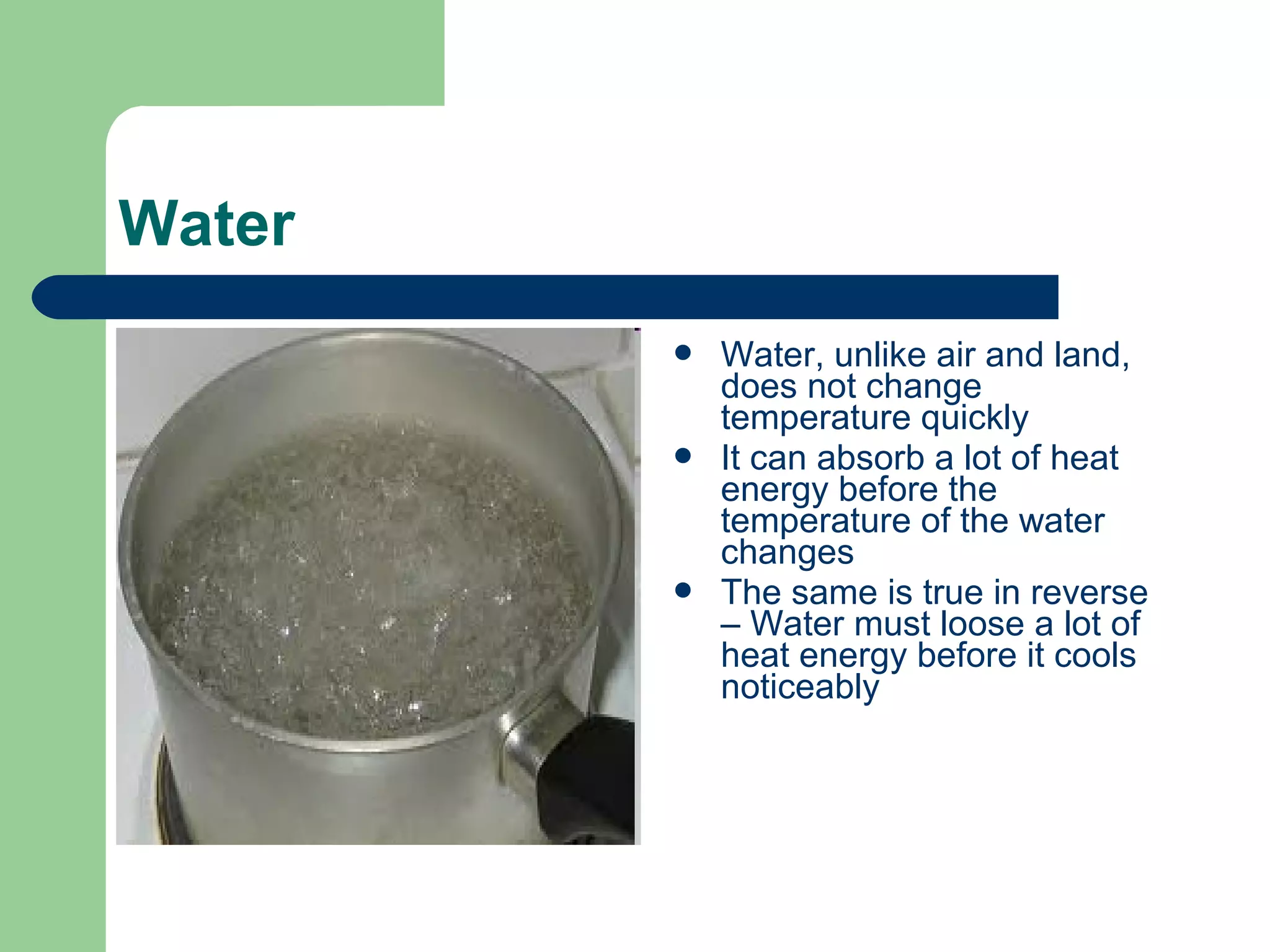
Water
ïŹ Water, unlike air and land,
does not change
temperature quickly
ïŹ It can absorb a lot of heat
energy before the
temperature of the water
changes
ïŹ The same is true in reverse
– Water must loose a lot of
heat energy before it cools
noticeably
Sea Breezes
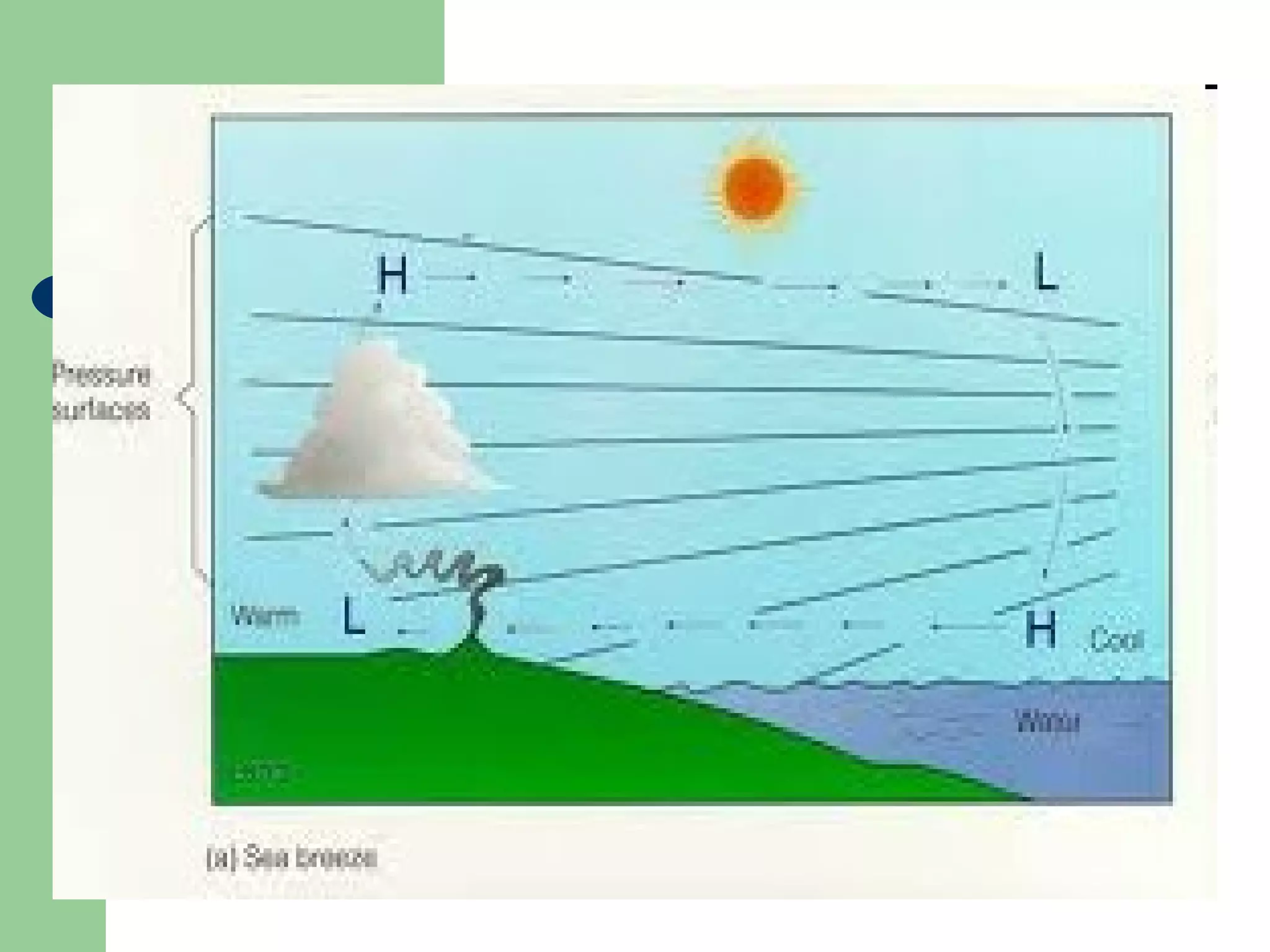
ïŹ During the day the sun heats the land quickly
ïŹ As the land heats, the air above the land is heated
ïŹ The hot air rises becoming less dense creating a low
pressure
ïŹ The air over the sea is cooler because it takes much
longer to heat the water
ïŹ The air over the sea keeps its high pressure
Sea Breezes
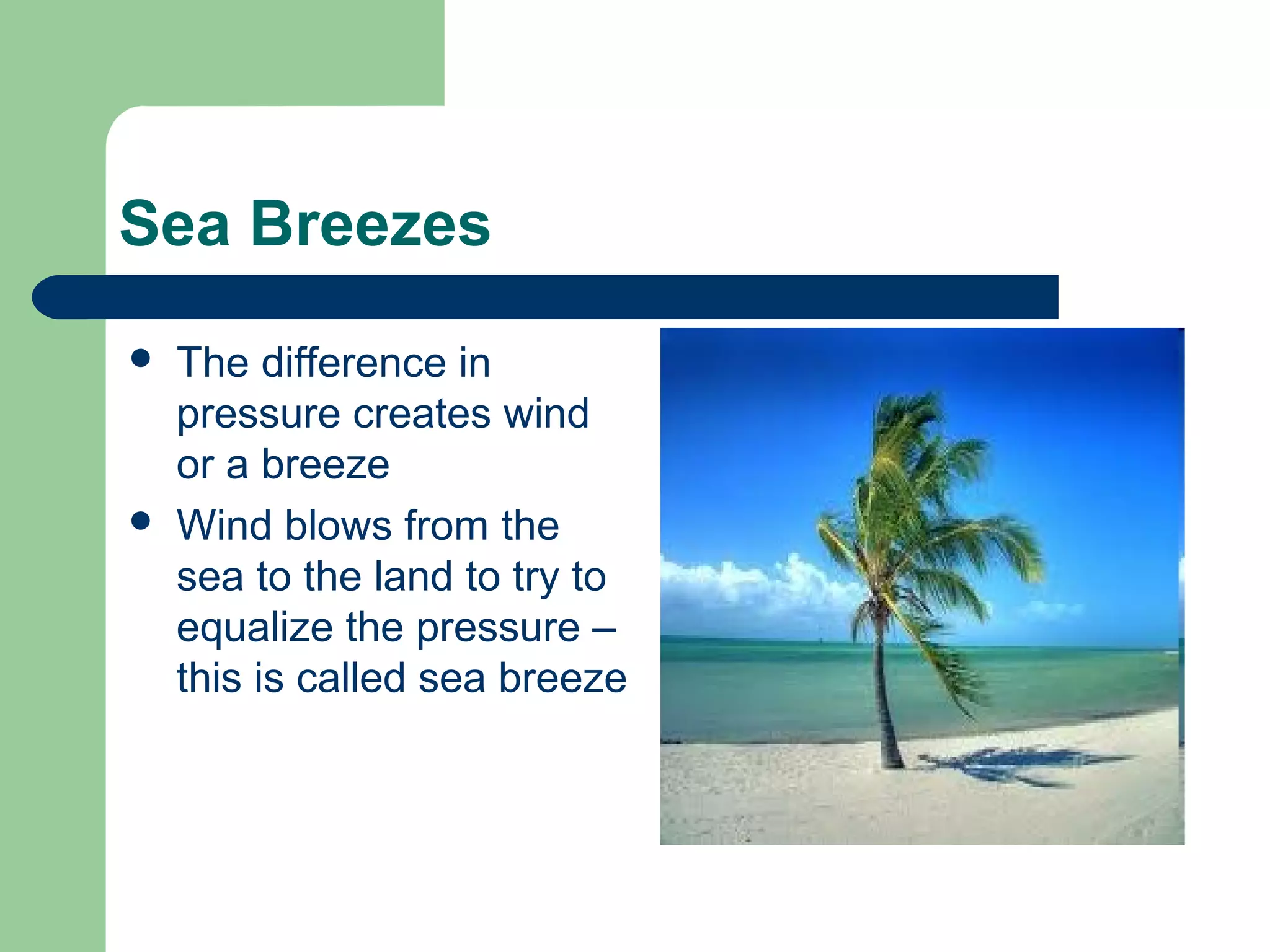
ïŹ The difference in
pressure creates wind
or a breeze
ïŹ Wind blows from the
sea to the land to try to
equalize the pressure –
this is called sea breeze
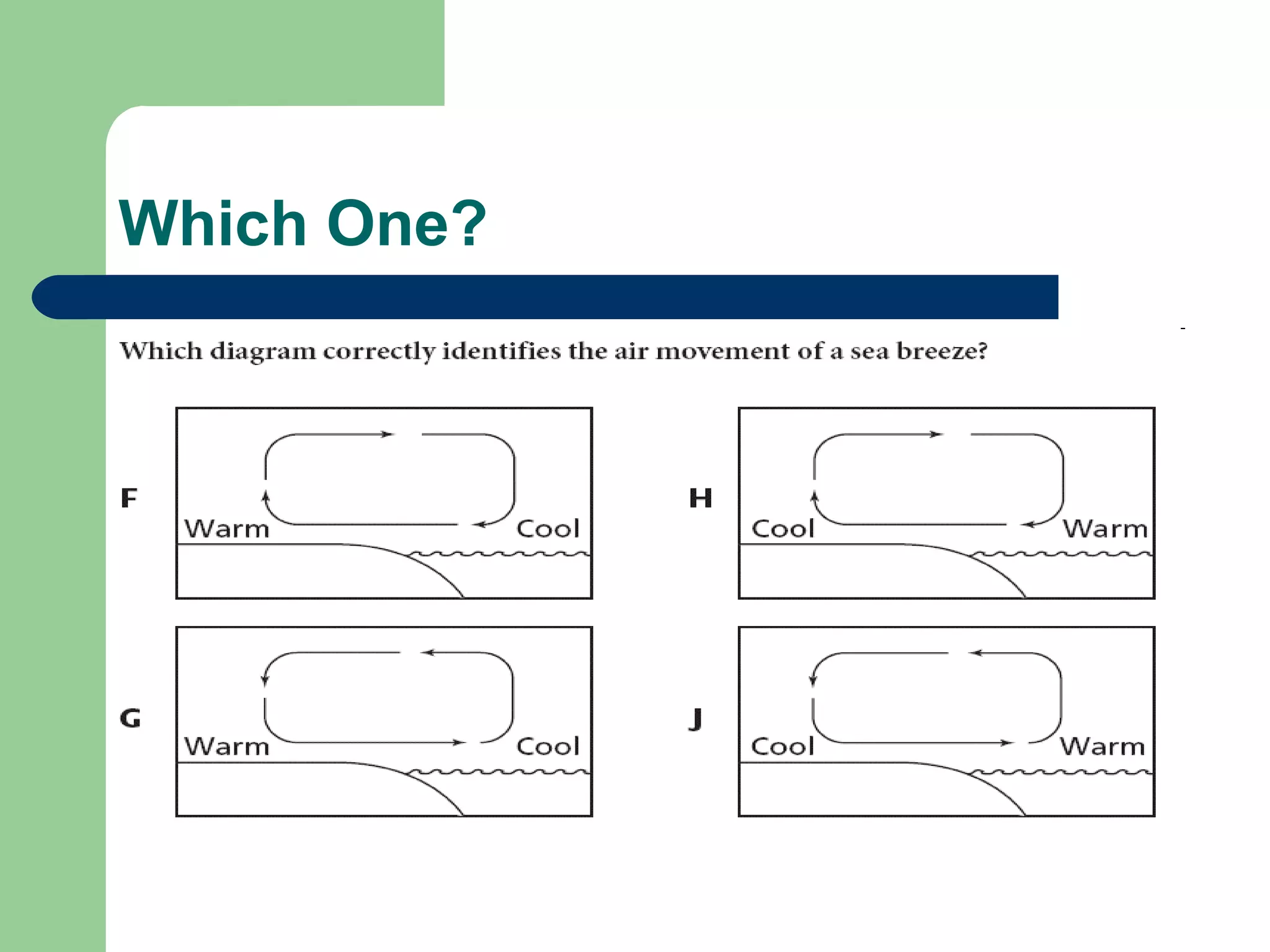
Which One?
Land Breeze
ïŹ At night the land cools rapidly
ïŹ Because the air of the sea is warmer, the
wind direction changes
ïŹ The cooler heavier air over the land forms a
high pressure causing the air to move
towards the sea where the air pressure is
lower
ïŹ This is called a land breeze
Currents
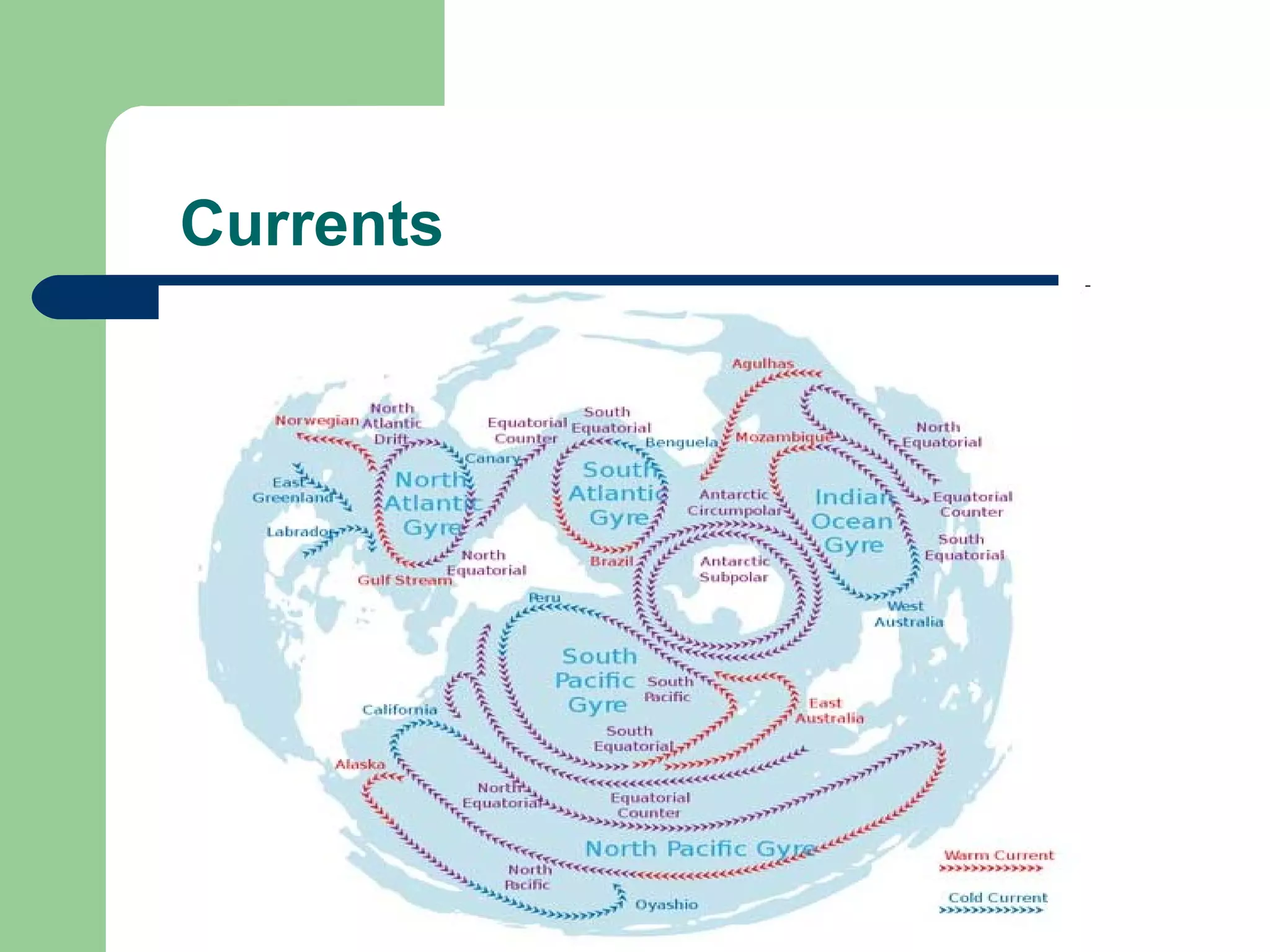
ïŹ Ocean currents are like large rivers that run
within the ocean
ïŹ Without this motion the equator regions
would be much warmer and the polar regions
would be much colder
ïŹ Both the atmosphere and the ocean are in
constant motion
Currents
Barometer
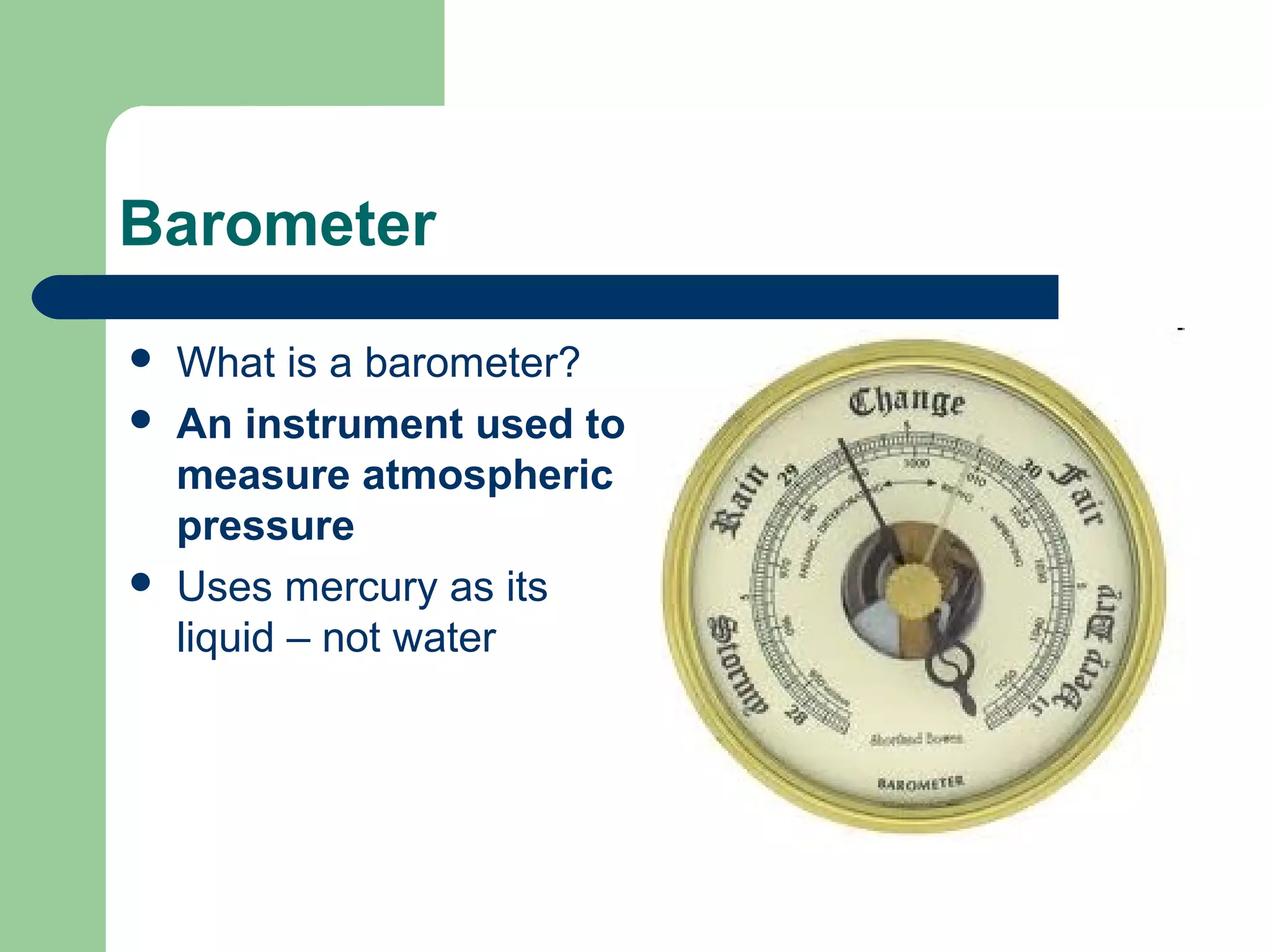
ïŹ What is a barometer?
ïŹ An instrument used to
measure atmospheric
pressure
ïŹ Uses mercury as its
liquid – not water
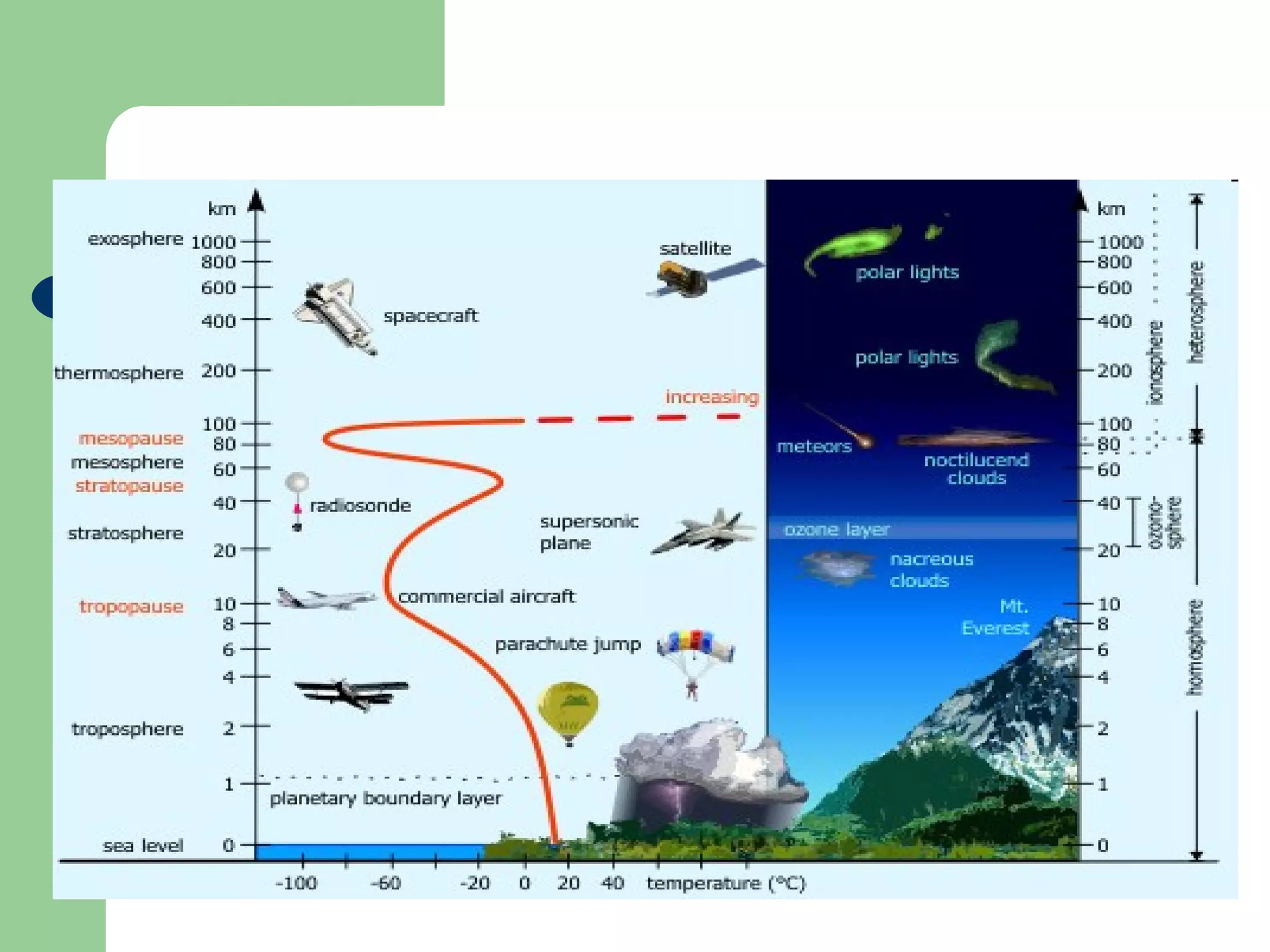
Atmosphere
ïŹ Homosphere: The lower layer of earth’s
atmosphere, which exists from ground level
to roughly 80 kilometers (50 miles) above
sea level
ïŹ Heterosphere: The upper layer of earth’s
atmosphere, which exists high than roughly
80 kilomters (50 miles) above sea level
Layers of the Earth’s Atmosphere
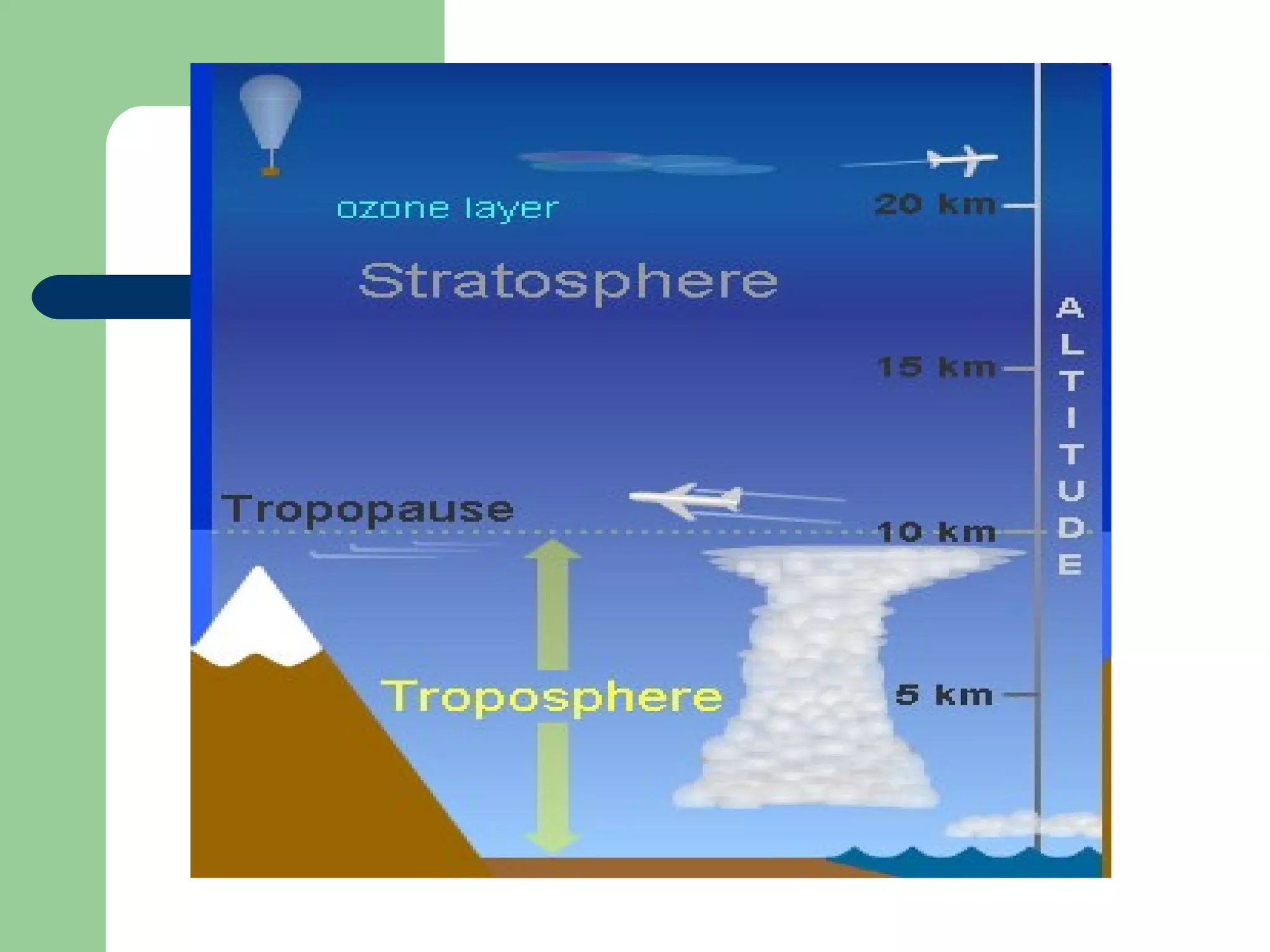
The atmosphere is divided into five layers. It is thickest near the
surface and thins out with height until it eventually merges with
space.
ïŹ 1) The troposphere is the first layer above the surface and
contains half of the Earth's atmosphere. Weather occurs in this
layer.
ïŹ 2) Many jet aircrafts fly in the stratosphere because it is very
stable. Also, the ozone layer absorbs harmful rays from the
Sun.
Layers of the Earth’s Atmosphere
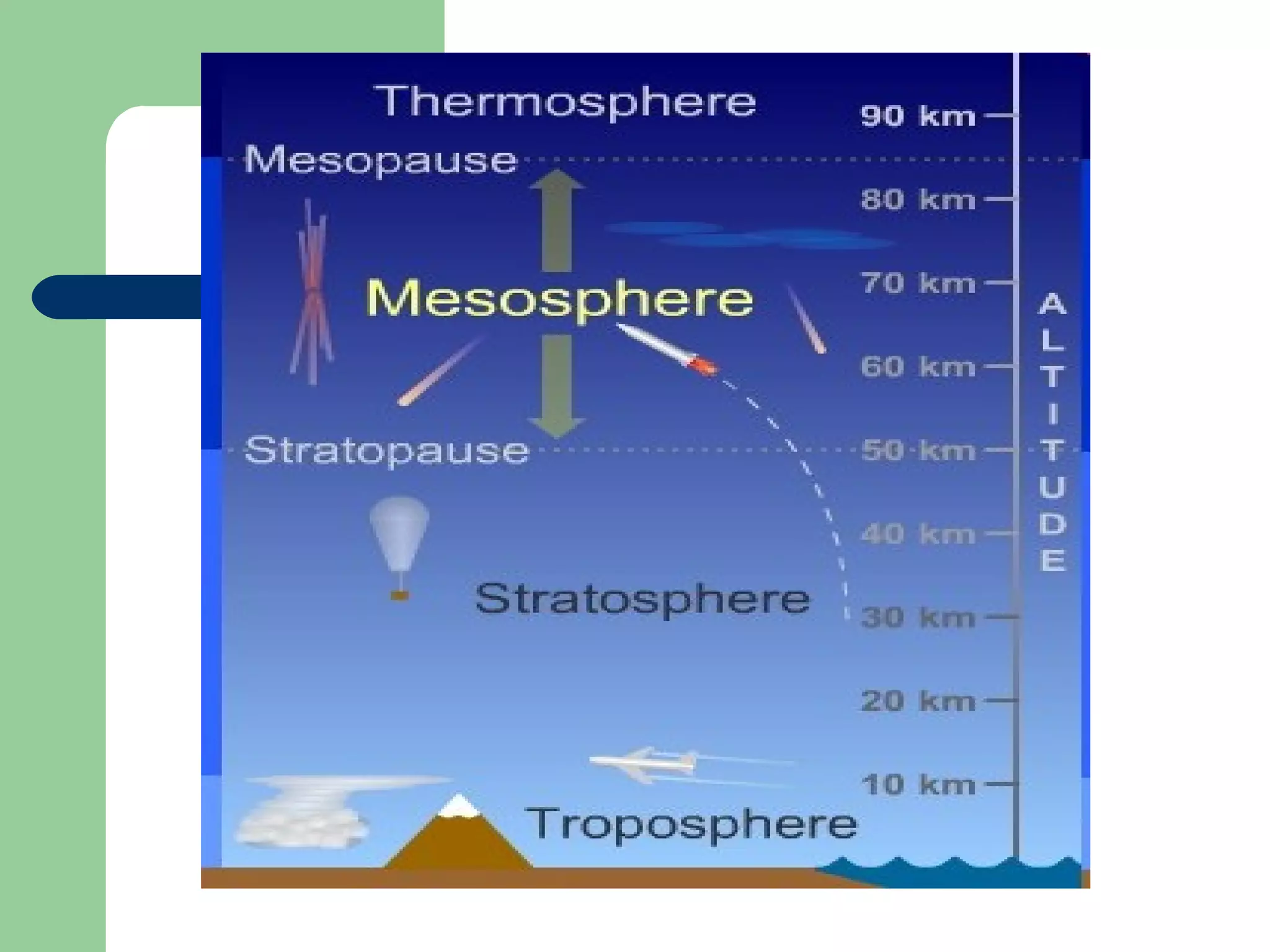
ïŹ 3) Meteors or rock fragments burn up in the
mesosphere.
ïŹ 4) The thermosphere is a layer with auroras. It is
also where the space shuttle orbits.
ïŹ 5) The atmosphere merges into space in the
extremely thin exosphere. This is the upper limit of
our atmosphere.
Atmosphere
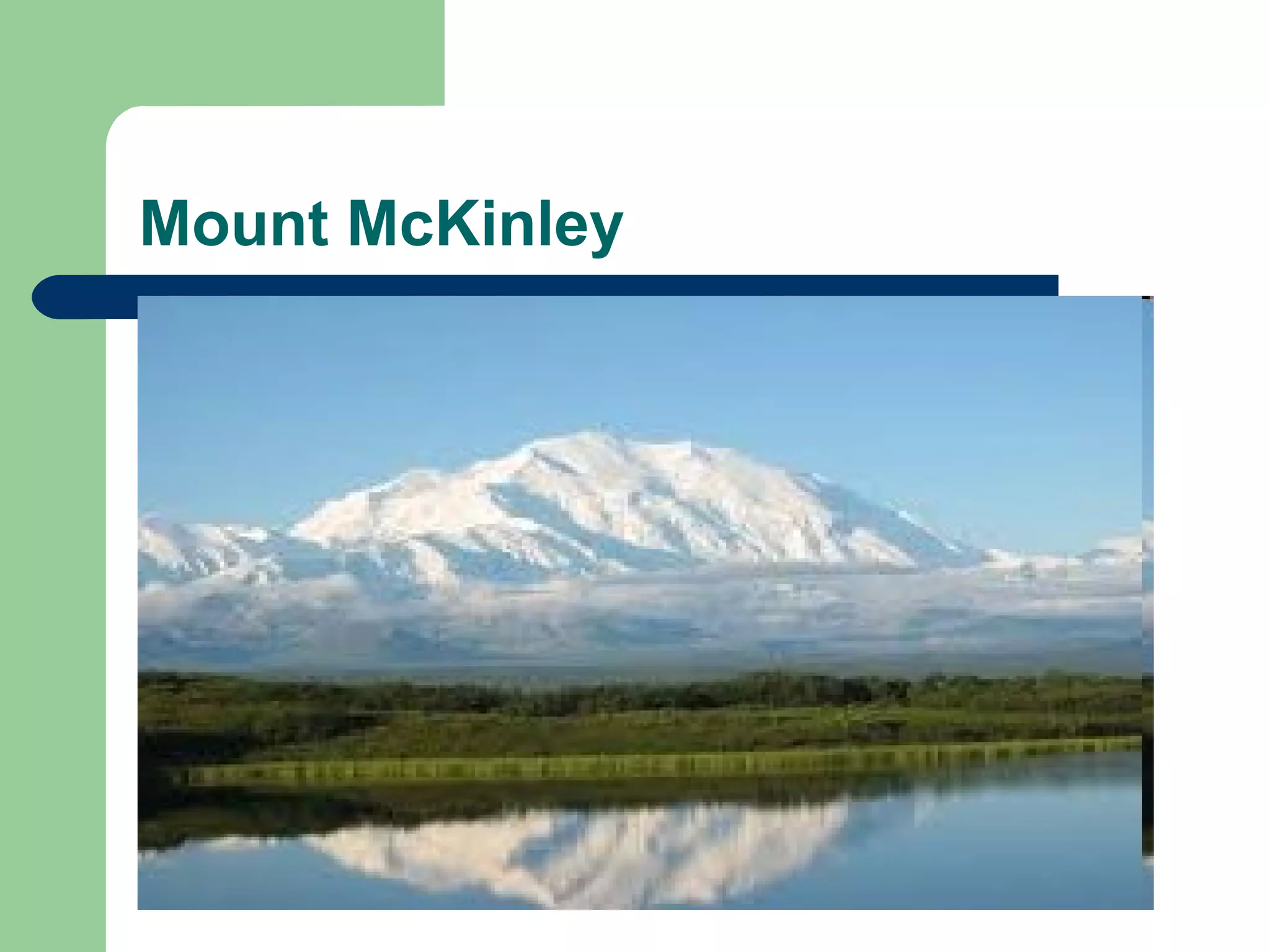
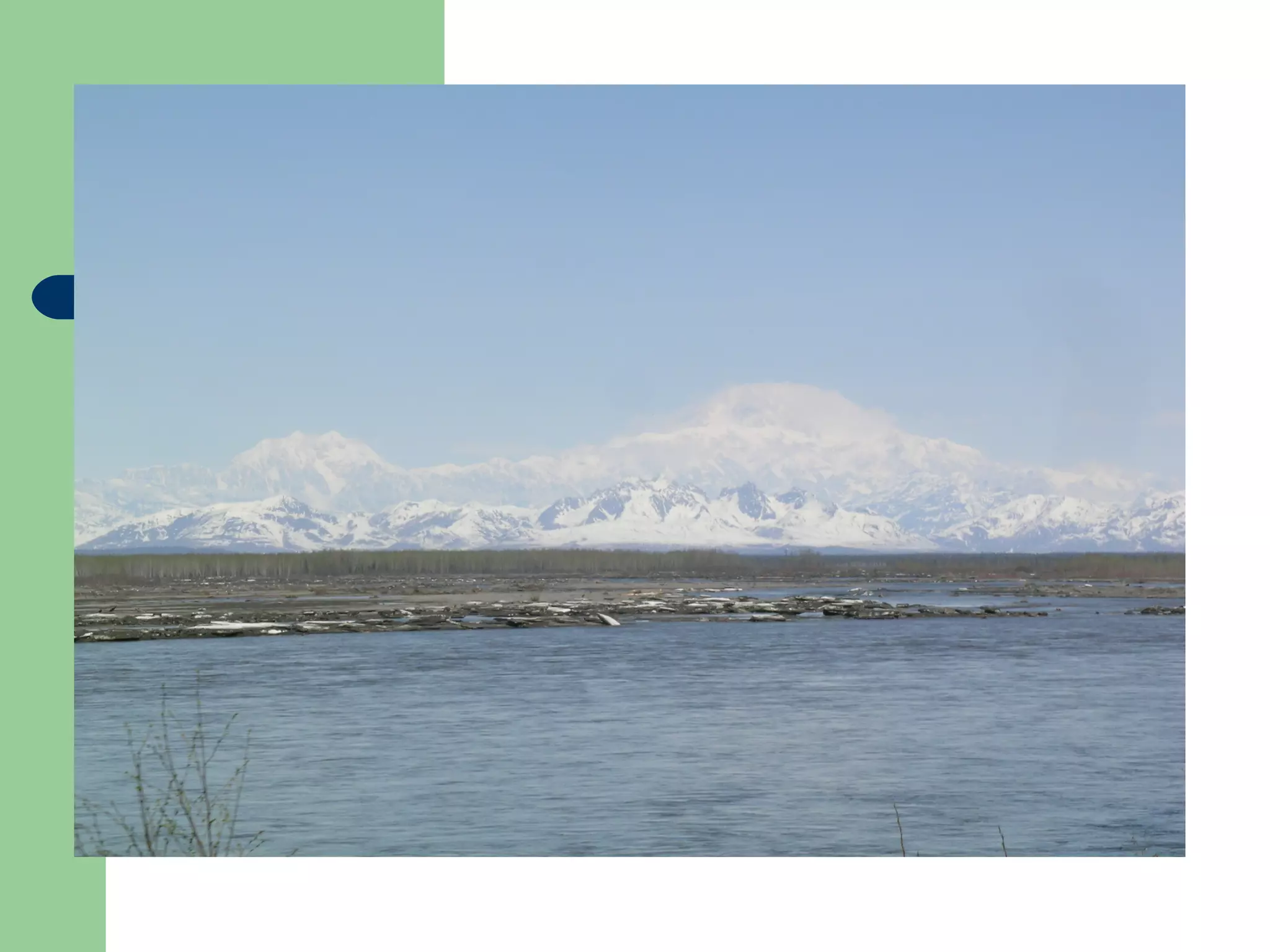
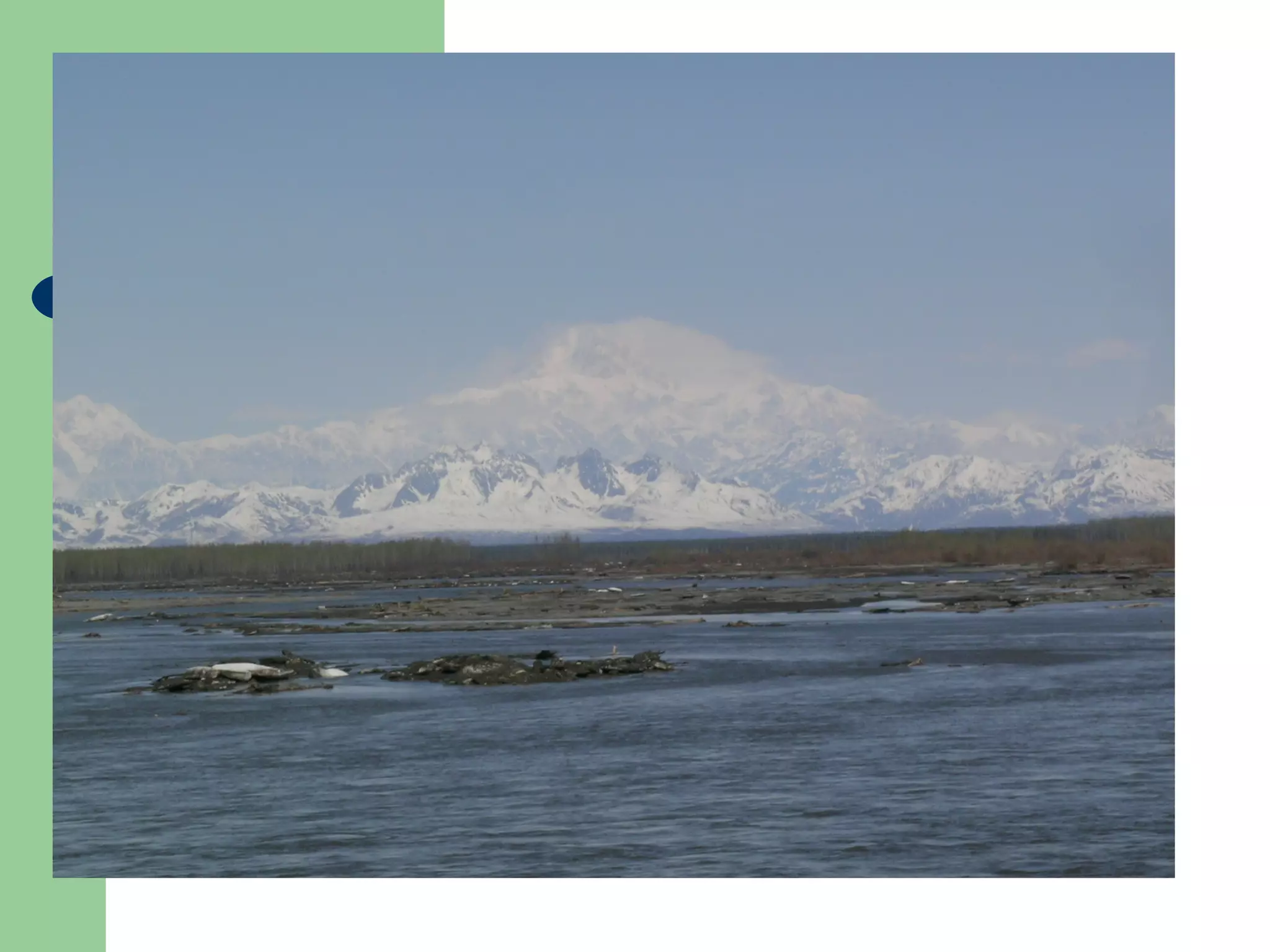
Mount McKinley
Facts
ïŹ Location: Mount Mckinley is located in south
central Alaska; in the Alaska range.
ïŹ Absolute Location: It is located 63 degrees
north, and 151 degrees West.
ïŹ Famous for: It is the highest peak in North
America. It is 6,194 m. (20,230ft.) above sea
level.
Facts
ïŹ Description: The Native American knew Mount McKiley as
"Denli" meaning the high one. Some convient centers near
Mount McKinley are Talkeenta, Alaska. The nearest major
airport is in Anchorage, Alaska.
ïŹ Three Interesting Facts: 1. Mount McKinley was named after
President William McKinley in 1896.
ïŹ 2. An Anglo-American clergyman, Hudson Stuck first reached
the summit in1913.
ïŹ 3. Some of the very best months to climb Mount McKinley are:
April, May, and June.
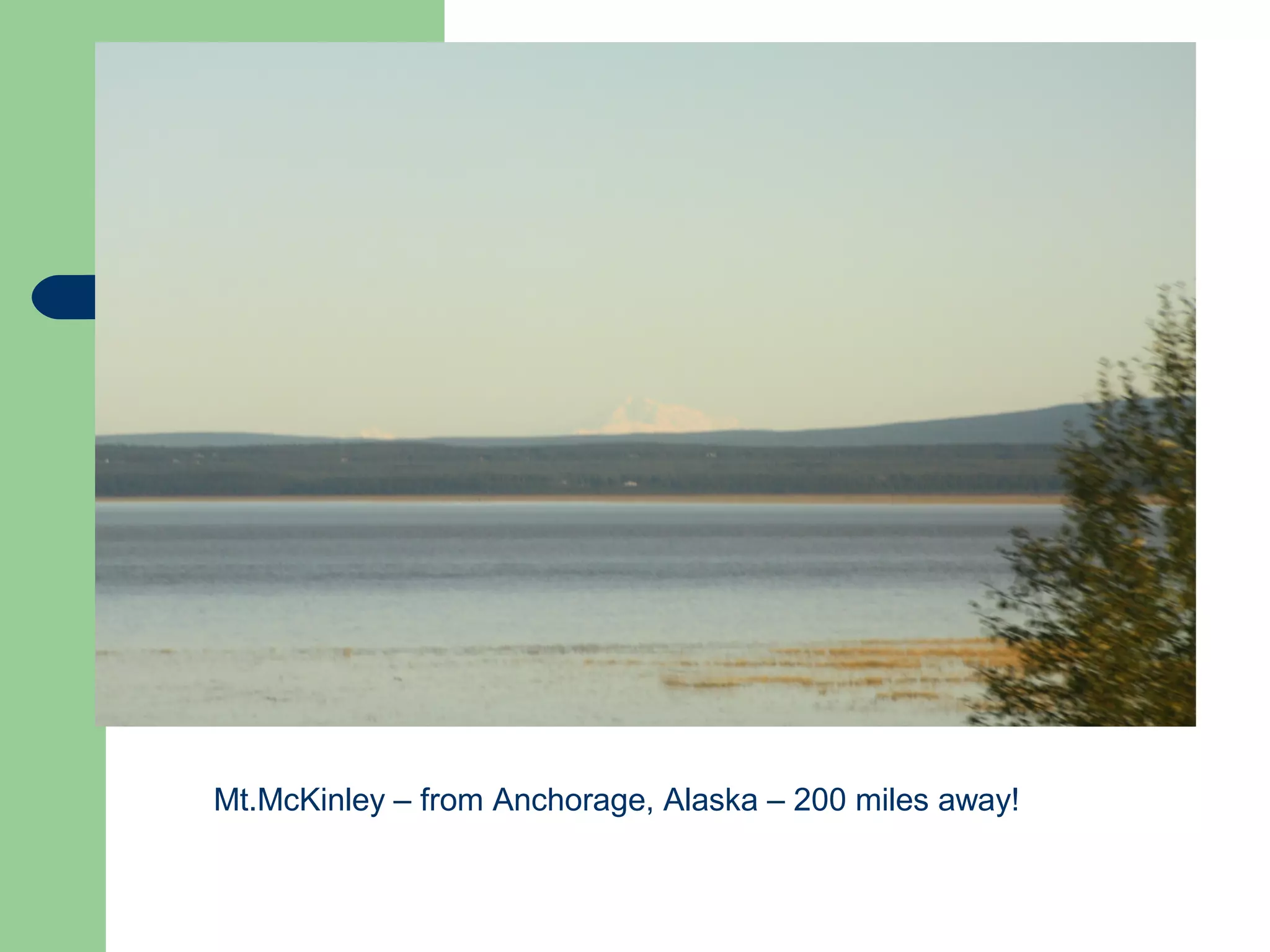
Mt.McKinley – from Anchorage, Alaska – 200 miles away!

Module 3 - The Atmosphere

  • 1.
  • 2.
    Molecules ïŹ Everything inthe world is made up of atoms and molecues ïŹ These molecules move differently depending on their state of matter – solid, liquid, or gas
  • 3.
    Density ïŹ The densityof solids does not change shape. Solids will keep their shape even when moved.
  • 4.
    Liquids ïŹ The densityof liquids changes slightly ïŹ Liquids will change shape, but are still bound together ïŹ If you spill a glass of water, the water changes its shape to a puddle, but the water stays together
  • 5.
    Gasses ïŹ The moleculesin glasses are not bound at all ïŹ They are free to move about and will only stop when they are confined to a container or by gravity
  • 6.
    Wind ïŹ Gases inthe air move around trying to equalize the pressure ïŹ When a low pressure area is next to a high pressure area, the gases will move from the high to low pressure areas to try to equalize the pressure ïŹ The moving about of this pressure is wind ïŹ Remember winds blow from HIGH to LOW
  • 7.
    Water ïŹ Water, unlikeair and land, does not change temperature quickly ïŹ It can absorb a lot of heat energy before the temperature of the water changes ïŹ The same is true in reverse – Water must loose a lot of heat energy before it cools noticeably
  • 8.
    Sea Breezes ïŹ Duringthe day the sun heats the land quickly ïŹ As the land heats, the air above the land is heated ïŹ The hot air rises becoming less dense creating a low pressure ïŹ The air over the sea is cooler because it takes much longer to heat the water ïŹ The air over the sea keeps its high pressure
  • 9.
    Sea Breezes ïŹ Thedifference in pressure creates wind or a breeze ïŹ Wind blows from the sea to the land to try to equalize the pressure – this is called sea breeze
  • 11.
  • 12.
    Land Breeze ïŹ Atnight the land cools rapidly ïŹ Because the air of the sea is warmer, the wind direction changes ïŹ The cooler heavier air over the land forms a high pressure causing the air to move towards the sea where the air pressure is lower ïŹ This is called a land breeze
  • 13.
    Currents ïŹ Ocean currentsare like large rivers that run within the ocean ïŹ Without this motion the equator regions would be much warmer and the polar regions would be much colder ïŹ Both the atmosphere and the ocean are in constant motion
  • 14.
  • 15.
    Barometer ïŹ What isa barometer? ïŹ An instrument used to measure atmospheric pressure ïŹ Uses mercury as its liquid – not water
  • 16.
    Atmosphere ïŹ Homosphere: Thelower layer of earth’s atmosphere, which exists from ground level to roughly 80 kilometers (50 miles) above sea level ïŹ Heterosphere: The upper layer of earth’s atmosphere, which exists high than roughly 80 kilomters (50 miles) above sea level
  • 17.
    Layers of theEarth’s Atmosphere The atmosphere is divided into five layers. It is thickest near the surface and thins out with height until it eventually merges with space. ïŹ 1) The troposphere is the first layer above the surface and contains half of the Earth's atmosphere. Weather occurs in this layer. ïŹ 2) Many jet aircrafts fly in the stratosphere because it is very stable. Also, the ozone layer absorbs harmful rays from the Sun.
  • 19.
    Layers of theEarth’s Atmosphere ïŹ 3) Meteors or rock fragments burn up in the mesosphere. ïŹ 4) The thermosphere is a layer with auroras. It is also where the space shuttle orbits. ïŹ 5) The atmosphere merges into space in the extremely thin exosphere. This is the upper limit of our atmosphere.
  • 21.
  • 22.
  • 23.
    Facts ïŹ Location: MountMckinley is located in south central Alaska; in the Alaska range. ïŹ Absolute Location: It is located 63 degrees north, and 151 degrees West. ïŹ Famous for: It is the highest peak in North America. It is 6,194 m. (20,230ft.) above sea level.
  • 24.
    Facts ïŹ Description: TheNative American knew Mount McKiley as "Denli" meaning the high one. Some convient centers near Mount McKinley are Talkeenta, Alaska. The nearest major airport is in Anchorage, Alaska. ïŹ Three Interesting Facts: 1. Mount McKinley was named after President William McKinley in 1896. ïŹ 2. An Anglo-American clergyman, Hudson Stuck first reached the summit in1913. ïŹ 3. Some of the very best months to climb Mount McKinley are: April, May, and June.
  • 28.
    Mt.McKinley – fromAnchorage, Alaska – 200 miles away!