CASE MANAGEMENT TRAINING PACKAGE


                Module 3.
 Which social cases are recommended for
Case Management methodology and what is
     the best way to welcome them
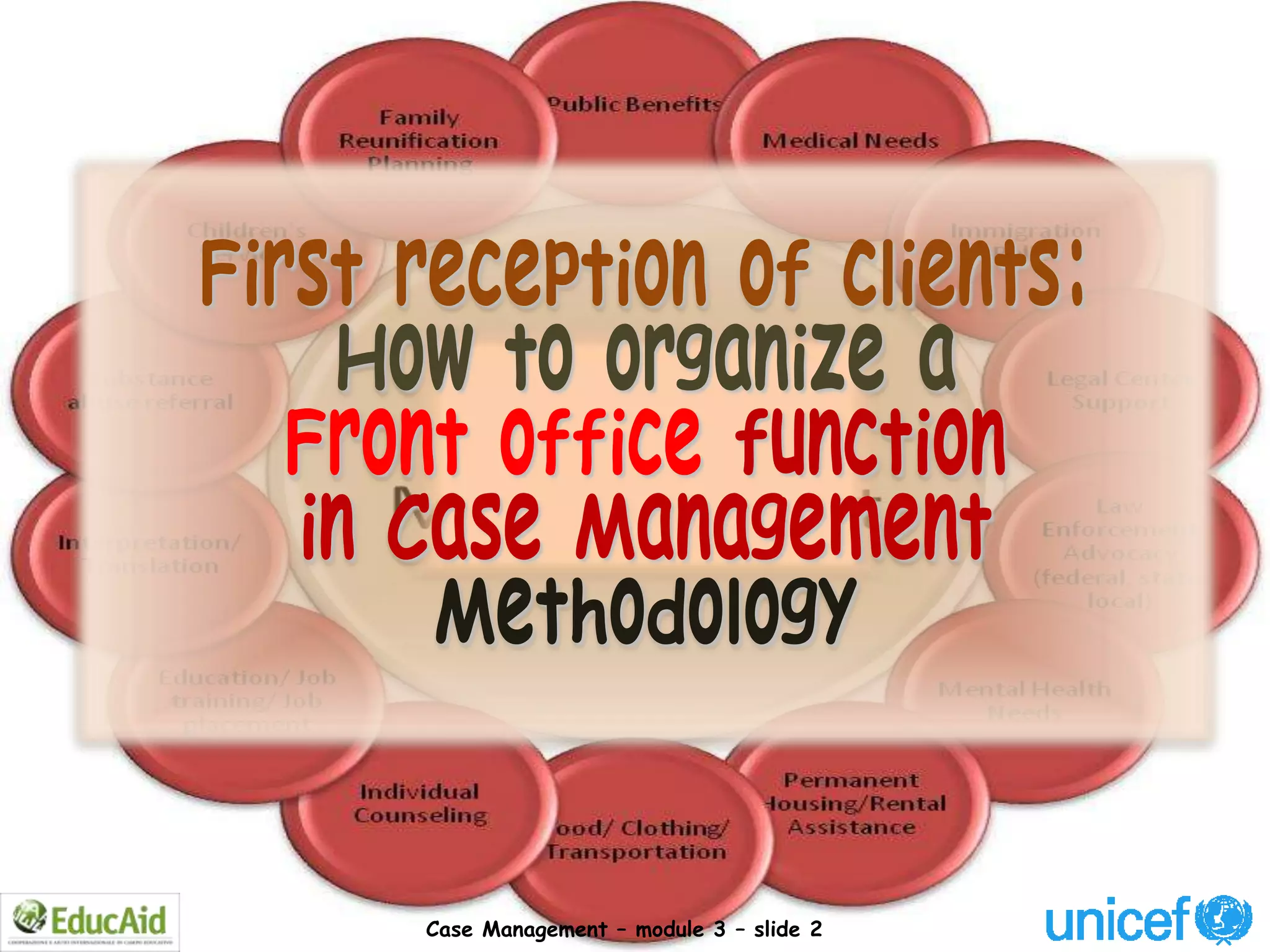
Case Management – module 3 – slide 2
Front office: what can be done?


                     Data collection: HOW?
 • Triage: determining the priority of “patients’” treatment
           based on the severity of their condition
 • Provision of INFORMATION, or REFERRAL to a specific
                               unit
                         In preparation:
            • Agreement with all the services’ units
• Collection of basic information (leaflets) for each service,
with CLEAR and DETAILED instructions on how to apply for
                            a service
 • If agreed with other services, arrange APPOINTMENTS
      with specialists (admin officers for benefits, case
                         managers, etc)
                     Case Management – module 3 – slide 3
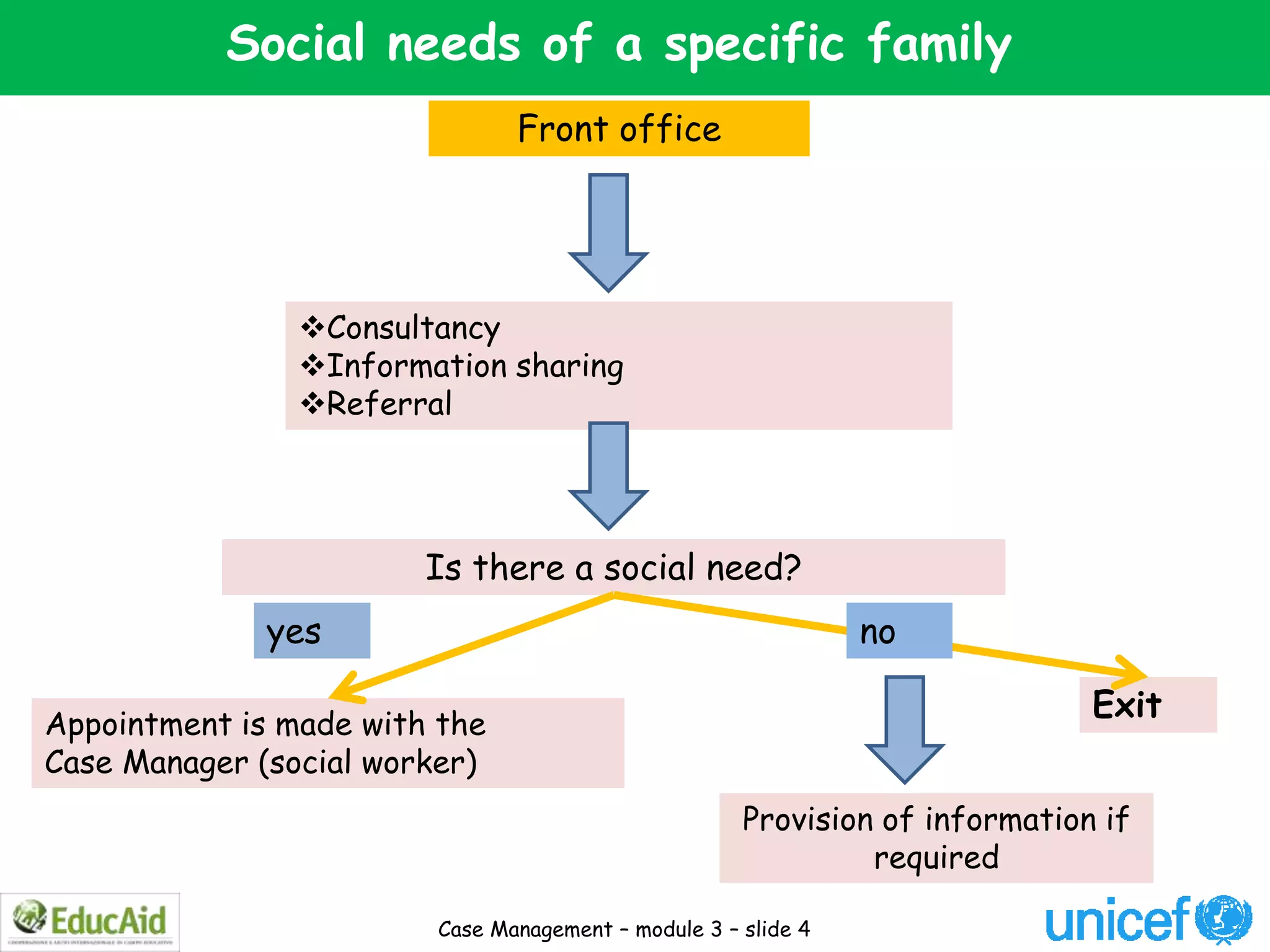
Social needs of a specific family
                               Front office


                Consultancy
                Information sharing
                Referral


                        Is there a social need?
              yes                                              no

                                                                             Exit
Appointment is made with the
Case Manager (social worker)
                                                     Provision of information if
                                                              required

                        Case Management – module 3 – slide 4
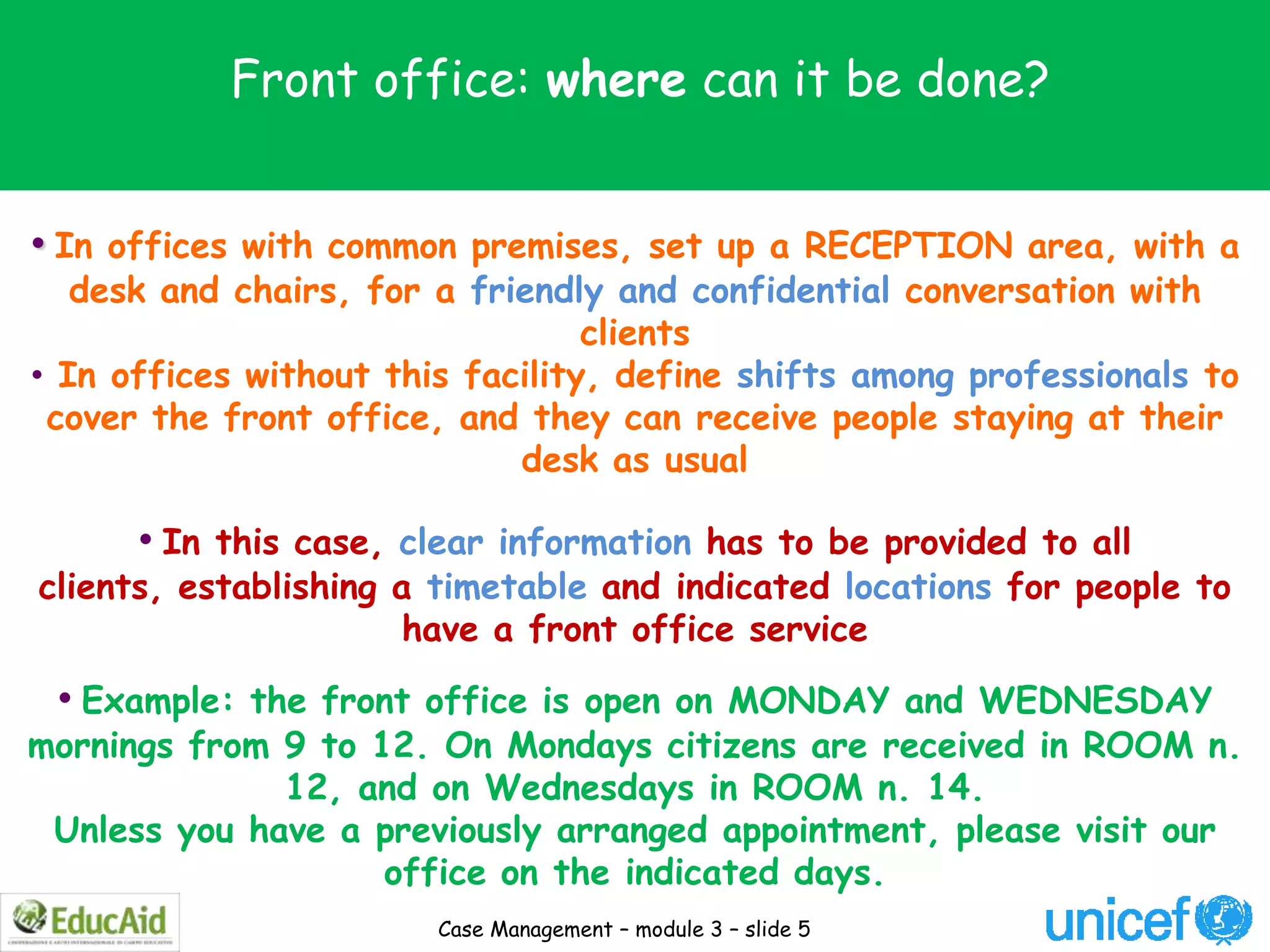
Front office: where can it be done?


• In offices with common premises, set up a RECEPTION area, with a
   desk and chairs, for a friendly and confidential conversation with
                                  clients
• In offices without this facility, define shifts among professionals to
 cover the front office, and they can receive people staying at their
                             desk as usual

      • In this case, clear information has to be provided to all
clients, establishing a timetable and indicated locations for people to
                       have a front office service

 • Example: the front office is open on MONDAY and WEDNESDAY
mornings from 9 to 12. On Mondays citizens are received in ROOM n.
              12, and on Wednesdays in ROOM n. 14.
 Unless you have a previously arranged appointment, please visit our
                    office on the indicated days.
                        Case Management – module 3 – slide 5
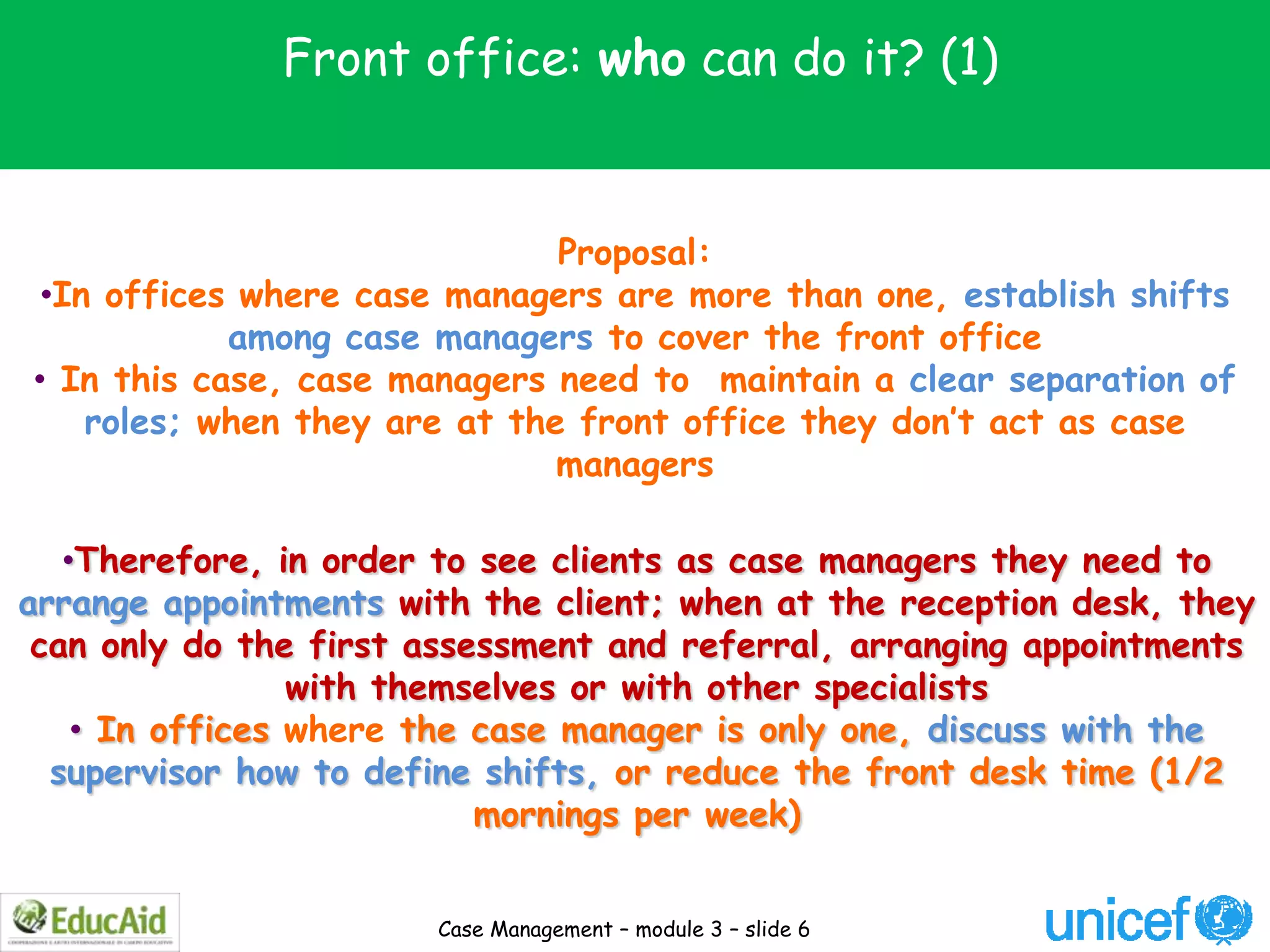
Front office: who can do it? (1)


                               Proposal:
 •In offices where case managers are more than one, establish shifts
            among case managers to cover the front office
• In this case, case managers need to maintain a clear separation of
    roles; when they are at the front office they don’t act as case
                               managers

   •Therefore, in order to see clients as case managers they need to
arrange appointments with the client; when at the reception desk, they
 can only do the first assessment and referral, arranging appointments
                 with themselves or with other specialists
    • In offices where the case manager is only one, discuss with the
  supervisor how to define shifts, or reduce the front desk time (1/2
                           mornings per week)


                       Case Management – module 3 – slide 6
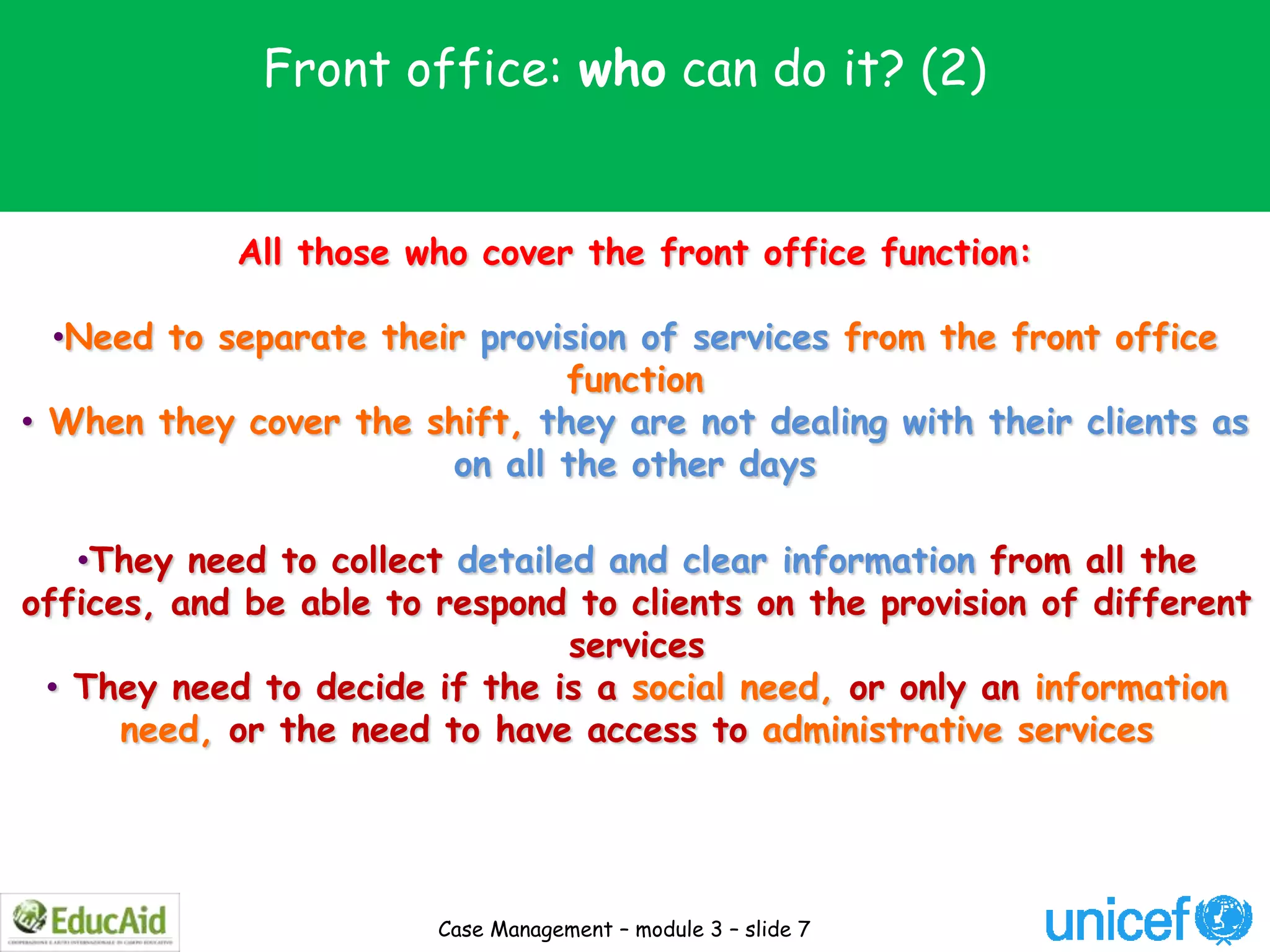
Front office: who can do it? (2)


            All those who cover the front office function:

  •Need to separate their provision of services from the front office
                               function
• When they cover the shift, they are not dealing with their clients as
                        on all the other days

   •They need to collect detailed and clear information from all the
offices, and be able to respond to clients on the provision of different
                                services
 • They need to decide if the is a social need, or only an information
      need, or the need to have access to administrative services


                        Case Management – module 3 – slide 7
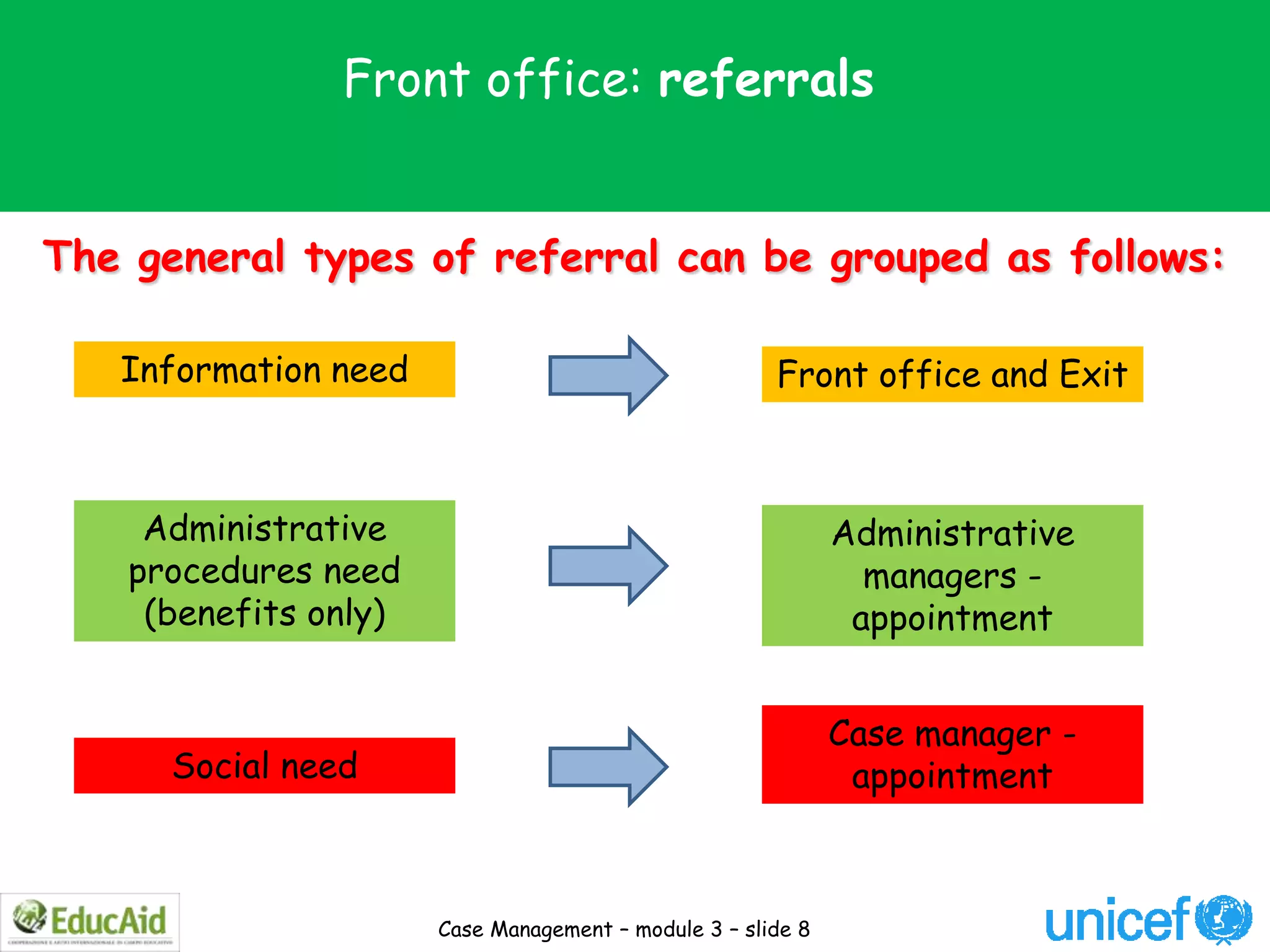
Front office: referrals


The general types of referral can be grouped as follows:

   Information need                                    Front office and Exit


     Administrative                                           Administrative
    procedures need                                             managers -
     (benefits only)                                           appointment


                                                              Case manager -
      Social need                                              appointment


                       Case Management – module 3 – slide 8

Integrated Social Services: Reaching the Most Vulnerable. Training package for case managers

  • 1.
    CASE MANAGEMENT TRAININGPACKAGE Module 3. Which social cases are recommended for Case Management methodology and what is the best way to welcome them
  • 2.
    Case Management –module 3 – slide 2
  • 3.
    Front office: whatcan be done? Data collection: HOW? • Triage: determining the priority of “patients’” treatment based on the severity of their condition • Provision of INFORMATION, or REFERRAL to a specific unit In preparation: • Agreement with all the services’ units • Collection of basic information (leaflets) for each service, with CLEAR and DETAILED instructions on how to apply for a service • If agreed with other services, arrange APPOINTMENTS with specialists (admin officers for benefits, case managers, etc) Case Management – module 3 – slide 3
  • 4.
    Social needs ofa specific family Front office Consultancy Information sharing Referral Is there a social need? yes no Exit Appointment is made with the Case Manager (social worker) Provision of information if required Case Management – module 3 – slide 4
  • 5.
    Front office: wherecan it be done? • In offices with common premises, set up a RECEPTION area, with a desk and chairs, for a friendly and confidential conversation with clients • In offices without this facility, define shifts among professionals to cover the front office, and they can receive people staying at their desk as usual • In this case, clear information has to be provided to all clients, establishing a timetable and indicated locations for people to have a front office service • Example: the front office is open on MONDAY and WEDNESDAY mornings from 9 to 12. On Mondays citizens are received in ROOM n. 12, and on Wednesdays in ROOM n. 14. Unless you have a previously arranged appointment, please visit our office on the indicated days. Case Management – module 3 – slide 5
  • 6.
    Front office: whocan do it? (1) Proposal: •In offices where case managers are more than one, establish shifts among case managers to cover the front office • In this case, case managers need to maintain a clear separation of roles; when they are at the front office they don’t act as case managers •Therefore, in order to see clients as case managers they need to arrange appointments with the client; when at the reception desk, they can only do the first assessment and referral, arranging appointments with themselves or with other specialists • In offices where the case manager is only one, discuss with the supervisor how to define shifts, or reduce the front desk time (1/2 mornings per week) Case Management – module 3 – slide 6
  • 7.
    Front office: whocan do it? (2) All those who cover the front office function: •Need to separate their provision of services from the front office function • When they cover the shift, they are not dealing with their clients as on all the other days •They need to collect detailed and clear information from all the offices, and be able to respond to clients on the provision of different services • They need to decide if the is a social need, or only an information need, or the need to have access to administrative services Case Management – module 3 – slide 7
  • 8.
    Front office: referrals Thegeneral types of referral can be grouped as follows: Information need Front office and Exit Administrative Administrative procedures need managers - (benefits only) appointment Case manager - Social need appointment Case Management – module 3 – slide 8