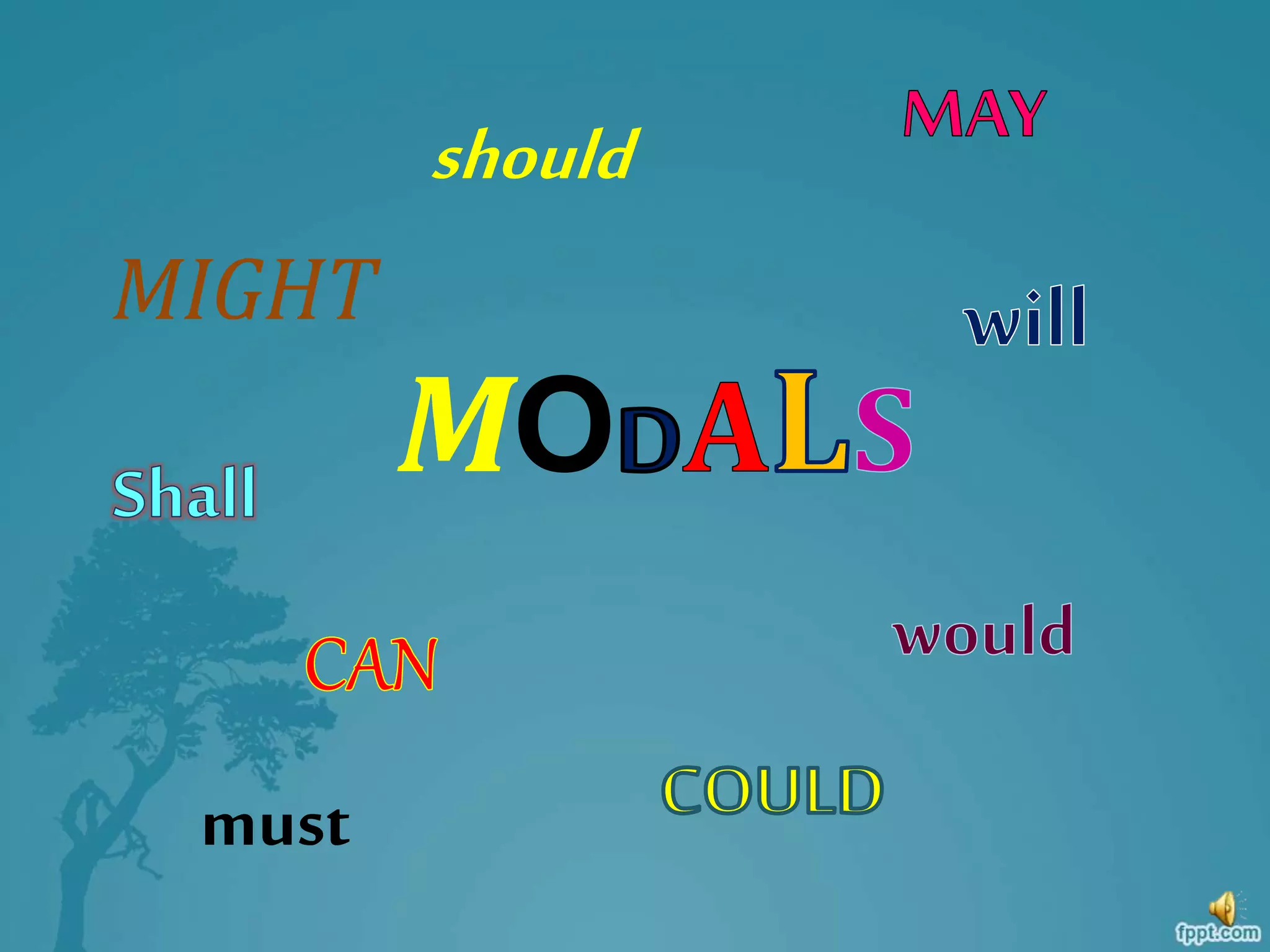
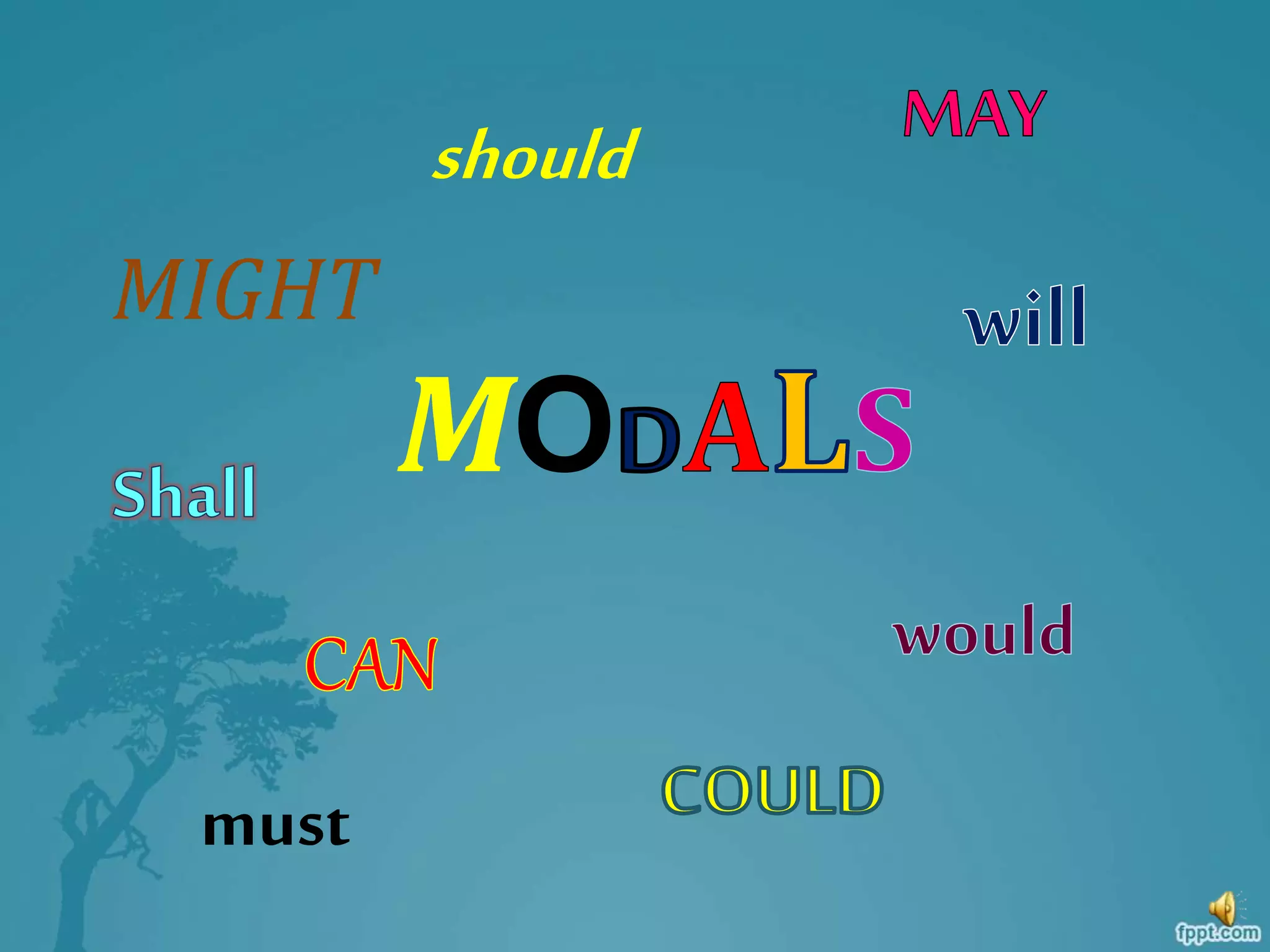
MO
must
MIGHT
should
What are modals?
Modals are helping verbs which are
used with the principal verb to
express certain moods like ability,
obligation, possibility, request,
suggestion and permission.
Modals have different usage. Now,
let us discover its different usage.
MODAL: Can
Usage: ability to do something in the
present
example:
Alia can speak English.
The sentence expresses that Alia has the ability
to speak in English.
Example:
Aside from singing, Sarah G. can also
dance.
The sentence states that Sarah G. has the
ability to dance.
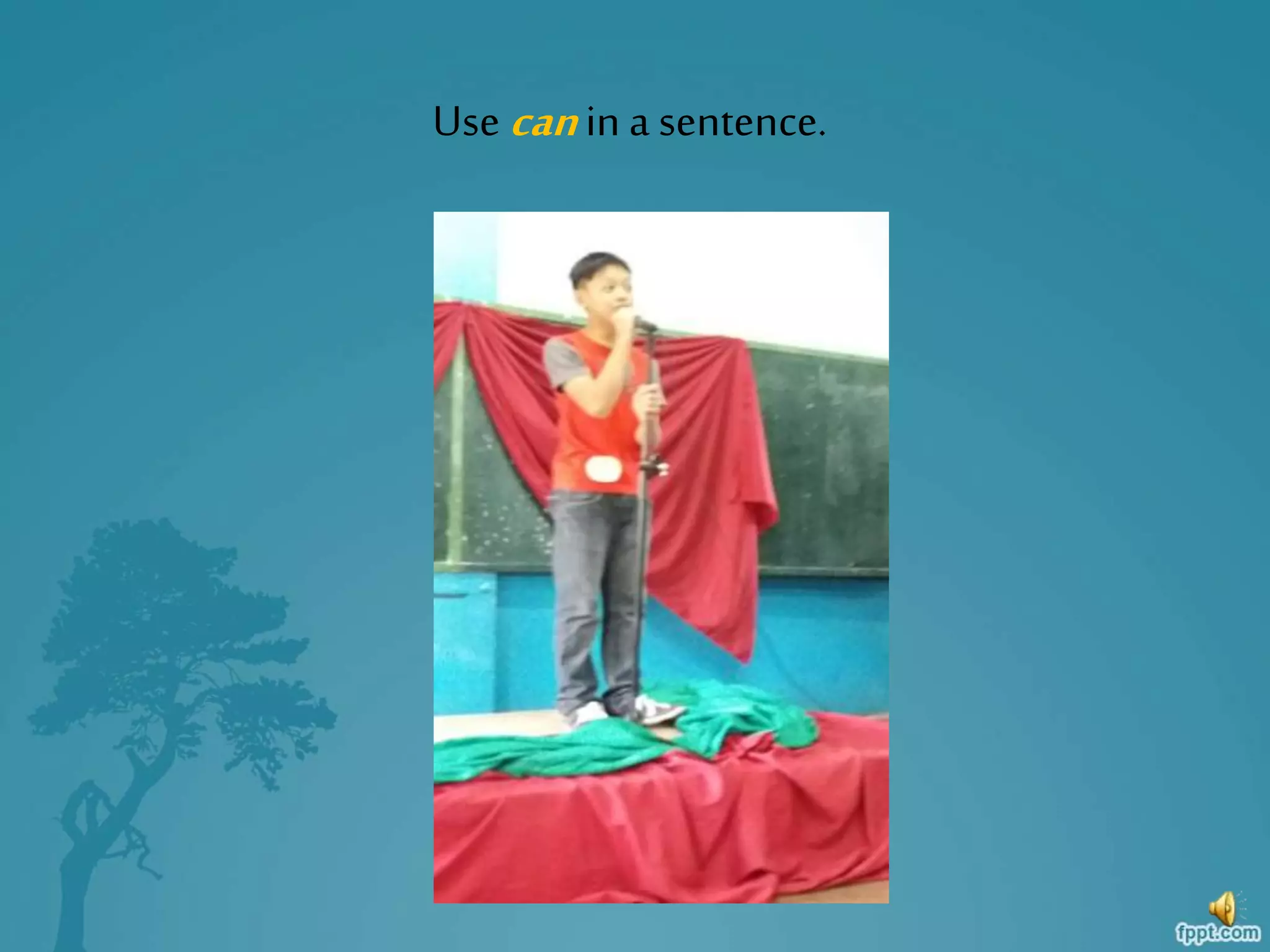
Use canin a sentence.
MODAL: Could
Usage: express ability in a weaker manner
Example:
I could read even without eyeglasses.
This sentence expresses a weaker ability of
reading without eyeglasses.
Example:
I could solve that mathematical problem
when I was still in high school.
The sentence expresses a weaker ability of
solving a math problem.
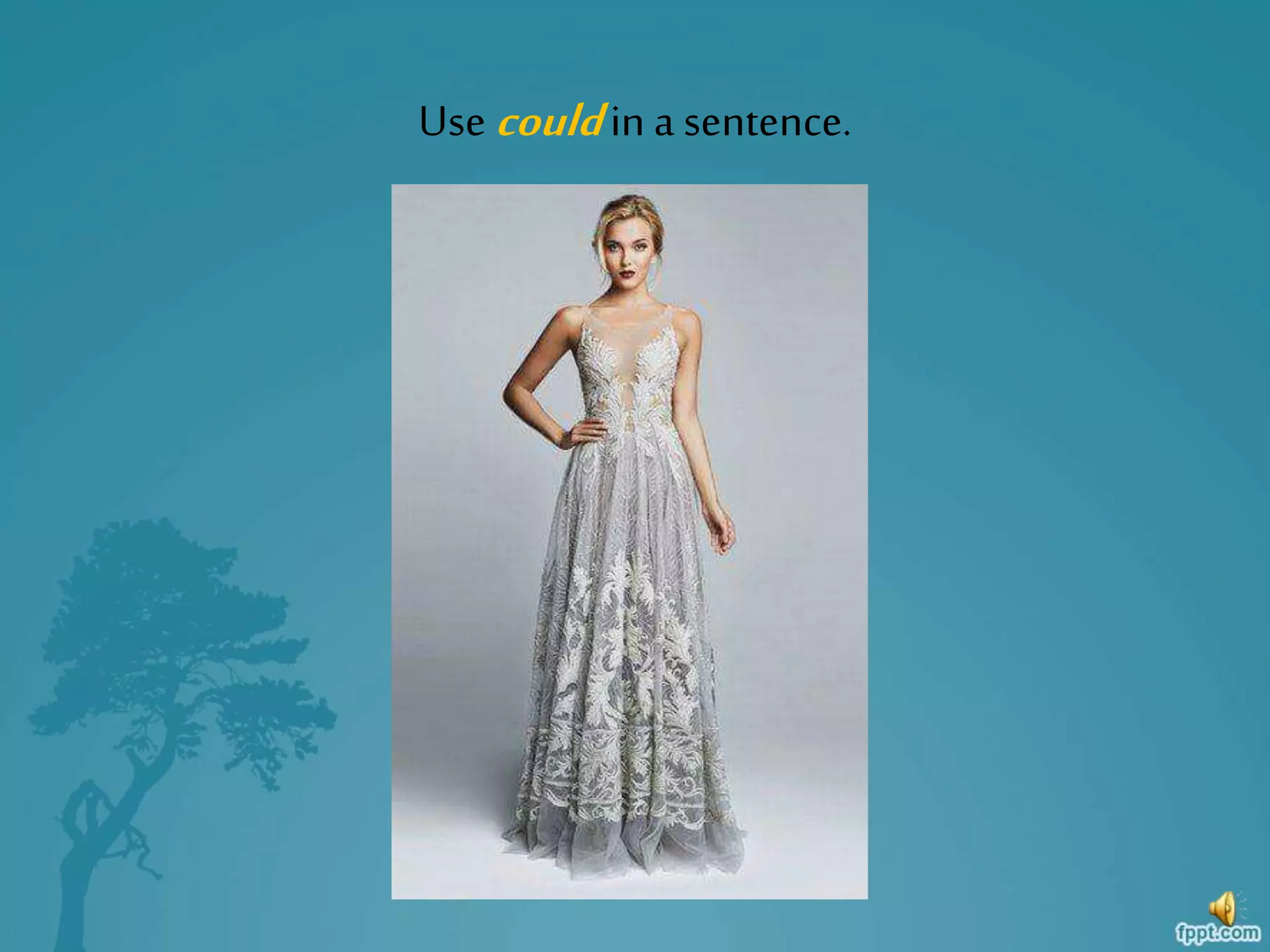
Use couldin a sentence.
MODAL: May
Usage: indicate permission, wish or
possibility
Example:
It may rain today.
The sentence shows that there is a possibility
to rain today.
Example:
You may get sick if you always skip your
meal.
This sentence shows possibility of getting
sick.
Example:
Ma’am, may I go out?
In this sentence, someone is asking permission
to go out.
Example:
May I leave you for a while?
In this example someone is asking
permission of leaving him for a while.
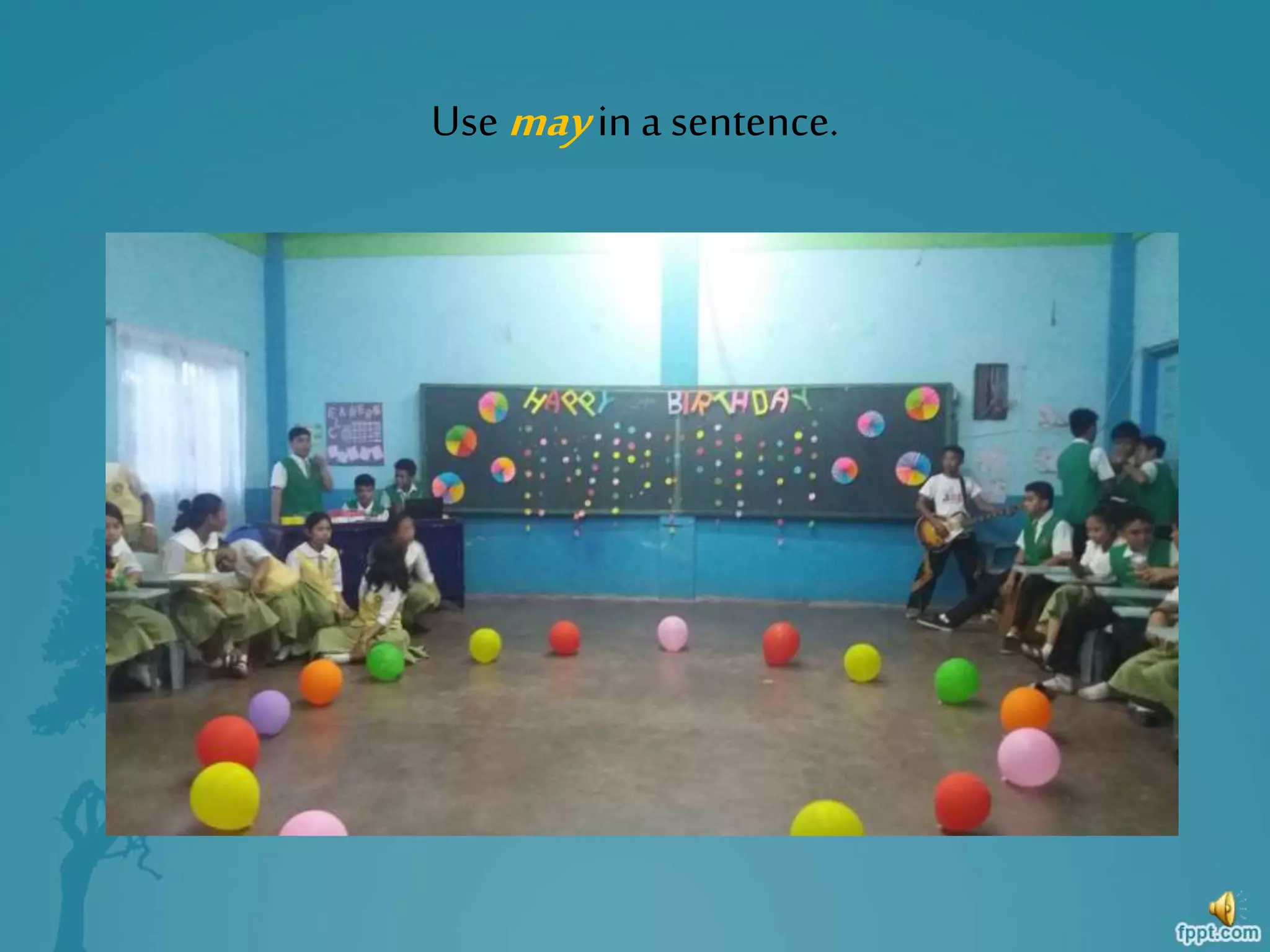
Use mayin a sentence.
MODAL: Might
Usage: shows possibility but it is less possible
than may
Example:
It might rain today
This sentence shows less possibility of raining
today.
Example:
I might get sick.
This sentence shows less possibility of getting
sick.
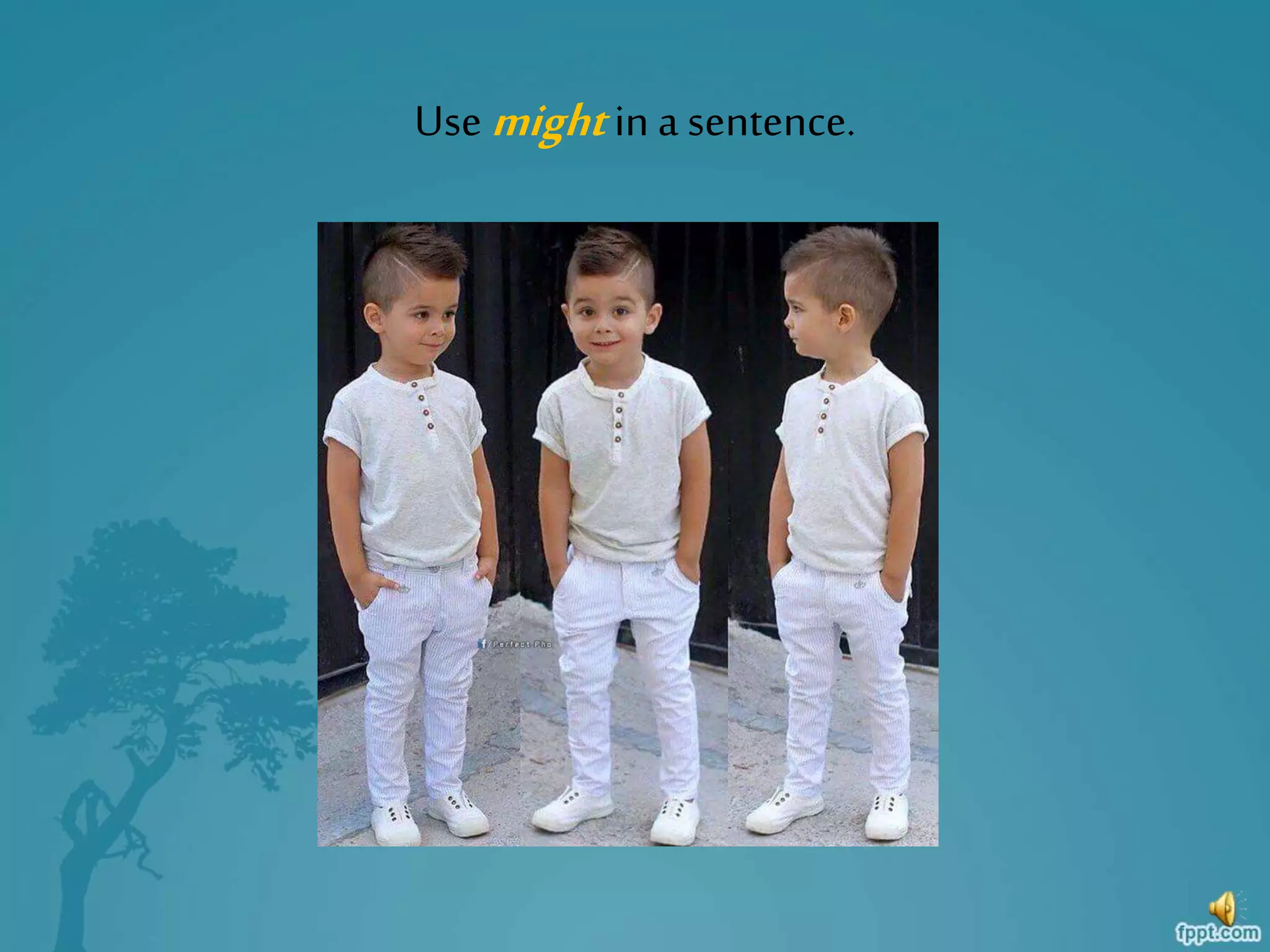
Use might in a sentence.
MODAL: Must
Usage: showing force or necessity, expresses
advice or recommendation
Example:
I must go to the supermarket today.
This sentence shows the necessity to do
something.
Example:
You must respect your parents.
This sentence expresses the necessity to
respect our parents.
Example:
You must see the doctor for you to be sure
about your condition.
Someone is giving advice to see the doctor.
Example:
You must eat your breakfast before going
to school.
This sentence shows advice that you have to
eat breakfast.
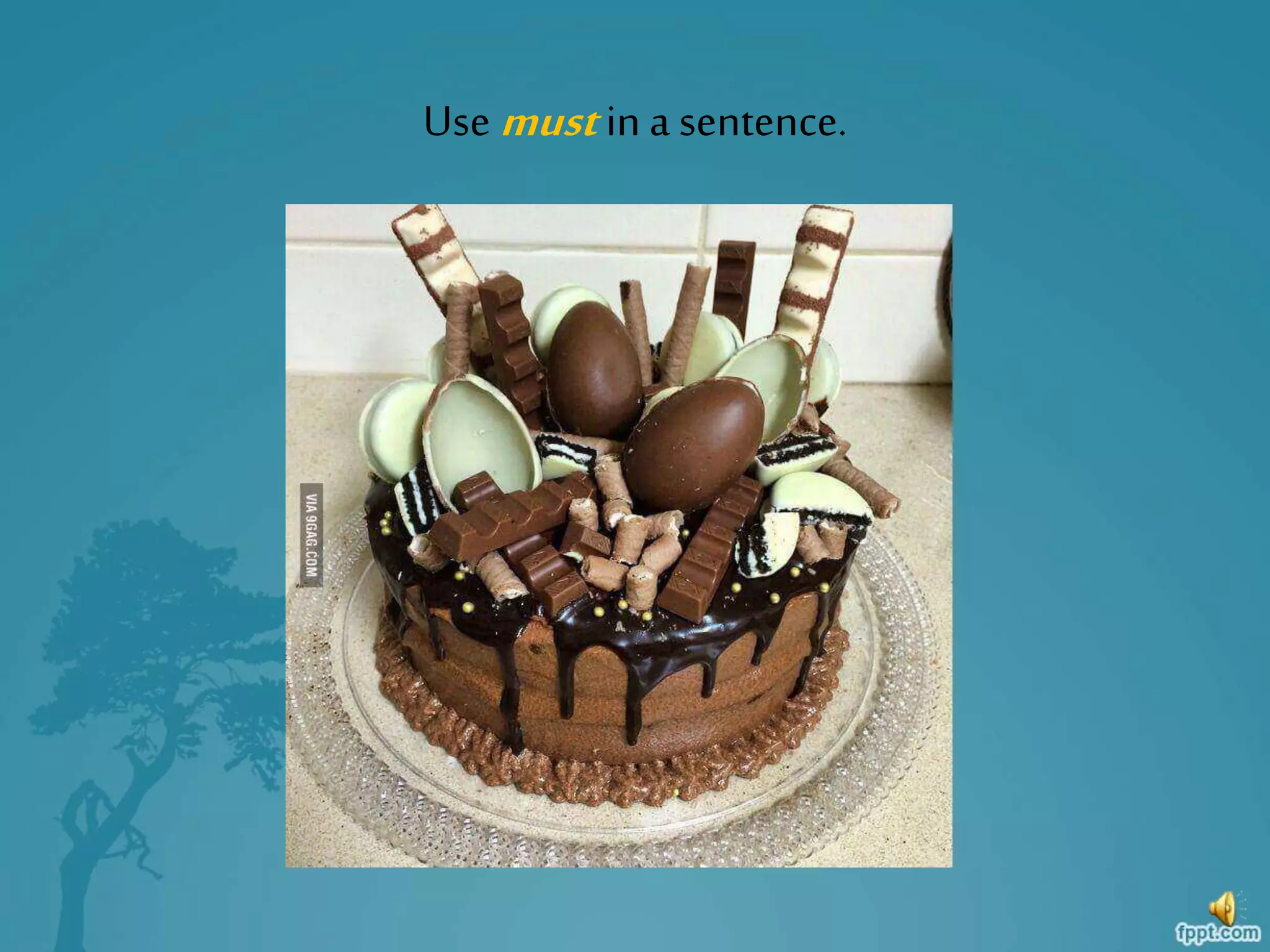
Use mustin a sentence.
MODAL: Will
Usage: Make a prediction or request
Example:
I will be rich.
This sentence shows a prediction that he will
be rich.
Example:
Will you get my purse on my table,
please?
This sentence shows request.
Use willin a sentence.
MODAL: Would (past tense of will)
Usage: Make a request
Example:
Would you mind if I join you?
Someone is making a request.
MODAL: shall
Usage: for advice or suggestion
Example:
Shall we dance?
The sentence expresses a suggestion.
MODAL: should
Usage: indicate duty, necessity, condition,
probability or contingency
Example:
Students should attend classes regularly.
The sentence expresses the duty of the
students.
example:
Regular employees should work eight
hours a day.
This sentence shows that the regular
employees have a duty to work eight hours
a day.
Use shouldin a sentence.
MO
must
MIGHT
should

Modal

  • 1.
  • 2.
    What are modals? Modalsare helping verbs which are used with the principal verb to express certain moods like ability, obligation, possibility, request, suggestion and permission.
  • 3.
    Modals have differentusage. Now, let us discover its different usage.
  • 4.
    MODAL: Can Usage: abilityto do something in the present example: Alia can speak English. The sentence expresses that Alia has the ability to speak in English.
  • 5.
    Example: Aside from singing,Sarah G. can also dance. The sentence states that Sarah G. has the ability to dance.
  • 6.
    Use canin asentence.
  • 7.
    MODAL: Could Usage: expressability in a weaker manner Example: I could read even without eyeglasses. This sentence expresses a weaker ability of reading without eyeglasses.
  • 8.
    Example: I could solvethat mathematical problem when I was still in high school. The sentence expresses a weaker ability of solving a math problem.
  • 9.
    Use couldin asentence.
  • 10.
    MODAL: May Usage: indicatepermission, wish or possibility Example: It may rain today. The sentence shows that there is a possibility to rain today.
  • 11.
    Example: You may getsick if you always skip your meal. This sentence shows possibility of getting sick. Example: Ma’am, may I go out? In this sentence, someone is asking permission to go out.
  • 12.
    Example: May I leaveyou for a while? In this example someone is asking permission of leaving him for a while.
  • 13.
    Use mayin asentence.
  • 14.
    MODAL: Might Usage: showspossibility but it is less possible than may Example: It might rain today This sentence shows less possibility of raining today.
  • 15.
    Example: I might getsick. This sentence shows less possibility of getting sick.
  • 16.
    Use might ina sentence.
  • 17.
    MODAL: Must Usage: showingforce or necessity, expresses advice or recommendation Example: I must go to the supermarket today. This sentence shows the necessity to do something.
  • 18.
    Example: You must respectyour parents. This sentence expresses the necessity to respect our parents. Example: You must see the doctor for you to be sure about your condition. Someone is giving advice to see the doctor.
  • 19.
    Example: You must eatyour breakfast before going to school. This sentence shows advice that you have to eat breakfast.
  • 20.
    Use mustin asentence.
  • 21.
    MODAL: Will Usage: Makea prediction or request Example: I will be rich. This sentence shows a prediction that he will be rich.
  • 22.
    Example: Will you getmy purse on my table, please? This sentence shows request.
  • 23.
    Use willin asentence.
  • 24.
    MODAL: Would (pasttense of will) Usage: Make a request Example: Would you mind if I join you? Someone is making a request.
  • 25.
    MODAL: shall Usage: foradvice or suggestion Example: Shall we dance? The sentence expresses a suggestion.
  • 26.
    MODAL: should Usage: indicateduty, necessity, condition, probability or contingency Example: Students should attend classes regularly. The sentence expresses the duty of the students.
  • 27.
    example: Regular employees shouldwork eight hours a day. This sentence shows that the regular employees have a duty to work eight hours a day.
  • 28.
    Use shouldin asentence.
  • 29.