MLA FORMAT The Basics
MODERN LANGUAGE 
ASSOCIATION 
 professional association for scholars of language and 
l iterature 
 MLA Format = series of regulations and guidelines for writers 
 consistent writing style for essays and citations 
 required in col lege for al l essays and academic papers
BASIC FEATURES OF MLA 
 Times New Roman font, 12 point size. 
 Double-space entire paper. 
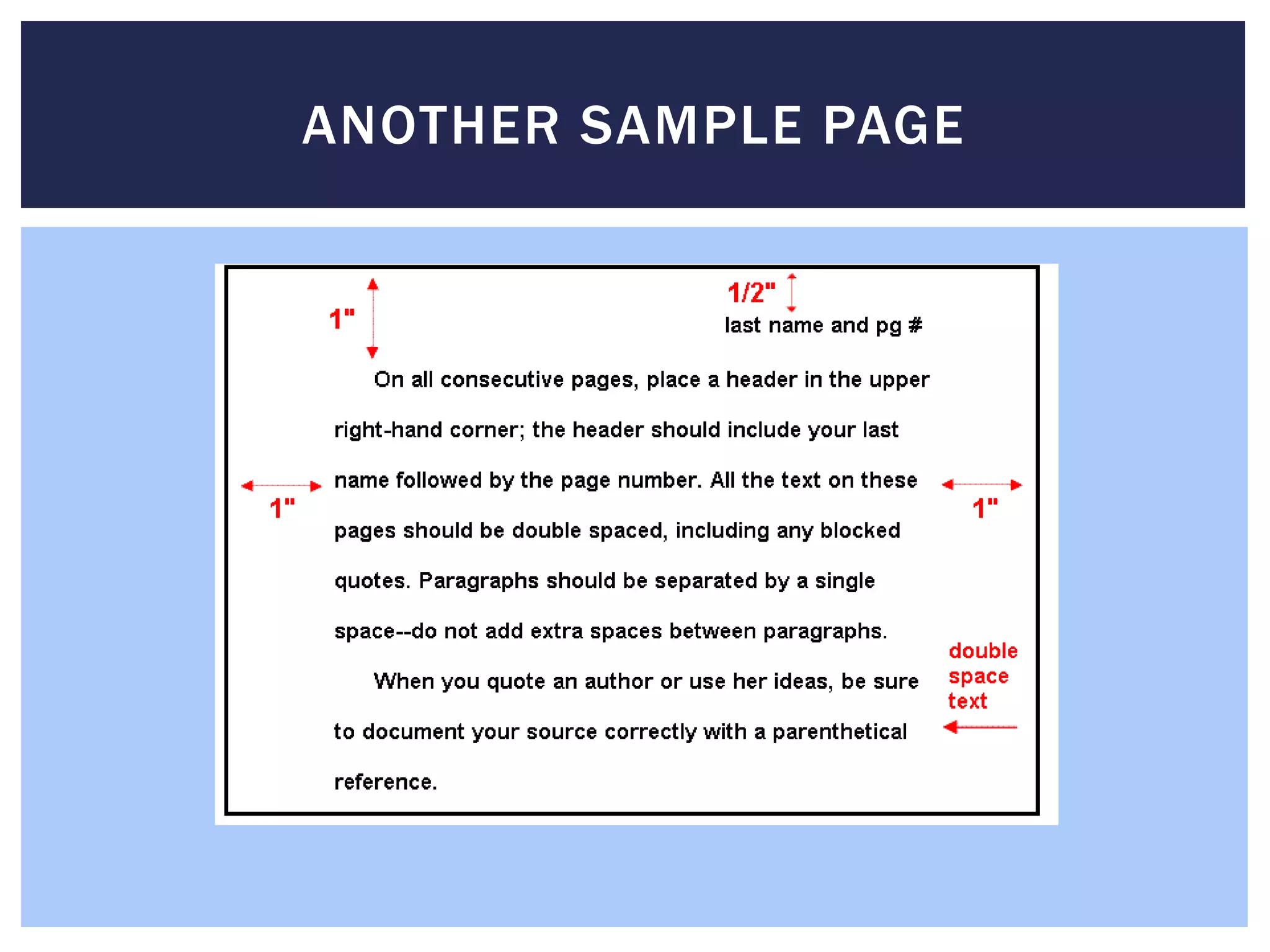
 A l l ma r g in s s h o u l d b e s e t to 1 ” . 
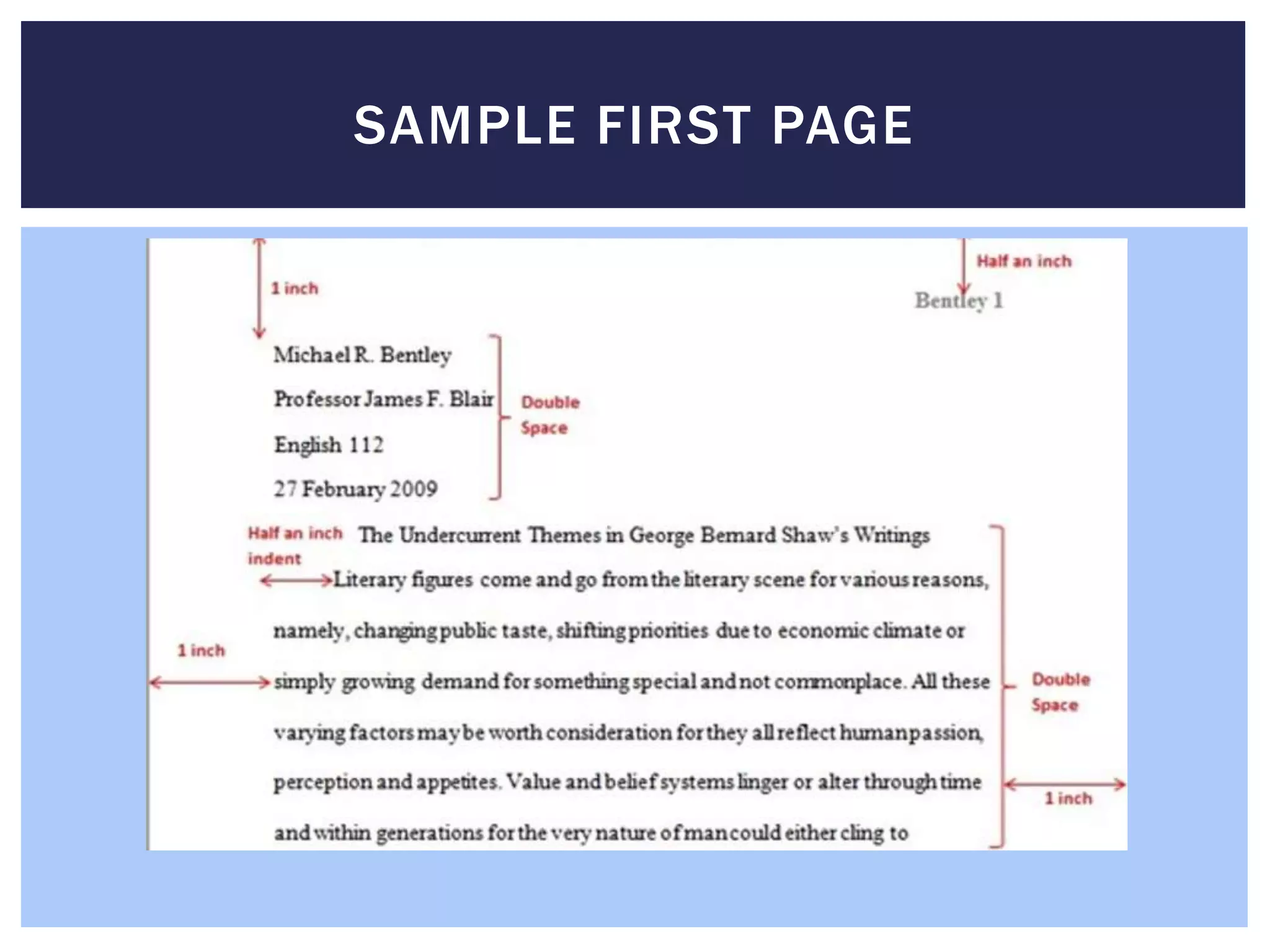
 Include a header with your last name and page number at the 
upper-right hand corner of your essay. 
 Include a heading in the lef t-hand corner of the first page, 
i n c l u din g yo u r n ame , i n s t r u c to r’ s n ame , c l a s s n ame , a n d t h e 
date. 
 The title must fol low the heading and wi l l be centered. Do NOT 
u n d e r lin e , b o l d , o r “ q u ote ” yo u r t i t l e . 
 Include in-text citations and works cited page.
SAMPLE FIRST PAGE
ANOTHER SAMPLE PAGE
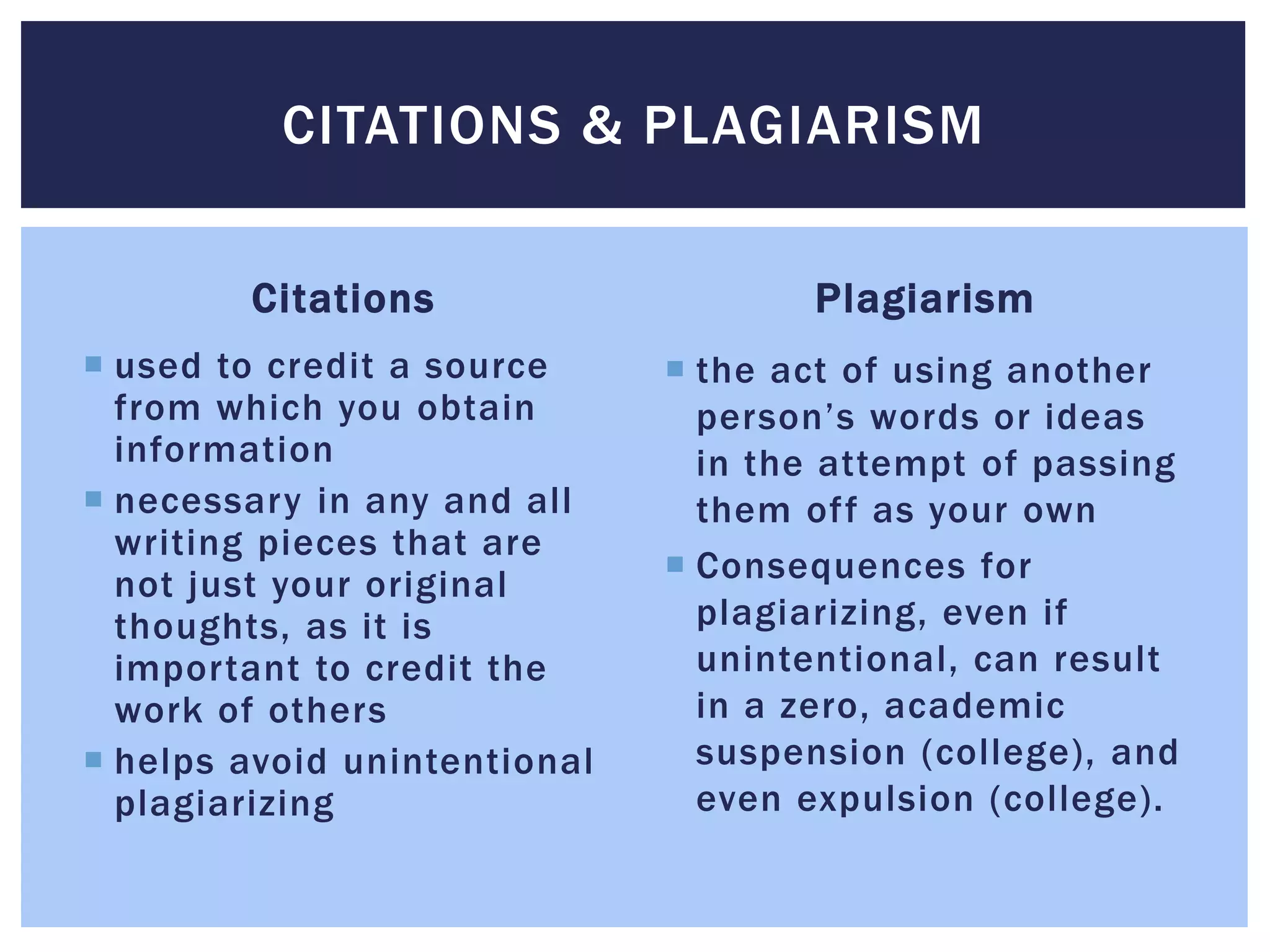
CITATIONS & PLAGIARISM 
Citations 
 used to credit a source 
from which you obtain 
information 
 necessary in any and all 
writing pieces that are 
not just your original 
thoughts, as it is 
impor tant to credit the 
work of others 
 helps avoid unintentional 
plagiarizing 
Plagiarism 
 the act of using another 
per son’s words or ideas 
in the attempt of passing 
them of f as your own 
 Consequences for 
plagiarizing, even if 
unintentional, can result 
in a zero, academic 
suspension (college), and 
even expulsion (college).
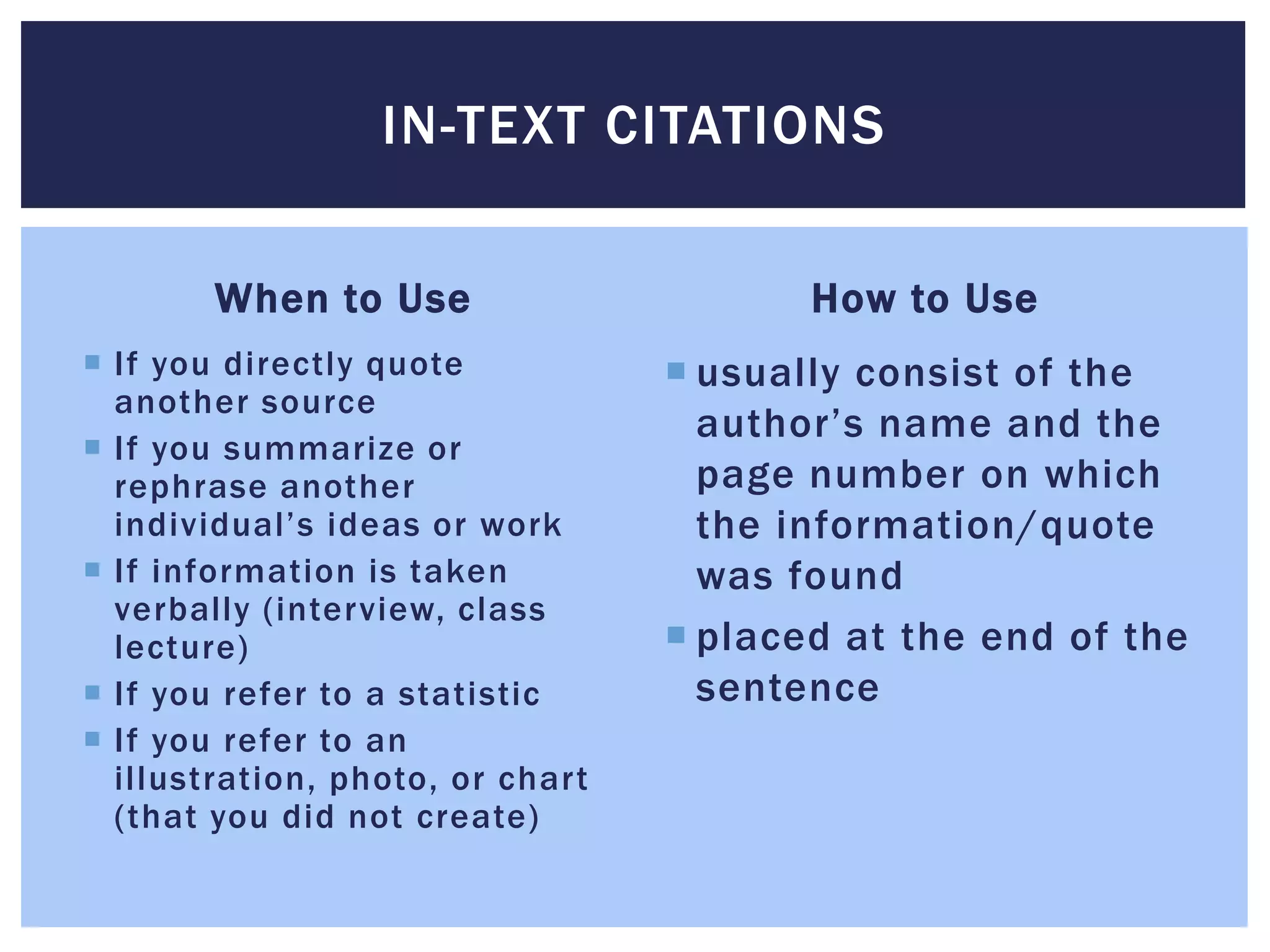
IN-TEXT CITATIONS 
When to Use 
 I f you directly quote 
another source 
 I f you summarize or 
rephrase another 
i nd i v idual’ s ideas or work 
 I f information is taken 
verbally ( interview, class 
lecture) 
 I f you refer to a statistic 
 I f you refer to an 
i l lustration, photo, or char t 
(that you did not create) 
How to Use 
 usually consist of the 
author’s name and the 
page number on which 
the information/quote 
was found 
 placed at the end of the 
sentence
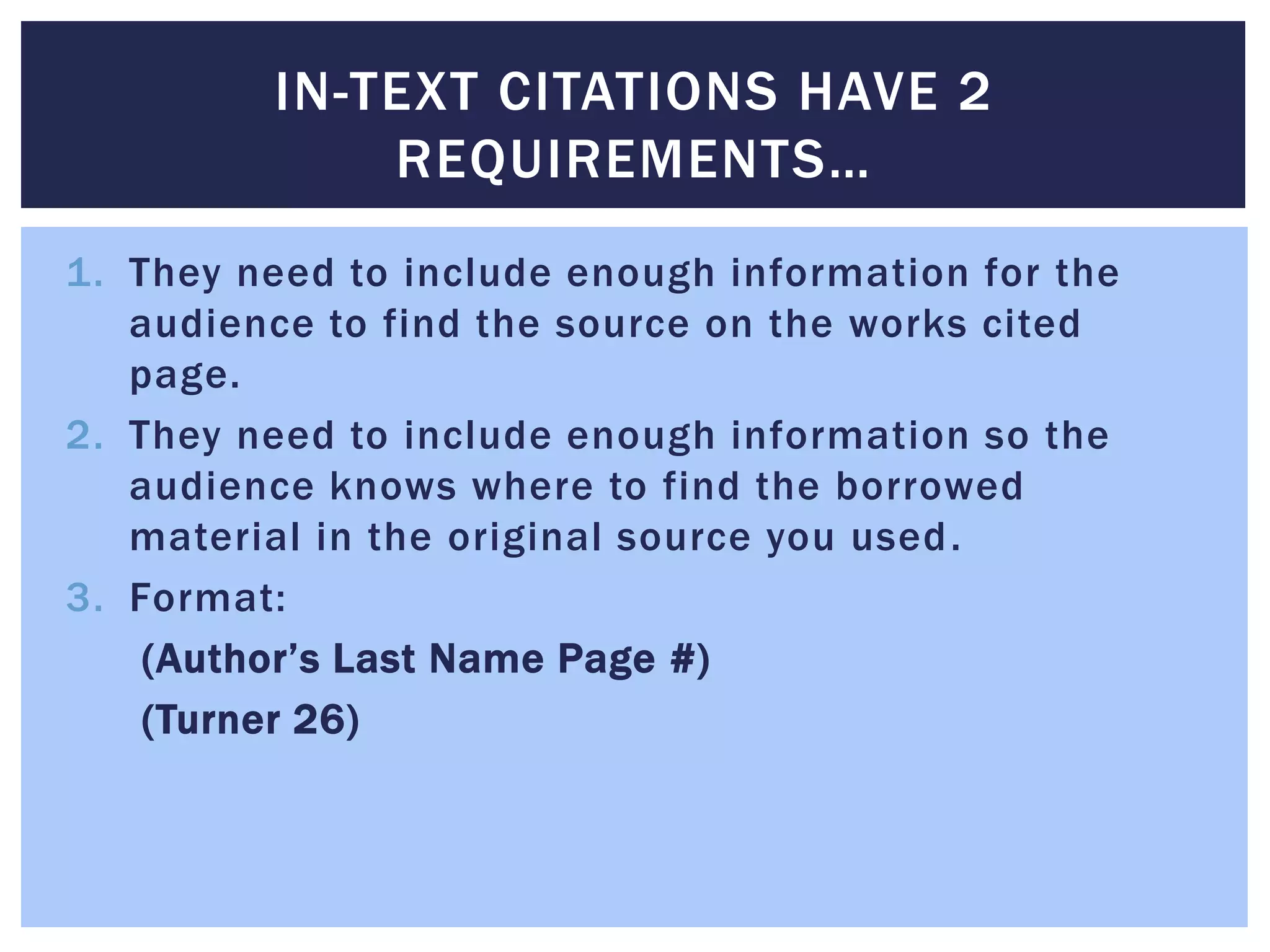
IN-TEXT CITATIONS HAVE 2 
REQUIREMENTS… 
1. They need to include enough information for the 
audience to find the source on the works cited 
page. 
2. They need to include enough information so the 
audience knows where to find the borrowed 
material in the original source you used. 
3. Format: 
(Author’s Last Name Page #) 
(Turner 26)
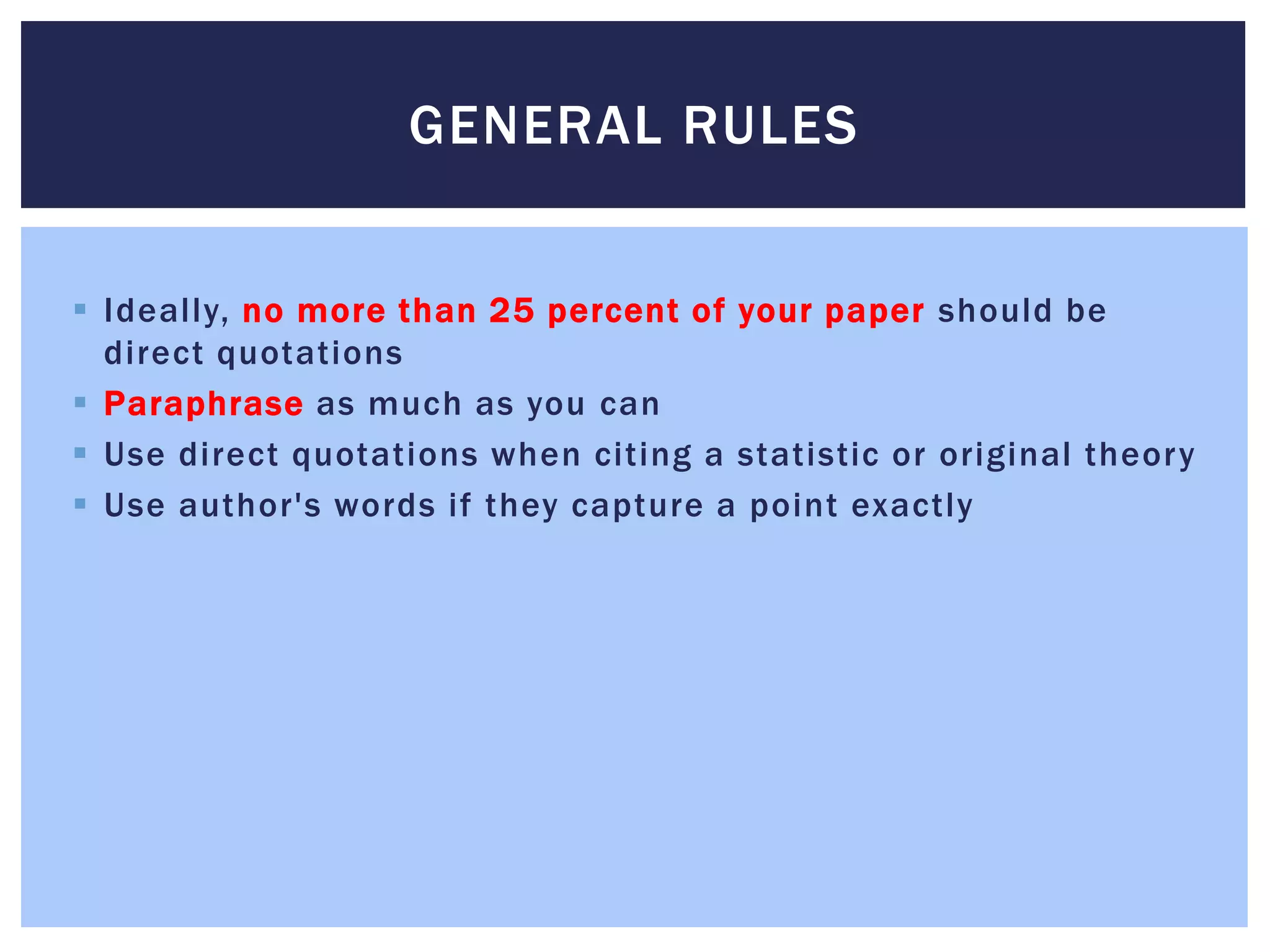
GENERAL RULES 
 Ideal ly, no more than 25 percent of your paper should be 
direct quotations 
 Paraphrase as much as you can 
 Use direct quotations when citing a statistic or original theory 
 Use author's words i f they capture a point exactly
DO NOT JUST DROP 
THE QUOTE IN 
YOUR TEXT!!!!
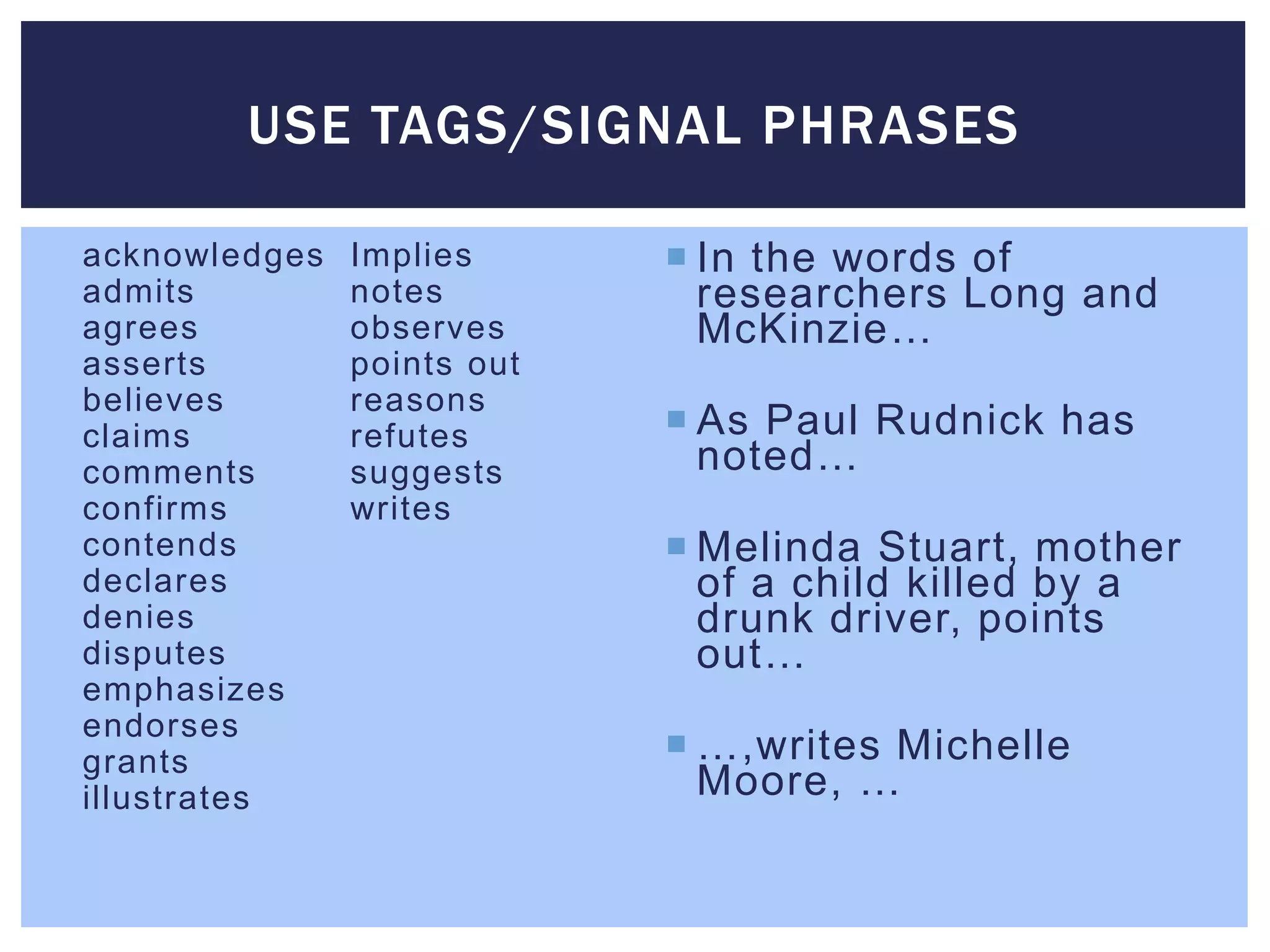
USE TAGS/SIGNAL PHRASES 
acknowledges 
admits 
agrees 
asserts 
believes 
claims 
comments 
confirms 
contends 
declares 
denies 
disputes 
emphasizes 
endorses 
grants 
illustrates 
Implies 
notes 
observes 
points out 
reasons 
refutes 
suggests 
writes 
 In the words of 
researchers Long and 
McKinzie… 
 As Paul Rudnick has 
noted… 
Melinda Stuart, mother 
of a child killed by a 
drunk driver, points 
out… 
 …,writes Michelle 
Moore, …
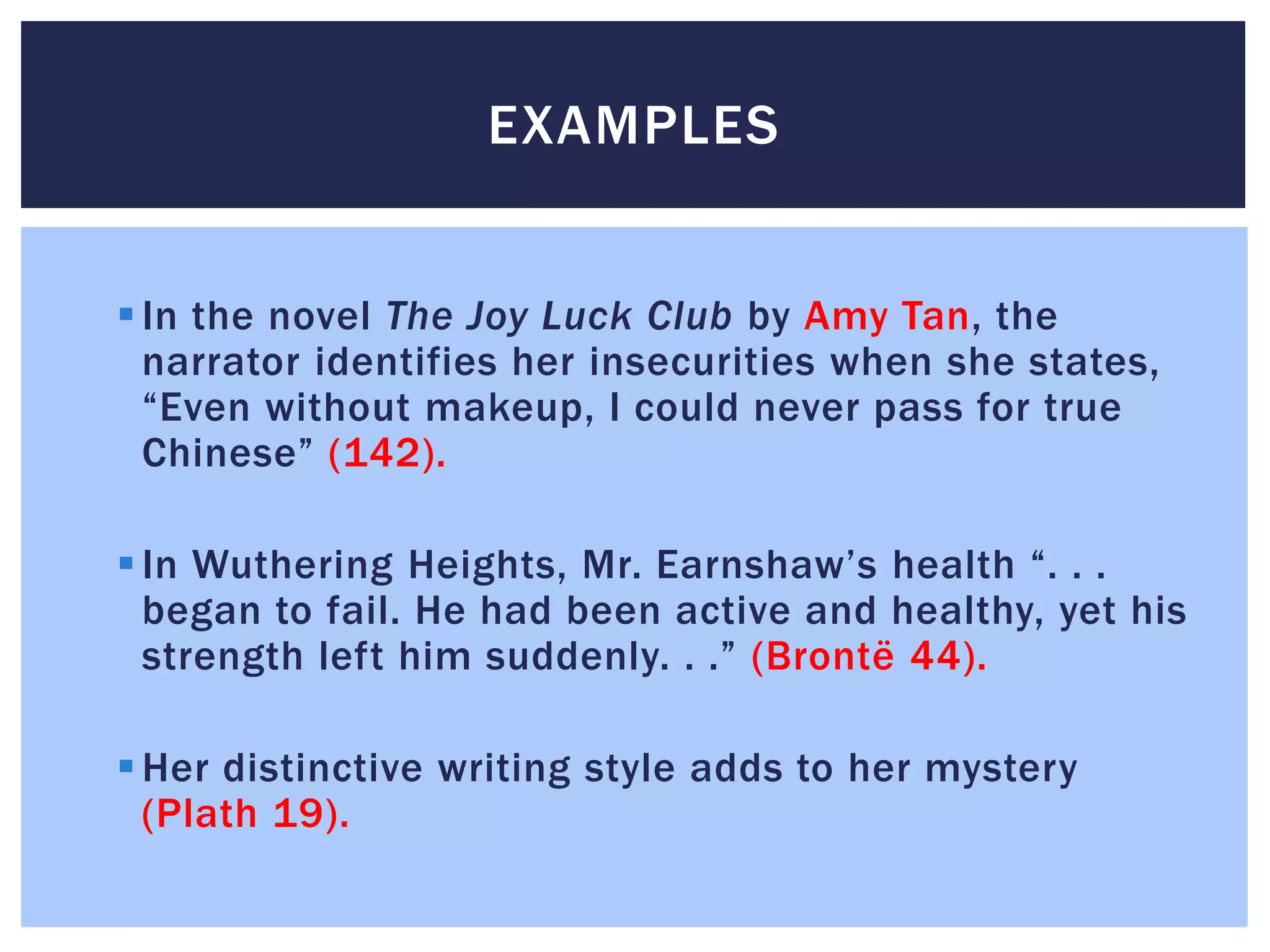
EXAMPLES 
 In the novel The Joy Luck Club by Amy Tan, the 
narrator identifies her insecurities when she states, 
“Even without makeup, I could never pass for true 
Chinese” (142). 
 In Wuthering Heights, Mr. Earnshaw’s health “. . . 
began to fail. He had been active and healthy, yet his 
strength left him suddenly. . .” (Brontë 44). 
Her distinctive writing style adds to her mystery 
(Plath 19).
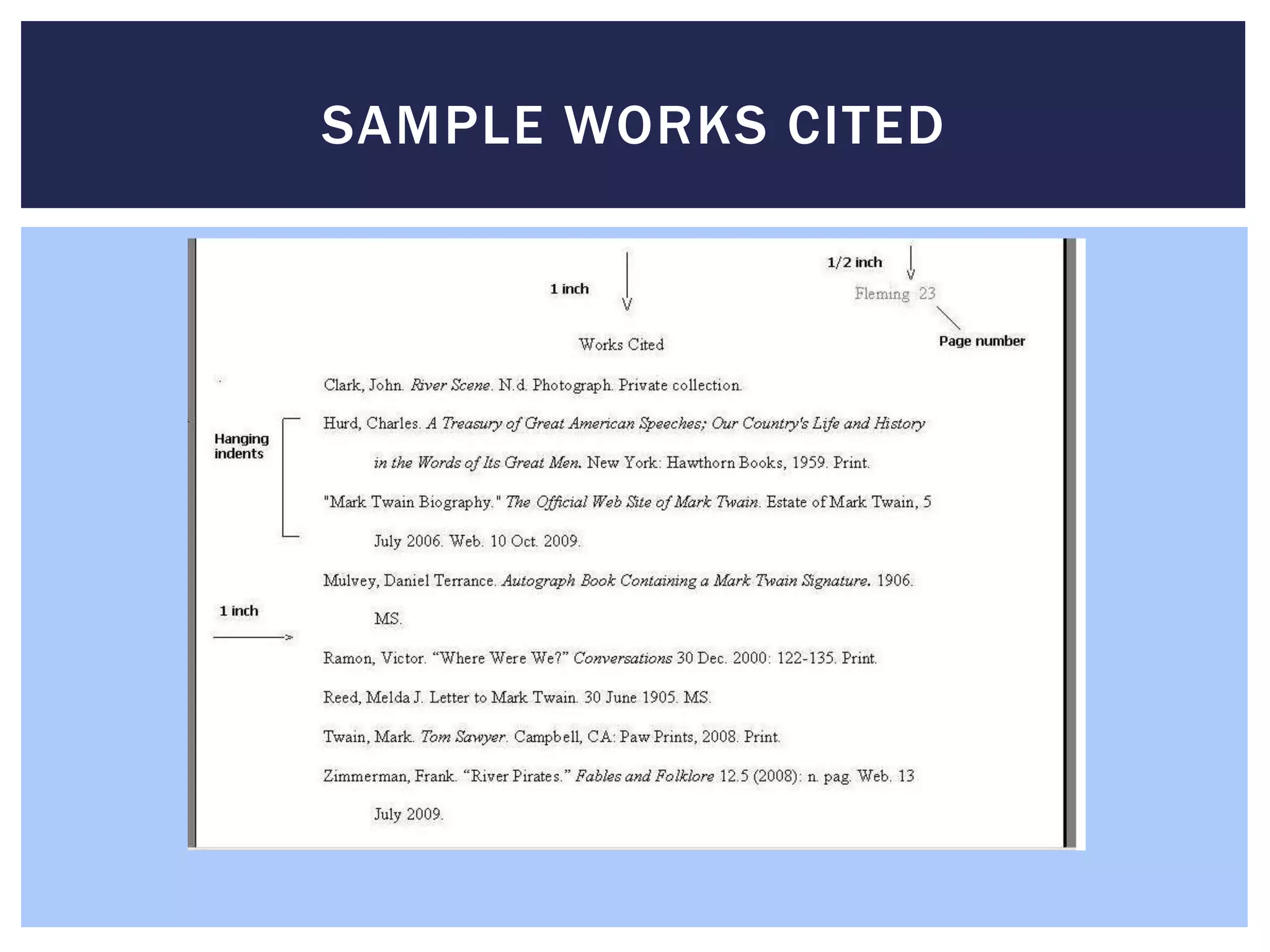
WORKS CITED PAGE 
 should include a detailed l ist of al l the outside sources used 
in the essay 
 written on a separate page. 
 sources should be in alphabetical order 
 Use hanging indentation for every source. 
 Use the appropriate MLA Works Cited entry format for each 
type of source. 
 There are dozens of di f ferent types of sources, and there is an 
MLA work cited format for each one. 
 Pay special attention to punctuation and order of the 
information provided.
SAMPLE WORKS CITED
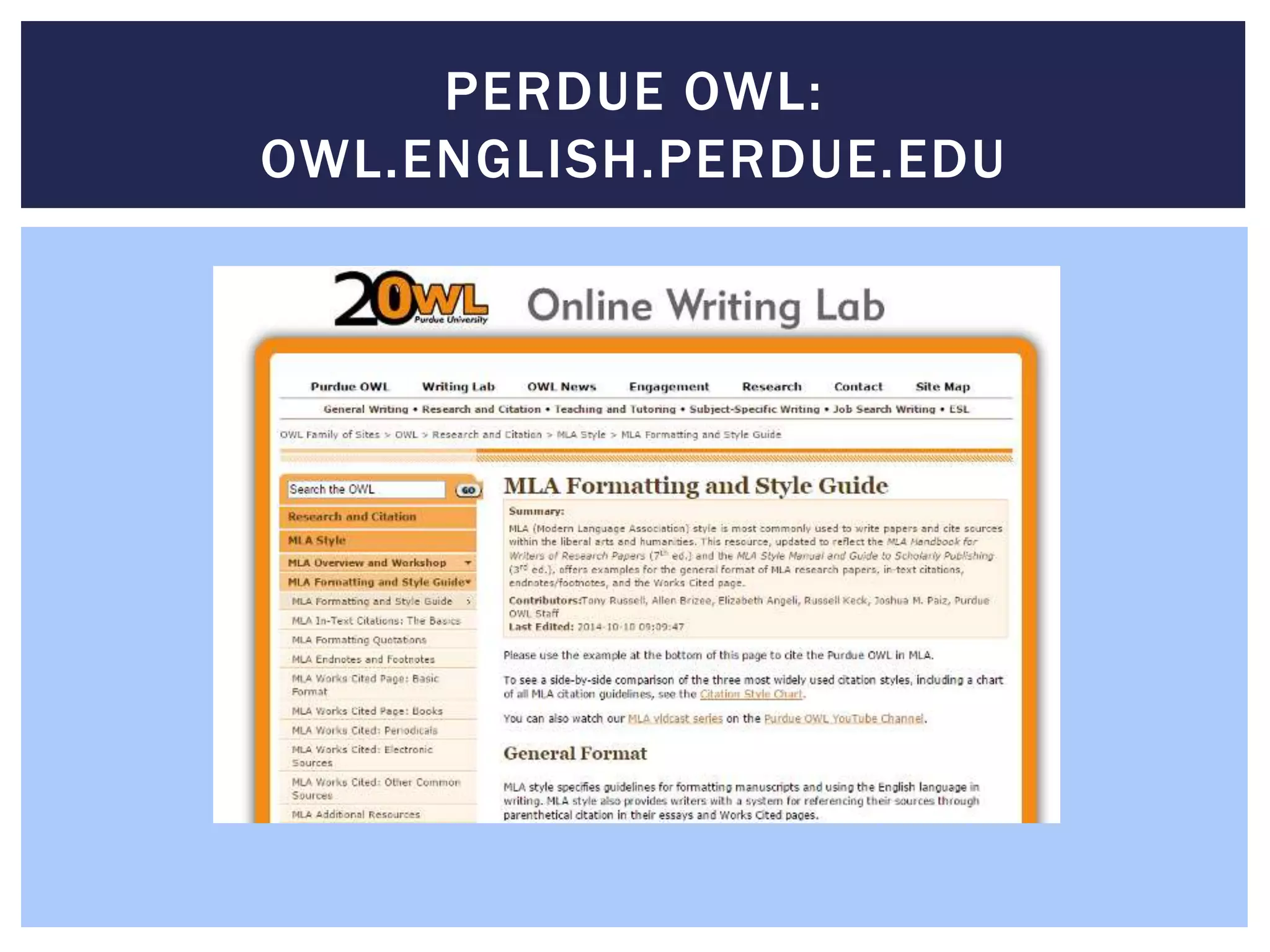
PERDUE OWL: 
OWL.ENGLISH.PERDUE.EDU
PHONES OUT! 
https//kahoot.it

MLA Format Notes

  • 1.
  • 2.
    MODERN LANGUAGE ASSOCIATION  professional association for scholars of language and l iterature  MLA Format = series of regulations and guidelines for writers  consistent writing style for essays and citations  required in col lege for al l essays and academic papers
  • 3.
    BASIC FEATURES OFMLA  Times New Roman font, 12 point size.  Double-space entire paper.  A l l ma r g in s s h o u l d b e s e t to 1 ” .  Include a header with your last name and page number at the upper-right hand corner of your essay.  Include a heading in the lef t-hand corner of the first page, i n c l u din g yo u r n ame , i n s t r u c to r’ s n ame , c l a s s n ame , a n d t h e date.  The title must fol low the heading and wi l l be centered. Do NOT u n d e r lin e , b o l d , o r “ q u ote ” yo u r t i t l e .  Include in-text citations and works cited page.
  • 4.
  • 5.
  • 6.
    CITATIONS & PLAGIARISM Citations  used to credit a source from which you obtain information  necessary in any and all writing pieces that are not just your original thoughts, as it is impor tant to credit the work of others  helps avoid unintentional plagiarizing Plagiarism  the act of using another per son’s words or ideas in the attempt of passing them of f as your own  Consequences for plagiarizing, even if unintentional, can result in a zero, academic suspension (college), and even expulsion (college).
  • 7.
    IN-TEXT CITATIONS Whento Use  I f you directly quote another source  I f you summarize or rephrase another i nd i v idual’ s ideas or work  I f information is taken verbally ( interview, class lecture)  I f you refer to a statistic  I f you refer to an i l lustration, photo, or char t (that you did not create) How to Use  usually consist of the author’s name and the page number on which the information/quote was found  placed at the end of the sentence
  • 8.
    IN-TEXT CITATIONS HAVE2 REQUIREMENTS… 1. They need to include enough information for the audience to find the source on the works cited page. 2. They need to include enough information so the audience knows where to find the borrowed material in the original source you used. 3. Format: (Author’s Last Name Page #) (Turner 26)
  • 9.
    GENERAL RULES Ideal ly, no more than 25 percent of your paper should be direct quotations  Paraphrase as much as you can  Use direct quotations when citing a statistic or original theory  Use author's words i f they capture a point exactly
  • 10.
    DO NOT JUSTDROP THE QUOTE IN YOUR TEXT!!!!
  • 11.
    USE TAGS/SIGNAL PHRASES acknowledges admits agrees asserts believes claims comments confirms contends declares denies disputes emphasizes endorses grants illustrates Implies notes observes points out reasons refutes suggests writes  In the words of researchers Long and McKinzie…  As Paul Rudnick has noted… Melinda Stuart, mother of a child killed by a drunk driver, points out…  …,writes Michelle Moore, …
  • 12.
    EXAMPLES  Inthe novel The Joy Luck Club by Amy Tan, the narrator identifies her insecurities when she states, “Even without makeup, I could never pass for true Chinese” (142).  In Wuthering Heights, Mr. Earnshaw’s health “. . . began to fail. He had been active and healthy, yet his strength left him suddenly. . .” (Brontë 44). Her distinctive writing style adds to her mystery (Plath 19).
  • 13.
    WORKS CITED PAGE  should include a detailed l ist of al l the outside sources used in the essay  written on a separate page.  sources should be in alphabetical order  Use hanging indentation for every source.  Use the appropriate MLA Works Cited entry format for each type of source.  There are dozens of di f ferent types of sources, and there is an MLA work cited format for each one.  Pay special attention to punctuation and order of the information provided.
  • 14.
  • 15.
  • 16.