SEPERATION OF
MIXTURES
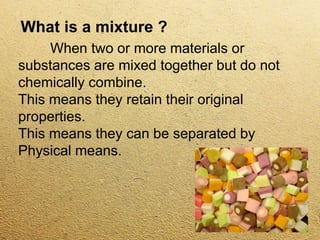
What is a mixture ?
When two or more materials or
substances are mixed together but do not
chemically combine.
This means they retain their original
properties.
This means they can be separated by
Physical means.
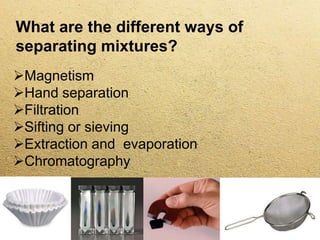
What are the different ways of
separating mixtures?
Magnetism
Hand separation
Filtration
Sifting or sieving
Extraction and evaporation
Chromatography
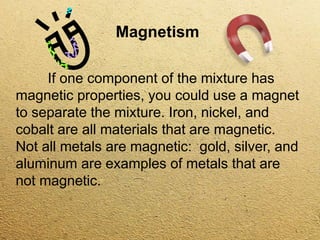
Magnetism
If one component of the mixture has
magnetic properties, you could use a magnet
to separate the mixture. Iron, nickel, and
cobalt are all materials that are magnetic.
Not all metals are magnetic: gold, silver, and
aluminum are examples of metals that are
not magnetic.
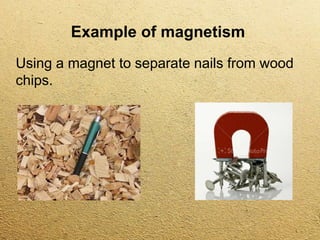
Example of magnetism
Using a magnet to separate nails from wood
chips.
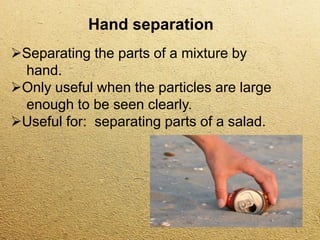
Hand separation
Separating the parts of a mixture by
hand.
Only useful when the particles are large
enough to be seen clearly.
Useful for: separating parts of a salad.
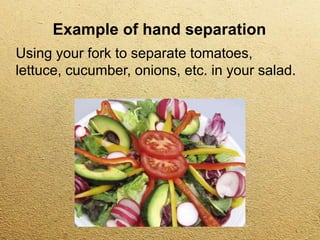
Example of hand separation
Using your fork to separate tomatoes,
lettuce, cucumber, onions, etc. in your salad.
Filtration
Used when separating a solid substance
from a fluid (a liquid or a gas) by passing a
mixture through a porous material such as a
type of filter.
Works by letting the fluid pass through but
not the solid.
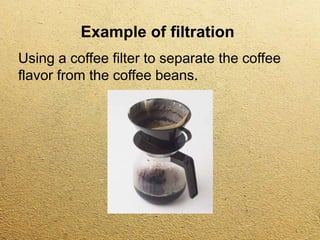
Examples of filters: coffee filter, cloth, oil
filter, even sand!
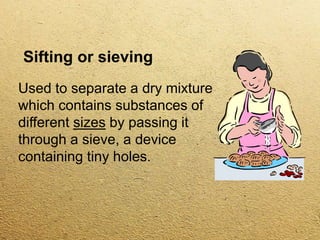
Example of filtration
Using a coffee filter to separate the coffee
flavor from the coffee beans.
Sifting or sieving
Used to separate a dry mixture
which contains substances of
different sizes by passing it
through a sieve, a device
containing tiny holes.
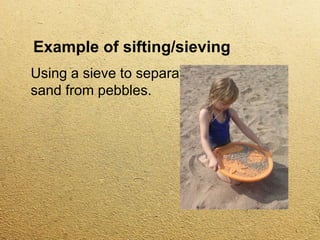
Example of sifting/sieving
Using a sieve to separate
sand from pebbles.
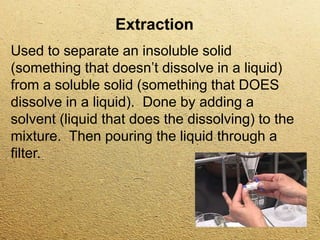
Extraction
Used to separate an insoluble solid
(something that doesn’t dissolve in a liquid)
from a soluble solid (something that DOES
dissolve in a liquid). Done by adding a
solvent (liquid that does the dissolving) to the
mixture. Then pouring the liquid through a
filter.
Example of extraction
With a mixture of sugar and sand, pouring
water in the mixture which causes the
sugar to dissolve. Then pouring the
solution through a filter, causing the sand to
separate from the sugar water.
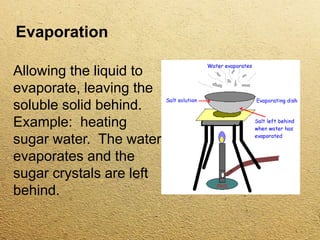
Evaporation
Allowing the liquid to
evaporate, leaving the
soluble solid behind.
Example: heating
sugar water. The water
evaporates and the
sugar crystals are left
behind.
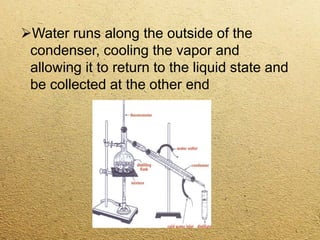
Distillation is a technique used to
separate two liquids with different
boiling points
When the first liquid starts to boil, it
evaporates and reaches the
condenser
Water runs along the outside of the
condenser, cooling the vapor and
allowing it to return to the liquid state and
be collected at the other end
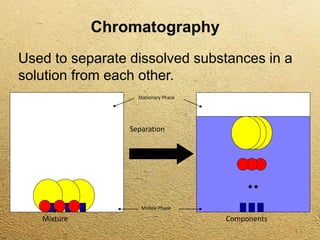
Chromatography
Used to separate dissolved substances in a
solution from each other.
Mixture Components
Separation
Stationary Phase
Mobile Phase
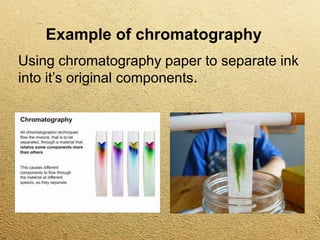
Example of chromatography
Using chromatography paper to separate ink
into it’s original components.

Mixture Seperation

  • 1.
  • 2.
    What is amixture ? When two or more materials or substances are mixed together but do not chemically combine. This means they retain their original properties. This means they can be separated by Physical means.
  • 3.
    What are thedifferent ways of separating mixtures? Magnetism Hand separation Filtration Sifting or sieving Extraction and evaporation Chromatography
  • 4.
    Magnetism If one componentof the mixture has magnetic properties, you could use a magnet to separate the mixture. Iron, nickel, and cobalt are all materials that are magnetic. Not all metals are magnetic: gold, silver, and aluminum are examples of metals that are not magnetic.
  • 5.
    Example of magnetism Usinga magnet to separate nails from wood chips.
  • 6.
    Hand separation Separating theparts of a mixture by hand. Only useful when the particles are large enough to be seen clearly. Useful for: separating parts of a salad.
  • 7.
    Example of handseparation Using your fork to separate tomatoes, lettuce, cucumber, onions, etc. in your salad.
  • 8.
    Filtration Used when separatinga solid substance from a fluid (a liquid or a gas) by passing a mixture through a porous material such as a type of filter. Works by letting the fluid pass through but not the solid. Examples of filters: coffee filter, cloth, oil filter, even sand!
  • 9.
    Example of filtration Usinga coffee filter to separate the coffee flavor from the coffee beans.
  • 10.
    Sifting or sieving Usedto separate a dry mixture which contains substances of different sizes by passing it through a sieve, a device containing tiny holes.
  • 11.
    Example of sifting/sieving Usinga sieve to separate sand from pebbles.
  • 12.
    Extraction Used to separatean insoluble solid (something that doesn’t dissolve in a liquid) from a soluble solid (something that DOES dissolve in a liquid). Done by adding a solvent (liquid that does the dissolving) to the mixture. Then pouring the liquid through a filter.
  • 13.
    Example of extraction Witha mixture of sugar and sand, pouring water in the mixture which causes the sugar to dissolve. Then pouring the solution through a filter, causing the sand to separate from the sugar water.
  • 14.
    Evaporation Allowing the liquidto evaporate, leaving the soluble solid behind. Example: heating sugar water. The water evaporates and the sugar crystals are left behind.
  • 15.
    Distillation is atechnique used to separate two liquids with different boiling points When the first liquid starts to boil, it evaporates and reaches the condenser
  • 16.
    Water runs alongthe outside of the condenser, cooling the vapor and allowing it to return to the liquid state and be collected at the other end
  • 17.
    Chromatography Used to separatedissolved substances in a solution from each other. Mixture Components Separation Stationary Phase Mobile Phase
  • 18.
    Example of chromatography Usingchromatography paper to separate ink into it’s original components.