Fast Food Employers & Minimum Wage Regulation in Ireland BUIRA Conference 2009 Michelle O’Sullivan, University of Limerick [email_address]   Tony Royle, NUI Galway
Regulation in fast food Joint Labour Committee system – equivalent to Wages Councils Catering has 2 JLCs – Dublin & rest of country Minimum wages through Employment Regulation Orders (EROs), overtime, minimum conditions JLC rates 7-10% higher than National Minimum Wage
Challenge to Catering JLC Formation of Quick Service Food Alliance (QSFA) Constitutional challenge to Catering JLC December 2008 setting of EROs is invalid – law making powers vested in Parliament  setting of EROs breaches European Convention of Human Rights
Research questions Why has a new body representing fast food employers been formed? Why has this body challenged minimum wage regulation? What are implications of the constitutional challenge?
Methodology Data collection phase 5 interviews: QSFA, Irish Business & Employers Confederation, Vintners Federation of Ireland, McDonalds Ireland & Ireland’s largest trade union, SIPTU
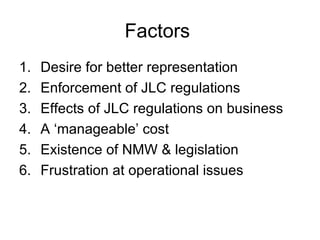
Factors  Desire for better representation Enforcement of JLC regulations Effects of JLC regulations on business A ‘manageable’ cost Existence of NMW & legislation Frustration at operational issues
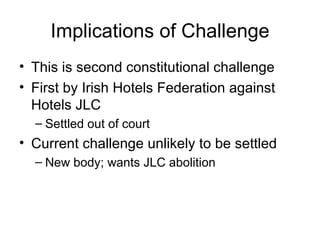
Implications of Challenge This is second constitutional challenge First by Irish Hotels Federation against Hotels JLC Settled out of court Current challenge unlikely to be settled New body; wants JLC abolition
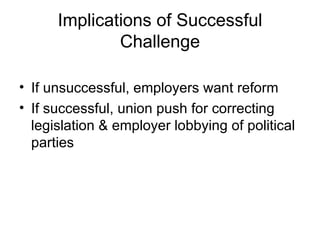
Implications of Successful Challenge If unsuccessful, employers want reform If successful, union push for correcting legislation & employer lobbying of political parties
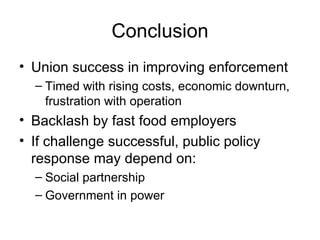
Conclusion Union success in improving enforcement Timed with rising costs, economic downturn, frustration with operation Backlash by fast food employers If challenge successful, public policy response may depend on: Social partnership Government in power

Minimum Wages & Fast Food Employers

  • 1.
    Fast Food Employers& Minimum Wage Regulation in Ireland BUIRA Conference 2009 Michelle O’Sullivan, University of Limerick [email_address] Tony Royle, NUI Galway
  • 2.
    Regulation in fastfood Joint Labour Committee system – equivalent to Wages Councils Catering has 2 JLCs – Dublin & rest of country Minimum wages through Employment Regulation Orders (EROs), overtime, minimum conditions JLC rates 7-10% higher than National Minimum Wage
  • 3.
    Challenge to CateringJLC Formation of Quick Service Food Alliance (QSFA) Constitutional challenge to Catering JLC December 2008 setting of EROs is invalid – law making powers vested in Parliament setting of EROs breaches European Convention of Human Rights
  • 4.
    Research questions Whyhas a new body representing fast food employers been formed? Why has this body challenged minimum wage regulation? What are implications of the constitutional challenge?
  • 5.
    Methodology Data collectionphase 5 interviews: QSFA, Irish Business & Employers Confederation, Vintners Federation of Ireland, McDonalds Ireland & Ireland’s largest trade union, SIPTU
  • 6.
    Factors Desirefor better representation Enforcement of JLC regulations Effects of JLC regulations on business A ‘manageable’ cost Existence of NMW & legislation Frustration at operational issues
  • 7.
    Implications of ChallengeThis is second constitutional challenge First by Irish Hotels Federation against Hotels JLC Settled out of court Current challenge unlikely to be settled New body; wants JLC abolition
  • 8.
    Implications of SuccessfulChallenge If unsuccessful, employers want reform If successful, union push for correcting legislation & employer lobbying of political parties
  • 9.
    Conclusion Union successin improving enforcement Timed with rising costs, economic downturn, frustration with operation Backlash by fast food employers If challenge successful, public policy response may depend on: Social partnership Government in power