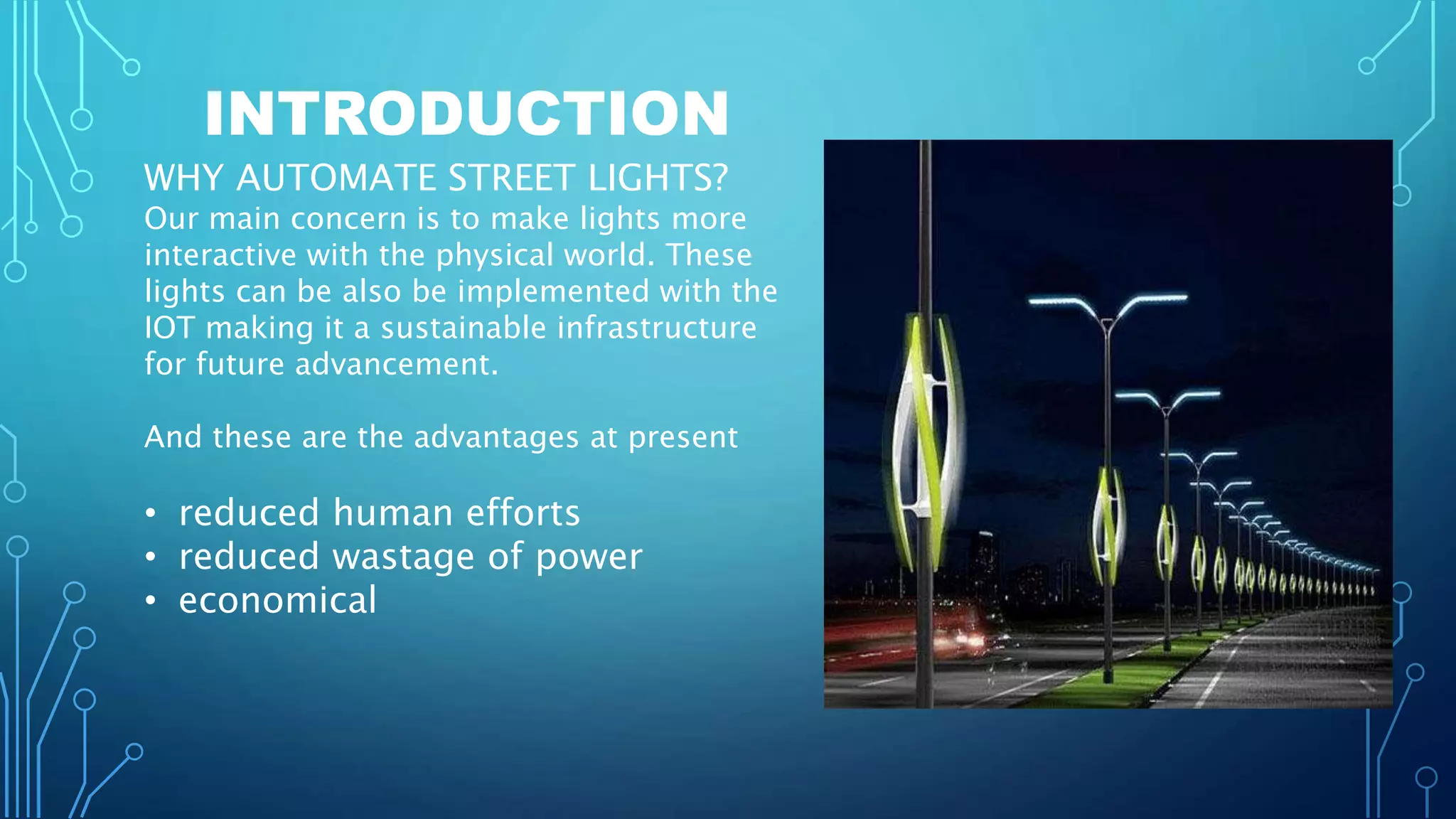
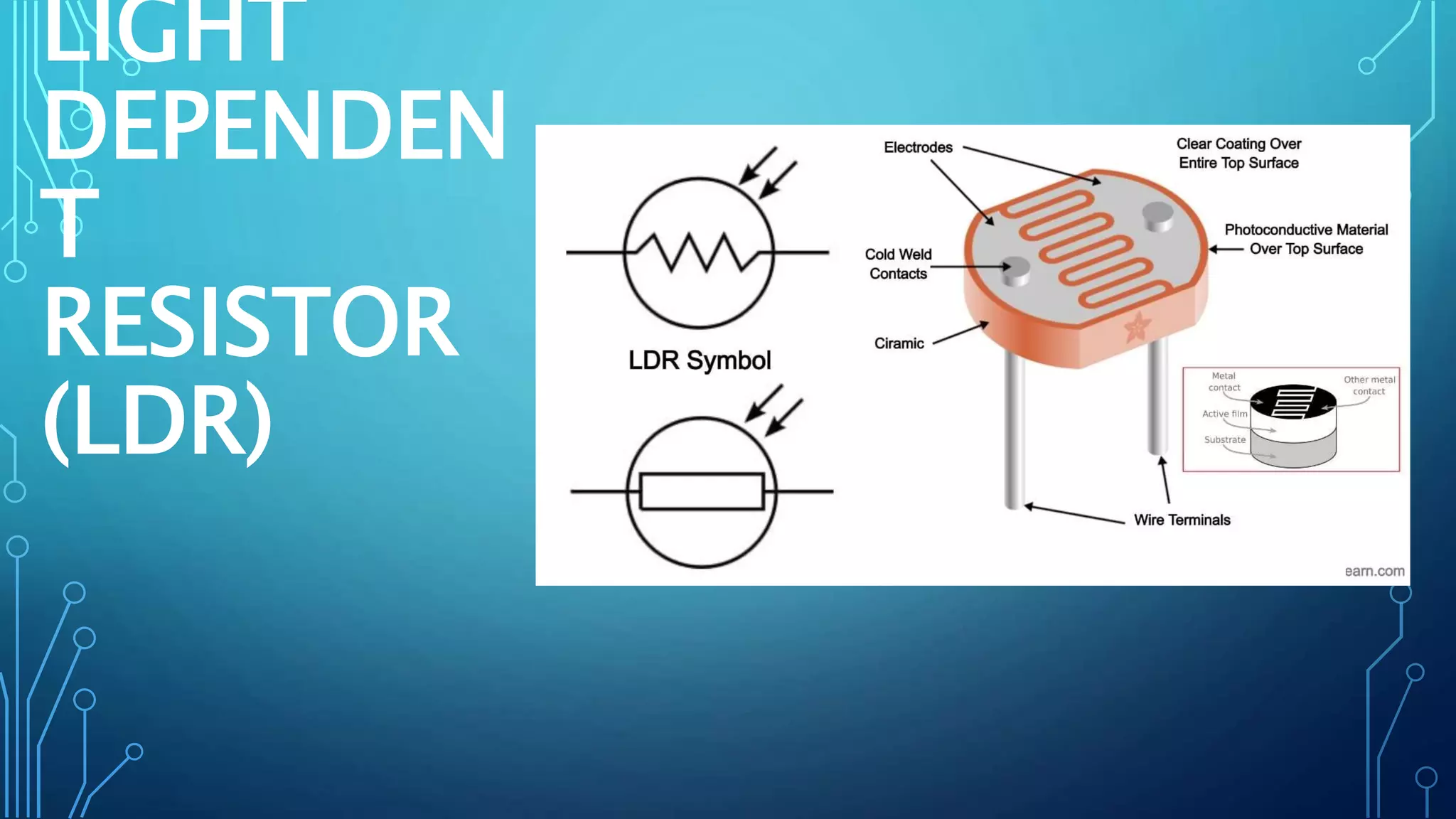
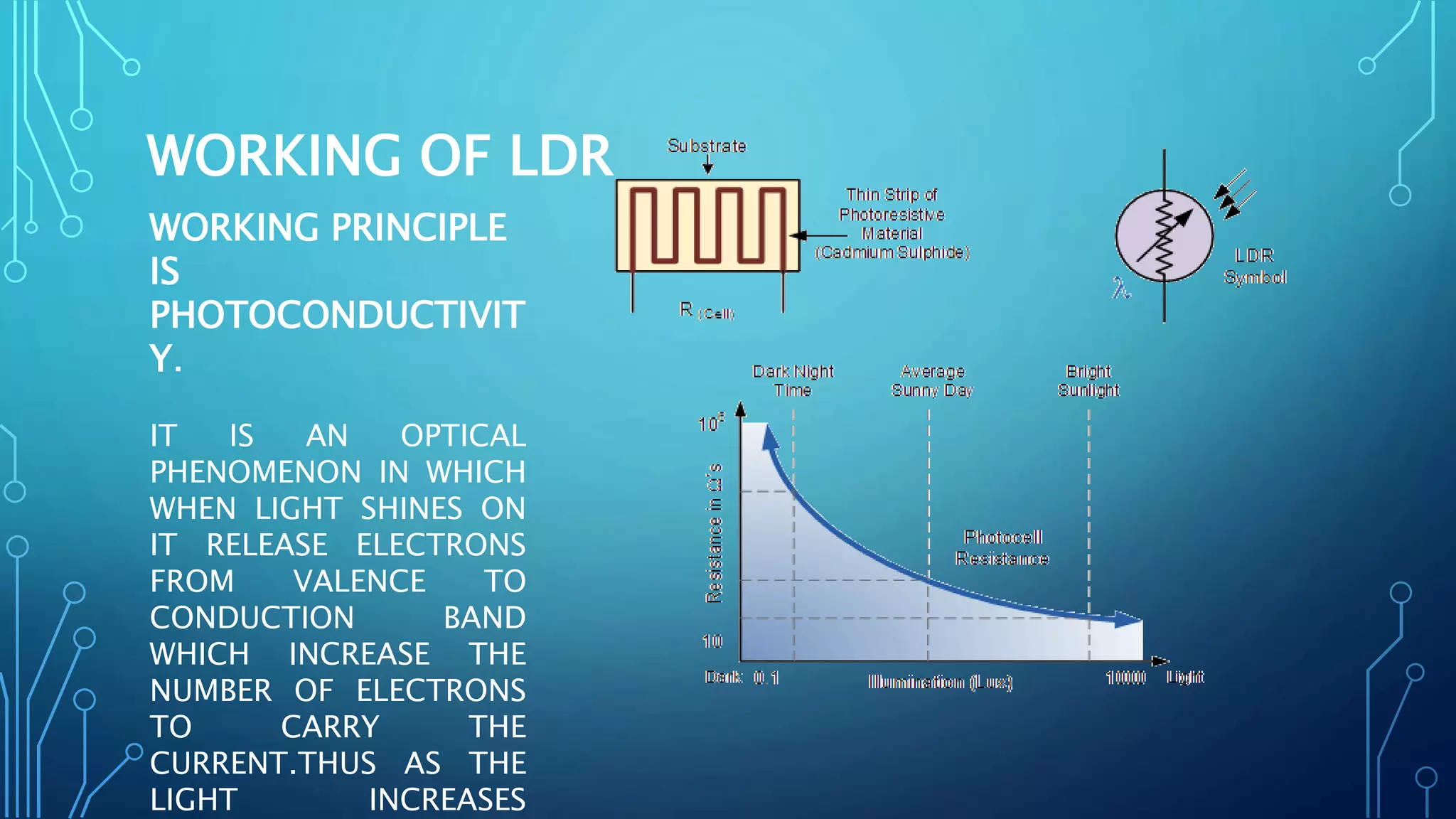
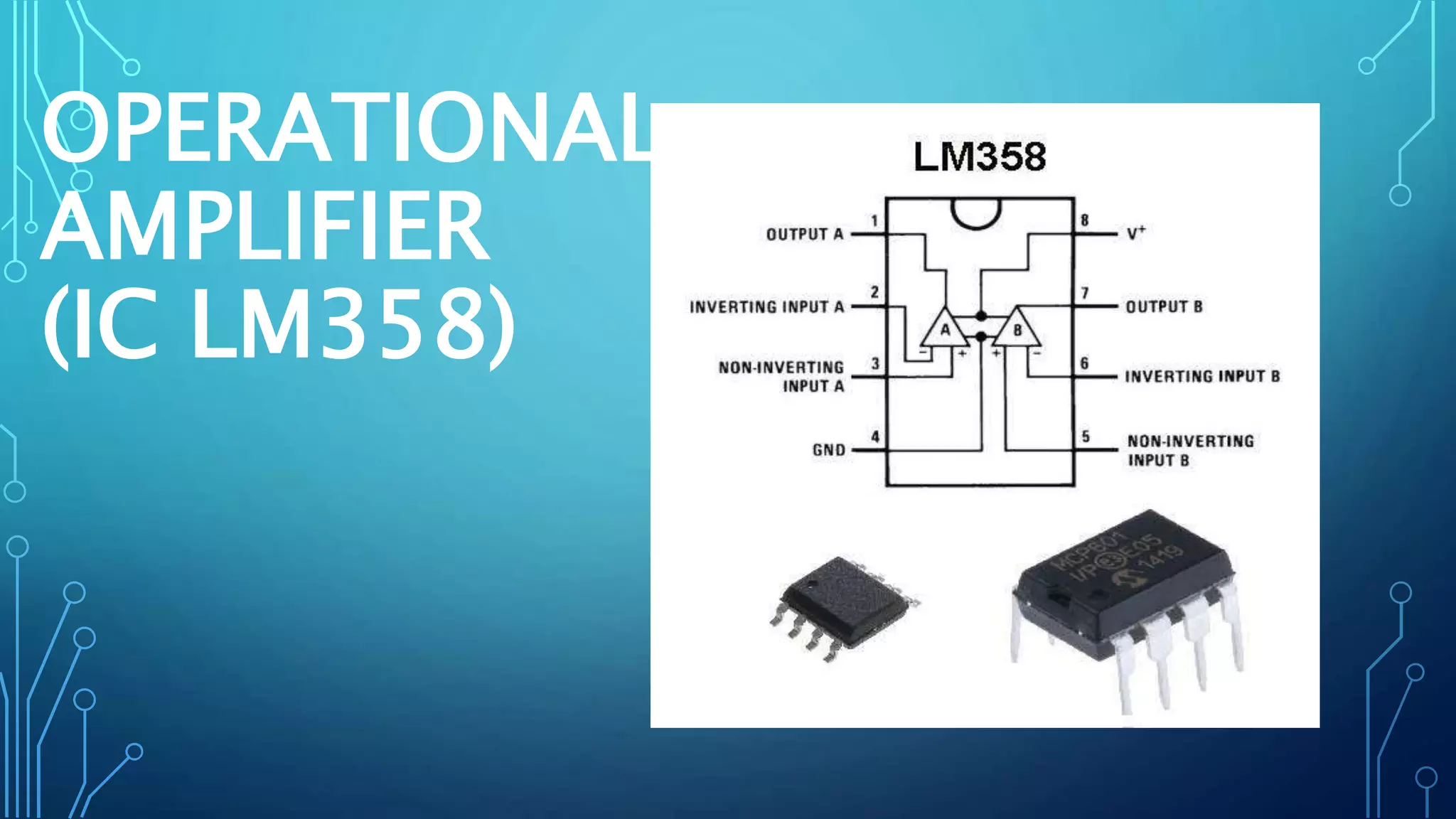
Automatic street lights have three main advantages: reduced human effort for manual operation, reduced wastage of power by turning off lights during daylight hours, and being more economical than traditional street lights. The key components of an automatic street light include a light dependent resistor (LDR) that decreases resistance with more light and increases it with less light, providing a signal to an operational amplifier. The operational amplifier compares the LDR voltage signal to a reference voltage and turns the street light on at dusk and off at dawn automatically. This automation provides benefits like lower overheating risk, minimized accidents, energy efficiency, and low operation costs while enhancing safety and security with automatic light control.