The next college of nursing & allied health sciences
MICROBIOLOGY
BS NURSING SMESTER I
Date: 29-01-2024
TIME: 50 minutes Total marks: 40
MCQS
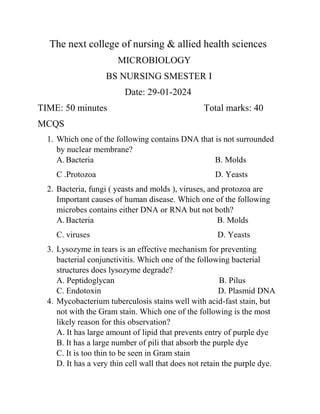
1. Which one of the following contains DNA that is not surrounded
by nuclear membrane?
A. Bacteria B. Molds
C .Protozoa D. Yeasts
2. Bacteria, fungi ( yeasts and molds ), viruses, and protozoa are
Important causes of human disease. Which one of the following
microbes contains either DNA or RNA but not both?
A. Bacteria B. Molds
C. viruses D. Yeasts
3. Lysozyme in tears is an effective mechanism for preventing
bacterial conjunctivitis. Which one of the following bacterial
structures does lysozyme degrade?
A. Peptidoglycan B. Pilus
C. Endotoxin D. Plasmid DNA
4. Mycobacterium tuberculosis stains well with acid-fast stain, but
not with the Gram stain. Which one of the following is the most
likely reason for this observation?
A. It has large amount of lipid that prevents entry of purple dye
B. It has a large number of pili that absorb the purple dye
C. It is too thin to be seen in Gram stain
D. It has a very thin cell wall that does not retain the purple dye.
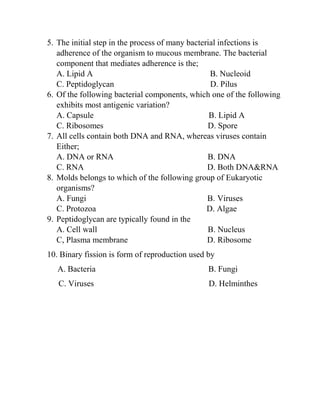
5. The initial step in the process of many bacterial infections is
adherence of the organism to mucous membrane. The bacterial
component that mediates adherence is the;
A. Lipid A B. Nucleoid
C. Peptidoglycan D. Pilus
6. Of the following bacterial components, which one of the following
exhibits most antigenic variation?
A. Capsule B. Lipid A
C. Ribosomes D. Spore
7. All cells contain both DNA and RNA, whereas viruses contain
Either;
A. DNA or RNA B. DNA
C. RNA D. Both DNA&RNA
8. Molds belongs to which of the following group of Eukaryotic
organisms?
A. Fungi B. Viruses
C. Protozoa D. Algae
9. Peptidoglycan are typically found in the
A. Cell wall B. Nucleus
C, Plasma membrane D. Ribosome
10. Binary fission is form of reproduction used by
A. Bacteria B. Fungi
C. Viruses D. Helminthes
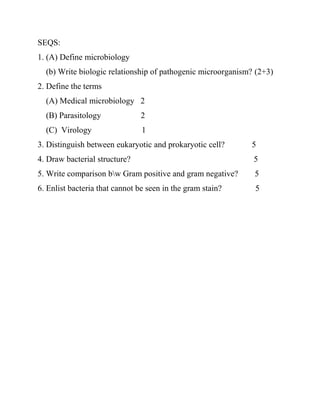
SEQS:
1. (A) Define microbiology
(b) Write biologic relationship of pathogenic microorganism? (2+3)
2. Define the terms
(A) Medical microbiology 2
(B) Parasitology 2
(C) Virology 1
3. Distinguish between eukaryotic and prokaryotic cell? 5
4. Draw bacterial structure? 5
5. Write comparison bw Gram positive and gram negative? 5
6. Enlist bacteria that cannot be seen in the gram stain? 5

micro test 1.docx test micro biology test

  • 1.
    The next collegeof nursing & allied health sciences MICROBIOLOGY BS NURSING SMESTER I Date: 29-01-2024 TIME: 50 minutes Total marks: 40 MCQS 1. Which one of the following contains DNA that is not surrounded by nuclear membrane? A. Bacteria B. Molds C .Protozoa D. Yeasts 2. Bacteria, fungi ( yeasts and molds ), viruses, and protozoa are Important causes of human disease. Which one of the following microbes contains either DNA or RNA but not both? A. Bacteria B. Molds C. viruses D. Yeasts 3. Lysozyme in tears is an effective mechanism for preventing bacterial conjunctivitis. Which one of the following bacterial structures does lysozyme degrade? A. Peptidoglycan B. Pilus C. Endotoxin D. Plasmid DNA 4. Mycobacterium tuberculosis stains well with acid-fast stain, but not with the Gram stain. Which one of the following is the most likely reason for this observation? A. It has large amount of lipid that prevents entry of purple dye B. It has a large number of pili that absorb the purple dye C. It is too thin to be seen in Gram stain D. It has a very thin cell wall that does not retain the purple dye.
  • 2.
    5. The initialstep in the process of many bacterial infections is adherence of the organism to mucous membrane. The bacterial component that mediates adherence is the; A. Lipid A B. Nucleoid C. Peptidoglycan D. Pilus 6. Of the following bacterial components, which one of the following exhibits most antigenic variation? A. Capsule B. Lipid A C. Ribosomes D. Spore 7. All cells contain both DNA and RNA, whereas viruses contain Either; A. DNA or RNA B. DNA C. RNA D. Both DNA&RNA 8. Molds belongs to which of the following group of Eukaryotic organisms? A. Fungi B. Viruses C. Protozoa D. Algae 9. Peptidoglycan are typically found in the A. Cell wall B. Nucleus C, Plasma membrane D. Ribosome 10. Binary fission is form of reproduction used by A. Bacteria B. Fungi C. Viruses D. Helminthes
  • 3.
    SEQS: 1. (A) Definemicrobiology (b) Write biologic relationship of pathogenic microorganism? (2+3) 2. Define the terms (A) Medical microbiology 2 (B) Parasitology 2 (C) Virology 1 3. Distinguish between eukaryotic and prokaryotic cell? 5 4. Draw bacterial structure? 5 5. Write comparison bw Gram positive and gram negative? 5 6. Enlist bacteria that cannot be seen in the gram stain? 5