BY
ARUSHI SHARMA
B.ED 1ST YEAR 20-21
D20-BED298
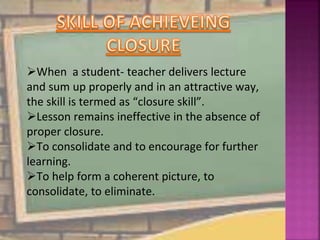
When a student- teacher delivers lecture
and sum up properly and in an attractive way,
the skill is termed as “closure skill”.
Lesson remains ineffective in the absence of
proper closure.
To consolidate and to encourage for further
learning.
To help form a coherent picture, to
consolidate, to eliminate.
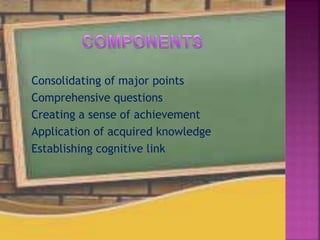
Consolidating of major points
Comprehensive questions
Creating a sense of achievement
Application of acquired knowledge
Establishing cognitive link
LESSON PLAN
SKILL OF ACHIEVING CLOSURE
NAME OF THE TEACHER TRAINEE
SUBJECT
TOPIC
CLASS
DURATION
DATE
- ARUSHI SHARMA
- SCIENCE
– LIGHT
– VI
– 6 TO 8 MINUTES
– 25.05.2021
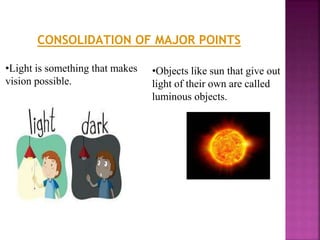
•Light is something that makes
vision possible.
•Objects like sun that give out
light of their own are called
luminous objects.
CONSOLIDATION OF MAJOR POINTS
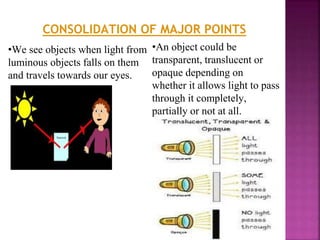
•We see objects when light from
luminous objects falls on them
and travels towards our eyes.
•An object could be
transparent, translucent or
opaque depending on
whether it allows light to pass
through it completely,
partially or not at all.
CONSOLIDATION OF MAJOR POINTS
What do we need in a dark room to see objects?
Ans: we need light to see objects.
What is light?
Ans: light is something which make our vision possible.
What is a luminous object?
Ans: Objects that give out light of their own are called
luminous object.
Objects that allow light to completely pass through them
are
Ans : Transparent objects
Give any 2 example of opaque objects.
Ans: mobile, paper, tree
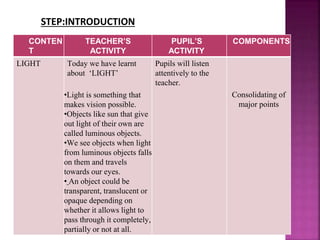
CONTEN
T
TEACHER’S
ACTIVITY
PUPIL’S
ACTIVITY
COMPONENTS
LIGHT Today we have learnt
about ‘LIGHT’
Pupils will listen
attentively to the
teacher.
•Light is something that
makes vision possible.
•Objects like sun that give
out light of their own are
called luminous objects.
•We see objects when light
from luminous objects falls
on them and travels
towards our eyes.
• An object could be
transparent, translucent or
opaque depending on
whether it allows light to
pass through it completely,
partially or not at all.
Consolidating of
major points
STEP:INTRODUCTION
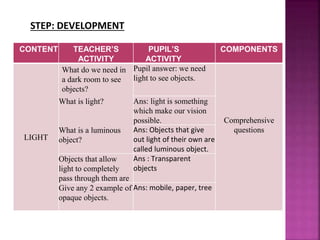
CONTENT TEACHER’S
ACTIVITY
PUPIL’S
ACTIVITY
COMPONENTS
LIGHT
What do we need in
a dark room to see
objects?
Pupil answer: we need
light to see objects.
Comprehensive
questions
What is light? Ans: light is something
which make our vision
possible.
What is a luminous
object?
Ans: Objects that give
out light of their own are
called luminous object.
Objects that allow
light to completely
pass through them are
Ans : Transparent
objects
Give any 2 example of
opaque objects.
Ans: mobile, paper, tree
STEP: DEVELOPMENT
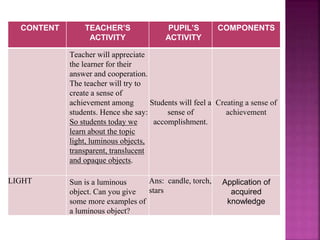
CONTENT TEACHER’S
ACTIVITY
PUPIL’S
ACTIVITY
COMPONENTS
Teacher will appreciate
the learner for their
answer and cooperation.
The teacher will try to
create a sense of
achievement among
students. Hence she say:
So students today we
learn about the topic
light, luminous objects,
transparent, translucent
and opaque objects.
Students will feel a
sense of
accomplishment.
Creating a sense of
achievement
LIGHT Sun is a luminous
object. Can you give
some more examples of
a luminous object?
Ans: candle, torch,
stars
Application of
acquired
knowledge
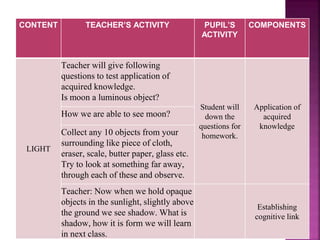
CONTENT TEACHER’S ACTIVITY PUPIL’S
ACTIVITY
COMPONENTS
LIGHT
Teacher will give following
questions to test application of
acquired knowledge.
Is moon a luminous object?
Student will
down the
questions for
homework.
Application of
acquired
knowledge
How we are able to see moon?
Collect any 10 objects from your
surrounding like piece of cloth,
eraser, scale, butter paper, glass etc.
Try to look at something far away,
through each of these and observe.
Teacher: Now when we hold opaque
objects in the sunlight, slightly above
the ground we see shadow. What is
shadow, how it is form we will learn
in next class.
Establishing
cognitive link
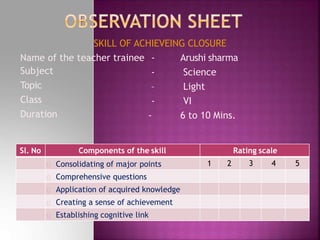
SKILL OF ACHIEVEING CLOSURE
Name of the teacher trainee -
Subject
Topic
Class
Duration
Arushi sharma
- Science
– Light
- VI
- 6 to 10 Mins.
Sl. No Components of the skill
1 2
Rating scale
3 4 5
Consolidating of major points
Comprehensive questions
Application of acquired knowledge
Creating a sense of achievement
Establishing cognitive link
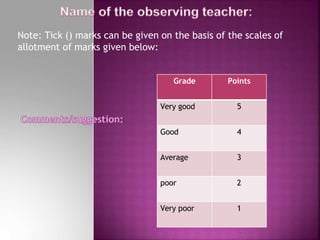
Note: Tick () marks can be given on the basis of the scales of
allotment of marks given below:
Grade Points
Very good 5
Good 4
Average 3
poor 2
Very poor 1

Micro teaching closure skill, LESSON PLAN

  • 1.
    BY ARUSHI SHARMA B.ED 1STYEAR 20-21 D20-BED298
  • 2.
    When a student-teacher delivers lecture and sum up properly and in an attractive way, the skill is termed as “closure skill”. Lesson remains ineffective in the absence of proper closure. To consolidate and to encourage for further learning. To help form a coherent picture, to consolidate, to eliminate.
  • 3.
    Consolidating of majorpoints Comprehensive questions Creating a sense of achievement Application of acquired knowledge Establishing cognitive link
  • 4.
    LESSON PLAN SKILL OFACHIEVING CLOSURE NAME OF THE TEACHER TRAINEE SUBJECT TOPIC CLASS DURATION DATE - ARUSHI SHARMA - SCIENCE – LIGHT – VI – 6 TO 8 MINUTES – 25.05.2021
  • 5.
    •Light is somethingthat makes vision possible. •Objects like sun that give out light of their own are called luminous objects. CONSOLIDATION OF MAJOR POINTS
  • 6.
    •We see objectswhen light from luminous objects falls on them and travels towards our eyes. •An object could be transparent, translucent or opaque depending on whether it allows light to pass through it completely, partially or not at all. CONSOLIDATION OF MAJOR POINTS
  • 7.
    What do weneed in a dark room to see objects? Ans: we need light to see objects. What is light? Ans: light is something which make our vision possible. What is a luminous object? Ans: Objects that give out light of their own are called luminous object. Objects that allow light to completely pass through them are Ans : Transparent objects Give any 2 example of opaque objects. Ans: mobile, paper, tree
  • 8.
    CONTEN T TEACHER’S ACTIVITY PUPIL’S ACTIVITY COMPONENTS LIGHT Today wehave learnt about ‘LIGHT’ Pupils will listen attentively to the teacher. •Light is something that makes vision possible. •Objects like sun that give out light of their own are called luminous objects. •We see objects when light from luminous objects falls on them and travels towards our eyes. • An object could be transparent, translucent or opaque depending on whether it allows light to pass through it completely, partially or not at all. Consolidating of major points STEP:INTRODUCTION
  • 9.
    CONTENT TEACHER’S ACTIVITY PUPIL’S ACTIVITY COMPONENTS LIGHT What dowe need in a dark room to see objects? Pupil answer: we need light to see objects. Comprehensive questions What is light? Ans: light is something which make our vision possible. What is a luminous object? Ans: Objects that give out light of their own are called luminous object. Objects that allow light to completely pass through them are Ans : Transparent objects Give any 2 example of opaque objects. Ans: mobile, paper, tree STEP: DEVELOPMENT
  • 10.
    CONTENT TEACHER’S ACTIVITY PUPIL’S ACTIVITY COMPONENTS Teacher willappreciate the learner for their answer and cooperation. The teacher will try to create a sense of achievement among students. Hence she say: So students today we learn about the topic light, luminous objects, transparent, translucent and opaque objects. Students will feel a sense of accomplishment. Creating a sense of achievement LIGHT Sun is a luminous object. Can you give some more examples of a luminous object? Ans: candle, torch, stars Application of acquired knowledge
  • 11.
    CONTENT TEACHER’S ACTIVITYPUPIL’S ACTIVITY COMPONENTS LIGHT Teacher will give following questions to test application of acquired knowledge. Is moon a luminous object? Student will down the questions for homework. Application of acquired knowledge How we are able to see moon? Collect any 10 objects from your surrounding like piece of cloth, eraser, scale, butter paper, glass etc. Try to look at something far away, through each of these and observe. Teacher: Now when we hold opaque objects in the sunlight, slightly above the ground we see shadow. What is shadow, how it is form we will learn in next class. Establishing cognitive link
  • 12.
    SKILL OF ACHIEVEINGCLOSURE Name of the teacher trainee - Subject Topic Class Duration Arushi sharma - Science – Light - VI - 6 to 10 Mins. Sl. No Components of the skill 1 2 Rating scale 3 4 5 Consolidating of major points Comprehensive questions Application of acquired knowledge Creating a sense of achievement Establishing cognitive link
  • 13.
    Note: Tick ()marks can be given on the basis of the scales of allotment of marks given below: Grade Points Very good 5 Good 4 Average 3 poor 2 Very poor 1