MODULE 3
HEAT EXCHANGERS
INTRODUCTION
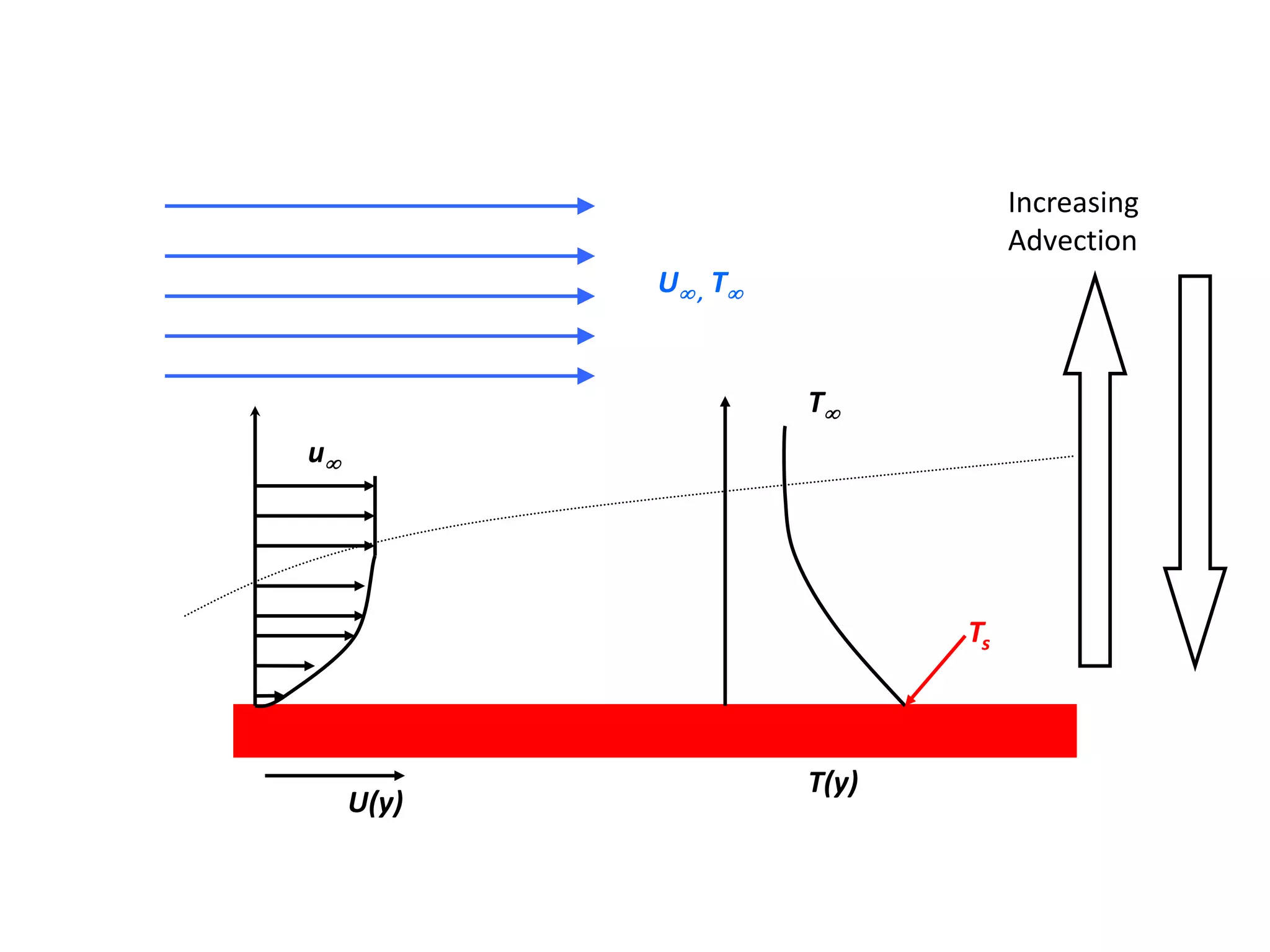
• When a fluid flows past a stationary solid
  surface ,a thin film of fluid is postulated as
  existing between the flowing fluid and the
  stationary surface
• It is also assumed that all the resistance to
  transmission of heat between the flowing fluid
  and the body containing the fluid is due to the
  film at the stationary surface.
Increasing
                                  Advection
            U , T


                      T
u


                             Ts


                      T(y)
     U(y)
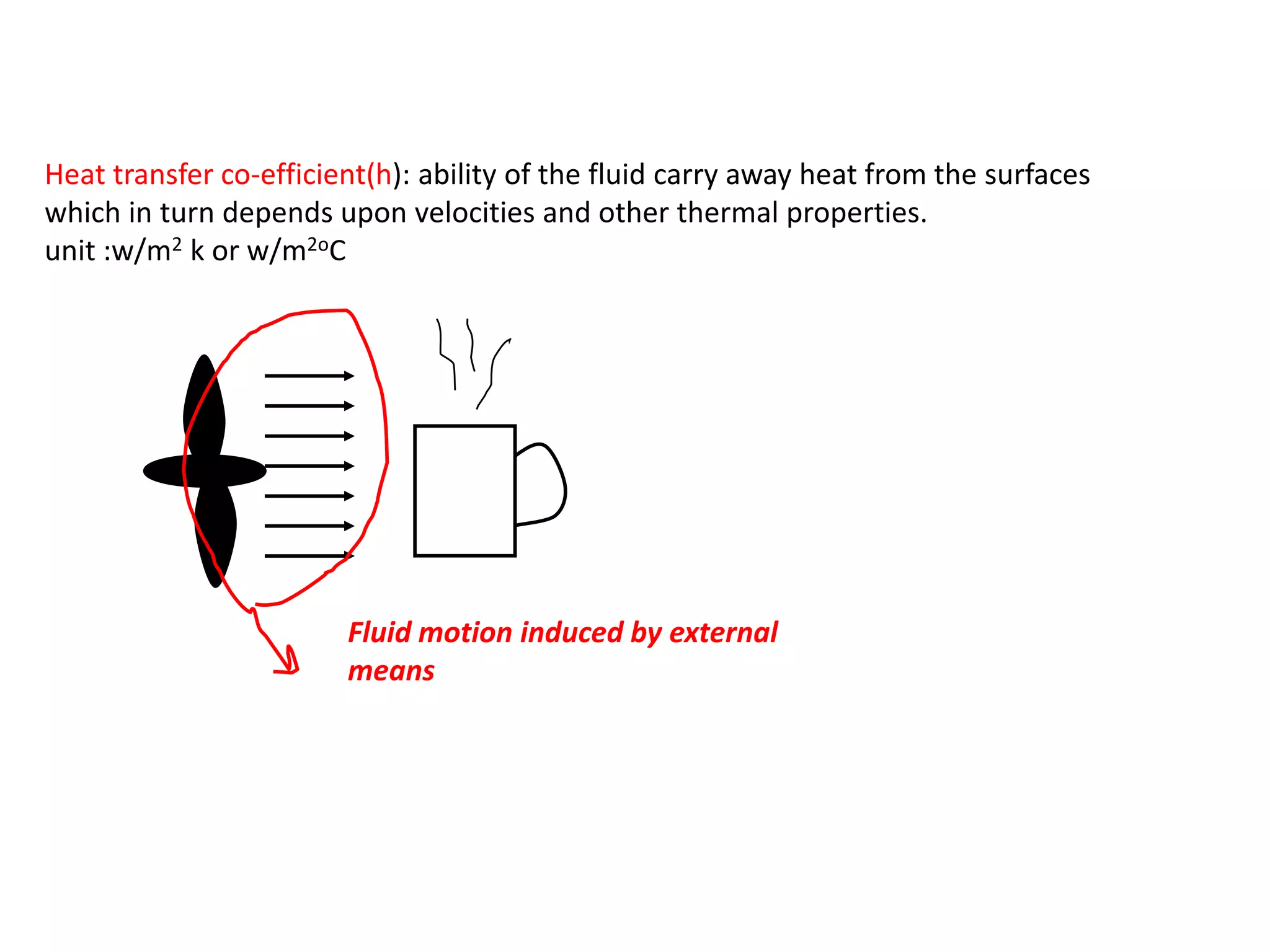
Heat transfer co-efficient(h): ability of the fluid carry away heat from the surfaces
which in turn depends upon velocities and other thermal properties.
unit :w/m2 k or w/m2oC


                        Fluid motion induced by external
                        means
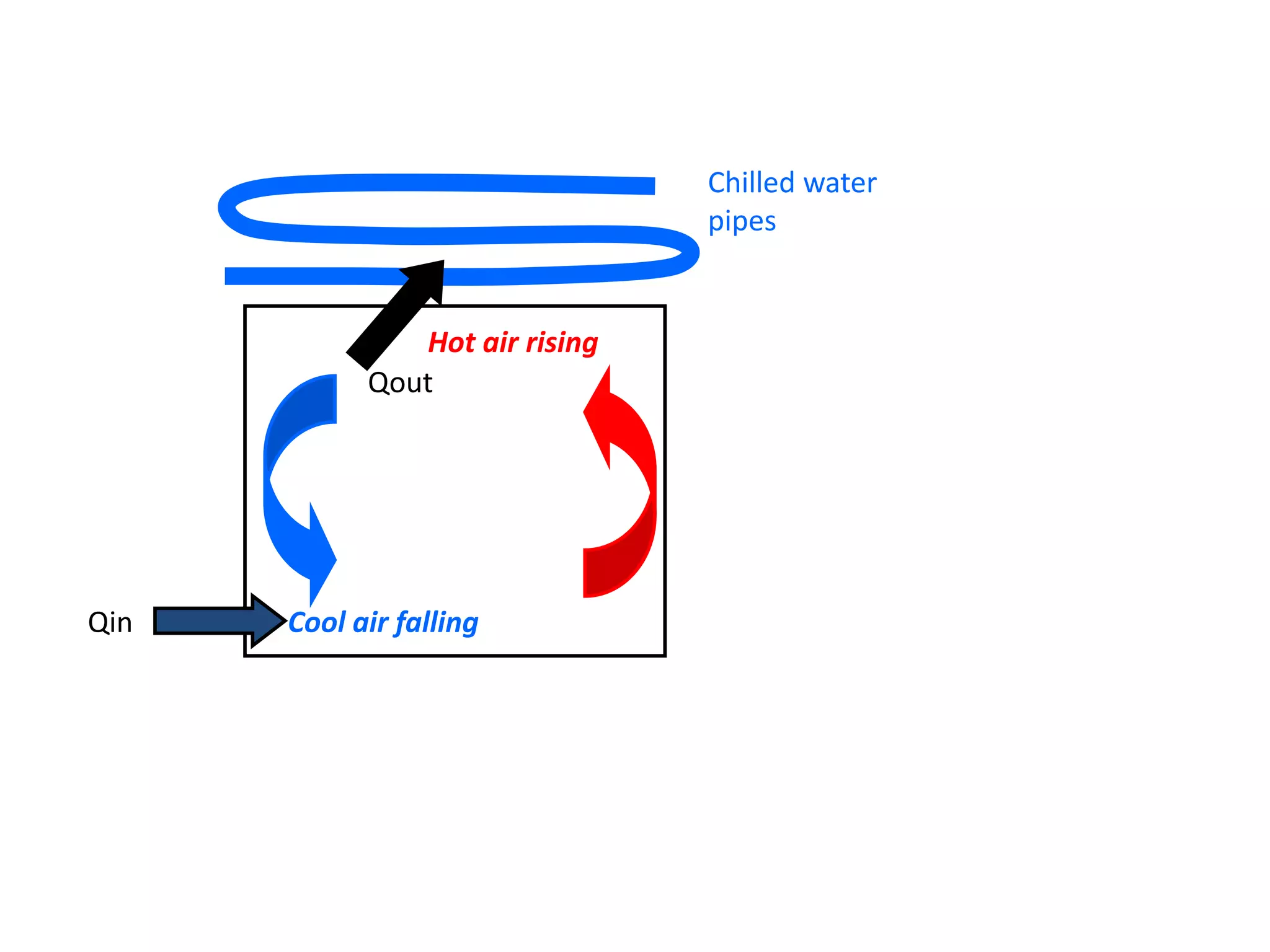
Chilled water
                                pipes


               Hot air rising
            Qout


Qin   Cool air falling
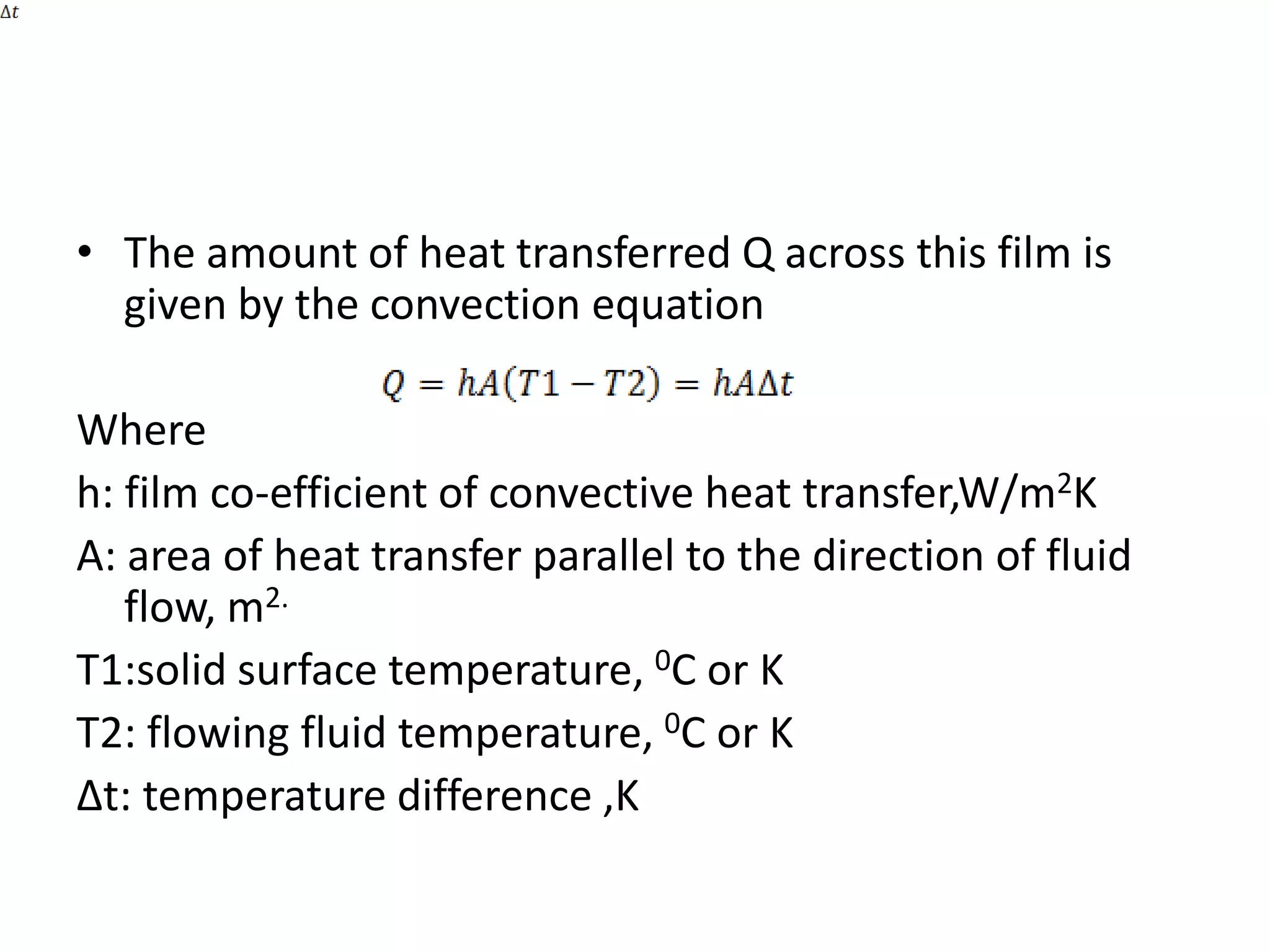
• The amount of heat transferred Q across this film is
  given by the convection equation

Where
h: film co-efficient of convective heat transfer,W/m2K
A: area of heat transfer parallel to the direction of fluid
   flow, m2.
T1:solid surface temperature, 0C or K
T2: flowing fluid temperature, 0C or K
∆t: temperature difference ,K
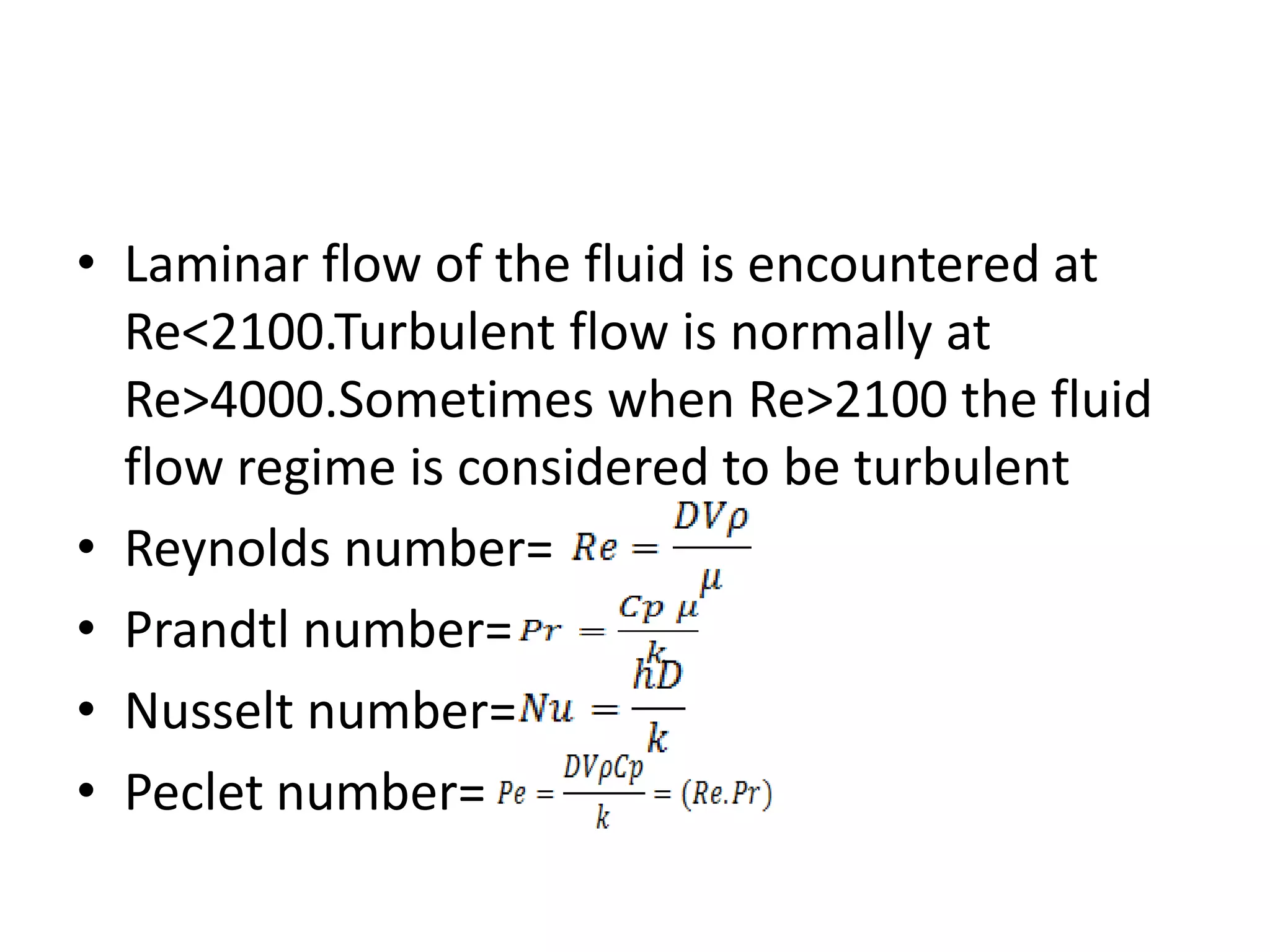
• Laminar flow of the fluid is encountered at
  Re<2100.Turbulent flow is normally at
  Re>4000.Sometimes when Re>2100 the fluid
  flow regime is considered to be turbulent
• Reynolds number=
• Prandtl number=
• Nusselt number=
• Peclet number=
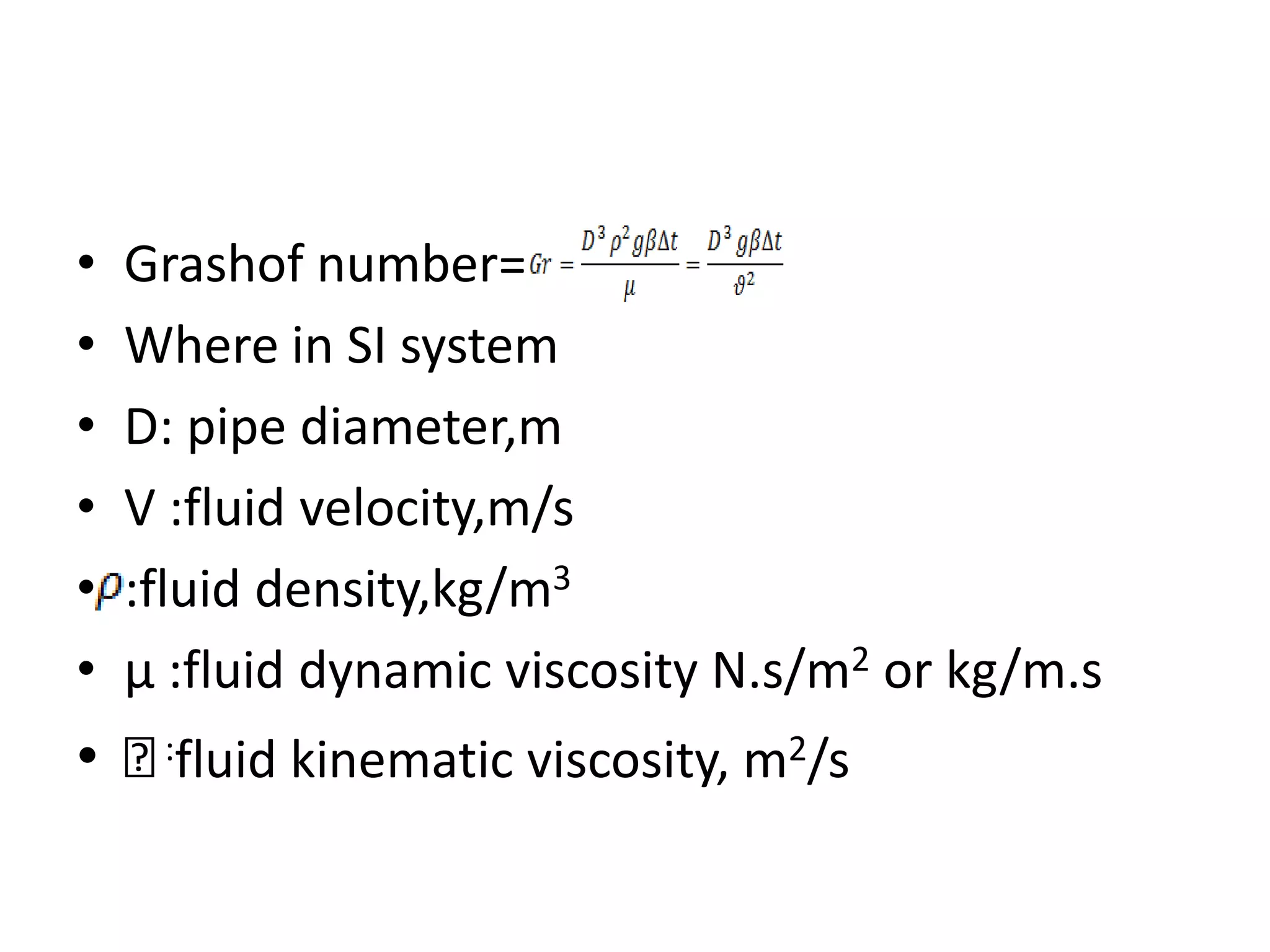
•   Grashof number=
•   Where in SI system
•   D: pipe diameter,m
•   V :fluid velocity,m/s
•   :fluid density,kg/m3
•   μ :fluid dynamic viscosity N.s/m2 or kg/m.s
• ᵧfluid kinematic viscosity, m2/s
   :
•   K:fluid thermal conductivity,w/mK
•   h: convective heat transfer coefficient,w/m2.K
•   Cp:fluid specific heat transfer,J/Kg.K
•   g:acceleration of gravity m/s2

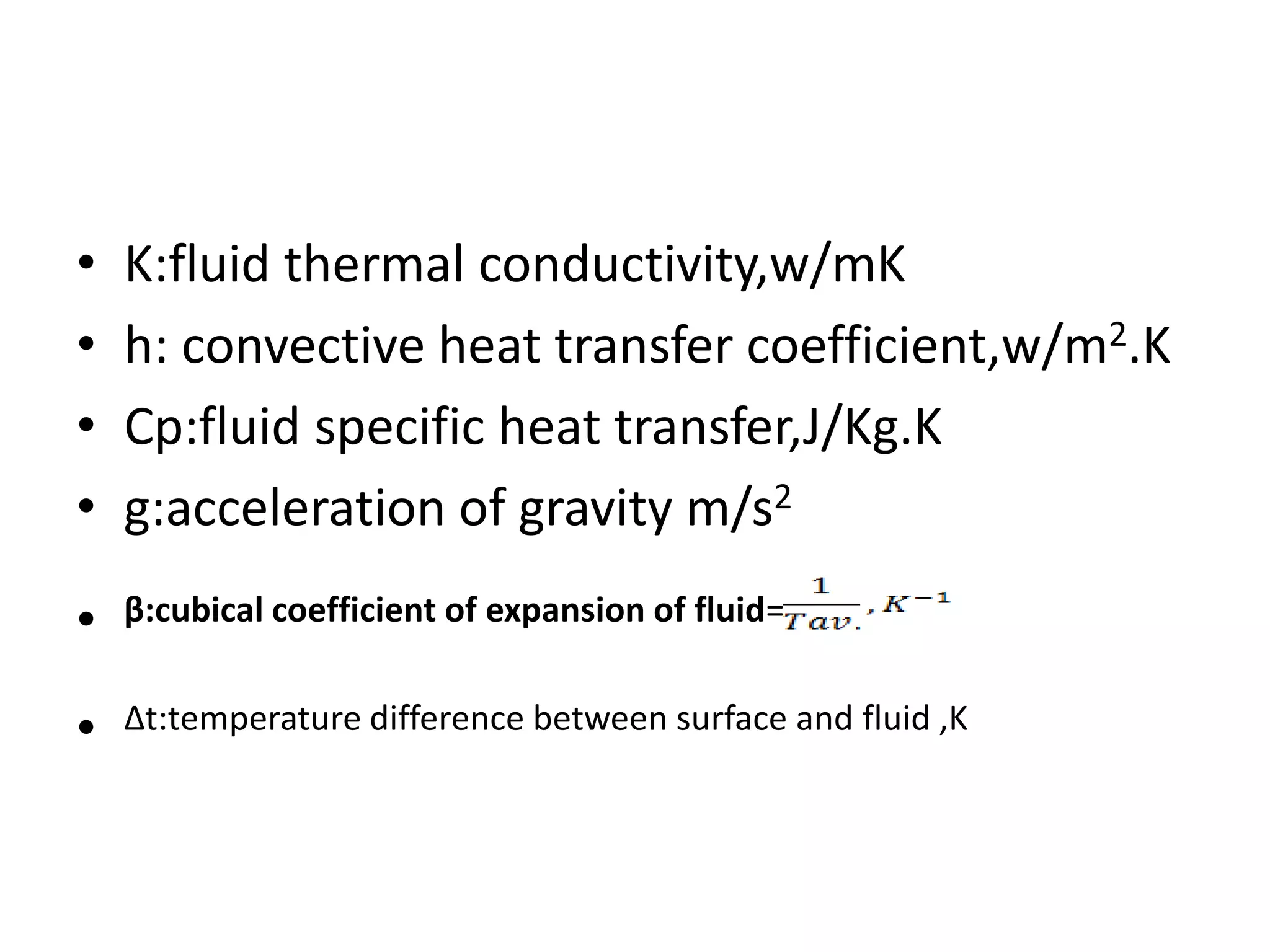
•   β:cubical coefficient of expansion of fluid=


•   ∆t:temperature difference between surface and fluid ,K
Functional Relation Between
  Dimensionless Groups in Convective
            Heat Transfer
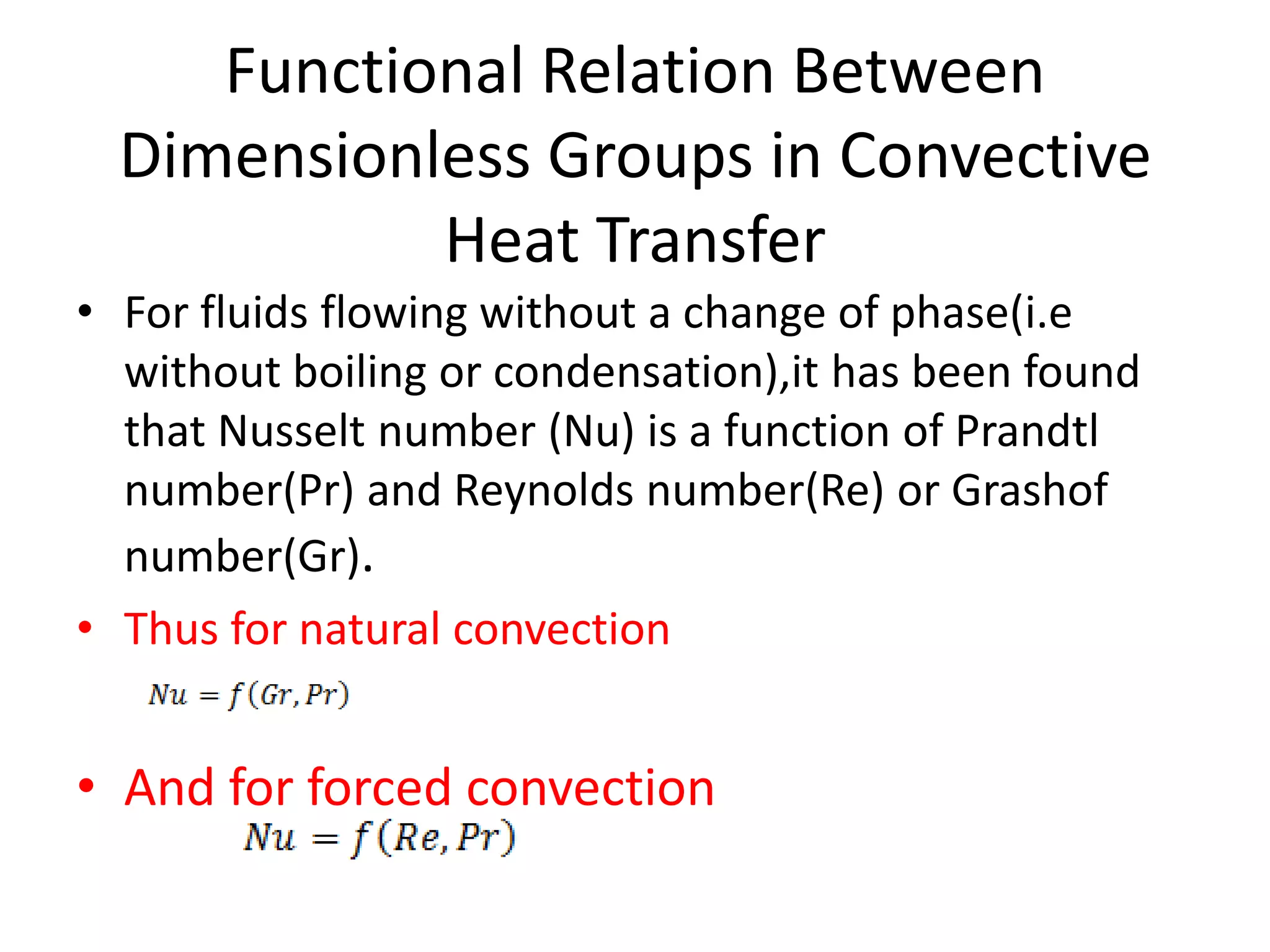
• For fluids flowing without a change of phase(i.e
  without boiling or condensation),it has been found
  that Nusselt number (Nu) is a function of Prandtl
  number(Pr) and Reynolds number(Re) or Grashof
  number(Gr).
• Thus for natural convection


• And for forced convection
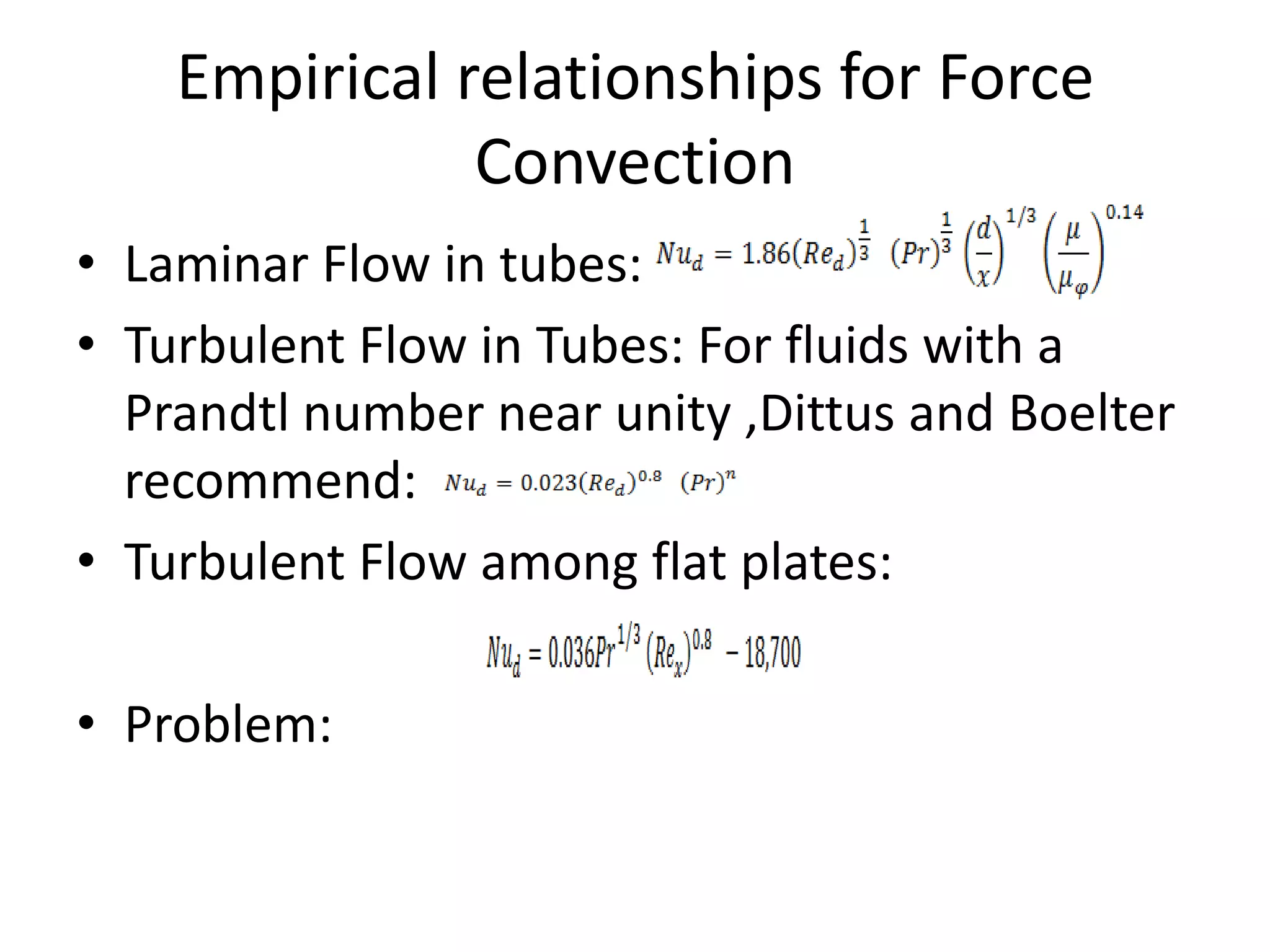
Empirical relationships for Force
               Convection
• Laminar Flow in tubes:
• Turbulent Flow in Tubes: For fluids with a
  Prandtl number near unity ,Dittus and Boelter
  recommend:
• Turbulent Flow among flat plates:

• Problem:
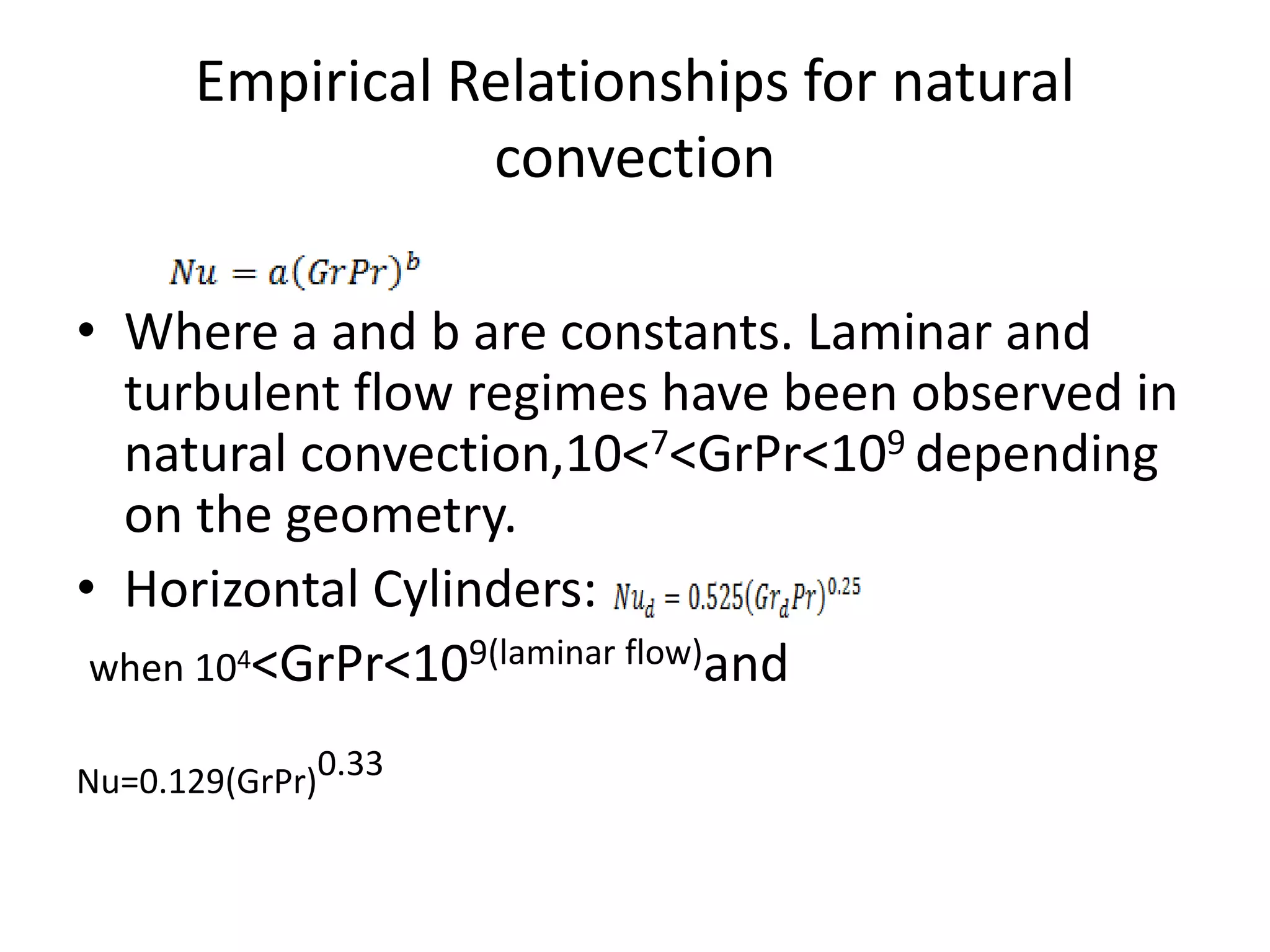
Empirical Relationships for natural
                 convection

• Where a and b are constants. Laminar and
  turbulent flow regimes have been observed in
  natural convection,10<7<GrPr<109 depending
  on the geometry.
• Horizontal Cylinders:
 when 104<GrPr<109(laminar flow)and

Nu=0.129(GrPr)0.33
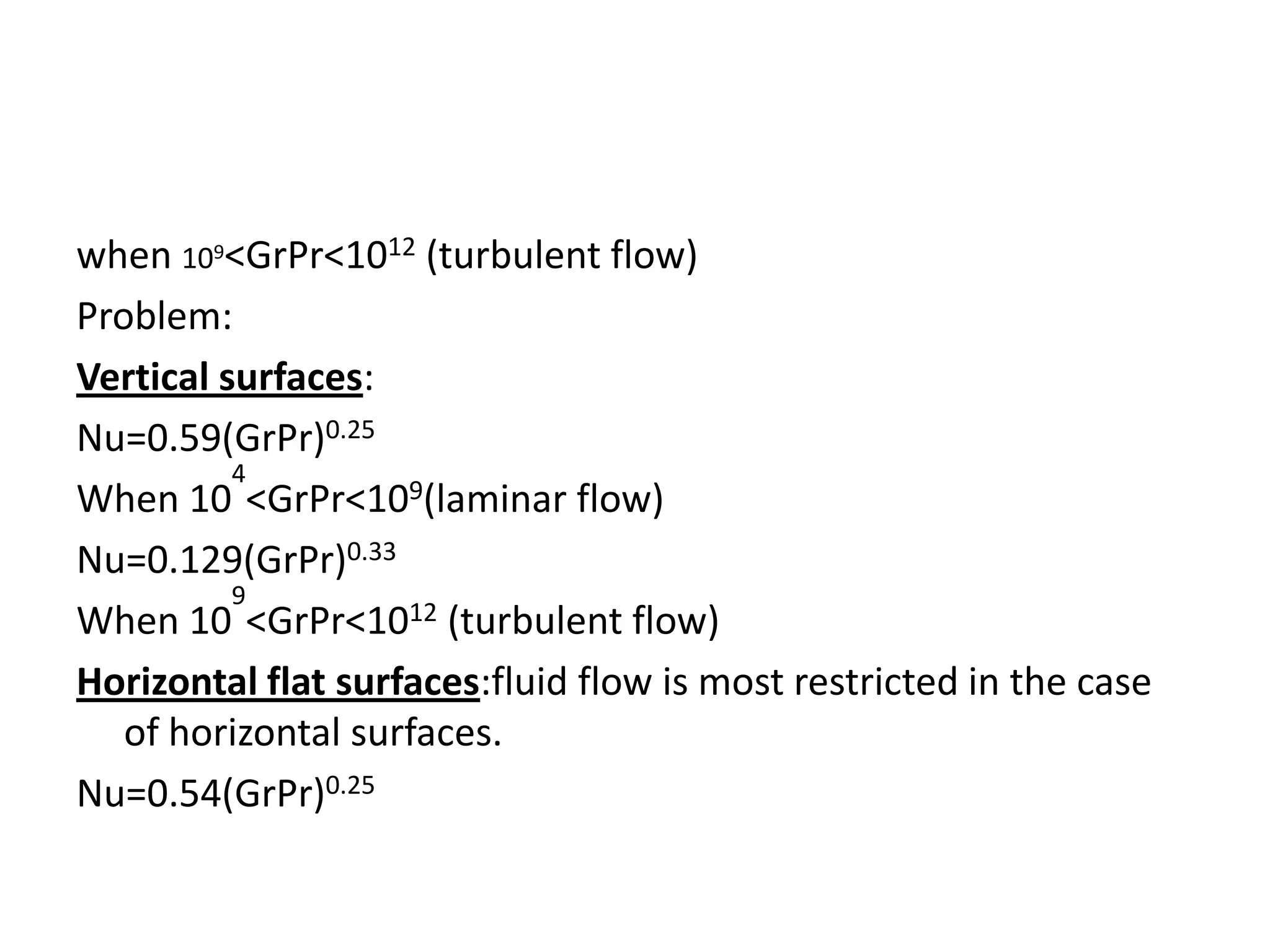
when 109<GrPr<1012 (turbulent flow)
Problem:
Vertical surfaces:
Nu=0.59(GrPr)0.25
          4
When 10 <GrPr<109(laminar flow)
Nu=0.129(GrPr)0.33
          9
When 10 <GrPr<1012 (turbulent flow)
Horizontal flat surfaces:fluid flow is most restricted in the case
   of horizontal surfaces.
Nu=0.54(GrPr)0.25
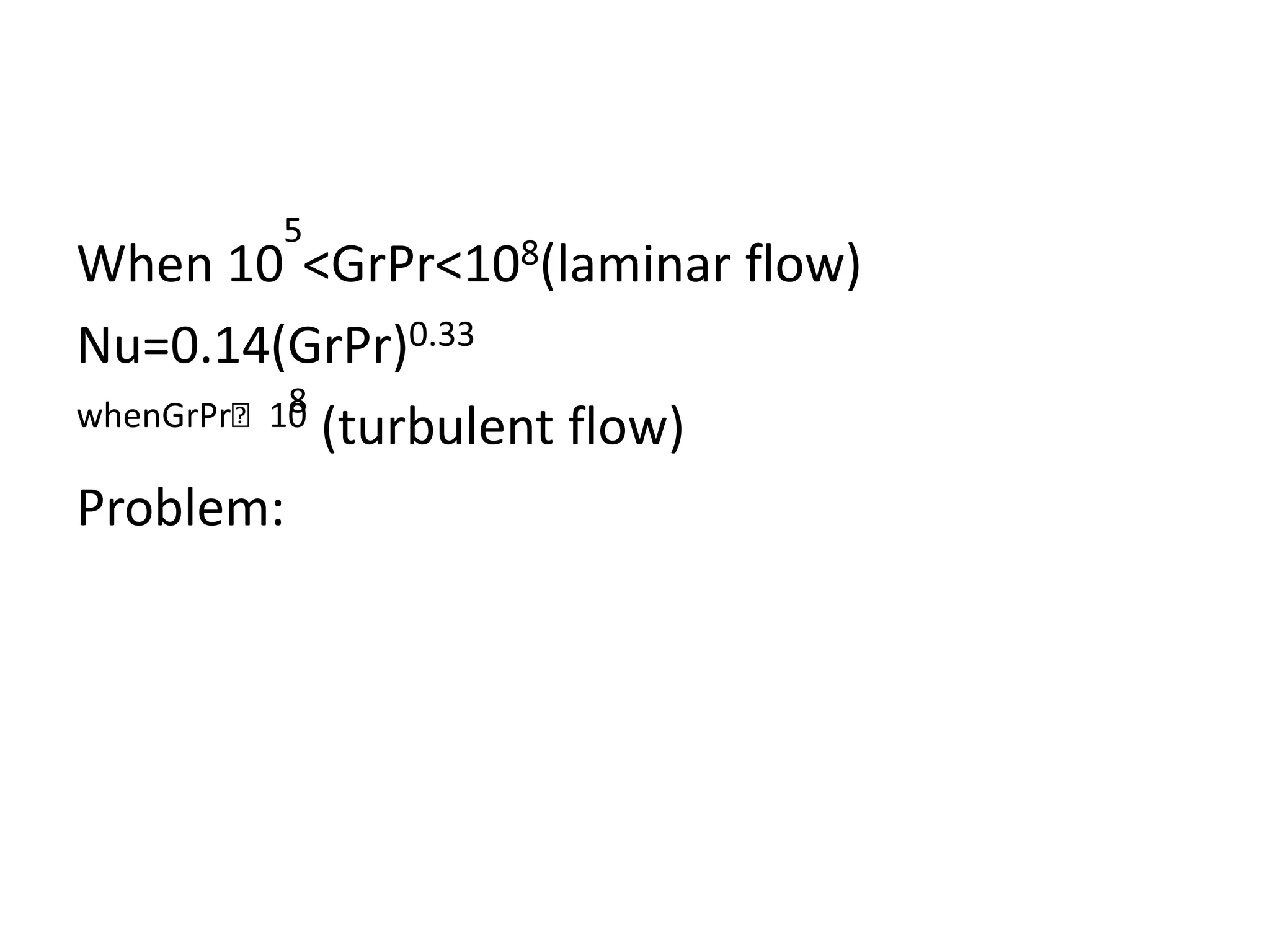
5
When 10 <GrPr<108(laminar flow)
Nu=0.14(GrPr)0.33
          8
whenGrPrᵧ10 (turbulent flow)

Problem:
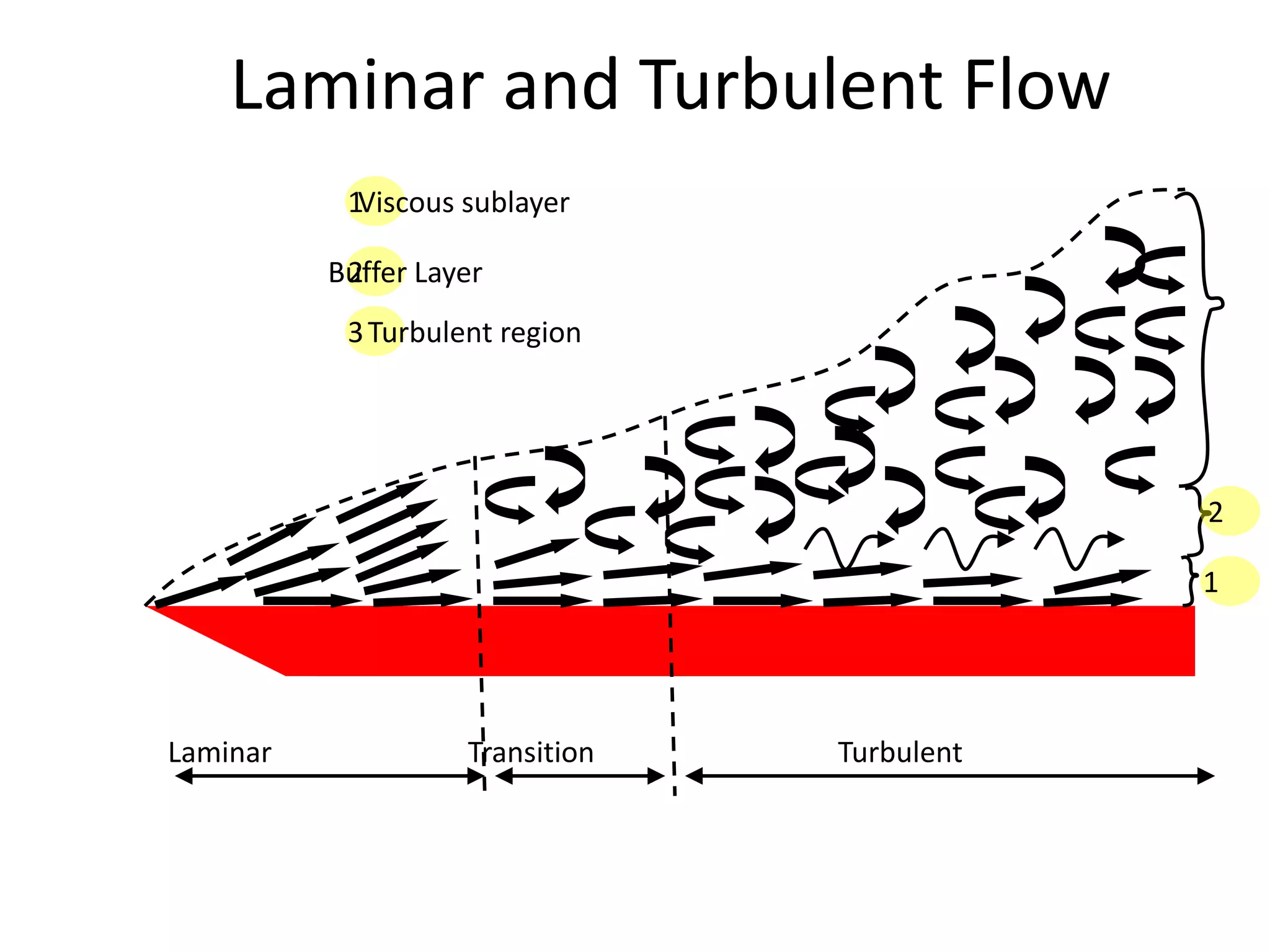
Laminar and Turbulent Flow
           1Viscous sublayer

          Buffer Layer
           2
           3 Turbulent region


                                             2

                                             1


Laminar             Transition   Turbulent
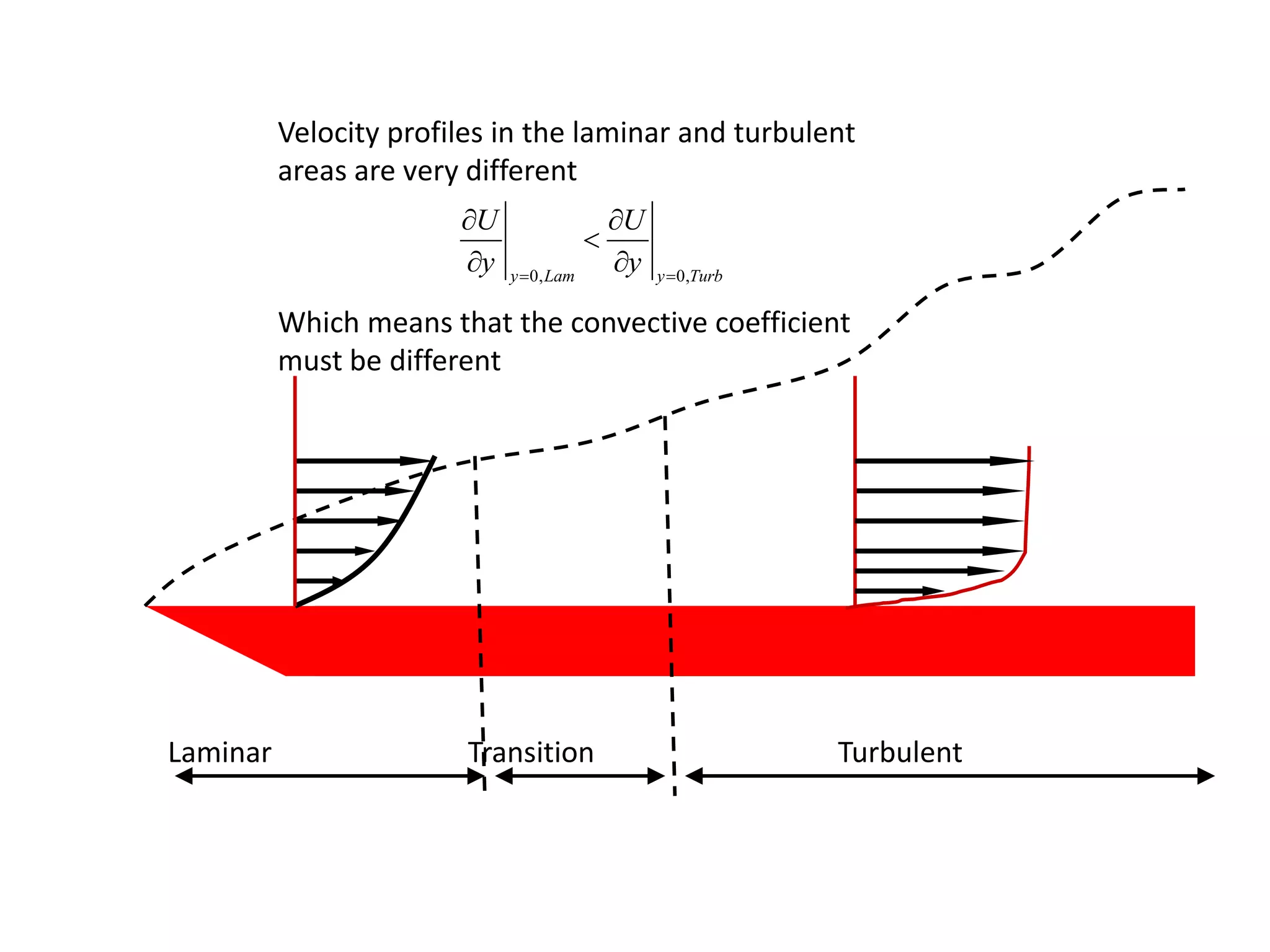
Velocity profiles in the laminar and turbulent
          areas are very different
                        U                    U
                                          
                        y   y  0, Lam
                                              y   y  0,Turb

          Which means that the convective coefficient
          must be different


Laminar                  Transition                             Turbulent
OVERALL HEAT TRANSFER CO-EFFICIENT FOR
    CONDUCTIVE –CONVECTIVE SYSTEMS
• One of the common process heat transfer
  applications consists of heat flow from a hot fluid,
  through a solid wall, to a cooler fluid on the other
  side. The fluid flowing from one fluid to another fluid
  may pass through several resistances, to overcome
  all these resistance we use overall heat transfer
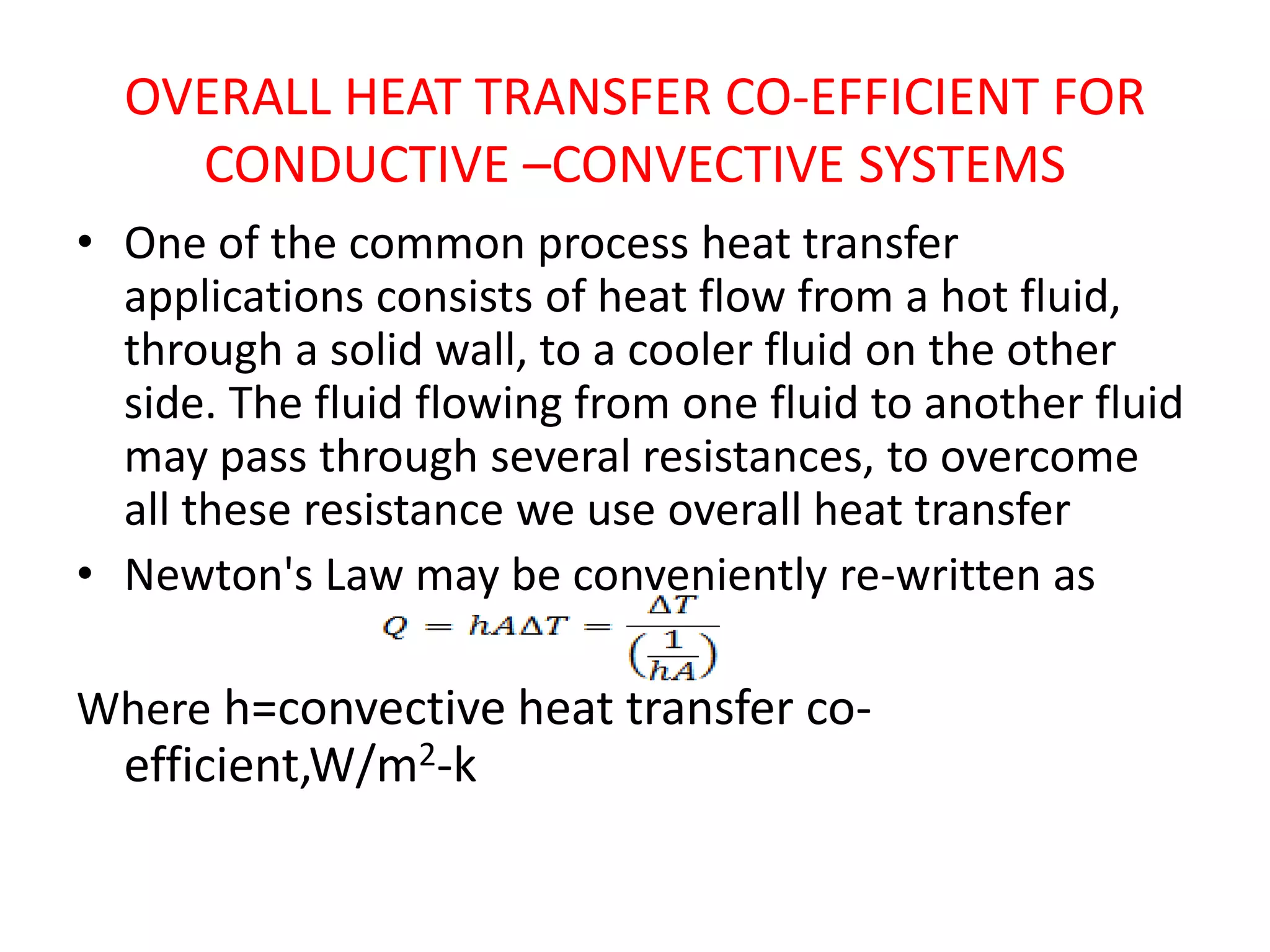
• Newton's Law may be conveniently re-written as

Where h=convective heat transfer co-
  efficient,W/m2-k
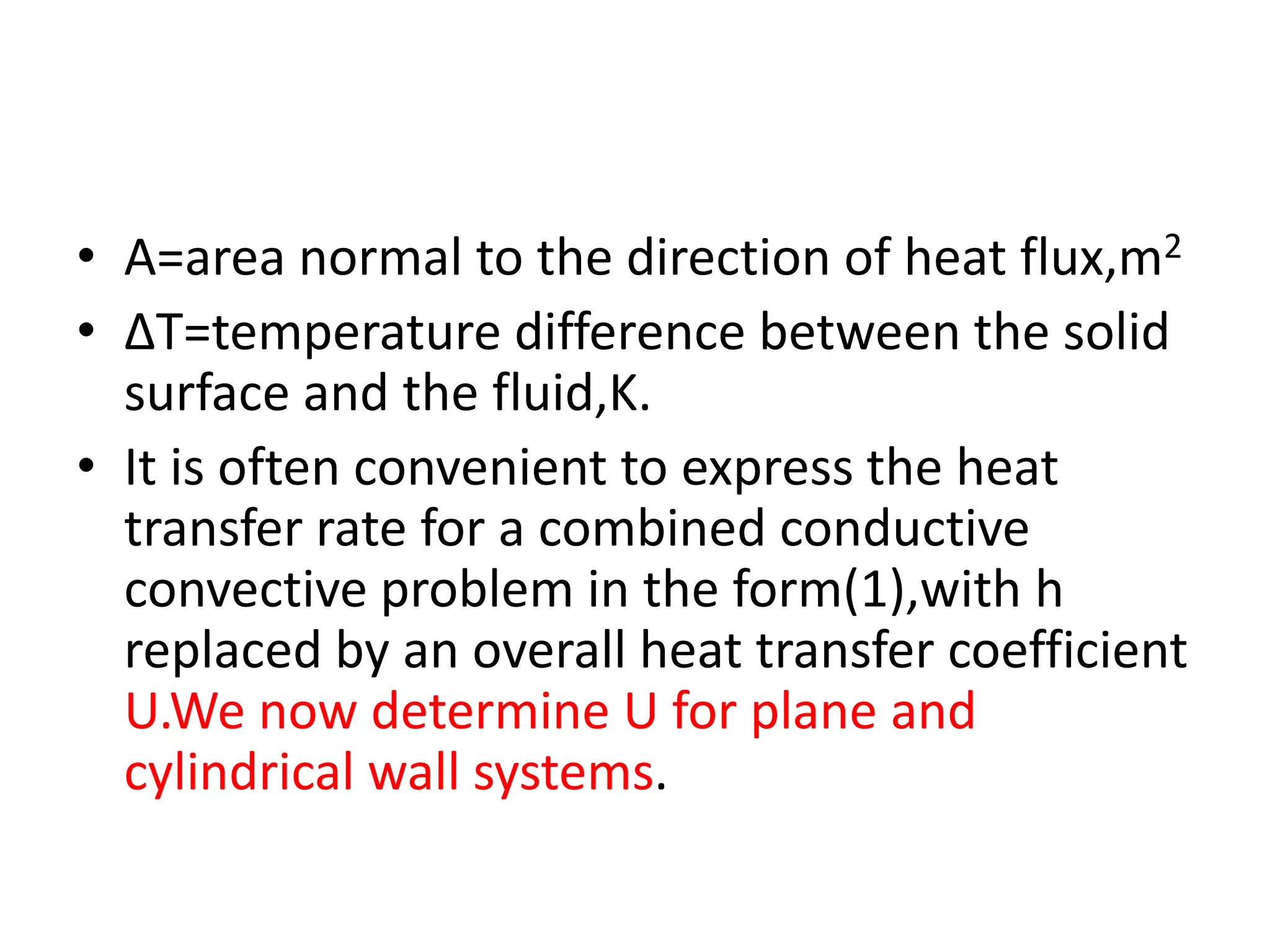
• A=area normal to the direction of heat flux,m2
• ∆T=temperature difference between the solid
  surface and the fluid,K.
• It is often convenient to express the heat
  transfer rate for a combined conductive
  convective problem in the form(1),with h
  replaced by an overall heat transfer coefficient
  U.We now determine U for plane and
  cylindrical wall systems.
Figure 1
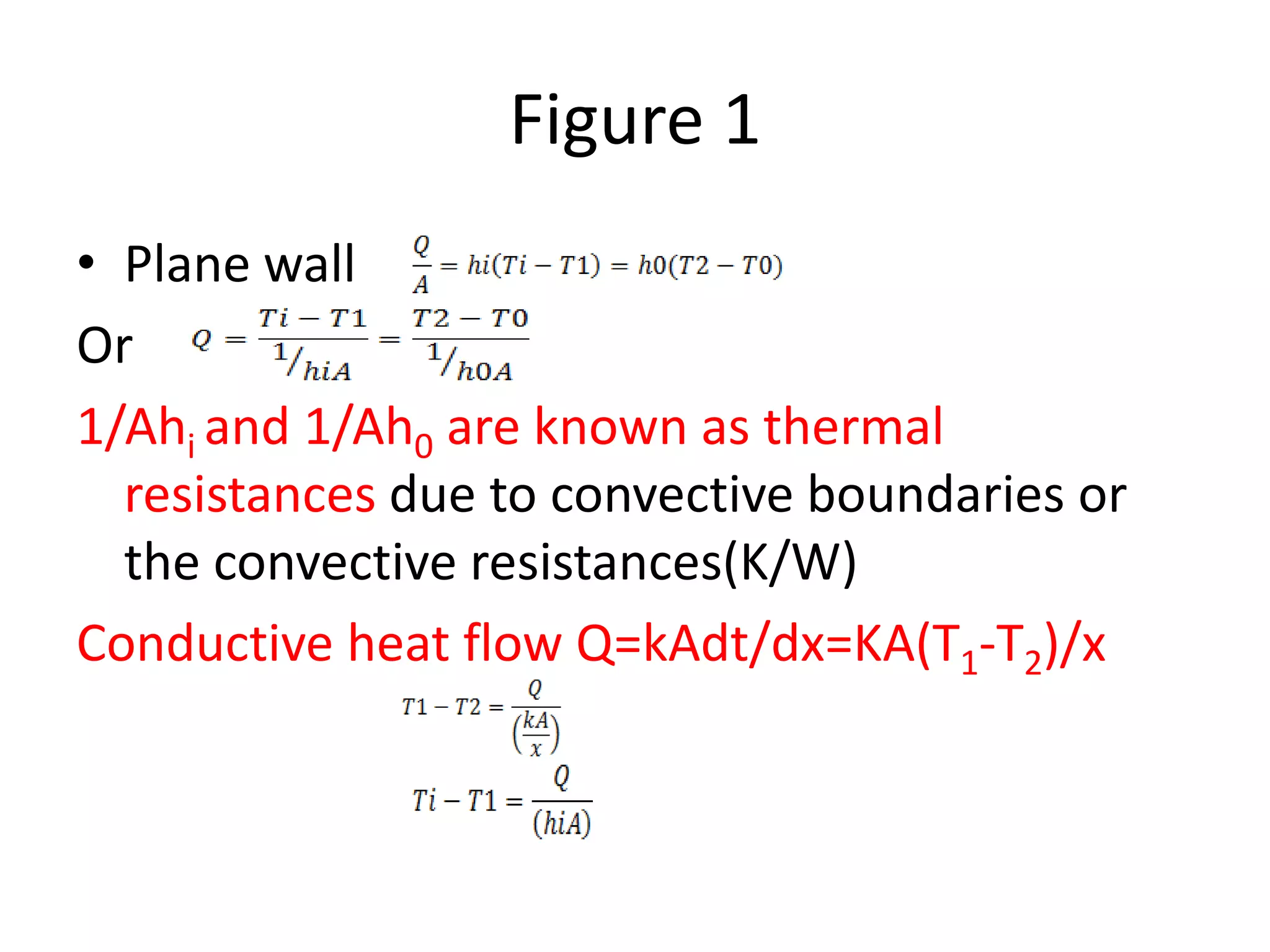
• Plane wall
Or
1/Ahi and 1/Ah0 are known as thermal
  resistances due to convective boundaries or
  the convective resistances(K/W)
Conductive heat flow Q=kAdt/dx=KA(T1-T2)/x
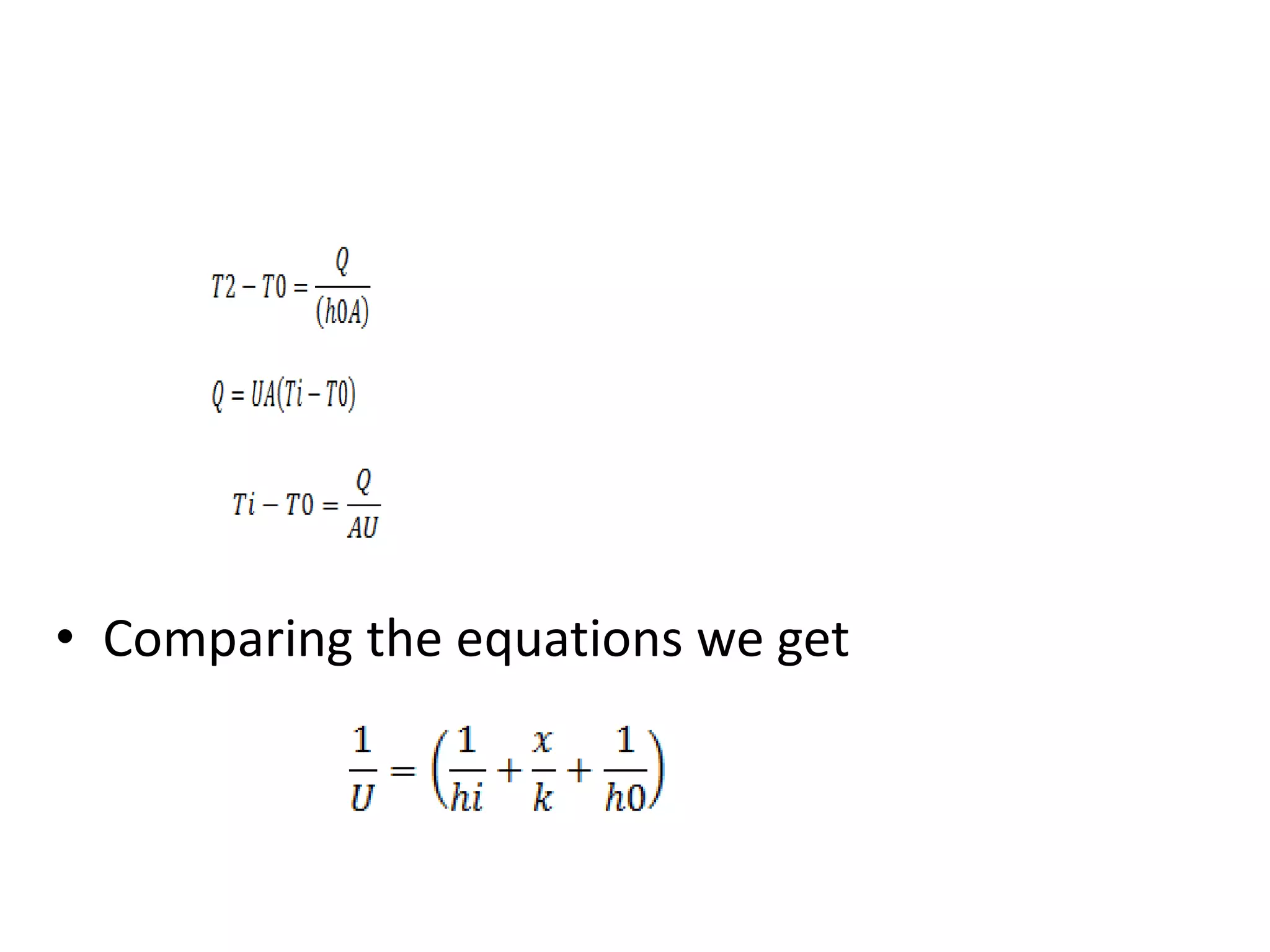
• Comparing the equations we get
problems
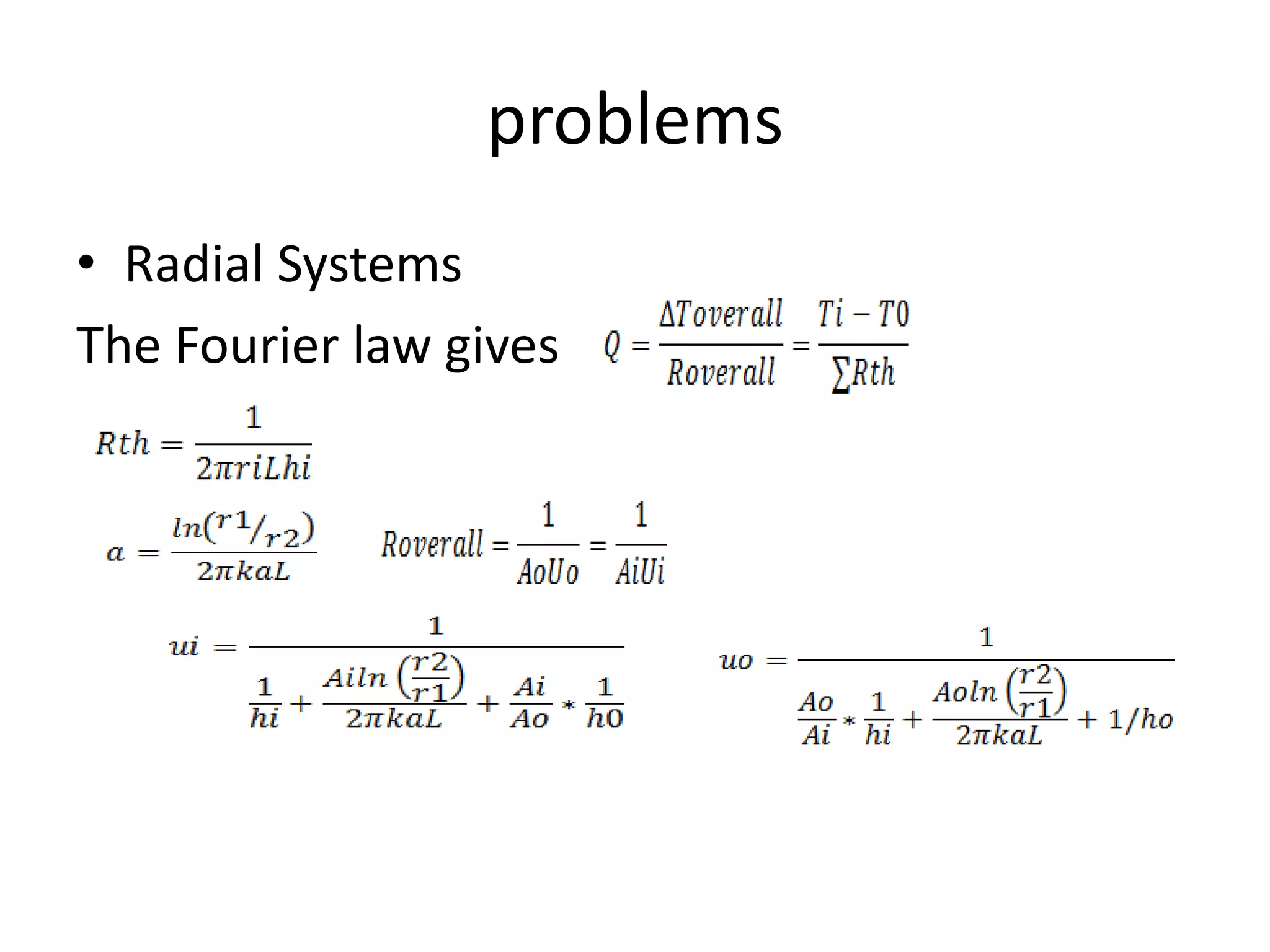
• Radial Systems
The Fourier law gives

MET 214 Module 3

  • 1.
  • 2.
    INTRODUCTION • When afluid flows past a stationary solid surface ,a thin film of fluid is postulated as existing between the flowing fluid and the stationary surface • It is also assumed that all the resistance to transmission of heat between the flowing fluid and the body containing the fluid is due to the film at the stationary surface.
  • 3.
    Increasing Advection U , T T u Ts T(y) U(y)
  • 4.
    Heat transfer co-efficient(h):ability of the fluid carry away heat from the surfaces which in turn depends upon velocities and other thermal properties. unit :w/m2 k or w/m2oC Fluid motion induced by external means
  • 5.
    Chilled water pipes Hot air rising Qout Qin Cool air falling
  • 6.
    • The amountof heat transferred Q across this film is given by the convection equation Where h: film co-efficient of convective heat transfer,W/m2K A: area of heat transfer parallel to the direction of fluid flow, m2. T1:solid surface temperature, 0C or K T2: flowing fluid temperature, 0C or K ∆t: temperature difference ,K
  • 7.
    • Laminar flowof the fluid is encountered at Re<2100.Turbulent flow is normally at Re>4000.Sometimes when Re>2100 the fluid flow regime is considered to be turbulent • Reynolds number= • Prandtl number= • Nusselt number= • Peclet number=
  • 8.
    Grashof number= • Where in SI system • D: pipe diameter,m • V :fluid velocity,m/s • :fluid density,kg/m3 • μ :fluid dynamic viscosity N.s/m2 or kg/m.s • ᵧfluid kinematic viscosity, m2/s :
  • 9.
    K:fluid thermal conductivity,w/mK • h: convective heat transfer coefficient,w/m2.K • Cp:fluid specific heat transfer,J/Kg.K • g:acceleration of gravity m/s2 • β:cubical coefficient of expansion of fluid= • ∆t:temperature difference between surface and fluid ,K
  • 10.
    Functional Relation Between Dimensionless Groups in Convective Heat Transfer • For fluids flowing without a change of phase(i.e without boiling or condensation),it has been found that Nusselt number (Nu) is a function of Prandtl number(Pr) and Reynolds number(Re) or Grashof number(Gr). • Thus for natural convection • And for forced convection
  • 11.
    Empirical relationships forForce Convection • Laminar Flow in tubes: • Turbulent Flow in Tubes: For fluids with a Prandtl number near unity ,Dittus and Boelter recommend: • Turbulent Flow among flat plates: • Problem:
  • 12.
    Empirical Relationships fornatural convection • Where a and b are constants. Laminar and turbulent flow regimes have been observed in natural convection,10<7<GrPr<109 depending on the geometry. • Horizontal Cylinders: when 104<GrPr<109(laminar flow)and Nu=0.129(GrPr)0.33
  • 13.
    when 109<GrPr<1012 (turbulentflow) Problem: Vertical surfaces: Nu=0.59(GrPr)0.25 4 When 10 <GrPr<109(laminar flow) Nu=0.129(GrPr)0.33 9 When 10 <GrPr<1012 (turbulent flow) Horizontal flat surfaces:fluid flow is most restricted in the case of horizontal surfaces. Nu=0.54(GrPr)0.25
  • 14.
    5 When 10 <GrPr<108(laminarflow) Nu=0.14(GrPr)0.33 8 whenGrPrᵧ10 (turbulent flow) Problem:
  • 15.
    Laminar and TurbulentFlow 1Viscous sublayer Buffer Layer 2 3 Turbulent region 2 1 Laminar Transition Turbulent
  • 16.
    Velocity profiles inthe laminar and turbulent areas are very different U U  y y  0, Lam y y  0,Turb Which means that the convective coefficient must be different Laminar Transition Turbulent
  • 17.
    OVERALL HEAT TRANSFERCO-EFFICIENT FOR CONDUCTIVE –CONVECTIVE SYSTEMS • One of the common process heat transfer applications consists of heat flow from a hot fluid, through a solid wall, to a cooler fluid on the other side. The fluid flowing from one fluid to another fluid may pass through several resistances, to overcome all these resistance we use overall heat transfer • Newton's Law may be conveniently re-written as Where h=convective heat transfer co- efficient,W/m2-k
  • 18.
    • A=area normalto the direction of heat flux,m2 • ∆T=temperature difference between the solid surface and the fluid,K. • It is often convenient to express the heat transfer rate for a combined conductive convective problem in the form(1),with h replaced by an overall heat transfer coefficient U.We now determine U for plane and cylindrical wall systems.
  • 19.
    Figure 1 • Planewall Or 1/Ahi and 1/Ah0 are known as thermal resistances due to convective boundaries or the convective resistances(K/W) Conductive heat flow Q=kAdt/dx=KA(T1-T2)/x
  • 20.
    • Comparing theequations we get
  • 21.