Learning Objectives
 Message Strategy and Design
 Introduction
 Message Strategy Brief
 Message Execution
 Message Appeals
 Message Objectives
 Message Strategies
Message Strategy and Design
 MESSAGE consists of facts, opinion,
appeal, idea, picture, symbols, or
convincing arguments about the product.
 The MESSAGE STRATEGY aims to
communicate the brand to the target market
in a creative andpersuasive manner.
 The MESSAGE STRATEGY refers to what is said in an advertisement,
and the message execution or tactics constitute the manner in which
the brand message is communicated .
Message Strategy Brief
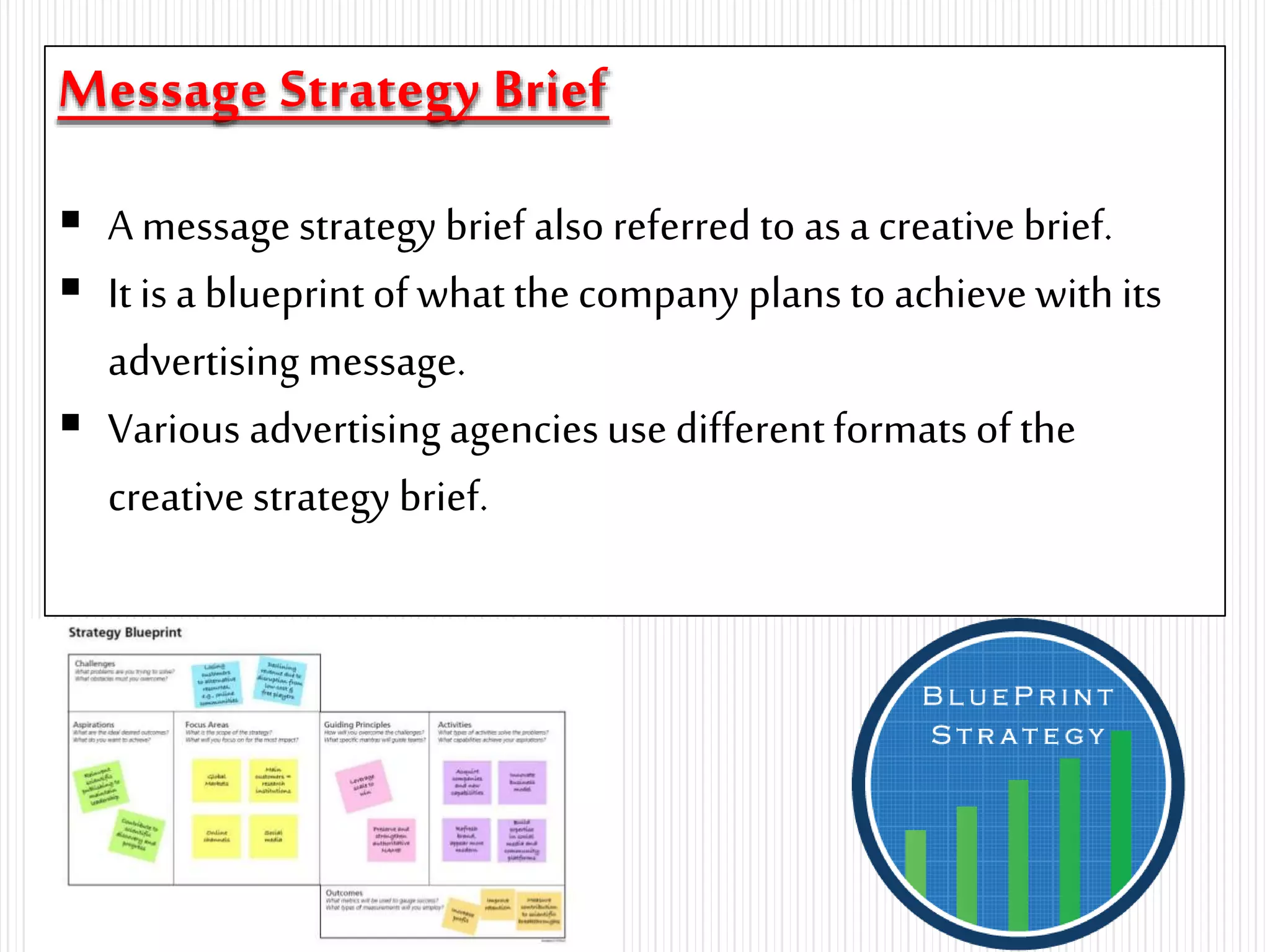
 A message strategy brief also referred to as a creative brief.
 It is a blueprint of what thecompany plans to achieve with its
advertising message.
 Various advertising agenciesuse differentformats of the
creative strategy brief.
Elementsin MessageStrategy Brief
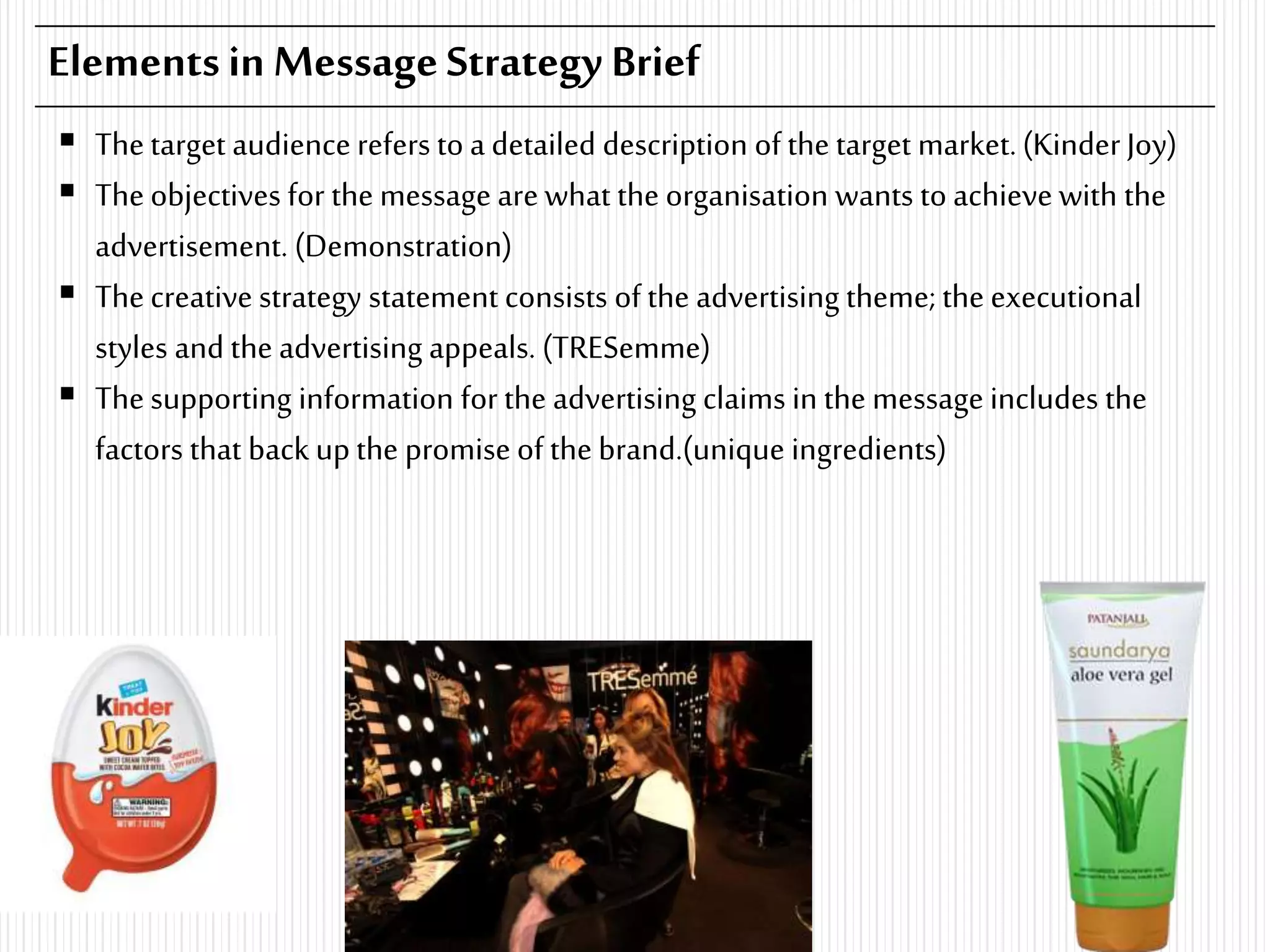
 Thetarget audience refers to a detailed description of the target market.(Kinder Joy)
 Theobjectives for the message arewhat the organisation wants to achieve with the
advertisement. (Demonstration)
 Thecreative strategy statement consists of the advertising theme; the executional
styles and the advertising appeals. (TRESemme)
 Thesupporting information for the advertising claims in the message includes the
factors that back upthe promise of the brand.(unique ingredients)
Message Execution
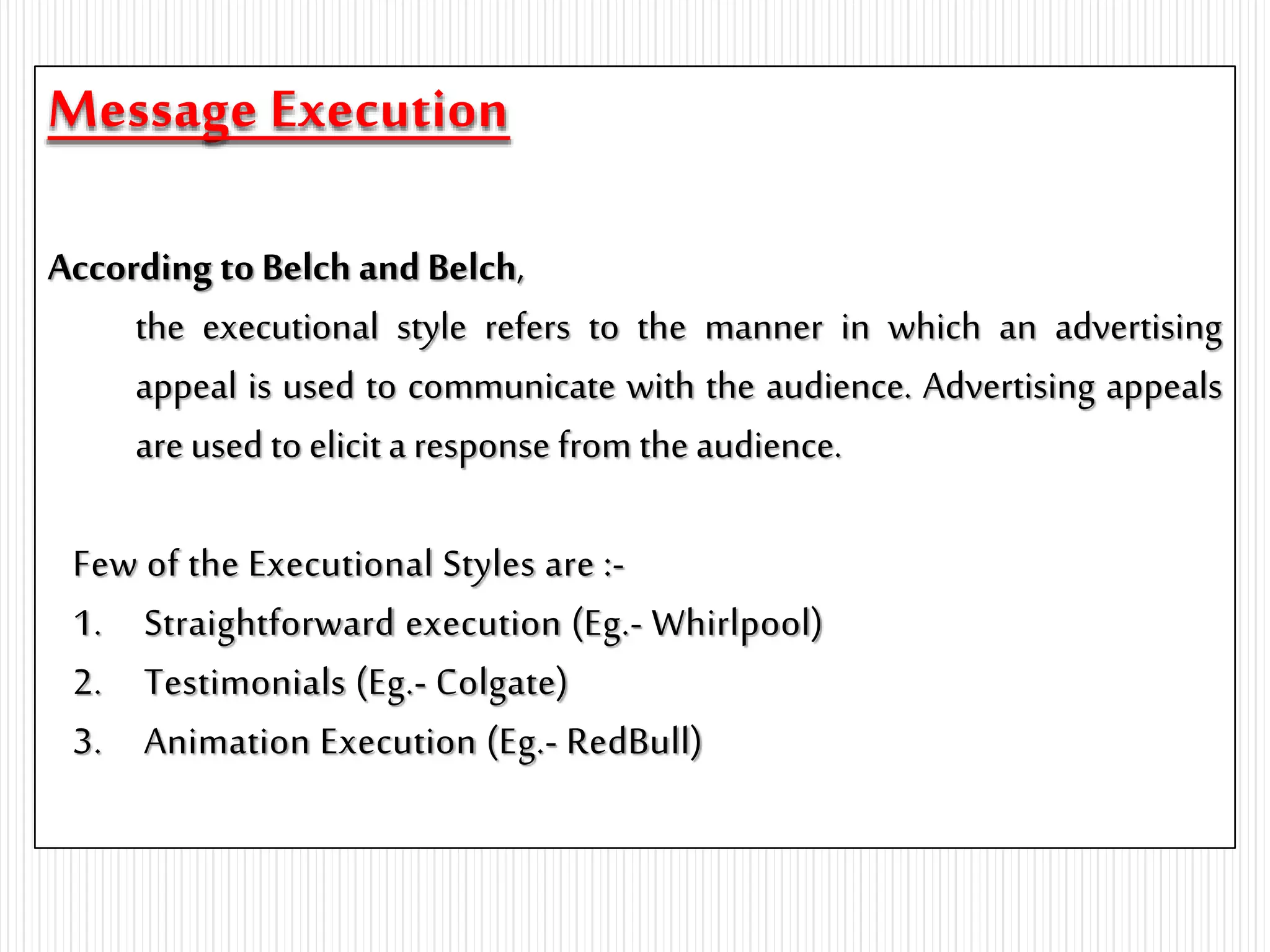
According toBelch and Belch,
the executional style refers to the manner in which an advertising
appeal is used to communicate with the audience. Advertising appeals
are used to elicita response from the audience.
Few of the Executional Styles are :-
1. Straightforward execution (Eg.- Whirlpool)
2. Testimonials (Eg.- Colgate)
3. Animation Execution (Eg.- RedBull)
Message Appeals
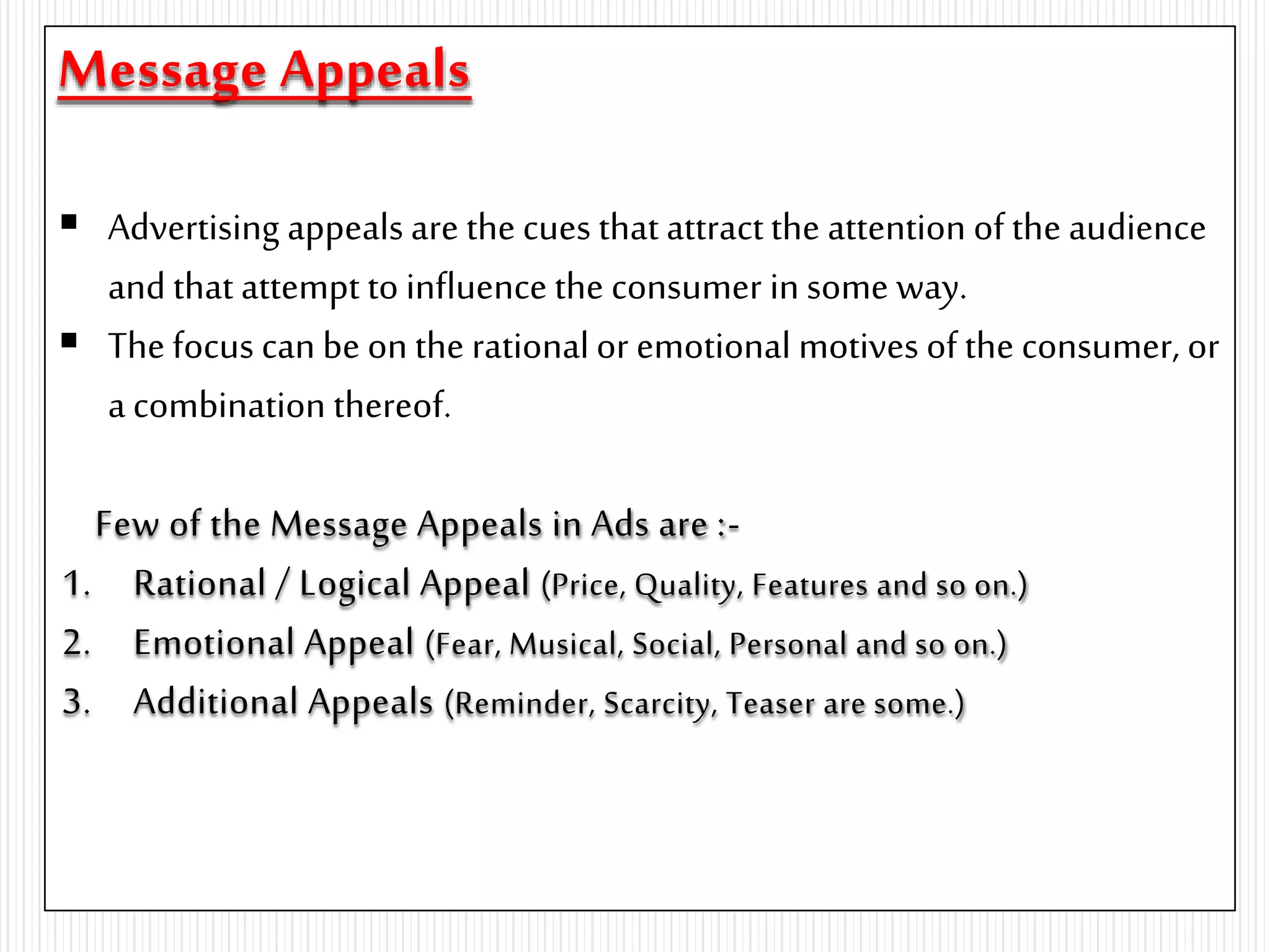
 Advertising appeals are the cues that attractthe attention of the audience
and that attempt to influence the consumer in some way.
 The focus can be on the rationalor emotional motives of the consumer, or
a combination thereof.
Few of the Message Appeals in Ads are :-
1. Rational / Logical Appeal (Price, Quality, Features and so on.)
2. Emotional Appeal (Fear, Musical, Social, Personal and so on.)
3. Additional Appeals (Reminder, Scarcity, Teaser are some.)
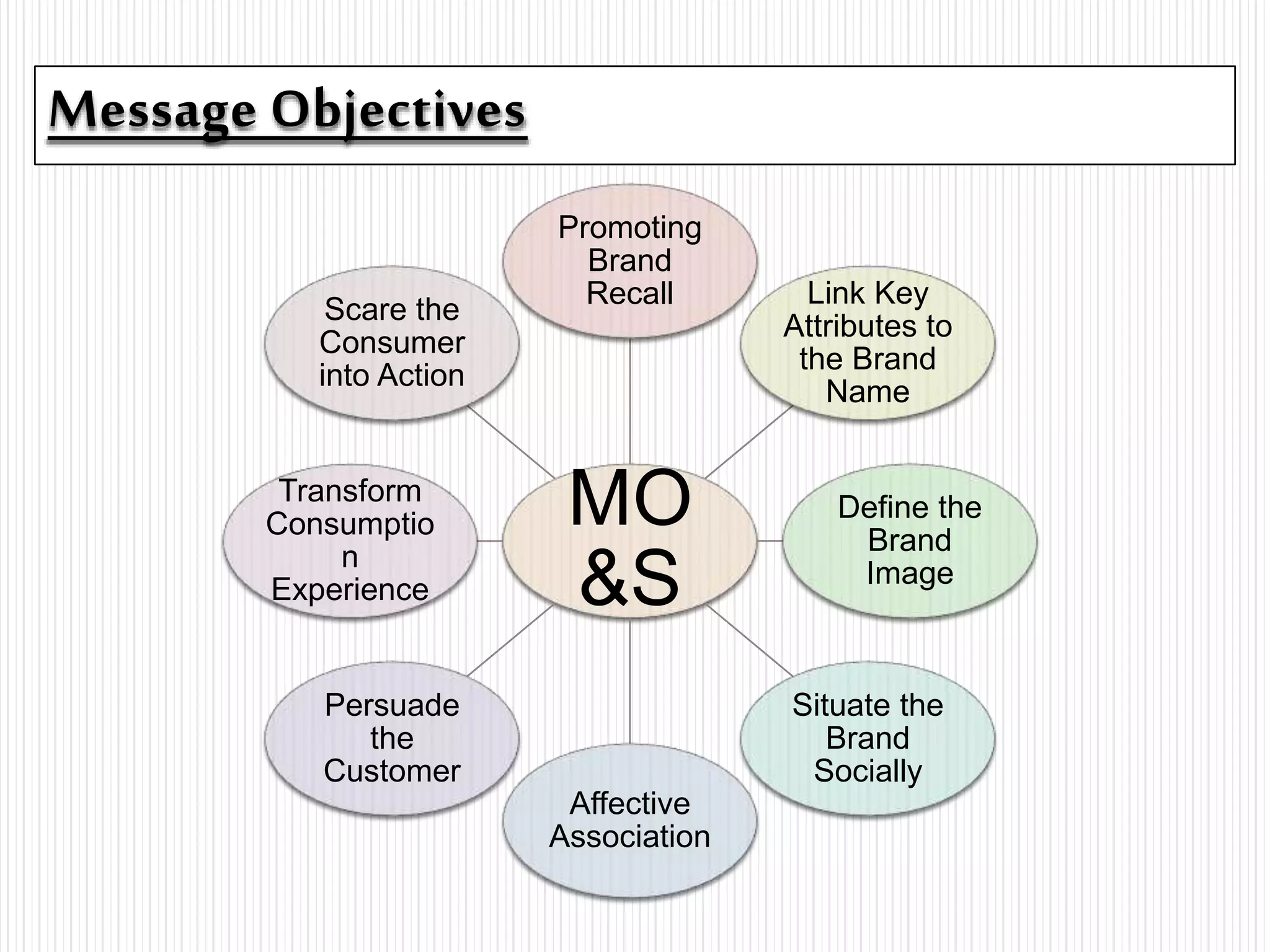
Message Objectives
MO
&S
Promoting
Brand
Recall Link Key
Attributes to
the Brand
Name
Define the
Brand
Image
Situate the
Brand
Socially
Affective
Association
Persuade
the
Customer
Transform
Consumptio
n
Experience
Scare the
Consumer
into Action
Message Strategies
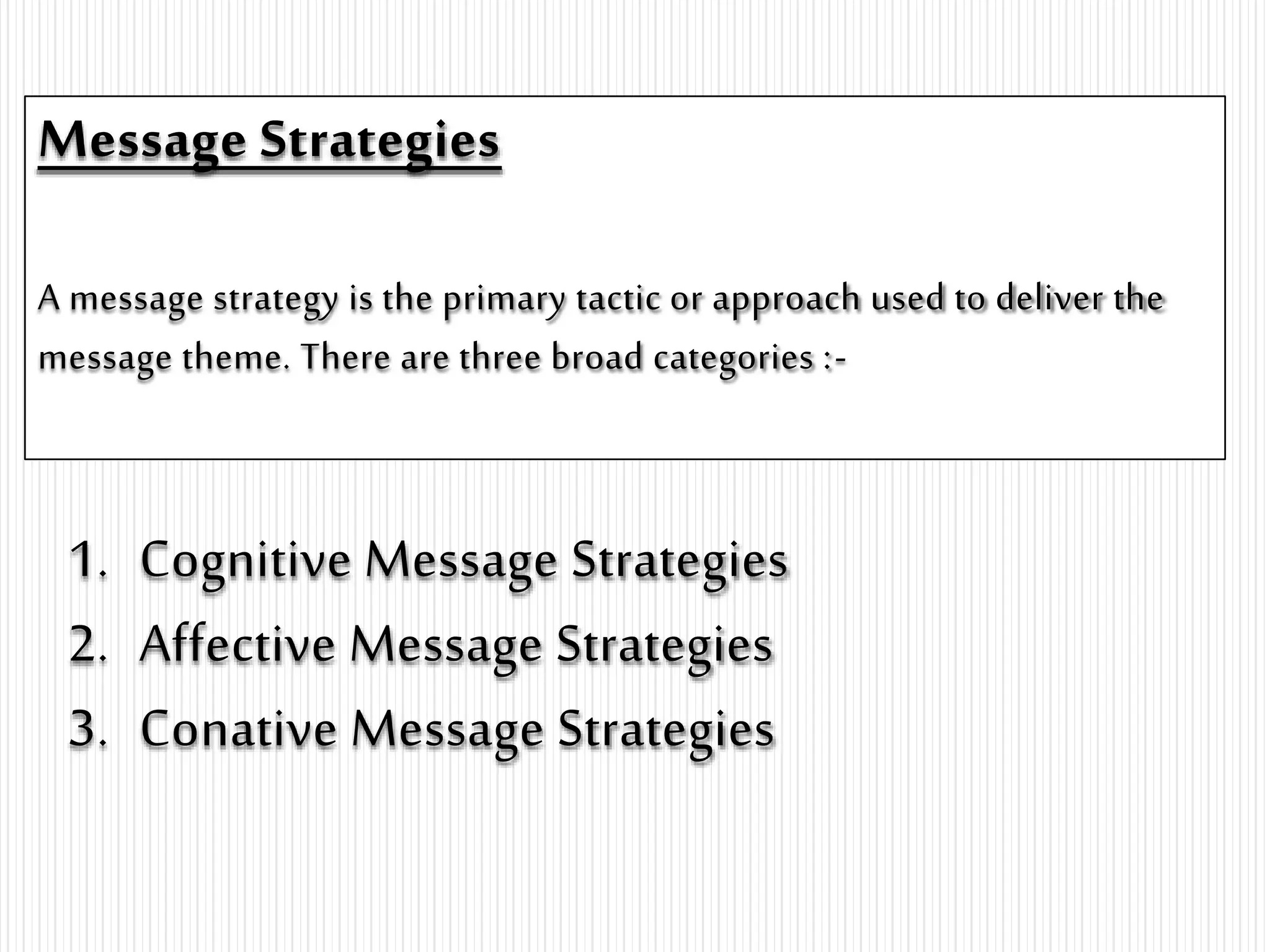
A message strategy is the primary tactic or approach used to deliver the
message theme. There are three broad categories :-
1. Cognitive Message Strategies
2. Affective Message Strategies
3. Conative Message Strategies
1. Cognitive Message Strategy
 Its goal is to design an ad that will have an impact on a
person’s beliefs and/or knowledge structure.
 A cognitive message strategy is the presentation of rational
arguments or pieces of information to consumers.
 This can be accomplished by suggesting any one of a wide
variety of potential product benefits.
Examples For Cognitive Message Strategy
 Generic Messages (Complan)
 Unique Selling Proposition ( Coca-Cola Zero)
 Comparative Ad Messages ( Pepsodent and Colgate)
2. Affective Message Strategy
 This invoke feelings or emotions and match those feelings
with the good, service or company.
 These type of ads are prepared to enhance the likeability of
the product recall of the appeal.
 are of two categories:-
Resonance
Emotional
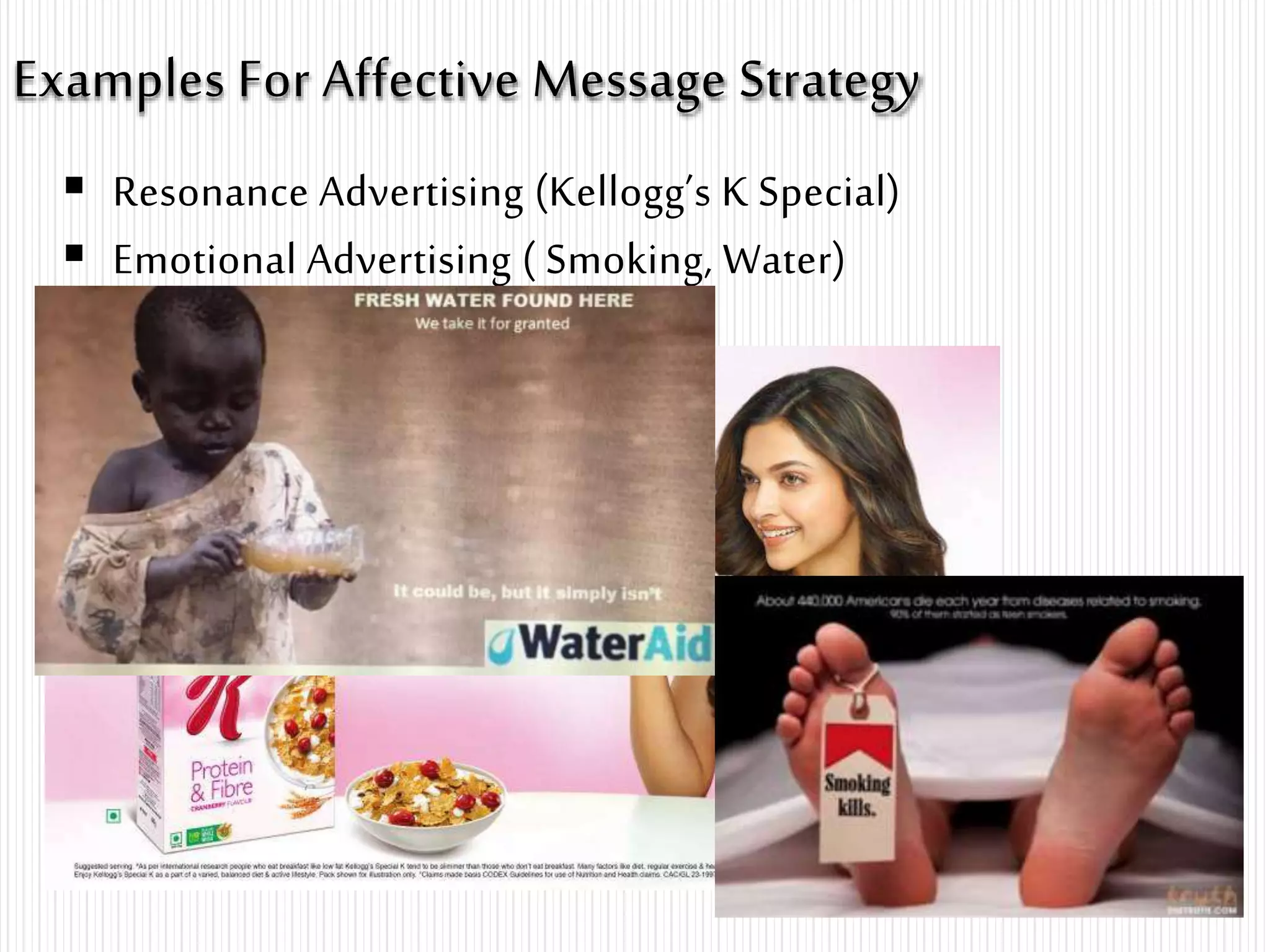
Examples For Affective Message Strategy
 Resonance Advertising (Kellogg’s K Special)
 Emotional Advertising ( Smoking, Water)
3. Conative Message Strategy
 These are designed to lead more directly to some type of
consumer response.
 They can be used to support other promotional efforts, such
as coupon redemption programs, Internet “hits” and orders
or buy one get one free.
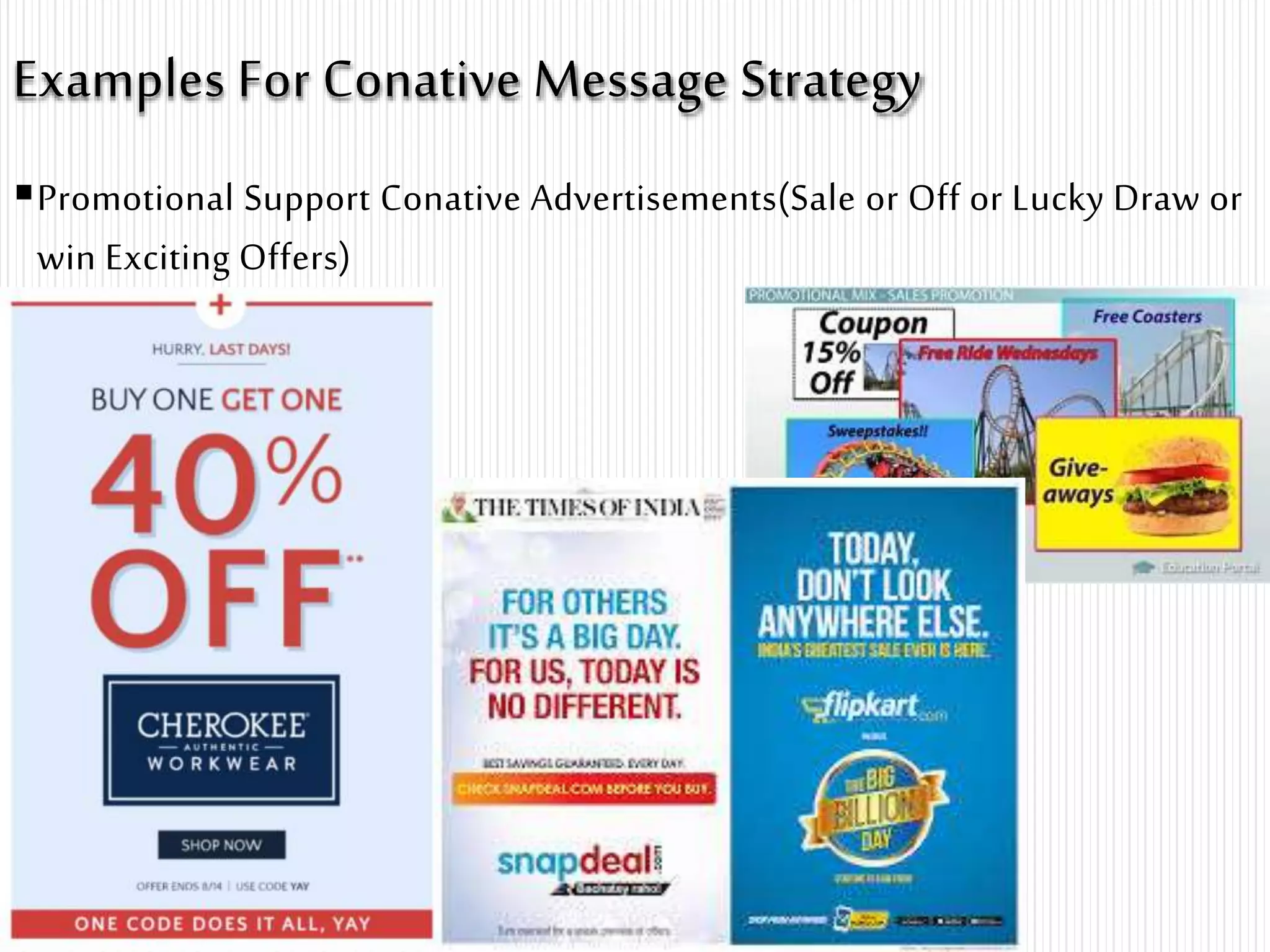
Examples For Conative Message Strategy
Promotional Support Conative Advertisements(Sale or Off or Lucky Draw or
win Exciting Offers)
THANK YOU

Message Strategy and Design

  • 2.
    Learning Objectives  MessageStrategy and Design  Introduction  Message Strategy Brief  Message Execution  Message Appeals  Message Objectives  Message Strategies
  • 3.
  • 4.
     MESSAGE consistsof facts, opinion, appeal, idea, picture, symbols, or convincing arguments about the product.  The MESSAGE STRATEGY aims to communicate the brand to the target market in a creative andpersuasive manner.  The MESSAGE STRATEGY refers to what is said in an advertisement, and the message execution or tactics constitute the manner in which the brand message is communicated .
  • 5.
    Message Strategy Brief A message strategy brief also referred to as a creative brief.  It is a blueprint of what thecompany plans to achieve with its advertising message.  Various advertising agenciesuse differentformats of the creative strategy brief.
  • 6.
    Elementsin MessageStrategy Brief Thetarget audience refers to a detailed description of the target market.(Kinder Joy)  Theobjectives for the message arewhat the organisation wants to achieve with the advertisement. (Demonstration)  Thecreative strategy statement consists of the advertising theme; the executional styles and the advertising appeals. (TRESemme)  Thesupporting information for the advertising claims in the message includes the factors that back upthe promise of the brand.(unique ingredients)
  • 7.
    Message Execution According toBelchand Belch, the executional style refers to the manner in which an advertising appeal is used to communicate with the audience. Advertising appeals are used to elicita response from the audience. Few of the Executional Styles are :- 1. Straightforward execution (Eg.- Whirlpool) 2. Testimonials (Eg.- Colgate) 3. Animation Execution (Eg.- RedBull)
  • 9.
    Message Appeals  Advertisingappeals are the cues that attractthe attention of the audience and that attempt to influence the consumer in some way.  The focus can be on the rationalor emotional motives of the consumer, or a combination thereof. Few of the Message Appeals in Ads are :- 1. Rational / Logical Appeal (Price, Quality, Features and so on.) 2. Emotional Appeal (Fear, Musical, Social, Personal and so on.) 3. Additional Appeals (Reminder, Scarcity, Teaser are some.)
  • 10.
    Message Objectives MO &S Promoting Brand Recall LinkKey Attributes to the Brand Name Define the Brand Image Situate the Brand Socially Affective Association Persuade the Customer Transform Consumptio n Experience Scare the Consumer into Action
  • 11.
    Message Strategies A messagestrategy is the primary tactic or approach used to deliver the message theme. There are three broad categories :- 1. Cognitive Message Strategies 2. Affective Message Strategies 3. Conative Message Strategies
  • 12.
    1. Cognitive MessageStrategy  Its goal is to design an ad that will have an impact on a person’s beliefs and/or knowledge structure.  A cognitive message strategy is the presentation of rational arguments or pieces of information to consumers.  This can be accomplished by suggesting any one of a wide variety of potential product benefits.
  • 13.
    Examples For CognitiveMessage Strategy  Generic Messages (Complan)  Unique Selling Proposition ( Coca-Cola Zero)  Comparative Ad Messages ( Pepsodent and Colgate)
  • 14.
    2. Affective MessageStrategy  This invoke feelings or emotions and match those feelings with the good, service or company.  These type of ads are prepared to enhance the likeability of the product recall of the appeal.  are of two categories:- Resonance Emotional
  • 15.
    Examples For AffectiveMessage Strategy  Resonance Advertising (Kellogg’s K Special)  Emotional Advertising ( Smoking, Water)
  • 16.
    3. Conative MessageStrategy  These are designed to lead more directly to some type of consumer response.  They can be used to support other promotional efforts, such as coupon redemption programs, Internet “hits” and orders or buy one get one free.
  • 17.
    Examples For ConativeMessage Strategy Promotional Support Conative Advertisements(Sale or Off or Lucky Draw or win Exciting Offers)
  • 18.