MEDICAL EQUIPMENT PROCUREMENT
EDMOND PAUL
MANAGING DIRECTOR
PRAXIA HEALTHCARE PVT LTD
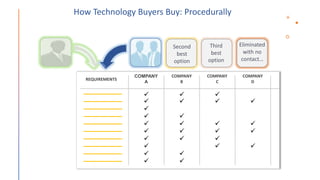
Eliminated
with no
contact…
REQUIREMENTS
COMPANY
A
COMPANY
B
COMPANY
C
COMPANY
D




























Second
best
option
Third
best
option
How Technology Buyers Buy: Procedurally
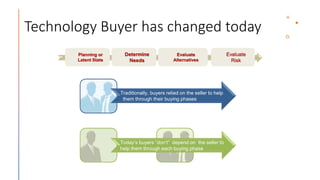
Technology Buyer has changed today
Today’s buyers “don’t” depend on the seller to
help them through each buying phase
Traditionally, buyers relied on the seller to help
them through their buying phases
Planning or
Latent State
Determine
Needs
Evaluate
Alternatives
Evaluate
Risk
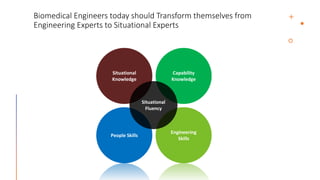
Biomedical Engineers today should Transform themselves from
Engineering Experts to Situational Experts
Situational
Knowledge
Capability
Knowledge
People Skills
Engineering
Skills
Situational
Fluency
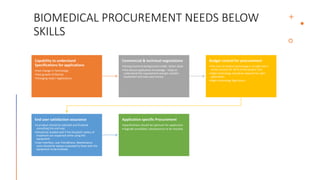
BIOMEDICAL PROCUREMENT NEEDS BELOW
SKILLS
Capability to understand
Specifications for applications
•Fast change in Technology
•Fast growth of Market
•Changing need / Applications
Commercial & technical negotiations
•Strong technical background enable better deals
•The clinical application knowledge - helps to
understand the requirement and get suitable
equipment and may save money.
Budget control for procurement
•The cost of medical technology is so high that it
comes around 30 -50 % of the project cost.
•Right technology should be selected for right
application.
•Right technology Right price.
End user satisfaction assurance
•A product should be selected and finalized
consulting the end-user
•Should be studied well if the hospital’s policy of
treatment are respected while using the
equipment.
•User interface, user friendliness, Maintenance
costs should be always evaluated to have with the
equipment to be finalized.
Application specific Procurement
•Specifications should be optimum for application
•Upgrade possibility/ obsolescence to be checked
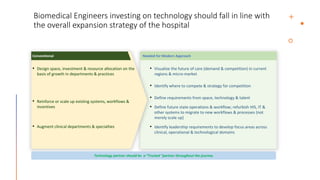
Biomedical Engineers investing on technology should fall in line with
the overall expansion strategy of the hospital
• Visualize the future of care (demand & competition) in current
regions & micro-market
• Identify where to compete & strategy for competition
• Define requirements from space, technology & talent
• Define future state operations & workflow; refurbish HIS, IT &
other systems to migrate to new workflows & processes {not
merely scale up}
• Identify leadership requirements to develop focus areas across
clinical, operational & technological domains
Needed for Modern Approach
• Design space, investment & resource allocation on the
basis of growth in departments & practices
• Reinforce or scale up existing systems, workflows &
incentives
• Augment clinical departments & specialties
Conventional
Technology partner should be a “Trusted “partner throughout the journey
Medical Equipment Procurement.pptx

Medical Equipment Procurement.pptx

  • 1.
    MEDICAL EQUIPMENT PROCUREMENT EDMONDPAUL MANAGING DIRECTOR PRAXIA HEALTHCARE PVT LTD
  • 2.
  • 3.
    Technology Buyer haschanged today Today’s buyers “don’t” depend on the seller to help them through each buying phase Traditionally, buyers relied on the seller to help them through their buying phases Planning or Latent State Determine Needs Evaluate Alternatives Evaluate Risk
  • 4.
    Biomedical Engineers todayshould Transform themselves from Engineering Experts to Situational Experts Situational Knowledge Capability Knowledge People Skills Engineering Skills Situational Fluency
  • 5.
    BIOMEDICAL PROCUREMENT NEEDSBELOW SKILLS Capability to understand Specifications for applications •Fast change in Technology •Fast growth of Market •Changing need / Applications Commercial & technical negotiations •Strong technical background enable better deals •The clinical application knowledge - helps to understand the requirement and get suitable equipment and may save money. Budget control for procurement •The cost of medical technology is so high that it comes around 30 -50 % of the project cost. •Right technology should be selected for right application. •Right technology Right price. End user satisfaction assurance •A product should be selected and finalized consulting the end-user •Should be studied well if the hospital’s policy of treatment are respected while using the equipment. •User interface, user friendliness, Maintenance costs should be always evaluated to have with the equipment to be finalized. Application specific Procurement •Specifications should be optimum for application •Upgrade possibility/ obsolescence to be checked
  • 6.
    Biomedical Engineers investingon technology should fall in line with the overall expansion strategy of the hospital • Visualize the future of care (demand & competition) in current regions & micro-market • Identify where to compete & strategy for competition • Define requirements from space, technology & talent • Define future state operations & workflow; refurbish HIS, IT & other systems to migrate to new workflows & processes {not merely scale up} • Identify leadership requirements to develop focus areas across clinical, operational & technological domains Needed for Modern Approach • Design space, investment & resource allocation on the basis of growth in departments & practices • Reinforce or scale up existing systems, workflows & incentives • Augment clinical departments & specialties Conventional Technology partner should be a “Trusted “partner throughout the journey