
Media Imperialism Revisited
Agenda
• Functions of Media?
• Links between Media and Development?
• What is “Media Imperialism” and why is it so
widely subscribed?
• Evidence for and against the MI thesis
• What are the alternative frameworks?
Functions of Media?
What are the functions of Media?
•
•
•
•
•
•
•

Public Service?
To inform?
To educate?
To propagandize?
To entertain?
Social control?
Culture?

Media and the
Public Sphere
Links between Media and
Development?
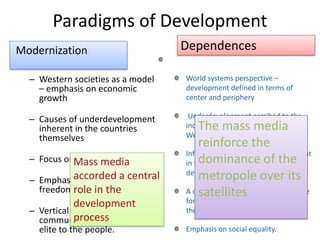
Paradigms of Development
Modernization

Dependences

– Western societies as a model
– emphasis on economic
growth

World systems perspective –
development defined in terms of
center and periphery

– Causes of underdevelopment
inherent in the countries
themselves

Underdevelopment ascribed to the
industrialized capitalist powers of the
West

– Focus onMass media
the nation-state

accorded a central
– Emphasis on individual
freedoms
role in the
development
– Vertical pattern of
process
communication – from the
elite to the people.

The mass media
reinforce the
Information gaps – underdevelopment
dominance of the
in the periphery is prerequisite to
development in the center
metropole over its
A country in the periphery must strive
satellites
for self-reliance and liberation from
the world system
Emphasis on social equality.
Emergence of the Media Imperialism
thesis
The McBride
Commission
Report (1985)
• international character of the media, their structures,
world-views and markets
• One way flow of media
• Globalization: concentration of media ownership,
monopolization of markets, and a decline in diversity
• Emergence of the information society
• Self-reliance and cultural identity
Media Imperialism
• Key assumptions?
• What are the links between globalization,
neoliberalism and media imperialism ?
• Why is this thesis so dominant in the media and
development literature over the last few decades?
• Is this popularity justified in terms of its explanatory
power and empirical support?
• What accounts for the weaning of the thesis'
popularity in recent years?
• What are the changing perspective on “local” versus
“Western” content?
“The 20th century has been characterized by three
developments of great political importance: the growth of
democracy, the growth of corporate power, and the growth of
corporate propaganda as a means of protecting corporate
power against democracy.”
Manufacturing Consent: the Political Economy of the Mass
Media, Edward S. Herman and Noam Chomsky, 1988
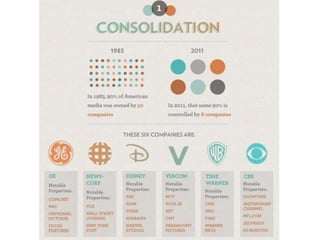
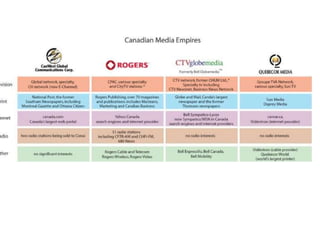
• Media Concentration – Global Oligopology
– Transnational ownership
– Acquisition of local outlets
Why media concentration?
• Media Logic and the Free Market Capitalism
• Media ownership and funding sources
• Government policies and citizens roles
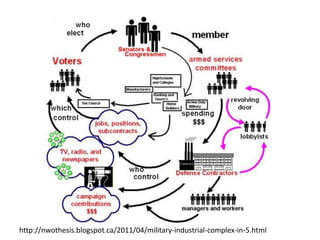
http://nwothesis.blogspot.ca/2011/04/military-industrial-complex-in-5.html
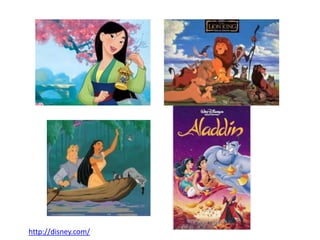
http://disney.com/
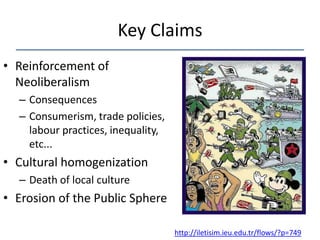
Key Claims
• Reinforcement of
Neoliberalism
– Consequences
– Consumerism, trade policies,
labour practices, inequality,
etc...

• Cultural homogenization
– Death of local culture

• Erosion of the Public Sphere
http://iletisim.ieu.edu.tr/flows/?p=749
Essentialism
• Mass media and reception
"Power is the ability
not just to tell the
story of another
• Unequal power
person, but to make
• “The West and the Rest” it the definitive story
• Power to “Representation” of that person".
– Agencies
– Consent

Chimamanda Adichie:
The danger of a single
story

http://www.ted.com/talks/chimamanda_adi
chie_the_danger_of_a_single_story.html
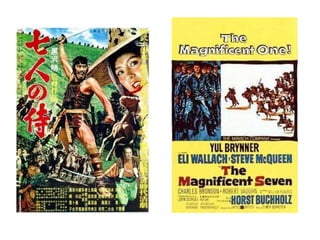
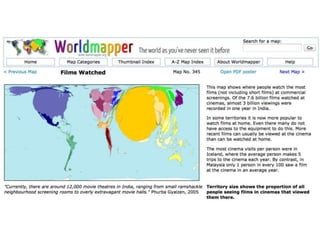
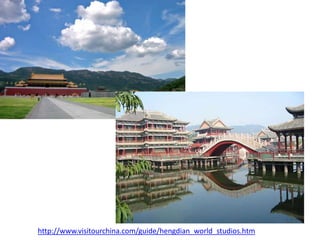
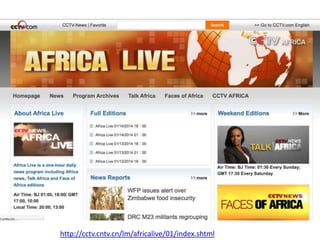
Evidence in support and
against the MI thesis
http://www.visitourchina.com/guide/hengdian_world_studios.htm
http://cctv.cntv.cn/lm/africalive/01/index.shtml
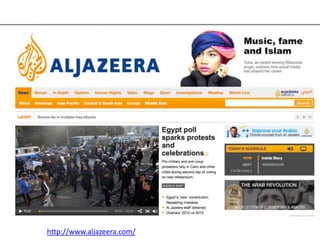
http://www.aljazeera.com/
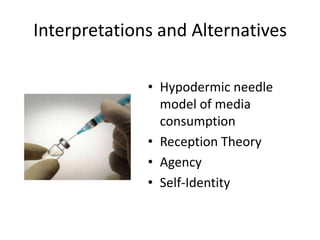
Interpretations and Alternatives
• Hypodermic needle
model of media
consumption
• Reception Theory
• Agency
• Self-Identity
Everett Rogers
• “development as a widely participatory process
of social change in a society, intended to bring
about both social and material advancement
(including greater equality, freedom, and other
valued qualities) for the majority of the people
through their gaining greater control over their
environment” (Rogers, 1975)
Refer to assigned reading
Everett Rogers
• Diffusion of Innovations and Development
• field experiments and network analysis
• communication effects gaps and audience
participation
• Diffusion is uneven
• Local innovation and local problem solving
• “what is really new about communication
technology is not the technology per se as
much as the social technology of how the new
communication devices are organized and
used.” (1976: 34)
• Importance of interpersonal network in
knowledge transmission (not through “opinion
leaders”)
• 4 main elements that influence the spread of a
new idea:
– the innovation, communication channels, time, and a
social system.

• Diffusion is the process by which an innovation is
communicated through certain channels over
time among the members of a social system.
• Innovations progress through 5 stages:
knowledge, persuasion, decision, implementatio
n, and confirmation."
Rethinking Media Imperialism
• Is the power of the Western mass media
overstated?
• What are the roles of the state and local
organizations?
• What are the roles of the “audience”?
• What about local cultural contexts?

Media Imperalism and Development

  • 1.
  • 2.
    Agenda • Functions ofMedia? • Links between Media and Development? • What is “Media Imperialism” and why is it so widely subscribed? • Evidence for and against the MI thesis • What are the alternative frameworks?
  • 3.
  • 4.
    What are thefunctions of Media? • • • • • • • Public Service? To inform? To educate? To propagandize? To entertain? Social control? Culture? Media and the Public Sphere
  • 5.
    Links between Mediaand Development?
  • 6.
    Paradigms of Development Modernization Dependences –Western societies as a model – emphasis on economic growth World systems perspective – development defined in terms of center and periphery – Causes of underdevelopment inherent in the countries themselves Underdevelopment ascribed to the industrialized capitalist powers of the West – Focus onMass media the nation-state accorded a central – Emphasis on individual freedoms role in the development – Vertical pattern of process communication – from the elite to the people. The mass media reinforce the Information gaps – underdevelopment dominance of the in the periphery is prerequisite to development in the center metropole over its A country in the periphery must strive satellites for self-reliance and liberation from the world system Emphasis on social equality.
  • 7.
    Emergence of theMedia Imperialism thesis
  • 8.
    The McBride Commission Report (1985) •international character of the media, their structures, world-views and markets • One way flow of media • Globalization: concentration of media ownership, monopolization of markets, and a decline in diversity • Emergence of the information society • Self-reliance and cultural identity
  • 9.
    Media Imperialism • Keyassumptions? • What are the links between globalization, neoliberalism and media imperialism ? • Why is this thesis so dominant in the media and development literature over the last few decades? • Is this popularity justified in terms of its explanatory power and empirical support? • What accounts for the weaning of the thesis' popularity in recent years? • What are the changing perspective on “local” versus “Western” content?
  • 10.
    “The 20th centuryhas been characterized by three developments of great political importance: the growth of democracy, the growth of corporate power, and the growth of corporate propaganda as a means of protecting corporate power against democracy.” Manufacturing Consent: the Political Economy of the Mass Media, Edward S. Herman and Noam Chomsky, 1988
  • 13.
    • Media Concentration– Global Oligopology – Transnational ownership – Acquisition of local outlets
  • 14.
    Why media concentration? •Media Logic and the Free Market Capitalism • Media ownership and funding sources • Government policies and citizens roles
  • 15.
  • 16.
  • 17.
    Key Claims • Reinforcementof Neoliberalism – Consequences – Consumerism, trade policies, labour practices, inequality, etc... • Cultural homogenization – Death of local culture • Erosion of the Public Sphere http://iletisim.ieu.edu.tr/flows/?p=749
  • 18.
    Essentialism • Mass mediaand reception "Power is the ability not just to tell the story of another • Unequal power person, but to make • “The West and the Rest” it the definitive story • Power to “Representation” of that person". – Agencies – Consent Chimamanda Adichie: The danger of a single story http://www.ted.com/talks/chimamanda_adi chie_the_danger_of_a_single_story.html
  • 19.
    Evidence in supportand against the MI thesis
  • 23.
  • 24.
  • 25.
  • 26.
    Interpretations and Alternatives •Hypodermic needle model of media consumption • Reception Theory • Agency • Self-Identity
  • 27.
    Everett Rogers • “developmentas a widely participatory process of social change in a society, intended to bring about both social and material advancement (including greater equality, freedom, and other valued qualities) for the majority of the people through their gaining greater control over their environment” (Rogers, 1975) Refer to assigned reading
  • 28.
    Everett Rogers • Diffusionof Innovations and Development • field experiments and network analysis • communication effects gaps and audience participation • Diffusion is uneven • Local innovation and local problem solving
  • 29.
    • “what isreally new about communication technology is not the technology per se as much as the social technology of how the new communication devices are organized and used.” (1976: 34) • Importance of interpersonal network in knowledge transmission (not through “opinion leaders”)
  • 30.
    • 4 mainelements that influence the spread of a new idea: – the innovation, communication channels, time, and a social system. • Diffusion is the process by which an innovation is communicated through certain channels over time among the members of a social system. • Innovations progress through 5 stages: knowledge, persuasion, decision, implementatio n, and confirmation."
  • 31.
    Rethinking Media Imperialism •Is the power of the Western mass media overstated? • What are the roles of the state and local organizations? • What are the roles of the “audience”? • What about local cultural contexts?

Editor's Notes

  • #12 http://frugaldad.com/2011/11/22/media-consolidation-infographic/