Donald W. M. Juzwishin PhD
Adjunct Associate Professor
   University of Victoria
 Health Information Science
        May 4, 2009


                              www.ideastoaction.ca
    Interoperability is a
     property referring to the
     ability of diverse systems
     and organizations to work
     together (inter-operate).
     The term is often used in a
     technical systems
     engineering sense, or
     alternatively in a broad
     sense, taking into account
     social, political, and
     organizational factors that
     impact system to system
     performance.
         Wikipedia, Interoperability


                                www.ideastoaction.ca
    If health care is to flourish in the coming setting of
     diminished resources and increased demand, then it
     will do so because we have explicitly designed and
     implemented new systems of care that are
     fundamentally sustainable. Given the likely
     enormity of that task, it may require nothing less
     than the reinvention of health care
            Enrico Coiera, British Medical Journal
            Volume 328, 15 May 2004, p. 1197
            BMJ.com


                           www.ideastoaction.ca
    Technical systems have social consequences;
    Social systems have technical consequences;
    We don’t design technology, we design
     sociotechnical systems; and
    To design sociotechnical systems, we must
     understand how people and technologies
     interact.


                     www.ideastoaction.ca
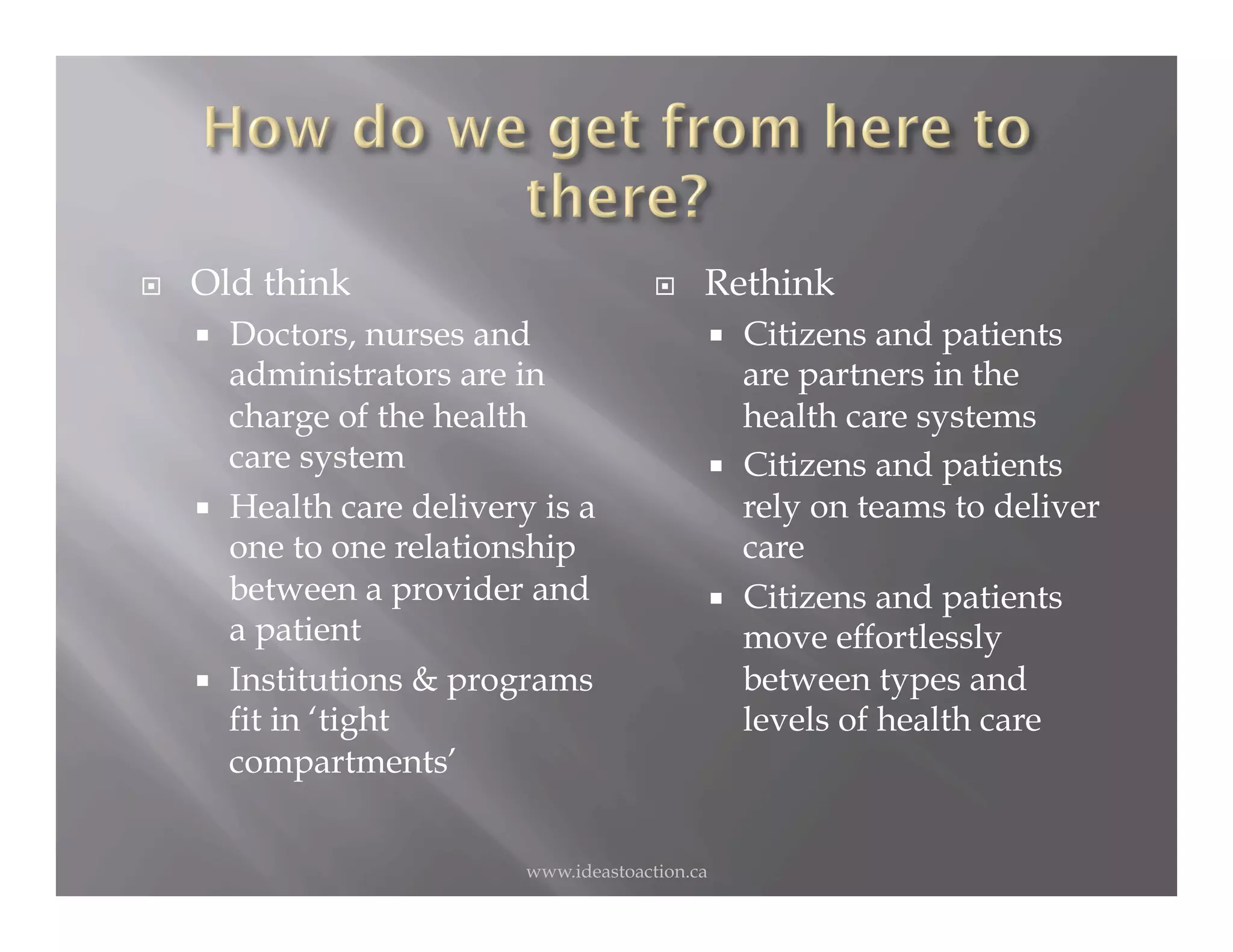
    Old think                                  Rethink
         Doctors, nurses and                            Citizens and patients
          administrators are in                           are partners in the
          charge of the health                            health care systems
          care system                                    Citizens and patients
         Health care delivery is a                       rely on teams to deliver
          one to one relationship                         care
          between a provider and                         Citizens and patients
          a patient                                       move effortlessly
         Institutions & programs                         between types and
          fit in ‘tight                                   levels of health care
          compartments’


                              www.ideastoaction.ca
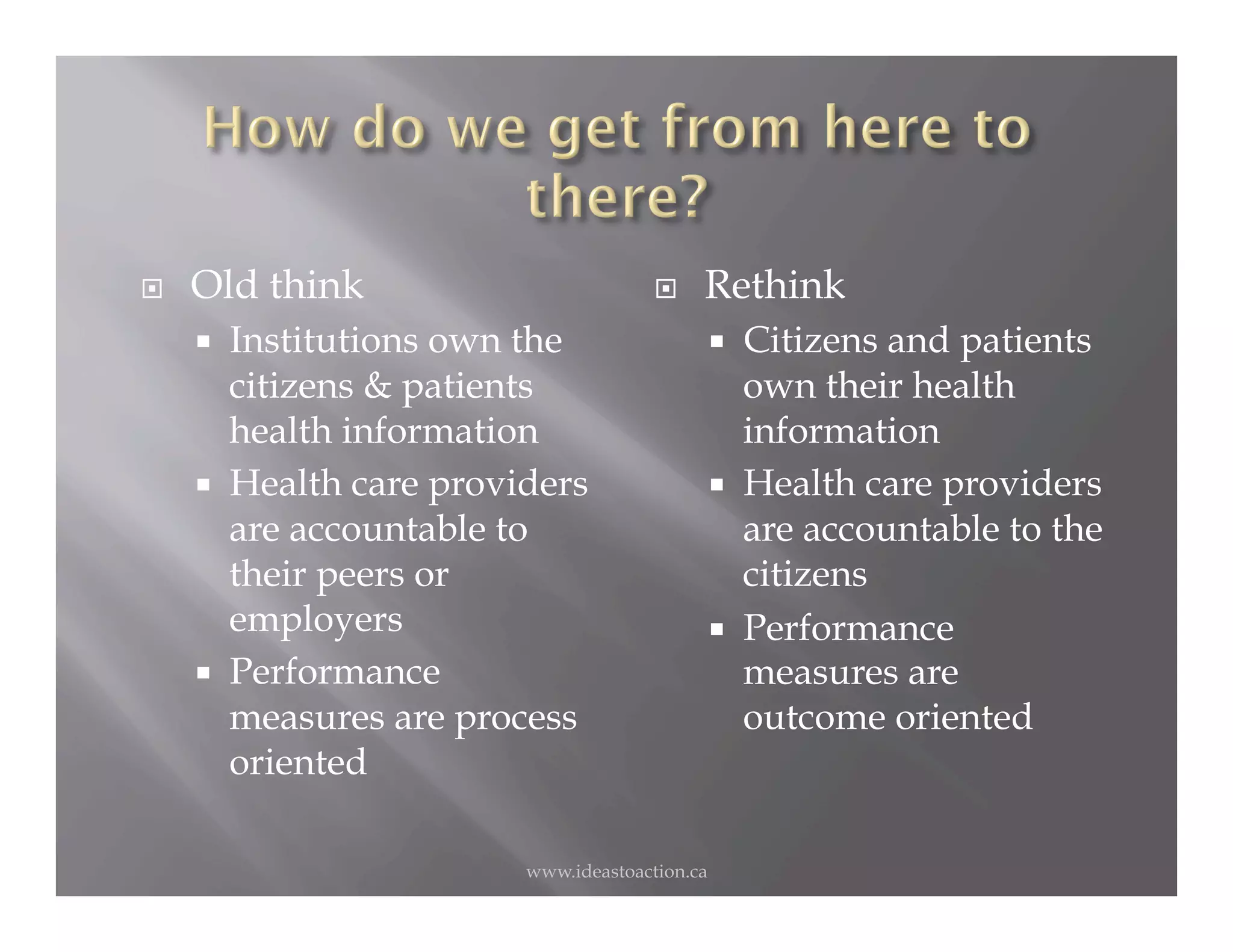
    Old think                               Rethink
         Institutions own the                        Citizens and patients
          citizens & patients                          own their health
          health information                           information
         Health care providers                       Health care providers
          are accountable to                           are accountable to the
          their peers or                               citizens
          employers                                   Performance
         Performance                                  measures are
          measures are process                         outcome oriented
          oriented

                           www.ideastoaction.ca
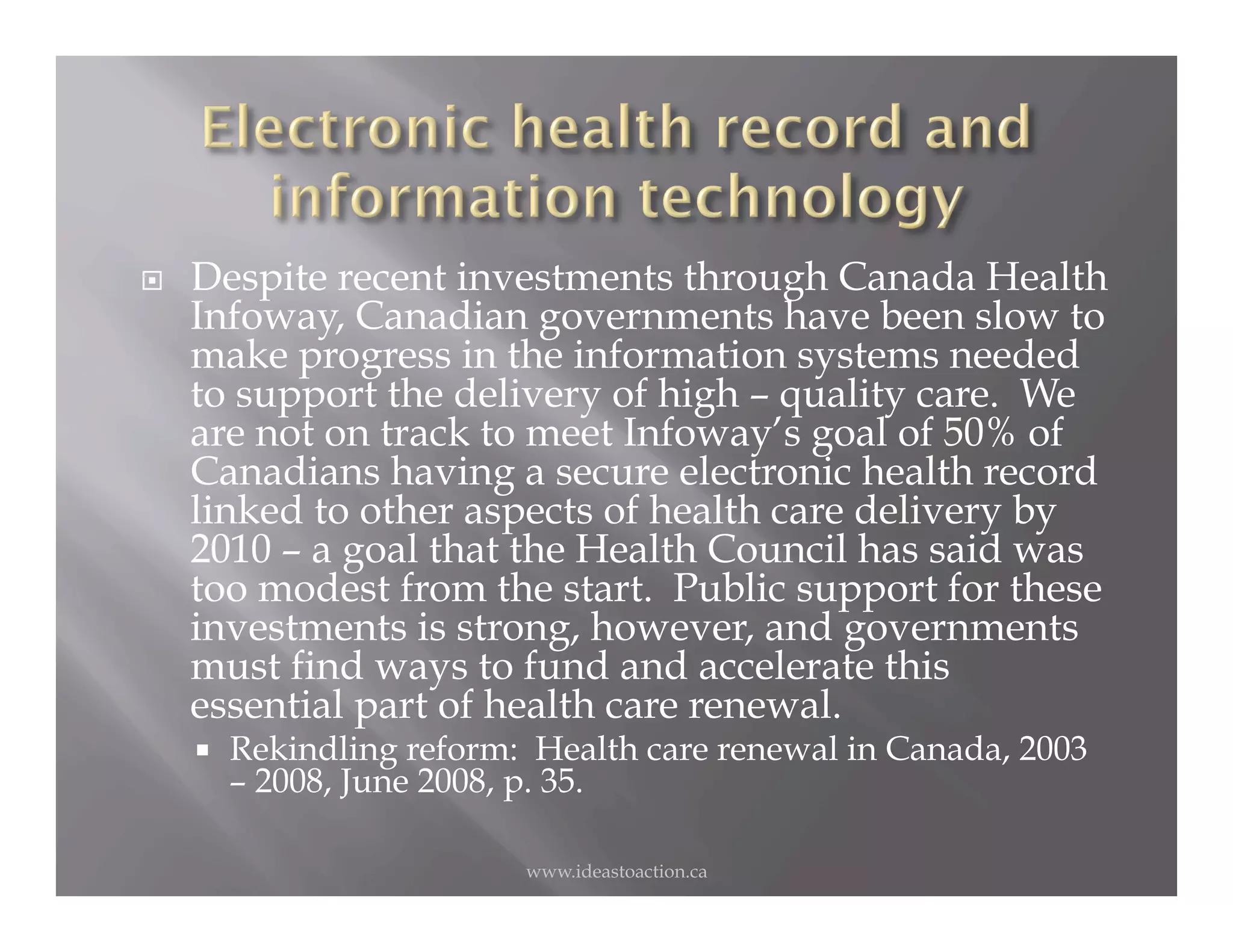
    Despite recent investments through Canada Health
     Infoway, Canadian governments have been slow to
     make progress in the information systems needed
     to support the delivery of high – quality care. We
     are not on track to meet Infoway’s goal of 50% of
     Canadians having a secure electronic health record
     linked to other aspects of health care delivery by
     2010 – a goal that the Health Council has said was
     too modest from the start. Public support for these
     investments is strong, however, and governments
     must find ways to fund and accelerate this
     essential part of health care renewal.
         Rekindling reform: Health care renewal in Canada, 2003
          – 2008, June 2008, p. 35.

                            www.ideastoaction.ca
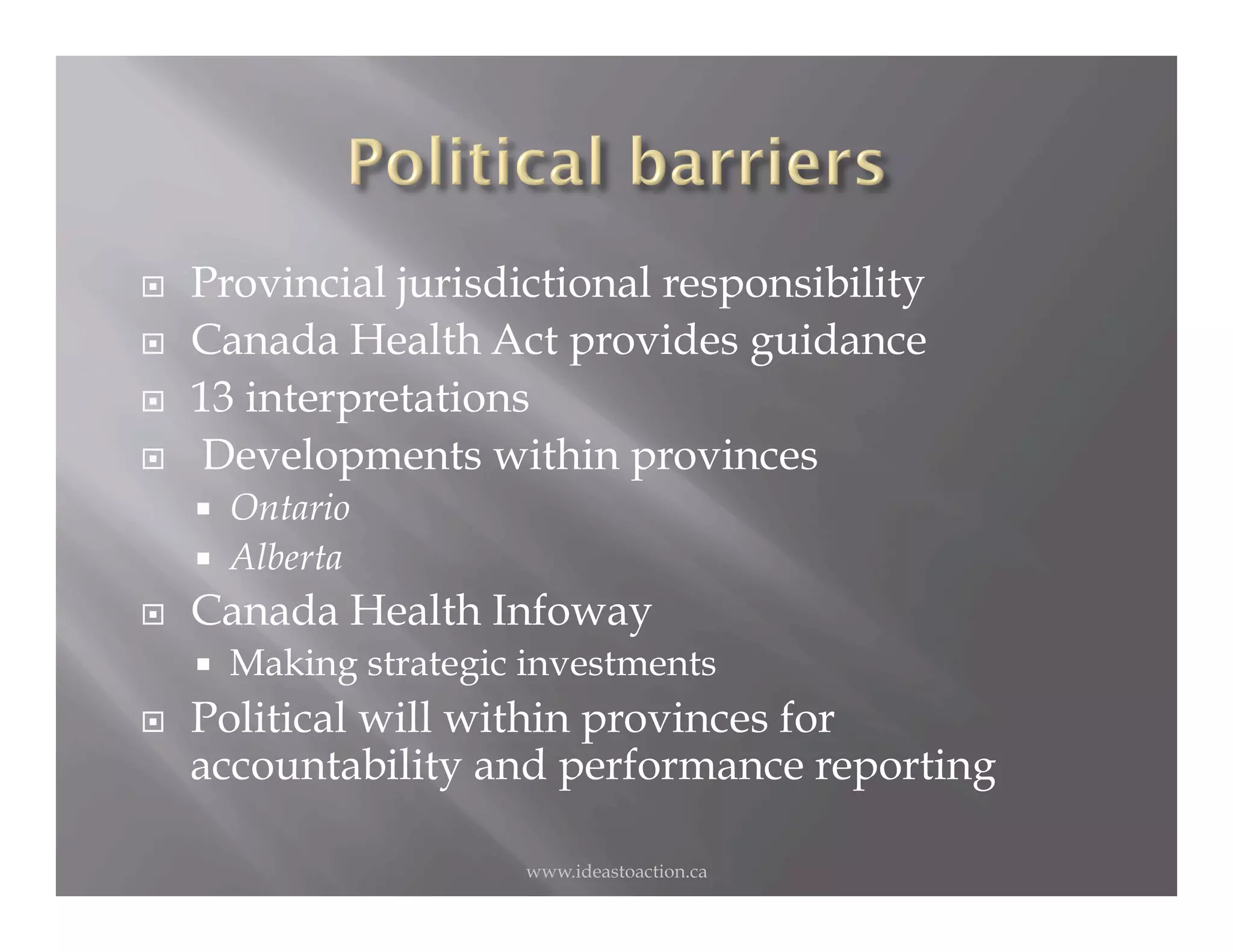
    Provincial jurisdictional responsibility
    Canada Health Act provides guidance
    13 interpretations
     Developments within provinces
         Ontario
         Alberta
    Canada Health Infoway
         Making strategic investments
    Political will within provinces for
     accountability and performance reporting

                           www.ideastoaction.ca
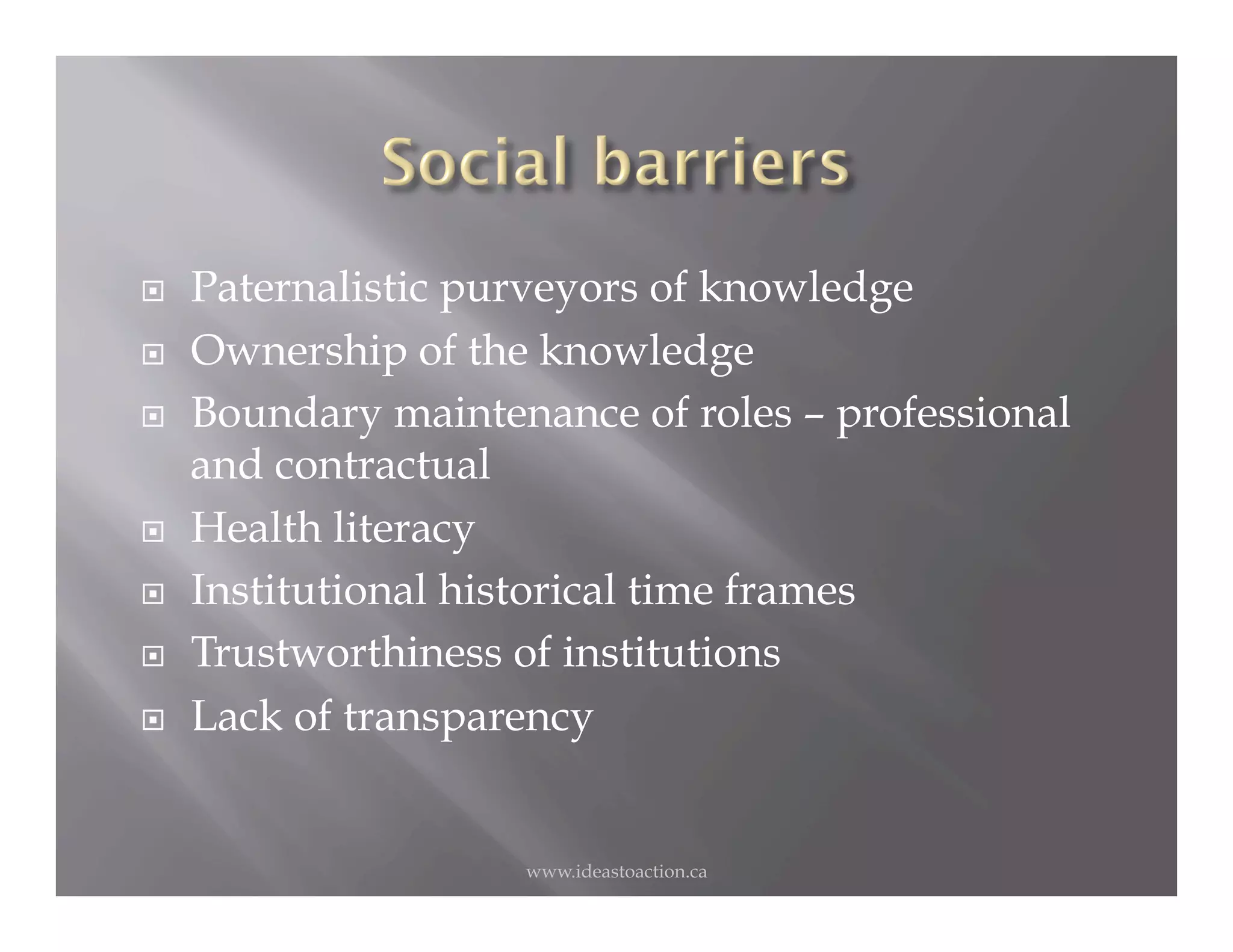
    Paternalistic purveyors of knowledge
    Ownership of the knowledge
    Boundary maintenance of roles – professional
     and contractual
    Health literacy
    Institutional historical time frames
    Trustworthiness of institutions
    Lack of transparency


                     www.ideastoaction.ca
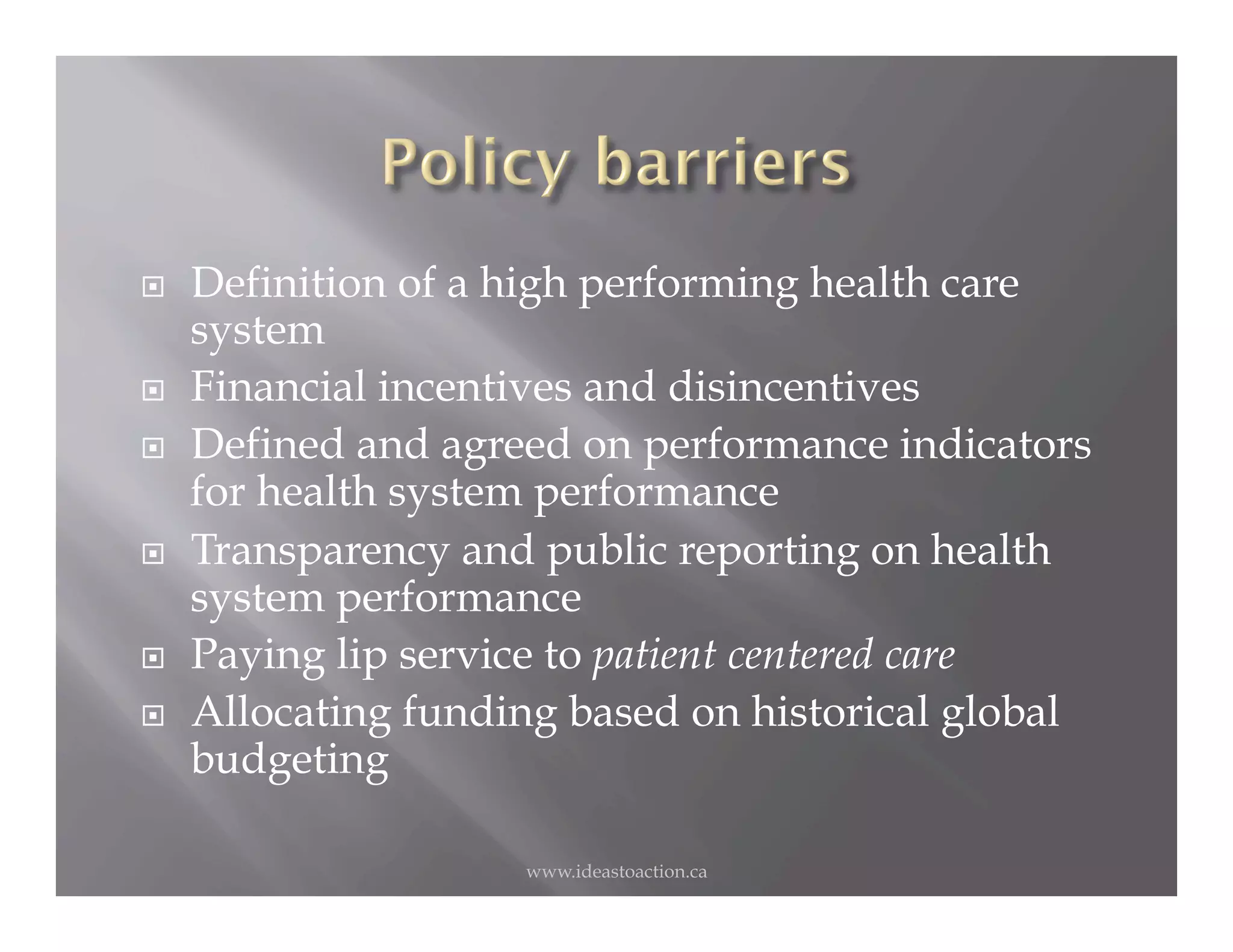
    Definition of a high performing health care
     system
    Financial incentives and disincentives
    Defined and agreed on performance indicators
     for health system performance
    Transparency and public reporting on health
     system performance
    Paying lip service to patient centered care
    Allocating funding based on historical global
     budgeting

                     www.ideastoaction.ca
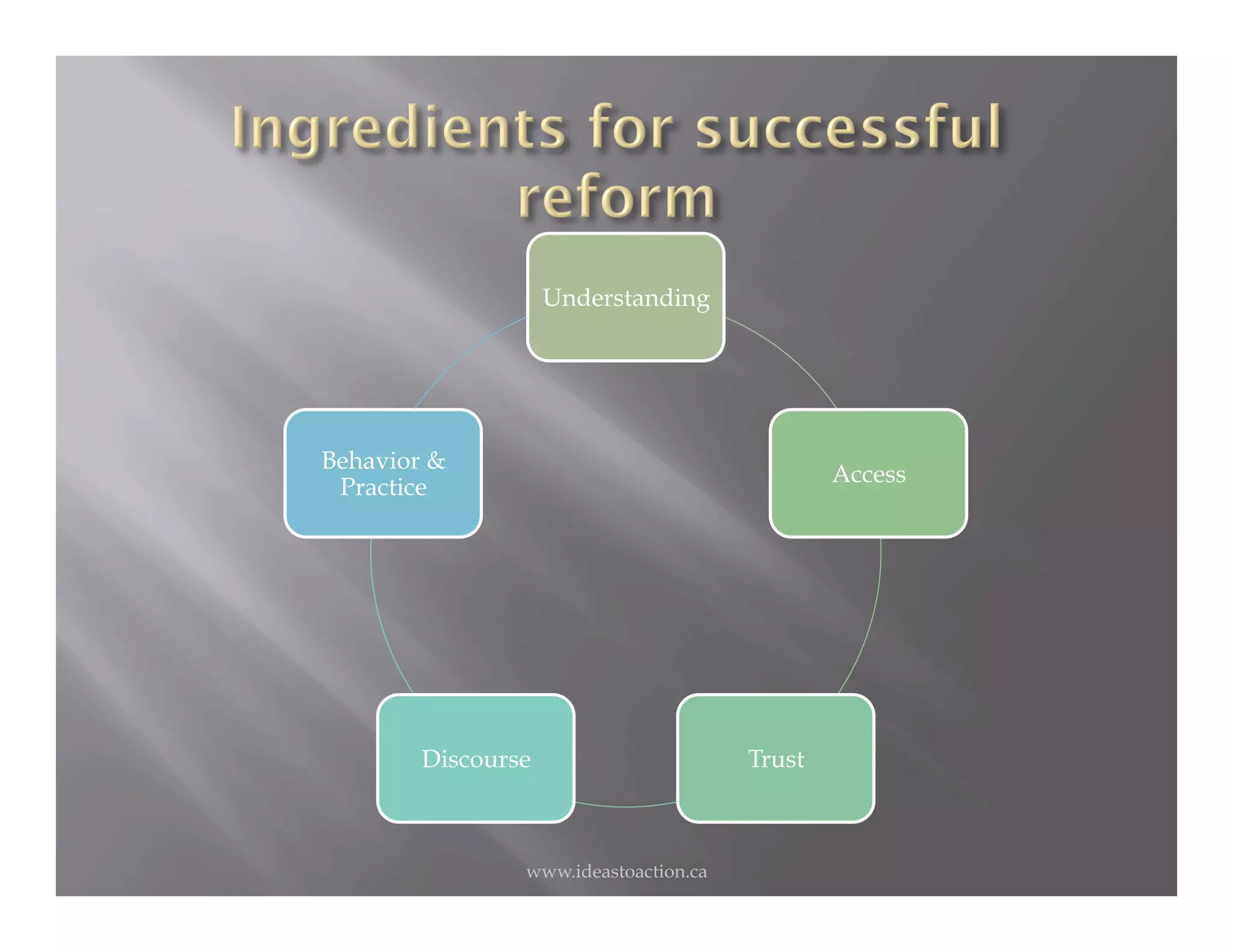
Understanding


Behavior &
                                               Access
 Practice


        Discourse                      Trust


                www.ideastoaction.ca
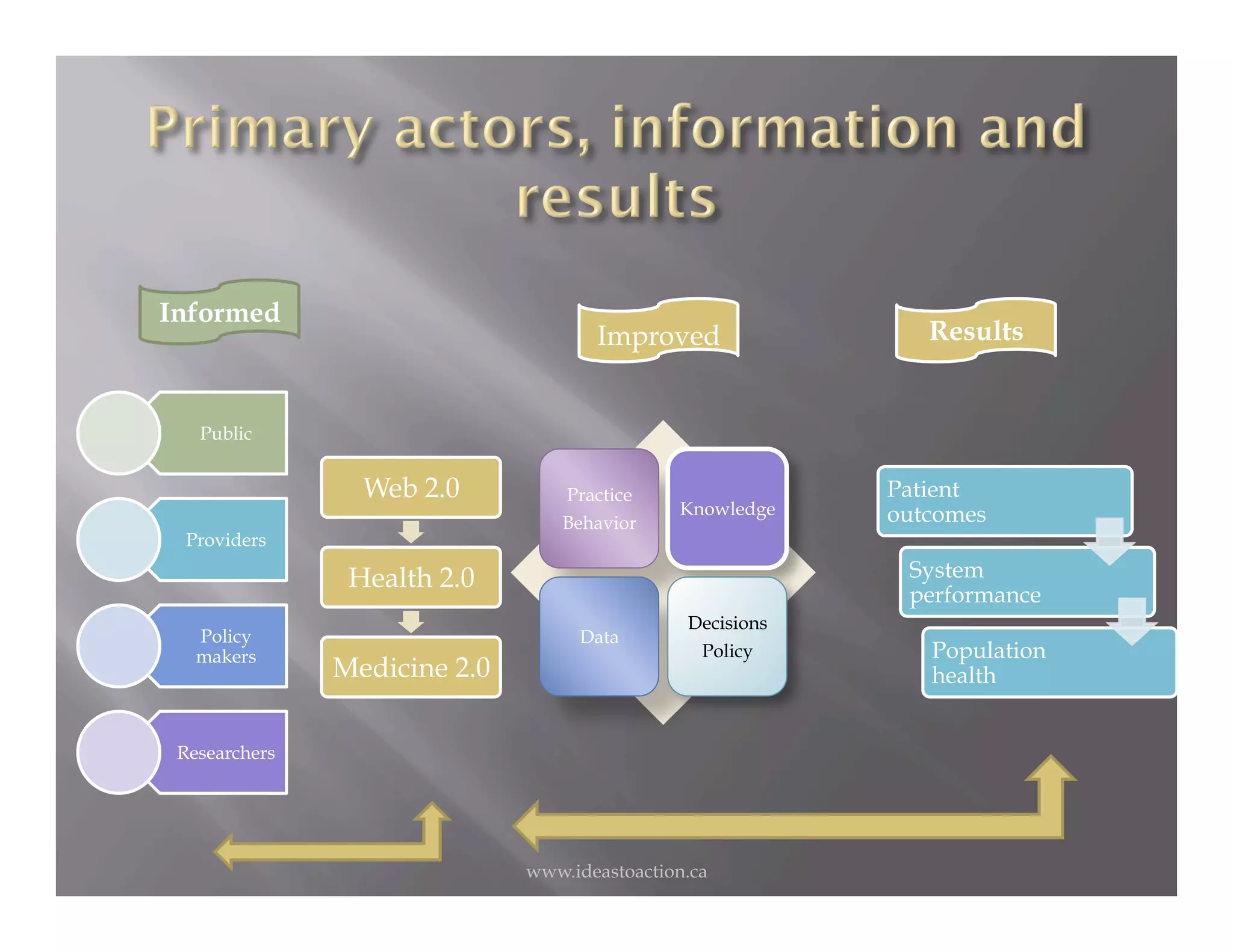
Informed
                                     Improved                 Results


   Public


                 Web 2.0          Practice                 Patient
                                              Knowledge    outcomes
                                  Behavior
  Providers

                Health 2.0                                  System
                                                            performance
                                               Decisions
   Policy                          Data
   makers                                       Policy        Population
               Medicine 2.0                                   health


 Researchers


                              www.ideastoaction.ca
    Social phenomena representing a cultural
     revolution that captures the Internet and
     Society
    Continually changing and designed to
     maximize creativity, communications, secure
     information sharing, collaboration and
     functionality of the web
    Social networking sites, video sharing, wikis,
     blogs and folksonomies


                      www.ideastoaction.ca
    Health 2.0 is participatory health care
     characterized by the ability to rapidly share,
     classify and summarize individual health
     information with goals of improving health
     care systems, experiences and outcomes via
     integration of patients and stakeholders
         Ian Furst, www.waittimes.blogspot.com


                         www.ideastoaction.ca
    Applications, services and tools are Web-based
     services for health care consumers, caregivers,
     patients, health professionals, and biomedical
     researchers, that use Web 2.0 technologies as
     well as semantic web and virtual reality tools,
     to enable and facilitate specifically social
     networking, participation, apomediation,
     collaboration, and openness within and
     between these user groups”
         G. Eysenbach, www.medicine20congress.com


                        www.ideastoaction.ca
    Facilitate informed choice
    Facilitate provider commitment to excellence
     and best practice
    Nurture trust
    Facilitate researcher autonomy
    Encourage citizen responsibility
    Build egalitarian state direction with a
     commitment to solidarity
    Encourage critical assessment of outcomes

                      www.ideastoaction.ca
    Define a high performing
     health care system
    Agree on performance
     indicators and report on
     them
    Remove barriers among
     providers
    Provide incentives
    Provide researchers with
     access to anonymous and
     linked health data
    Give the personal health
     record to patients and
     citizens

                        www.ideastoaction.ca
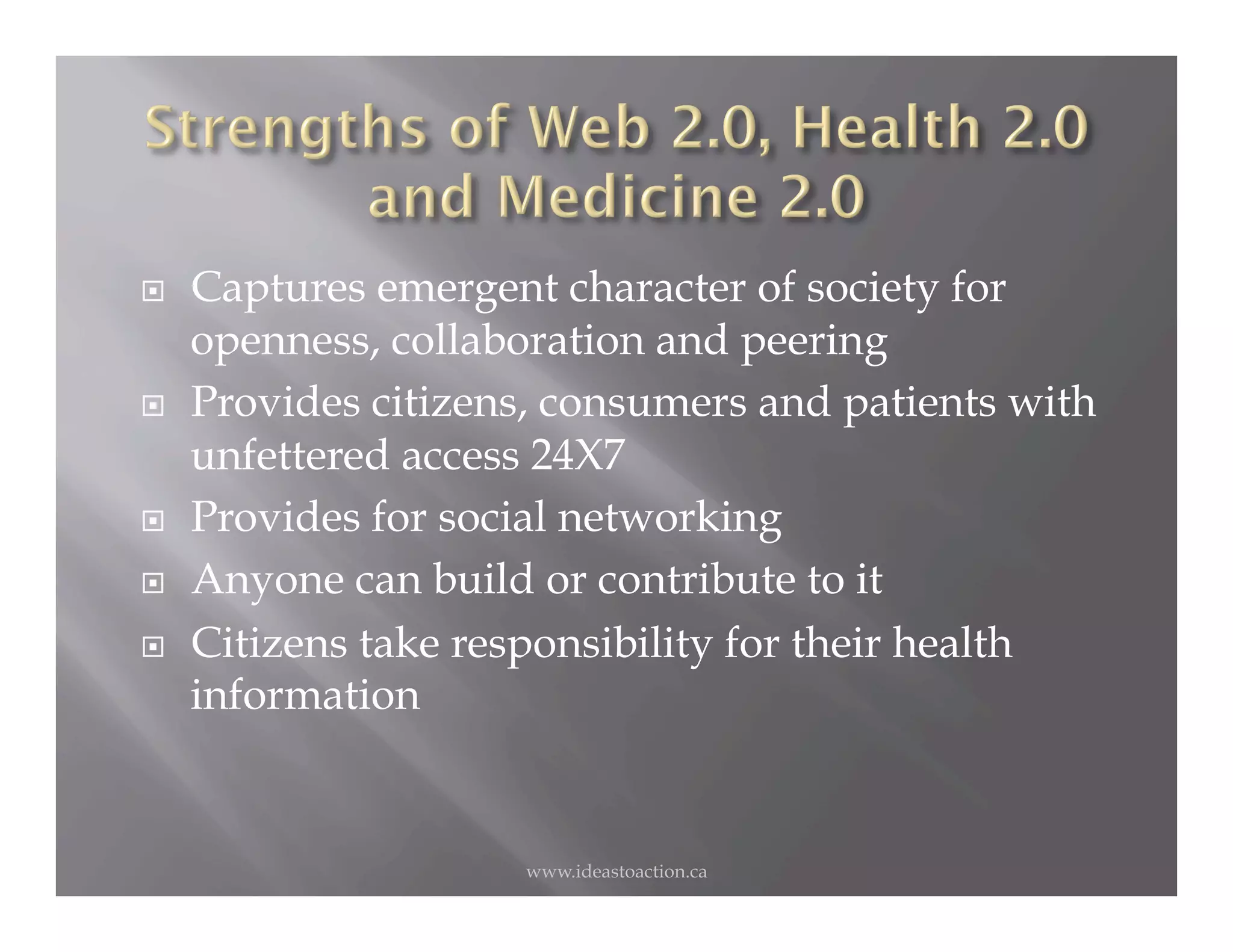
    Captures emergent character of society for
     openness, collaboration and peering
    Provides citizens, consumers and patients with
     unfettered access 24X7
    Provides for social networking
    Anyone can build or contribute to it
    Citizens take responsibility for their health
     information


                      www.ideastoaction.ca

Political, Policy and Social Barriers to System Interoperability

  • 1.
    Donald W. M.Juzwishin PhD Adjunct Associate Professor University of Victoria Health Information Science May 4, 2009 www.ideastoaction.ca
  • 2.
      Interoperability is a property referring to the ability of diverse systems and organizations to work together (inter-operate). The term is often used in a technical systems engineering sense, or alternatively in a broad sense, taking into account social, political, and organizational factors that impact system to system performance.   Wikipedia, Interoperability www.ideastoaction.ca
  • 3.
      If health care is to flourish in the coming setting of diminished resources and increased demand, then it will do so because we have explicitly designed and implemented new systems of care that are fundamentally sustainable. Given the likely enormity of that task, it may require nothing less than the reinvention of health care   Enrico Coiera, British Medical Journal   Volume 328, 15 May 2004, p. 1197   BMJ.com www.ideastoaction.ca
  • 4.
      Technical systems have social consequences;   Social systems have technical consequences;   We don’t design technology, we design sociotechnical systems; and   To design sociotechnical systems, we must understand how people and technologies interact. www.ideastoaction.ca
  • 5.
      Old think   Rethink   Doctors, nurses and   Citizens and patients administrators are in are partners in the charge of the health health care systems care system   Citizens and patients   Health care delivery is a rely on teams to deliver one to one relationship care between a provider and   Citizens and patients a patient move effortlessly   Institutions & programs between types and fit in ‘tight levels of health care compartments’ www.ideastoaction.ca
  • 6.
      Old think   Rethink   Institutions own the   Citizens and patients citizens & patients own their health health information information   Health care providers   Health care providers are accountable to are accountable to the their peers or citizens employers   Performance   Performance measures are measures are process outcome oriented oriented www.ideastoaction.ca
  • 7.
      Despite recent investments through Canada Health Infoway, Canadian governments have been slow to make progress in the information systems needed to support the delivery of high – quality care. We are not on track to meet Infoway’s goal of 50% of Canadians having a secure electronic health record linked to other aspects of health care delivery by 2010 – a goal that the Health Council has said was too modest from the start. Public support for these investments is strong, however, and governments must find ways to fund and accelerate this essential part of health care renewal.   Rekindling reform: Health care renewal in Canada, 2003 – 2008, June 2008, p. 35. www.ideastoaction.ca
  • 8.
      Provincial jurisdictional responsibility   Canada Health Act provides guidance   13 interpretations   Developments within provinces   Ontario   Alberta   Canada Health Infoway   Making strategic investments   Political will within provinces for accountability and performance reporting www.ideastoaction.ca
  • 9.
      Paternalistic purveyors of knowledge   Ownership of the knowledge   Boundary maintenance of roles – professional and contractual   Health literacy   Institutional historical time frames   Trustworthiness of institutions   Lack of transparency www.ideastoaction.ca
  • 10.
      Definition of a high performing health care system   Financial incentives and disincentives   Defined and agreed on performance indicators for health system performance   Transparency and public reporting on health system performance   Paying lip service to patient centered care   Allocating funding based on historical global budgeting www.ideastoaction.ca
  • 11.
    Understanding Behavior & Access Practice Discourse Trust www.ideastoaction.ca
  • 12.
    Informed Improved Results Public Web 2.0 Practice Patient Knowledge outcomes Behavior Providers Health 2.0 System performance Decisions Policy Data makers Policy Population Medicine 2.0 health Researchers www.ideastoaction.ca
  • 13.
      Social phenomena representing a cultural revolution that captures the Internet and Society   Continually changing and designed to maximize creativity, communications, secure information sharing, collaboration and functionality of the web   Social networking sites, video sharing, wikis, blogs and folksonomies www.ideastoaction.ca
  • 14.
      Health 2.0 is participatory health care characterized by the ability to rapidly share, classify and summarize individual health information with goals of improving health care systems, experiences and outcomes via integration of patients and stakeholders   Ian Furst, www.waittimes.blogspot.com www.ideastoaction.ca
  • 15.
      Applications, services and tools are Web-based services for health care consumers, caregivers, patients, health professionals, and biomedical researchers, that use Web 2.0 technologies as well as semantic web and virtual reality tools, to enable and facilitate specifically social networking, participation, apomediation, collaboration, and openness within and between these user groups”   G. Eysenbach, www.medicine20congress.com www.ideastoaction.ca
  • 16.
      Facilitate informed choice   Facilitate provider commitment to excellence and best practice   Nurture trust   Facilitate researcher autonomy   Encourage citizen responsibility   Build egalitarian state direction with a commitment to solidarity   Encourage critical assessment of outcomes www.ideastoaction.ca
  • 17.
      Define a high performing health care system   Agree on performance indicators and report on them   Remove barriers among providers   Provide incentives   Provide researchers with access to anonymous and linked health data   Give the personal health record to patients and citizens www.ideastoaction.ca
  • 18.
      Captures emergent character of society for openness, collaboration and peering   Provides citizens, consumers and patients with unfettered access 24X7   Provides for social networking   Anyone can build or contribute to it   Citizens take responsibility for their health information www.ideastoaction.ca