Maps and the Geospatial Revolution
Lesson 1 – Lecture 2
Anthony C. Robinson, Ph.D
Lead Faculty for Online Geospatial Education
JohnA. Dutton e-Education Institute
Assistant Director, GeoVISTA Center
Department of Geography
The Pennsylvania State University
This content is licensed under a Creative Commons Attribution-NonCommercial 3.0 Unported License
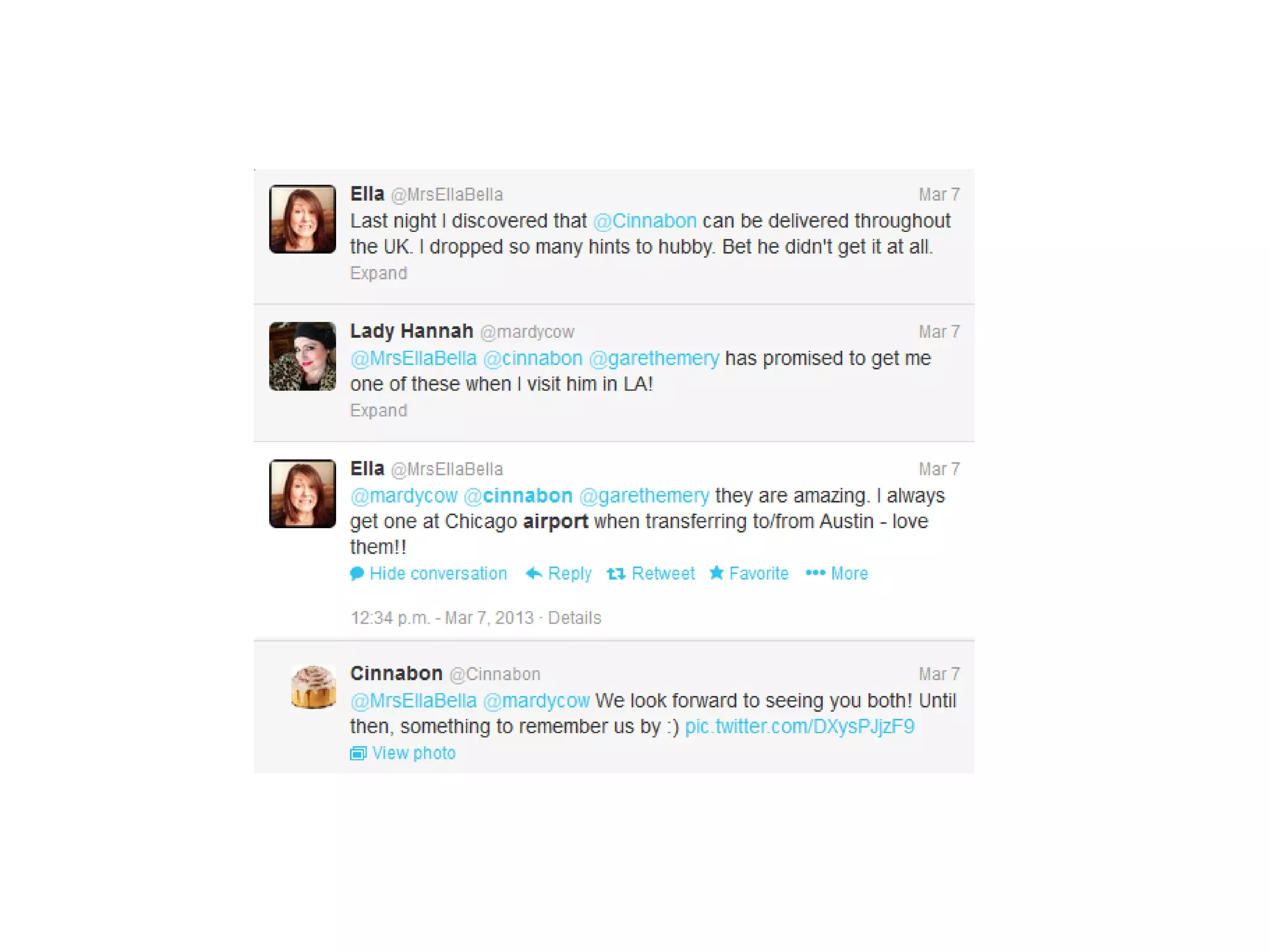
The Changing Nature of Place
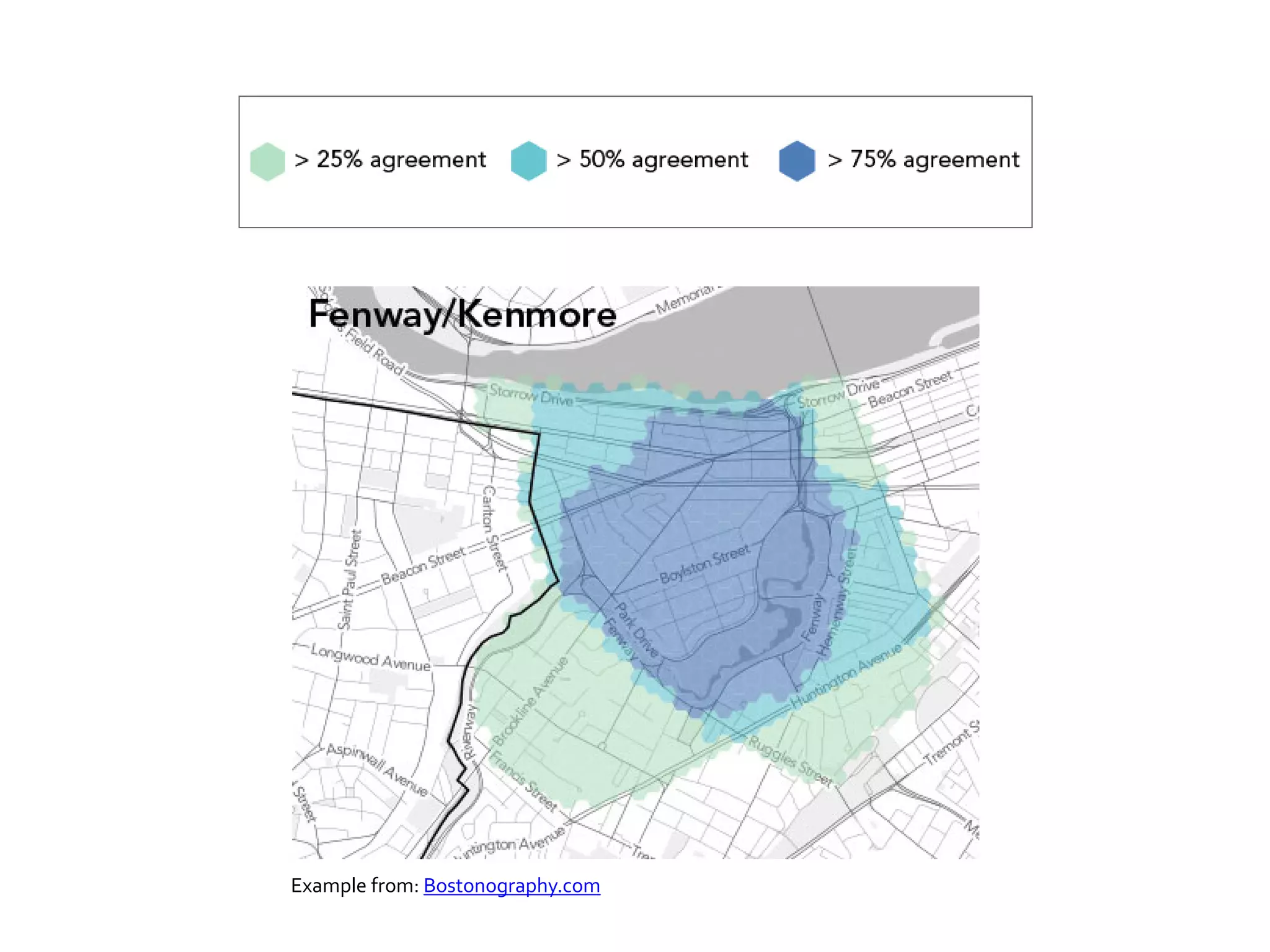
• Geotagging alone isn’t enough
• The places that matter to us are a lot more difficult
to describe
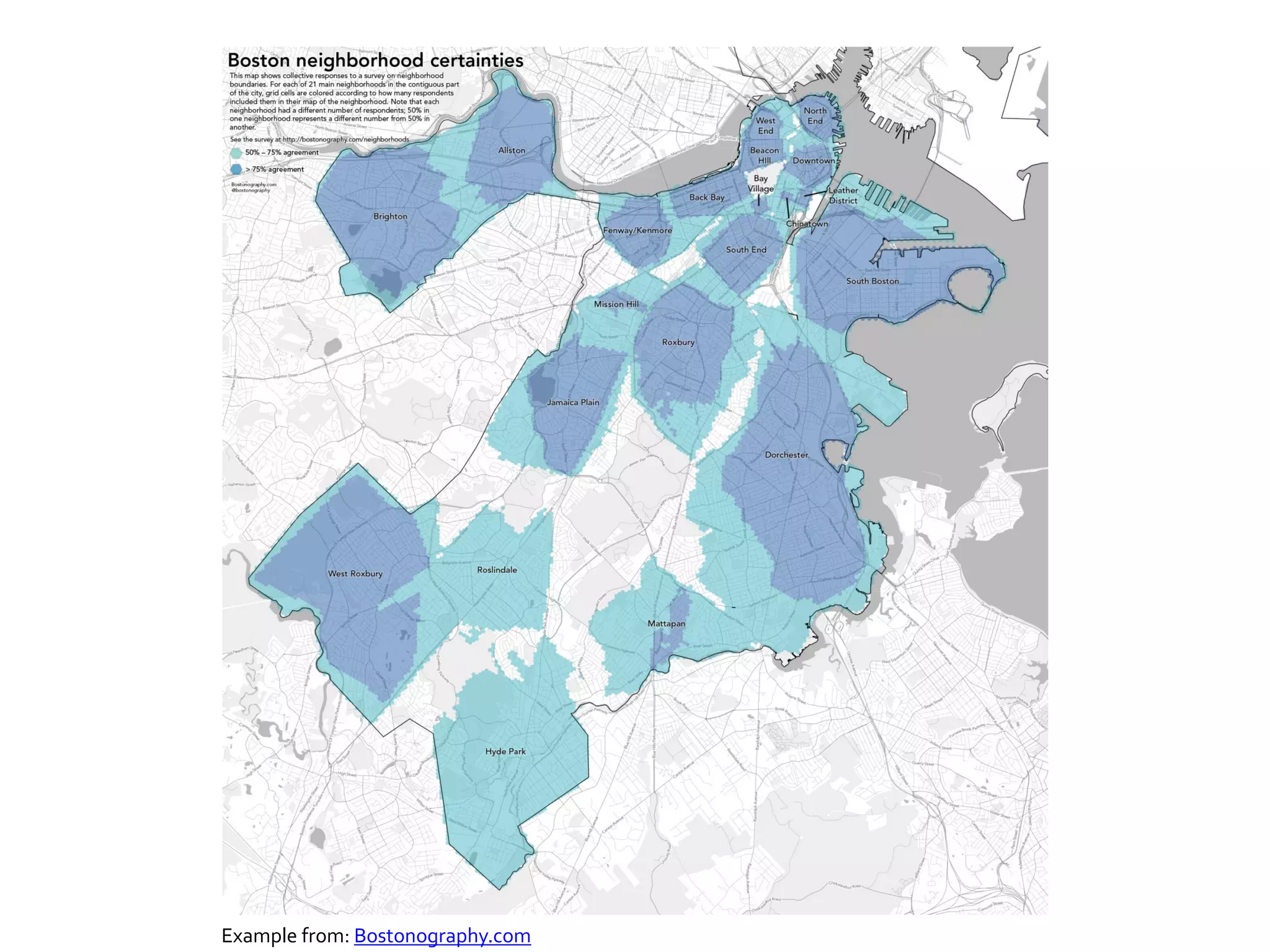
• I live in HappyValley, in a neighborhood called
Hunter’s Chase
• An ongoing challenge in the Geospatial Revolution
is in how we handle these types of locations
Example from: Bostonography.com
OK, SoWhat is Geography?
• Geography is the Science of Place and Space
• Common responses to “I’m a Geographer”
when I fly somewhere:
– Oh cool, I have a cousin who’s a Geologist!
– Haven’t all of the maps already been made?
– Oh neat, I have no idea what that is!
– Wow, that is so sad!
OK, SoWhat is Geography?
• Geography
– The science of understanding places and spaces
• Geospatial
– Refers to the data and technologies that allow
one to explore Geographic problems
Maps toTell Stories & Provide Context
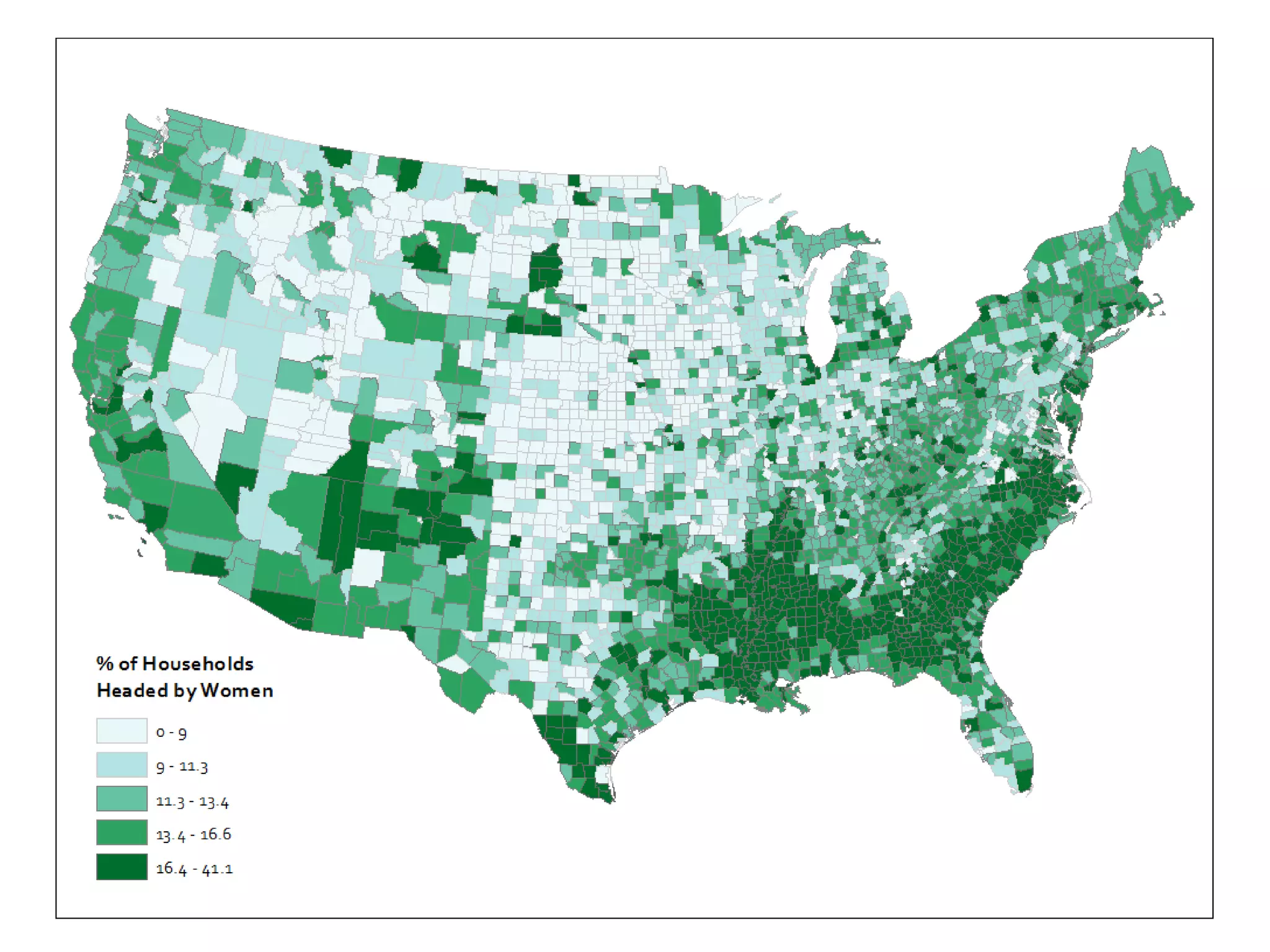
• Thematic Maps
– Thematic maps are used to showcase geographic
data observations.Thematic maps are almost
always associated with storytelling.
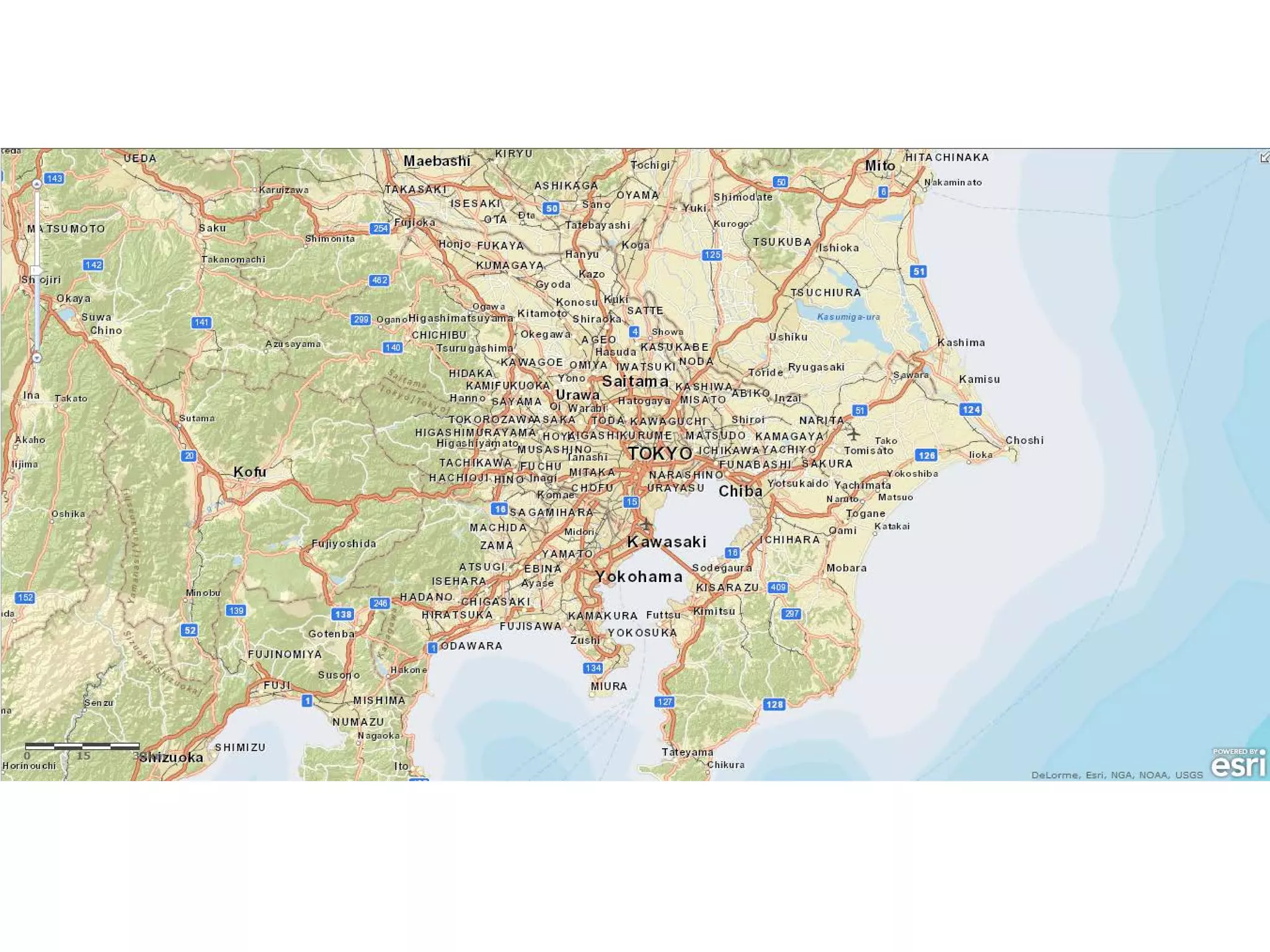
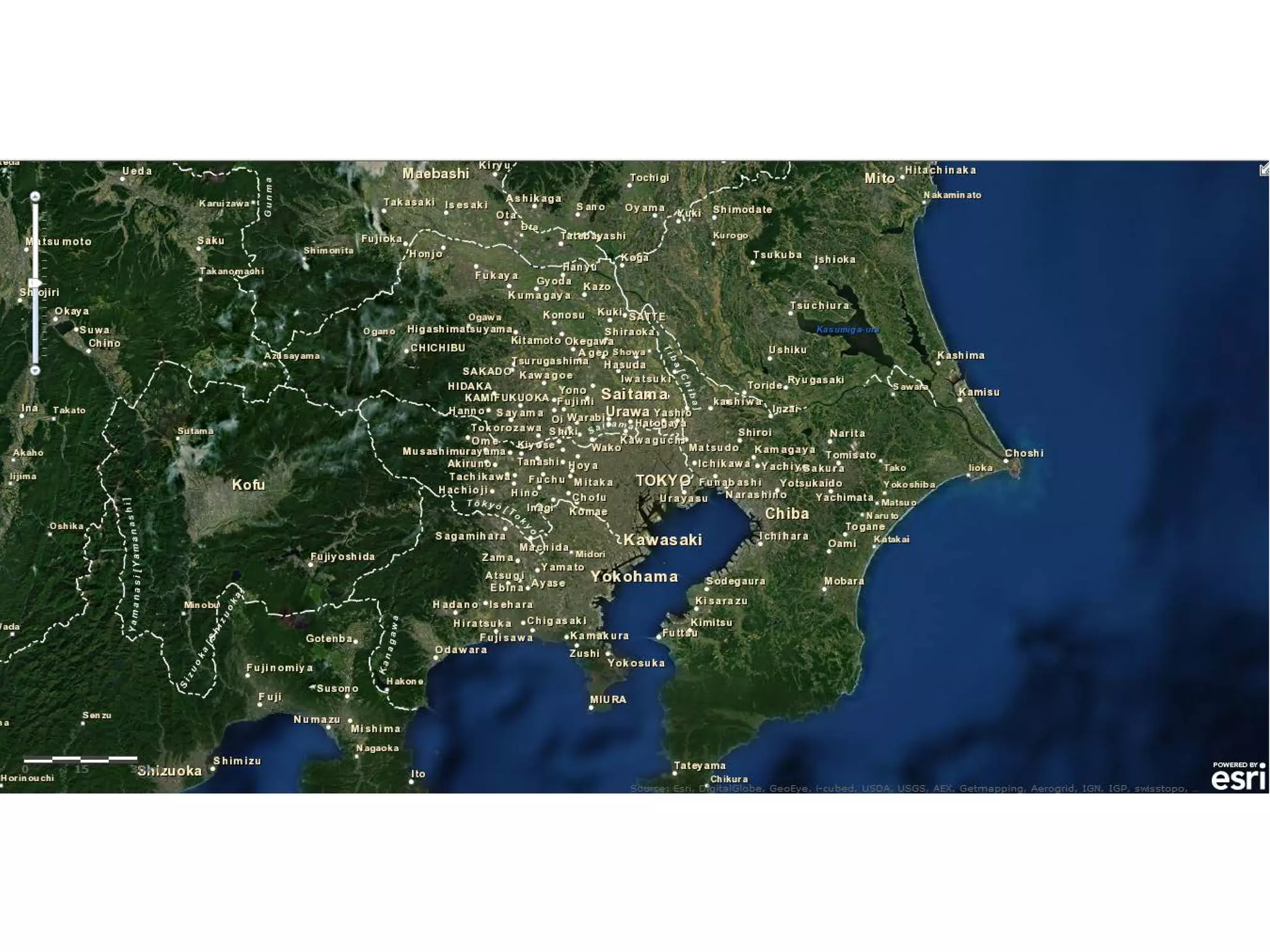
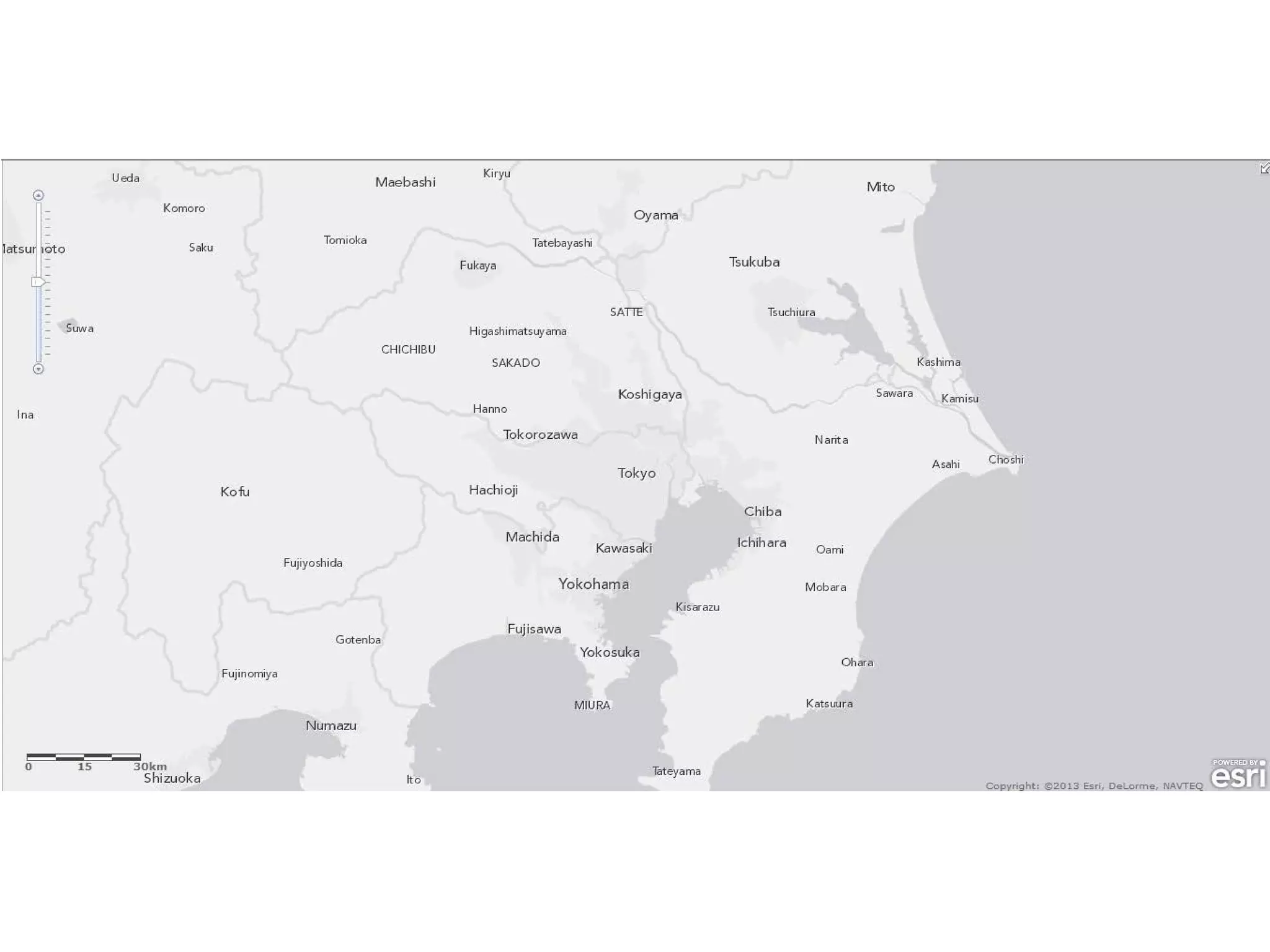
• Reference Maps
– Reference maps (also frequently called basemaps)
provide the basic Geographic context required to
situate other stuff.
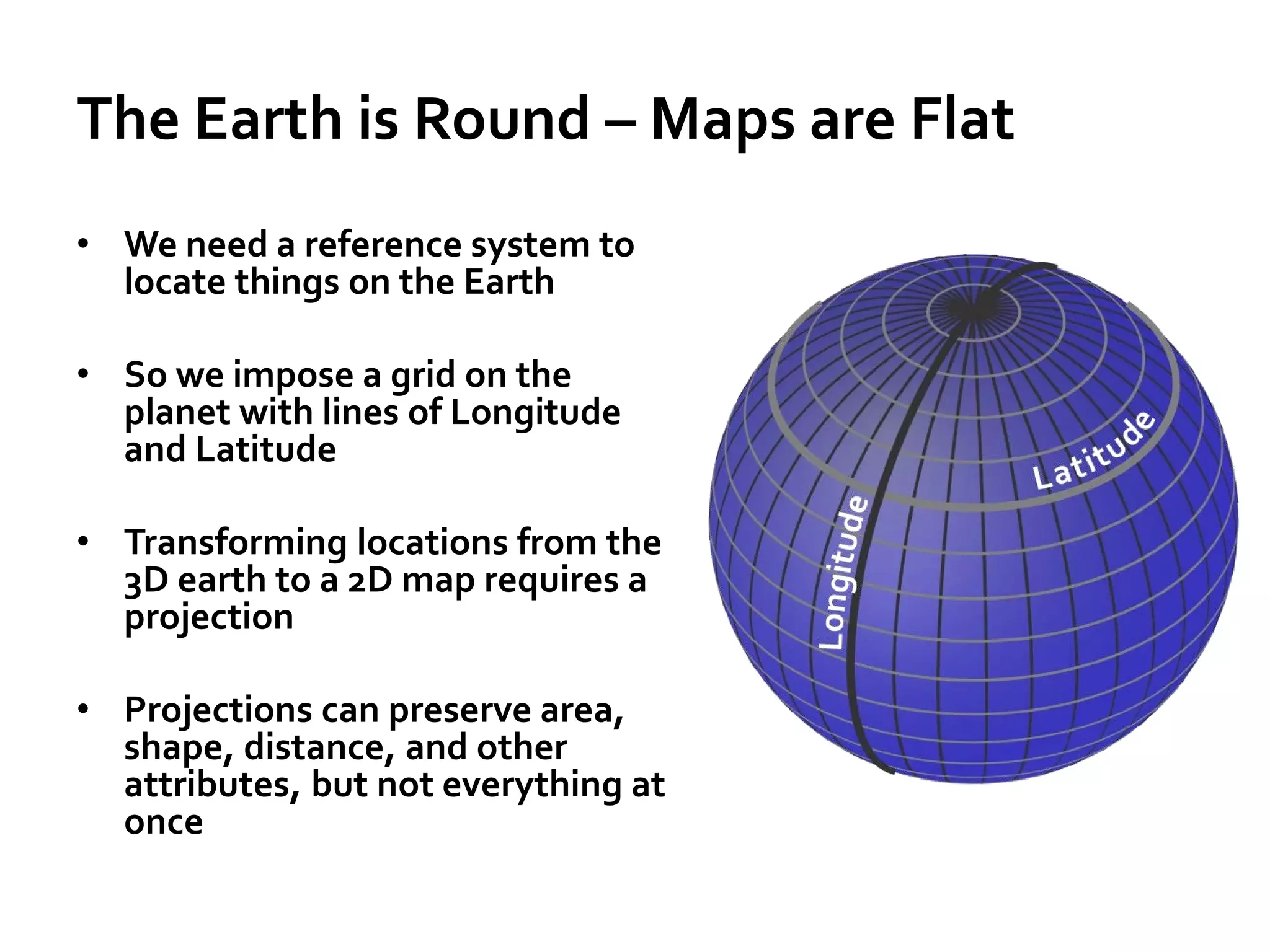
The Earth is Round – Maps are Flat
• We need a reference system to
locate things on the Earth
• So we impose a grid on the
planet with lines of Longitude
and Latitude
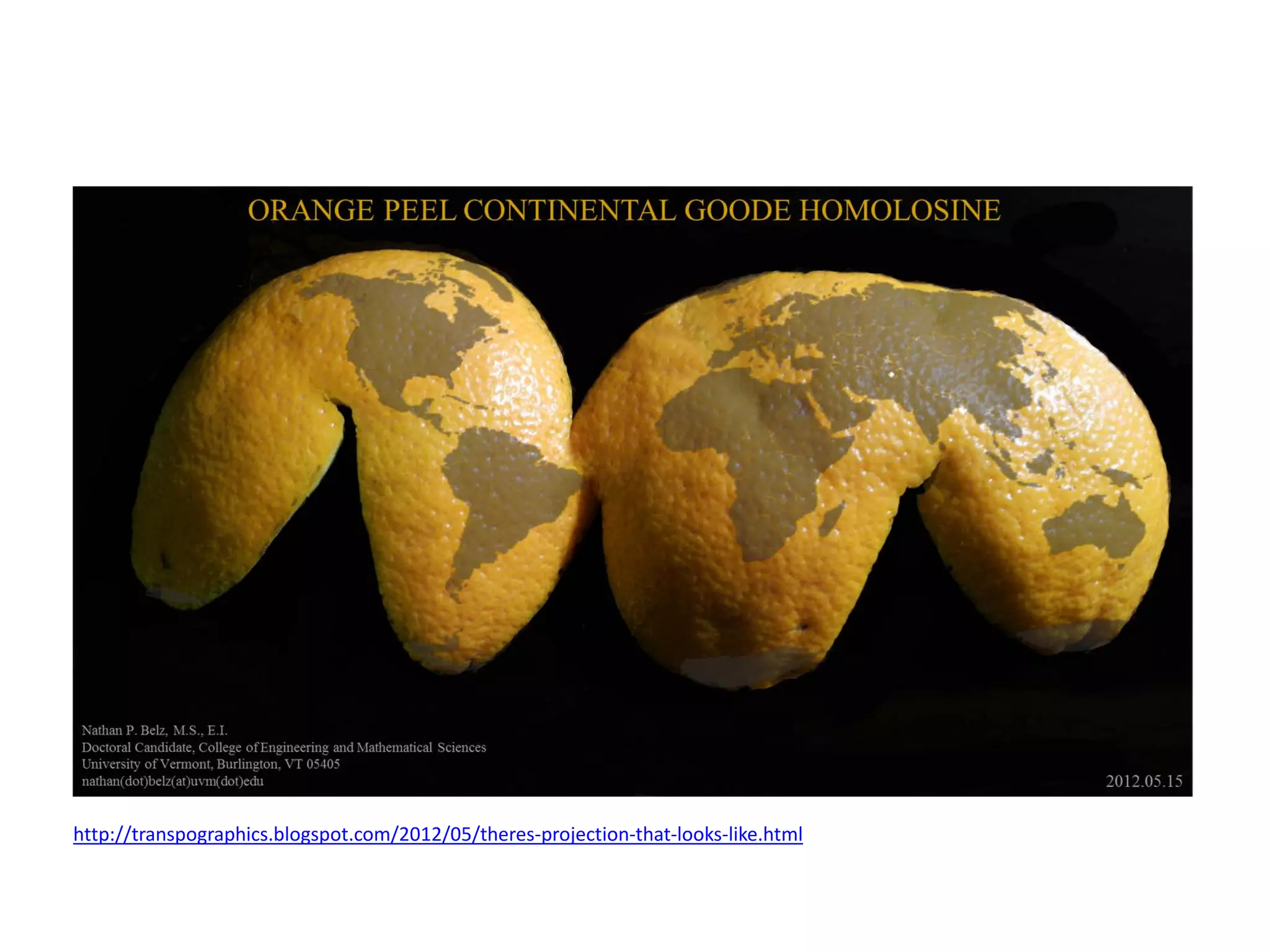
• Transforming locations from the
3D earth to a 2D map requires a
projection
• Projections can preserve area,
shape, distance, and other
attributes, but not everything at
once
http://transpographics.blogspot.com/2012/05/theres-projection-that-looks-like.html
Maps and the Geospatial Revolution www.coursera.org/course/maps
Twitter @MapRevolution
Online Geospatial Education @ Penn State www.pennstategis.com
This content is licensed under a Creative Commons Attribution-NonCommercial 3.0 Unported License

Maps and the Geospatial Revolution: Lesson 1, Lecture 2

  • 1.
    Maps and theGeospatial Revolution Lesson 1 – Lecture 2 Anthony C. Robinson, Ph.D Lead Faculty for Online Geospatial Education JohnA. Dutton e-Education Institute Assistant Director, GeoVISTA Center Department of Geography The Pennsylvania State University This content is licensed under a Creative Commons Attribution-NonCommercial 3.0 Unported License
  • 2.
    The Changing Natureof Place • Geotagging alone isn’t enough • The places that matter to us are a lot more difficult to describe • I live in HappyValley, in a neighborhood called Hunter’s Chase • An ongoing challenge in the Geospatial Revolution is in how we handle these types of locations
  • 4.
  • 5.
  • 6.
    OK, SoWhat isGeography? • Geography is the Science of Place and Space • Common responses to “I’m a Geographer” when I fly somewhere: – Oh cool, I have a cousin who’s a Geologist! – Haven’t all of the maps already been made? – Oh neat, I have no idea what that is! – Wow, that is so sad!
  • 7.
    OK, SoWhat isGeography? • Geography – The science of understanding places and spaces • Geospatial – Refers to the data and technologies that allow one to explore Geographic problems
  • 8.
    Maps toTell Stories& Provide Context • Thematic Maps – Thematic maps are used to showcase geographic data observations.Thematic maps are almost always associated with storytelling. • Reference Maps – Reference maps (also frequently called basemaps) provide the basic Geographic context required to situate other stuff.
  • 13.
    The Earth isRound – Maps are Flat • We need a reference system to locate things on the Earth • So we impose a grid on the planet with lines of Longitude and Latitude • Transforming locations from the 3D earth to a 2D map requires a projection • Projections can preserve area, shape, distance, and other attributes, but not everything at once
  • 14.
  • 15.
    Maps and theGeospatial Revolution www.coursera.org/course/maps Twitter @MapRevolution Online Geospatial Education @ Penn State www.pennstategis.com This content is licensed under a Creative Commons Attribution-NonCommercial 3.0 Unported License