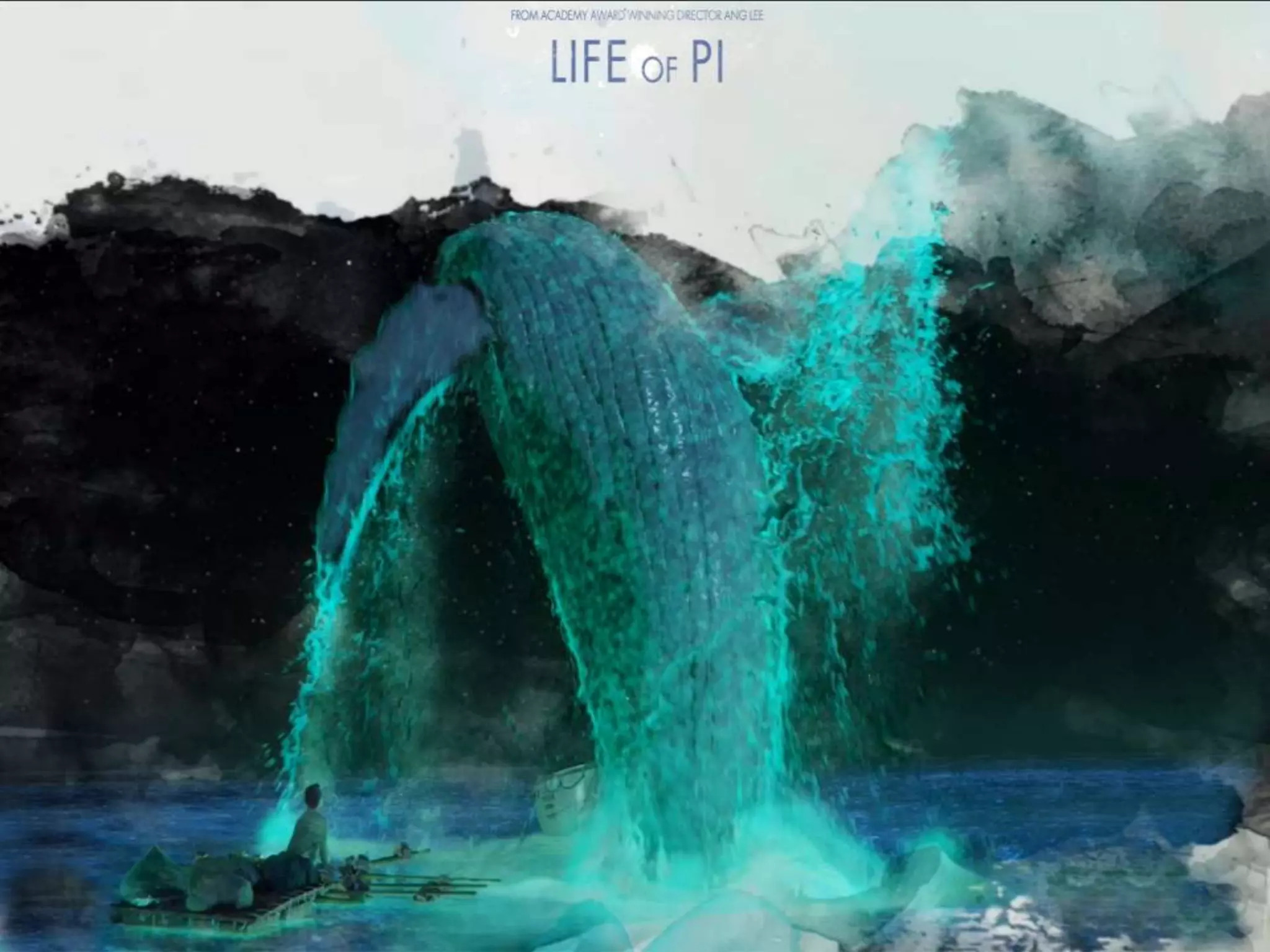
An examination of the use of Magic Realism
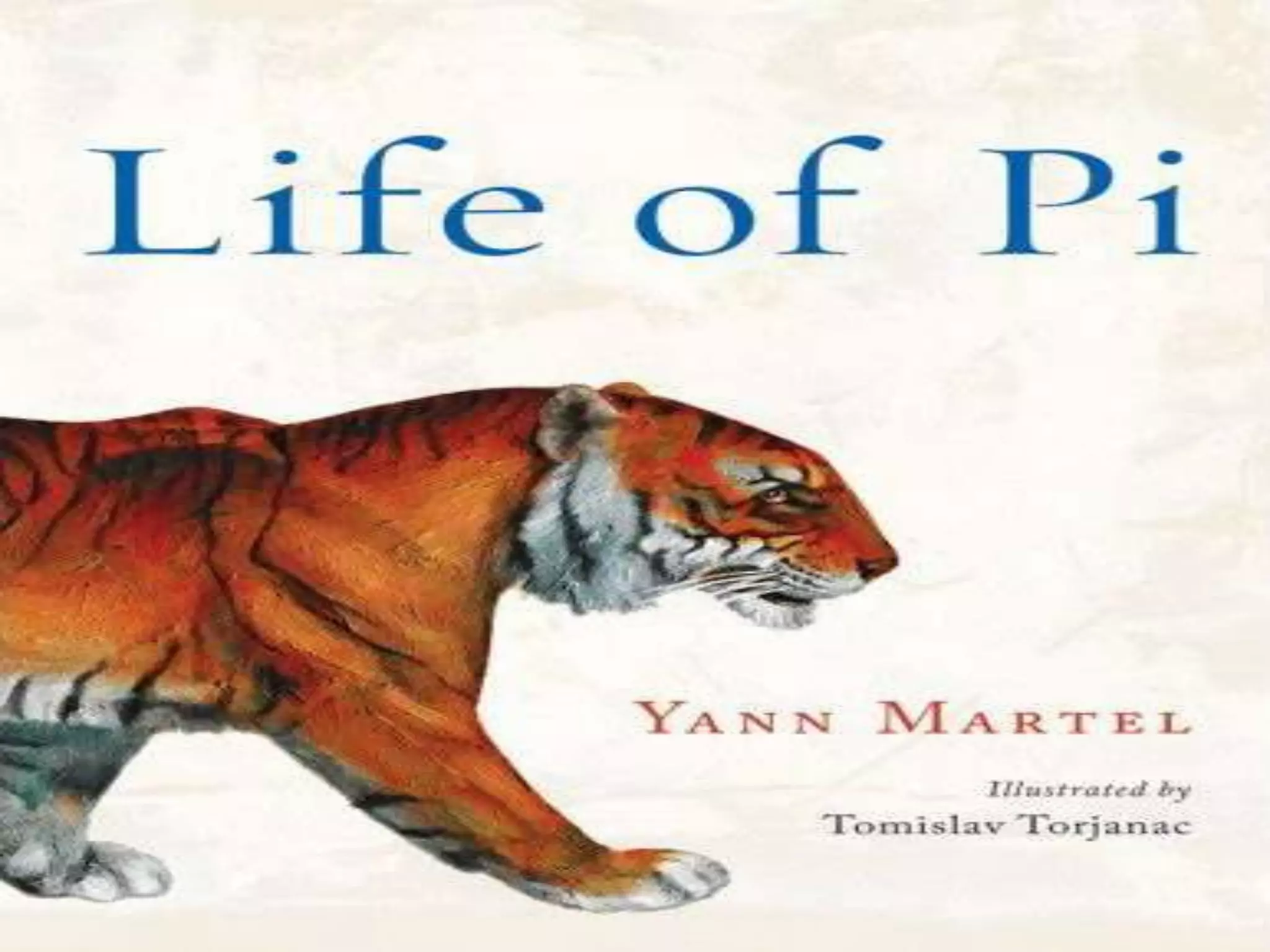
        in Yann Martel’s Life of Pi
Magic Realism refers to a twentieth century movement
which was initiated by European artists after World
War I. The earliest phases of Magic Realism began in
Germany around 1919. A similar form called Surrealism
developed a few years later. The important features of
Magic Realism include a sharp focus throughout the
painting, juxtaposition of the near and far objects, and
the limited use of aerial perspective, and eerie and
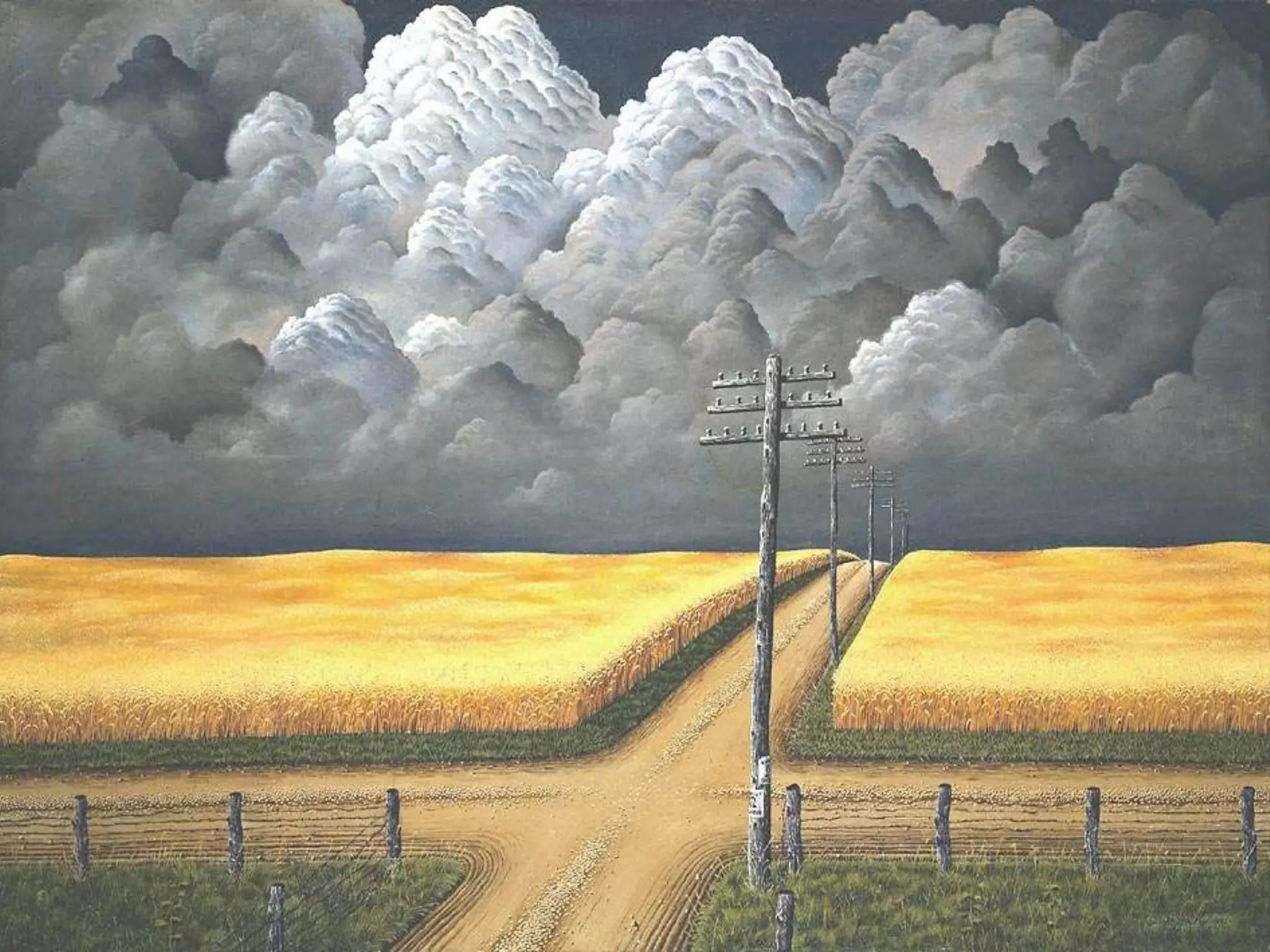
unsettling atmospheric effects. Magic Realism inhabits
the represented world, but also hides and palpitates
behind it, intruding into our world, as in the following
painting of clouds and wheat fields.
The movement began with the paintings of Giorgio de
Chirico and Henri Rousseau. German artists adapted
the mysterious and dreamlike elements from these and
other predecessors, and combined them with objects
from everyday life. They endeavoured to infuse magic
into ordinary, even banal objects. The effect was
enhanced by a sharply focused realistic style, resulting
in paintings whose details held the viewers interest
while also exploring deep emotional reservoirs.
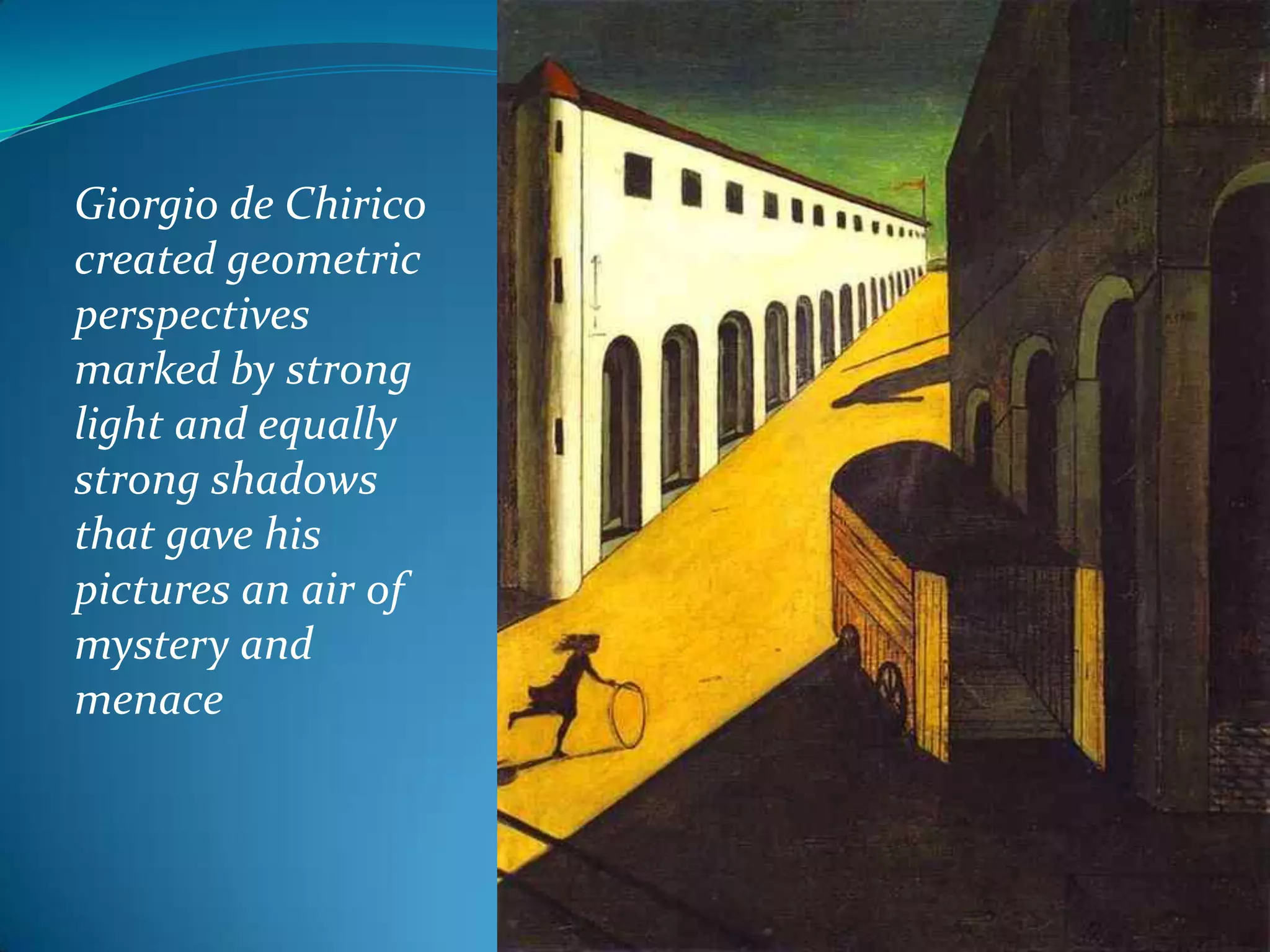
Giorgio de Chirico
created geometric
perspectives
marked by strong
light and equally
strong shadows
that gave his
pictures an air of
mystery and
menace
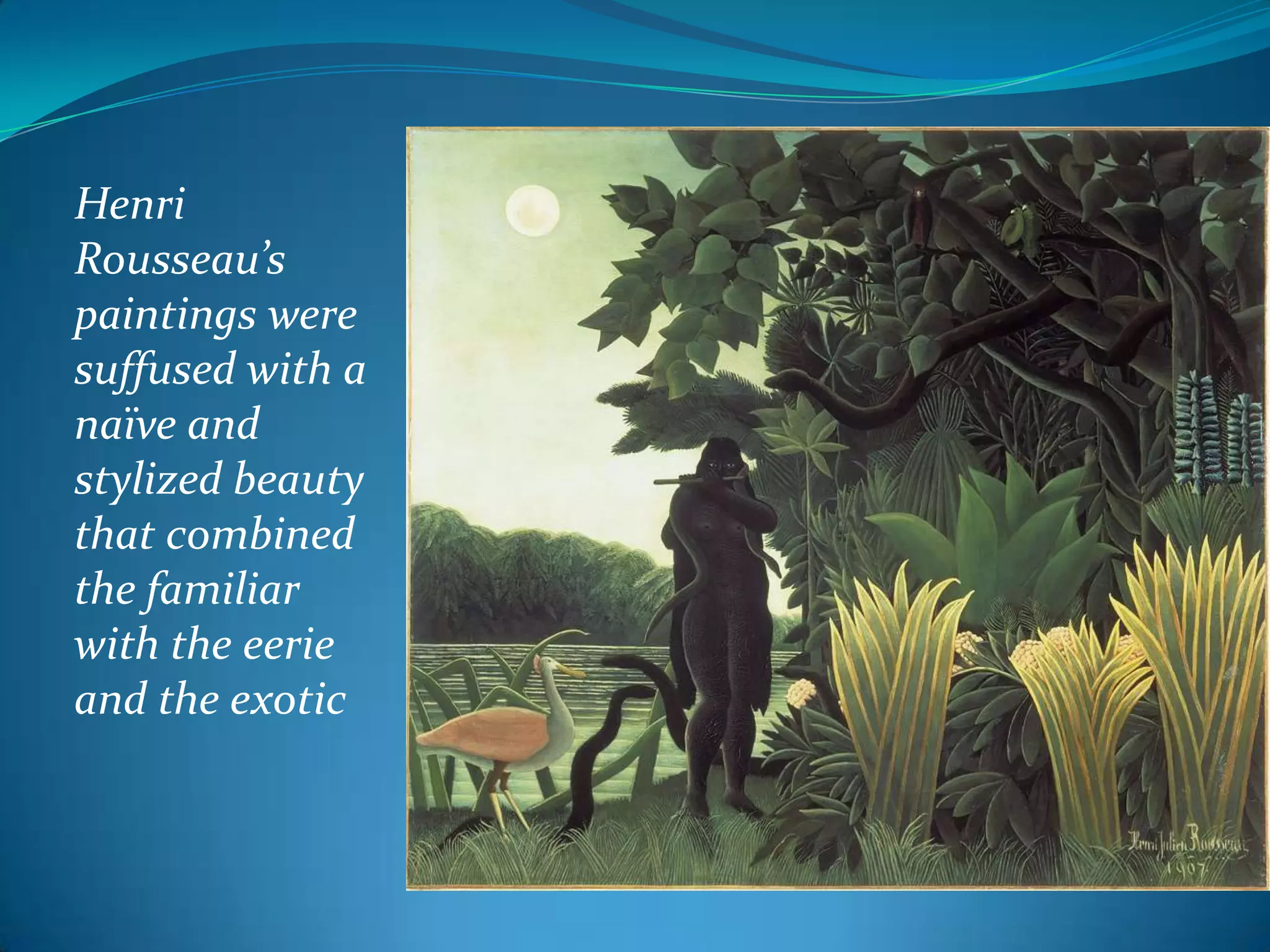
Henri
Rousseau’s
paintings were
suffused with a
naïve and
stylized beauty
that combined
the familiar
with the eerie
and the exotic
The development of Magic Realism was complicated
by the concurrent development of Surrealism.
Surrealism was an organized movement in both art
and literature whose purpose was to find methods of
uniting the conscious and subconscious realms of
experience. The world of dream and fantasy would
thus be joined with the everyday rational world in
more than real or surreal experience.
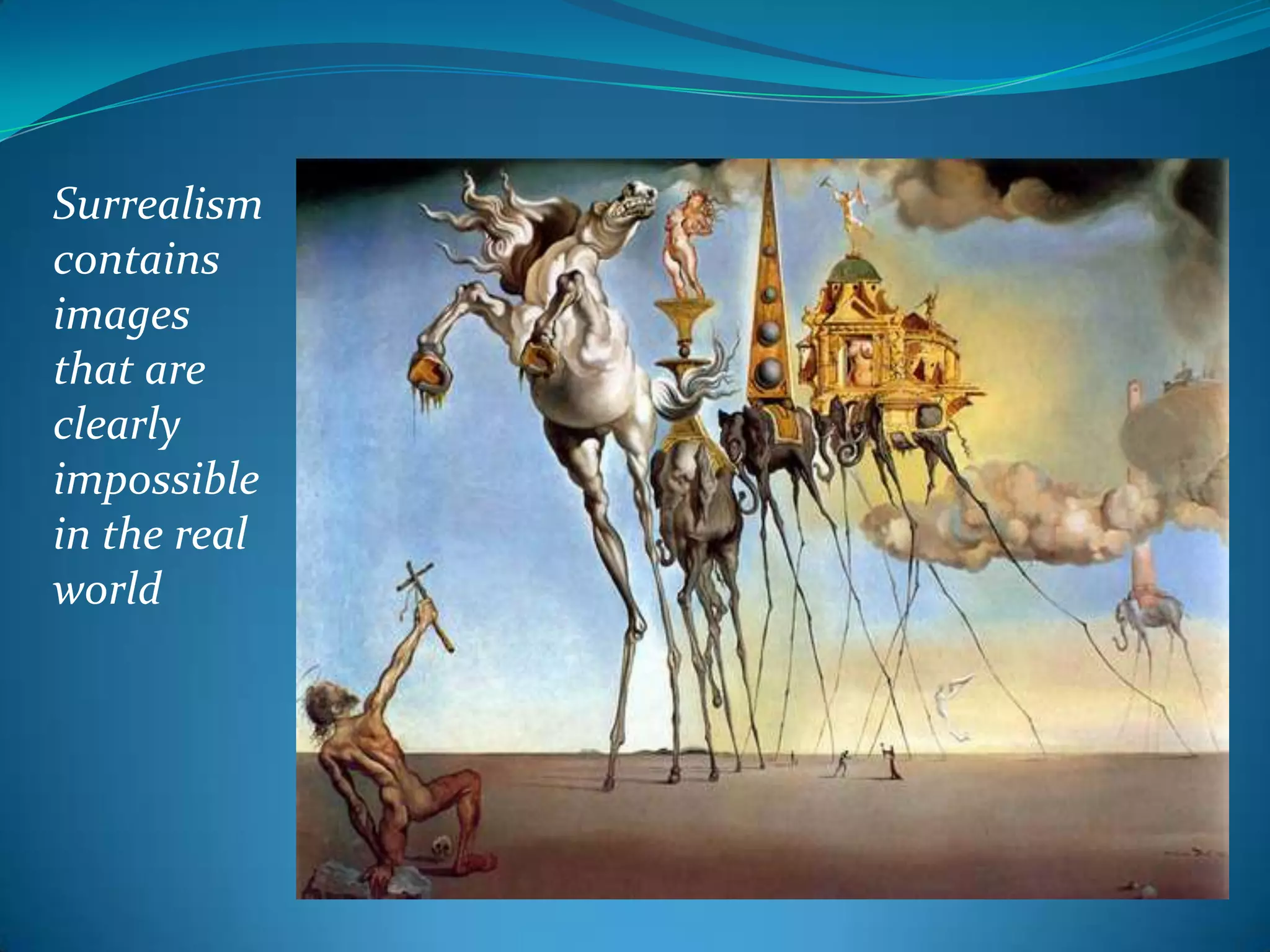
Surrealism
contains
images
that are
clearly
impossible
in the real
world
The Surrealists often drew from the theories of
Sigmund Freud, probing the subconscious mind as a
wellspring of imagination. Some Surrealists were
interested in abnormal behaviours and sexuality.
Surrealism takes us to another world, one which exists
only in our mind. It presents the impossible, often
shocking us.
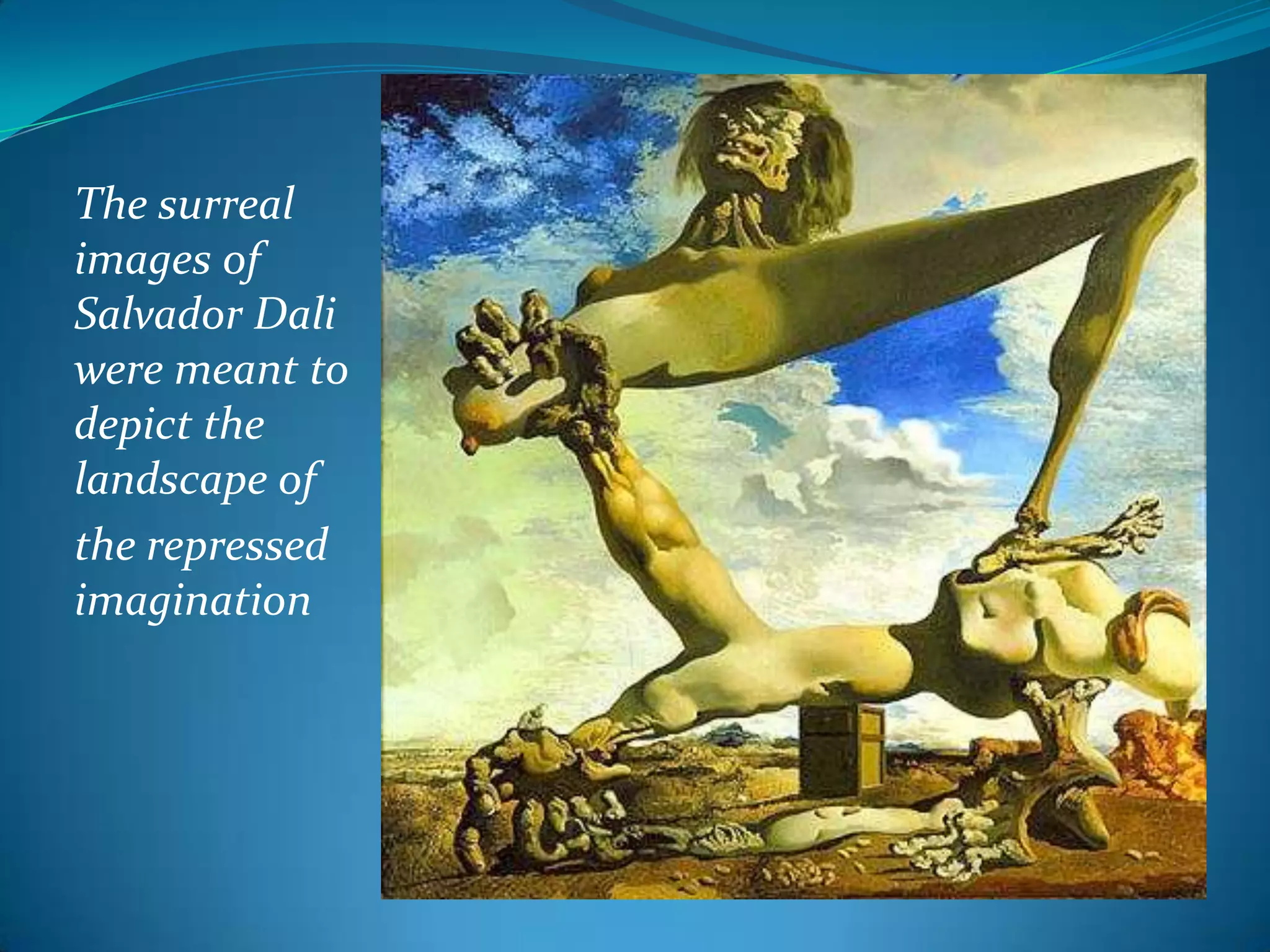
The surreal
images of
Salvador Dali
were meant to
depict the
landscape of
the repressed
imagination
The objective of Magic Realism is to bring us fresh
presentations of the everyday world we live in. The
artist may choose unusual points of view, mysterious
juxtapositions or common objects presented in
uncanny ways. Magic Realists view the world in
universal, recognizable images rather than through
introspection and self-analysis. Everything we see or
read in Magic Realism is within the realm of the
possible, although sometimes unlikely.
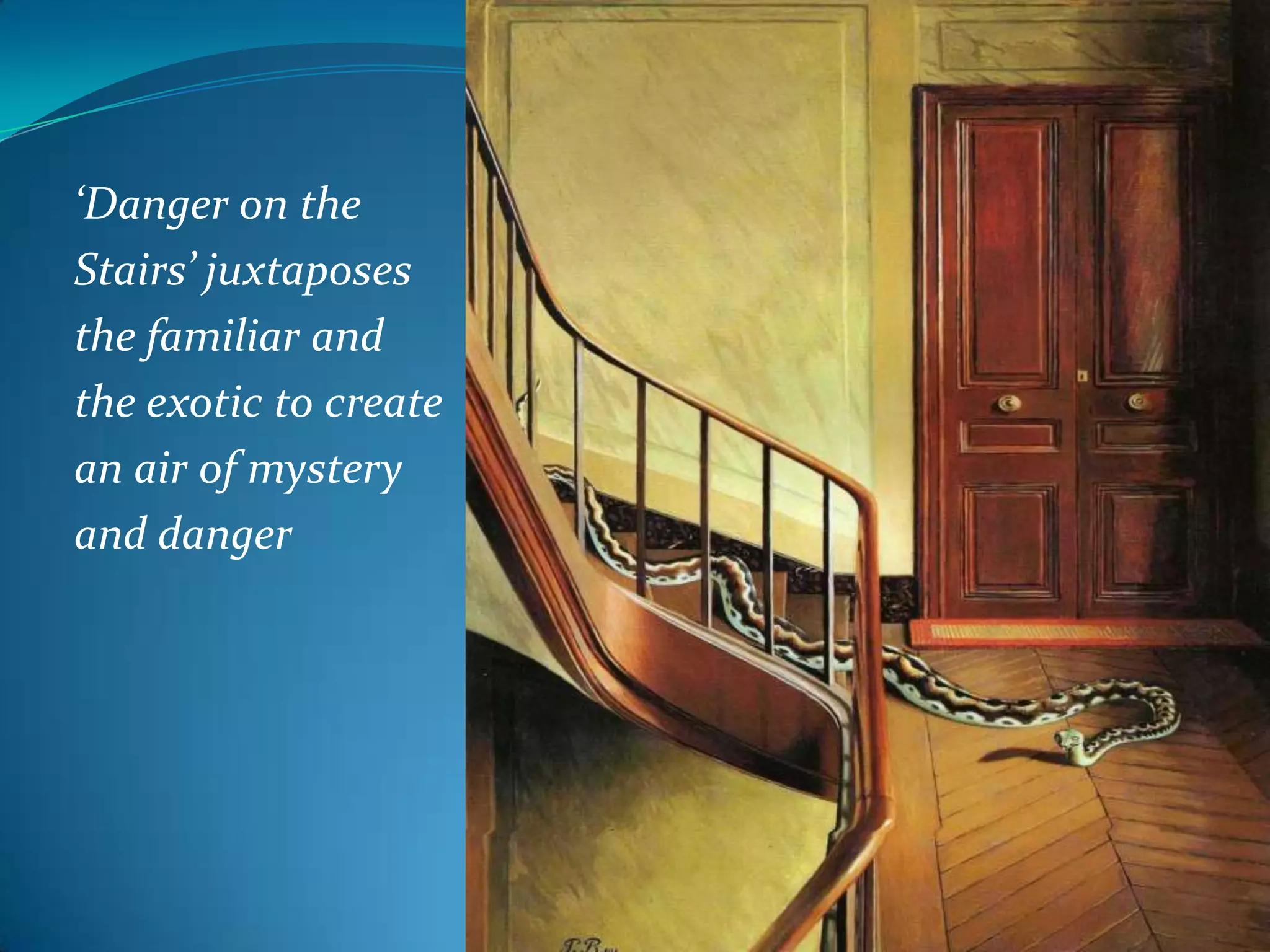
‘Danger on the
Stairs’ juxtaposes
the familiar and
the exotic to create
an air of mystery
and danger
Magic Realism requires that the imagery be fresh and
inventive. The artist must find ways to weave in
fantastic elements, while still maintaining an illusion
of reality. The difficulty of doing this consistently is the
main reason that for many artists only a portion of
their work is considered Magic Realism. True Magic
Realist art seems to shine with the glow of worlds only
glimpsed at behind the ordinary world, as in the
ethereal light pushing through the window in
Rudolf Dischinger’s “Gramophone”
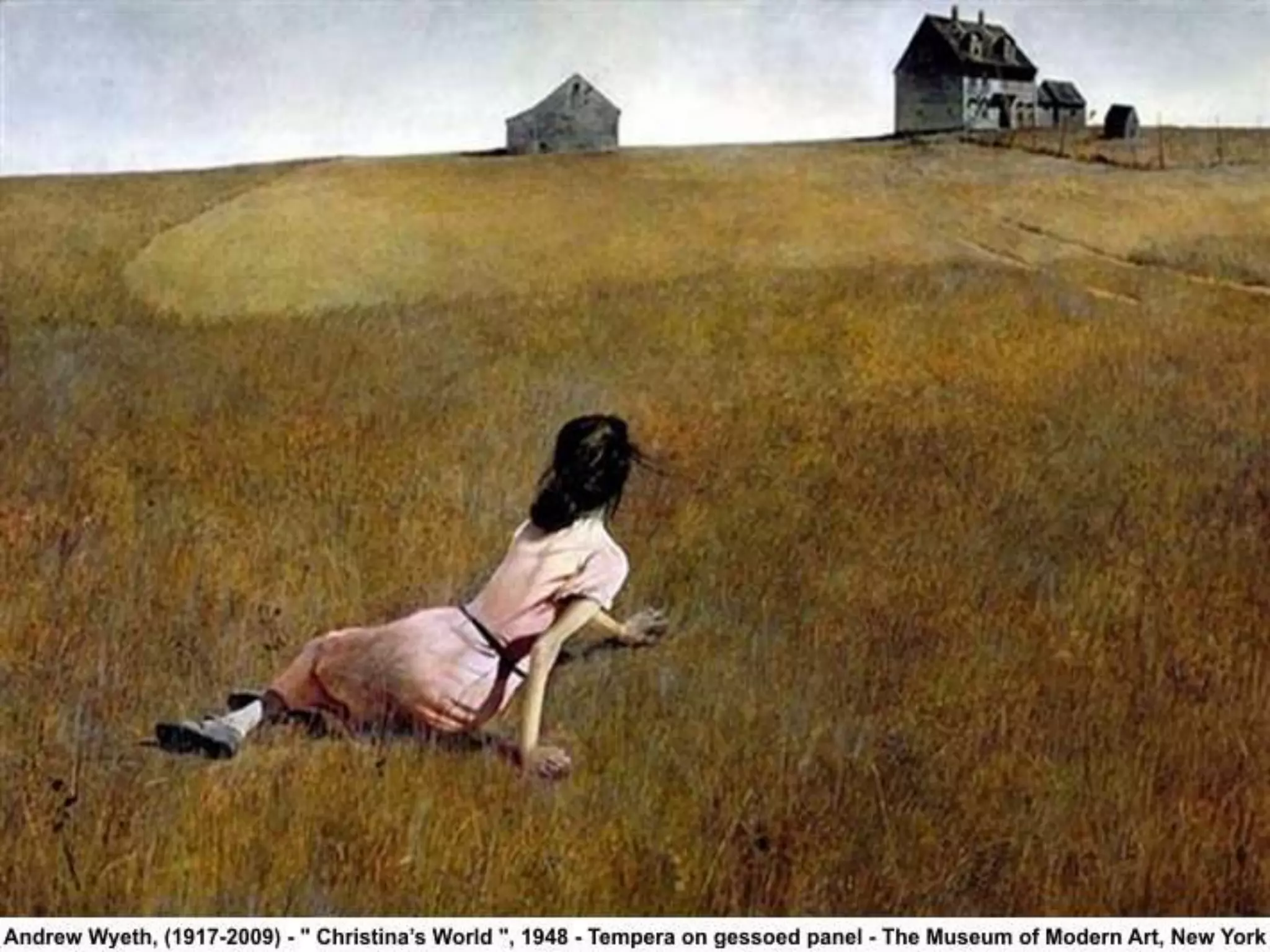
In America Magic Realism is best observed in the
works of painter Andrew Wyeth. Wyeth was a master
of the dry brush and egg tempera technique which
allowed him to achieve great detail in his work. A
strong feeling of nostalgia and rural isolation
emanates from his work that helps bring a mysterious
quality to his paintings. This combined with many
unusual viewpoints, including sharp focus in both the
foreground and background, verifies his standing as a
master of Magic Realism.
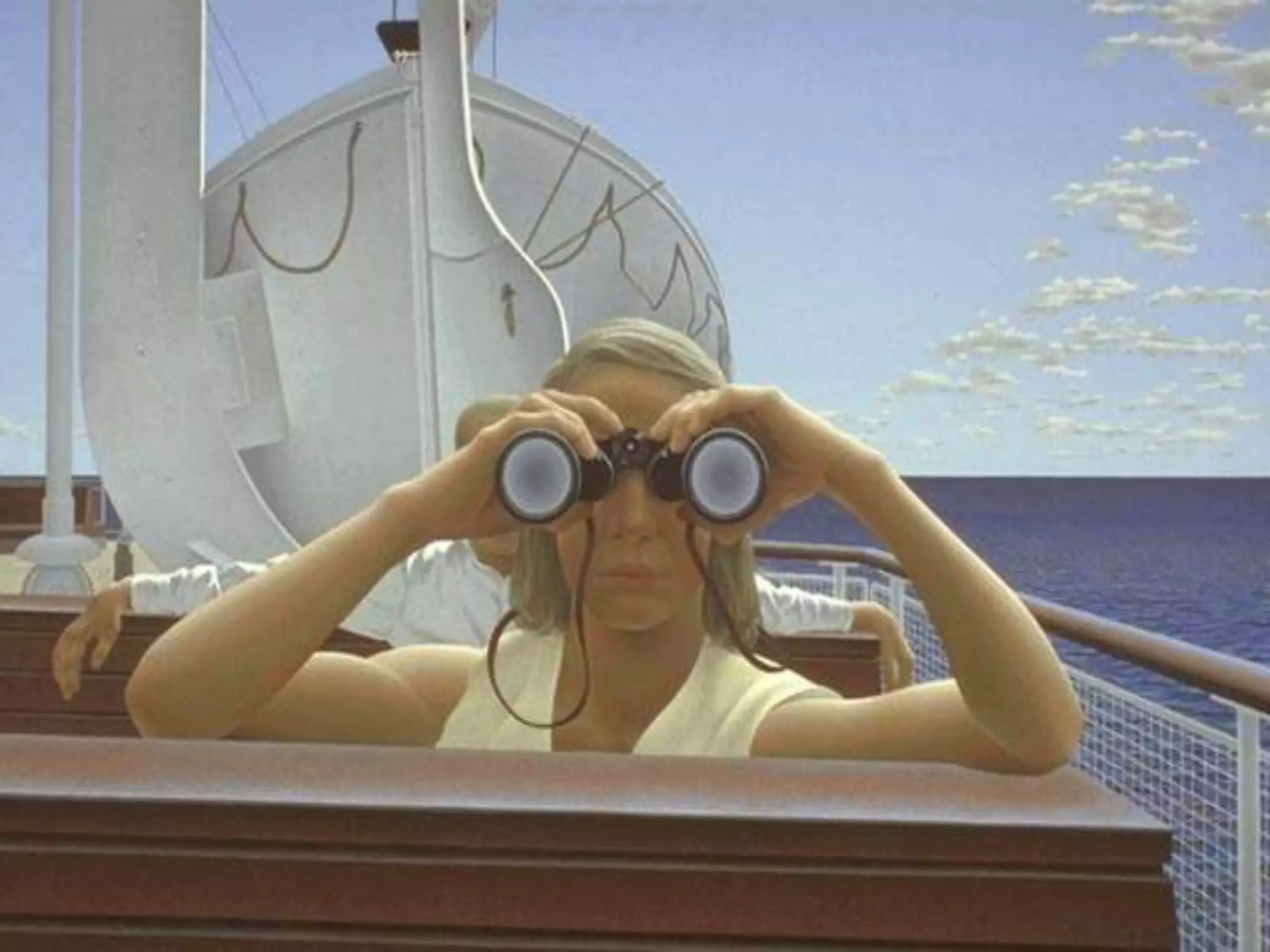
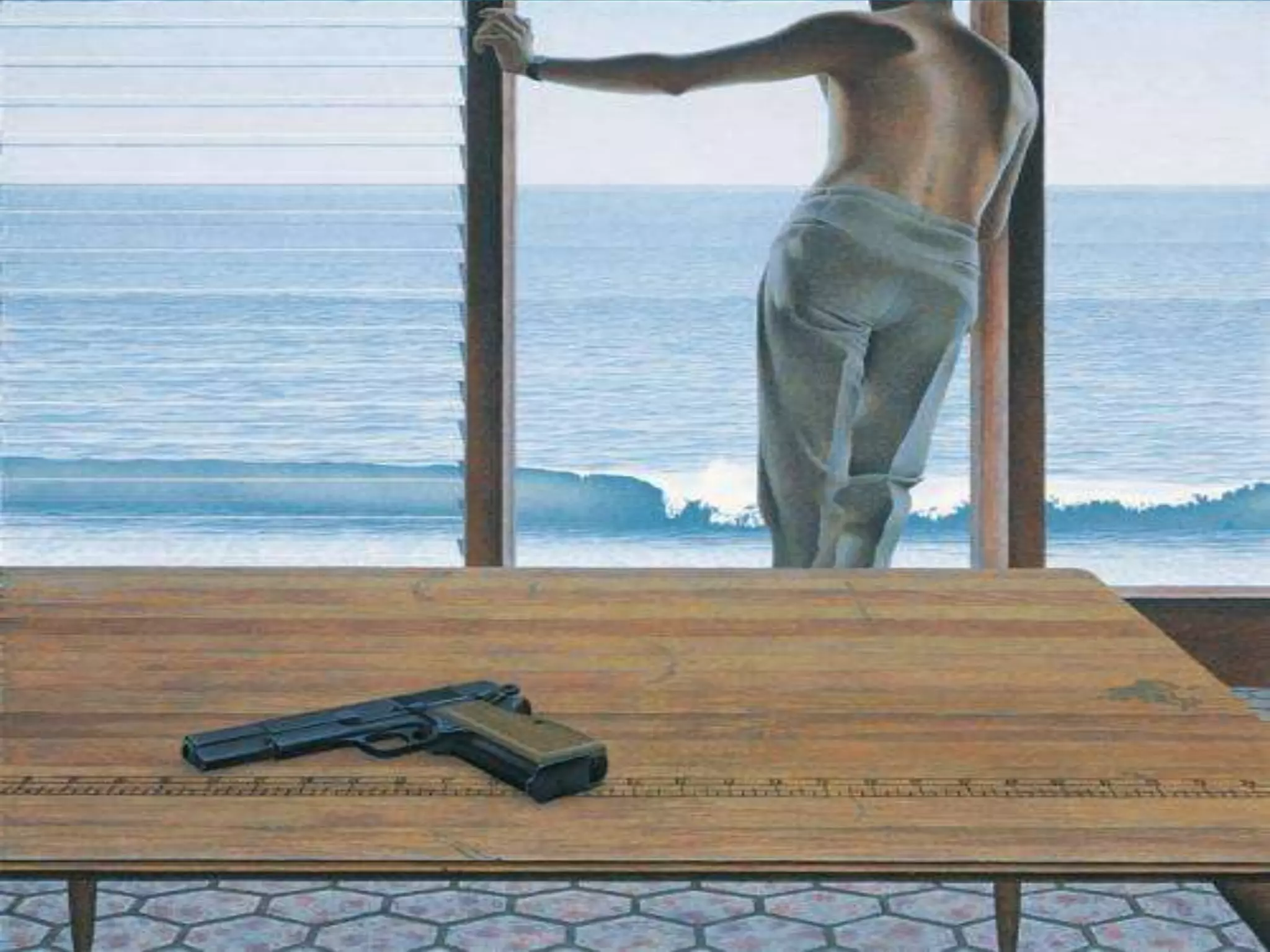
Canadian Alex Colville is notable for the scope and
variety of his work in Magic Realism. The geometric
precision of his compositions and meticulous
attention to brush detail add to the air of hovering
unreality. With Colville there is always something in
his paintings that lies as an intrusion into the life of
the viewer, an implied threat that puts the viewer on
edge and draws them into the ‘story’ of the painting.
The term Magic Realism was first applied to literature
in the 1960's. At first it was used in reference to works
of Latin American writers, such as Gabriel Garcia
Marquez, Isabel Allende and Jorge Luis Borges. Its
usage has been broadened to include works of diverse
origins and earlier periods, such as those of Ernst
Juenger and Salman Rushdie.
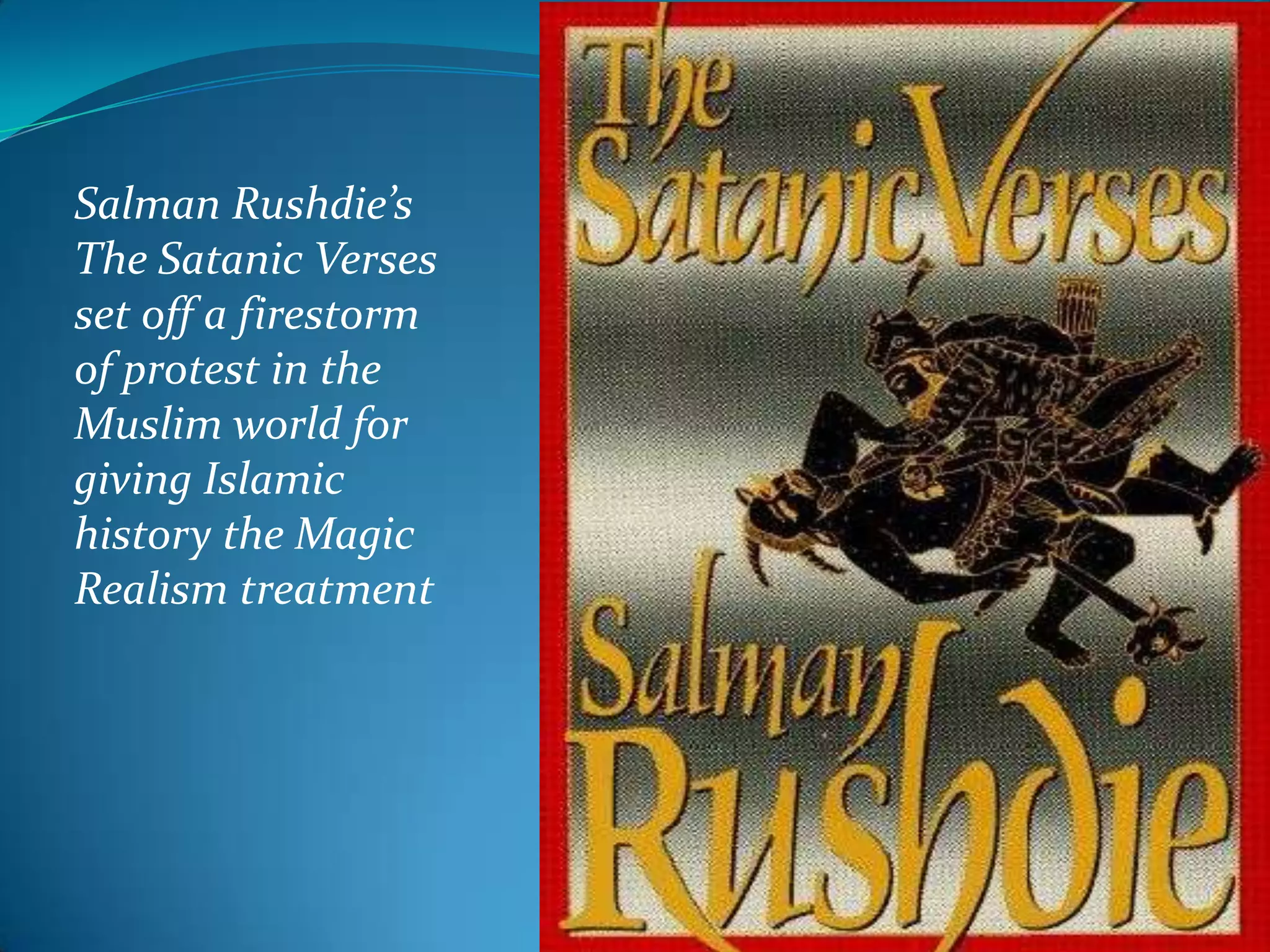
Salman Rushdie’s
The Satanic Verses
set off a firestorm
of protest in the
Muslim world for
giving Islamic
history the Magic
Realism treatment
In literature Magic Realism points to a reality that
hovers on the edges of our own; a recognizable world,
familiar in most details, but operating under a
different set of rules. This unsettling of realities cause
the reader to examine their own expectations and
principles regarding the world that they inhabit. In the
hands of the inept, Magic Realism descends into the
merely fantastical. But in the hands of a master artist
or storyteller, a work imbued with elements of Magic
Realism hovers on the borders of our conscious mind
and impacts the way we see the world.
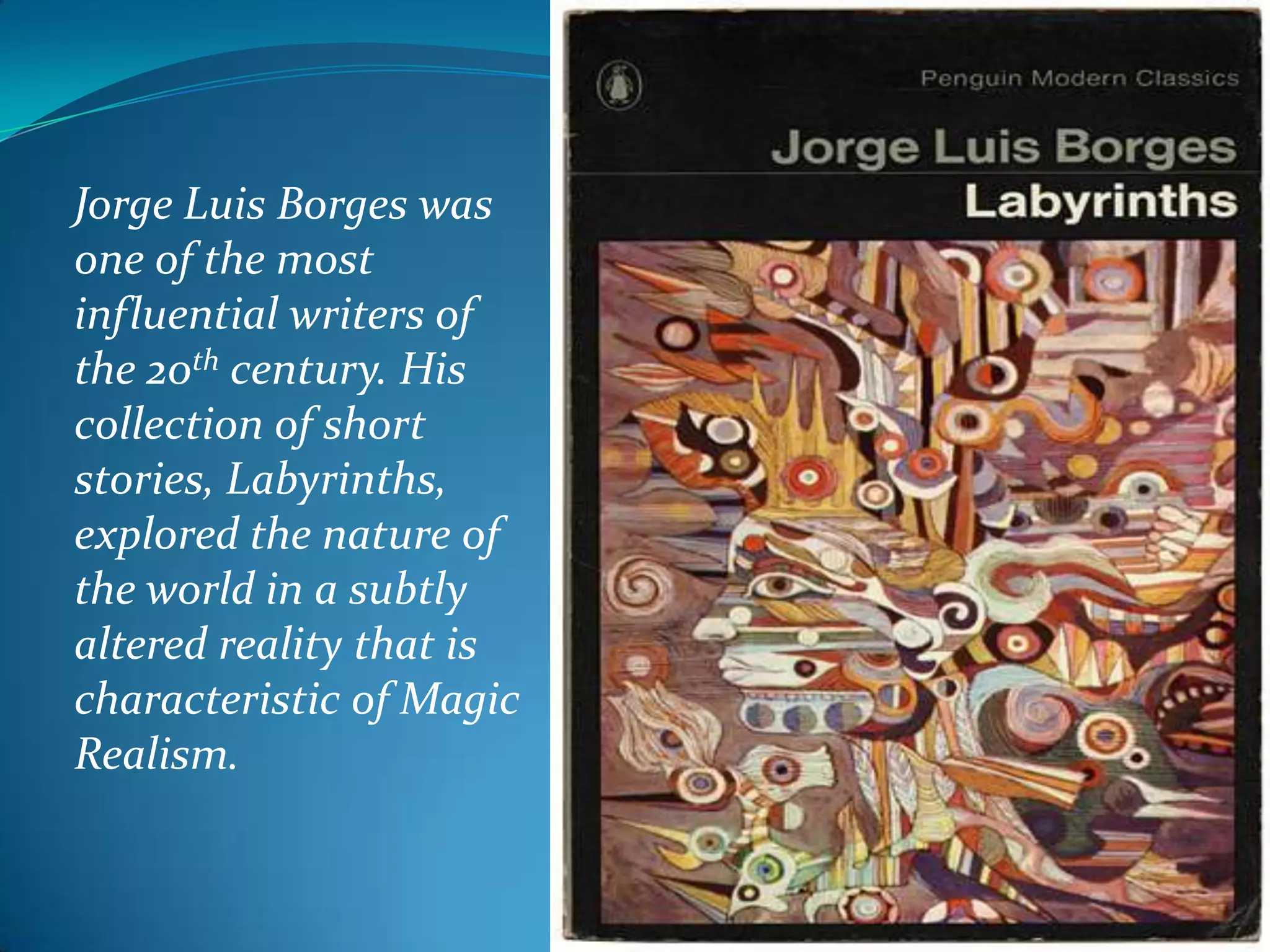
Jorge Luis Borges was
one of the most
influential writers of
the 20th century. His
collection of short
stories, Labyrinths,
explored the nature of
the world in a subtly
altered reality that is
characteristic of Magic
Realism.
Magical Realist writers depict the ordinary as
miraculous and the miraculous as ordinary. The ice
that gypsies bring to the tropical village of Macondo in
One Hundred Years of Solitude is described with awe.
How can such a substance exist? It is so strange and
beautiful that characters find it difficult to describe.
But it's not just novelties such as a first encounter with
ice that merit such descriptions. The behaviour of ants
and the atmosphere of a streamside oasis are described
in details which remind the reader that the world is
full of intricate design and strange purpose.
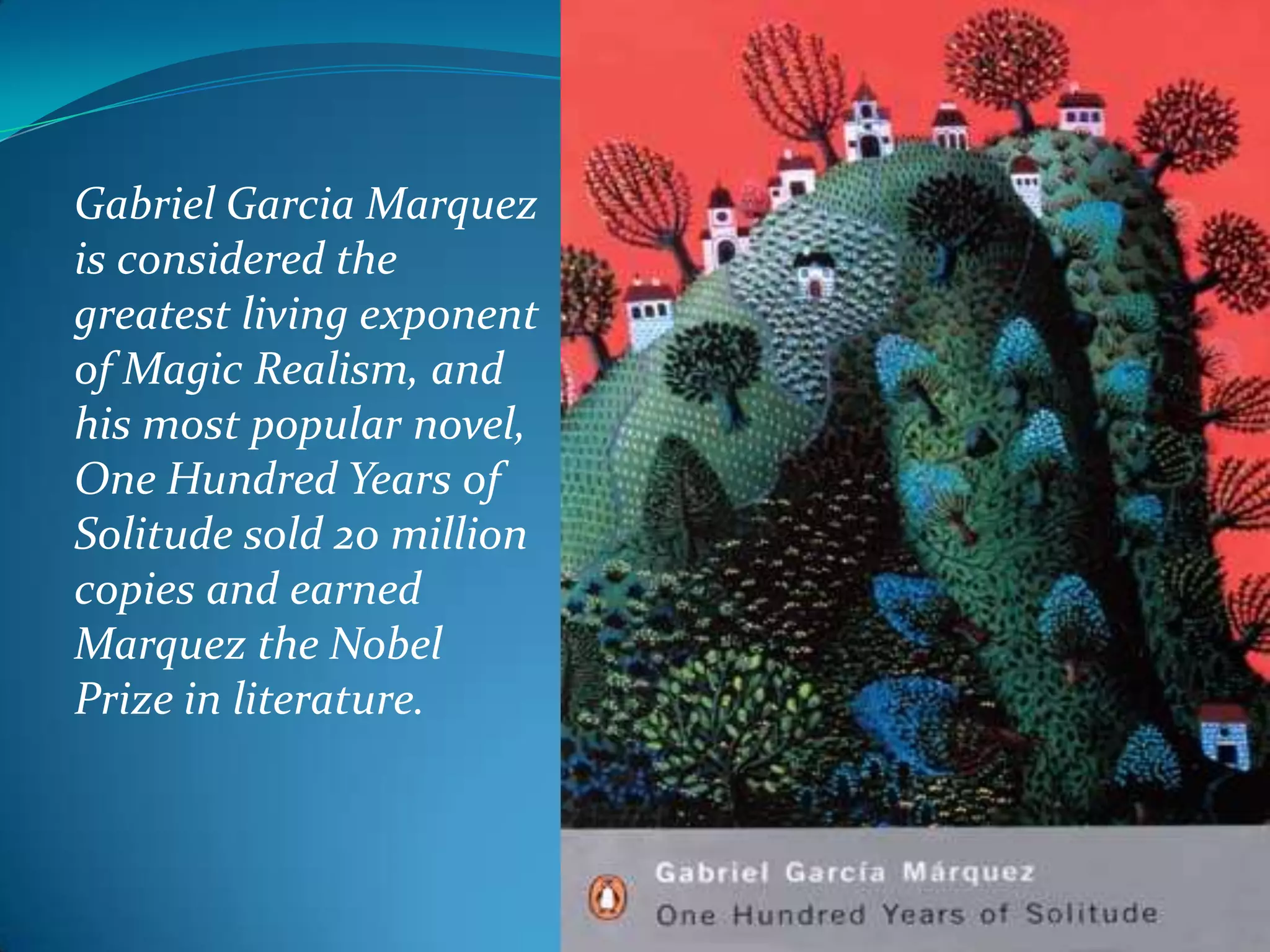
Gabriel Garcia Marquez
is considered the
greatest living exponent
of Magic Realism, and
his most popular novel,
One Hundred Years of
Solitude sold 20 million
copies and earned
Marquez the Nobel
Prize in literature.
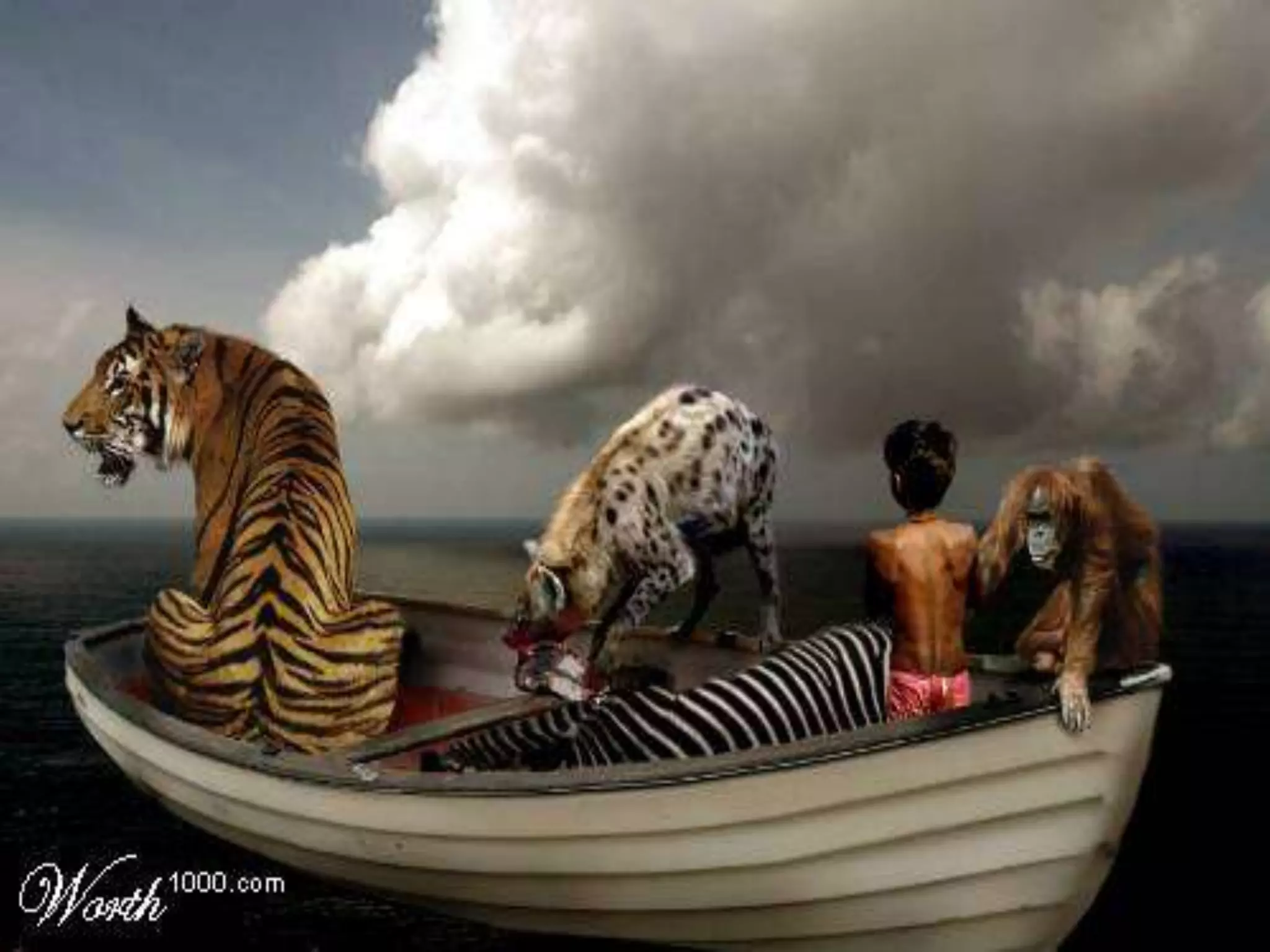
Canadian writer Yann Martel’s Life of Pi uses
meticulously researched details about zoological
oddities such as the eating and sleeping habits of
sloths and tigers to lull readers into believing that the
world Pi inhabits is rational. Pi’s survival for 227 days
in a boat on the Pacific stretches credulity, but Martel
is so detailed about the ordinariness of this ordeal that
our disbelief is suspended. We even come to accept
that it might just be possible that a 450 pound Royal
Bengal tiger could be cowed into submission by the
movement of the waves and the need to be fed.
Martel tips his hand when Pi lands on an island of self-
sustaining, fresh-water generating algae covered in a
veritable carpet of meerkats. As delightful as this false
paradise is, it is clearly impossible, and not so
delightful either as Pi discovers to his horror. With this
unsettling revelation about the unreality of Pi’s world
in mind, readers are then confronted in the final
chapters with the overthrow of all that they have
understood about the story. The final challenge to
readers is to which story they choose to believe. Is
truth more than what we can see and measure?
Magic Realism depicts a world of people whose reality
is different from ours; it endeavours to show us the
world through other eyes. Magic Realism leaves you
with the understanding that the strange world
described is one that real people really live in. This
genre of literature at its best invites the reader to
compassionately experience reality as many of our
fellow human beings see and feel it, deepening our
understanding of the people and the world around us.
Slides researched and developed by:

    S. Wise B.A. (English), B.Ed. (Toronto)

for use in the Canadian Pre-University Program

Magic realism

  • 1.
    An examination ofthe use of Magic Realism in Yann Martel’s Life of Pi
  • 2.
    Magic Realism refersto a twentieth century movement which was initiated by European artists after World War I. The earliest phases of Magic Realism began in Germany around 1919. A similar form called Surrealism developed a few years later. The important features of Magic Realism include a sharp focus throughout the painting, juxtaposition of the near and far objects, and the limited use of aerial perspective, and eerie and unsettling atmospheric effects. Magic Realism inhabits the represented world, but also hides and palpitates behind it, intruding into our world, as in the following painting of clouds and wheat fields.
  • 4.
    The movement beganwith the paintings of Giorgio de Chirico and Henri Rousseau. German artists adapted the mysterious and dreamlike elements from these and other predecessors, and combined them with objects from everyday life. They endeavoured to infuse magic into ordinary, even banal objects. The effect was enhanced by a sharply focused realistic style, resulting in paintings whose details held the viewers interest while also exploring deep emotional reservoirs.
  • 5.
    Giorgio de Chirico createdgeometric perspectives marked by strong light and equally strong shadows that gave his pictures an air of mystery and menace
  • 6.
    Henri Rousseau’s paintings were suffused witha naïve and stylized beauty that combined the familiar with the eerie and the exotic
  • 7.
    The development ofMagic Realism was complicated by the concurrent development of Surrealism. Surrealism was an organized movement in both art and literature whose purpose was to find methods of uniting the conscious and subconscious realms of experience. The world of dream and fantasy would thus be joined with the everyday rational world in more than real or surreal experience.
  • 8.
  • 9.
    The Surrealists oftendrew from the theories of Sigmund Freud, probing the subconscious mind as a wellspring of imagination. Some Surrealists were interested in abnormal behaviours and sexuality. Surrealism takes us to another world, one which exists only in our mind. It presents the impossible, often shocking us.
  • 10.
    The surreal images of SalvadorDali were meant to depict the landscape of the repressed imagination
  • 11.
    The objective ofMagic Realism is to bring us fresh presentations of the everyday world we live in. The artist may choose unusual points of view, mysterious juxtapositions or common objects presented in uncanny ways. Magic Realists view the world in universal, recognizable images rather than through introspection and self-analysis. Everything we see or read in Magic Realism is within the realm of the possible, although sometimes unlikely.
  • 12.
    ‘Danger on the Stairs’juxtaposes the familiar and the exotic to create an air of mystery and danger
  • 13.
    Magic Realism requiresthat the imagery be fresh and inventive. The artist must find ways to weave in fantastic elements, while still maintaining an illusion of reality. The difficulty of doing this consistently is the main reason that for many artists only a portion of their work is considered Magic Realism. True Magic Realist art seems to shine with the glow of worlds only glimpsed at behind the ordinary world, as in the ethereal light pushing through the window in Rudolf Dischinger’s “Gramophone”
  • 15.
    In America MagicRealism is best observed in the works of painter Andrew Wyeth. Wyeth was a master of the dry brush and egg tempera technique which allowed him to achieve great detail in his work. A strong feeling of nostalgia and rural isolation emanates from his work that helps bring a mysterious quality to his paintings. This combined with many unusual viewpoints, including sharp focus in both the foreground and background, verifies his standing as a master of Magic Realism.
  • 17.
    Canadian Alex Colvilleis notable for the scope and variety of his work in Magic Realism. The geometric precision of his compositions and meticulous attention to brush detail add to the air of hovering unreality. With Colville there is always something in his paintings that lies as an intrusion into the life of the viewer, an implied threat that puts the viewer on edge and draws them into the ‘story’ of the painting.
  • 20.
    The term MagicRealism was first applied to literature in the 1960's. At first it was used in reference to works of Latin American writers, such as Gabriel Garcia Marquez, Isabel Allende and Jorge Luis Borges. Its usage has been broadened to include works of diverse origins and earlier periods, such as those of Ernst Juenger and Salman Rushdie.
  • 21.
    Salman Rushdie’s The SatanicVerses set off a firestorm of protest in the Muslim world for giving Islamic history the Magic Realism treatment
  • 22.
    In literature MagicRealism points to a reality that hovers on the edges of our own; a recognizable world, familiar in most details, but operating under a different set of rules. This unsettling of realities cause the reader to examine their own expectations and principles regarding the world that they inhabit. In the hands of the inept, Magic Realism descends into the merely fantastical. But in the hands of a master artist or storyteller, a work imbued with elements of Magic Realism hovers on the borders of our conscious mind and impacts the way we see the world.
  • 23.
    Jorge Luis Borgeswas one of the most influential writers of the 20th century. His collection of short stories, Labyrinths, explored the nature of the world in a subtly altered reality that is characteristic of Magic Realism.
  • 24.
    Magical Realist writersdepict the ordinary as miraculous and the miraculous as ordinary. The ice that gypsies bring to the tropical village of Macondo in One Hundred Years of Solitude is described with awe. How can such a substance exist? It is so strange and beautiful that characters find it difficult to describe. But it's not just novelties such as a first encounter with ice that merit such descriptions. The behaviour of ants and the atmosphere of a streamside oasis are described in details which remind the reader that the world is full of intricate design and strange purpose.
  • 25.
    Gabriel Garcia Marquez isconsidered the greatest living exponent of Magic Realism, and his most popular novel, One Hundred Years of Solitude sold 20 million copies and earned Marquez the Nobel Prize in literature.
  • 26.
    Canadian writer YannMartel’s Life of Pi uses meticulously researched details about zoological oddities such as the eating and sleeping habits of sloths and tigers to lull readers into believing that the world Pi inhabits is rational. Pi’s survival for 227 days in a boat on the Pacific stretches credulity, but Martel is so detailed about the ordinariness of this ordeal that our disbelief is suspended. We even come to accept that it might just be possible that a 450 pound Royal Bengal tiger could be cowed into submission by the movement of the waves and the need to be fed.
  • 28.
    Martel tips hishand when Pi lands on an island of self- sustaining, fresh-water generating algae covered in a veritable carpet of meerkats. As delightful as this false paradise is, it is clearly impossible, and not so delightful either as Pi discovers to his horror. With this unsettling revelation about the unreality of Pi’s world in mind, readers are then confronted in the final chapters with the overthrow of all that they have understood about the story. The final challenge to readers is to which story they choose to believe. Is truth more than what we can see and measure?
  • 30.
    Magic Realism depictsa world of people whose reality is different from ours; it endeavours to show us the world through other eyes. Magic Realism leaves you with the understanding that the strange world described is one that real people really live in. This genre of literature at its best invites the reader to compassionately experience reality as many of our fellow human beings see and feel it, deepening our understanding of the people and the world around us.
  • 32.
    Slides researched anddeveloped by: S. Wise B.A. (English), B.Ed. (Toronto) for use in the Canadian Pre-University Program