Preliminary considerations in grantsmanship What school needs are unlikely to be met through regular funding? Why do you want to get involved with grant writing? How can you best contribute to grantseeking? Which donor can best help your institution?
Types - school needs Money most donors attach strings to gifts Inclined to support projects with PR value Typical examples: Resources Equipment Technological infrastructure Training Services not better provided by other agency Benefit: greater profile in community Above all, needs should relate the school mission
Reasons – involvement w/grantsmanship Promotion Recognition of peers Increased organizational responsibilities Enhanced employment opportunities Fulfillment of organizational duties
Grantseeking roles Project director Brainstorming Cohesiveness Liaison with donors or community Research, gathering data Writing Editing Carrying out project directives
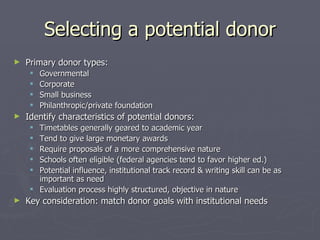
Selecting a potential donor Primary donor types: Governmental Corporate Small business Philanthropic/private foundation Identify characteristics of potential donors: Timetables generally geared to academic year Tend to give large monetary awards Require proposals of a more comprehensive nature Schools often eligible (federal agencies tend to favor higher ed.) Potential influence, institutional track record & writing skill can be as important as need Evaluation process highly structured, objective in nature Key consideration: match donor goals with institutional needs
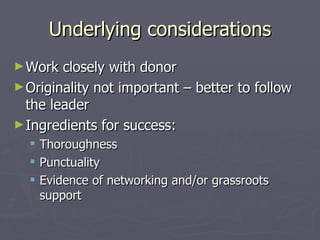
Underlying considerations Work closely with donor Originality not important – better to follow the leader Ingredients for success: Thoroughness Punctuality Evidence of networking and/or grassroots support

Ls567 introprepgrants

  • 1.
    Preliminary considerations ingrantsmanship What school needs are unlikely to be met through regular funding? Why do you want to get involved with grant writing? How can you best contribute to grantseeking? Which donor can best help your institution?
  • 2.
    Types - schoolneeds Money most donors attach strings to gifts Inclined to support projects with PR value Typical examples: Resources Equipment Technological infrastructure Training Services not better provided by other agency Benefit: greater profile in community Above all, needs should relate the school mission
  • 3.
    Reasons – involvementw/grantsmanship Promotion Recognition of peers Increased organizational responsibilities Enhanced employment opportunities Fulfillment of organizational duties
  • 4.
    Grantseeking roles Projectdirector Brainstorming Cohesiveness Liaison with donors or community Research, gathering data Writing Editing Carrying out project directives
  • 5.
    Selecting a potentialdonor Primary donor types: Governmental Corporate Small business Philanthropic/private foundation Identify characteristics of potential donors: Timetables generally geared to academic year Tend to give large monetary awards Require proposals of a more comprehensive nature Schools often eligible (federal agencies tend to favor higher ed.) Potential influence, institutional track record & writing skill can be as important as need Evaluation process highly structured, objective in nature Key consideration: match donor goals with institutional needs
  • 6.
    Underlying considerations Workclosely with donor Originality not important – better to follow the leader Ingredients for success: Thoroughness Punctuality Evidence of networking and/or grassroots support