   Indian economy had experienced major policy
    changes in early 1990s. The new economic
    reform, popularly known as, Liberalization,
    Privatization and Globalization (LPG model)
    aimed at making the Indian economy as fastest
    growing economy and globally competitive. The
    series of reforms undertaken with respect to
    industrial sector, trade as well as financial sector
    aimed at making the economy more efficient.

   is the behavior that a business adheres to in its
    daily dealings with the world. The ethics of a
    particular business can be diverse. They apply
    not only to how the business interacts with the
    world at large, but also to their one-on-one
    dealings with a single customer.

   Ethics are moral guidelines which govern good
    behaviour .So behaving ethically is doing what is
    morally right.
    Behaving ethically in business is widely regarded
    as good business practice.
economic liberlisation is a very broad term that
 usually refers to fewer government regulations
 and restrictions in the economy in exchange
 for greater participation of private entities.
   measures taken for liberlisation:

   freedom for expansion and production to industries.
   increase in the investment limit of the small industries.
   freedom to import the capital goods and raw materials.
   freedom to import technology.
   liberlisation of export and import transactions.
   liberlisation in taxation policy.
   liberlisation in capital markets.
   liberlisation in banking sector.
   increase the foreign investment.
   increase the foreign exchange reserve.
   increase in consumption.
   control over price.
   check on corruption.
   reduction in dependence on external commercial
    borrowings.
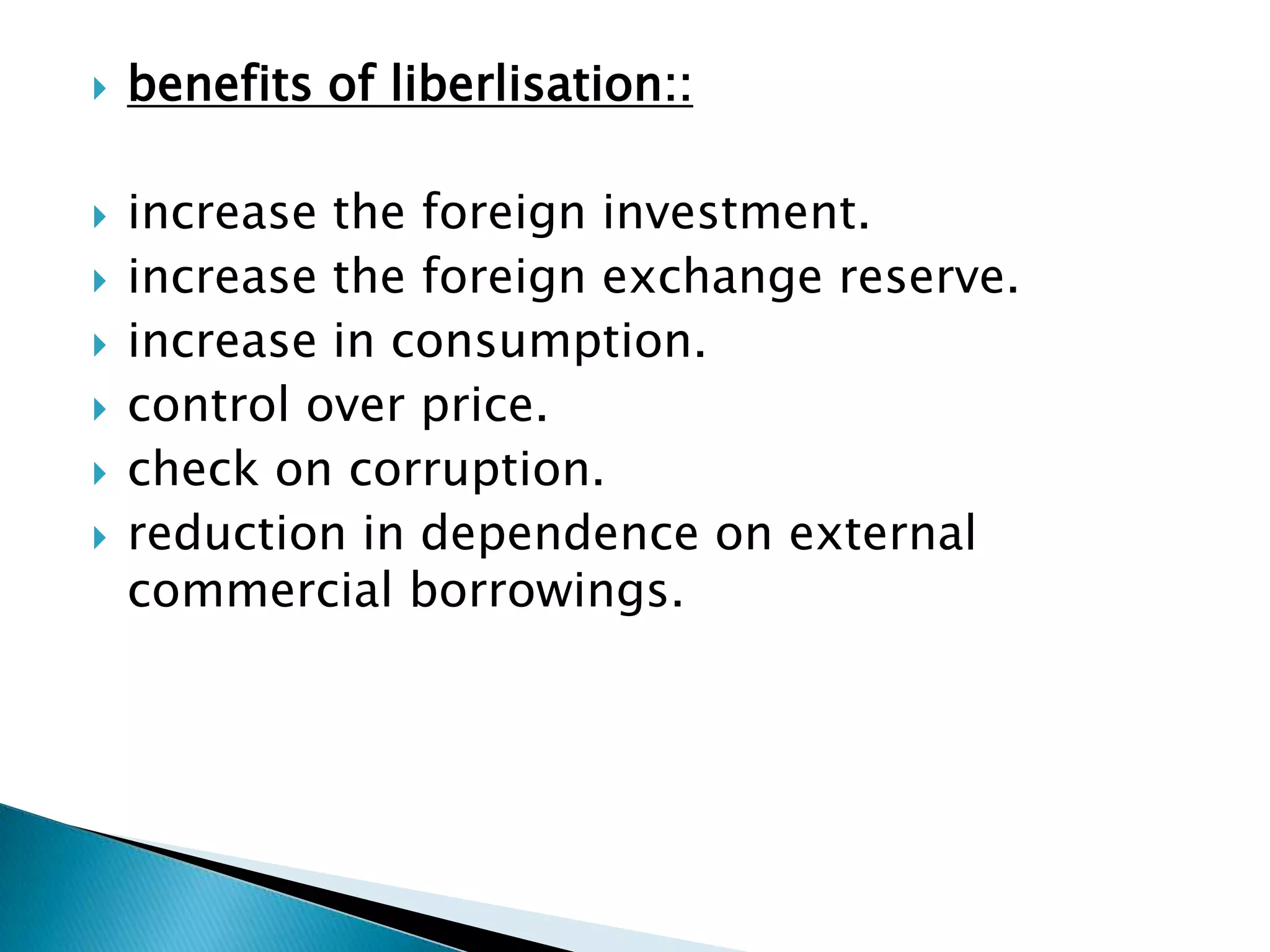
   benefits of liberlisation::

   increase the foreign investment.
   increase the foreign exchange reserve.
   increase in consumption.
   control over price.
   check on corruption.
   reduction in dependence on external
    commercial borrowings.
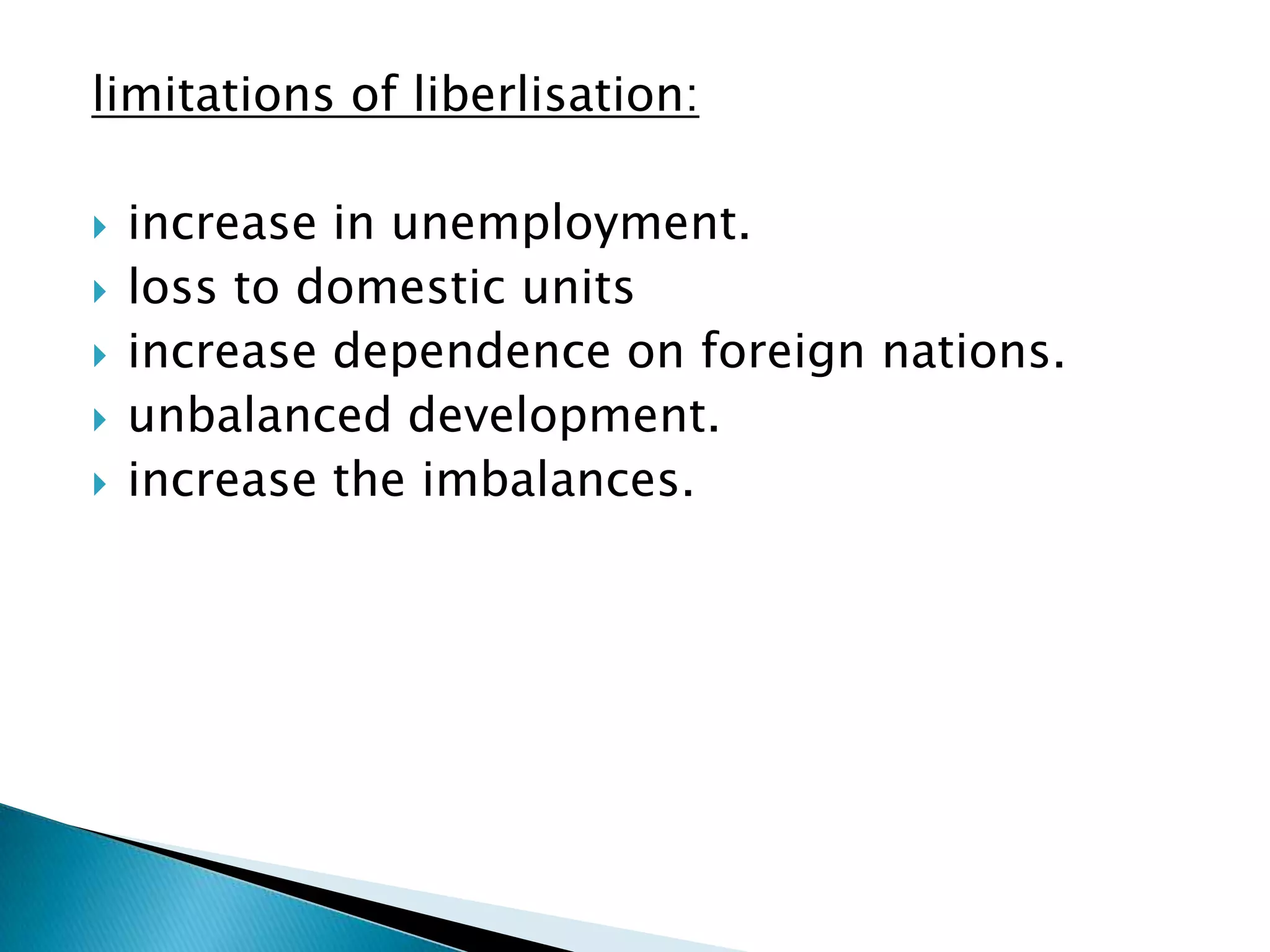
limitations of liberlisation:

   increase in unemployment.
   loss to domestic units
   increase dependence on foreign nations.
   unbalanced development.
   increase the imbalances.
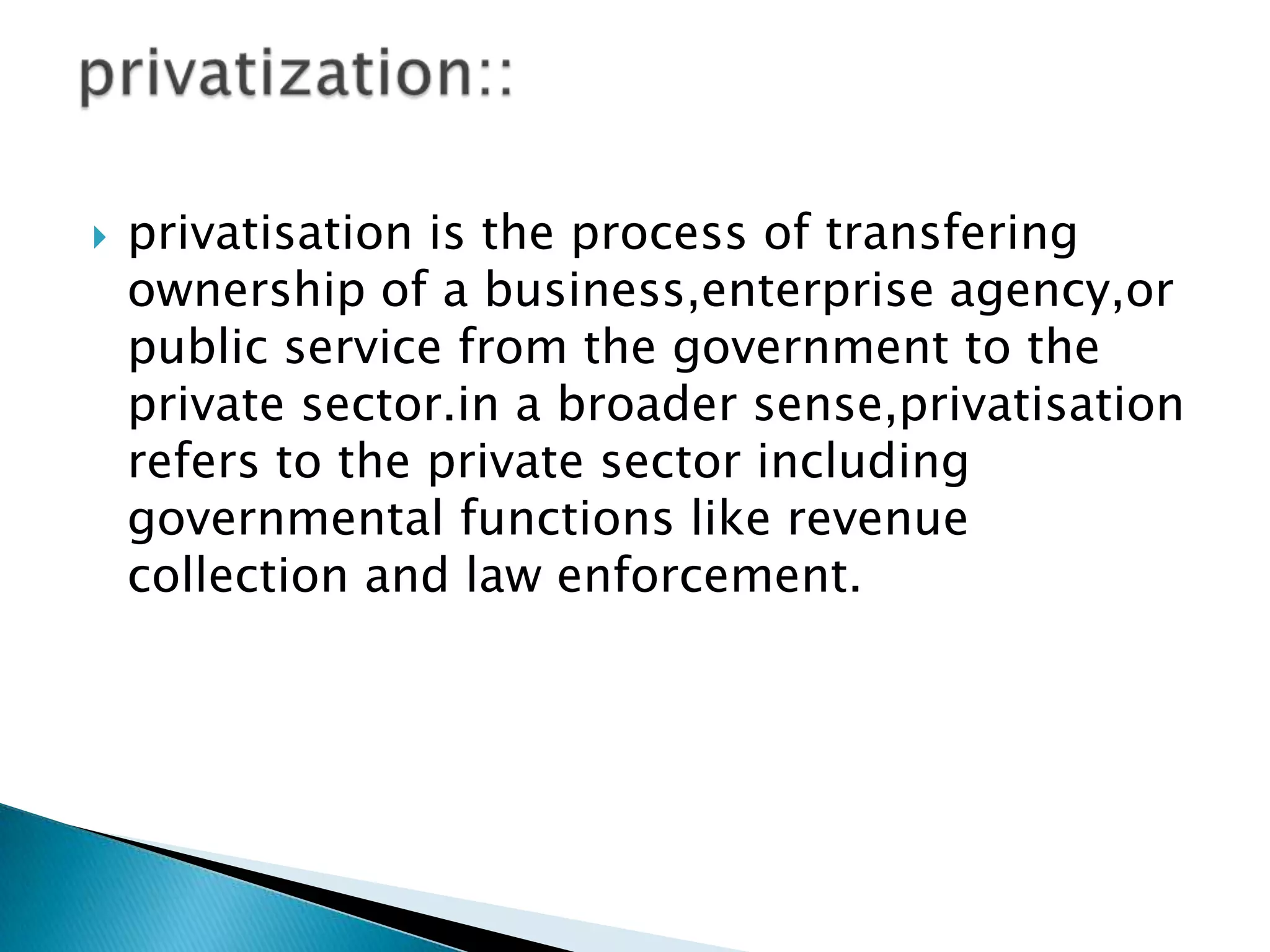
   privatisation is the process of transfering
    ownership of a business,enterprise agency,or
    public service from the government to the
    private sector.in a broader sense,privatisation
    refers to the private sector including
    governmental functions like revenue
    collection and law enforcement.
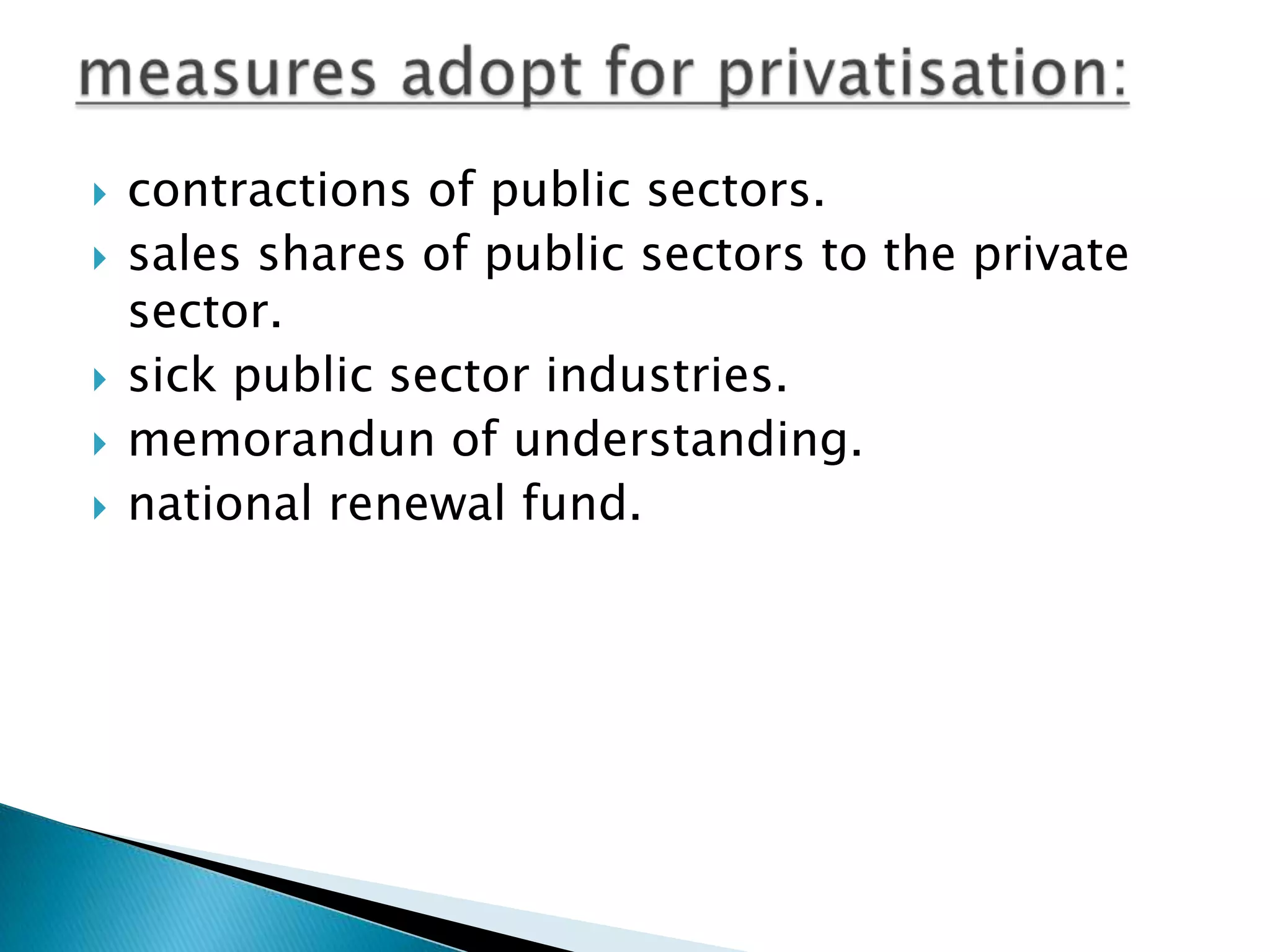
   contractions of public sectors.
   sales shares of public sectors to the private
    sector.
   sick public sector industries.
   memorandun of understanding.
   national renewal fund.
   increase in efficiency.
   professional management.
   increase in competition.
   in line with international trends.
   reduction in political interference.
   encourage to new innovations.
   increase the industrial growth.
   increase the foreign investment.
   reduction in public sector.
   industrial sickness.
   lack of welfare.
   class struggle.
   increase in inequality.
   opposition by employees.
   political pressure.
   increase in unemployment.
   ignores the weaker sections.
 globalisation describes an ongoing process by
  which
regional economies,socities,and culture have
  become integrated throough a globe-spanning
  network of exchange.the term sometimes is used
  to refer specifically to economic globalisation: the
  integration of national economies into the
  international economy through trade,foreign
  direct investment,capital flows,migration,and the
  spread of technology.
   It involves increasing interaction among
    national economic system,more integrated
    financial market,economies of trade,higher
    factror mobility,free flow of technology, and
    spread of knowledge throughout the world.
   increase the foreign investment.
   partial convertbility of indian rupee.
   foreign trade policy.
   reduction of tarrifs.
   export promotion.
   freedom of repatriate.
   increase in foreign trade.
   increase in foreign investment.
   foreign direct investment.
   increase in foreign collaboration.
   increase in foreign exchange reserves.
   expansion of market.
   technological development.
   brand development.
   development of service sectors.
   development of capital market.
   increase in employment.
   reduction in brain drain.
   improvement in standard of living.
   loss of domestic industries.
   unemployment.
   exploitation of labour.
   demonstration effect.
   increase in inequalities.
   dominance of foreign institutions.
thank
you……………..

Lpg in b e

  • 2.
    Indian economy had experienced major policy changes in early 1990s. The new economic reform, popularly known as, Liberalization, Privatization and Globalization (LPG model) aimed at making the Indian economy as fastest growing economy and globally competitive. The series of reforms undertaken with respect to industrial sector, trade as well as financial sector aimed at making the economy more efficient. 
  • 3.
    is the behavior that a business adheres to in its daily dealings with the world. The ethics of a particular business can be diverse. They apply not only to how the business interacts with the world at large, but also to their one-on-one dealings with a single customer.  Ethics are moral guidelines which govern good behaviour .So behaving ethically is doing what is morally right. Behaving ethically in business is widely regarded as good business practice.
  • 4.
    economic liberlisation isa very broad term that usually refers to fewer government regulations and restrictions in the economy in exchange for greater participation of private entities.
  • 5.
    measures taken for liberlisation:  freedom for expansion and production to industries.  increase in the investment limit of the small industries.  freedom to import the capital goods and raw materials.  freedom to import technology.  liberlisation of export and import transactions.  liberlisation in taxation policy.  liberlisation in capital markets.  liberlisation in banking sector.  increase the foreign investment.  increase the foreign exchange reserve.  increase in consumption.  control over price.  check on corruption.  reduction in dependence on external commercial borrowings.
  • 6.
    benefits of liberlisation::  increase the foreign investment.  increase the foreign exchange reserve.  increase in consumption.  control over price.  check on corruption.  reduction in dependence on external commercial borrowings.
  • 7.
    limitations of liberlisation:  increase in unemployment.  loss to domestic units  increase dependence on foreign nations.  unbalanced development.  increase the imbalances.
  • 8.
    privatisation is the process of transfering ownership of a business,enterprise agency,or public service from the government to the private sector.in a broader sense,privatisation refers to the private sector including governmental functions like revenue collection and law enforcement.
  • 9.
    contractions of public sectors.  sales shares of public sectors to the private sector.  sick public sector industries.  memorandun of understanding.  national renewal fund.
  • 10.
    increase in efficiency.  professional management.  increase in competition.  in line with international trends.  reduction in political interference.  encourage to new innovations.  increase the industrial growth.  increase the foreign investment.  reduction in public sector.
  • 11.
    industrial sickness.  lack of welfare.  class struggle.  increase in inequality.  opposition by employees.  political pressure.  increase in unemployment.  ignores the weaker sections.
  • 12.
     globalisation describesan ongoing process by which regional economies,socities,and culture have become integrated throough a globe-spanning network of exchange.the term sometimes is used to refer specifically to economic globalisation: the integration of national economies into the international economy through trade,foreign direct investment,capital flows,migration,and the spread of technology.
  • 13.
    It involves increasing interaction among national economic system,more integrated financial market,economies of trade,higher factror mobility,free flow of technology, and spread of knowledge throughout the world.
  • 14.
    increase the foreign investment.  partial convertbility of indian rupee.  foreign trade policy.  reduction of tarrifs.  export promotion.  freedom of repatriate.
  • 15.
    increase in foreign trade.  increase in foreign investment.  foreign direct investment.  increase in foreign collaboration.  increase in foreign exchange reserves.  expansion of market.  technological development.  brand development.  development of service sectors.  development of capital market.  increase in employment.  reduction in brain drain.  improvement in standard of living.
  • 16.
    loss of domestic industries.  unemployment.  exploitation of labour.  demonstration effect.  increase in inequalities.  dominance of foreign institutions.
  • 17.