Logistics Supply Chain Management Martin Christopher
Logistics Supply Chain Management Martin Christopher
Logistics Supply Chain Management Martin Christopher
Logistics Supply Chain Management Martin Christopher
Logistics Supply Chain Management Martin Christopher
1.
Logistics Supply ChainManagement Martin
Christopher download
https://textbookfull.com/product/logistics-supply-chain-
management-martin-christopher/
Download more ebook from https://textbookfull.com
2.
We believe theseproducts will be a great fit for you. Click
the link to download now, or visit textbookfull.com
to discover even more!
Global Logistics and Supply Chain Management Lalwani
https://textbookfull.com/product/global-logistics-and-supply-
chain-management-lalwani/
Operations, Logistics and Supply Chain Management Henk
Zijm
https://textbookfull.com/product/operations-logistics-and-supply-
chain-management-henk-zijm/
Computational Intelligence in Logistics and Supply
Chain Management 1st Edition Thomas Hanne
https://textbookfull.com/product/computational-intelligence-in-
logistics-and-supply-chain-management-1st-edition-thomas-hanne/
Procurement and Supply Chain Management Kenneth Lysons
https://textbookfull.com/product/procurement-and-supply-chain-
management-kenneth-lysons/
3.
Guide to SupplyChain Management Colin Scott
https://textbookfull.com/product/guide-to-supply-chain-
management-colin-scott/
Logistics and Retail Management Emerging Issues and New
Challenges in the Retail Supply Chain Fifth Edition.
Edition John Fernie
https://textbookfull.com/product/logistics-and-retail-management-
emerging-issues-and-new-challenges-in-the-retail-supply-chain-
fifth-edition-edition-john-fernie/
Supply Chain Engineering and Logistics Handbook-
Inventory and Production Control 1st Edition Erick C.
Jones (Author)
https://textbookfull.com/product/supply-chain-engineering-and-
logistics-handbook-inventory-and-production-control-1st-edition-
erick-c-jones-author/
The Chief Data Officer Management Handbook: Set Up and
Run an Organization’s Data Supply Chain 1st Edition
Martin Treder
https://textbookfull.com/product/the-chief-data-officer-
management-handbook-set-up-and-run-an-organizations-data-supply-
chain-1st-edition-martin-treder/
Operations and Supply Chain Management for MBAs Jack R.
Meredith
https://textbookfull.com/product/operations-and-supply-chain-
management-for-mbas-jack-r-meredith/
Contents
About the author
Preface
Publisher’sacknowledgements
1 Logistics, the supply chain and competitive strategy
Supply chain management is a wider concept than logistics
Competitive advantage
The supply chain becomes the value chain
The mission of logistics management
The supply chain and competitive performance
The changing competitive environment
2 Delivering customer value
The marketing and logistics interface
Delivering customer value
What is customer service?
The impact of out-of-stock
Customer service and customer retention
Market-driven supply chains
Defining customer service objectives
Setting customer service priorities
Setting service standards
3 Going to market
Distribution channels are value delivery systems
Innovation in the distribution channel
The omni-channel revolution
Omni-channel retailing
4 Measuring logistics costs and performance
Logistics and the bottom line
Logistics and shareholder value
Logistics cost analysis
The concept of total cost analysis
Understanding the cost-to-serve
Customer profitability analysis
3
7.
Direct product profitability
Costdrivers and activity-based costing
5 Matching supply and demand
The lead-time gap
Improving visibility of demand
The supply chain fulcrum
Forecast for capacity, execute against demand
Demand management and planning
Collaborative planning, forecasting and replenishment
6 Creating the responsive supply chain
Using the volume/variability matrix
Product ‘push’ versus demand ‘pull’
The Japanese philosophy
The agile supply chain
The foundations of agility
A routemap to responsiveness
7 Strategic lead-time management
Time-based competition
The concept of lead-time
Logistics pipeline management
Reducing logistics lead-time
8 The synchronous supply chain
The extended enterprise and the virtual supply chain
The role of information in the virtual supply chain
Laying the foundations for synchronisation
‘Quick response’ logistics
Production strategies for QR
Logistics systems dynamics
9 Complexity and the supply chain
The sources of supply chain complexity
The cost of complexity
Product design and supply chain complexity
Mastering complexity
10 Managing the global pipeline
The trend towards globalisation in the supply chain
Gaining visibility in the global pipeline
Financing global supply chains
4
8.
Organising for globallogistics
Thinking global, acting local
The future of global sourcing
11 Service logistics
What is a service?
Buying performance
The service dominant logic
The trend to ‘servitisation’
Implications of servitisation for logistics
The critical role of capacity
Service supply chain processes
Managing the service supply chain
12 Managing risk in the supply chain
Why are supply chains more vulnerable?
Understanding the supply chain risk profile
Managing supply chain risk
Achieving supply chain resilience
13 The era of network competition
The new organisational paradigm
Collaboration and trust in the supply chain
Reducing costs through collaborative working
‘Co-opetition’ – co-operating with competitors
Managing the supply chain as a network
Supply chain orchestration
From 3PL to 4PL™
The last word
14 Overcoming the barriers to supply chain integration
Creating the logistics vision
The problems with conventional organisations
Developing the logistics organisation
Logistics as the vehicle for change
Benchmarking
15 Creating a sustainable supply chain
The triple bottom line
Greenhouse gases and the supply chain
Reducing the transport-intensity of supply chains
Beyond the carbon footprint
Reduce, re-use, re-cycle
5
9.
The impact ofcongestion
16 The supply chain of the future
Emerging mega-trends
Shifting centres of gravity
Supply chain governance and compliance
The need for adaptability
Seeking structural flexibility
2020 vision
Waste in the supply chain
The New Industrial Revolution
Seven major business transformations
The implications for tomorrow’s logistics managers
Index
6
About the author
MartinChristopher is Emeritus Professor of Marketing and Logistics at Cranfield School
of Management in the United Kingdom. His work in the field of logistics and supply chain
management has gained international recognition. He has published widely and his books
have been translated into many languages. Martin Christopher co-founded the
International Journal of Logistics Management and was its joint editor for 18 years. He is a
regular contributor to conferences and workshops around the world.
In addition to working with many companies in an advisory capacity he is also a Visiting
Professor at universities in the UK and overseas.
Martin Christopher is an Emeritus Fellow of the Chartered Institute of Logistics and
Transport and is also a Fellow of the Chartered Institute of Procurement and Supply. He is
the recipient of the Distinguished Service Award of the USA Council of Supply Chain
Management Professionals.
8
12.
Preface
Logistics and supplychain management are now firmly established as critical business
concerns. Many companies have appointed Directors and Vice-Presidents who are
responsible for ensuring the cost-effective operation of the ‘end-to-end pipeline’ that links
the supply side of the business with the end market. When the first edition of this book was
published in 1992, the practice of logistics and supply chain management was still in its
infancy even though the underlying ideas had been around for a while.
In preparing this fifth edition of Logistics and Supply Chain Management I have continued
to maintain the focus of the book around the role that logistics and supply chain
management play in achieving competitive advantage. The premise that has underpinned
this book since the first edition is that businesses compete as supply chains rather than as
stand-alone companies. Converting this idea from an abstract concept into real-world
practice is still proving a challenge for many organisations. Hopefully this book will provide
some guidance on how that transformation can be achieved.
Supply chains today operate in a world where the rate of change continues to increase. As
we enter an era that some have termed ‘The New Industrial Revolution’ much of the
conventional wisdom that has been the basis for supply chain design and thinking will have
to be questioned. Hence the emphasis in the book on the need to develop logistics and
supply chain solutions that are flexible and capable of adapting quickly to changes in the
business environment.
In writing any book there will be many sources of inspiration and this is certainly the case
with this current volume. Over the years I have the good fortune to work with thought-
leaders in logistics and supply chain management – both academics and practitioners –
from around the world and I have learned much from them. Instead of attempting to list
them I would rather acknowledge with gratitude the collective role they have played in
shaping the ideas that I present in this book. I thank them all.
MARTIN CHRISTOPHER
EMERITUS PROFESSOR OF MARKETING AND LOGISTICS CENTRE FOR
LOGISTICS AND SUPPLY CHAIN MANAGEMENT CRANFIELD UNIVERSITY,
UK
9
1
Logistics, the supplychain and competitive
strategy
Supply chain management is a wider concept than logistics
Competitive advantage
The supply chain becomes the value chain
The mission of logistics management
The supply chain and competitive performance
The changing competitive environment
Logistics and supply chain management are not new ideas. From the building of the
pyramids to the relief of hunger in Africa there has been little change to the principles
underpinning the effective flow of materials and information to meet the requirements of
customers.
Throughout the history of mankind, wars have been won and lost through logistics‘
strengths and capabilities – or the lack of them. It has been argued that the defeat of the
British in the American War of Independence can largely be attributed to logistics failures.
The British Army in America depended almost entirely upon Britain for supplies; at the
height of the war there were 12,000 troops overseas and for the most part they had not only
to be equipped, but fed from Britain. For the first six years of the war the administration of
these vital supplies was totally inadequate, affecting the course of operations and the morale
of the troops. An organisation capable of supplying the army was not developed until 1781
and by then it was too late.1
In the Second World War logistics also played a major role. The Allied Forces’ invasion of
Europe was a highly skilled exercise in logistics, as was the defeat of Rommel in the desert.
Rommel himself once said that ‘… before the fighting proper, the battle is won or lost by
quartermasters’.
However, whilst the Generals and Field Marshals from the earliest times have understood
the critical role of logistics, strangely it is only in the recent past that business organisations
have come to recognise the vital impact that logistics management can have in the
achievement of competitive advantage. Partly this lack of recognition springs from the
relatively low level of understanding of the benefits of integrated logistics. As early as 1915,
Arch Shaw2 pointed out that:
11
15.
The relations betweenthe activities of demand creation and physical supply … illustrate the
existence of the two principles of interdependence and balance. Failure to co-ordinate any one
of these activities with its group-fellows and also with those in the other group, or undue
emphasis or outlay put upon any one of these activities, is certain to upset the equilibrium of
forces which means efficient distribution.
… The physical distribution of the goods is a problem distinct from the creation of demand
… Not a few worthy failures in distribution campaigns have been due to such a lack of co-
ordination between demand creation and physical supply …
Instead of being a subsequent problem, this question of supply must be met and answered
before the work of distribution begins.
It is paradoxical that it has taken 100 years for these basic principles of logistics
management to be widely accepted.
What is logistics management in the sense that it is understood today? There are many ways
of defining logistics, but the underlying concept might be defined as follows:
Logistics is the process of strategically managing the procurement, movement and storage of
materials, parts and finished inventory (and the related information flows) through the
organisation and its marketing channels in such a way that current and future profitability
are maximised through the cost-effective fulfilment of orders.
Ultimately, the mission of logistics management is to serve customers in the most cost-
effective way. A recurring theme throughout this book is that the way we reach and serve
customers has become a critical competitive dimension. Hence the need to look at logistics
in a wider business context and to see it as far more than a set of tools and techniques
Supply chain management is a wider concept than logistics
Logistics is essentially a planning orientation and framework that seeks to create a single
plan for the flow of products and information through a business. Supply chain
management builds upon this framework and seeks to achieve linkage and co-ordination
between the processes of other entities in the pipeline, i.e. suppliers and customers, and the
organisation itself. Thus, for example, one goal of supply chain management might be to
reduce or eliminate the buffers of inventory that exist between organisations in a chain
through the sharing of information regarding demand and current stock levels.
The concept of supply chain management is relatively new. It was first articulated in a
white paper3 produced by a consultancy firm – then called Booz, Allen and Hamilton –
back in 1982. The authors, Keith Oliver and Michael Webber, wrote:
Through our study of firms in a variety of industries … we found that the traditional
approach of seeking trade-offs among the various conflicting objective of key functions –
purchasing, production, distribution and sales – along the supply chain no longer worked very
12
16.
well. We neededa new perspective and, following from it, a new approach: Supply-chain
management.
It will be apparent that supply chain management involves a significant change from the
traditional arm’s-length, even adversarial, relationships that have so often typified
buyer/supplier relationships in the past and still today. The focus of supply chain
management is on co-operation and trust and the recognition that, properly managed, the
‘whole can be greater than the sum of its parts’.
The definition of supply chain management that is adopted in this book is:
The management of upstream and downstream relationships with suppliers and customers in
order to deliver superior customer value at less cost to the supply chain as a whole.
Thus the focus of supply chain management is upon the management of relationships in
order to achieve a more profitable outcome for all parties in the chain. This brings with it
some significant challenges as there may be occasions when the narrow self interest of one
party has to be subsumed for the benefit of the chain as a whole.
Whilst the phrase ‘supply chain management’ is now widely used, it could be argued that
‘demand chain management’ would be more appropriate, to reflect the fact that the chain
should be driven by the market, not by suppliers. Equally, the word ‘chain’ should be
replaced by ‘network’ as there will normally be multiple suppliers and, indeed, suppliers to
suppliers as well as multiple customers and customers’ customers to be included in the total
system.
Figure 1.1 illustrates this idea of the firm being at the centre of a network of suppliers and
customers.
Extending this idea, it has been suggested that a supply chain could more accurately be
defined as:
A network of connected and interdependent organisations mutually and co-operatively
working together to control, manage and improve the flow of materials and information from
suppliers to end users.4
Figure 1.1 The supply chain network
13
17.
Competitive advantage
A centraltheme of this book is that effective logistics and supply chain management can
provide a major source of competitive advantage – in other words, a position of enduring
superiority over competitors in terms of customer preference may be achieved through
better management of logistics and the supply chain.
The foundations for success in the marketplace are numerous, but a simple model is based
around the triangular linkage of the company, its customers and its competitors – the
‘Three Cs’. Figure 1.2 illustrates the three-way relationship.
Figure 1.2 Competitive advantage and the ‘Three Cs’
Source: Ohmae, K., The Mind of the Strategist, Penguin Books, 1983
The source of competitive advantage is found firstly in the ability of the organisation to
differentiate itself positively, in the eyes of the customer, from its competition, and
14
18.
secondly by operatingat a lower cost and hence at greater profit.
Seeking a sustainable and defensible competitive advantage has become the concern of
every manager who is alert to the realities of the marketplace. It is no longer acceptable to
assume that good products will sell themselves, neither is it advisable to imagine that
success today will carry forward into tomorrow.
Let us consider the bases of success in any competitive context. At its most elemental,
commercial success derives from either a cost advantage or a value advantage or, ideally,
both. It is as simple as that – the most profitable competitor in any industry sector tends to
be the lowest-cost producer or the supplier providing a product with the greatest perceived
differentiated values.
Put very simply, successful companies either have a cost advantage or they have a value
advantage, or – even better – a combination of the two. Cost advantage gives a lower cost
profile and the value advantage gives the product or offering a differential ‘plus’ over
competitive offerings.
Let us briefly examine these two vectors of strategic direction.
1 Cost advantage
In many industries there will typically be one competitor who will be the low-cost producer
and often that competitor will have the greatest sales volume in the sector. There is
substantial evidence to suggest that ‘big is beautiful’ when it comes to cost advantage. This
is partly due to economies of scale, which enable fixed costs to be spread over a greater
volume, but more particularly to the impact of the ‘experience curve’.
The experience curve is a phenomenon with its roots in the earlier notion of the ‘learning
curve’. Researchers in the Second World War discovered that it was possible to identify and
predict improvements in the rate of output of workers as they became more skilled in the
processes and tasks on which they were working. Subsequent work by Boston Consulting
Group extended this concept by demonstrating that all costs, not just production costs,
would decline at a given rate as volume increased (see Figure 1.3). In fact, to be precise, the
relationship that the experience curve describes is between real unit costs and cumulative
volume.
Figure 1.3 The experience curve
15
19.
Traditionally, it hasbeen suggested that the main route to cost reduction was through the
achievement of greater sales volume and in particular by improving market share. However,
the blind pursuit of economies of scale through volume increases may not always lead to
improved profitability – in today’s world much of the cost of a product lies outside the four
walls of the business in the wider supply chain. Hence it can be argued that it is
increasingly through better logistics and supply chain management that efficiency and
productivity can be achieved, leading to significantly reduced unit costs. How this can be
achieved will be one of the main themes of this book.
2 Value advantage
It has long been an axiom in marketing that ‘customers don’t buy products, they buy
benefits’. Put another way, the product is purchased not for itself but for the promise of
what it will ‘deliver’. These benefits may be intangible, i.e. they relate not to specific
product features but rather to such things as image or service. In addition, the delivered
offering may be seen to outperform its rivals in some functional aspect.
Unless the product or service we offer can be distinguished in some way from its
competitors, there is a strong likelihood that the marketplace will view it as a ‘commodity’
and so the sale will tend to go to the cheapest supplier. Hence the importance of seeking to
add additional values to our offering to mark it out from the competition.
What are the means by which such value differentiations may be gained? Essentially, the
development of a strategy based upon added values will normally require a more segmented
approach to the market. When a company scrutinises markets closely, it frequently finds
that there are distinct ‘value segments’. In other words, different groups of customers
within the total market attach different importance to different benefits. The importance of
such benefit segmentation lies in the fact that often there are substantial opportunities for
creating differentiated appeals for specific segments. Take the car industry as an example.
Most volume car manufacturers such as Toyota or Ford offer a range of models positioned
16
20.
at different pricepoints in the market. However, it is increasingly the case that each model
is offered in a variety of versions. Thus at one end of the spectrum may be the basic version
with a small engine and three doors, and at the other end a five-door, high-performance
version. In between are a whole variety of options, each of which seeks to satisfy the needs
of quite different ‘benefit segments’. Adding value through differentiation is a powerful
means of achieving a defensible advantage in the market.
Equally powerful as a means of adding value is service. Increasingly it is the case that
markets are becoming more service-sensitive and this of course poses particular challenges
for logistics management. There is a trend in many markets towards a decline in the
strength of the ‘brand’ and a consequent move towards ‘commodity’ market status. Quite
simply, this means that it is becoming progressively more difficult to compete purely on the
basis of brand or corporate image. Additionally, there is increasingly a convergence of
technology within product categories, which means that it is often no longer possible to
compete effectively on the basis of product differences. Thus the need to seek
differentiation through means other than technology. Many companies have responded to
this by focusing upon service as a way of gaining a competitive edge. In this context service
relates to the process of developing relationships with customers through the provision of
an augmented offer. This augmentation can take many forms, including delivery service,
after-sales services, financial packages, technical support and so forth.
Seeking the high ground
In practice what we find is that the successful companies will often seek to achieve a
position based upon both a cost advantage and a value advantage. A useful way of
examining the available options is to present them as a simple matrix (Figure 1.4). Let us
consider these options in turn.
Figure 1.4 Logistics and competitive advantage
17
21.
For companies whofind themselves in the bottom left-hand corner of our matrix, the
world is an uncomfortable place. Their products are indistinguishable from their
competitors’ offerings and they have no cost advantage. These are typical commodity
market situations and ultimately the only strategy is either to move to the right of the
matrix, i.e. to cost leadership, or upwards towards service leadership. Often the cost
leadership route is simply not available. This particularly will be the case in a mature
market where substantial market share gains are difficult to achieve. New technology may
sometimes provide a window of opportunity for cost reduction, but in such situations the
same technology is often available to competitors.
Cost leadership strategies have traditionally been based upon the economies of scale, gained
through sales volume. This is why market share is considered to be so important in many
industries. However, if volume is to be the basis for cost leadership then it is preferable for
that volume to be gained early in the market life cycle. The ‘experience curve’ concept,
briefly described earlier, demonstrates the value of early market share gains – the higher
your share relative to your competitors the lower your costs should be. This cost advantage
can be used strategically to assume a position of price leader and, if appropriate, to make it
impossible for higher-cost competitors to survive. Alternatively, price may be maintained,
enabling above-average profit to be earned, which potentially is available to further develop
the position of the product in the market.
However, an increasingly powerful route to achieving a cost advantage comes not
necessarily through volume and the economies of scale but instead through logistics and
supply chain management. In many industries, logistics costs represent such a significant
proportion of total costs that it is possible to make major cost reductions through
fundamentally re-engineering logistics processes. The means whereby this can be achieved
will be returned to later in this book.
18
22.
The other wayout of the ‘commodity’ quadrant of the matrix is to seek a strategy of
differentiation through service excellence. We have already commented on the fact that
markets have become more ‘service-sensitive’. Customers in all industries are seeking greater
responsiveness and reliability from suppliers: they are looking for reduced lead-times, just-
in-time (JIT) delivery and value-added services that enable them to do a better job of
serving their customers. In Chapter 2 we will examine the specific ways in which superior
service strategies, based upon enhanced logistics management, can be developed.
Figure 1.5 The challenge to logistics and supply chain management
One thing is certain: there is no middle ground between cost leadership and service
excellence. Indeed, the challenge to management is to identify appropriate logistics and
supply chain strategies to take the organisation to the top right-hand corner of the matrix.
Companies which occupy that position have offers that are distinctive in the value they
deliver and are also cost competitive. Clearly it is a position of some strength, occupying
‘high ground’ that is extremely difficult for competitors to attack. Figure 1.5 presents the
challenge: to seek out strategies that will take the business away from the ‘commodity’ end
of the market towards a more secure position of strength based upon differentiation and
cost advantage.
Logistics and supply chain management, it can be argued, has the potential to assist the
organisation in the achievement of both a cost advantage and a value advantage. As Figure
1.6 suggests, in the first instance there are a number of important ways in which
productivity can be enhanced through logistics and supply chain management. Whilst these
possibilities for leverage will be discussed in detail later in the book, suffice it to say that the
opportunities for better capacity utilisation, inventory reduction and closer integration with
suppliers at a planning level are considerable. Equally the prospects for gaining a value
19
23.
advantage in themarketplace through superior customer service should not be under-
estimated. It will be argued later that the way we service the customer has become a vital
means of differentiation.
Figure 1.6 Gaining competitive advantage
To summarise, those organisations that will be the leaders in the markets of the future will
be those that have sought and achieved the twin peaks of excellence: they have gained both
cost leadership and service leadership.
The underlying philosophy behind the logistics and supply chain concept is that of
planning and co-ordinating the materials flow from source to user as an integrated system
rather than, as was so often the case in the past, managing the goods flow as a series of
independent activities. Thus, under this approach the goal is to link the marketplace, the
distribution network, the manufacturing process and the procurement activity in such a
way that customers are serviced at higher levels and yet at lower cost. In other words, the
goal is to achieve competitive advantage through both cost reduction and service
enhancement.
The supply chain becomes the value chain
Of the many changes that have taken place in management thinking over the last 30 years
or so, perhaps the most significant has been the emphasis placed upon the search for
strategies that will provide superior value in the eyes of the customer. To a large extent the
20
24.
credit for thismust go to Michael Porter, the Harvard Business School professor who,
through his research and writing, has alerted managers and strategists to the central
importance of competitive relativities in achieving success in the marketplace.
One concept in particular that Michael Porter has brought to a wider audience is the ‘value
chain’5:
Competitive advantage cannot be understood by looking at a firm as a whole. It stems from
the many discrete activities a firm performs in designing, producing, marketing, delivering,
and supporting its product. Each of these activities can contribute to a firm’s relative cost
position and create a basis for differentiation … The value chain disaggregates a firm into its
strategically relevant activities in order to understand the behaviour of costs and the existing
and potential sources of differentiation. A firm gains competitive advantage by performing
these strategically important activities more cheaply or better than its competitors.
Value chain activities (shown in Figure 1.7) can be categorised into two types – primary
activities (in-bound logistics, operations, outbound logistics, marketing and sales, and
service) and support activities (infrastructure, human resource management, technology
development and procurement). These activities are integrating functions that cut across
the traditional functions of the firm. Competitive advantage is derived from the way in
which firms organise and perform these activities within the value chain. To gain
competitive advantage over its rivals, a firm must deliver value to its customers by
performing these activities more efficiently than its competitors or by performing the
activities in a unique way that creates greater differentiation.
The implication of Michael Porter’s thesis is that organisations should look at each activity
in their value chain and assess whether they have a real competitive advantage in the
activity. If they do not, the argument goes, then perhaps they should consider outsourcing
that activity to a partner who can provide that cost or value advantage. This logic is now
widely accepted and has led to the dramatic upsurge in outsourcing activity that can be
witnessed in almost every industry.
Whilst there is often a strong economic logic underpinning the decision to outsource
activities that may previously have been performed in-house, such decisions may add to the
complexity of the supply chain. Because there are, by definition, more interfaces to be
managed as a result of outsourcing, the need for a much higher level of relationship
management increases.
Figure 1.7 The value chain
21
For example, formany years marketing and manufacturing have been seen as largely
separate activities within the organisation. At best they have co-existed, at worst there has
been open warfare. Manufacturing priorities and objectives have typically been focused on
operating efficiency, achieved through long production runs, minimised set-ups and
change-overs and product standardisation. Conversely, marketing has sought to achieve
competitive advantage through variety, high service levels and frequent product changes.
In today’s more turbulent environment there is no longer any possibility of manufacturing
and marketing acting independently of each other. The internecine disputes between the
‘barons’ of production and marketing are clearly counter-productive to the achievement of
overall corporate goals.
It is no coincidence that in recent years both marketing and manufacturing have become
the focus of renewed attention. Marketing as a concept and a philosophy of customer
orientation now enjoys a wider acceptance than ever. It is now generally accepted that the
need to understand and meet customer requirements is a prerequisite for survival. At the
same time, in the search for improved cost competitiveness, manufacturing management
has been the subject of a massive revolution. The last few decades have seen the
introduction of flexible manufacturing systems (FMS), of new approaches to inventory
based on materials requirements planning (MRP) and JIT methods and, perhaps most
important of all, a sustained emphasis on total quality management (TQM).
Equally there has been a growing recognition of the critical role that procurement plays in
creating and sustaining competitive advantage as part of an integrated logistics process.
Leading-edge organisations now routinely include supply-side issues in the development of
their strategic plans. Not only is the cost of purchased materials and supplies a significant
part of total costs in most organisations, but there is a major opportunity for leveraging the
capabilities and competencies of suppliers through closer integration of the buyers’ and
suppliers’ logistics processes.
In this scheme of things, logistics is therefore essentially an integrative concept that seeks to
develop a system-wide view of the firm. It is fundamentally a planning concept that seeks to
create a framework through which the needs of the marketplace can be translated into a
23
27.
manufacturing strategy andplan, which in turn links into a strategy and plan for
procurement. Ideally there should be a ‘one-plan’ mentality within the business that seeks
to replace the conventional stand-alone and separate plans for marketing, distribution,
production and procurement. This, quite simply, is the mission of logistics management.
The supply chain and competitive performance
Traditionally most organisations have viewed themselves as entities that not only exist
independently from others but need to compete with them in order to survive. However,
such a philosophy can be self-defeating if it leads to an unwillingness to co-operate in order
to compete. Behind this seemingly paradoxical concept is the idea of supply chain
integration.
The supply chain is the network of organisations that are involved, through upstream and
downstream linkages, in the different processes and activities that produce value in the form
of products and services in the hands of the ultimate consumer. Thus, for example, a shirt
manufacturer is a part of a supply chain that extends upstream through the weavers of
fabrics to the manufacturers of fibres, and downstream through distributors and retailers to
the final consumer. Each of these organisations in the chain are dependent upon each other
by definition and yet, paradoxically, by tradition do not closely co-operate with each other.
Supply chain management is not the same as ‘vertical integration’. Vertical integration
normally implies ownership of upstream suppliers and downstream customers. This was
once thought to be a desirable strategy but increasingly organisations are now focusing on
their ‘core business’ – in other words the things they do really well and where they have a
differential advantage. Everything else is ‘outsourced’ – procured outside the firm. So, for
example, companies that perhaps once made their own components now only assemble the
finished product, e.g. automobile manufacturers. Other companies may subcontract the
manufacturing as well, e.g. Nike in footwear and sportswear. These companies have
sometimes been termed ‘virtual’ or ‘network’ organisations.
GANT: Creating value across a virtual network
A good example of a virtual organisation is the Swedish clothing brand GANT. At the centre of the
network is Pyramid Sportswear AB, which directly employs fewer than ten people. Pyramid contracts
with designers, identifies trends, uses contract manufacturers, develops the retailer network and creates
the brand image through marketing communications. Through its databases, Pyramid closely
monitors sales, inventories and trends. Its network of closely co-ordinated partners means it can react
quickly to changes in the market. The network itself changes as requirements change, and it will use
different designers, freelance photographers, catalogue producers, contract manufacturers and so on as
appropriate.
SOURCE: CHRISTOPHER, M., PAYNE, A. & BALLANTYNE, D., RELATIONSHIP
MARKETING: CREATING STAKEHOLDER VALUE, BUTTERWORTH HEINNEMANN,
OXFORD 2002
24
28.
Clearly this trendhas many implications for supply chain management, not the least being
the challenge of integrating and co-ordinating the flow of materials from a multitude of
suppliers, often offshore, and similarly managing the distribution of the finished product by
way of multiple intermediaries.
In the past it was often the case that relationships with suppliers and downstream customers
(such as distributors or retailers) were adversarial rather than co-operative. It is still the case
today that some companies will seek to achieve cost reductions or profit improvement at
the expense of their supply chain partners. Companies such as these do not realise that
simply transferring costs upstream or downstream does not make them any more
competitive. The reason for this is that ultimately all costs will make their way to the final
marketplace to be reflected in the price paid by the end user. The leading-edge companies
recognise the fallacy of this conventional approach and instead seek to make the supply
chain as a whole more competitive through the value it adds and the costs that it reduces
overall. They have realised that the real competition is not company against company but
rather supply chain against supply chain.
It must be recognised that the concept of supply chain management, whilst relatively new,
is in fact no more than an extension of the logic of logistics. Logistics management is
primarily concerned with optimising flows within the organisation, whilst supply chain
management recognises that internal integration by itself is not sufficient. Figure 1.9
demonstrates that there is in effect an evolution of integration from the stage 1 position of
complete functional independence where each business function such as production or
purchasing does their own thing in complete isolation from the other business functions.
An example would be where production seeks to optimise its unit costs of manufacture by
long production runs without regard for the build-up of finished goods inventory and
heedless of the impact it will have on the need for warehousing space and the impact on
working capital.
Stage 2 companies have recognised the need for at least a limited degree of integration
between adjacent functions, e.g. distribution and inventory management or purchasing and
materials control. The natural next step to stage 3 requires the establishment and
implementation of an ‘end-to-end’ planning framework that will be fully described later in
Chapter 5.
Stage 4 represents true supply chain integration in that the concept of linkage and co-
ordination that is achieved in stage 3 is now extended upstream to suppliers and
downstream to customers.
The changing competitive environment
25
29.
As the competitivecontext of business continues to change, bringing with it new
complexities and concerns for management generally, it also has to be recognised that the
impact on logistics and supply chain management of these changes can be considerable.
Indeed, of the many strategic issues that confront the business organisation today, perhaps
the most challenging are in the area of logistics and supply chain management.
Figure 1.9 Achieving an integrated supply chain
26
Turbulence and volatility
Globalisationof industry
Downward pressure on price
The new rules of competition
We are now entering the era of ‘supply chain competition’. The fundamental difference
from the previous model of competition is that an organisation can no longer act as an
isolated and independent entity in competition with other similarly ‘stand-alone’
organisations. Instead, the need to create value delivery systems that are more responsive to
fast-changing markets and are much more consistent and reliable in the delivery of that
value requires that the supply chain as a whole be focused on the achievement of these
goals.
In the past, the ground rules for marketing success were obvious: strong brands backed up
by large advertising budgets and aggressive selling. This formula now appears to have lost
its power. Instead, the argument is heard, companies must recognise that increasingly it is
through their capabilities and competencies that they compete.
Essentially, this means that organisations create superior value for customers and consumers
by managing their core processes better than competitors manage theirs. These core processes
encompass such activities as new product development, supplier development, order
fulfilment and customer management. By performing these fundamental activities in a
more cost-effective way than competitors, it is argued, organisations will gain the advantage
in the marketplace.
For example, one capability that is now regarded by many companies as fundamental to
success in the marketplace is supply chain agility. As product life cycles shorten, as
customers adopt JIT practices and as sellers’ markets become buyers’ markets then the
ability of the organisation to respond rapidly and flexibly to demand can provide a
powerful competitive edge. This is a theme to which we will return in Chapter 6.
A major contributing factor influencing the changed competitive environment has been the
trend towards ‘commoditisation’ in many markets. A commodity market is characterised by
perceived product equality in the eyes of customers resulting in a high preparedness to
substitute one make of product for another. Research increasingly suggests that consumers
are less loyal to specific brands but instead will have a portfolio of brands within a category
from which they make their choice. In situations such as this, actual product availability
becomes a major determinant of demand. There is evidence that more and more decisions
are being taken at the point of purchase and if there is a gap on the shelf where brand X
should be, but brand Y is there instead, then there is a strong probability that brand Y will
win the sale.
It is not only in consumer markets that the importance of logistics process excellence is
apparent. In business-to-business and industrial markets it seems that product or technical
28
32.
features are ofless importance in winning orders than issues such as delivery lead-times and
flexibility. This is not to suggest that product or technical features are unimportant – rather
it is that they are taken as a ‘given’ by the customer. Quite simply, in today’s marketplace
the order-winning criteria are more likely to be service-based than product-based.
A parallel development in many markets is the trend towards a concentration of demand.
In other words, customers – as against consumers – are tending to grow in size whilst
becoming fewer in number. The retail grocery industry is a good example: in most northern
European countries a handful of large retailers account for over 50 per cent of all sales. This
tendency towards the concentration of buying power is accelerating as a result of global
mergers and acquisitions. The impact of these trends is that these more powerful customers
are becoming more demanding in terms of their service requirements from suppliers.
At the same time as the power in the distribution channel continues to shift from supplier
to buyer, there is also a trend for customers to reduce their supplier base. In other words
they want to do business with fewer suppliers and often on a longer-term basis. The
successful companies in the coming years will be those that recognise these trends and seek
to establish strategies based upon establishing closer relationships with key accounts. Such
strategies will focus upon seeking innovative ways to create more value for these customers.
Building competitive platforms that are based upon this idea of value-based growth will
require a much greater focus on managing the core processes that we referred to earlier.
Whereas the competitive model of the past relied heavily on product innovation, this will
have to be increasingly supplemented by process innovation. The basis for competing in this
new era will be:
Figure 1.10 suggests that traditionally, for many companies, the investment has mainly
been in product excellence and less in process excellence.
This is not to suggest that product innovation should be given less emphasis – far from it –
but rather that more emphasis needs to be placed on developing and managing processes
that deliver greater value for key customers.
We have already commented that product life cycles are getting shorter. What we have
witnessed in many markets is the effect of changes in technology and consumer demand
combining to produce more volatile markets where a product can be obsolete almost as
soon as it reaches the market. There are many current examples of shortening life cycles but
perhaps the personal computer (PC) symbolises them all. In this particular case we have
seen rapid developments in technology that have first created markets where none existed
before and then almost as quickly have rendered themselves obsolete as the next generation
of product is announced.
Figure 1.10 Investing in process excellence yields greater benefits
29
elements of plastronvisible through overlying skin; maximum length
of plastron, 12.0 centimeters.
Head, extended to posterior level of eyes, terminating in flexible
snout; septal ridges projecting into each rounded nostril; jaws
closed, each covered by fleshy lips except anteriorly where horny
portions exposed; dark triangular mark in front of eyes, base line
connecting anterior margins of orbits forming series of [518] dots;
pale stripes extending forward from eyes having faint inner, blackish
borders; eyelids partly open having blackish dots; pale subocular
blotch on right side of head having border of black dots.
Forefeet and hind feet well-webbed having five digits each; each
limb having nails on first three digits; each forelimb with four
antebrachial scales, three of these having free edge; each hind limb
with two horny scales, one smooth on posterodorsal surface and
other with free edge on posteroventral surface; pattern toward
insertion of forelimbs indistinct.
Tail terminating in flexible point; penis exposed; cloacal opening
extending beyond posterior edge of carapace; tail olive above
bordered by blackish marks; few black dots laterally on left side.
Undersurface of soft parts of body buff, lacking markings; few
dark marks posteriorly on webbing of limbs, encroaching on soles
and palms.
Range.—Southcentral Texas in the drainage systems of the
Nueces and Guadalupe-San Antonio rivers; the Colorado River
drainage in Texas is inhabited by a population that more closely
resembles guadalupensis than pallidus. See comments under
subsection entitled "Remarks" and Fig. 19.
Diagnosis.—Juvenal pattern of white dots that are conspicuous
on anterior half of carapace, and usually as large as those on
posterior half; white dots, sometimes 3 millimeters in diameter,
encircled with blackish ocelli in adult males.
35.
Description.—Plastral length ofsmallest hatchling, 3.3
centimeters (ANSP 16717); of largest male, 13.5 centimeters (TU
10162); of largest female, 22.0 centimeters (TU 10160).
Hatchlings having white dots on anterior half of carapace; white
dots anteriorly nearly as large as those posteriorly, encircled with
blackish ocelli, and conspicuous on dark background (ANSP 16717,
Pl. 41; USNM 78515-16; Stebbins, 1954:181, Pl. 26B), or smaller
than those posteriorly, not encircled with dusky ocelli, and
inconspicuous on pale background (TNHC 1446); pale rim of
carapace less than four times as wide posteriorly as laterally.
Adult males resembling holotype; size of white tubercles on
carapace variable; most, if not all, tubercles surrounded by narrow
blackish ocelli, or parts thereof; largest white tubercles or dots in
most specimens exceeding one millimeter and in some specimens
three millimeters in diameter (TU 10163); white dots often slightly
elongate (UMMZ 89917, 89920, 89926; TU 10152, 10145); juvenal
pattern of white dots seemingly more contrasting in guadalupensis,
owing to dark ground color of carapace, than in pallidus or emoryi
that have pale brown or tan carapaces; small tubercles along
anterior edge of carapace rounded, obtuse, wartlike, never conical;
sharp tips often lacking (TU 10153).
Large females often having whitish spots on anterior half of
carapace (TU 10160, Pl. 42, upper, right; 10142); carapace dark
having ill-defined mottled and blotched pattern; tubercles along
anterior edge of carapace low, rounded, rarely equilateral, never
conical; small blackish dots rarely on surface of carapace (UMMZ
89923).
Pattern on side of head and snout of little diagnostic value;
postocular stripe usually interrupted, but configuration variable,
consisting of pale anterior, dark-bordered segment (just behind eye);
posterior segment of postocular [519] stripe usually less well-defined
and generally blending with adjacent ground color; pale postocular
stripe sometimes uninterrupted and dark-bordered throughout its
36.
length (TU 10157,10159, 10176); pattern on dorsal surface of snout
variable; pattern usually consisting of uninterrupted dark line
(slightly curved anteriorly) connecting anterior margins of orbits (TU
10161, 10164, 10159, 10143), or dark line interrupted (TU 10153,
10154, 10176), absent (TU 10163), or present in addition to dark
inner borders of pale stripes that extend anteriorly from eyes (TU
10149, 10162); small, often fine, dark markings, on dorsal surface of
limbs, especially forelimbs; ventral surface of plastron and soft parts
of body usually whitish, lacking markings; small blackish spots
occasionally in region of bridge (TU 10149); dark marks occurring on
webbing of limbs and often encroaching on soles and palms.
Ontogenetic variation in PL/HW, mean PL/HW of specimens
having plastral lengths 7.0 centimeters or less, 3.83, and exceeding
7.0 centimeters, 5.18; ontogenetic variation in CL/CW, mean CL/CW
of specimens having plastron lengths 8.5 centimeters or less, 1.14,
and exceeding 8.5 centimeters, 1.22; mean CL/PCW, 2.11; mean
HW/SL, 1.38 (including subspecies pallidus); mean CL/PL, 1.37.
Variation.—Two hatchlings (ANSP 13447, Bexar County; TNHC
1446, McMullen County) more closely resemble pallidus than
guadalupensis.
Some individuals from the Colorado River drainage have features
suggesting those that are characteristic of pallidus. Large females
have obtuse, knoblike somewhat triangular-shaped tubercles along
the anterior edge of the carapace, which are never conelike (TU
14439-40, 10187, 16036.1; BCB 6010). The tubercles along the
anterior edge of the carapace are more elevated than in turtles from
drainage systems west of the Colorado. Whitish spots are usually
absent anteriorly on the carapace, but may be evident through the
mottled pattern of large females (BCB 6010, plastral length, 19.7
cm.). The pale postocular stripe is usually interrupted, whereas the
dark line connecting the anterior margins of the orbits is usually not
interrupted; the two characters last mentioned show alliance with
guadalupensis.
37.
The carapace ofhatchlings from the Colorado River is pale having
whitish dots, smaller anteriorly than posteriorly, which may be
encircled with dusky ocelli (TNHC 20257) or not (ANSP 11889, BCB
5055, SM 3282). Many hatchlings are not distinguishable from
pallidus (TCWC 7262, TNHC 4975, SM 4924, 6106). I have not seen
hatchlings from the Colorado River that resemble ANSP 16717.
The pattern on the carapace of adult males from the Colorado
River drainage resembles that of guadalupensis (Pl. 41, bottom,
right) but the whitish dots are usually smaller and may not be
encircled with blackish ocelli (BCB 4066, TU 14485). An adult male
(TU 14476) from the South Fork of the Llano River has whitish dots
three millimeters in diameter and encircled with blackish ocelli
(guadalupensis), whereas another adult male (USNM 83690) from a
tributary of the Colorado, the South Concho River, resembles
pallidus.
Eight specimens from the San Saba River (TU 14419 [6
specimens], 14439-40), that range in plastral length from 6.8 to 17.0
centimeters are impressive because of the dark brownish coloration
on the carapace. The smallest individual, which is also the only male
in the series, is paler. The mottled and [520] blotched pattern on the
females is therefore not contrasting; the largest females have
elevated whitish prominences in the center of the carapace
posteriorly. An immature male (UMMZ 70348) from the South
Concho River also has a dark brown carapace, and lacks white dots.
The dark coloration of the carapace of these specimens recalls the
TU series of T. s. emoryi from the Pecos River, Terrell County, Texas.
Color notes taken from a freshly-killed adult female from the
Llano River, two miles west Llano (TU 16036.1, Pl. 42), are: pattern
on carapace of dark olive or blackish marks that form an irregular
reticulum or marbling on a paler background that varies from
brownish to buff and has an orange or reddish tinge in some areas;
small whitish spots posteriorly; pale rim yellowish, evident only at
sides of carapace; dorsal surface of soft parts of body olive-green,
becoming paler with yellowish tinge toward insertions of limbs and
38.
neck; no contrastingpattern on limbs or neck and head; yellowish
on sides of body; ventral surface whitish lacking dark marks,
yellowish at region of bridge, axillary region and on neck; chin olive-
yellow.
Comparisons.—T. s. guadalupensis can be distinguished from all
other subspecies of T. spinifer in having: (1) large white dots,
sometimes three millimeters in diameter, on a dark background
usually surrounded with blackish ocelli and conspicuous on the
anterior half of the carapace (some as large as those on posterior
half) in adult males, and (2) whitish dots on the anterior half of the
carapace, in hatchlings, that are often encircled with dark ocelli. T. s.
guadalupensis resembles pallidus and emoryi in having white
tubercles or dots on the carapace and therein differs from spinifer,
hartwegi and asper. T. s. guadalupensis resembles pallidus but
differs from emoryi in having a pale rim that is less than four times
wider posteriorly than laterally. T. s. guadalupensis resembles emoryi
but differs from pallidus, spinifer, hartwegi and asper in having along
the anterior edge of the carapace tubercles that are flattened or
wartlike prominences often lacking sharp tips in adult males; these
tubercles are never conical in large females.
T. s. guadalupensis has a wide head, a feature shared with the
subspecies asper and emoryi, but differs from emoryi in having a
wider carapace. T. s. guadalupensis resembles emoryi and pallidus
but differs from the other subspecies in having the carapace widest
farther posterior than one-half the length of the carapace. The
length of snout in pallidus and guadalupensis is shorter than in
spinifer and hartwegi but is longer than in emoryi. T. s.
guadalupensis differs from asper but resembles the other subspecies
in having a relatively long plastron.
Remarks.—Some individuals of guadalupensis have
characteristics that are applicable to emoryi. TNHC 12352 (Llano
River) a hatchling, has conspicuous white dots confined to the
posterior third of the carapace; the pale rim, however, is not
widened posteriorly. TU 10156 (Guadalupe River) has a
39.
conspicuously widened palerim on the carapace that is
approximately 3.4 times wider posteriorly (8.5 mm.) than laterally
(2.5 mm.).
T. s. guadalupensis more closely resembles pallidus than emoryi.
Turtles living in rivers that drain into the Gulf of Mexico east of the
Guadalupe-San Antonio river system successively show increasing
resemblance to pallidus from west to east.
The expression of intergradation between guadalupensis and
pallidus is of a clinal nature that involves parallel changes in the
pattern on the snout, [521] side of head, limbs (to a lesser degree),
tuberculation along the anterior edge of the carapace, size of whitish
tubercles or dots, and the distinctness of the blackish ocelli that
surround the whitish dots on the carapace. These characters form a
well-marked gradation or cline that extends over a considerable
area. There is, however, no continuous environmental gradient
because the populations are relatively isolated by occupying adjacent
drainage systems. The sharpest break in the gradation of characters
mentioned above occurs between the Colorado River and Brazos
River drainages. The population of softshells in the Colorado River
drainage is actually an intergradient one, but more closely resembles
guadalupensis, whereas the population in the Brazos River drainage
more closely resembles pallidus. For convenience the turtles
inhabiting the Colorado River drainage are referred to guadalupensis
and those in the Brazos River drainage to pallidus. Some individuals
from farther west than the Colorado River drainage will resemble
pallidus, and a few individuals from father east than the Brazos River
drainage will resemble guadalupensis.
The gradation of some of the characters mentioned above
terminates in the subspecies emoryi. It, however, has characters not
found in pallidus or guadalupensis, and is more distinct from either
of those subspecies than either is from each other; the difference in
characters as well as the break in the gradient of characters between
guadalupensis in the Nueces River drainage and emoryi in the Río
40.
Grande drainage isgreater than that between guadalupensis in the
Colorado and pallidus in the Brazos River drainages.
I have refrained from designating individuals between these
three subspecies (emoryi, guadalupensis and pallidus) as
"intergrades" on the distribution maps, and only mention (in text)
those individuals whose characters show a decided tendency toward
the adjacent subspecies. For further comments on intergradation see
the account of T. s. pallidus.
Specimens examined.—Total 97, as follows: Texas: Bandera: KU
50834, Hondo Creek, 4 mi. W Bandera; TNHC 797-98, 7 mi. SW
Medina. Bexar: ANSP 13447, Helotes; MCZ 4587; USNM 10789,
71009, San Antonio. Borden: BCB 4066, 7 mi. N Vincent. Brown:
TNHC 7262, 1 mi. E Brownwood. Comal: USNM 7700, New
Braunfels. Dawson: TNHC 21594-95, 10 mi. E Lamesa. Frio: USNM
7747, Río Seco. Gillespie: TU 10185, 10187, 10205, Beaver Creek,
"near" Doss. Hays: AMNH 29950-52, San Marcos. Kerr: SM 2553,
headwaters Turtle Creek; TU 10142-45, 10147-65, 10176, 10833,
Guadalupe River, 9 mi. SE Kerrville. Kimble: BCB 5052-55, 6010, 3
mi. SE Telegraph; TU 14476, South Fork Llano River, 1.5 mi. SE
Telegraph; TU 14485, Llano River, 10 mi. W Junction. Lavaca: SM
2554-55, 2559, 3 mi. NNE Hope. Llano: TNHC 12352, TU 16036 (2),
Llano River, 2 mi. W Llano. McMullen: TNHC 1446, 10 mi. W
Simmons, Live Oak County; UMMZ 89915-27, 15 mi. NE Tilden.
Matagorda: ANSP 11889, Matagorda. San Saba: SM 6106; TU 14419
(6), 14439-40, San Saba River, 11 mi. NNW San Saba. Tom Green:
SM 3282, UMMZ 70348, USNM 83690, South Concho River at
Christoval. Travis: SM 659-60, 8.5 mi. from mouth of Onion Creek in
Colorado River near Austin; SM 4924, Onion Creek; TNHC 4975,
Upper Bull Creek; TNHC 20257, Marshall Ford Dam. Victoria: CM
3118, Black Bayou; UMMZ 92752, San Antonio River, 3 mi. WSW
Goliad; USNM 78515-17, Colleto Creek, Guadalupe River. County
unknown: ANSP 16717; TNHC 1404.
Records in the literature.—Texas: Bandera: 24 mi. WNW Medina
(Brown, 1950:250). Burnet: Colorado River (Strecker, 1909:8).
41.
Gillespie: 20 mi.N Harper (Brown, loc. cit.). Kendall: Cibolo Creek at
Boerne (Strecker, 1926:8). Kerr: Guadalupe River, 3 mi. above
Kerrville (TCWC 474, listed in card file). Mason: 12 mi. NE Mason
(TCWC 3303, listed in card file). [522] Matagorda: Bay City (Brown,
loc. cit.). Real: (Stejneger, 1944:66). Wilson: Cibolo River, 30 or 40
mi. N Sutherland Springs (Strecker, 1935:23).
Trionyx spinifer pallidus new subspecies
Pallid Spiny Softshell
Plates 39 and 40
Holotype.—TU 484, alcoholic adult male; obtained from Lake
Caddo, Caddo Parish, Louisiana on June 27, 1947, by Fred R. Cagle
and party (Pl. 39, lower, left).
Paratypes.—Forty-two specimens: TU 481, 490, 678 (hatchlings),
TU 381, 472, 488 (immature males), TU 475, 478, 486, 1232, 1291,
10170 (adult males), TU 399, 487 (immature females), TU 469
(adult female), Caddo Lake, Caddo Parish, Louisiana; TU 15818
(immature male), TU 15819 (adult male), Cross Lake, Caddo Parish,
Louisiana; TU 1253, 13211 (adult males), TU 13266 (immature
female), Sabine River, 8 miles southwest Merryville, Beauregard
Parish, Louisiana; TU 13281-82 (adult males), TU 13280, 13265
(immature females), TU 13303-04, 13306 (adult females), Sabine
River, 8 miles southwest Negreet, Sabine Parish, Louisiana; SM 2375
(adult male), Wallace Bayou, De Soto Parish, Louisiana; TU 1122
(adult male), Lacassine Refuge, Louisiana; UMMZ 92754 (adult
male), 5 miles west Iowa, Calcasieu Parish, Louisiana; KU 40174-76,
OU 27297 (adult males), OU 27290 (immature female), Lake
Texoma, 2 mi. E Willis, Marshall County, Oklahoma; KU 50832
(hatchling), mouth of Caney Creek, 4 miles southwest Kingston,
Marshall County, Oklahoma; CNHM 15474 (immature female), Kiowa
County, Oklahoma; KU 2966-67 (immature females), KU 2934, 2947
42.
(adult males), KU2973 (adult female) Lewisville, Lafayette County,
Arkansas.
Description of holotype.—Carapace circular, widest at level of
posterior edge of hyoplastra; margin entire; dorsal surface
"sandpapery" to touch; pale rim separated from ground color of
carapace by well-defined, slightly ragged, blackish line; pale rim
approximately 2.1 times wider posteriorly (4.7 mm.) than it is
laterally (2.2 mm.); pale rim increasingly narrower anteriorly, absent
in nuchal region; tubercles along anterior edge of carapace
triangular with sharp tips becoming flattened and inconspicuous at
level of insertions of arms; ground color of carapace brownish having
pattern of small whitish tubercles; most whitish tubercles
inconspicuous, of pinpoint size, giving surface of carapace
"sandpapery" effect; largest white tubercles posteriorly,
approximately 1.2 millimeters in diameter; whitish tubercles smaller
anteriorly, largest approximately 0.6 millimeters in diameter; whitish
tubercles tend to form two parallel lines coincident with longitudinal
sutures of neurals posteriorly in center of carapace; certain features
of bony carapace evident through overlying skin; carapace highest in
region of third and fourth neurals, forming obtuse, gently sloping,
vertebral keel; undersurface of rear margin of carapace whitish
having pinkish tinge and no markings; maximum length, 16.8
centimeters; greatest width, 14.3 centimeters.
Plastral surface extending slightly farther forward than carapace,
whitish having pinkish tinge and no dark markings; anterior and
posterior lobes rounded, posterior lobe more acutely; certain
features of bony elements of plastron visible through overlying skin;
maximum length, 12.2 centimeters.
Head extended, terminating in flexible snout; septal ridges
projecting into each rounded nostril; tip of snout darkened; jaws
open, each covered by fleshy lips except anteriorly where horny
portions exposed; dark triangular mark in front of eyes, base line
uninterrupted, slightly curved anteriorly, connecting anterior margins
of orbits; eyelids having blackish dots, especially [523] upper, closing
43.
eyes; small blackishdots on dorsal surface of head; pale postocular
stripe dark-bordered, interrupted; pale portion of stripe traversed by
black line; pale subocular blotch margined by broken blackish
border; side of head having contrasting blackish marks on pale
background; postlabial stripe having lower blackish border on right
side of head; chin with ill-defined marks, not contrasting on grayish
background; well-defined, ragged black line on side of neck
separating dorsal coloration from immaculate ventral coloration;
small dark dots on dorsal surface of neck; dorsal surface of head and
neck olive or brownish, becoming paler laterally and toward insertion
of neck; maximum width of head, 2.1 centimeters.
Forefeet and hind feet well-webbed each having five digits; each
limb having nails on first three digits; each forelimb with four
antebrachial scales, three of which have free edge; each hind limb
with two horny scales, one smooth on posterodorsal surface and
other with free edge on posteroventral surface; contrasting pattern
of blackish marks, mostly roundish, on pale background of grayish-
white.
Tail terminating in flexible point; penis partly exposed; cloacal
opening extending beyond posterior edge of carapace; tail having
dorsal grayish band flanked by interrupted blackish lines; dark marks
encroaching ventrally at tip of tail.
Undersurface of soft parts of body whitish, with pinkish tinge;
dark marks lacking on soles, present on webbing and palms; dark
marks arranged in linear fashion coincident with digits.
Range.—Southern Oklahoma, eastern Texas, extreme
southwestern Arkansas, and the western half of Louisiana; Red River
drainage and rivers that drain into the Gulf of Mexico east of the
Brazos River drainage in Texas and west of the Atchafalaya River
drainage in Louisiana. The Brazos River drainage is inhabited by a
population that more closely resembles pallidus than guadalupensis
(see comments under subsection entitled "Remarks"; see map,
Fig. 19).
44.
Diagnosis.—Juvenal pattern ofwhite dots that are usually absent
or inconspicuous, but sometimes distinct and small, on anterior third
of carapace, and not surrounded with dark ocelli; white dots often
absent on posterior half of carapace of hatchlings; white spots,
rarely as large as two millimeters in diameter, not encircled with
black ocelli on adult males; pale rim of carapace less than four times
wider posteriorly than laterally.
Description.—Plastral length of smallest hatchling, 3.3
centimeters (KU 50832); of largest male, 16.0 centimeters (SM
2375); of largest female, 30.5 centimeters (TU 13213).
Surface of carapace in hatchlings uniform pale brown or tan;
small white tubercles absent or inconspicuous on anterior half of
carapace, but evident on posterior half of carapace, sometimes well-
defined (TU 481), but usually inconspicuous (TU 678, 490); pale rim
of carapace less than four times wider posteriorly than laterally.
Adult males resembling description of holotype; small whitish
tubercles or dots rarely two millimeters in diameter on posterior half
of carapace, smaller and usually inconspicuous on anterior half of
carapace (TU 13281, 486); well-defined whitish tubercles
occasionally on anterior half of carapace (KU 40174); white tubercles
not surrounded with black ocelli; pattern of white dots seemingly
less contrasting in pallidus than in guadalupensis, owing to pale
brown or [524] tan carapace; small tubercles along anterior edge of
carapace equilateral or conical having sharp tips.
Large females usually having pale brown carapaces with slightly
contrasting, brownish, mottled and blotched, patterns; white
prominences often evident posteriorly and anteriorly in middle of
carapace and in nuchal region; tubercles along anterior edge of
carapace equilateral or conical in shape.
Pattern on side of head and snout variable and of no diagnostic
value; postocular stripe uninterrupted having dark borders (UMMZ
92754), or interrupted having pale segment behind eye (TU 13282);
45.
other variations inpattern shown on TU 10170 and 15818; pale
stripes on snout having dark inner borders that join and form acute
angle (TU 381), or lacking dark inner borders and having
uninterrupted dark line connecting anterior margins of orbits (TU
13280); other variations in pattern on snout shown on TU 1232,
1291 and 15819; specimens representing illustrations of variation in
pattern on snout (Fig. 5 d, e, f) all from same locality, Lewisville,
Lafayette County, Arkansas; contrasting pattern on side of head of
dark marks on pale background; contrasting pattern of dark marks
on dorsal surface of limbs; markings on hind limbs generally larger
than those on forelimbs; small or fine markings of some specimens
reducing contrast in pattern (TU 478, 488); carapace sometimes
having few small blackish dots confined to margin (CNHM 15474, TU
487, 1253, 13266); ventral surface of plastron and soft parts of body
whitish and usually lacking dark markings; small blackish marks
often occurring on flap of carapace, in region of bridge, or on chin
and throat (TU 399, 469, 475, 472, 13281).
Ontogenetic variation in PL/HW, mean PL/HW of specimens
having plastral lengths 7.0 centimeters or less, 4.15, and exceeding
7.0 centimeters, 5.32; ontogenetic variation in CL/CW, mean CL/CW
of specimens having plastral lengths 8.5 centimeters or less, 1.10,
and exceeding 8.5 centimeters, 1.14; mean CL/PCW, 2.12; mean
HW/SL, 1.38 (including subspecies guadalupensis); mean CL/PL,
1.36.
Variation.—In 1953, I casually glanced at a hatchling softshell
from the Calcasieu River drainage in the private collection of Mr.
Wilfred T. Neill; the specimen was considered by Neill (1951:15) as
"… an intergradient one (with the hartwegi-spinifer population in the
lower Mississippi drainage)." The hatchling does deviate from
"typical" pallidus in having darkish flecks posteriorly on the carapace.
I have seen only one adult male (USNM 94457) from the Sabine
River drainage (Orange County, Texas) that shows characteristics of
guadalupensis (white dots on carapace encircled with small black
ocelli); another adult male (USNM 94456) from the same locality
46.
resembles pallidus. Thosetwo USNM specimens were mentioned by
Neill (1951:13) as indicating intergradation with "… the mixed
spinifera-hartwegi-asper populations of Louisiana."
Two adult males (SM 2889, Pl. 40, bottom, left, and TCWC 471,
Trinity River drainage) have blackish ocelli surrounding the white
dots on the posterior part of the carapace; two large females (TU
14402, Pl. 40, bottom, right, plastral length, 17.5 cm., and TU 14417
plastral length, 21.3 cm., both from the Trinity River) have
contrasting mottled and blotched patterns with white dots visible on
the carapace. These turtles show alliance with guadalupensis.
Some individuals from the Brazos River drainage have features
suggesting [525] those that are characteristic of guadalupensis.
Hatchlings may have large white dots on the anterior half of the
carapace (USNM 55601). Adult males may have dusky ocelli
surrounding the white dots on the carapace (TU 14169, 14559.1,
14559.2). The whitish dots, rarely as large as two millimeters, are
never so large as in guadalupensis (three mm. in diameter), and are
usually smaller anteriorly than posteriorly; TU 14169 has white dots
approximately the same size (1.2 mm.) on the anterior half as on the
posterior half of the carapace. The tubercles on adult males are
equilateral or subconical, usually having sharp tips (TU 14348,
14559.1, 14559.2); the tubercles on large females are subconical,
resembling the end of a bullet, and, in both sexes the tubercles are
less conical than those on specimens of pallidus from farther east.
Three specimens from the Brazos River drainage are particularly
impressive in their alliance with guadalupensis. SM 2556, an adult
male, has large white dots that are encircled with black ocelli on the
posterior half of the carapace, but lacks white dots on the anterior
half. TNHC 14068, a hatchling, has small black dots interspersed
with the larger white dots posteriorly. CNHM 46289 has large white
spots on the carapace that are surrounded with two to four black
dots; scattered black dots also intermix with white spots on the
surface of the carapace (less extensive anteriorly).
47.
Color notes takenfrom a freshly-killed adult male (KU 47121)
from the Brazos River, seven miles below Whitney Dam, Bosque-Hill
county line, Texas, are: Carapace pale brown or tan bordered by
black line, having pale lemon yellow rim; yellowish-cream spots on
carapace faintly surrounded with black stippling; dorsal surface of
soft parts of body olive having black marks and patches of grayish;
webbing on limbs having golden or yellowish hue, brighter distally;
interorbital region brown; black-bordered, postocular stripe orange-
cream; snout and side of head olive having pale areas of orange-
cream; iris cream having black stripe; yellowish at juncture of dark
dorsal and pale ventral coloration with orangish tinge on forelimbs
and head; tail pale brown or tan, flanked by black borders that
suffuse laterally into lemon-yellow; undersurface whitish, pale yellow
on neck, bluish-gray on throat.
Comparisons.—T. s. pallidus most closely resembles T. s.
guadalupensis, but can be distinguished from that subspecies in
having small white tubercles, rarely two millimeters in diameter, on a
pale background, that are not surrounded by blackish ocelli, and are
usually absent, or not conspicuous on the anterior third of the
carapace in adult males; also there are usually no conspicuous white
tubercles or dots on the anterior third of the carapace in hatchlings.
Many adult males of pallidus from the Brazos and some from the
Trinity River drainages often have dusky or black ocelli surrounding
the white dots posteriorly on the carapace; males from these river
systems may be distinguished from guadalupensis in having most, if
not all, white dots on the anterior half of the carapace smaller than
those posteriorly, and a pale brown carapace (in life, usually darker
in guadalupensis). T. s. pallidus (and guadalupensis) is distinguished
from emoryi in lacking a widened pale rim posteriorly, and in having
small white spots on the anterior half of the carapace. T. s. pallidus
resembles guadalupensis and emoryi in having white spots on the
carapace in adult males. T. s. pallidus differs from spinifer, hartwegi
and asper in lacking blackish dots or ocelli that occur in the center of
[526] the carapace. T. s. pallidus resembles emoryi but differs from
guadalupensis in lacking black ocelli surrounding the white spots. T.
48.
s. pallidus resemblesspinifer, hartwegi and asper but differs from
guadalupensis and emoryi in having tubercles along the anterior
edge of the carapace that are conical having sharp tips in males, and
conical in large females.
T. s. pallidus resembles spinifer and hartwegi but differs from the
other subspecies in having a narrow head. T. s. pallidus differs from
emoryi but resembles the other subspecies in having a wider
carapace. T. s. pallidus resembles emoryi and guadalupensis, and
differs from the other subspecies in having the carapace widest
farther posterior than one-half the length of the carapace. The snout
of pallidus and guadalupensis is shorter than in spinifer and
hartwegi, but longer than in emoryi. T. s. pallidus differs from asper
but resembles the other subspecies in having a relatively long
plastron.
Remarks.—Intergradation of the subspecies pallidus and
guadalupensis is of a clinal nature in which populations successively
show a gradual resemblance to guadalupensis from western
Louisiana and eastern Texas westward to central Texas. Because the
sharpest break in this cline of characters occurs between the
Colorado and Brazos River drainages, the turtles living in the Brazos
River drainage and eastward are referred to pallidus, whereas those
in the Colorado River drainage and westward are referred to
guadalupensis. For further comments on intergradation between
these two subspecies, see the account of T. s. guadalupensis.
Taylor (1935:217-18) reported on some specimens of Amyda
spinifera that were obtained by Mr. R. E. McEntyre in "… the spring
and summer of 1926, chiefly about Lewisville, Lafayette County
(Arkansas)." Of the catalog numbers listed by Taylor from Lewisville,
58 (KU, alcoholic) represent pallidus. Three, having the same locality
data, have features that are characteristic of hartwegi. KU 2944 (one
of three specimens having this catalog number) is a female having a
pale, mottled and blotched carapace approximately one foot in
length; there are remnants of two dark ocelli, and many widely-
scattered, well-defined dark spots near the periphery of the
49.
carapace. KU 2963(one of three specimens having this catalog
number) is an adult male that has solid, blackish dots on the entire
surface of the carapace. KU 2964 (one of two specimens with this
catalog number) is an adult male that has ocelli approximately five
millimeters in diameter on the carapace (indistinct in center of
carapace).
Lewisville is situated in the drainage basin of the Red River and is
approximately eight miles east of the Red River and 30 miles west of
the westernmost tributary of the Ouachita River drainage. T. s.
pallidus occurs in the Red River drainage; hartwegi occurs in the
Ouachita River drainage. Perhaps there is intergradation between
pallidus and hartwegi in the intervening streams. There is no data to
indicate from which river or stream each specimen obtained by
McEntyre came; one would presume that all specimens came from
the Red River drainage. But this is not certain. Certainly the 47
specimens designated herein as pallidus came from the Red River
drainage. I suspect that KU 2944, 2963 and 2964 were obtained
from tributaries of the Ouachita River drainage.
T. s. pallidus intergrades with the spinifer-hartwegi population
where the Red River joins the Mississippi River in the lower
Mississippi Valley in Louisiana. The majority of 13 juvenal specimens
from the Red River near Shaw, Concordia [527] Parish, Louisiana
(USNM 99862-69, 99871-75), resemble pallidus in having
inconspicuous white tubercles on a pale brown carapace. The white
tubercles are conspicuous in USNM 99871. Some specimens have a
few small dark dots confined to the margin of the carapace, as do
some "variant" individuals from well within the geographic range of
pallidus. USNM 99865 is referred to hartwegi because the carapace
is covered with dark ocelli approximately one millimeter in diameter.
Some specimens from farther west in the Red River drainage are
referred to hartwegi. One (USNM 100420) of three from
Natchitoches Parish, Louisiana (TU 5763, USNM 100420-21), having
blackish dots on the carapace, is applicable to hartwegi. Of two
turtles from Grant Parish, Louisiana (TU 5647, 12735), only 12735
50.
has dark dotsand ocelli (hartwegi). One specimen from Rapides
Parish, Louisiana (TU 14040), having dark dots on the entire surface
of the carapace, is referred to hartwegi.
Most specimens from the lower Atchafalaya River drainage are
referable to pallidus. Eastward, intergradation occurs with the
spinifer-hartwegi population; USNM 100089-90 from Assumption
Parish, near Napoleonville, Louisiana, are referred to pallidus. TU
11983, from Bayou Lafourche, Raceland, La Fourche Parish, and TU
13698.11, from Bayou Gauche in St. Charles Parish, Louisiana, are
juvenal males that combine the characteristics of pallidus and
hartwegi; the carapaces are covered with blackish spots and
posteriorly have distinct whitish dots. The population in the
Atchafalaya River more closely resembles pallidus than it does
hartwegi or spinifer. In former times the Atchafalaya River was
presumably continuous solely with the Red River (inhabited by
pallidus). Now, these two rivers and the Mississippi River are
interconnected in east-central Louisiana. A large volume of water of
the Mississippi drainage is conveyed to the Gulf of Mexico by the
Atchafalaya, and someone has said that by approximately 1975,
unless man interferes, two-thirds to three-fourths of the total volume
of water of the Mississippi River will be drained by the Atchafalaya.
One can expect, therefore, an increase in the influence of the
hartwegi-spinifer population in the Atchafalaya River drainage.
Specimens examined.—Total 270, as follows: Arkansas: Lafayette:
KU 2930-37, 2939-40, 2942, 2944 (two of three specimens bear this
catalog number), 2945-57, 2958 (2), 2959-61, 2963 (two of three
specimens bear this catalog number), 2964 (one of two specimens
bears this catalog number), 2965-73, 2987-89, 3056, Lewisville.
Louisiana: Acadia: USNM 100151-59, Mermentau River.
Assumption: USNM 100089-90, Bayou Lafourche, "near"
Napoleonville. Beauregard: TU 1231-32, 1253-55, 1291, 13211,
13266, Sabine River, 8 mi. SW Merryville. Bienville: TU 5649-50,
Lake Bistineau. Caddo: TU 381, 397-99, 469-72, 474-90, 678,
10170, Caddo Lake: TU 15818-19, Cross Lake. Calcasieu: UMMZ
51.
92754, 5 mi.W Iowa. Cameron: TU 1122, Lacassine Wildlife Refuge.
Concordia: USNM 99862-64, 99866-69, 99871-75, Red River, "near"
Shaw. De Soto: SM 2374-75, Wallace Bayou. Grant: TU 5647, Lake
Iatt. Iberville: USNM 83985, 2 mi. E Mounds; USNM 100239-41,
Grand Lake west of White Castle; USNM 100380, Plaquemine; USNM
100412, 100414-15, 100419, Spanish Lake, "near" St. Gabriel.
Jefferson Davis: Calcasieu River drainage, WTN (no number, see
page 524). Natchitoches: TU 5763, Bermuda; USNM 100421, "near"
Natchitoches. Sabine: TU 13210, 13212-13, 13265, 13280-82,
13303-06, Sabine River, 8 mi. SW Negreet. St. Martin: USNM
100160, Bayou Chene; USNM 100650, Atchafalaya. St. Mary: USNM
100395-97, 100404, 100409-10, Berwick Bay near Morgan City.
Oklahoma: Atoka: OU 8966, Rock Creek, 10 mi. E Atoka; OU 8978,
McGee Creek, 7 mi. SW Daisy. Caddo: ANSP 100, Washita River, Fort
Cobb. [528] Choctaw: OU 27126, Mayhew Creek, 2 mi. NW Boswell.
Comanche: OU 4130, 4266, 5390, 8333, 12953, 19986, Wichita
Mountains Wildlife Refuge. Jackson: OU 13012, 6 mi. E El Dorado.
Kiowa: CNHM 15474. Le Flore: OU 6791, Kiamichi River, 8 mi. W
Arkansas State Line. McCurtain: OU 2149-50, 2152, 2155, 17126-28,
17185, 2 mi. SW Smithville; USNM 70397, Red River. Marshall: KU
40175-76, 50830-31, 50847, OU 27290, 27297, 27562-63, TU 16076
(5), 16175 (6), 16662 (5), Lake Texoma, 2 mi. E Willis; KU 50832,
mouth of Caney Creek, 4 mi. SW Kingston. Pushmataha: OU 2151,
2157; OU 11365, Buffalo Creek, 5 mi. NW Tuskahoma.
Texas: Archer: TU 16174, 16668-69, Lake Diversion. Bell: SM
5667-69, Nolan Creek. Bosque: KU 47121, 7 mi. below Whitney
Dam, Brazos River. Brazos: BCB 4436, 10 mi. E College Station; BCB
4437, 17 mi. S College Station; BCB 4438, 4 mi. N Bryan; KU 50833,
4 mi. W College Station; SM 2556, TCWC 472, Wickson Lake; TCWC
539, Little Brazos River; TCWC 4692, 8 mi. NE Bryan; TCWC 5121, 2
mi. S College Station; TCWC no number. Clay: TCWC 7258, 8 mi. NW
Ringgold, Montague County; TU 16667.1, 3 mi. W Byers. Dallas:
MCZ 3987, "near" Dallas; ANSP 13243, Dallas. Donley: ANSP 13440,
S of Clarendon. Eastland: KU 3132, Cisco. Galveston: TCWC 7251,
52.
Alta Loma. Harris:UMMZ 92753, Little Cypress Creek, 1 mi. N
Westfield; USNM 94335-36, "near" Houston. Harrison: USNM 95386,
16.5 mi. SE Caddo Lake. Hill: TU 14169, Richland Creek, 0.7 mi. W
Mertens. Leon: CNHM 46290, 5 mi. W Marquez; TCWC 8994, 8996,
6 mi. NW Normangee. Liberty: TU 14402, 14417, Trinity River, "near"
jct. with Big Creek. McLennan: BCB 4665-66, 6 mi. NNE McGregor;
SM no number, 2037, 2452, 2552, 2558, 2560, 2640, 5263, 6533,
Lake Waco; SM 0185, Middle Bosque River; SM 2104, 6732, Upper
Bosque River; SM 5072, Bull Hide Creek; UI 2399, 1.5 mi. W China
Springs; UMMZ 64063, Waco; USNM 55601. Madison: TCWC 471,
517, Twin Lakes. Montgomery: TCWC 540, 3 mi. S Conroe.
Nacogdoches: TNHC 14112, Legg Creek, 5 mi. S Douglass. Orange:
UMMZ 117060, 3 mi. S Orange; USNM 94456-57, Orange. Randall:
TTC 576, Palo Duro Canyon, 15 mi. SE Canyon. Shackelford: TU
14547, Clear Fork Brazos River, Fort Griffin State Park. Somervell:
TCWC 8995, TU 14559 (4), Brazos River, 5-6 mi. E Glen Rose.
Trinity: SM 2889, Groveton. Walker: TNHC 20829, 5 mi. E New
Waverly. Waller: TNHC 14068, 2.7 mi. E Brazos River on US 90.
Williamson: MCZ 1627 (2); TU 14348, San Gabriel River, 6.5 mi. E
Georgetown. County unknown: ANSP 13448, Wichita River; USNM
7640, Brazos River.
Records in the literature.—Louisiana: Cameron: Sabine Refuge
(Cagle and Chaney, 1950:386).
Oklahoma: Le Flore: 6 mi. W Page. McCurtain: 14 mi. SE Broken
Bow (Trowbridge, 1937:301).
Texas: Bosque: Bosque River, "near" Valley Mills (Strecker,
1928:6). Harris: Addicks (Brown, 1950:250). Henderson: Cedar
Creek (Strecker, 1926a:7). Jefferson: 12 mi. SW Port Arthur (Guidry,
1953:56). Liberty: Daisetta (Brown, loc. cit.); San Jacinto River
(Strecker, 1915:15). McLennan: "near" Crawford (Brown, loc. cit.).
Orange: 1 mi. N Bridge City (Guidry, loc. cit.). Tarrant: Trinity River,
Fort Worth (Stejneger, 1944:66). Taylor: Abilene (KKA). Tyler:
Colmisneil (Siebenrock, 1909:603). Walker: 6 mi. E Huntsville (TCWC
329, listed in card file). Wheeler: 5 mi. N Wheeler (Brown, loc cit.).
53.
Trionyx ater Webband Legler
Black Softshell
Trionyx ater Webb and Legler, Univ. Kansas Sci.
Bull., 40:21, pls. 1 and 2, 1960, April 20.
Type.—Holotype, KU 46903, alcoholic female; obtained 16 km. S
Cuatro Ciénegas, Coahuila, México, by John M. Legler (and party),
September 6, 1958.
[529]
Range.—Basin of Cuatro Ciénegas, central Coahuila, Mexico (see
map, Fig. 22).
Diagnosis.—Posterior margin of carapace of some females having
fine corrugations, edge often ragged, and no pale outer margin;
septal ridges reduced in adult males; over-all dorsal coloration (in
preservative) dark, lacking contrasting patterns.
Description.—Plastral length of adult male, 9.6 centimeters (KU
46911); of largest female, 18.4 centimeters (KU 46903).
Adult male: anterior edge of carapace smooth; septal ridges
reduced; pale outer rim, and small, whitish, dots posteriorly on
carapace; surface of carapace slightly gritty or sandpapery
posteriorly; snout broadened; over-all dorsal coloration dark gray or
slate; contrasting pattern on soft parts of body lacking; ventral
surface whitish having few blackish marks posteriorly on
undersurface of carapace.
Females: posterior margin of carapace usually having fine
corrugations; edge of carapace posteriorly often ragged; pale rim of
carapace absent; mottled and blotched pattern not contrasting on
blackish carapace; dorsal surface of soft parts of body dark gray or
slate, lacking contrasting pattern; ventral surface of carapace and
posterior part of plastron usually having many blackish flecks and
54.
markings; tubercles lackingon anterior edge and in center of
carapace posteriorly; septal ridges well developed.
Medial angle of epiplastron (as observed through overlying skin)
bent at angle of approximately 90 degrees. Other osteological
characters presumably as in spinifer.
Range in length of plastron (cm.) of 11 females (mean follows
extremes); 10.8-18.4, 15.0; proportional measurements of 12
specimens (including adult male, mean follows extremes): PL/HW,
4.70-5.43, 4.93; CL/CW, 1.28-1.43, 1.32; CL/PCW, 1.98-2.42, 2.15;
HW/SL, 1.22-1.58, 1.37; CL/PL, 1.29-1.44, 1.36; some females
(especially KU 46908) have noticeably elongate carapaces.
Variation.—Corrugations best developed on two largest females
(KU 46903, 46906), even present on ventral surface of carapace
posteriorly and on dorsal surface of tail; development of
corrugations not ontogenetic phenomenon as posterior margin
relatively smooth on KU 46908 (plastral length, 16.0 cm.) but
relatively rugose on KU 46909, which is smaller (plastral length, 13.9
cm.); smallest female (KU 46904) and adult male having posterior
margin smooth; smallest female having indication of pale outer rim
and small whitish dots posteriorly on carapace, and dark, obtusely-
angular line, connecting anterior margins of orbits; blackish marks
on ventral surface reduced on KU 46904, 46910, 46912, and UI
43510; UI 43510 (plastral length, 16.3 cm.) resembles T. s. emoryi in
having more contrasting mottled pattern on carapace and limbs,
indication of pale outer rim on carapace, and dark line connecting
anterior margins of orbits; ventral surface of tail and hind limbs often
tinged with red.
Color notes from life of young female, topotype (KU 53755) are:
mottled carapace dark brown, pale areas buff; dorsal surface of
head mottled, olive-brown, pale areas buff; iris orange-buff; upper
and lower lips yellow-orange; dorsal surface of limbs olive-brown
having yellow to buff suffusion and small blackish marks; pale areas
55.
on webbing yellow;ventral surface whitish having yellow at margin
of carapace, on neck and limbs.
Comparisons.—T. ater most closely resembles T. spinifer
(especially the subspecies emoryi) in having a gritty or "sandpapery"
carapace (reduced, [530] tubercles more scattered), whitish dots on
posterior third of carapace (small females and adult male) and a
dark line connecting anterior margins of orbits (smallest female).
Prior to acquiring the characteristic darkened, dorsal ground color,
the pattern on the head and limbs seems to be that of T. s. emoryi.
T. ater resembles T. muticus in having reduced septal ridges in
males, a smooth anterior edge of carapace (especially males), and
no enlarged prominences on the anterior edge of the carapace or
posteriorly in the center of the carapace on large females. T. ater
resembles T. ferox in having an over-all dark coloration dorsally with
no contrasting patterns on adults.
T. ater probably is a small species resembling T. muticus and T.
spinifer emoryi. The head is wide in T. ater, resembling that of T.
ferox, and closely approaching that of T. spinifer emoryi and T. s.
guadalupensis. T. ater resembles T. ferox and T. s. emoryi in having
a narrow carapace. T. ater resembles T. s. emoryi, T. s.
guadalupensis and T. s. pallidus, but differs from T. muticus, T. ferox
and the other subspecies of T. spinifer in having the carapace widest
farther posterior than one-half the length of the carapace. T. ater
resembles T. ferox and T. s. emoryi in shortness of snout. The
plastron is short in T. ater and most closely resembles that of T. s.
pallidus, T. s. guadalupensis, and T. s. emoryi.
Remarks.—T. ater is confined to permanent, clear-water ponds in
the basin of Cuatro Ciénegas. The male and 11 females (KU) were
taken at the type locality (a pond known locally as Tío Candido); the
other female (UI 43510) was taken from a pond approximately
seven miles northward (known locally as Anteojo). T. spinifer emoryi
also occurs in the basin of Cuatro Ciénegas. Males and females of
emoryi were collected in the Río Mesquites (Río Salado drainage)
56.
that drains thebasin; two adult males of emoryi were taken from the
clear-water ponds—one from the type locality of ater (KU 46907),
and the other (KU 53757) from a pond (known locally as El Mojarral)
from which no ater were obtained. This demonstrated sympatry
indicates that the two kinds are not conspecific.
However, the nature and frequency of occurrence of characters of
T. ater, suggest that it is subspecifically related to T. spinifer—in
effect, a darkened race of T. s. emoryi. The diagnostic characters of
fine corrugations on the posterior margin of the carapace and
blackish marks on the ventral surface do not occur on every female
of ater. Too, the dorsal coloration of living females (dark brown-buff)
is paler than that of preserved specimens (dark gray-slate).
Furthermore, a hatchling (CNHM 47367) recorded from Cuatro
Ciénegas, Anteojo, is not distinguishable from emoryi.
The mention of absence of septal ridges in males of T. ater in the
original description (Webb and Legler, 1960:22) should be amended.
The septal ridges in the only known adult male are reduced; a small,
whitish ridge is present on the medial surface of each nostril, but is
not conspicuous in anterior view. The one adult male of ater is
distinguished from T. s. emoryi principally on the over-all dark, dorsal
coloration with concomitant loss of pattern, the noticeably
broadened snout, and the reduced septal ridges. The last character
mentioned possibly is variable in ater (and in emoryi in this region)
in view of the variation in development of the ridge on four male
emoryi from the basin: well-developed on KU 53757 (Mojarral) and
KU 46907 (Tío Candido); reduced on KU 53752 (Río Mesquites),
resembling development in ater; and, reduced on right side only on
KU 53753 (Río Mesquites).
[531]
Presumably, the continued erosive action at the headwaters of
the Río Salado has permitted the invasion of this drainage into the
formerly isolated basin of Cuatro Ciénegas. In the basin, however, I
know of no evidence of a direct aquatic contact between the
57.
headwater streams andthe isolated, clear-water, ponds. How emoryi
entered the ponds is unknown. Some of the ponds are tapped by
small, man-made, irrigation canals, but, so far as I know, these are
not connected to the river. The ponds have permanent water and are
often separated by several miles of arid environment. Overland
dispersal between waterways is possible in time of flooding. Local
residents tell of the infrequent sale of softshells in Cuatro Ciénegas,
which hints at their dispersal via the agency of man. The underlying
gypsum substrate of the valley has been subjected to considerable
erosion; the ponds observed have deep holes, and small caverns and
grottos. There are conflicting reports concerning subterranean
connections between ponds. Possibly there are underwater
connections between some ponds and the headwater streams of the
Río Mesquites. Whatever the dispersal route for emoryi into the
ponds has been, it is strange that the same route has not been
traversed by ater, permitting its occurrence in the Río Mesquites.
On the basis of morphological criteria, I suspect that ater and
emoryi are genetically compatible. Possibly there is only sporadic
entrance of emoryi into the ponds inhabited by ater, or the
accessible dispersal routes for emoryi have been relatively recent
and there has been insufficient time for genetic adaptation. T. ater is
maintained as a full species because of the occurrence of two
distinct males (KU 46907, emoryi, and KU 46911, ater) in the same
pond (Tío Candido, the type locality). These two specimens are
contrasted in a photograph accompanying the type description
(Webb and Legler, 1960: Pl. II). The restricted distribution of ater,
and its characteristics suggest a relict population derived from a
ferox-like ancestor that may be in the process of becoming extinct.
There are two specimens in the CNHM recorded from Cuatro
Ciénegas. One is a female (CNHM 55661) having a plastral length of
19.0 centimeters, and no specific locality other than Cuatro
Ciénegas. I examined this specimen before I knew of the existence
of ater, and noted no unusual features; I have not re-examined the
specimen. It is considered representative of emoryi. The second is a
58.
hatchling (CNHM 47367)having a plastral length of 3.2 centimeters,
recorded from Cuatro Ciénegas, Anteojo. The carapace is dark tan
having small whitish dots intermixed with a few indistinct, small,
blackish specks posteriorly. The specimen is indistinguishable from
emoryi.
Specimens examined.—Total 12, as follows: Coahuila: KU 46903-
06, 46908-12, 53755-56, 16 km. S Cuatro Ciénegas; UI 73510, 5.7
mi. W Cuatro Ciénegas.
Records in the literature.—Schmidt and Owens (1944:103) record
emoryi from Cuatro Ciénegas (no museum numbers listed);
presumably their reference is to CNHM 55661.
Trionyx muticus Lesueur
Smooth Softshell
Range.—United States from extreme western Pennsylvania,
southern Minnesota and South Dakota south to the Gulf of Mexico in
Alabama, the western end of the panhandle of Florida, and the
eastern half of Texas (see map, Fig. 22.)
59.
Fig. 22. Geographicdistribution of Trionyx ater and Trionyx
muticus. 1. T. muticus muticus. 2. T. muticus calvatus. 3. T. ater.
Diagnosis.—Septal ridges absent; anterior edge of carapace
smooth, lacking prominences; juvenal pattern of large dusky spots
(sometimes ocellate), or small dusky (not black), dots and short
lines; side of head usually devoid of markings except for pale,
usually uninterrupted, postocular stripe.
60.
Welcome to ourwebsite – the ideal destination for book lovers and
knowledge seekers. With a mission to inspire endlessly, we offer a
vast collection of books, ranging from classic literary works to
specialized publications, self-development books, and children's
literature. Each book is a new journey of discovery, expanding
knowledge and enriching the soul of the reade
Our website is not just a platform for buying books, but a bridge
connecting readers to the timeless values of culture and wisdom. With
an elegant, user-friendly interface and an intelligent search system,
we are committed to providing a quick and convenient shopping
experience. Additionally, our special promotions and home delivery
services ensure that you save time and fully enjoy the joy of reading.
Let us accompany you on the journey of exploring knowledge and
personal growth!
textbookfull.com









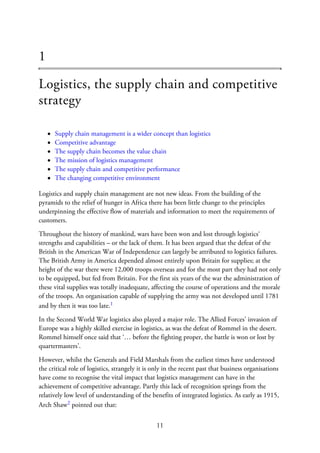
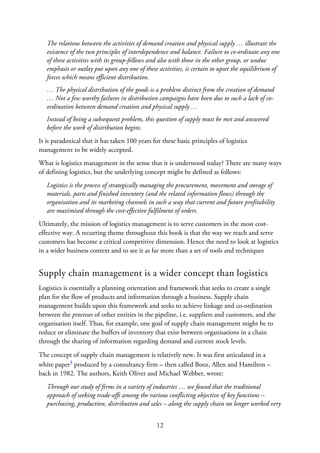

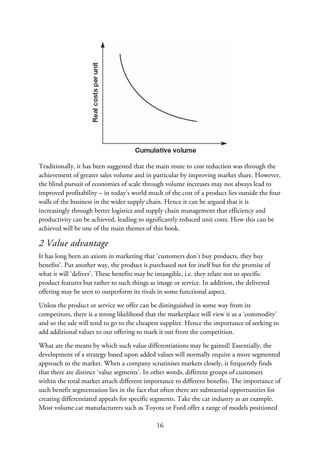

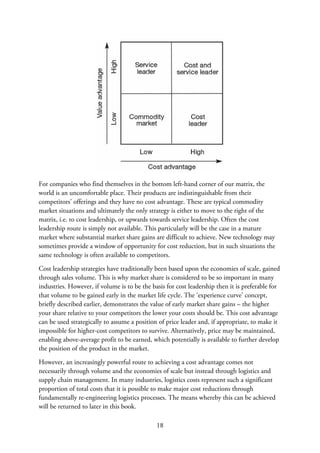
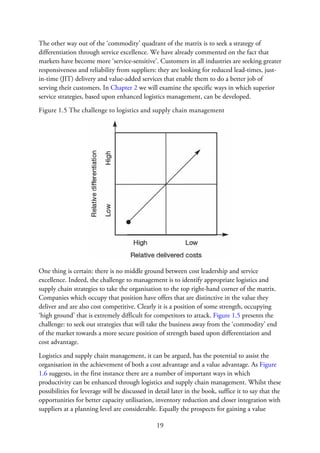
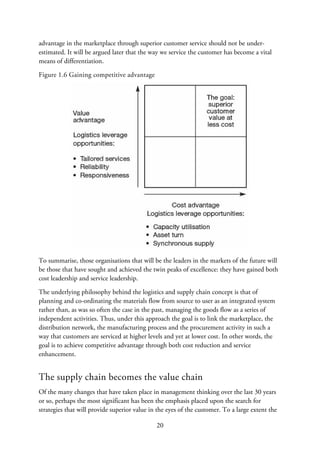
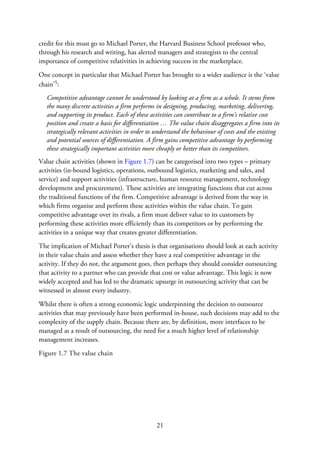
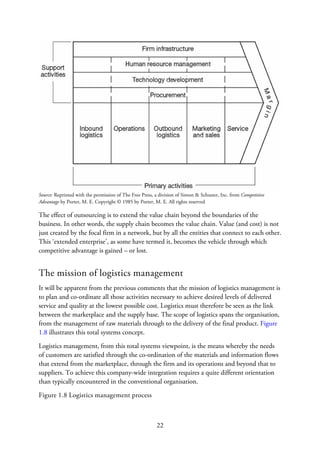
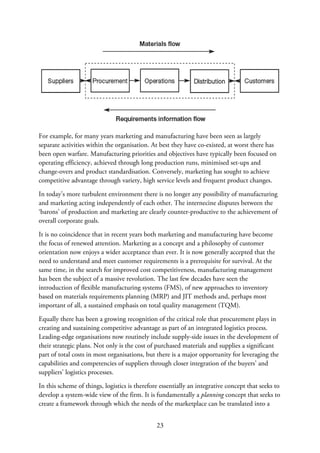

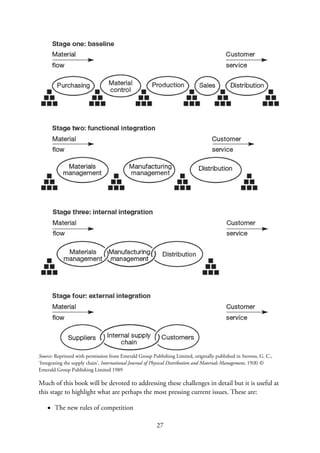


![elements of plastron visible through overlying skin; maximum length
of plastron, 12.0 centimeters.
Head, extended to posterior level of eyes, terminating in flexible
snout; septal ridges projecting into each rounded nostril; jaws
closed, each covered by fleshy lips except anteriorly where horny
portions exposed; dark triangular mark in front of eyes, base line
connecting anterior margins of orbits forming series of [518] dots;
pale stripes extending forward from eyes having faint inner, blackish
borders; eyelids partly open having blackish dots; pale subocular
blotch on right side of head having border of black dots.
Forefeet and hind feet well-webbed having five digits each; each
limb having nails on first three digits; each forelimb with four
antebrachial scales, three of these having free edge; each hind limb
with two horny scales, one smooth on posterodorsal surface and
other with free edge on posteroventral surface; pattern toward
insertion of forelimbs indistinct.
Tail terminating in flexible point; penis exposed; cloacal opening
extending beyond posterior edge of carapace; tail olive above
bordered by blackish marks; few black dots laterally on left side.
Undersurface of soft parts of body buff, lacking markings; few
dark marks posteriorly on webbing of limbs, encroaching on soles
and palms.
Range.—Southcentral Texas in the drainage systems of the
Nueces and Guadalupe-San Antonio rivers; the Colorado River
drainage in Texas is inhabited by a population that more closely
resembles guadalupensis than pallidus. See comments under
subsection entitled "Remarks" and Fig. 19.
Diagnosis.—Juvenal pattern of white dots that are conspicuous
on anterior half of carapace, and usually as large as those on
posterior half; white dots, sometimes 3 millimeters in diameter,
encircled with blackish ocelli in adult males.](https://image.slidesharecdn.com/49772-250422082037-18a94c54/85/Logistics-Supply-Chain-Management-Martin-Christopher-34-320.jpg)
![Description.—Plastral length of smallest hatchling, 3.3
centimeters (ANSP 16717); of largest male, 13.5 centimeters (TU
10162); of largest female, 22.0 centimeters (TU 10160).
Hatchlings having white dots on anterior half of carapace; white
dots anteriorly nearly as large as those posteriorly, encircled with
blackish ocelli, and conspicuous on dark background (ANSP 16717,
Pl. 41; USNM 78515-16; Stebbins, 1954:181, Pl. 26B), or smaller
than those posteriorly, not encircled with dusky ocelli, and
inconspicuous on pale background (TNHC 1446); pale rim of
carapace less than four times as wide posteriorly as laterally.
Adult males resembling holotype; size of white tubercles on
carapace variable; most, if not all, tubercles surrounded by narrow
blackish ocelli, or parts thereof; largest white tubercles or dots in
most specimens exceeding one millimeter and in some specimens
three millimeters in diameter (TU 10163); white dots often slightly
elongate (UMMZ 89917, 89920, 89926; TU 10152, 10145); juvenal
pattern of white dots seemingly more contrasting in guadalupensis,
owing to dark ground color of carapace, than in pallidus or emoryi
that have pale brown or tan carapaces; small tubercles along
anterior edge of carapace rounded, obtuse, wartlike, never conical;
sharp tips often lacking (TU 10153).
Large females often having whitish spots on anterior half of
carapace (TU 10160, Pl. 42, upper, right; 10142); carapace dark
having ill-defined mottled and blotched pattern; tubercles along
anterior edge of carapace low, rounded, rarely equilateral, never
conical; small blackish dots rarely on surface of carapace (UMMZ
89923).
Pattern on side of head and snout of little diagnostic value;
postocular stripe usually interrupted, but configuration variable,
consisting of pale anterior, dark-bordered segment (just behind eye);
posterior segment of postocular [519] stripe usually less well-defined
and generally blending with adjacent ground color; pale postocular
stripe sometimes uninterrupted and dark-bordered throughout its](https://image.slidesharecdn.com/49772-250422082037-18a94c54/85/Logistics-Supply-Chain-Management-Martin-Christopher-35-320.jpg)
![The carapace of hatchlings from the Colorado River is pale having
whitish dots, smaller anteriorly than posteriorly, which may be
encircled with dusky ocelli (TNHC 20257) or not (ANSP 11889, BCB
5055, SM 3282). Many hatchlings are not distinguishable from
pallidus (TCWC 7262, TNHC 4975, SM 4924, 6106). I have not seen
hatchlings from the Colorado River that resemble ANSP 16717.
The pattern on the carapace of adult males from the Colorado
River drainage resembles that of guadalupensis (Pl. 41, bottom,
right) but the whitish dots are usually smaller and may not be
encircled with blackish ocelli (BCB 4066, TU 14485). An adult male
(TU 14476) from the South Fork of the Llano River has whitish dots
three millimeters in diameter and encircled with blackish ocelli
(guadalupensis), whereas another adult male (USNM 83690) from a
tributary of the Colorado, the South Concho River, resembles
pallidus.
Eight specimens from the San Saba River (TU 14419 [6
specimens], 14439-40), that range in plastral length from 6.8 to 17.0
centimeters are impressive because of the dark brownish coloration
on the carapace. The smallest individual, which is also the only male
in the series, is paler. The mottled and [520] blotched pattern on the
females is therefore not contrasting; the largest females have
elevated whitish prominences in the center of the carapace
posteriorly. An immature male (UMMZ 70348) from the South
Concho River also has a dark brown carapace, and lacks white dots.
The dark coloration of the carapace of these specimens recalls the
TU series of T. s. emoryi from the Pecos River, Terrell County, Texas.
Color notes taken from a freshly-killed adult female from the
Llano River, two miles west Llano (TU 16036.1, Pl. 42), are: pattern
on carapace of dark olive or blackish marks that form an irregular
reticulum or marbling on a paler background that varies from
brownish to buff and has an orange or reddish tinge in some areas;
small whitish spots posteriorly; pale rim yellowish, evident only at
sides of carapace; dorsal surface of soft parts of body olive-green,
becoming paler with yellowish tinge toward insertions of limbs and](https://image.slidesharecdn.com/49772-250422082037-18a94c54/85/Logistics-Supply-Chain-Management-Martin-Christopher-37-320.jpg)
![conspicuously widened pale rim on the carapace that is
approximately 3.4 times wider posteriorly (8.5 mm.) than laterally
(2.5 mm.).
T. s. guadalupensis more closely resembles pallidus than emoryi.
Turtles living in rivers that drain into the Gulf of Mexico east of the
Guadalupe-San Antonio river system successively show increasing
resemblance to pallidus from west to east.
The expression of intergradation between guadalupensis and
pallidus is of a clinal nature that involves parallel changes in the
pattern on the snout, [521] side of head, limbs (to a lesser degree),
tuberculation along the anterior edge of the carapace, size of whitish
tubercles or dots, and the distinctness of the blackish ocelli that
surround the whitish dots on the carapace. These characters form a
well-marked gradation or cline that extends over a considerable
area. There is, however, no continuous environmental gradient
because the populations are relatively isolated by occupying adjacent
drainage systems. The sharpest break in the gradation of characters
mentioned above occurs between the Colorado River and Brazos
River drainages. The population of softshells in the Colorado River
drainage is actually an intergradient one, but more closely resembles
guadalupensis, whereas the population in the Brazos River drainage
more closely resembles pallidus. For convenience the turtles
inhabiting the Colorado River drainage are referred to guadalupensis
and those in the Brazos River drainage to pallidus. Some individuals
from farther west than the Colorado River drainage will resemble
pallidus, and a few individuals from father east than the Brazos River
drainage will resemble guadalupensis.
The gradation of some of the characters mentioned above
terminates in the subspecies emoryi. It, however, has characters not
found in pallidus or guadalupensis, and is more distinct from either
of those subspecies than either is from each other; the difference in
characters as well as the break in the gradient of characters between
guadalupensis in the Nueces River drainage and emoryi in the Río](https://image.slidesharecdn.com/49772-250422082037-18a94c54/85/Logistics-Supply-Chain-Management-Martin-Christopher-39-320.jpg)
![Gillespie: 20 mi. N Harper (Brown, loc. cit.). Kendall: Cibolo Creek at
Boerne (Strecker, 1926:8). Kerr: Guadalupe River, 3 mi. above
Kerrville (TCWC 474, listed in card file). Mason: 12 mi. NE Mason
(TCWC 3303, listed in card file). [522] Matagorda: Bay City (Brown,
loc. cit.). Real: (Stejneger, 1944:66). Wilson: Cibolo River, 30 or 40
mi. N Sutherland Springs (Strecker, 1935:23).
Trionyx spinifer pallidus new subspecies
Pallid Spiny Softshell
Plates 39 and 40
Holotype.—TU 484, alcoholic adult male; obtained from Lake
Caddo, Caddo Parish, Louisiana on June 27, 1947, by Fred R. Cagle
and party (Pl. 39, lower, left).
Paratypes.—Forty-two specimens: TU 481, 490, 678 (hatchlings),
TU 381, 472, 488 (immature males), TU 475, 478, 486, 1232, 1291,
10170 (adult males), TU 399, 487 (immature females), TU 469
(adult female), Caddo Lake, Caddo Parish, Louisiana; TU 15818
(immature male), TU 15819 (adult male), Cross Lake, Caddo Parish,
Louisiana; TU 1253, 13211 (adult males), TU 13266 (immature
female), Sabine River, 8 miles southwest Merryville, Beauregard
Parish, Louisiana; TU 13281-82 (adult males), TU 13280, 13265
(immature females), TU 13303-04, 13306 (adult females), Sabine
River, 8 miles southwest Negreet, Sabine Parish, Louisiana; SM 2375
(adult male), Wallace Bayou, De Soto Parish, Louisiana; TU 1122
(adult male), Lacassine Refuge, Louisiana; UMMZ 92754 (adult
male), 5 miles west Iowa, Calcasieu Parish, Louisiana; KU 40174-76,
OU 27297 (adult males), OU 27290 (immature female), Lake
Texoma, 2 mi. E Willis, Marshall County, Oklahoma; KU 50832
(hatchling), mouth of Caney Creek, 4 miles southwest Kingston,
Marshall County, Oklahoma; CNHM 15474 (immature female), Kiowa
County, Oklahoma; KU 2966-67 (immature females), KU 2934, 2947](https://image.slidesharecdn.com/49772-250422082037-18a94c54/85/Logistics-Supply-Chain-Management-Martin-Christopher-41-320.jpg)
![(adult males), KU 2973 (adult female) Lewisville, Lafayette County,
Arkansas.
Description of holotype.—Carapace circular, widest at level of
posterior edge of hyoplastra; margin entire; dorsal surface
"sandpapery" to touch; pale rim separated from ground color of
carapace by well-defined, slightly ragged, blackish line; pale rim
approximately 2.1 times wider posteriorly (4.7 mm.) than it is
laterally (2.2 mm.); pale rim increasingly narrower anteriorly, absent
in nuchal region; tubercles along anterior edge of carapace
triangular with sharp tips becoming flattened and inconspicuous at
level of insertions of arms; ground color of carapace brownish having
pattern of small whitish tubercles; most whitish tubercles
inconspicuous, of pinpoint size, giving surface of carapace
"sandpapery" effect; largest white tubercles posteriorly,
approximately 1.2 millimeters in diameter; whitish tubercles smaller
anteriorly, largest approximately 0.6 millimeters in diameter; whitish
tubercles tend to form two parallel lines coincident with longitudinal
sutures of neurals posteriorly in center of carapace; certain features
of bony carapace evident through overlying skin; carapace highest in
region of third and fourth neurals, forming obtuse, gently sloping,
vertebral keel; undersurface of rear margin of carapace whitish
having pinkish tinge and no markings; maximum length, 16.8
centimeters; greatest width, 14.3 centimeters.
Plastral surface extending slightly farther forward than carapace,
whitish having pinkish tinge and no dark markings; anterior and
posterior lobes rounded, posterior lobe more acutely; certain
features of bony elements of plastron visible through overlying skin;
maximum length, 12.2 centimeters.
Head extended, terminating in flexible snout; septal ridges
projecting into each rounded nostril; tip of snout darkened; jaws
open, each covered by fleshy lips except anteriorly where horny
portions exposed; dark triangular mark in front of eyes, base line
uninterrupted, slightly curved anteriorly, connecting anterior margins
of orbits; eyelids having blackish dots, especially [523] upper, closing](https://image.slidesharecdn.com/49772-250422082037-18a94c54/85/Logistics-Supply-Chain-Management-Martin-Christopher-42-320.jpg)
![Diagnosis.—Juvenal pattern of white dots that are usually absent
or inconspicuous, but sometimes distinct and small, on anterior third
of carapace, and not surrounded with dark ocelli; white dots often
absent on posterior half of carapace of hatchlings; white spots,
rarely as large as two millimeters in diameter, not encircled with
black ocelli on adult males; pale rim of carapace less than four times
wider posteriorly than laterally.
Description.—Plastral length of smallest hatchling, 3.3
centimeters (KU 50832); of largest male, 16.0 centimeters (SM
2375); of largest female, 30.5 centimeters (TU 13213).
Surface of carapace in hatchlings uniform pale brown or tan;
small white tubercles absent or inconspicuous on anterior half of
carapace, but evident on posterior half of carapace, sometimes well-
defined (TU 481), but usually inconspicuous (TU 678, 490); pale rim
of carapace less than four times wider posteriorly than laterally.
Adult males resembling description of holotype; small whitish
tubercles or dots rarely two millimeters in diameter on posterior half
of carapace, smaller and usually inconspicuous on anterior half of
carapace (TU 13281, 486); well-defined whitish tubercles
occasionally on anterior half of carapace (KU 40174); white tubercles
not surrounded with black ocelli; pattern of white dots seemingly
less contrasting in pallidus than in guadalupensis, owing to pale
brown or [524] tan carapace; small tubercles along anterior edge of
carapace equilateral or conical having sharp tips.
Large females usually having pale brown carapaces with slightly
contrasting, brownish, mottled and blotched, patterns; white
prominences often evident posteriorly and anteriorly in middle of
carapace and in nuchal region; tubercles along anterior edge of
carapace equilateral or conical in shape.
Pattern on side of head and snout variable and of no diagnostic
value; postocular stripe uninterrupted having dark borders (UMMZ
92754), or interrupted having pale segment behind eye (TU 13282);](https://image.slidesharecdn.com/49772-250422082037-18a94c54/85/Logistics-Supply-Chain-Management-Martin-Christopher-44-320.jpg)
![resembles pallidus. Those two USNM specimens were mentioned by
Neill (1951:13) as indicating intergradation with "… the mixed
spinifera-hartwegi-asper populations of Louisiana."
Two adult males (SM 2889, Pl. 40, bottom, left, and TCWC 471,
Trinity River drainage) have blackish ocelli surrounding the white
dots on the posterior part of the carapace; two large females (TU
14402, Pl. 40, bottom, right, plastral length, 17.5 cm., and TU 14417
plastral length, 21.3 cm., both from the Trinity River) have
contrasting mottled and blotched patterns with white dots visible on
the carapace. These turtles show alliance with guadalupensis.
Some individuals from the Brazos River drainage have features
suggesting [525] those that are characteristic of guadalupensis.
Hatchlings may have large white dots on the anterior half of the
carapace (USNM 55601). Adult males may have dusky ocelli
surrounding the white dots on the carapace (TU 14169, 14559.1,
14559.2). The whitish dots, rarely as large as two millimeters, are
never so large as in guadalupensis (three mm. in diameter), and are
usually smaller anteriorly than posteriorly; TU 14169 has white dots
approximately the same size (1.2 mm.) on the anterior half as on the
posterior half of the carapace. The tubercles on adult males are
equilateral or subconical, usually having sharp tips (TU 14348,
14559.1, 14559.2); the tubercles on large females are subconical,
resembling the end of a bullet, and, in both sexes the tubercles are
less conical than those on specimens of pallidus from farther east.
Three specimens from the Brazos River drainage are particularly
impressive in their alliance with guadalupensis. SM 2556, an adult
male, has large white dots that are encircled with black ocelli on the
posterior half of the carapace, but lacks white dots on the anterior
half. TNHC 14068, a hatchling, has small black dots interspersed
with the larger white dots posteriorly. CNHM 46289 has large white
spots on the carapace that are surrounded with two to four black
dots; scattered black dots also intermix with white spots on the
surface of the carapace (less extensive anteriorly).](https://image.slidesharecdn.com/49772-250422082037-18a94c54/85/Logistics-Supply-Chain-Management-Martin-Christopher-46-320.jpg)
![Color notes taken from a freshly-killed adult male (KU 47121)
from the Brazos River, seven miles below Whitney Dam, Bosque-Hill
county line, Texas, are: Carapace pale brown or tan bordered by
black line, having pale lemon yellow rim; yellowish-cream spots on
carapace faintly surrounded with black stippling; dorsal surface of
soft parts of body olive having black marks and patches of grayish;
webbing on limbs having golden or yellowish hue, brighter distally;
interorbital region brown; black-bordered, postocular stripe orange-
cream; snout and side of head olive having pale areas of orange-
cream; iris cream having black stripe; yellowish at juncture of dark
dorsal and pale ventral coloration with orangish tinge on forelimbs
and head; tail pale brown or tan, flanked by black borders that
suffuse laterally into lemon-yellow; undersurface whitish, pale yellow
on neck, bluish-gray on throat.
Comparisons.—T. s. pallidus most closely resembles T. s.
guadalupensis, but can be distinguished from that subspecies in
having small white tubercles, rarely two millimeters in diameter, on a
pale background, that are not surrounded by blackish ocelli, and are
usually absent, or not conspicuous on the anterior third of the
carapace in adult males; also there are usually no conspicuous white
tubercles or dots on the anterior third of the carapace in hatchlings.
Many adult males of pallidus from the Brazos and some from the
Trinity River drainages often have dusky or black ocelli surrounding
the white dots posteriorly on the carapace; males from these river
systems may be distinguished from guadalupensis in having most, if
not all, white dots on the anterior half of the carapace smaller than
those posteriorly, and a pale brown carapace (in life, usually darker
in guadalupensis). T. s. pallidus (and guadalupensis) is distinguished
from emoryi in lacking a widened pale rim posteriorly, and in having
small white spots on the anterior half of the carapace. T. s. pallidus
resembles guadalupensis and emoryi in having white spots on the
carapace in adult males. T. s. pallidus differs from spinifer, hartwegi
and asper in lacking blackish dots or ocelli that occur in the center of
[526] the carapace. T. s. pallidus resembles emoryi but differs from
guadalupensis in lacking black ocelli surrounding the white spots. T.](https://image.slidesharecdn.com/49772-250422082037-18a94c54/85/Logistics-Supply-Chain-Management-Martin-Christopher-47-320.jpg)
![carapace. KU 2963 (one of three specimens having this catalog
number) is an adult male that has solid, blackish dots on the entire
surface of the carapace. KU 2964 (one of two specimens with this
catalog number) is an adult male that has ocelli approximately five
millimeters in diameter on the carapace (indistinct in center of
carapace).
Lewisville is situated in the drainage basin of the Red River and is
approximately eight miles east of the Red River and 30 miles west of
the westernmost tributary of the Ouachita River drainage. T. s.
pallidus occurs in the Red River drainage; hartwegi occurs in the
Ouachita River drainage. Perhaps there is intergradation between
pallidus and hartwegi in the intervening streams. There is no data to
indicate from which river or stream each specimen obtained by
McEntyre came; one would presume that all specimens came from
the Red River drainage. But this is not certain. Certainly the 47
specimens designated herein as pallidus came from the Red River
drainage. I suspect that KU 2944, 2963 and 2964 were obtained
from tributaries of the Ouachita River drainage.
T. s. pallidus intergrades with the spinifer-hartwegi population
where the Red River joins the Mississippi River in the lower
Mississippi Valley in Louisiana. The majority of 13 juvenal specimens
from the Red River near Shaw, Concordia [527] Parish, Louisiana
(USNM 99862-69, 99871-75), resemble pallidus in having
inconspicuous white tubercles on a pale brown carapace. The white
tubercles are conspicuous in USNM 99871. Some specimens have a
few small dark dots confined to the margin of the carapace, as do
some "variant" individuals from well within the geographic range of
pallidus. USNM 99865 is referred to hartwegi because the carapace
is covered with dark ocelli approximately one millimeter in diameter.
Some specimens from farther west in the Red River drainage are
referred to hartwegi. One (USNM 100420) of three from
Natchitoches Parish, Louisiana (TU 5763, USNM 100420-21), having
blackish dots on the carapace, is applicable to hartwegi. Of two
turtles from Grant Parish, Louisiana (TU 5647, 12735), only 12735](https://image.slidesharecdn.com/49772-250422082037-18a94c54/85/Logistics-Supply-Chain-Management-Martin-Christopher-49-320.jpg)
![92754, 5 mi. W Iowa. Cameron: TU 1122, Lacassine Wildlife Refuge.
Concordia: USNM 99862-64, 99866-69, 99871-75, Red River, "near"
Shaw. De Soto: SM 2374-75, Wallace Bayou. Grant: TU 5647, Lake
Iatt. Iberville: USNM 83985, 2 mi. E Mounds; USNM 100239-41,
Grand Lake west of White Castle; USNM 100380, Plaquemine; USNM
100412, 100414-15, 100419, Spanish Lake, "near" St. Gabriel.
Jefferson Davis: Calcasieu River drainage, WTN (no number, see
page 524). Natchitoches: TU 5763, Bermuda; USNM 100421, "near"
Natchitoches. Sabine: TU 13210, 13212-13, 13265, 13280-82,
13303-06, Sabine River, 8 mi. SW Negreet. St. Martin: USNM
100160, Bayou Chene; USNM 100650, Atchafalaya. St. Mary: USNM
100395-97, 100404, 100409-10, Berwick Bay near Morgan City.
Oklahoma: Atoka: OU 8966, Rock Creek, 10 mi. E Atoka; OU 8978,
McGee Creek, 7 mi. SW Daisy. Caddo: ANSP 100, Washita River, Fort
Cobb. [528] Choctaw: OU 27126, Mayhew Creek, 2 mi. NW Boswell.
Comanche: OU 4130, 4266, 5390, 8333, 12953, 19986, Wichita
Mountains Wildlife Refuge. Jackson: OU 13012, 6 mi. E El Dorado.
Kiowa: CNHM 15474. Le Flore: OU 6791, Kiamichi River, 8 mi. W
Arkansas State Line. McCurtain: OU 2149-50, 2152, 2155, 17126-28,
17185, 2 mi. SW Smithville; USNM 70397, Red River. Marshall: KU
40175-76, 50830-31, 50847, OU 27290, 27297, 27562-63, TU 16076
(5), 16175 (6), 16662 (5), Lake Texoma, 2 mi. E Willis; KU 50832,
mouth of Caney Creek, 4 mi. SW Kingston. Pushmataha: OU 2151,
2157; OU 11365, Buffalo Creek, 5 mi. NW Tuskahoma.
Texas: Archer: TU 16174, 16668-69, Lake Diversion. Bell: SM
5667-69, Nolan Creek. Bosque: KU 47121, 7 mi. below Whitney
Dam, Brazos River. Brazos: BCB 4436, 10 mi. E College Station; BCB
4437, 17 mi. S College Station; BCB 4438, 4 mi. N Bryan; KU 50833,
4 mi. W College Station; SM 2556, TCWC 472, Wickson Lake; TCWC
539, Little Brazos River; TCWC 4692, 8 mi. NE Bryan; TCWC 5121, 2
mi. S College Station; TCWC no number. Clay: TCWC 7258, 8 mi. NW
Ringgold, Montague County; TU 16667.1, 3 mi. W Byers. Dallas:
MCZ 3987, "near" Dallas; ANSP 13243, Dallas. Donley: ANSP 13440,
S of Clarendon. Eastland: KU 3132, Cisco. Galveston: TCWC 7251,](https://image.slidesharecdn.com/49772-250422082037-18a94c54/85/Logistics-Supply-Chain-Management-Martin-Christopher-51-320.jpg)
![Trionyx ater Webb and Legler
Black Softshell
Trionyx ater Webb and Legler, Univ. Kansas Sci.
Bull., 40:21, pls. 1 and 2, 1960, April 20.
Type.—Holotype, KU 46903, alcoholic female; obtained 16 km. S
Cuatro Ciénegas, Coahuila, México, by John M. Legler (and party),
September 6, 1958.
[529]
Range.—Basin of Cuatro Ciénegas, central Coahuila, Mexico (see
map, Fig. 22).
Diagnosis.—Posterior margin of carapace of some females having
fine corrugations, edge often ragged, and no pale outer margin;
septal ridges reduced in adult males; over-all dorsal coloration (in
preservative) dark, lacking contrasting patterns.
Description.—Plastral length of adult male, 9.6 centimeters (KU
46911); of largest female, 18.4 centimeters (KU 46903).
Adult male: anterior edge of carapace smooth; septal ridges
reduced; pale outer rim, and small, whitish, dots posteriorly on
carapace; surface of carapace slightly gritty or sandpapery
posteriorly; snout broadened; over-all dorsal coloration dark gray or
slate; contrasting pattern on soft parts of body lacking; ventral
surface whitish having few blackish marks posteriorly on
undersurface of carapace.
Females: posterior margin of carapace usually having fine
corrugations; edge of carapace posteriorly often ragged; pale rim of
carapace absent; mottled and blotched pattern not contrasting on
blackish carapace; dorsal surface of soft parts of body dark gray or
slate, lacking contrasting pattern; ventral surface of carapace and
posterior part of plastron usually having many blackish flecks and](https://image.slidesharecdn.com/49772-250422082037-18a94c54/85/Logistics-Supply-Chain-Management-Martin-Christopher-53-320.jpg)
![on webbing yellow; ventral surface whitish having yellow at margin
of carapace, on neck and limbs.
Comparisons.—T. ater most closely resembles T. spinifer
(especially the subspecies emoryi) in having a gritty or "sandpapery"
carapace (reduced, [530] tubercles more scattered), whitish dots on
posterior third of carapace (small females and adult male) and a
dark line connecting anterior margins of orbits (smallest female).
Prior to acquiring the characteristic darkened, dorsal ground color,
the pattern on the head and limbs seems to be that of T. s. emoryi.
T. ater resembles T. muticus in having reduced septal ridges in
males, a smooth anterior edge of carapace (especially males), and
no enlarged prominences on the anterior edge of the carapace or
posteriorly in the center of the carapace on large females. T. ater
resembles T. ferox in having an over-all dark coloration dorsally with
no contrasting patterns on adults.
T. ater probably is a small species resembling T. muticus and T.
spinifer emoryi. The head is wide in T. ater, resembling that of T.
ferox, and closely approaching that of T. spinifer emoryi and T. s.
guadalupensis. T. ater resembles T. ferox and T. s. emoryi in having
a narrow carapace. T. ater resembles T. s. emoryi, T. s.
guadalupensis and T. s. pallidus, but differs from T. muticus, T. ferox
and the other subspecies of T. spinifer in having the carapace widest
farther posterior than one-half the length of the carapace. T. ater
resembles T. ferox and T. s. emoryi in shortness of snout. The
plastron is short in T. ater and most closely resembles that of T. s.
pallidus, T. s. guadalupensis, and T. s. emoryi.
Remarks.—T. ater is confined to permanent, clear-water ponds in
the basin of Cuatro Ciénegas. The male and 11 females (KU) were
taken at the type locality (a pond known locally as Tío Candido); the
other female (UI 43510) was taken from a pond approximately
seven miles northward (known locally as Anteojo). T. spinifer emoryi
also occurs in the basin of Cuatro Ciénegas. Males and females of
emoryi were collected in the Río Mesquites (Río Salado drainage)](https://image.slidesharecdn.com/49772-250422082037-18a94c54/85/Logistics-Supply-Chain-Management-Martin-Christopher-55-320.jpg)
![that drains the basin; two adult males of emoryi were taken from the
clear-water ponds—one from the type locality of ater (KU 46907),
and the other (KU 53757) from a pond (known locally as El Mojarral)
from which no ater were obtained. This demonstrated sympatry
indicates that the two kinds are not conspecific.
However, the nature and frequency of occurrence of characters of
T. ater, suggest that it is subspecifically related to T. spinifer—in
effect, a darkened race of T. s. emoryi. The diagnostic characters of
fine corrugations on the posterior margin of the carapace and
blackish marks on the ventral surface do not occur on every female
of ater. Too, the dorsal coloration of living females (dark brown-buff)
is paler than that of preserved specimens (dark gray-slate).
Furthermore, a hatchling (CNHM 47367) recorded from Cuatro
Ciénegas, Anteojo, is not distinguishable from emoryi.
The mention of absence of septal ridges in males of T. ater in the
original description (Webb and Legler, 1960:22) should be amended.
The septal ridges in the only known adult male are reduced; a small,
whitish ridge is present on the medial surface of each nostril, but is
not conspicuous in anterior view. The one adult male of ater is
distinguished from T. s. emoryi principally on the over-all dark, dorsal
coloration with concomitant loss of pattern, the noticeably
broadened snout, and the reduced septal ridges. The last character
mentioned possibly is variable in ater (and in emoryi in this region)
in view of the variation in development of the ridge on four male
emoryi from the basin: well-developed on KU 53757 (Mojarral) and
KU 46907 (Tío Candido); reduced on KU 53752 (Río Mesquites),
resembling development in ater; and, reduced on right side only on
KU 53753 (Río Mesquites).
[531]
Presumably, the continued erosive action at the headwaters of
the Río Salado has permitted the invasion of this drainage into the
formerly isolated basin of Cuatro Ciénegas. In the basin, however, I
know of no evidence of a direct aquatic contact between the](https://image.slidesharecdn.com/49772-250422082037-18a94c54/85/Logistics-Supply-Chain-Management-Martin-Christopher-56-320.jpg)