Location Planning
and Analysis
Need for Location Decisions
• Marketing Strategy
• Cost of Doing Business
• Growth
• Depletion of Resources
Nature of Location Decisions
 Strategic Importance




Long term commitment/costs
Impact on investments, revenues, and operations
Supply chains

 Objectives



Profit potential
Identify several locations from which to choose

 Options




Expand existing facilities
Add new facilities
Move
Types of Facilities
• Heavy Industry Facilities
• Light Industry Facilities
• Retail And service facilities
Making Location Decisions
•
•
•
•
•

Decide on the criteria
Identify the important factors
Develop location alternatives
Evaluate the alternatives
Make selection
General Factors affecting location
decision
•
•
•
•
•
•
•
•

Availability of basic infrastructure
Basic amenities
Proximity to raw material and markets
Residential complexes, schools, hospitals,
clubs etc.
Availability of cheap labour
Govt. policies
Env. And community
Cheap land
Locating Foreign operations
•
•
•
•
•
•
•

Trade barriers
International Customers
International Competition
Regulations
Additional Resources
Low Costs
Offensive in Competitor’s home country
Factors at country level
• Political Risks, Govt. Regulations, attitudes,
incentives
• Cultural and economic issues
• Labour talent, productivity, cost
• Availability of supplies, infrastructure
• Exchange rates and currency risks
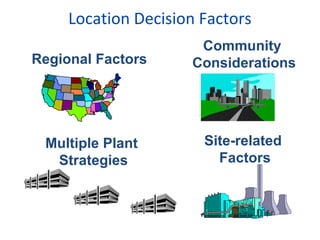
Location Decision Factors
Regional Factors

Community
Considerations

Multiple Plant
Strategies

Site-related
Factors
Regional Factors
• Attractiveness of region(culture, taxes,
climate)
• Labour availability
• Location of raw materials
• Location of markets
• Availability of utilities
• Govt. Incentives andpolicies
• Climate and taxes
Community Considerations
•
•
•
•
•
•
•

Quality of life
Services
Attitudes
Taxes
Environmental regulations
Utilities
Developer support
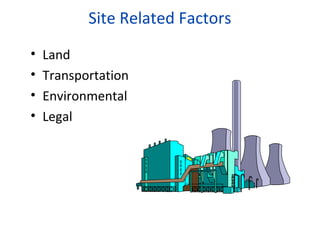
Site Related Factors
•
•
•
•

Land
Transportation
Environmental
Legal
Multiple Plant Strategies
• Product plant strategy
• Market area plant strategy
• Process plant strategy
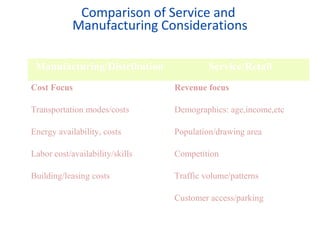
Comparison of Service and
Manufacturing Considerations
Manufacturing/Distribution

Service/Retail

Cost Focus

Revenue focus

Transportation modes/costs

Demographics: age,income,etc

Energy availability, costs

Population/drawing area

Labor cost/availability/skills

Competition

Building/leasing costs

Traffic volume/patterns
Customer access/parking
Evaluating Locations
• Cost-Profit-Volume Analysis
–

Determine fixed and variable costs

–

Plot total costs

–

Determine lowest total costs
Location Cost-Volume Analysis
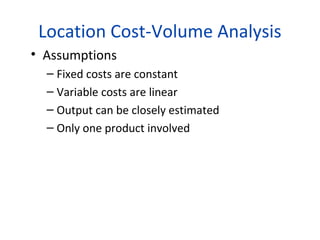
• Assumptions
– Fixed costs are constant
– Variable costs are linear
– Output can be closely estimated
– Only one product involved
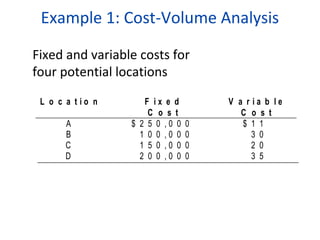
Example 1: Cost-Volume Analysis
Fixed and variable costs for
four potential locations
L o c a tio n
A
B
C
D

F ix e d
C o s t
$ 2 5 0 ,0 0
1 0 0 ,0 0
1 5 0 ,0 0
2 0 0 ,0 0

0
0
0
0

V a r ia b le
C o s t
$ 1 1
3 0
2 0
3 5
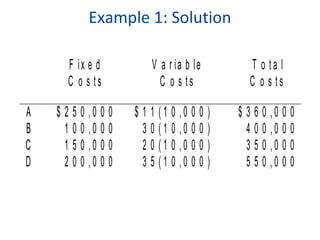
Example 1: Solution
F ix e d
C o s ts
A
B
C
D

V a r ia b le
C o s ts

T o ta l
C o s ts

$ 2 5 0 ,0 0 0
1 0 0 ,0 0 0
1 5 0 ,0 0 0
2 0 0 ,0 0 0

$ 1 1 (1 0 ,0 0 0 )
3 0 (1 0 ,0 0 0 )
2 0 (1 0 ,0 0 0 )
3 5 (1 0 ,0 0 0 )

$ 3 6 0 ,0 0 0
4 0 0 ,0 0 0
3 5 0 ,0 0 0
5 5 0 ,0 0 0
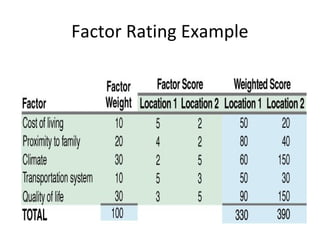
Factor-Rating Method
•

Six steps:
1. Develop a list of relevant factors.
2. Assign a weight to each factor reflecting its relative
importance to the firm.
3. Develop a rating scale for the factors.
4. Score each location on each factor based on the scale.
5. Multiply the scores by the weights for each factor and total
the weighted scores for each location.
6. Make a recommendation based on the maximum point
score, considering other [quantitative?] factors.
Factor Rating Example
Evaluating Locations
• Center of Gravity Method
–

Decision based on minimum distribution costs

• Load Distance model
–

Decision based on evaluating potential locations
based on load distance value.

Location decision

  • 1.
  • 2.
    Need for LocationDecisions • Marketing Strategy • Cost of Doing Business • Growth • Depletion of Resources
  • 3.
    Nature of LocationDecisions  Strategic Importance    Long term commitment/costs Impact on investments, revenues, and operations Supply chains  Objectives   Profit potential Identify several locations from which to choose  Options    Expand existing facilities Add new facilities Move
  • 4.
    Types of Facilities •Heavy Industry Facilities • Light Industry Facilities • Retail And service facilities
  • 5.
    Making Location Decisions • • • • • Decideon the criteria Identify the important factors Develop location alternatives Evaluate the alternatives Make selection
  • 6.
    General Factors affectinglocation decision • • • • • • • • Availability of basic infrastructure Basic amenities Proximity to raw material and markets Residential complexes, schools, hospitals, clubs etc. Availability of cheap labour Govt. policies Env. And community Cheap land
  • 7.
    Locating Foreign operations • • • • • • • Tradebarriers International Customers International Competition Regulations Additional Resources Low Costs Offensive in Competitor’s home country
  • 8.
    Factors at countrylevel • Political Risks, Govt. Regulations, attitudes, incentives • Cultural and economic issues • Labour talent, productivity, cost • Availability of supplies, infrastructure • Exchange rates and currency risks
  • 9.
    Location Decision Factors RegionalFactors Community Considerations Multiple Plant Strategies Site-related Factors
  • 10.
    Regional Factors • Attractivenessof region(culture, taxes, climate) • Labour availability • Location of raw materials • Location of markets • Availability of utilities • Govt. Incentives andpolicies • Climate and taxes
  • 11.
    Community Considerations • • • • • • • Quality oflife Services Attitudes Taxes Environmental regulations Utilities Developer support
  • 12.
  • 13.
    Multiple Plant Strategies •Product plant strategy • Market area plant strategy • Process plant strategy
  • 14.
    Comparison of Serviceand Manufacturing Considerations Manufacturing/Distribution Service/Retail Cost Focus Revenue focus Transportation modes/costs Demographics: age,income,etc Energy availability, costs Population/drawing area Labor cost/availability/skills Competition Building/leasing costs Traffic volume/patterns Customer access/parking
  • 15.
    Evaluating Locations • Cost-Profit-VolumeAnalysis – Determine fixed and variable costs – Plot total costs – Determine lowest total costs
  • 16.
    Location Cost-Volume Analysis •Assumptions – Fixed costs are constant – Variable costs are linear – Output can be closely estimated – Only one product involved
  • 17.
    Example 1: Cost-VolumeAnalysis Fixed and variable costs for four potential locations L o c a tio n A B C D F ix e d C o s t $ 2 5 0 ,0 0 1 0 0 ,0 0 1 5 0 ,0 0 2 0 0 ,0 0 0 0 0 0 V a r ia b le C o s t $ 1 1 3 0 2 0 3 5
  • 18.
    Example 1: Solution Fix e d C o s ts A B C D V a r ia b le C o s ts T o ta l C o s ts $ 2 5 0 ,0 0 0 1 0 0 ,0 0 0 1 5 0 ,0 0 0 2 0 0 ,0 0 0 $ 1 1 (1 0 ,0 0 0 ) 3 0 (1 0 ,0 0 0 ) 2 0 (1 0 ,0 0 0 ) 3 5 (1 0 ,0 0 0 ) $ 3 6 0 ,0 0 0 4 0 0 ,0 0 0 3 5 0 ,0 0 0 5 5 0 ,0 0 0
  • 19.
    Factor-Rating Method • Six steps: 1.Develop a list of relevant factors. 2. Assign a weight to each factor reflecting its relative importance to the firm. 3. Develop a rating scale for the factors. 4. Score each location on each factor based on the scale. 5. Multiply the scores by the weights for each factor and total the weighted scores for each location. 6. Make a recommendation based on the maximum point score, considering other [quantitative?] factors.
  • 20.
  • 21.
    Evaluating Locations • Centerof Gravity Method – Decision based on minimum distribution costs • Load Distance model – Decision based on evaluating potential locations based on load distance value.