LIPIDS: METHODOLOGY
LIPID PROFILE:
CHOLESTEROL (HDL-C & LDL-C),
TRIGLYCERIDES AND APOLIPOPROTEINS
By
Dr. BASIL, B – MBBS (Nigeria),
Department of Chemical Pathology/Metabolic Medicine,
Benue State University Teaching Hospital, Makurdi.
March, 2015
OUTLINE:
• Introduction
• Pre-analytical Considerations
• Analytical Methodology
– Cholesterol
– Lipoproteins
– Triglycerides
– Apolipoproteins
• Quality Control
INTRODUCTION
• Disorders of lipids is of immense importance to
medical practice owing to its strong relations to
Arteriosclerosis and thus obesity, HTN, DM and
other abnormalities
• Good prognosis in the mgt of these conditions are
predicated on early detection of deranged blood
lipid profile
• Indications for Lipid Profile include:
– Screening for primary & secondary hyperlipidemias
– Monitoring for risk of atherosclerosis
– Monitoring treatment of hyperlipidemias
• CHOLESTEROL and TRIGLYCERIDE are the plasma
lipids of most interest in the diagnosis and
management of lipoprotein disorders
PREANALYTICAL CONSIDERATIONS
• It is important to standardize conditions under which blood
specimen are drawn & prepared for analysis.
Biological Variations:
• Age: cholesterol levels increase with age.
• Sex: women have lower level than men except in childhood &
after early 50’s.
• Season: cholesterol levels are slightly higher in cold periods.
• Food intake: daily intake of fat increases cholesterol levels.
Patients should be on their usual diet for 2wks and are neither
gaining nor losing weight.
• Medical conditions: thyroid, liver, and kidney diseases
• Acute illness: It is recommended that lipoproteins measurement
should be made no sooner than 8weeks after any form of
trauma or acute bacterial/viral infection and 3 – 4 months after
child birth
• Life-style: higher in sedentary and poor diet habits
Specimen Collection and Storage:
• Patient should fast for 12hours before sampling.
– The concentration of LDL-C/HDL-C declines after eating
– Chylomicrons are cleared within 6–9hrs and their presence after
12hrs fast is abnormal.
• Posture:
– Decreases of as much 10% in conc. of TC, LDL-C, HDL-C and apo-A-I
and B, have been observed after 20 minutes recumbence
– patient to be seated for 5min prior to sampling to prevent hemo-
concentration.
• Prolonged venous occlusion leads to increase in cholesterol
conc by 10–15%
– Torniquet should not be for more than minutes or two.
• Exercise:
– Mild exercise produces a slight decrease in conc of cholesterol and TG
that may persists for several days.
– Those who walk for about 4 hours each week have an average
cholesterol conc. 5% lower and HDL-C conc 3.4% higher than inactive
persons
• Menstrual cycle:
– The plasma chol and TG conc tend to be highest at midcycle,
the time of maximum estrogen secretion
– The cyclical variation in cholesterol is not observed with
anovulatory cycles
• Diet:
– A high fat diet increases serum TGs.
– Ingestion of monounsaturated fat reduces cholesterol.
– Plasma triglyceride conc is reduced when sucrose intake is
reduced.
– A high carbohydrate diet decreases the serum conc. of VLDL-C ,
TG, cholesterol and protein.
– Individuals who eat many small meals throughout the day tend
to have conc. of total LDL and HDL-C that are lower than when
same type and amount of food is eaten in three meals.
– Large protein meals at lunch or in the evening also increase the
serum cholesterol for atleast 1 hour after a meal.
– In vegeterian individuals, conc. Of LDL & VLDL-C are reduced by
37 % and 12%.
• Smoking:
– The plasma cholesterol , triglyceride and LDL cholesterol
conc. are higher by about 3 %, 9.1 % and 1.7 % respectively
in smokers than in non smokers.
– HDL cholesterol is lower in smokers than in non smokers
• Alcohol ingestion:
– When moderate amount of alcohol is ingested for 1wk, the
serum TG conc is increased by more than 20mg/dL.
– Prolonged moderate ingestion may increase HDL-C conc,
which is associated with reduced plasma conc of
cholesterol ester transfer protein(CETP).
• Plasma vs Serum:
– Either can be used when TC, TG and HDL-C are measured.
– Plasma is preferred when lipoprotein are measured by
ultra-centrifugation and electrophoretic methods.
– Serum can be used when it is necessary to store samples
for weeks or months.
• Venous vs Capillary samples:
– Measurements in the capillary samples seem to be little lower than
venous samples.
• Anticoagulants:
– Some anticoagulants such as citrate exert large osmotic effect resulting
in falsely low plasma lipid and lipoprotein concentration.
– Heparin: because of its high M.W can alter electrophoretic mobility of
lipoproteins.
– EDTA is preferred anticoagulant even though TC and TG conc in EDTA
plasma are 3 % lower than in serum.
– EDTA inhibits qxidation of lipids and proteolysis of apolipoprotein.
– TC values of EDTA plasma should be multiplied by 1.03 to make it
comparable to serum values.
• Storage:
– TC, TG, HDL-C can be satisfactorily analyzed in frozen samples.
– Apolipoproteins can also be measured in frozen samples.
– Serum or plasma must be stored at – 70oC if stored for long time.
– For short time storage ( upto a month or two ) the sample can be kept
at – 2o.
ANALYTICAL METHODOLOGY
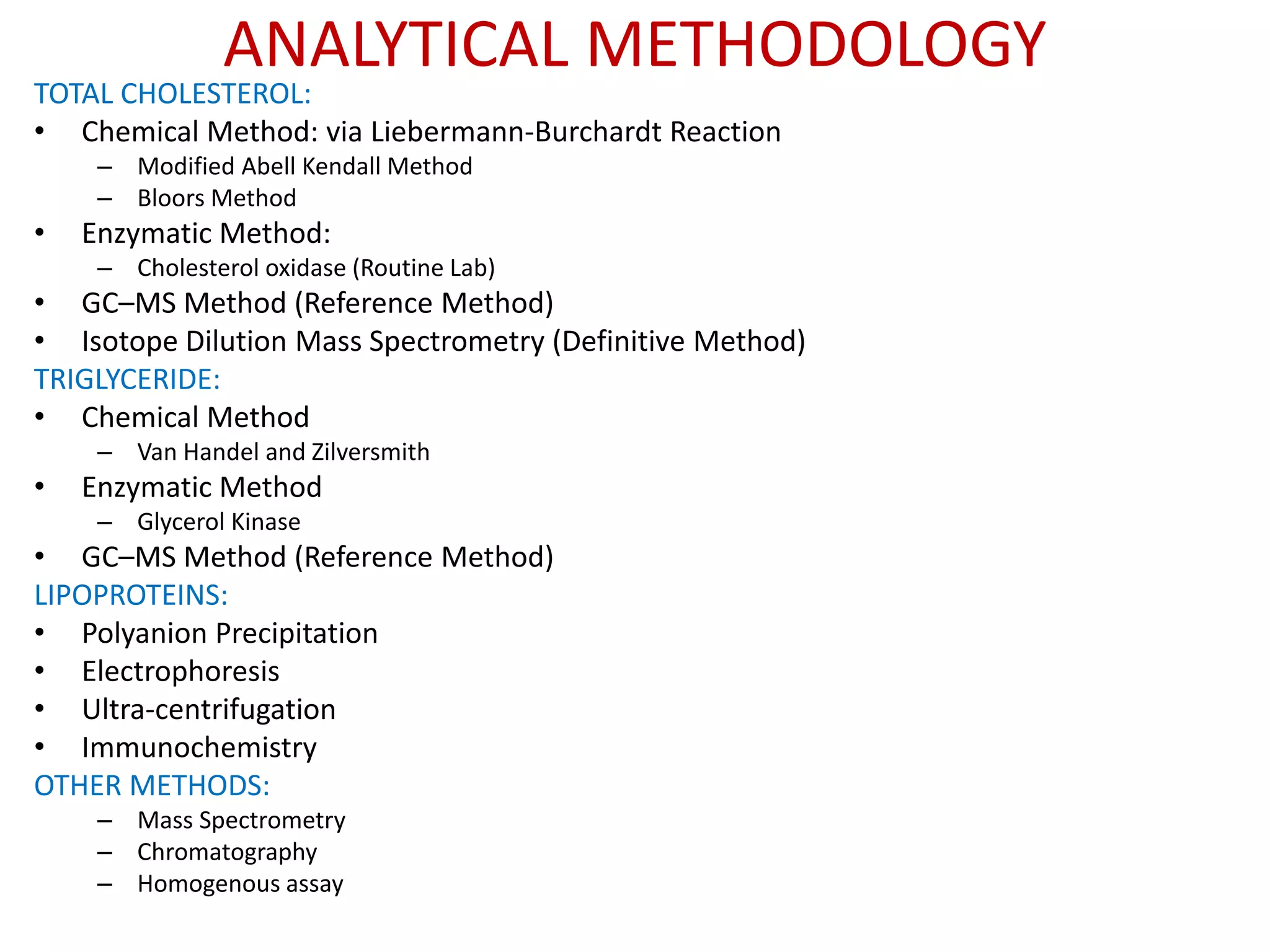
TOTAL CHOLESTEROL:
• Chemical Method: via Liebermann-Burchardt Reaction
– Modified Abell Kendall Method
– Bloors Method
• Enzymatic Method:
– Cholesterol oxidase (Routine Lab)
• GC–MS Method (Reference Method)
• Isotope Dilution Mass Spectrometry (Definitive Method)
TRIGLYCERIDE:
• Chemical Method
– Van Handel and Zilversmith
• Enzymatic Method
– Glycerol Kinase
• GC–MS Method (Reference Method)
LIPOPROTEINS:
• Polyanion Precipitation
• Electrophoresis
• Ultra-centrifugation
• Immunochemistry
OTHER METHODS:
– Mass Spectrometry
– Chromatography
– Homogenous assay
Cholesterol Estimation
CHEMICAL METHODS:
• Abell Kendall Method (Former Reference Method):
– Principle: 3 step
• Cholesterol is hydrolyzed with alcoholic KOH
• Unesterified cholesterol is extracted with petroleum jelly
• Measured using the L-B Reaction
– Liebermann-Burchardt Reaction (L-B Reaction):
Cholesterol + Sulfuric acid + Acetic anhydride => bluish green
solution
• Bloors Method:
– Principle: 2 step
• Cholesterol is extracted using an alcohol ether mixture
• Measured using the L-B Reaction
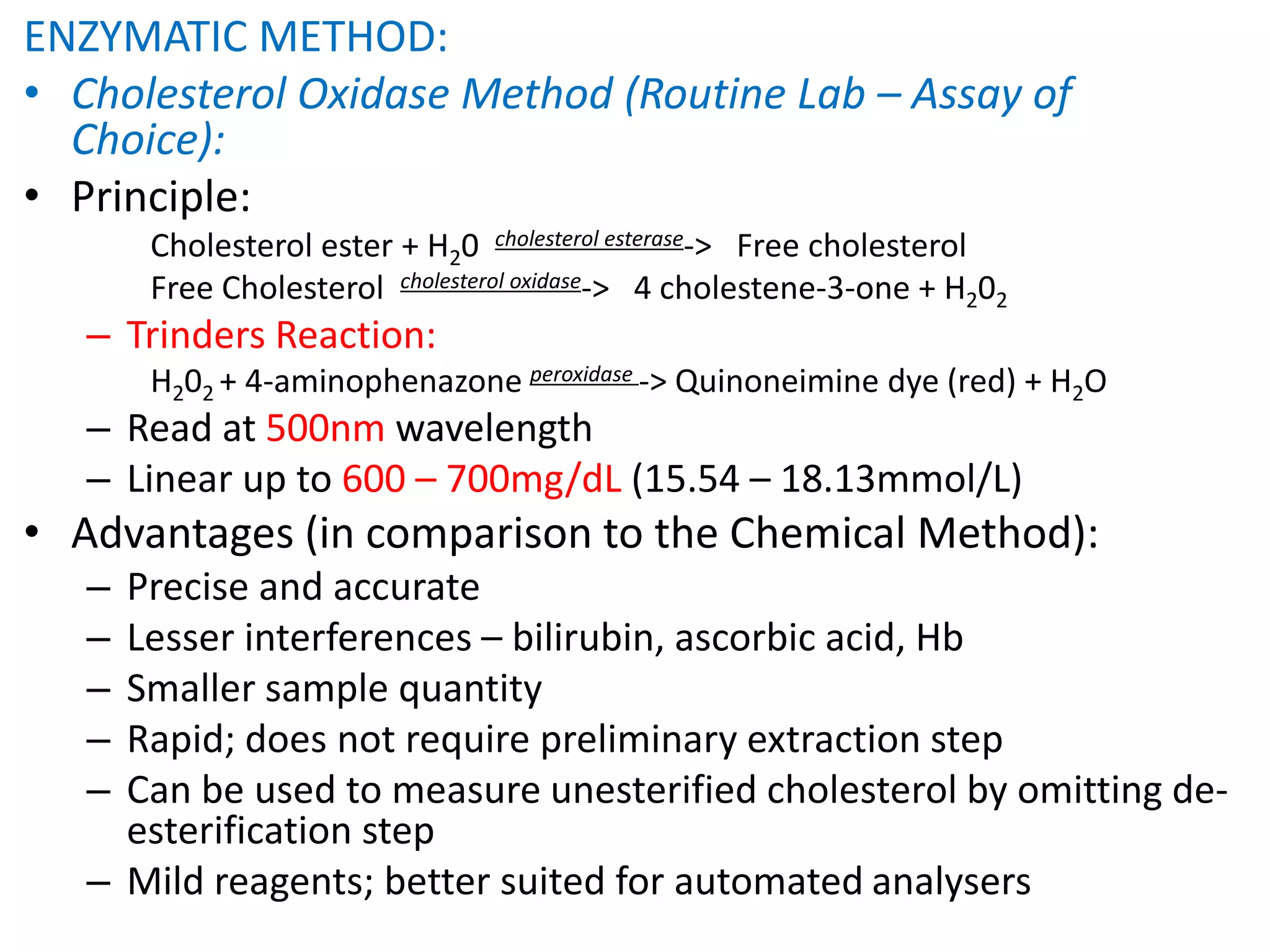
ENZYMATIC METHOD:
• Cholesterol Oxidase Method (Routine Lab – Assay of
Choice):
• Principle:
Cholesterol ester + H20 cholesterol esterase-> Free cholesterol
Free Cholesterol cholesterol oxidase-> 4 cholestene-3-one + H202
– Trinders Reaction:
H202 + 4-aminophenazone peroxidase -> Quinoneimine dye (red) + H2O
– Read at 500nm wavelength
– Linear up to 600 – 700mg/dL (15.54 – 18.13mmol/L)
• Advantages (in comparison to the Chemical Method):
– Precise and accurate
– Lesser interferences – bilirubin, ascorbic acid, Hb
– Smaller sample quantity
– Rapid; does not require preliminary extraction step
– Can be used to measure unesterified cholesterol by omitting de-
esterification step
– Mild reagents; better suited for automated analysers
• Disadvantages:
– They are not absolutely specific for cholesterol.
• Cholesterol oxidase reacts with other sterols e.g plant sterol
– Ascorbic acid and Bilirubin interfere by consuming
H202
• Bilirubin interference can produce falsely high or low values
• Significant only at conc >5mg/dL decreasing Chol values by 5
– 15%
GC–MS METHOD (Reference Method):
• Specifically measures cholesterol and does not detect related
sterols
• Shows good agreement with the Definitive Method - Isotope
Dilution Mass Spectrometry
Cholesterol Desirable level: < 200mg/dL (< 5.2mmol/L); Conversion
factor = 0.026
Estimation of Lipoproteins
POLYANION PRECIPITATION:
• Lipoproteins are precipitated with polyanions ( heparin sulfate,
dextran sulfate and phosphotungstate)
• Reaction should be in the presence of divalent cations Mg, Ca
and Mn
• Most commonly for HDL and is reasonably specific
LIPOPROTEIN ELECTROPHORESIS:
• Used to identify rare familial disorders (e.g Type I, III, V
Hyperlipidemia)
• Indications:
– serum TG > 300 mg/dL
– fasting serum is lipemic
– significant hyperglycemia, impaired glucose intolerance
– serum uric acid > 8.5 mg/dL
– clinical evidence of CHD or atherosclerosis in patient < 40 years of
age.
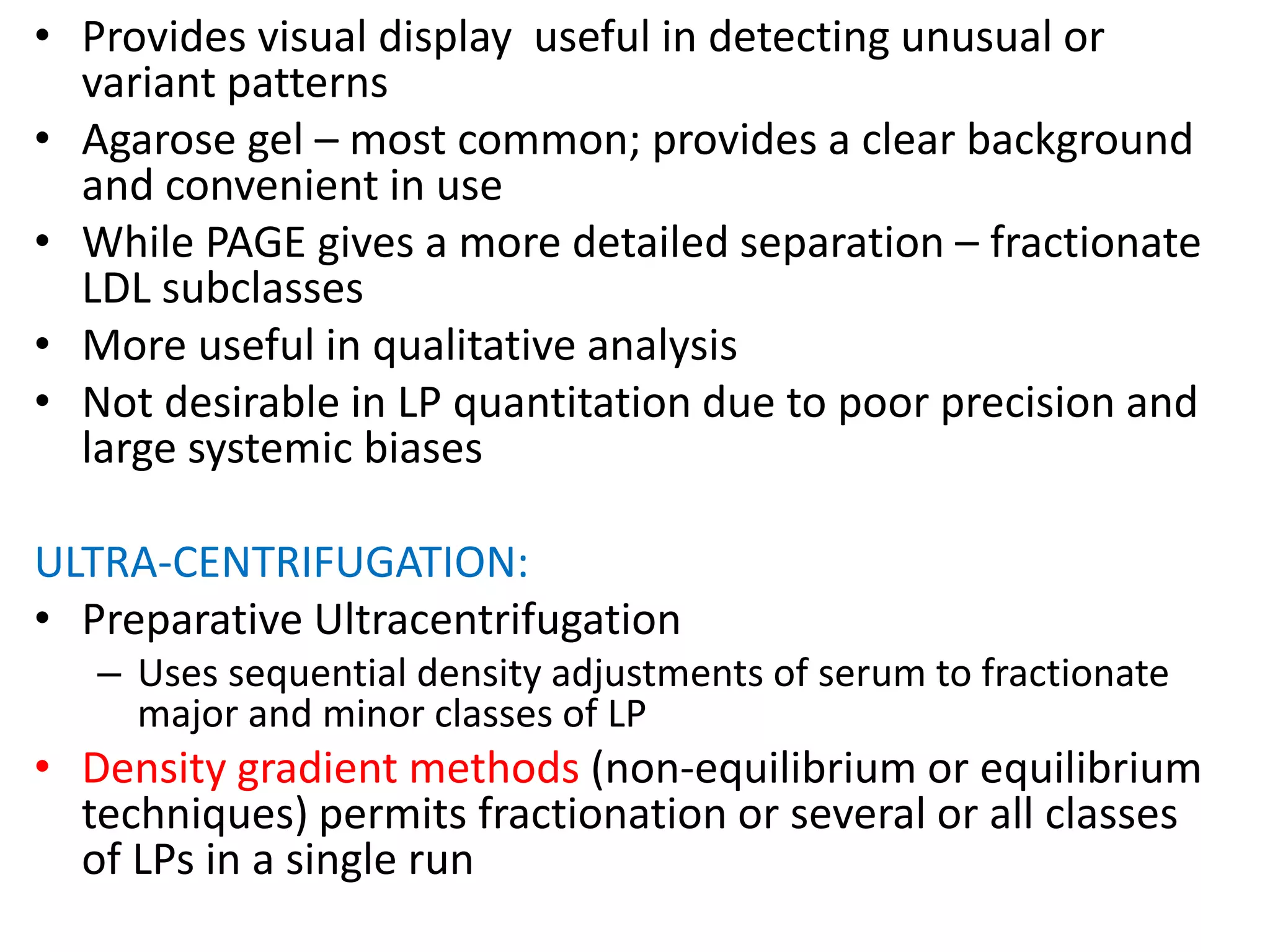
• Provides visual display useful in detecting unusual or
variant patterns
• Agarose gel – most common; provides a clear background
and convenient in use
• While PAGE gives a more detailed separation – fractionate
LDL subclasses
• More useful in qualitative analysis
• Not desirable in LP quantitation due to poor precision and
large systemic biases
ULTRA-CENTRIFUGATION:
• Preparative Ultracentrifugation
– Uses sequential density adjustments of serum to fractionate
major and minor classes of LP
• Density gradient methods (non-equilibrium or equilibrium
techniques) permits fractionation or several or all classes
of LPs in a single run
• Workhorse for separation of LPs for quantitative
purposes and preparative isolations
• Used in the reference methods for LP quantitation
because LPs are classically defined in terms of
hydrated density
• Tedious, expensive and technically demanding
IMMUNOCHEMICAL METHODS:
• Use antibody-coated plates specific for epitopes on
apolipoproteins both in routine and research lab
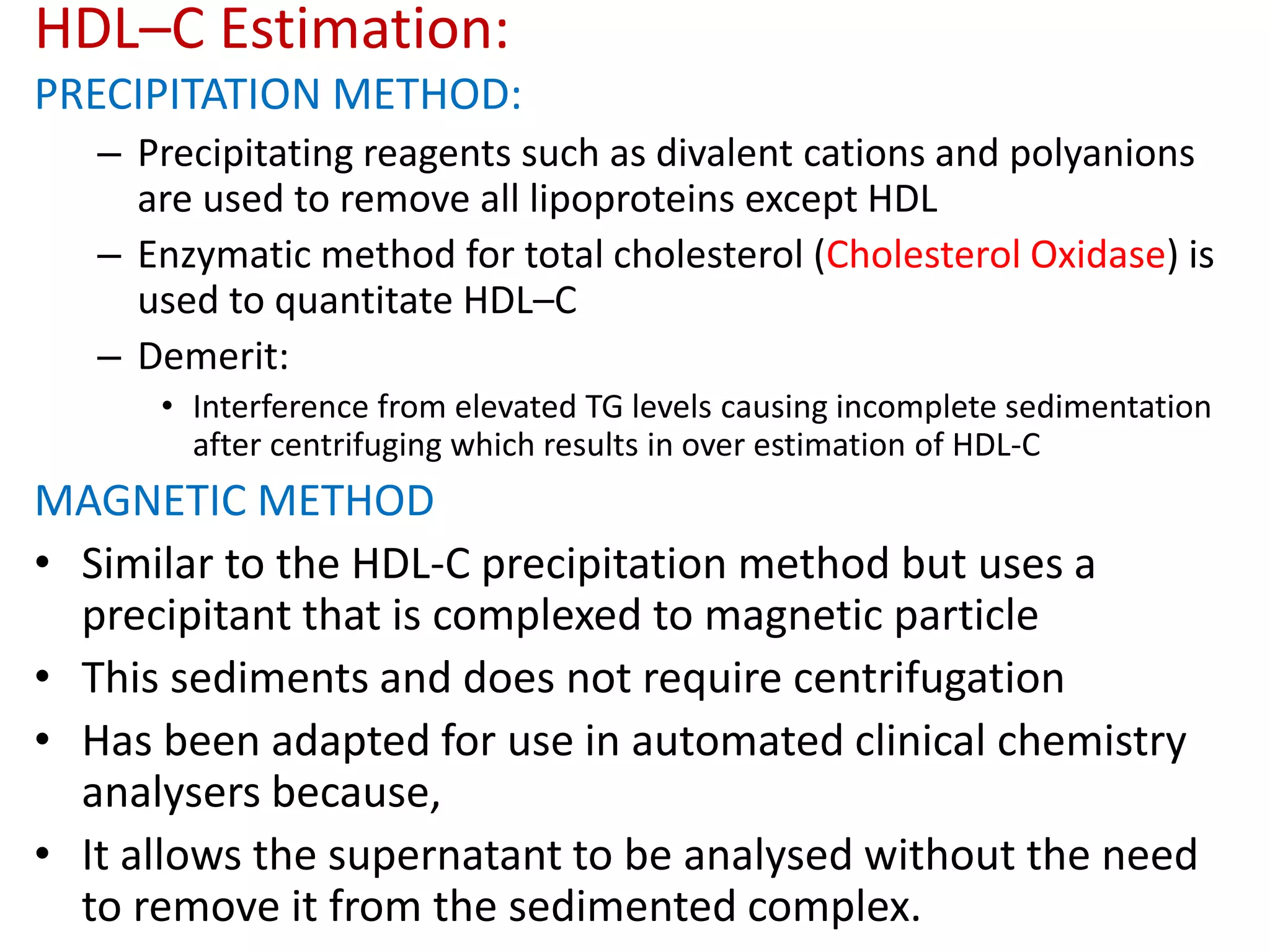
HDL–C Estimation:
PRECIPITATION METHOD:
– Precipitating reagents such as divalent cations and polyanions
are used to remove all lipoproteins except HDL
– Enzymatic method for total cholesterol (Cholesterol Oxidase) is
used to quantitate HDL–C
– Demerit:
• Interference from elevated TG levels causing incomplete sedimentation
after centrifuging which results in over estimation of HDL-C
MAGNETIC METHOD
• Similar to the HDL-C precipitation method but uses a
precipitant that is complexed to magnetic particle
• This sediments and does not require centrifugation
• Has been adapted for use in automated clinical chemistry
analysers because,
• It allows the supernatant to be analysed without the need
to remove it from the sedimented complex.
HOMOGENOUS ASSAY (Direct HDL-C Assay):
• Enzymatic method:
– First reagent – “blocks” non-HDLs
• Use of Antibodies or Polymers or complexing agent e.g Cyclodextrin
• Modification of cholesterol esterase and oxidase enzymes which makes
them selective for HDL-C
• Use of blanking step that selectively consumes cholesterol from non-HDL
species
– Second reagent – quantifies accessible HDL-C
• Highly precise and reasonably accurate but lacks specificity for HDL in
unusual specimens e.g liver or kidney disease
• Does not require pretreatment
• The “Three-step Procedure”(Reference method for HDL-C
estimation):
– Ultracentrifugation to remove VLDL
– Heparin manganese precipitation to remove LDL
– Analysis of supernatant cholesterol by the Abell Kendall assay
• It is tedious and expensive
LDL–C Estimation
INDIRECT METHODS:
• Fridewald Equation(Calculation Method) – Routine.
– LDL–Chol(mmol/L) = [TC – HDL-Chol] – Plasma TG/2.175;
or, LDL-Chol(mg/dL) = [TC – HDL-Chol] – Plasma TG/5
• VLDL (mg/dL) = [TAG]/5 or VLDL (mmol/L) = [TAG]/2.175
• The factor [TAG]/5 is an estimate of the VLDL cholesterol and is
based on the average ratio of triglyceride to cholesterol in VLDL
• Equation assumes patient fasted and plasma [TAG] does not
exceed 5.0mmol/L
– Limitations: not appropriate in
• Samples with TG > 400mg/dL
• Patients with suspected Dysbetalipoproteinaemia
– Other limitations:
• Does not account for cholesterol assosciated with IDL and Lp(a)
• Underestimate LDL-C in chronic alcoholics
• Unsuitable for monitoring
• Mis-classifies 15 – 40 % of patients when TG levels are between
200 to 400 mg/dL
• Beta-Quantification (Reference method):
– Tedious – reserved for samples where Fridewald equation is
inappropriate
– 2 steps
• Ultracentrifugation to remove VLDL leaving behind LDL and HDL as well
as IDL and Lp(a)
• Chemical Precipitation of HDL-C from either the whole serum or the
infranate obtained from the ultracentrifugation
– LDL-C is calculated as difference btw Cholesterol measured in
infranate and in the HDL fraction
– VLDL-C is usually calculated as the difference btw that in
whole serum and the amount in the infranate fraction
• VLDL-C/Plasma TG ratio:
– may be useful in evaluation of type III hyperlipoproteinemia
– Expressed in mol/mol or mass/mass
– Ranges 0.230-0.575 in samples without beta VLDL
– Type III subjects have ratio > 0.689, usually in range of 0.689 –
0.0919
DIRECT METHODS:
• Methods based on selective Precipitation:
– Uses polyvinyl sulfate or heparin at low pH, OR
– Pretreatment using a mixture of polyclonal antibodies
to apo A-1 and apo E linked to a resin to bind and
remove VLDL, IDL, and HDL
• Homogenous method:
– Selectively measures LDL after masking non-LDL
cholesterol, OR
– By selectively solubilizing LDL
– Advantages:
• Does not involve measurement of TGs thus non-fasting
samples can be used
• Comparable to calculated LDL results from beta-
quantitation on normolipemic specimens
Triaglycerides:
CHEMICAL METHOD:
• First, Lipids are extracted using chloroform and phospholipids
and removed by zeolite absorption
• Van Handel and Zilversmith Method (former Reference Method):
• Principle:
• TAG alcoholic KOH -> Glycerol + Fatty acids
• Glycerol + periodic acid ---------------> Formaldehyde
• Formaldehyde + Chromotropic acid-------------> Blue solution
• Demerit:
– Tedious, poorly charaterized
GC–MS METHOD (Reference Method):
• Hydrolysis of fatty acids on TGs and measurement of Glycerol
NB: Accuracy in TG is less relevant than that for Chol, due to very
large physiologic variation with CV of 25 – 30%, thus, contribution
of analytical variation is insignificant
ENZYMATIC METHOD:
• Glycerol Kinase Method:
• Principle:
• TAG + 3H20 lipase-> Glycerol + 3fatty acids
• Glycerol + ATP glycerol kinase-> Glycerophosphate + ADP
• Glycerophosphate Glycerophosphate Oxidase-> Dihydroxyacetone +
H2O2
Trinder’s reaction:
• H2O2 + Chromogen peroxidase-> Pink compound + H2O
• Read absorbance at 500nm wavelength, and
linear up to 700mg/dL
• Merits:
– Fairly specific
• Demerits:
– Glycerol kinase reacts with endogenous free glycerol
causing interference which is clinically insignificant
except in
• DM,
• emotional stress,
• IV admin of glycerol containing drugs or nutrients,
• contamination of blood collecting devices, and
• prolonged storage under non-refridgerated conditions
– Can be corrected for by “double-cuvette blank” or the “single-
cuvette blank” or by “Designated calibration blanking”
– Or by enzymatically consuming glycerol in a prereaction step
before measuring TG
• Triglycerides Desirable Level: <176 mg/dl (<2.0mmol/L);
Conversion factor: 0.011
Apolipoproteins
• Apolipoproteins of clinical importance are:
– Apo B: an indicator of combined LDL and VLDL concentration
– Apo A-1: major protein of HDL
– Lp(a): the variant of LDL, an independent indicator of CHD risk
• Commonly measured by Immunoassays of different types
IMMUNOTURBIDIMETRY:
• Most common method; advantages:
– Easily adapted spectrophotometric analysers
– allows the use of commercially available antisera and reference sera.
• Immunonephelometry can also be employed but requires a
Nephelometer and so not commonly used
• These light scattering assays are subject to interferences from larger TG-
rich lipoproteins and VLDL
• Other immunochemical methods available include:
– Enzyme-linked Immunosorbent Assay (ELISA)
– Radial Immunodiffusion (RID)
– Radioimmunoassay (RIA)
• Antibodies used may be either monoclonal or polyclonal
QUALITY CONTROL
• Use of commercial control materials or
• Produced in-house from freshly collected
patient serum, aliquoted into vials, quick
frozen and stored at -70oC
– Less subject to matrix interection compared to
commercial ones
• Atleast two pools should be analysed with
levels near decision points for each analyte.
REFERENCES
• Tietz textbook of Clinical Chemistry and
Molecular Diagnostics; fifth ed., by Burtis et
al.
• Clinical Chemistry; Principles, Techniques and
Correlations, 7th ed., by Bishop et al.
• HENRY’S clinical diagnosis & management by
lab. methods 21/e
THANK YOU

Lipids methodology

  • 1.
    LIPIDS: METHODOLOGY LIPID PROFILE: CHOLESTEROL(HDL-C & LDL-C), TRIGLYCERIDES AND APOLIPOPROTEINS By Dr. BASIL, B – MBBS (Nigeria), Department of Chemical Pathology/Metabolic Medicine, Benue State University Teaching Hospital, Makurdi. March, 2015
  • 2.
    OUTLINE: • Introduction • Pre-analyticalConsiderations • Analytical Methodology – Cholesterol – Lipoproteins – Triglycerides – Apolipoproteins • Quality Control
  • 3.
    INTRODUCTION • Disorders oflipids is of immense importance to medical practice owing to its strong relations to Arteriosclerosis and thus obesity, HTN, DM and other abnormalities • Good prognosis in the mgt of these conditions are predicated on early detection of deranged blood lipid profile • Indications for Lipid Profile include: – Screening for primary & secondary hyperlipidemias – Monitoring for risk of atherosclerosis – Monitoring treatment of hyperlipidemias • CHOLESTEROL and TRIGLYCERIDE are the plasma lipids of most interest in the diagnosis and management of lipoprotein disorders
  • 4.
    PREANALYTICAL CONSIDERATIONS • Itis important to standardize conditions under which blood specimen are drawn & prepared for analysis. Biological Variations: • Age: cholesterol levels increase with age. • Sex: women have lower level than men except in childhood & after early 50’s. • Season: cholesterol levels are slightly higher in cold periods. • Food intake: daily intake of fat increases cholesterol levels. Patients should be on their usual diet for 2wks and are neither gaining nor losing weight. • Medical conditions: thyroid, liver, and kidney diseases • Acute illness: It is recommended that lipoproteins measurement should be made no sooner than 8weeks after any form of trauma or acute bacterial/viral infection and 3 – 4 months after child birth • Life-style: higher in sedentary and poor diet habits
  • 5.
    Specimen Collection andStorage: • Patient should fast for 12hours before sampling. – The concentration of LDL-C/HDL-C declines after eating – Chylomicrons are cleared within 6–9hrs and their presence after 12hrs fast is abnormal. • Posture: – Decreases of as much 10% in conc. of TC, LDL-C, HDL-C and apo-A-I and B, have been observed after 20 minutes recumbence – patient to be seated for 5min prior to sampling to prevent hemo- concentration. • Prolonged venous occlusion leads to increase in cholesterol conc by 10–15% – Torniquet should not be for more than minutes or two. • Exercise: – Mild exercise produces a slight decrease in conc of cholesterol and TG that may persists for several days. – Those who walk for about 4 hours each week have an average cholesterol conc. 5% lower and HDL-C conc 3.4% higher than inactive persons
  • 6.
    • Menstrual cycle: –The plasma chol and TG conc tend to be highest at midcycle, the time of maximum estrogen secretion – The cyclical variation in cholesterol is not observed with anovulatory cycles • Diet: – A high fat diet increases serum TGs. – Ingestion of monounsaturated fat reduces cholesterol. – Plasma triglyceride conc is reduced when sucrose intake is reduced. – A high carbohydrate diet decreases the serum conc. of VLDL-C , TG, cholesterol and protein. – Individuals who eat many small meals throughout the day tend to have conc. of total LDL and HDL-C that are lower than when same type and amount of food is eaten in three meals. – Large protein meals at lunch or in the evening also increase the serum cholesterol for atleast 1 hour after a meal. – In vegeterian individuals, conc. Of LDL & VLDL-C are reduced by 37 % and 12%.
  • 7.
    • Smoking: – Theplasma cholesterol , triglyceride and LDL cholesterol conc. are higher by about 3 %, 9.1 % and 1.7 % respectively in smokers than in non smokers. – HDL cholesterol is lower in smokers than in non smokers • Alcohol ingestion: – When moderate amount of alcohol is ingested for 1wk, the serum TG conc is increased by more than 20mg/dL. – Prolonged moderate ingestion may increase HDL-C conc, which is associated with reduced plasma conc of cholesterol ester transfer protein(CETP). • Plasma vs Serum: – Either can be used when TC, TG and HDL-C are measured. – Plasma is preferred when lipoprotein are measured by ultra-centrifugation and electrophoretic methods. – Serum can be used when it is necessary to store samples for weeks or months.
  • 8.
    • Venous vsCapillary samples: – Measurements in the capillary samples seem to be little lower than venous samples. • Anticoagulants: – Some anticoagulants such as citrate exert large osmotic effect resulting in falsely low plasma lipid and lipoprotein concentration. – Heparin: because of its high M.W can alter electrophoretic mobility of lipoproteins. – EDTA is preferred anticoagulant even though TC and TG conc in EDTA plasma are 3 % lower than in serum. – EDTA inhibits qxidation of lipids and proteolysis of apolipoprotein. – TC values of EDTA plasma should be multiplied by 1.03 to make it comparable to serum values. • Storage: – TC, TG, HDL-C can be satisfactorily analyzed in frozen samples. – Apolipoproteins can also be measured in frozen samples. – Serum or plasma must be stored at – 70oC if stored for long time. – For short time storage ( upto a month or two ) the sample can be kept at – 2o.
  • 9.
    ANALYTICAL METHODOLOGY TOTAL CHOLESTEROL: •Chemical Method: via Liebermann-Burchardt Reaction – Modified Abell Kendall Method – Bloors Method • Enzymatic Method: – Cholesterol oxidase (Routine Lab) • GC–MS Method (Reference Method) • Isotope Dilution Mass Spectrometry (Definitive Method) TRIGLYCERIDE: • Chemical Method – Van Handel and Zilversmith • Enzymatic Method – Glycerol Kinase • GC–MS Method (Reference Method) LIPOPROTEINS: • Polyanion Precipitation • Electrophoresis • Ultra-centrifugation • Immunochemistry OTHER METHODS: – Mass Spectrometry – Chromatography – Homogenous assay
  • 10.
    Cholesterol Estimation CHEMICAL METHODS: •Abell Kendall Method (Former Reference Method): – Principle: 3 step • Cholesterol is hydrolyzed with alcoholic KOH • Unesterified cholesterol is extracted with petroleum jelly • Measured using the L-B Reaction – Liebermann-Burchardt Reaction (L-B Reaction): Cholesterol + Sulfuric acid + Acetic anhydride => bluish green solution • Bloors Method: – Principle: 2 step • Cholesterol is extracted using an alcohol ether mixture • Measured using the L-B Reaction
  • 11.
    ENZYMATIC METHOD: • CholesterolOxidase Method (Routine Lab – Assay of Choice): • Principle: Cholesterol ester + H20 cholesterol esterase-> Free cholesterol Free Cholesterol cholesterol oxidase-> 4 cholestene-3-one + H202 – Trinders Reaction: H202 + 4-aminophenazone peroxidase -> Quinoneimine dye (red) + H2O – Read at 500nm wavelength – Linear up to 600 – 700mg/dL (15.54 – 18.13mmol/L) • Advantages (in comparison to the Chemical Method): – Precise and accurate – Lesser interferences – bilirubin, ascorbic acid, Hb – Smaller sample quantity – Rapid; does not require preliminary extraction step – Can be used to measure unesterified cholesterol by omitting de- esterification step – Mild reagents; better suited for automated analysers
  • 12.
    • Disadvantages: – Theyare not absolutely specific for cholesterol. • Cholesterol oxidase reacts with other sterols e.g plant sterol – Ascorbic acid and Bilirubin interfere by consuming H202 • Bilirubin interference can produce falsely high or low values • Significant only at conc >5mg/dL decreasing Chol values by 5 – 15% GC–MS METHOD (Reference Method): • Specifically measures cholesterol and does not detect related sterols • Shows good agreement with the Definitive Method - Isotope Dilution Mass Spectrometry Cholesterol Desirable level: < 200mg/dL (< 5.2mmol/L); Conversion factor = 0.026
  • 13.
    Estimation of Lipoproteins POLYANIONPRECIPITATION: • Lipoproteins are precipitated with polyanions ( heparin sulfate, dextran sulfate and phosphotungstate) • Reaction should be in the presence of divalent cations Mg, Ca and Mn • Most commonly for HDL and is reasonably specific LIPOPROTEIN ELECTROPHORESIS: • Used to identify rare familial disorders (e.g Type I, III, V Hyperlipidemia) • Indications: – serum TG > 300 mg/dL – fasting serum is lipemic – significant hyperglycemia, impaired glucose intolerance – serum uric acid > 8.5 mg/dL – clinical evidence of CHD or atherosclerosis in patient < 40 years of age.
  • 14.
    • Provides visualdisplay useful in detecting unusual or variant patterns • Agarose gel – most common; provides a clear background and convenient in use • While PAGE gives a more detailed separation – fractionate LDL subclasses • More useful in qualitative analysis • Not desirable in LP quantitation due to poor precision and large systemic biases ULTRA-CENTRIFUGATION: • Preparative Ultracentrifugation – Uses sequential density adjustments of serum to fractionate major and minor classes of LP • Density gradient methods (non-equilibrium or equilibrium techniques) permits fractionation or several or all classes of LPs in a single run
  • 15.
    • Workhorse forseparation of LPs for quantitative purposes and preparative isolations • Used in the reference methods for LP quantitation because LPs are classically defined in terms of hydrated density • Tedious, expensive and technically demanding IMMUNOCHEMICAL METHODS: • Use antibody-coated plates specific for epitopes on apolipoproteins both in routine and research lab
  • 16.
    HDL–C Estimation: PRECIPITATION METHOD: –Precipitating reagents such as divalent cations and polyanions are used to remove all lipoproteins except HDL – Enzymatic method for total cholesterol (Cholesterol Oxidase) is used to quantitate HDL–C – Demerit: • Interference from elevated TG levels causing incomplete sedimentation after centrifuging which results in over estimation of HDL-C MAGNETIC METHOD • Similar to the HDL-C precipitation method but uses a precipitant that is complexed to magnetic particle • This sediments and does not require centrifugation • Has been adapted for use in automated clinical chemistry analysers because, • It allows the supernatant to be analysed without the need to remove it from the sedimented complex.
  • 17.
    HOMOGENOUS ASSAY (DirectHDL-C Assay): • Enzymatic method: – First reagent – “blocks” non-HDLs • Use of Antibodies or Polymers or complexing agent e.g Cyclodextrin • Modification of cholesterol esterase and oxidase enzymes which makes them selective for HDL-C • Use of blanking step that selectively consumes cholesterol from non-HDL species – Second reagent – quantifies accessible HDL-C • Highly precise and reasonably accurate but lacks specificity for HDL in unusual specimens e.g liver or kidney disease • Does not require pretreatment • The “Three-step Procedure”(Reference method for HDL-C estimation): – Ultracentrifugation to remove VLDL – Heparin manganese precipitation to remove LDL – Analysis of supernatant cholesterol by the Abell Kendall assay • It is tedious and expensive
  • 18.
    LDL–C Estimation INDIRECT METHODS: •Fridewald Equation(Calculation Method) – Routine. – LDL–Chol(mmol/L) = [TC – HDL-Chol] – Plasma TG/2.175; or, LDL-Chol(mg/dL) = [TC – HDL-Chol] – Plasma TG/5 • VLDL (mg/dL) = [TAG]/5 or VLDL (mmol/L) = [TAG]/2.175 • The factor [TAG]/5 is an estimate of the VLDL cholesterol and is based on the average ratio of triglyceride to cholesterol in VLDL • Equation assumes patient fasted and plasma [TAG] does not exceed 5.0mmol/L – Limitations: not appropriate in • Samples with TG > 400mg/dL • Patients with suspected Dysbetalipoproteinaemia – Other limitations: • Does not account for cholesterol assosciated with IDL and Lp(a) • Underestimate LDL-C in chronic alcoholics • Unsuitable for monitoring • Mis-classifies 15 – 40 % of patients when TG levels are between 200 to 400 mg/dL
  • 19.
    • Beta-Quantification (Referencemethod): – Tedious – reserved for samples where Fridewald equation is inappropriate – 2 steps • Ultracentrifugation to remove VLDL leaving behind LDL and HDL as well as IDL and Lp(a) • Chemical Precipitation of HDL-C from either the whole serum or the infranate obtained from the ultracentrifugation – LDL-C is calculated as difference btw Cholesterol measured in infranate and in the HDL fraction – VLDL-C is usually calculated as the difference btw that in whole serum and the amount in the infranate fraction • VLDL-C/Plasma TG ratio: – may be useful in evaluation of type III hyperlipoproteinemia – Expressed in mol/mol or mass/mass – Ranges 0.230-0.575 in samples without beta VLDL – Type III subjects have ratio > 0.689, usually in range of 0.689 – 0.0919
  • 20.
    DIRECT METHODS: • Methodsbased on selective Precipitation: – Uses polyvinyl sulfate or heparin at low pH, OR – Pretreatment using a mixture of polyclonal antibodies to apo A-1 and apo E linked to a resin to bind and remove VLDL, IDL, and HDL • Homogenous method: – Selectively measures LDL after masking non-LDL cholesterol, OR – By selectively solubilizing LDL – Advantages: • Does not involve measurement of TGs thus non-fasting samples can be used • Comparable to calculated LDL results from beta- quantitation on normolipemic specimens
  • 21.
    Triaglycerides: CHEMICAL METHOD: • First,Lipids are extracted using chloroform and phospholipids and removed by zeolite absorption • Van Handel and Zilversmith Method (former Reference Method): • Principle: • TAG alcoholic KOH -> Glycerol + Fatty acids • Glycerol + periodic acid ---------------> Formaldehyde • Formaldehyde + Chromotropic acid-------------> Blue solution • Demerit: – Tedious, poorly charaterized GC–MS METHOD (Reference Method): • Hydrolysis of fatty acids on TGs and measurement of Glycerol NB: Accuracy in TG is less relevant than that for Chol, due to very large physiologic variation with CV of 25 – 30%, thus, contribution of analytical variation is insignificant
  • 22.
    ENZYMATIC METHOD: • GlycerolKinase Method: • Principle: • TAG + 3H20 lipase-> Glycerol + 3fatty acids • Glycerol + ATP glycerol kinase-> Glycerophosphate + ADP • Glycerophosphate Glycerophosphate Oxidase-> Dihydroxyacetone + H2O2 Trinder’s reaction: • H2O2 + Chromogen peroxidase-> Pink compound + H2O • Read absorbance at 500nm wavelength, and linear up to 700mg/dL • Merits: – Fairly specific
  • 23.
    • Demerits: – Glycerolkinase reacts with endogenous free glycerol causing interference which is clinically insignificant except in • DM, • emotional stress, • IV admin of glycerol containing drugs or nutrients, • contamination of blood collecting devices, and • prolonged storage under non-refridgerated conditions – Can be corrected for by “double-cuvette blank” or the “single- cuvette blank” or by “Designated calibration blanking” – Or by enzymatically consuming glycerol in a prereaction step before measuring TG • Triglycerides Desirable Level: <176 mg/dl (<2.0mmol/L); Conversion factor: 0.011
  • 24.
    Apolipoproteins • Apolipoproteins ofclinical importance are: – Apo B: an indicator of combined LDL and VLDL concentration – Apo A-1: major protein of HDL – Lp(a): the variant of LDL, an independent indicator of CHD risk • Commonly measured by Immunoassays of different types IMMUNOTURBIDIMETRY: • Most common method; advantages: – Easily adapted spectrophotometric analysers – allows the use of commercially available antisera and reference sera. • Immunonephelometry can also be employed but requires a Nephelometer and so not commonly used • These light scattering assays are subject to interferences from larger TG- rich lipoproteins and VLDL • Other immunochemical methods available include: – Enzyme-linked Immunosorbent Assay (ELISA) – Radial Immunodiffusion (RID) – Radioimmunoassay (RIA) • Antibodies used may be either monoclonal or polyclonal
  • 25.
    QUALITY CONTROL • Useof commercial control materials or • Produced in-house from freshly collected patient serum, aliquoted into vials, quick frozen and stored at -70oC – Less subject to matrix interection compared to commercial ones • Atleast two pools should be analysed with levels near decision points for each analyte.
  • 26.
    REFERENCES • Tietz textbookof Clinical Chemistry and Molecular Diagnostics; fifth ed., by Burtis et al. • Clinical Chemistry; Principles, Techniques and Correlations, 7th ed., by Bishop et al. • HENRY’S clinical diagnosis & management by lab. methods 21/e
  • 27.