B E R E N I K A W E B S T E R , P H D
U L S S T R A T E G I C A S S E S S M E N T U N I T
H T T P : / / W W W . L I B R A R Y . P I T T . E D U / A S S E S S M E N T
P I T T I S C H O O L L E C T U R E
8 D E C E M B E R 2 0 1 5
Library Assessment at ULS
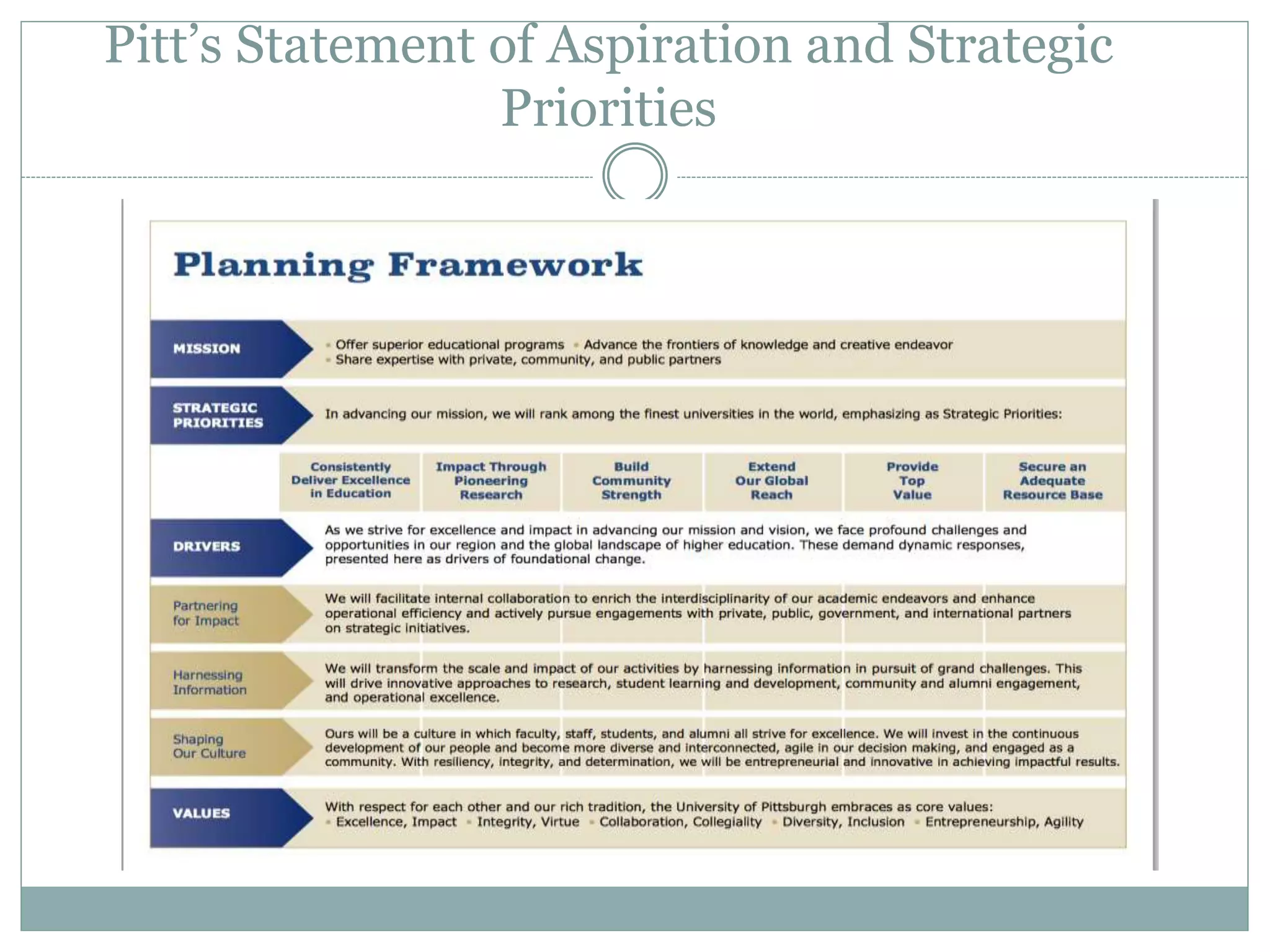
Pitt’s Statement of Aspiration and Strategic
Priorities
ULS strategic plan 14-17 reflects ambitions of
the University…
Strategic Assessment Unit’s Mission is
… to coordinate data collection and analysis to support
both strategic and operational priorities of the
ULS and help ULS demonstrate value of its services
to all its stakeholders.
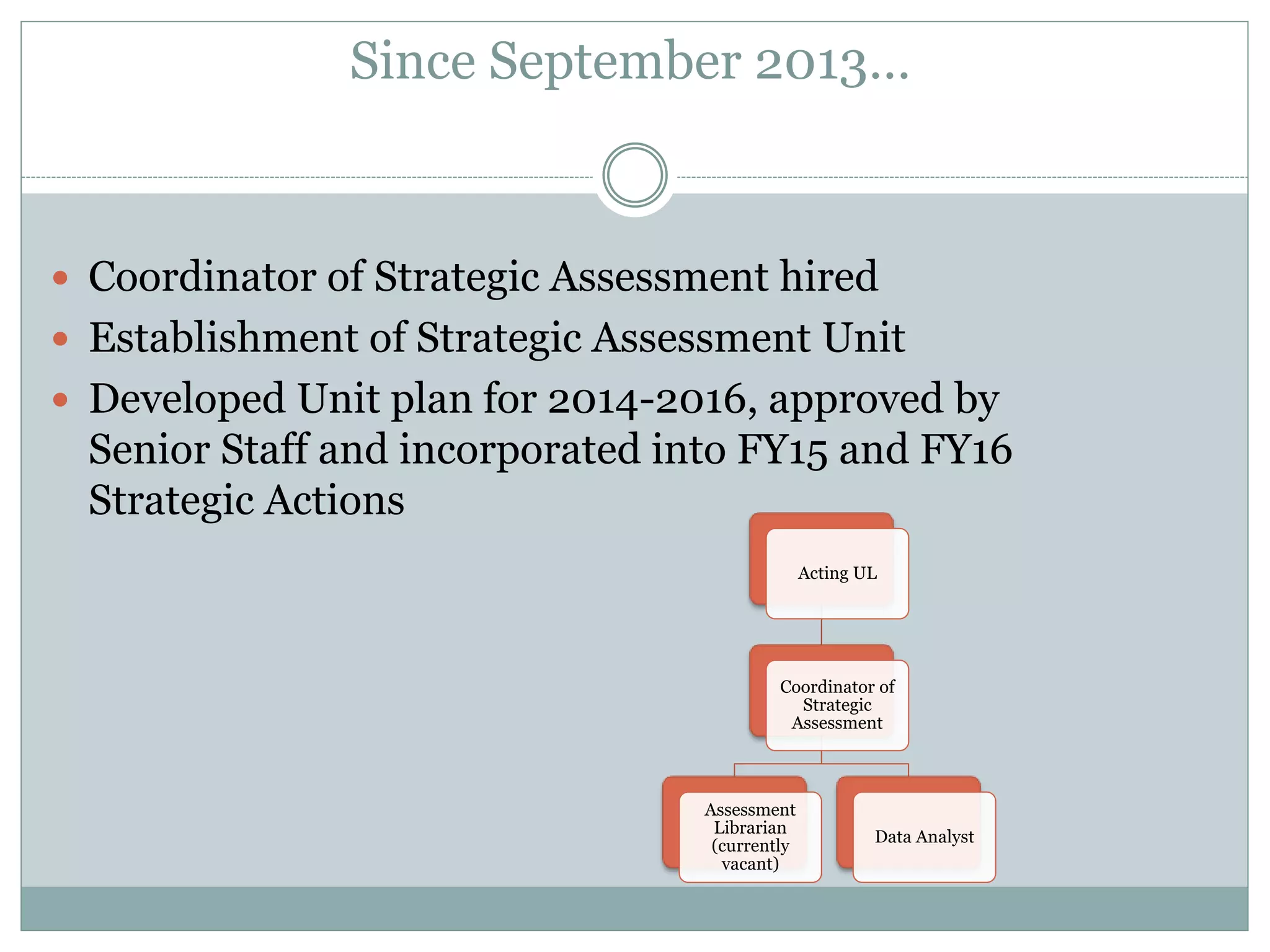
Since September 2013…
 Coordinator of Strategic Assessment hired
 Establishment of Strategic Assessment Unit
 Developed Unit plan for 2014-2016, approved by
Senior Staff and incorporated into FY15 and FY16
Strategic Actions
Acting UL
Coordinator of
Strategic
Assessment
Assessment
Librarian
(currently
vacant)
Data Analyst
Who do we serve?
Internal stakeholders External stakeholders
ULS Senior Management needs to:
· demonstrate value/impact of ULS and its
services
· promote ULS and its services
· fundraise
· budget
· understand ranking and peer
comparisons
· report to University and external bodies
· understand staff culture and satisfaction
ULS service managers and committee chairs need:
• evaluation of services: user needs,
awareness, satisfaction and usage,
measured and perceived value and
impact
• evidence-based prioritization and
development of new services
• to track progress towards set goals
• to carry out staff performance
assessment
• to develop ability to plan and carry out
assessment activities
University administration (faculties and central) need:
· periodic and ad hoc reports (rankings,
trends, impact, strategic directions)
· support for grant proposals,
accreditations, etc.
Library patrons
· periodic and ad hoc reports (rankings,
trends, impact, strategic directions)
Professional bodies and peer institutions need:
· libraries to share the best practice
· periodic and ad hoc reports on inputs,
outputs and outcomes
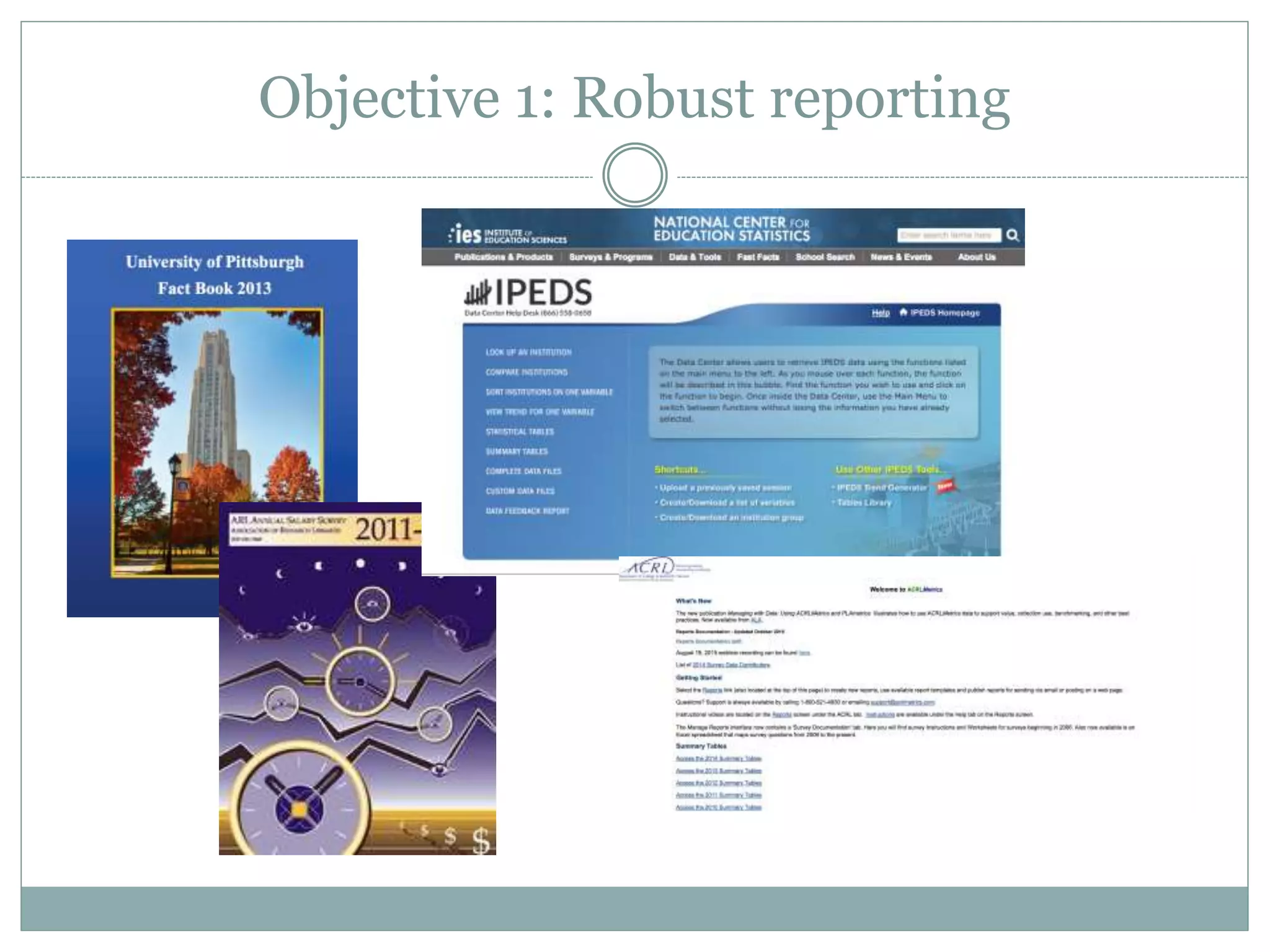
Objective 1: Robust reporting
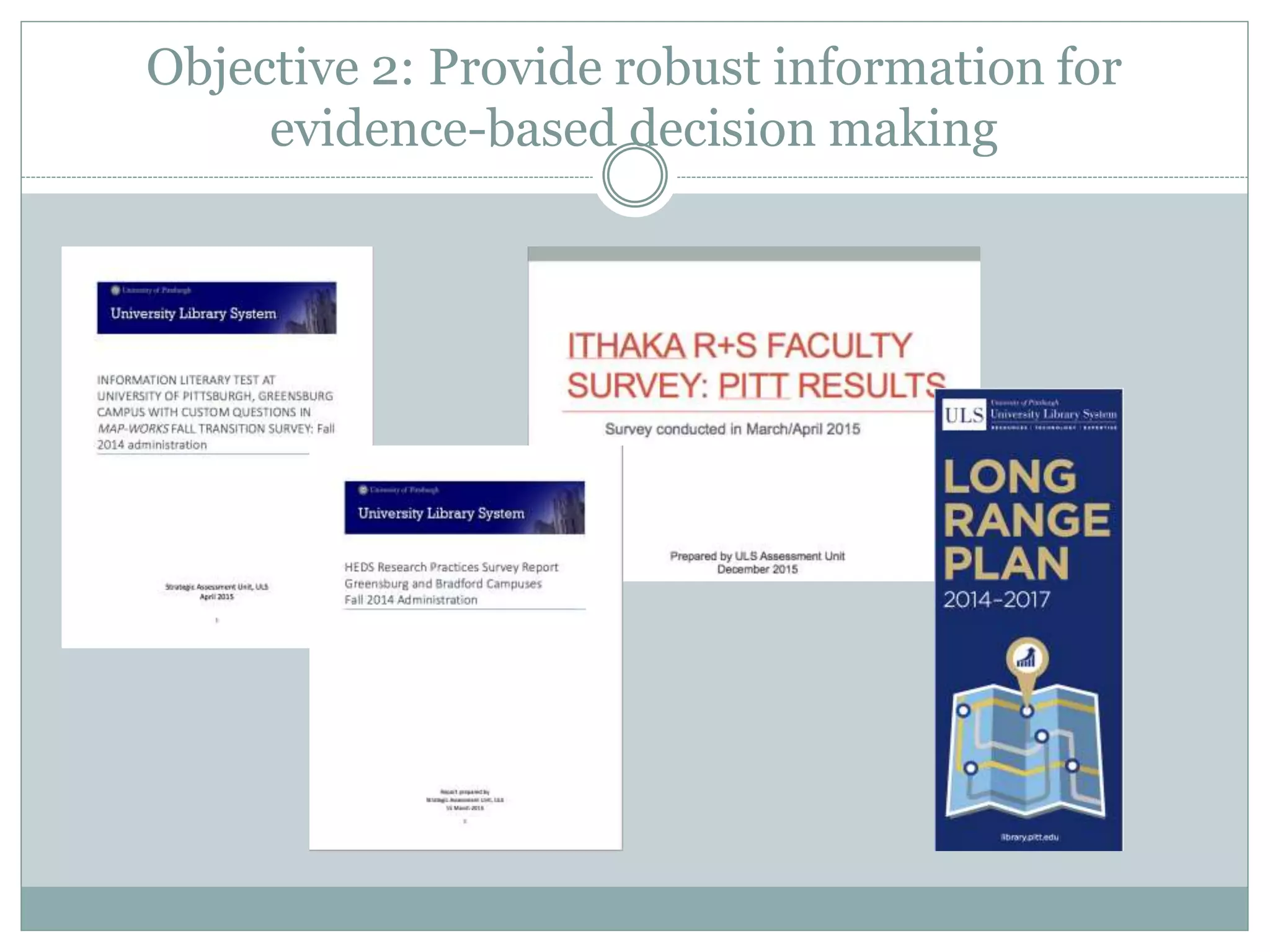
Objective 2: Provide robust information for
evidence-based decision making
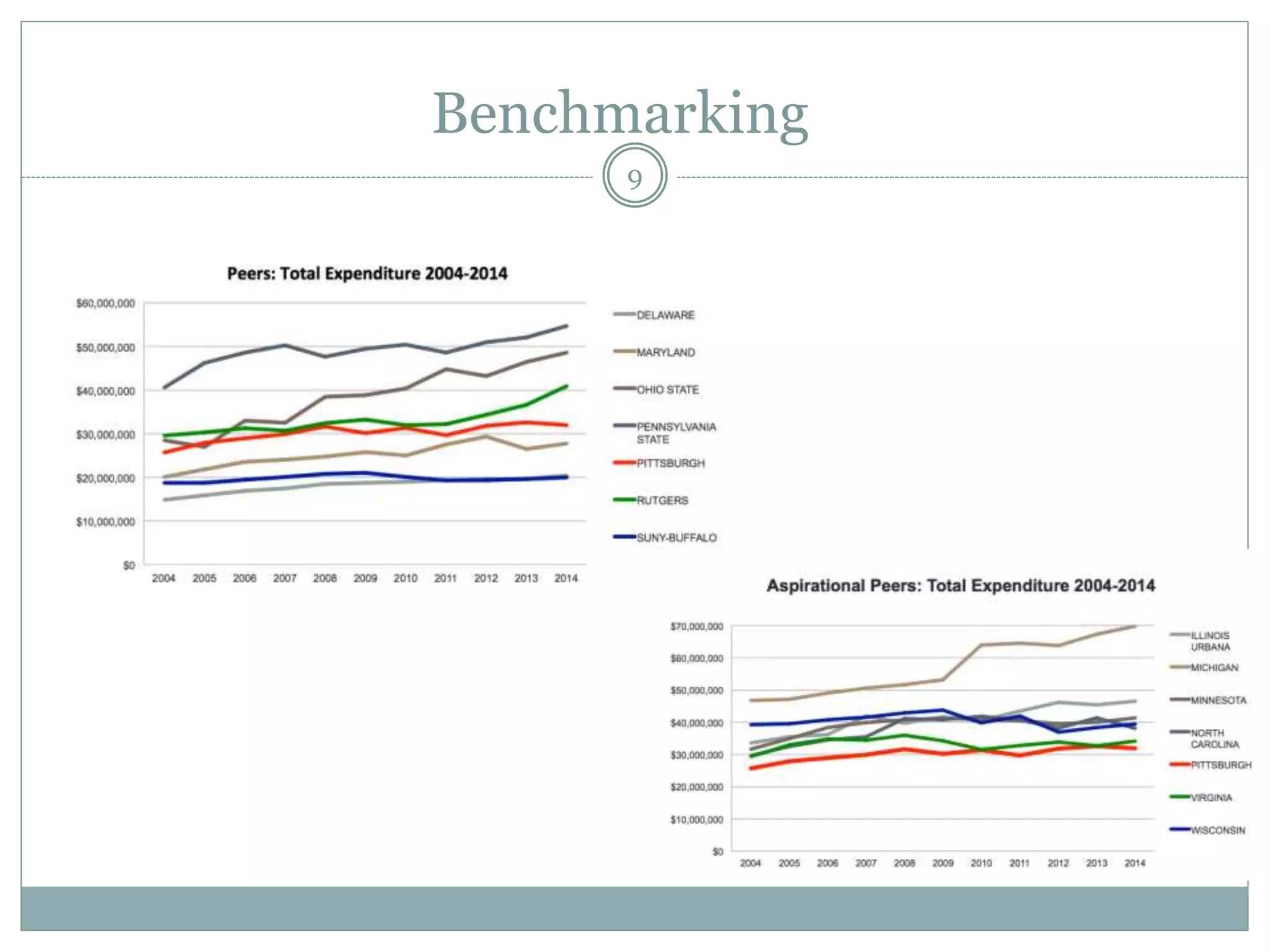
Benchmarking
9
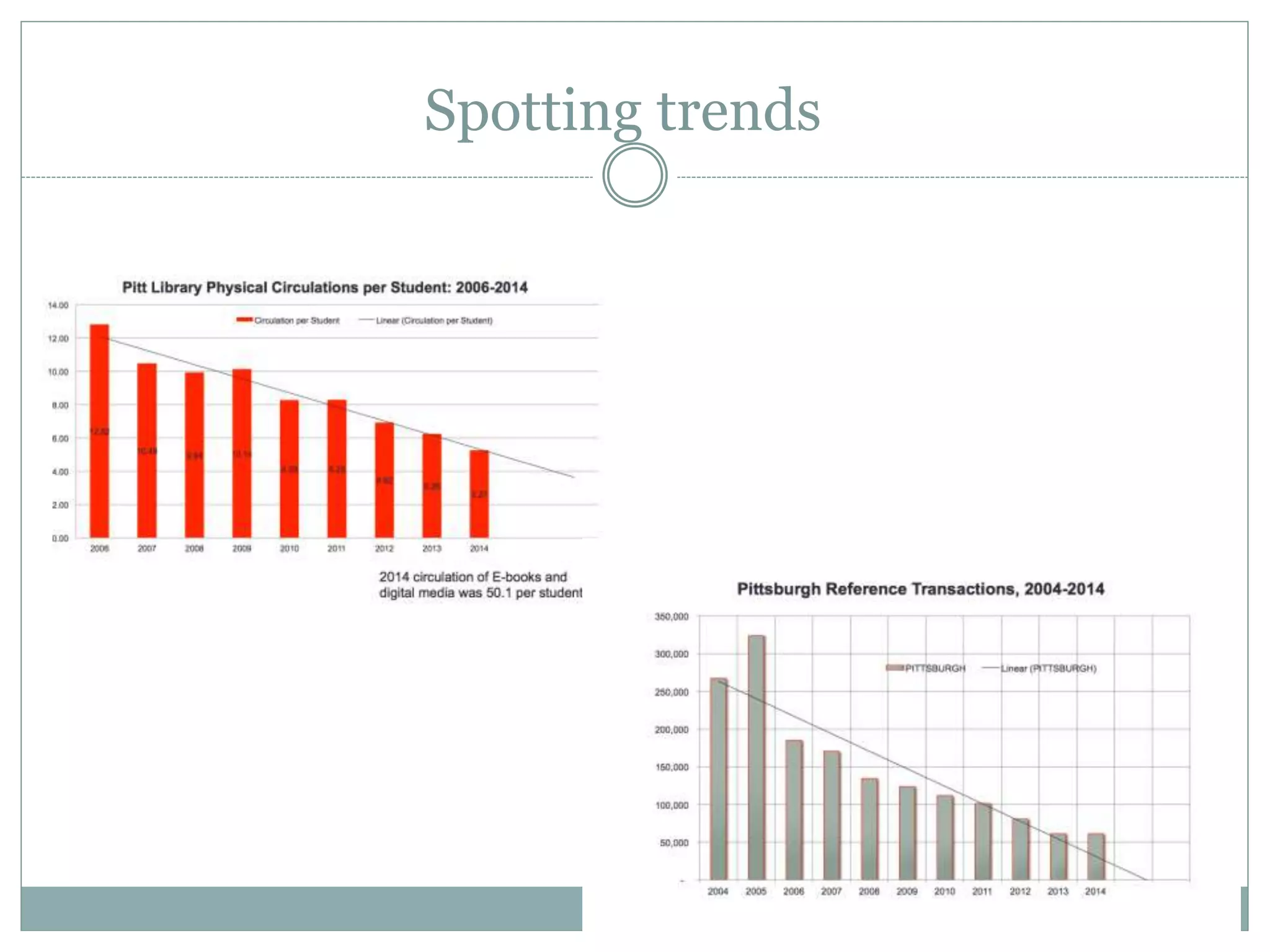
Spotting trends
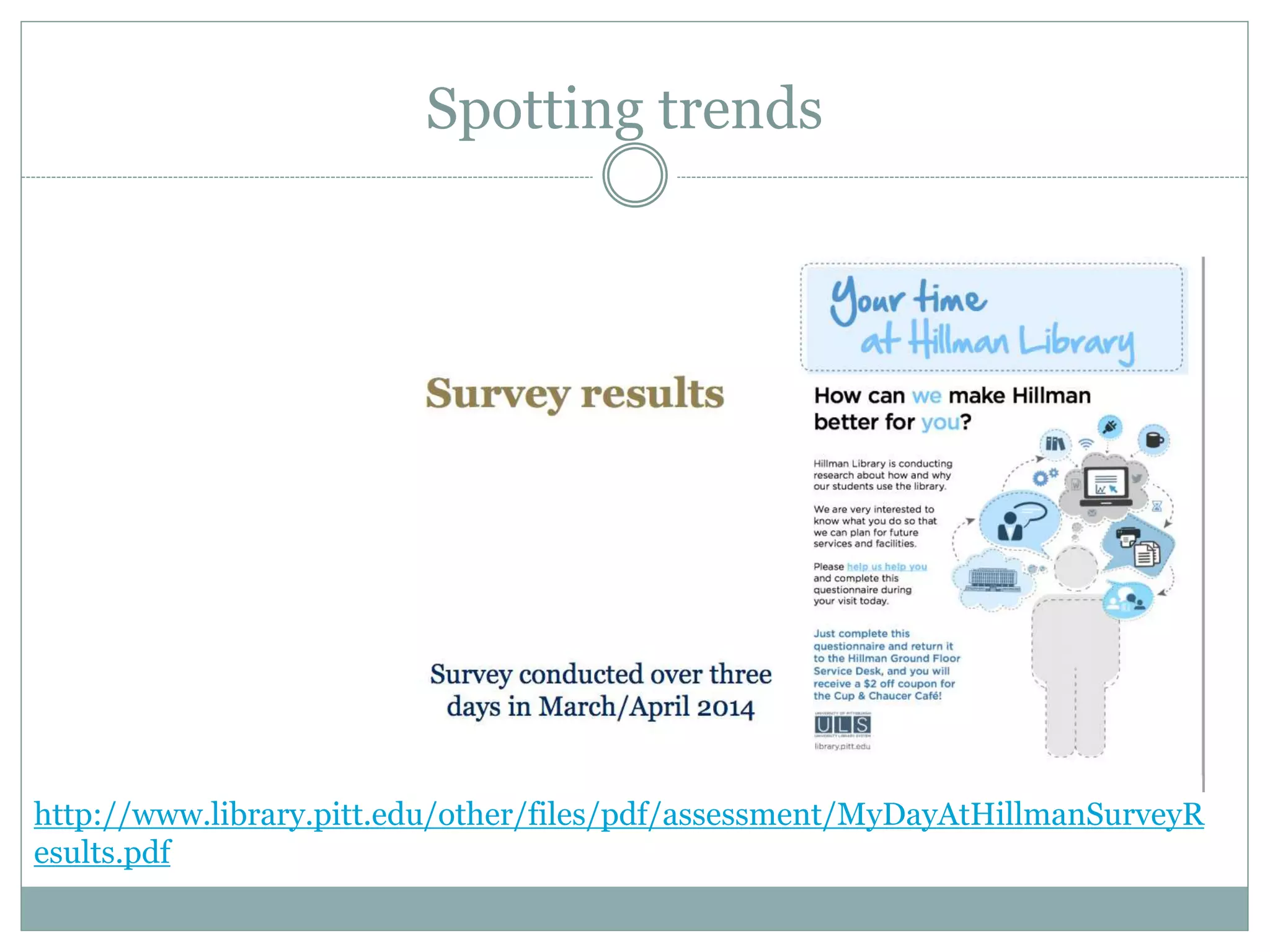
Spotting trends
http://www.library.pitt.edu/other/files/pdf/assessment/MyDayAtHillmanSurveyR
esults.pdf
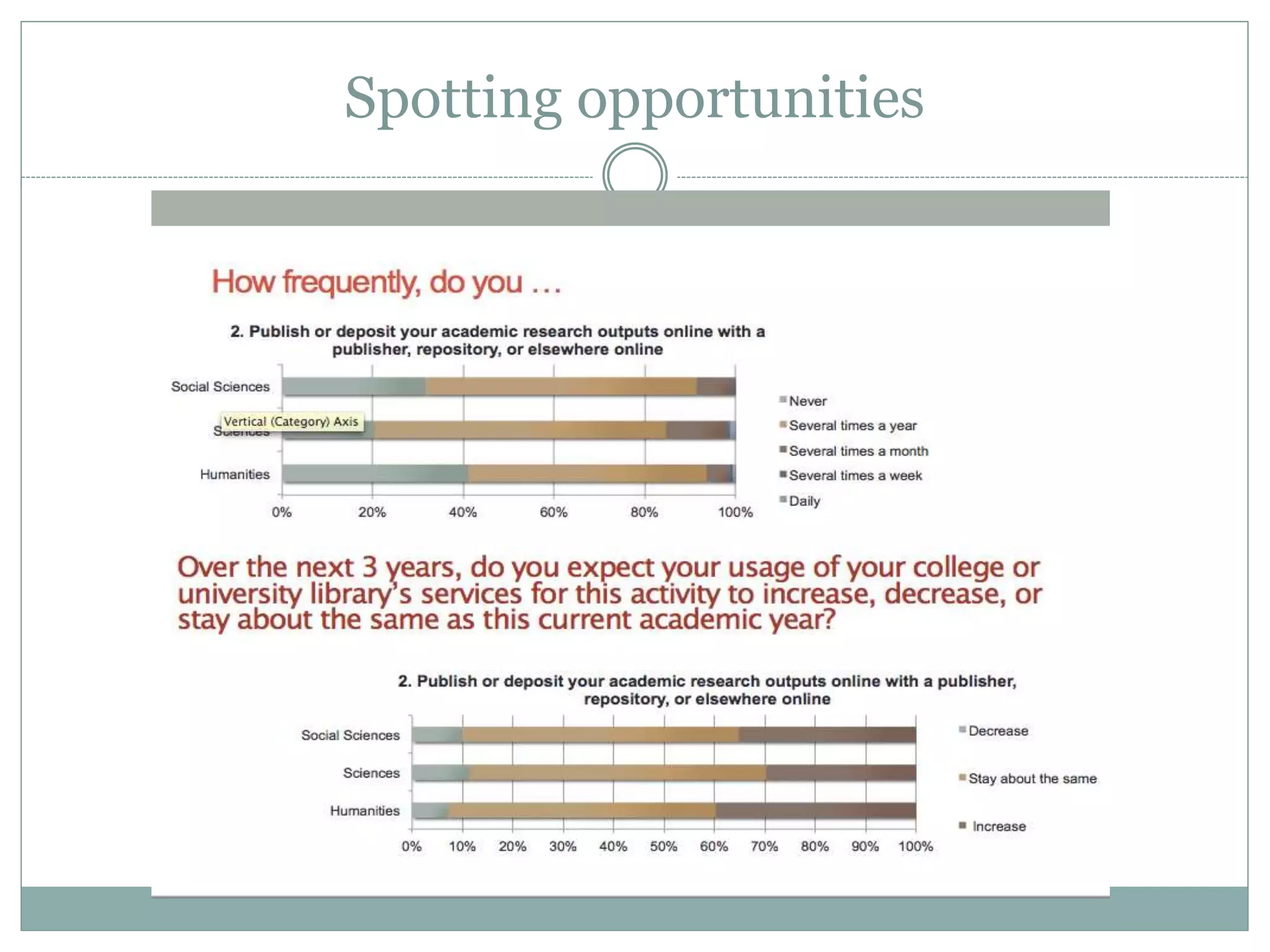
Spotting opportunities
Spotting
opportunities
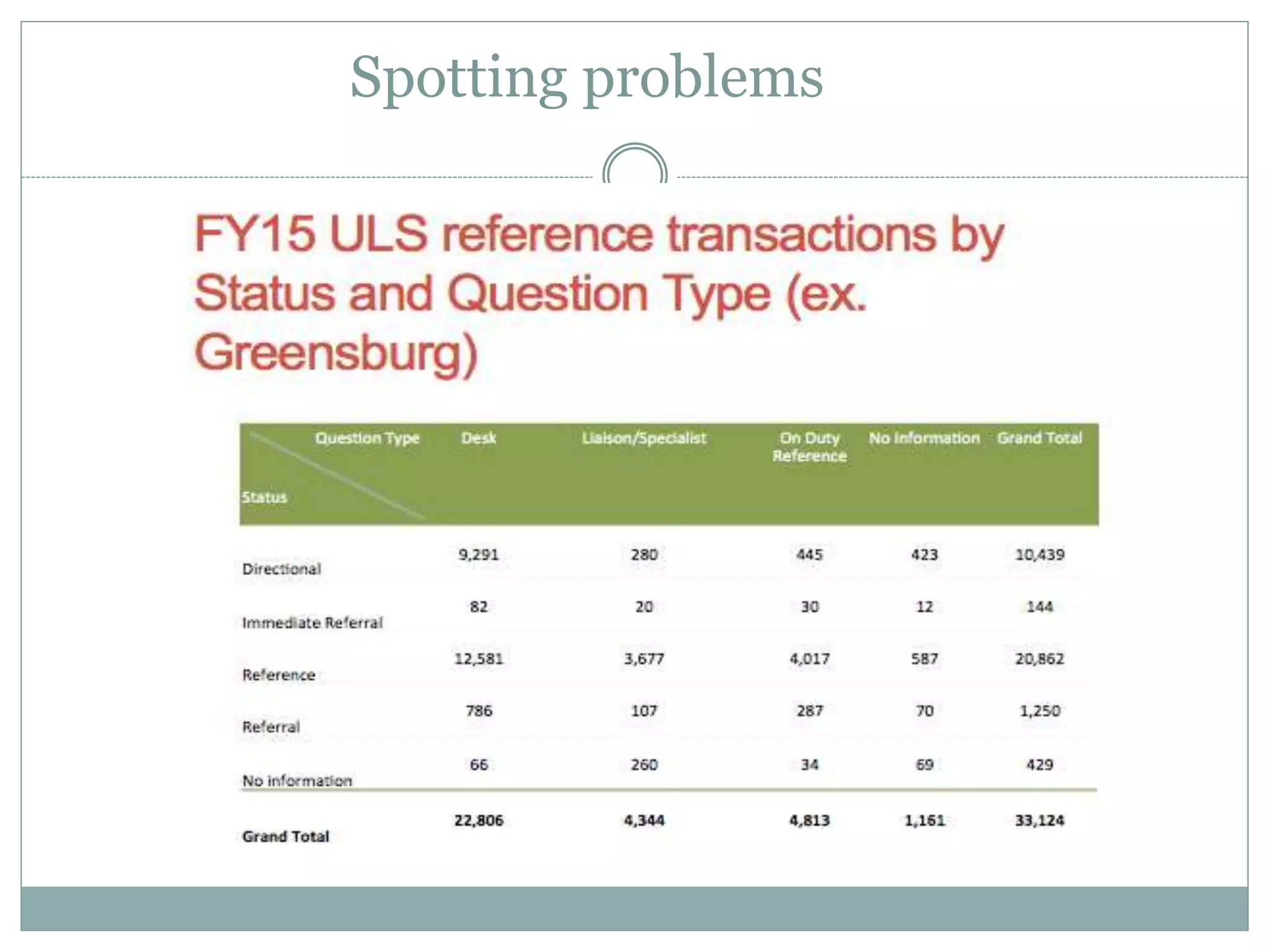
Spotting problems
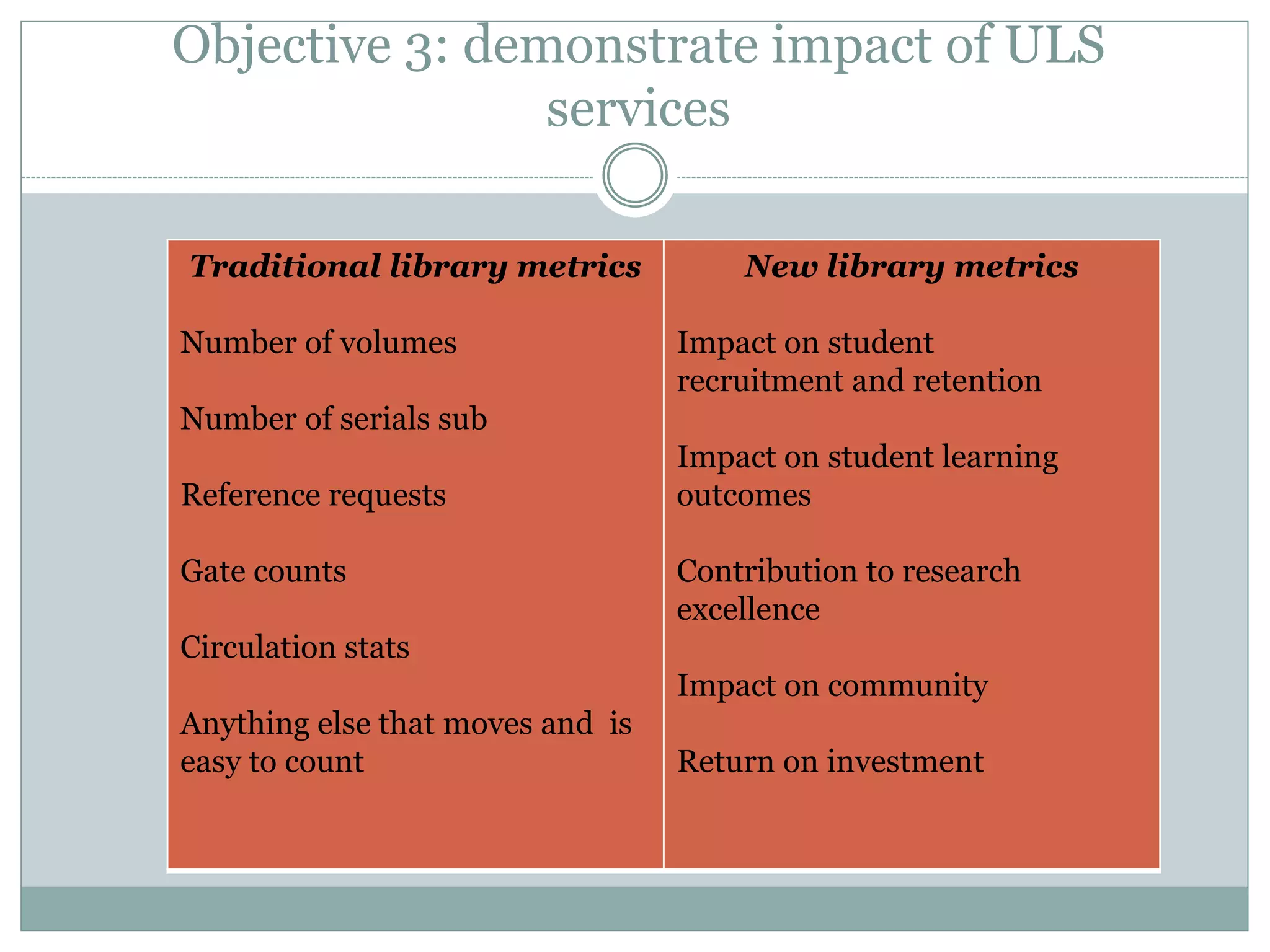
Objective 3: demonstrate impact of ULS
services
Traditional library metrics
Number of volumes
Number of serials sub
Reference requests
Gate counts
Circulation stats
Anything else that moves and is
easy to count
New library metrics
Impact on student
recruitment and retention
Impact on student learning
outcomes
Contribution to research
excellence
Impact on community
Return on investment
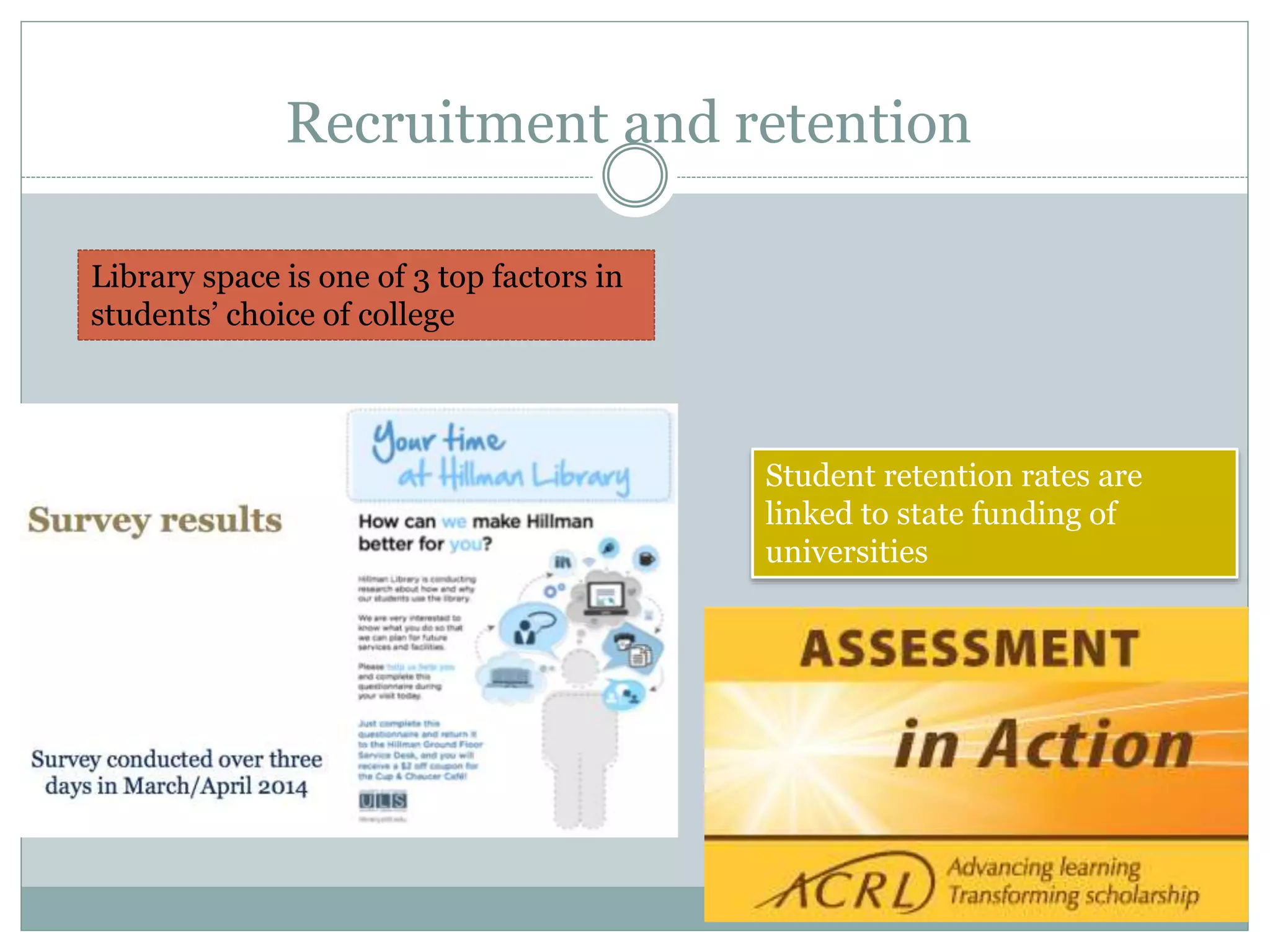
Recruitment and retention
Library space is one of 3 top factors in
students’ choice of college
Student retention rates are
linked to state funding of
universities
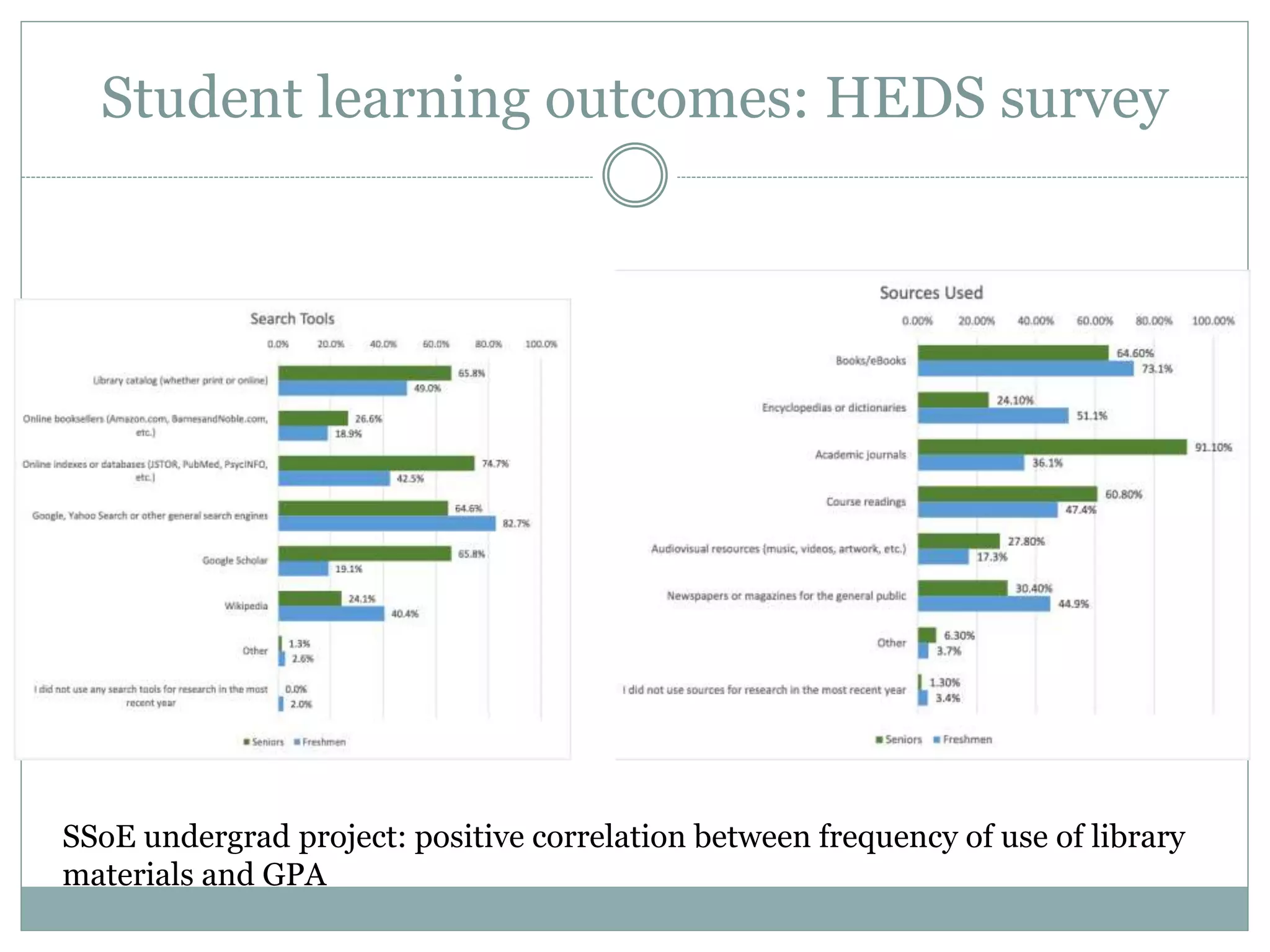
Student learning outcomes: HEDS survey
SSoE undergrad project: positive correlation between frequency of use of library
materials and GPA
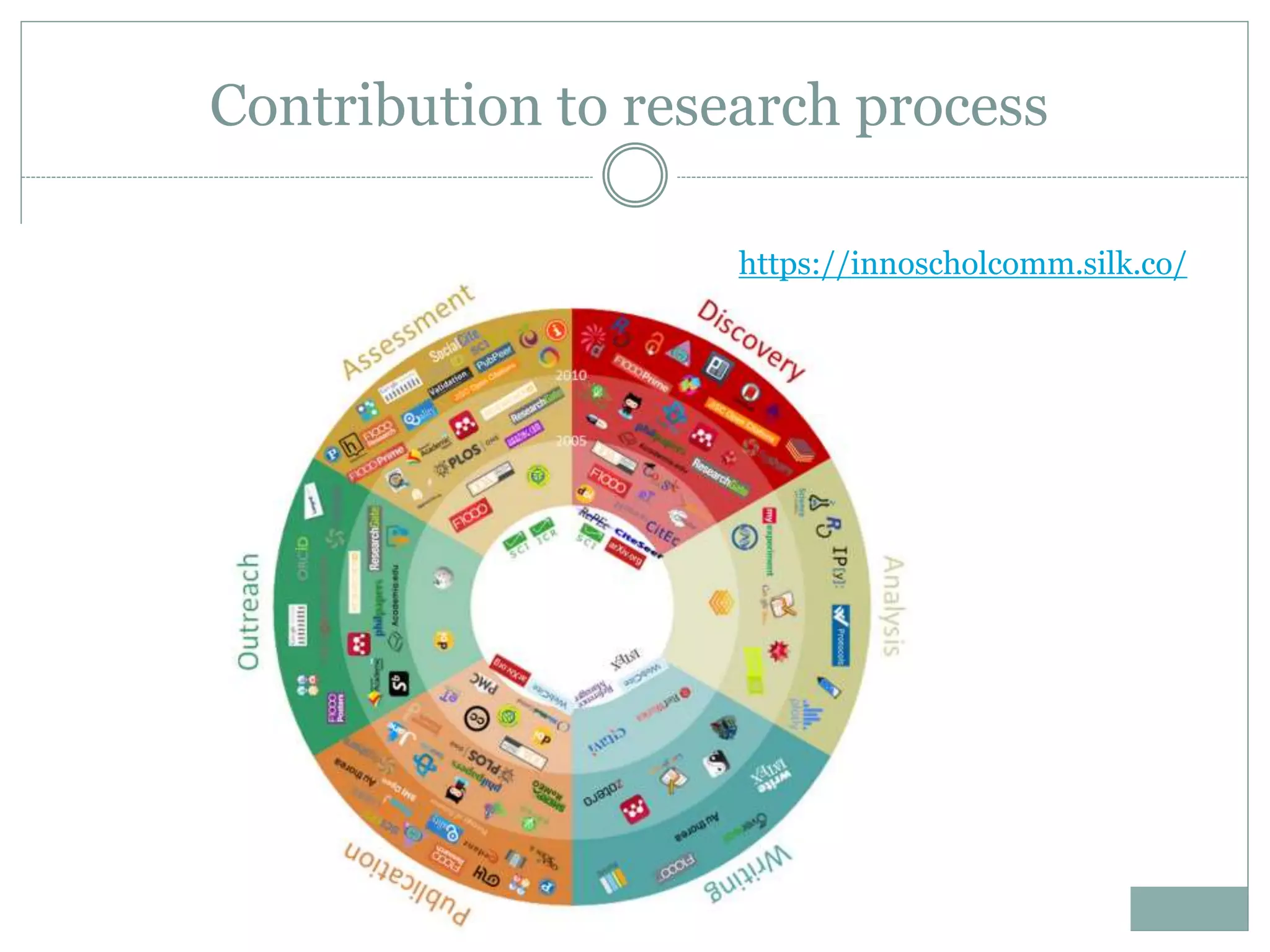
Contribution to research process
https://innoscholcomm.silk.co/
Contribution to research process
 New services (needs analysis)
 Data management
 Digital humanities
 Bibliometrics
 Collections assessment
 Neurology collection
 Planned liaison programme assessment
 Case studies and testimonials
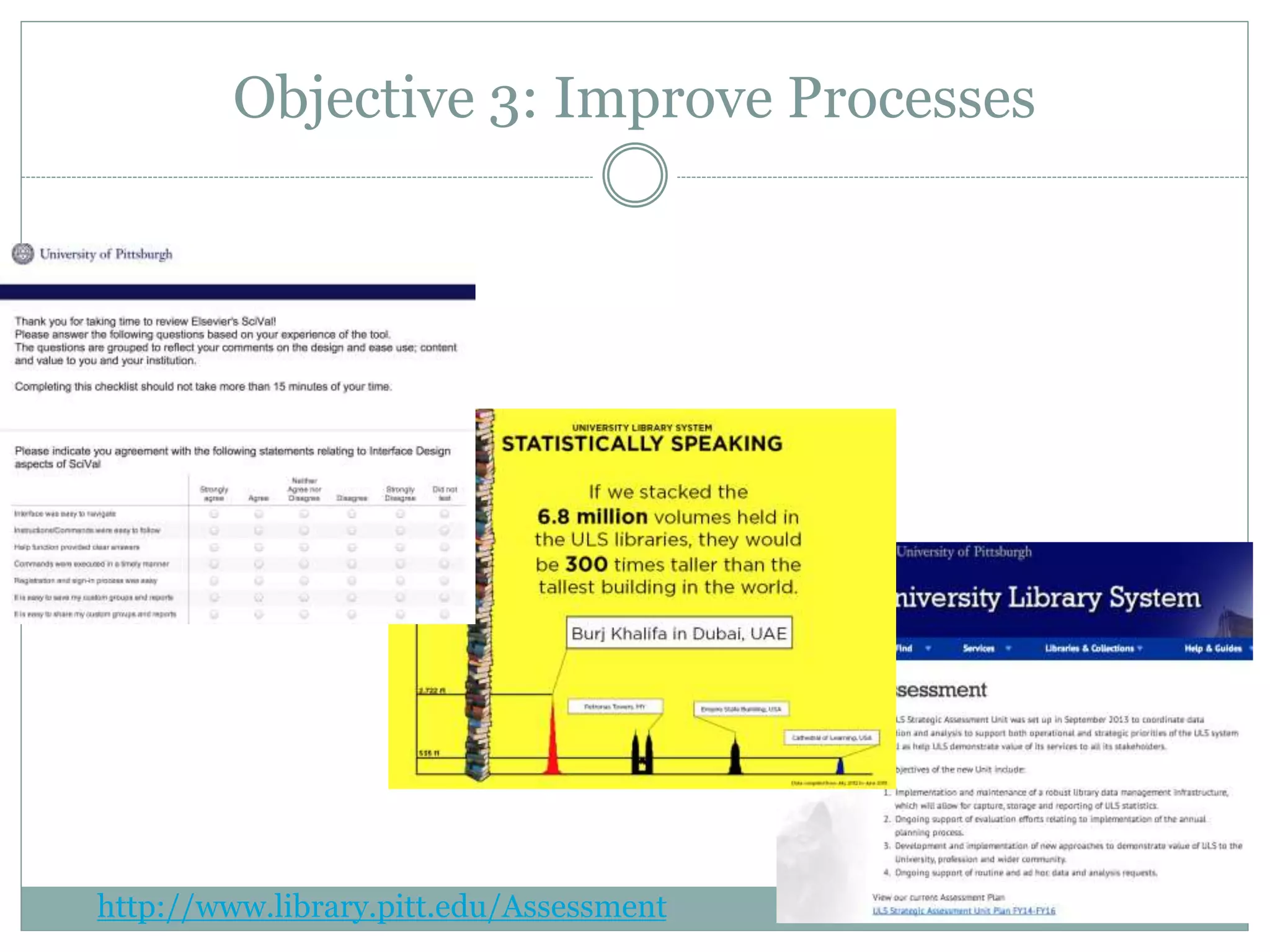
Objective 3: Improve Processes
http://www.library.pitt.edu/Assessment
New tools
New tools
Jack of all trades…
 Researcher
 Select appropriate data collection mechanism (satisfaction
survey is not always appropriate)
 Design data collection
 Analyse data
 Communicate and interpret findings
 Make recommendations
 Communicator
 Embedded into life of library
 Relationships with central administration (institutional research,
research office, registrar, etc.)
 Solid understanding of institutional mission and ambitions
Community
 ARL Assessment Group with its listserv
 ACRL assessment group
 ARL Assessment leadership workshop
 Annual conference (ARL and Northumbria)
 Performance Measurements and Metrics
 Association for Institutional Research (AIR)
website and annual forum

Library Assessment: principles and practice

  • 1.
    B E RE N I K A W E B S T E R , P H D U L S S T R A T E G I C A S S E S S M E N T U N I T H T T P : / / W W W . L I B R A R Y . P I T T . E D U / A S S E S S M E N T P I T T I S C H O O L L E C T U R E 8 D E C E M B E R 2 0 1 5 Library Assessment at ULS
  • 2.
    Pitt’s Statement ofAspiration and Strategic Priorities
  • 3.
    ULS strategic plan14-17 reflects ambitions of the University…
  • 4.
    Strategic Assessment Unit’sMission is … to coordinate data collection and analysis to support both strategic and operational priorities of the ULS and help ULS demonstrate value of its services to all its stakeholders.
  • 5.
    Since September 2013… Coordinator of Strategic Assessment hired  Establishment of Strategic Assessment Unit  Developed Unit plan for 2014-2016, approved by Senior Staff and incorporated into FY15 and FY16 Strategic Actions Acting UL Coordinator of Strategic Assessment Assessment Librarian (currently vacant) Data Analyst
  • 6.
    Who do weserve? Internal stakeholders External stakeholders ULS Senior Management needs to: · demonstrate value/impact of ULS and its services · promote ULS and its services · fundraise · budget · understand ranking and peer comparisons · report to University and external bodies · understand staff culture and satisfaction ULS service managers and committee chairs need: • evaluation of services: user needs, awareness, satisfaction and usage, measured and perceived value and impact • evidence-based prioritization and development of new services • to track progress towards set goals • to carry out staff performance assessment • to develop ability to plan and carry out assessment activities University administration (faculties and central) need: · periodic and ad hoc reports (rankings, trends, impact, strategic directions) · support for grant proposals, accreditations, etc. Library patrons · periodic and ad hoc reports (rankings, trends, impact, strategic directions) Professional bodies and peer institutions need: · libraries to share the best practice · periodic and ad hoc reports on inputs, outputs and outcomes
  • 7.
  • 8.
    Objective 2: Providerobust information for evidence-based decision making
  • 9.
  • 10.
  • 11.
  • 12.
  • 13.
  • 14.
  • 15.
    Objective 3: demonstrateimpact of ULS services Traditional library metrics Number of volumes Number of serials sub Reference requests Gate counts Circulation stats Anything else that moves and is easy to count New library metrics Impact on student recruitment and retention Impact on student learning outcomes Contribution to research excellence Impact on community Return on investment
  • 16.
    Recruitment and retention Libraryspace is one of 3 top factors in students’ choice of college Student retention rates are linked to state funding of universities
  • 17.
    Student learning outcomes:HEDS survey SSoE undergrad project: positive correlation between frequency of use of library materials and GPA
  • 18.
    Contribution to researchprocess https://innoscholcomm.silk.co/
  • 19.
    Contribution to researchprocess  New services (needs analysis)  Data management  Digital humanities  Bibliometrics  Collections assessment  Neurology collection  Planned liaison programme assessment  Case studies and testimonials
  • 20.
    Objective 3: ImproveProcesses http://www.library.pitt.edu/Assessment
  • 21.
  • 22.
  • 23.
    Jack of alltrades…  Researcher  Select appropriate data collection mechanism (satisfaction survey is not always appropriate)  Design data collection  Analyse data  Communicate and interpret findings  Make recommendations  Communicator  Embedded into life of library  Relationships with central administration (institutional research, research office, registrar, etc.)  Solid understanding of institutional mission and ambitions
  • 24.
    Community  ARL AssessmentGroup with its listserv  ACRL assessment group  ARL Assessment leadership workshop  Annual conference (ARL and Northumbria)  Performance Measurements and Metrics  Association for Institutional Research (AIR) website and annual forum