IMAGING AND DESIGN
FOR SOCIAL IMPACT
Lesson Objective:
.At the end of the module, the learners will
be able to:
1.Understand the basic concepts like colors,
typography, images.
2.Understand the principles and
techniques of design using application
(whether opensource or proprietary) to
develop contents for social campaigns;
and
3.Discuss the importance of having a good
design to communicate visually.
”.
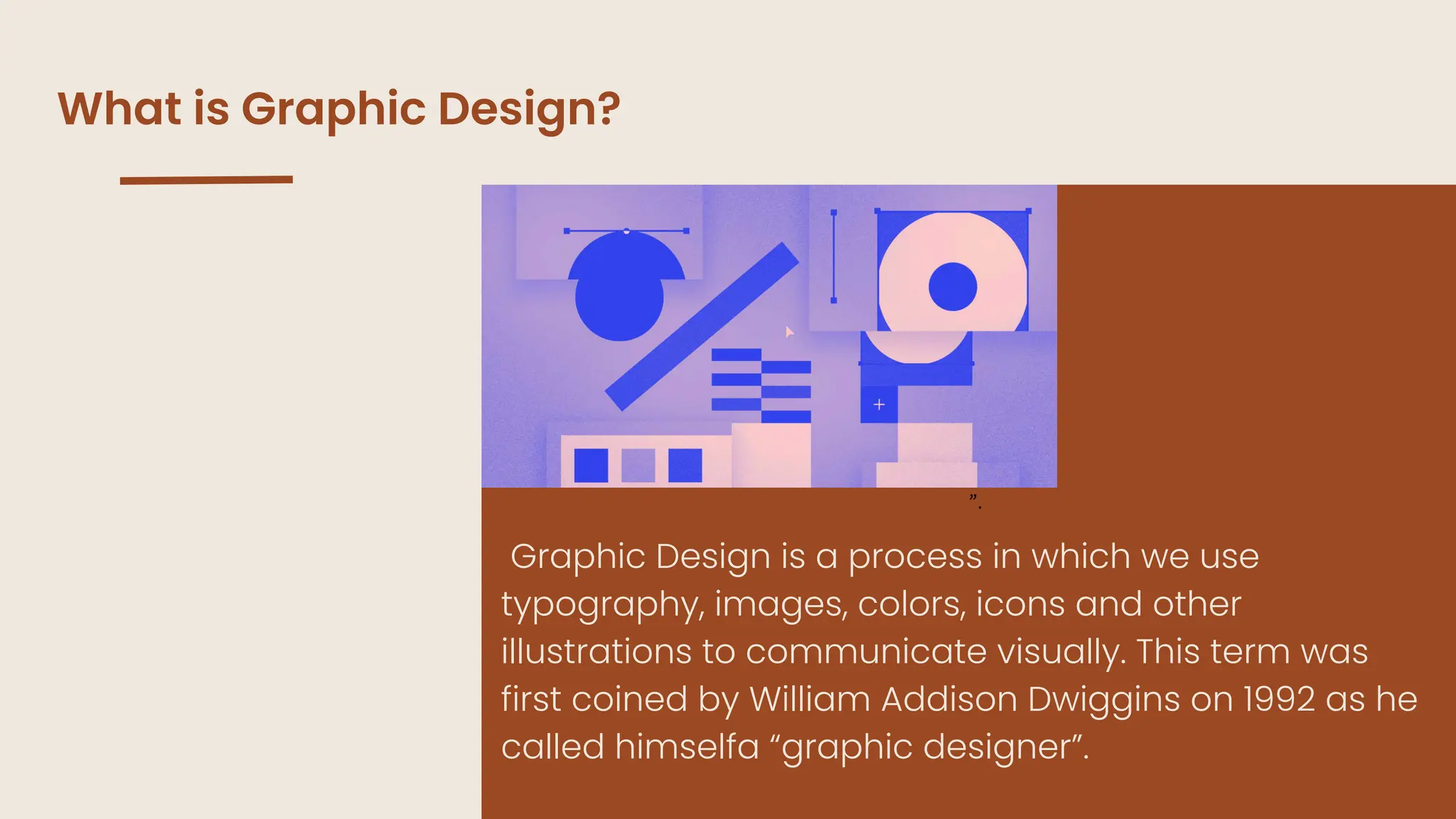
What is Graphic Design?
Graphic Design is a process in which we use
typography, images, colors, icons and other
illustrations to communicate visually. This term was
first coined by William Addison Dwiggins on 1992 as he
called himselfa “graphic designer”.
Basic elements of
graphic design
·Lines
·Shapes
·Form
·Texture
·Balancee
Line
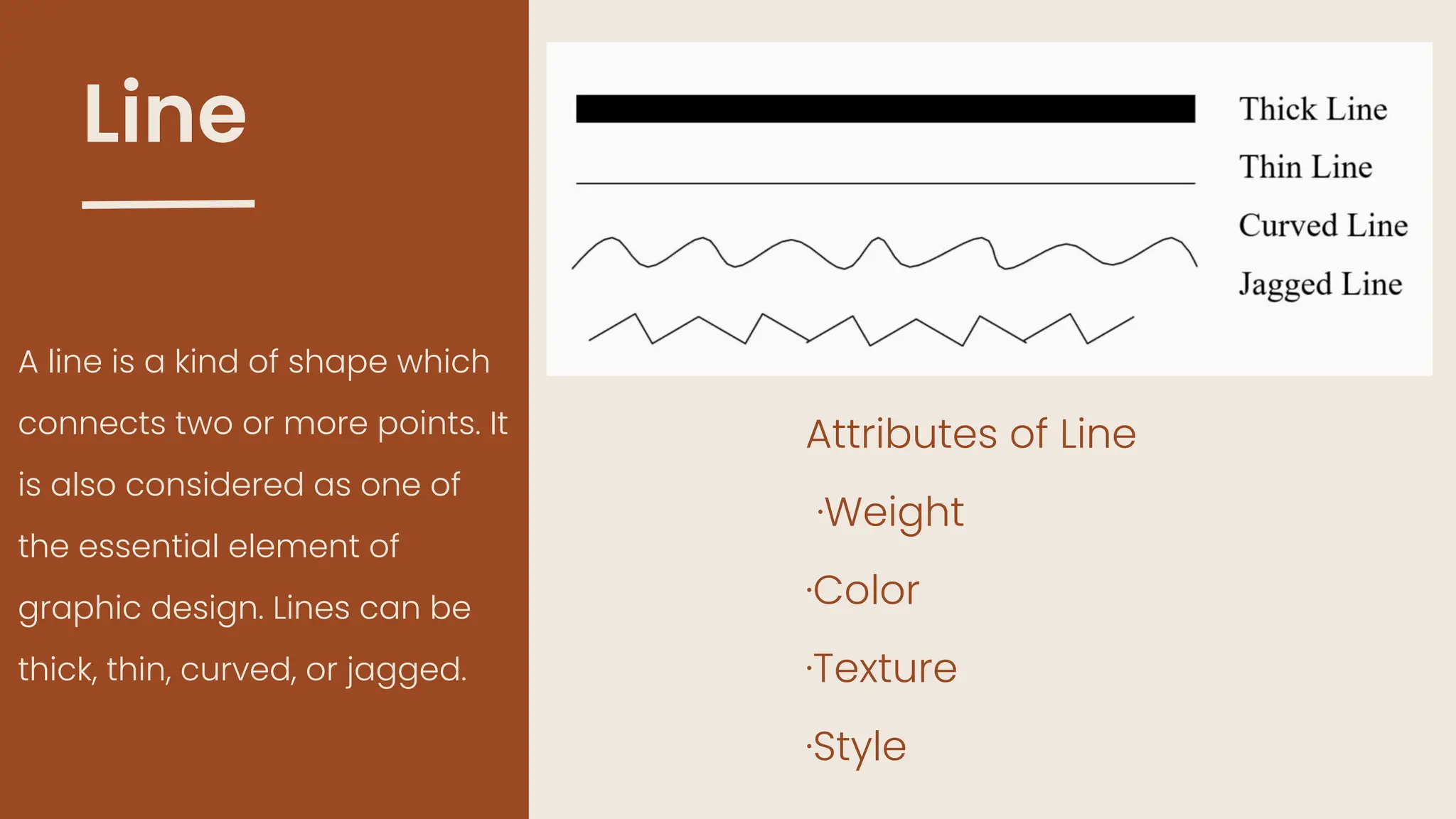
A line is a kind of shape which
connects two or more points. It
is also considered as one of
the essential element of
graphic design. Lines can be
thick, thin, curved, or jagged.
Attributes of Line
·Weight
·Color
·Texture
·Style
Shape
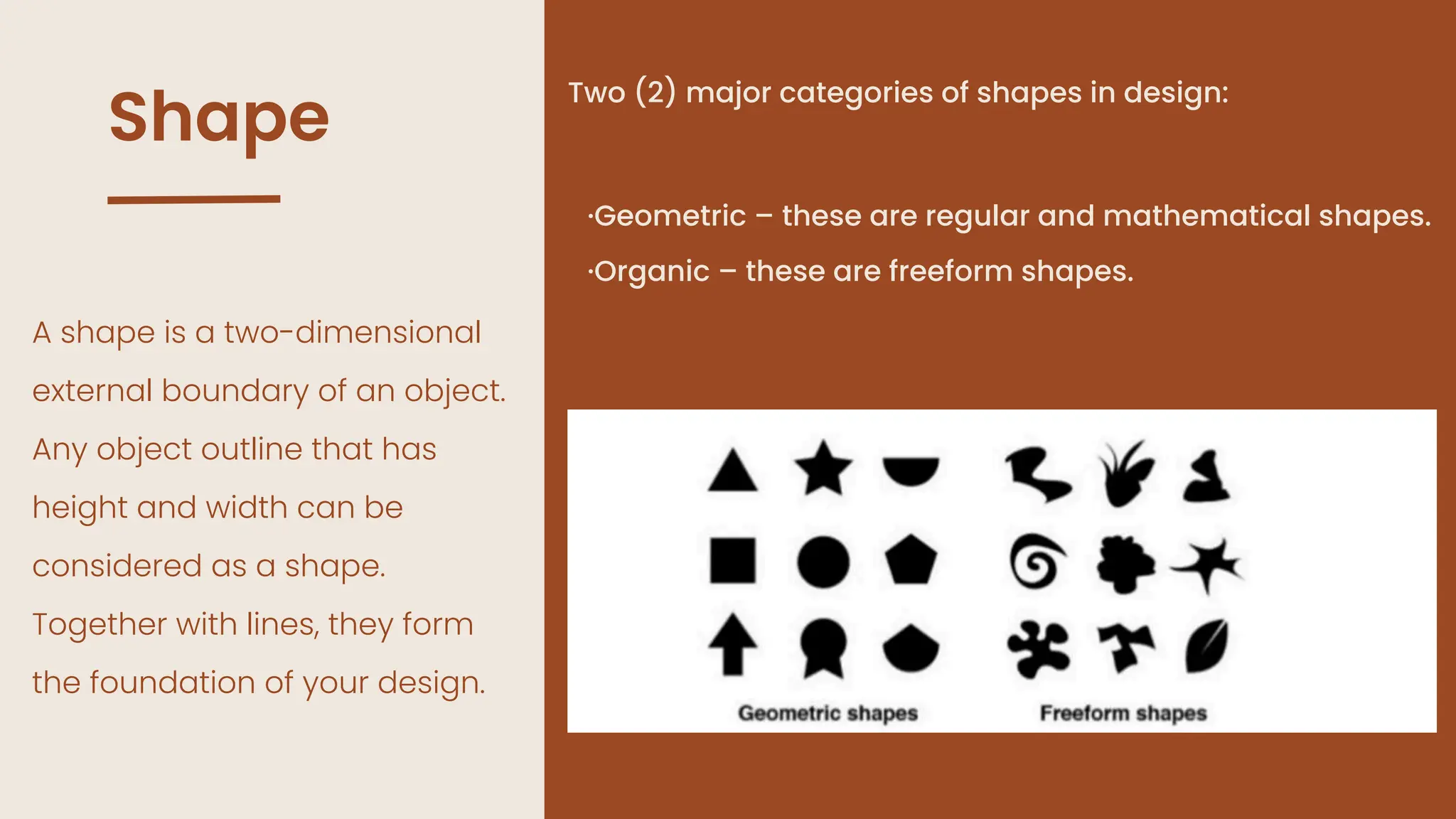
A shape is a two-dimensional
external boundary of an object.
Any object outline that has
height and width can be
considered as a shape.
Together with lines, they form
the foundation of your design.
Two (2) major categories of shapes in design:
·Geometric – these are regular and mathematical shapes.
·Organic – these are freeform shapes.
Form
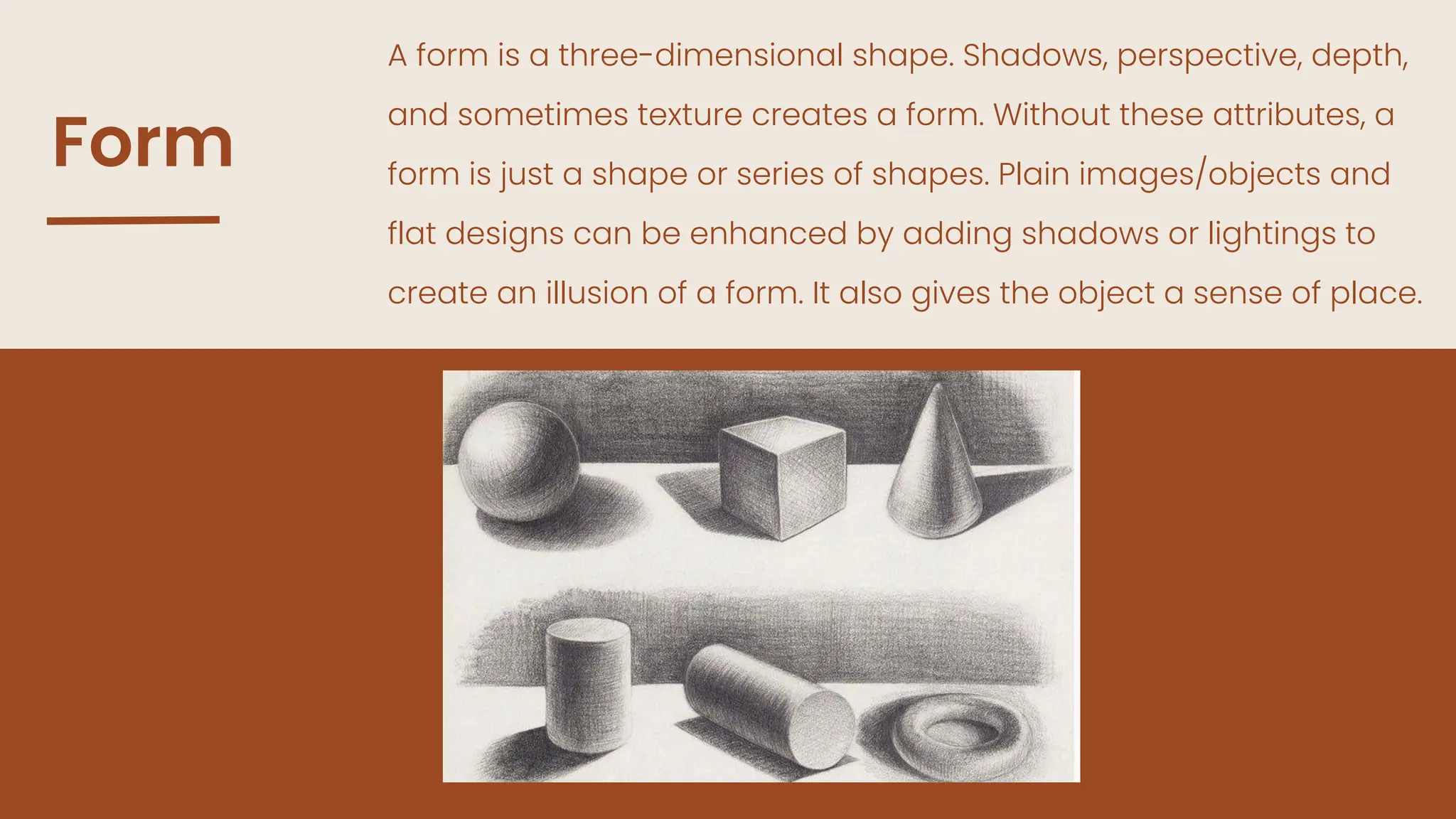
A form is a three-dimensional shape. Shadows, perspective, depth,
and sometimes texture creates a form. Without these attributes, a
form is just a shape or series of shapes. Plain images/objects and
flat designs can be enhanced by adding shadows or lightings to
create an illusion of a form. It also gives the object a sense of place.
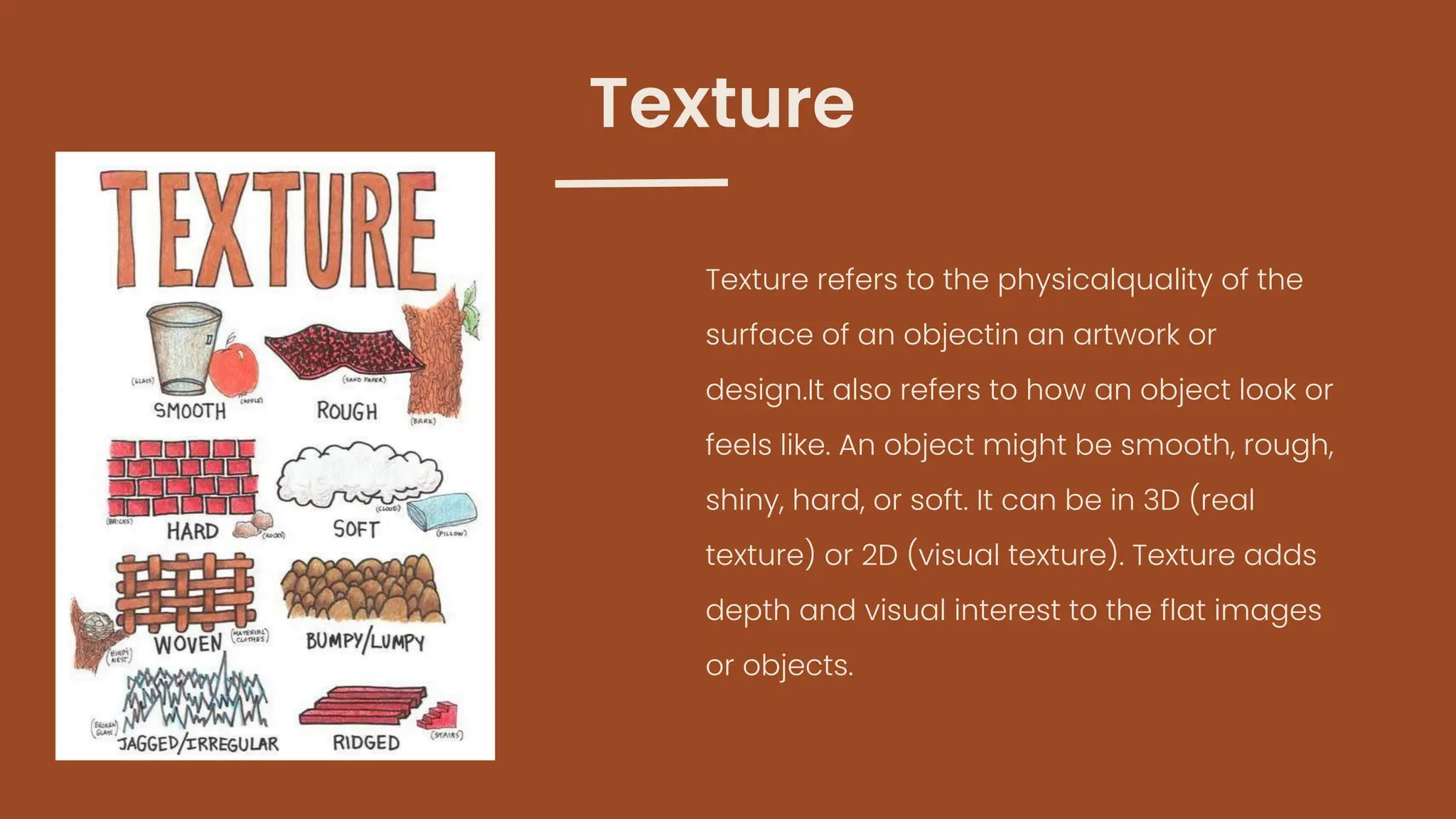
Texture refers to the physicalquality of the
surface of an objectin an artwork or
design.It also refers to how an object look or
feels like. An object might be smooth, rough,
shiny, hard, or soft. It can be in 3D (real
texture) or 2D (visual texture). Texture adds
depth and visual interest to the flat images
or objects.
Texture
Balance
Visual balance is the creation of visual equilibrium
by relating elements such as line, shape, color,
space or form in terms of their visual weight.
Two kinds of
visual balance:
Symmetrical
balance
1.
Asymmetrical
balance
2.
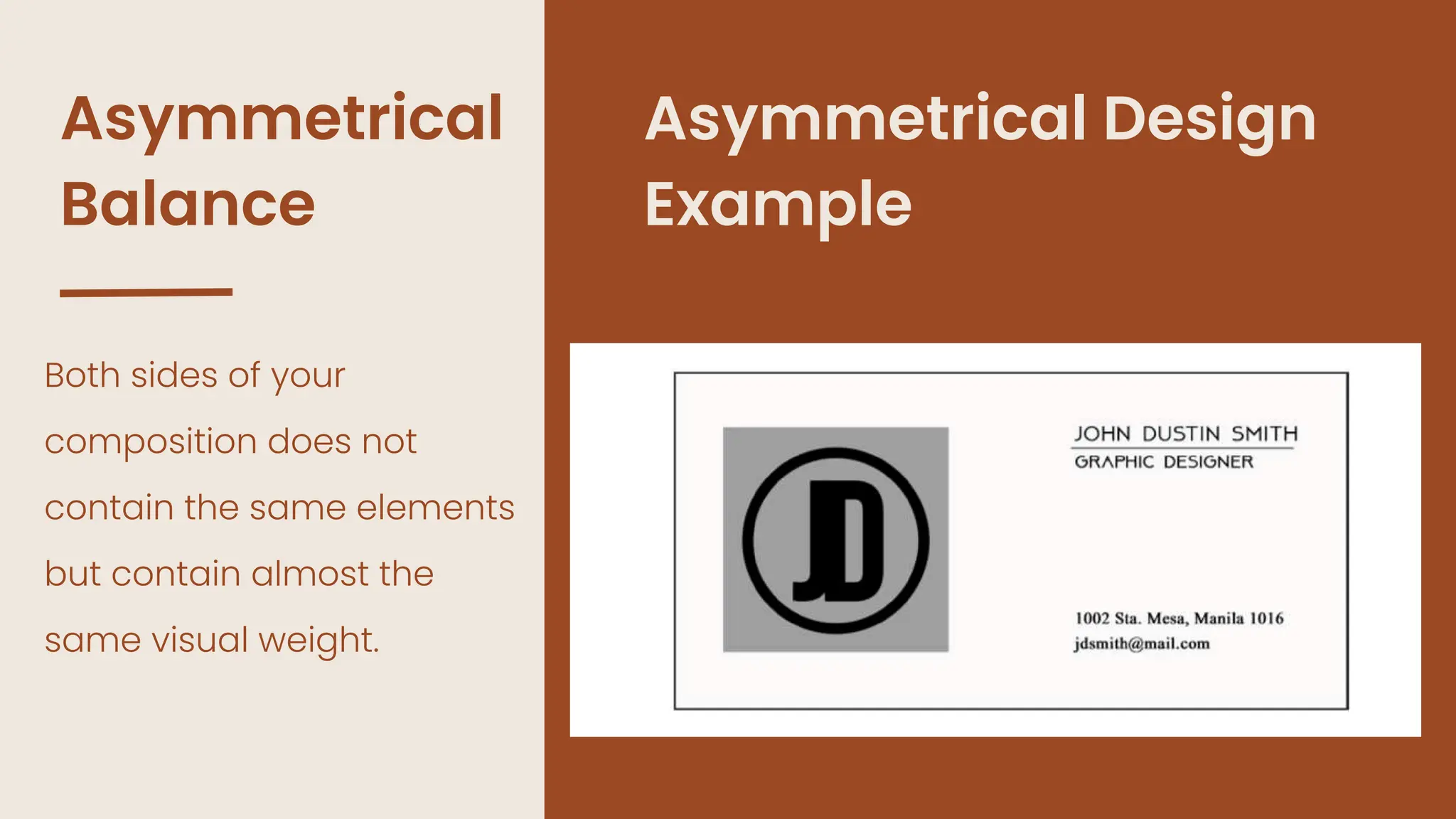
1.From the name itself, symmetrical
balance, which includes radial symmetry
is when both two sides of a piece are
equal. If you fold your artwork or piece into
two or if you put an imaginary line
between your artwork, each half is
identical or visually similar to the other
half.
Symmetrical balance
Symmetrical Design
Example
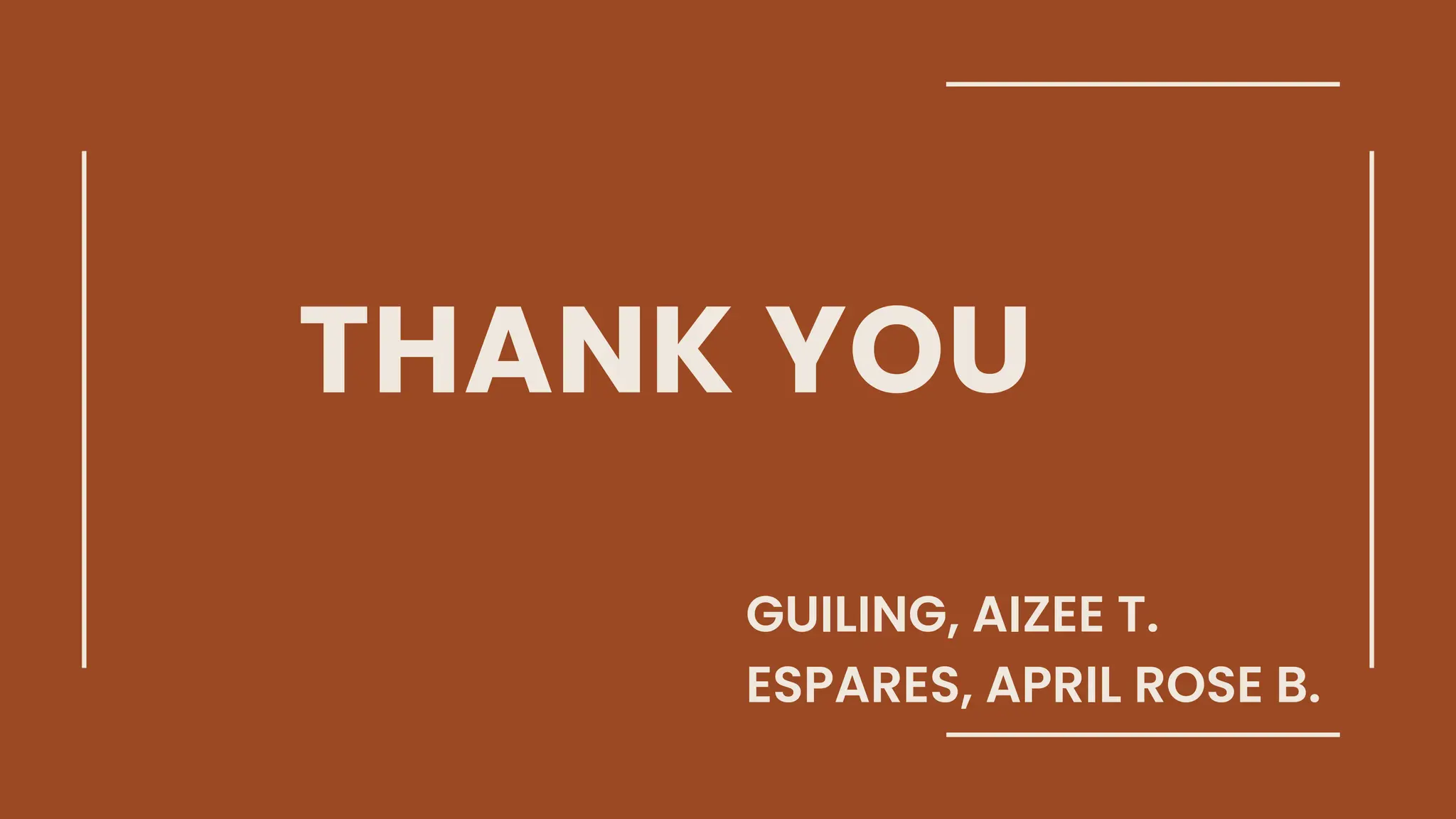
Asymmetrical
Balance
Both sides of your
composition does not
contain the same elements
but contain almost the
same visual weight.
Asymmetrical Design
Example
THANK YOU
GUILING, AIZEE T.
ESPARES, APRIL ROSE B.

LESSON-1.-IMAGING-AND-DESIGN-FOR-SOCIALS

  • 1.
  • 2.
    Lesson Objective: .At theend of the module, the learners will be able to: 1.Understand the basic concepts like colors, typography, images. 2.Understand the principles and techniques of design using application (whether opensource or proprietary) to develop contents for social campaigns; and 3.Discuss the importance of having a good design to communicate visually.
  • 3.
    ”. What is GraphicDesign? Graphic Design is a process in which we use typography, images, colors, icons and other illustrations to communicate visually. This term was first coined by William Addison Dwiggins on 1992 as he called himselfa “graphic designer”.
  • 4.
    Basic elements of graphicdesign ·Lines ·Shapes ·Form ·Texture ·Balancee
  • 5.
    Line A line isa kind of shape which connects two or more points. It is also considered as one of the essential element of graphic design. Lines can be thick, thin, curved, or jagged. Attributes of Line ·Weight ·Color ·Texture ·Style
  • 6.
    Shape A shape isa two-dimensional external boundary of an object. Any object outline that has height and width can be considered as a shape. Together with lines, they form the foundation of your design. Two (2) major categories of shapes in design: ·Geometric – these are regular and mathematical shapes. ·Organic – these are freeform shapes.
  • 7.
    Form A form isa three-dimensional shape. Shadows, perspective, depth, and sometimes texture creates a form. Without these attributes, a form is just a shape or series of shapes. Plain images/objects and flat designs can be enhanced by adding shadows or lightings to create an illusion of a form. It also gives the object a sense of place.
  • 8.
    Texture refers tothe physicalquality of the surface of an objectin an artwork or design.It also refers to how an object look or feels like. An object might be smooth, rough, shiny, hard, or soft. It can be in 3D (real texture) or 2D (visual texture). Texture adds depth and visual interest to the flat images or objects. Texture
  • 9.
    Balance Visual balance isthe creation of visual equilibrium by relating elements such as line, shape, color, space or form in terms of their visual weight. Two kinds of visual balance: Symmetrical balance 1. Asymmetrical balance 2.
  • 10.
    1.From the nameitself, symmetrical balance, which includes radial symmetry is when both two sides of a piece are equal. If you fold your artwork or piece into two or if you put an imaginary line between your artwork, each half is identical or visually similar to the other half. Symmetrical balance Symmetrical Design Example
  • 11.
    Asymmetrical Balance Both sides ofyour composition does not contain the same elements but contain almost the same visual weight. Asymmetrical Design Example
  • 12.
    THANK YOU GUILING, AIZEET. ESPARES, APRIL ROSE B.