Download to read offline

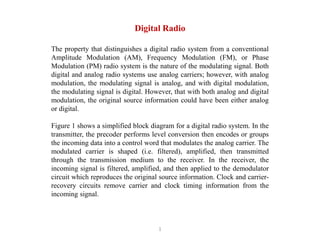
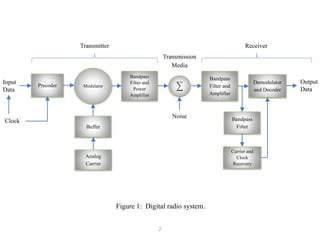
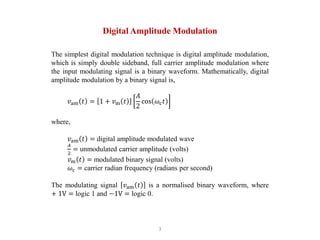
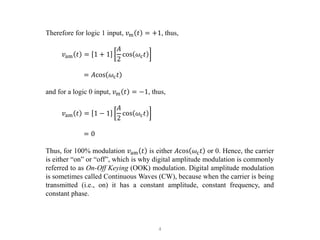
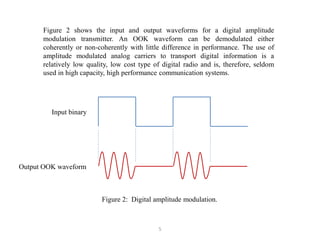
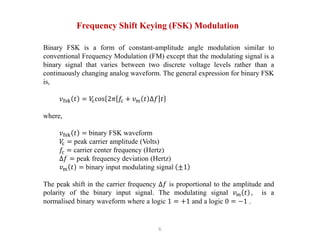
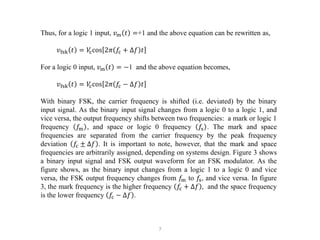
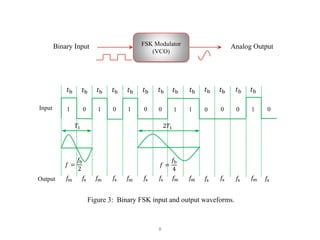
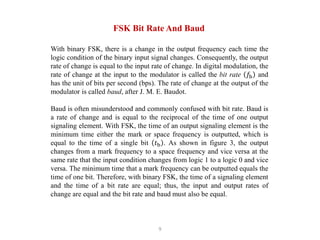
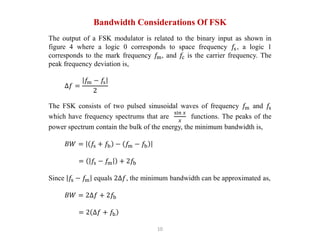
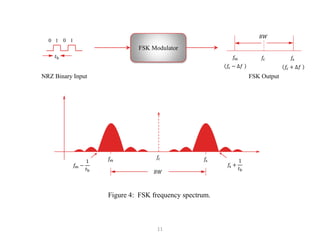
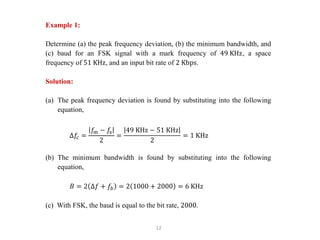
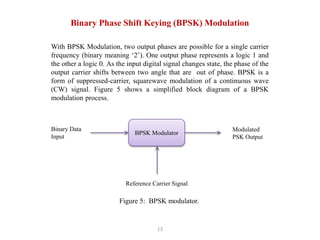
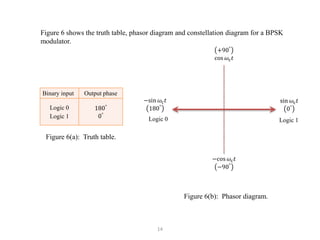
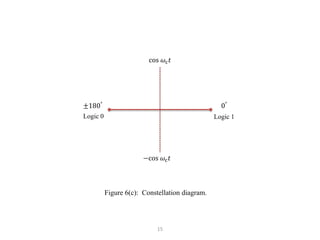
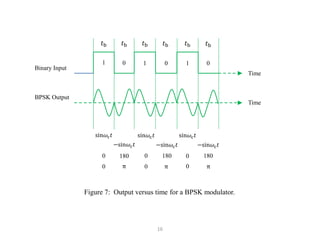
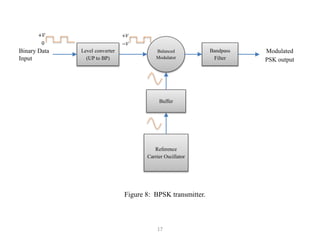
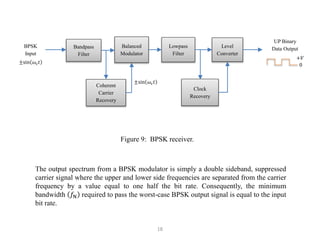
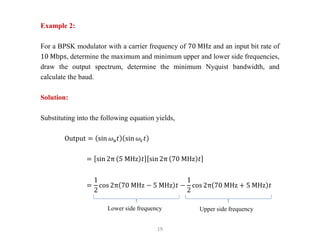
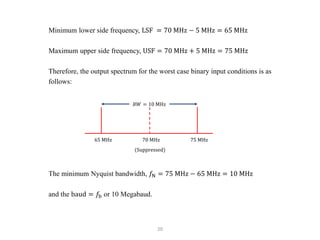
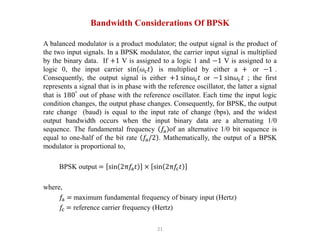
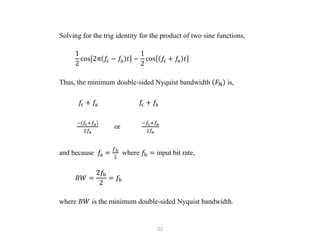
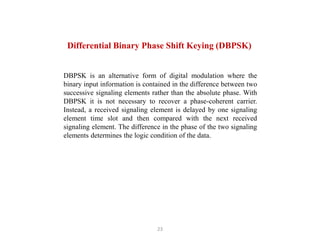
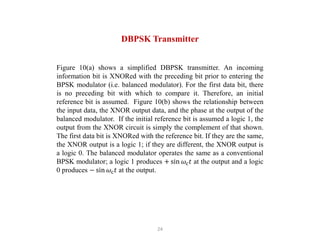
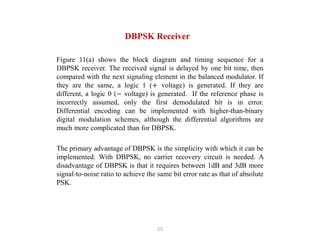
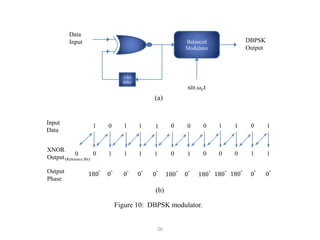
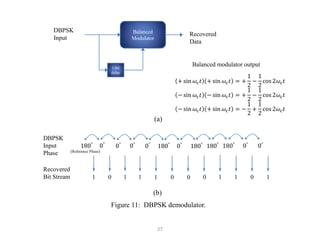
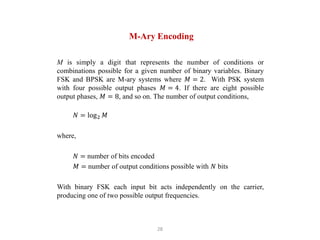
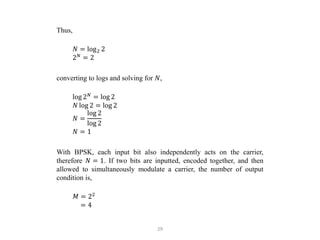
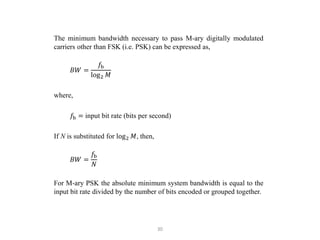
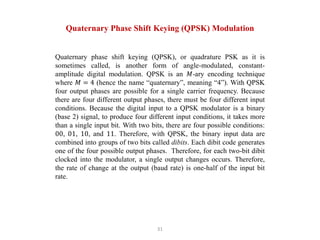
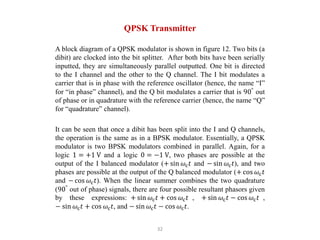
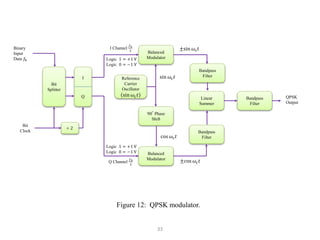
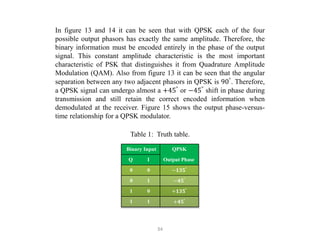
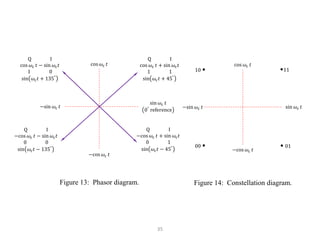
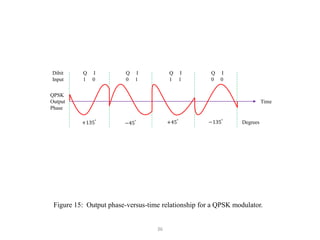
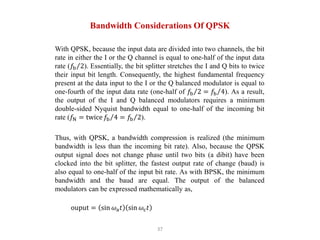
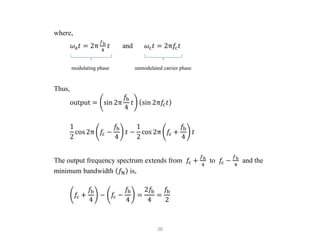
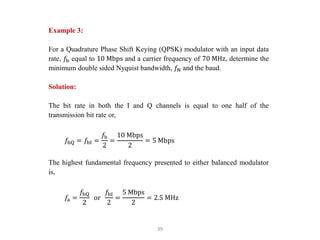
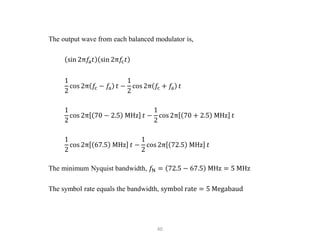
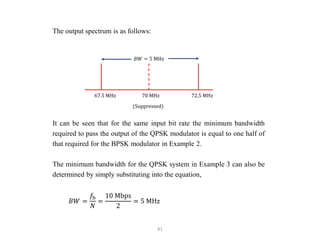
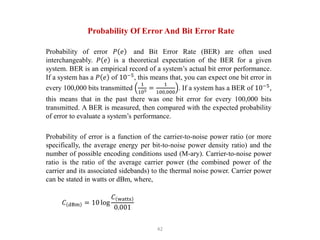
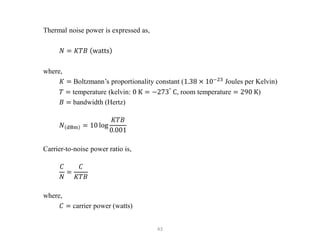
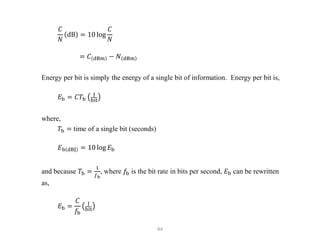
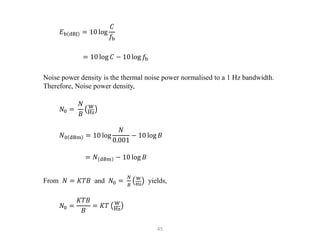
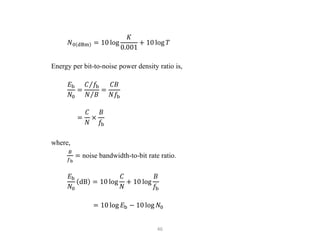
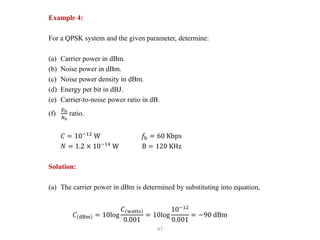
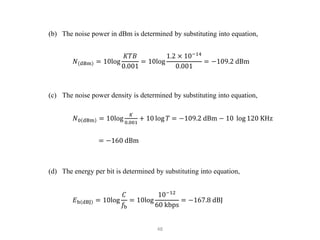
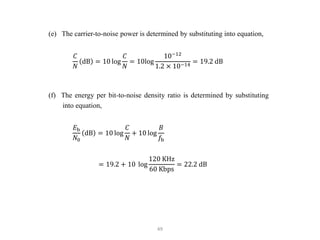

This document discusses digital modulation techniques used in digital radio systems. It begins by explaining the key difference between digital and analog modulation is that the modulating signal in digital modulation is digital rather than analog. It then provides a block diagram of a basic digital radio system including a precoder, modulator, transmission medium, and demodulator. It goes on to describe several digital modulation techniques in detail, including digital amplitude modulation (OOK), frequency shift keying (FSK), and binary phase shift keying (BPSK). For each technique it provides the mathematical expression, describes how the digital input maps to the modulated output signal, and discusses relevant parameters like bandwidth. Examples are also provided to demonstrate how to calculate key values


