1Lamb, Hair, McDaniel2010-2011CHAPTER 9Decision Support Systems and Marketing Research
2Marketing Decision Support SystemsExplain the concept and purpose of a marketing decision support systemLO1
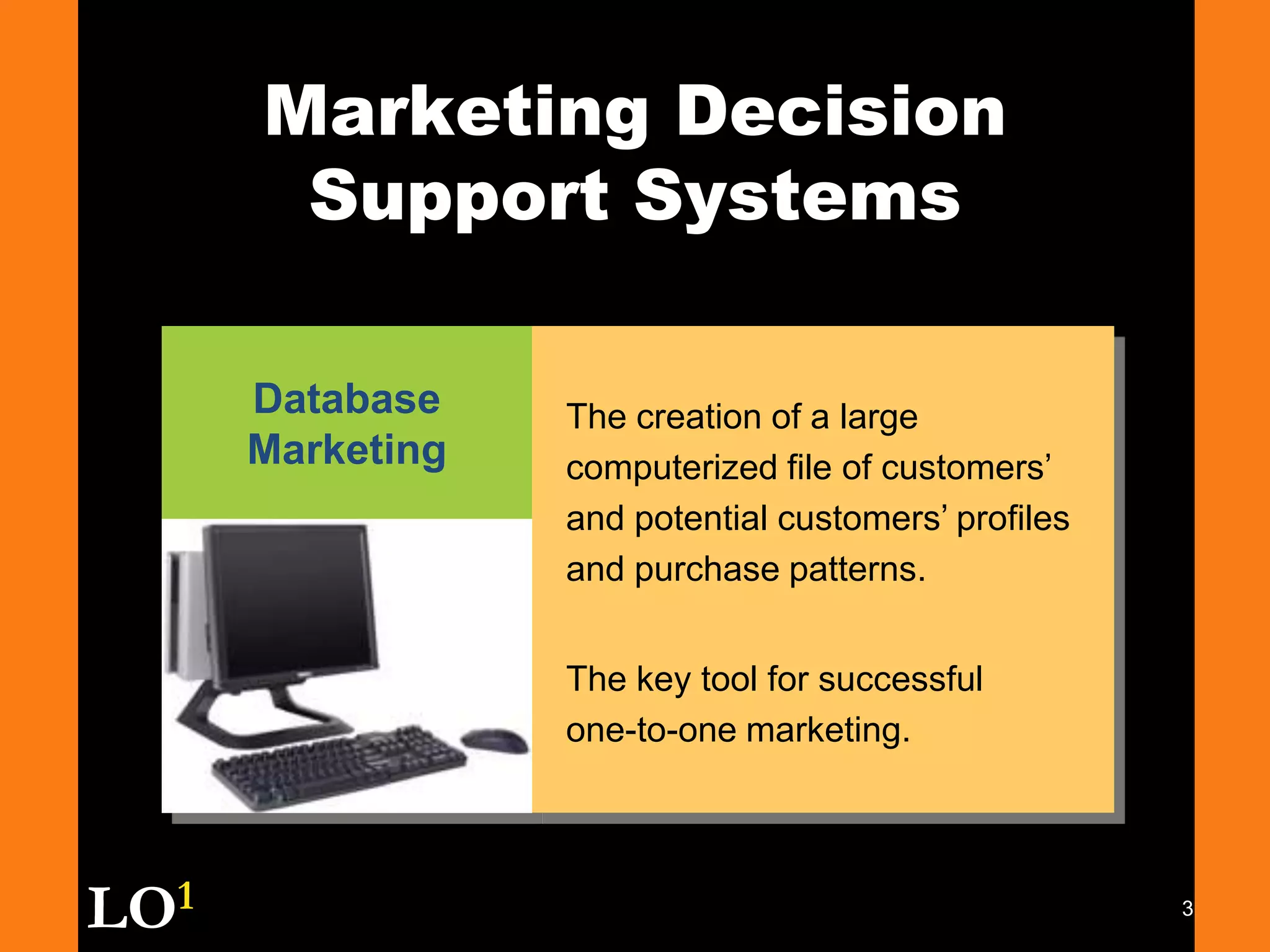
3DatabaseMarketingMarketing DecisionSupport SystemsThe creation of a large computerized file of customers’ and potential customers’ profiles and purchase patterns.The key tool for successfulone-to-one marketing.LO1
4The Role ofMarketing ResearchDefine marketing research and explain its importance to marketing decision makingLO2
5MarketingResearchThe Role ofMarketing ResearchThe process of planning, collecting, and analyzing data relevant to a marketing decision.LO2
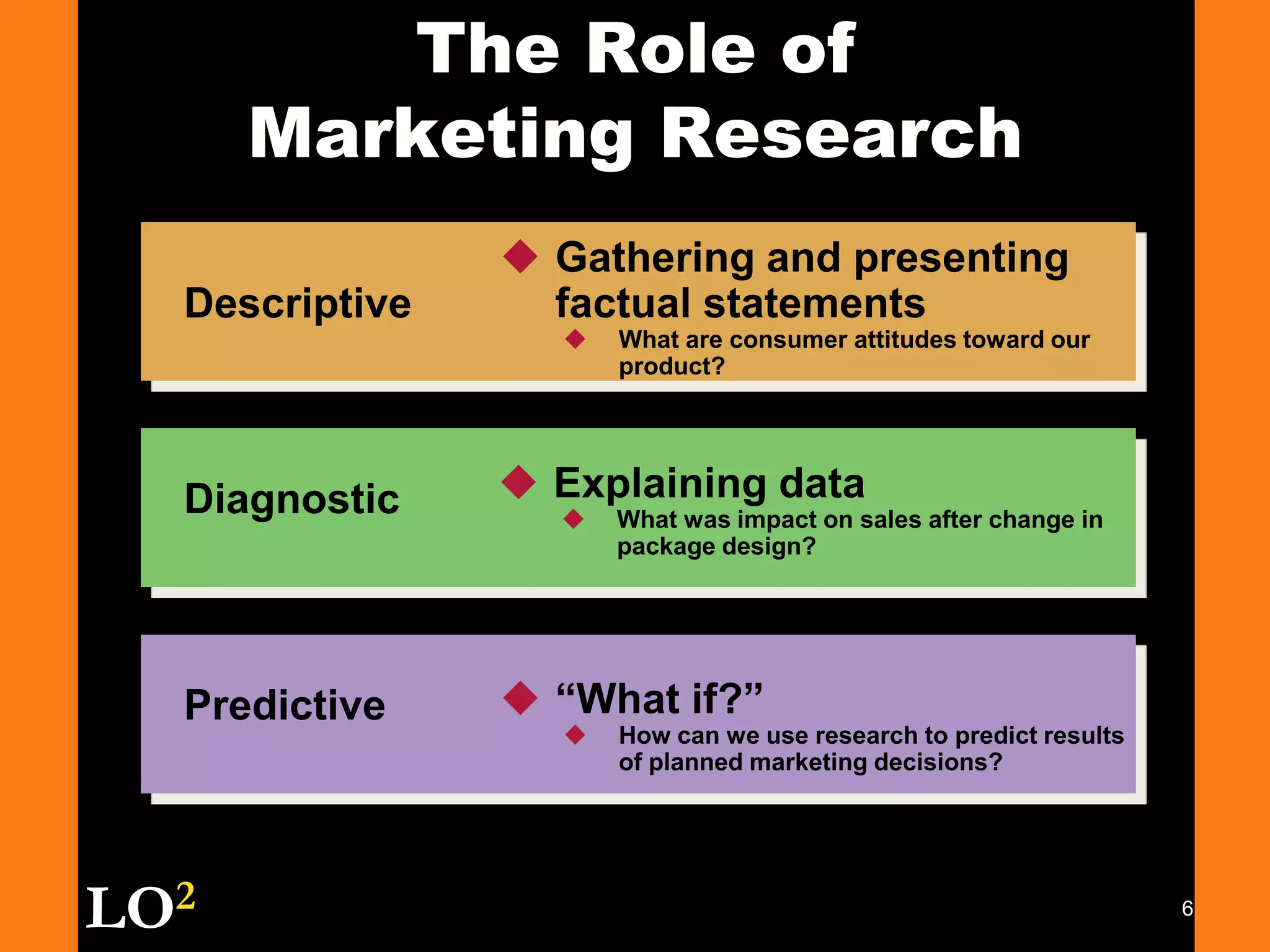
6Gathering and presenting factual statements
What are consumer attitudes toward our product?DescriptiveExplaining data
What was impact on sales after change in package design?Diagnostic“What if?”
How can we use research to predict results of planned marketing decisions?PredictiveThe Role ofMarketing ResearchLO2
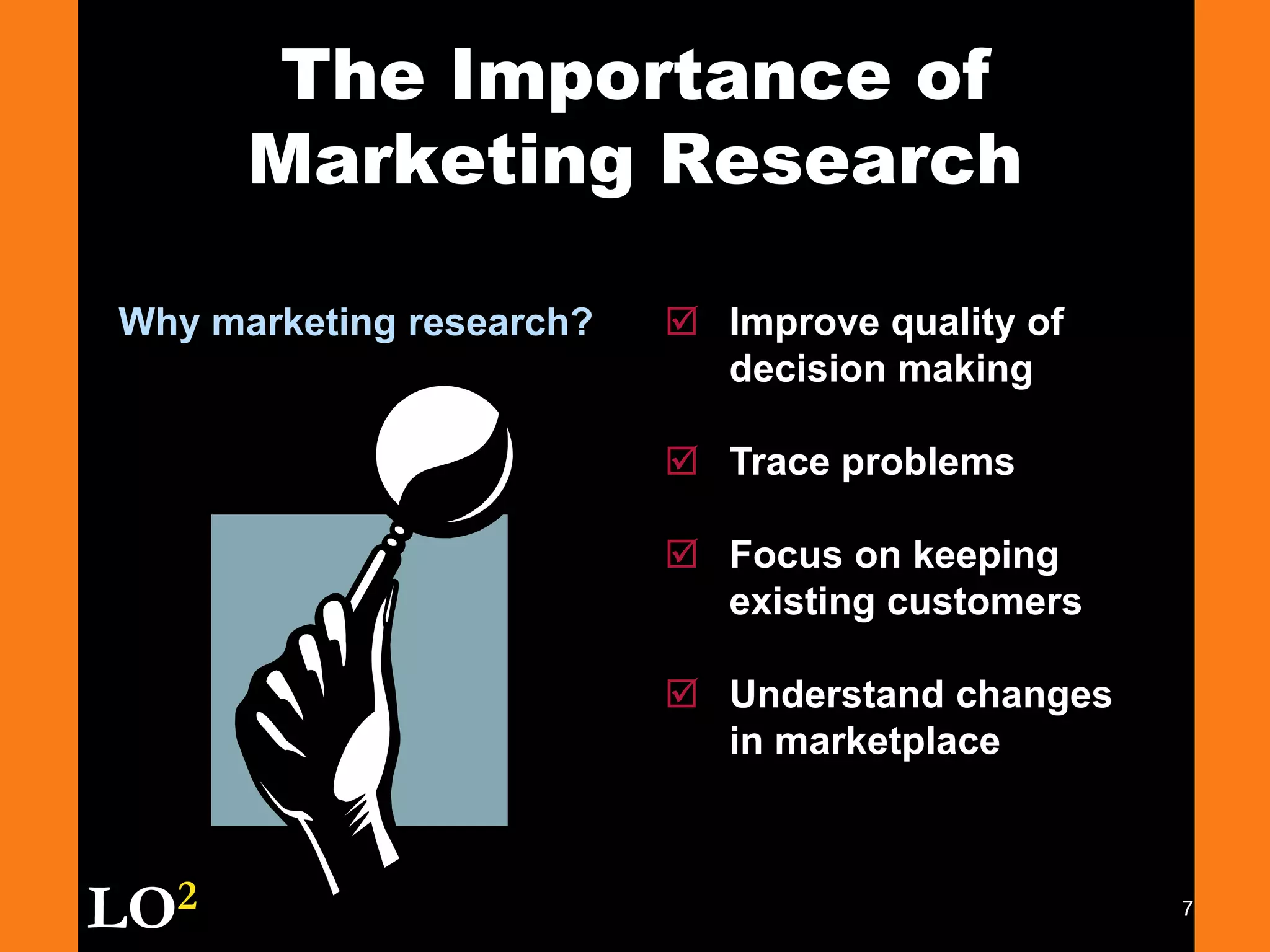
7Improve quality of decision making
Trace problems
Focus on keeping existing customers
Understand changes in marketplaceWhy marketing research?The Importance of Marketing ResearchLO2
8Steps in a Marketing Research ProjectDescribe the steps involved in conducting a marketing research projectLO3
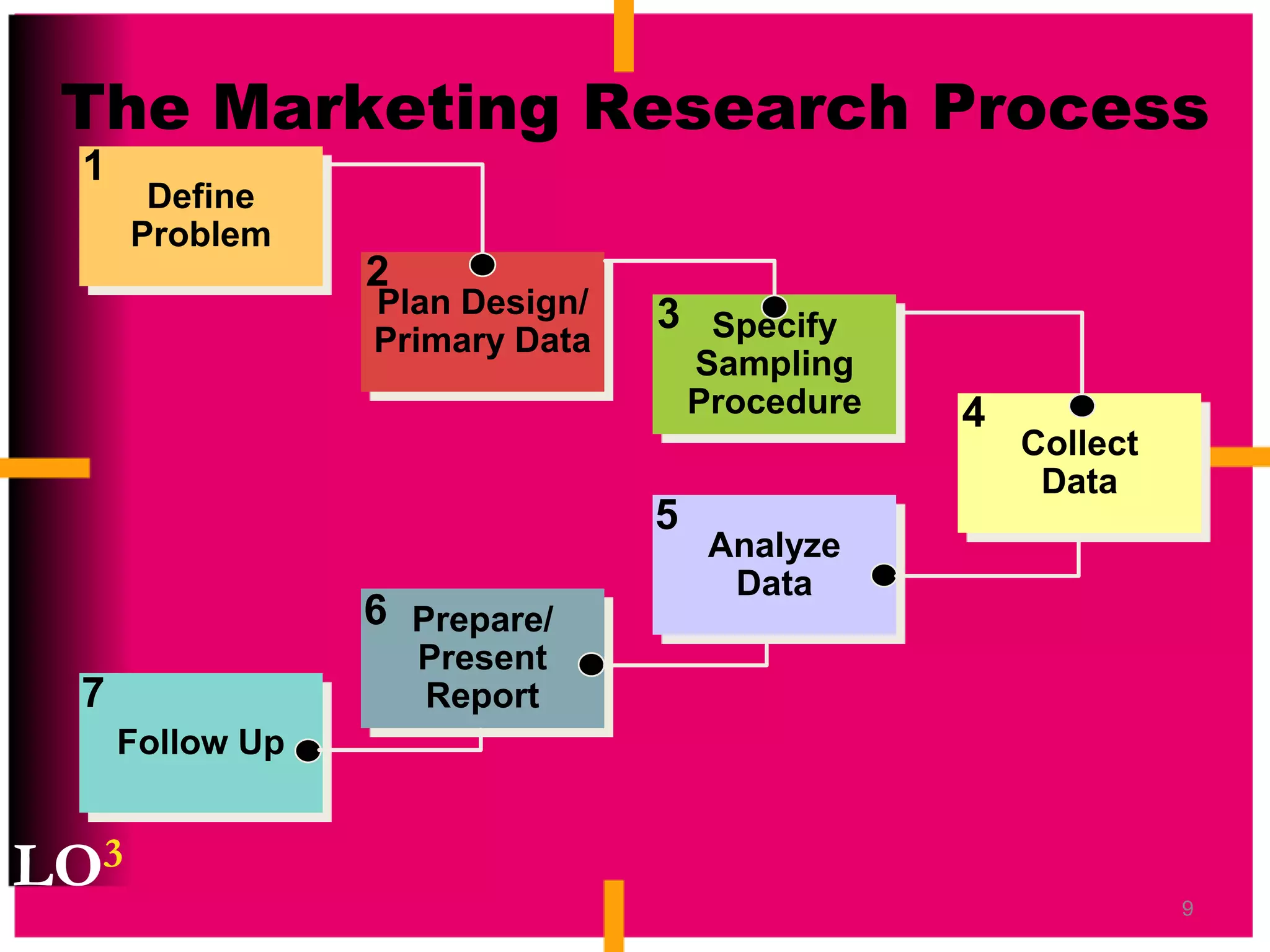
9DefineProblemPlan Design/Primary DataSpecifySamplingProcedureCollectDataAnalyzeDataPrepare/PresentReportFollow UpThe Marketing Research Process1234567LO3
10Secondary DataInformation previously collected for any purpose other than the one at hand.Advantages: Saves time and money if on target
Aids in determining direction for primary data collection
Pinpoints the kinds of people to approach
Serves as a basis of comparison for other dataLO3
11Disadvantages of Secondary DataMay not give adequate detailed information
May not be on target with the research problem
Quality and accuracy of data may pose a problemLO3
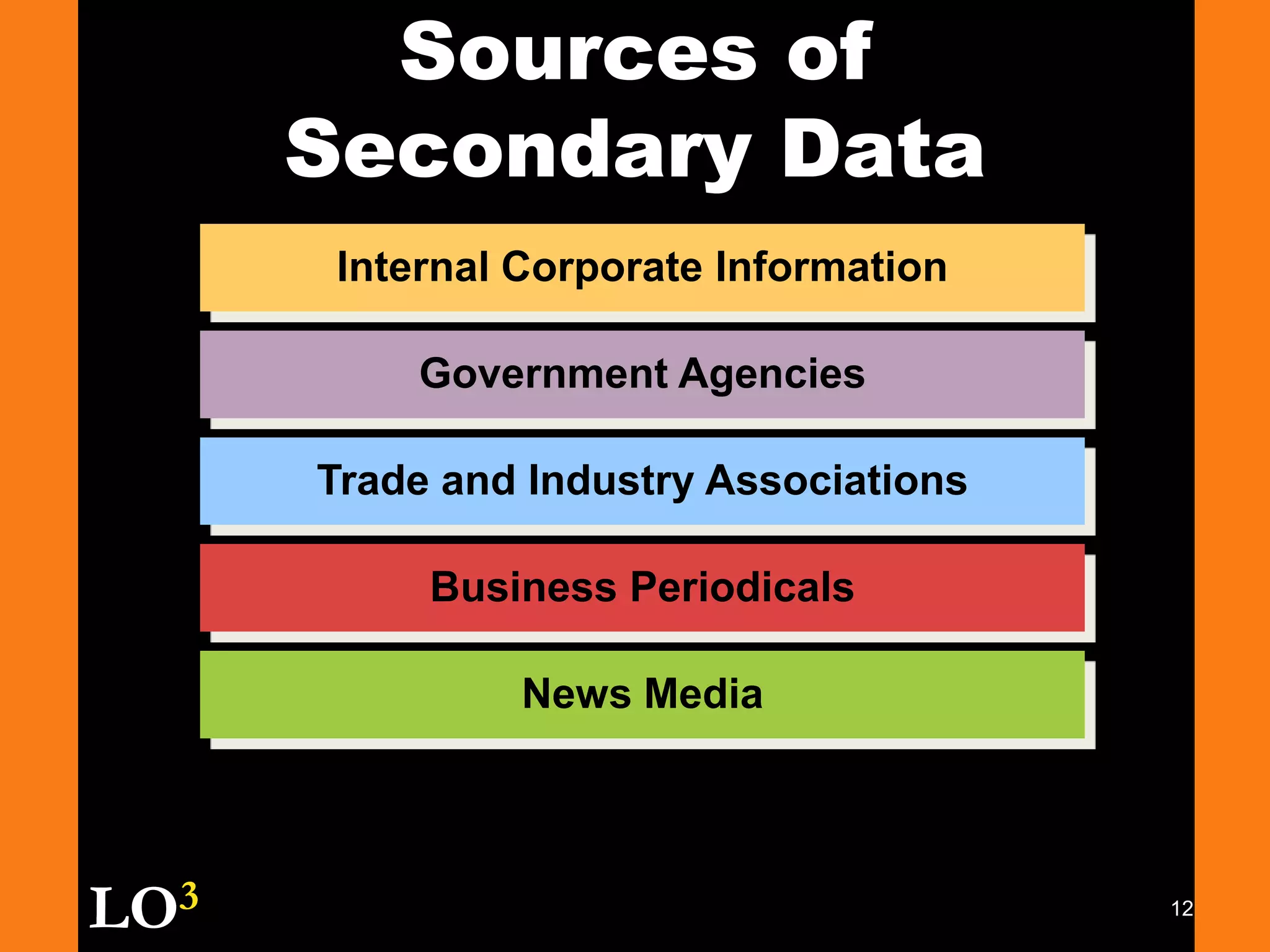
12Internal Corporate InformationGovernment AgenciesTrade and Industry AssociationsBusiness PeriodicalsNews MediaSources of Secondary DataLO3
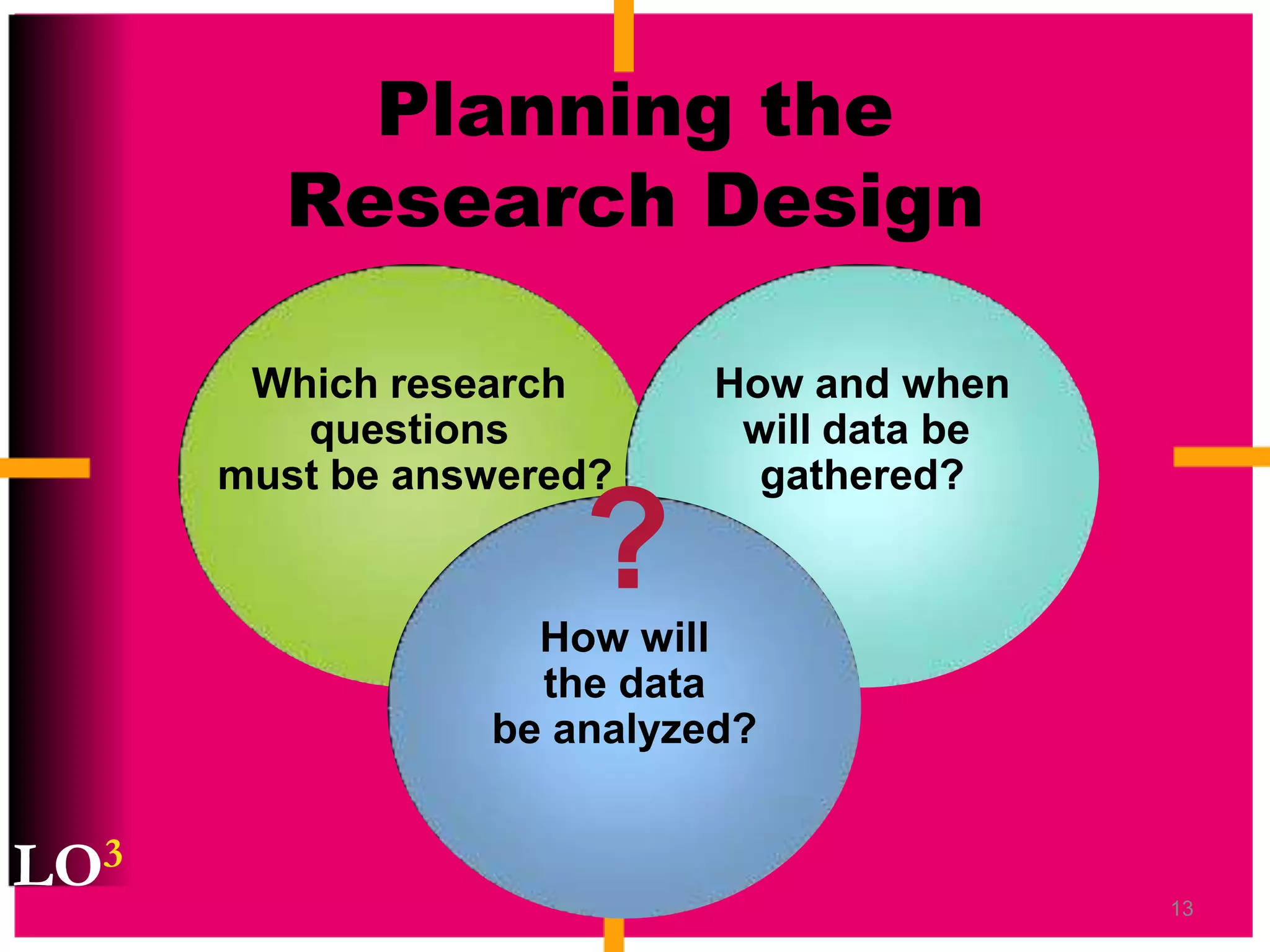
13Which research questions must be answered?How and whenwill data be gathered??How willthe databe analyzed?Planning theResearch DesignLO3
14Primary DataInformation collected for the first time.  Used for solving the particular problem under investigation.Advantages: Answers a specific research question
Data are current
Source of data is known
Secrecy can be maintainedLO3
15Disadvantages of Primary DataExpensive
“Piggybacking” may confuse respondents
Quality declines if interviews are lengthy
Reluctance to participate in lengthy interviewsDisadvantages are usually offset by the advantages of primary data.LO3
16The most popular technique for gathering primary data in which a researcher interacts with people to obtain facts, opinions, and attitudes.Survey ResearchSurvey ResearchLO3
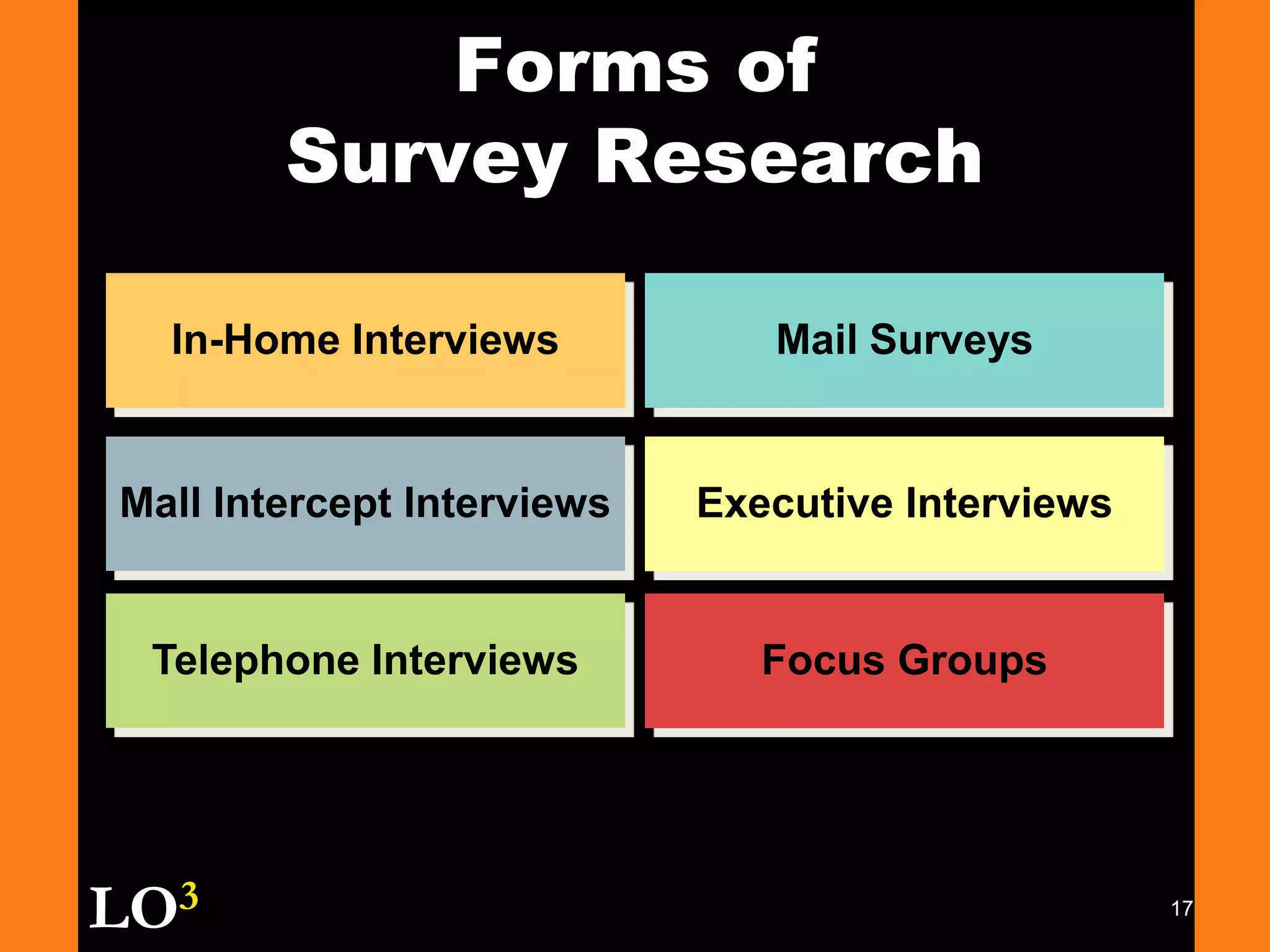
17Mail SurveysIn-Home InterviewsExecutive InterviewsMall Intercept InterviewsFocus GroupsTelephone InterviewsForms of Survey ResearchLO3
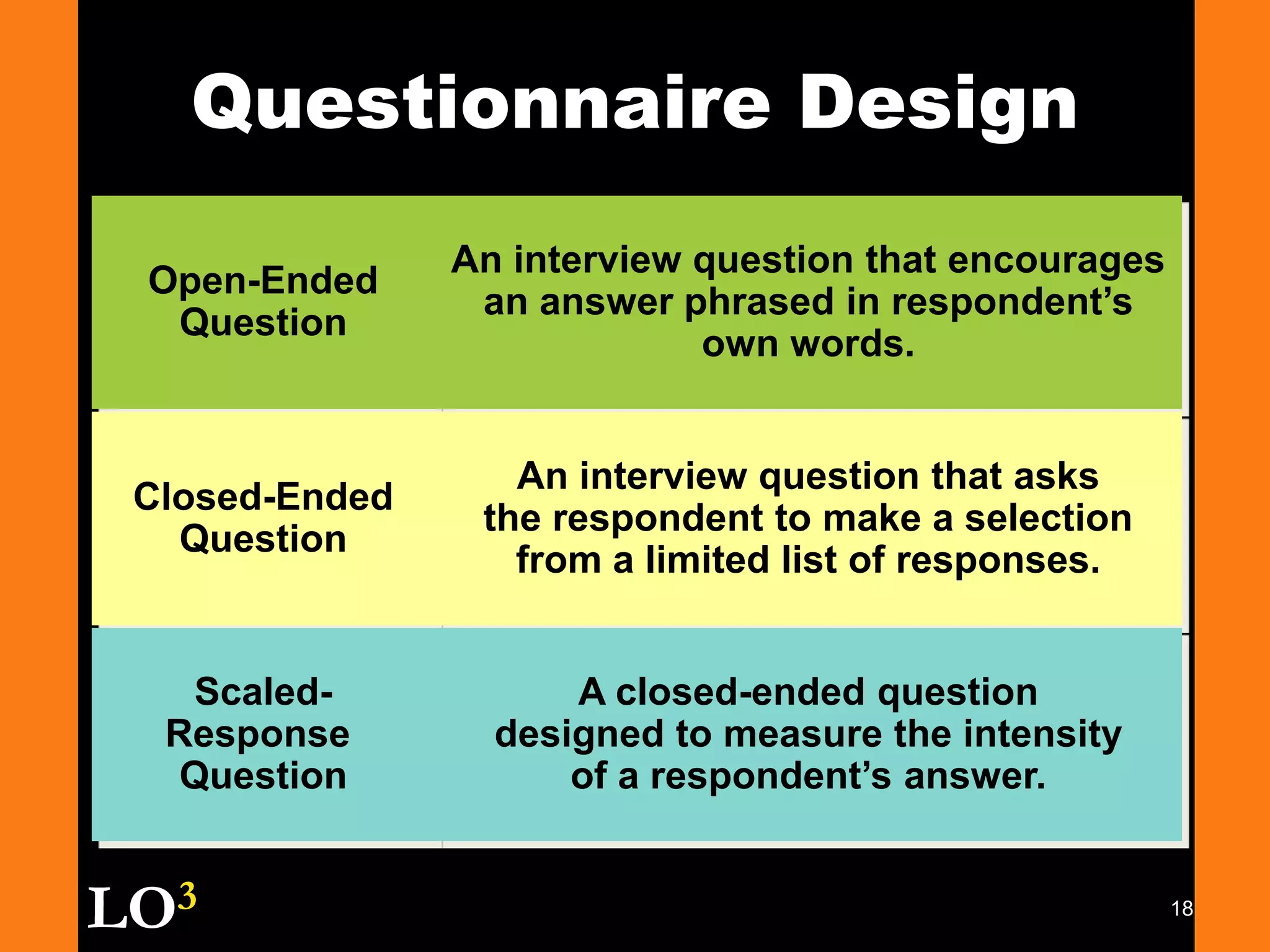
18Open-EndedQuestionAn interview question that encourages an answer phrased in respondent’s own words.Closed-EndedQuestionAn interview question that asks the respondent to make a selection from a limited list of responses.Scaled-Response QuestionA closed-ended question designed to measure the intensity of a respondent’s answer.Questionnaire DesignLO3
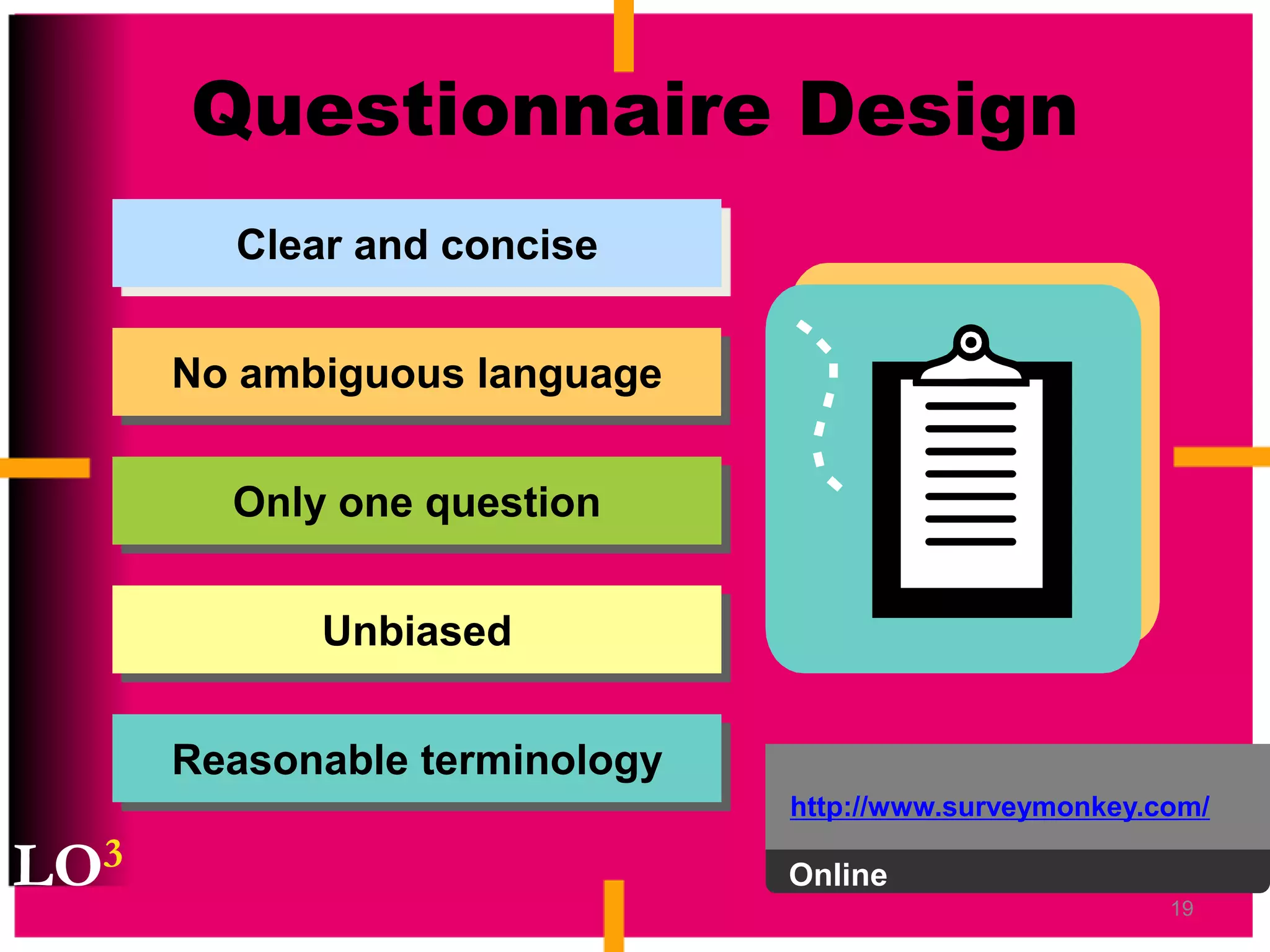
19Clear and conciseNo ambiguous languageOnly one questionUnbiasedReasonable terminologyhttp://www.surveymonkey.com/OnlineQuestionnaire DesignLO3
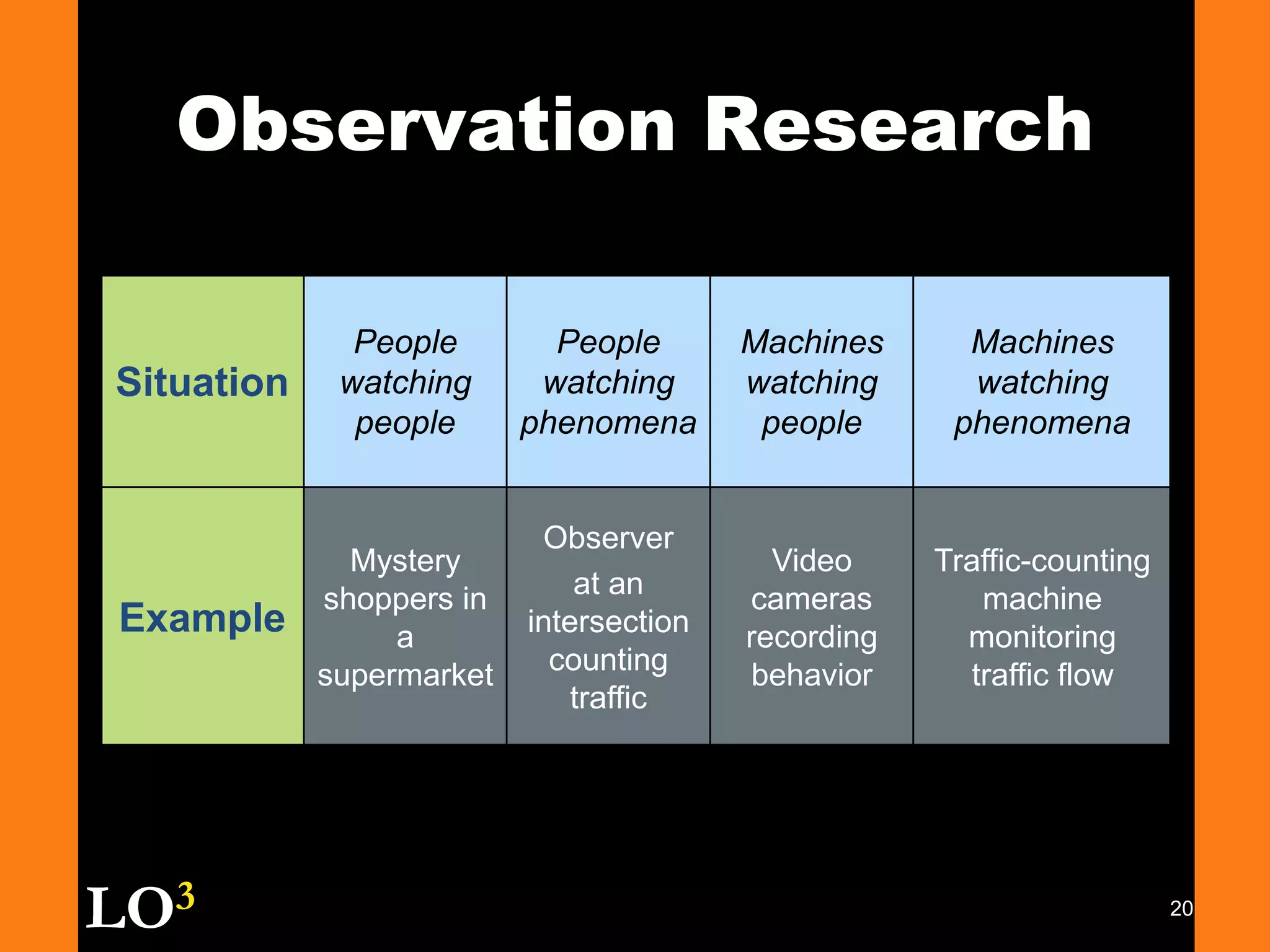
20Observation ResearchLO3
21Ethnographic ResearchEthnographic ResearchThe study of human behaviorin its natural context; involves observation of behavior and physical setting.LO3
22Virtual ShoppingAllows customers to “shop” with realistic complexity and varietyTests can be altered quicklyComputer automatically collects dataVirtual Grocery StoreLO3
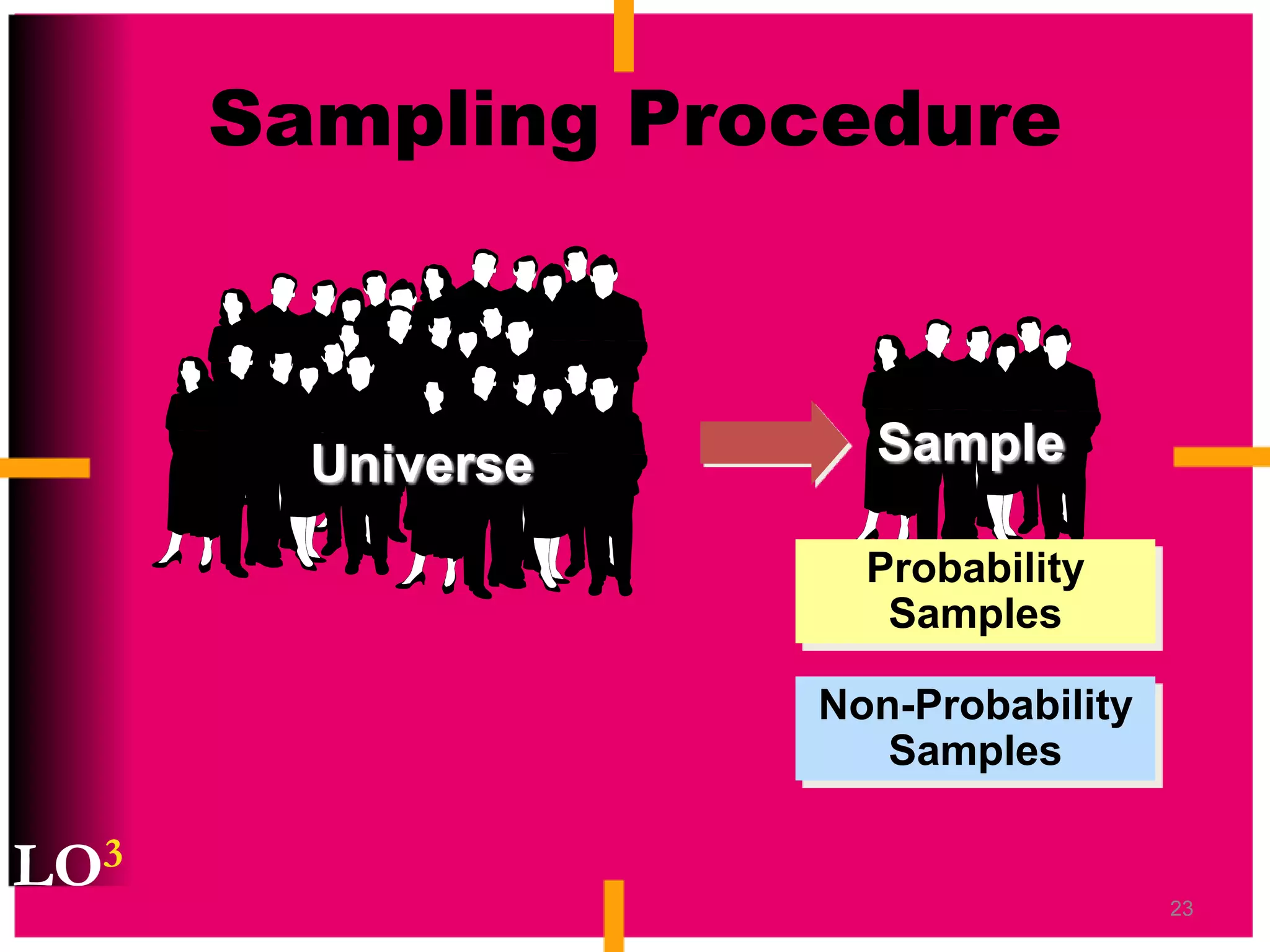
23SampleUniverseProbability SamplesNon-Probability SamplesSampling ProcedureLO3
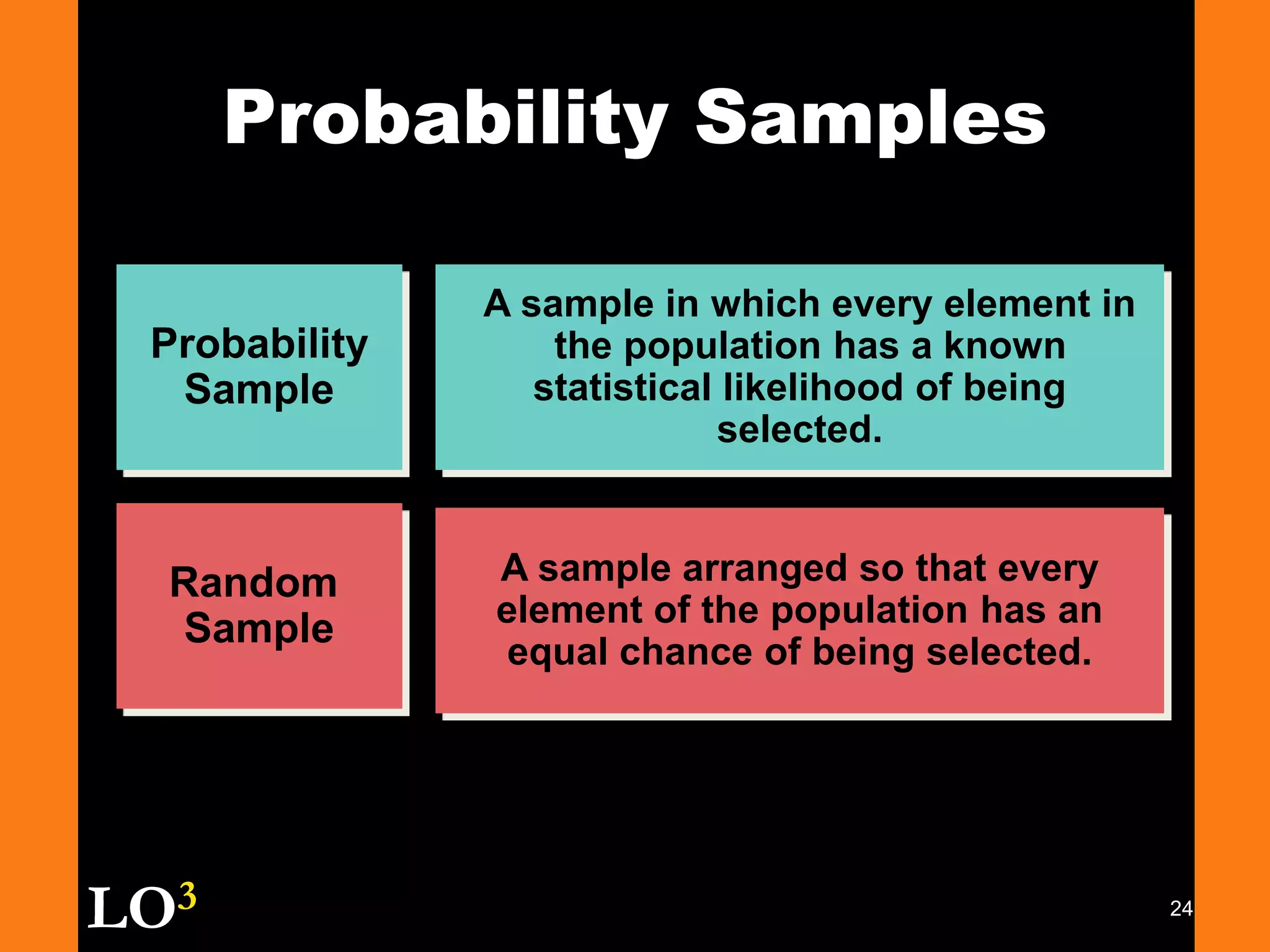
24Probability SamplesProbabilitySample  A sample in which every element in   the population has a known statistical likelihood of being selected.Random SampleA sample arranged so that every  element of the population has an  equal chance of being selected.LO3
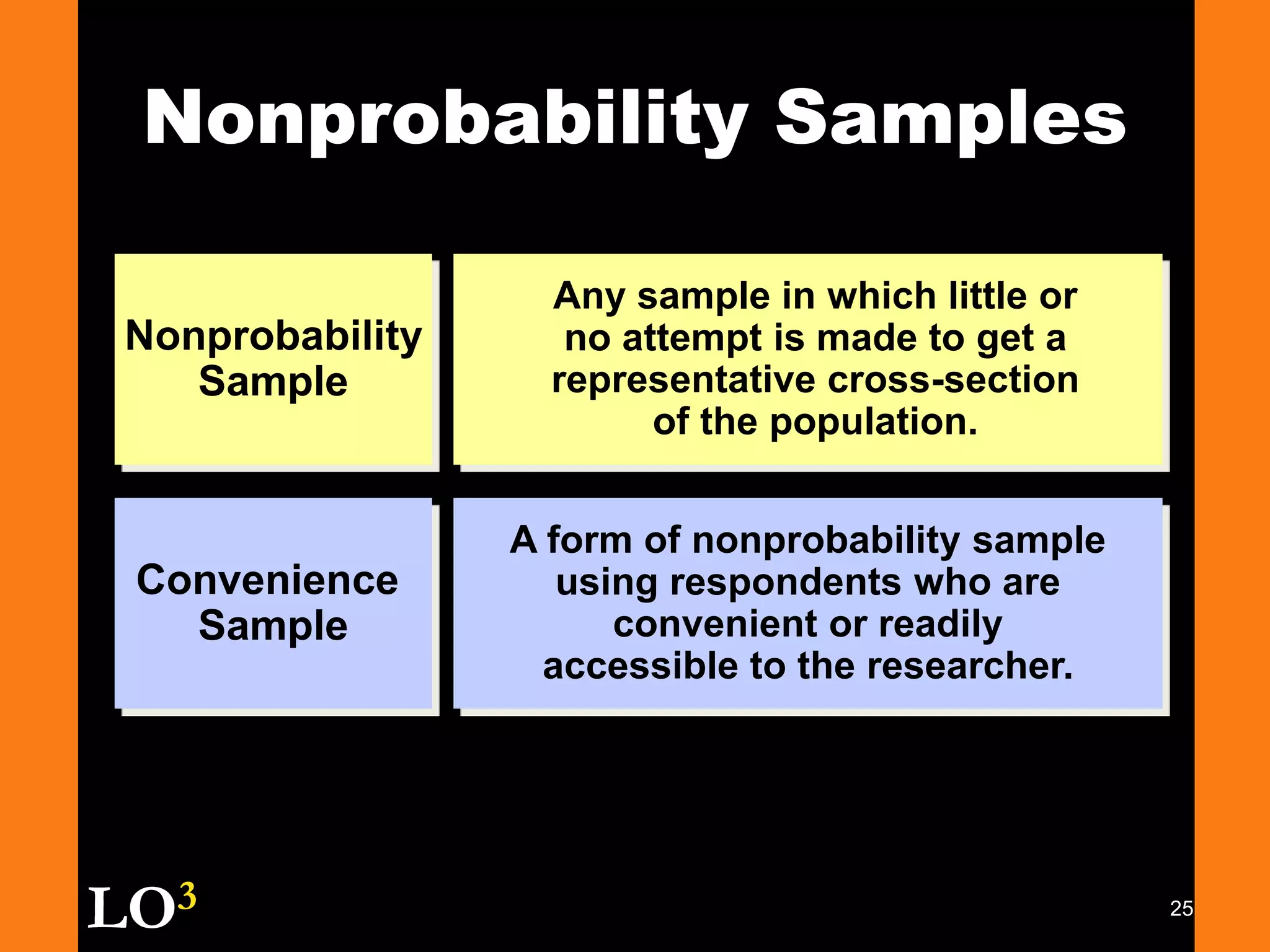
25Nonprobability SamplesNonprobabilitySampleAny sample in which little or no attempt is made to get a representative cross-section of the population.Convenience SampleA form of nonprobability sample using respondents who are convenient or readily accessible to the researcher.LO3
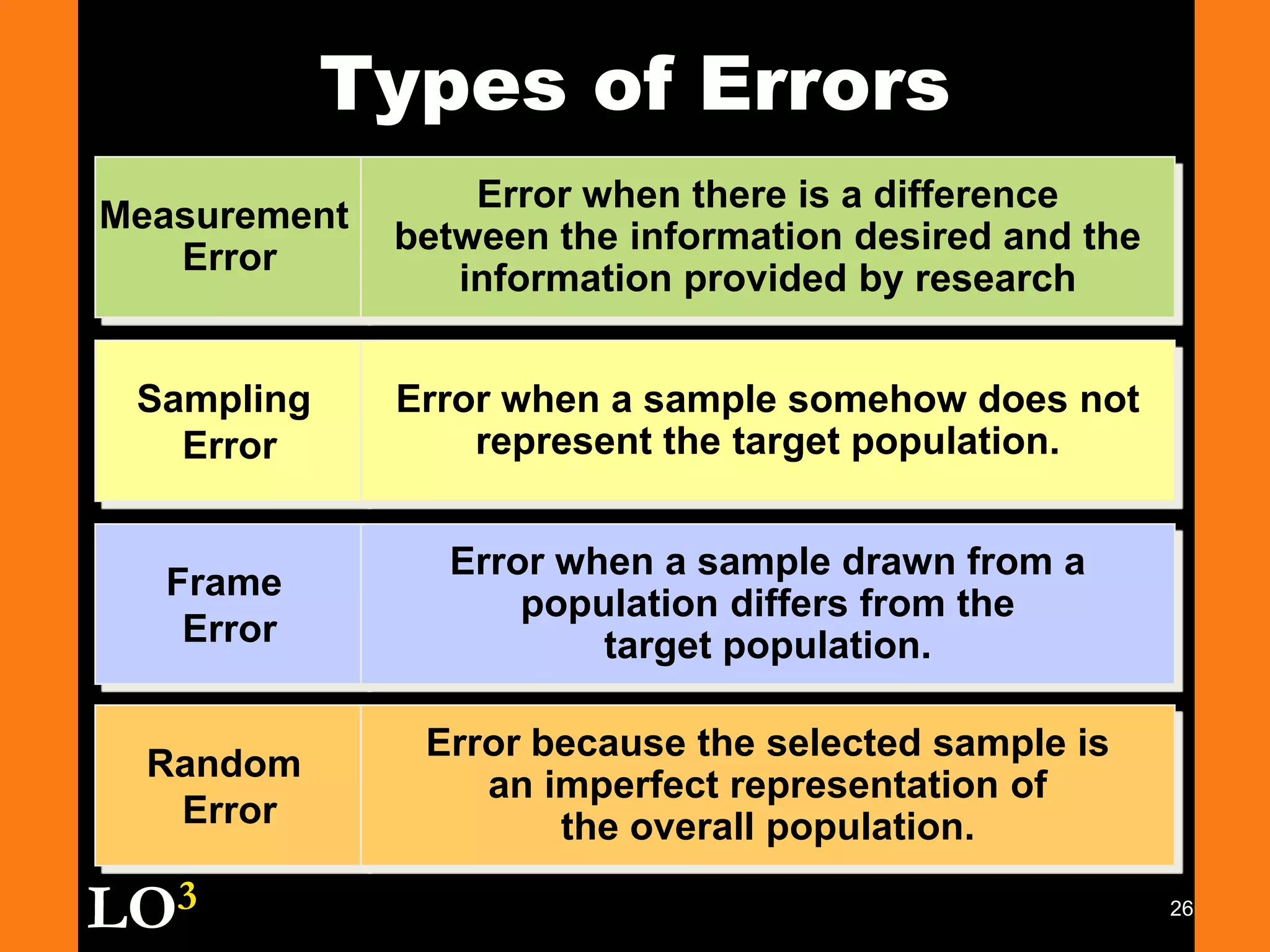
26Measurement ErrorError when there is a difference between the information desired and the information provided by researchSampling ErrorError when a sample somehow does not represent the target population.Frame ErrorError when a sample drawn from a population differs from the target population.Random ErrorError because the selected sample is an imperfect representation of the overall population.Types of ErrorsLO3

Lecture Marketing Research[1]