Recombinant DNA technology
Essential vocabulary Biotechnology/ GE RDNA/ RDNA tech Restriction enzymes/endonucleases Cloning DNA ligase Vectors Plasmid Bacteriophages DNA library
Biotechnology The manipulation of biological processes and/or organisms for the benefit of mankind .
RDNA DNA that has been created  artificially (not natural).  DNA from two or more sources is  incorporated  into a single recombinant molecule
RDNA tech Procedures by which DNA from different species can be isolated, cut and spliced together  New "recombinant " molecules are then multiplied in quantity in populations of rapidly dividing cells (e.g. bacteria, yeast).  Uses methods derived from biochemistry of nucleic acids coupled with genetic techniques originally used for the study of bacteria and viruses
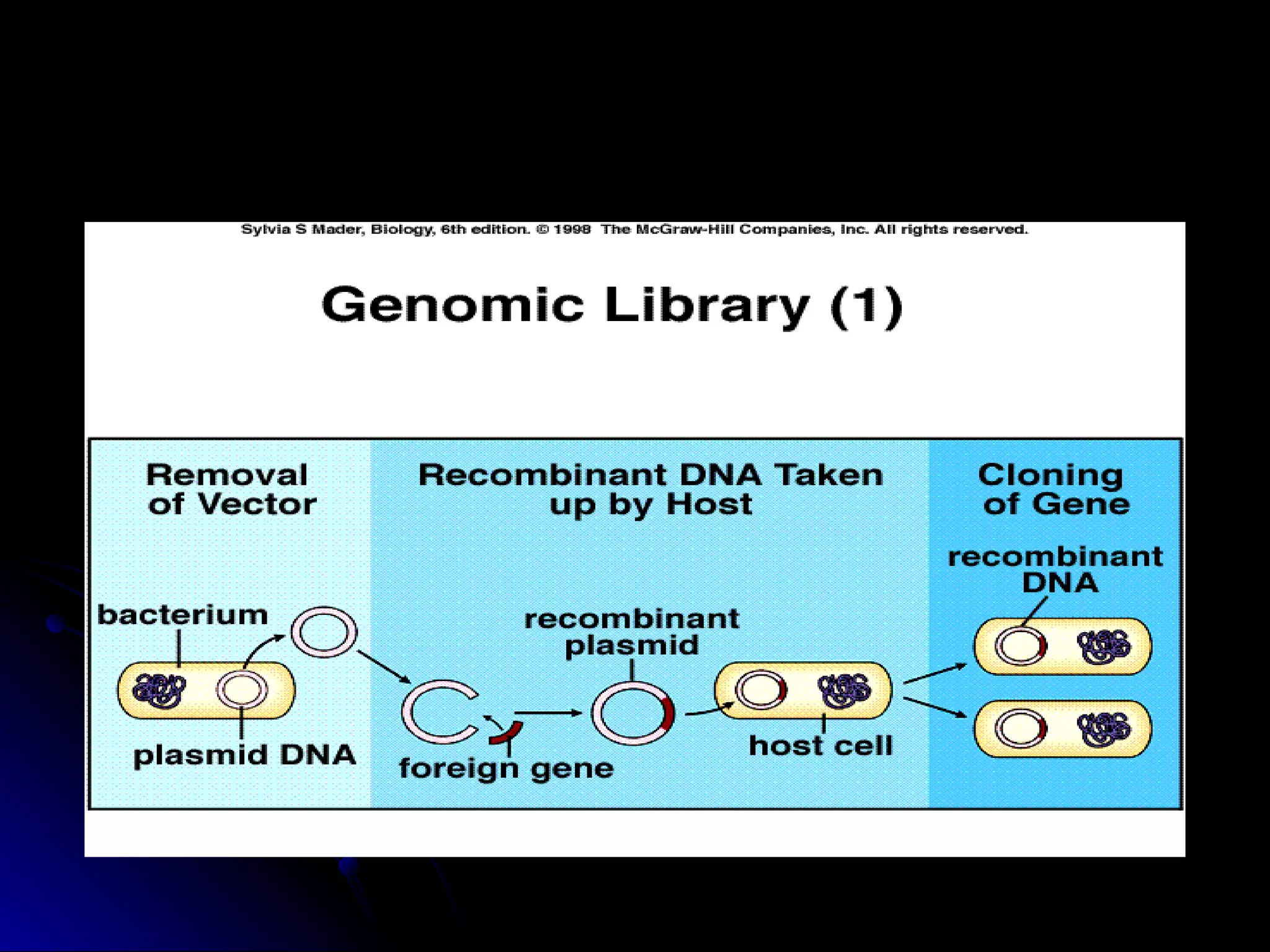
RDNA tech process 1. A  gene is located  on a chromosome map (RFLP) 2. A  DNA library  is constructed – plasmid are obtained, cleavage occurs and RDNA prod. 3. The gene of interest is  isolated (cloned)  from the library via plasmid DNA isolation, restriction digestion and electrophoresis. 4. Multiple copies  of gene interest are produced for study.
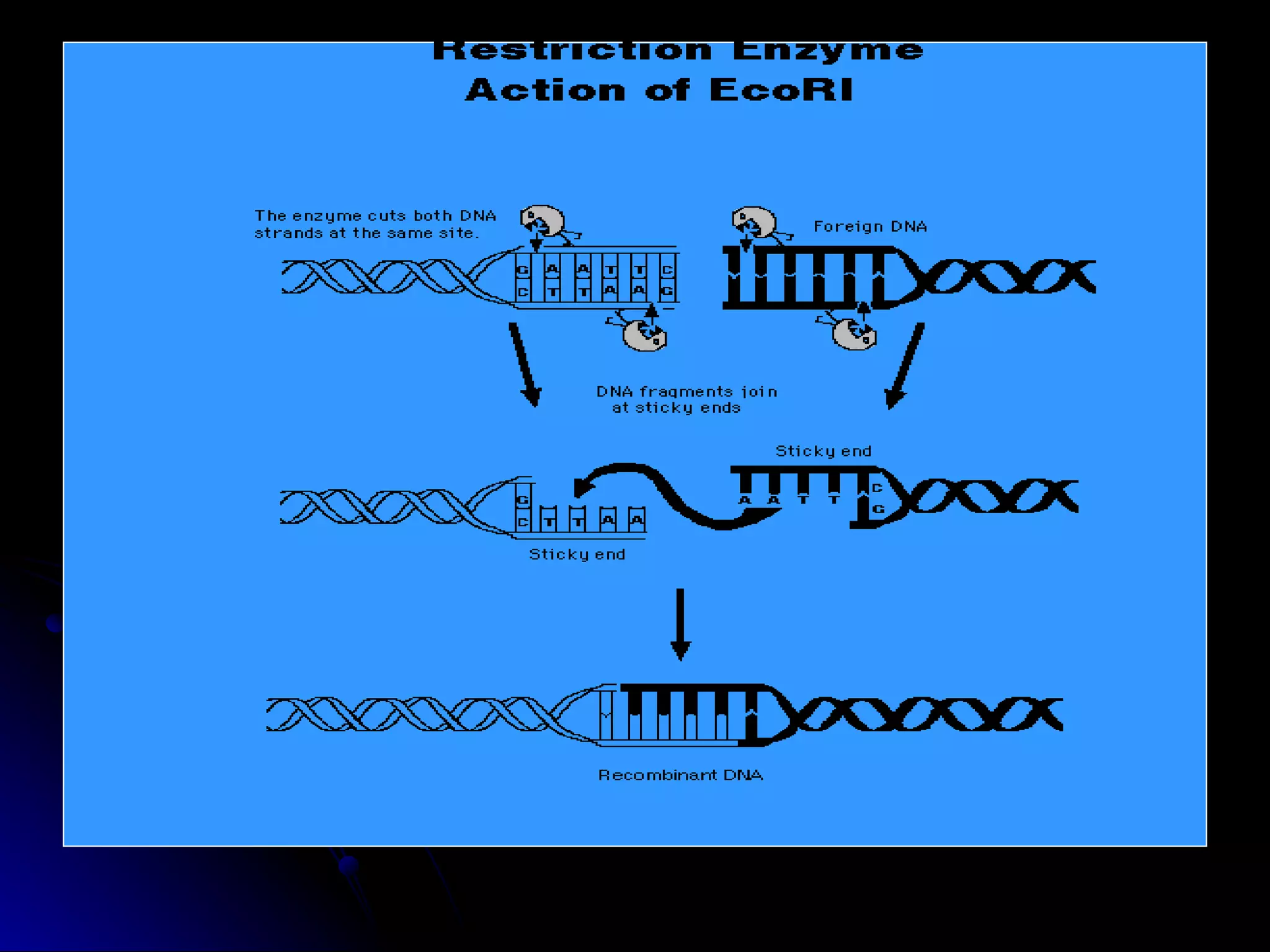
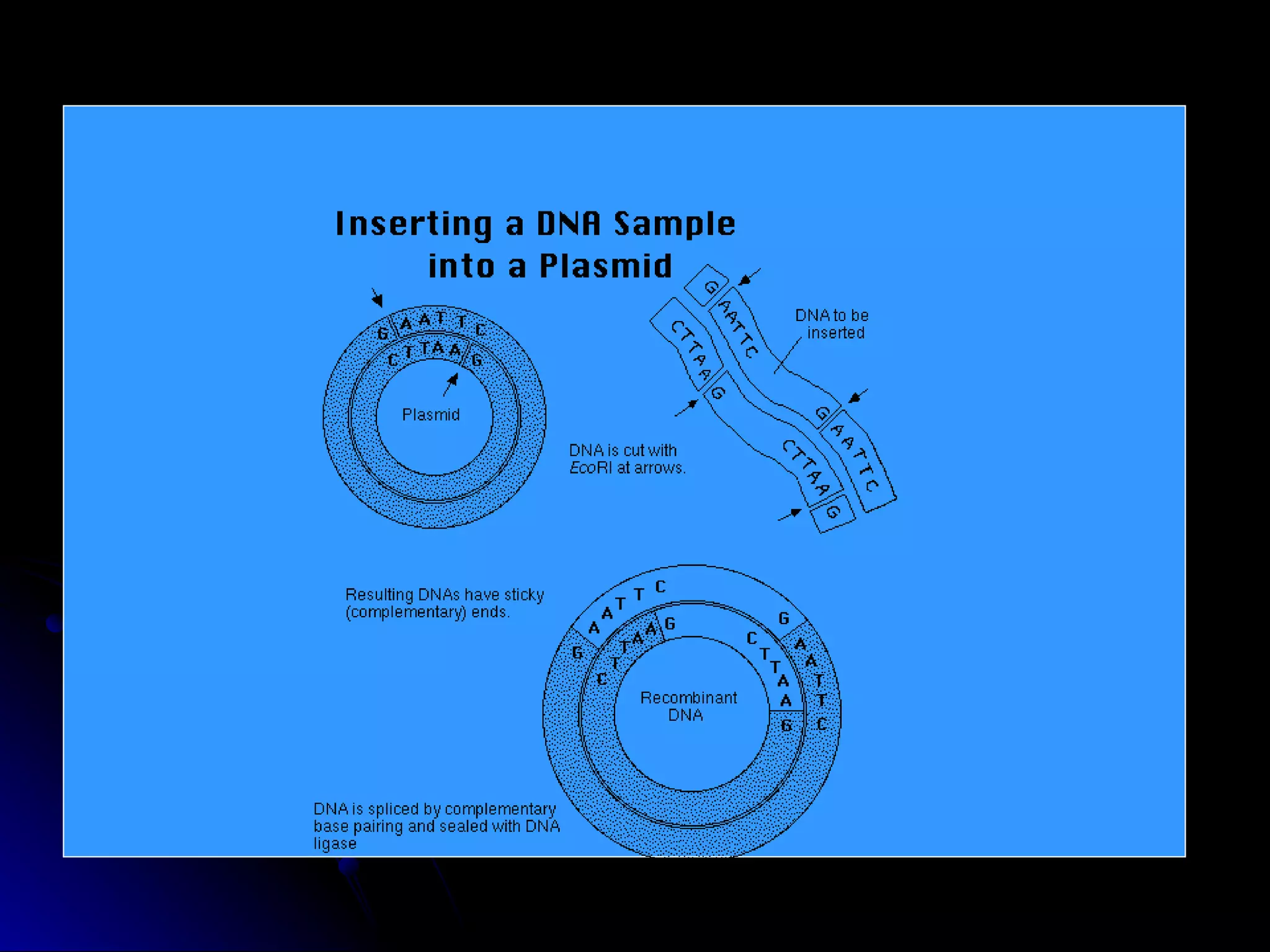
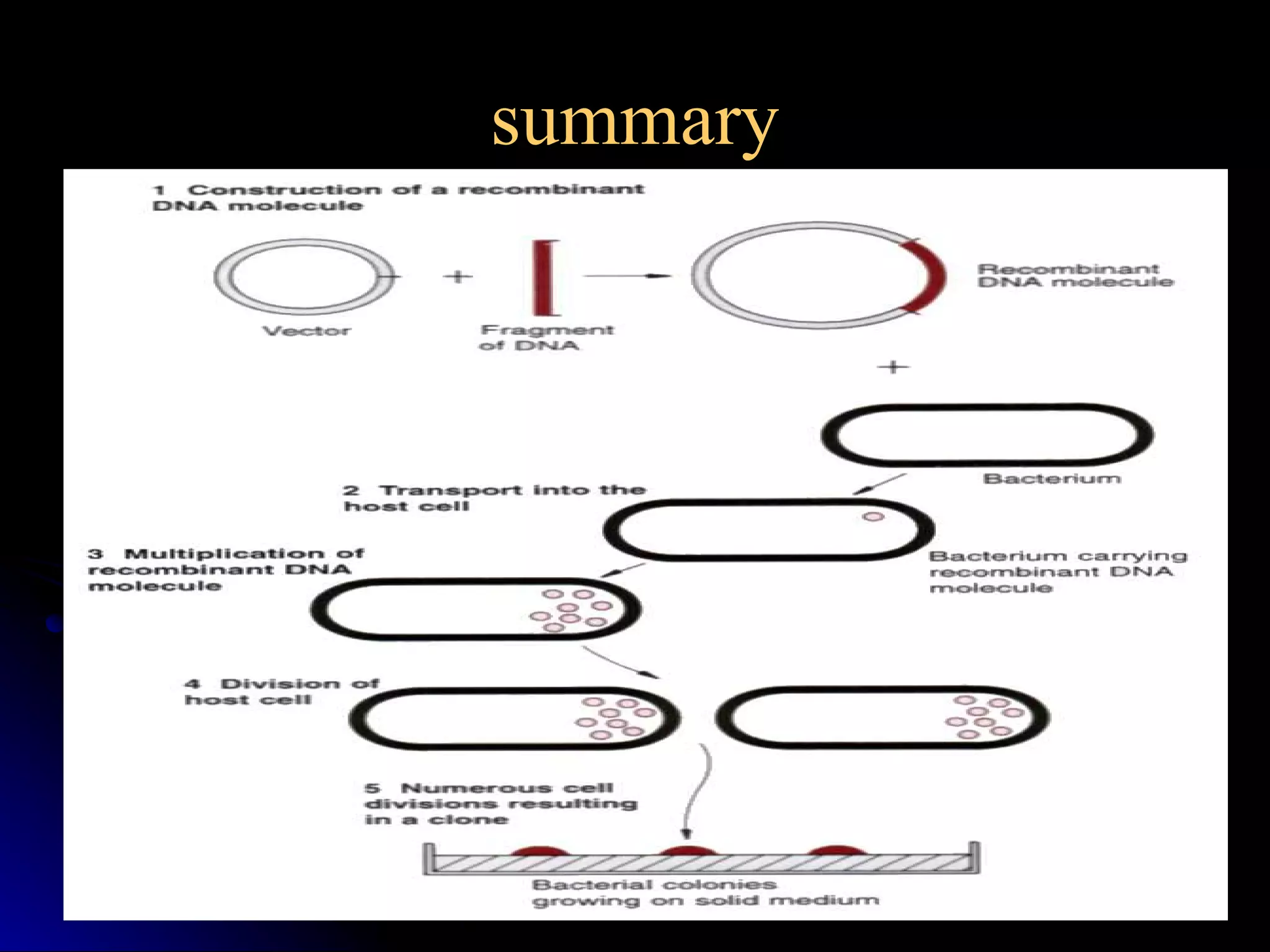
steps Restriction enzymes  “cuts” DNA  at specific sites (restriction fragments) DNA ligase  “pastes” the DNA  fragments together The cut segments are inserted into other DNA molecules that serves as  vectors
Vectors  Carrier DNA mol = transfers the RDNA  into the host cell.  Within host cells, vectors can replicate producing many DNA segments = identical copies (CLONES) Host cells pass the recombinant DNA mol on their progeny = population of cells. Cloned DNA segments recovered from host cells for purification and analysis
Plasmids Molecules of DNA that are found in bacteria  Act as a system to  transfer genetic material  to other bacteria, allowing those to express the transmitted genes. small (a few thousand base pairs)  usually carry only one or a few genes  circular  have a single origin of replication
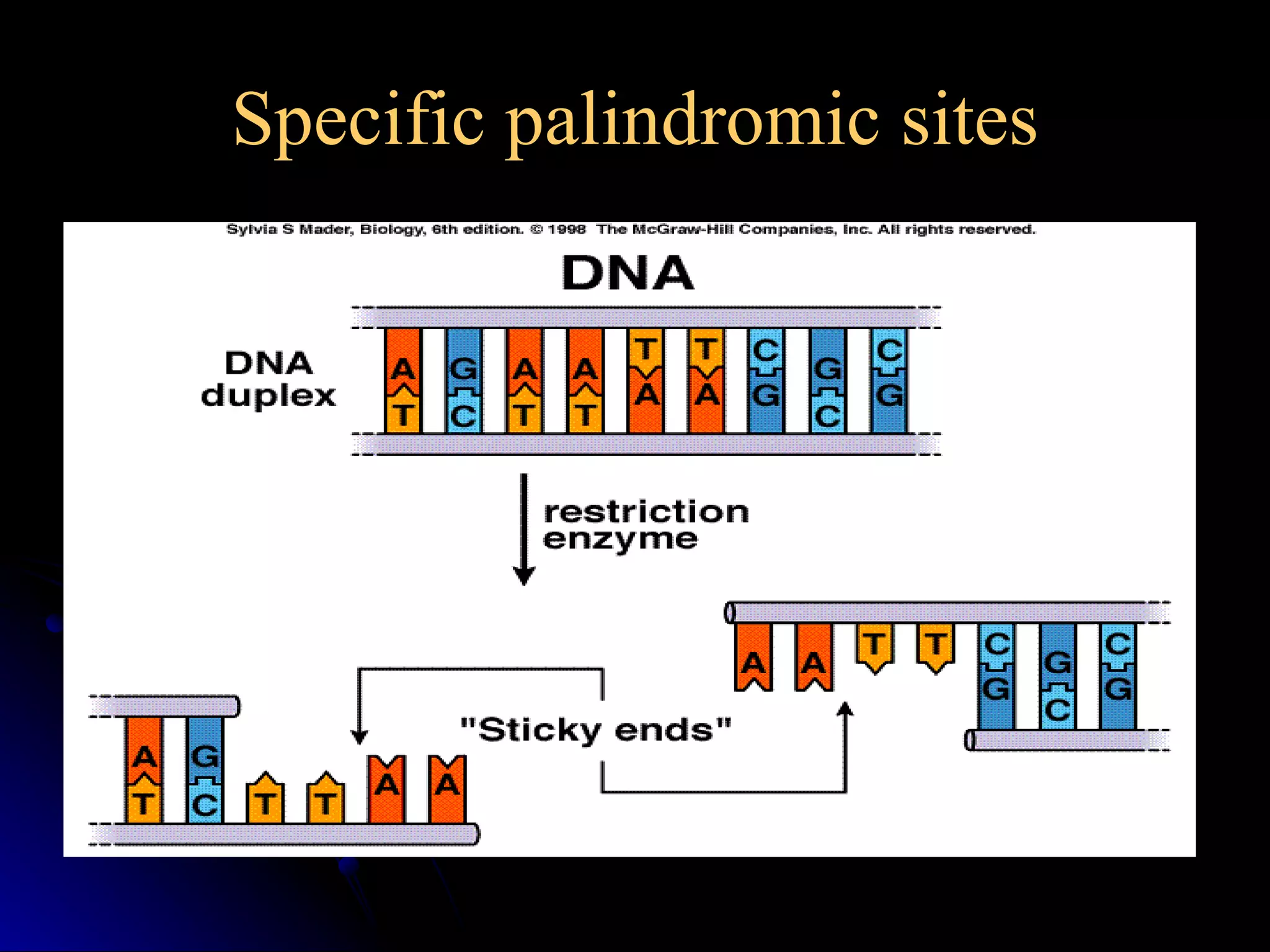
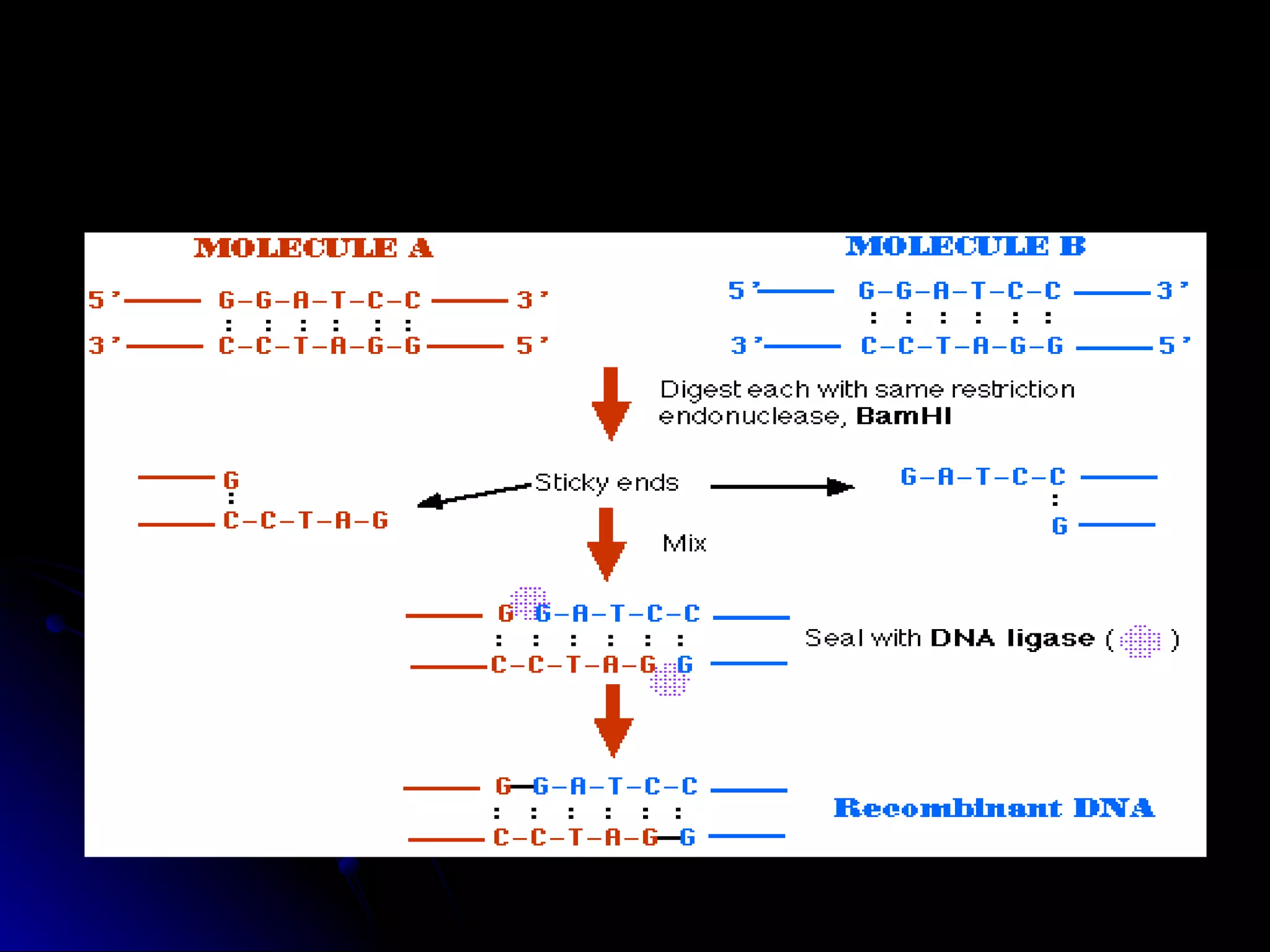
Resctriction enzymes DNA cutting enzymes.  Restriction endonucleases cuts DNA at a  specific site  defined by a sequence of bases in the DNA (recog.site) forming “sticky ends” (ss) Palindromic sites  Eg. BamHI cuts 5' GGATCC 3' 3' CCTAGG5’ Eg.2  HaeIII cuts 5'GGCC3' 3'CCGG5'  several hundred endonucleases have been extracted from bacteria and many are used in recombinant DNA research. eg  EcoR1,Hind III, HaeIII, TaqA1, Sau3A
 
Specific palindromic sites
 
 
Library construction Because each cloned DNA segemnt is relatively small, many separate clones must be constructed . A set of cloned DNA  segments derived from a single individual represents a  library Cloned libraries could be an entire genome, a singe chromosome, or a set og genes compiled together in a single cell type.
 
summary
Applications of recombinant DNA technology Used widely in research and hospital laboratories. Broad applications  - medicine, agriculture,
??.. 1. The  processes of inheritance and gene  expression. 2. Process and tx of various diseases 3. Generation of economic benefits eg.  improved agricultural products.
Applications Molecular Biology/Research Diagnostics Genetic Counseling Criminology/Forensics Paternity testing Archeology Food testing Evolutionary studies
Medicine Medicine – production of industrial and commercial compounds Insulin – Diabetes drugs (angiostation and endostatin) , Factor VIII – Haemophilia A Factor IX – Haemophilia B EPO – Anaemia Interleukins and interferons Tissue plasminogen activator – dissolve blood clots Hormones = GH, parathyroid  Oxytocin Adenosine deaminase –sev. Com. Imm (SCID) ,
Diagnostic kits  – Hep, AIDS Antibiotics genetic testing, –Mapping the chromosomal location of genetic disorders. RFLP, DNA fingerprinting – the HG project Gene therapy –  manipulation of DNA to tx diseases by altering individuals genes . (CF, PKU, DMD) ETHICAL ISSUES Forensic applications -  All individuals are genetically unique = a distinct "genetic fingerprint“,  all types of specs, old and new Animals =  models of genetic diseases Eg GE mice
Vaccines Vaccines :v are created by transferring the genes that determine a pathogen's surface configuration to a microorganism. When the GM microorganism is used in a vaccine, its surface stimulates the production of antibodies. These antibodies protects an individual against the pathogen. Successful vaccines have been produced for influenza, cold sores, and hepatitis B(HBsAg).
Animals   Models of GD  : GA to be vulnerable to a disease so that the mechanism of the disease can be investigated and potential therapeutic agents tested.  Eg.  mice  GA with a cancer-predisposing gene. Research to test the consequences of exposure to various potential carcinogens and to test the efficacy of preventive drugs.
Agriculture Animals   – improved quality/quantity of meat products Plants  – Gene altered plants : improved crops – quantity, quality  and pest resistance. Eg golden rice –  GM to contain beta carotene – vit A deficiency.
Spoilage of delicate products.  Eg tomatoes if ripened are too soft for shipping. In the past, tomatoes were harvested while green and hard, refrigerated while shipping, and artificially ripened in ethylene gas. The softening of tomatoes is caused by the enzyme polygalacturonase.  Now = The polygalacturonase gene has been inserted, in reverse order, into tomato plants. This inactivates the original enzyme-producing gene and produces a reduction in softening of the tomatoes.  GA tomatoes can be shipped without expensive refrigeration, which allows them to be produced more cheaply and sold at lower price.
Agriculture Environment.  Many waste products of agriculture/industry do not break down naturally/break down slowly. PROBLEM. Many bacteria have been GE capable of breaking down oil and other organic wastes  Cheese making industry : GE  Saccharomyces cerevisiae  able to dispose of whey by converting lactose to alcohol. Agricultural waste products, eg. corn husks, contain cellulose that normally decomposes slowly. Can be converted into sugar by cellulase. Cellulase has been inserted in E.coli making it useful in waste management/disposal programs..

Lecture 11 Recombinant Dna Tech

  • 1.
  • 2.
    Essential vocabulary Biotechnology/GE RDNA/ RDNA tech Restriction enzymes/endonucleases Cloning DNA ligase Vectors Plasmid Bacteriophages DNA library
  • 3.
    Biotechnology The manipulationof biological processes and/or organisms for the benefit of mankind .
  • 4.
    RDNA DNA thathas been created artificially (not natural). DNA from two or more sources is incorporated into a single recombinant molecule
  • 5.
    RDNA tech Proceduresby which DNA from different species can be isolated, cut and spliced together New "recombinant " molecules are then multiplied in quantity in populations of rapidly dividing cells (e.g. bacteria, yeast). Uses methods derived from biochemistry of nucleic acids coupled with genetic techniques originally used for the study of bacteria and viruses
  • 6.
    RDNA tech process1. A gene is located on a chromosome map (RFLP) 2. A DNA library is constructed – plasmid are obtained, cleavage occurs and RDNA prod. 3. The gene of interest is isolated (cloned) from the library via plasmid DNA isolation, restriction digestion and electrophoresis. 4. Multiple copies of gene interest are produced for study.
  • 7.
    steps Restriction enzymes “cuts” DNA at specific sites (restriction fragments) DNA ligase “pastes” the DNA fragments together The cut segments are inserted into other DNA molecules that serves as vectors
  • 8.
    Vectors CarrierDNA mol = transfers the RDNA into the host cell. Within host cells, vectors can replicate producing many DNA segments = identical copies (CLONES) Host cells pass the recombinant DNA mol on their progeny = population of cells. Cloned DNA segments recovered from host cells for purification and analysis
  • 9.
    Plasmids Molecules ofDNA that are found in bacteria Act as a system to transfer genetic material to other bacteria, allowing those to express the transmitted genes. small (a few thousand base pairs) usually carry only one or a few genes circular have a single origin of replication
  • 10.
    Resctriction enzymes DNAcutting enzymes. Restriction endonucleases cuts DNA at a specific site defined by a sequence of bases in the DNA (recog.site) forming “sticky ends” (ss) Palindromic sites Eg. BamHI cuts 5' GGATCC 3' 3' CCTAGG5’ Eg.2 HaeIII cuts 5'GGCC3' 3'CCGG5' several hundred endonucleases have been extracted from bacteria and many are used in recombinant DNA research. eg EcoR1,Hind III, HaeIII, TaqA1, Sau3A
  • 11.
  • 12.
  • 13.
  • 14.
  • 15.
    Library construction Becauseeach cloned DNA segemnt is relatively small, many separate clones must be constructed . A set of cloned DNA segments derived from a single individual represents a library Cloned libraries could be an entire genome, a singe chromosome, or a set og genes compiled together in a single cell type.
  • 16.
  • 17.
  • 18.
    Applications of recombinantDNA technology Used widely in research and hospital laboratories. Broad applications - medicine, agriculture,
  • 19.
    ??.. 1. The processes of inheritance and gene expression. 2. Process and tx of various diseases 3. Generation of economic benefits eg. improved agricultural products.
  • 20.
    Applications Molecular Biology/ResearchDiagnostics Genetic Counseling Criminology/Forensics Paternity testing Archeology Food testing Evolutionary studies
  • 21.
    Medicine Medicine –production of industrial and commercial compounds Insulin – Diabetes drugs (angiostation and endostatin) , Factor VIII – Haemophilia A Factor IX – Haemophilia B EPO – Anaemia Interleukins and interferons Tissue plasminogen activator – dissolve blood clots Hormones = GH, parathyroid Oxytocin Adenosine deaminase –sev. Com. Imm (SCID) ,
  • 22.
    Diagnostic kits – Hep, AIDS Antibiotics genetic testing, –Mapping the chromosomal location of genetic disorders. RFLP, DNA fingerprinting – the HG project Gene therapy – manipulation of DNA to tx diseases by altering individuals genes . (CF, PKU, DMD) ETHICAL ISSUES Forensic applications - All individuals are genetically unique = a distinct "genetic fingerprint“, all types of specs, old and new Animals = models of genetic diseases Eg GE mice
  • 23.
    Vaccines Vaccines :vare created by transferring the genes that determine a pathogen's surface configuration to a microorganism. When the GM microorganism is used in a vaccine, its surface stimulates the production of antibodies. These antibodies protects an individual against the pathogen. Successful vaccines have been produced for influenza, cold sores, and hepatitis B(HBsAg).
  • 24.
    Animals Models of GD : GA to be vulnerable to a disease so that the mechanism of the disease can be investigated and potential therapeutic agents tested. Eg. mice GA with a cancer-predisposing gene. Research to test the consequences of exposure to various potential carcinogens and to test the efficacy of preventive drugs.
  • 25.
    Agriculture Animals – improved quality/quantity of meat products Plants – Gene altered plants : improved crops – quantity, quality and pest resistance. Eg golden rice – GM to contain beta carotene – vit A deficiency.
  • 26.
    Spoilage of delicateproducts. Eg tomatoes if ripened are too soft for shipping. In the past, tomatoes were harvested while green and hard, refrigerated while shipping, and artificially ripened in ethylene gas. The softening of tomatoes is caused by the enzyme polygalacturonase. Now = The polygalacturonase gene has been inserted, in reverse order, into tomato plants. This inactivates the original enzyme-producing gene and produces a reduction in softening of the tomatoes. GA tomatoes can be shipped without expensive refrigeration, which allows them to be produced more cheaply and sold at lower price.
  • 27.
    Agriculture Environment. Many waste products of agriculture/industry do not break down naturally/break down slowly. PROBLEM. Many bacteria have been GE capable of breaking down oil and other organic wastes Cheese making industry : GE Saccharomyces cerevisiae able to dispose of whey by converting lactose to alcohol. Agricultural waste products, eg. corn husks, contain cellulose that normally decomposes slowly. Can be converted into sugar by cellulase. Cellulase has been inserted in E.coli making it useful in waste management/disposal programs..