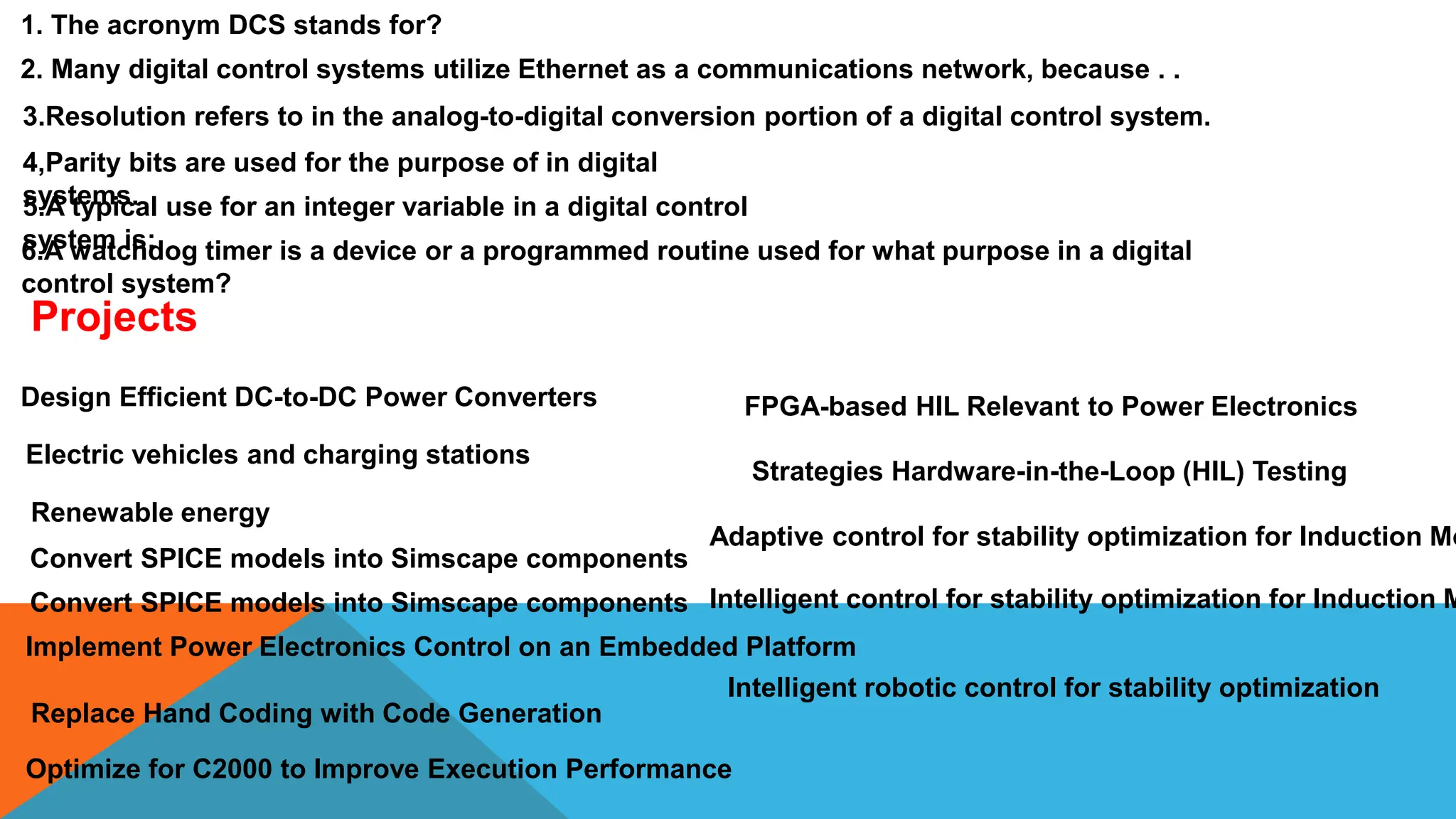
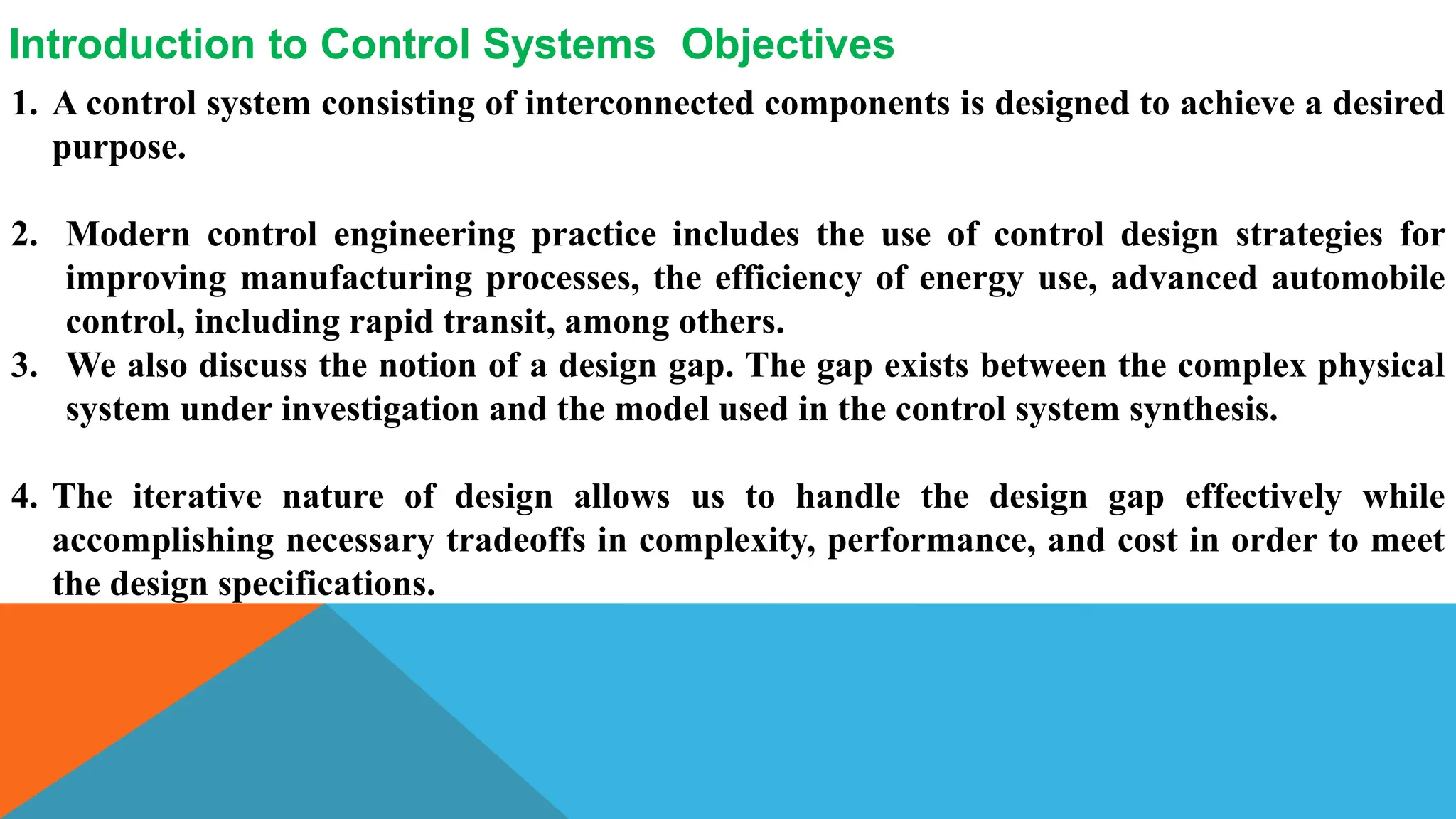
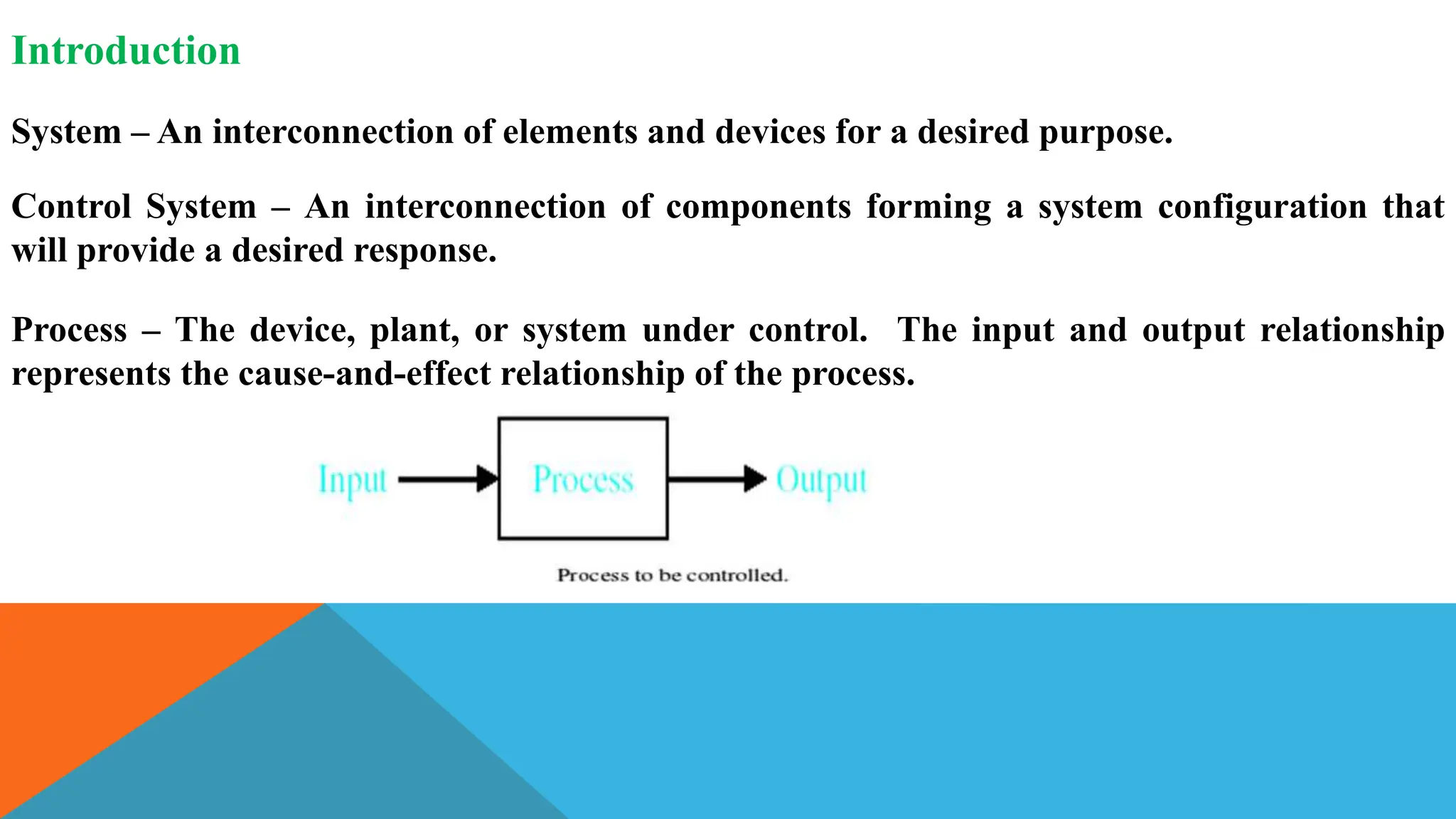
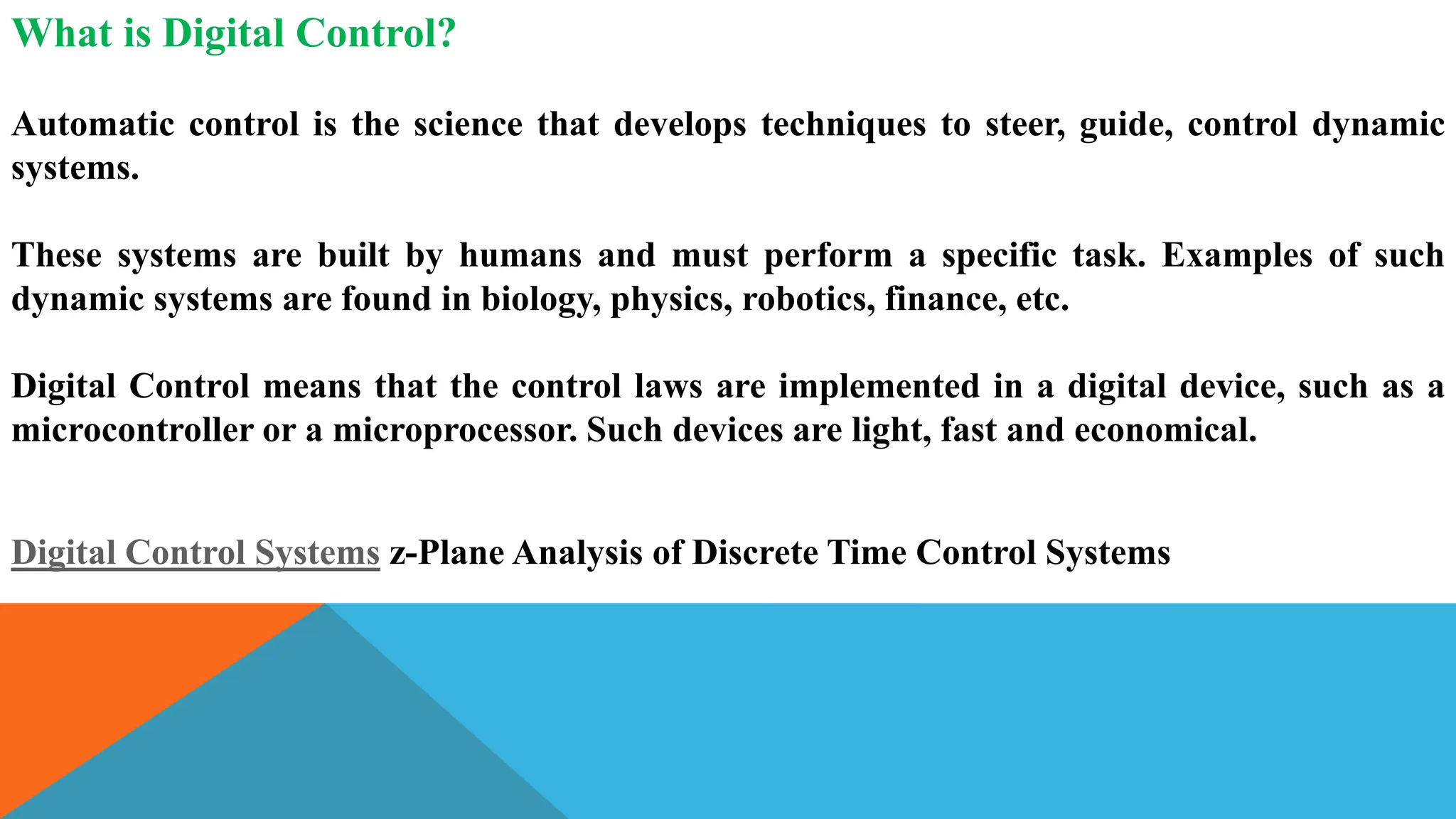
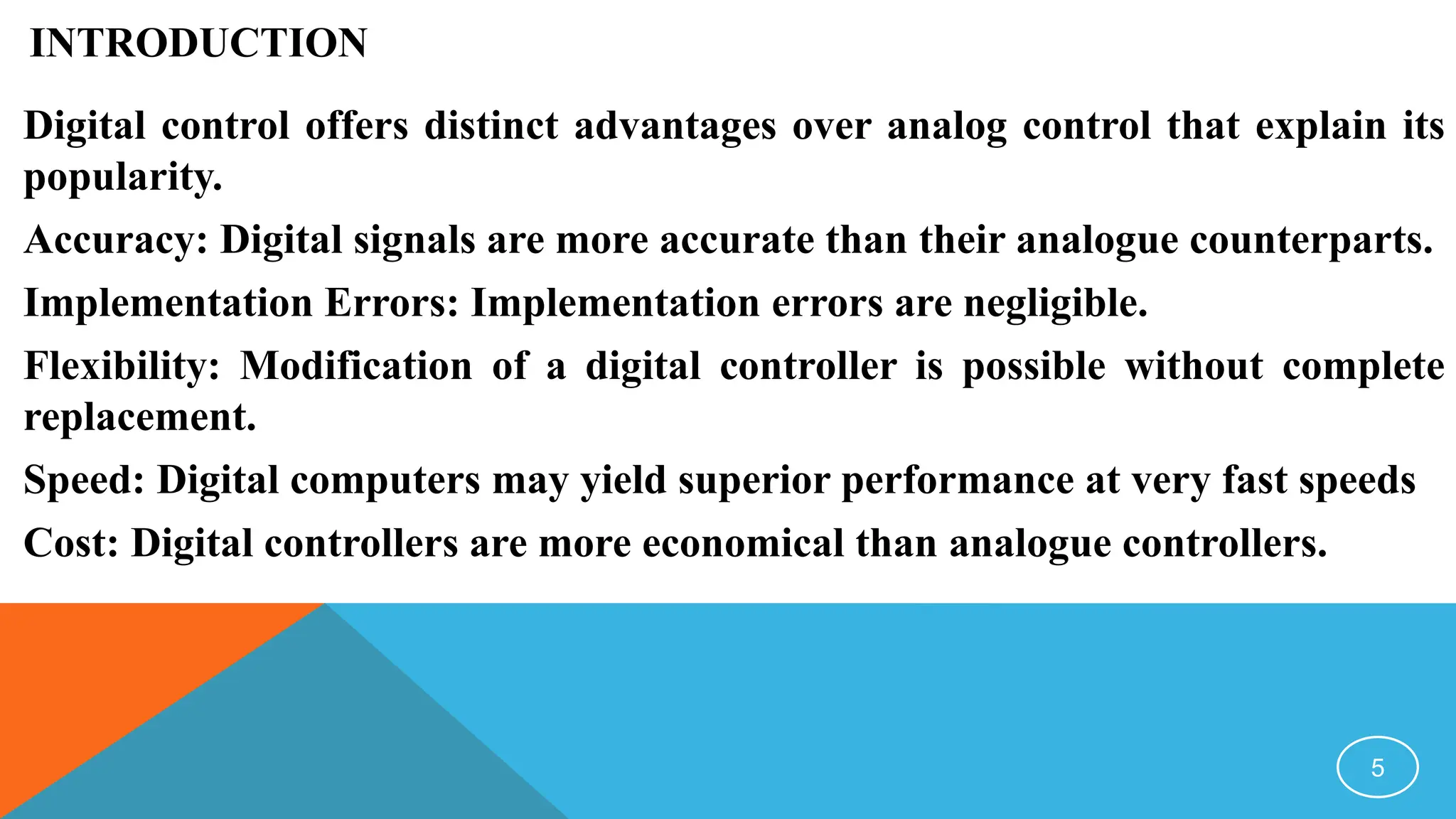
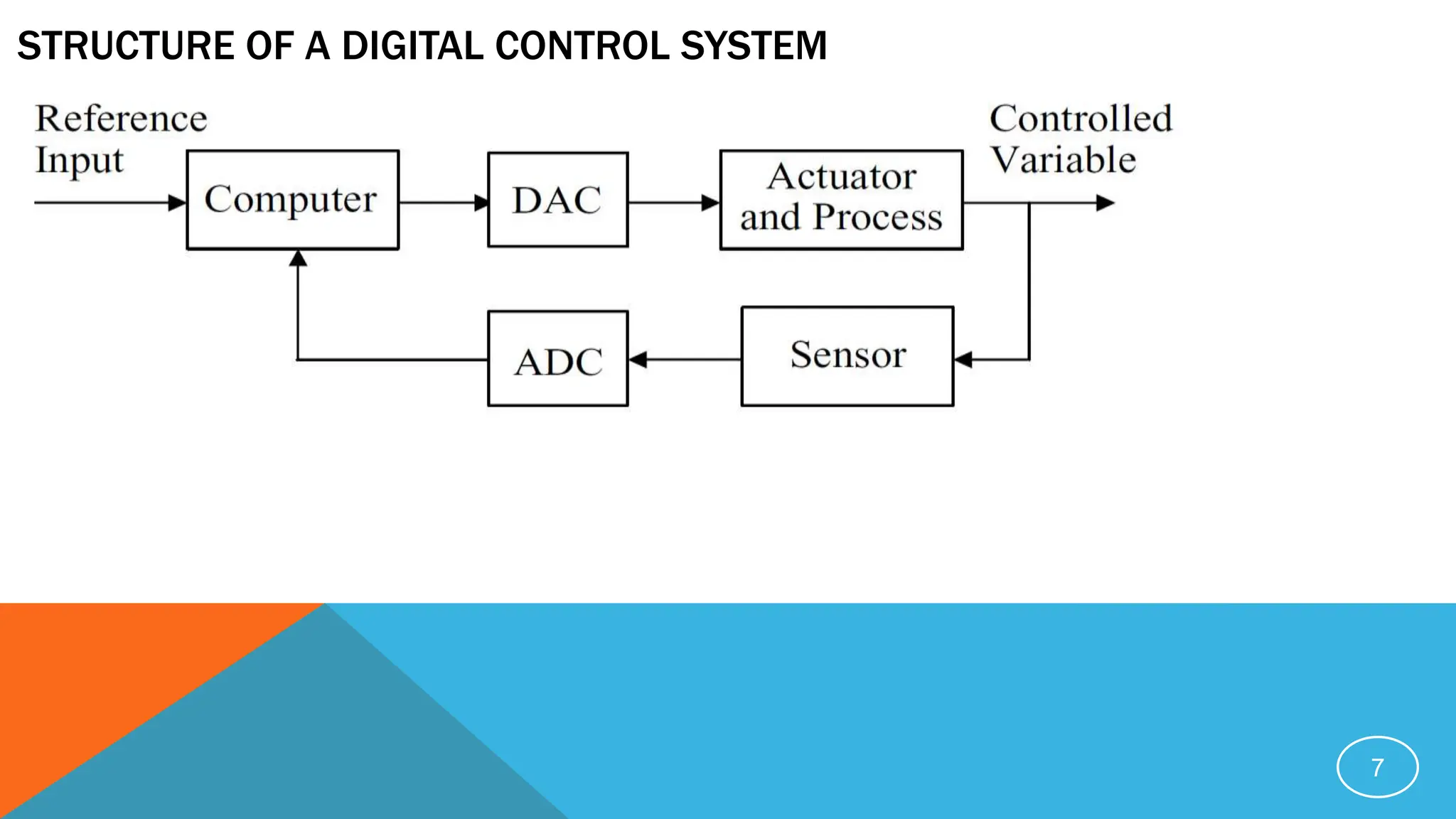
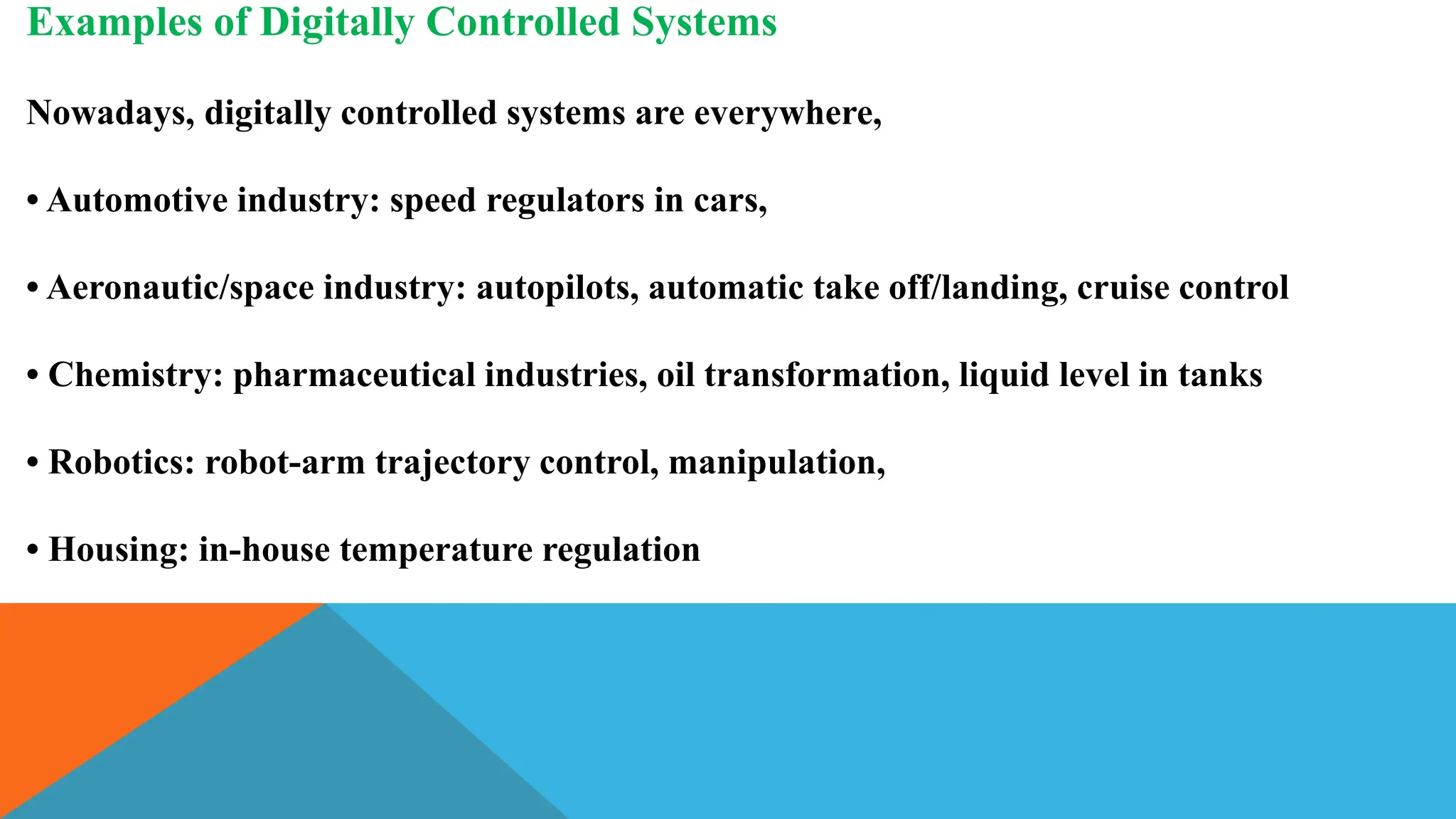
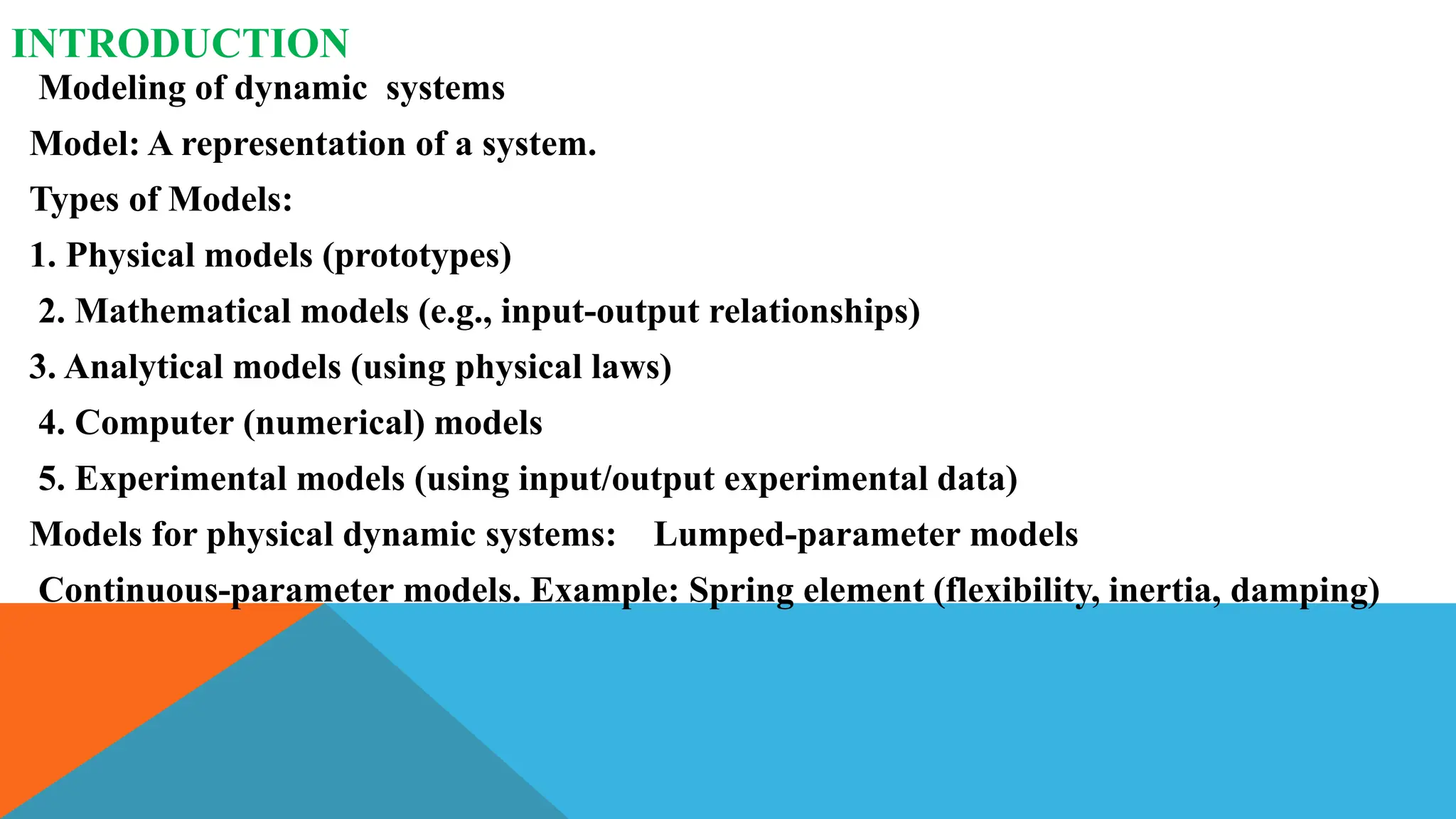
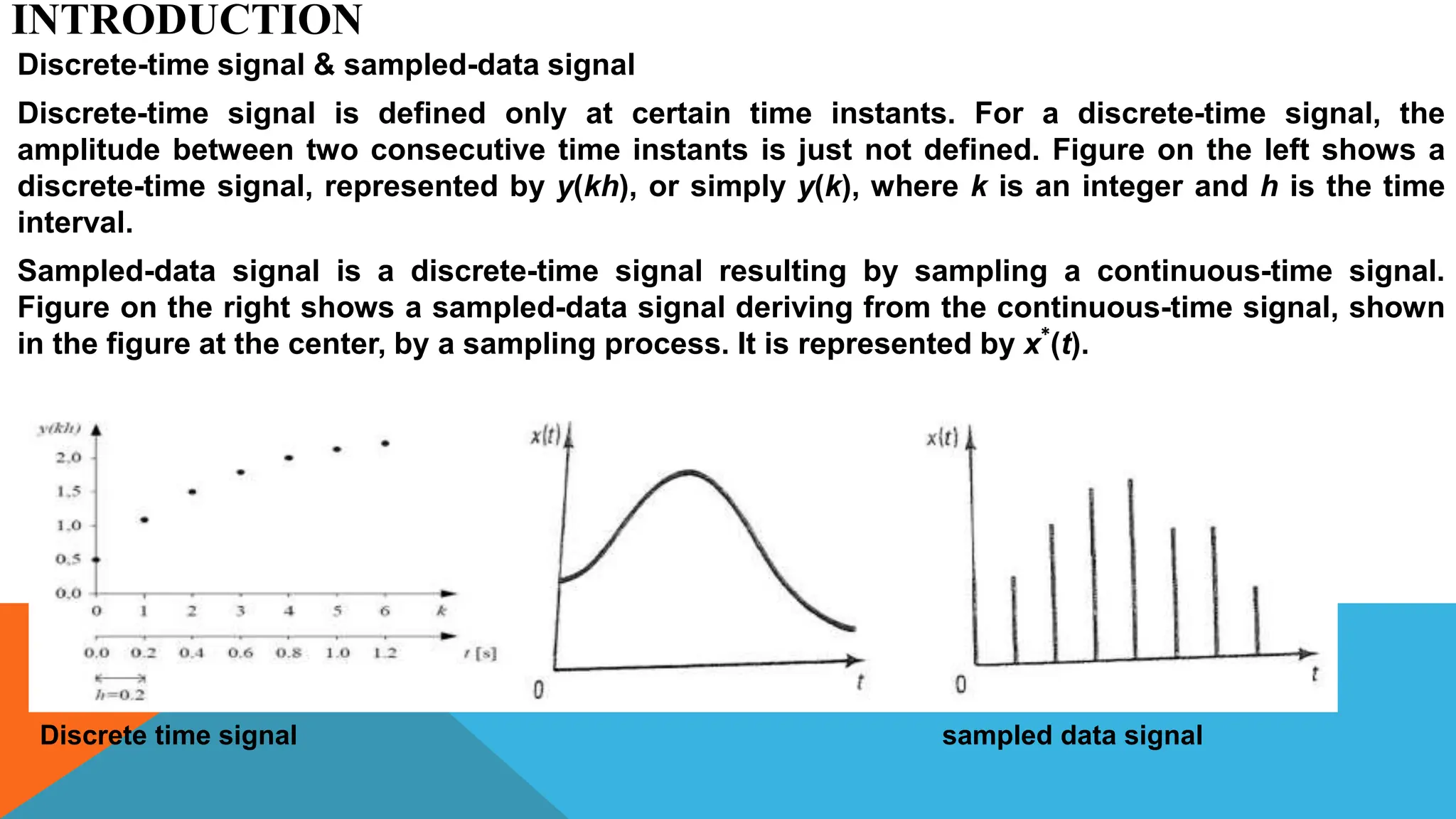
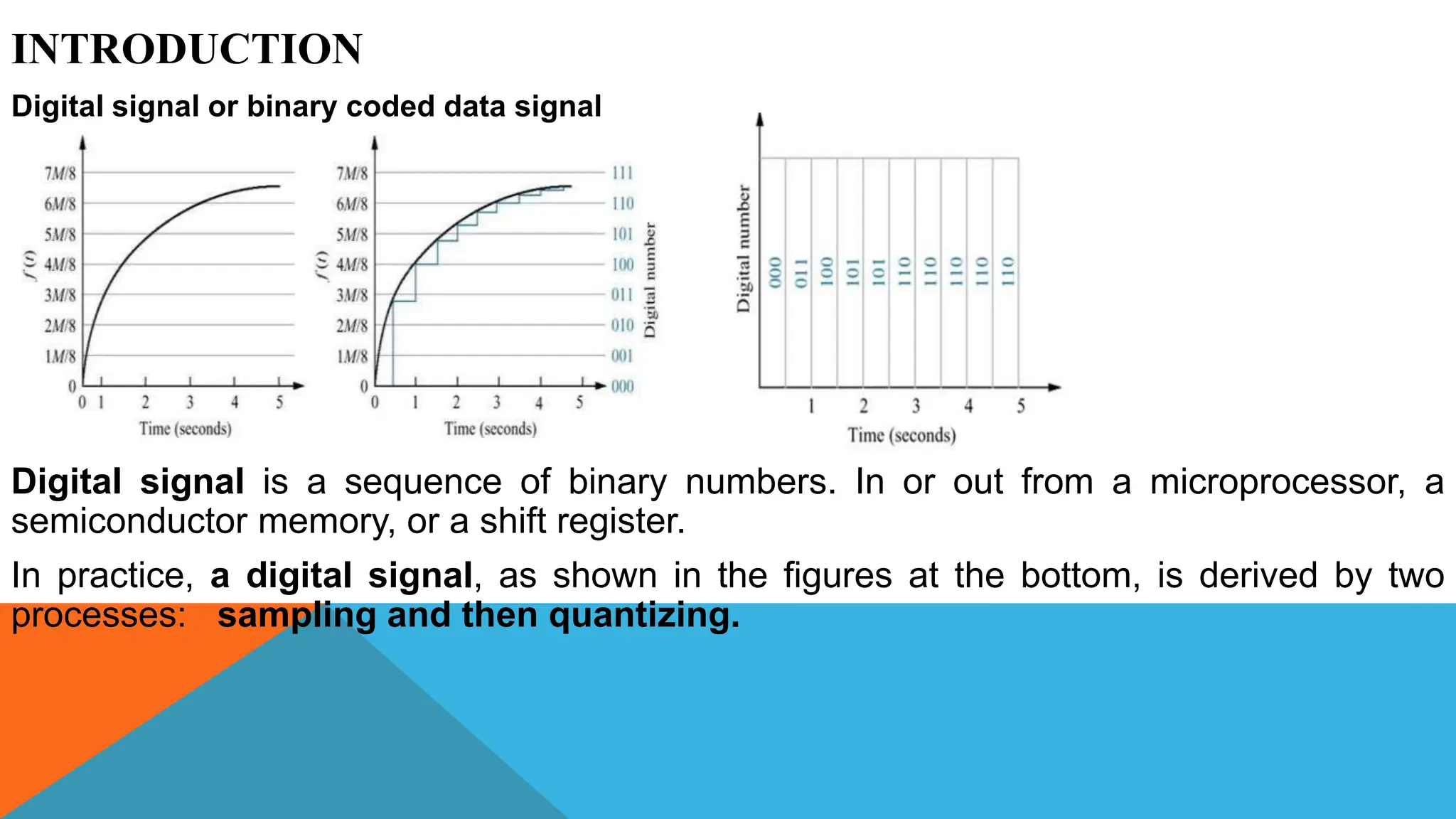
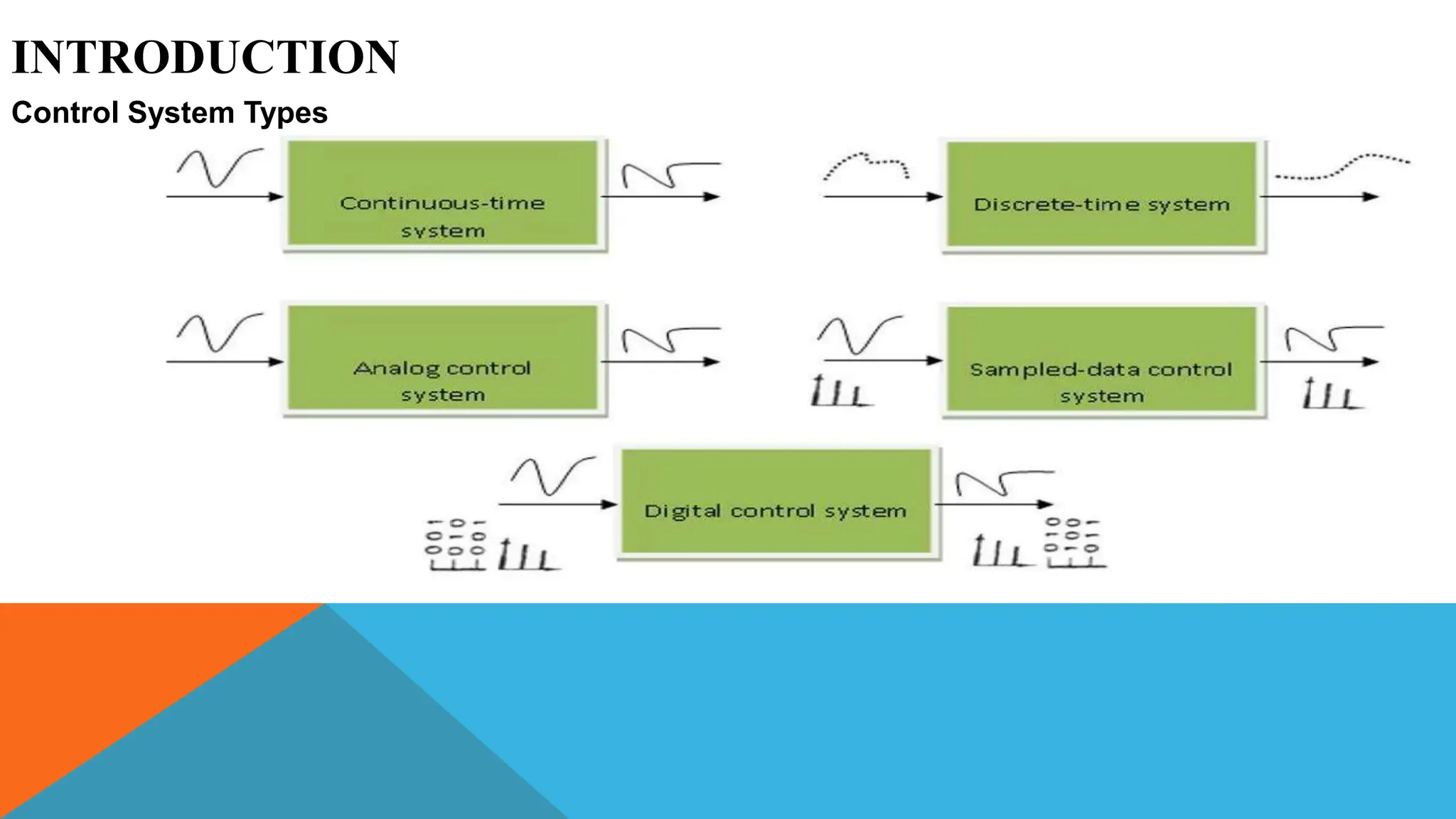
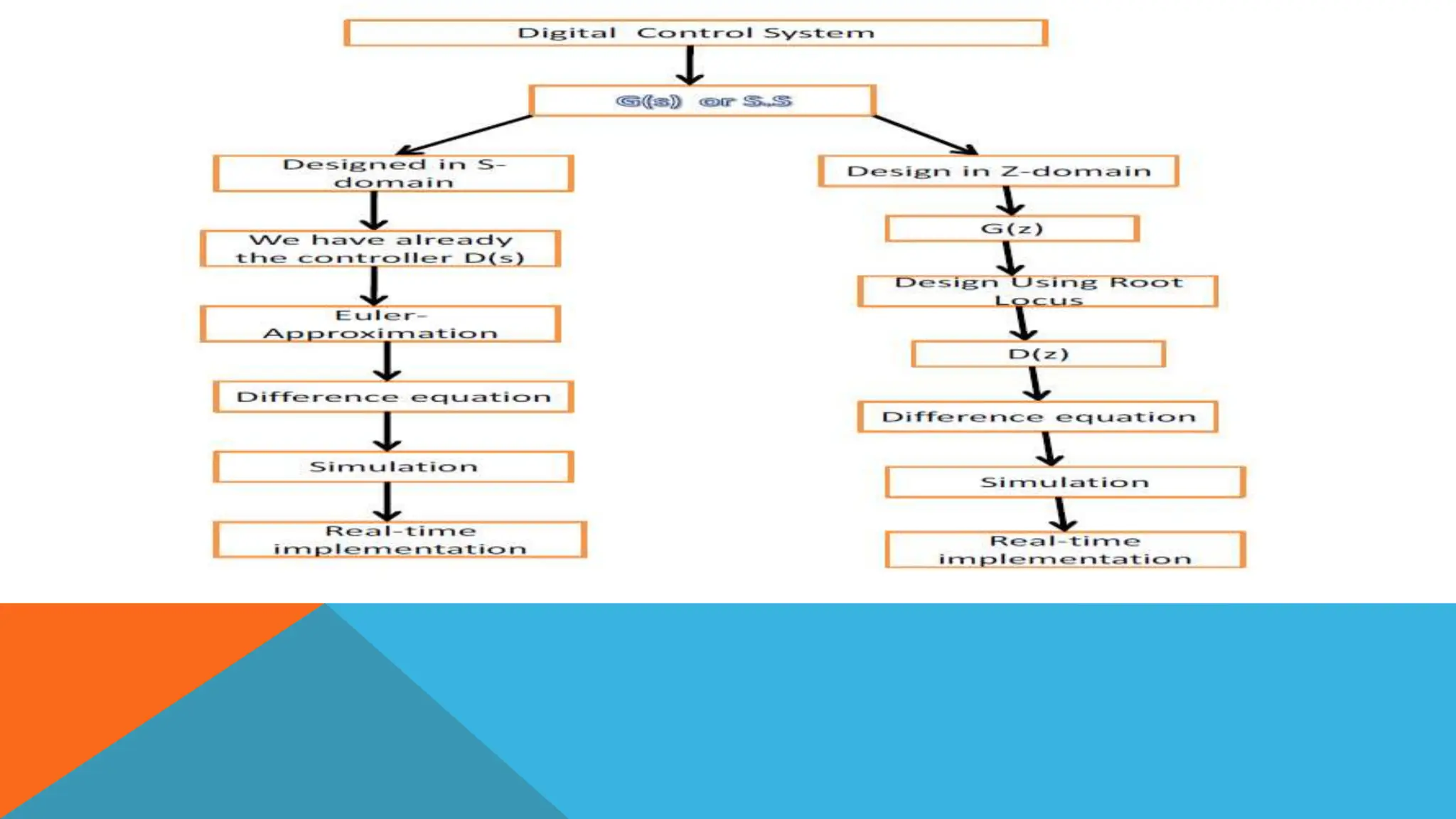
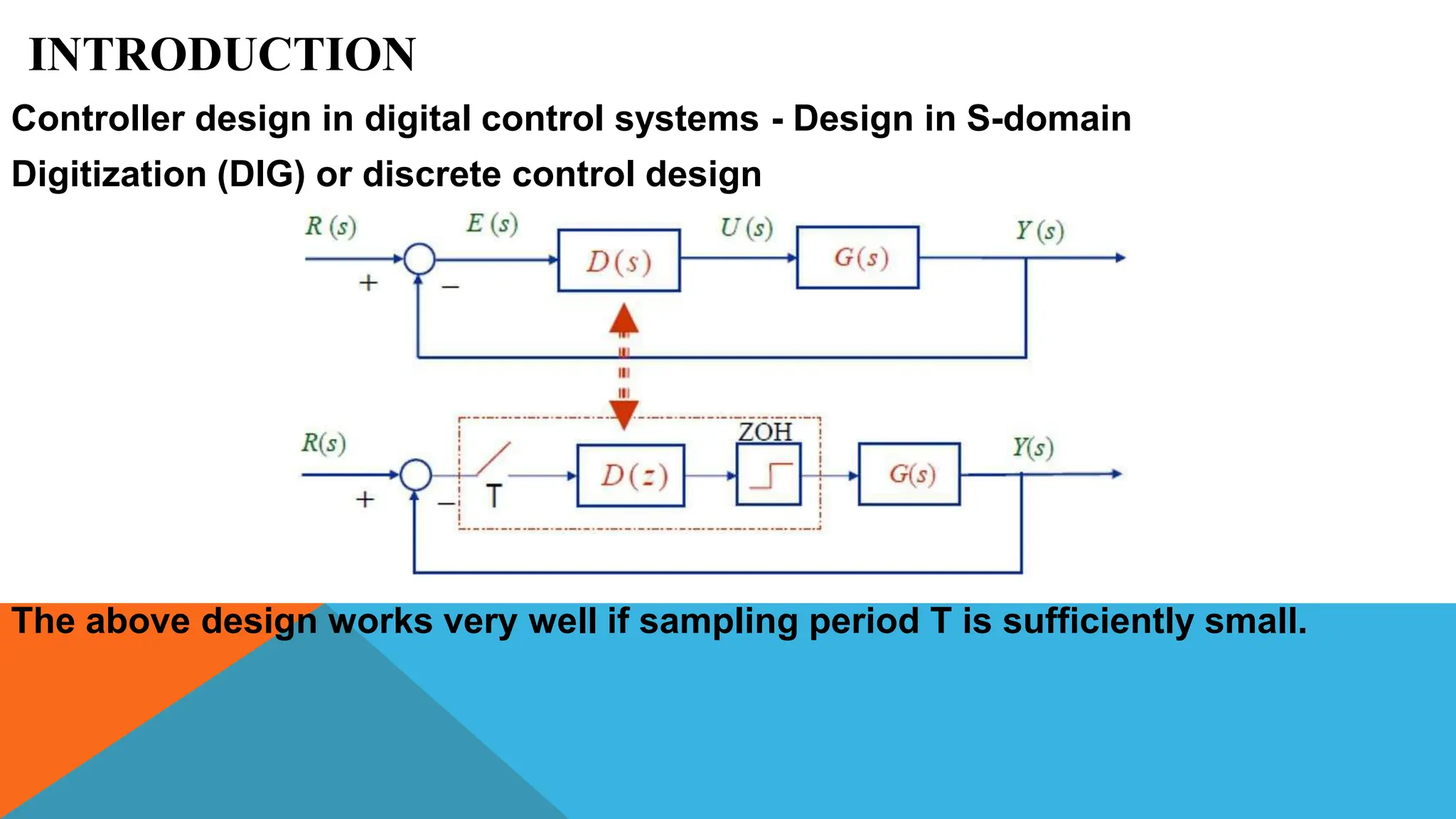
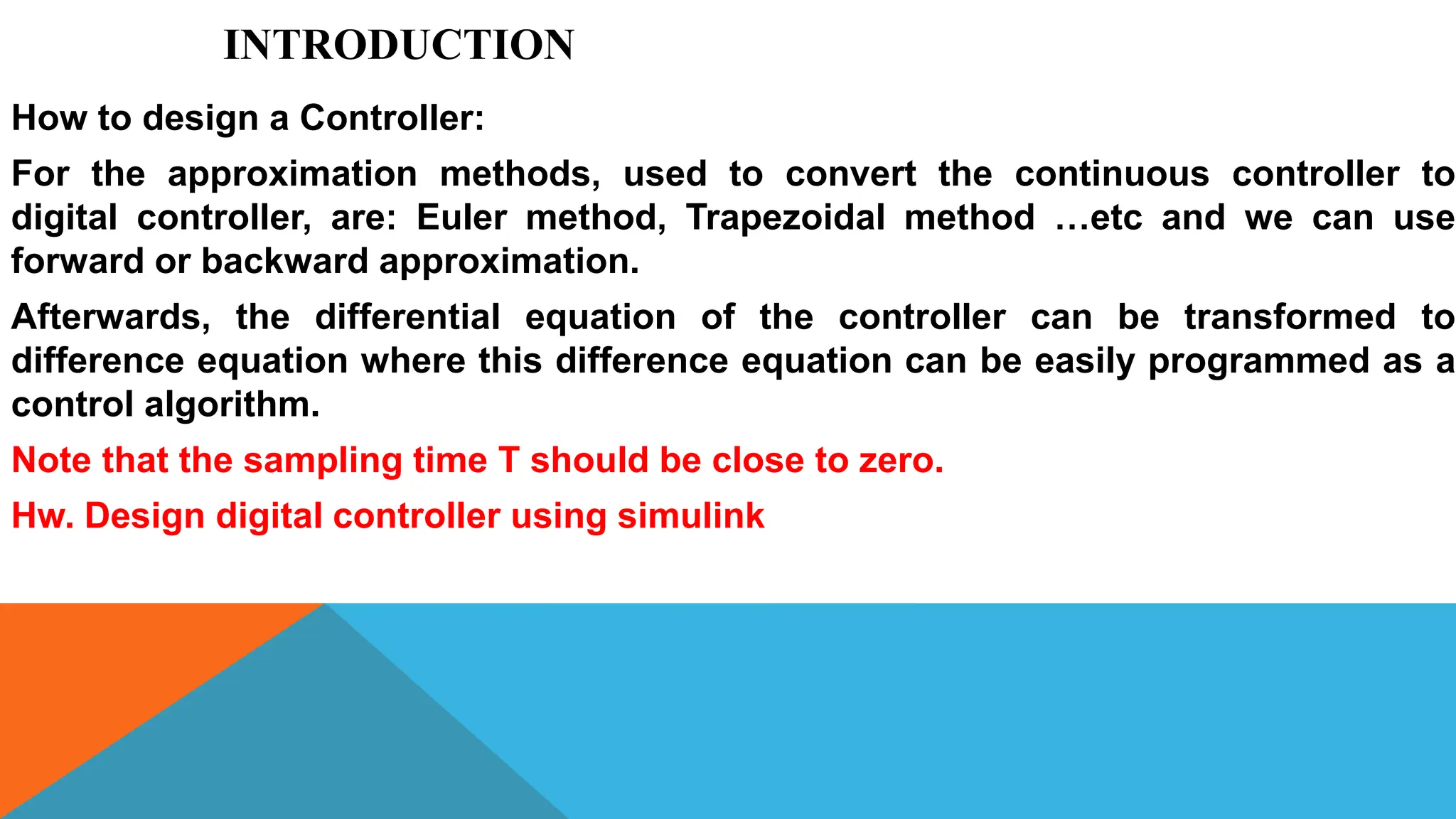
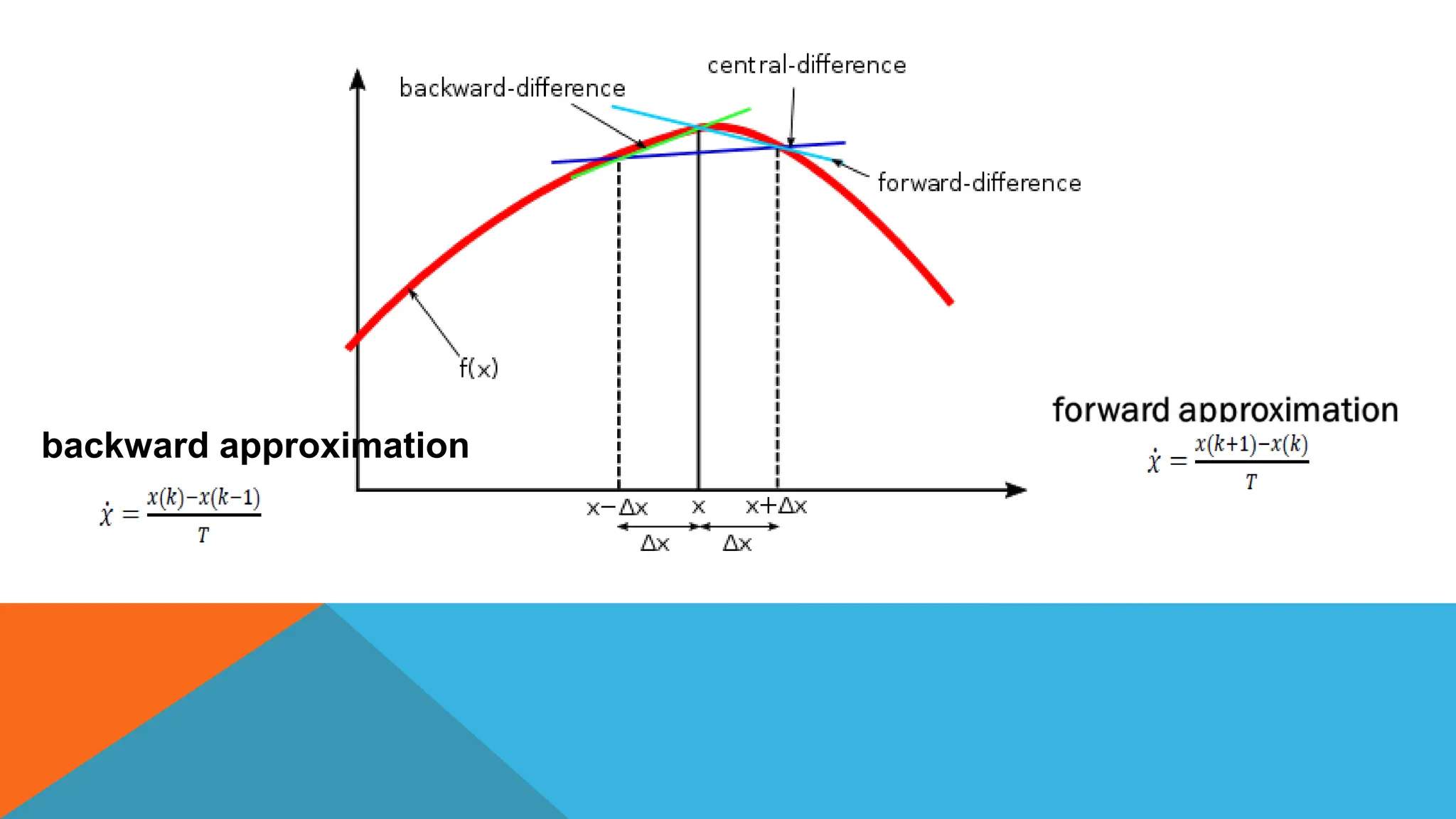
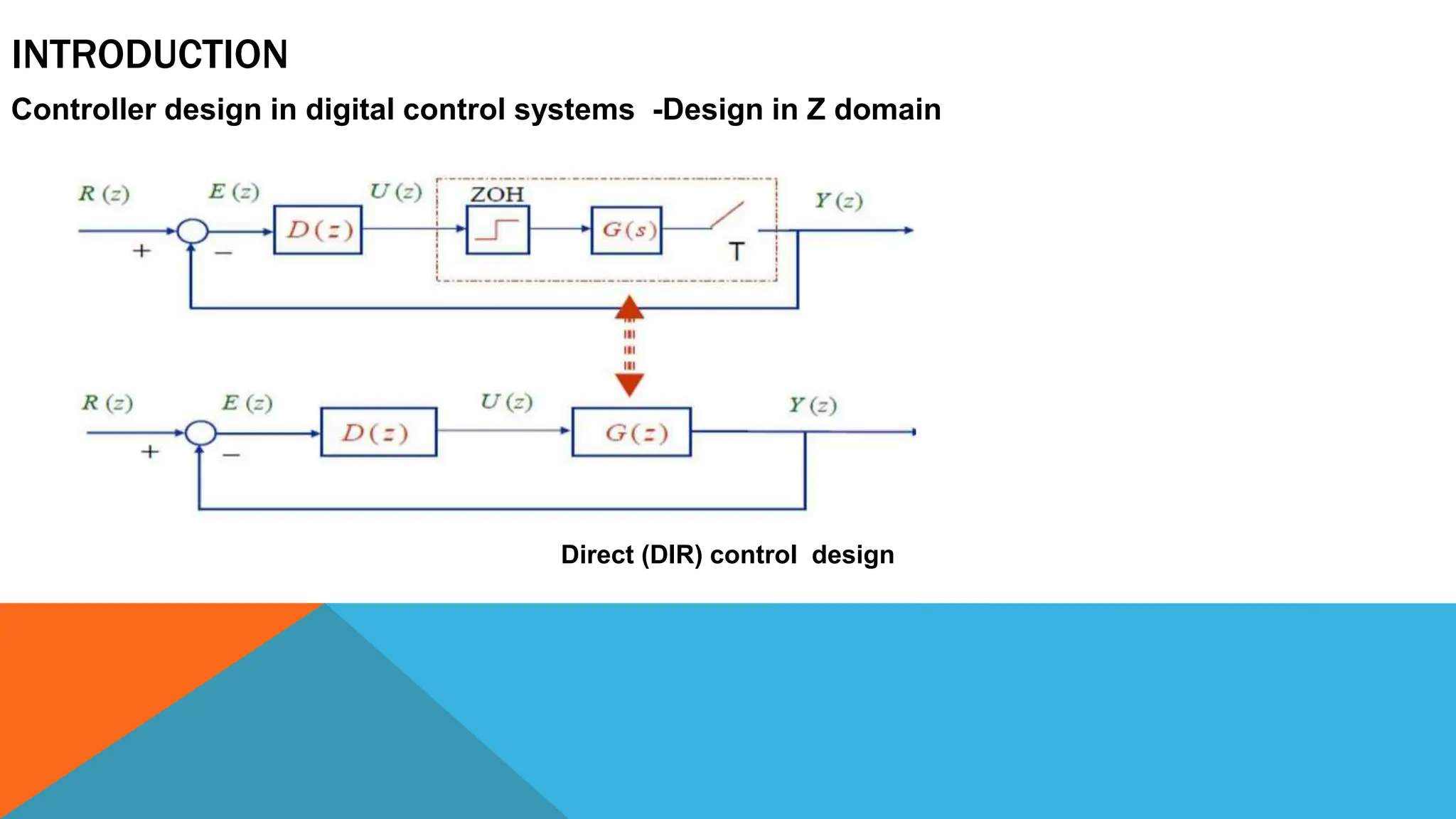
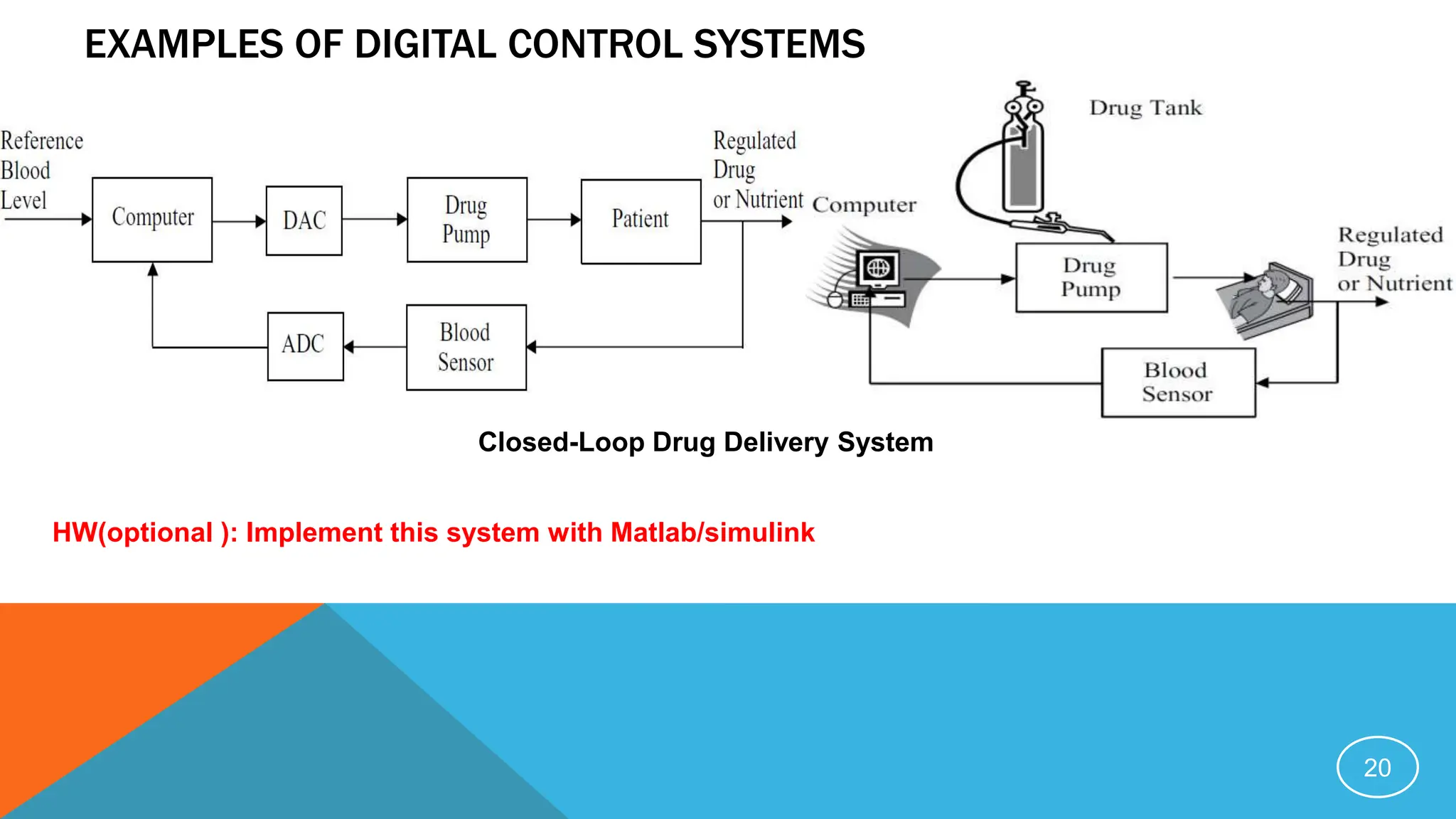
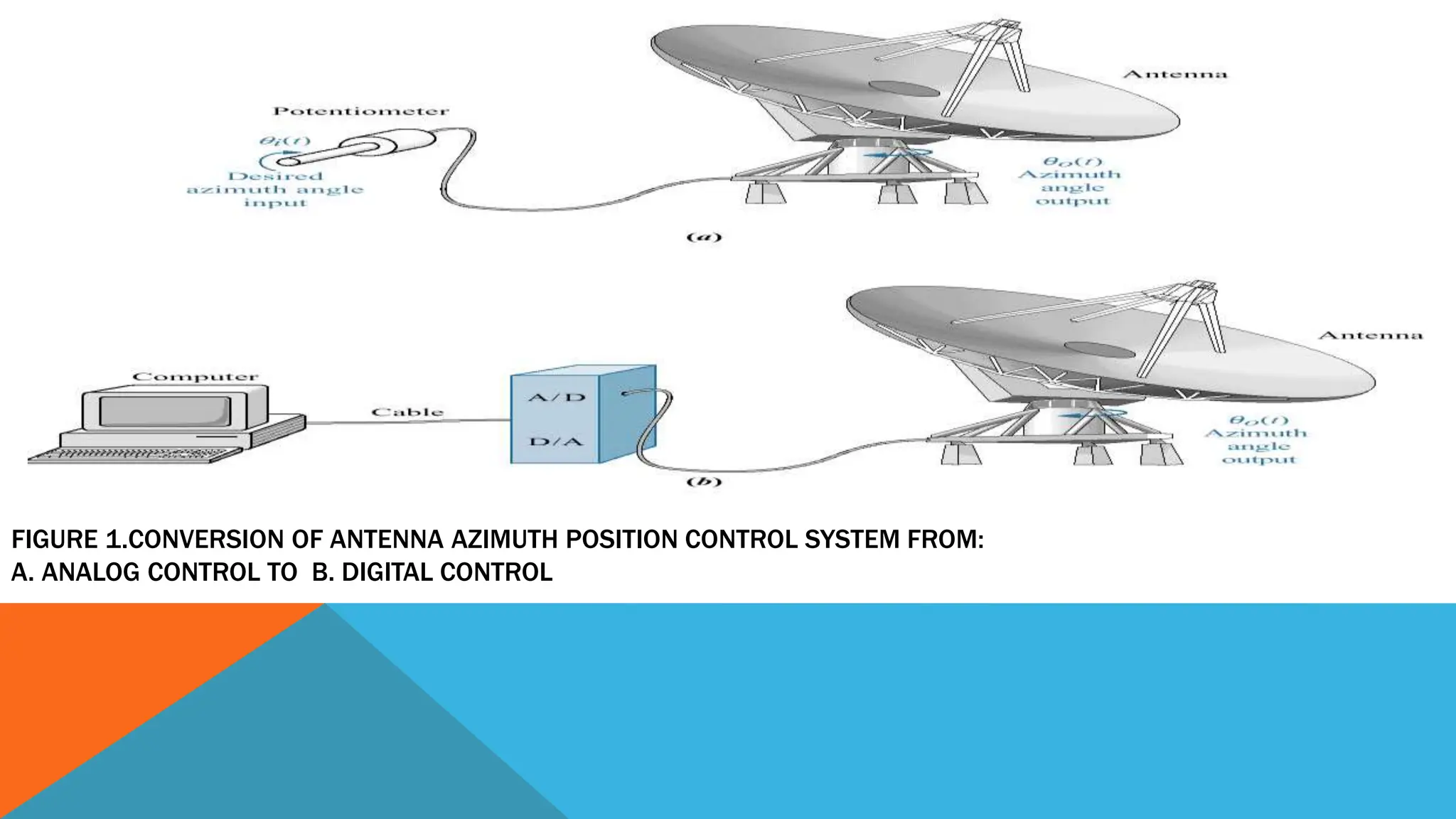
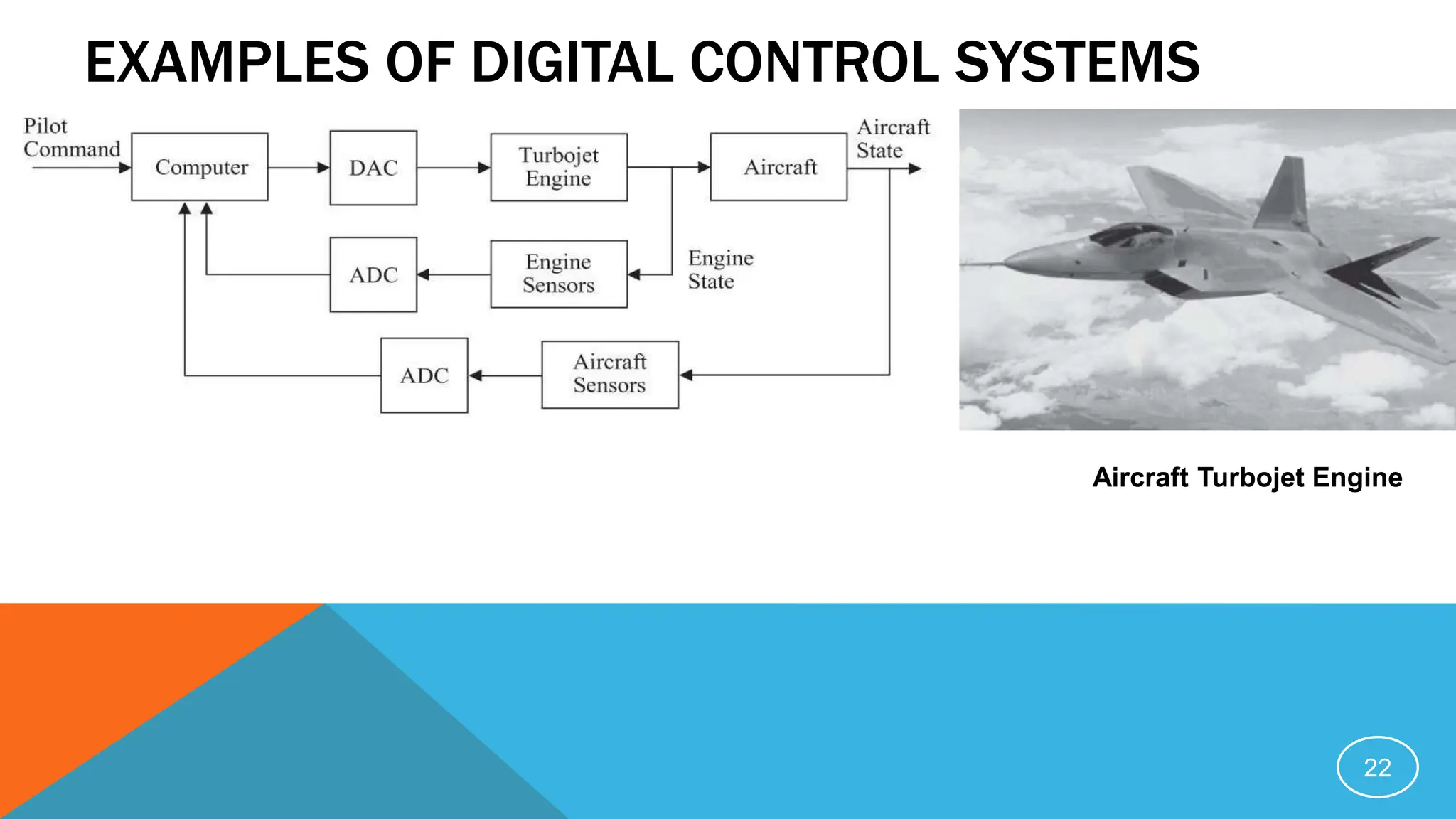
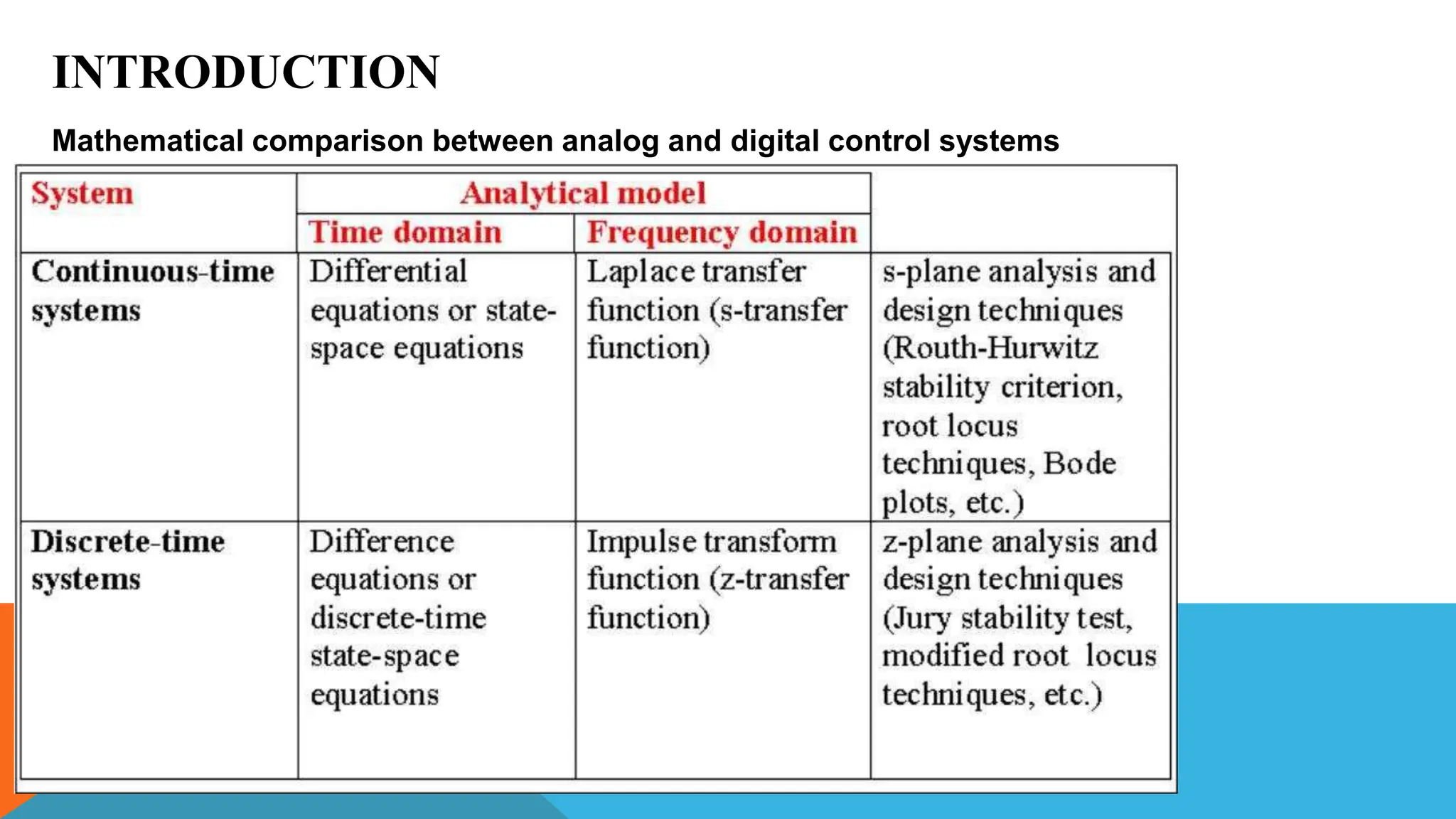
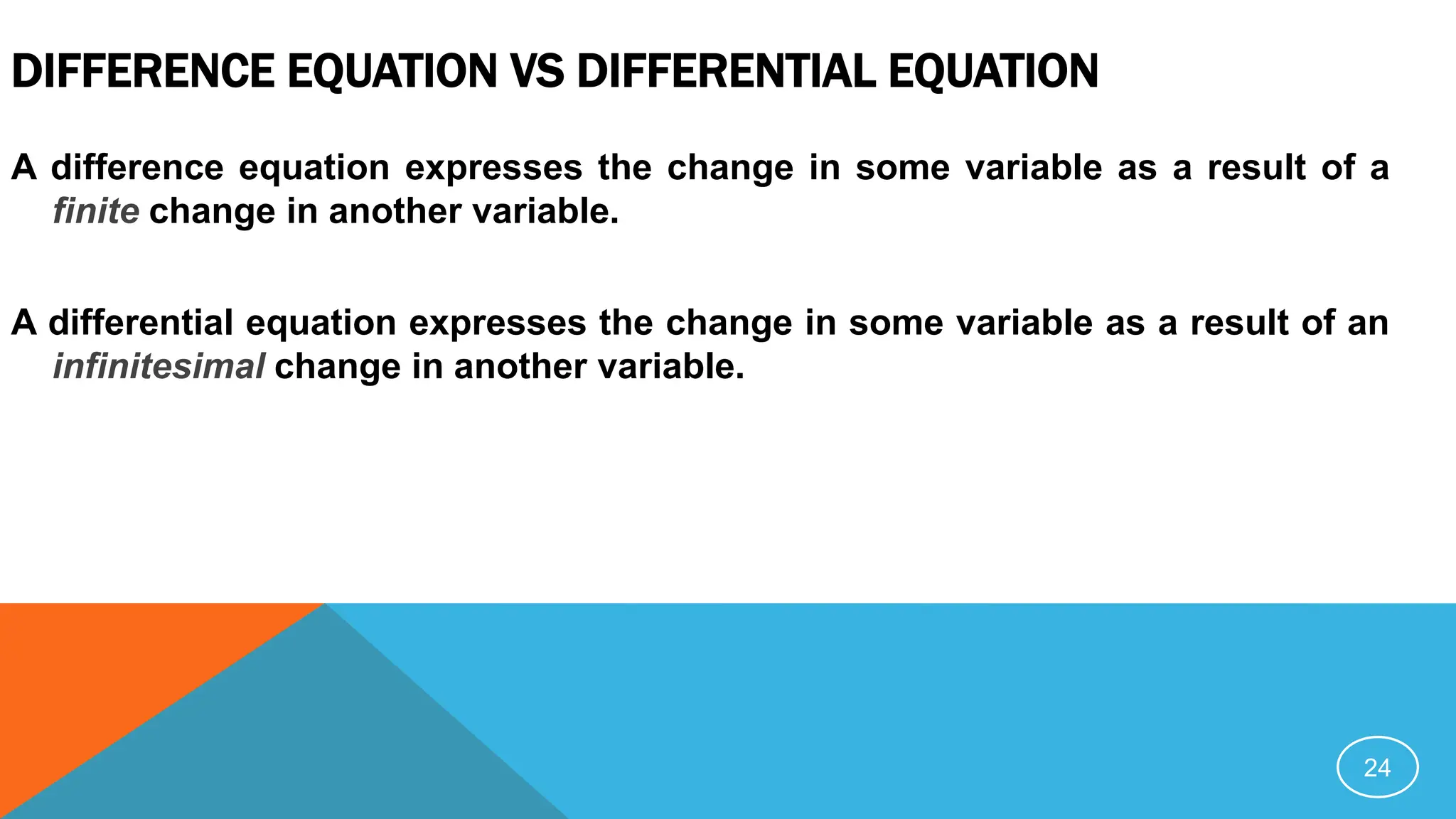
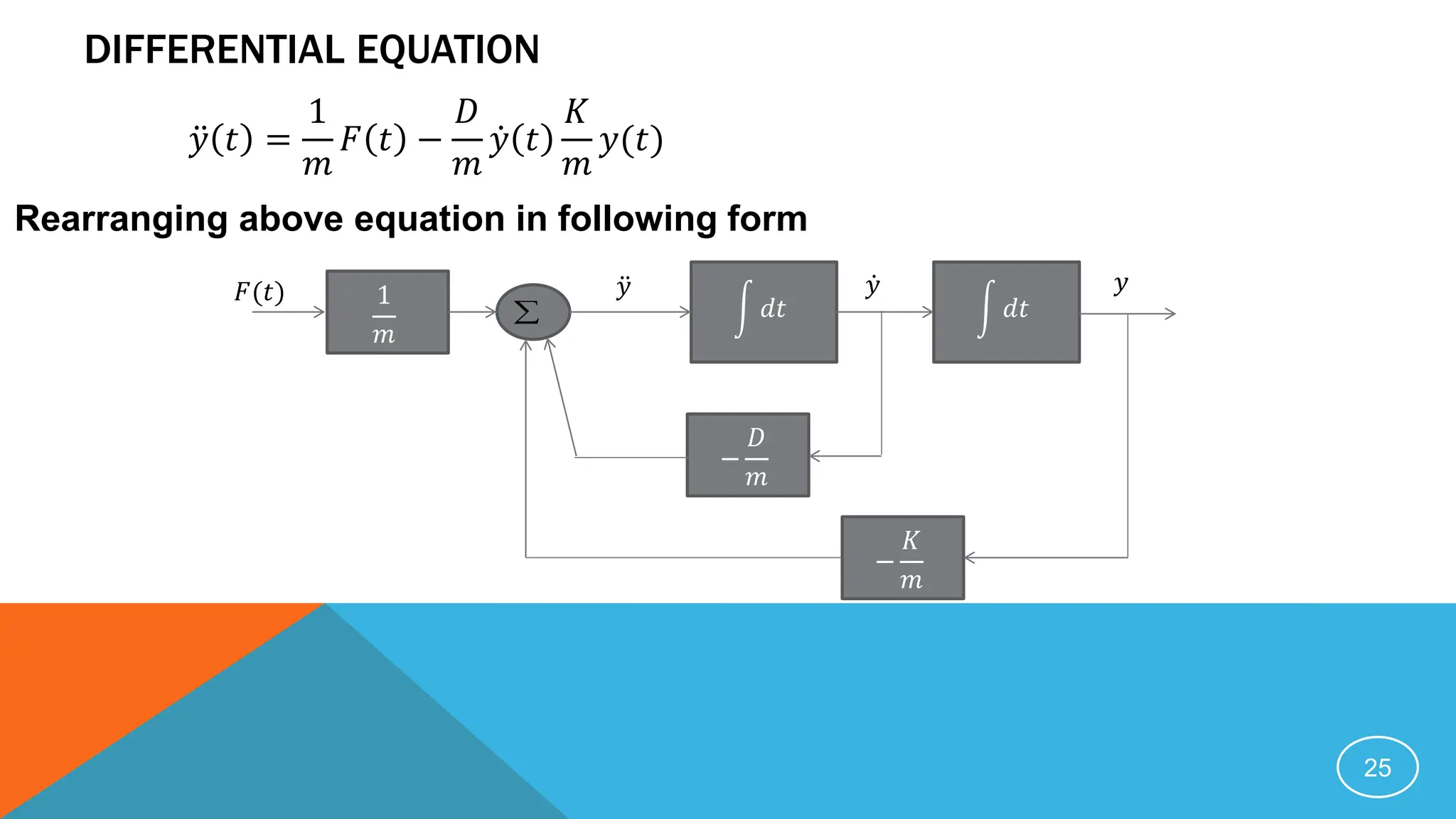
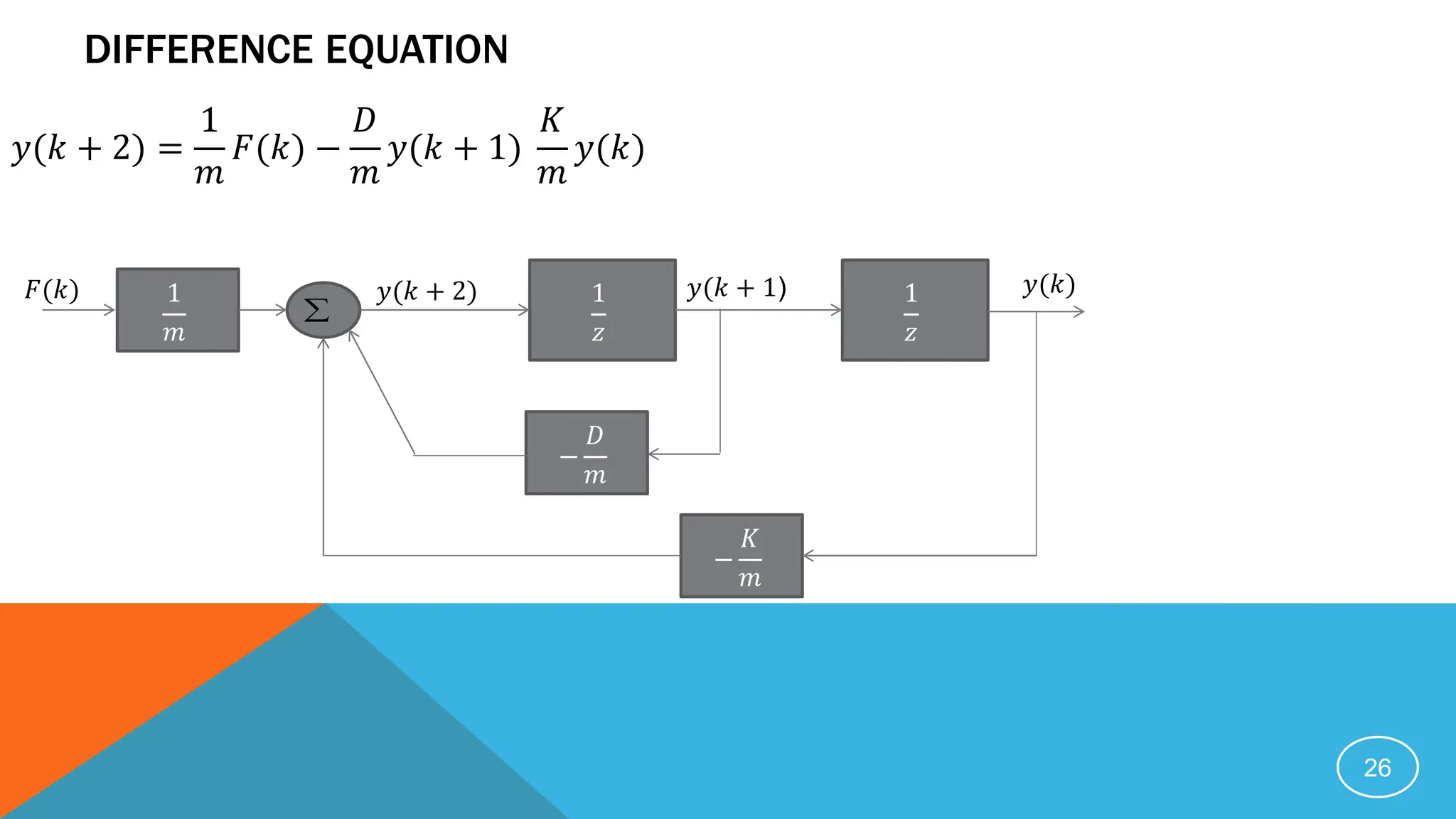
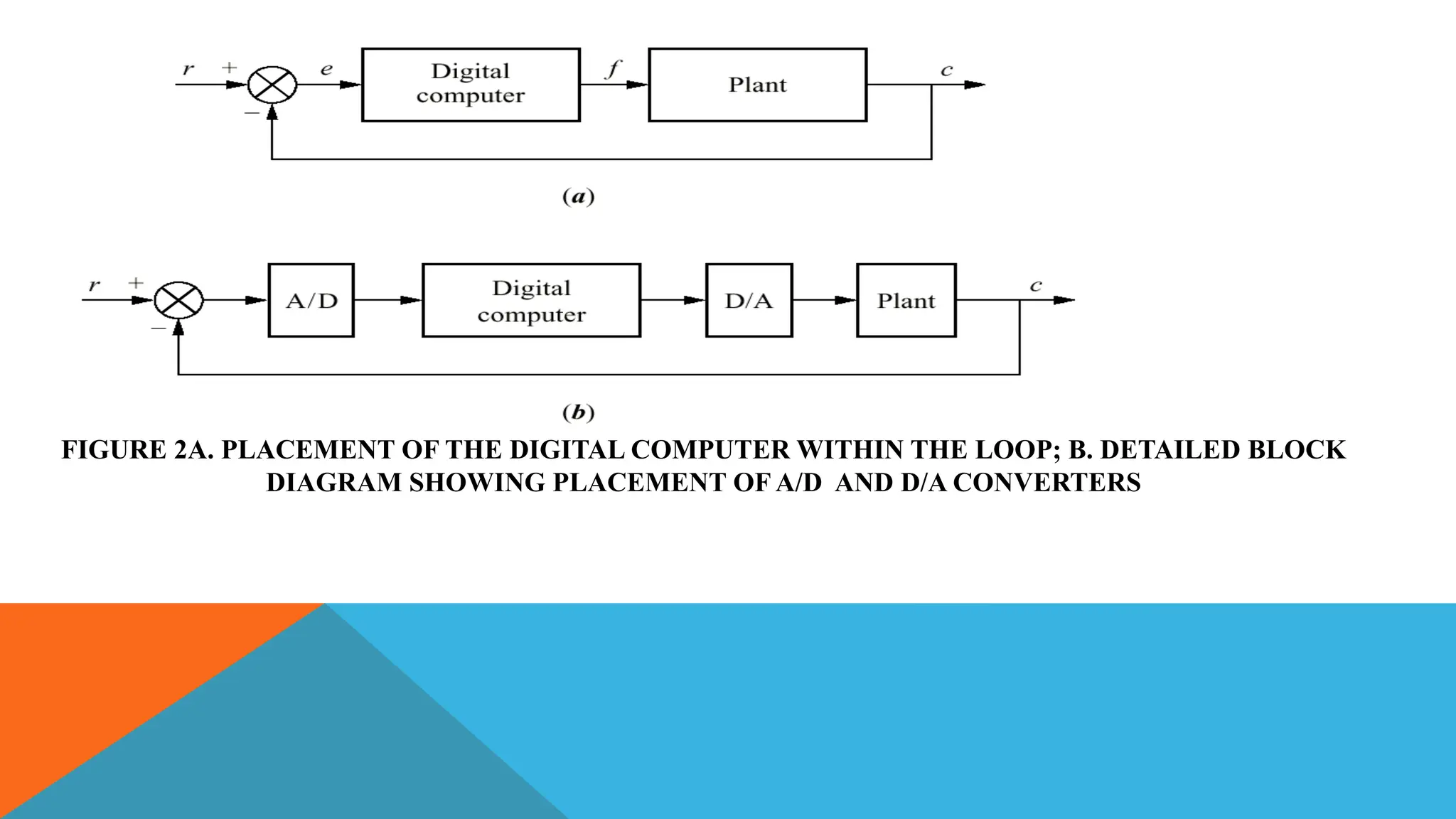
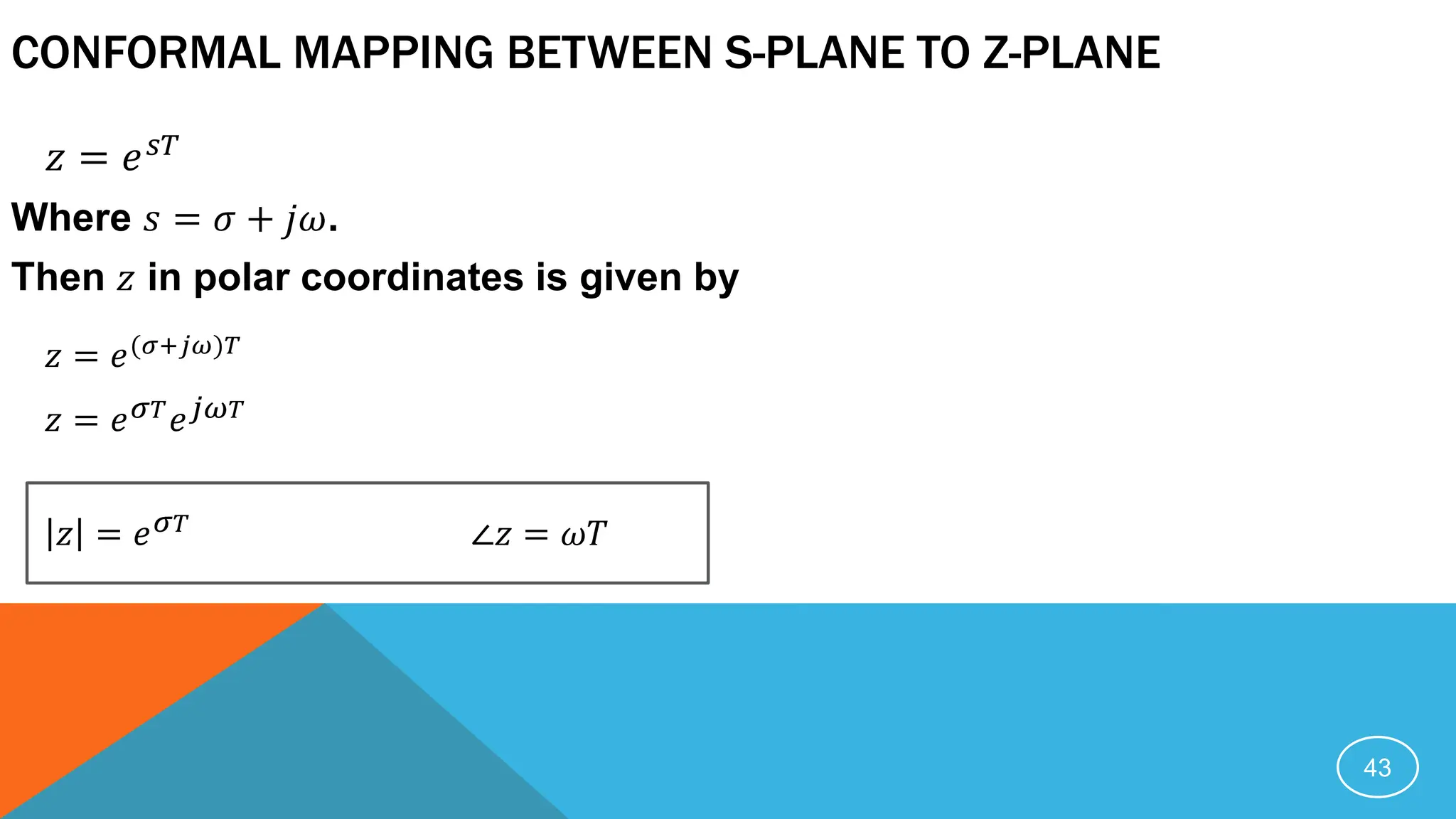
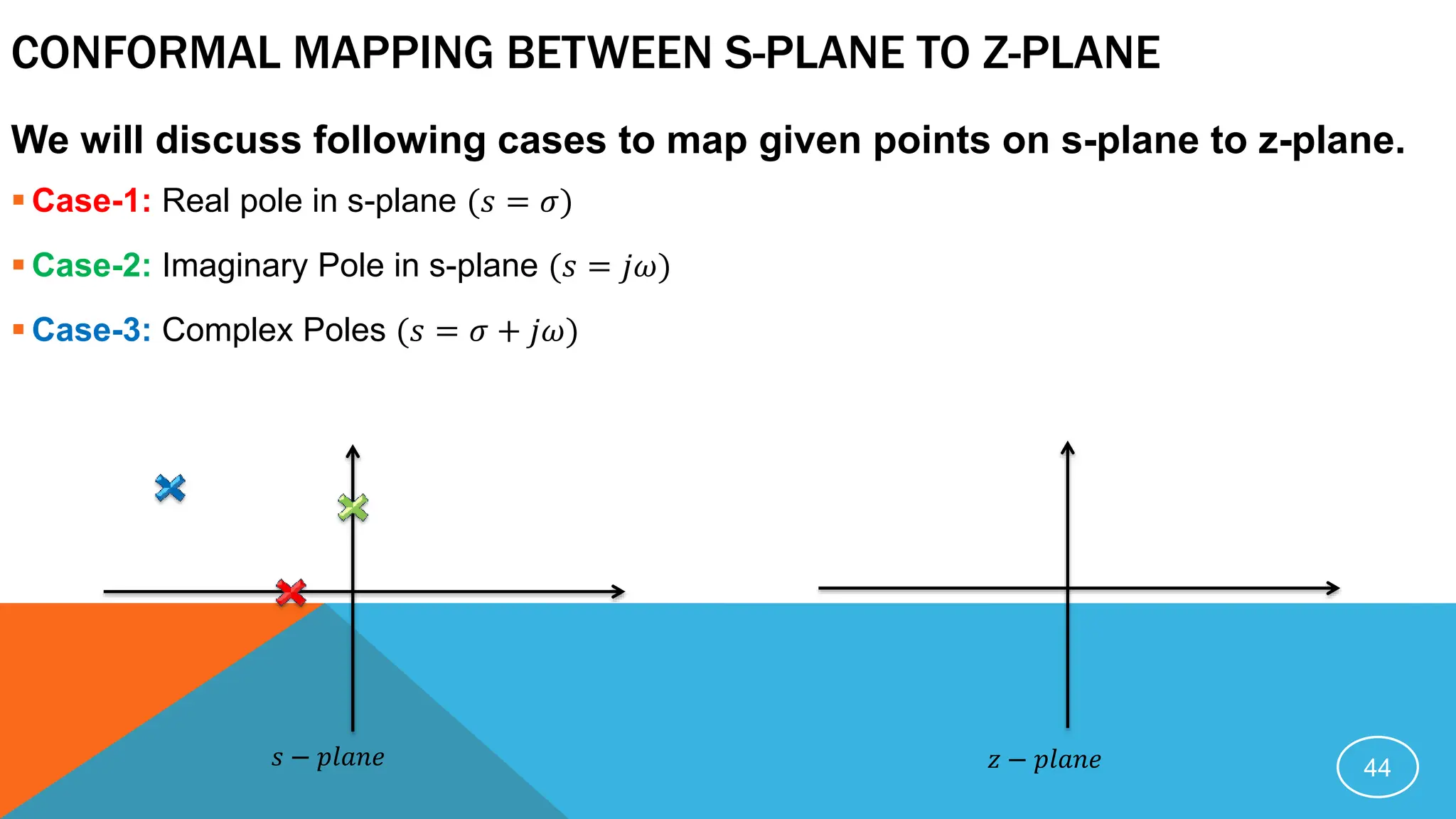
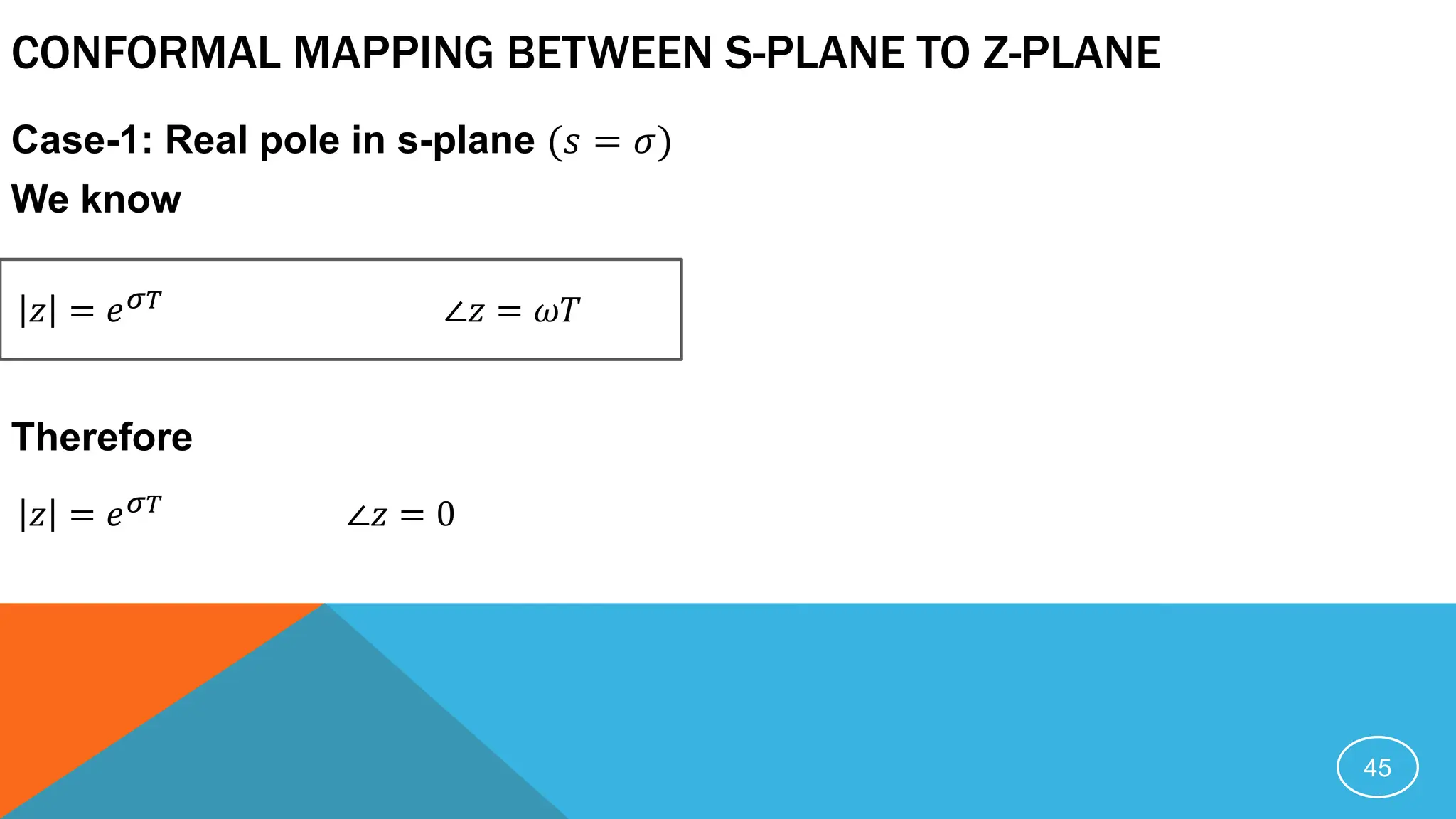
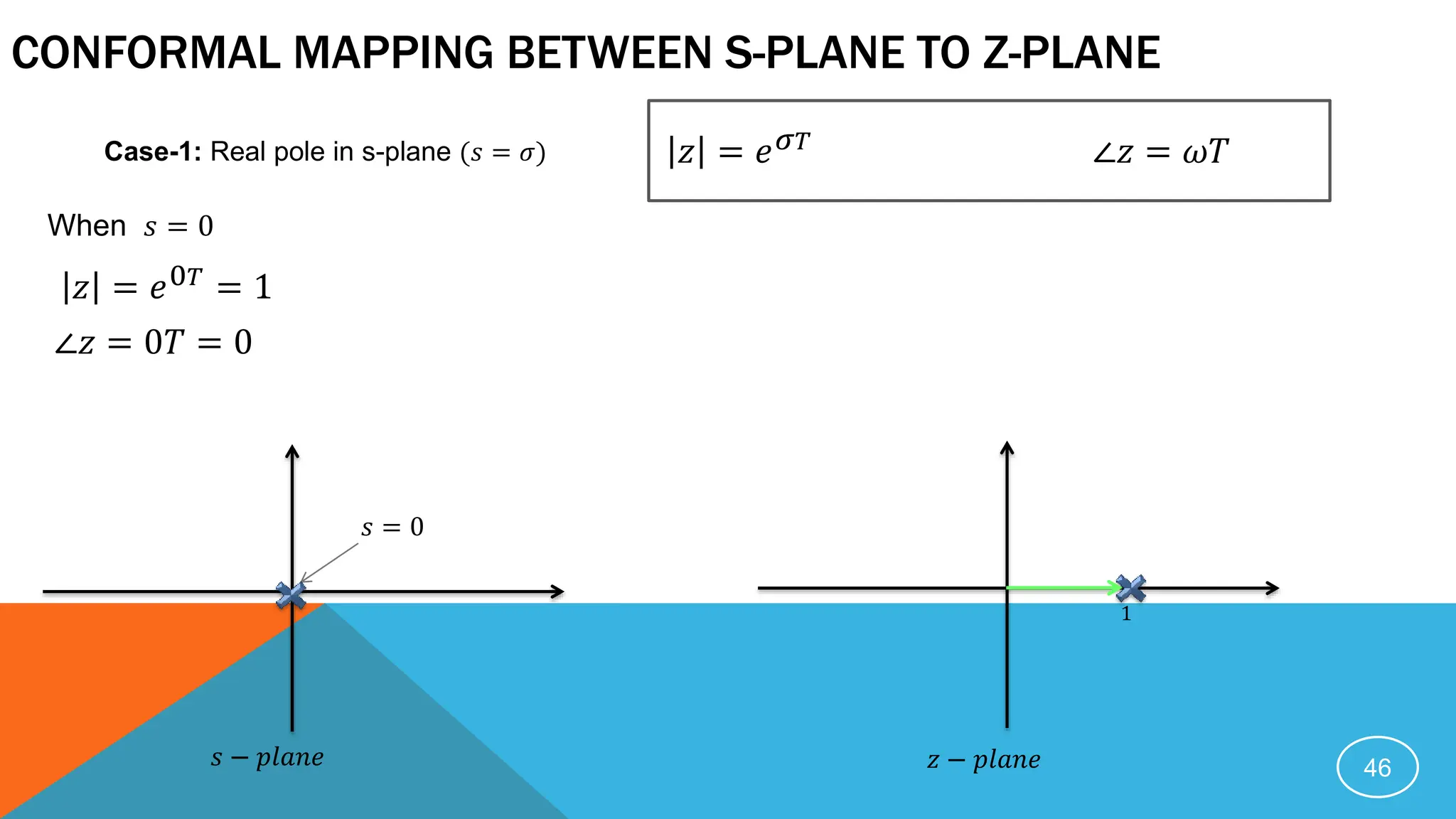
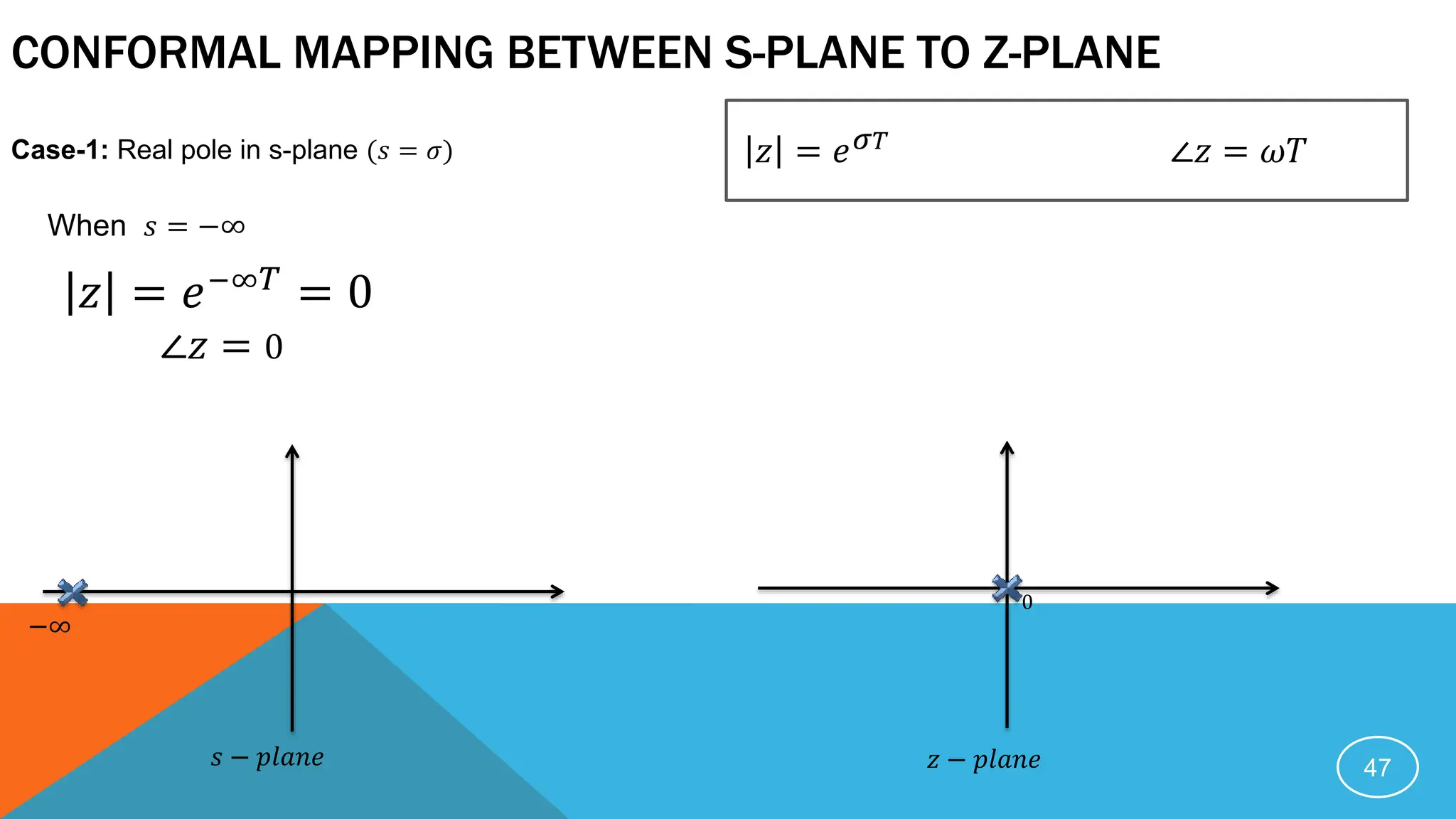
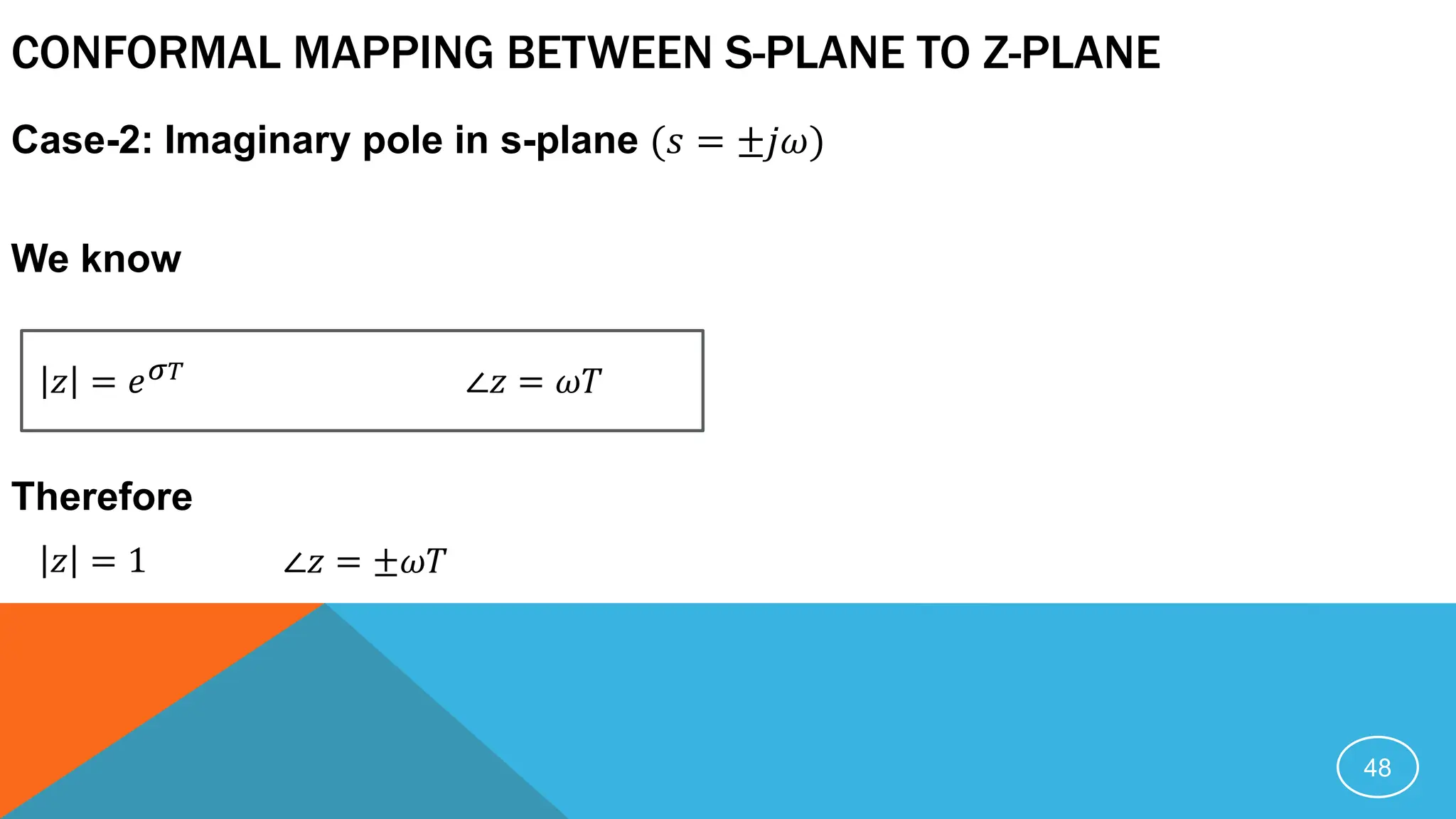
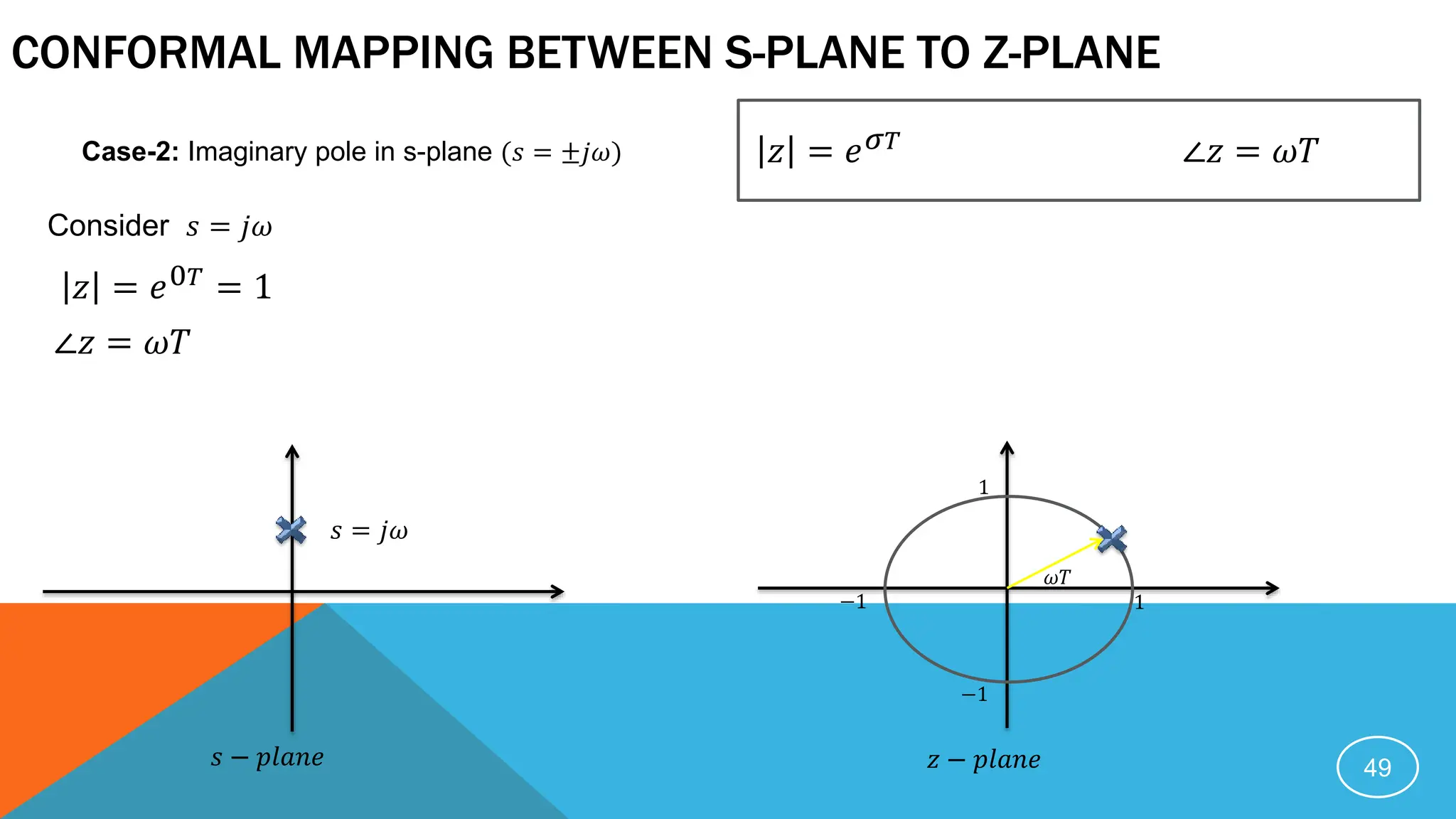
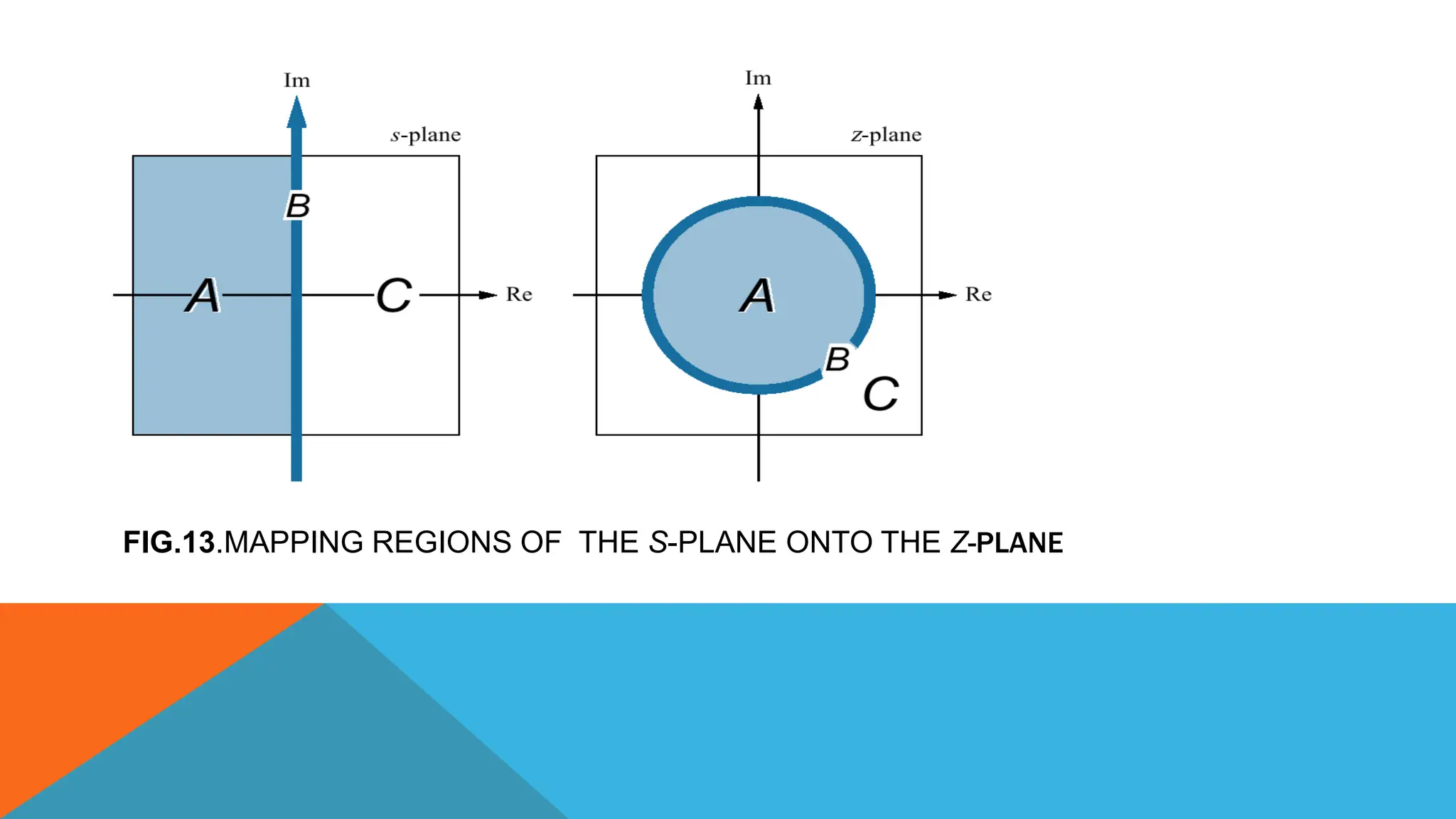
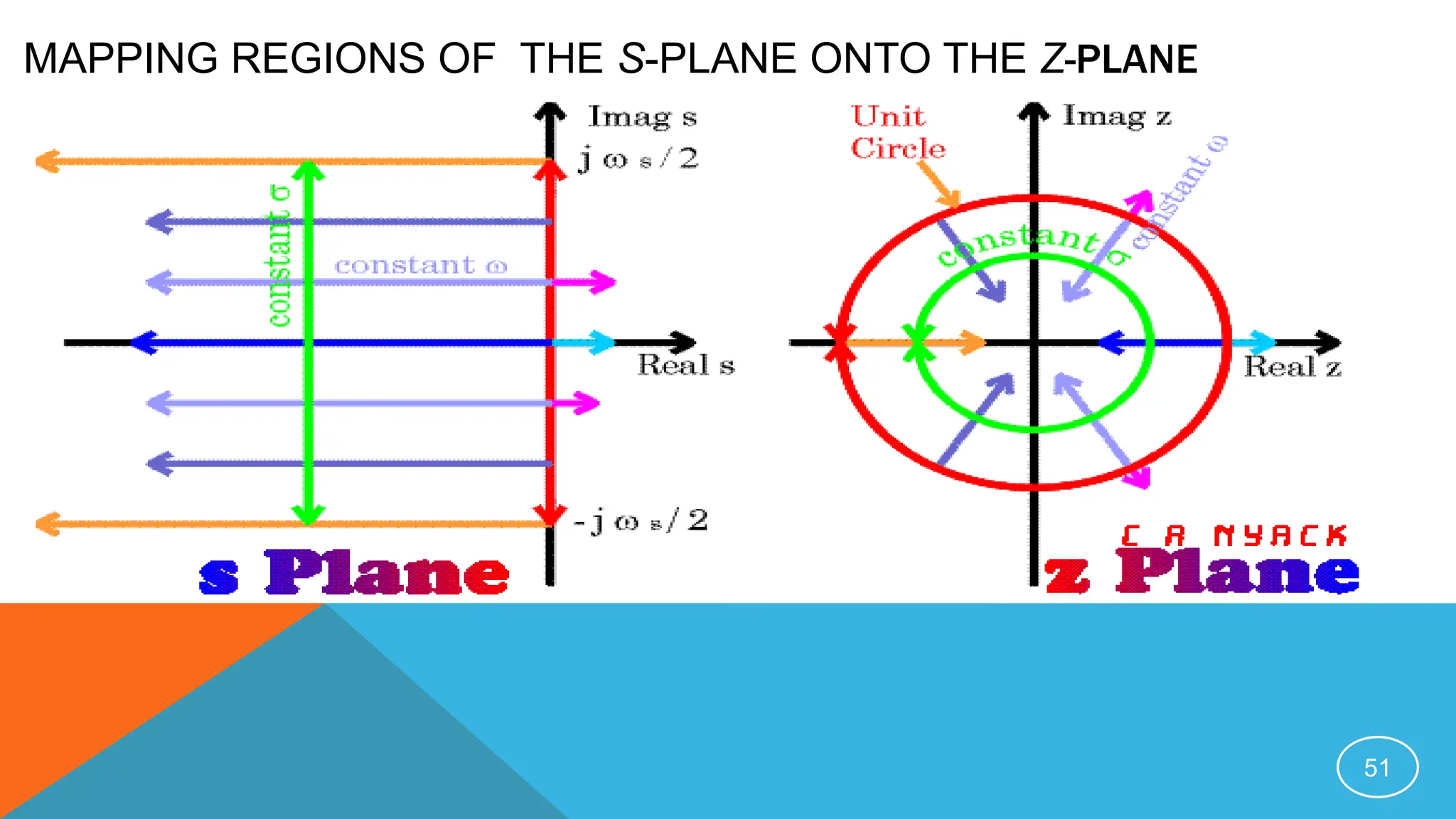
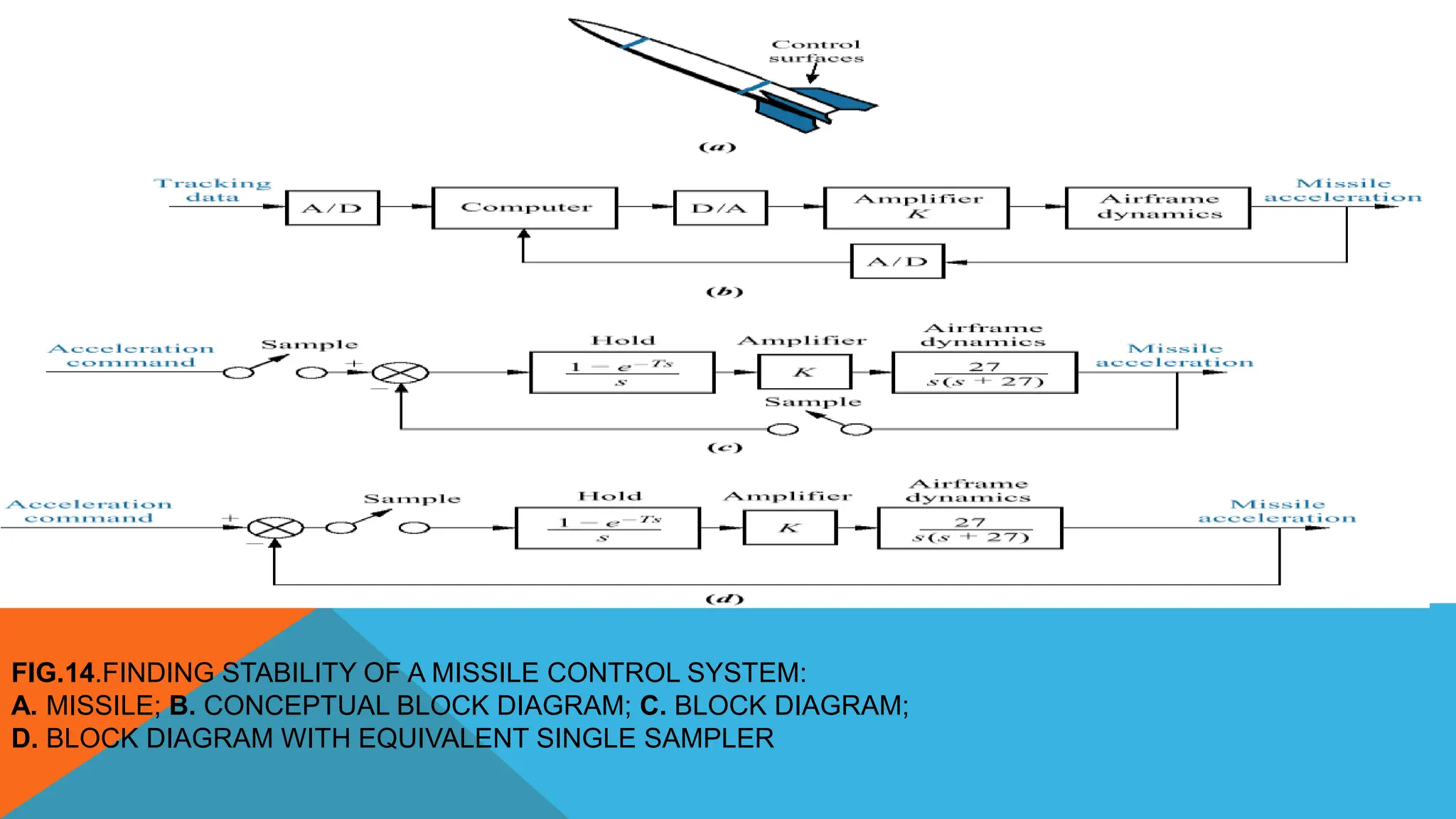
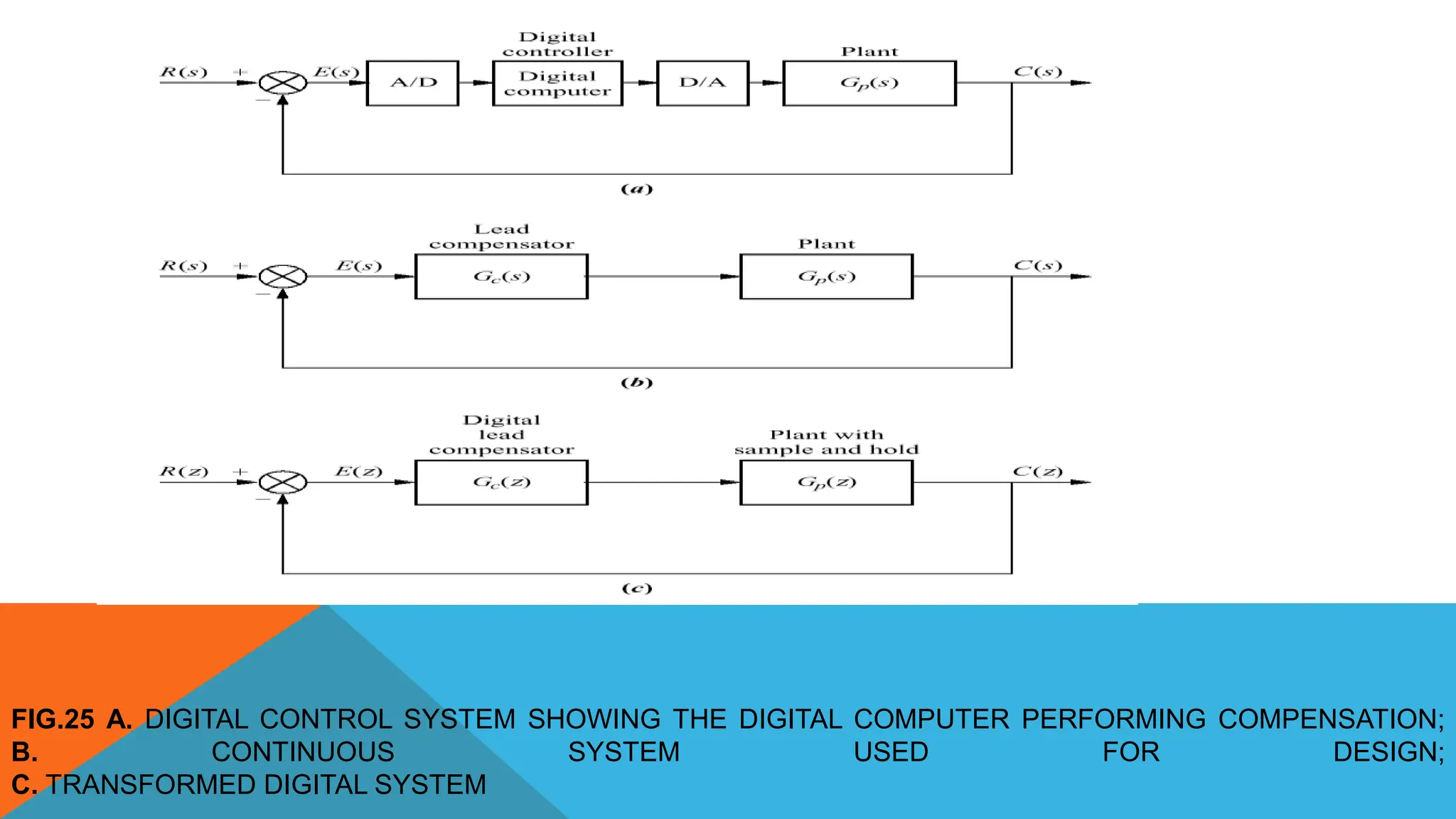
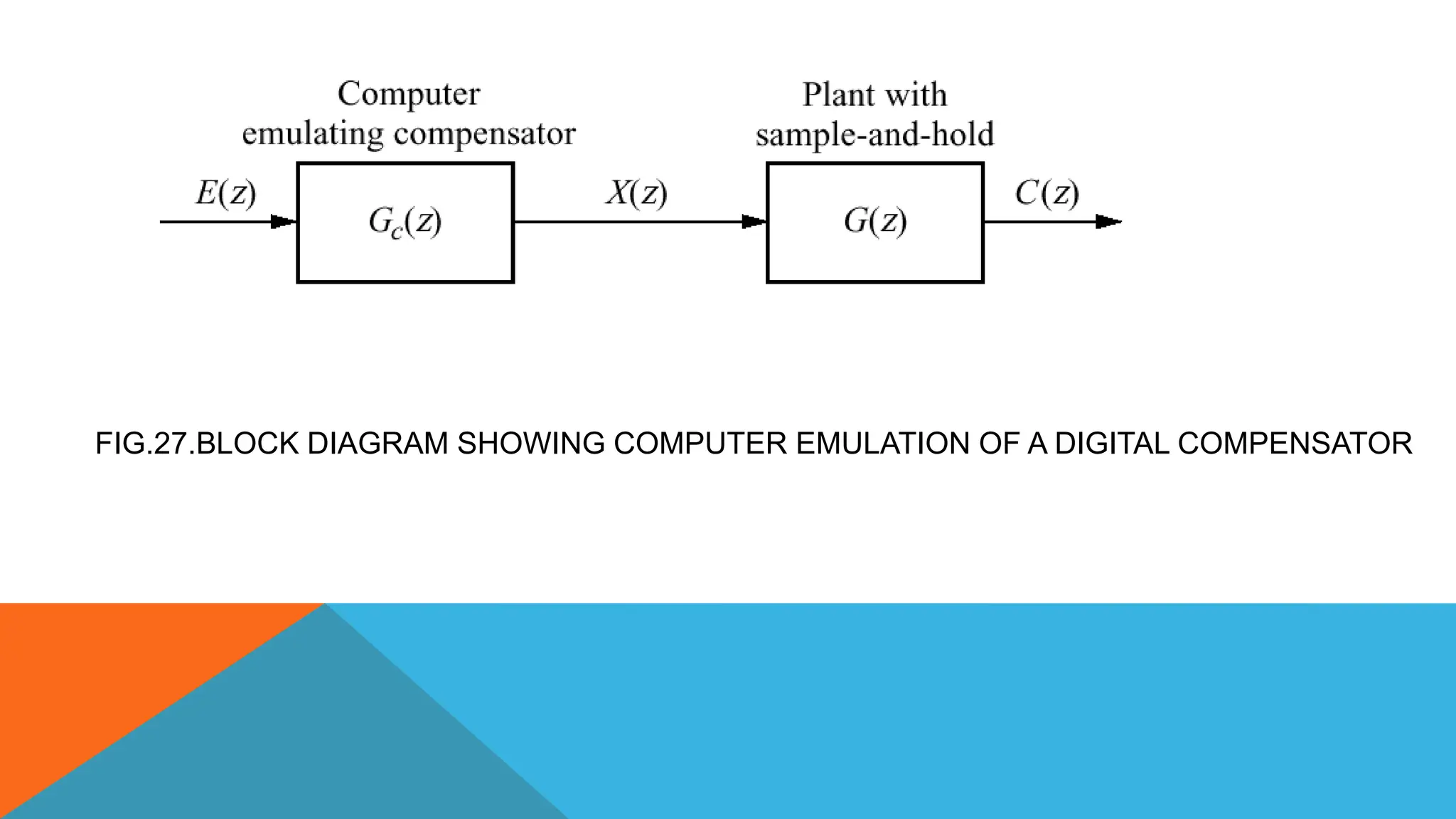
This document provides an introduction to digital control systems. It discusses how control systems consisting of interconnected components can be designed to achieve a desired purpose. Modern control engineering uses digital control strategies to improve various processes. The design gap exists between physical systems and their models. The iterative nature of design allows engineers to effectively handle this gap. Digital control offers advantages over analog control like accuracy, flexibility and lower costs. However, digital control can introduce delays. Examples of digitally controlled systems include automotive engine control and aircraft autopilots. Controller design involves modeling systems, transforming between differential and difference equations, and mapping between the s-plane and z-plane.
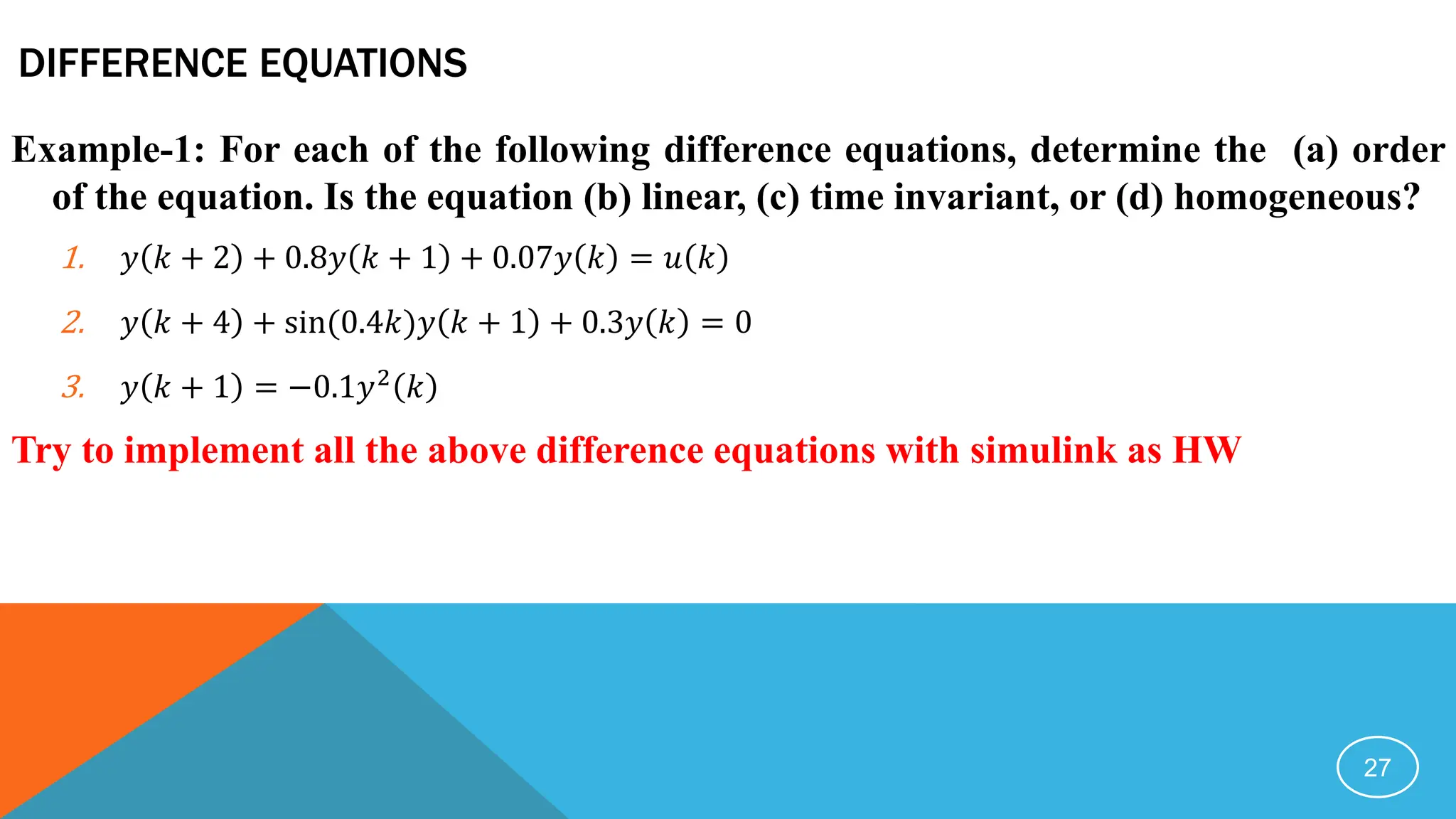
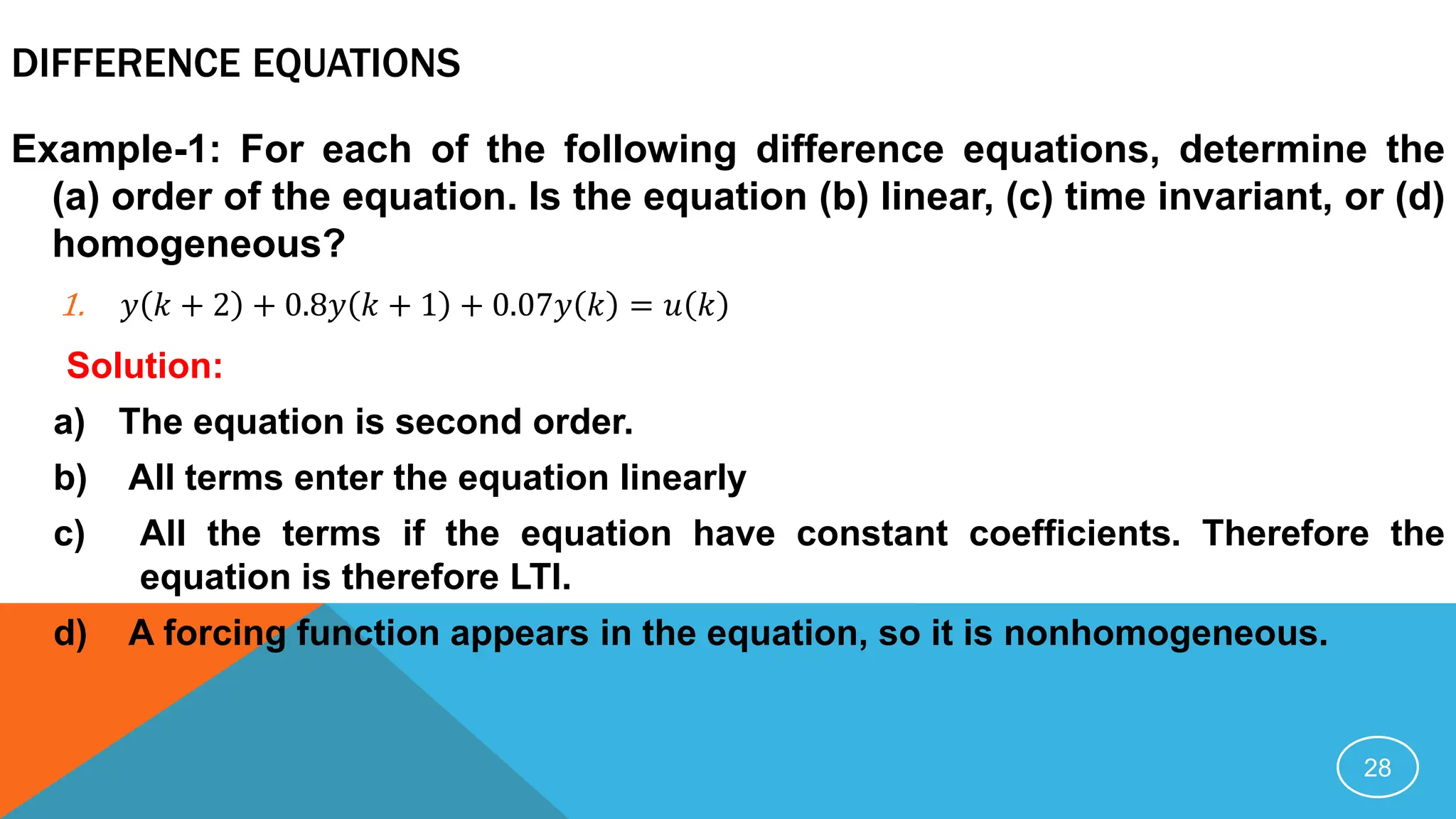
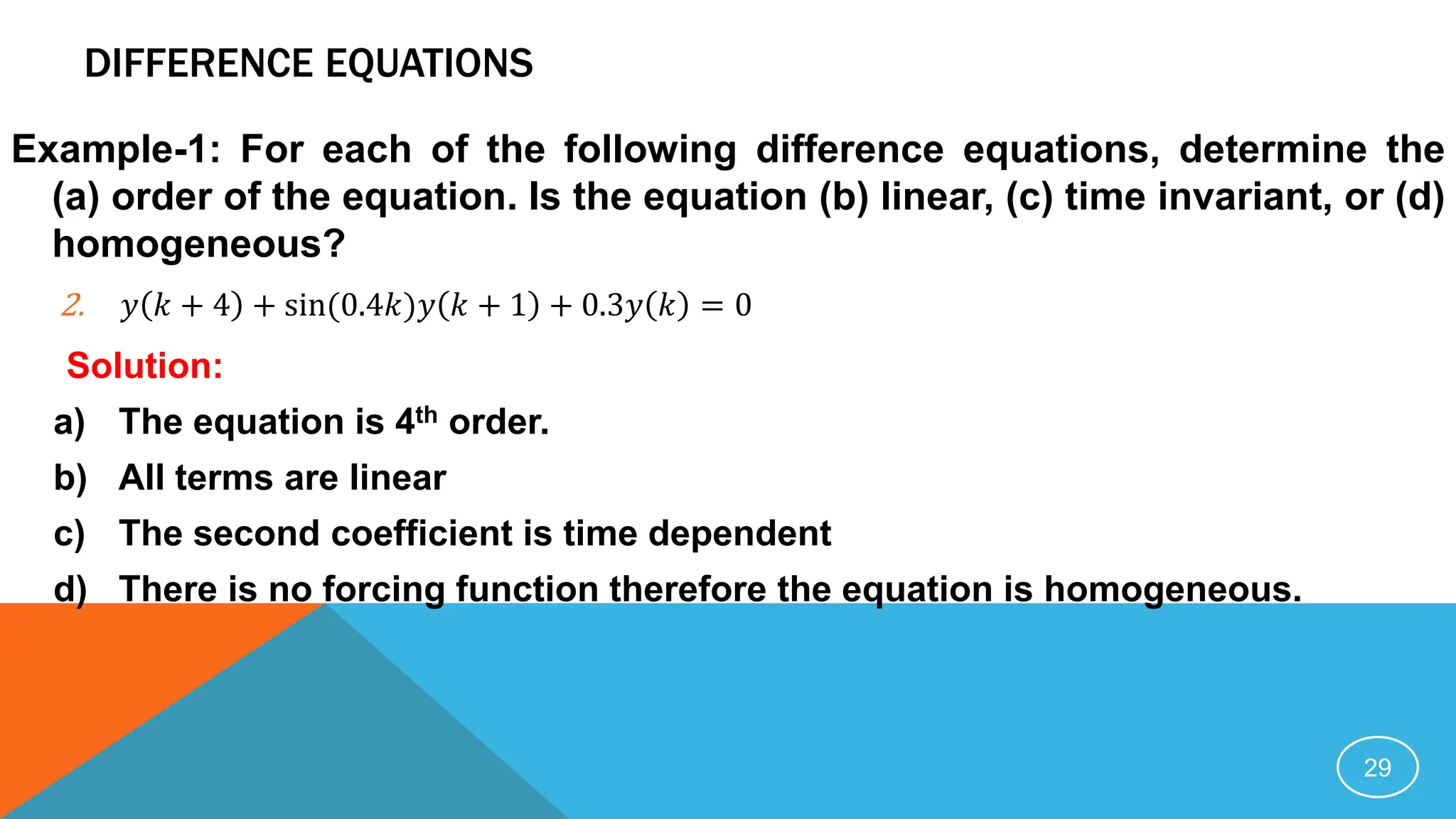
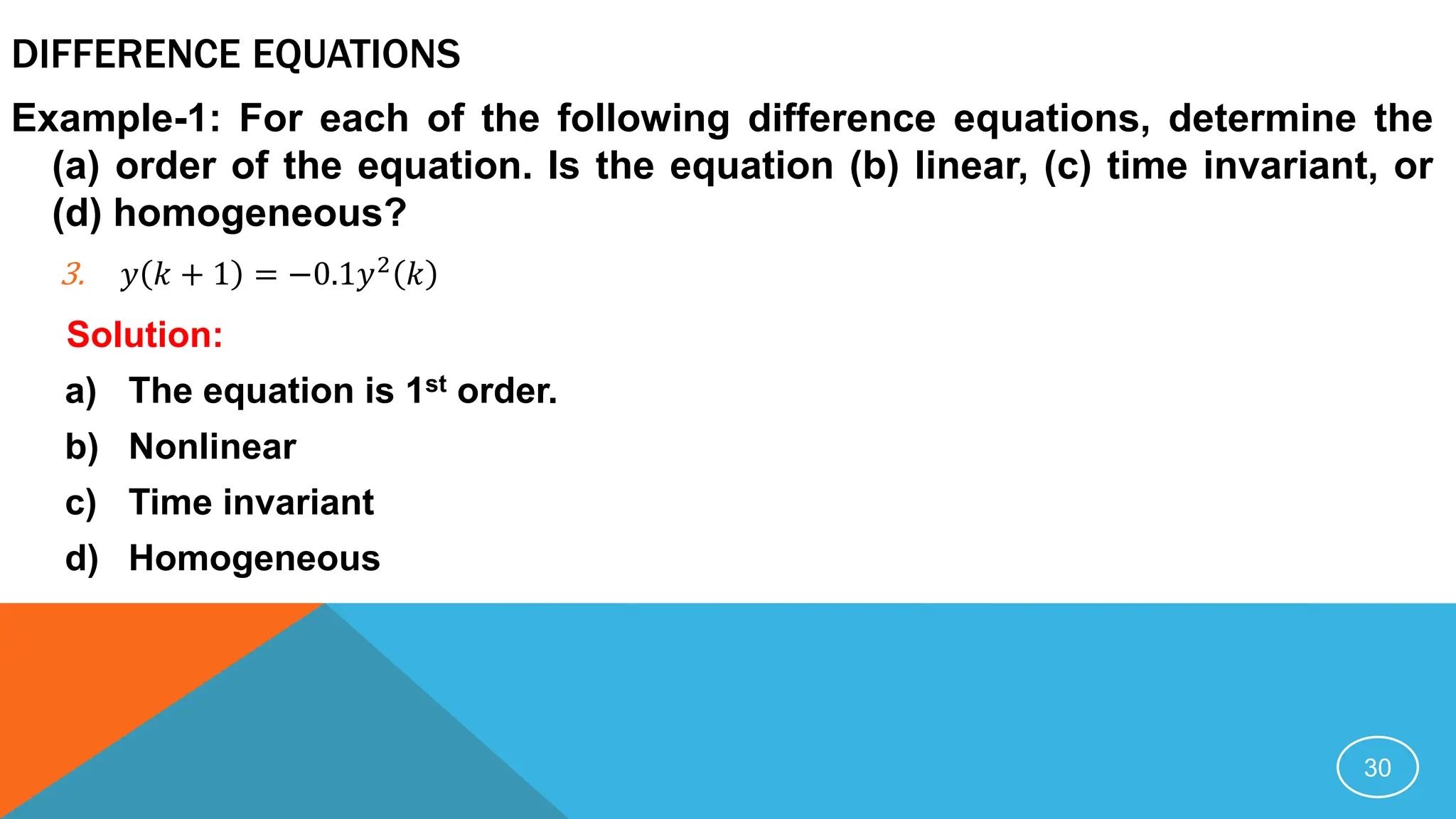
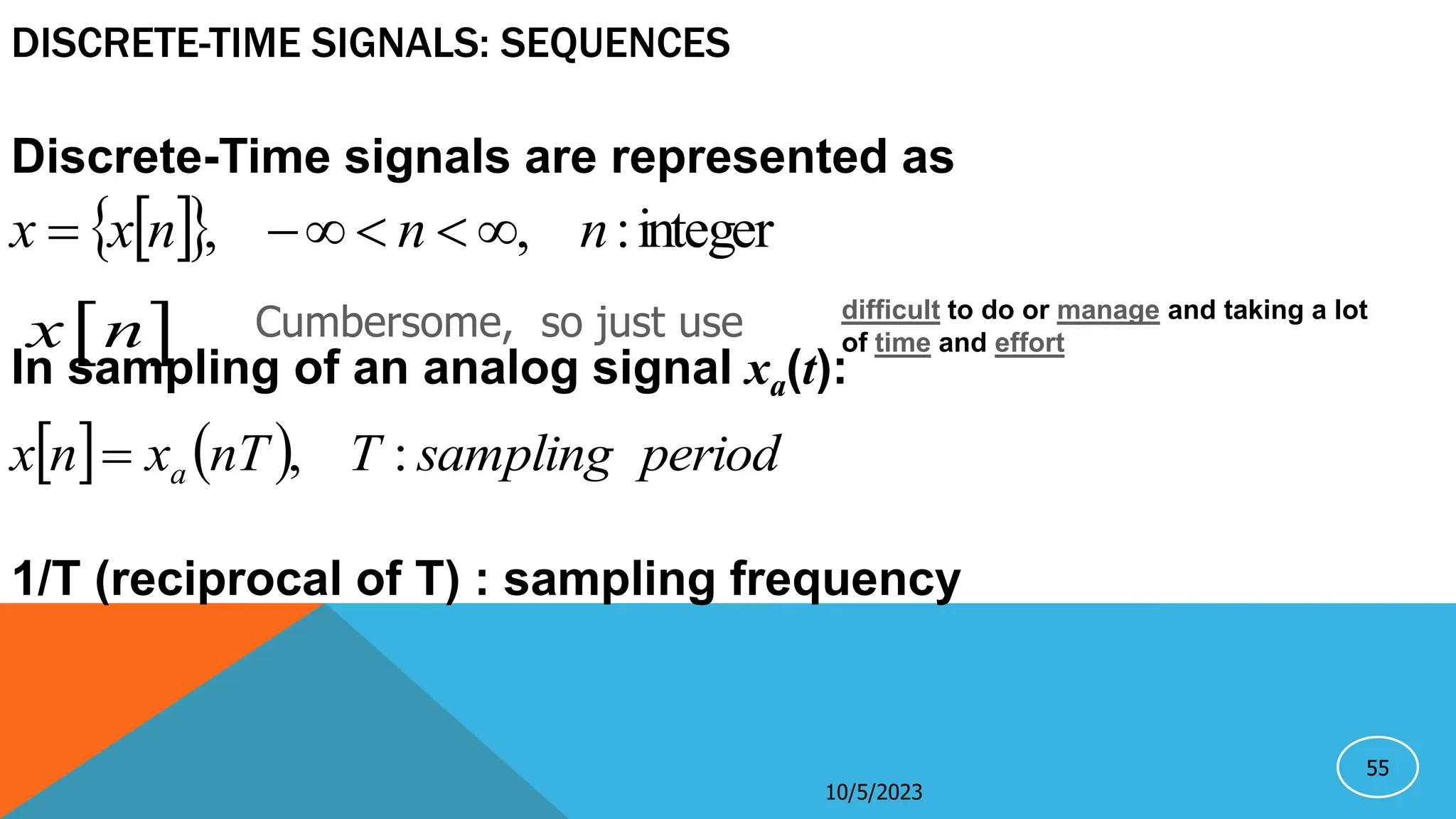
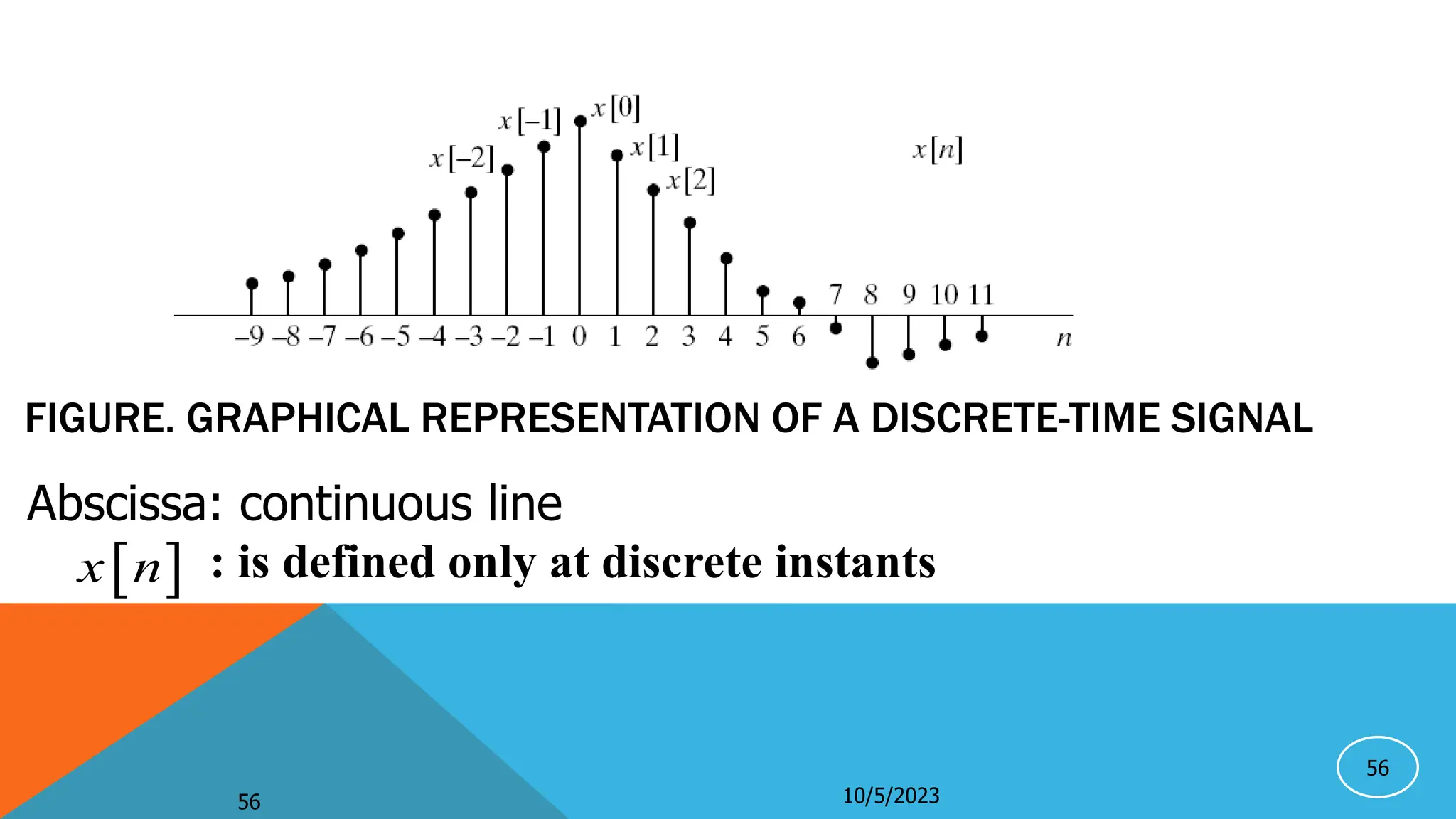
![57
Figure 2
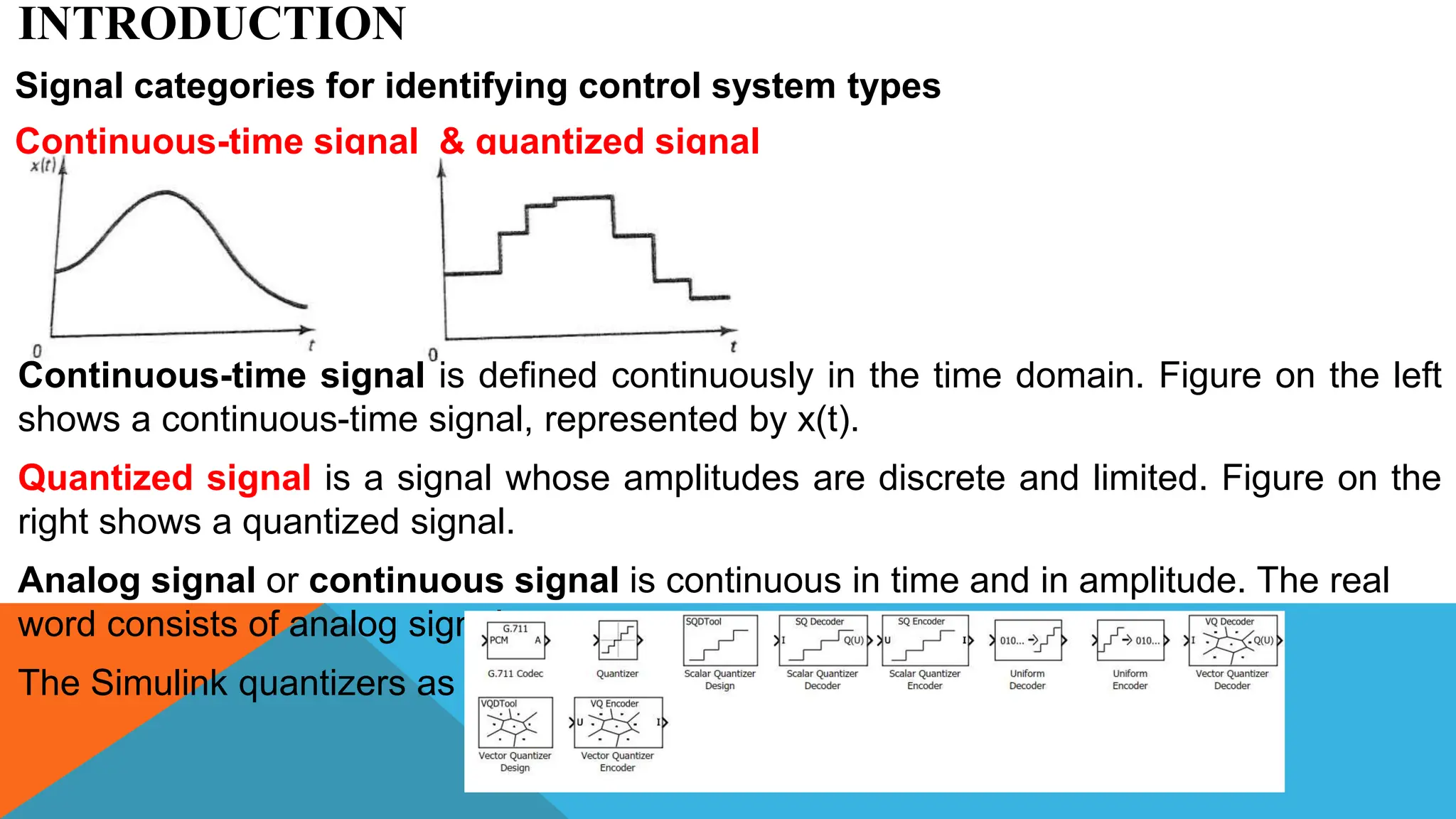
EXAMPLE Sampling the analog waveform
)
(
|
)
(
]
[ nT
x
t
x
n
x a
nT
t
a
](https://image.slidesharecdn.com/lecture1digitalcontrolsystems-231005170707-1293f408/75/Lecture-_1_-Digital-Control-Systems-pptx-57-2048.jpg)
![58 10/5/2023
58
Sum of two sequences
Product of two sequences
Multiplication of a sequence by a number α
Delay (shift) of a sequence
BASIC SEQUENCE OPERATIONS
]
[
]
[ n
y
n
x
integer
:
]
[
]
[ 0
0 n
n
n
x
n
y
]
[
]
[ n
y
n
x
]
[n
x
](https://image.slidesharecdn.com/lecture1digitalcontrolsystems-231005170707-1293f408/75/Lecture-_1_-Digital-Control-Systems-pptx-58-2048.jpg)
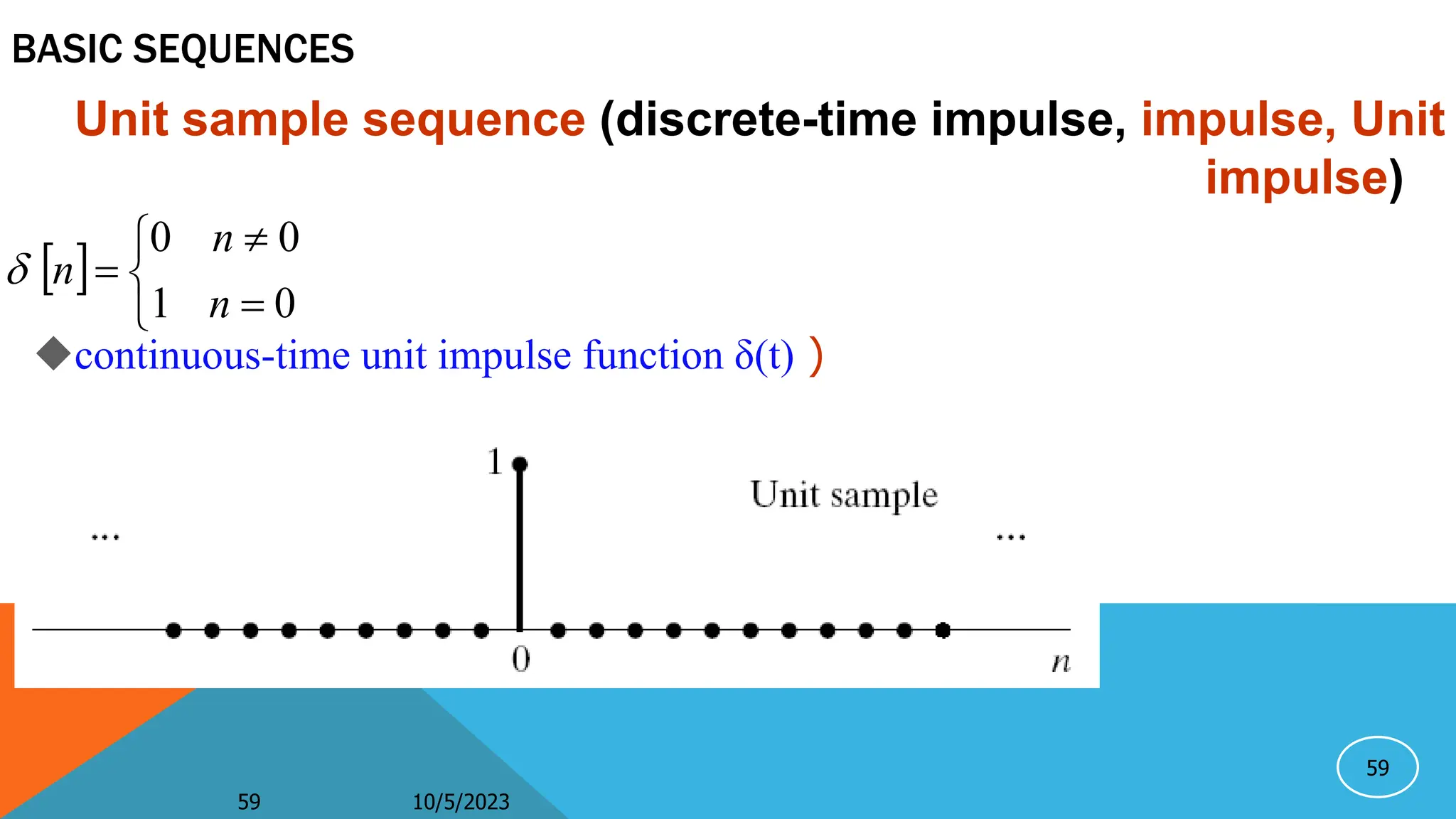
![60
BASIC SEQUENCES
[ ] [ ] [ ]
k
x n x k n k
7
2
1
3 7
2
1
3
n
a
n
a
n
a
n
a
n
p
10/5/2023
60
arbitrary sequence
A sum of scaled, delayed impulses](https://image.slidesharecdn.com/lecture1digitalcontrolsystems-231005170707-1293f408/75/Lecture-_1_-Digital-Control-Systems-pptx-60-2048.jpg)