Learning How To Learn
Peer-graded Assignment: Learn by teaching others how to learn
By Sara Abudahab
TABLEOFCONTENTS
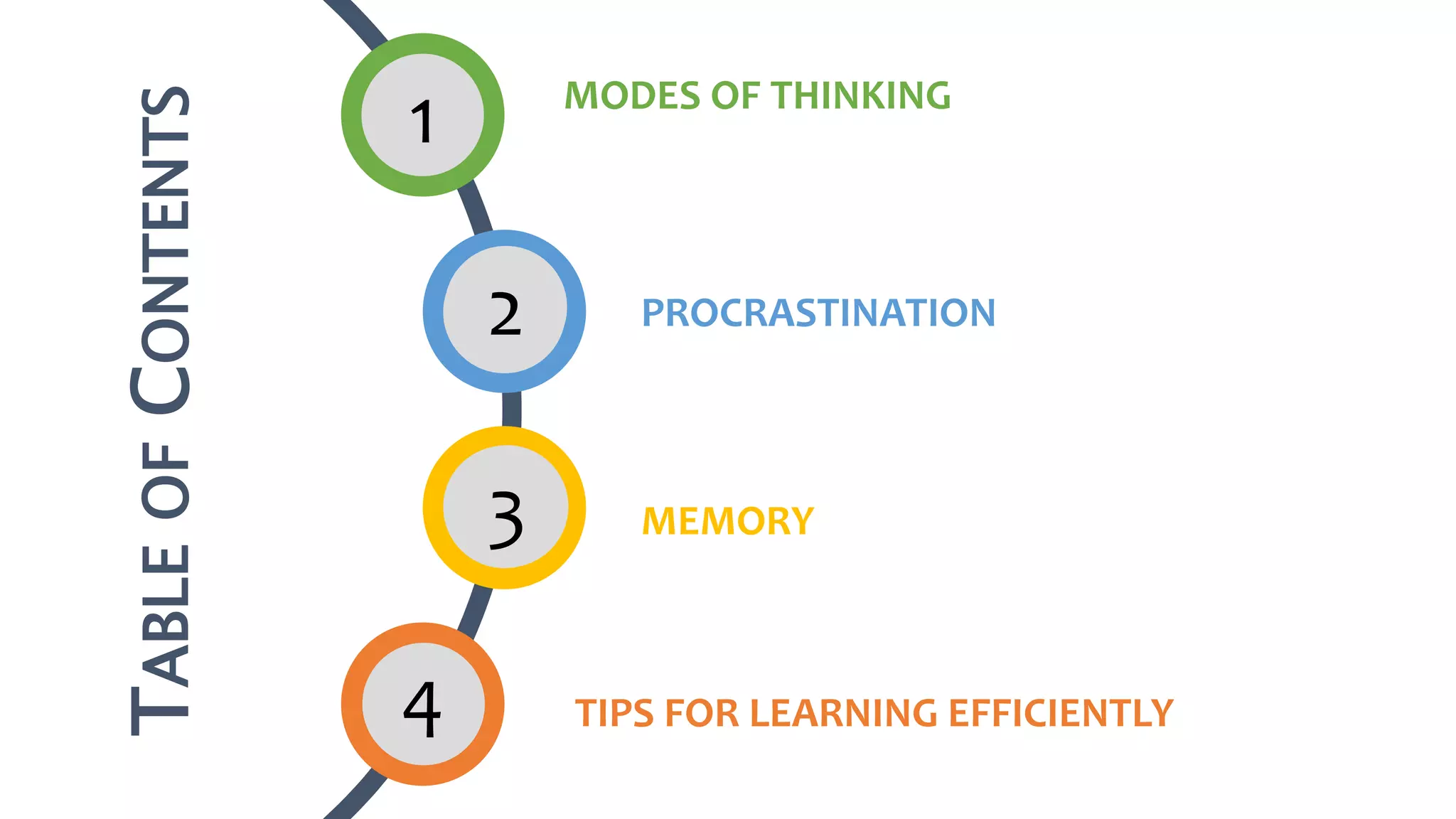
MODES OF THINKING
PROCRASTINATION
MEMORY
TIPS FOR LEARNING EFFICIENTLY
1
2
3
4
Modes of thinking
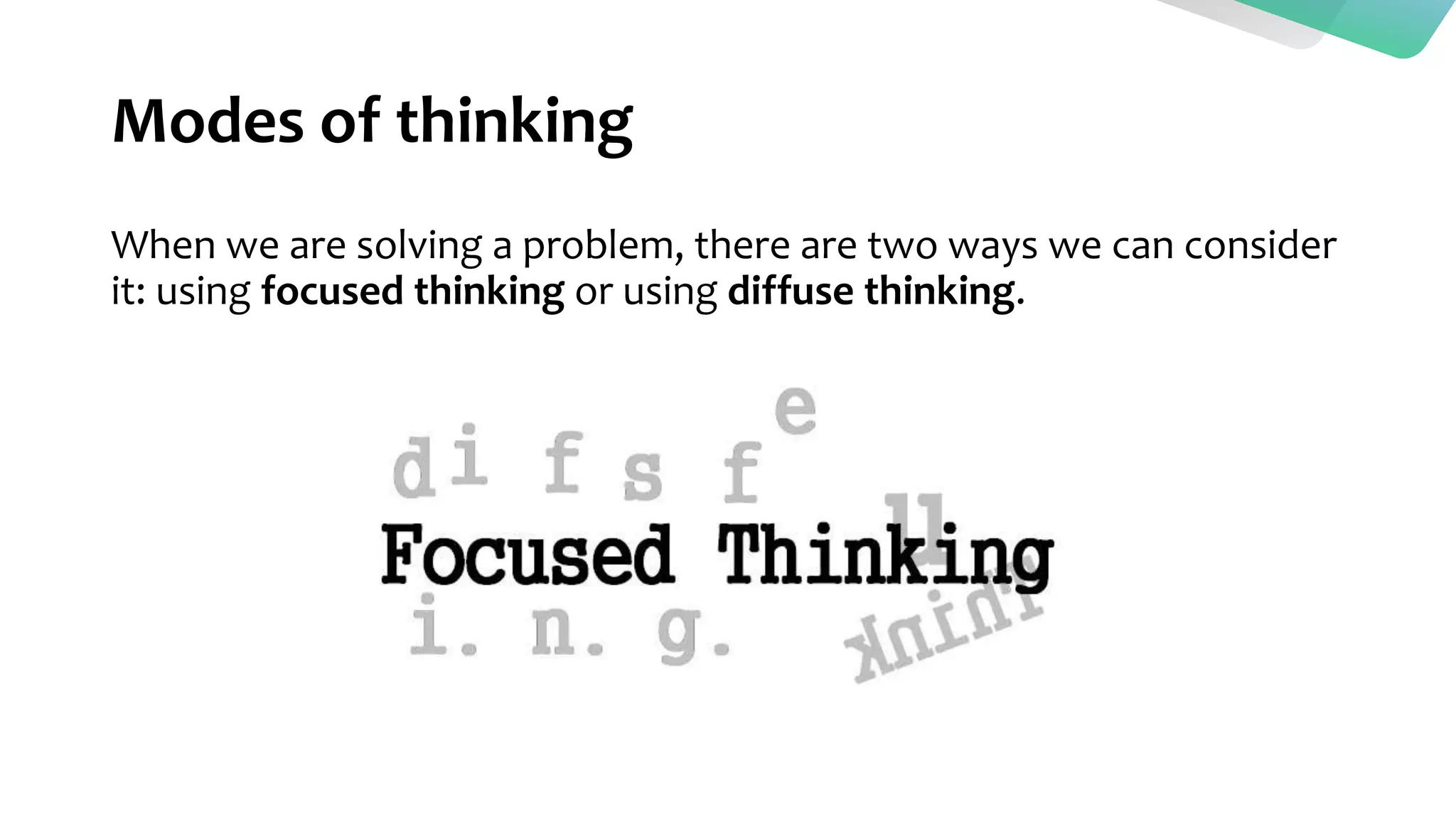
When we are solving a problem, there are two ways we can consider
it: using focused thinking or using diffuse thinking.
1- Focused thinking
Is when we are really concentrating
on the matter at hand.
Focused thinking is a highly
attentive state of mind where the
brain uses its best concentration
abilities in the prefrontal cortex to
ignore all extraneous information.
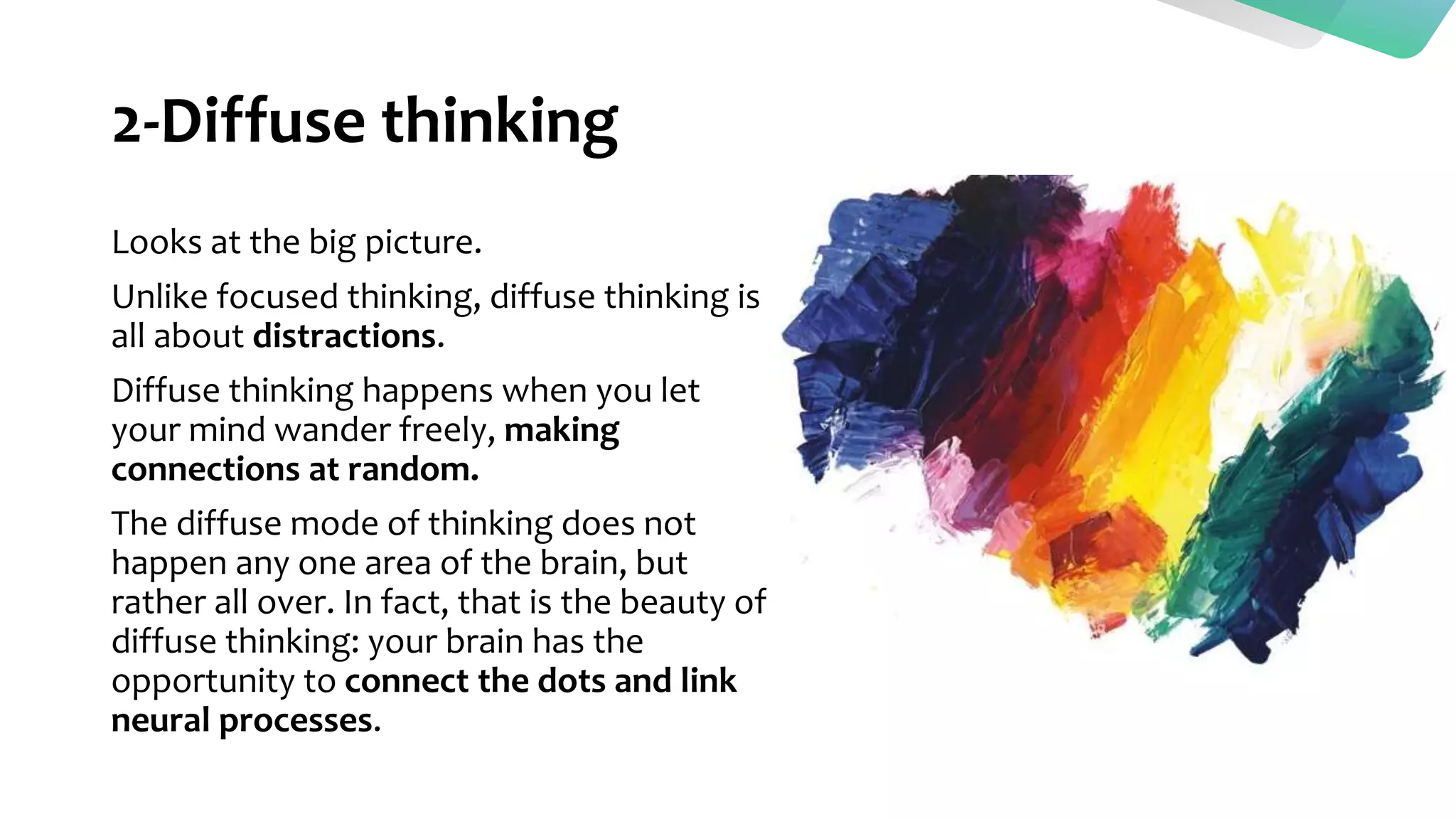
2-Diffuse thinking
Looks at the big picture.
Unlike focused thinking, diffuse thinking is
all about distractions.
Diffuse thinking happens when you let
your mind wander freely, making
connections at random.
The diffuse mode of thinking does not
happen any one area of the brain, but
rather all over. In fact, that is the beauty of
diffuse thinking: your brain has the
opportunity to connect the dots and link
neural processes.
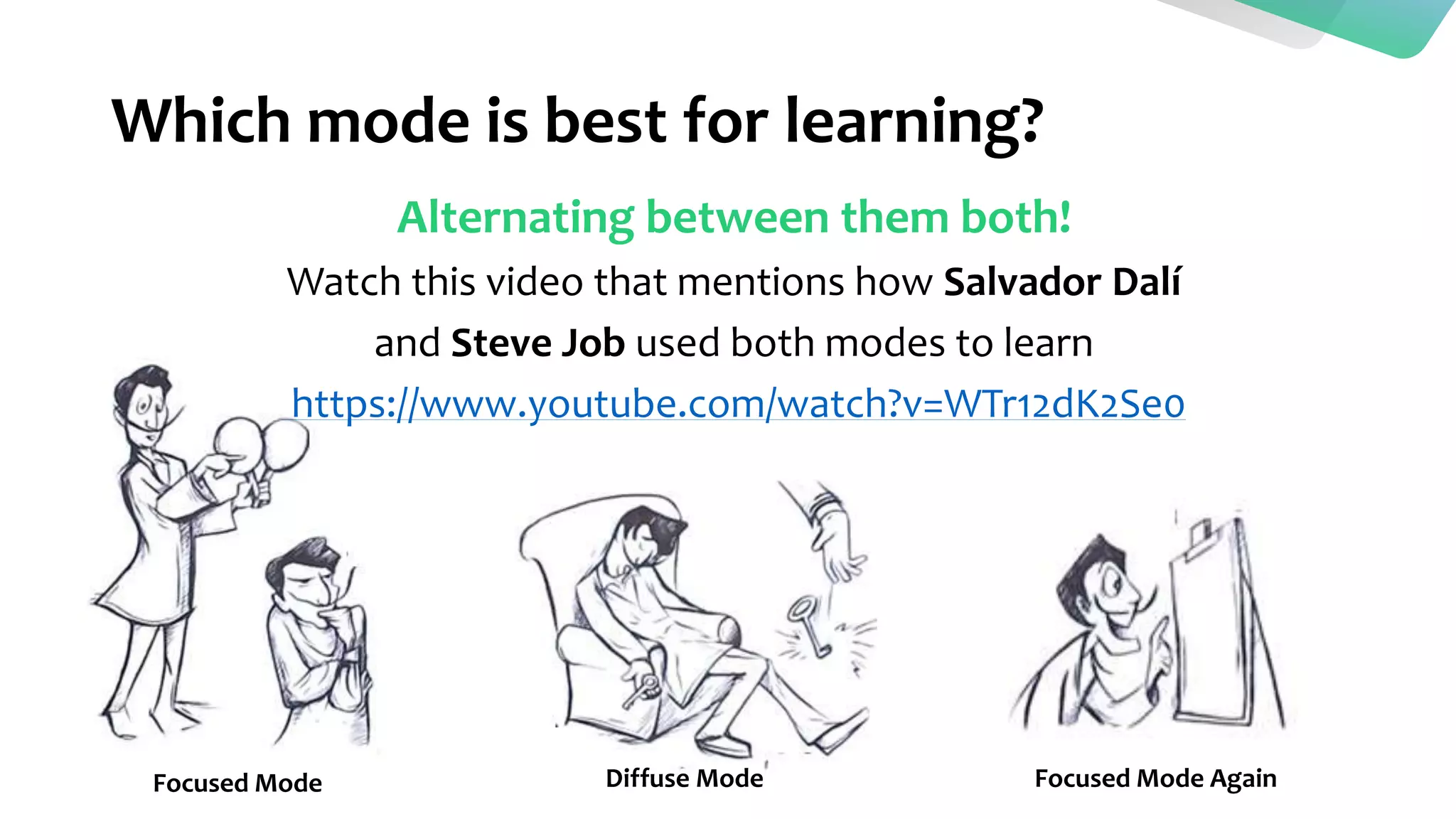
Which mode is best for learning?
Alternating between them both!
Watch this video that mentions how Salvador Dalí
and Steve Job used both modes to learn
https://www.youtube.com/watch?v=WTr12dK2Se0
Focused Mode Diffuse Mode Focused Mode Again
Procrastination
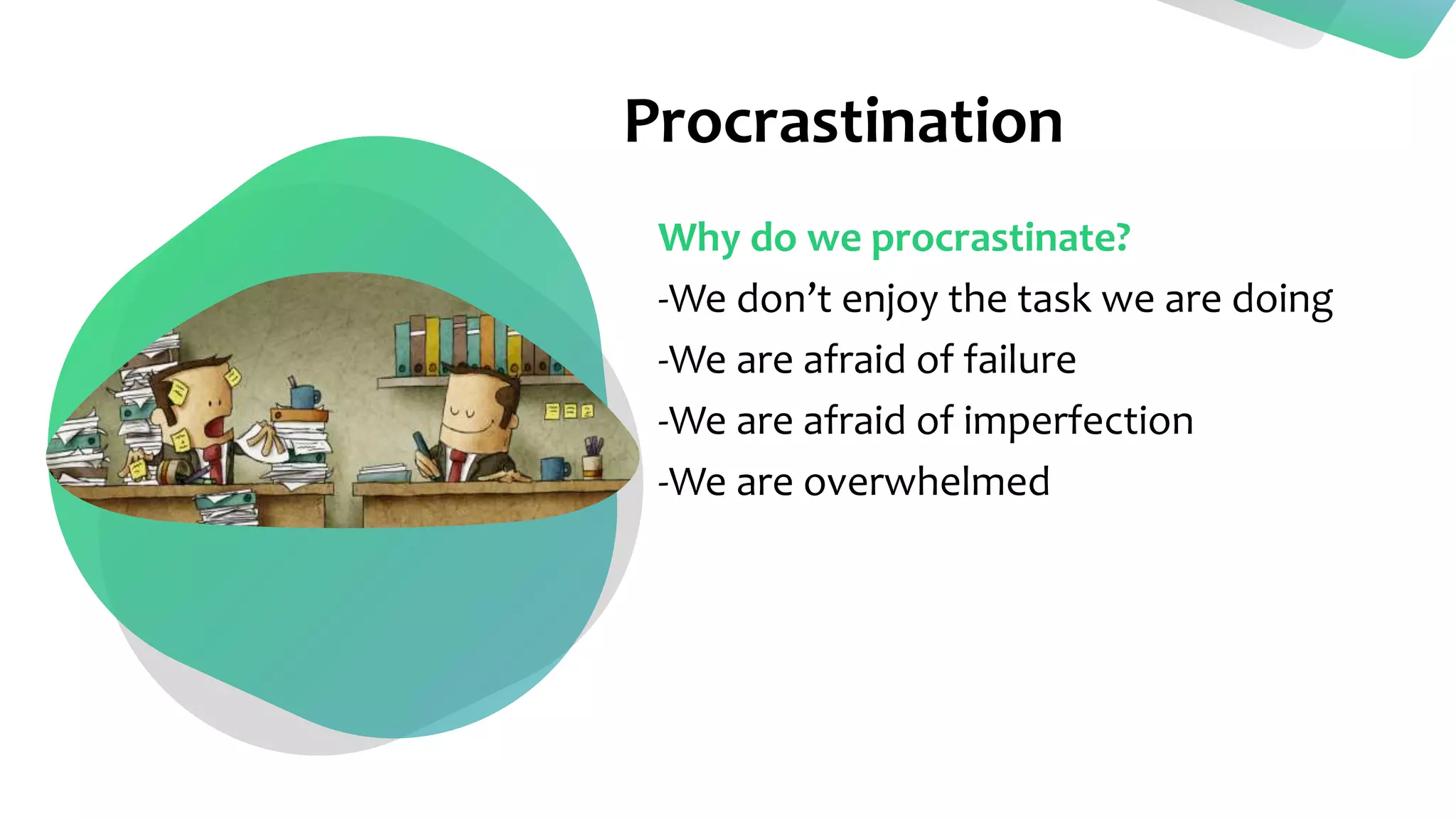
Why do we procrastinate?
-We don’t enjoy the task we are doing
-We are afraid of failure
-We are afraid of imperfection
-We are overwhelmed
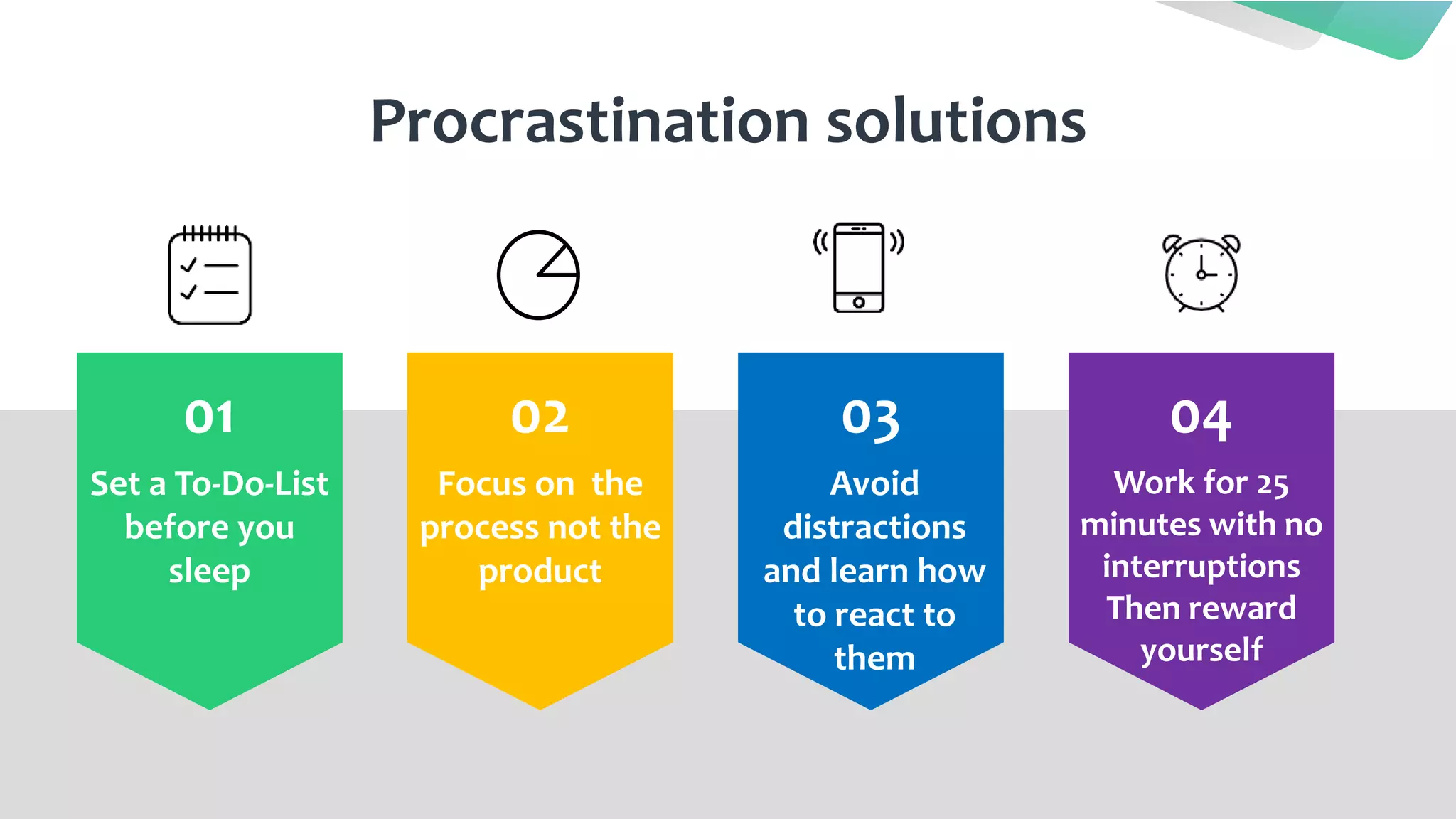
01
Set a To-Do-List
before you
sleep
02
Focus on the
process not the
product
03
Avoid
distractions
and learn how
to react to
them
04
Work for 25
minutes with no
interruptions
Then reward
yourself
Procrastination solutions
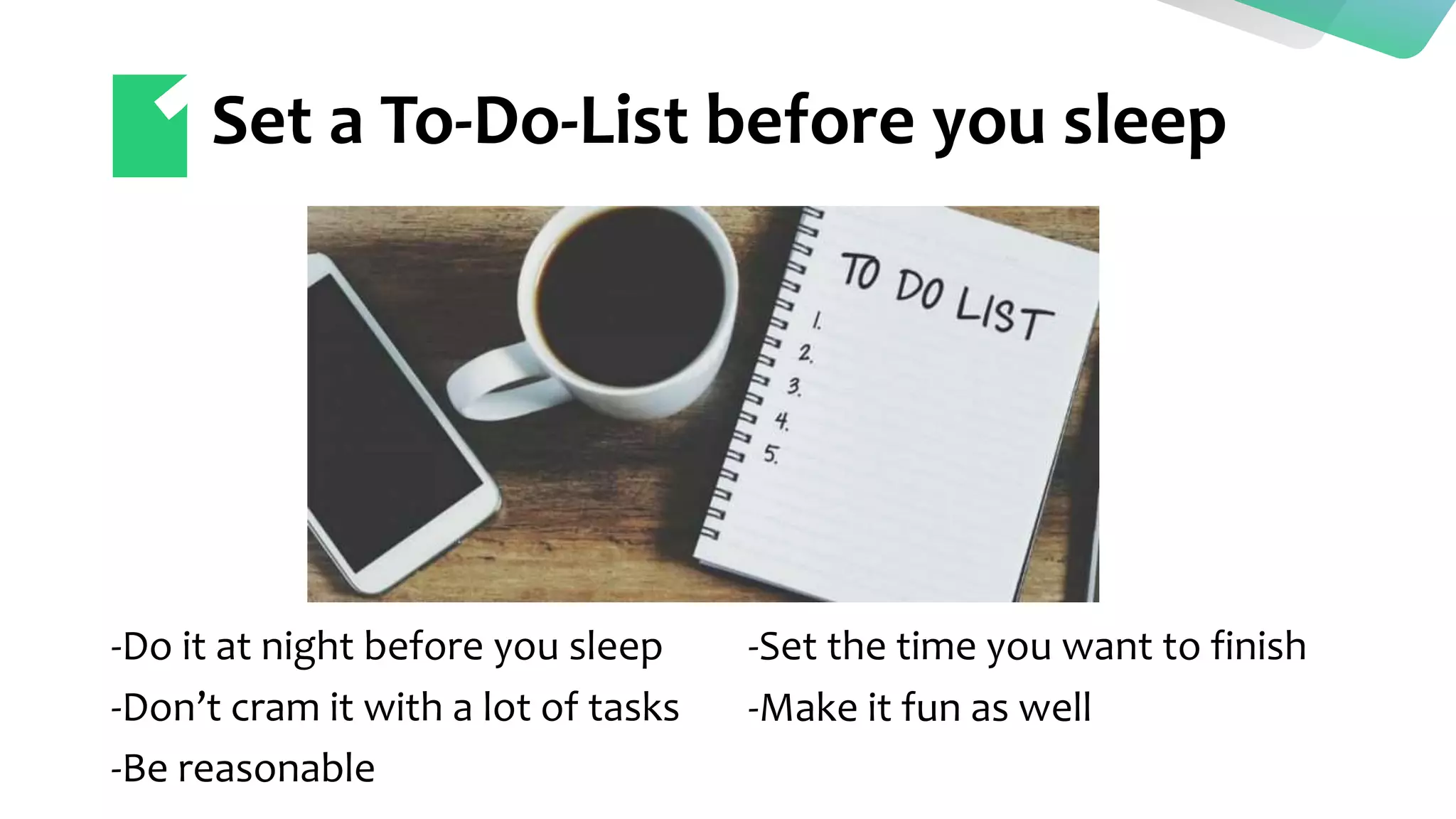
Set a To-Do-List before you sleep
-Do it at night before you sleep
-Don’t cram it with a lot of tasks
-Be reasonable
-Set the time you want to finish
-Make it fun as well
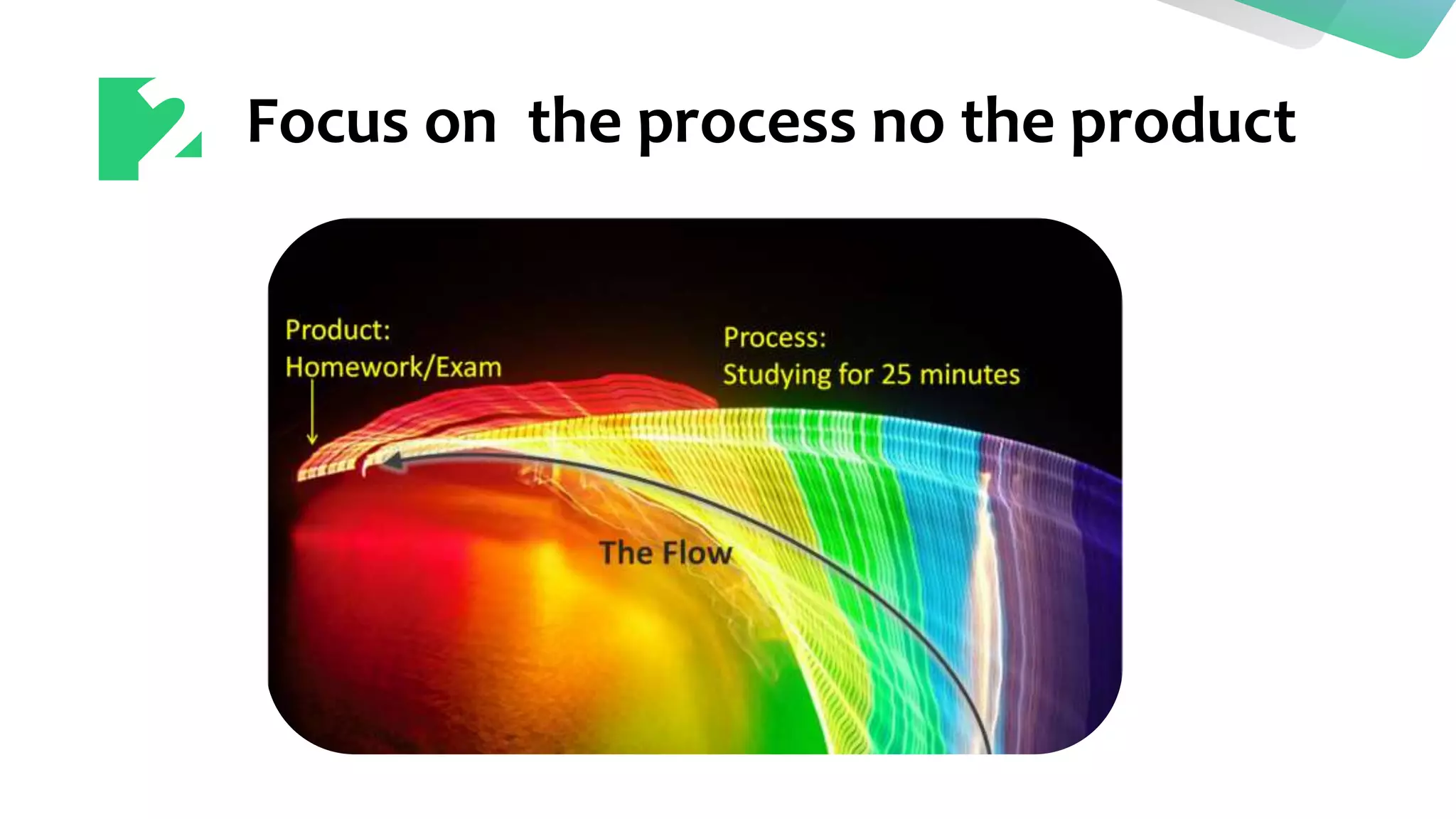
Focus on the process no the product
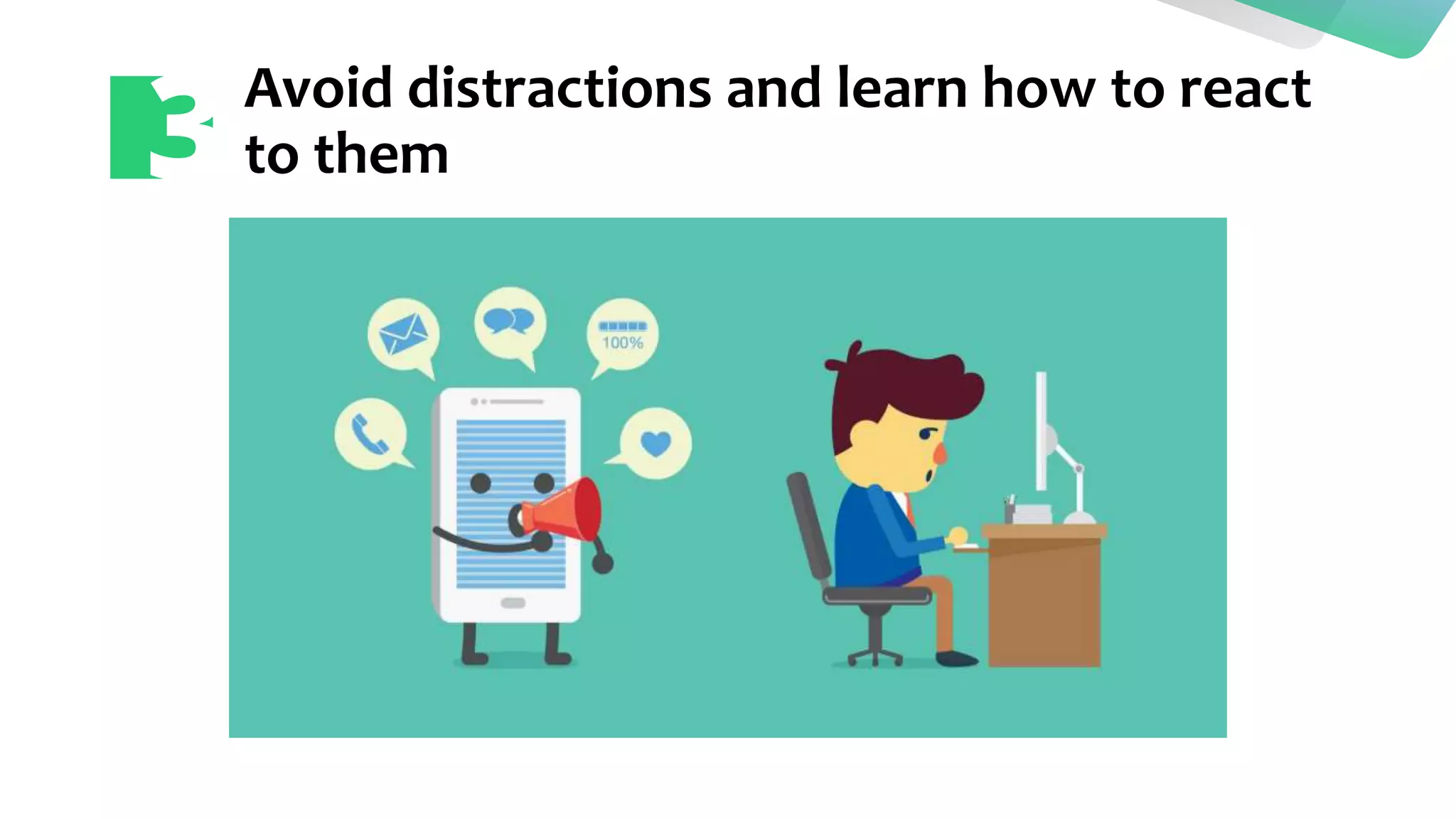
Avoid distractions and learn how to react
to them
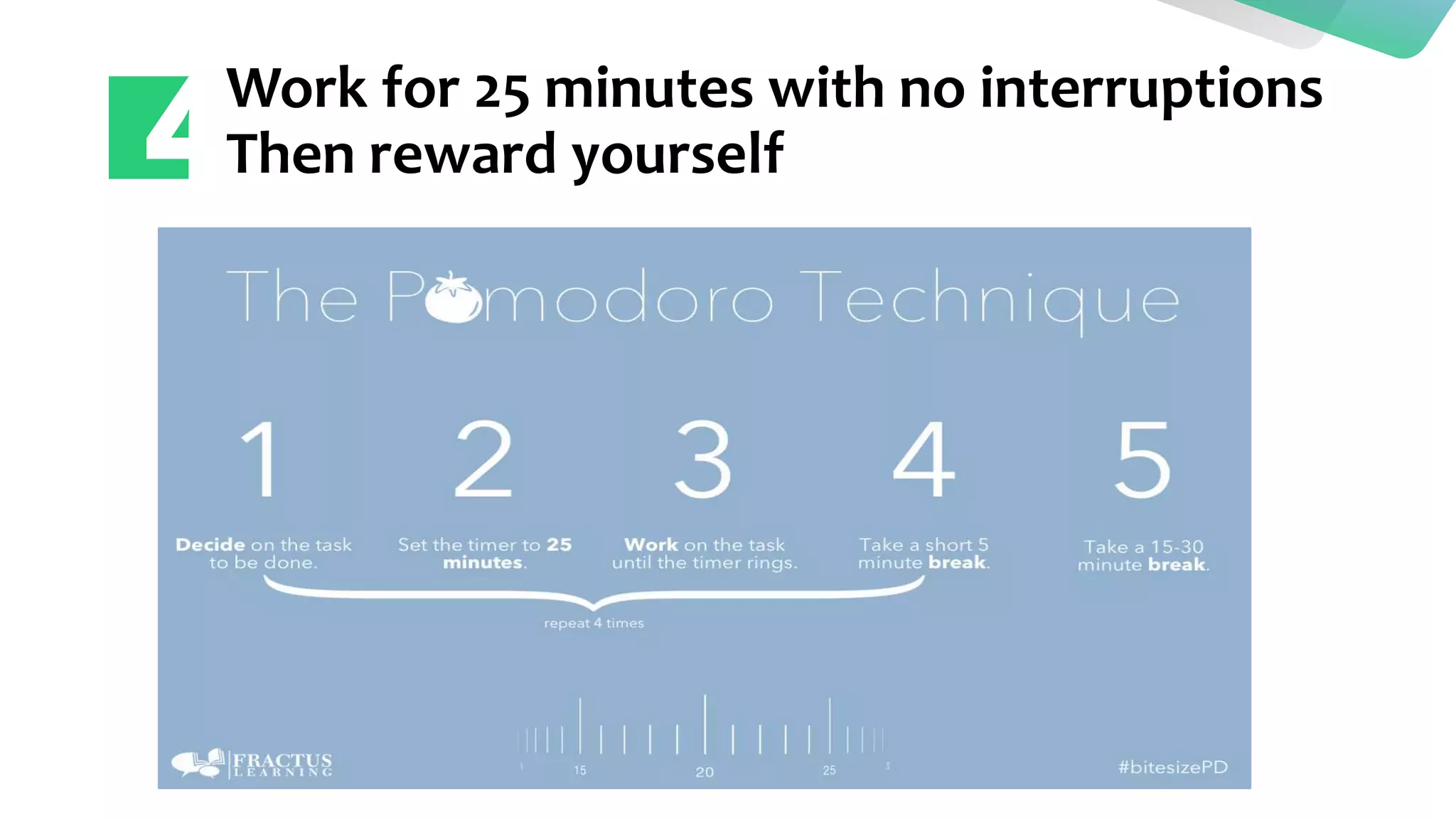
Work for 25 minutes with no interruptions
Then reward yourself
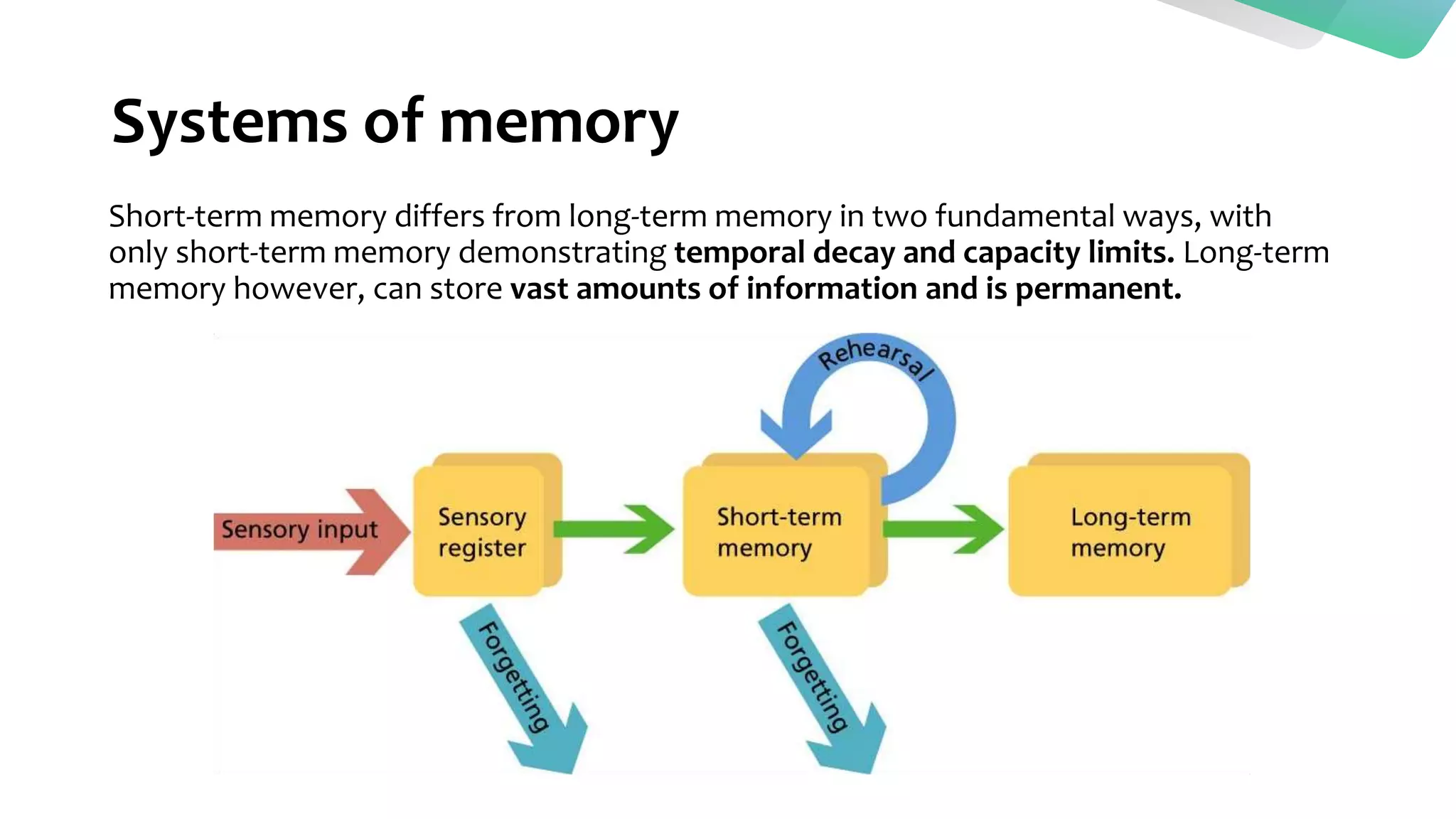
Systems of memory
Short-term memory differs from long-term memory in two fundamental ways, with
only short-term memory demonstrating temporal decay and capacity limits. Long-term
memory however, can store vast amounts of information and is permanent.
How to gain long-term memory?
1- PRACTICE MAKES PERMANENT (repetition)
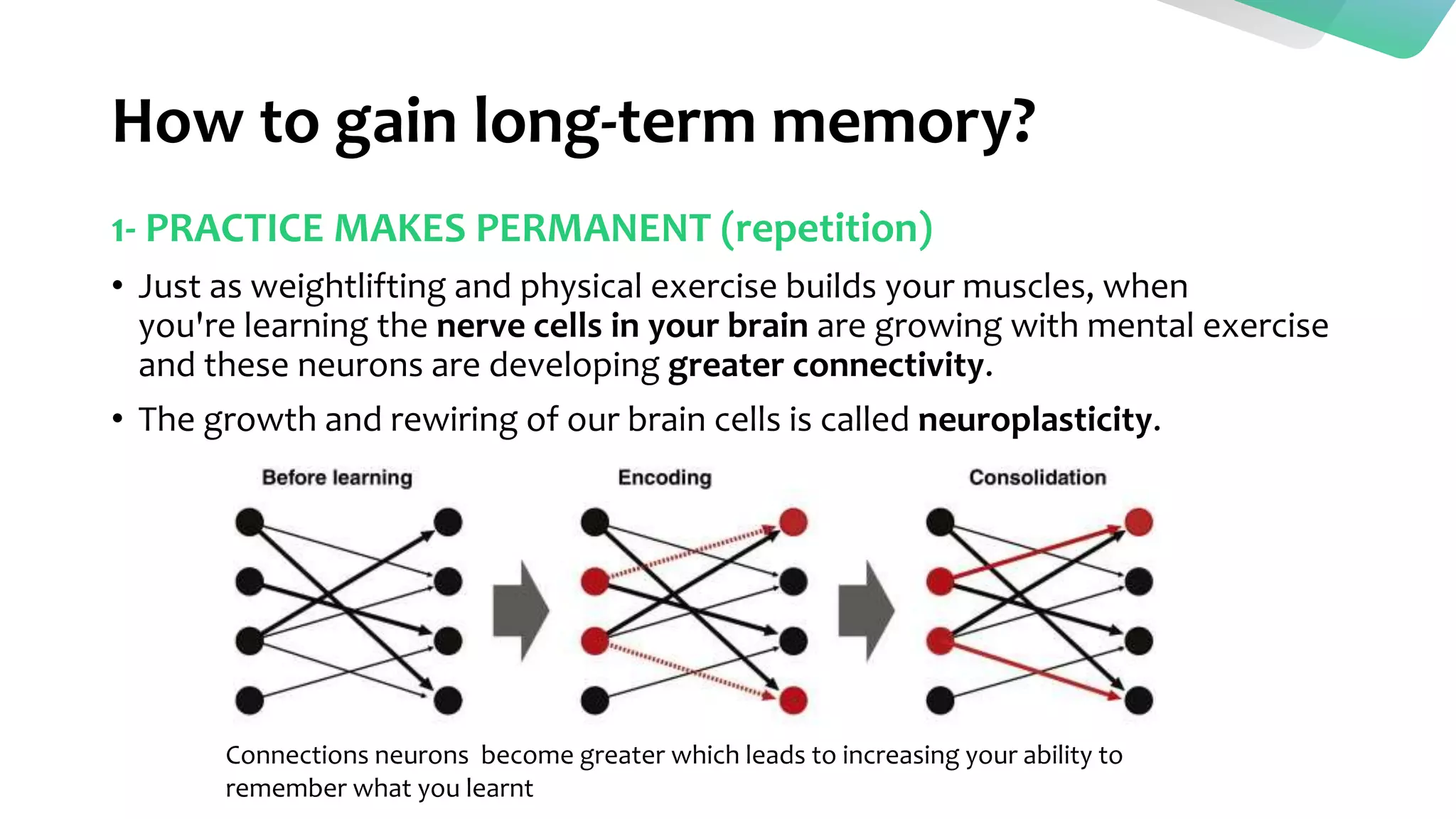
• Just as weightlifting and physical exercise builds your muscles, when
you're learning the nerve cells in your brain are growing with mental exercise
and these neurons are developing greater connectivity.
• The growth and rewiring of our brain cells is called neuroplasticity.
Connections neurons become greater which leads to increasing your ability to
remember what you learnt
How to gain long-term memory?
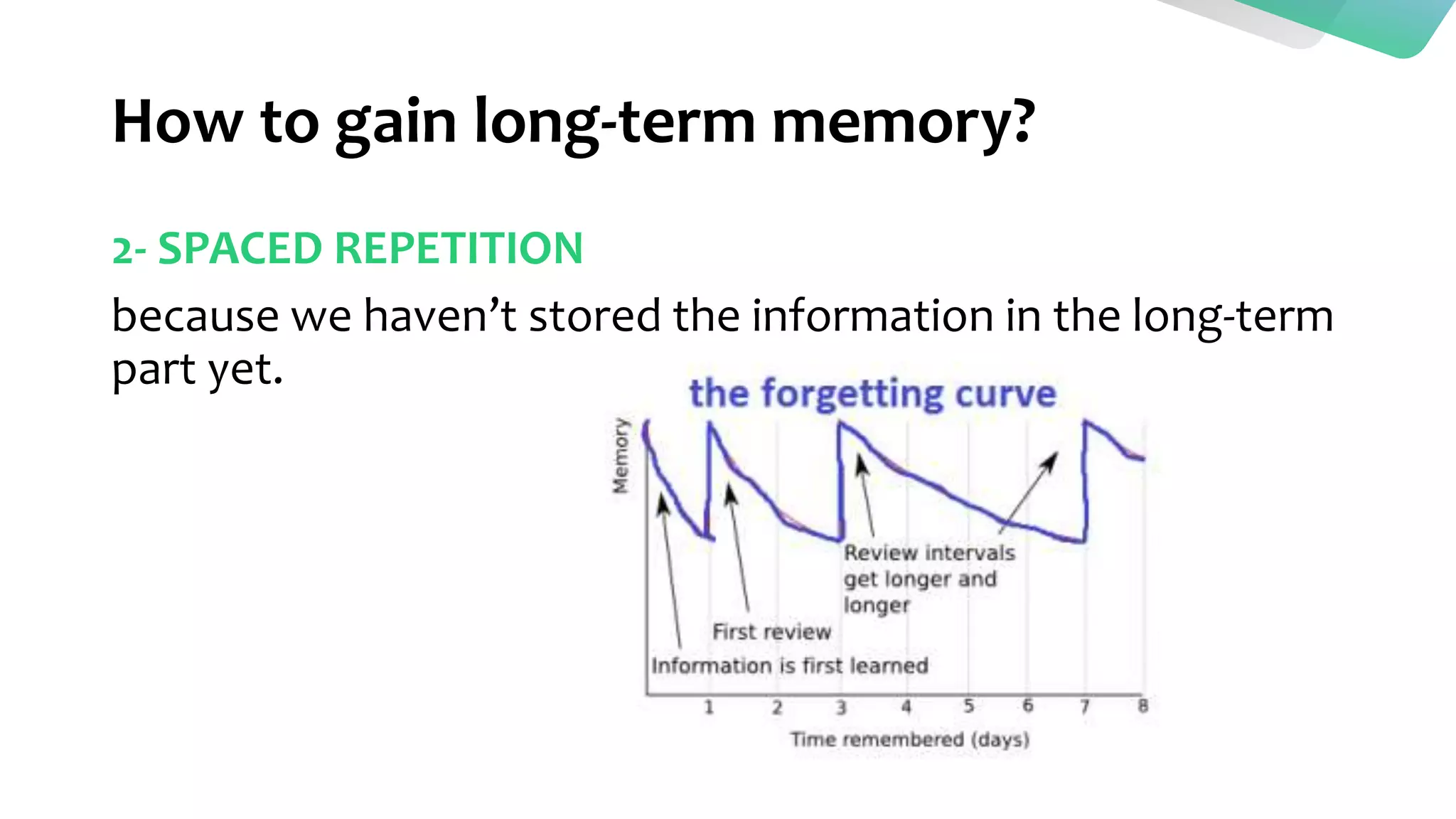
2- SPACED REPETITION
because we haven’t stored the information in the long-term
part yet.
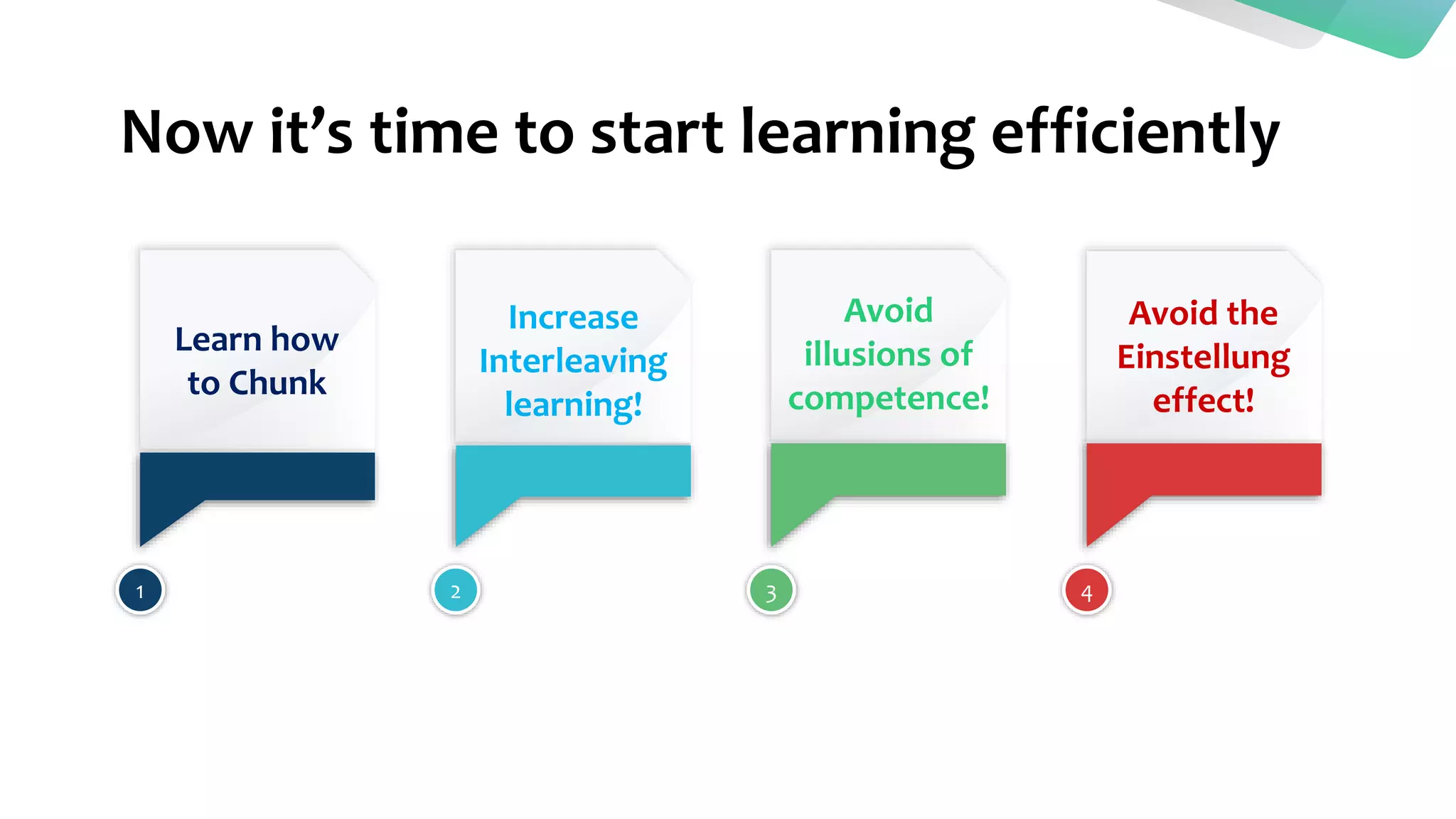
Learn how
to Chunk
1
Increase
Interleaving
learning!
2
Avoid
illusions of
competence!
3
Avoid the
Einstellung
effect!
4
Now it’s time to start learning efficiently
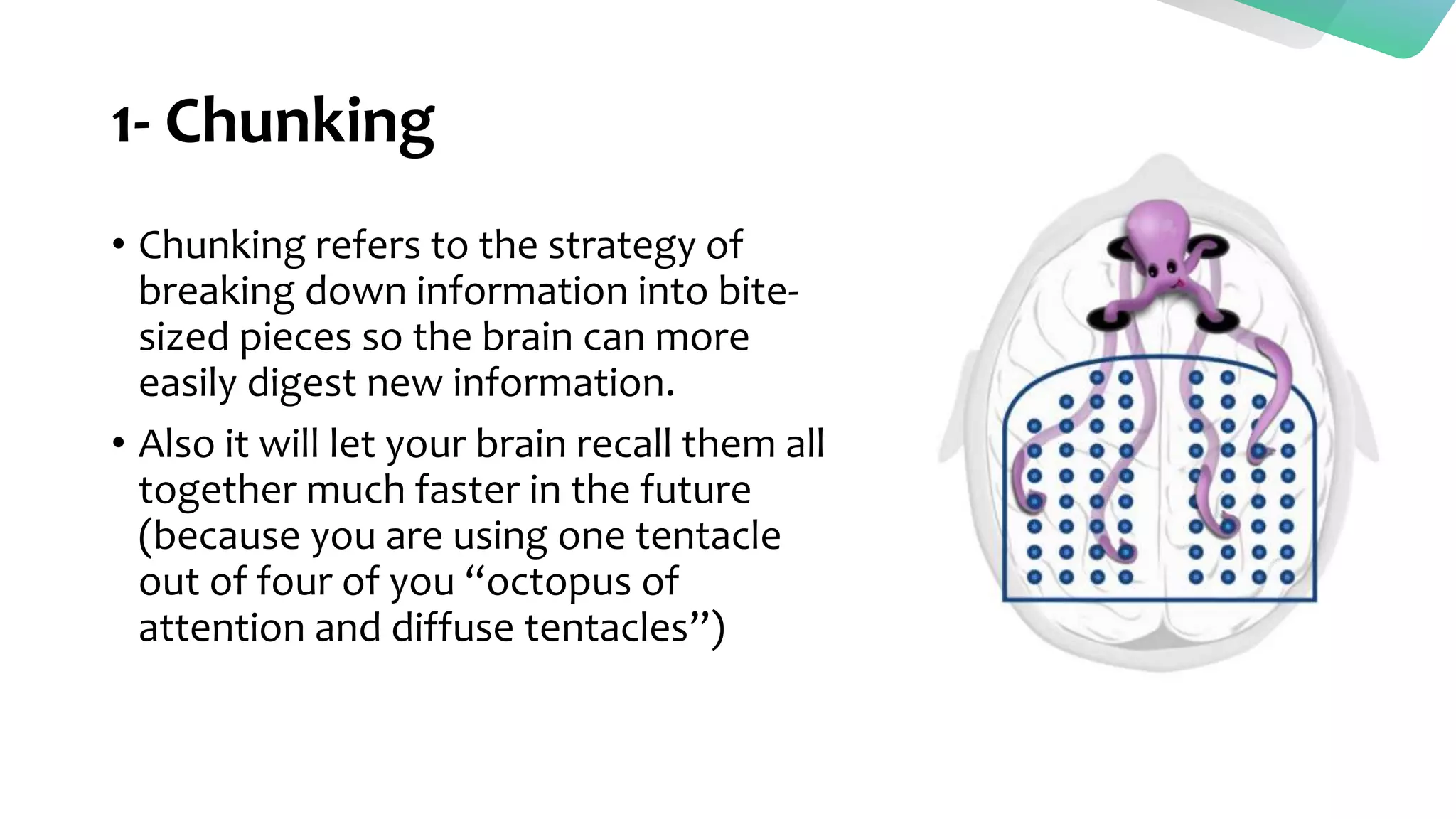
1- Chunking
• Chunking refers to the strategy of
breaking down information into bite-
sized pieces so the brain can more
easily digest new information.
• Also it will let your brain recall them all
together much faster in the future
(because you are using one tentacle
out of four of you “octopus of
attention and diffuse tentacles”)
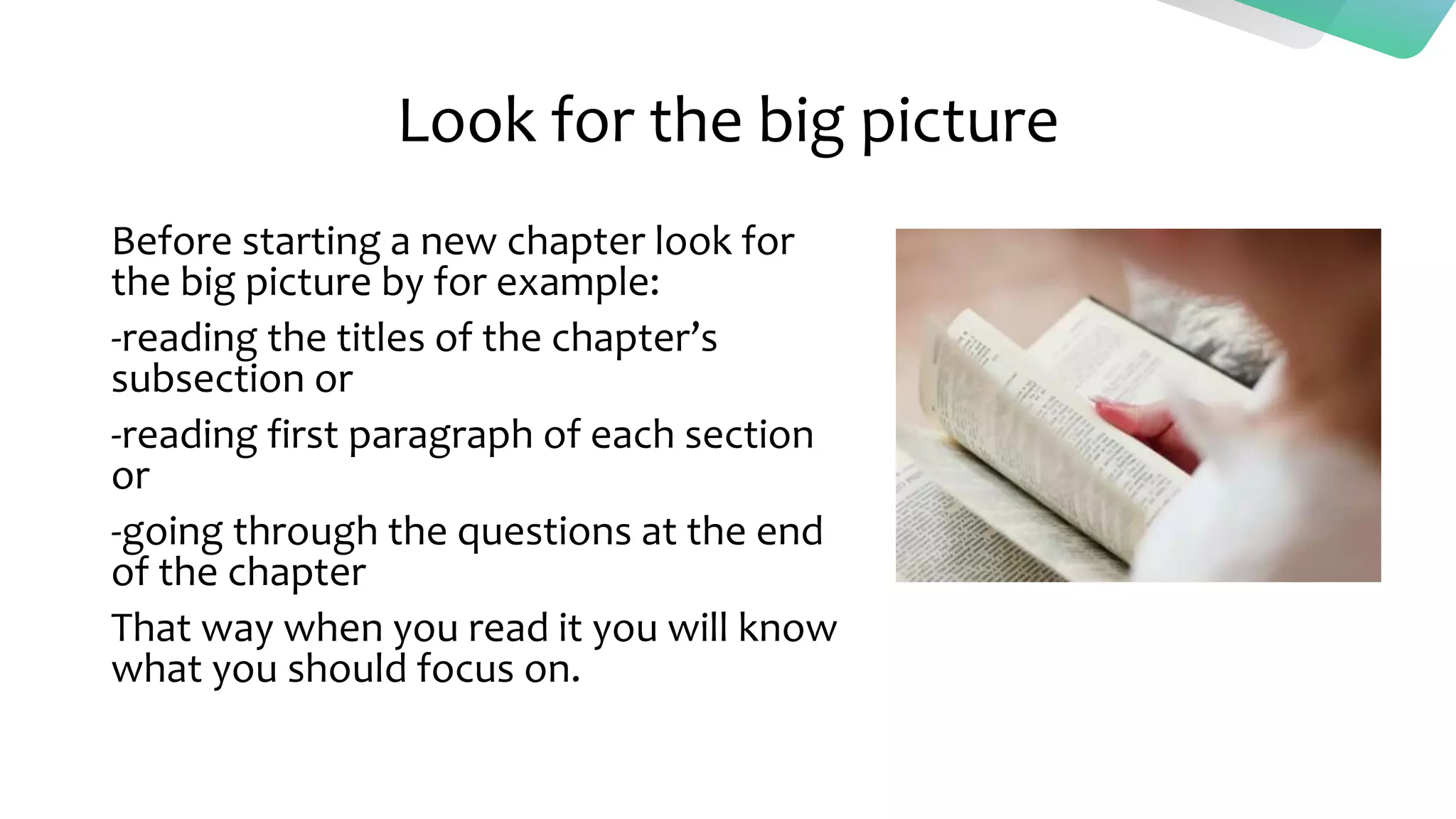
Look for the big picture
Before starting a new chapter look for
the big picture by for example:
-reading the titles of the chapter’s
subsection or
-reading first paragraph of each section
or
-going through the questions at the end
of the chapter
That way when you read it you will know
what you should focus on.
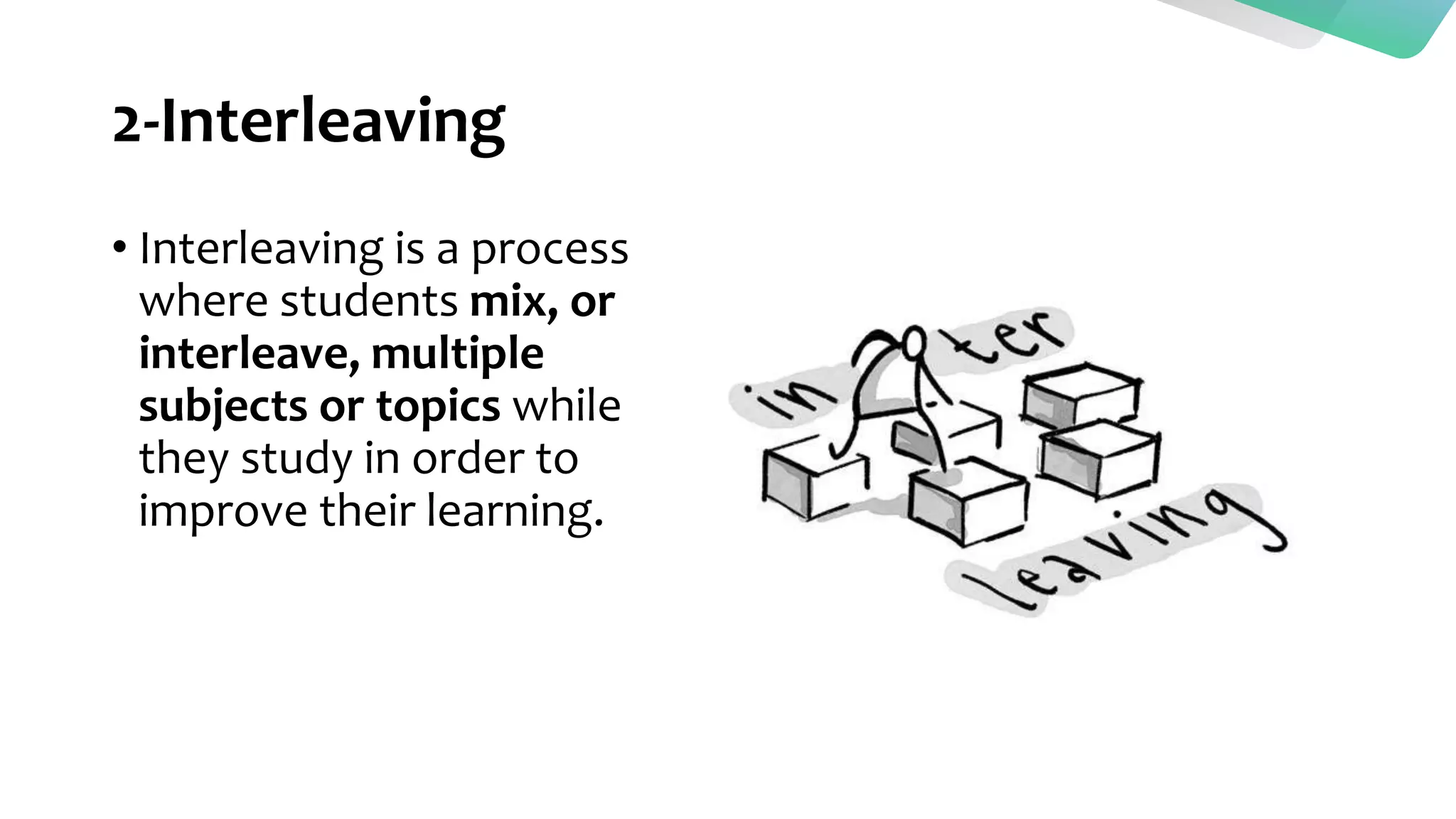
2-Interleaving
• Interleaving is a process
where students mix, or
interleave, multiple
subjects or topics while
they study in order to
improve their learning.
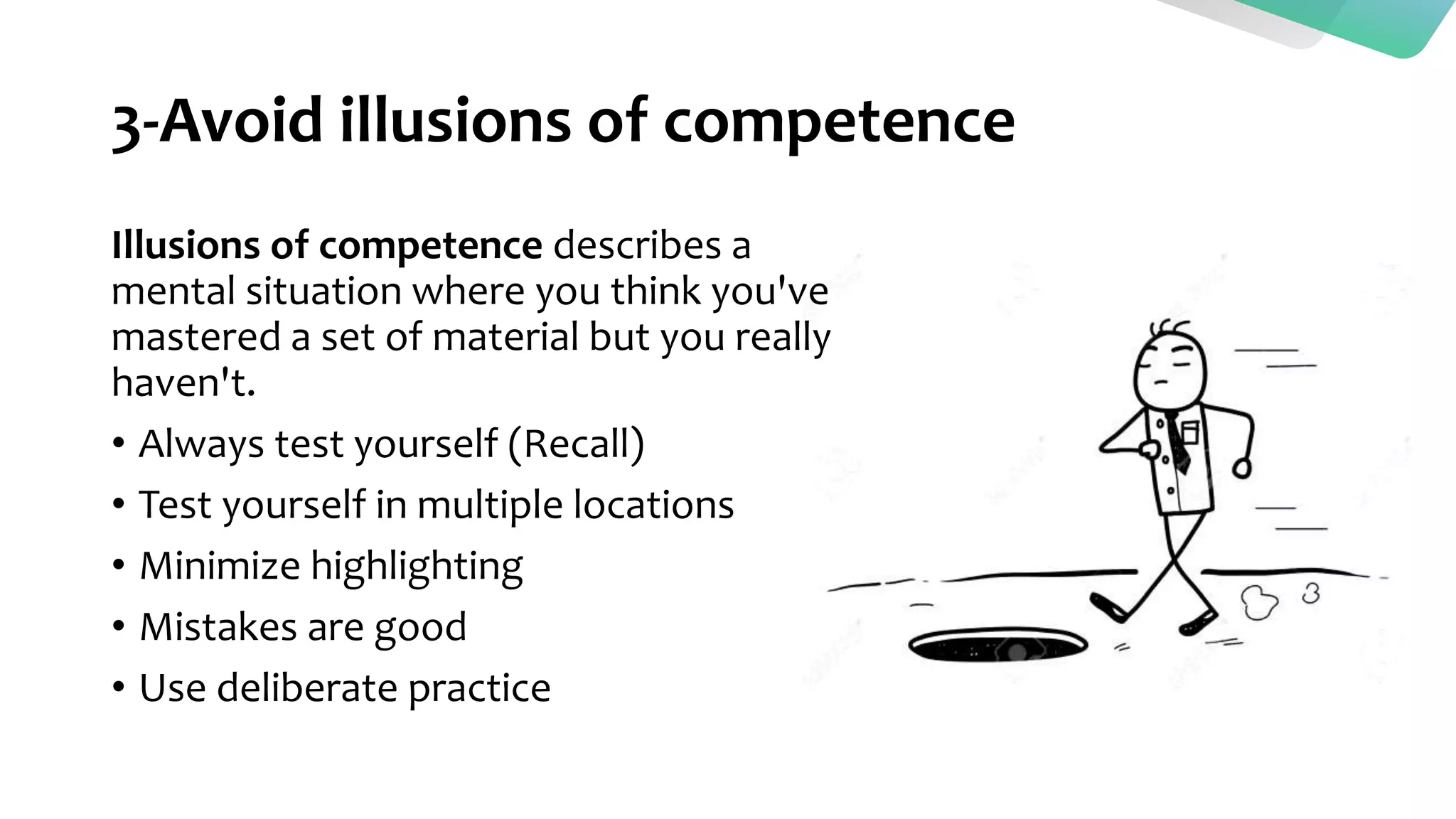
3-Avoid illusions of competence
Illusions of competence describes a
mental situation where you think you've
mastered a set of material but you really
haven't.
• Always test yourself (Recall)
• Test yourself in multiple locations
• Minimize highlighting
• Mistakes are good
• Use deliberate practice
4- Avoid Einstellung Effect
Einstellung is the development of a mechanized state of mind which refers to a
person's predisposition to solve a given problem in a specific manner even
though better or more appropriate methods of solving the problem exist.
The Einstellung effect is the negative effect of previous experience when
solving new problems.
The Einstellung effect has been tested experimentally in many different
contexts. The most famous example is the Luchins' water jar experiment, in
which subjects were asked to solve a series of water jar problems. After solving
many problems which had the same solution, subjects applied the same solution
to later problems even though a simpler solution existed (Luchins, 1942).
And always remember the
Law of Serendipity:
Lady Luck favors the one who tries.

Learning how to learn

  • 1.
    Learning How ToLearn Peer-graded Assignment: Learn by teaching others how to learn By Sara Abudahab
  • 2.
  • 3.
    Modes of thinking Whenwe are solving a problem, there are two ways we can consider it: using focused thinking or using diffuse thinking.
  • 4.
    1- Focused thinking Iswhen we are really concentrating on the matter at hand. Focused thinking is a highly attentive state of mind where the brain uses its best concentration abilities in the prefrontal cortex to ignore all extraneous information.
  • 5.
    2-Diffuse thinking Looks atthe big picture. Unlike focused thinking, diffuse thinking is all about distractions. Diffuse thinking happens when you let your mind wander freely, making connections at random. The diffuse mode of thinking does not happen any one area of the brain, but rather all over. In fact, that is the beauty of diffuse thinking: your brain has the opportunity to connect the dots and link neural processes.
  • 6.
    Which mode isbest for learning? Alternating between them both! Watch this video that mentions how Salvador Dalí and Steve Job used both modes to learn https://www.youtube.com/watch?v=WTr12dK2Se0 Focused Mode Diffuse Mode Focused Mode Again
  • 7.
    Procrastination Why do weprocrastinate? -We don’t enjoy the task we are doing -We are afraid of failure -We are afraid of imperfection -We are overwhelmed
  • 8.
    01 Set a To-Do-List beforeyou sleep 02 Focus on the process not the product 03 Avoid distractions and learn how to react to them 04 Work for 25 minutes with no interruptions Then reward yourself Procrastination solutions
  • 9.
    Set a To-Do-Listbefore you sleep -Do it at night before you sleep -Don’t cram it with a lot of tasks -Be reasonable -Set the time you want to finish -Make it fun as well
  • 10.
    Focus on theprocess no the product
  • 11.
    Avoid distractions andlearn how to react to them
  • 12.
    Work for 25minutes with no interruptions Then reward yourself
  • 13.
    Systems of memory Short-termmemory differs from long-term memory in two fundamental ways, with only short-term memory demonstrating temporal decay and capacity limits. Long-term memory however, can store vast amounts of information and is permanent.
  • 14.
    How to gainlong-term memory? 1- PRACTICE MAKES PERMANENT (repetition) • Just as weightlifting and physical exercise builds your muscles, when you're learning the nerve cells in your brain are growing with mental exercise and these neurons are developing greater connectivity. • The growth and rewiring of our brain cells is called neuroplasticity. Connections neurons become greater which leads to increasing your ability to remember what you learnt
  • 15.
    How to gainlong-term memory? 2- SPACED REPETITION because we haven’t stored the information in the long-term part yet.
  • 16.
    Learn how to Chunk 1 Increase Interleaving learning! 2 Avoid illusionsof competence! 3 Avoid the Einstellung effect! 4 Now it’s time to start learning efficiently
  • 17.
    1- Chunking • Chunkingrefers to the strategy of breaking down information into bite- sized pieces so the brain can more easily digest new information. • Also it will let your brain recall them all together much faster in the future (because you are using one tentacle out of four of you “octopus of attention and diffuse tentacles”)
  • 18.
    Look for thebig picture Before starting a new chapter look for the big picture by for example: -reading the titles of the chapter’s subsection or -reading first paragraph of each section or -going through the questions at the end of the chapter That way when you read it you will know what you should focus on.
  • 19.
    2-Interleaving • Interleaving isa process where students mix, or interleave, multiple subjects or topics while they study in order to improve their learning.
  • 20.
    3-Avoid illusions ofcompetence Illusions of competence describes a mental situation where you think you've mastered a set of material but you really haven't. • Always test yourself (Recall) • Test yourself in multiple locations • Minimize highlighting • Mistakes are good • Use deliberate practice
  • 21.
    4- Avoid EinstellungEffect Einstellung is the development of a mechanized state of mind which refers to a person's predisposition to solve a given problem in a specific manner even though better or more appropriate methods of solving the problem exist. The Einstellung effect is the negative effect of previous experience when solving new problems. The Einstellung effect has been tested experimentally in many different contexts. The most famous example is the Luchins' water jar experiment, in which subjects were asked to solve a series of water jar problems. After solving many problems which had the same solution, subjects applied the same solution to later problems even though a simpler solution existed (Luchins, 1942).
  • 22.
    And always rememberthe Law of Serendipity: Lady Luck favors the one who tries.

Editor's Notes

  • #3 © Copyright Showeet.com