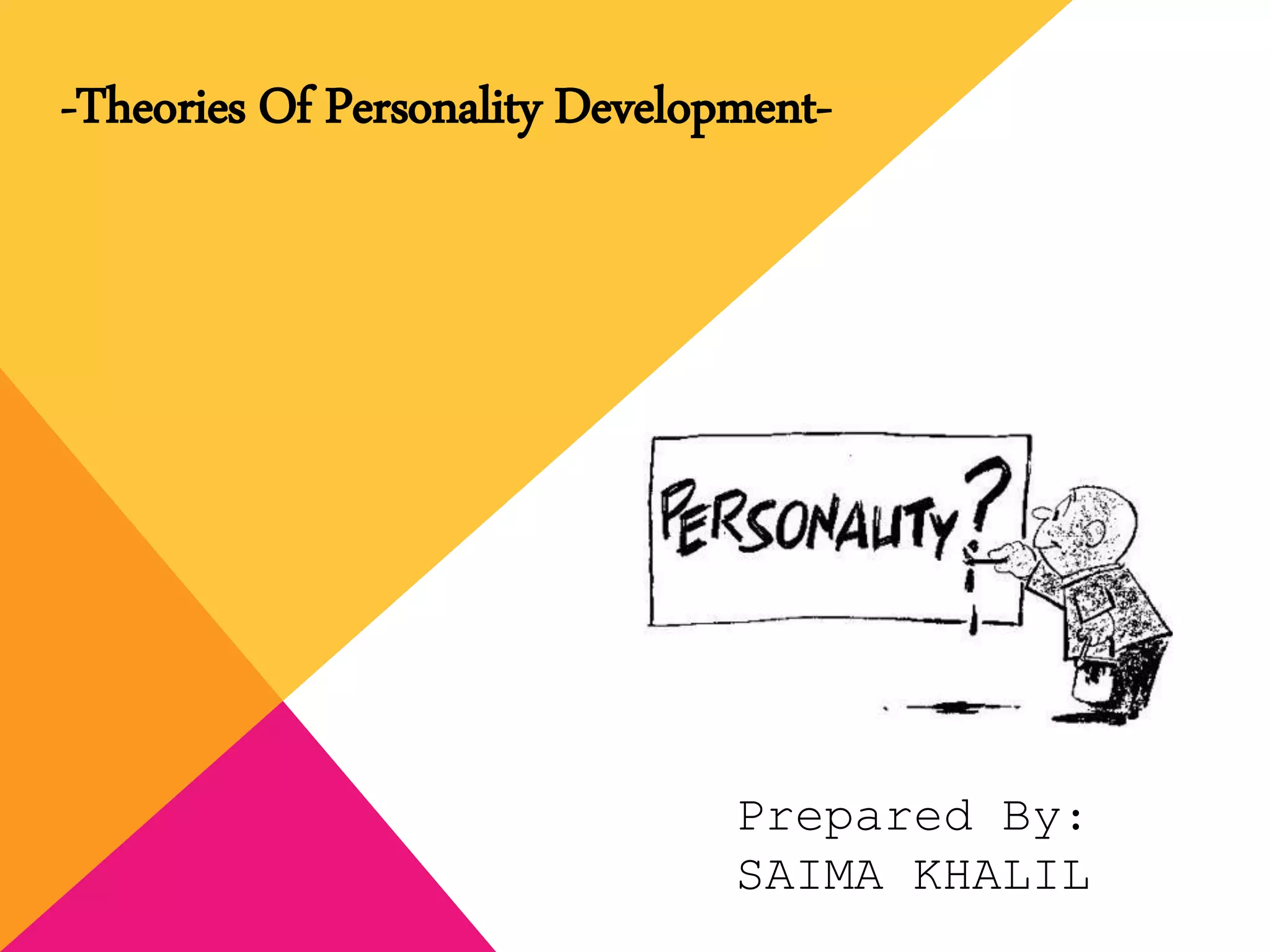

-Theories Of Personality Development- 
Prepared By: 
SAIMA KHALIL
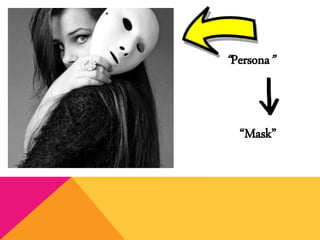
“ Persona” 
“Mask”
“PERSONALITY” 
Meaning: 
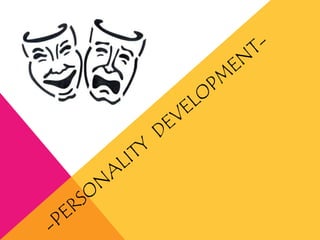
The term personality is derived from the Latin 
word persona meaning a mask or appearance 
one presents to the world or a character played 
by an actor. Keeping this in mind personality 
refers to what a person looks from the outside 
even though he is something else on the inside. 
Personality is a patterned body of habits, traits, 
attitudes and ideas of an individual as these are 
organized externally into roles and statuses 
and as they relate internally to motivation, goals 
and various aspects of selfhood.
DEFINITIONS: 
• According to Robert Park and Earnest Burgess: 
“Personality is the sum and organization of those traits which 
determine the role of the individual in the group.” 
• According to Linton: 
“Personality embraces the total organized aggregate of 
psychological processes and status pertaining to the individual.” 
• According to Cronbach: 
“A person’s observable habits are called his personality.” 
• According to Traxler: 
“Sum total of an individual’s behavior in social situations is 
called his personality.” 
• “Personality can be defined as a dynamic and organized set 
of characteristics possessed by a person that uniquely 
influences his or her cognitions, motivations, and behaviors in 
various situations.”
THEORIES: 
1. Abraham Maslow – Psychological theory 
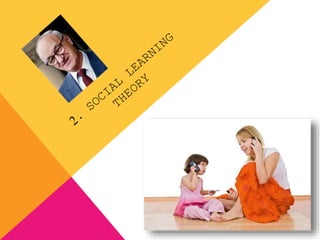
2. Albert Bandura – Social learning theory 
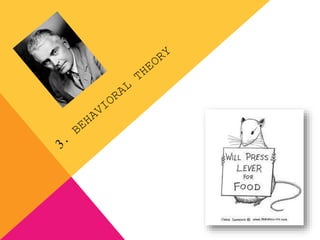
3. John Watson – Behavioral theory 
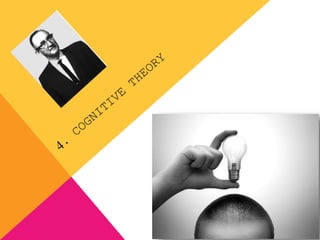
4. George Kelly – Cognitive theory 
5. John Bowlby – Attachment theory
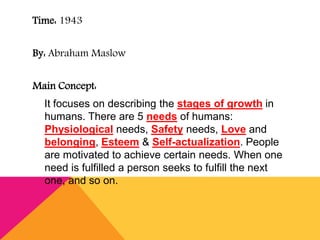
Time: 1943 
By: Abraham Maslow 
Main Concept: 
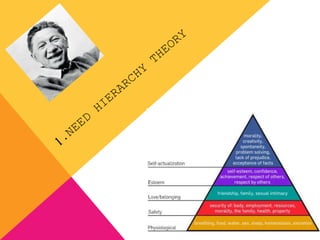
It focuses on describing the stages of growth in 
humans. There are 5 needs of humans: 
Physiological needs, Safety needs, Love and 
belonging, Esteem & Self-actualization. People 
are motivated to achieve certain needs. When one 
need is fulfilled a person seeks to fulfill the next 
one, and so on.
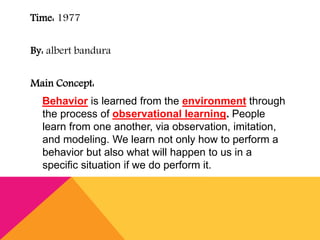
Time: 1977 
By: albert bandura 
Main Concept: 
Behavior is learned from the environment through 
the process of observational learning. People 
learn from one another, via observation, imitation, 
and modeling. We learn not only how to perform a 
behavior but also what will happen to us in a 
specific situation if we do perform it.
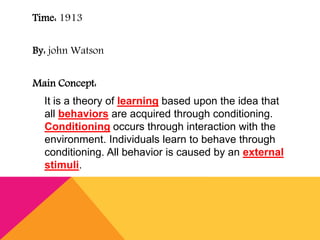
Time: 1913 
By: john Watson 
Main Concept: 
It is a theory of learning based upon the idea that 
all behaviors are acquired through conditioning. 
Conditioning occurs through interaction with the 
environment. Individuals learn to behave through 
conditioning. All behavior is caused by an external 
stimuli.
Time: 1995 
By: George Kelly 
Main Concept: 
Cognitive theory focuses on explaining personality 
based on an individual’s thoughts. This theory 
examines how we interpret things and how our 
cognitions work and it puts so much emphasis on 
our thoughts and interpretations. It understands 
that each individual interprets things differently.
Time: 1958 
By: john bowlby 
Main concept: 
It describes the dynamics of long-term 
interpersonal relationships between 
humans. It focuses on how human beings respond 
within relationships when hurt, separated from 
loved ones, or perceiving a threat.

Learning disabilities

  • 1.
    -Theories Of PersonalityDevelopment- Prepared By: SAIMA KHALIL
  • 3.
  • 4.
    “PERSONALITY” Meaning: Theterm personality is derived from the Latin word persona meaning a mask or appearance one presents to the world or a character played by an actor. Keeping this in mind personality refers to what a person looks from the outside even though he is something else on the inside. Personality is a patterned body of habits, traits, attitudes and ideas of an individual as these are organized externally into roles and statuses and as they relate internally to motivation, goals and various aspects of selfhood.
  • 5.
    DEFINITIONS: • Accordingto Robert Park and Earnest Burgess: “Personality is the sum and organization of those traits which determine the role of the individual in the group.” • According to Linton: “Personality embraces the total organized aggregate of psychological processes and status pertaining to the individual.” • According to Cronbach: “A person’s observable habits are called his personality.” • According to Traxler: “Sum total of an individual’s behavior in social situations is called his personality.” • “Personality can be defined as a dynamic and organized set of characteristics possessed by a person that uniquely influences his or her cognitions, motivations, and behaviors in various situations.”
  • 6.
    THEORIES: 1. AbrahamMaslow – Psychological theory 2. Albert Bandura – Social learning theory 3. John Watson – Behavioral theory 4. George Kelly – Cognitive theory 5. John Bowlby – Attachment theory
  • 8.
    Time: 1943 By:Abraham Maslow Main Concept: It focuses on describing the stages of growth in humans. There are 5 needs of humans: Physiological needs, Safety needs, Love and belonging, Esteem & Self-actualization. People are motivated to achieve certain needs. When one need is fulfilled a person seeks to fulfill the next one, and so on.
  • 10.
    Time: 1977 By:albert bandura Main Concept: Behavior is learned from the environment through the process of observational learning. People learn from one another, via observation, imitation, and modeling. We learn not only how to perform a behavior but also what will happen to us in a specific situation if we do perform it.
  • 12.
    Time: 1913 By:john Watson Main Concept: It is a theory of learning based upon the idea that all behaviors are acquired through conditioning. Conditioning occurs through interaction with the environment. Individuals learn to behave through conditioning. All behavior is caused by an external stimuli.
  • 14.
    Time: 1995 By:George Kelly Main Concept: Cognitive theory focuses on explaining personality based on an individual’s thoughts. This theory examines how we interpret things and how our cognitions work and it puts so much emphasis on our thoughts and interpretations. It understands that each individual interprets things differently.
  • 16.
    Time: 1958 By:john bowlby Main concept: It describes the dynamics of long-term interpersonal relationships between humans. It focuses on how human beings respond within relationships when hurt, separated from loved ones, or perceiving a threat.