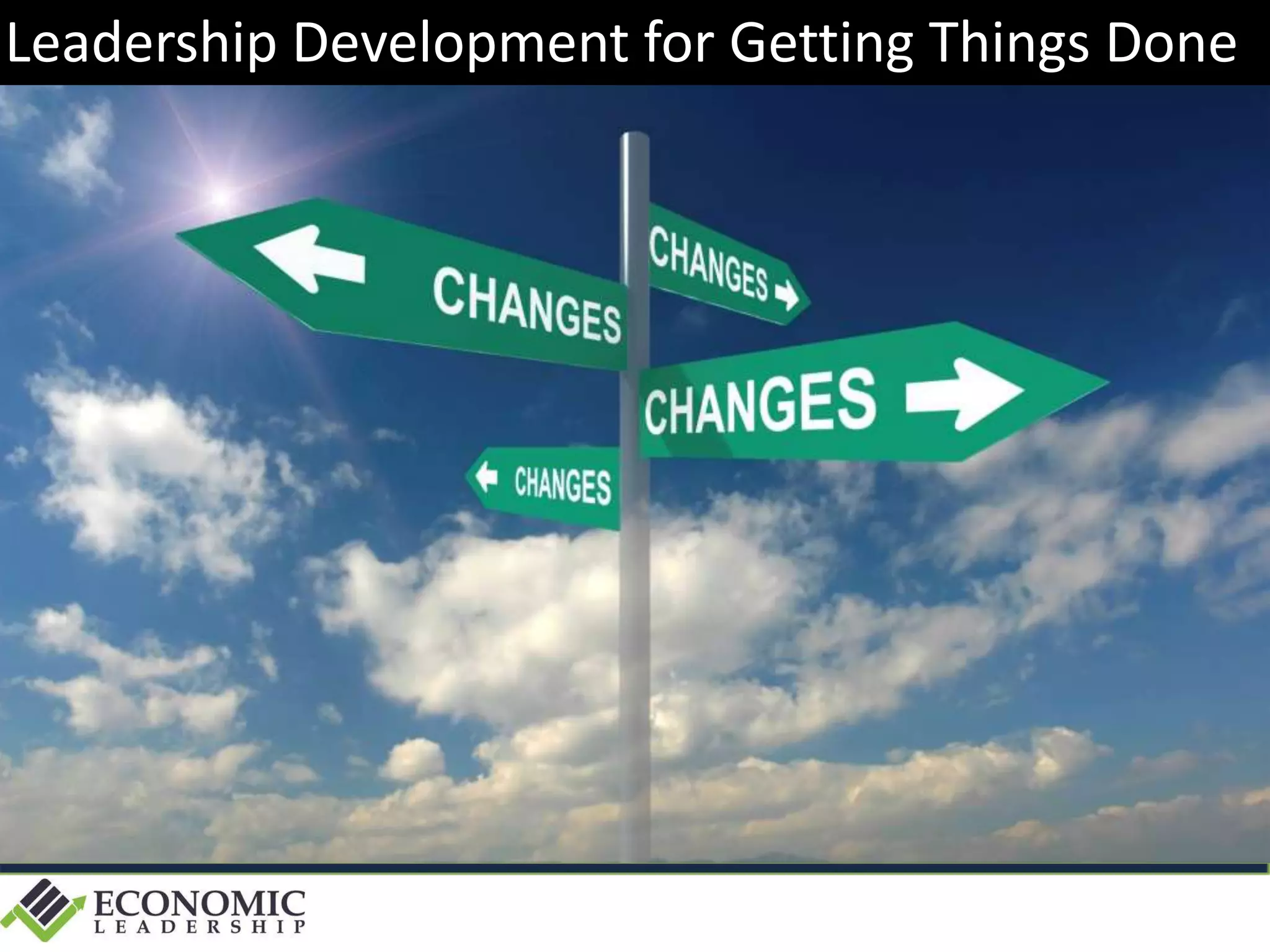












Leadership Development for Getting Things Done
“Too often we
enjoy the
comfort of
opinion without
the discomfort
of thought.”
John F. Kennedy“ Leadership and
learning are
indispensable to each
other.”
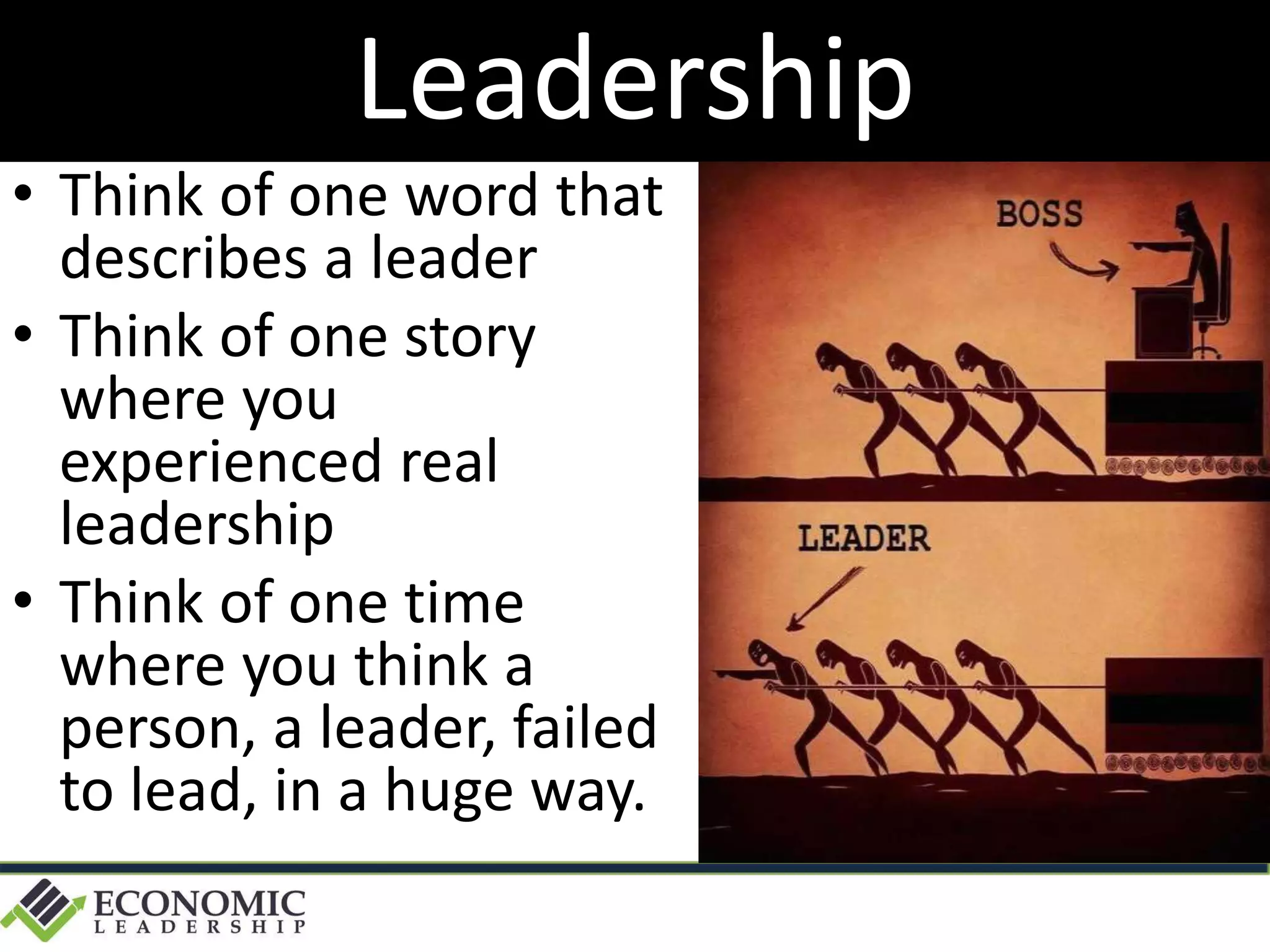
Leadership
• Think of one word that
describes a leader
• Think of one story
where you
experienced real
leadership
• Think of one time
where you think a
person, a leader, failed
to lead, in a huge way.
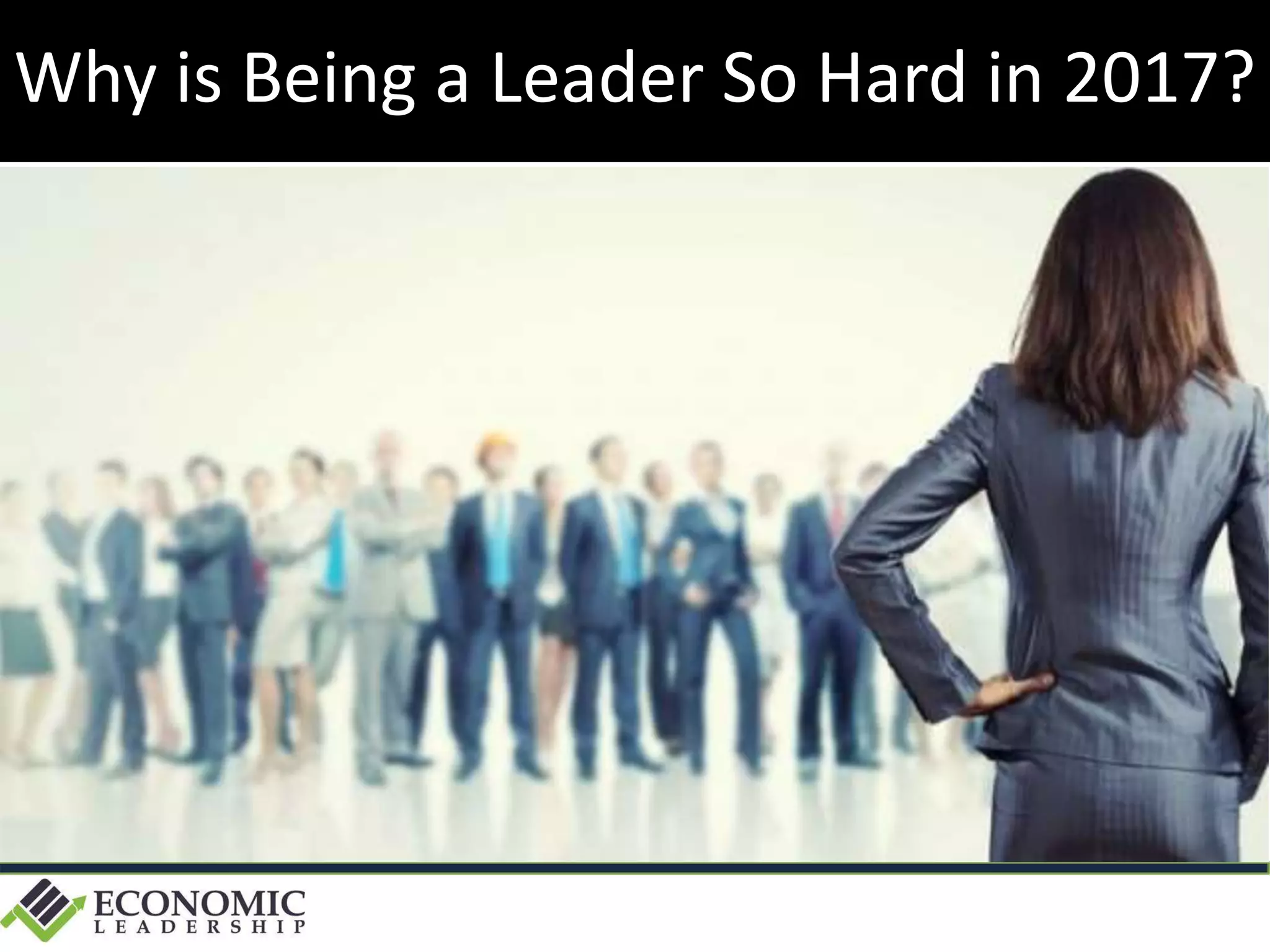
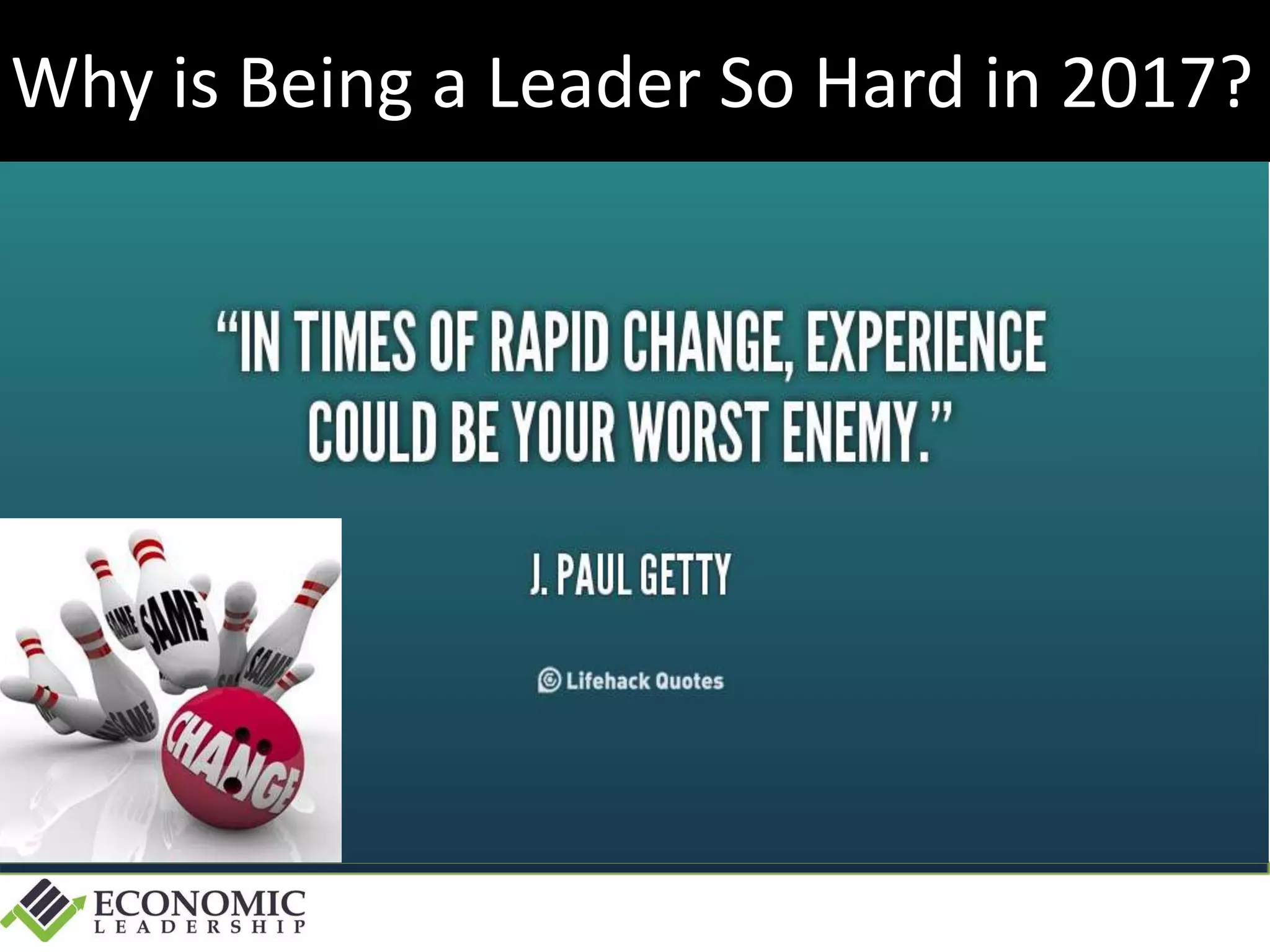
Why is Being a Leader So Hard in 2017?
Fear the Future- Things Stink
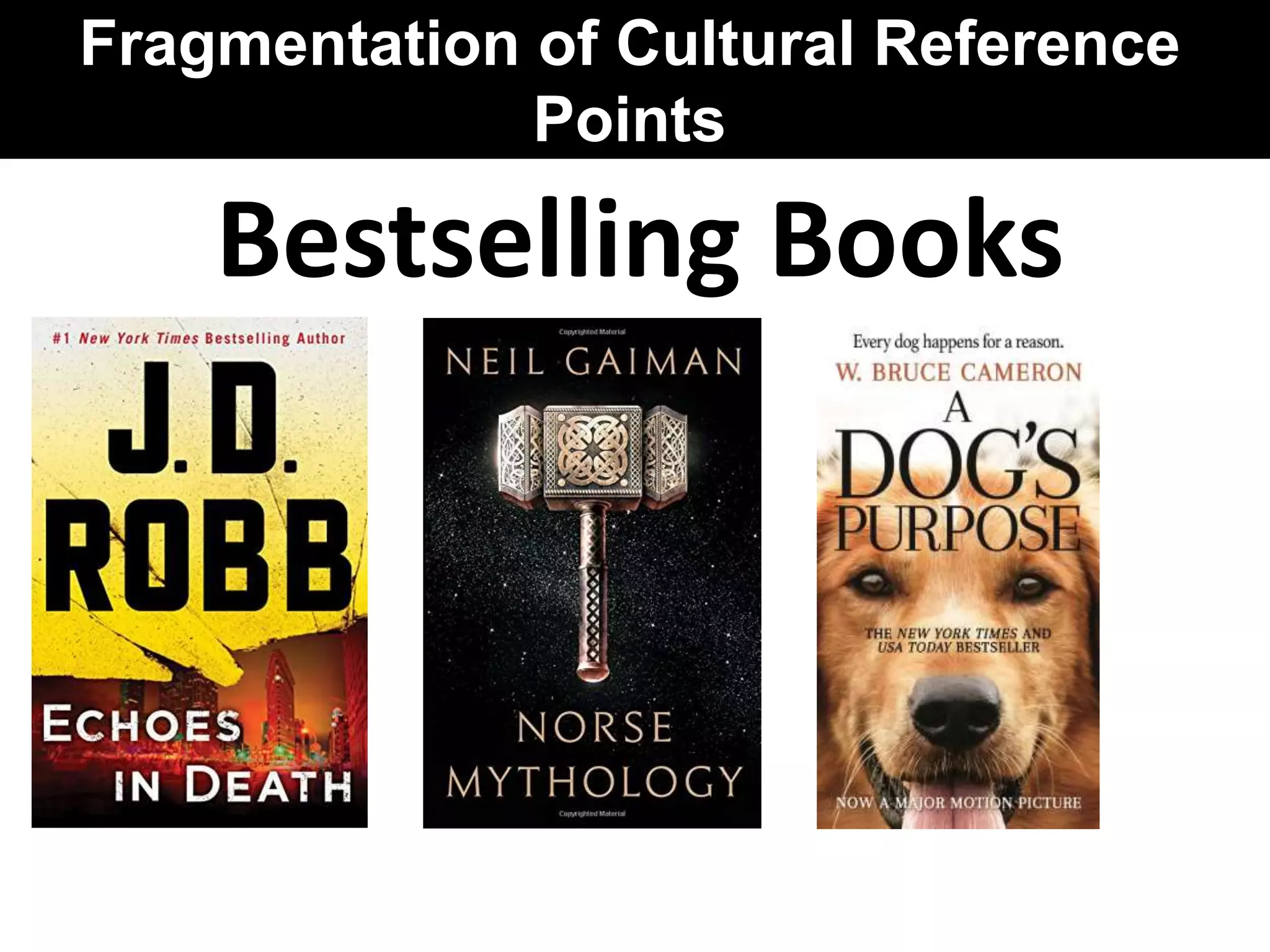
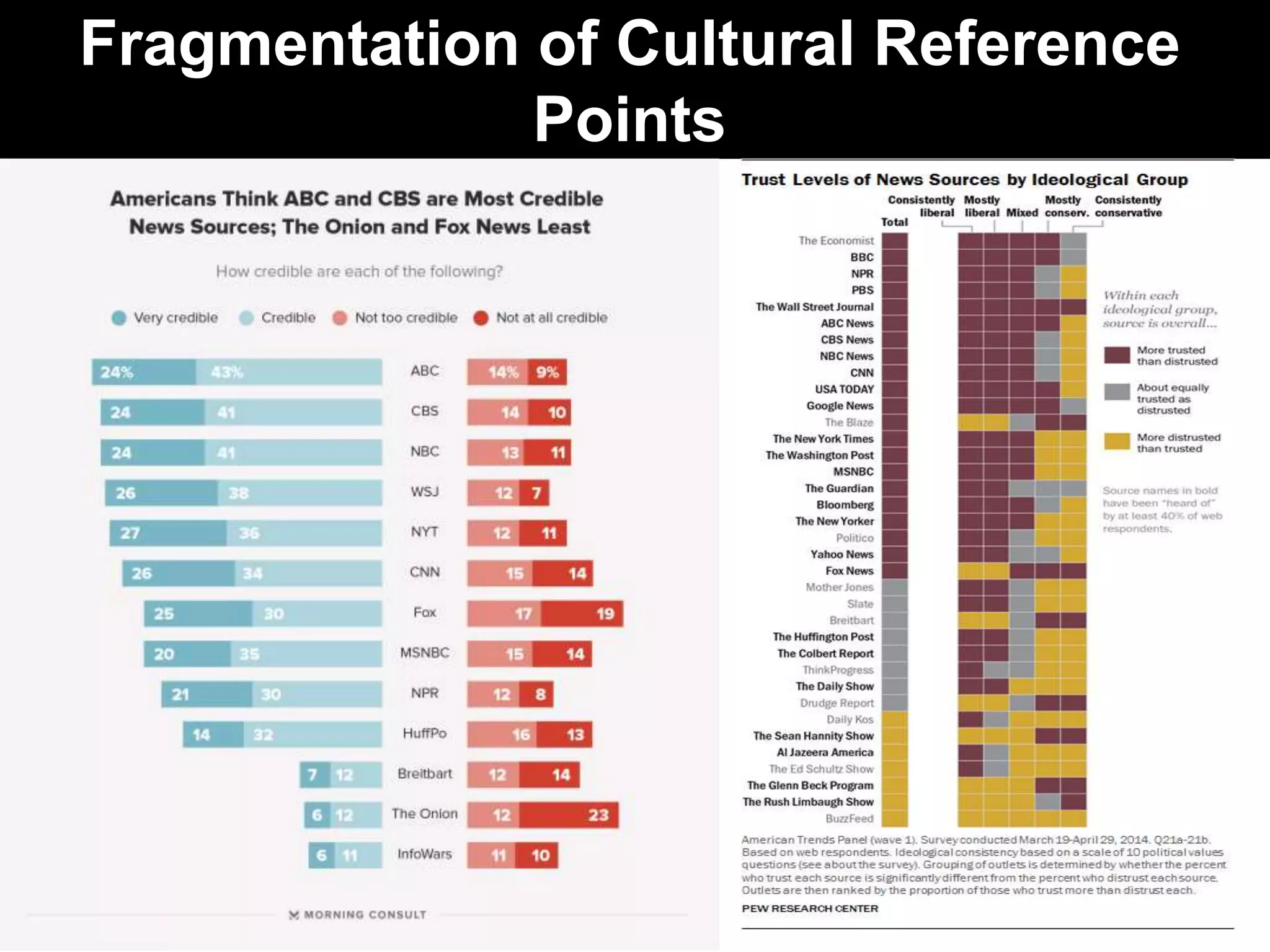
Fragmentation of Cultural Reference
Points
Bestselling Books
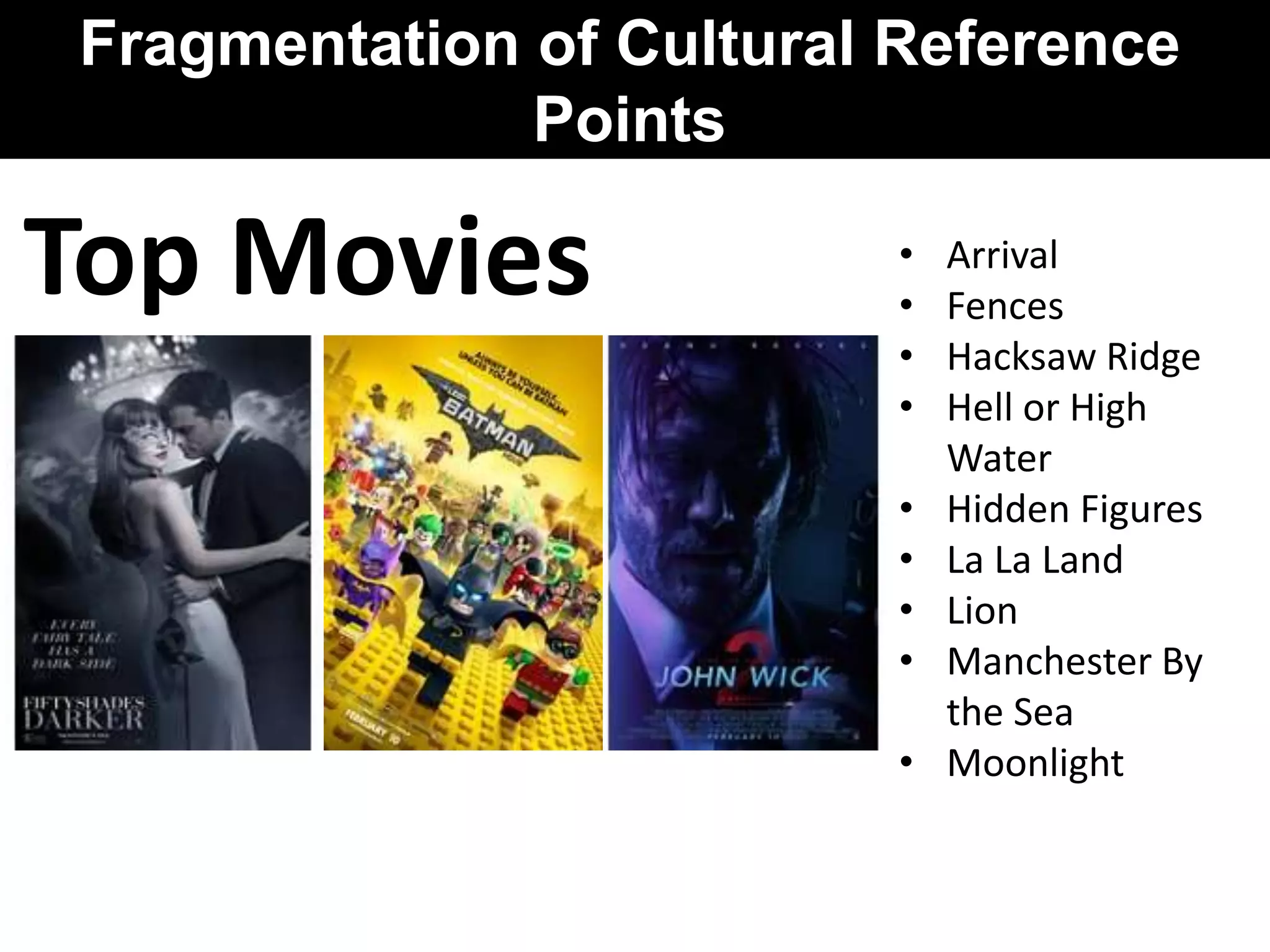
Fragmentation of Cultural Reference
Points
Top Movies • Arrival
• Fences
• Hacksaw Ridge
• Hell or High
Water
• Hidden Figures
• La La Land
• Lion
• Manchester By
the Sea
• Moonlight
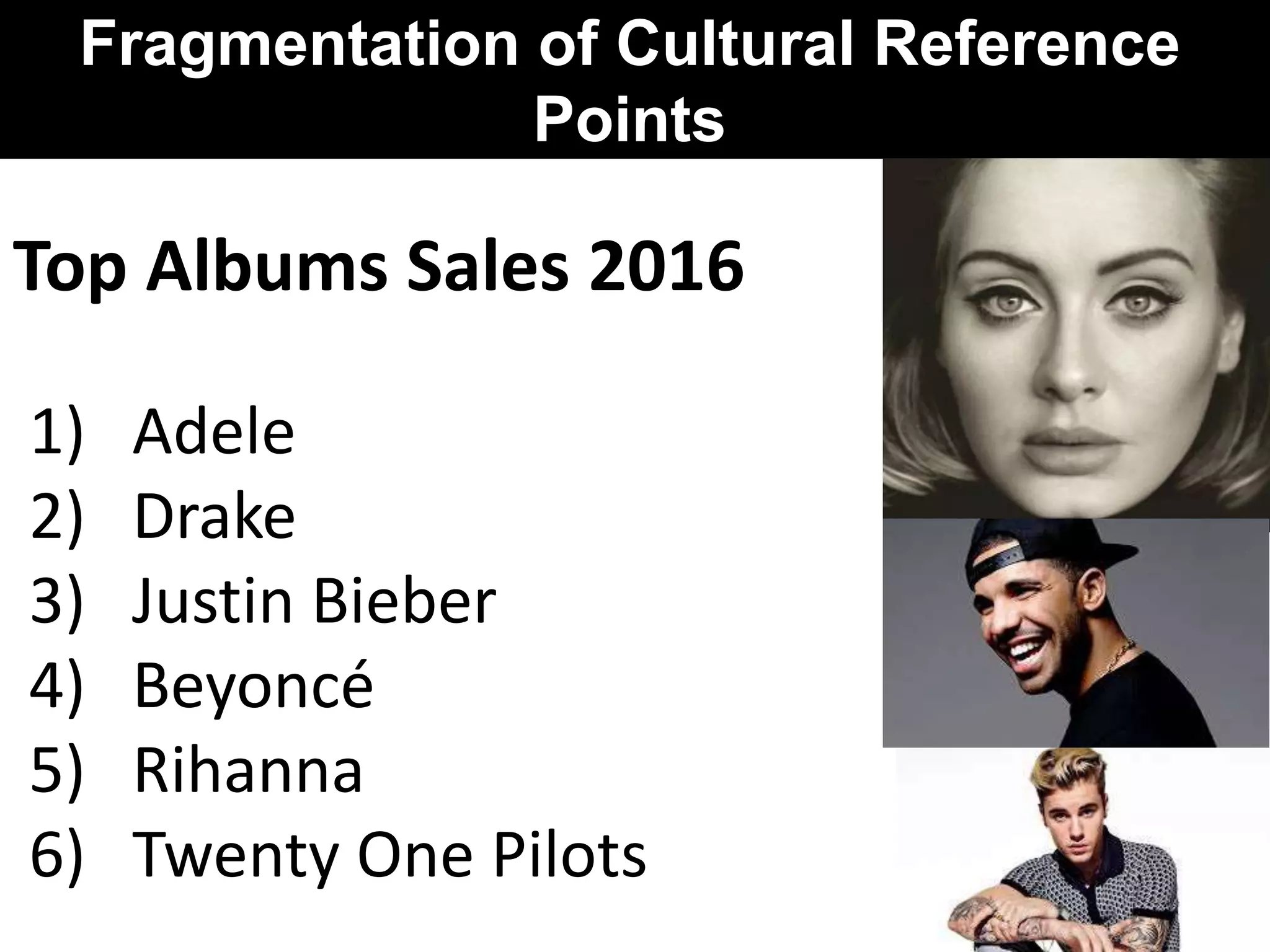
Fragmentation of Cultural Reference
Points
Top Albums Sales 2016
1) Adele
2) Drake
3) Justin Bieber
4) Beyoncé
5) Rihanna
6) Twenty One Pilots
Fragmentation of Cultural Reference
Points
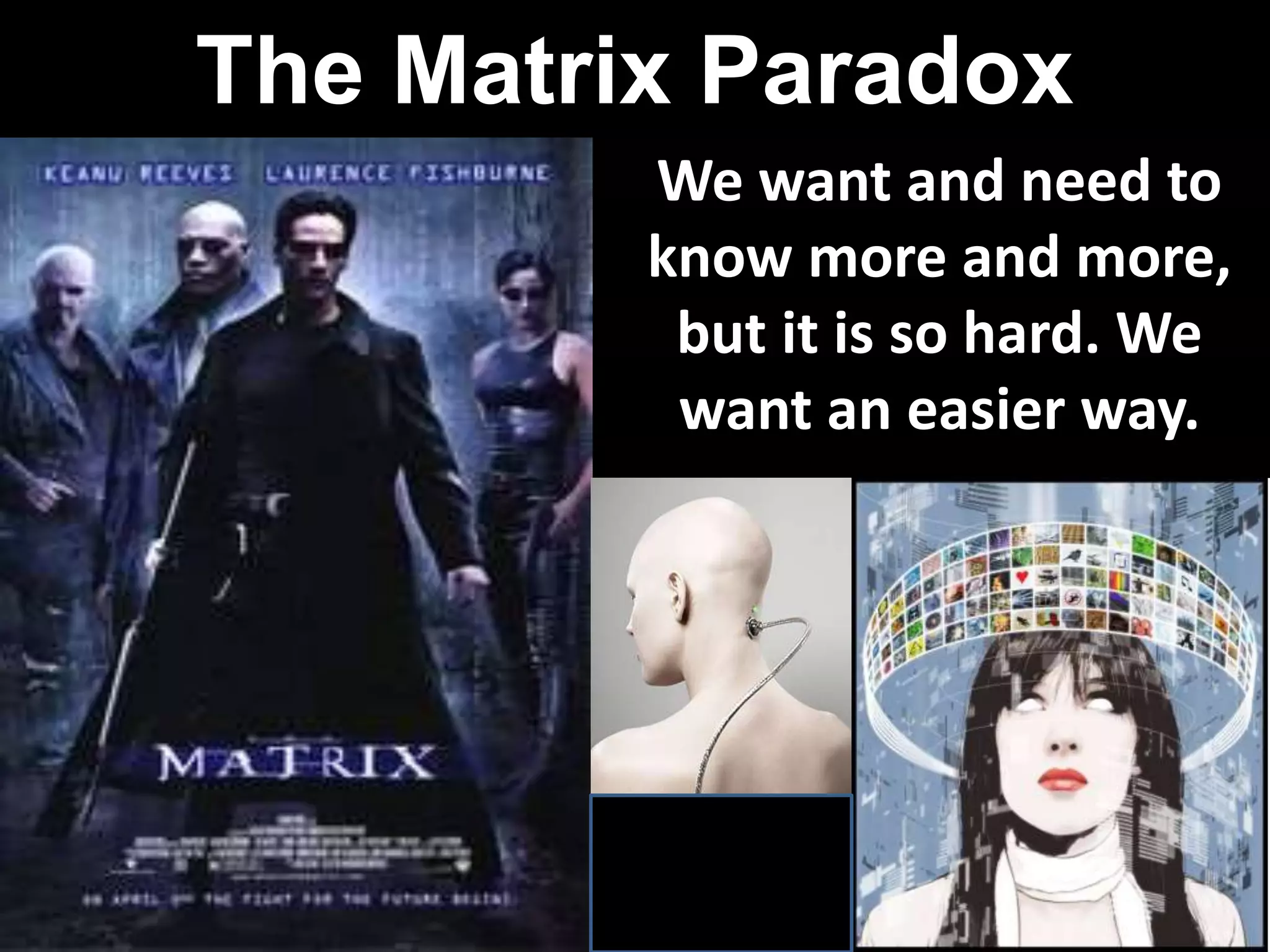
The Matrix Paradox
We want and need to
know more and more,
but it is so hard. We
want an easier way.
Now think all the way back to 2003…
LinkedIn (2003)
Facebook (2004)
YouTube (2005)
Twitter (2006)
IPhone (2007)
Mobile apps
Mobile maps
Fitbit (2007)
Spotify (2007)
Dropbox (2007)
Airbnb (2008)
Hulu (2008)
Kickstarter (2009)
Facetime (2010)
Uber (2009)
Pinterest (2010)
Tumblr (2010)
Snapchat (2011)
Udacity (2012)
Snapchat (2012)
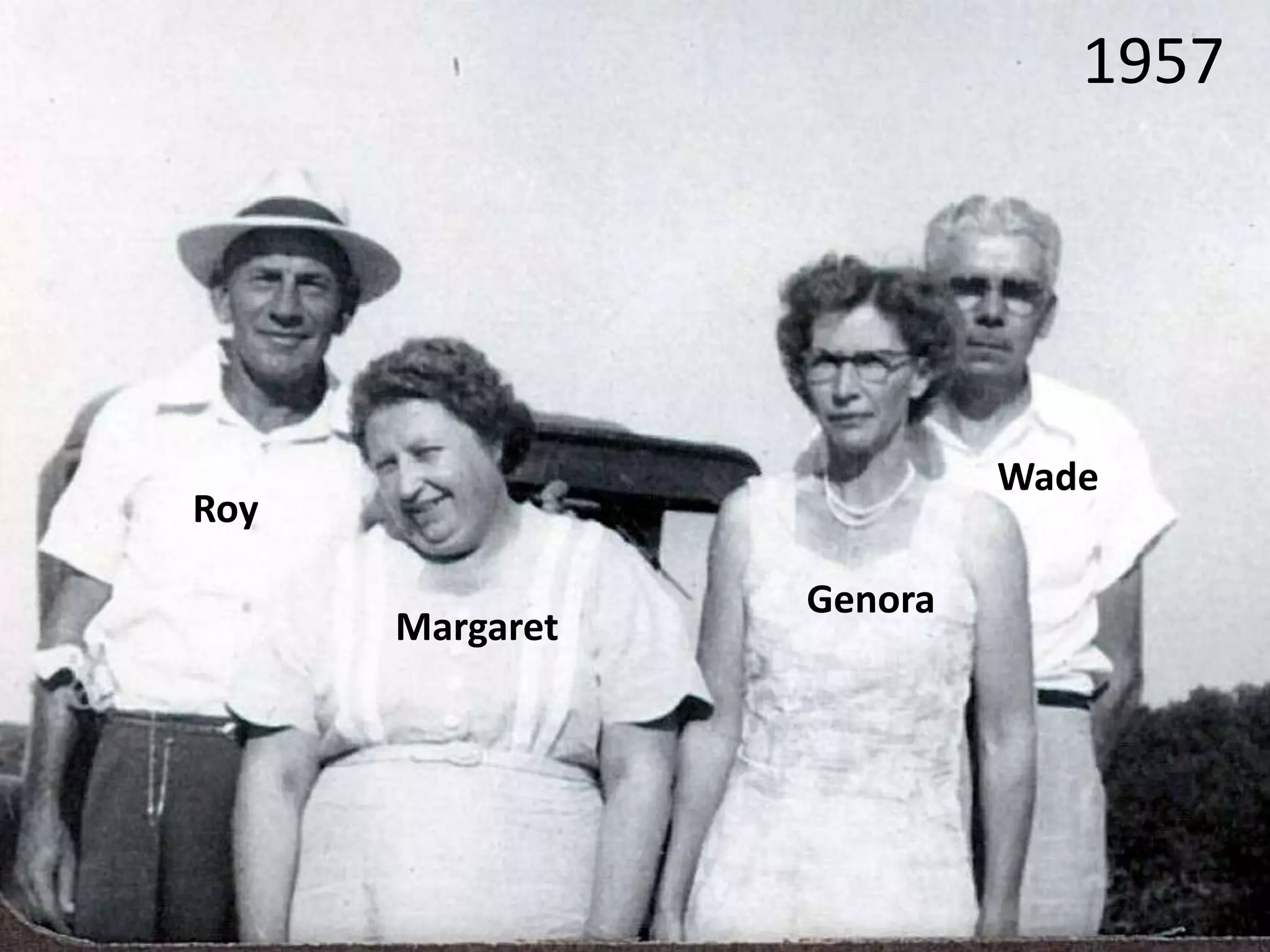
Roy
Margaret
Genora
Wade
1957
“Conundrums”
Complex or perplexing
trends that generally
have no clear solution.
Trendspotting
Trends That Are
Shaping Our
Future
Technology
Urbanization
Demography
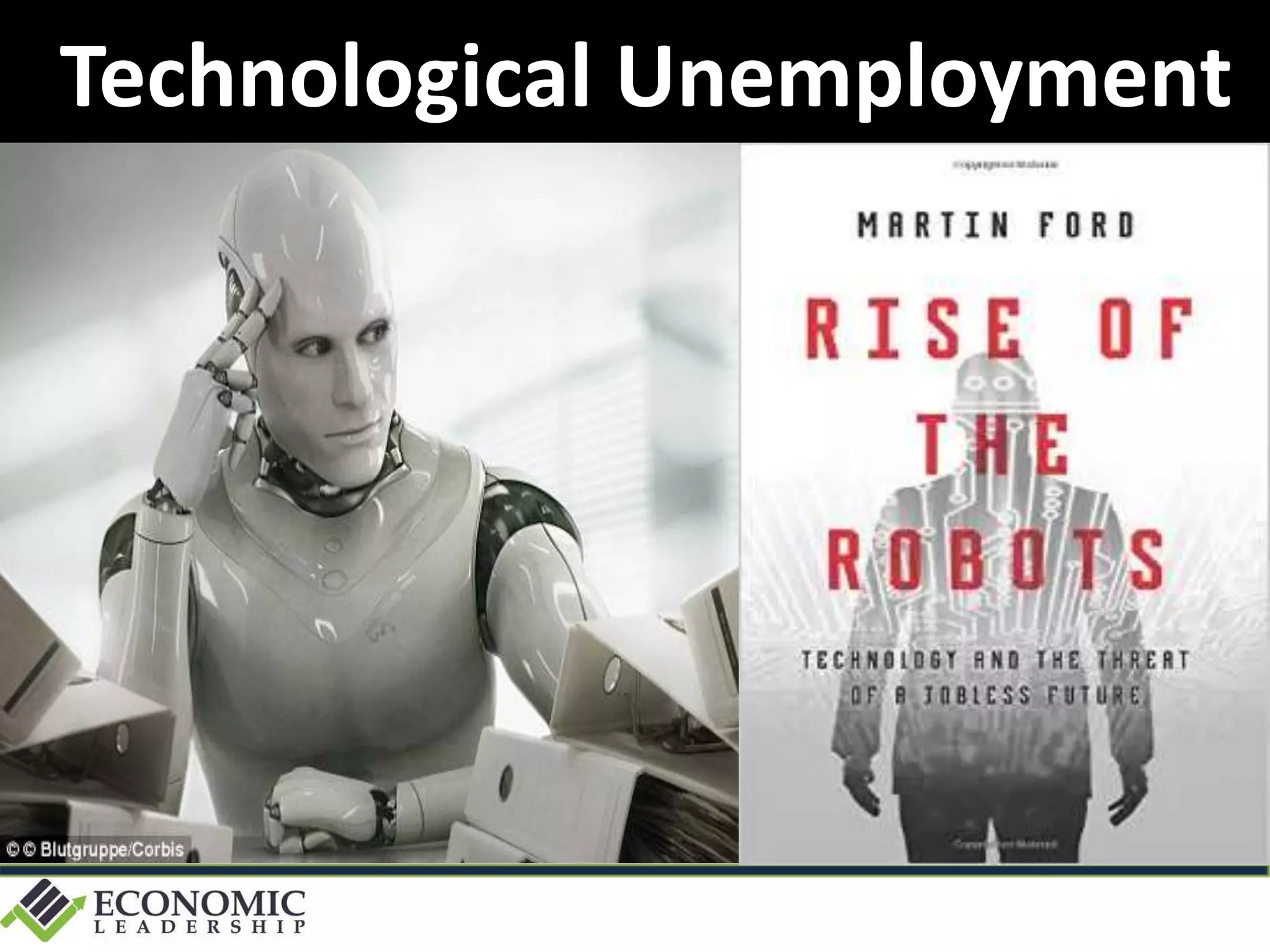
Technological Unemployment
The Next Big Things-Technological
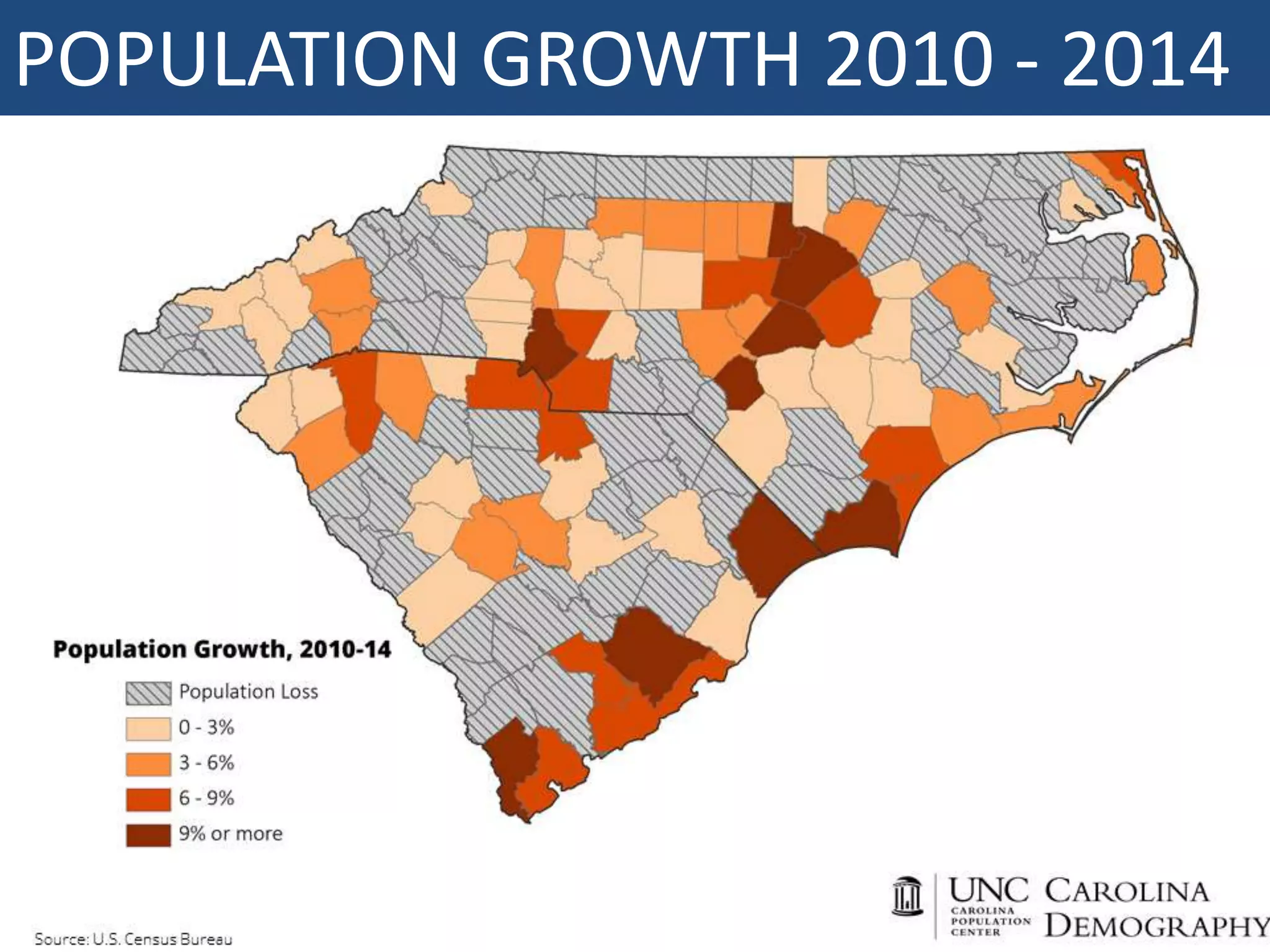
POPULATION GROWTH 2010 - 2014
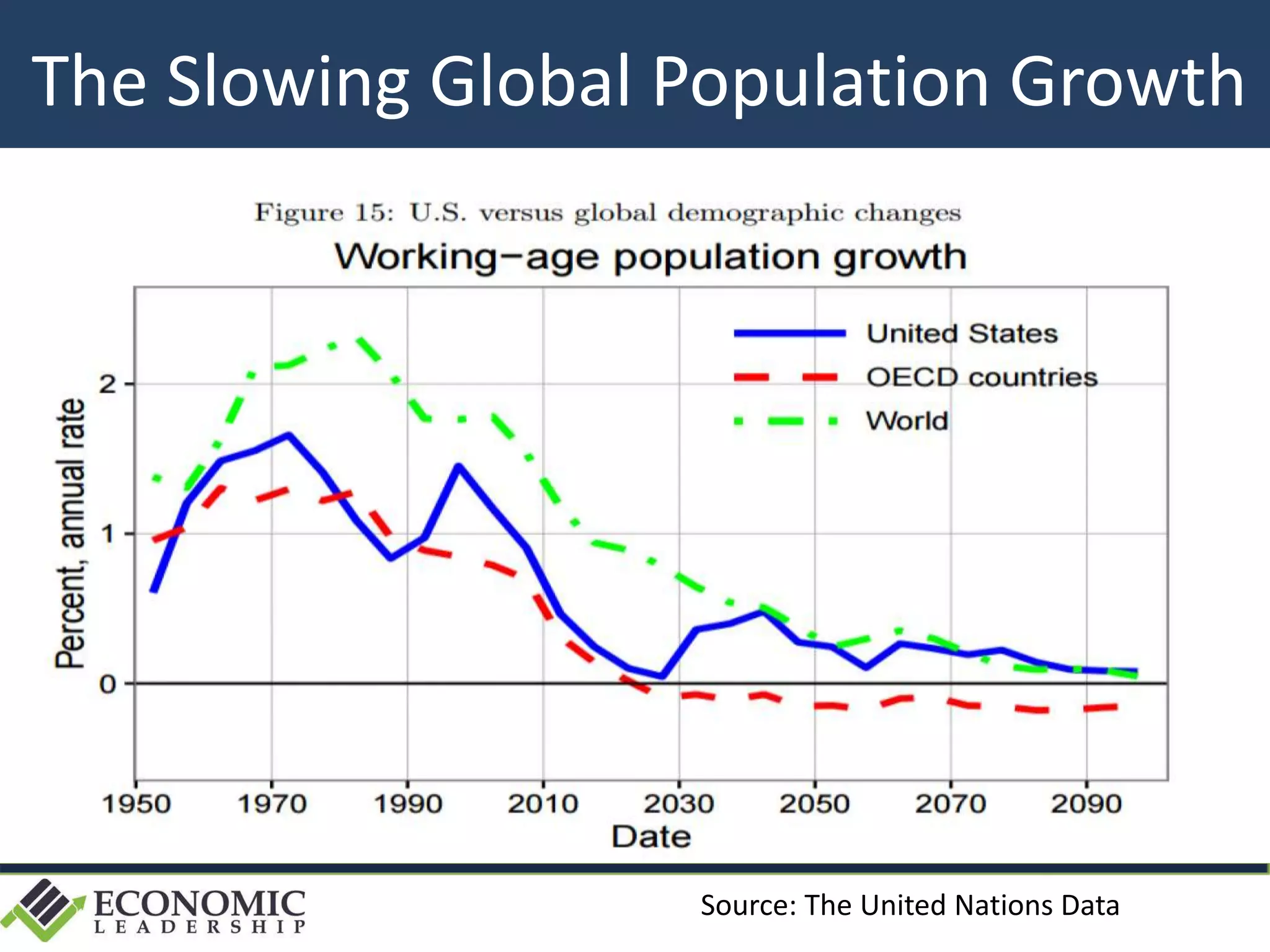
The Slowing Global Population Growth
Source: The United Nations Data
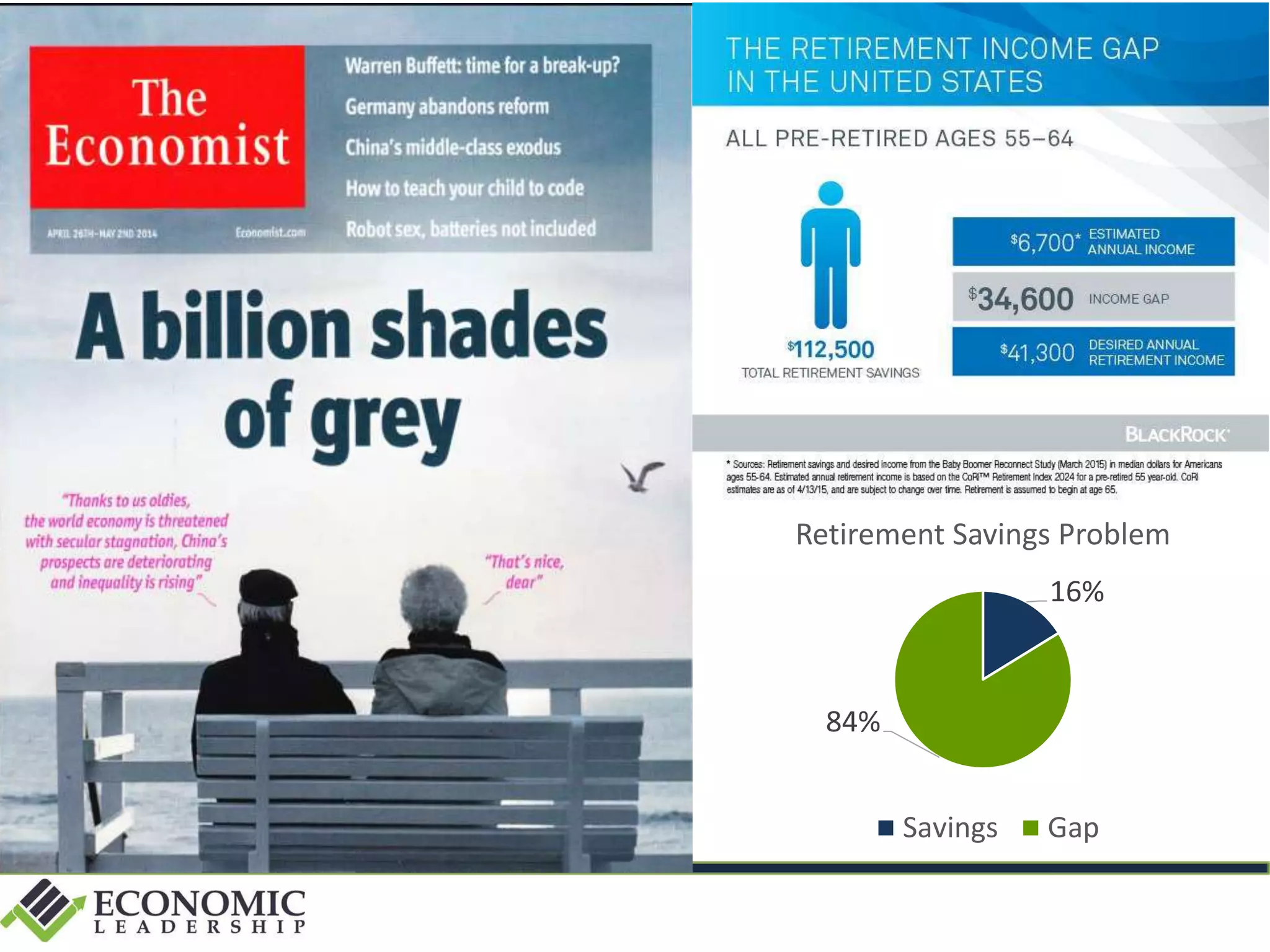
16%
84%
Retirement Savings Problem
Savings Gap
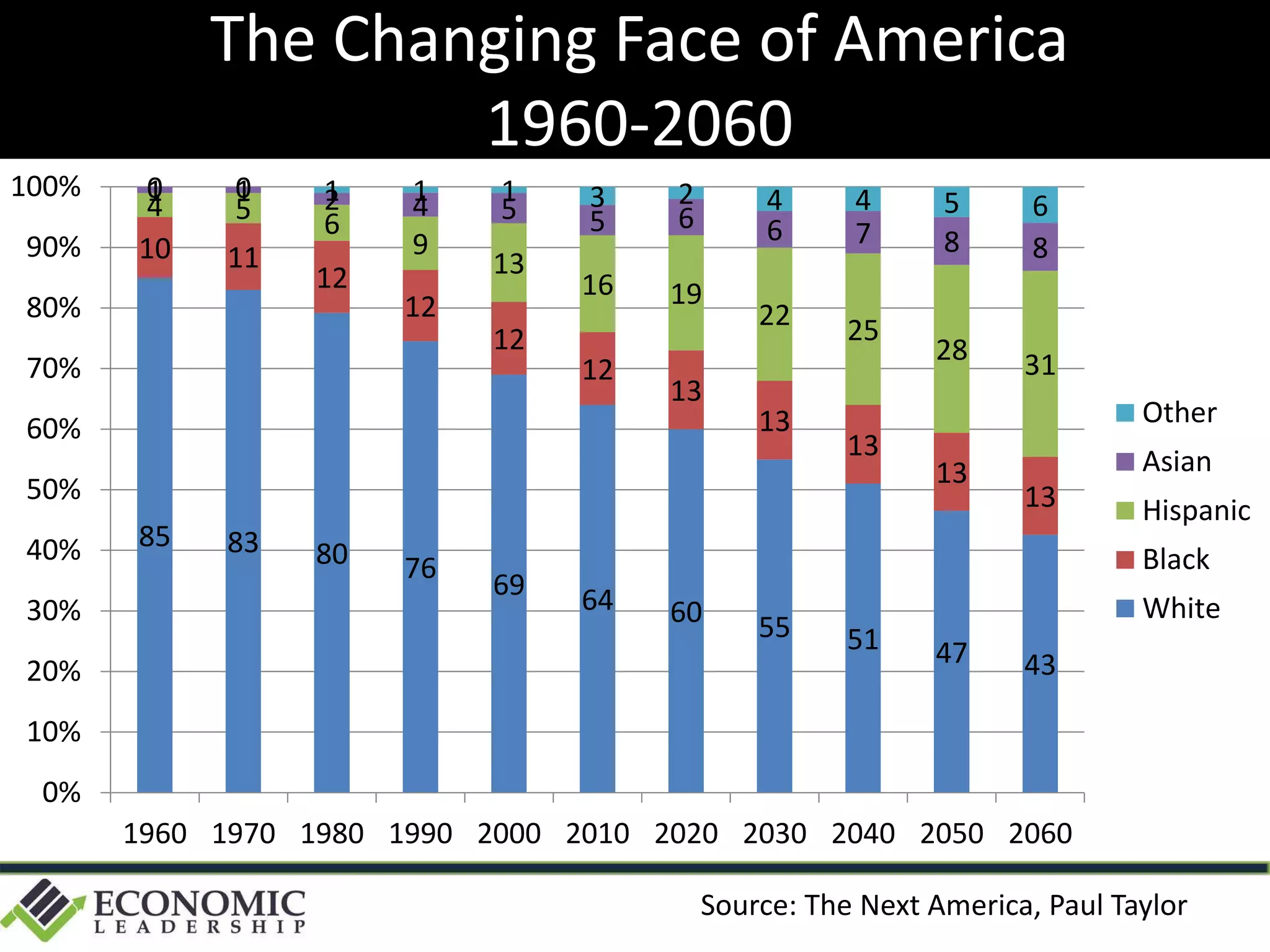
The Changing Face of America
1960-2060
85 83 80 76
69 64 60 55 51 47 43
10 11
12
12
12
12
13
13
13
13
13
4 5 6
9
13
16 19
22 25
28 31
1 1 2 4 5 5 6 6 7 8 8
0 0 1 1 1 3 2 4 4 5 6
0%
10%
20%
30%
40%
50%
60%
70%
80%
90%
100%
1960 1970 1980 1990 2000 2010 2020 2030 2040 2050 2060
Other
Asian
Hispanic
Black
White
Source: The Next America, Paul Taylor
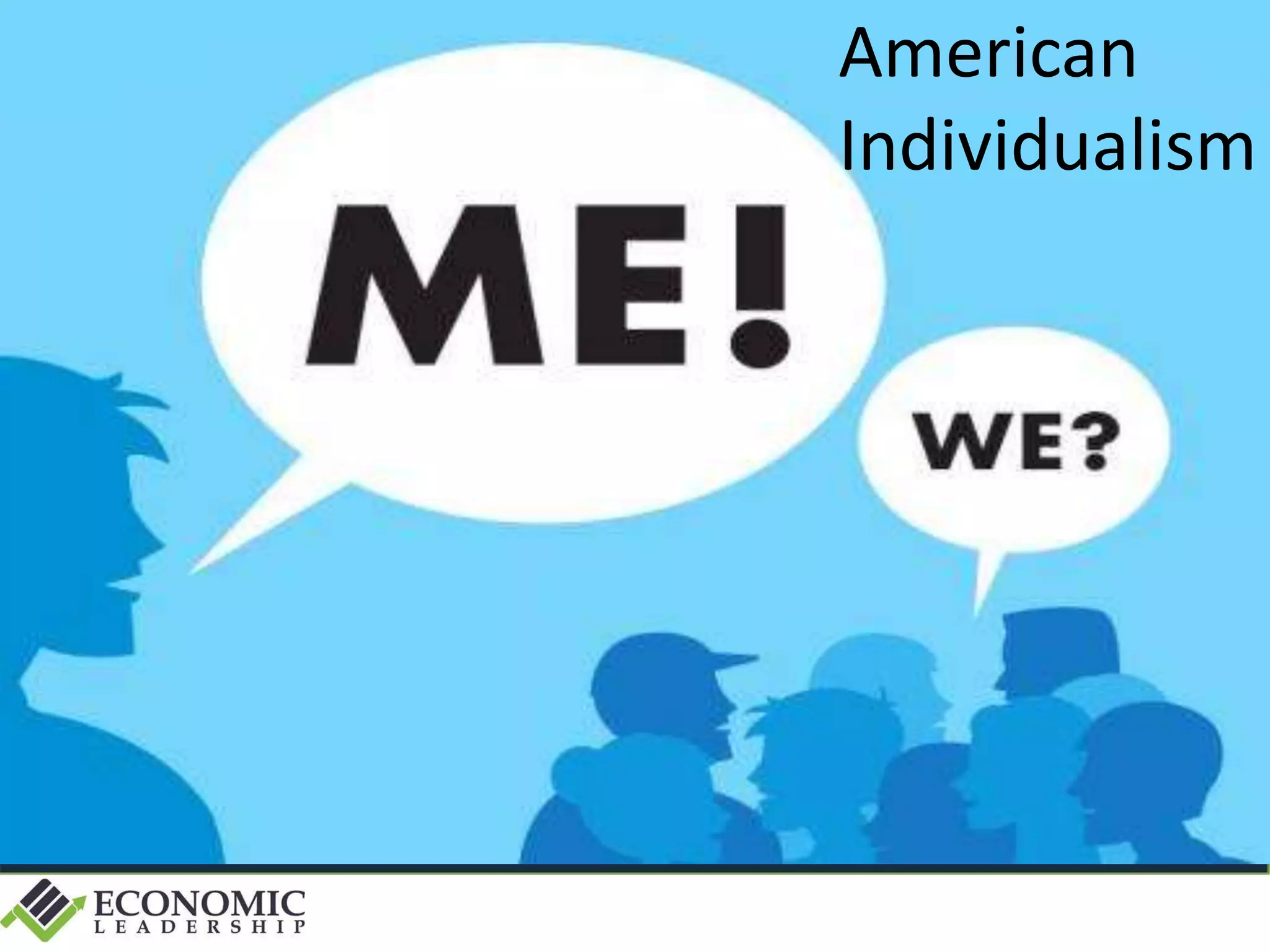
American
Individualism
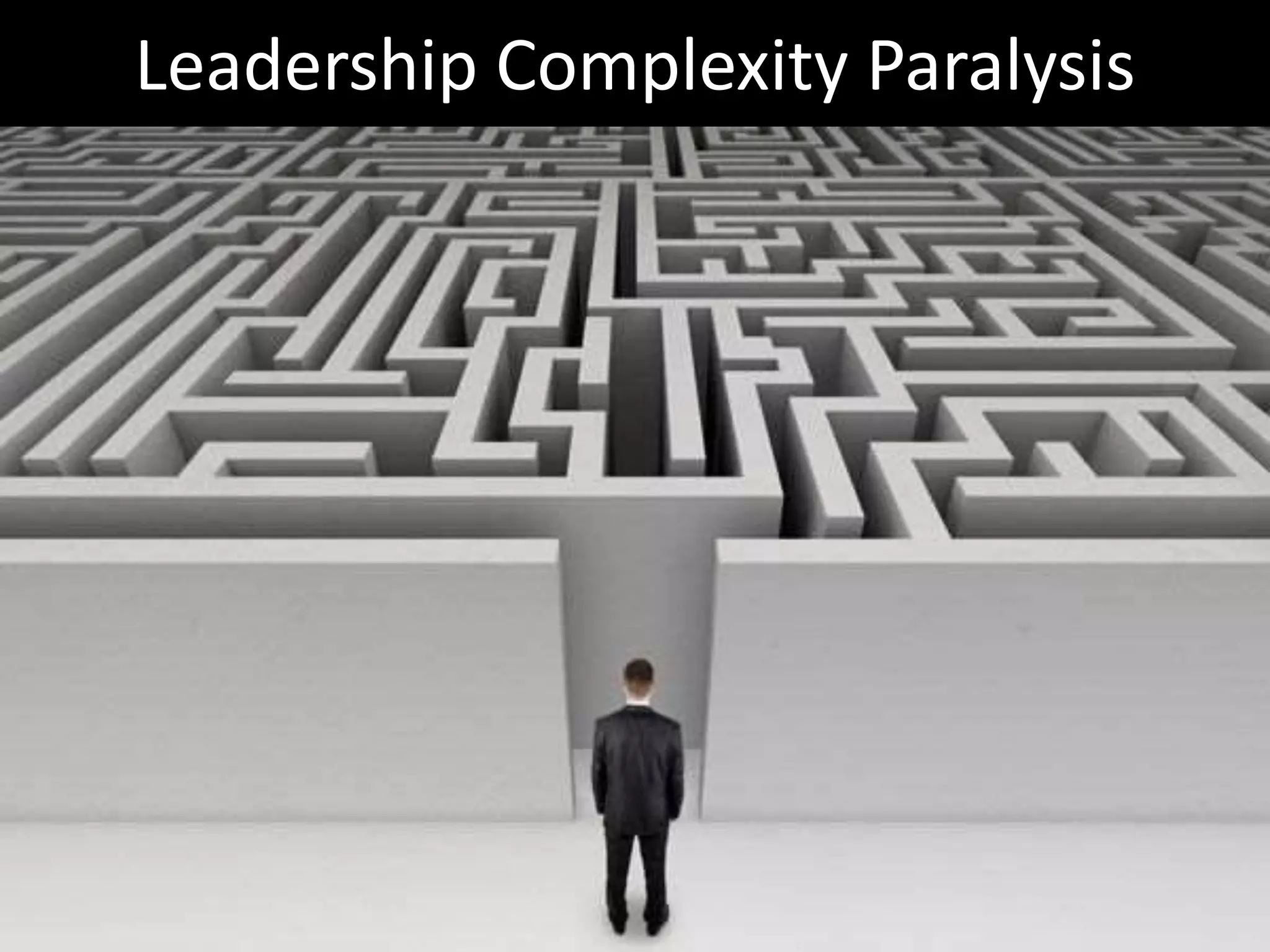
Leadership Complexity Paralysis
Leadership
Leadership
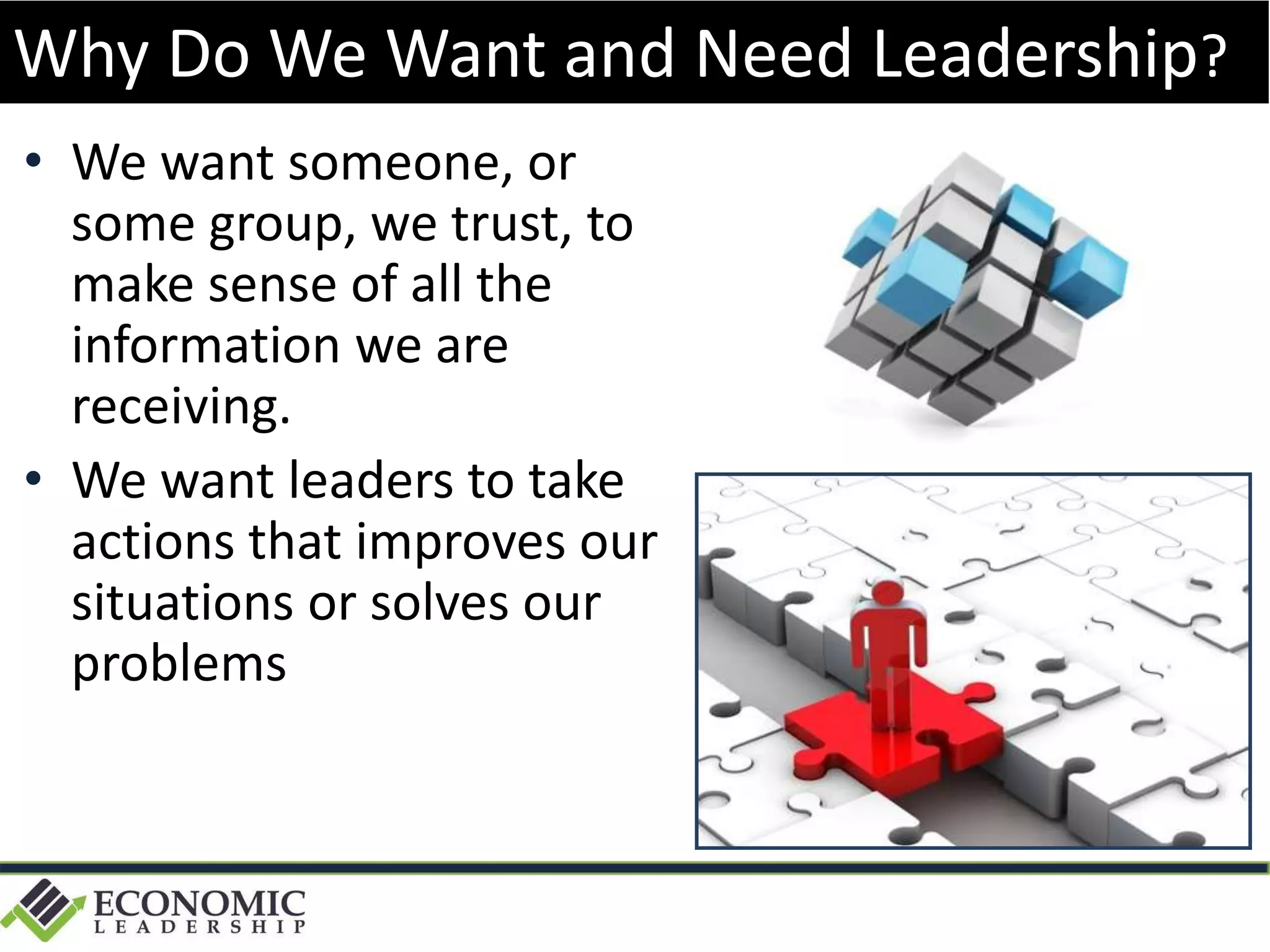
• We want someone, or
some group, we trust, to
make sense of all the
information we are
receiving.
• We want leaders to take
actions that improves our
situations or solves our
problems
Why Do We Want and Need Leadership?
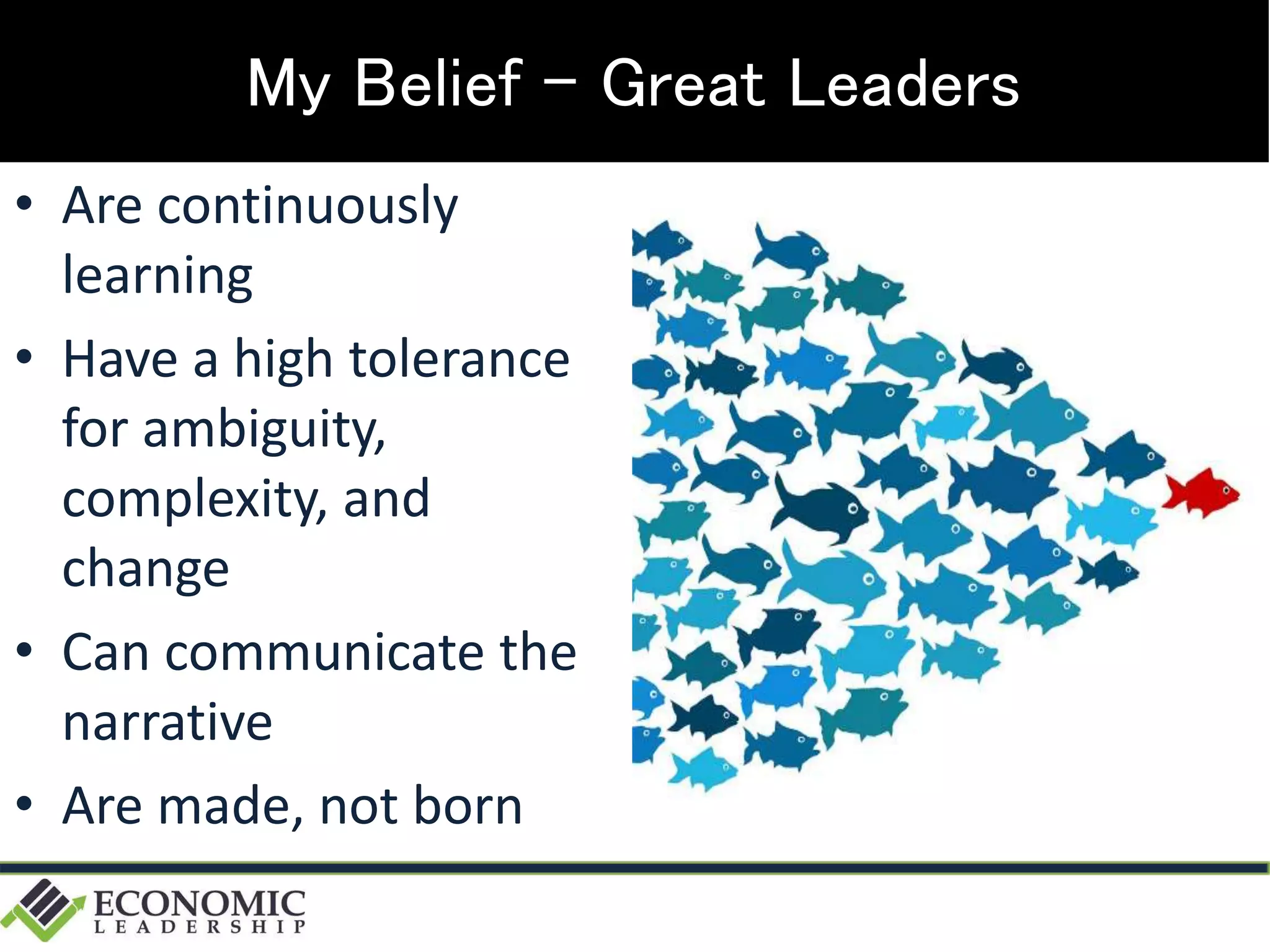
My Belief - Great Leaders
• Are continuously
learning
• Have a high tolerance
for ambiguity,
complexity, and
change
• Can communicate the
narrative
• Are made, not born
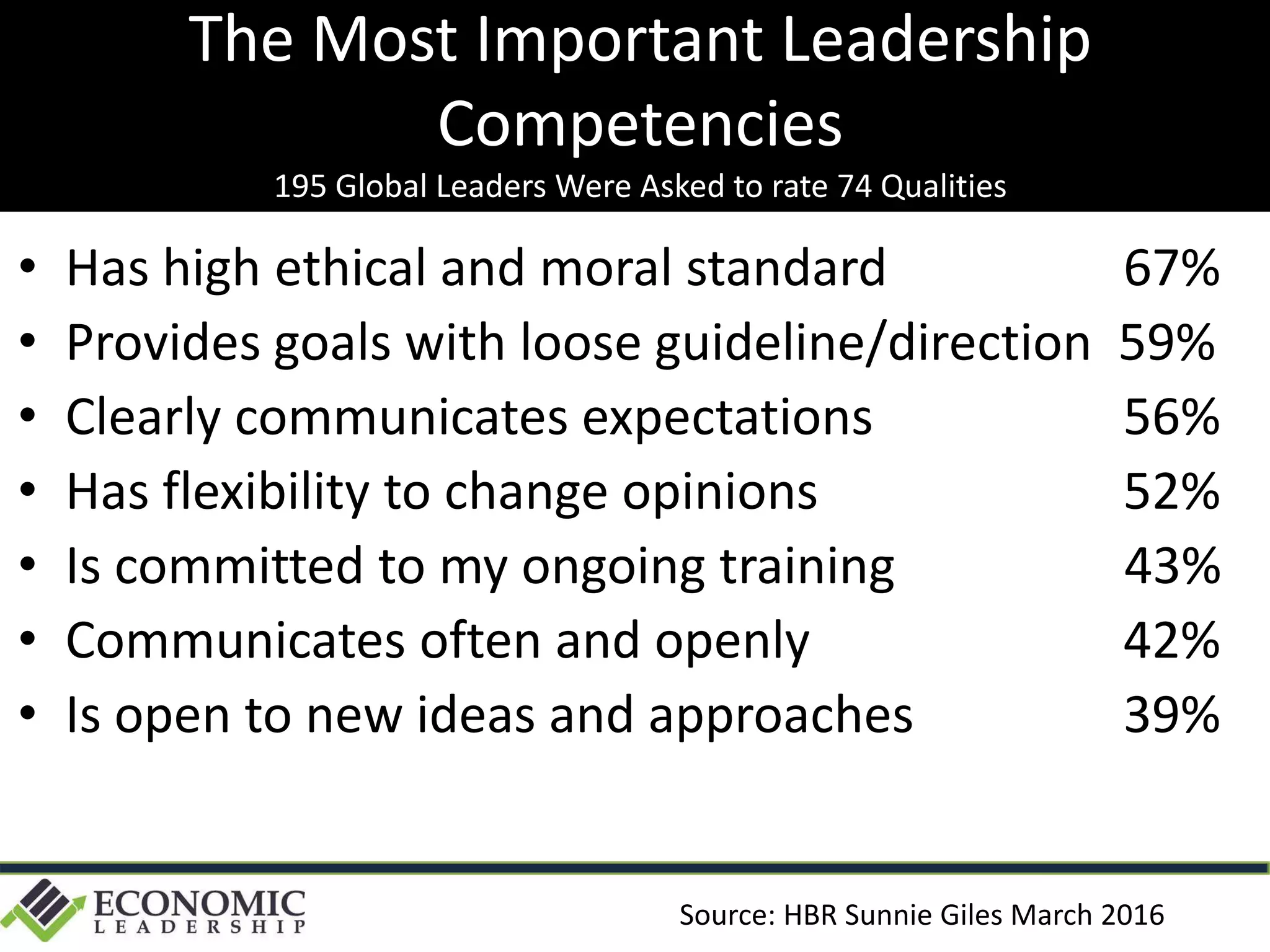
• Has high ethical and moral standard 67%
• Provides goals with loose guideline/direction 59%
• Clearly communicates expectations 56%
• Has flexibility to change opinions 52%
• Is committed to my ongoing training 43%
• Communicates often and openly 42%
• Is open to new ideas and approaches 39%
The Most Important Leadership
Competencies
195 Global Leaders Were Asked to rate 74 Qualities
Source: HBR Sunnie Giles March 2016
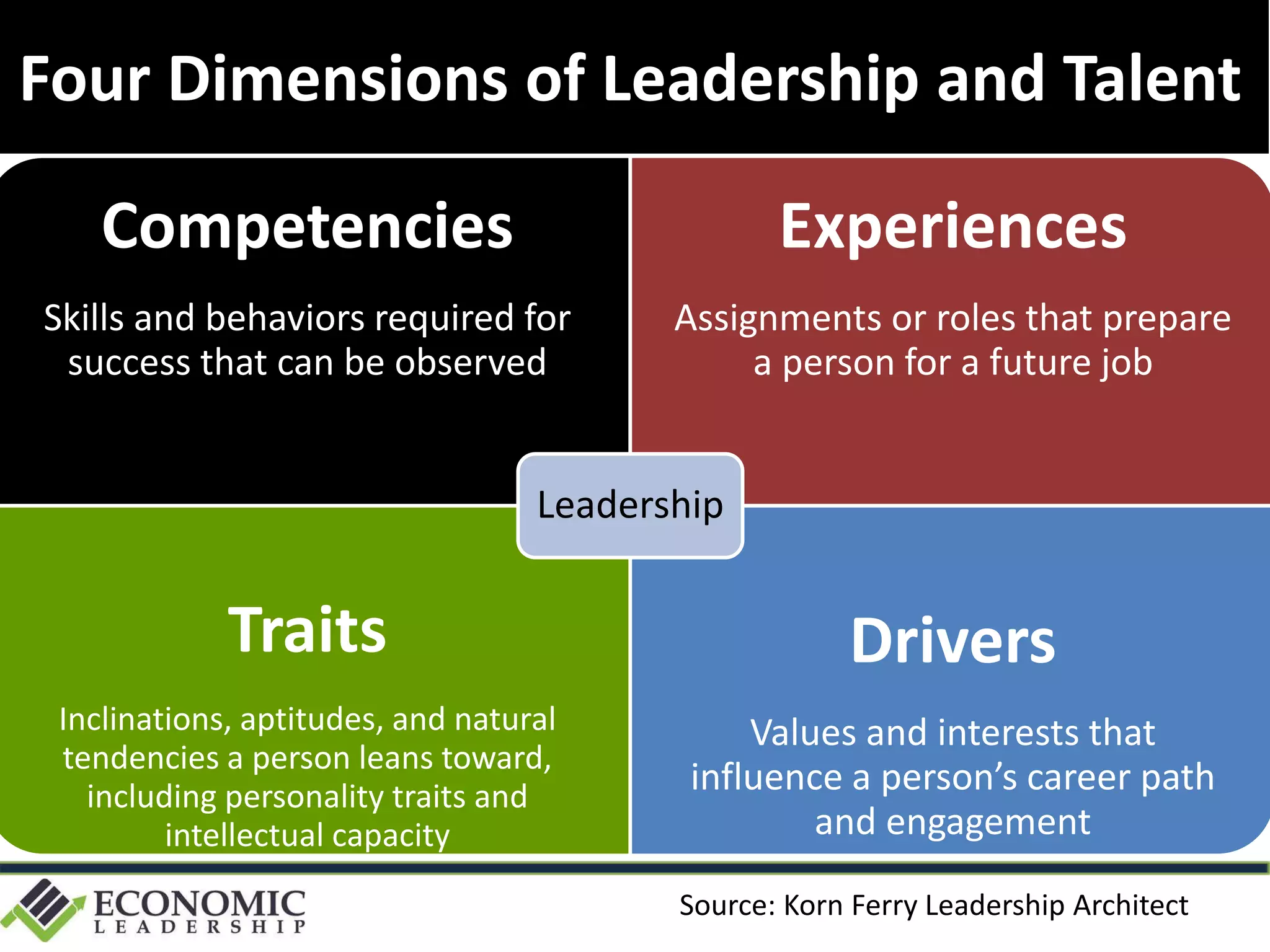
Competencies
Skills and behaviors required for
success that can be observed
Experiences
Assignments or roles that prepare
a person for a future job
Traits
Inclinations, aptitudes, and natural
tendencies a person leans toward,
including personality traits and
intellectual capacity
Drivers
Values and interests that
influence a person’s career path
and engagement
Leadership
Four Dimensions of Leadership and Talent
Source: Korn Ferry Leadership Architect
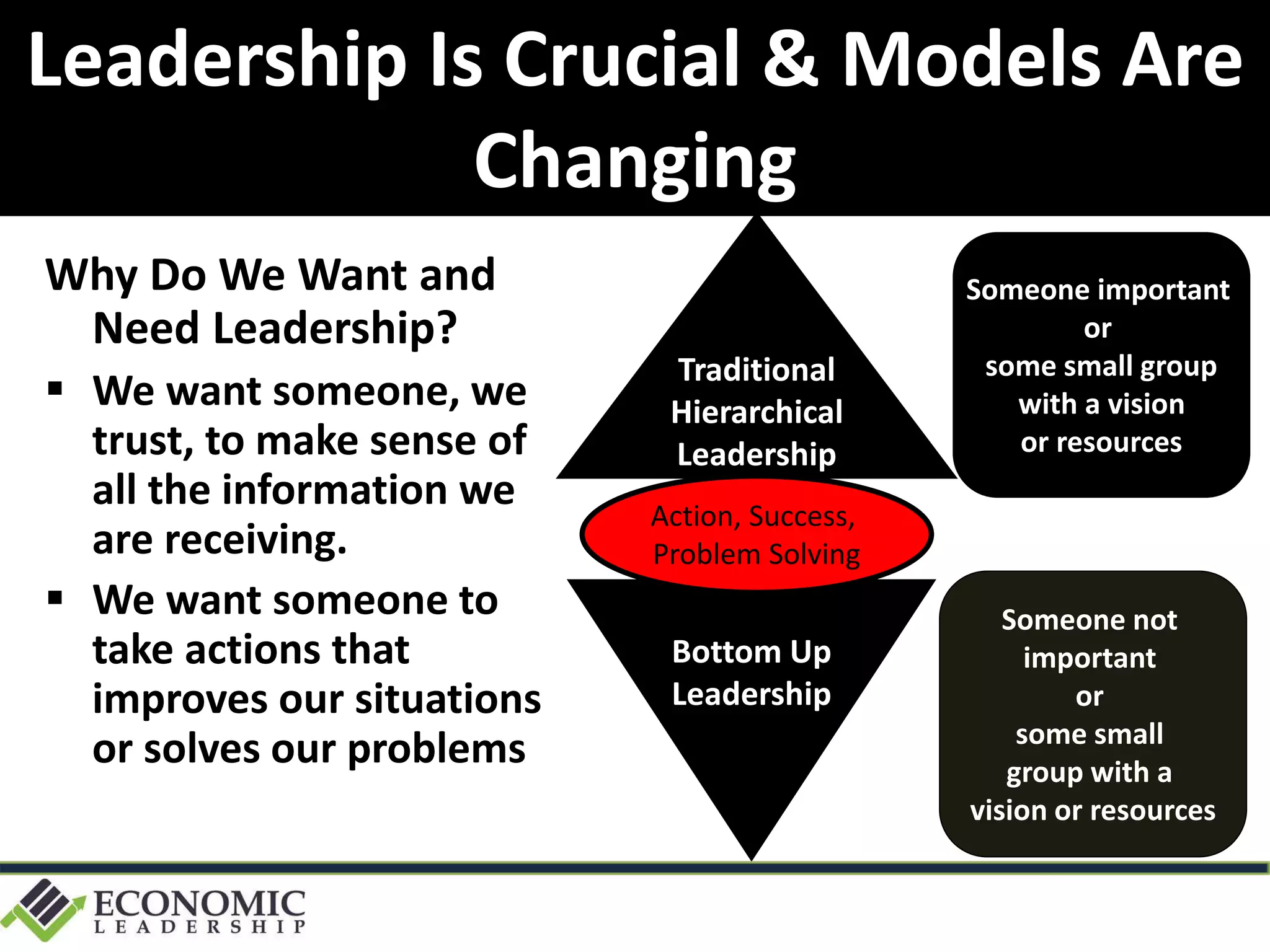
Why Do We Want and
Need Leadership?
 We want someone, we
trust, to make sense of
all the information we
are receiving.
 We want someone to
take actions that
improves our situations
or solves our problems
Traditional
Hierarchical
Leadership
Grassroots
Bottom Up
Leadership
Action, Success,
Problem Solving
Someone important
or
some small group
with a vision
or resources
Someone not
important
or
some small
group with a
vision or resources
Leadership Is Crucial & Models Are
Changing
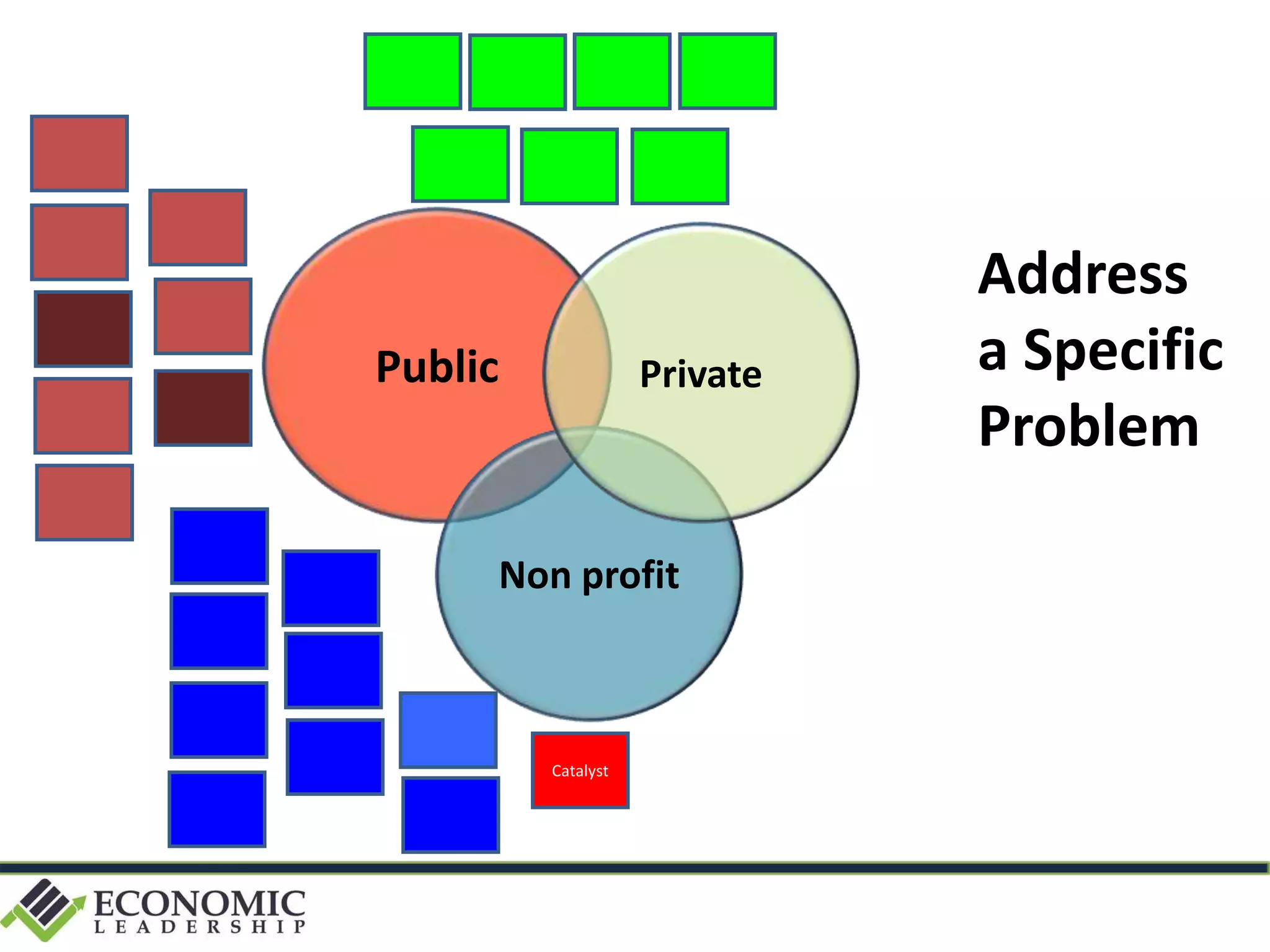
Public
Non profit
Private
Catalyst
Address
a Specific
Problem
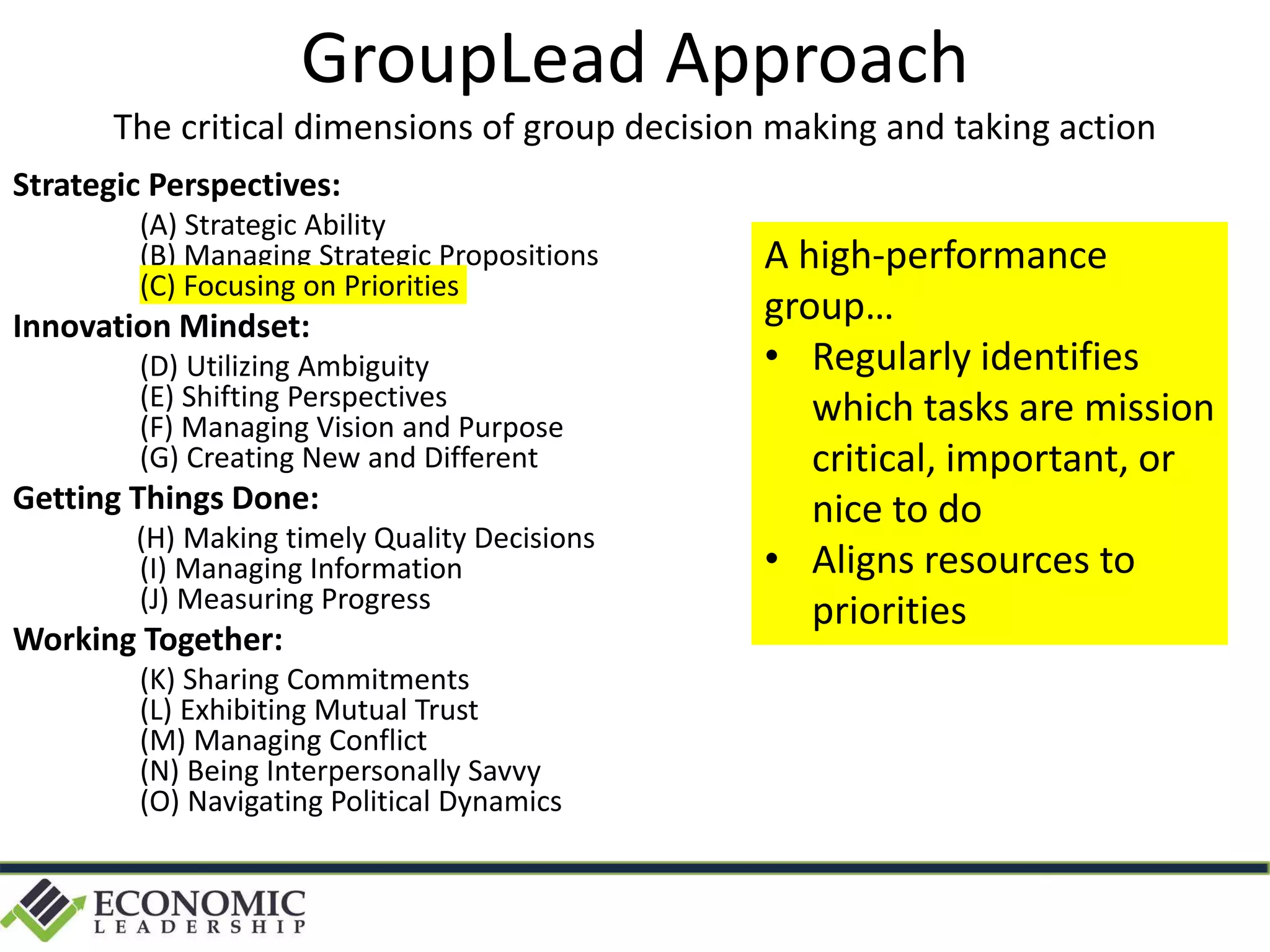
Strategic Perspectives:
(A) Strategic Ability
(B) Managing Strategic Propositions
(C) Focusing on Priorities
Innovation Mindset:
(D) Utilizing Ambiguity
(E) Shifting Perspectives
(F) Managing Vision and Purpose
(G) Creating New and Different
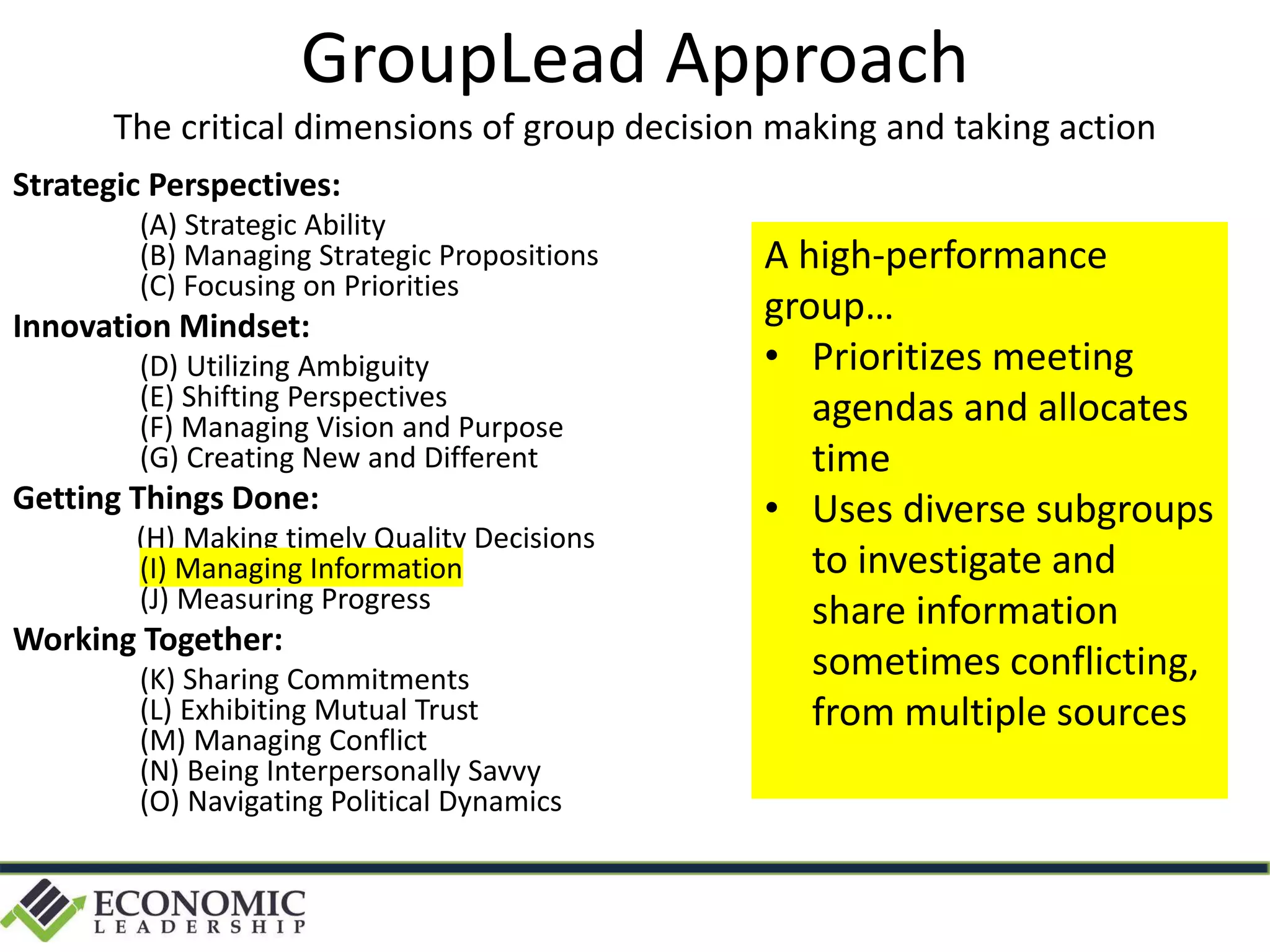
Getting Things Done:
(H) Making timely Quality Decisions
(I) Managing Information
(J) Measuring Progress
Working Together:
(K) Sharing Commitments
(L) Exhibiting Mutual Trust
(M) Managing Conflict
(N) Being Interpersonally Savvy
(O) Navigating Political Dynamics
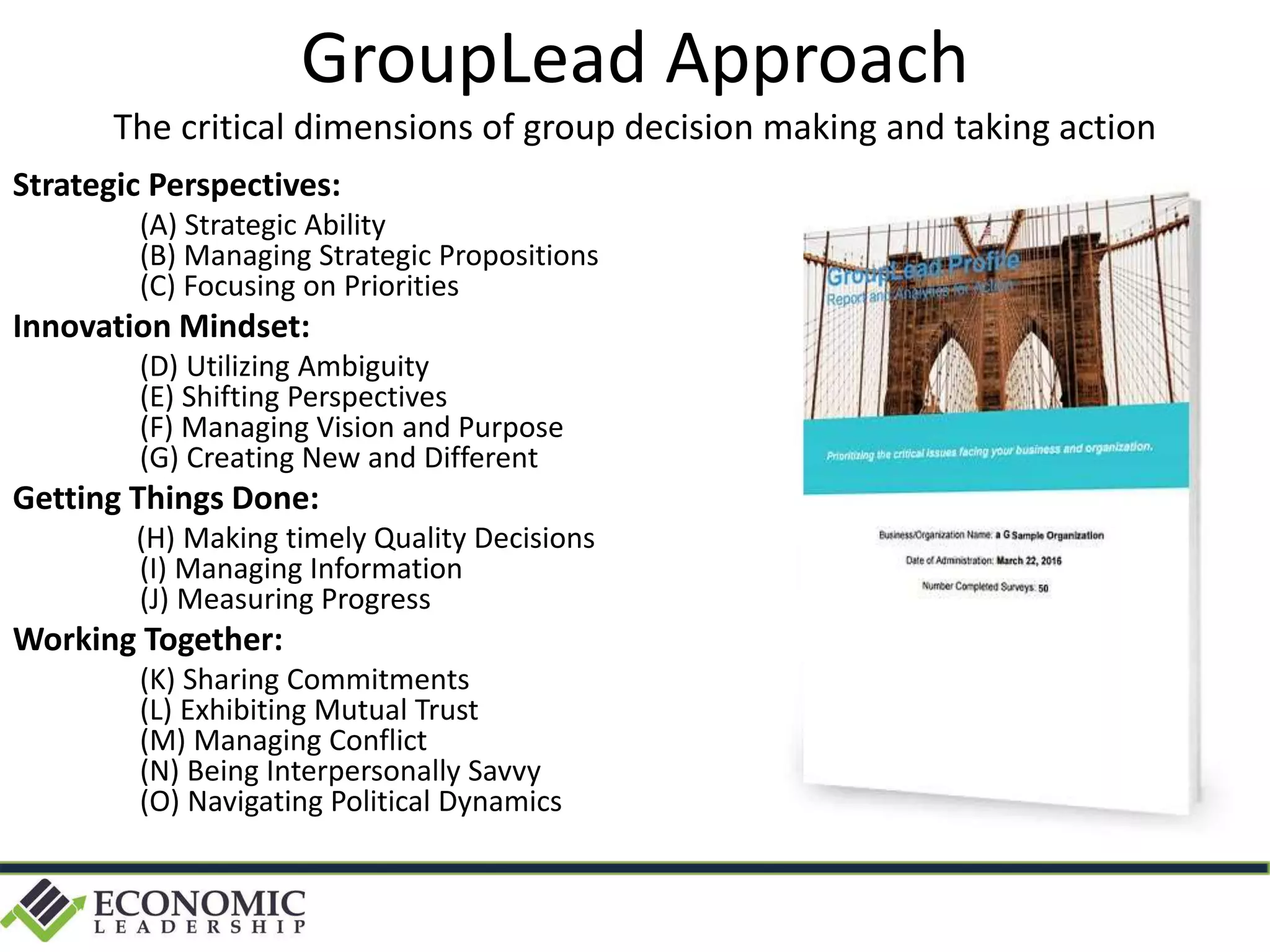
GroupLead Approach
The critical dimensions of group decision making and taking action
Strategic Perspectives:
(A) Strategic Ability
(B) Managing Strategic Propositions
(C) Focusing on Priorities
Innovation Mindset:
(D) Utilizing Ambiguity
(E) Shifting Perspectives
(F) Managing Vision and Purpose
(G) Creating New and Different
Getting Things Done:
(H) Making timely Quality Decisions
(I) Managing Information
(J) Measuring Progress
Working Together:
(K) Sharing Commitments
(L) Exhibiting Mutual Trust
(M) Managing Conflict
(N) Being Interpersonally Savvy
(O) Navigating Political Dynamics
GroupLead Approach
The critical dimensions of group decision making and taking action
Strategic Perspectives:
(A) Strategic Ability
(B) Managing Strategic Propositions
(C) Focusing on Priorities
Innovation Mindset:
(D) Utilizing Ambiguity
(E) Shifting Perspectives
(F) Managing Vision and Purpose
(G) Creating New and Different
Getting Things Done:
(H) Making timely Quality Decisions
(I) Managing Information
(J) Measuring Progress
Working Together:
(K) Sharing Commitments
(L) Exhibiting Mutual Trust
(M) Managing Conflict
(N) Being Interpersonally Savvy
(O) Navigating Political Dynamics
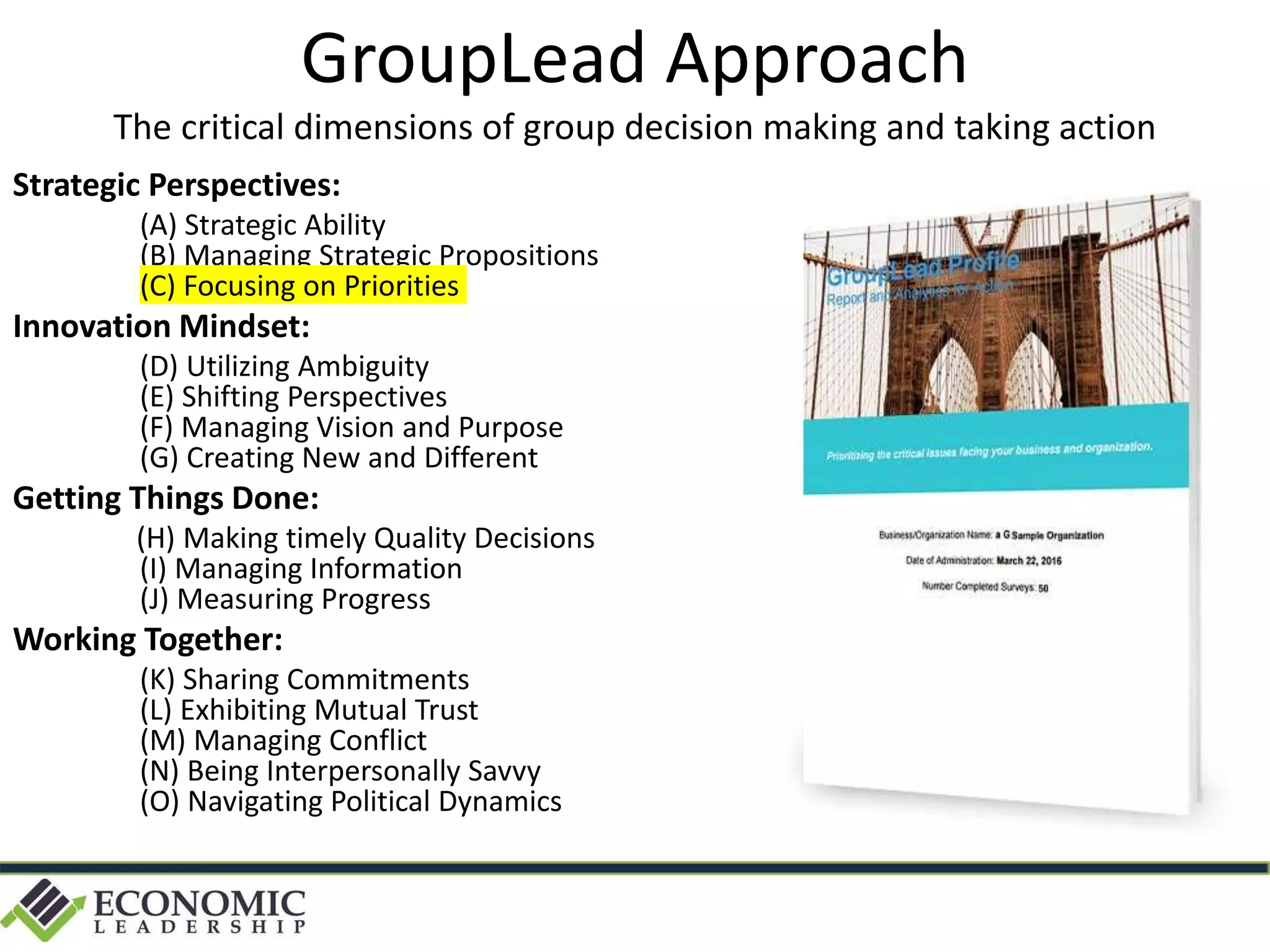
GroupLead Approach
The critical dimensions of group decision making and taking action
A high-performance
group…
• Regularly identifies
which tasks are mission
critical, important, or
nice to do
• Aligns resources to
priorities
Strategic Perspectives:
(A) Strategic Ability
(B) Managing Strategic Propositions
(C) Focusing on Priorities
Innovation Mindset:
(D) Utilizing Ambiguity
(E) Shifting Perspectives
(F) Managing Vision and Purpose
(G) Creating New and Different
Getting Things Done:
(H) Making timely Quality Decisions
(I) Managing Information
(J) Measuring Progress
Working Together:
(K) Sharing Commitments
(L) Exhibiting Mutual Trust
(M) Managing Conflict
(N) Being Interpersonally Savvy
(O) Navigating Political Dynamics
GroupLead Approach
The critical dimensions of group decision making and taking action
A high-performance
group…
• Prioritizes meeting
agendas and allocates
time
• Uses diverse subgroups
to investigate and
share information
sometimes conflicting,
from multiple sources
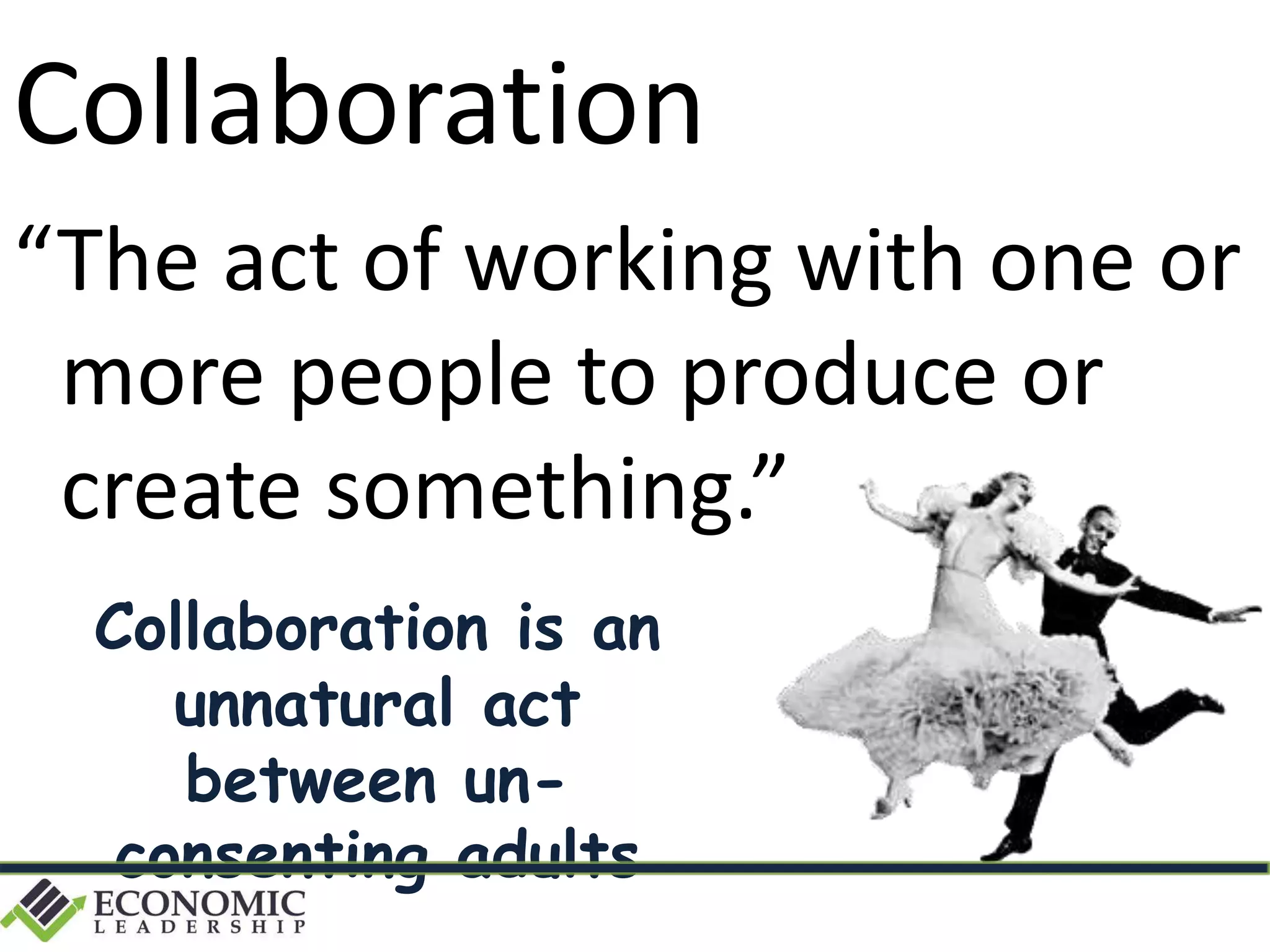
Collaboration
“The act of working with one or
more people to produce or
create something.”
Collaboration is an
unnatural act
between un-
consenting adults
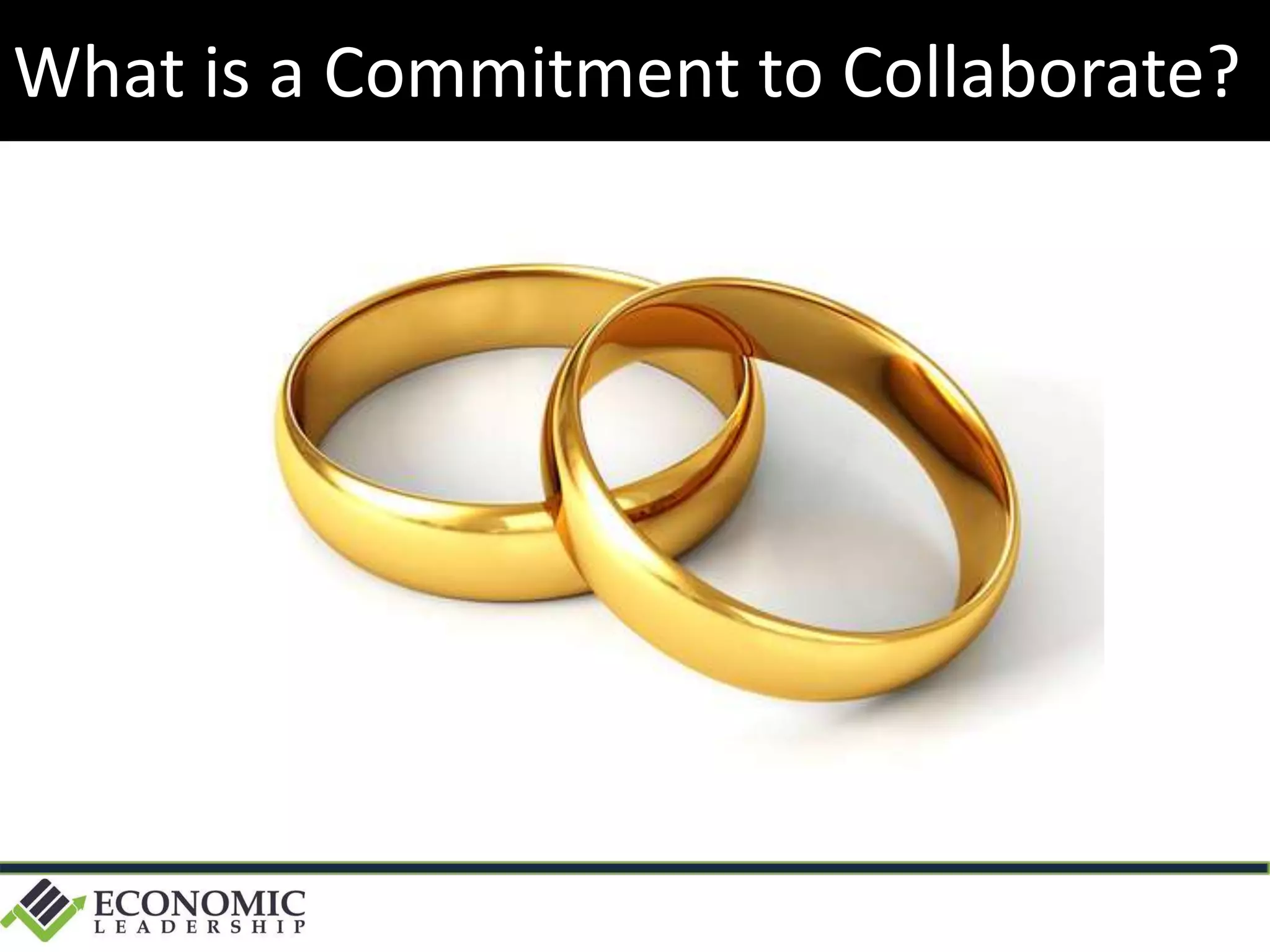
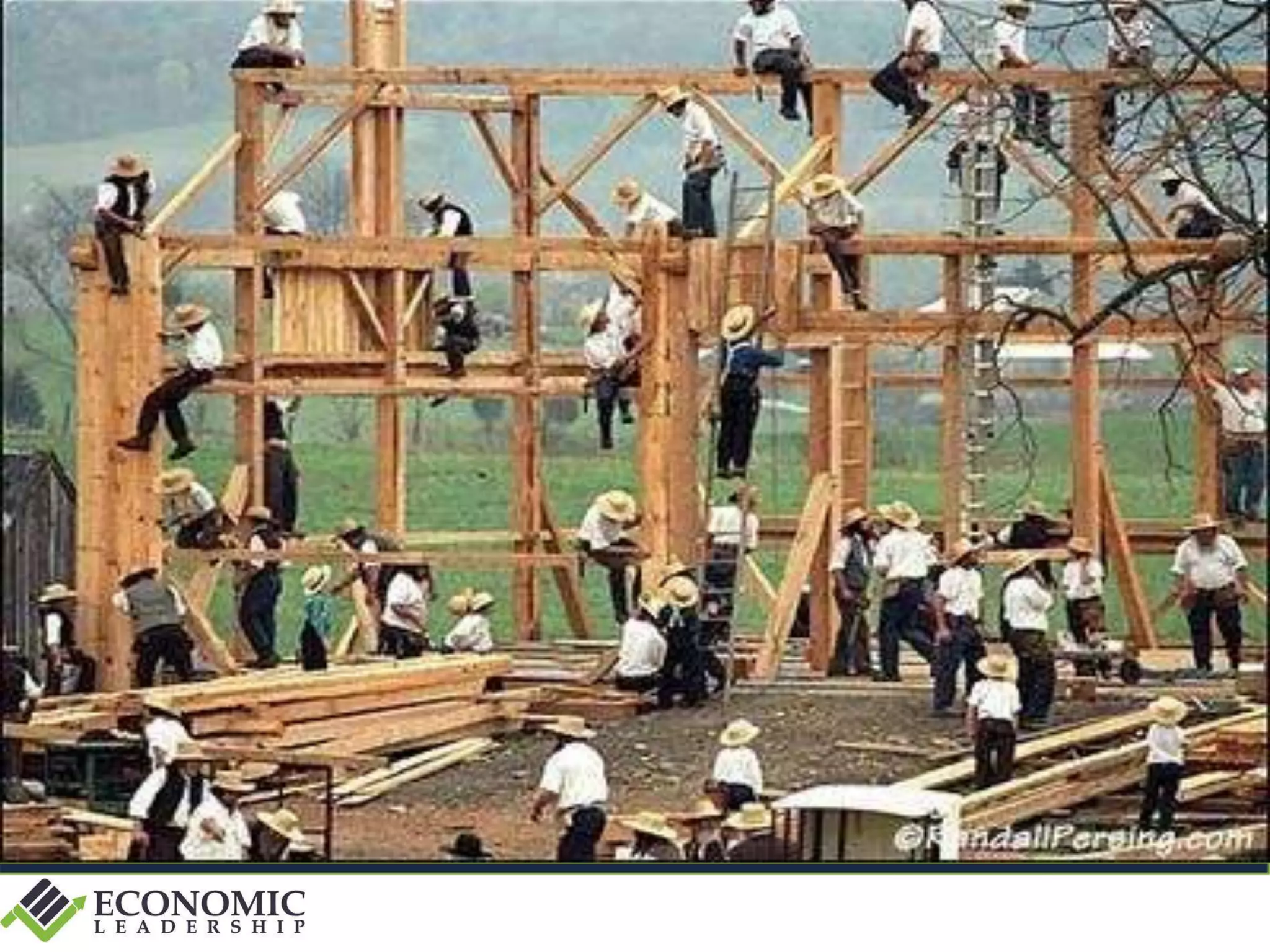
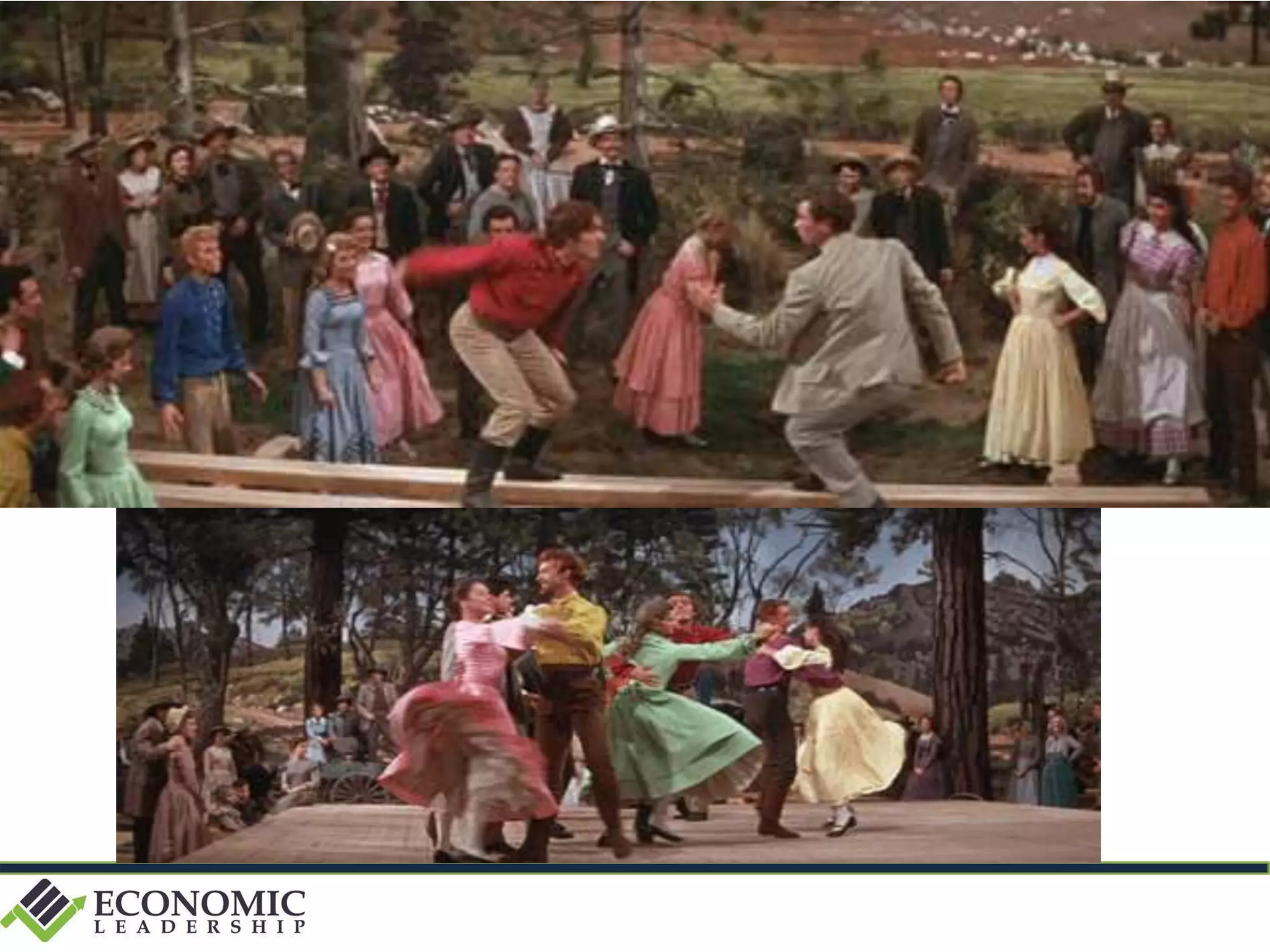
What is a Commitment to Collaborate?
Evolution Of Groups
Shared Vision & “Plan”
Common Information & Language
Shared Specific Tasks
Familiarity
Personal Connections
Action & Trust
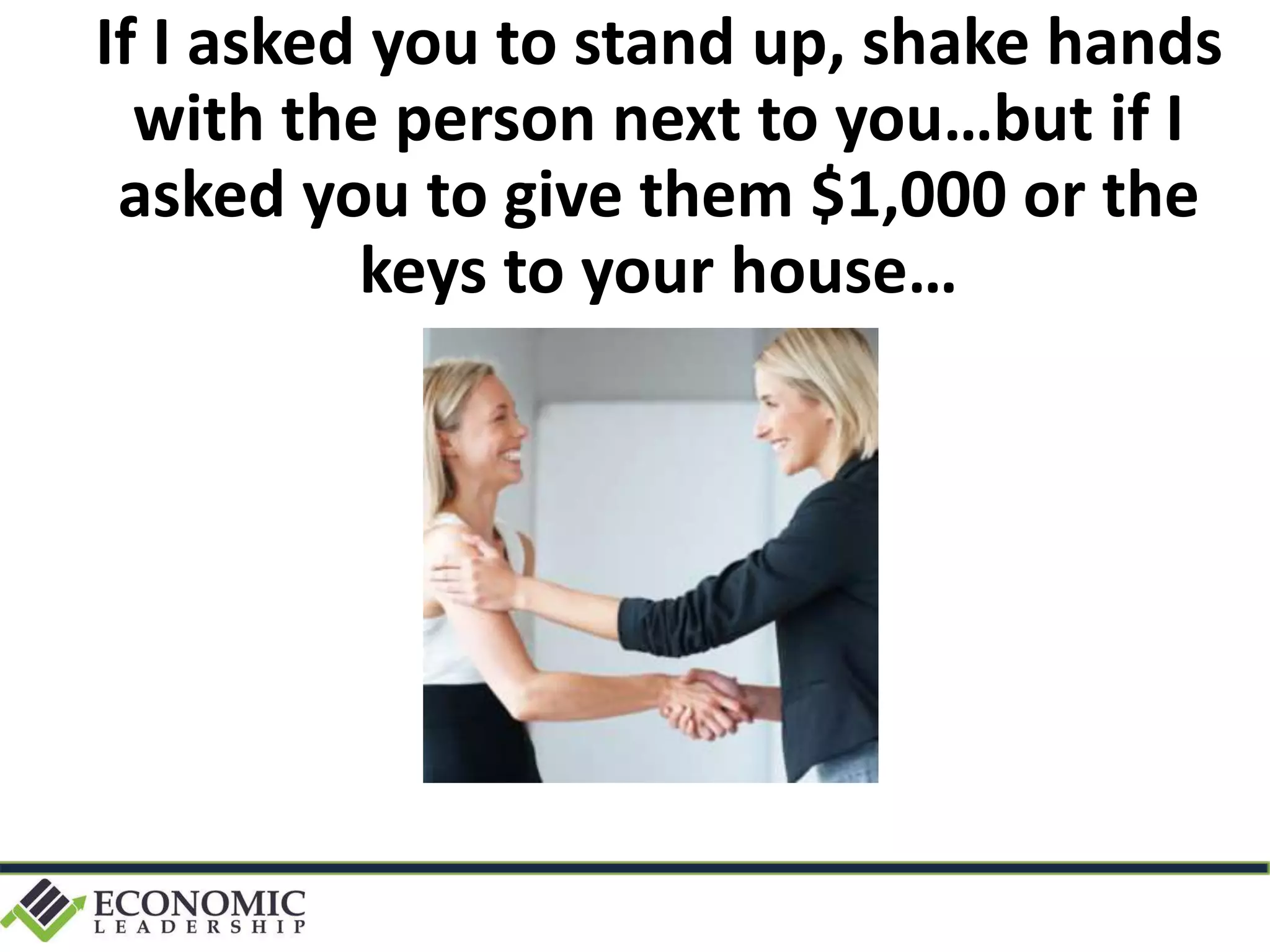
If I asked you to stand up, shake hands
with the person next to you…but if I
asked you to give them $1,000 or the
keys to your house…
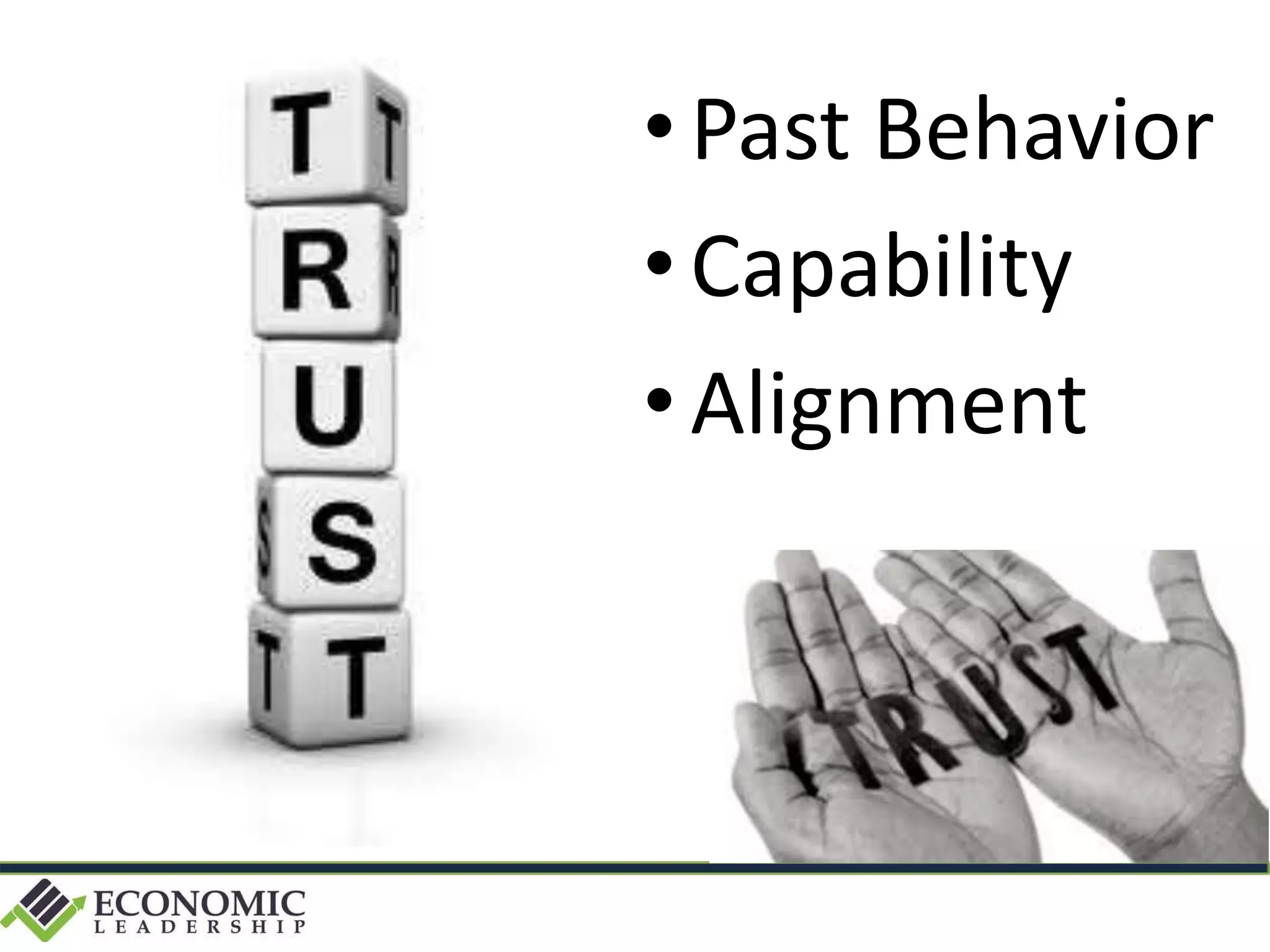
•Past Behavior
•Capability
•Alignment
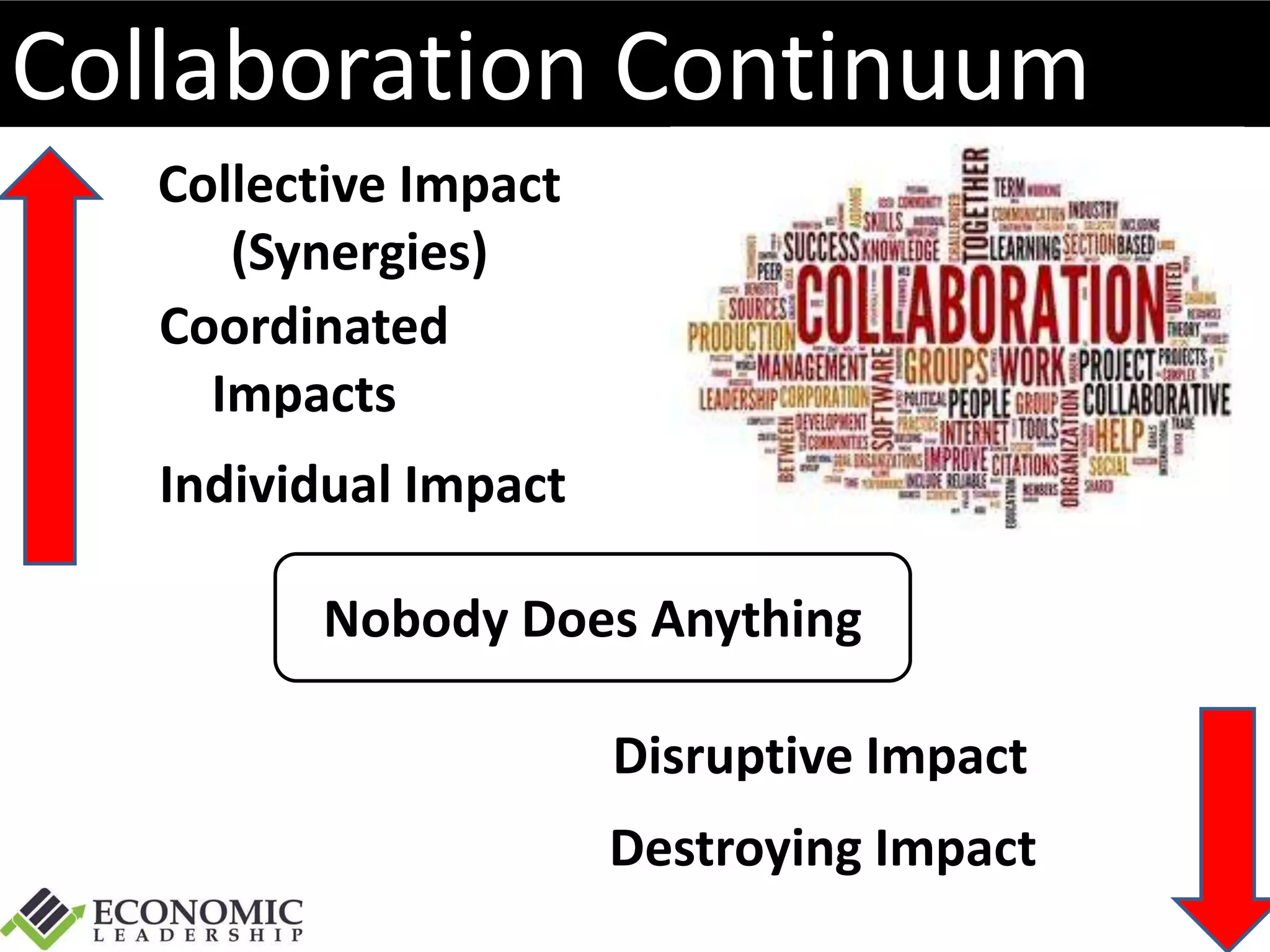
Collaboration Continuum
Nobody Does Anything
Collective Impact
(Synergies)
Coordinated
Impacts
Individual Impact
Disruptive Impact
Destroying Impact
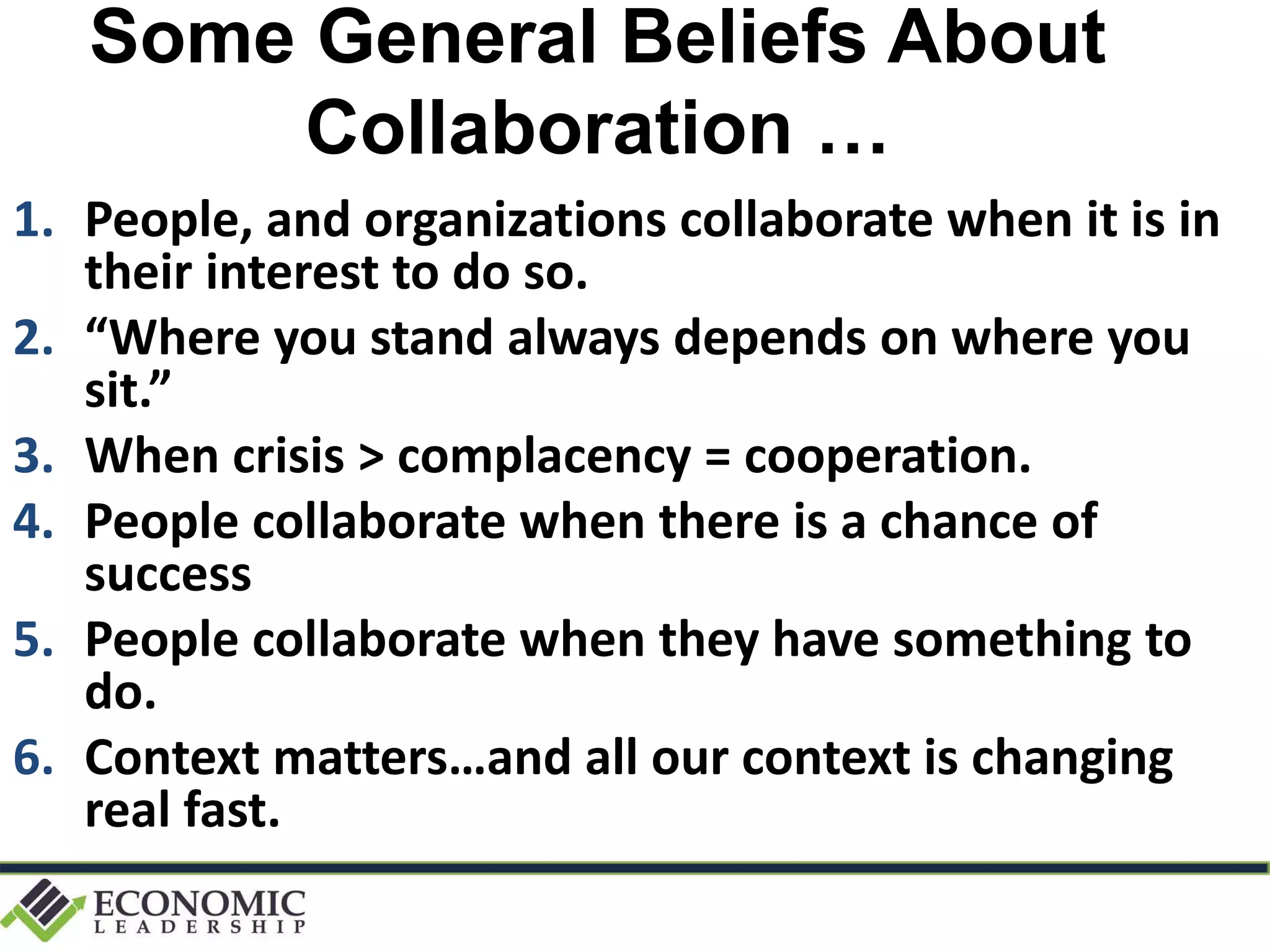
Some General Beliefs About
Collaboration …
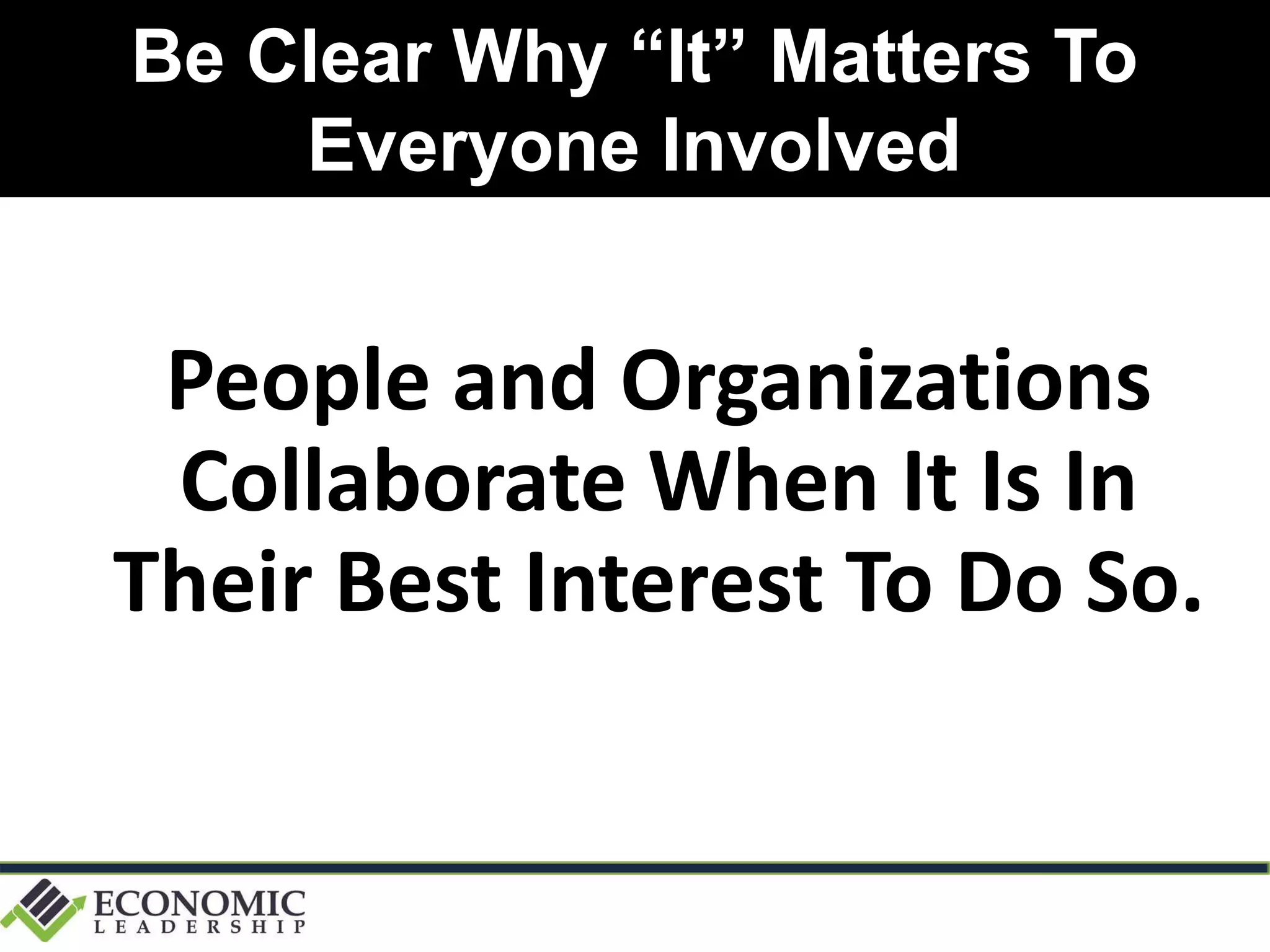
1. People, and organizations collaborate when it is in
their interest to do so.
2. “Where you stand always depends on where you
sit.”
3. When crisis > complacency = cooperation.
4. People collaborate when there is a chance of
success
5. People collaborate when they have something to
do.
6. Context matters…and all our context is changing
real fast.
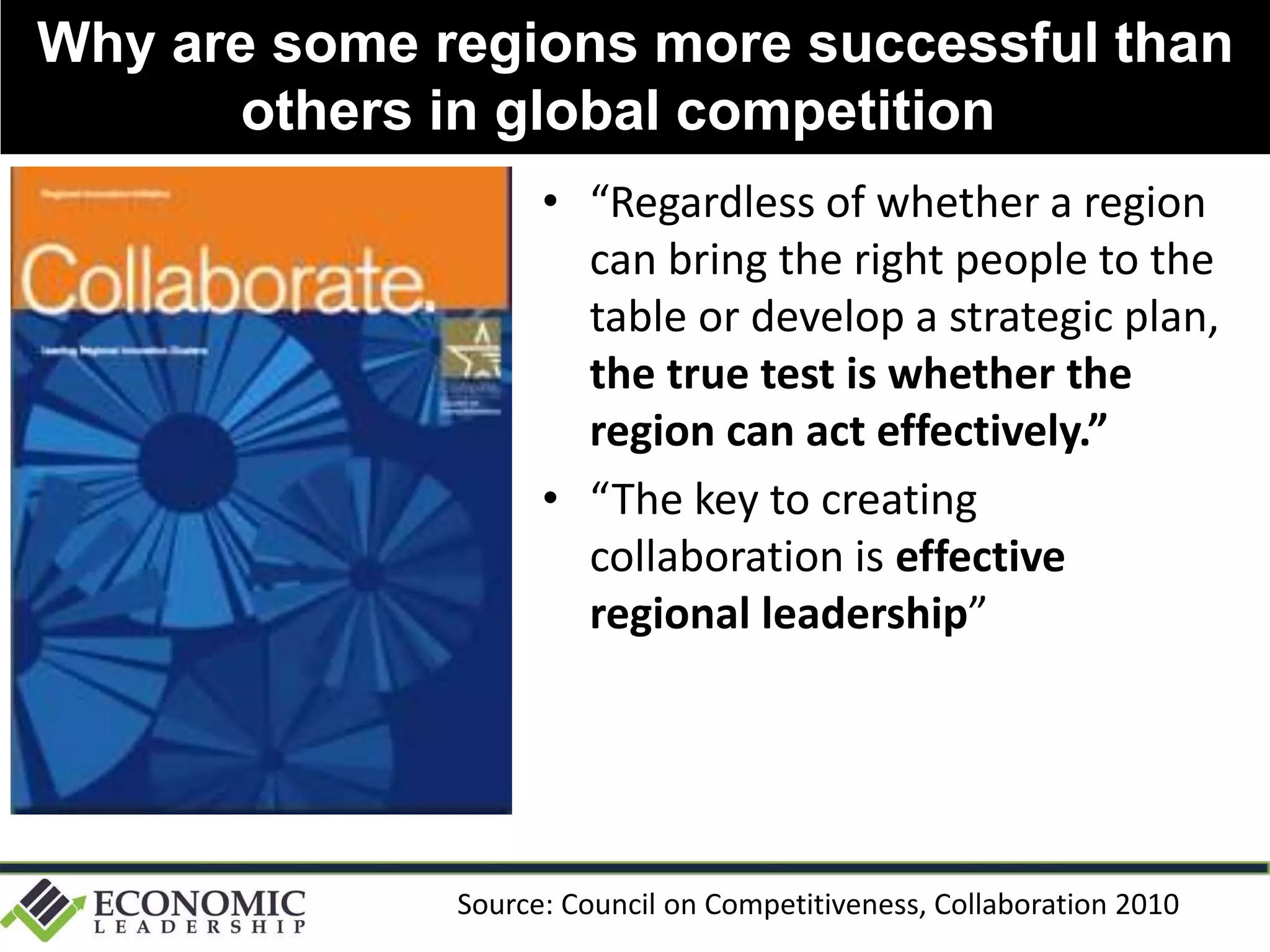
Why are some regions more successful than
others in global competition?
• “Regardless of whether a region
can bring the right people to the
table or develop a strategic plan,
the true test is whether the
region can act effectively.”
• “The key to creating
collaboration is effective
regional leadership”
Source: Council on Competitiveness, Collaboration 2010
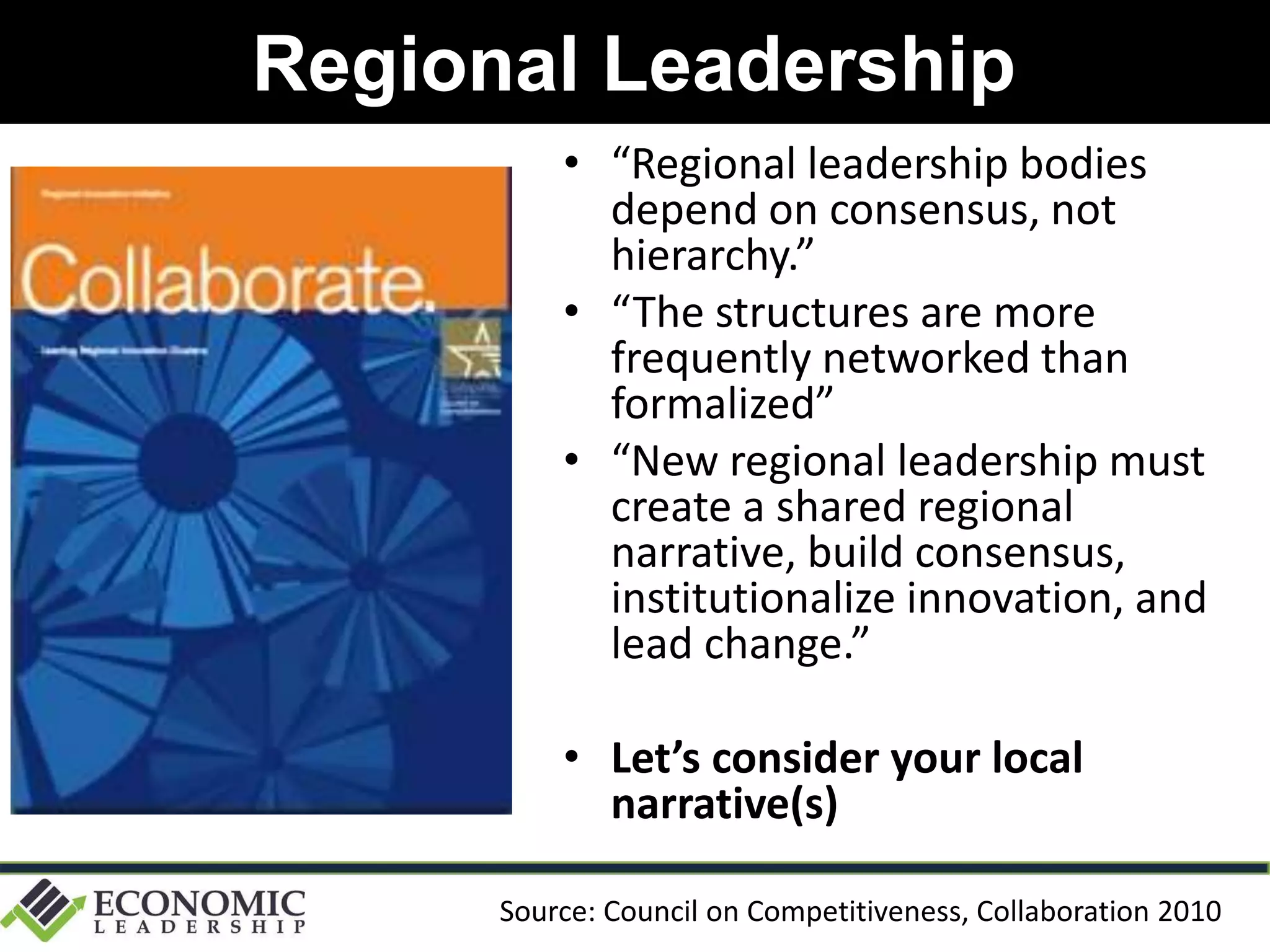
Regional Leadership
• “Regional leadership bodies
depend on consensus, not
hierarchy.”
• “The structures are more
frequently networked than
formalized”
• “New regional leadership must
create a shared regional
narrative, build consensus,
institutionalize innovation, and
lead change.”
• Let’s consider your local
narrative(s)
Source: Council on Competitiveness, Collaboration 2010
Some Thoughts To Help You
Create, and Lead Successful
Regional Collaborations
Create Images and Language
(Messages) That Resonate
Present Position
Future More
Competitive
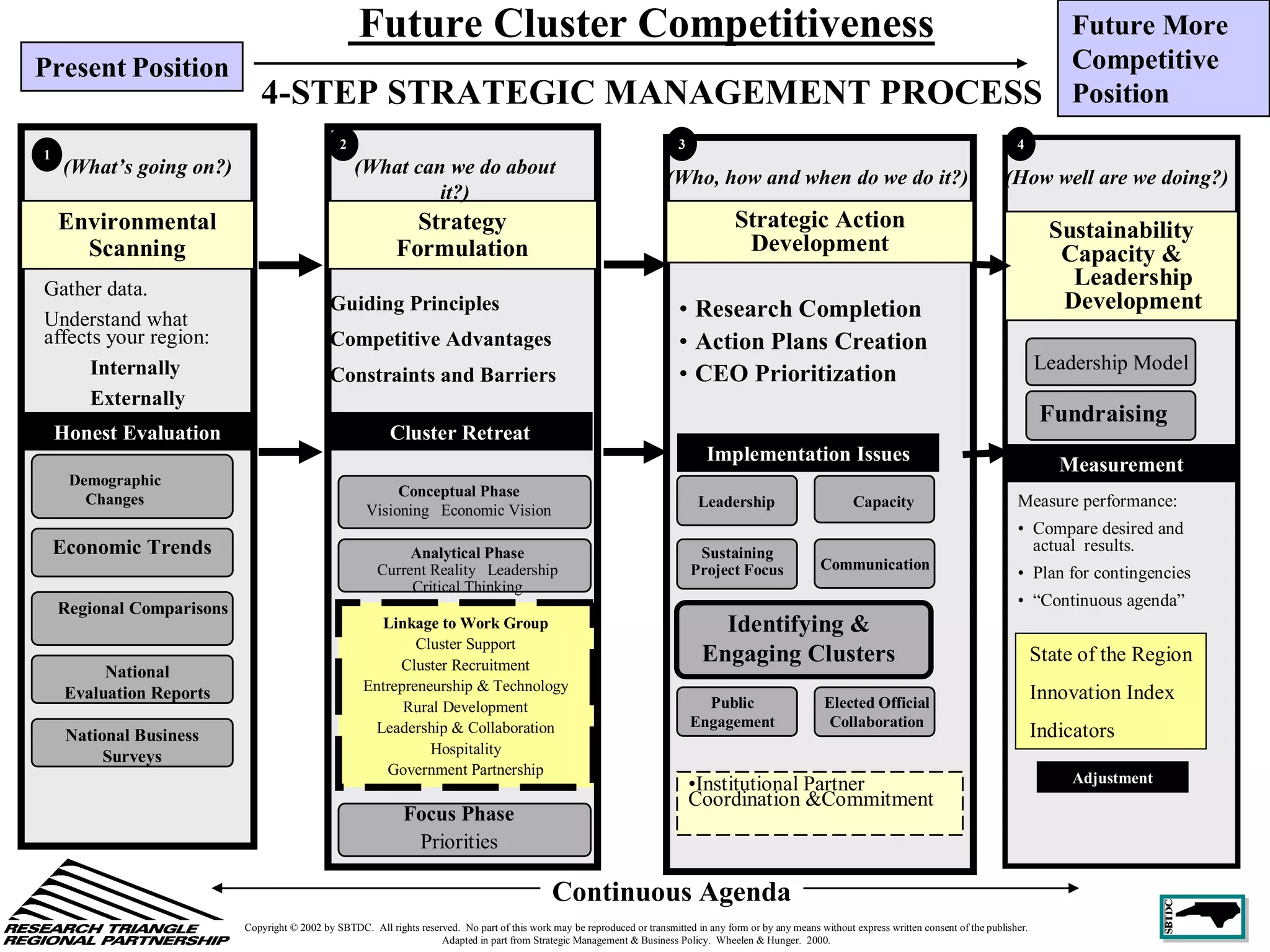
Position4-STEP STRATEGIC MANAGEMENT PROCESS
Strategy
Formulation
2
Guiding Principles
Competitive Advantages
Constraints and Barriers
Conceptual Phase
Visioning Economic Vision
Future Cluster Competitiveness
Environmental
Scanning
1
Gather data.
Understand what
affects your region:
Internally
Externally
Sustainability
Capacity &
Leadership
Development
4
Measure performance:
• Compare desired and
actual results.
• Plan for contingencies
• “Continuous agenda”
Leadership Model
Strategic Action
Development
3
• Research Completion
• Action Plans Creation
• CEO Prioritization
Leadership
Sustaining
Project Focus
Continuous Agenda
Communication
Identifying &
Engaging Clusters
Capacity
Public
Engagement
Elected Official
Collaboration
Adjustment
Linkage to Work Group
Cluster Support
Cluster Recruitment
Entrepreneurship & Technology
Rural Development
Leadership & Collaboration
Hospitality
Government Partnership
Implementation Issues
Cluster RetreatHonest Evaluation
Measurement
Copyright © 2002 by SBTDC. All rights reserved. No part of this work may be reproduced or transmitted in any form or by any means without express written consent of the publisher.
Adapted in part from Strategic Management & Business Policy. Wheelen & Hunger. 2000.
Analytical Phase
Current Reality Leadership
Critical Thinking
Focus Phase
Priorities
(What’s going on?) (What can we do about
it?)
(Who, how and when do we do it?) (How well are we doing?)
National
Evaluation Reports
National Business
Surveys
Regional Comparisons
Demographic
Changes
Economic Trends
•Institutional Partner
Coordination &Commitment
Fundraising
State of the Region
Innovation Index
Indicators
The Region and its Environment
•Economy-Education-Political-Health
Research
•Demographic Changes over Time
•Economic Trends/Current Situation
•Regional Comparisons
•Regional Evaluation Reports
•Regional Business Survey Results
Competitive
Advantages
Constraints &
Barriers
Cluster
Opportunities
Strategic Position (Choices)
•Focus Strategy
•Product Development Strategy
•Market Development Strategy
•Diversification Strategy
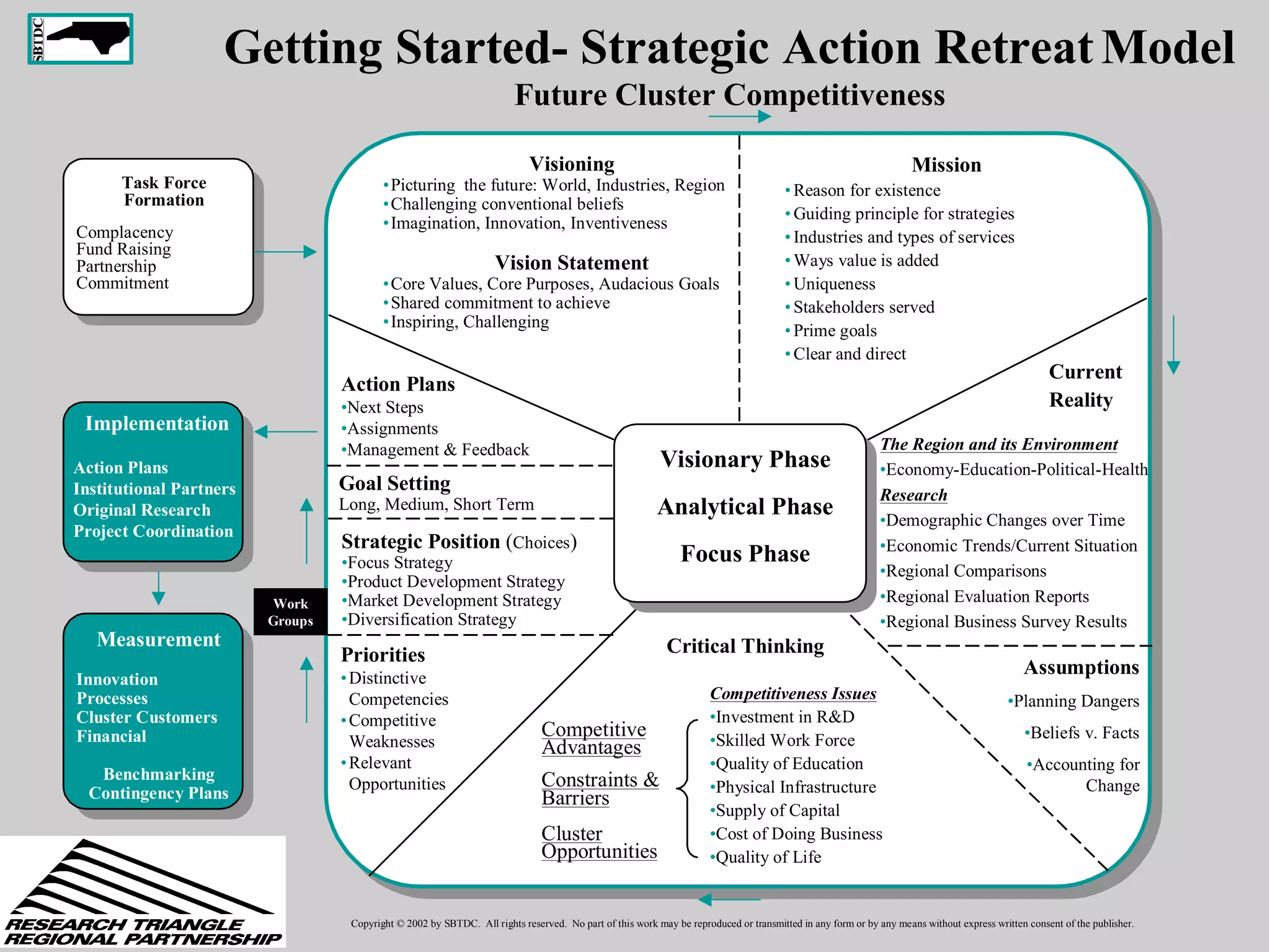
Mission
• Reason for existence
• Guiding principle for strategies
• Industries and types of services
• Ways value is added
• Uniqueness
• Stakeholders served
• Prime goals
• Clear and direct
Visioning
•Picturing the future: World, Industries, Region
•Challenging conventional beliefs
•Imagination, Innovation, Inventiveness
Vision Statement
•Core Values, Core Purposes, Audacious Goals
•Shared commitment to achieve
•Inspiring, Challenging
Priorities
•Distinctive
Competencies
•Competitive
Weaknesses
•Relevant
Opportunities
Action Plans
•Next Steps
•Assignments
•Management & Feedback
Visionary Phase
Analytical Phase
Focus Phase
Task Force
Formation
Complacency
Fund Raising
Partnership
Commitment
Implementation
Action Plans
Institutional Partners
Original Research
Project Coordination
Competitiveness Issues
•Investment in R&D
•Skilled Work Force
•Quality of Education
•Physical Infrastructure
•Supply of Capital
•Cost of Doing Business
•Quality of Life
Critical Thinking
Goal Setting
Long, Medium, Short Term
Current
Reality
Copyright © 2002 by SBTDC. All rights reserved. No part of this work may be reproduced or transmitted in any form or by any means without express written consent of the publisher.
Assumptions
•Planning Dangers
•Beliefs v. Facts
•Accounting for
Change
Measurement
Innovation
Processes
Cluster Customers
Financial
Benchmarking
Contingency Plans
Getting Started- Strategic Action Retreat Model
Future Cluster Competitiveness
Work
Groups
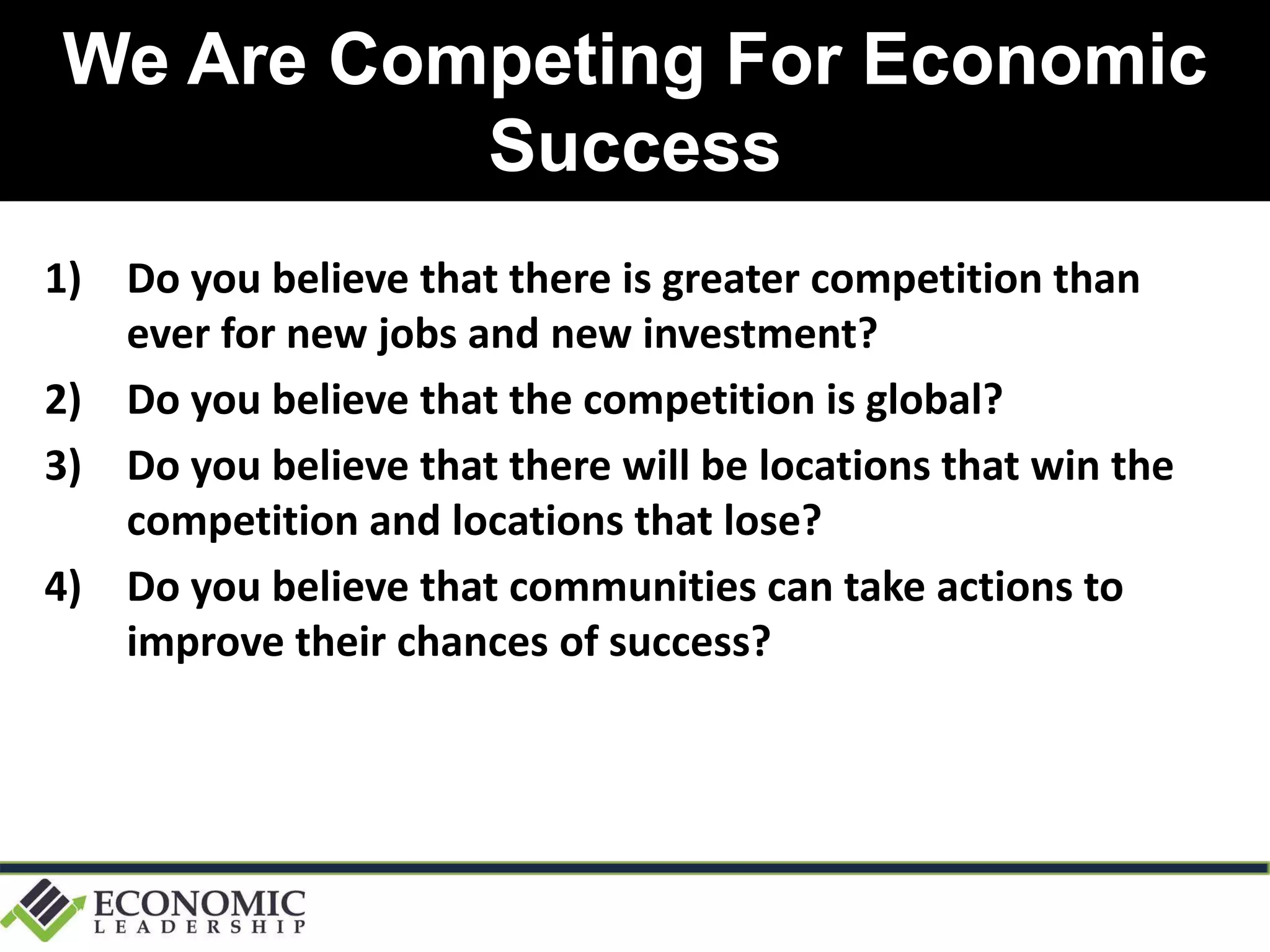
We Are Competing For Economic
Success
1) Do you believe that there is greater competition than
ever for new jobs and new investment?
2) Do you believe that the competition is global?
3) Do you believe that there will be locations that win the
competition and locations that lose?
4) Do you believe that communities can take actions to
improve their chances of success?
Be Clear Why “It” Matters To
Everyone Involved
People and Organizations
Collaborate When It Is In
Their Best Interest To Do So.
Dr. Michael Porter, 2002
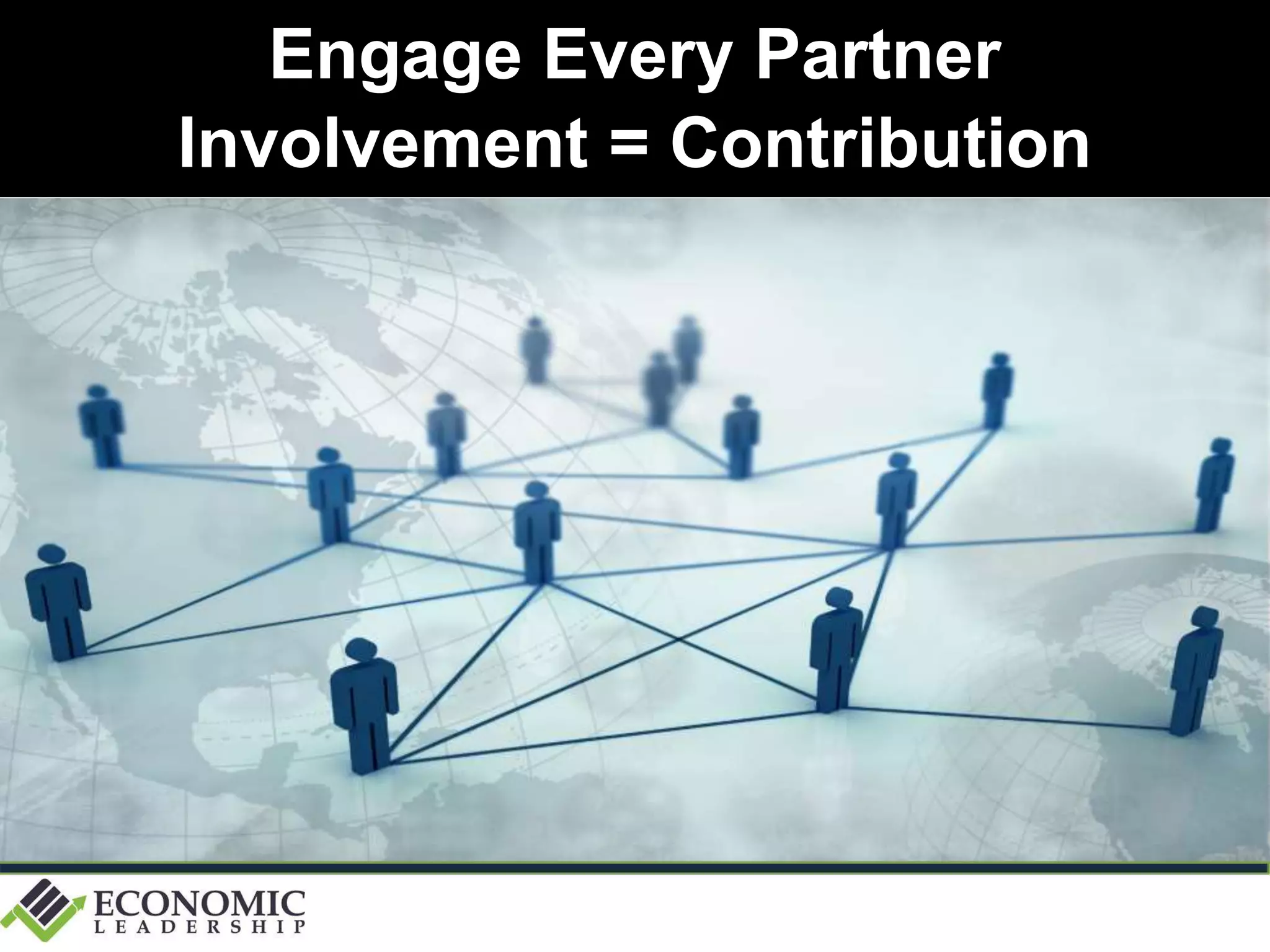
Engage Every Partner
Involvement = Contribution
“What makes a plan
capable of producing
results is the commitment
of key people to work on
specific tasks.”
Peter Drucker
It Takes “Capacity” to Hold Groups
Together
“Be the Collaborative Capacity”
 Glue and Grease - The capacity to bring people and
groups together, keep minutes, make coffee, set
agendas, make the hard calls, smooth the rough
spots
 No Cause, No Credit, No Cash
 …and a little “choice architecture” can help
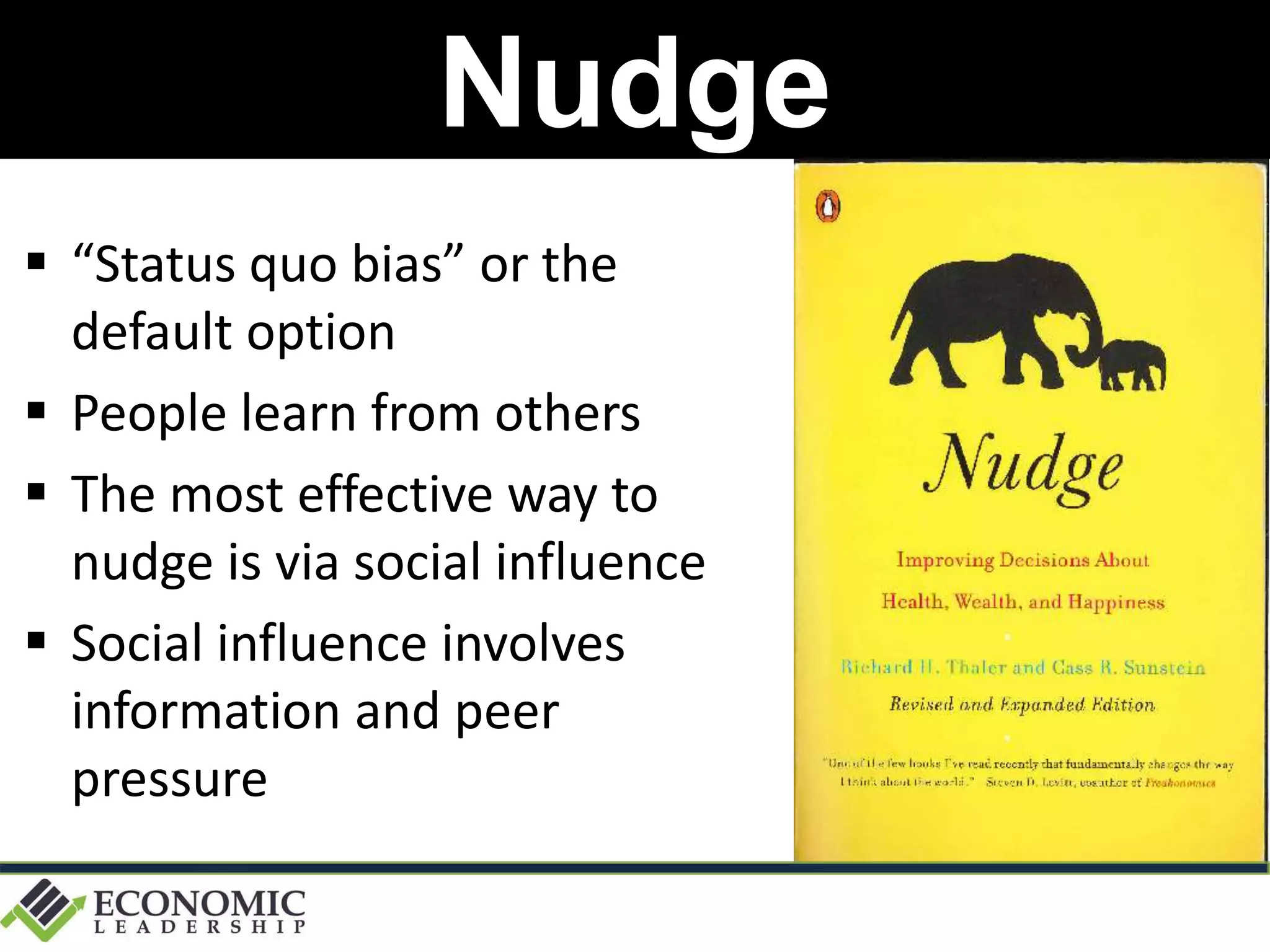
Nudge
 “Status quo bias” or the
default option
 People learn from others
 The most effective way to
nudge is via social influence
 Social influence involves
information and peer
pressure
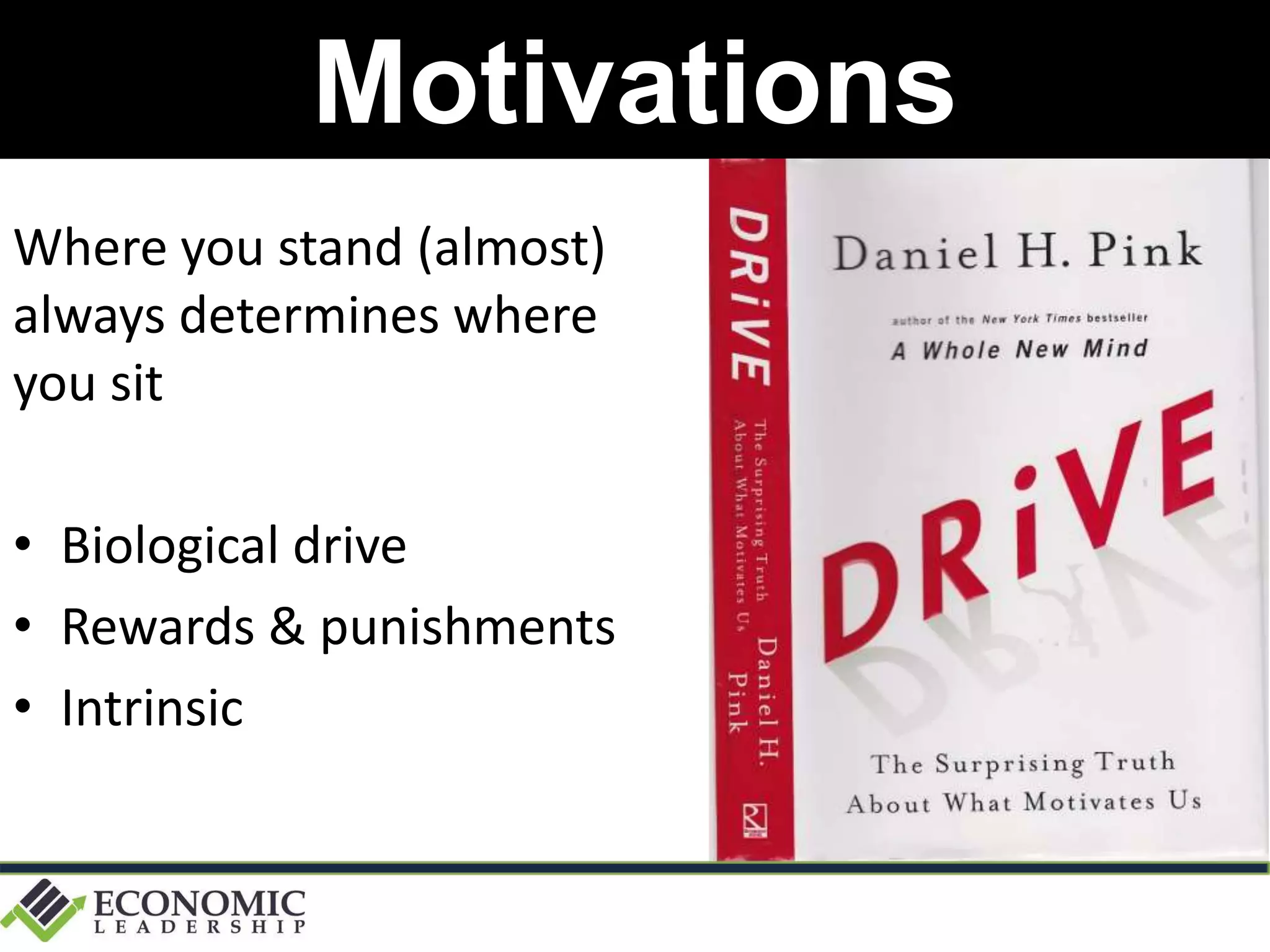
Motivations
Where you stand (almost)
always determines where
you sit
• Biological drive
• Rewards & punishments
• Intrinsic
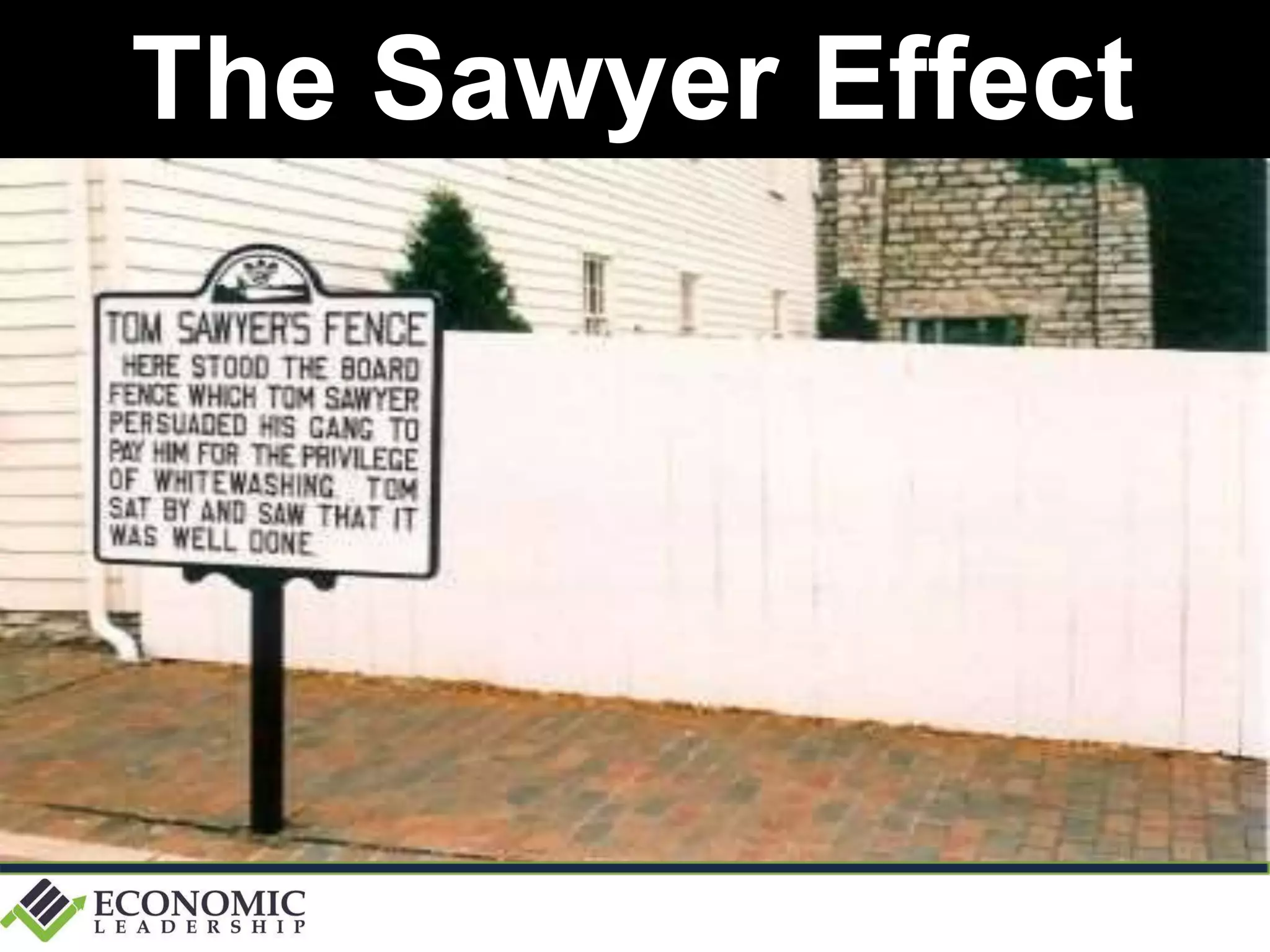
The Sawyer Effect
• Why would people do
what you want them to
do?
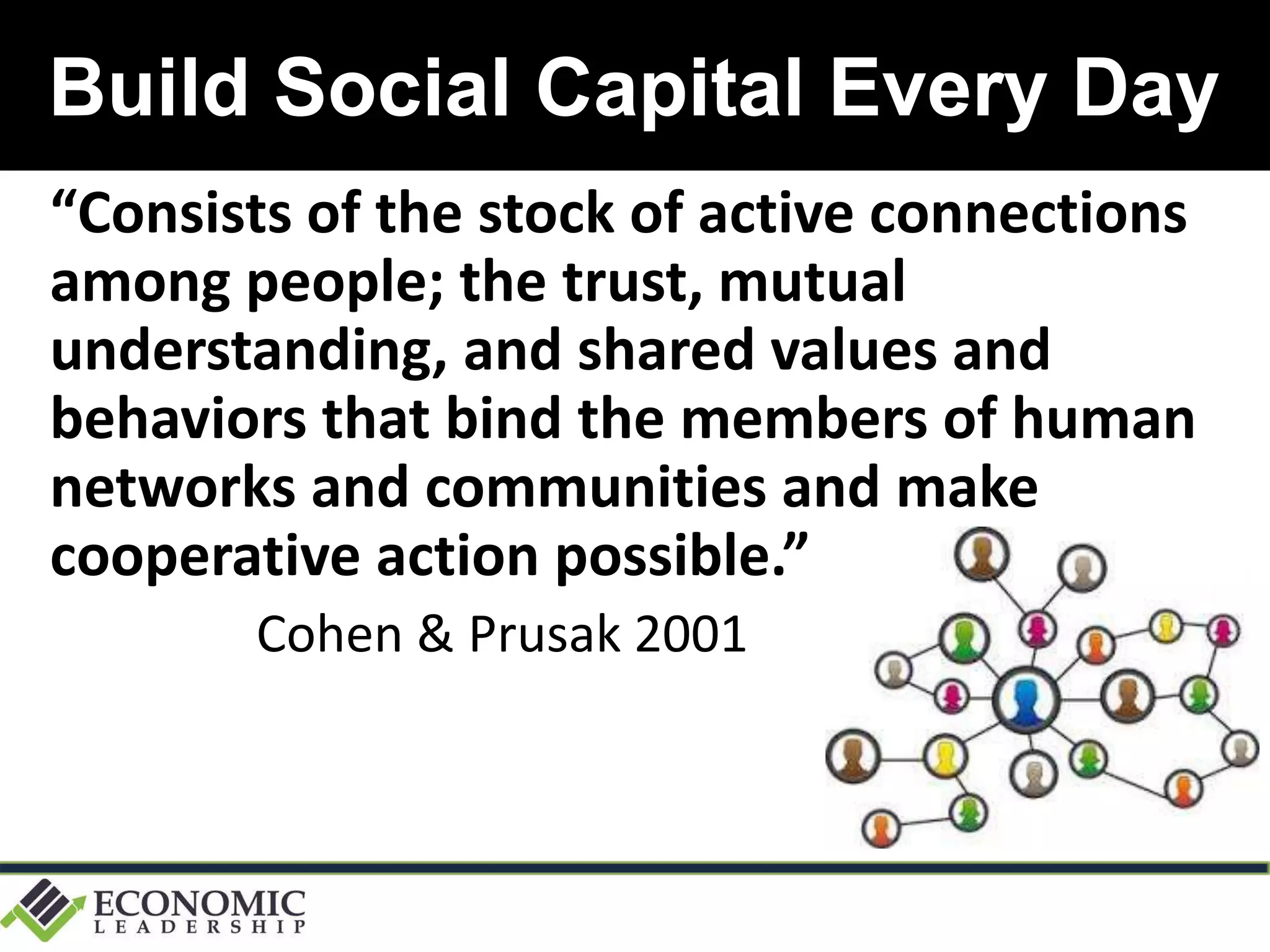
Build Social Capital Every Day
“Consists of the stock of active connections
among people; the trust, mutual
understanding, and shared values and
behaviors that bind the members of human
networks and communities and make
cooperative action possible.”
Cohen & Prusak 2001
People Receive Information Different
Ways
Old School
New Media
Social Networks
Ask them, often
Tomorrow’s Economic Leaders
“ENTJ”
• "Nothing will work unless you do." -Maya
Angelou
• "I alone cannot change the world, but I can
cast a stone across the water to create many
ripples." -Mother Teresa
• "The most difficult thing is the decision to act,
the rest is merely tenacity." -Amelia Earhart
Leadership Quotes
Thoughts or
Questions?
Follow on twitter
@tedabernathy
or
LinkedIn Ted Abernathy
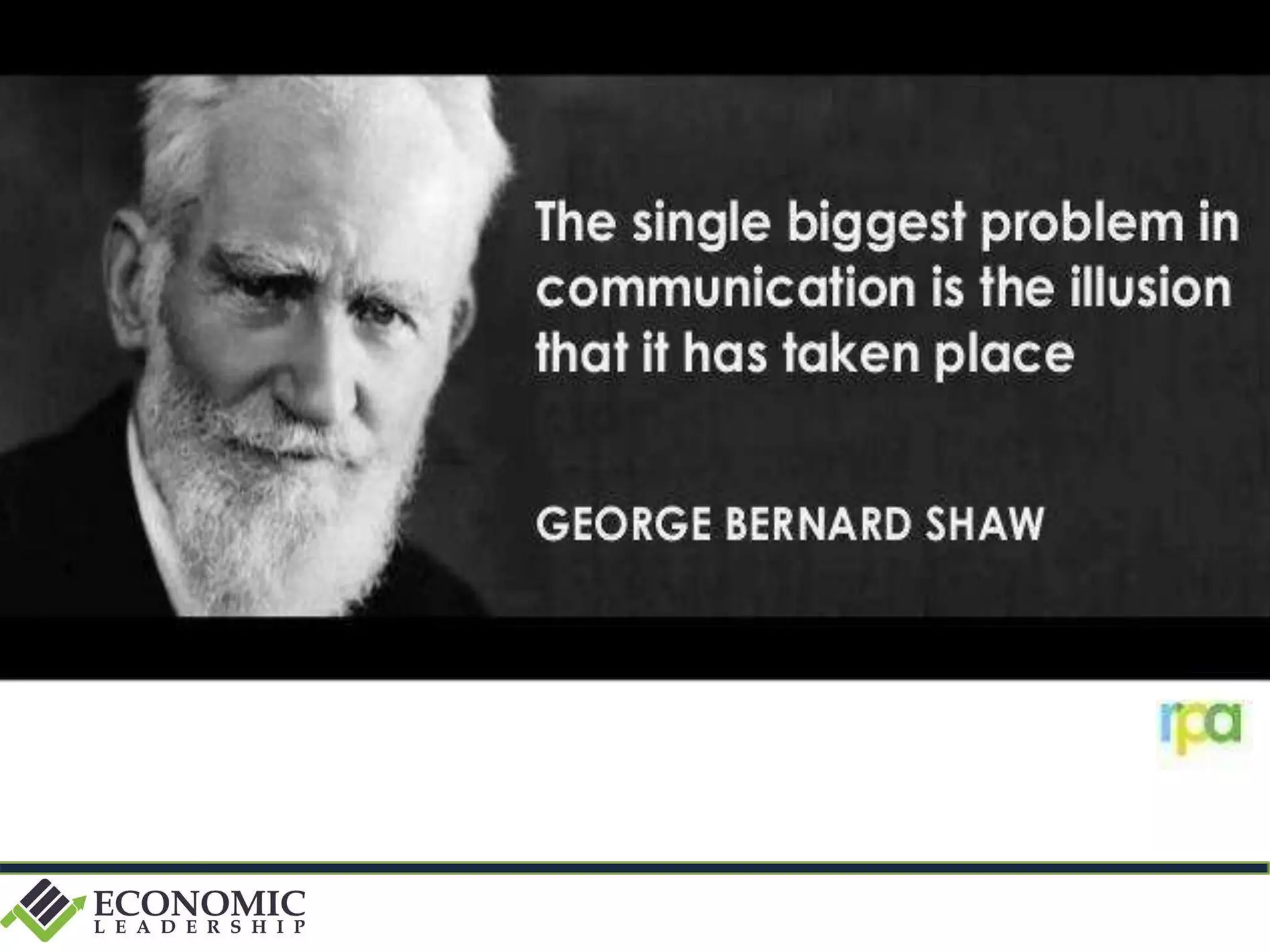
“ Leadership and learning are
indispensable to each other.”
John
ted@econleadership.com
Leadership Development for Getting Things Done

Leadership Development for Getting Things Done

  • 1.
    Leadership Development forGetting Things Done
  • 2.
    “Too often we enjoythe comfort of opinion without the discomfort of thought.” John F. Kennedy“ Leadership and learning are indispensable to each other.”
  • 4.
    Leadership • Think ofone word that describes a leader • Think of one story where you experienced real leadership • Think of one time where you think a person, a leader, failed to lead, in a huge way.
  • 5.
    Why is Beinga Leader So Hard in 2017?
  • 6.
    Why is Beinga Leader So Hard in 2017?
  • 7.
    Fear the Future-Things Stink
  • 8.
    Fragmentation of CulturalReference Points Bestselling Books
  • 9.
    Fragmentation of CulturalReference Points Top Movies • Arrival • Fences • Hacksaw Ridge • Hell or High Water • Hidden Figures • La La Land • Lion • Manchester By the Sea • Moonlight
  • 10.
    Fragmentation of CulturalReference Points Top Albums Sales 2016 1) Adele 2) Drake 3) Justin Bieber 4) Beyoncé 5) Rihanna 6) Twenty One Pilots
  • 11.
    Fragmentation of CulturalReference Points
  • 12.
    The Matrix Paradox Wewant and need to know more and more, but it is so hard. We want an easier way.
  • 13.
    Now think allthe way back to 2003… LinkedIn (2003) Facebook (2004) YouTube (2005) Twitter (2006) IPhone (2007) Mobile apps Mobile maps Fitbit (2007) Spotify (2007) Dropbox (2007) Airbnb (2008) Hulu (2008) Kickstarter (2009) Facetime (2010) Uber (2009) Pinterest (2010) Tumblr (2010) Snapchat (2011) Udacity (2012) Snapchat (2012)
  • 14.
  • 15.
    “Conundrums” Complex or perplexing trendsthat generally have no clear solution. Trendspotting
  • 16.
    Trends That Are ShapingOur Future Technology Urbanization Demography
  • 17.
  • 20.
    The Next BigThings-Technological
  • 22.
  • 23.
    The Slowing GlobalPopulation Growth Source: The United Nations Data
  • 24.
  • 25.
    The Changing Faceof America 1960-2060 85 83 80 76 69 64 60 55 51 47 43 10 11 12 12 12 12 13 13 13 13 13 4 5 6 9 13 16 19 22 25 28 31 1 1 2 4 5 5 6 6 7 8 8 0 0 1 1 1 3 2 4 4 5 6 0% 10% 20% 30% 40% 50% 60% 70% 80% 90% 100% 1960 1970 1980 1990 2000 2010 2020 2030 2040 2050 2060 Other Asian Hispanic Black White Source: The Next America, Paul Taylor
  • 26.
  • 28.
  • 30.
  • 31.
  • 32.
    • We wantsomeone, or some group, we trust, to make sense of all the information we are receiving. • We want leaders to take actions that improves our situations or solves our problems Why Do We Want and Need Leadership?
  • 33.
    My Belief -Great Leaders • Are continuously learning • Have a high tolerance for ambiguity, complexity, and change • Can communicate the narrative • Are made, not born
  • 34.
    • Has highethical and moral standard 67% • Provides goals with loose guideline/direction 59% • Clearly communicates expectations 56% • Has flexibility to change opinions 52% • Is committed to my ongoing training 43% • Communicates often and openly 42% • Is open to new ideas and approaches 39% The Most Important Leadership Competencies 195 Global Leaders Were Asked to rate 74 Qualities Source: HBR Sunnie Giles March 2016
  • 35.
    Competencies Skills and behaviorsrequired for success that can be observed Experiences Assignments or roles that prepare a person for a future job Traits Inclinations, aptitudes, and natural tendencies a person leans toward, including personality traits and intellectual capacity Drivers Values and interests that influence a person’s career path and engagement Leadership Four Dimensions of Leadership and Talent Source: Korn Ferry Leadership Architect
  • 36.
    Why Do WeWant and Need Leadership?  We want someone, we trust, to make sense of all the information we are receiving.  We want someone to take actions that improves our situations or solves our problems Traditional Hierarchical Leadership Grassroots Bottom Up Leadership Action, Success, Problem Solving Someone important or some small group with a vision or resources Someone not important or some small group with a vision or resources Leadership Is Crucial & Models Are Changing
  • 37.
  • 39.
    Strategic Perspectives: (A) StrategicAbility (B) Managing Strategic Propositions (C) Focusing on Priorities Innovation Mindset: (D) Utilizing Ambiguity (E) Shifting Perspectives (F) Managing Vision and Purpose (G) Creating New and Different Getting Things Done: (H) Making timely Quality Decisions (I) Managing Information (J) Measuring Progress Working Together: (K) Sharing Commitments (L) Exhibiting Mutual Trust (M) Managing Conflict (N) Being Interpersonally Savvy (O) Navigating Political Dynamics GroupLead Approach The critical dimensions of group decision making and taking action
  • 40.
    Strategic Perspectives: (A) StrategicAbility (B) Managing Strategic Propositions (C) Focusing on Priorities Innovation Mindset: (D) Utilizing Ambiguity (E) Shifting Perspectives (F) Managing Vision and Purpose (G) Creating New and Different Getting Things Done: (H) Making timely Quality Decisions (I) Managing Information (J) Measuring Progress Working Together: (K) Sharing Commitments (L) Exhibiting Mutual Trust (M) Managing Conflict (N) Being Interpersonally Savvy (O) Navigating Political Dynamics GroupLead Approach The critical dimensions of group decision making and taking action
  • 41.
    Strategic Perspectives: (A) StrategicAbility (B) Managing Strategic Propositions (C) Focusing on Priorities Innovation Mindset: (D) Utilizing Ambiguity (E) Shifting Perspectives (F) Managing Vision and Purpose (G) Creating New and Different Getting Things Done: (H) Making timely Quality Decisions (I) Managing Information (J) Measuring Progress Working Together: (K) Sharing Commitments (L) Exhibiting Mutual Trust (M) Managing Conflict (N) Being Interpersonally Savvy (O) Navigating Political Dynamics GroupLead Approach The critical dimensions of group decision making and taking action A high-performance group… • Regularly identifies which tasks are mission critical, important, or nice to do • Aligns resources to priorities
  • 42.
    Strategic Perspectives: (A) StrategicAbility (B) Managing Strategic Propositions (C) Focusing on Priorities Innovation Mindset: (D) Utilizing Ambiguity (E) Shifting Perspectives (F) Managing Vision and Purpose (G) Creating New and Different Getting Things Done: (H) Making timely Quality Decisions (I) Managing Information (J) Measuring Progress Working Together: (K) Sharing Commitments (L) Exhibiting Mutual Trust (M) Managing Conflict (N) Being Interpersonally Savvy (O) Navigating Political Dynamics GroupLead Approach The critical dimensions of group decision making and taking action A high-performance group… • Prioritizes meeting agendas and allocates time • Uses diverse subgroups to investigate and share information sometimes conflicting, from multiple sources
  • 43.
    Collaboration “The act ofworking with one or more people to produce or create something.” Collaboration is an unnatural act between un- consenting adults
  • 44.
    What is aCommitment to Collaborate?
  • 48.
    Evolution Of Groups SharedVision & “Plan” Common Information & Language Shared Specific Tasks Familiarity Personal Connections Action & Trust
  • 49.
    If I askedyou to stand up, shake hands with the person next to you…but if I asked you to give them $1,000 or the keys to your house…
  • 50.
  • 51.
    Collaboration Continuum Nobody DoesAnything Collective Impact (Synergies) Coordinated Impacts Individual Impact Disruptive Impact Destroying Impact
  • 52.
    Some General BeliefsAbout Collaboration … 1. People, and organizations collaborate when it is in their interest to do so. 2. “Where you stand always depends on where you sit.” 3. When crisis > complacency = cooperation. 4. People collaborate when there is a chance of success 5. People collaborate when they have something to do. 6. Context matters…and all our context is changing real fast.
  • 54.
    Why are someregions more successful than others in global competition? • “Regardless of whether a region can bring the right people to the table or develop a strategic plan, the true test is whether the region can act effectively.” • “The key to creating collaboration is effective regional leadership” Source: Council on Competitiveness, Collaboration 2010
  • 55.
    Regional Leadership • “Regionalleadership bodies depend on consensus, not hierarchy.” • “The structures are more frequently networked than formalized” • “New regional leadership must create a shared regional narrative, build consensus, institutionalize innovation, and lead change.” • Let’s consider your local narrative(s) Source: Council on Competitiveness, Collaboration 2010
  • 56.
    Some Thoughts ToHelp You Create, and Lead Successful Regional Collaborations
  • 57.
    Create Images andLanguage (Messages) That Resonate
  • 58.
    Present Position Future More Competitive Position4-STEPSTRATEGIC MANAGEMENT PROCESS Strategy Formulation 2 Guiding Principles Competitive Advantages Constraints and Barriers Conceptual Phase Visioning Economic Vision Future Cluster Competitiveness Environmental Scanning 1 Gather data. Understand what affects your region: Internally Externally Sustainability Capacity & Leadership Development 4 Measure performance: • Compare desired and actual results. • Plan for contingencies • “Continuous agenda” Leadership Model Strategic Action Development 3 • Research Completion • Action Plans Creation • CEO Prioritization Leadership Sustaining Project Focus Continuous Agenda Communication Identifying & Engaging Clusters Capacity Public Engagement Elected Official Collaboration Adjustment Linkage to Work Group Cluster Support Cluster Recruitment Entrepreneurship & Technology Rural Development Leadership & Collaboration Hospitality Government Partnership Implementation Issues Cluster RetreatHonest Evaluation Measurement Copyright © 2002 by SBTDC. All rights reserved. No part of this work may be reproduced or transmitted in any form or by any means without express written consent of the publisher. Adapted in part from Strategic Management & Business Policy. Wheelen & Hunger. 2000. Analytical Phase Current Reality Leadership Critical Thinking Focus Phase Priorities (What’s going on?) (What can we do about it?) (Who, how and when do we do it?) (How well are we doing?) National Evaluation Reports National Business Surveys Regional Comparisons Demographic Changes Economic Trends •Institutional Partner Coordination &Commitment Fundraising State of the Region Innovation Index Indicators
  • 59.
    The Region andits Environment •Economy-Education-Political-Health Research •Demographic Changes over Time •Economic Trends/Current Situation •Regional Comparisons •Regional Evaluation Reports •Regional Business Survey Results Competitive Advantages Constraints & Barriers Cluster Opportunities Strategic Position (Choices) •Focus Strategy •Product Development Strategy •Market Development Strategy •Diversification Strategy Mission • Reason for existence • Guiding principle for strategies • Industries and types of services • Ways value is added • Uniqueness • Stakeholders served • Prime goals • Clear and direct Visioning •Picturing the future: World, Industries, Region •Challenging conventional beliefs •Imagination, Innovation, Inventiveness Vision Statement •Core Values, Core Purposes, Audacious Goals •Shared commitment to achieve •Inspiring, Challenging Priorities •Distinctive Competencies •Competitive Weaknesses •Relevant Opportunities Action Plans •Next Steps •Assignments •Management & Feedback Visionary Phase Analytical Phase Focus Phase Task Force Formation Complacency Fund Raising Partnership Commitment Implementation Action Plans Institutional Partners Original Research Project Coordination Competitiveness Issues •Investment in R&D •Skilled Work Force •Quality of Education •Physical Infrastructure •Supply of Capital •Cost of Doing Business •Quality of Life Critical Thinking Goal Setting Long, Medium, Short Term Current Reality Copyright © 2002 by SBTDC. All rights reserved. No part of this work may be reproduced or transmitted in any form or by any means without express written consent of the publisher. Assumptions •Planning Dangers •Beliefs v. Facts •Accounting for Change Measurement Innovation Processes Cluster Customers Financial Benchmarking Contingency Plans Getting Started- Strategic Action Retreat Model Future Cluster Competitiveness Work Groups
  • 60.
    We Are CompetingFor Economic Success 1) Do you believe that there is greater competition than ever for new jobs and new investment? 2) Do you believe that the competition is global? 3) Do you believe that there will be locations that win the competition and locations that lose? 4) Do you believe that communities can take actions to improve their chances of success?
  • 61.
    Be Clear Why“It” Matters To Everyone Involved People and Organizations Collaborate When It Is In Their Best Interest To Do So.
  • 62.
  • 64.
  • 65.
    “What makes aplan capable of producing results is the commitment of key people to work on specific tasks.” Peter Drucker
  • 66.
    It Takes “Capacity”to Hold Groups Together “Be the Collaborative Capacity”  Glue and Grease - The capacity to bring people and groups together, keep minutes, make coffee, set agendas, make the hard calls, smooth the rough spots  No Cause, No Credit, No Cash  …and a little “choice architecture” can help
  • 67.
    Nudge  “Status quobias” or the default option  People learn from others  The most effective way to nudge is via social influence  Social influence involves information and peer pressure
  • 68.
    Motivations Where you stand(almost) always determines where you sit • Biological drive • Rewards & punishments • Intrinsic
  • 69.
    The Sawyer Effect •Why would people do what you want them to do?
  • 70.
    Build Social CapitalEvery Day “Consists of the stock of active connections among people; the trust, mutual understanding, and shared values and behaviors that bind the members of human networks and communities and make cooperative action possible.” Cohen & Prusak 2001
  • 72.
    People Receive InformationDifferent Ways Old School New Media Social Networks Ask them, often
  • 73.
  • 76.
  • 78.
    • "Nothing willwork unless you do." -Maya Angelou • "I alone cannot change the world, but I can cast a stone across the water to create many ripples." -Mother Teresa • "The most difficult thing is the decision to act, the rest is merely tenacity." -Amelia Earhart Leadership Quotes
  • 79.
  • 80.
    Follow on twitter @tedabernathy or LinkedInTed Abernathy “ Leadership and learning are indispensable to each other.” John ted@econleadership.com