Chapter Nine
Contingent Contracts
Professor Dr. Afjal Hossain
Chairman
Department of Marketing, PSTU.
Text: Sen, A.K. & Mitra, J.K. Commercial Law and Industrial Law (Business Law)
Topics to be discussed
 Definition of contingent contracts
 Characteristics of contingent contracts
 Cases of contingent contracts
Contingent Contracts
The word ‘contingent’ means when an event or
situation is contingent i.e. it depends on some
other event or fact.
Now, the contingent contract means enforceability
of that contract is directly depends upon happening
or not of an event.
In simple words, contingent contracts are the ones
where the promisor perform his obligation only
when certain conditions are met. The contracts of
insurance, indemnity, and guarantee are some
examples of contingent contracts.
Contingent Contracts
A contingent contract is a contract to do or not to
do something, if some event collateral to such
contract, does or does not happen-Sec. 31
A contingent contract contains a conditional
promise.
A promise is “conditional” when performance is
due only if an event collateral to the contract, does
or does not happen.
Example: A contracts to pay Y BDT. 10,000 if Y’s
house is burnt.
Characteristics of Contingent
Contracts
1) The performance of such contracts depends on a
contingency.
2) In a contingent contract, the event must be
collateral.
Essentials of Contingent Contracts
 The happening of a future uncertain event
 The non-happening of an uncertain future event.
 When event to be deemed impossible.
 The happening of an event within a fixed time.
 Impossible event.
Commercial Applications of
Contingent Contracts
 In all insurance, the offeror promises to take the
risk of the offeree against the incident to do or not
to do something and for that the offeree agrees to
pay a certain amount of money.
 It can be used in the contract of guarantee as well
as the contract of warranty.
 It may be used in negotiation.
 It may be used in mergers and acquisitions as well.
 It can also be used in the contract of indemnity.
When Contingent Contracts
become VOID
 If the event on the happening of which the contract is
contingent becomes impossible, the contract becomes void-Sec.
32
 Contingent contract to do or not to do something, if a specified
uncertain event happens within a fixed time, becomes void if at
the expiration of the time fixed, such event has not happened or
if before the time fixed such event becomes impossible-Sec. 35
 If the future event on which a contract is a contingent is the way
in which a person will act at an unspecified time, the event shall
be considered to become impossible when such person does
anything which renders it impossible that he should so act
within any definite time, or otherwise than under further
contingencies-Sec. 34
 Contingent agreement to do or not to do anything if an
impossible event happens are void whether the impossibility of
the event is known or not to the parties to the agreement at the
time when it is made-Sec. 36
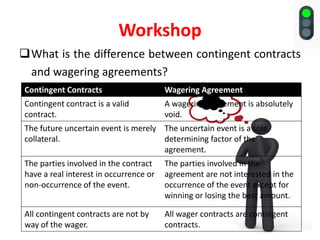
Workshop
What is the difference between contingent contracts
and wagering agreements?
Contingent Contracts Wagering Agreement
Contingent contract is a valid
contract.
A wagering agreement is absolutely
void.
The future uncertain event is merely
collateral.
The uncertain event is a sole
determining factor of the
agreement.
The parties involved in the contract
have a real interest in occurrence or
non-occurrence of the event.
The parties involved in the
agreement are not interested in the
occurrence of the event except for
winning or losing the best amount.
All contingent contracts are not by
way of the wager.
All wager contracts are contingent
contracts.
Law_09.pdf

Law_09.pdf

  • 1.
    Chapter Nine Contingent Contracts ProfessorDr. Afjal Hossain Chairman Department of Marketing, PSTU. Text: Sen, A.K. & Mitra, J.K. Commercial Law and Industrial Law (Business Law)
  • 2.
    Topics to bediscussed  Definition of contingent contracts  Characteristics of contingent contracts  Cases of contingent contracts
  • 3.
    Contingent Contracts The word‘contingent’ means when an event or situation is contingent i.e. it depends on some other event or fact. Now, the contingent contract means enforceability of that contract is directly depends upon happening or not of an event. In simple words, contingent contracts are the ones where the promisor perform his obligation only when certain conditions are met. The contracts of insurance, indemnity, and guarantee are some examples of contingent contracts.
  • 4.
    Contingent Contracts A contingentcontract is a contract to do or not to do something, if some event collateral to such contract, does or does not happen-Sec. 31 A contingent contract contains a conditional promise. A promise is “conditional” when performance is due only if an event collateral to the contract, does or does not happen. Example: A contracts to pay Y BDT. 10,000 if Y’s house is burnt.
  • 5.
    Characteristics of Contingent Contracts 1)The performance of such contracts depends on a contingency. 2) In a contingent contract, the event must be collateral.
  • 6.
    Essentials of ContingentContracts  The happening of a future uncertain event  The non-happening of an uncertain future event.  When event to be deemed impossible.  The happening of an event within a fixed time.  Impossible event.
  • 7.
    Commercial Applications of ContingentContracts  In all insurance, the offeror promises to take the risk of the offeree against the incident to do or not to do something and for that the offeree agrees to pay a certain amount of money.  It can be used in the contract of guarantee as well as the contract of warranty.  It may be used in negotiation.  It may be used in mergers and acquisitions as well.  It can also be used in the contract of indemnity.
  • 8.
    When Contingent Contracts becomeVOID  If the event on the happening of which the contract is contingent becomes impossible, the contract becomes void-Sec. 32  Contingent contract to do or not to do something, if a specified uncertain event happens within a fixed time, becomes void if at the expiration of the time fixed, such event has not happened or if before the time fixed such event becomes impossible-Sec. 35  If the future event on which a contract is a contingent is the way in which a person will act at an unspecified time, the event shall be considered to become impossible when such person does anything which renders it impossible that he should so act within any definite time, or otherwise than under further contingencies-Sec. 34  Contingent agreement to do or not to do anything if an impossible event happens are void whether the impossibility of the event is known or not to the parties to the agreement at the time when it is made-Sec. 36
  • 9.
    Workshop What is thedifference between contingent contracts and wagering agreements? Contingent Contracts Wagering Agreement Contingent contract is a valid contract. A wagering agreement is absolutely void. The future uncertain event is merely collateral. The uncertain event is a sole determining factor of the agreement. The parties involved in the contract have a real interest in occurrence or non-occurrence of the event. The parties involved in the agreement are not interested in the occurrence of the event except for winning or losing the best amount. All contingent contracts are not by way of the wager. All wager contracts are contingent contracts.