WELCOME
BSC GEOLOGY FIRST YEARS
PRESENTS
M. E. S PONNANI COLLEGE
[SEMINAR]
NATURAL
HAZARDS
LANDSLIDES
TOPIC:
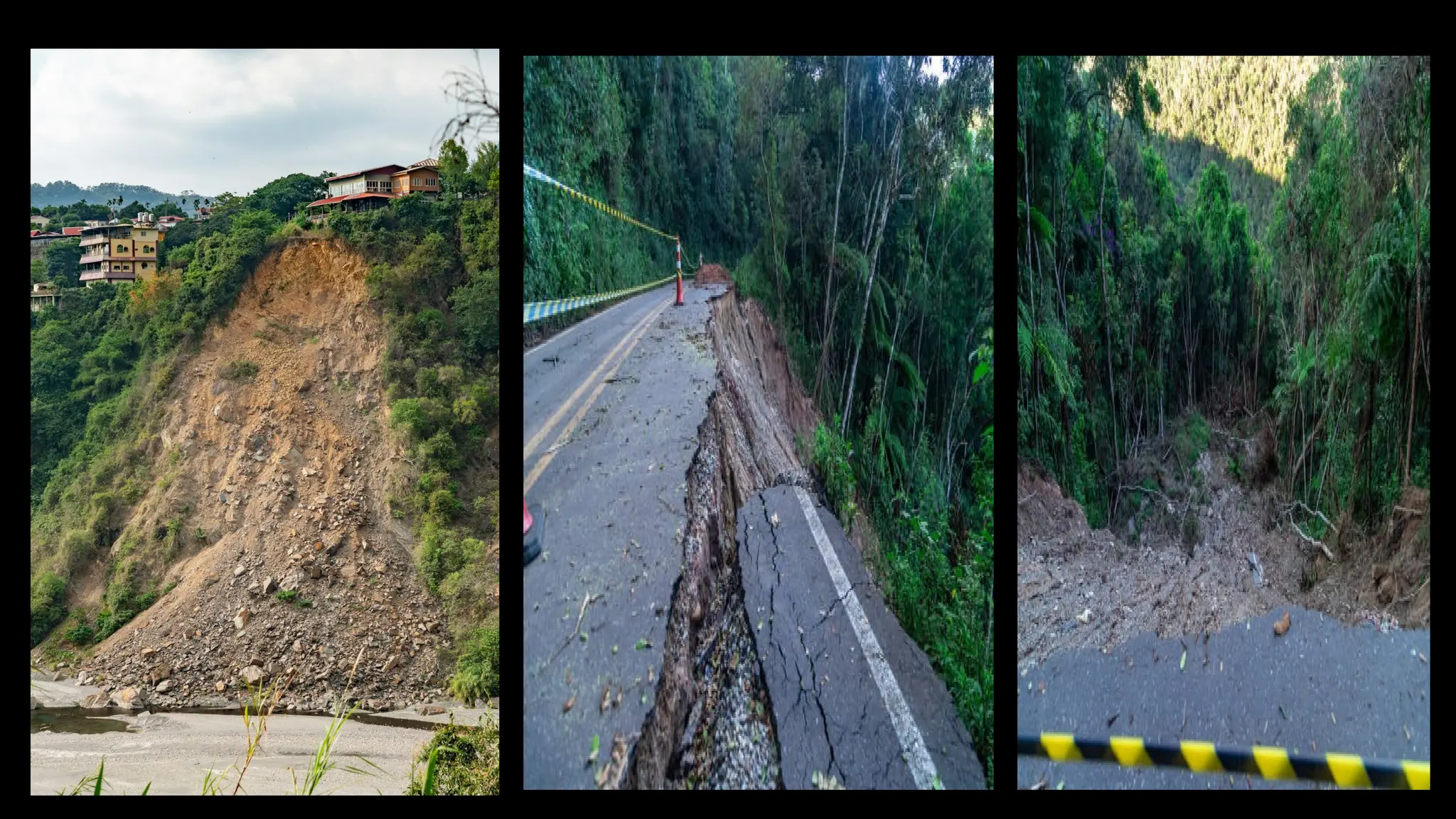
What is landslides?
A landslide is a mass
movement of
material,
such as rock, earth
or debris, down a
slope under the
influence of gravity.
Types of landslide
Rotational slides
occur on curved slip surfaces
where the upper surface of the
displaced material may tilt
backwards toward the scarp.
Translational slide
In this type of slide, the landslide
mass moves along a roughly planar
surface with little rotation or
backward tilting.
Rockfall
Rockfalls are abrupt movements of masses of
geologic materials, such as rocks and boulders, which
become detached from steep slopes or cliffs.
Separation occurs along discontinuities such as
fractures, joints, and bedding planes, and movement
occurs by free-fall, bouncing, and rolling. Falls are
strongly influenced by gravity, mechanical
weathering, and the presence of interstitial water.
Rock topling
Topple failures involve the forward
rotation and movement of a mass of
rock, earth or debris out of a slope.
This kind of slope failure generally
occurs around an axis (or point) at or
near the base of the block of rock.
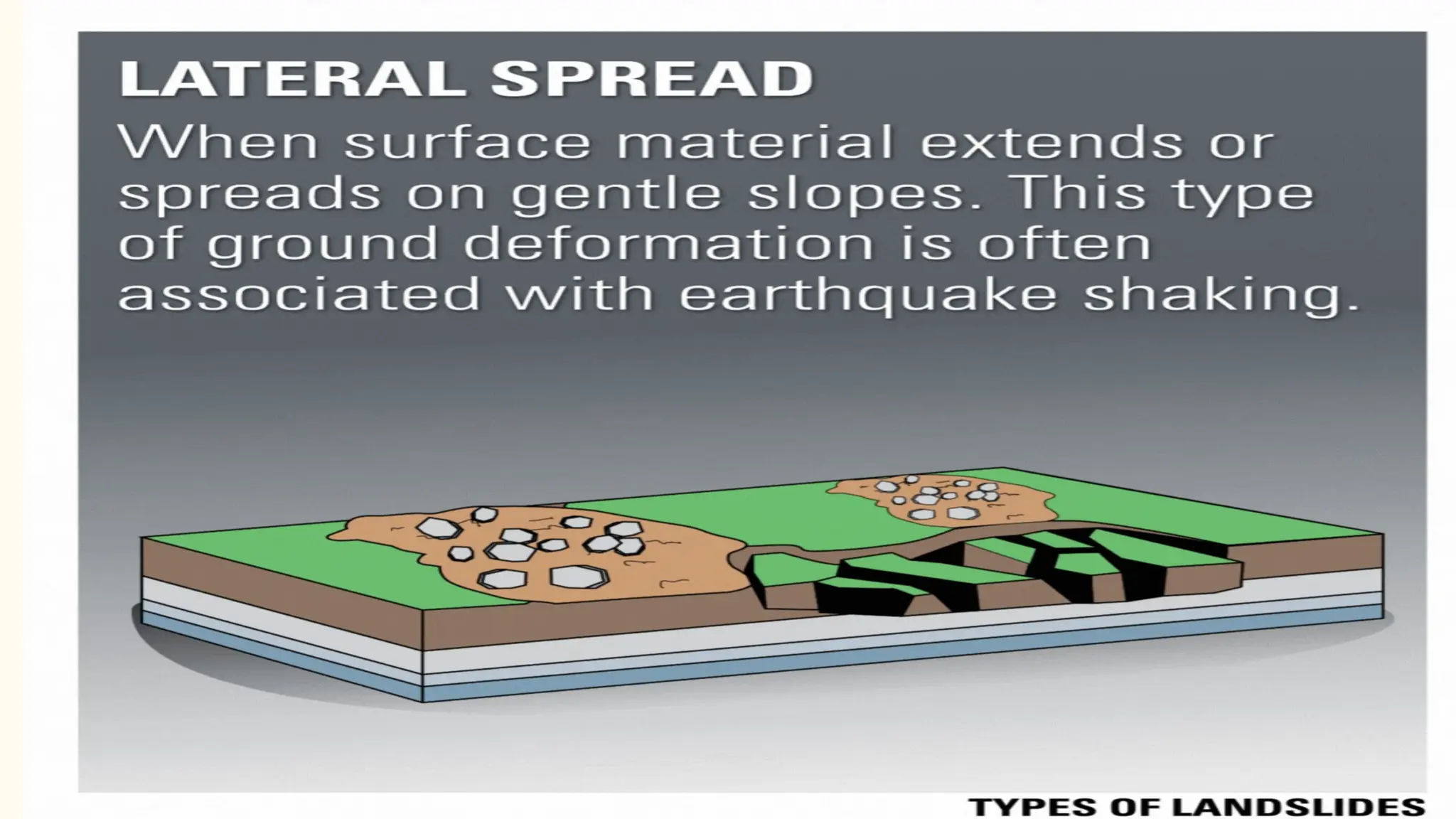
Lateral spreading in fine-grained
materials on shallow slopes is usually
progressive. The failure starts
suddenly in a small area and spreads
rapidly. Often the initial failure is a
slump, but in some materials
movement occurs for no apparent
Lateral spreading
Debris flows are fast-moving
landslides that are particularly
dangerous to life and property
because they move quickly, destroy
objects in their paths, and often
strike without warning.
Debris flow
What are the Causes?
● Gravity: Gravity works more effectively on steeper slope.
● Heavy and prolonged rainfall creating zone of weakness
also water table rises with heavy rain makes some slope
unsable.
● Earthquakes: ground vibrations creating during
earthquakes.
● Waves: wave action can erode the beach of the toe of the
bluff cutting into the slope and setting the stage for future
slides.
● Volcanoes
What are the after effects ?
● Physical Damage: Debris may block the roads, supply lines
(telecommunication, electricity, water) and waterways
● Causaliteis: Death and injuries to people and animal
● Influence of landslides in dam safety: Failure of the slope
boarding the reservoir, flooding cause by movement of large
masses of soil into the reservoir.
● Landslides and flooding: Debris flow can cause flooding by
blocking valleys and stream channels forcing large amount of
water to backup causing flash flood
Direct effect
Indirect effect
How to Prevent ?
Landslides are a natural
phenomenon, and while we
cannot prevent them
entirely.
● As experts suggest, reducing human interventions in ecologically
sensitive areas can help avoid exacerbating these disasters.
● Choose a safe location to build your home, away from steep slope
● Prevent deforestation and vegetation removal.
● Avoid weakening the slope
● ➤ Reforestation
● Drainage: Good ground drainage is essential to prevent saturation and
consequent weakening.
● ➤ Proper water runoff must be ensured by providing proper chanalisation
● S D M A(State Disaster Management Authoritrhy)---
04712331345 ,1079
Available helpline numbers
● District Emergency Operation Centre (DEOC) -
1077
Major geological hazards (landslides)
occured in india
● Wayanad,Mundakkai (2024)-debris flow
● Karanataka, ankola, shirur (2024)
● Guwahati, Assam. September 18, 1948. ...
● Darjeeling, West Bengal. October 4, 1968. ...
● Malpa, Uttarakhand. August 18, 1998. ...
● Mumbai, Maharashtra. July 12, 2000. ...
● Amboori, Kerala. November 9, 2001. ...
● Kedarnath, Uttarakhand. June 16, 2013. ...
● Malin, Maharashtra. July 30, 2014. ...
● Pettimudi, Kerala. August 6, 2020.
OUR TEAM
● VALEED
● SHIBIL
● SHIFANA
● FATHIMA NASRIN
● JYOTHIKA
● ANAGHA
● KRISHNAKRIPA
THANK YOU….

Landslide -Natural Hazard. '

  • 1.
    WELCOME BSC GEOLOGY FIRSTYEARS PRESENTS M. E. S PONNANI COLLEGE [SEMINAR]
  • 2.
  • 3.
  • 4.
  • 5.
    A landslide isa mass movement of material, such as rock, earth or debris, down a slope under the influence of gravity.
  • 7.
  • 8.
    Rotational slides occur oncurved slip surfaces where the upper surface of the displaced material may tilt backwards toward the scarp.
  • 10.
    Translational slide In thistype of slide, the landslide mass moves along a roughly planar surface with little rotation or backward tilting.
  • 12.
    Rockfall Rockfalls are abruptmovements of masses of geologic materials, such as rocks and boulders, which become detached from steep slopes or cliffs. Separation occurs along discontinuities such as fractures, joints, and bedding planes, and movement occurs by free-fall, bouncing, and rolling. Falls are strongly influenced by gravity, mechanical weathering, and the presence of interstitial water.
  • 14.
    Rock topling Topple failuresinvolve the forward rotation and movement of a mass of rock, earth or debris out of a slope. This kind of slope failure generally occurs around an axis (or point) at or near the base of the block of rock.
  • 16.
    Lateral spreading infine-grained materials on shallow slopes is usually progressive. The failure starts suddenly in a small area and spreads rapidly. Often the initial failure is a slump, but in some materials movement occurs for no apparent Lateral spreading
  • 18.
    Debris flows arefast-moving landslides that are particularly dangerous to life and property because they move quickly, destroy objects in their paths, and often strike without warning. Debris flow
  • 20.
    What are theCauses?
  • 21.
    ● Gravity: Gravityworks more effectively on steeper slope. ● Heavy and prolonged rainfall creating zone of weakness also water table rises with heavy rain makes some slope unsable. ● Earthquakes: ground vibrations creating during earthquakes. ● Waves: wave action can erode the beach of the toe of the bluff cutting into the slope and setting the stage for future slides. ● Volcanoes
  • 22.
    What are theafter effects ?
  • 23.
    ● Physical Damage:Debris may block the roads, supply lines (telecommunication, electricity, water) and waterways ● Causaliteis: Death and injuries to people and animal ● Influence of landslides in dam safety: Failure of the slope boarding the reservoir, flooding cause by movement of large masses of soil into the reservoir. ● Landslides and flooding: Debris flow can cause flooding by blocking valleys and stream channels forcing large amount of water to backup causing flash flood Direct effect Indirect effect
  • 27.
  • 28.
    Landslides are anatural phenomenon, and while we cannot prevent them entirely.
  • 29.
    ● As expertssuggest, reducing human interventions in ecologically sensitive areas can help avoid exacerbating these disasters. ● Choose a safe location to build your home, away from steep slope ● Prevent deforestation and vegetation removal. ● Avoid weakening the slope ● ➤ Reforestation ● Drainage: Good ground drainage is essential to prevent saturation and consequent weakening. ● ➤ Proper water runoff must be ensured by providing proper chanalisation
  • 30.
    ● S DM A(State Disaster Management Authoritrhy)--- 04712331345 ,1079 Available helpline numbers ● District Emergency Operation Centre (DEOC) - 1077
  • 31.
    Major geological hazards(landslides) occured in india
  • 32.
    ● Wayanad,Mundakkai (2024)-debrisflow ● Karanataka, ankola, shirur (2024) ● Guwahati, Assam. September 18, 1948. ... ● Darjeeling, West Bengal. October 4, 1968. ... ● Malpa, Uttarakhand. August 18, 1998. ... ● Mumbai, Maharashtra. July 12, 2000. ... ● Amboori, Kerala. November 9, 2001. ... ● Kedarnath, Uttarakhand. June 16, 2013. ... ● Malin, Maharashtra. July 30, 2014. ... ● Pettimudi, Kerala. August 6, 2020.
  • 33.
    OUR TEAM ● VALEED ●SHIBIL ● SHIFANA ● FATHIMA NASRIN ● JYOTHIKA ● ANAGHA ● KRISHNAKRIPA
  • 34.