



Contd
…IInd STAGE:-
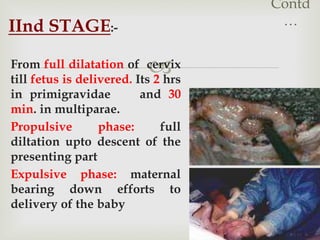
From full dilatation of cervix
till fetus is delivered. Its 2 hrs
in primigravidae and 30
min. in multiparae.
Propulsive phase: full
diltation upto descent of the
presenting part
Expulsive phase: maternal
bearing down efforts to
delivery of the baby

Events in the second stage of
labour
WITH FULL DILATATION OF THE CERVIX,
MEMBRANES USUALLY RUPTURE
ESCAPE OF GOOD AMOUNT OF LIQOUR AMNII
THEREBY VOLUME OF UTERINE CAVITY REDUCES
SIMULTANEOUSLY UTERINE CONTRACTIONS &
UTERINE RETRACTIONS BECOME STRONGER
UTERUS BECOME ELONGATED DURING
CONTRACTIONS, WHILE THE ANTERO-POSTERIOR
& TRANSVERSE DIAMETERS ARE REDUCED
ELONGATION IS PARTLY DUE TO CONTRACTIONS
OF THE CIRCULAR MUSCLE FIBRES OF THE
UTERUS TO KEEP THE FETALAXIS STRAIGHT

1
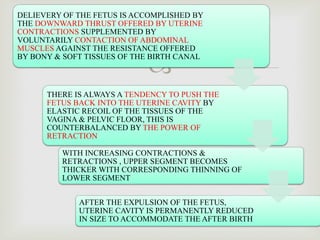
DELIEVERY OF THE FETUS IS ACCOMPLISHED BY
THE DOWNWARD THRUST OFFERED BY UTERINE
CONTRACTIONS SUPPLEMENTED BY
VOLUNTARILY CONTACTION OF ABDOMINAL
MUSCLES AGAINST THE RESISTANCE OFFERED
BY BONY & SOFT TISSUES OF THE BIRTH CANAL
THERE IS ALWAYS A TENDENCY TO PUSH THE
FETUS BACK INTO THE UTERINE CAVITY BY
ELASTIC RECOIL OF THE TISSUES OF THE
VAGINA & PELVIC FLOOR, THIS IS
COUNTERBALANCED BY THE POWER OF
RETRACTION
WITH INCREASING CONTRACTIONS &
RETRACTIONS , UPPER SEGMENT BECOMES
THICKER WITH CORRESPONDING THINNING OF
LOWER SEGMENT
AFTER THE EXPULSION OF THE FETUS,
UTERINE CAVITY IS PERMANENTLY REDUCED
IN SIZE TO ACCOMMODATE THE AFTER BIRTH

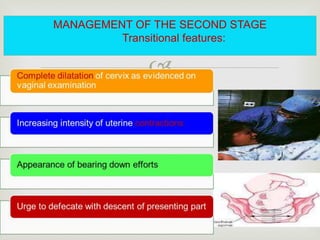
MANAGEMENT OF THE SECOND STAGE
Transitional features:

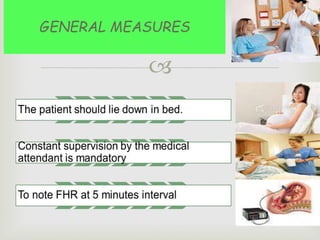
GENERAL MEASURES

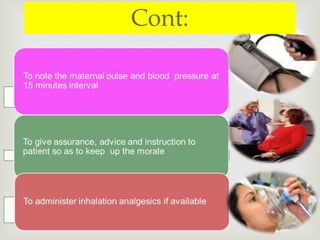
Cont:

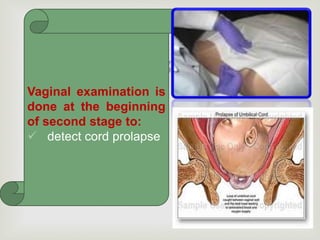
Vaginal examination is
done at the beginning
of second stage to:
 detect cord prolapse

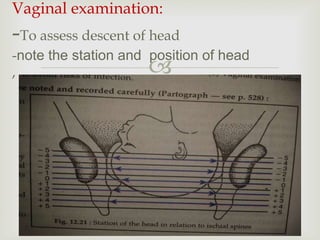
Vaginal examination:
-To assess descent of head
-note the station and position of head
,

• Nothing is given by mouth except sips of
water or ice

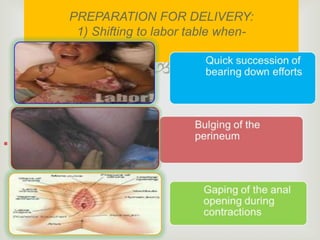
PREPARATION FOR DELIVERY:
1) Shifting to labor table when-
 Quick succession of bearing
down efforts


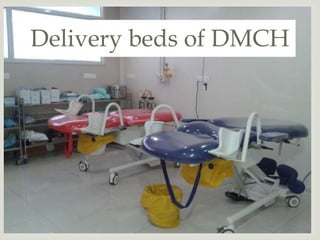
Delivery beds of DMCH

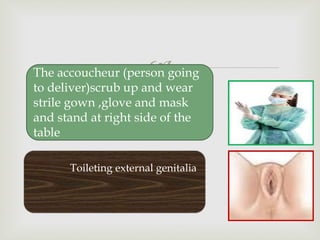
Toileting external genitalia
The accoucheur (person going
to deliver)scrub up and wear
strile gown ,glove and mask
and stand at right side of the
table
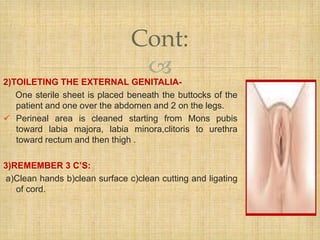
2)TOILETING THE EXTERNAL GENITALIA-
One sterile sheet is placed beneath the buttocks of the
patient and one over the abdomen and 2 on the legs.
 Perineal area is cleaned starting from Mons pubis
toward labia majora, labia minora,clitoris to urethra
toward rectum and then thigh .
3)REMEMBER 3 C’S:
a)Clean hands b)clean surface c)clean cutting and ligating
of cord.
Cont:

NURSING CARE GIVEN WHILE IN THE DELIVERY
ROOM

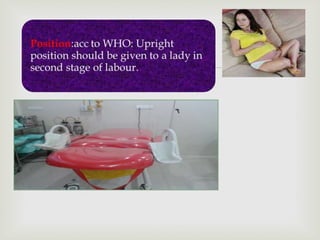
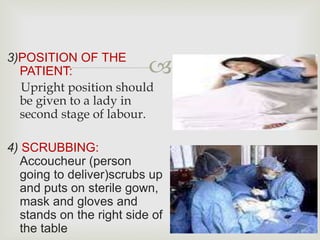
3)POSITION OF THE
PATIENT:
Upright position should
be given to a lady in
second stage of labour.
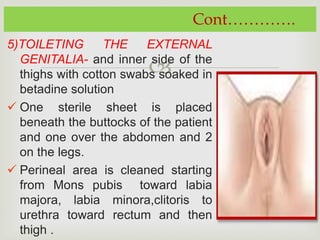
4) SCRUBBING:
Accoucheur (person
going to deliver)scrubs up
and puts on sterile gown,
mask and gloves and
stands on the right side of
the table

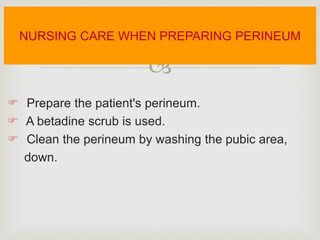
5)TOILETING THE EXTERNAL
GENITALIA- and inner side of the
thighs with cotton swabs soaked in
betadine solution
 One sterile sheet is placed
beneath the buttocks of the patient
and one over the abdomen and 2
on the legs.
 Perineal area is cleaned starting
from Mons pubis toward labia
majora, labia minora,clitoris to
urethra toward rectum and then
thigh .
Cont………….

 Prepare the patient's perineum.
 A betadine scrub is used.
 Clean the perineum by washing the pubic area,
down.
NURSING CARE WHEN PREPARING PERINEUM

 Discard used sponges after each step.
 Rinse area with the remaining solution.
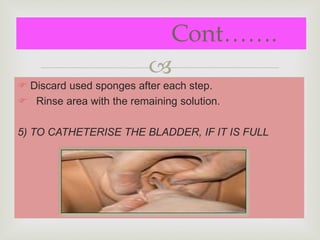
5) TO CATHETERISE THE BLADDER, IF IT IS FULL
Cont…….

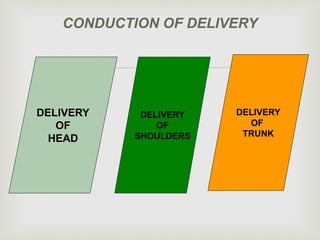
CONDUCTION OF DELIVERY
DELIVERY
OF
HEAD
DELIVERY
OF
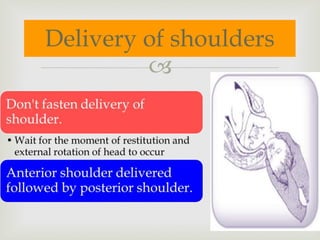
SHOULDERS
DELIVERY
OF
TRUNK

Cont………….
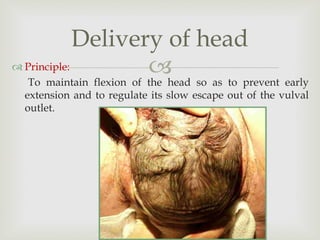
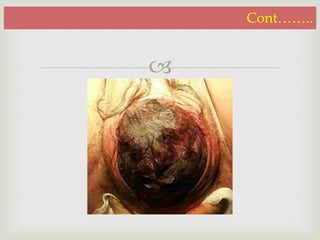
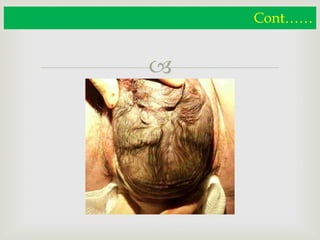
 Principle:
To maintain flexion of the head so as to prevent early
extension and to regulate its slow escape out of the vulval
outlet.
Delivery of head

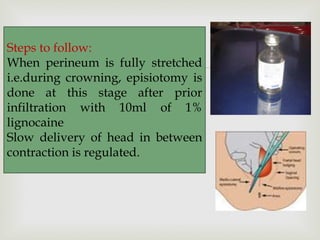
Steps to follow:
When perineum is fully stretched
i.e.during crowning, episiotomy is
done at this stage after prior
infiltration with 10ml of 1%
lignocaine
Slow delivery of head in between
contraction is regulated.

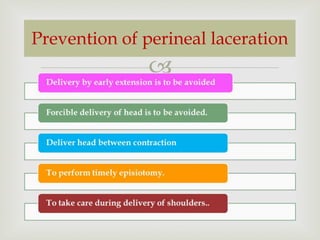
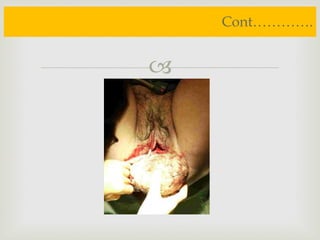
Prevention of perineal laceration

Cont……..

Cont……

Cont………….


Delivery of shoulders

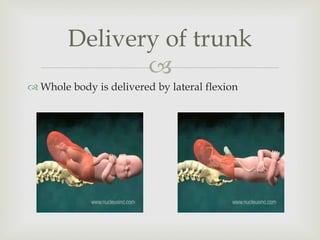
 Whole body is delivered by lateral flexion
Delivery of trunk
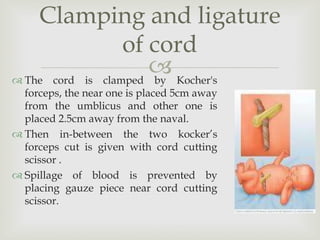
 The cord is clamped by Kocher's
forceps, the near one is placed 5cm away
from the umblicus and other one is
placed 2.5cm away from the naval.
 Then in-between the two kocker’s
forceps cut is given with cord cutting
scissor .
 Spillage of blood is prevented by
placing gauze piece near cord cutting
scissor.
Clamping and ligature
of cord

1)----------- position is to be given during 2nd stage of
labour.
Ans…Upright position
2)Show means?
Ans: mucus pug with blood.
3)Which anesthesia is used before giving episitomy?
Ans:1%lignocaine
Recaptulization

 What is a pattern of breathing during contraction?
Ans. Breathe in thro’ nose and out thro’mouth.
 What are the 3 c’s of delivery
Ans. a)Clean hands b)clean surface c)clean cutting and
ligating of cord.
Cont:


LABOUR 2nd stage

  • 2.
     Contd …IInd STAGE:- From fulldilatation of cervix till fetus is delivered. Its 2 hrs in primigravidae and 30 min. in multiparae. Propulsive phase: full diltation upto descent of the presenting part Expulsive phase: maternal bearing down efforts to delivery of the baby
  • 3.
     Events in thesecond stage of labour WITH FULL DILATATION OF THE CERVIX, MEMBRANES USUALLY RUPTURE ESCAPE OF GOOD AMOUNT OF LIQOUR AMNII THEREBY VOLUME OF UTERINE CAVITY REDUCES SIMULTANEOUSLY UTERINE CONTRACTIONS & UTERINE RETRACTIONS BECOME STRONGER UTERUS BECOME ELONGATED DURING CONTRACTIONS, WHILE THE ANTERO-POSTERIOR & TRANSVERSE DIAMETERS ARE REDUCED ELONGATION IS PARTLY DUE TO CONTRACTIONS OF THE CIRCULAR MUSCLE FIBRES OF THE UTERUS TO KEEP THE FETALAXIS STRAIGHT
  • 4.
     1 DELIEVERY OF THEFETUS IS ACCOMPLISHED BY THE DOWNWARD THRUST OFFERED BY UTERINE CONTRACTIONS SUPPLEMENTED BY VOLUNTARILY CONTACTION OF ABDOMINAL MUSCLES AGAINST THE RESISTANCE OFFERED BY BONY & SOFT TISSUES OF THE BIRTH CANAL THERE IS ALWAYS A TENDENCY TO PUSH THE FETUS BACK INTO THE UTERINE CAVITY BY ELASTIC RECOIL OF THE TISSUES OF THE VAGINA & PELVIC FLOOR, THIS IS COUNTERBALANCED BY THE POWER OF RETRACTION WITH INCREASING CONTRACTIONS & RETRACTIONS , UPPER SEGMENT BECOMES THICKER WITH CORRESPONDING THINNING OF LOWER SEGMENT AFTER THE EXPULSION OF THE FETUS, UTERINE CAVITY IS PERMANENTLY REDUCED IN SIZE TO ACCOMMODATE THE AFTER BIRTH
  • 5.
     MANAGEMENT OF THESECOND STAGE Transitional features:
  • 6.
  • 7.
  • 8.
     Vaginal examination is doneat the beginning of second stage to:  detect cord prolapse
  • 9.
     Vaginal examination: -To assessdescent of head -note the station and position of head ,
  • 10.
     • Nothing isgiven by mouth except sips of water or ice
  • 11.
     PREPARATION FOR DELIVERY: 1)Shifting to labor table when-  Quick succession of bearing down efforts
  • 12.
  • 13.
  • 14.
     Toileting external genitalia Theaccoucheur (person going to deliver)scrub up and wear strile gown ,glove and mask and stand at right side of the table
  • 15.
    2)TOILETING THE EXTERNALGENITALIA- One sterile sheet is placed beneath the buttocks of the patient and one over the abdomen and 2 on the legs.  Perineal area is cleaned starting from Mons pubis toward labia majora, labia minora,clitoris to urethra toward rectum and then thigh . 3)REMEMBER 3 C’S: a)Clean hands b)clean surface c)clean cutting and ligating of cord. Cont:
  • 16.
     NURSING CARE GIVENWHILE IN THE DELIVERY ROOM
  • 17.
     3)POSITION OF THE PATIENT: Uprightposition should be given to a lady in second stage of labour. 4) SCRUBBING: Accoucheur (person going to deliver)scrubs up and puts on sterile gown, mask and gloves and stands on the right side of the table
  • 18.
     5)TOILETING THE EXTERNAL GENITALIA-and inner side of the thighs with cotton swabs soaked in betadine solution  One sterile sheet is placed beneath the buttocks of the patient and one over the abdomen and 2 on the legs.  Perineal area is cleaned starting from Mons pubis toward labia majora, labia minora,clitoris to urethra toward rectum and then thigh . Cont………….
  • 19.
      Prepare thepatient's perineum.  A betadine scrub is used.  Clean the perineum by washing the pubic area, down. NURSING CARE WHEN PREPARING PERINEUM
  • 20.
      Discard usedsponges after each step.  Rinse area with the remaining solution. 5) TO CATHETERISE THE BLADDER, IF IT IS FULL Cont…….
  • 21.
  • 23.
  • 24.
     Principle: To maintainflexion of the head so as to prevent early extension and to regulate its slow escape out of the vulval outlet. Delivery of head
  • 25.
     Steps to follow: Whenperineum is fully stretched i.e.during crowning, episiotomy is done at this stage after prior infiltration with 10ml of 1% lignocaine Slow delivery of head in between contraction is regulated.
  • 26.
  • 27.
  • 28.
  • 29.
  • 30.
  • 31.
  • 32.
      Whole bodyis delivered by lateral flexion Delivery of trunk
  • 33.
     The cordis clamped by Kocher's forceps, the near one is placed 5cm away from the umblicus and other one is placed 2.5cm away from the naval.  Then in-between the two kocker’s forceps cut is given with cord cutting scissor .  Spillage of blood is prevented by placing gauze piece near cord cutting scissor. Clamping and ligature of cord
  • 34.
     1)----------- position isto be given during 2nd stage of labour. Ans…Upright position 2)Show means? Ans: mucus pug with blood. 3)Which anesthesia is used before giving episitomy? Ans:1%lignocaine Recaptulization
  • 35.
      What isa pattern of breathing during contraction? Ans. Breathe in thro’ nose and out thro’mouth.  What are the 3 c’s of delivery Ans. a)Clean hands b)clean surface c)clean cutting and ligating of cord. Cont:
  • 36.