T H E B A S I C S
Kitchen Safety
Hazards and Types of Accidents
 Prevention is key – avoid accidents and injuries by
following safety guidelines
 A hazard is something that could lead to
accidents/injuries
 Types of kitchen accidents:
Cuts, Burns and Fires, Falls, Electrical, Chemical
poisoning, Choking, Clothing/Hair
General Keep Safe Guidelines
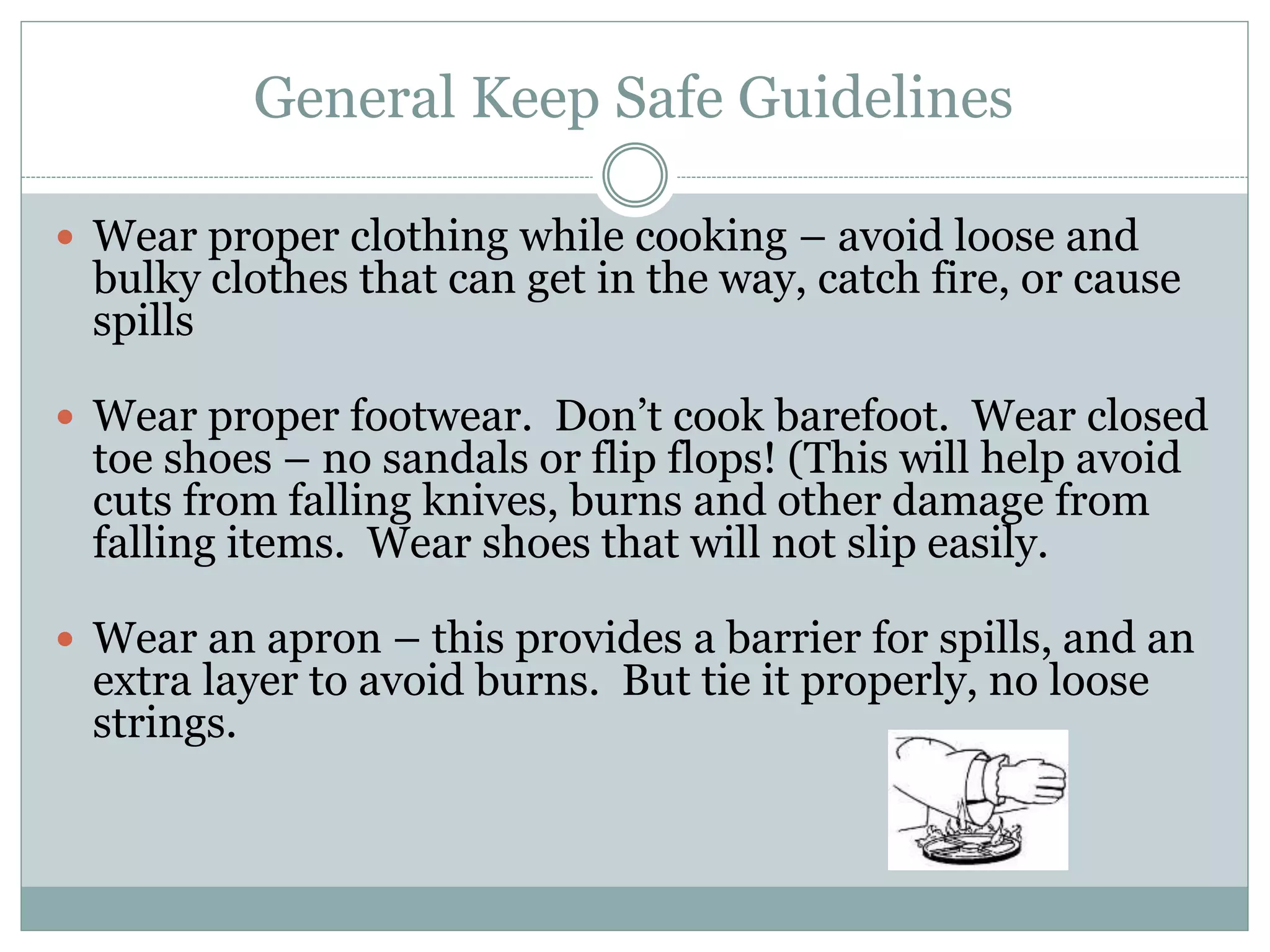
 Wear proper clothing while cooking – avoid loose and
bulky clothes that can get in the way, catch fire, or cause
spills
 Wear proper footwear. Don’t cook barefoot. Wear closed
toe shoes – no sandals or flip flops! (This will help avoid
cuts from falling knives, burns and other damage from
falling items. Wear shoes that will not slip easily.
 Wear an apron – this provides a barrier for spills, and an
extra layer to avoid burns. But tie it properly, no loose
strings.
Prevention of Cuts
Knives – these are a necessary tool in cooking and
preparing food. Out of necessity they are sharp and are a
main source of cuts
Avoid cuts by:
• Use sharp knives. Dull knives are more likely to slip or
catch in food.
• Wash knives separately – don’t leave them in soapy
water, someone reaching in may grab the sharp blade.
• Cut away from yourself
• Store knives in knife blocks or other holders.
• Use proper cutting techniques, as well as the correct
knife!
• Move knives away from edges of counters.
Prevention of cuts continued…
Small appliances
 Never reach into blenders or food processors that have
blades in them
 Unplug when not in use
Glass
 Broken glass should be disposed of immediately. Use a
broom and sweep into a dustpan. Small splinters should
be blotted up with a wet paper towel
Preventing Burns and Fires
Pots, Pans and Large Appliances
 Always use potholders or oven gloves to handle hot pans,
dishes or utensils
 Open lids of pots and pans away from your face (also watch
opening oven doors and microwaves) – steam can burn!
 Turn handles of pots and pans way from the edge of the stove
top – to avoid tipping and spilling.
 Clean stove tops and ranges of grease.
 If there is a grease fire – do not use water to attempt
extinguishing. Cover with lid, use baking soda or fire
extinguisher
Preventing Burns and Fires cont’d
Fire and Burn prevention - General
 Keep towels and other flammable items away from
heat sources.
 Keep hair tied back. (Hair is flammable)
 Roll up sleeves, avoid loose clothing while cooking.
 Never leave items on stove top unattended – fires
can happen quickly, as can boil overs.
 Unplug unused appliances
 Do not put metal or aluminum foil in microwaves
– it will cause sparks
Prevention of slips and falls
 Clean up spills immediately. Ensure the floor is dry.
 If an area still is wet, put up a warning cone/sign
 Even dry spills are a hazard – clean them up immediately
 Keep the floor clear of clutter.
 Be sure that rugs are secure, and will not slide across
the floor.
 Be sure shoes are tied and fit properly.
Preventing Electrical Shocks
 Do not overload plugs, avoid plugging in several
appliances at once.
 Unplug unused appliances.
 Dry your hands before handling electric appliances.
 Keep all electrical appliances and cords away from
water.
 Clear cords and appliances away from cooking area if
not in use (this can prevent spills, and falling
objects)
Food safety
 Wash your hands before handling food or food
preparation items. Wash after handling raw
meat/seafood.
 Wash hands after using the washroom – with soap –
every time!
 Store food properly – keep cold food cold, warm food
warm
 Cook food thoroughly – use a thermometer to check
inside temperature
 Don’t cross contaminate – use clean knives for cutting
different foods, separate cutting boards for meats and
other items.
 Wash the counter often.
Other prevention
 Keep chemicals away from food and prep areas – if
necessary to use for cleaning, be sure to wipe with
water afterwards, and never use around food.
 Label foods and other items – especially if using
generic containers
 Store heavy items on lower shelves
 Think before you act – is it safe?
Responding to injuries and accidents
 Always assess situation first – is it safe to run over to
help someone? Safety first, even when helping
others.
 For minor burns – run under cool water until pain
subsides, then cver with sterile gauze or clean
bandage. DO NOT apply butter or ointments.
 If burns are more severe, or the person is an
infant/toddler or senior – call 911 (burns can effect
the young and old quite severely)
Responding to injuries and accidents…
 For fires – on a person – tell them to stop, drop and
roll, you can cover them with a cloth, or jacket as
well to help pat down flames. Do not run!!
 Do not use water on grease fires!
 Smother fires with salt, or baking soad
 Use an extinguisher – pull pin, aim at base of fire,
spray in sweeping motion
Responding continued..
 If person appear seriously injured after a fall, leave
them on floor and call an adult/911
 Cuts – clean under running water. Apply pressure if
heavy bleeding. Apply bandage.
 Electrical shocks – unplug appliance if safe to do so.
 If situation is unclear – do not touch appliance or
person – call for adult/911.

Kitchen safety

  • 1.
    T H EB A S I C S Kitchen Safety
  • 2.
    Hazards and Typesof Accidents  Prevention is key – avoid accidents and injuries by following safety guidelines  A hazard is something that could lead to accidents/injuries  Types of kitchen accidents: Cuts, Burns and Fires, Falls, Electrical, Chemical poisoning, Choking, Clothing/Hair
  • 3.
    General Keep SafeGuidelines  Wear proper clothing while cooking – avoid loose and bulky clothes that can get in the way, catch fire, or cause spills  Wear proper footwear. Don’t cook barefoot. Wear closed toe shoes – no sandals or flip flops! (This will help avoid cuts from falling knives, burns and other damage from falling items. Wear shoes that will not slip easily.  Wear an apron – this provides a barrier for spills, and an extra layer to avoid burns. But tie it properly, no loose strings.
  • 4.
    Prevention of Cuts Knives– these are a necessary tool in cooking and preparing food. Out of necessity they are sharp and are a main source of cuts Avoid cuts by: • Use sharp knives. Dull knives are more likely to slip or catch in food. • Wash knives separately – don’t leave them in soapy water, someone reaching in may grab the sharp blade. • Cut away from yourself • Store knives in knife blocks or other holders. • Use proper cutting techniques, as well as the correct knife! • Move knives away from edges of counters.
  • 5.
    Prevention of cutscontinued… Small appliances  Never reach into blenders or food processors that have blades in them  Unplug when not in use Glass  Broken glass should be disposed of immediately. Use a broom and sweep into a dustpan. Small splinters should be blotted up with a wet paper towel
  • 6.
    Preventing Burns andFires Pots, Pans and Large Appliances  Always use potholders or oven gloves to handle hot pans, dishes or utensils  Open lids of pots and pans away from your face (also watch opening oven doors and microwaves) – steam can burn!  Turn handles of pots and pans way from the edge of the stove top – to avoid tipping and spilling.  Clean stove tops and ranges of grease.  If there is a grease fire – do not use water to attempt extinguishing. Cover with lid, use baking soda or fire extinguisher
  • 7.
    Preventing Burns andFires cont’d Fire and Burn prevention - General  Keep towels and other flammable items away from heat sources.  Keep hair tied back. (Hair is flammable)  Roll up sleeves, avoid loose clothing while cooking.  Never leave items on stove top unattended – fires can happen quickly, as can boil overs.  Unplug unused appliances  Do not put metal or aluminum foil in microwaves – it will cause sparks
  • 8.
    Prevention of slipsand falls  Clean up spills immediately. Ensure the floor is dry.  If an area still is wet, put up a warning cone/sign  Even dry spills are a hazard – clean them up immediately  Keep the floor clear of clutter.  Be sure that rugs are secure, and will not slide across the floor.  Be sure shoes are tied and fit properly.
  • 9.
    Preventing Electrical Shocks Do not overload plugs, avoid plugging in several appliances at once.  Unplug unused appliances.  Dry your hands before handling electric appliances.  Keep all electrical appliances and cords away from water.  Clear cords and appliances away from cooking area if not in use (this can prevent spills, and falling objects)
  • 10.
    Food safety  Washyour hands before handling food or food preparation items. Wash after handling raw meat/seafood.  Wash hands after using the washroom – with soap – every time!  Store food properly – keep cold food cold, warm food warm  Cook food thoroughly – use a thermometer to check inside temperature  Don’t cross contaminate – use clean knives for cutting different foods, separate cutting boards for meats and other items.  Wash the counter often.
  • 11.
    Other prevention  Keepchemicals away from food and prep areas – if necessary to use for cleaning, be sure to wipe with water afterwards, and never use around food.  Label foods and other items – especially if using generic containers  Store heavy items on lower shelves  Think before you act – is it safe?
  • 12.
    Responding to injuriesand accidents  Always assess situation first – is it safe to run over to help someone? Safety first, even when helping others.  For minor burns – run under cool water until pain subsides, then cver with sterile gauze or clean bandage. DO NOT apply butter or ointments.  If burns are more severe, or the person is an infant/toddler or senior – call 911 (burns can effect the young and old quite severely)
  • 13.
    Responding to injuriesand accidents…  For fires – on a person – tell them to stop, drop and roll, you can cover them with a cloth, or jacket as well to help pat down flames. Do not run!!  Do not use water on grease fires!  Smother fires with salt, or baking soad  Use an extinguisher – pull pin, aim at base of fire, spray in sweeping motion
  • 14.
    Responding continued..  Ifperson appear seriously injured after a fall, leave them on floor and call an adult/911  Cuts – clean under running water. Apply pressure if heavy bleeding. Apply bandage.  Electrical shocks – unplug appliance if safe to do so.  If situation is unclear – do not touch appliance or person – call for adult/911.