
Variable Compression Ratio Diesel Engine
Performance Analysis
Submitted By: Submitted To:
Vinit kumar chauhan Mr. Amardeep Sir
M.E. 3rd year
Uid: k10972
CAREER POINT
UNIVERSITY

 Introduction
 Compression Ratio
 Variable Compression Ratio
 Vcr – Advantages
 Vcr – Disadvantages
 Conclusions
CONTENT

 Variable compression ratio is a technology to adjust
the compression ratio of an internal combustion
engine while the engine is in operation.
 This is done to increase fuel efficiency while under
varying loads. Higher loads require lower ratios to
be more efficient and vice versa.
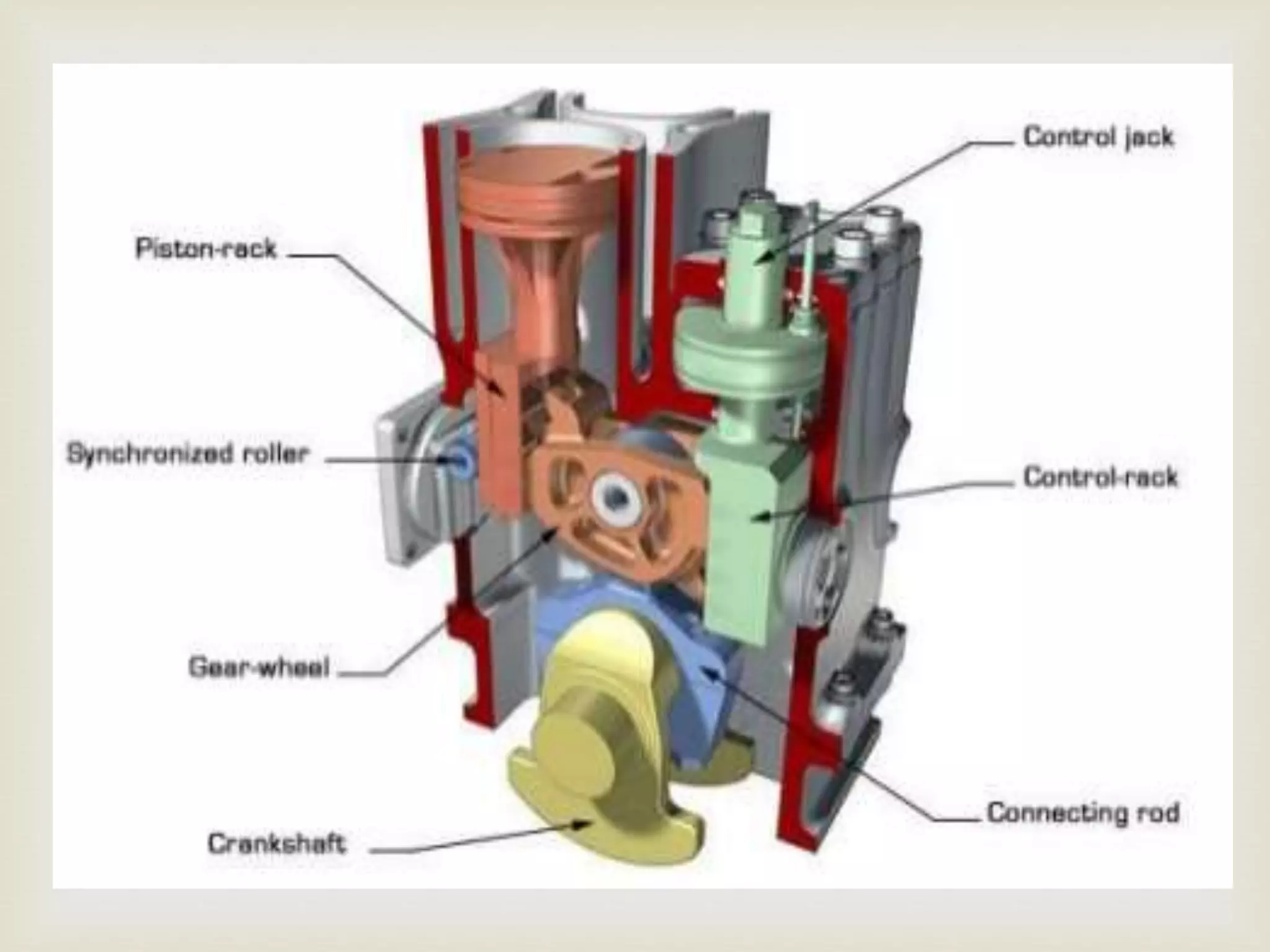
 Variable compression engines allow for the volume
above the piston at Top dead centre to be changed.
For automotive use this needs to be done
dynamically in response to the load and driving
demands.
INTRODUCTION

 It is ratio by which the fuel/air mixture is
compressed before it is ignited.
 Limited in conventional engines due to auto ignition.
 Determines how efficiently the engine can utilize the
energy in the fuel.
 Variable Compression Ratio can be obtained by
alternating:
The Clearance Volume
Both the Clearance volume and the Swept
Volume.
COMPRESSION RATIO

 The combustion chamber volume, Vc, is altered to
meet the power needs to the vehicle.
 At low power levels, high CR captures fuel
efficiency benefits.
 At high power levels, low CR prevents knock.
VARIABLE COMPRESSION RATIO
(VCR)

 CR modified to meet power demand (CR’s range
from 7:1 to 21:1)
 Increased fuel efficiency
 Claims of up to 30% reduction in fuel consumption
 Adding variable valve actuation and turbo-charging
further improves fuel efficiency (7-10% additional
reduction in fuel consumption)
 Reduced combustion emissions
VCR - ADVANTAGES

 New technology results in high research and
development and manufacturing costs.
 Reliability is not proven.
 Consumer reactions are unknown and
unpredictable.
 Repairs and maintenance initially may be difficult
and costly.
VCR -
DISADVANTAGES

 Variable Compression Ratio engines have great potential
to increase engine power and fuel economy.
 When coupled with technologies such as turbo charging,
variable valve actuation, and direct fuel injection, the
effectiveness of the system is further increased.
 Once established, this technology will likely become
commonplace due to increasing energy and environmental
concerns and the ease of integration.
 Due to use of high compression ratio at low loads the
VCR engines has a good starting and idling performance.
CONCLUSIONS

Thank you

K10972 ice

  • 1.
     Variable Compression RatioDiesel Engine Performance Analysis Submitted By: Submitted To: Vinit kumar chauhan Mr. Amardeep Sir M.E. 3rd year Uid: k10972 CAREER POINT UNIVERSITY
  • 2.
      Introduction  CompressionRatio  Variable Compression Ratio  Vcr – Advantages  Vcr – Disadvantages  Conclusions CONTENT
  • 3.
      Variable compressionratio is a technology to adjust the compression ratio of an internal combustion engine while the engine is in operation.  This is done to increase fuel efficiency while under varying loads. Higher loads require lower ratios to be more efficient and vice versa.  Variable compression engines allow for the volume above the piston at Top dead centre to be changed. For automotive use this needs to be done dynamically in response to the load and driving demands. INTRODUCTION
  • 4.
      It isratio by which the fuel/air mixture is compressed before it is ignited.  Limited in conventional engines due to auto ignition.  Determines how efficiently the engine can utilize the energy in the fuel.  Variable Compression Ratio can be obtained by alternating: The Clearance Volume Both the Clearance volume and the Swept Volume. COMPRESSION RATIO
  • 5.
      The combustionchamber volume, Vc, is altered to meet the power needs to the vehicle.  At low power levels, high CR captures fuel efficiency benefits.  At high power levels, low CR prevents knock. VARIABLE COMPRESSION RATIO (VCR)
  • 6.
      CR modifiedto meet power demand (CR’s range from 7:1 to 21:1)  Increased fuel efficiency  Claims of up to 30% reduction in fuel consumption  Adding variable valve actuation and turbo-charging further improves fuel efficiency (7-10% additional reduction in fuel consumption)  Reduced combustion emissions VCR - ADVANTAGES
  • 7.
      New technologyresults in high research and development and manufacturing costs.  Reliability is not proven.  Consumer reactions are unknown and unpredictable.  Repairs and maintenance initially may be difficult and costly. VCR - DISADVANTAGES
  • 9.
      Variable CompressionRatio engines have great potential to increase engine power and fuel economy.  When coupled with technologies such as turbo charging, variable valve actuation, and direct fuel injection, the effectiveness of the system is further increased.  Once established, this technology will likely become commonplace due to increasing energy and environmental concerns and the ease of integration.  Due to use of high compression ratio at low loads the VCR engines has a good starting and idling performance. CONCLUSIONS
  • 10.