Topics
 Java Virtual Machine.
 Why JVM?
 Java Runtime Environment.
 How JVM work?
 JVM Fundamental Parts.
 Process of compilation.
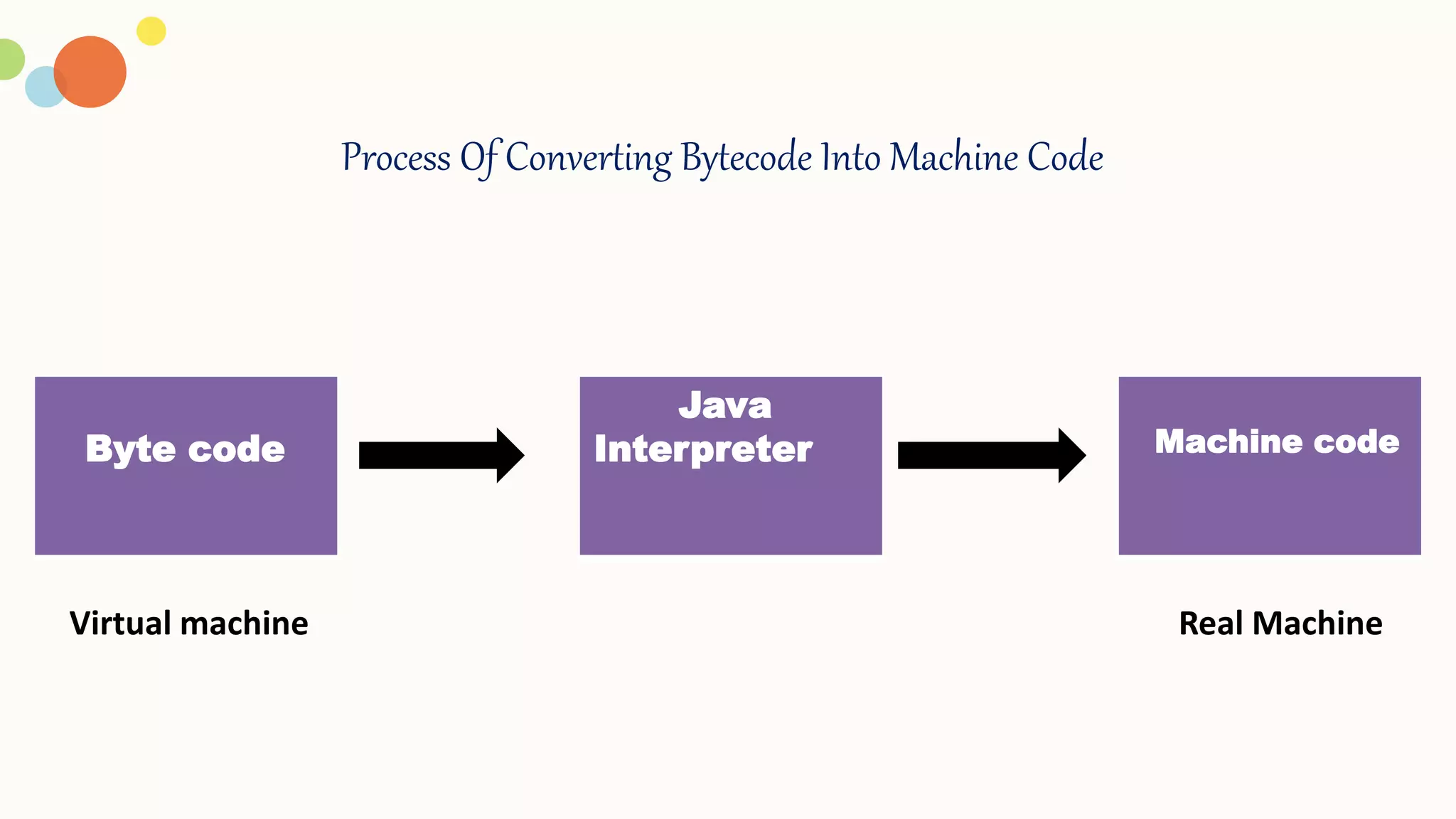
 Process of converting byte code into machine code.
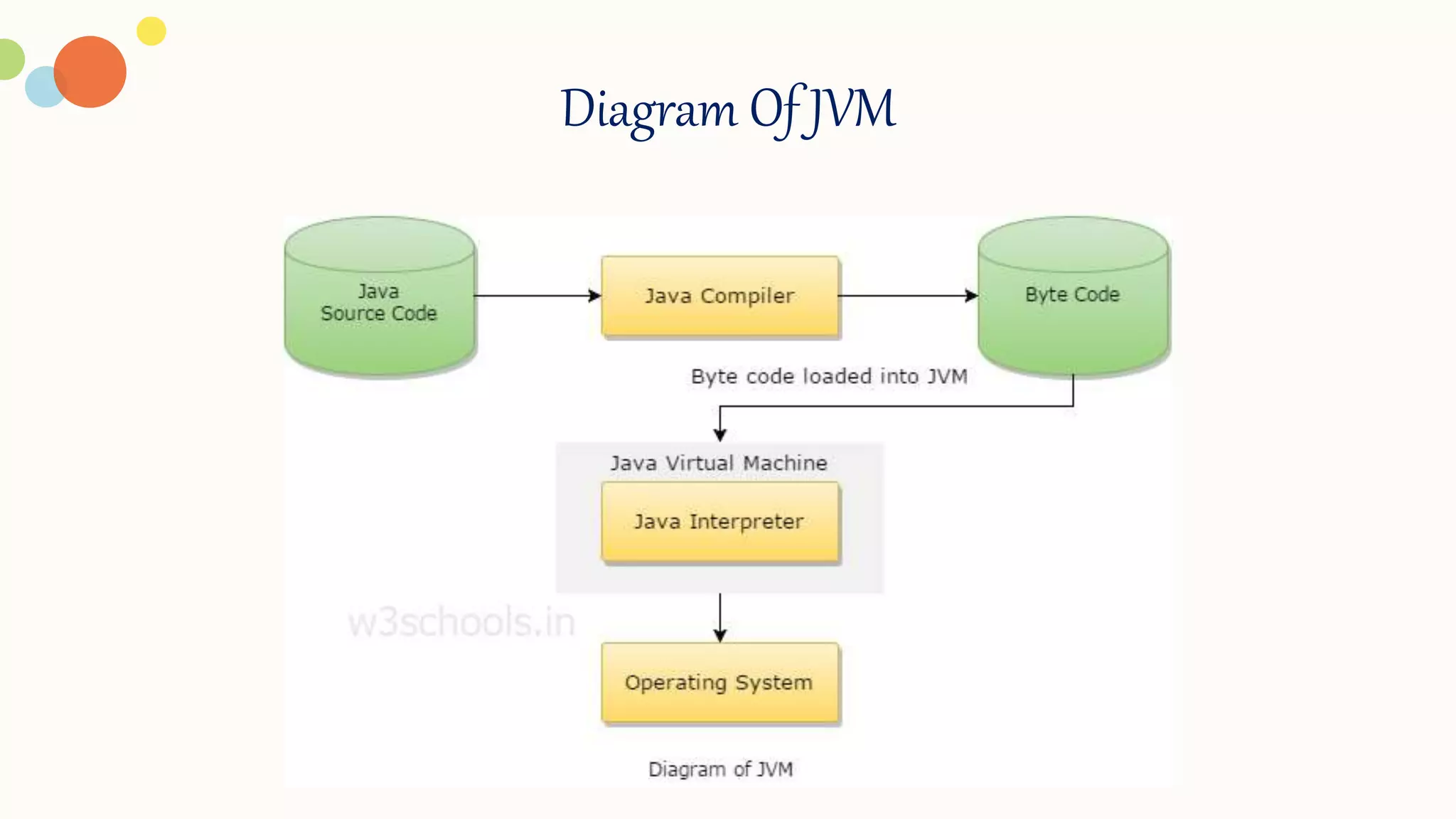
 Diagram of JVM.
 Current JVM.
 Drawbacks of JVM.
Add your words
here,according to your
need to draw the text
box size.
Add your words
here,according to your
need to draw the text
box size.
Java Virtual Machine
 JVM is a part of java programming language.
 JVM is the engine that drives the java code.
 Mostly in other programming languages, complier produce code for a particular
system ut Java cier produce Bytecode for a java virtual machine.
 JVM is a software, staying on top of Operating System, such as UNIX, Windows
NT.
 It create the environment that java language lives.
Why JVM?
 An ordinary language can not create a system independent program.
 Java’s goal is “Write-Once-Run-Anywhere” .
 Java program are not computer, Operating system dependent.
 Need to create an”Abstract Computer” of its own and runs on it, a kind of virtual
machine which hiding the different OS implementation.
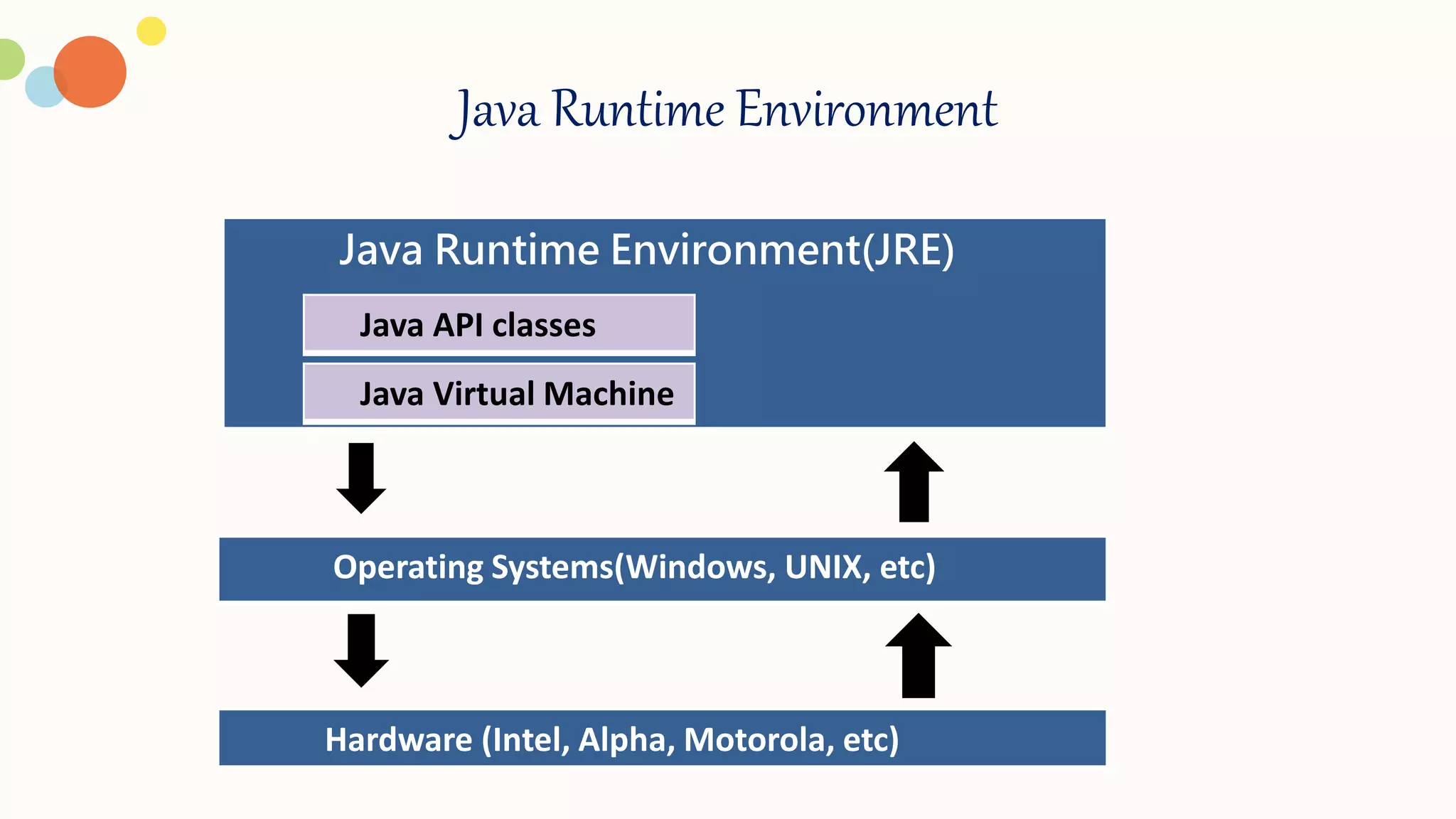
Java Runtime Environment
Java Runtime Environment(JRE)
Java API classes
Java Virtual Machine
Operating Systems(Windows, UNIX, etc)
Hardware (Intel, Alpha, Motorola, etc)
How Java Work?
 Java programs are compiled into bytecode.
 JVM interprets and converts java bytecode into machine code in order to execute on a
CPU.
 Most web browser has an integrated JVM to run applets.
Other JVM tasks include:
 Object creations of java programs.
 Garbage collection.
 Security responsibility.
. Add your words
here,according to
your need to draw
the text box size.
Please read the
instructions and more
work at the end of the
manual template.
JVM Fundamental Parts
 A bytecode instruction set.
 A set of registers.
 A stack.
 A garbage-collected heap.
 An area for storing methods.
All five parts are necessary, may be implemented by a complier, an
interpreter or a hardware chip.
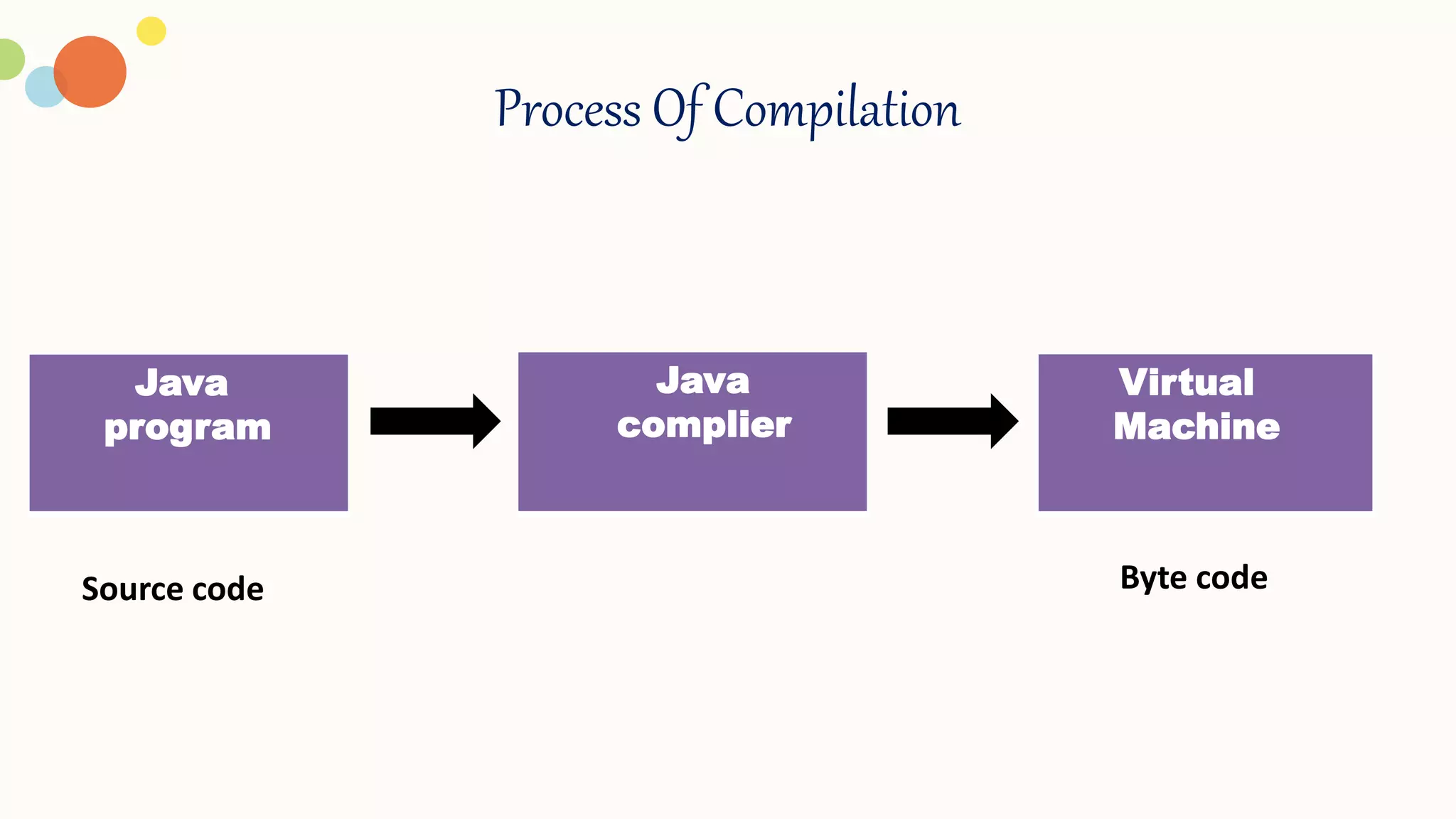
Process Of Compilation
Java
program
Java
complier
Virtual
Machine
Source code Byte code
Process Of Converting Bytecode Into Machine Code
Byte code
Java
Interpreter Machine code
Virtual machine Real Machine
Diagram Of JVM
Drawbacks Of JVM
 JVM is a layer on the top of your operating system that consumes additional
memory.
 JVM is additional layer between complier and machine.(Comparing java program
and fast C program!)
 Byte code is compied for system independence so it does not take advantage of any
particular operating system.
Current JVM
 Microsoft Java Virtual Machine.
 Netscape Java Virtual Machine.
 Sun Java Virtual Machine.
 All of these java virtual machines implement java core class packages and their own
specific class packages.
THANK YOU!

JVM.pptx

  • 2.
    Topics  Java VirtualMachine.  Why JVM?  Java Runtime Environment.  How JVM work?  JVM Fundamental Parts.  Process of compilation.  Process of converting byte code into machine code.  Diagram of JVM.  Current JVM.  Drawbacks of JVM. Add your words here,according to your need to draw the text box size. Add your words here,according to your need to draw the text box size.
  • 3.
    Java Virtual Machine JVM is a part of java programming language.  JVM is the engine that drives the java code.  Mostly in other programming languages, complier produce code for a particular system ut Java cier produce Bytecode for a java virtual machine.  JVM is a software, staying on top of Operating System, such as UNIX, Windows NT.  It create the environment that java language lives.
  • 4.
    Why JVM?  Anordinary language can not create a system independent program.  Java’s goal is “Write-Once-Run-Anywhere” .  Java program are not computer, Operating system dependent.  Need to create an”Abstract Computer” of its own and runs on it, a kind of virtual machine which hiding the different OS implementation.
  • 5.
    Java Runtime Environment JavaRuntime Environment(JRE) Java API classes Java Virtual Machine Operating Systems(Windows, UNIX, etc) Hardware (Intel, Alpha, Motorola, etc)
  • 6.
    How Java Work? Java programs are compiled into bytecode.  JVM interprets and converts java bytecode into machine code in order to execute on a CPU.  Most web browser has an integrated JVM to run applets. Other JVM tasks include:  Object creations of java programs.  Garbage collection.  Security responsibility. . Add your words here,according to your need to draw the text box size. Please read the instructions and more work at the end of the manual template.
  • 7.
    JVM Fundamental Parts A bytecode instruction set.  A set of registers.  A stack.  A garbage-collected heap.  An area for storing methods. All five parts are necessary, may be implemented by a complier, an interpreter or a hardware chip.
  • 8.
  • 9.
    Process Of ConvertingBytecode Into Machine Code Byte code Java Interpreter Machine code Virtual machine Real Machine
  • 10.
  • 11.
    Drawbacks Of JVM JVM is a layer on the top of your operating system that consumes additional memory.  JVM is additional layer between complier and machine.(Comparing java program and fast C program!)  Byte code is compied for system independence so it does not take advantage of any particular operating system.
  • 12.
    Current JVM  MicrosoftJava Virtual Machine.  Netscape Java Virtual Machine.  Sun Java Virtual Machine.  All of these java virtual machines implement java core class packages and their own specific class packages.
  • 13.