Purpose of Workshop 
• 
Improve soft skills 
• 
Know your skills 
• 
Increase job retention 
• 
Get ahead in the job!
Where Do I Begin? 
• 
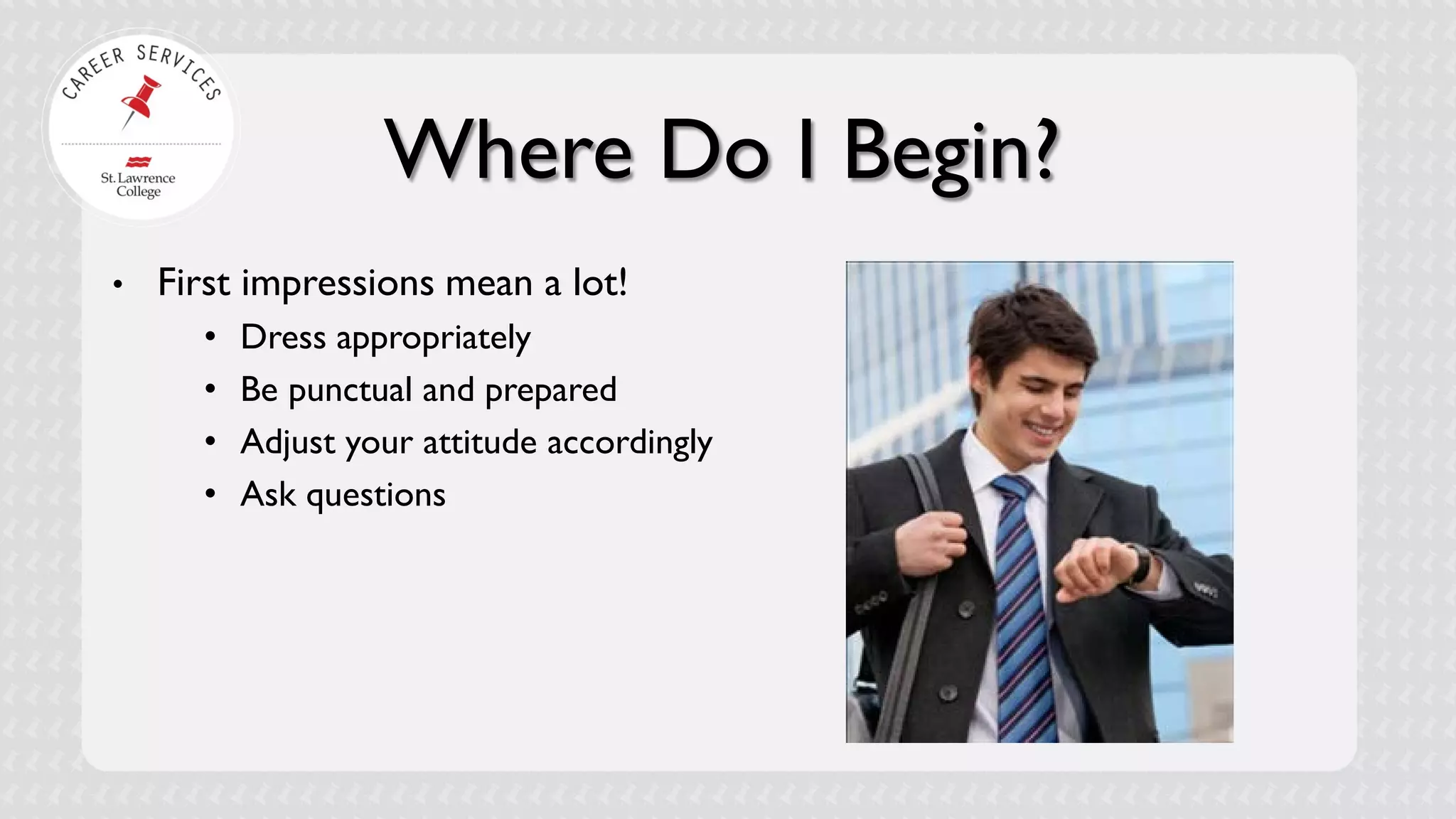
First impressions mean a lot! 
• 
Dress appropriately 
• 
Be punctual and prepared 
• 
Adjust your attitude accordingly 
• 
Ask questions
Appearance & Attire 
 
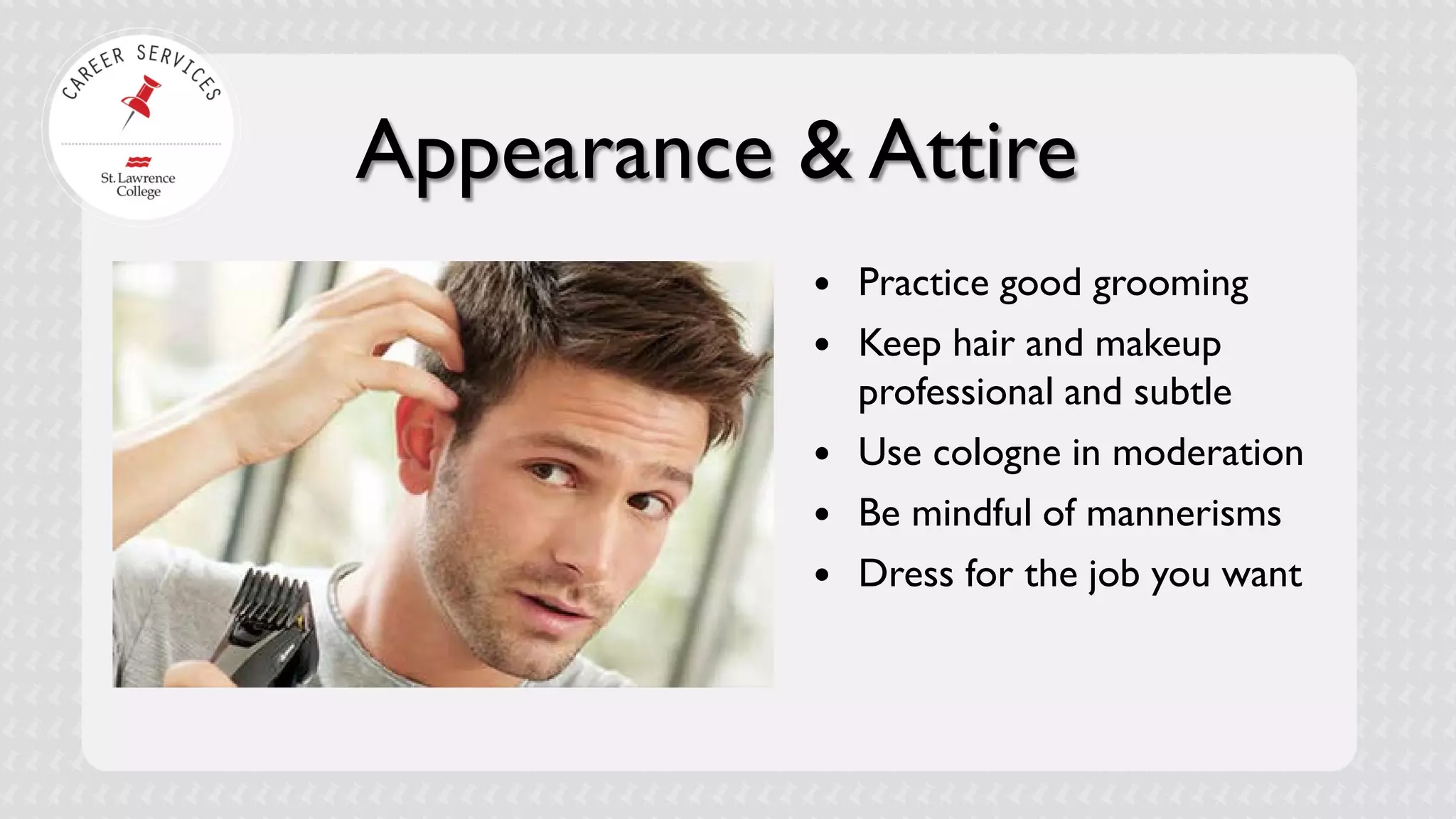
Practice good grooming 
 
Keep hair and makeup professional and subtle 
 
Use cologne in moderation 
 
Be mindful of mannerisms 
 
Dress for the job you want
Punctuality 
 
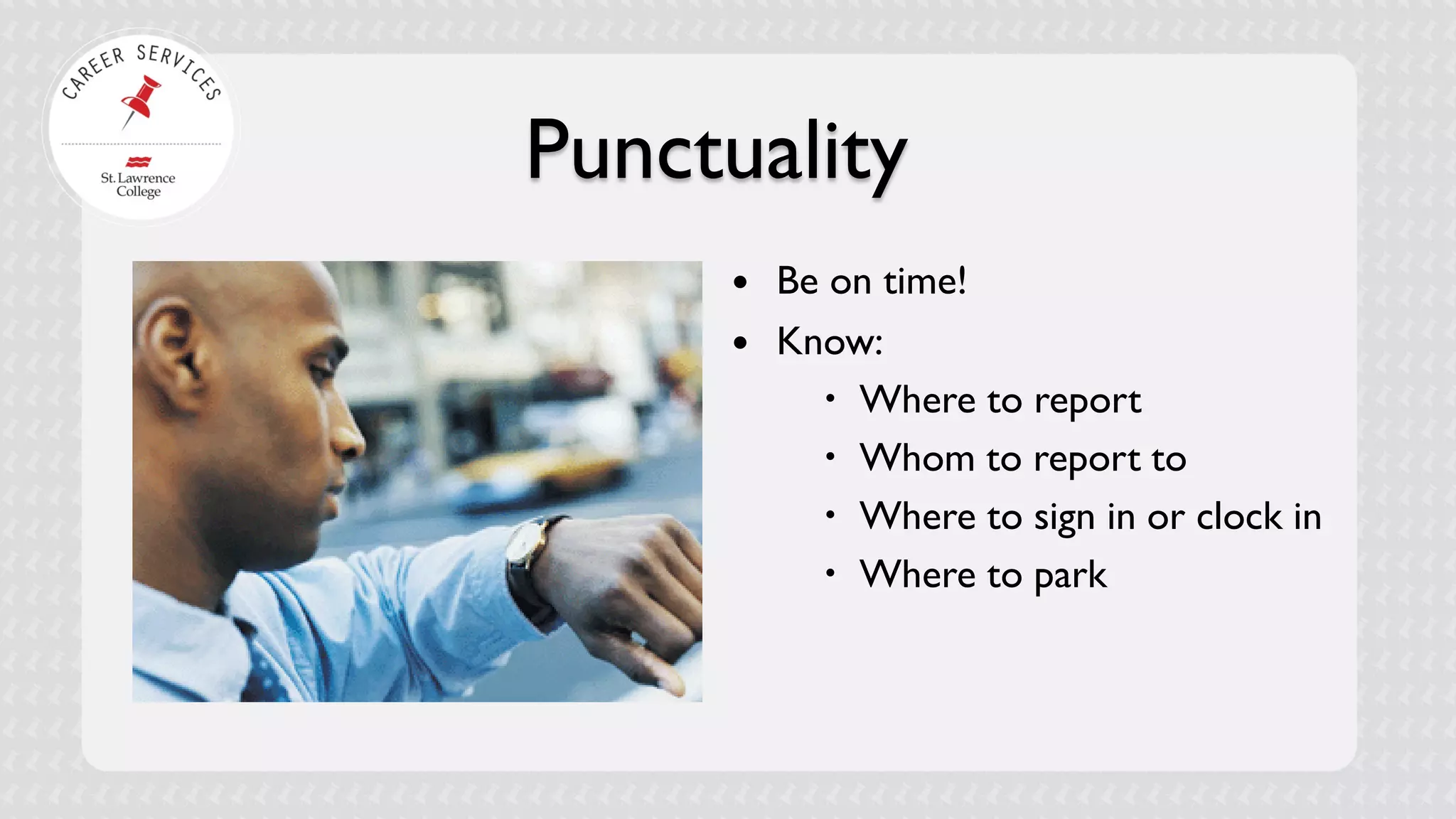
Be on time! 
 
Know: 
 
Where to report 
 
Whom to report to 
 
Where to sign in or clock in 
 
Where to park
Getting to Work on Time 
 
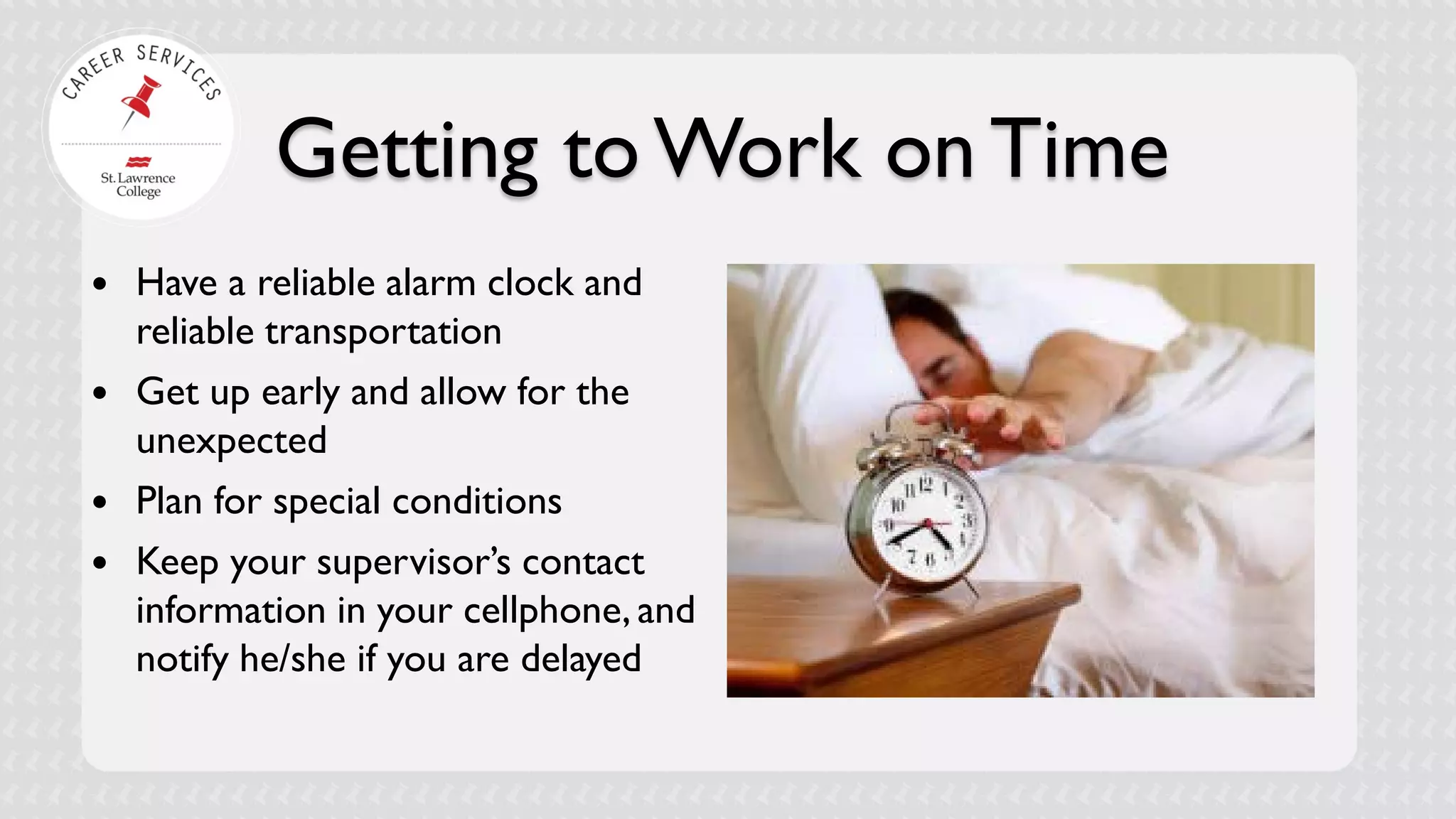
Have a reliable alarm clock and reliable transportation 
 
Get up early and allow for the unexpected 
 
Plan for special conditions 
 
Keep your supervisor’s contact information in your cellphone, and notify he/she if you are delayed
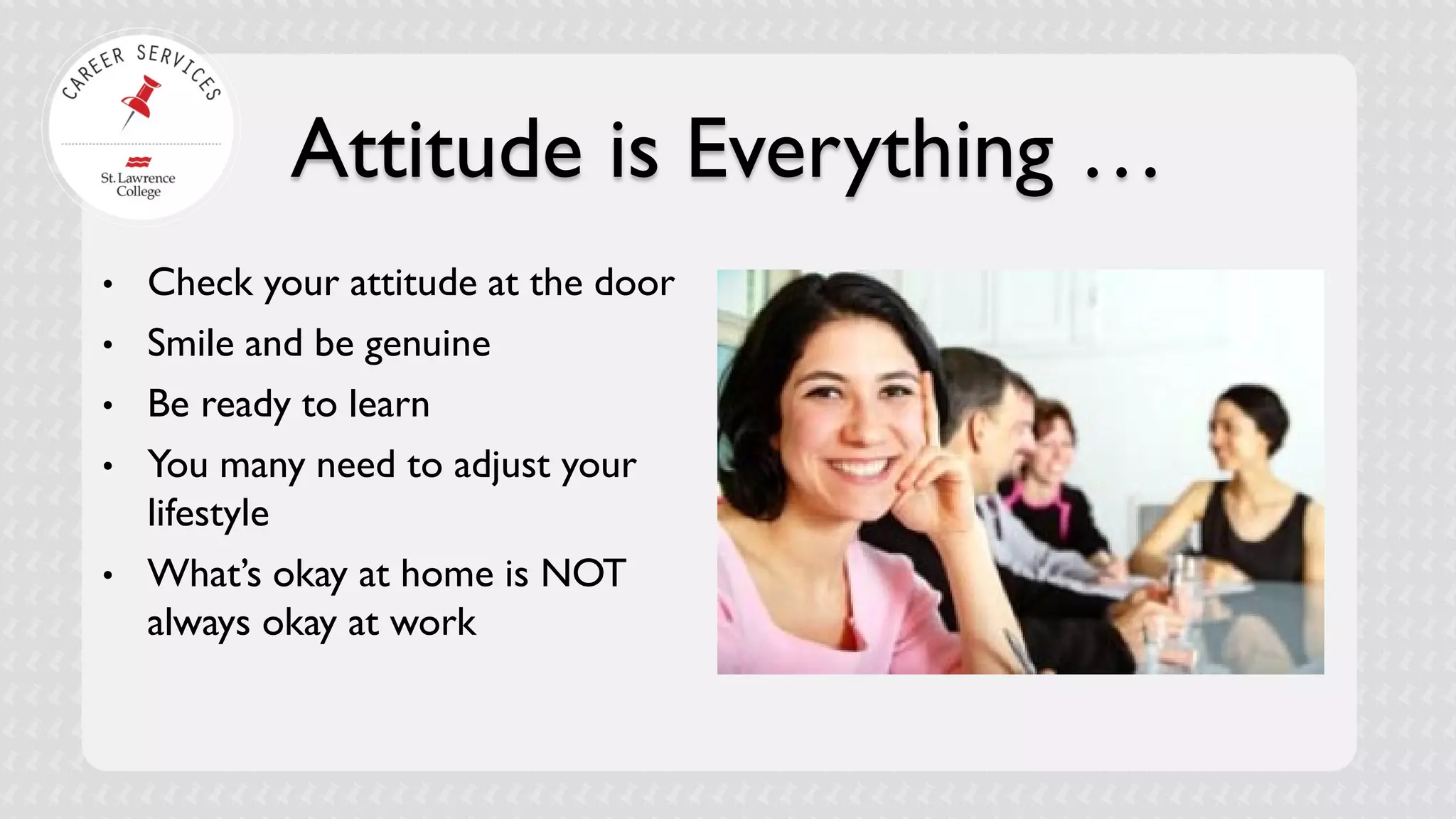
Attitude is Everything … 
• 
Check your attitude at the door 
• 
Smile and be genuine 
• 
Be ready to learn 
• 
You many need to adjust your lifestyle 
• 
What’s okay at home is NOT always okay at work
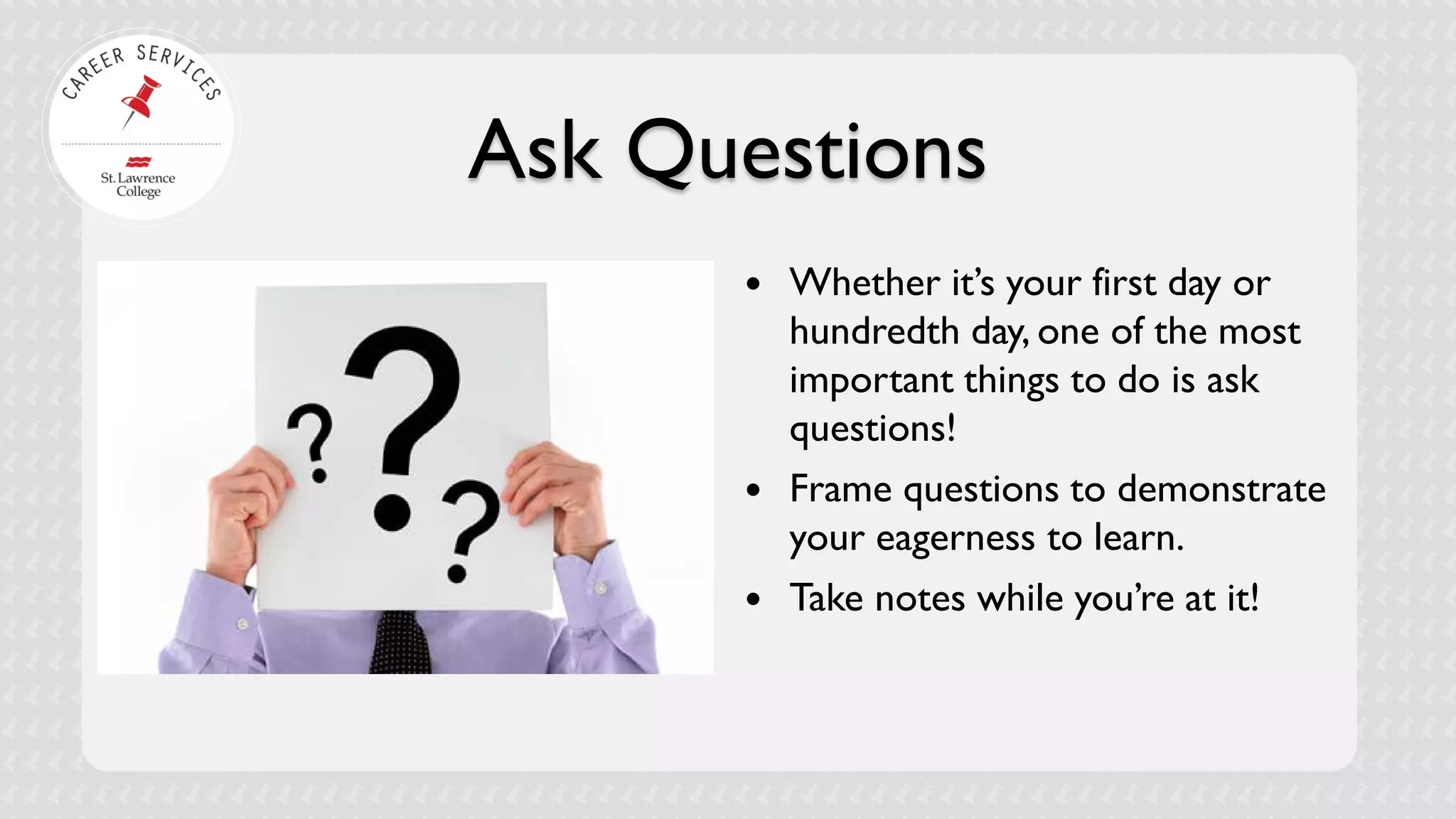
Ask Questions 
 
Whether it’s your first day or hundredth day, one of the most important things to do is ask questions! 
 
Frame questions to demonstrate your eagerness to learn. 
 
Take notes while you’re at it!
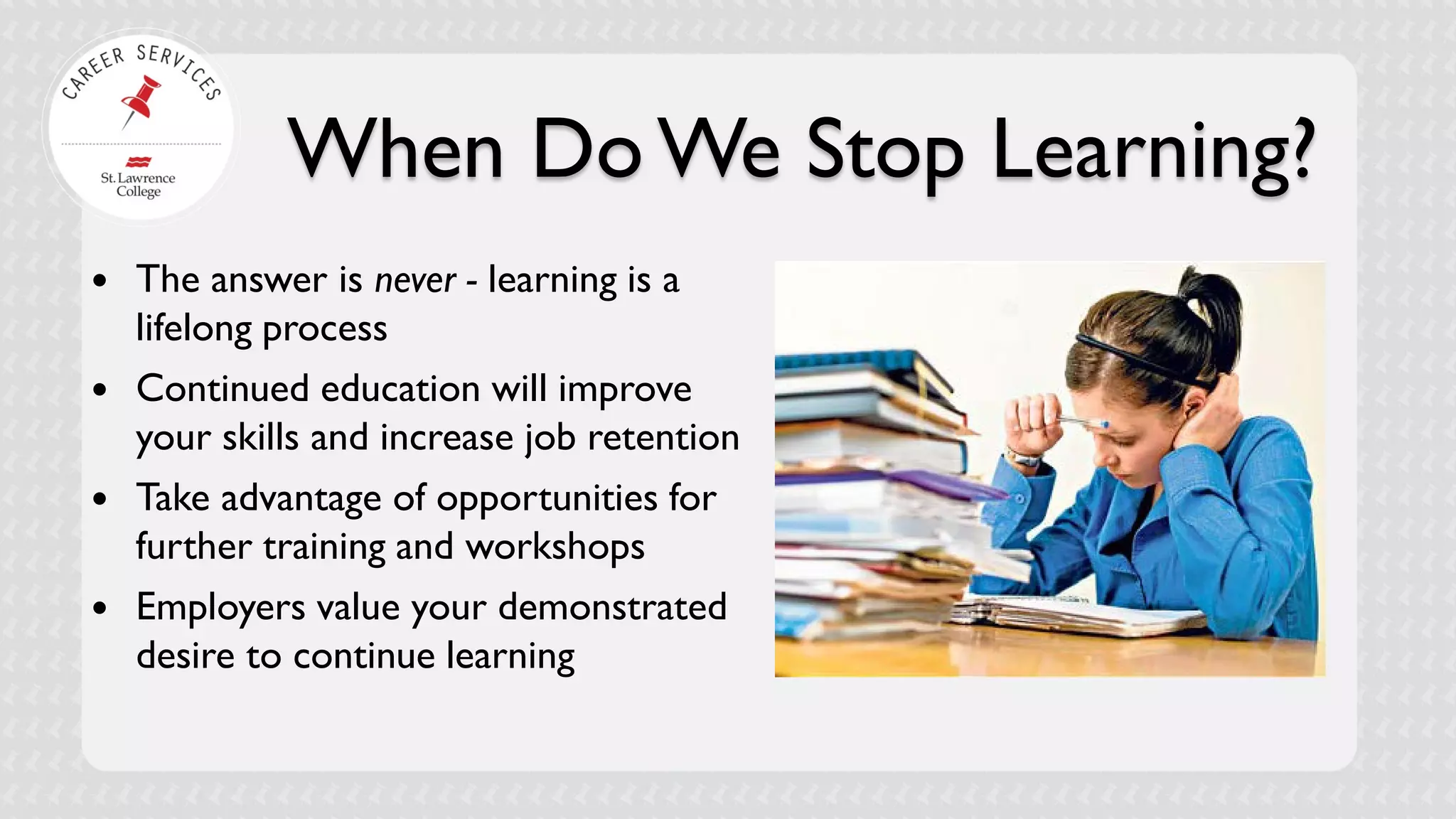
When Do We Stop Learning? 
 
The answer is never - learning is a lifelong process 
 
Continued education will improve your skills and increase job retention 
 
Take advantage of opportunities for further training and workshops 
 
Employers value your demonstrated desire to continue learning
The Employment Relationship: What Does My Employer Expect? 
Dependability; Maturity; Reliability; 
Trustworthiness; Cooperation
The Employment Relationship: Seeing the Employer’s Side of Things… 
Is important for job success; Makes you a valuable employee ; 
Allows room for advancement!
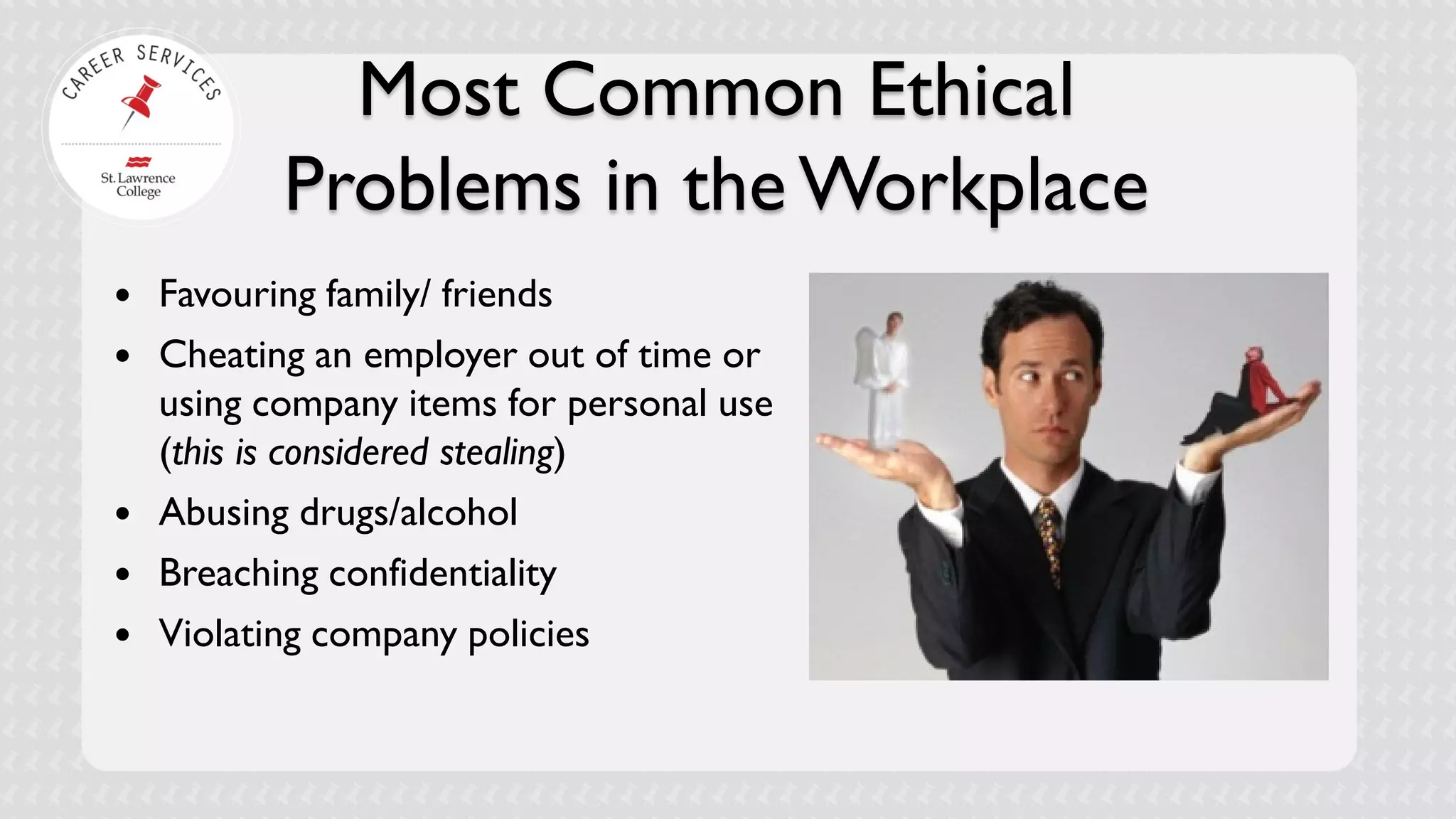
Most Common Ethical Problems in the Workplace 
 
Favouring family/ friends 
 
Cheating an employer out of time or using company items for personal use (this is considered stealing) 
 
Abusing drugs/alcohol 
 
Breaching confidentiality 
 
Violating company policies
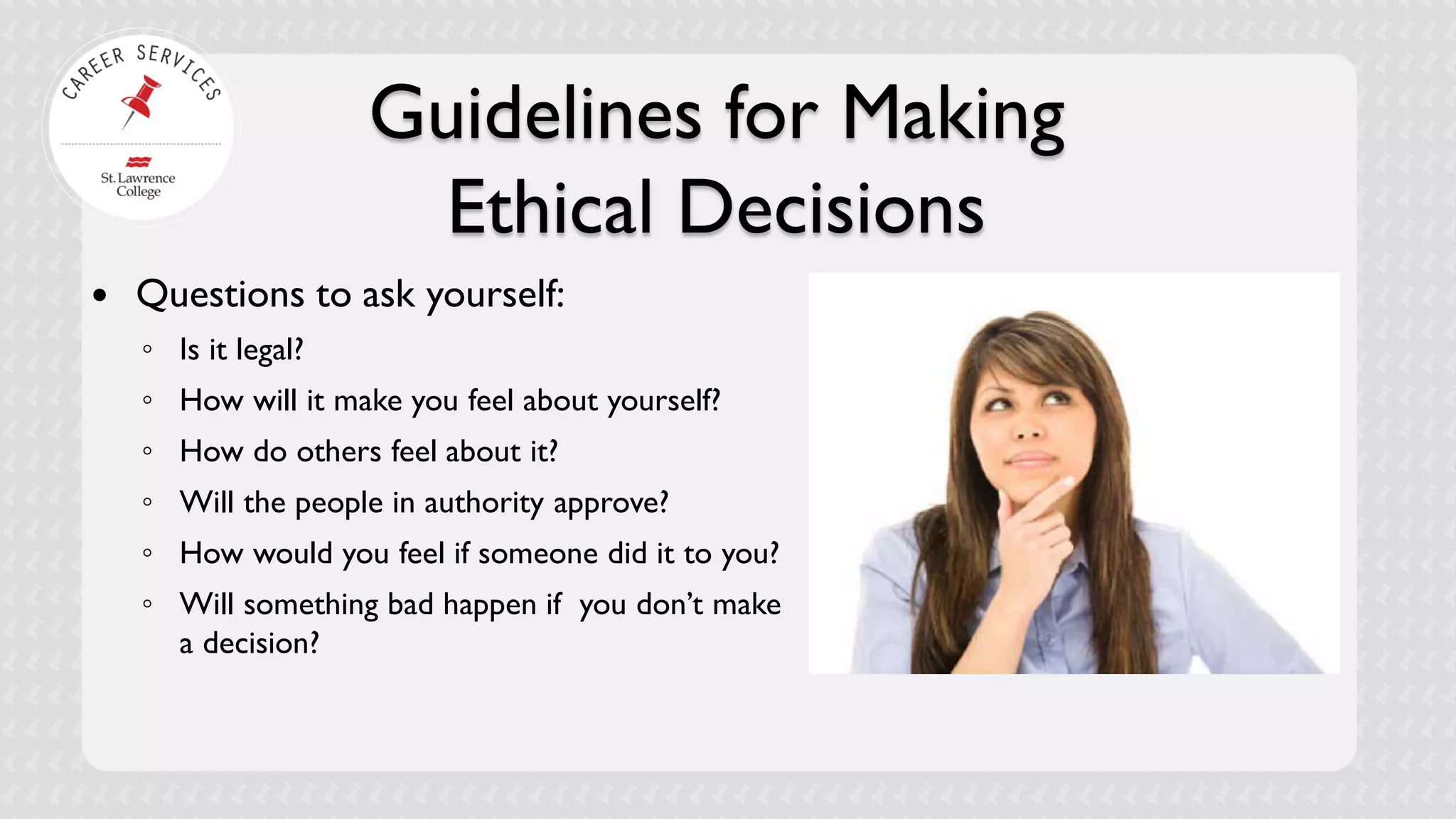
Guidelines for Making Ethical Decisions 
 
Questions to ask yourself: 
◦ 
Is it legal? 
◦ 
How will it make you feel about yourself? 
◦ 
How do others feel about it? 
◦ 
Will the people in authority approve? 
◦ 
How would you feel if someone did it to you? 
◦ 
Will something bad happen if you don’t make a decision?
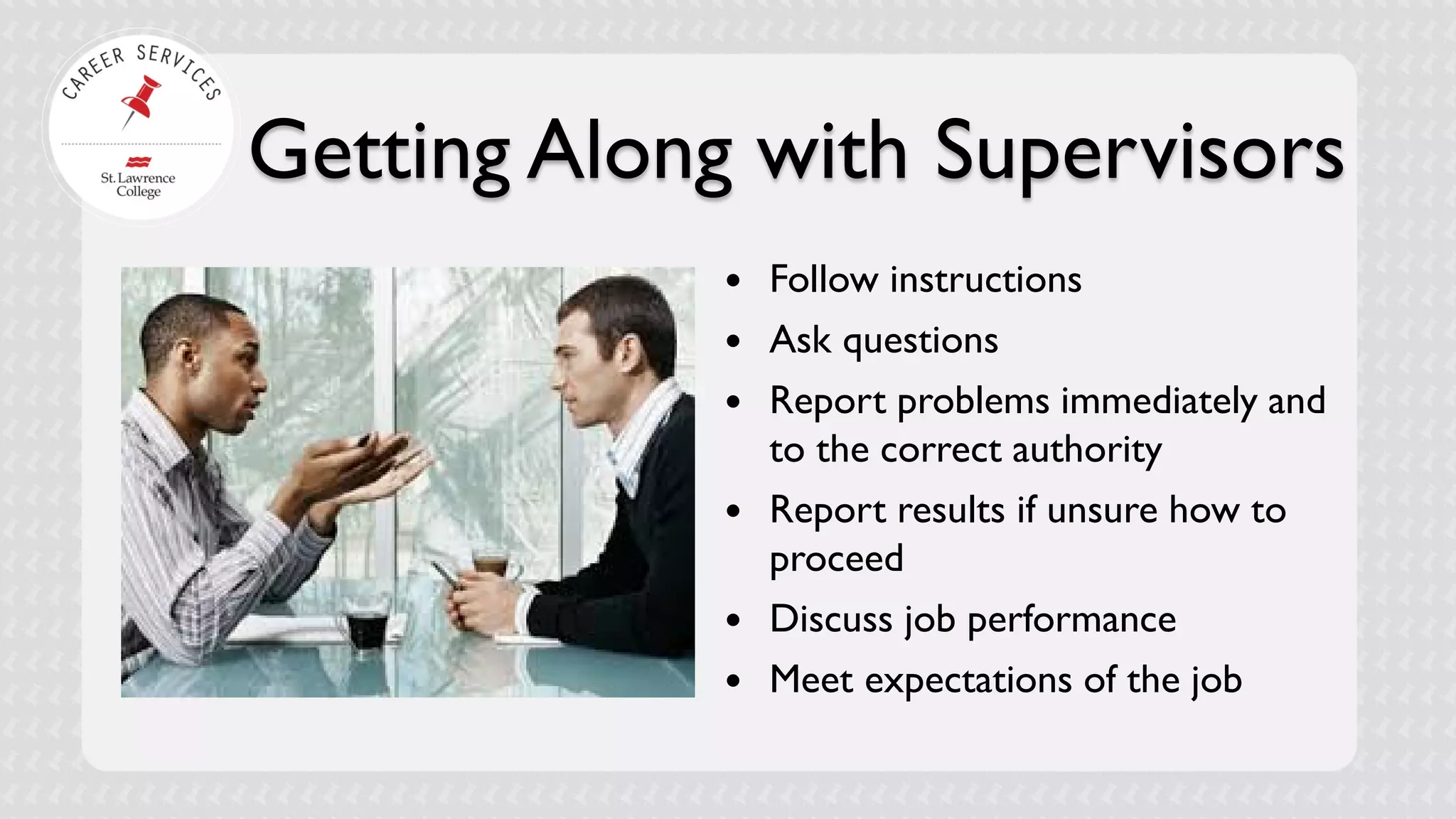
Getting Along with Supervisors 
 
Follow instructions 
 
Ask questions 
 
Report problems immediately and to the correct authority 
 
Report results if unsure how to proceed 
 
Discuss job performance 
 
Meet expectations of the job
Getting Along with Co-Workers 
 
Get to know others 
 
Don’t try to change everything 
 
Be honest 
 
Don’t gossip 
 
Be positive and supportive 
 
Show appreciation 
 
Share credit when deserved 
 
Return favours 
 
Ask for help/advise when needed 
 
Avoid battles 
 
Follow group standards 
 
Take interest in co-workers’ jobs
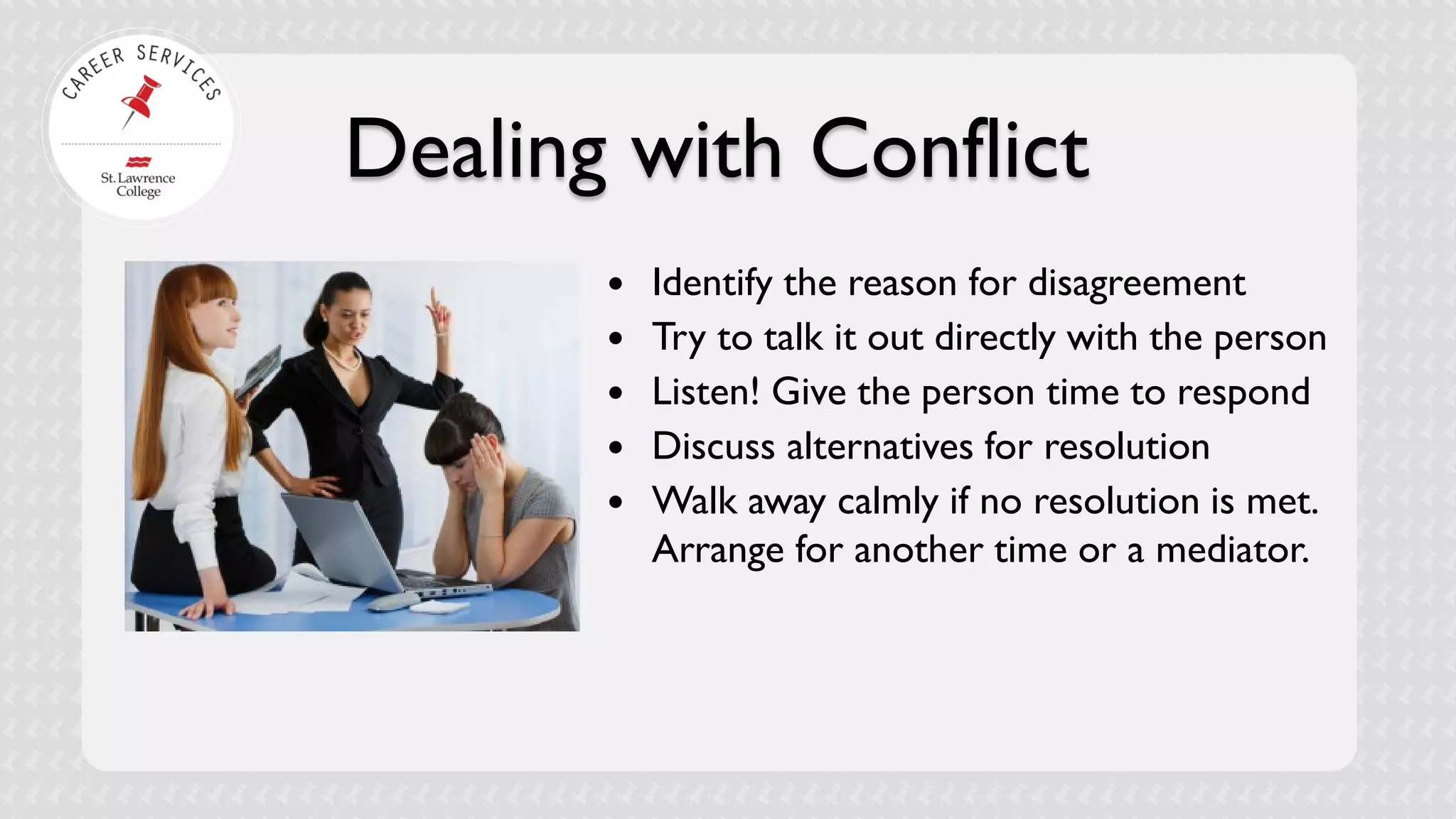
Dealing with Conflict 
 
Identify the reason for disagreement 
 
Try to talk it out directly with the person 
 
Listen! Give the person time to respond 
 
Discuss alternatives for resolution 
 
Walk away calmly if no resolution is met. Arrange for another time or a mediator.
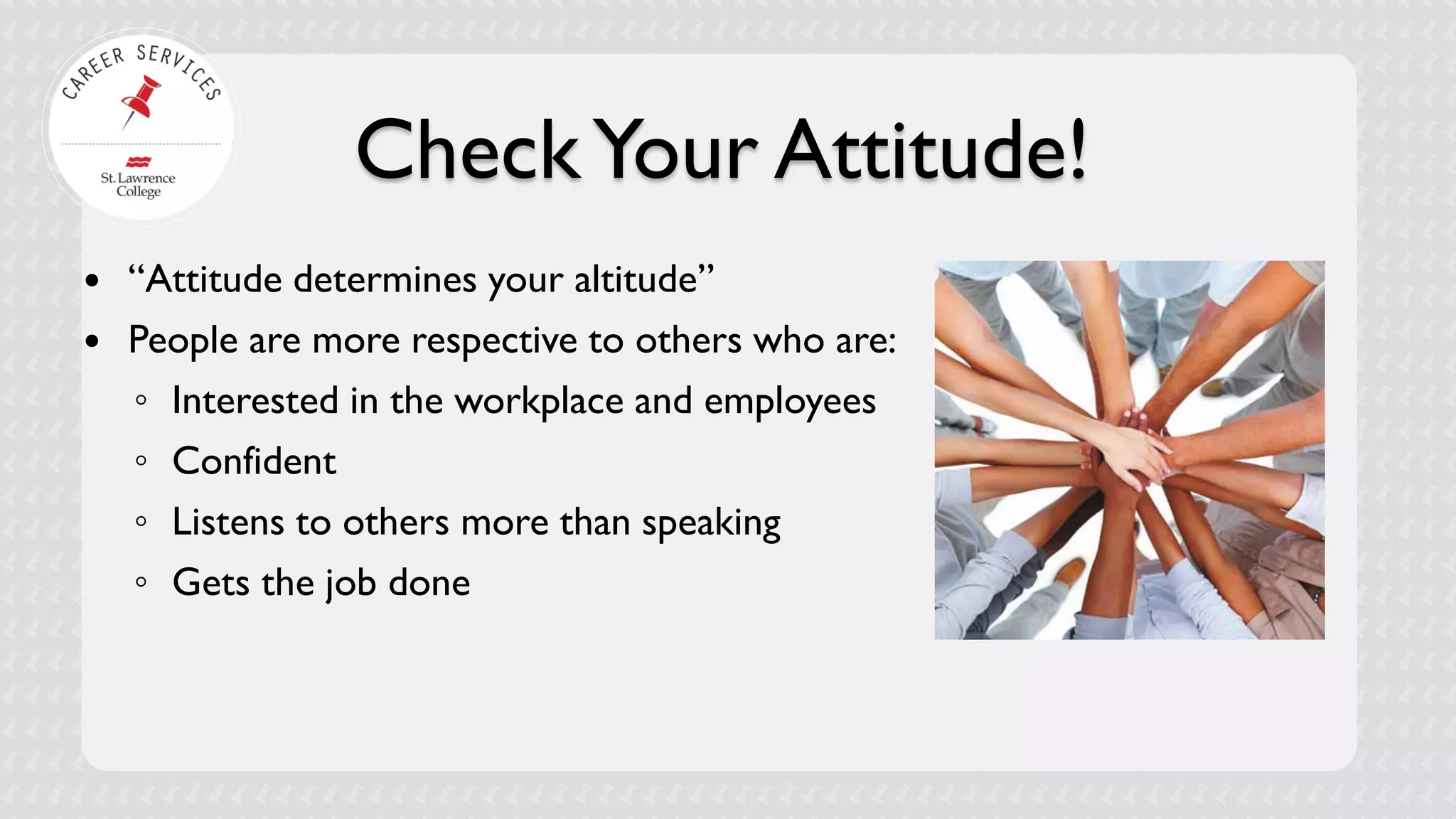
Check Your Attitude! 
 
“Attitude determines your altitude” 
 
People are more respective to others who are: 
◦ 
Interested in the workplace and employees 
◦ 
Confident 
◦ 
Listens to others more than speaking 
◦ 
Gets the job done
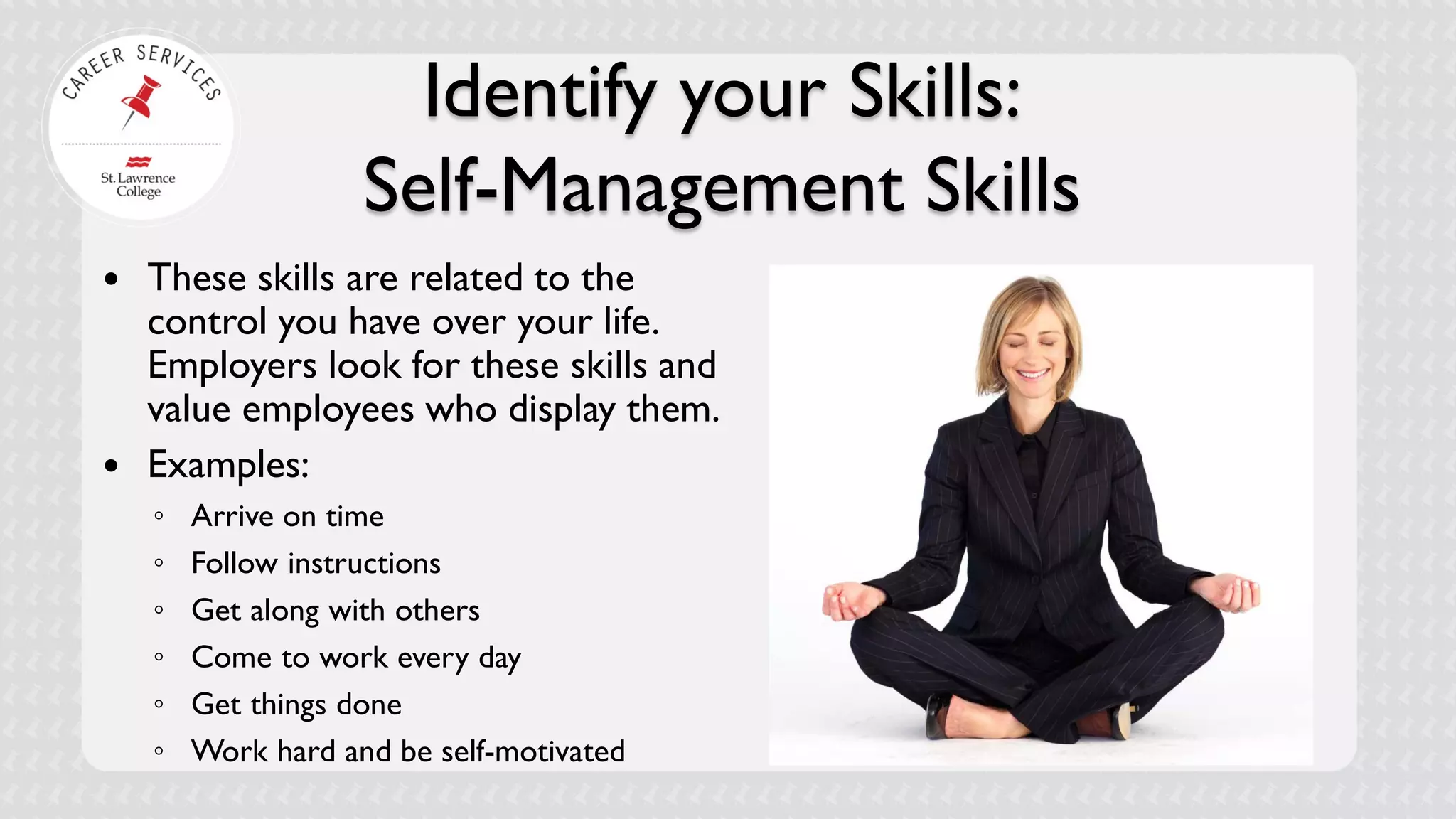
Identify your Skills: Self-Management Skills 
 
These skills are related to the control you have over your life. Employers look for these skills and value employees who display them. 
 
Examples: 
◦ 
Arrive on time 
◦ 
Follow instructions 
◦ 
Get along with others 
◦ 
Come to work every day 
◦ 
Get things done 
◦ 
Work hard and be self-motivated
Identify your Skills: Transferable Skills 
Skills that help you achieve more responsibilities, advancement and higher pay 
Meet deadlines 
Problem solver 
Public speaker 
Good listener 
Organized 
Teacher/Counselor 
Accept responsibility 
Understand/controls budget 
Manages time effectively 
Provide good customer service
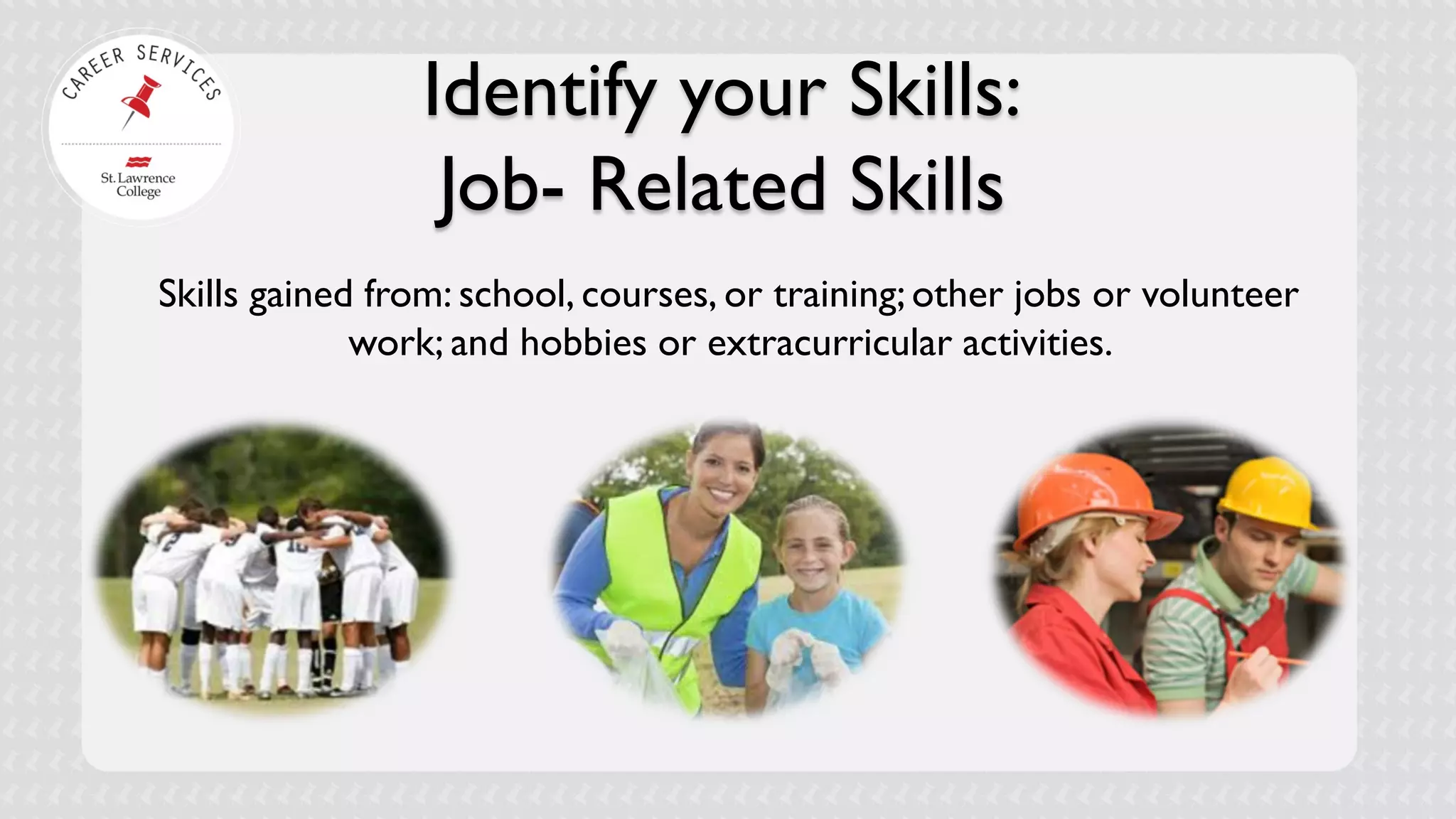
Identify your Skills: Job- Related Skills 
Skills gained from: school, courses, or training; other jobs or volunteer work; and hobbies or extracurricular activities.
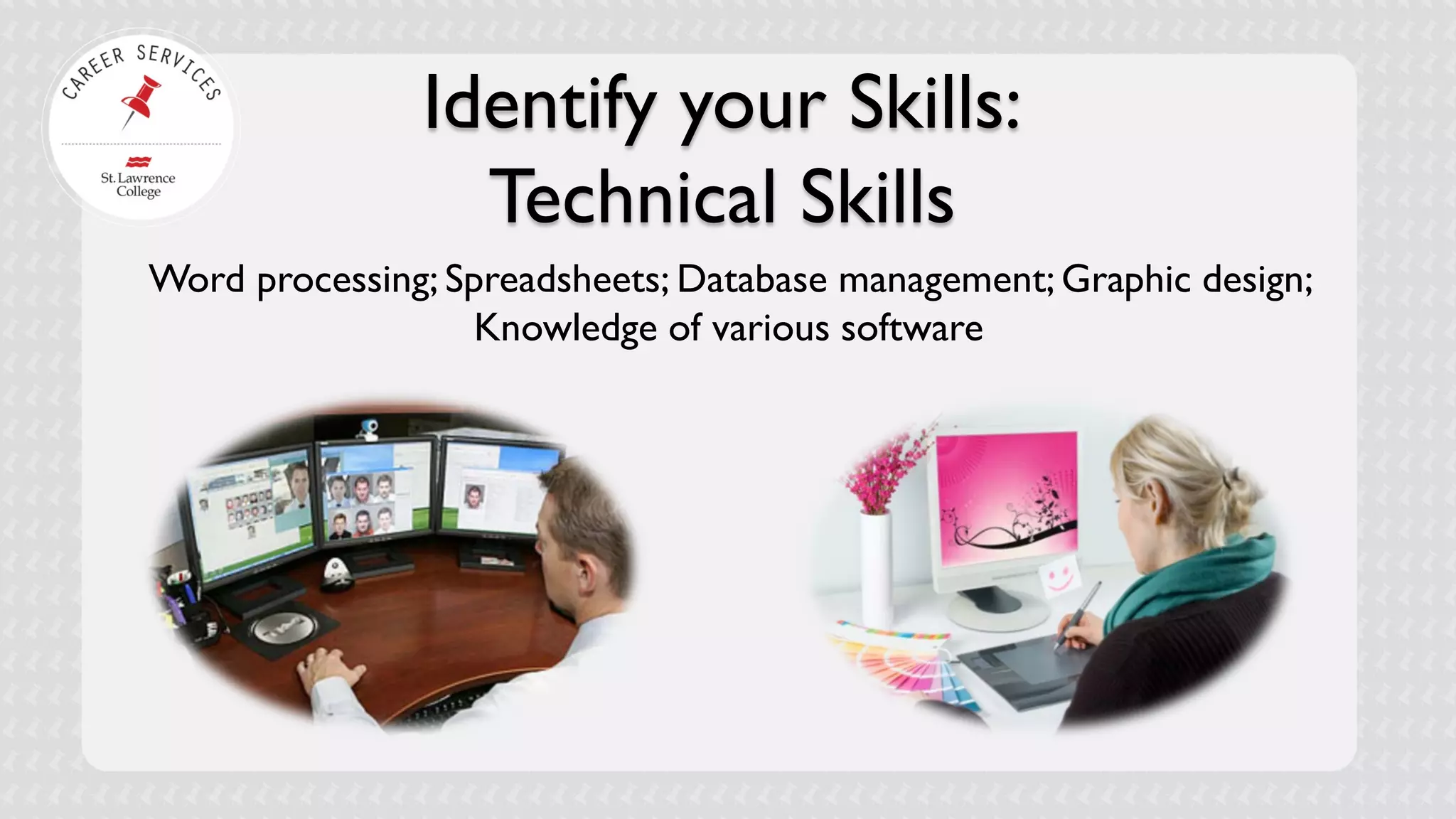
Identify your Skills: Technical Skills 
Word processing; Spreadsheets; Database management; Graphic design; Knowledge of various software
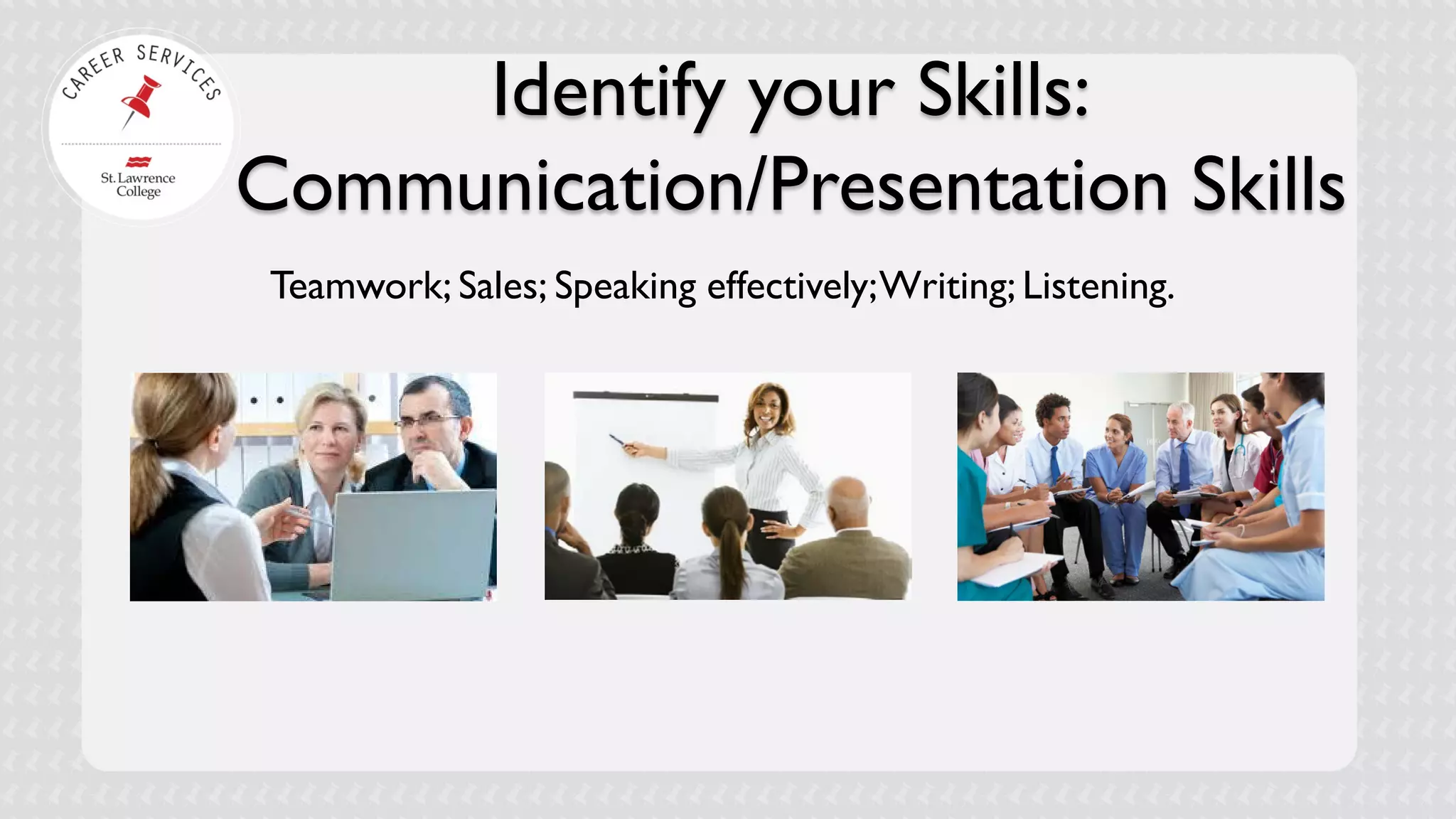
Identify your Skills: Communication/Presentation Skills 
Teamwork; Sales; Speaking effectively; Writing; Listening.
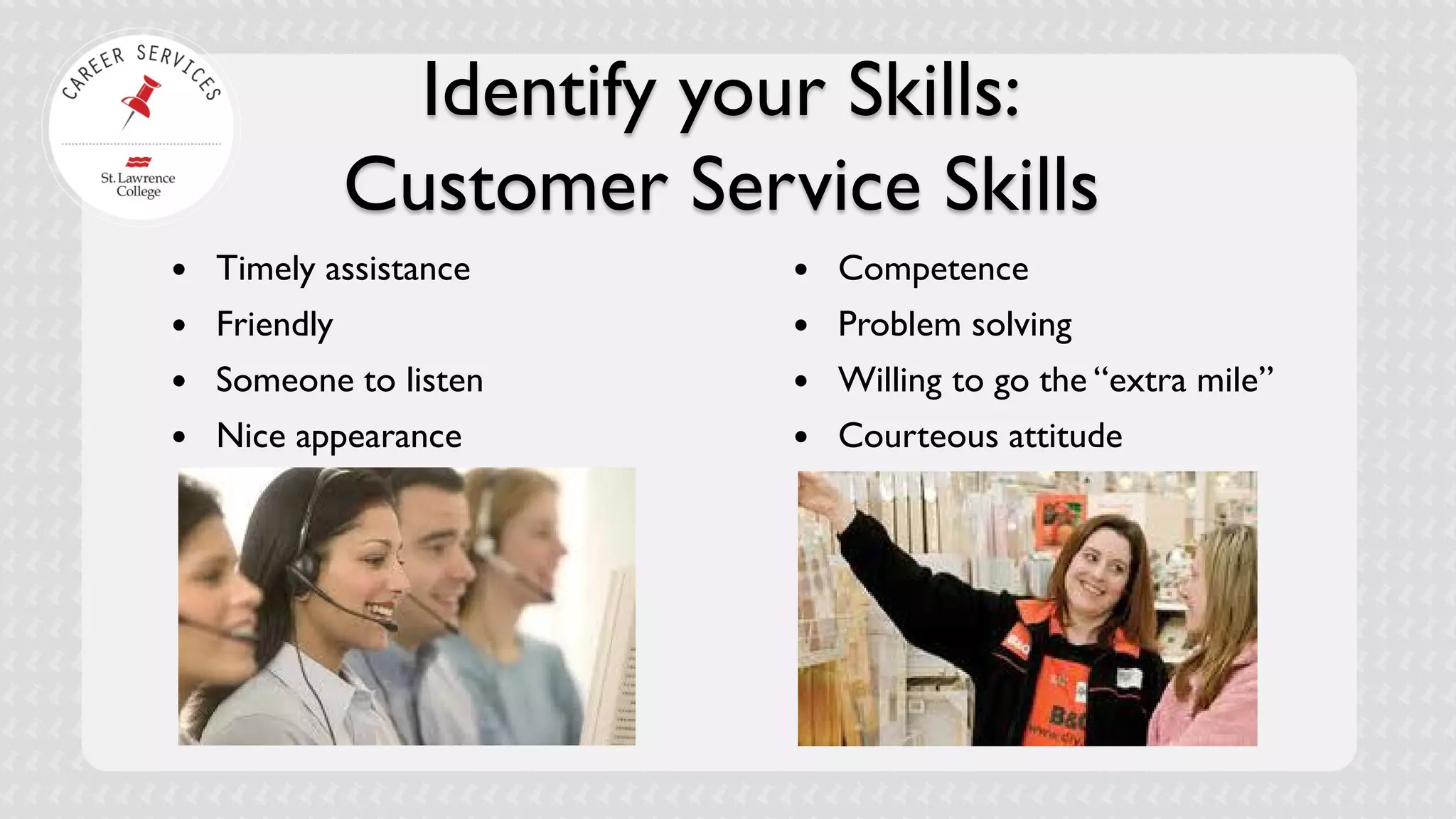
Identify your Skills: Customer Service Skills 
 
Timely assistance 
 
Friendly 
 
Someone to listen 
 
Nice appearance 
Competence 
Problem solving 
Willing to go the “extra mile” 
Courteous attitude
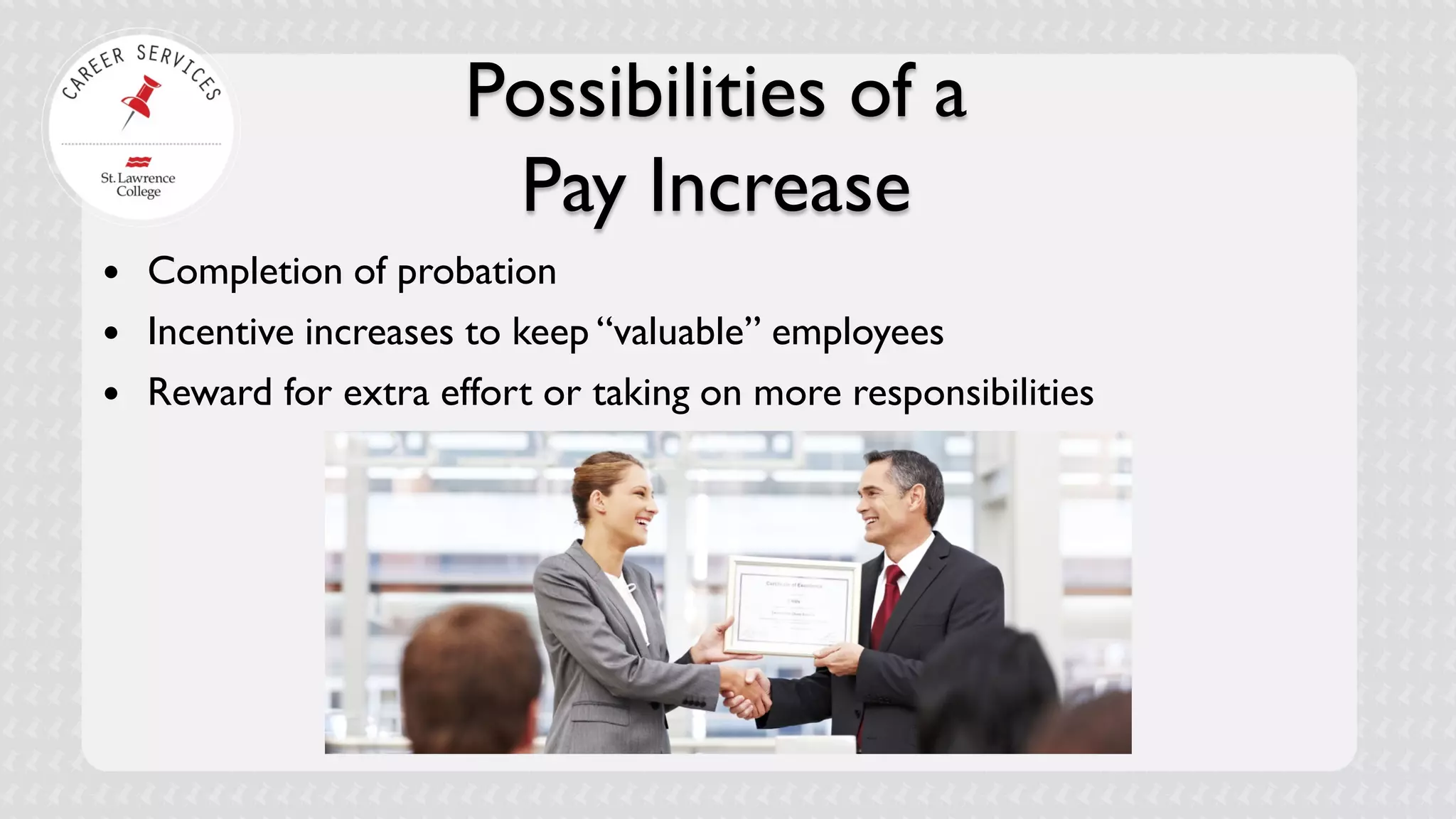
Possibilities of a Pay Increase 
 
Completion of probation 
 
Incentive increases to keep “valuable” employees 
 
Reward for extra effort or taking on more responsibilities
How to Put Yourself in Line for a Promotion 
 
Go above and beyond 
 
Get noticed for your efforts 
 
Keep track of job openings 
 
Upgrade your knowledge 
 
Network
Career Development 
 
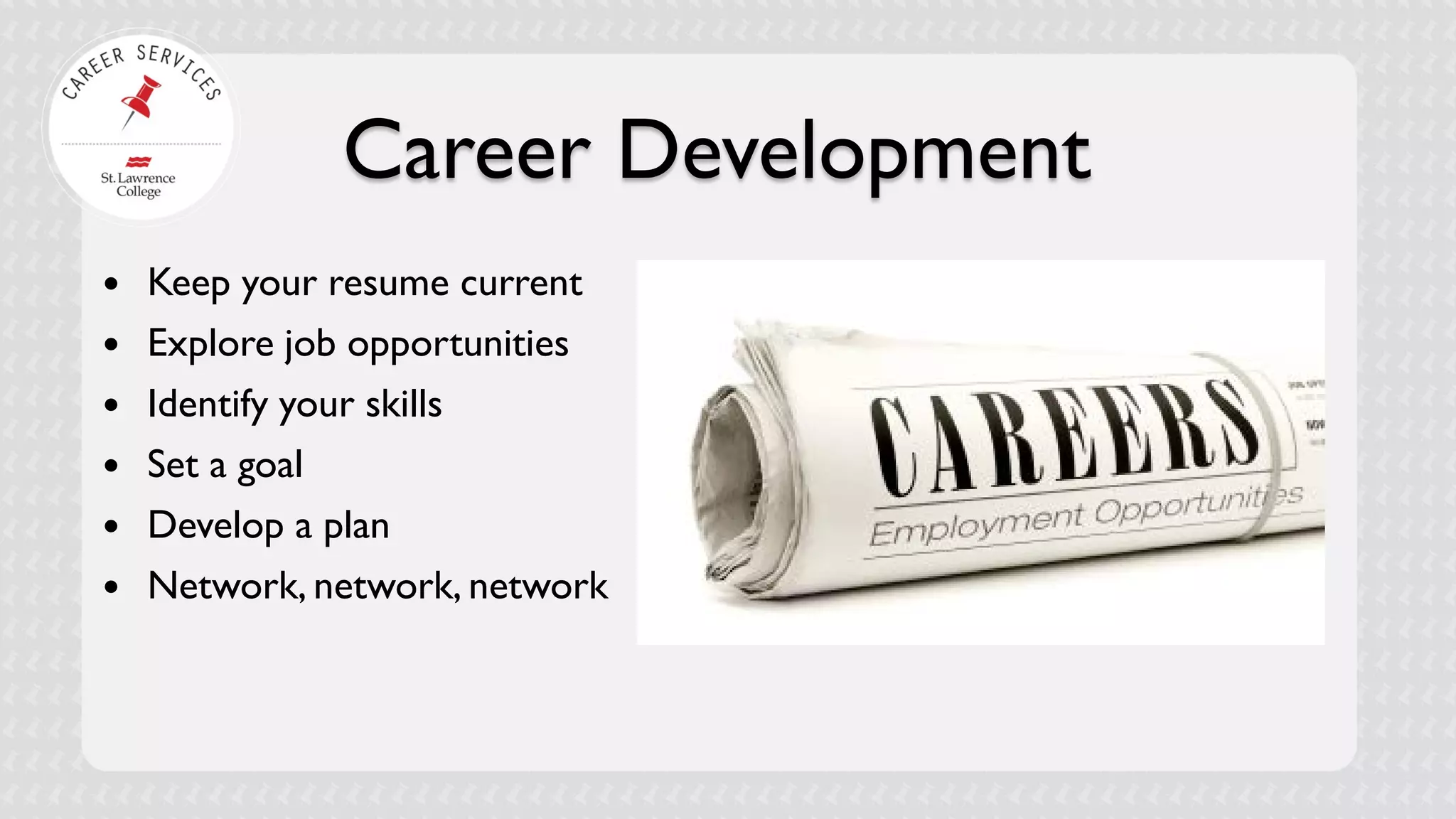
Keep your resume current 
 
Explore job opportunities 
 
Identify your skills 
 
Set a goal 
 
Develop a plan 
 
Network, network, network
FOR MORE INFORMATION: 
VISIT THE CAREER CENTRE: Room 11180 - 100 Portsmouth Avenue, Kingston, ON 
VISIT OUR WEBSITE: www.stlawrencecollege.ca/careerservices 
EMAIL: careerservices@sl.on.ca 
PHONE: 613-544-5400 Ext. 1844 
613-345-0660 Ext. 1844 
613-933-3259 Ext. 1844

Job retention workshop

  • 2.
    Purpose of Workshop • Improve soft skills • Know your skills • Increase job retention • Get ahead in the job!
  • 3.
    Where Do IBegin? • First impressions mean a lot! • Dress appropriately • Be punctual and prepared • Adjust your attitude accordingly • Ask questions
  • 4.
    Appearance & Attire  Practice good grooming  Keep hair and makeup professional and subtle  Use cologne in moderation  Be mindful of mannerisms  Dress for the job you want
  • 5.
    Punctuality  Beon time!  Know:  Where to report  Whom to report to  Where to sign in or clock in  Where to park
  • 6.
    Getting to Workon Time  Have a reliable alarm clock and reliable transportation  Get up early and allow for the unexpected  Plan for special conditions  Keep your supervisor’s contact information in your cellphone, and notify he/she if you are delayed
  • 7.
    Attitude is Everything… • Check your attitude at the door • Smile and be genuine • Be ready to learn • You many need to adjust your lifestyle • What’s okay at home is NOT always okay at work
  • 8.
    Ask Questions  Whether it’s your first day or hundredth day, one of the most important things to do is ask questions!  Frame questions to demonstrate your eagerness to learn.  Take notes while you’re at it!
  • 9.
    When Do WeStop Learning?  The answer is never - learning is a lifelong process  Continued education will improve your skills and increase job retention  Take advantage of opportunities for further training and workshops  Employers value your demonstrated desire to continue learning
  • 10.
    The Employment Relationship:What Does My Employer Expect? Dependability; Maturity; Reliability; Trustworthiness; Cooperation
  • 11.
    The Employment Relationship:Seeing the Employer’s Side of Things… Is important for job success; Makes you a valuable employee ; Allows room for advancement!
  • 12.
    Most Common EthicalProblems in the Workplace  Favouring family/ friends  Cheating an employer out of time or using company items for personal use (this is considered stealing)  Abusing drugs/alcohol  Breaching confidentiality  Violating company policies
  • 13.
    Guidelines for MakingEthical Decisions  Questions to ask yourself: ◦ Is it legal? ◦ How will it make you feel about yourself? ◦ How do others feel about it? ◦ Will the people in authority approve? ◦ How would you feel if someone did it to you? ◦ Will something bad happen if you don’t make a decision?
  • 14.
    Getting Along withSupervisors  Follow instructions  Ask questions  Report problems immediately and to the correct authority  Report results if unsure how to proceed  Discuss job performance  Meet expectations of the job
  • 15.
    Getting Along withCo-Workers  Get to know others  Don’t try to change everything  Be honest  Don’t gossip  Be positive and supportive  Show appreciation  Share credit when deserved  Return favours  Ask for help/advise when needed  Avoid battles  Follow group standards  Take interest in co-workers’ jobs
  • 16.
    Dealing with Conflict  Identify the reason for disagreement  Try to talk it out directly with the person  Listen! Give the person time to respond  Discuss alternatives for resolution  Walk away calmly if no resolution is met. Arrange for another time or a mediator.
  • 17.
    Check Your Attitude!  “Attitude determines your altitude”  People are more respective to others who are: ◦ Interested in the workplace and employees ◦ Confident ◦ Listens to others more than speaking ◦ Gets the job done
  • 18.
    Identify your Skills:Self-Management Skills  These skills are related to the control you have over your life. Employers look for these skills and value employees who display them.  Examples: ◦ Arrive on time ◦ Follow instructions ◦ Get along with others ◦ Come to work every day ◦ Get things done ◦ Work hard and be self-motivated
  • 19.
    Identify your Skills:Transferable Skills Skills that help you achieve more responsibilities, advancement and higher pay Meet deadlines Problem solver Public speaker Good listener Organized Teacher/Counselor Accept responsibility Understand/controls budget Manages time effectively Provide good customer service
  • 20.
    Identify your Skills:Job- Related Skills Skills gained from: school, courses, or training; other jobs or volunteer work; and hobbies or extracurricular activities.
  • 21.
    Identify your Skills:Technical Skills Word processing; Spreadsheets; Database management; Graphic design; Knowledge of various software
  • 22.
    Identify your Skills:Communication/Presentation Skills Teamwork; Sales; Speaking effectively; Writing; Listening.
  • 23.
    Identify your Skills:Customer Service Skills  Timely assistance  Friendly  Someone to listen  Nice appearance Competence Problem solving Willing to go the “extra mile” Courteous attitude
  • 24.
    Possibilities of aPay Increase  Completion of probation  Incentive increases to keep “valuable” employees  Reward for extra effort or taking on more responsibilities
  • 25.
    How to PutYourself in Line for a Promotion  Go above and beyond  Get noticed for your efforts  Keep track of job openings  Upgrade your knowledge  Network
  • 26.
    Career Development  Keep your resume current  Explore job opportunities  Identify your skills  Set a goal  Develop a plan  Network, network, network
  • 27.
    FOR MORE INFORMATION: VISIT THE CAREER CENTRE: Room 11180 - 100 Portsmouth Avenue, Kingston, ON VISIT OUR WEBSITE: www.stlawrencecollege.ca/careerservices EMAIL: careerservices@sl.on.ca PHONE: 613-544-5400 Ext. 1844 613-345-0660 Ext. 1844 613-933-3259 Ext. 1844