JBoss Wise: breaking barriers to WS testing
Alessio Soldano

alessio.soldano@jboss.com
Principal Software Eng.
JBoss - Red Hat
October 22nd, 2013
Milan JBoss User Group
Let's invoke a WS in Java...
●

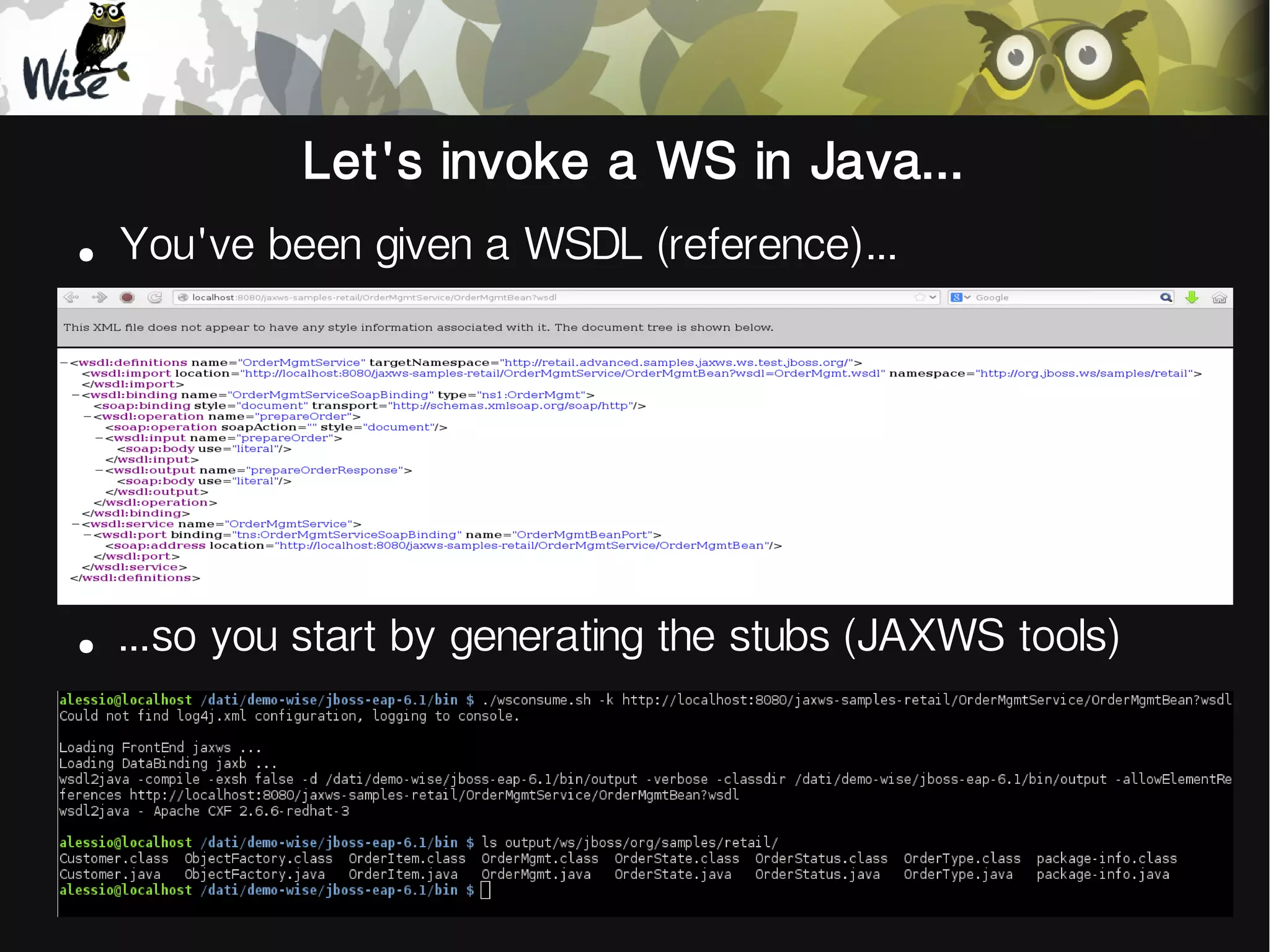
You've been given a WSDL (reference)...

●

...so you start by generating the stubs (JAXWS tools)
Let's invoke a WS in Java...
●

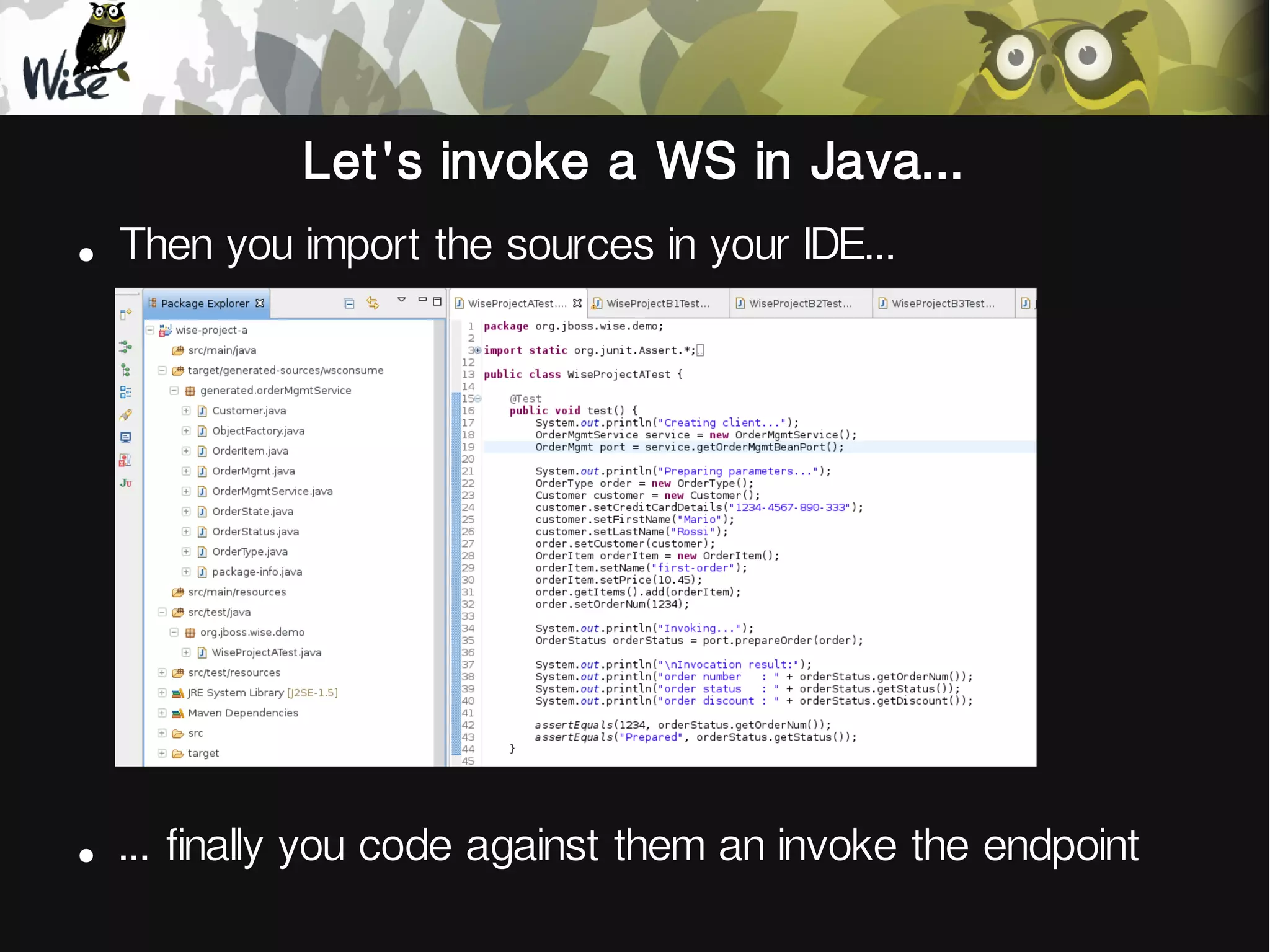
Then you import the sources in your IDE...

●

... finally you code against them an invoke the endpoint
Perhaps you automate the process a bit...
●

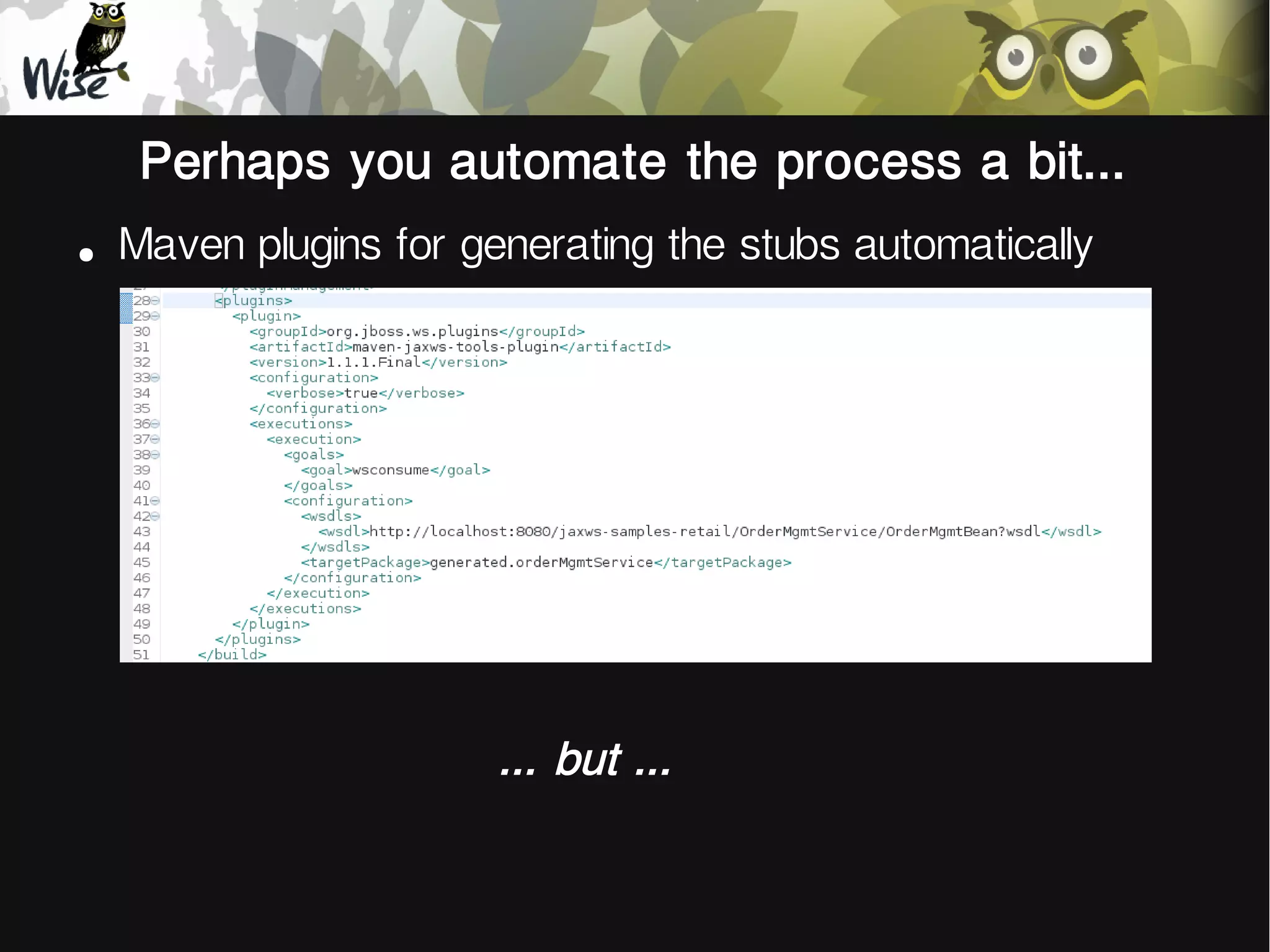
Maven plugins for generating the stubs automatically

... but ...
Pros / Cons
●

Your code is actually bound to the generated classes
(client – server coupling)

●

Good solution for clients of stable endpoints

●

Not suitable to quick testing of multiple/different endpoints
JBoss Wise
●

Java library for easily invoking webservices

●

Built on top of JBossWS stack

●

Goals
‣Effective
‣Easy

client/server decoupling

browsing of WSDL models

‣(nearly)zero-code
‣Lowering

invocation of WS operations

the technical entry level to WS testing
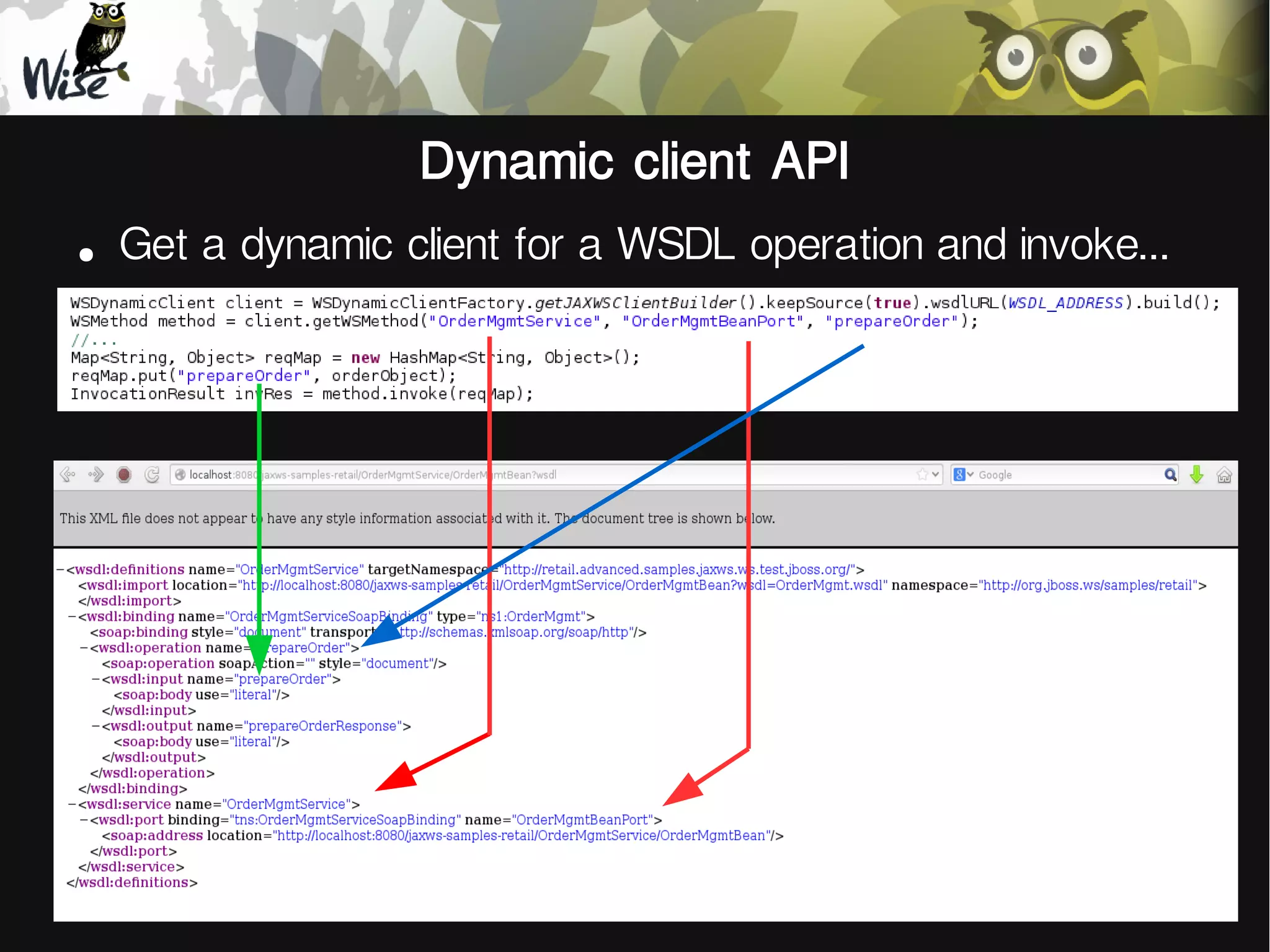
Dynamic client API
●

Get a dynamic client for a WSDL operation and invoke...
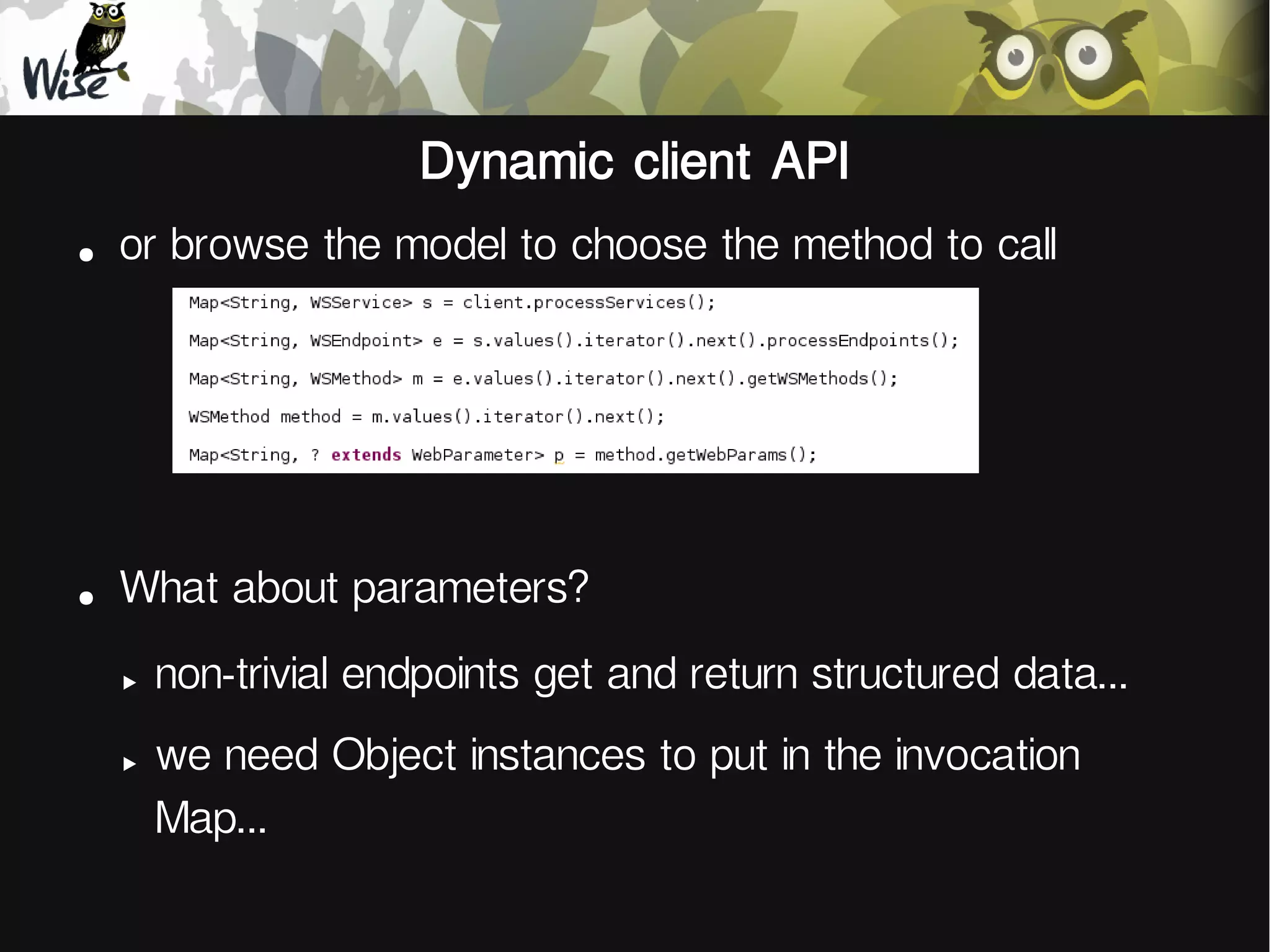
Dynamic client API
●

or browse the model to choose the method to call

●

What about parameters?
‣

non-trivial endpoints get and return structured data...

‣

we need Object instances to put in the invocation
Map...
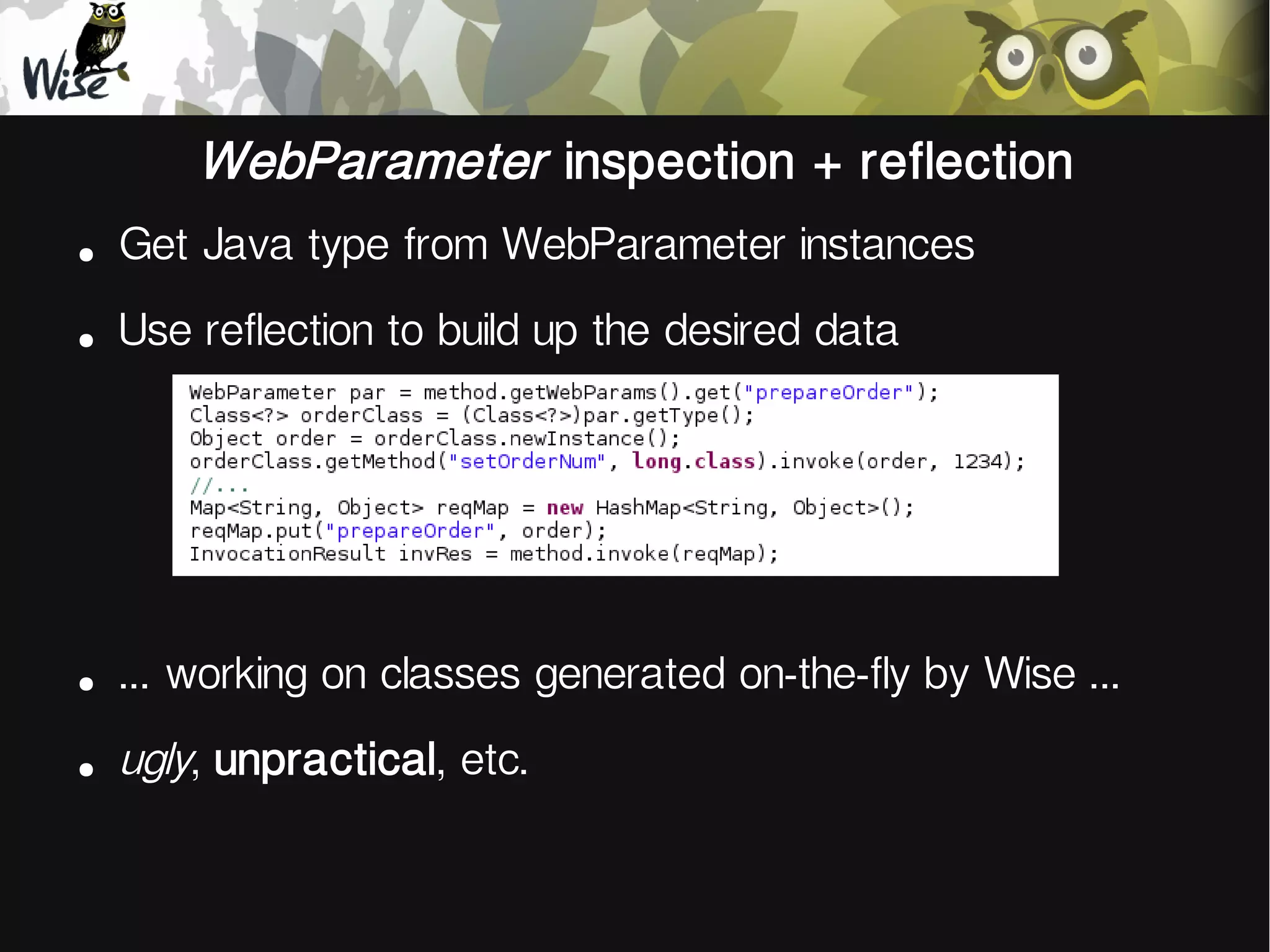
WebParameter inspection + reflection
●

Get Java type from WebParameter instances

●

Use reflection to build up the desired data

●

... working on classes generated on-the-fly by Wise ...

●

ugly, unpractical, etc.
Wise mappers
●

Allow users to invoke endpoints using their own model

●

Map user model to internally generated client classes

●

Any custom mapper can be implemented

●

... moving the problem to defining the proper vehicle and
transformation of user data into target endpoint
parameters
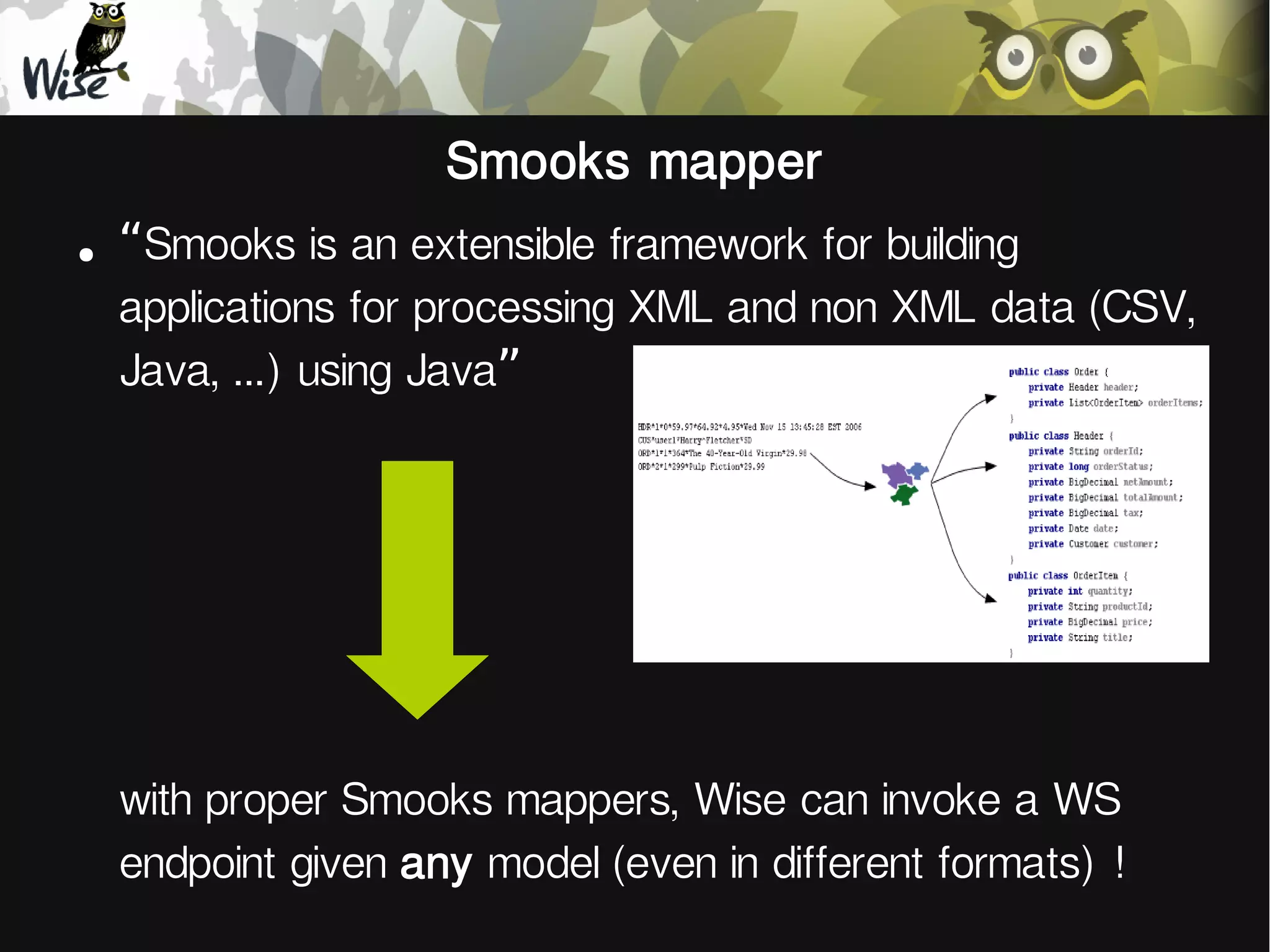
Smooks mapper
●

“Smooks is an extensible framework for building
applications for processing XML and non XML data (CSV,
Java, ...) using Java”

with proper Smooks mappers, Wise can invoke a WS
endpoint given any model (even in different formats) !
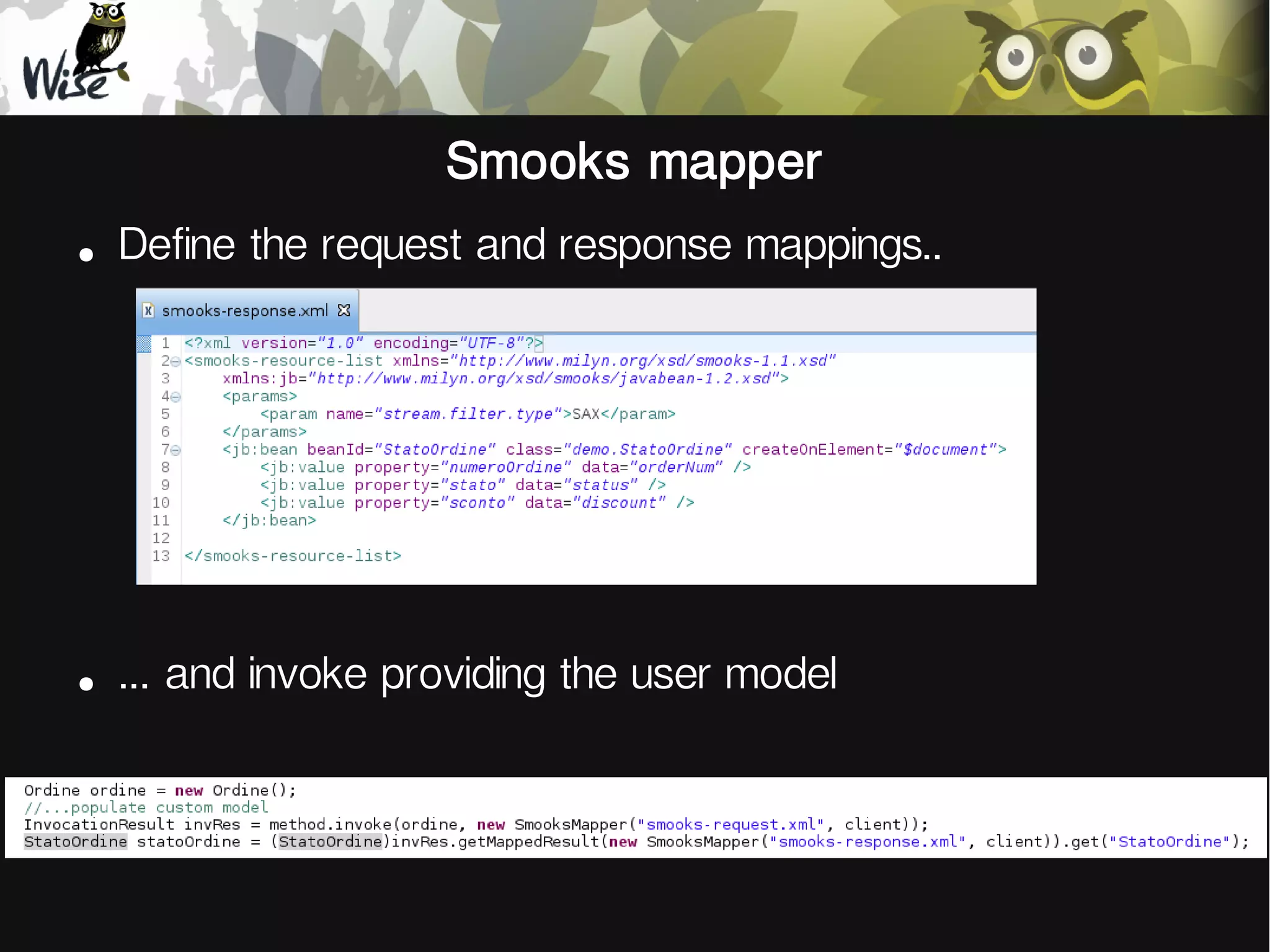
Smooks mapper
●

Define the request and response mappings..

●

... and invoke providing the user model
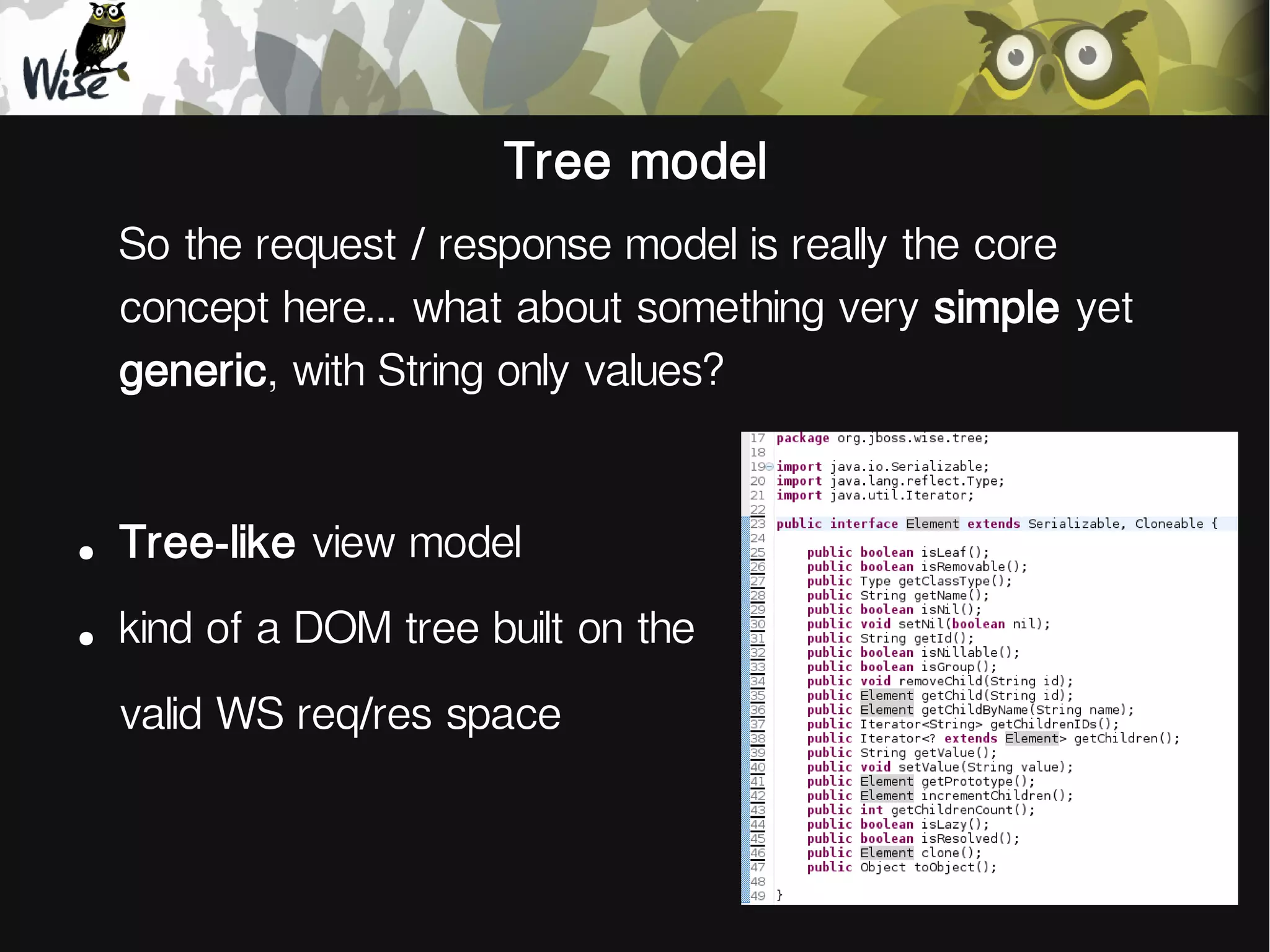
Tree model
So the request / response model is really the core
concept here... what about something very simple yet
generic, with String only values?

●

Tree-like view model

●

kind of a DOM tree built on the
valid WS req/res space
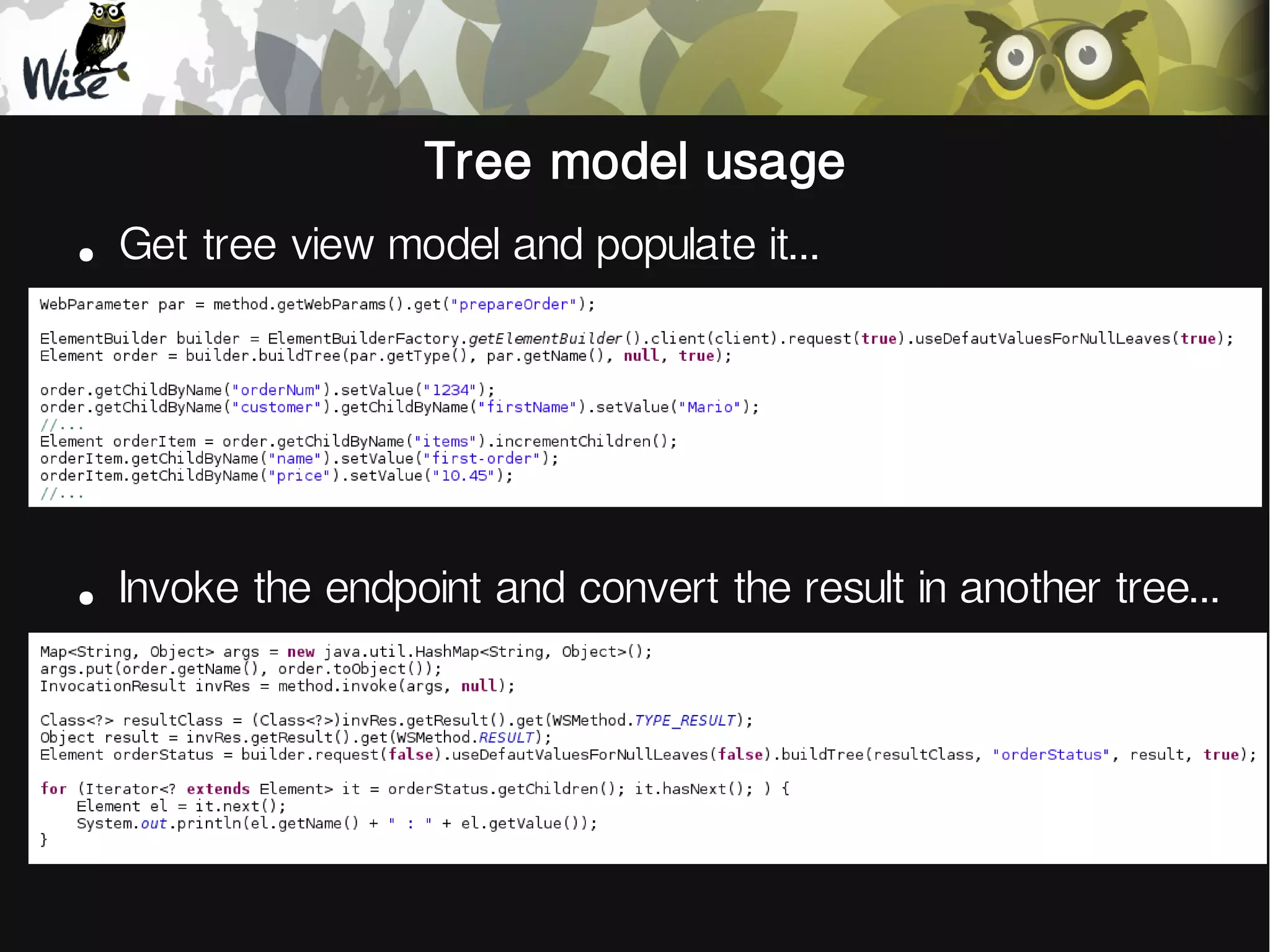
Tree model usage
●

Get tree view model and populate it...

●

Invoke the endpoint and convert the result in another tree...
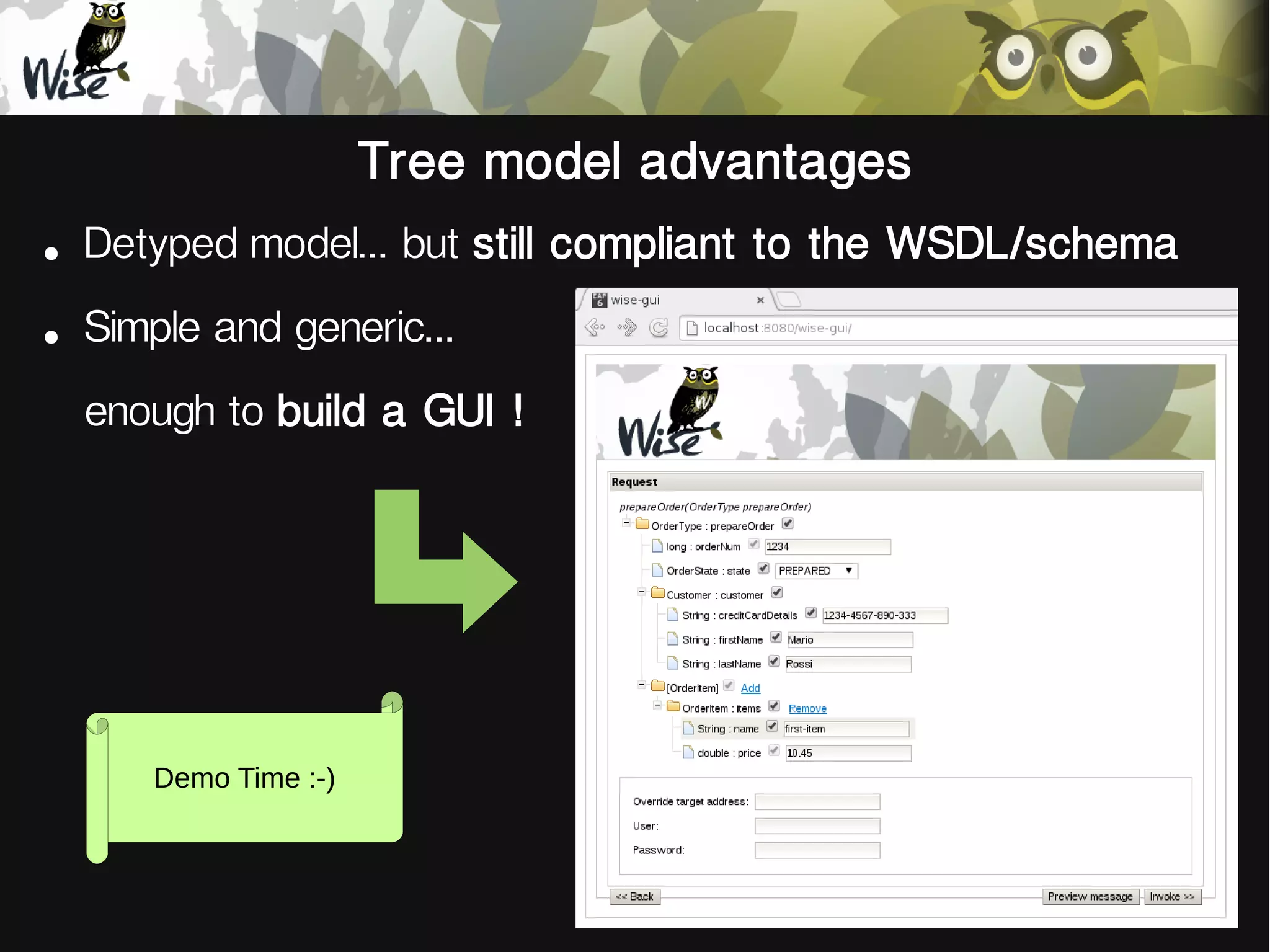
Tree model advantages
●

Detyped model... but still compliant to the WSDL/schema

●

Simple and generic...
enough to build a GUI !

Demo Time :-)
Wise GUI
●

Web based
‣
‣

usable everywhere (even on mobile...)

‣
●

no need for Eclipse / IDE
deployed on JBoss (even on Openshift...)

Focus on the data, not on the technology
‣

No WS, XML or Java knowledge required

‣

Fast / agile WS testing

‣

Enable business acceptance tests from analysts
Wise Invokes Services Easily
●

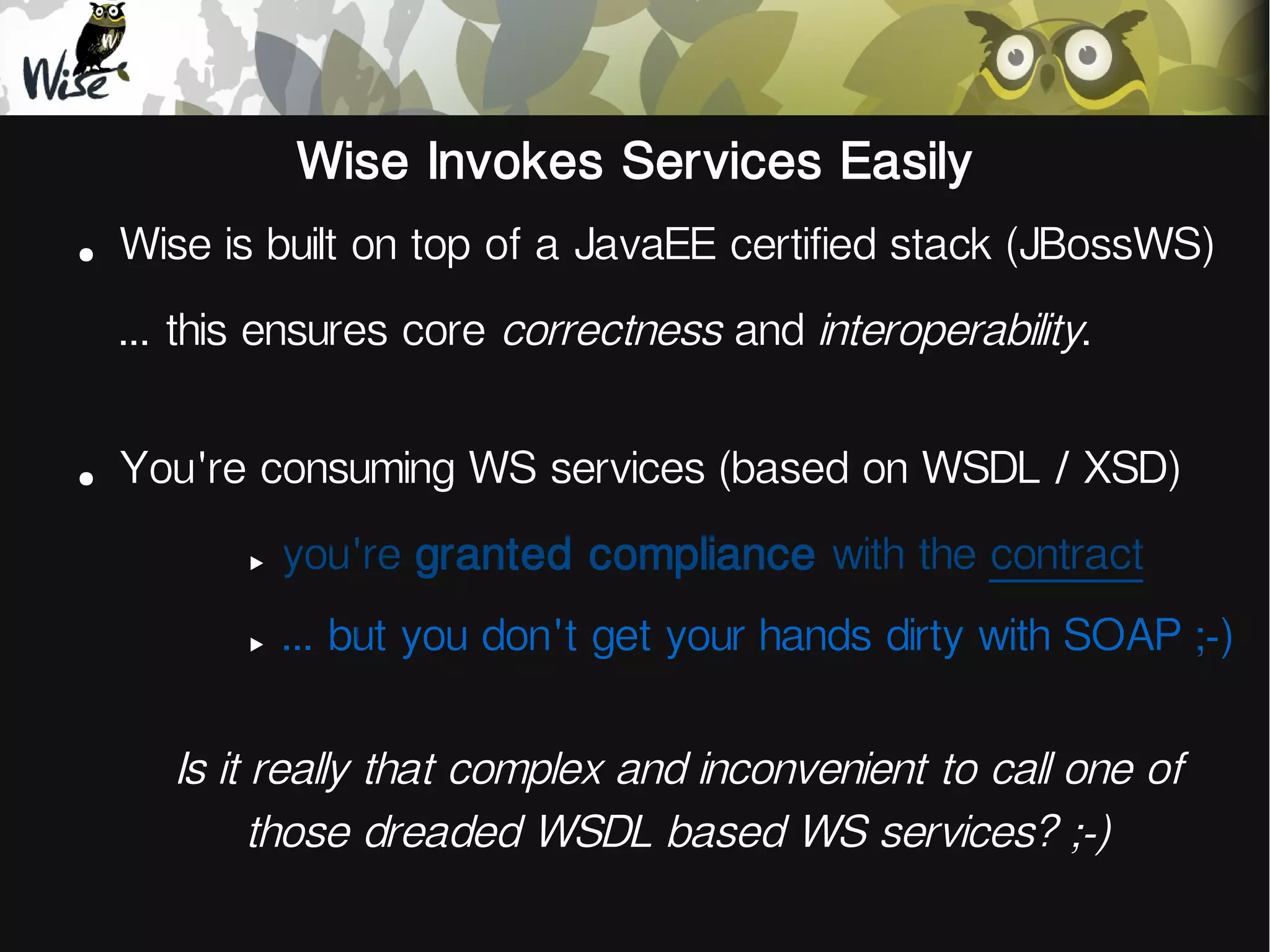
Wise is built on top of a JavaEE certified stack (JBossWS)
... this ensures core correctness and interoperability.

●

You're consuming WS services (based on WSDL / XSD)
‣

you're granted compliance with the contract

‣

... but you don't get your hands dirty with SOAP ;-)

Is it really that complex and inconvenient to call one of
those dreaded WSDL based WS services? ;-)
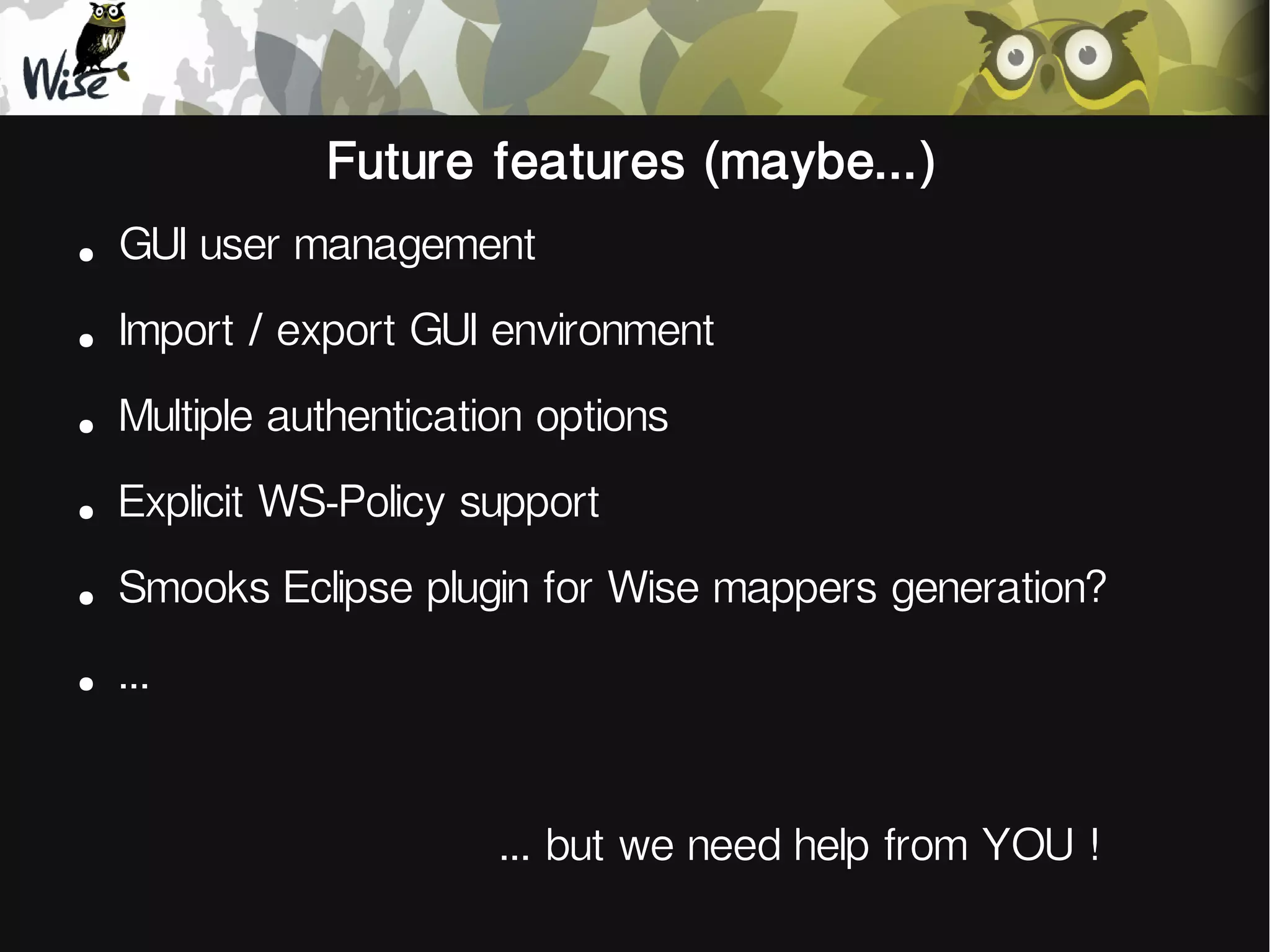
Future features (maybe...)
●

GUI user management

●

Import / export GUI environment

●

Multiple authentication options

●

Explicit WS-Policy support

●

Smooks Eclipse plugin for Wise mappers generation?

●

...
... but we need help from YOU !
Links
●

Project homepage: www.jboss.org/wise

●

Blog: jbosswise.blogspot.com

●

Code for this presentation: https://github.com/asoldano/demo

Write us! Contribution is more the welcome!

JBoss Wise: breaking barriers to WS testing

  • 1.
    JBoss Wise: breakingbarriers to WS testing Alessio Soldano alessio.soldano@jboss.com Principal Software Eng. JBoss - Red Hat October 22nd, 2013 Milan JBoss User Group
  • 2.
    Let's invoke aWS in Java... ● You've been given a WSDL (reference)... ● ...so you start by generating the stubs (JAXWS tools)
  • 3.
    Let's invoke aWS in Java... ● Then you import the sources in your IDE... ● ... finally you code against them an invoke the endpoint
  • 4.
    Perhaps you automatethe process a bit... ● Maven plugins for generating the stubs automatically ... but ...
  • 5.
    Pros / Cons ● Yourcode is actually bound to the generated classes (client – server coupling) ● Good solution for clients of stable endpoints ● Not suitable to quick testing of multiple/different endpoints
  • 6.
    JBoss Wise ● Java libraryfor easily invoking webservices ● Built on top of JBossWS stack ● Goals ‣Effective ‣Easy client/server decoupling browsing of WSDL models ‣(nearly)zero-code ‣Lowering invocation of WS operations the technical entry level to WS testing
  • 7.
    Dynamic client API ● Geta dynamic client for a WSDL operation and invoke...
  • 8.
    Dynamic client API ● orbrowse the model to choose the method to call ● What about parameters? ‣ non-trivial endpoints get and return structured data... ‣ we need Object instances to put in the invocation Map...
  • 9.
    WebParameter inspection +reflection ● Get Java type from WebParameter instances ● Use reflection to build up the desired data ● ... working on classes generated on-the-fly by Wise ... ● ugly, unpractical, etc.
  • 10.
    Wise mappers ● Allow usersto invoke endpoints using their own model ● Map user model to internally generated client classes ● Any custom mapper can be implemented ● ... moving the problem to defining the proper vehicle and transformation of user data into target endpoint parameters
  • 11.
    Smooks mapper ● “Smooks isan extensible framework for building applications for processing XML and non XML data (CSV, Java, ...) using Java” with proper Smooks mappers, Wise can invoke a WS endpoint given any model (even in different formats) !
  • 12.
    Smooks mapper ● Define therequest and response mappings.. ● ... and invoke providing the user model
  • 13.
    Tree model So therequest / response model is really the core concept here... what about something very simple yet generic, with String only values? ● Tree-like view model ● kind of a DOM tree built on the valid WS req/res space
  • 14.
    Tree model usage ● Gettree view model and populate it... ● Invoke the endpoint and convert the result in another tree...
  • 15.
    Tree model advantages ● Detypedmodel... but still compliant to the WSDL/schema ● Simple and generic... enough to build a GUI ! Demo Time :-)
  • 16.
    Wise GUI ● Web based ‣ ‣ usableeverywhere (even on mobile...) ‣ ● no need for Eclipse / IDE deployed on JBoss (even on Openshift...) Focus on the data, not on the technology ‣ No WS, XML or Java knowledge required ‣ Fast / agile WS testing ‣ Enable business acceptance tests from analysts
  • 17.
    Wise Invokes ServicesEasily ● Wise is built on top of a JavaEE certified stack (JBossWS) ... this ensures core correctness and interoperability. ● You're consuming WS services (based on WSDL / XSD) ‣ you're granted compliance with the contract ‣ ... but you don't get your hands dirty with SOAP ;-) Is it really that complex and inconvenient to call one of those dreaded WSDL based WS services? ;-)
  • 18.
    Future features (maybe...) ● GUIuser management ● Import / export GUI environment ● Multiple authentication options ● Explicit WS-Policy support ● Smooks Eclipse plugin for Wise mappers generation? ● ... ... but we need help from YOU !
  • 19.
    Links ● Project homepage: www.jboss.org/wise ● Blog:jbosswise.blogspot.com ● Code for this presentation: https://github.com/asoldano/demo Write us! Contribution is more the welcome!