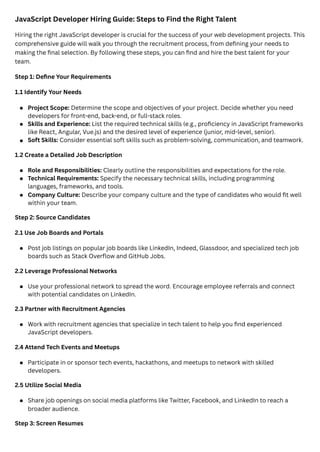
JavaScript Developer Hiring Guide: Steps to Find the Right Talent
Hiring the right JavaScript developer is crucial for the success of your web development projects. This
comprehensive guide will walk you through the recruitment process, from defining your needs to
making the final selection. By following these steps, you can find and hire the best talent for your
team.
Step 1: Define Your Requirements
1.1 Identify Your Needs
1.2 Create a Detailed Job Description
Step 2: Source Candidates
2.1 Use Job Boards and Portals
2.2 Leverage Professional Networks
2.3 Partner with Recruitment Agencies
2.4 Attend Tech Events and Meetups
2.5 Utilize Social Media
Step 3: Screen Resumes
Project Scope: Determine the scope and objectives of your project. Decide whether you need
developers for front-end, back-end, or full-stack roles.
Skills and Experience: List the required technical skills (e.g., proficiency in JavaScript frameworks
like React, Angular, Vue.js) and the desired level of experience (junior, mid-level, senior).
Soft Skills: Consider essential soft skills such as problem-solving, communication, and teamwork.
Role and Responsibilities: Clearly outline the responsibilities and expectations for the role.
Technical Requirements: Specify the necessary technical skills, including programming
languages, frameworks, and tools.
Company Culture: Describe your company culture and the type of candidates who would fit well
within your team.
Post job listings on popular job boards like LinkedIn, Indeed, Glassdoor, and specialized tech job
boards such as Stack Overflow and GitHub Jobs.
Use your professional network to spread the word. Encourage employee referrals and connect
with potential candidates on LinkedIn.
Work with recruitment agencies that specialize in tech talent to help you find experienced
JavaScript developers.
Participate in or sponsor tech events, hackathons, and meetups to network with skilled
developers.
Share job openings on social media platforms like Twitter, Facebook, and LinkedIn to reach a
broader audience.
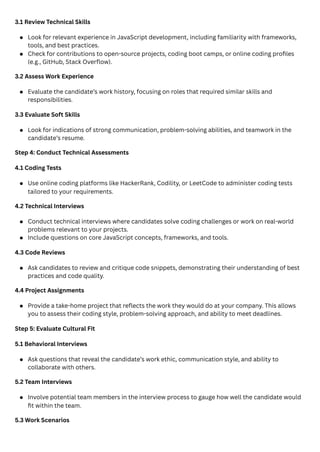
3.1 Review Technical Skills
3.2 Assess Work Experience
3.3 Evaluate Soft Skills
Step 4: Conduct Technical Assessments
4.1 Coding Tests
4.2 Technical Interviews
4.3 Code Reviews
4.4 Project Assignments
Step 5: Evaluate Cultural Fit
5.1 Behavioral Interviews
5.2 Team Interviews
5.3 Work Scenarios
Look for relevant experience in JavaScript development, including familiarity with frameworks,
tools, and best practices.
Check for contributions to open-source projects, coding boot camps, or online coding profiles
(e.g., GitHub, Stack Overflow).
Evaluate the candidate’s work history, focusing on roles that required similar skills and
responsibilities.
Look for indications of strong communication, problem-solving abilities, and teamwork in the
candidate’s resume.
Use online coding platforms like HackerRank, Codility, or LeetCode to administer coding tests
tailored to your requirements.
Conduct technical interviews where candidates solve coding challenges or work on real-world
problems relevant to your projects.
Include questions on core JavaScript concepts, frameworks, and tools.
Ask candidates to review and critique code snippets, demonstrating their understanding of best
practices and code quality.
Provide a take-home project that reflects the work they would do at your company. This allows
you to assess their coding style, problem-solving approach, and ability to meet deadlines.
Ask questions that reveal the candidate’s work ethic, communication style, and ability to
collaborate with others.
Involve potential team members in the interview process to gauge how well the candidate would
fit within the team.
Step 6: Check References
6.1 Verify Background
6.2 Gather Insights
Step 7: Make an Offer
7.1 Competitive Compensation
7.2 Benefits and Perks
7.3 Career Growth
Step 8: Onboard and Integrate
8.1 Smooth Onboarding Process
8.2 Assign a Mentor
8.3 Encourage Team Integration
Conclusion
Hiring JavaScript developer requires a structured and thorough recruitment process. By defining your
requirements, sourcing candidates effectively, conducting rigorous technical assessments, and
evaluating cultural fit, you can find the right talent to drive your projects forward. A smooth
Present hypothetical work scenarios and ask the candidate how they would handle them,
focusing on their problem-solving and decision-making processes.
Conduct reference checks to verify the candidate’s background and performance. Speak with
previous employers, colleagues, or mentors.
Gather insights into the candidate’s work history, technical abilities, and interpersonal skills.
Ensure your offer is competitive, including a salary based on market rates and the candidate’s
experience.
Highlight benefits such as health insurance, retirement plans, and professional development
opportunities.
Emphasize any perks related to your work environment, such as remote work options, flexible
hours, or a collaborative culture.
Emphasize opportunities for career advancement, ongoing learning, and professional growth
within your company.
Provide the necessary resources, tools, and training to help the new hire get up to speed quickly.
Assign a mentor or buddy to guide the new hire through the initial stages and ensure they feel
welcomed and supported.
Facilitate team-building activities and encourage collaboration to help the new hire integrate
smoothly into the team.
onboarding process will further ensure that your new hires are integrated quickly and can contribute
to your company’s success from day one.

JavaScript Developer Hiring Guide Steps to Find the Right Talent.pdf

  • 1.
    JavaScript Developer HiringGuide: Steps to Find the Right Talent Hiring the right JavaScript developer is crucial for the success of your web development projects. This comprehensive guide will walk you through the recruitment process, from defining your needs to making the final selection. By following these steps, you can find and hire the best talent for your team. Step 1: Define Your Requirements 1.1 Identify Your Needs 1.2 Create a Detailed Job Description Step 2: Source Candidates 2.1 Use Job Boards and Portals 2.2 Leverage Professional Networks 2.3 Partner with Recruitment Agencies 2.4 Attend Tech Events and Meetups 2.5 Utilize Social Media Step 3: Screen Resumes Project Scope: Determine the scope and objectives of your project. Decide whether you need developers for front-end, back-end, or full-stack roles. Skills and Experience: List the required technical skills (e.g., proficiency in JavaScript frameworks like React, Angular, Vue.js) and the desired level of experience (junior, mid-level, senior). Soft Skills: Consider essential soft skills such as problem-solving, communication, and teamwork. Role and Responsibilities: Clearly outline the responsibilities and expectations for the role. Technical Requirements: Specify the necessary technical skills, including programming languages, frameworks, and tools. Company Culture: Describe your company culture and the type of candidates who would fit well within your team. Post job listings on popular job boards like LinkedIn, Indeed, Glassdoor, and specialized tech job boards such as Stack Overflow and GitHub Jobs. Use your professional network to spread the word. Encourage employee referrals and connect with potential candidates on LinkedIn. Work with recruitment agencies that specialize in tech talent to help you find experienced JavaScript developers. Participate in or sponsor tech events, hackathons, and meetups to network with skilled developers. Share job openings on social media platforms like Twitter, Facebook, and LinkedIn to reach a broader audience.
  • 2.
    3.1 Review TechnicalSkills 3.2 Assess Work Experience 3.3 Evaluate Soft Skills Step 4: Conduct Technical Assessments 4.1 Coding Tests 4.2 Technical Interviews 4.3 Code Reviews 4.4 Project Assignments Step 5: Evaluate Cultural Fit 5.1 Behavioral Interviews 5.2 Team Interviews 5.3 Work Scenarios Look for relevant experience in JavaScript development, including familiarity with frameworks, tools, and best practices. Check for contributions to open-source projects, coding boot camps, or online coding profiles (e.g., GitHub, Stack Overflow). Evaluate the candidate’s work history, focusing on roles that required similar skills and responsibilities. Look for indications of strong communication, problem-solving abilities, and teamwork in the candidate’s resume. Use online coding platforms like HackerRank, Codility, or LeetCode to administer coding tests tailored to your requirements. Conduct technical interviews where candidates solve coding challenges or work on real-world problems relevant to your projects. Include questions on core JavaScript concepts, frameworks, and tools. Ask candidates to review and critique code snippets, demonstrating their understanding of best practices and code quality. Provide a take-home project that reflects the work they would do at your company. This allows you to assess their coding style, problem-solving approach, and ability to meet deadlines. Ask questions that reveal the candidate’s work ethic, communication style, and ability to collaborate with others. Involve potential team members in the interview process to gauge how well the candidate would fit within the team.
  • 3.
    Step 6: CheckReferences 6.1 Verify Background 6.2 Gather Insights Step 7: Make an Offer 7.1 Competitive Compensation 7.2 Benefits and Perks 7.3 Career Growth Step 8: Onboard and Integrate 8.1 Smooth Onboarding Process 8.2 Assign a Mentor 8.3 Encourage Team Integration Conclusion Hiring JavaScript developer requires a structured and thorough recruitment process. By defining your requirements, sourcing candidates effectively, conducting rigorous technical assessments, and evaluating cultural fit, you can find the right talent to drive your projects forward. A smooth Present hypothetical work scenarios and ask the candidate how they would handle them, focusing on their problem-solving and decision-making processes. Conduct reference checks to verify the candidate’s background and performance. Speak with previous employers, colleagues, or mentors. Gather insights into the candidate’s work history, technical abilities, and interpersonal skills. Ensure your offer is competitive, including a salary based on market rates and the candidate’s experience. Highlight benefits such as health insurance, retirement plans, and professional development opportunities. Emphasize any perks related to your work environment, such as remote work options, flexible hours, or a collaborative culture. Emphasize opportunities for career advancement, ongoing learning, and professional growth within your company. Provide the necessary resources, tools, and training to help the new hire get up to speed quickly. Assign a mentor or buddy to guide the new hire through the initial stages and ensure they feel welcomed and supported. Facilitate team-building activities and encourage collaboration to help the new hire integrate smoothly into the team.
  • 4.
    onboarding process willfurther ensure that your new hires are integrated quickly and can contribute to your company’s success from day one.