1 H T T P S E S S I O N  
M U L T I P L E S E R V E R S E N V I R O N M E N T
2 C L I E N T I D E N T I F I C A T I O N
S E S S I O N R E M O V A L
- each session is identified by sessionId
identifier and the client sends it with every
request.
- session identifier is stored on the client side
usually is stored as a cookie
- sessionId may also be encoded into URLs
- session data are stored on the server, possibly
in a server-side database if the your server
is part of a multi-server cluster
- to remove session data, use : removeAttribute() or setAttribute(null)
- to remove the whole session use: invalidate(). This basically removes all attributes and
removes the whole session from container-managed session map
- session may expire. This happens when no servlet accessed this session in configurable
amount of time (e.g. 10 minutes)
3
2 P O S S I B L E S C E N A R I O S :
- Sticky Sessions:
all your requests will be directed to the same
physical web server
- Non-sticky Sessions:
loadbalancer may choose any webserver to serve
your requests, this means the session variables
must be serialized and (usually are then) written
to a database
WEB
SECURITY
CHEAT SHEET
I N S T A N C E O F F U N C T I O N
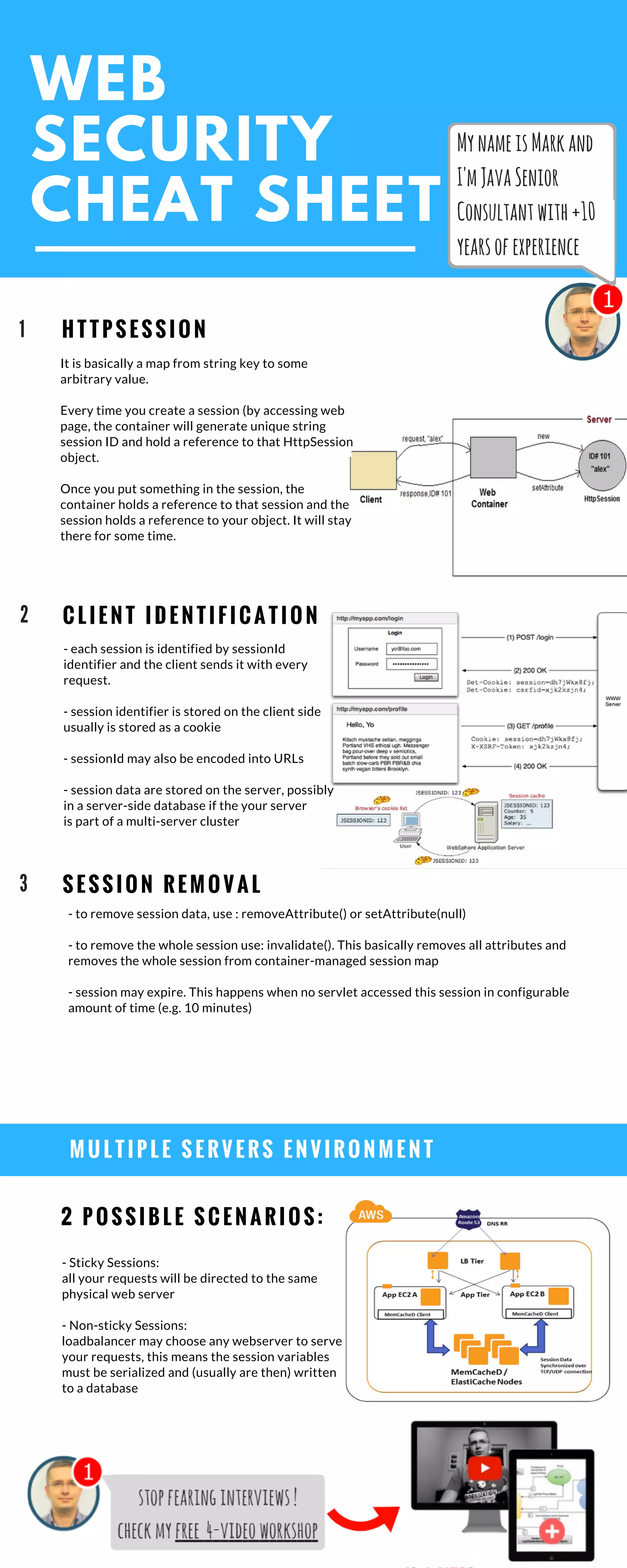
It is basically a map from string key to some
arbitrary value.
Every time you create a session (by accessing web
page, the container will generate unique string
session ID and hold a reference to that HttpSession
object.
Once you put something in the session, the
container holds a reference to that session and the
session holds a reference to your object. It will stay
there for some time.
MynameisMarkand
I'mJavaSenior
Consultantwith+10
yearsofexperience

Java vs Web security Cheat Sheet

  • 1.
    1 H TT P S E S S I O N   M U L T I P L E S E R V E R S E N V I R O N M E N T 2 C L I E N T I D E N T I F I C A T I O N S E S S I O N R E M O V A L - each session is identified by sessionId identifier and the client sends it with every request. - session identifier is stored on the client side usually is stored as a cookie - sessionId may also be encoded into URLs - session data are stored on the server, possibly in a server-side database if the your server is part of a multi-server cluster - to remove session data, use : removeAttribute() or setAttribute(null) - to remove the whole session use: invalidate(). This basically removes all attributes and removes the whole session from container-managed session map - session may expire. This happens when no servlet accessed this session in configurable amount of time (e.g. 10 minutes) 3 2 P O S S I B L E S C E N A R I O S : - Sticky Sessions: all your requests will be directed to the same physical web server - Non-sticky Sessions: loadbalancer may choose any webserver to serve your requests, this means the session variables must be serialized and (usually are then) written to a database WEB SECURITY CHEAT SHEET I N S T A N C E O F F U N C T I O N It is basically a map from string key to some arbitrary value. Every time you create a session (by accessing web page, the container will generate unique string session ID and hold a reference to that HttpSession object. Once you put something in the session, the container holds a reference to that session and the session holds a reference to your object. It will stay there for some time. MynameisMarkand I'mJavaSenior Consultantwith+10 yearsofexperience