Instructional Techniques I hear, I forget. I see, I remember. I do, I understand   Confucius
Lao-Tse (also Lao-tzu) on Effective Learning In the 5th-century BC, this philosopher wrote:  "If you tell me, I will  listen .  If you show me, I will  see.   But if you let me  e xperience ,  I will learn."
Agenda The Learning Process   The Training Process Training Methods The Human Behavior & Motivation Impact of Stress on Instructor Performance Effective Communication The Instructor as a Critic Instructional Aids
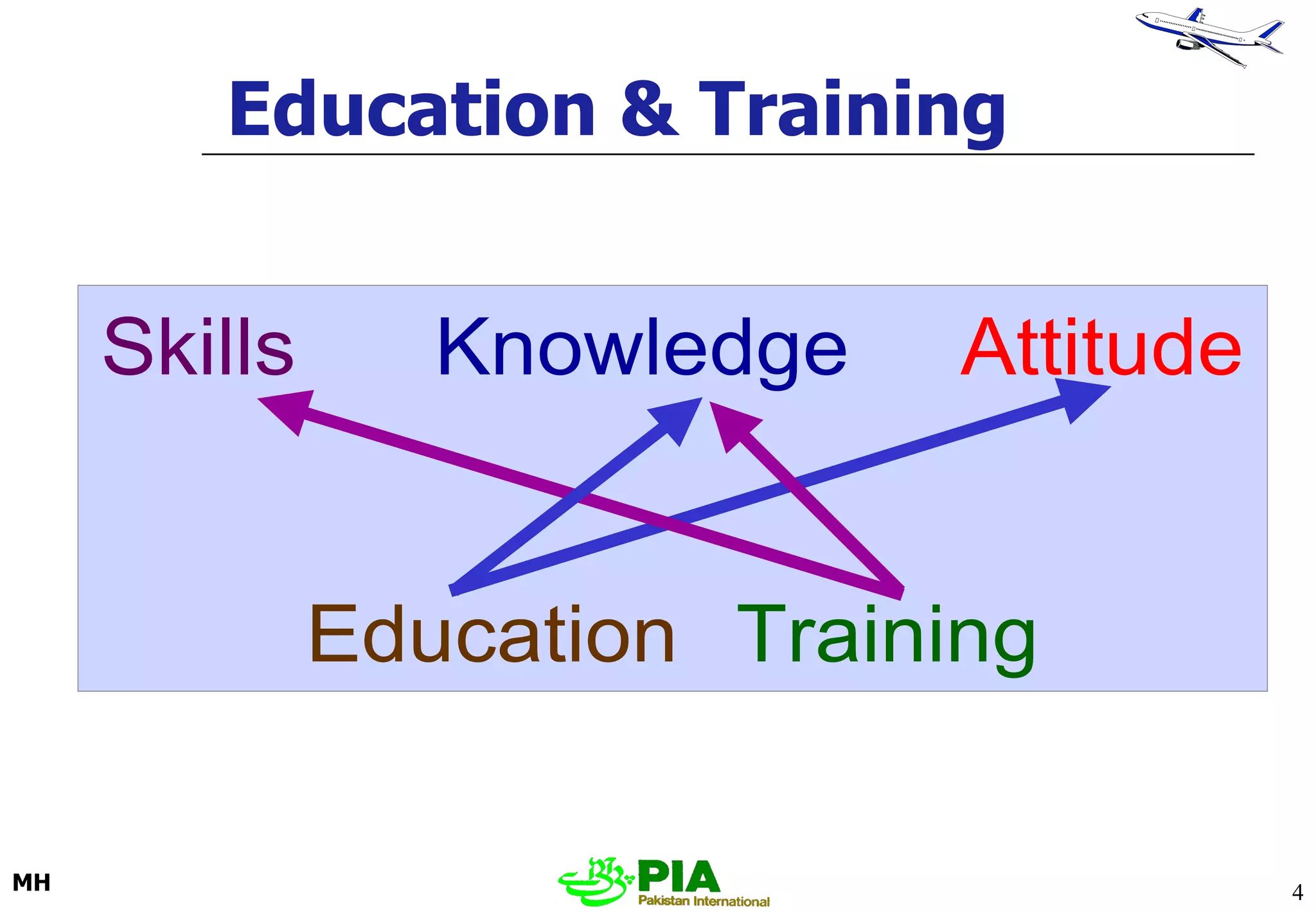
Education & Training
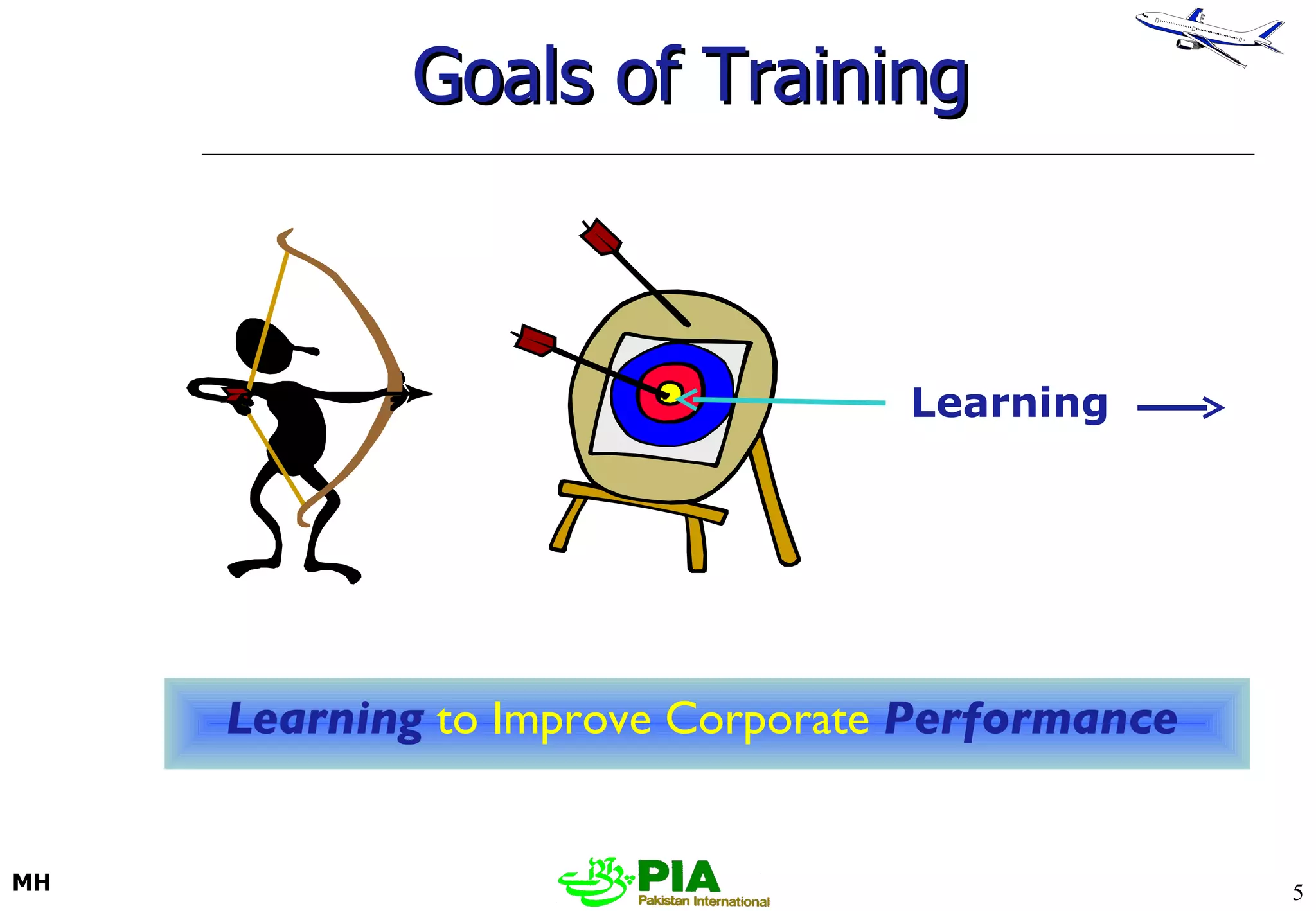
Goals of Training Learning  to Improve Corporate  Performance Learning
Definitions Adult learning  – a process through which learners become aware of significant experience. Education  –   an activity undertaken by one or more teachers to change the knowledge and attitudes of individuals.  Learning  –   the acquisition of skills, knowledge and attitudes that change behavior. Teaching  – helping someone to learn.  Training: To make proficient with specialized instruction and practice  or To provide the experiences so that learning can happen.
Rules of Learning Stimulate Students Recognize Individual Differences Understanding and Repetition Aid Retention Show It Like It Is First and Last Impressions Are Retained Tie-In Is Essential To Learning “ Belongingness” and “Satisfiers” Aid Learning Active Practice is Best New Learning May Detract From Previous Learning
Rules of Learning Showing Errors Can Aid Learning Rewards Aid Learning Recognition is Easier Than Recall Much Is Forgotten Rapidly Known Authorities Are Believed Exact Repetition Effective Fear Is Effective In Small Doses Success Begets Further Success Old and Strong Ideas Are Best Retained
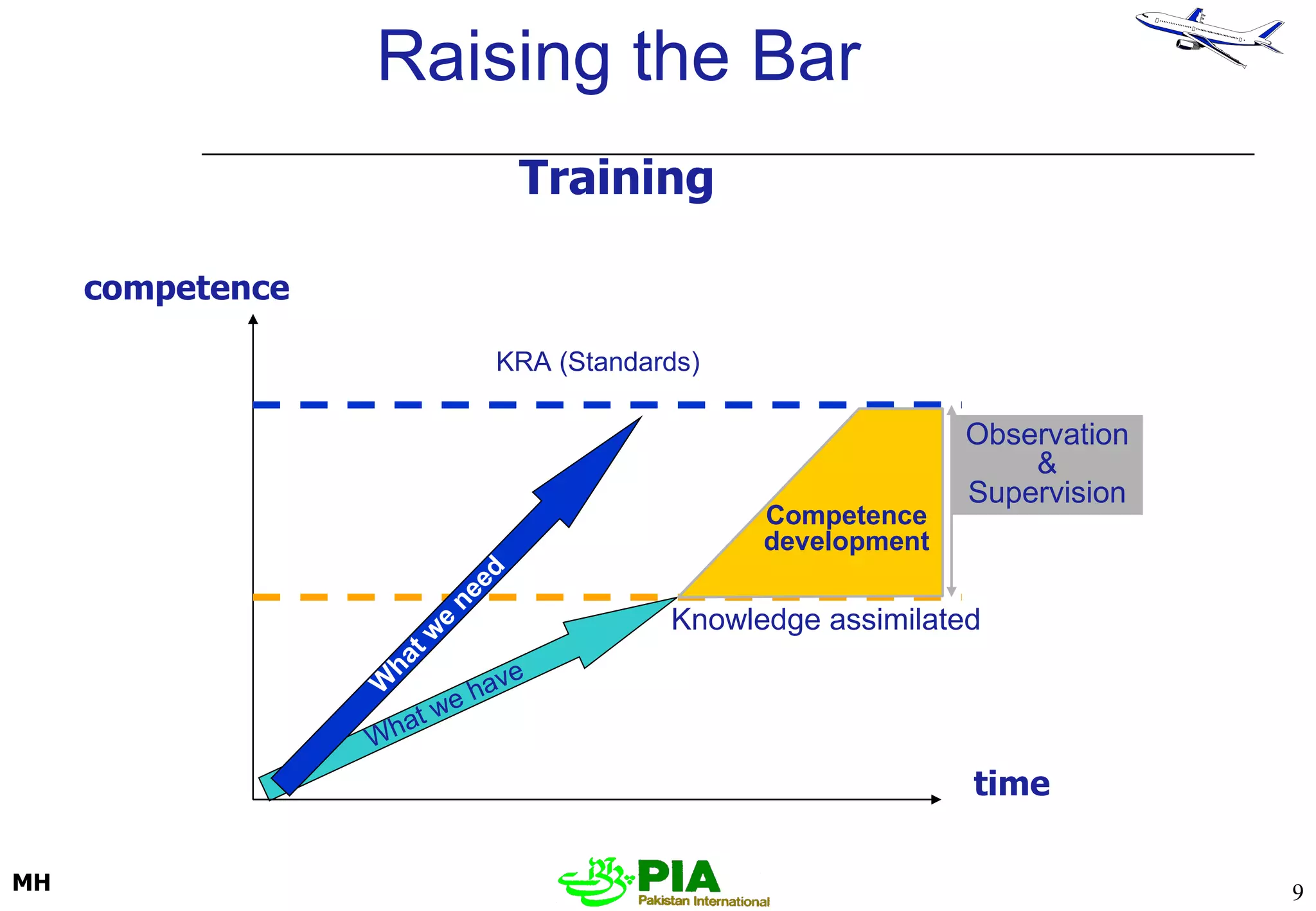
Raising the Bar competence What we have KRA (Standards) time Competence development Knowledge assimilated What we need Training Observation & Supervision
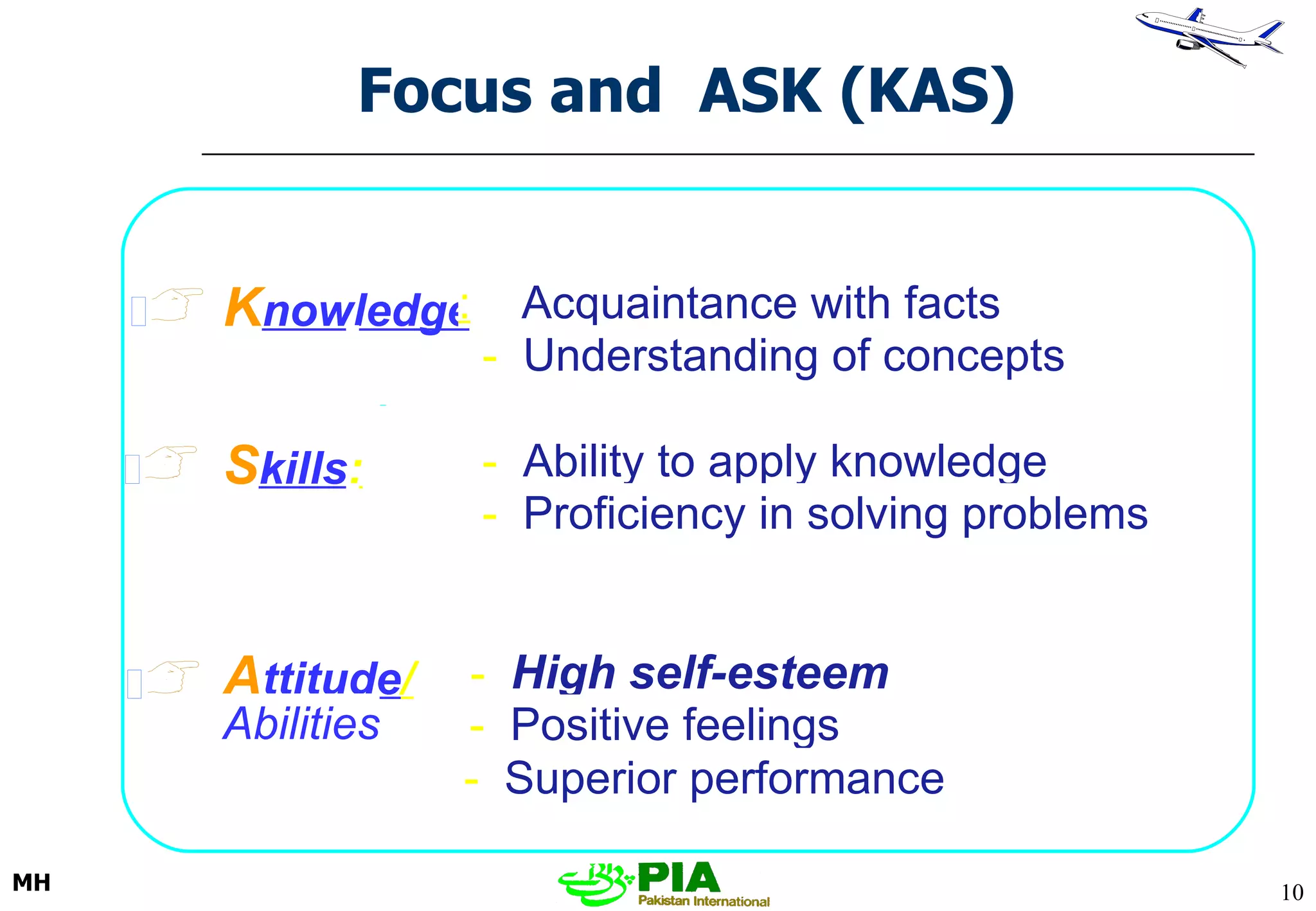
Focus and  ASK (KAS)  K nowledge : Acquaintance with facts  -  Understanding of concepts S kills : -  Ability to apply knowledge -  Proficiency in solving problems A ttitude / -  High self-esteem Abilities -  Positive feelings -  Superior performance
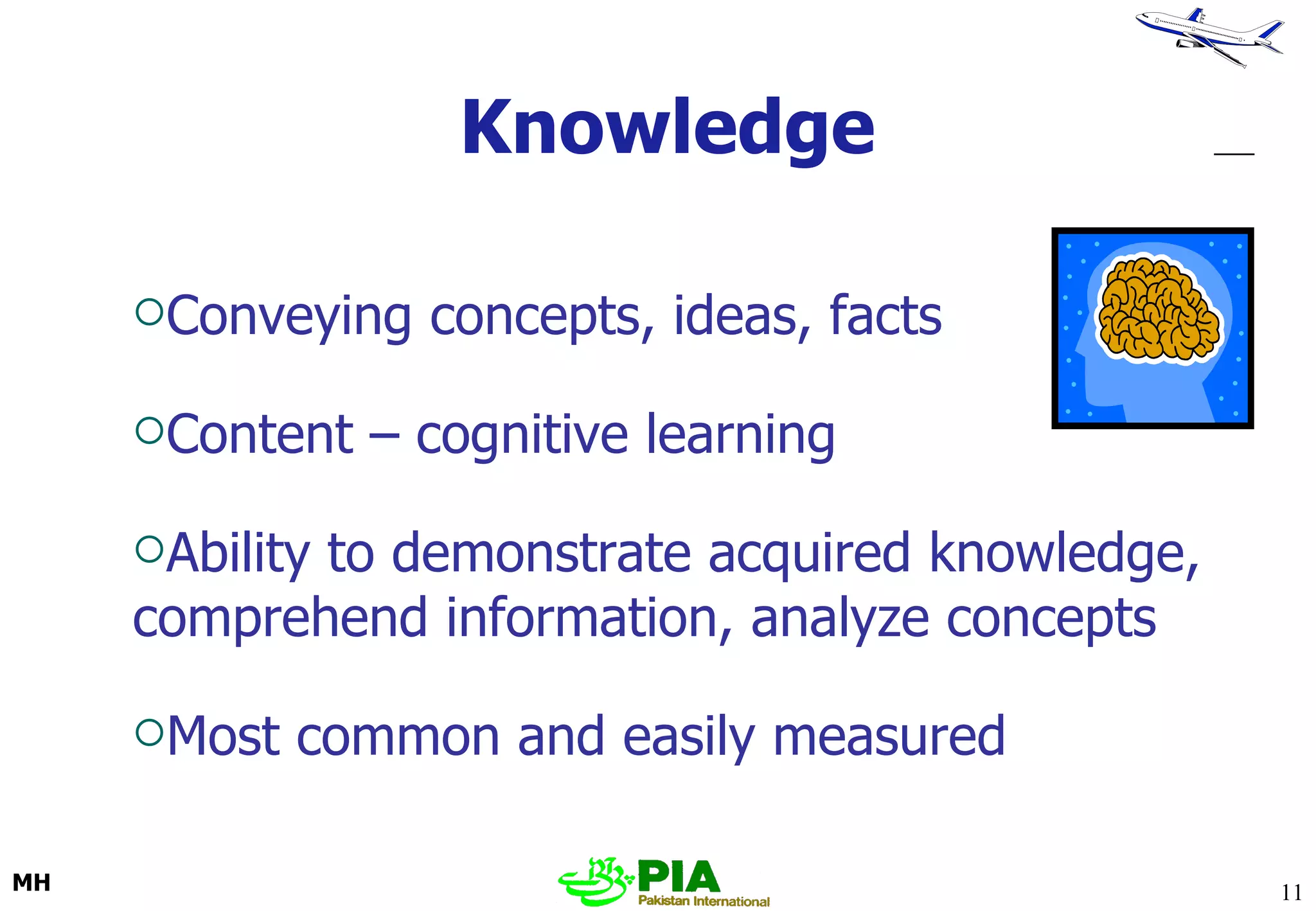
Knowledge Conveying concepts, ideas, facts Content – cognitive learning Ability to demonstrate acquired knowledge, comprehend information, analyze concepts Most common and easily measured
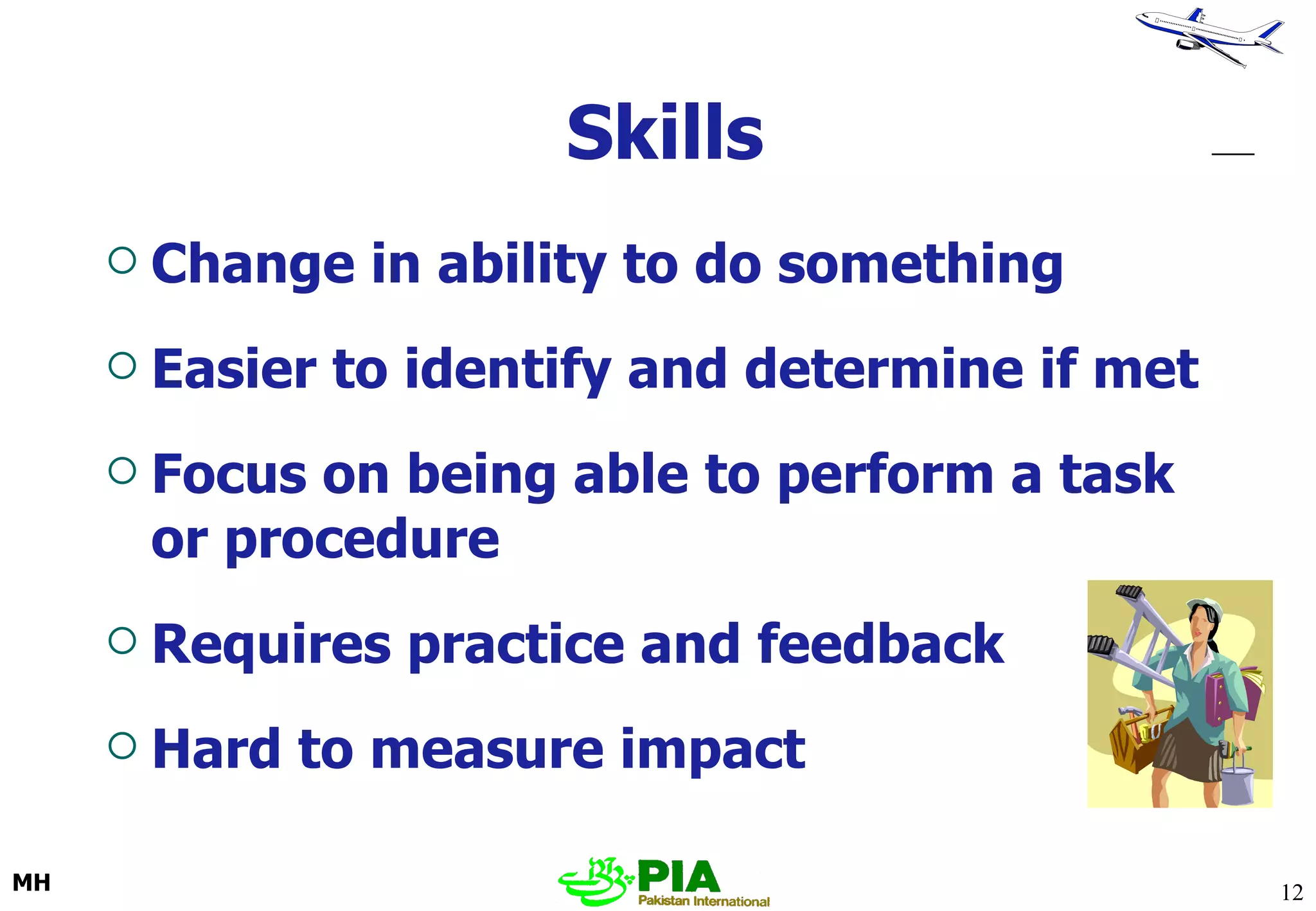
Skills Change in ability to do something Easier to identify and determine if met Focus on being able to perform a task or procedure Requires practice and feedback Hard to measure impact
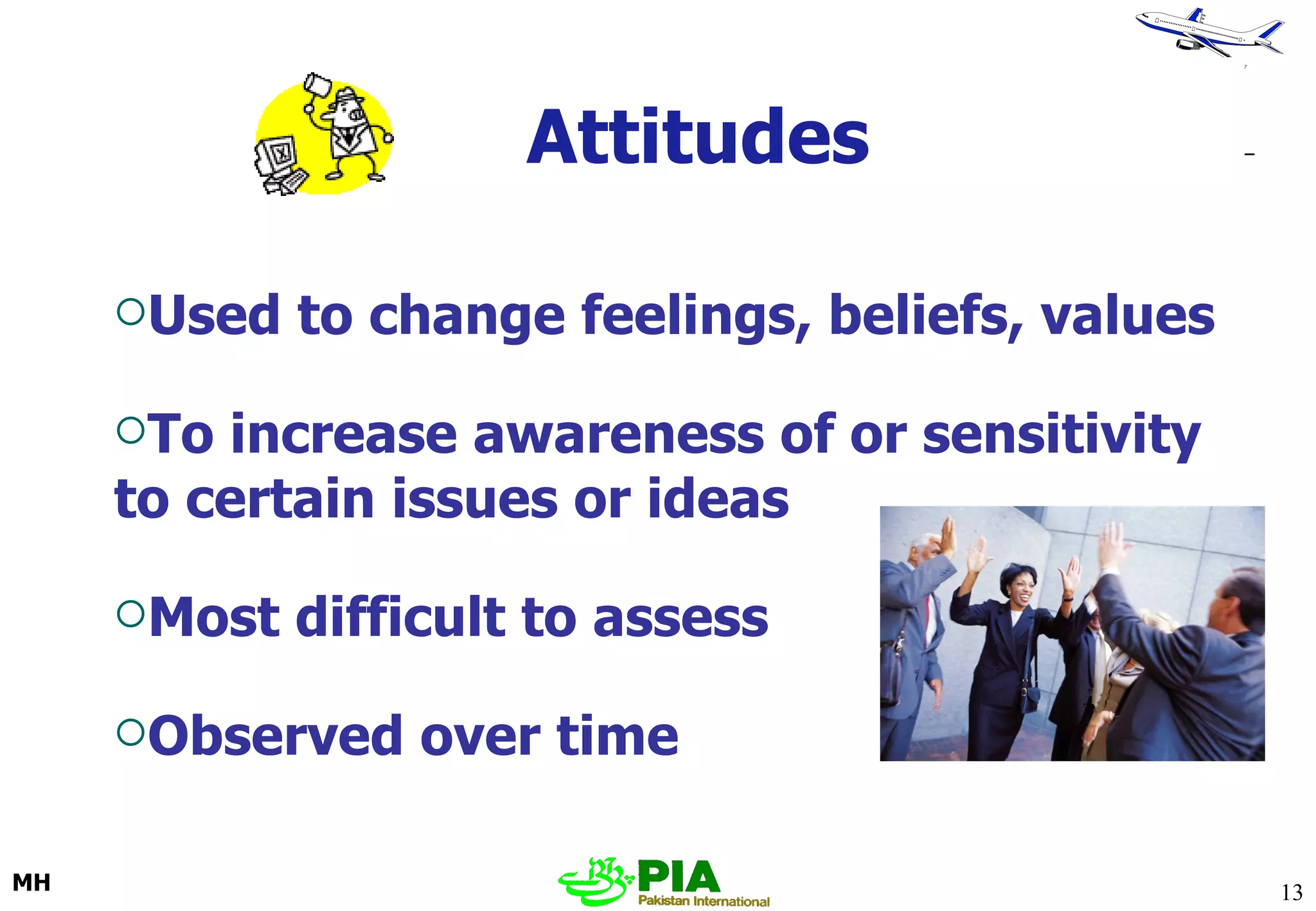
Attitudes Used to change feelings, beliefs, values To increase awareness of or sensitivity to certain issues or ideas Most difficult to assess  Observed over time
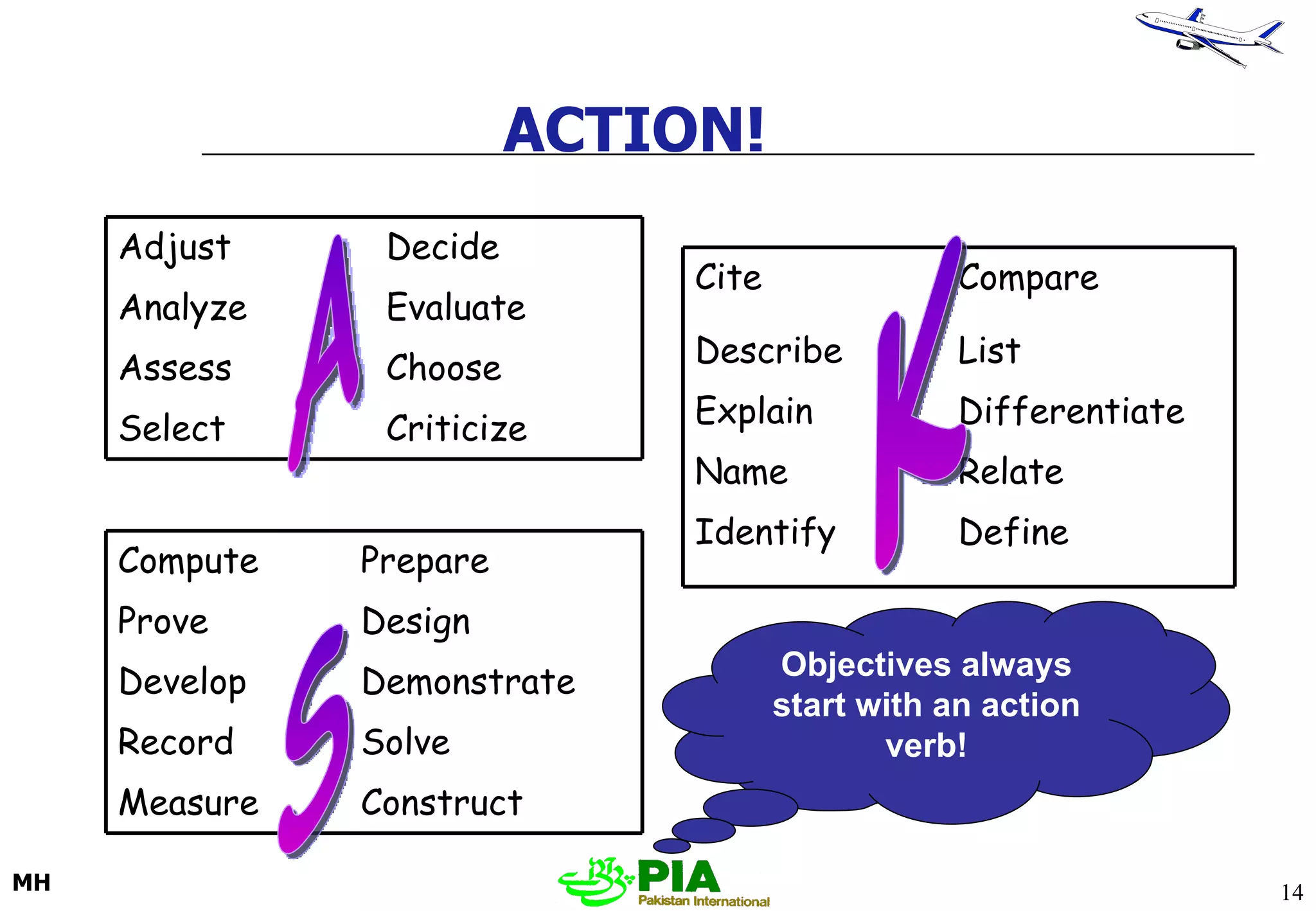
ACTION!  A S K Objectives always start with an action verb! Criticize Select Choose Assess Evaluate Analyze Decide Adjust Construct Measure Solve Record Demonstrate Develop Design Prove Prepare Compute Define  Identify Relate Name Differentiate Explain List Describe Compare Cite
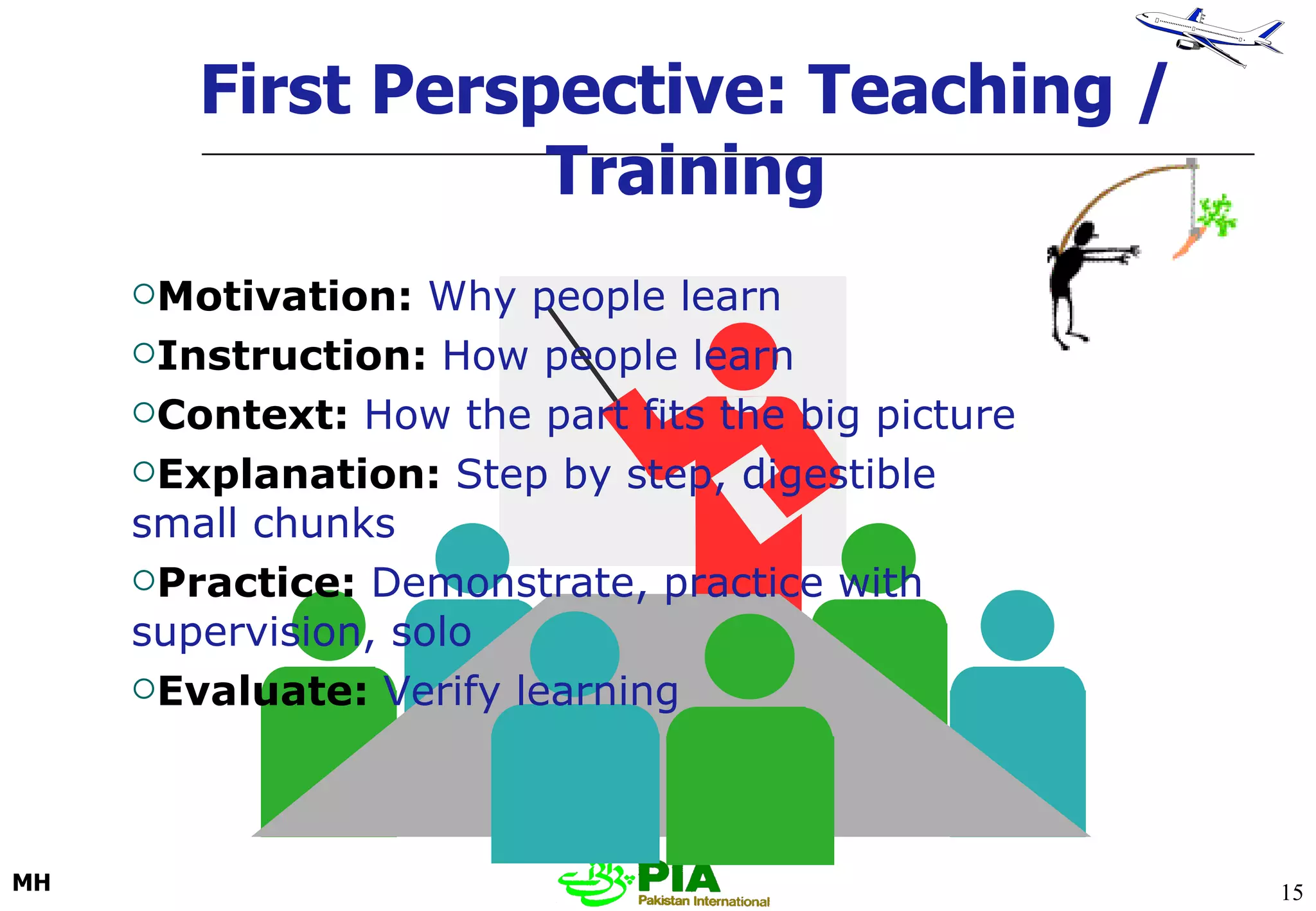
First Perspective: Teaching / Training Motivation:   Why people learn Instruction:   How people learn Context:   How the part fits the big picture Explanation:   Step by step, digestible small chunks Practice:   Demonstrate, practice with supervision, solo Evaluate:   Verify learning
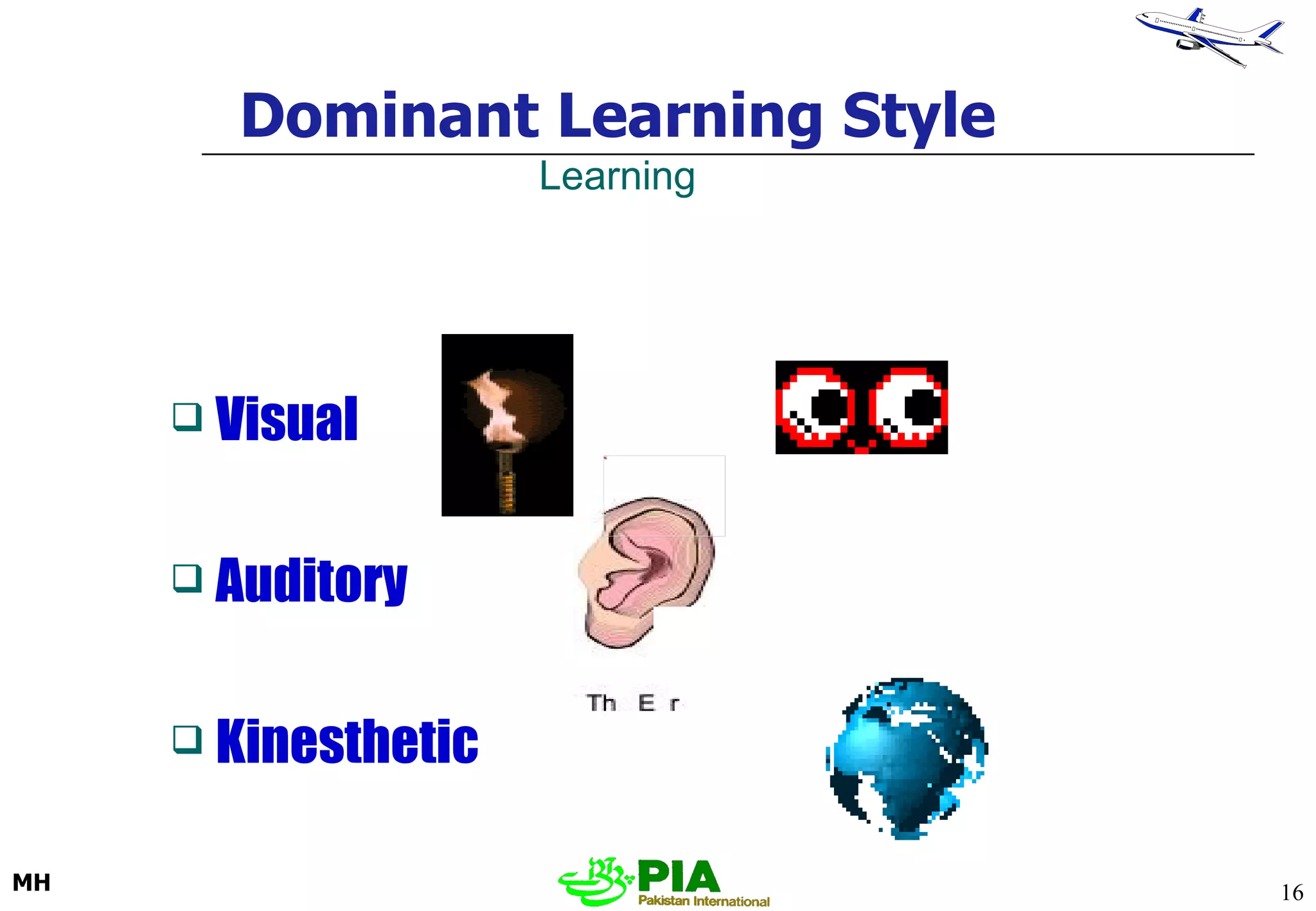
Dominant Learning Style Learning Visual  Auditory Kinesthetic                                                                                                                                                                                                                                                              
 
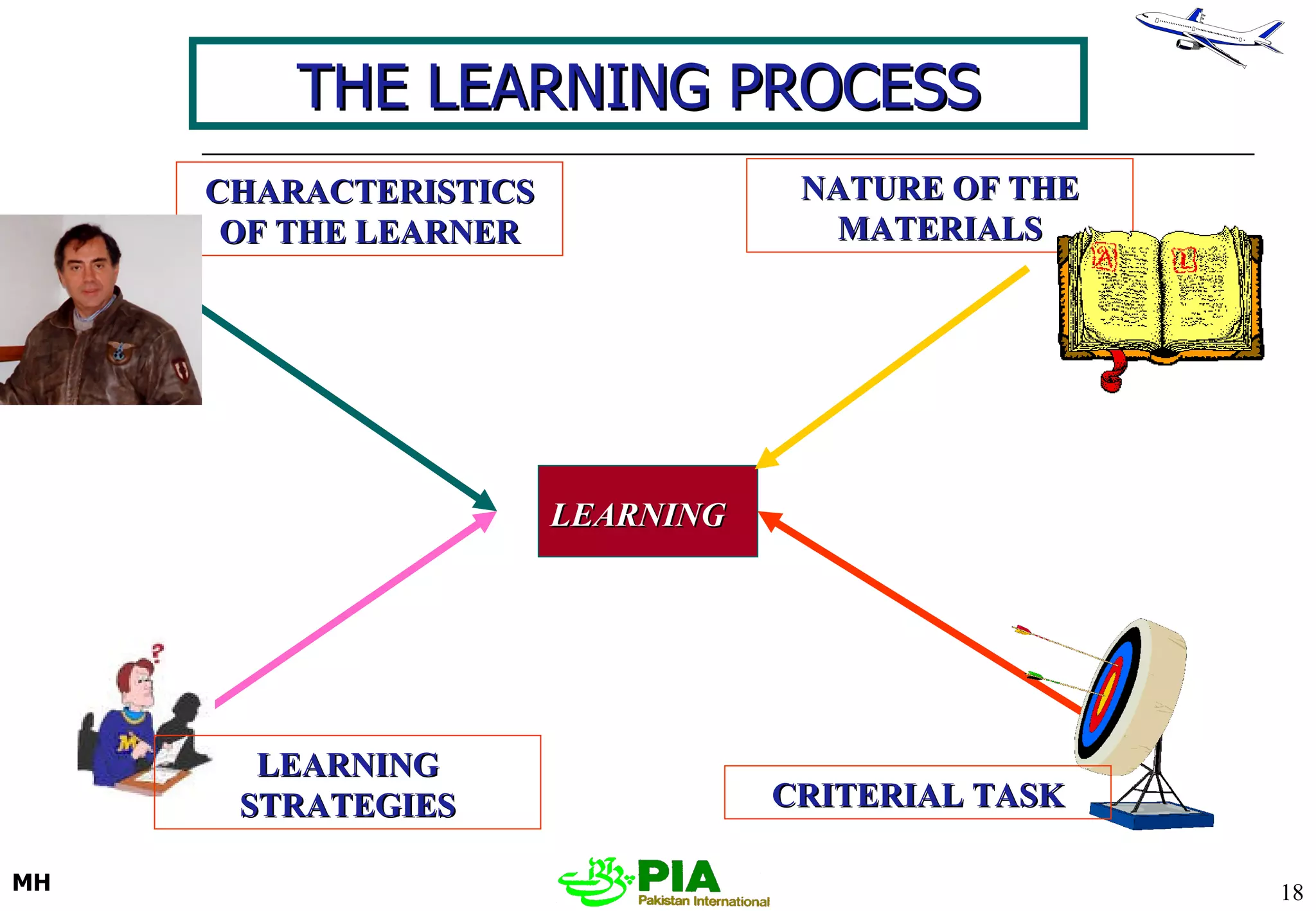
THE LEARNING PROCESS LEARNING CHARACTERISTICS OF THE LEARNER NATURE OF THE MATERIALS CRITERIAL TASK LEARNING STRATEGIES
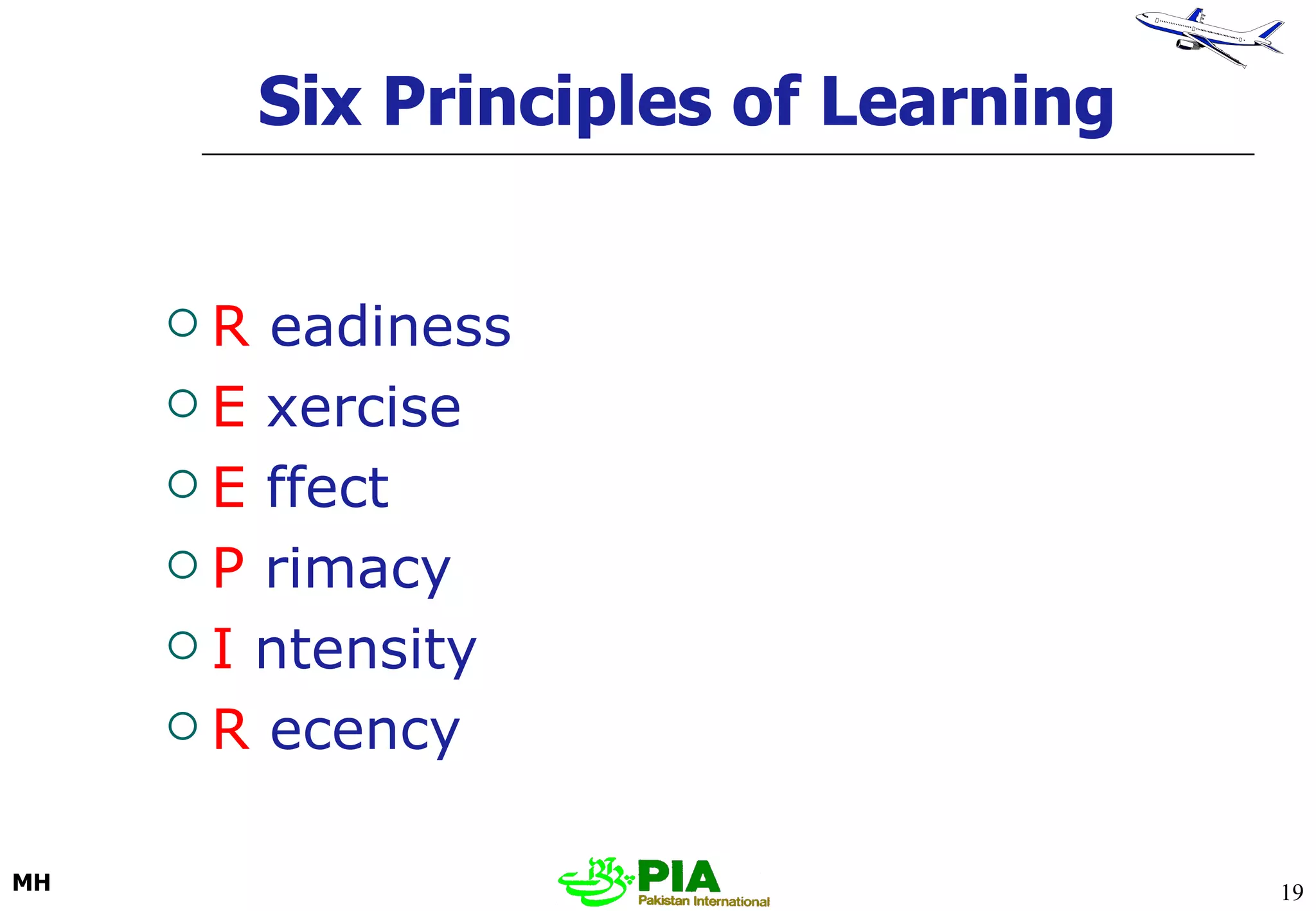
Six Principles of Learning R  eadiness E  xercise E  ffect P  rimacy I  ntensity R  ecency
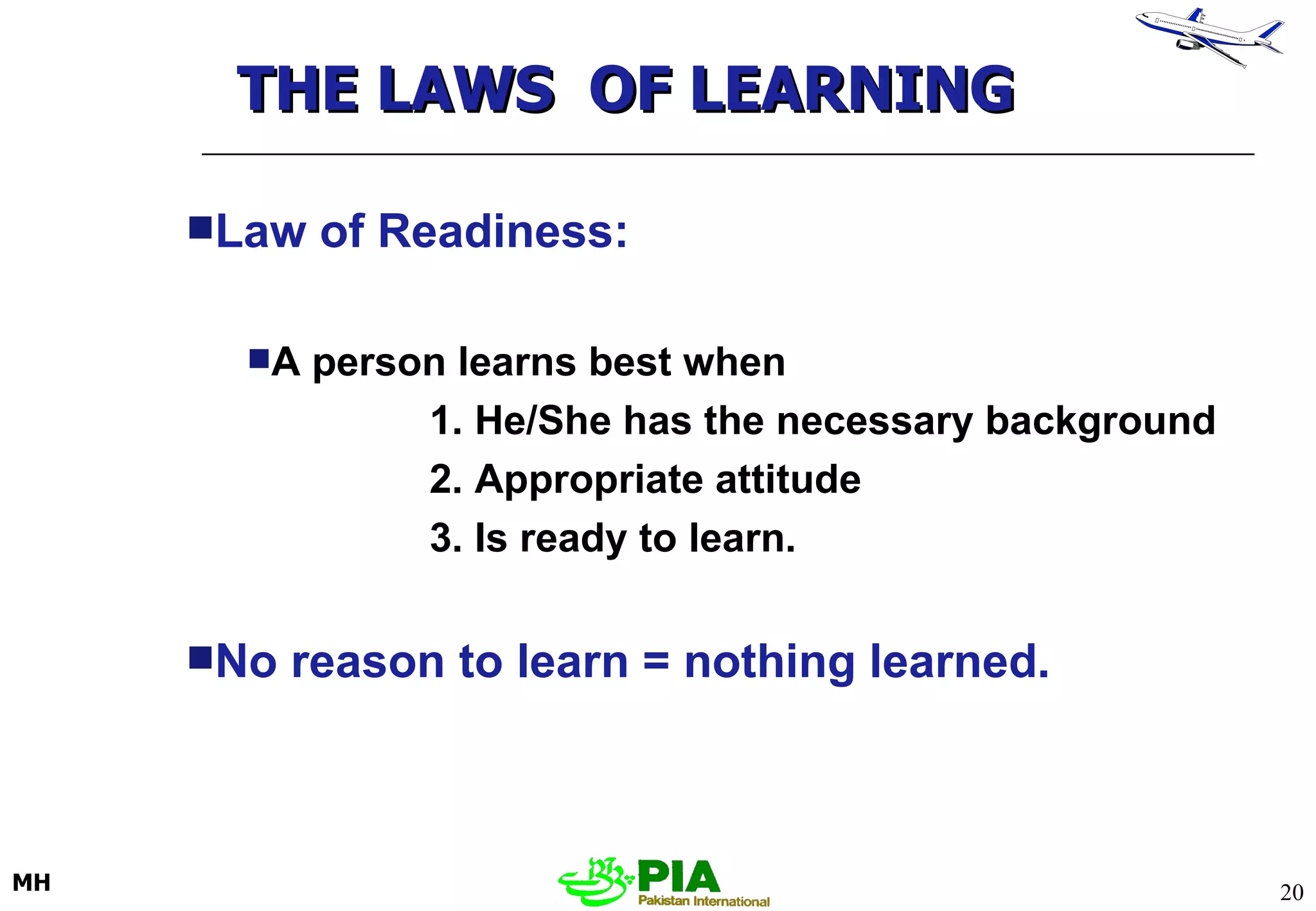
Law of Readiness: A person learns best when 1. He/She has the necessary background 2. Appropriate attitude 3. Is ready to learn. No reason to learn = nothing learned. THE LAWS  OF LEARNING
THE LAWS  OF LEARNING Law of Exercise: Those things most often repeated are best remembered. It is the basis of practice and drill. After training it right, let them practice .
THE LAWS  OF LEARNING  Law of Effect:   learning is strengthened when accompanied by a pleasant or satisfying feeling, and that learning is weakened when associated with an unpleasant feeling. What effect is your training having on learning?
THE LAWS  OF LEARNING Law of Primacy:   What is taught must be  right the first time. Primacy, the state of being first, often creates a strong, almost unshakable, impression. Train right, right the first time!
THE LAWS  OF LEARNING Law of Intensity:   A sharp, clear, or  exciting  learning experience teaches more than a routine or boring one.  Make the experience real, applicable, lively, exciting and passionate.
THE LAWS  OF LEARNING  Law of Recency:   The things most recently learned are best remembered. Reinforce prior learning through exercise.
THE LAWS  OF FORGETTING Disuse : A person forgets things which are not used.  Interference : People forget a thing because a certain experience has overshadowed it, or the learning of similar things has interfered.  Repression : forgetting is due to the submersion of ideas into the unconscious mind. Individuals may unintentionally repress material that is unpleasant, or produces anxiety.
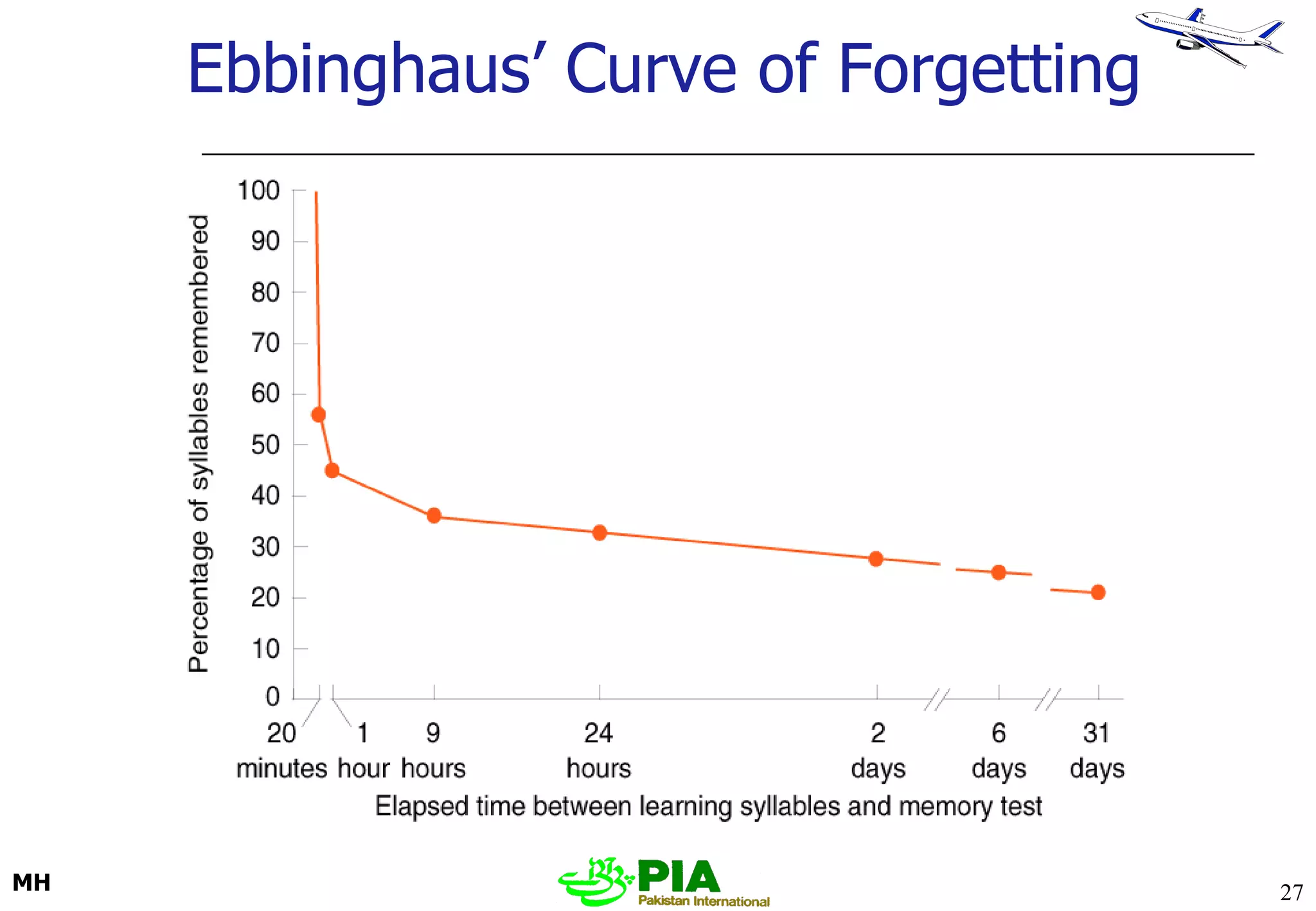
Ebbinghaus’ Curve of Forgetting
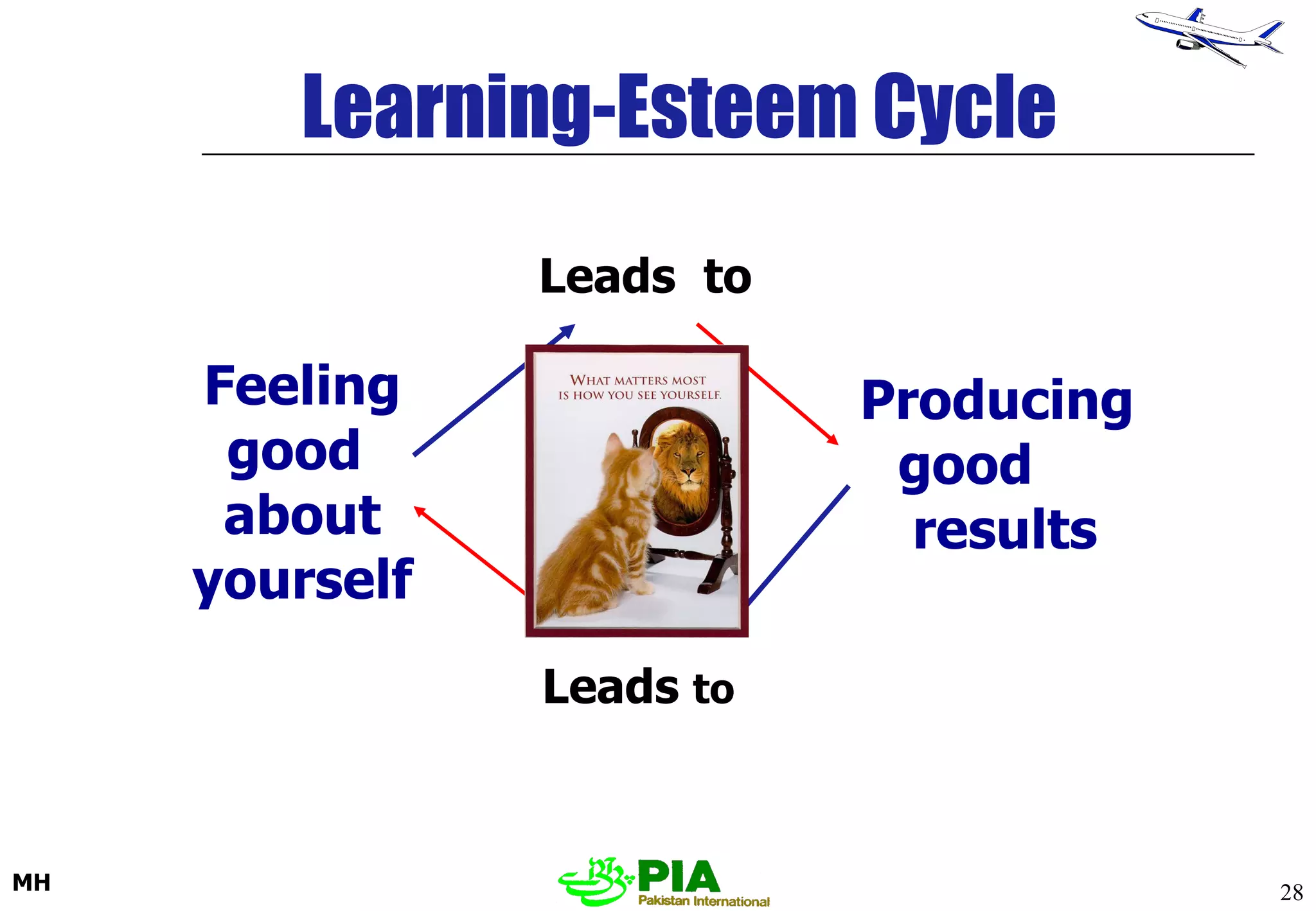
Learning-Esteem Cycle Feeling good  about yourself Producing  good  results Leads  to Leads  to
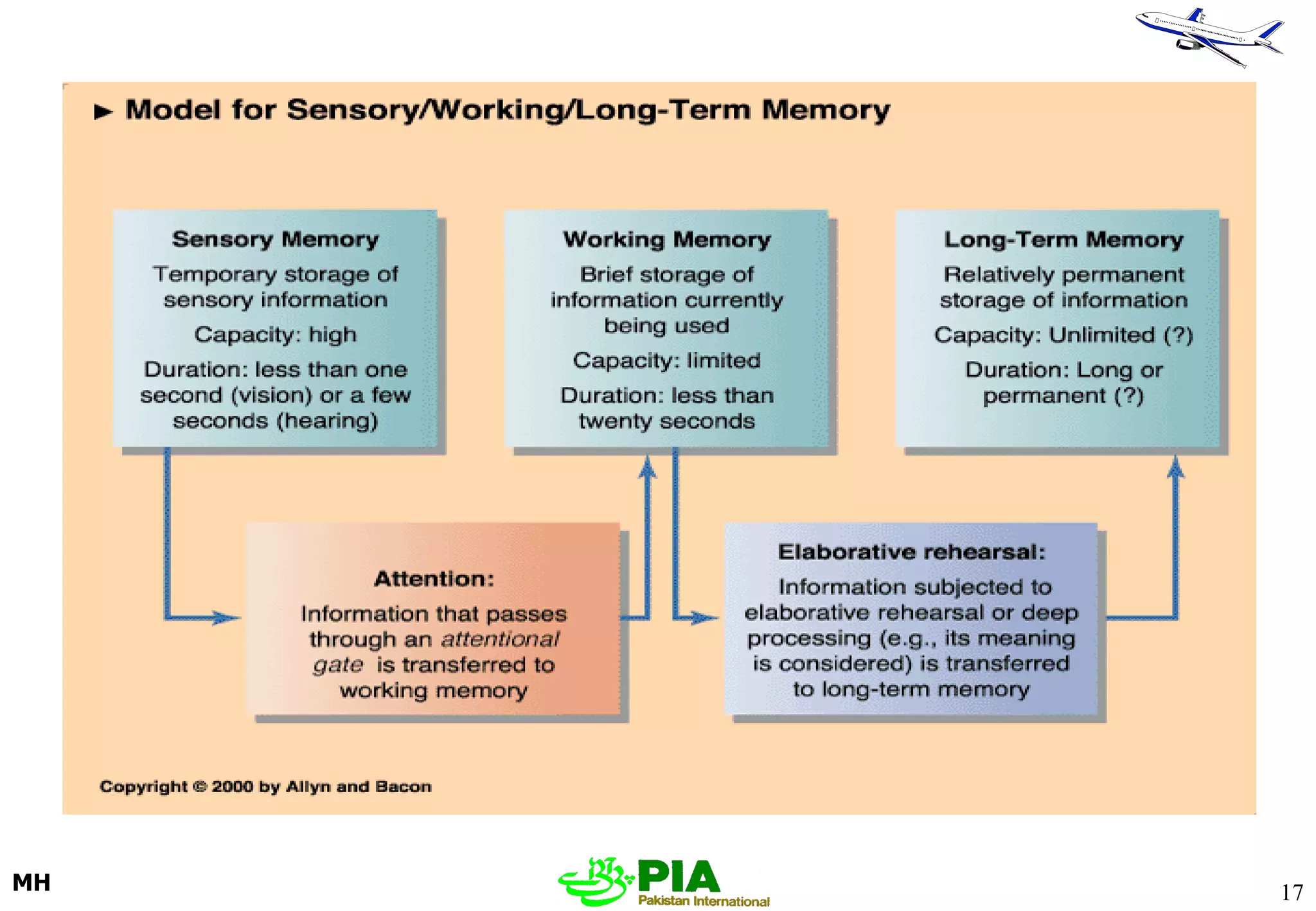
Learning: Great Tips Practice is more than repetition .  Use  it or lose it. Cognitive tools are remarkable--but some are limited Attention is a  gateways to learning. Working memory  fills fast Organization and elaboration support memory Knowledge and beliefs  play critical roles in learning Learning is hard work:  Strategic persistence pays Knowledge is difficult to transfer MH
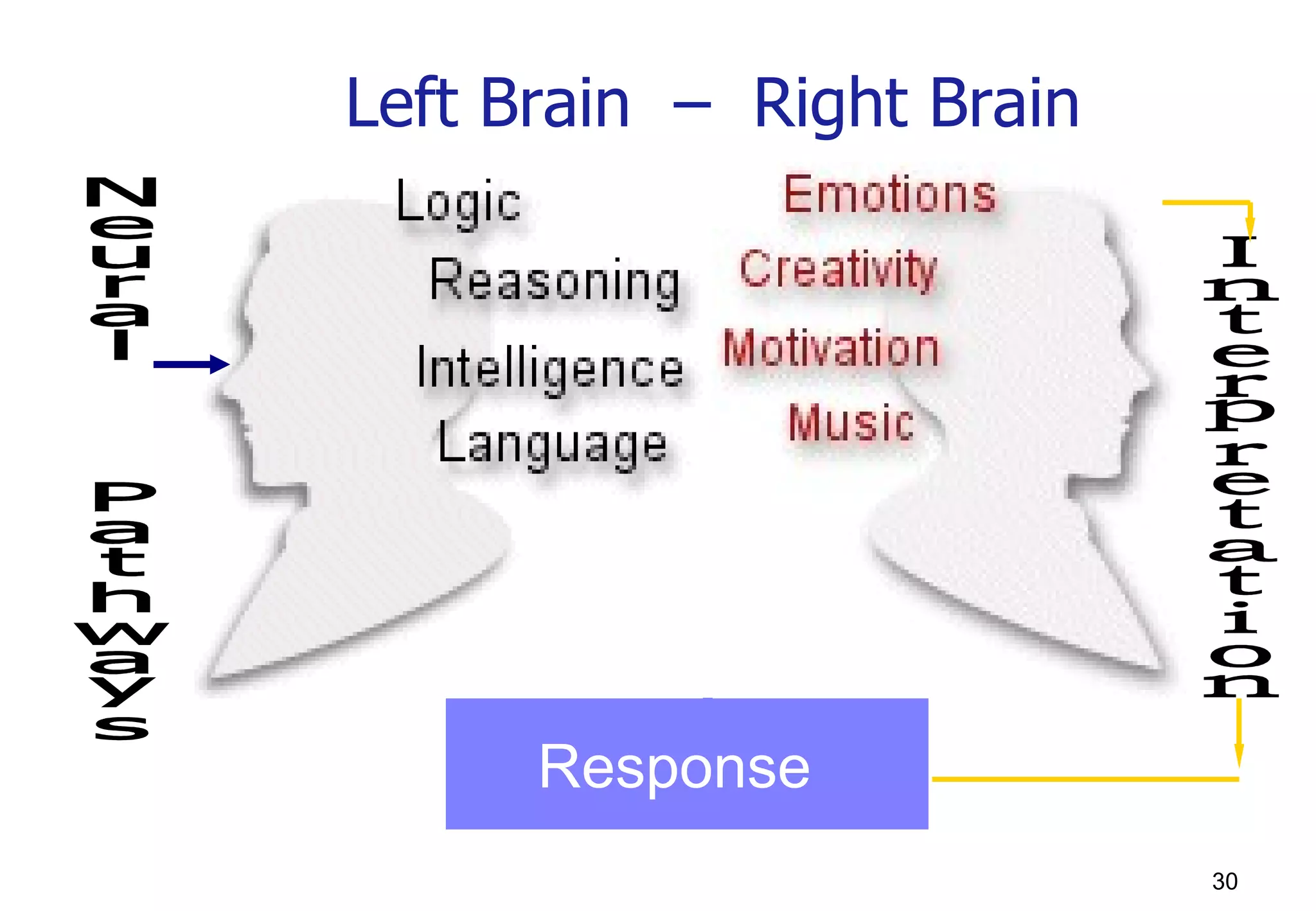
Left Brain  –  Right Brain Neural  Pathways Interpretation Response
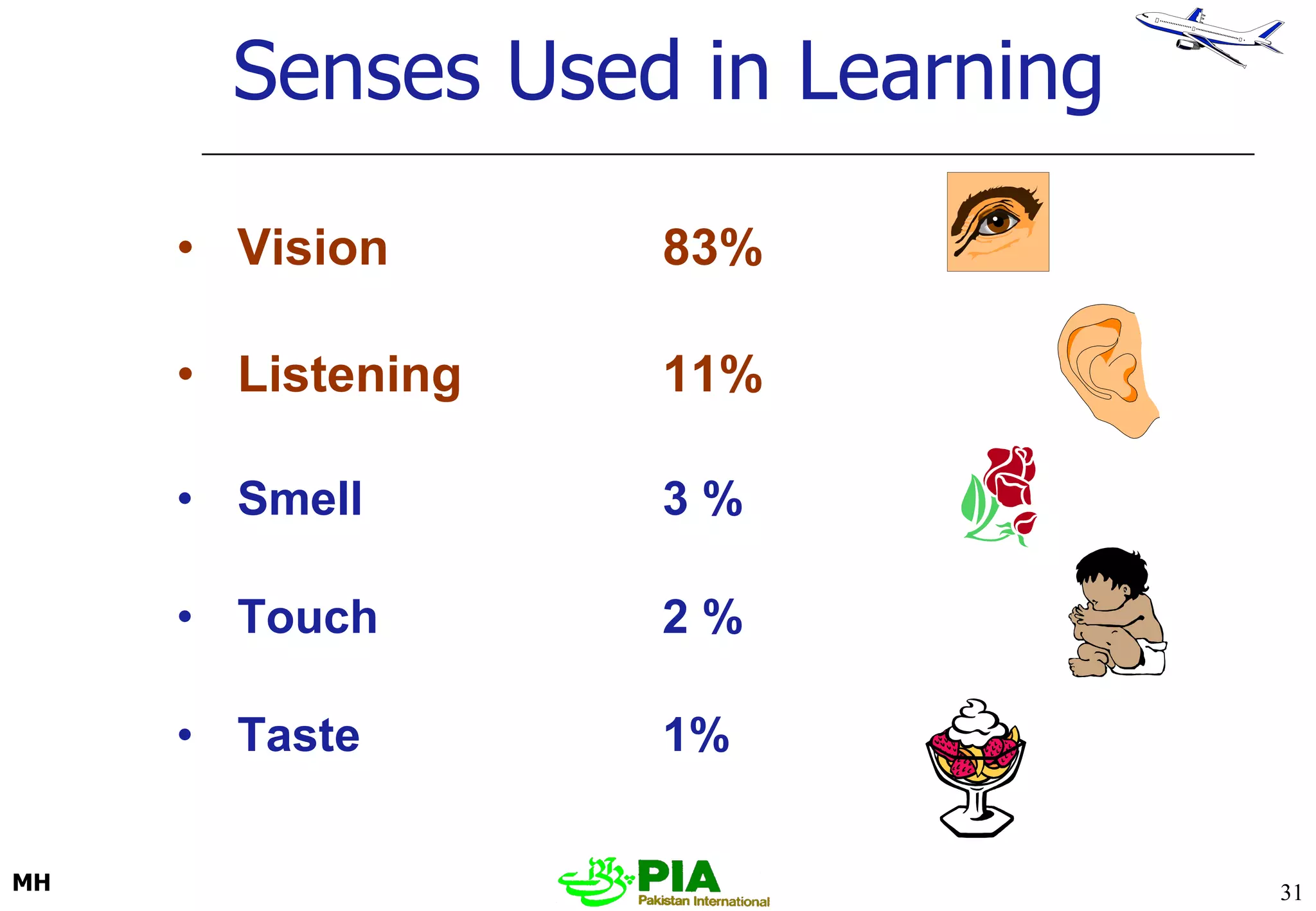
Senses Used in Learning Vision  83% Listening  11%  Smell  3 %  Touch  2 %  Taste  1%
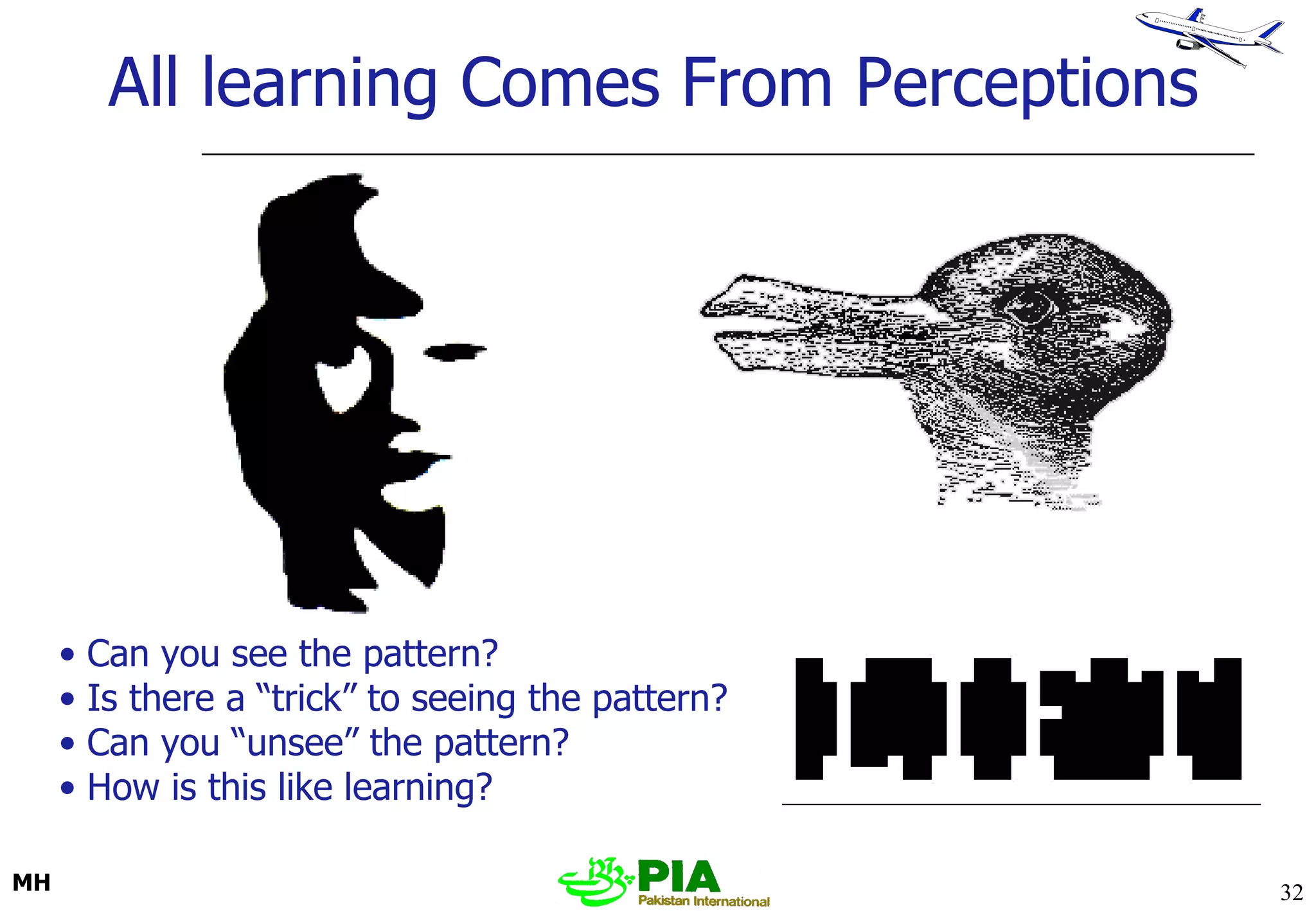
All learning Comes From Perceptions Can you see the pattern? Is there a “trick” to seeing the pattern? Can you “unsee” the pattern? How is this like learning?
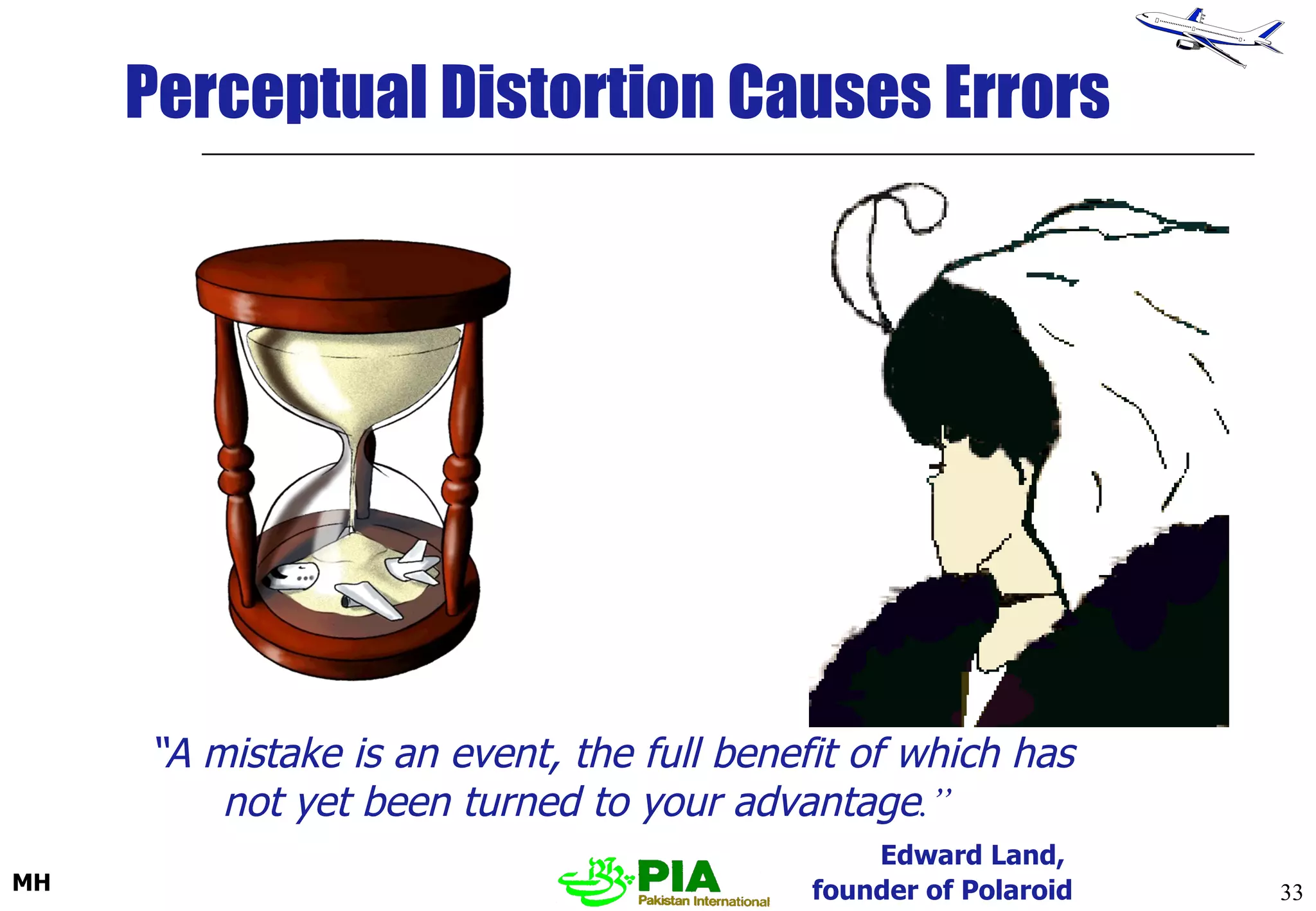
Perceptual Distortion Causes Errors “ A mistake is an event, the full benefit of which has not yet been turned to your advantage .” Edward Land,  founder of Polaroid
TRAINING– QUESTIONS to ASK   What is my objective? What do I know about the objective? What do I not know about the objective? Where can I find out info about the objective? What material do I need to train? What is my plan to train according to the objective? Does my plan have training value? When/how can I practice?
Training Methods Lecture/Presentation Method Demonstration Method Practical Exercise Experiential  Practice Method Case Study Or Team Practice Coach And Pupil Independent
Plan Prepare Explain Demonstrate/Apply Review Evaluate Elements of Training
The Active Learning Teacher A teacher is best When students barely know he exists Of a good teacher, who talks little When his work is done, his aim fulfilled They will say, “We did this ourselves.” --adapted from Lao Tzu
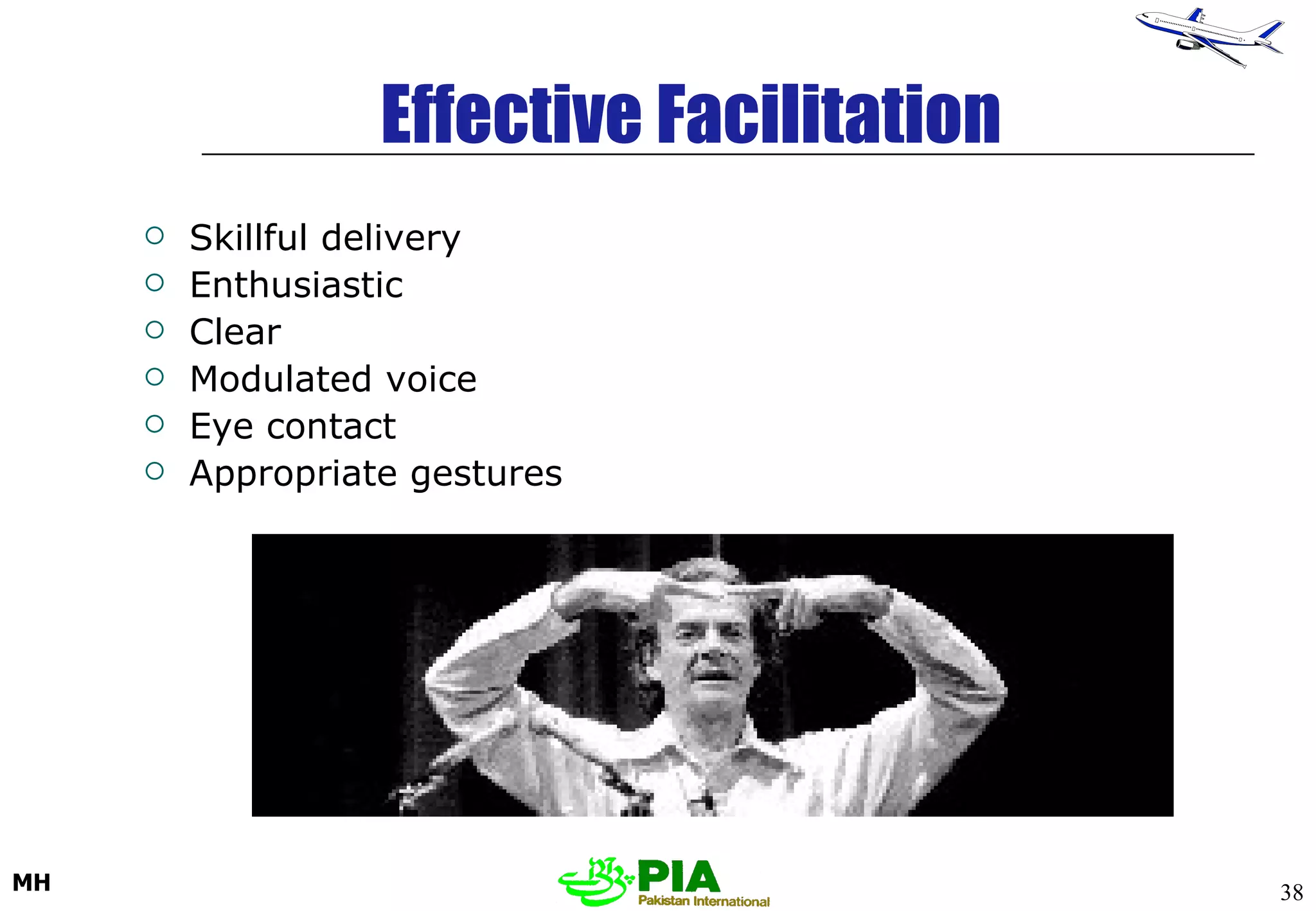
Effective Facilitation Skillful delivery Enthusiastic Clear Modulated voice Eye contact Appropriate gestures
The task of the instructor is not to take students from a state of ignorance to a state of knowledge,  but from a state of ignorance to a more profound state of ignorance . If it was easy, anybody could do it
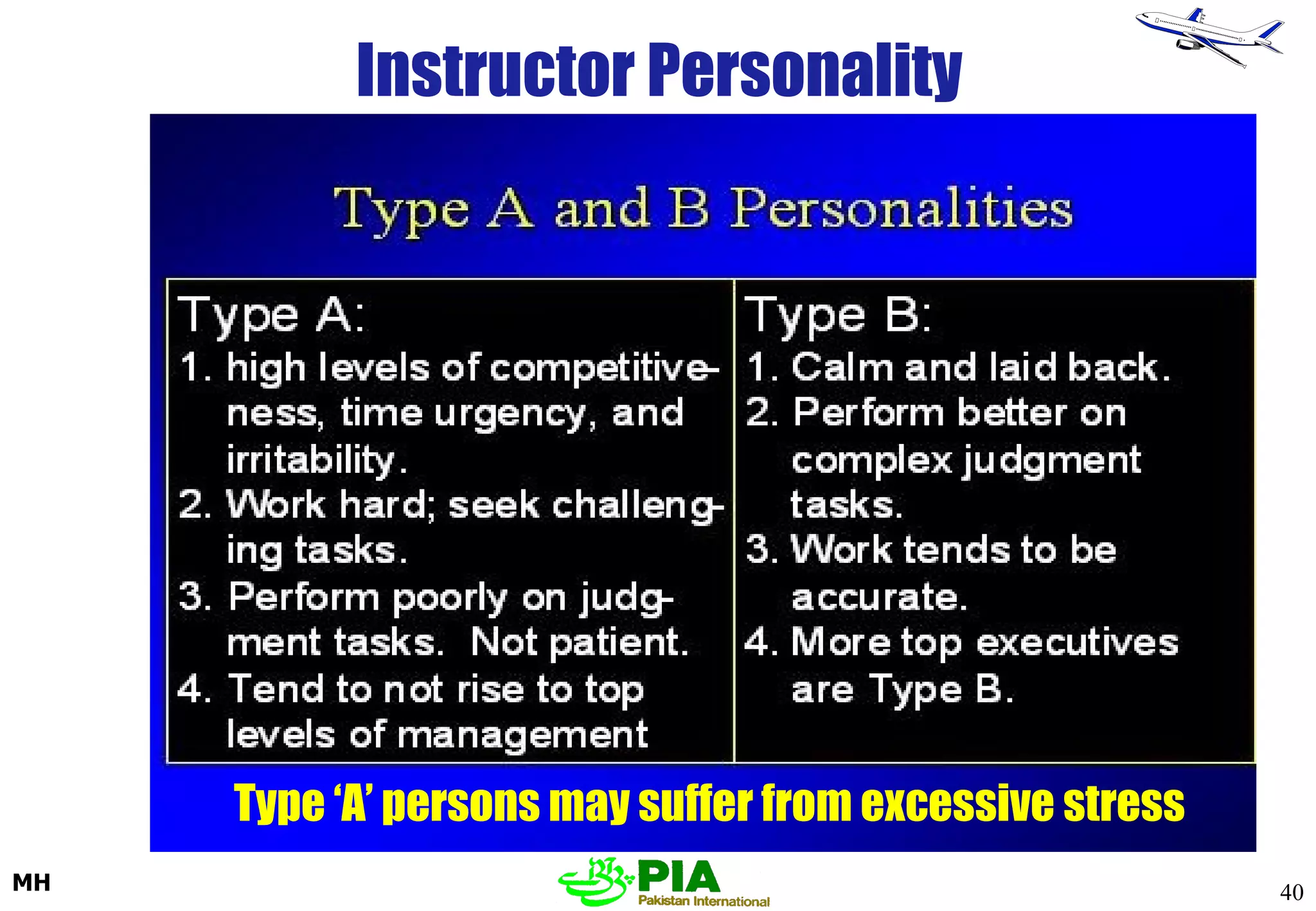
Instructor Personality Type ‘A’ persons may suffer from excessive stress
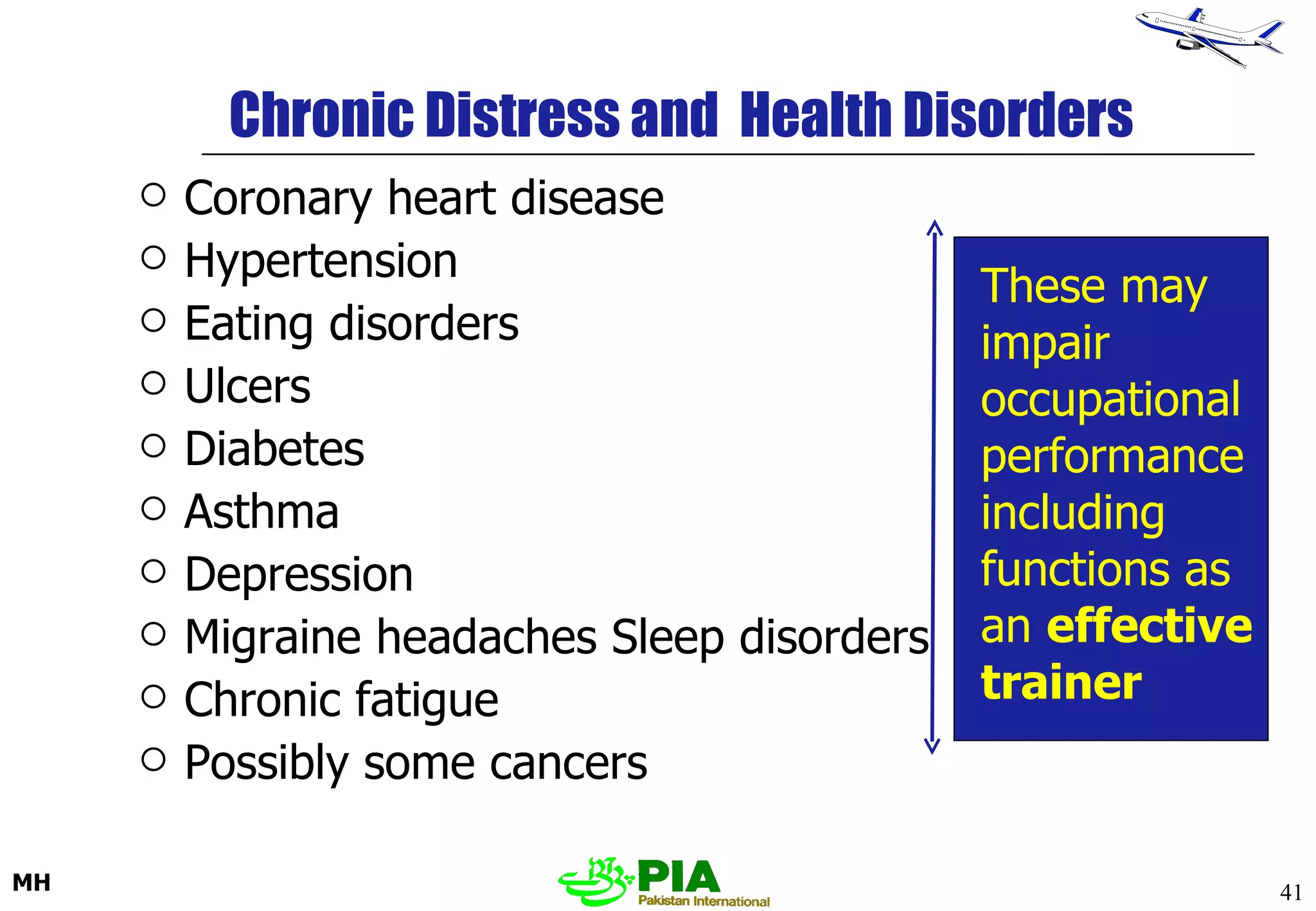
Chronic Distress and  Health Disorders  Coronary heart disease Hypertension Eating disorders Ulcers Diabetes Asthma Depression Migraine headaches Sleep disorders Chronic fatigue Possibly some cancers These may impair occupational performance including functions as an  effective trainer
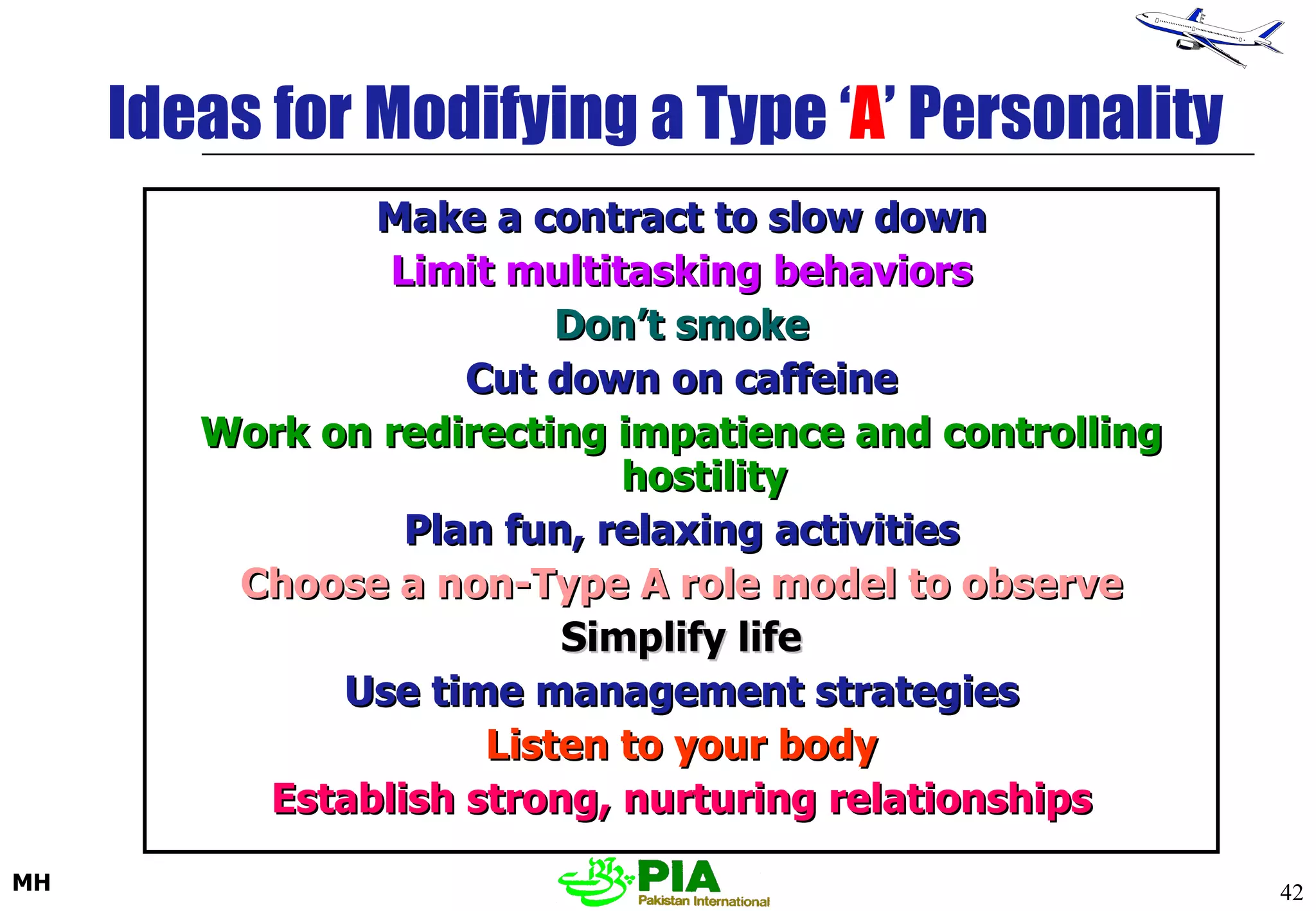
Ideas for Modifying a Type ‘ A ’ Personality Make a contract to slow down Limit multitasking behaviors Don’t smoke Cut down on caffeine Work on redirecting impatience and controlling hostility Plan fun, relaxing activities Choose a non-Type A role model to observe Simplify life Use time management strategies Listen to your body Establish strong, nurturing relationships
Diagnostic  Tools “ I keep six honest serving-men (They taught me all I knew); their names are What &  Why ; When & Where; Who & How. Rudyard Kipling 'Millions saw the apple fall, but Newton was the one who asked   why’   Bernard M. Baruch
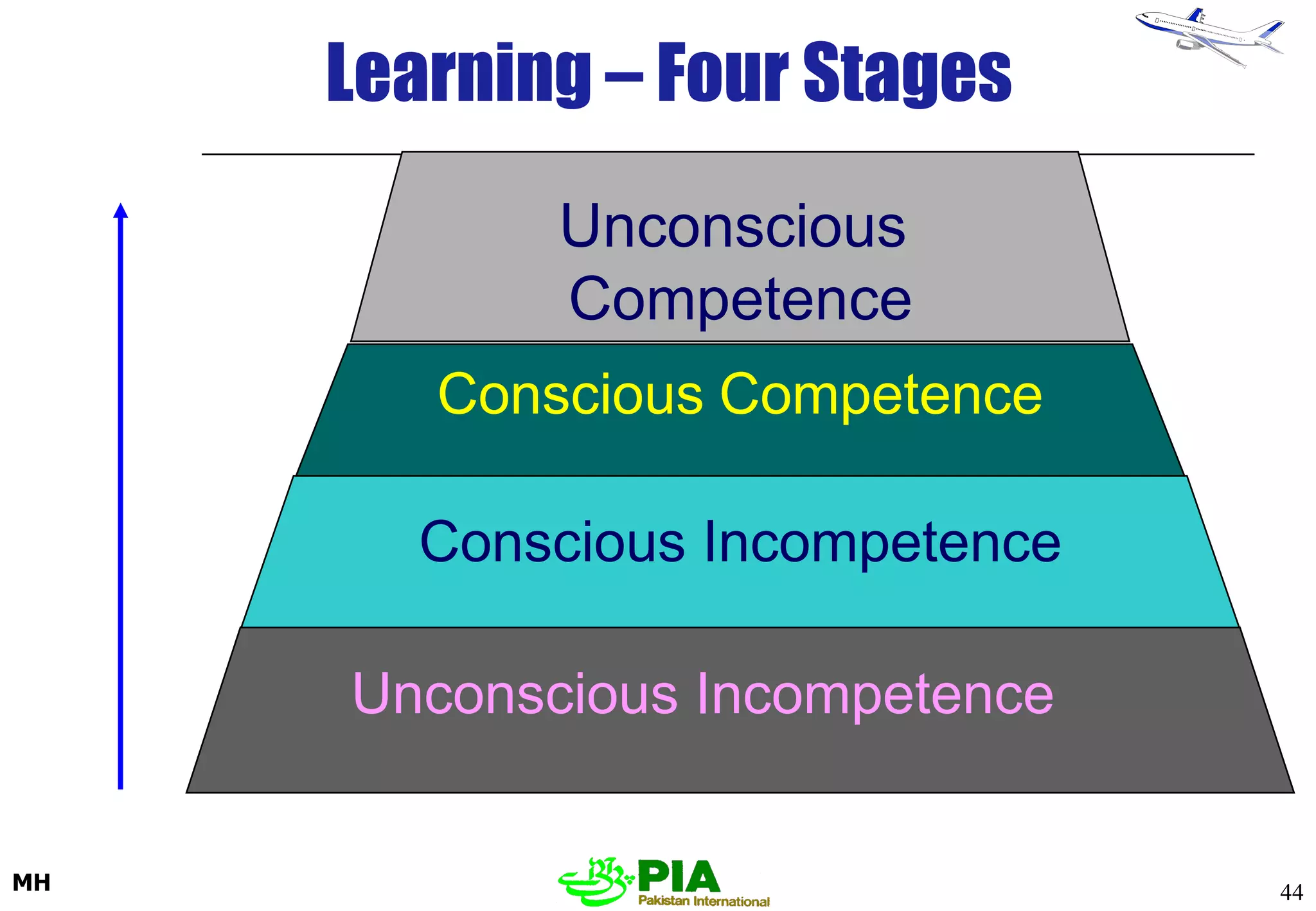
Learning – Four Stages Unconscious Incompetence Conscious Incompetence Conscious   Competence Unconscious   Competence
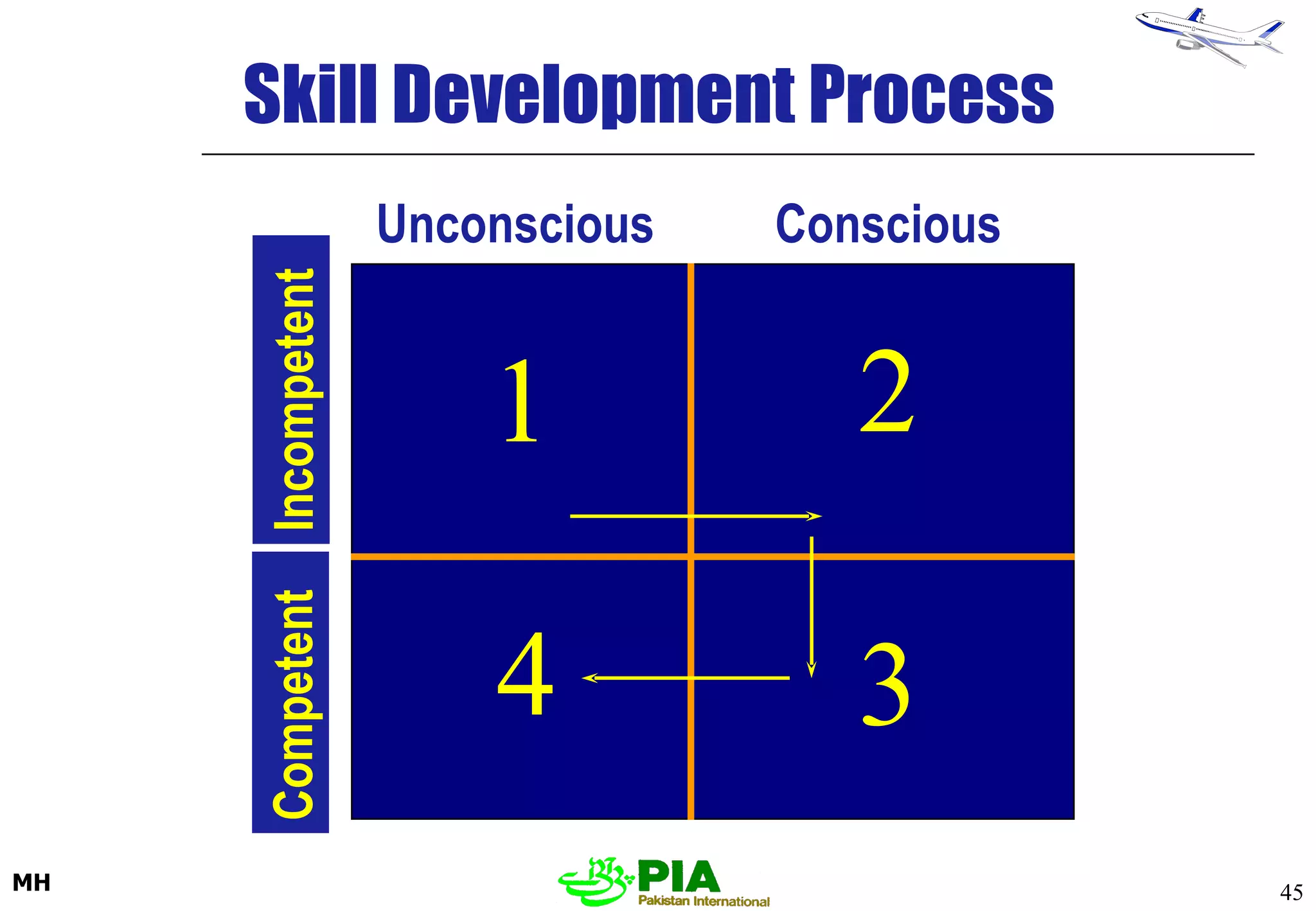
Skill Development Process Unconscious Conscious Incompetent Competent 1 2 3 4
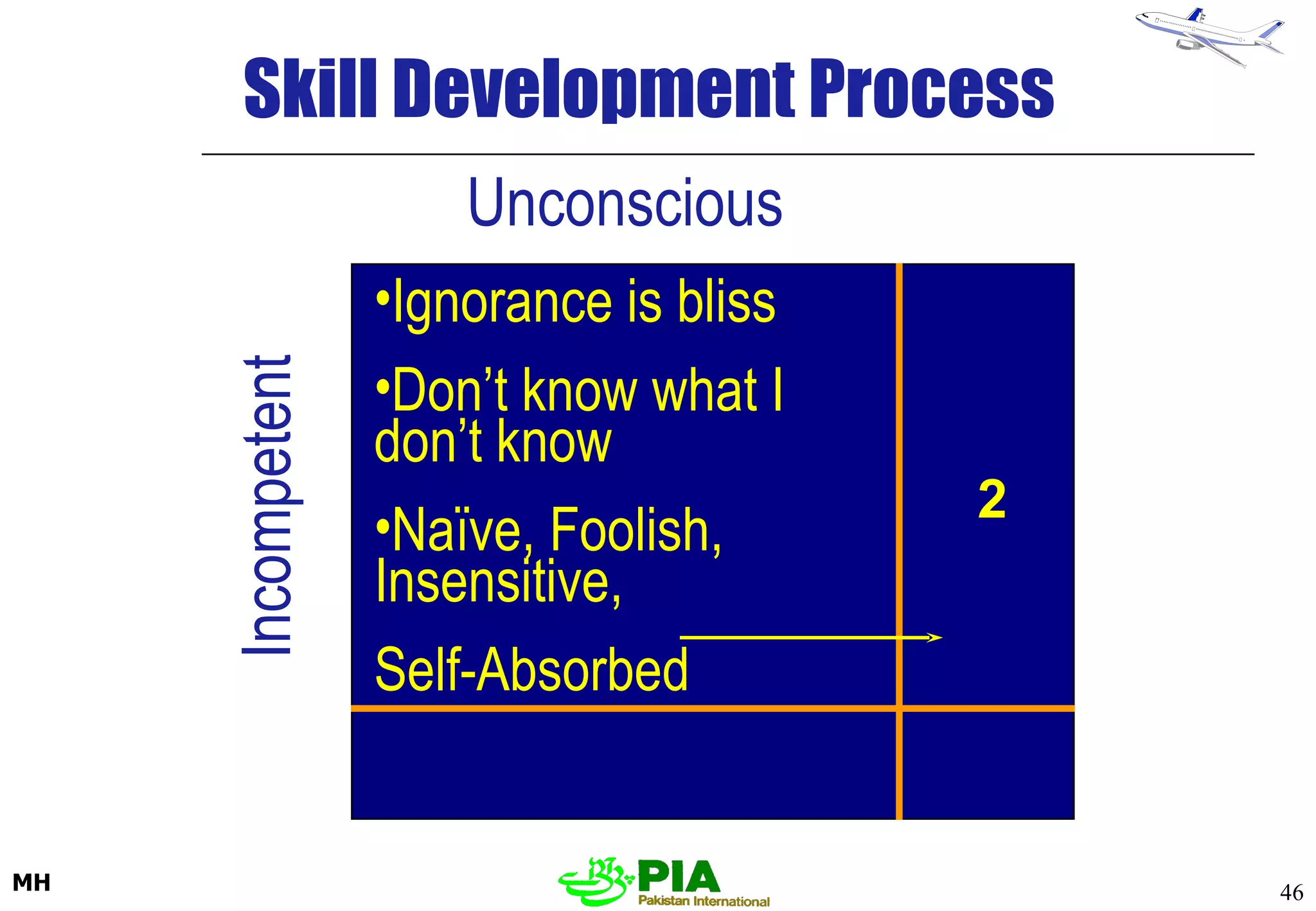
Unconscious Incompetent Ignorance is bliss Don’t know what I don’t know Naïve, Foolish, Insensitive,  Self-Absorbed 2 Skill Development Process
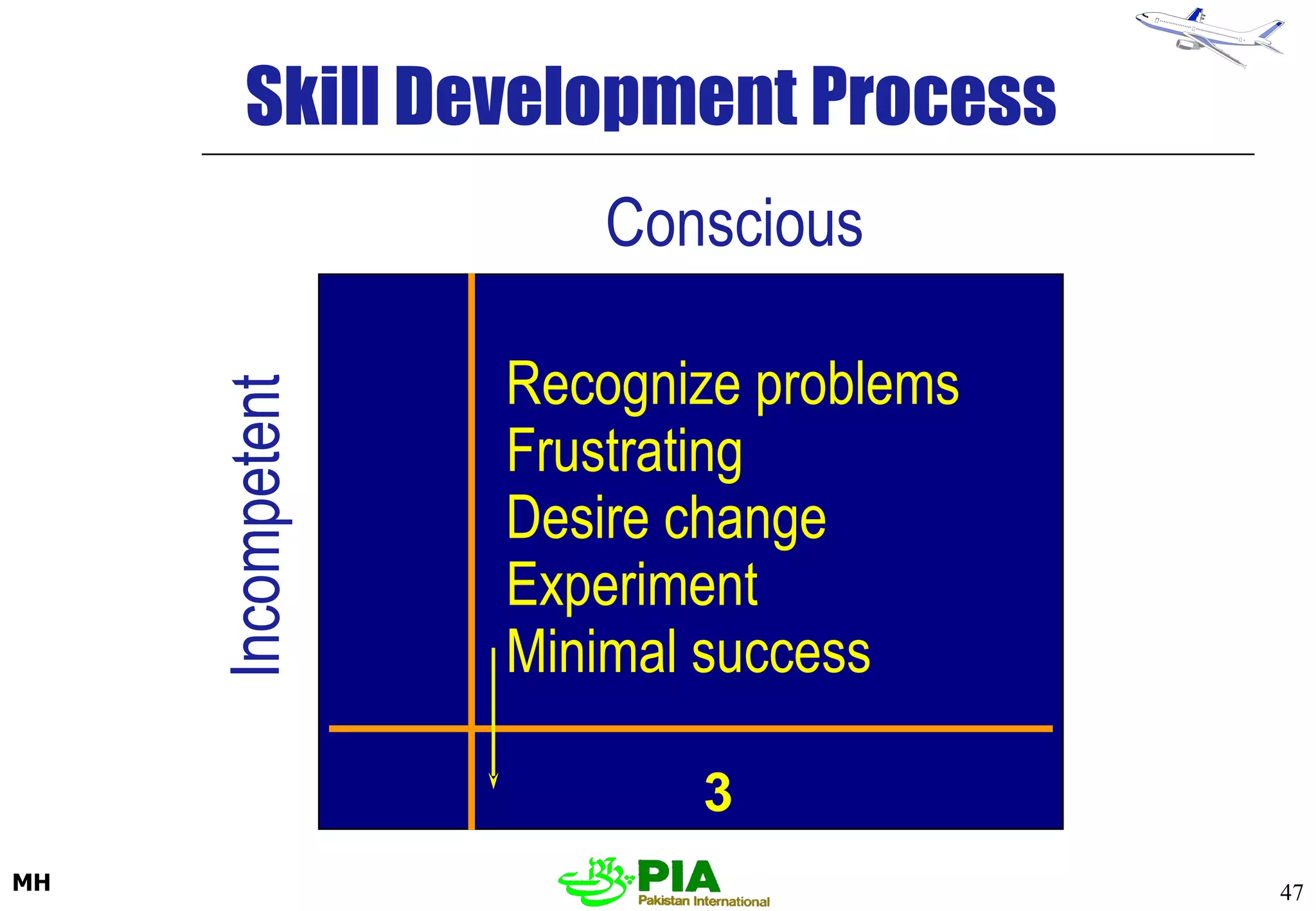
Conscious Incompetent Recognize problems Frustrating Desire change Experiment Minimal success 3 Skill Development Process
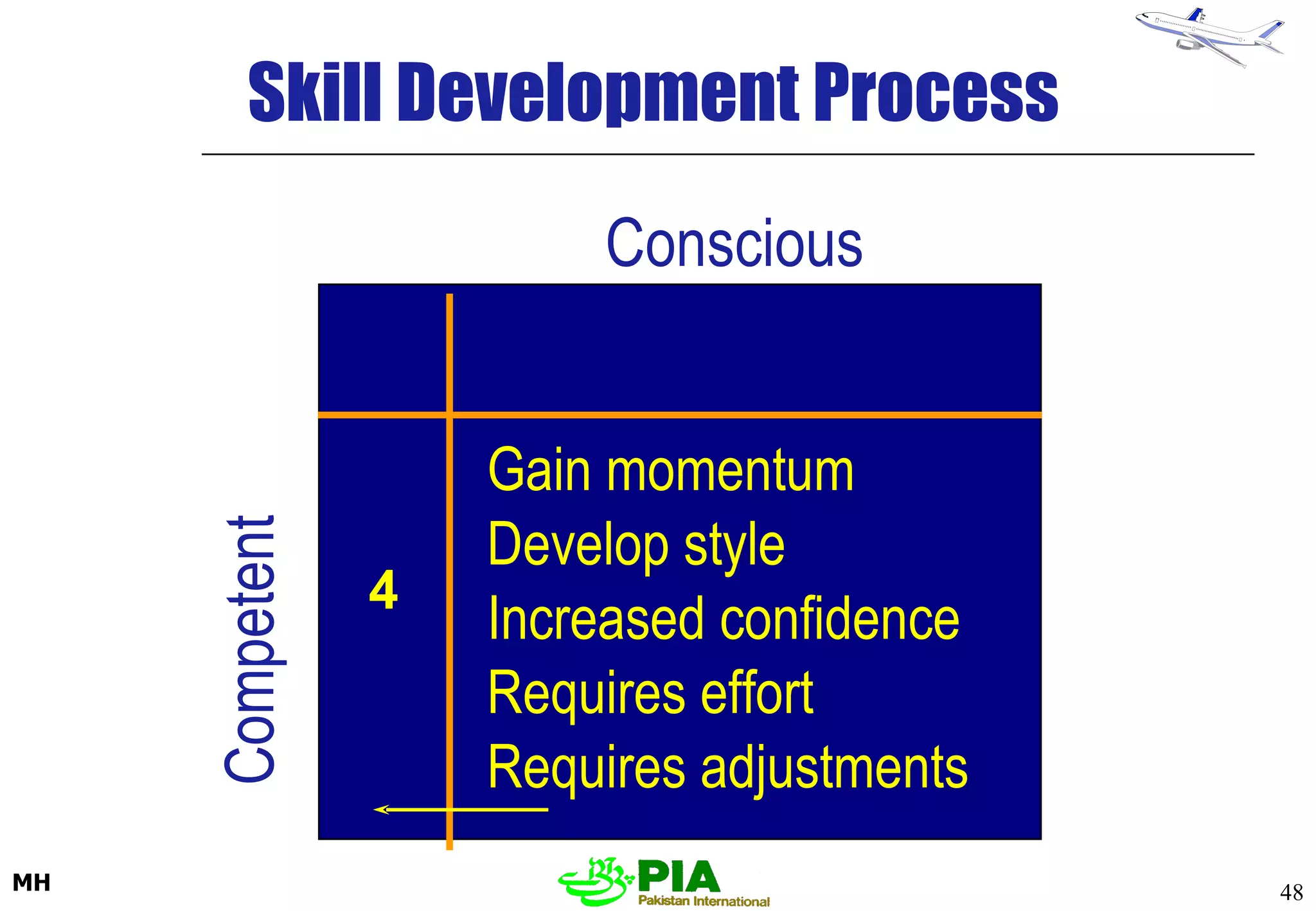
Conscious Competent Gain momentum Develop style Increased confidence Requires effort Requires adjustments 4 Skill Development Process
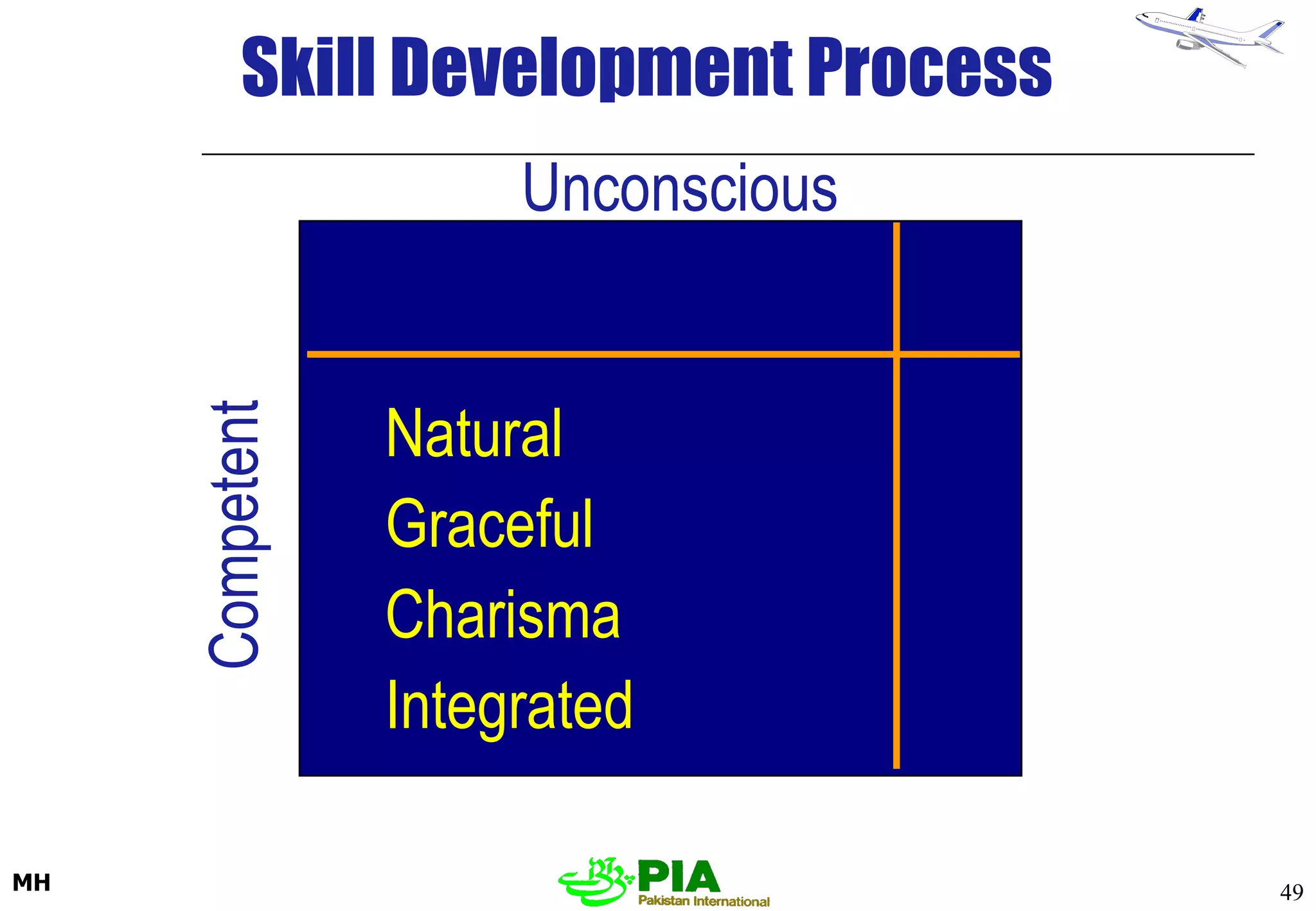
Unconscious Competent Natural Graceful Charisma Integrated Skill Development Process
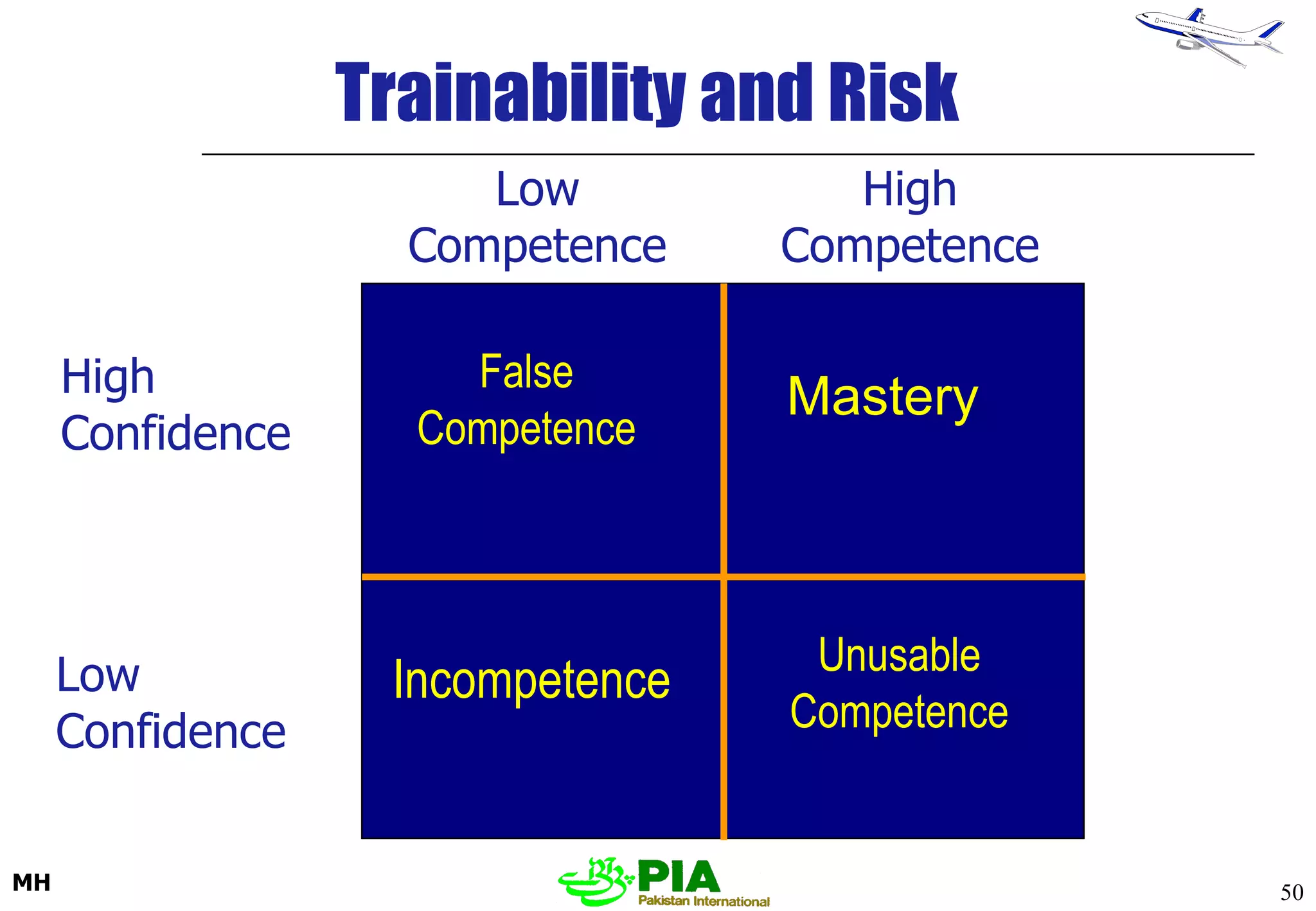
Low Competence High Competence High Confidence False Competence Unusable Competence Incompetence Low Confidence Mastery Trainability and Risk
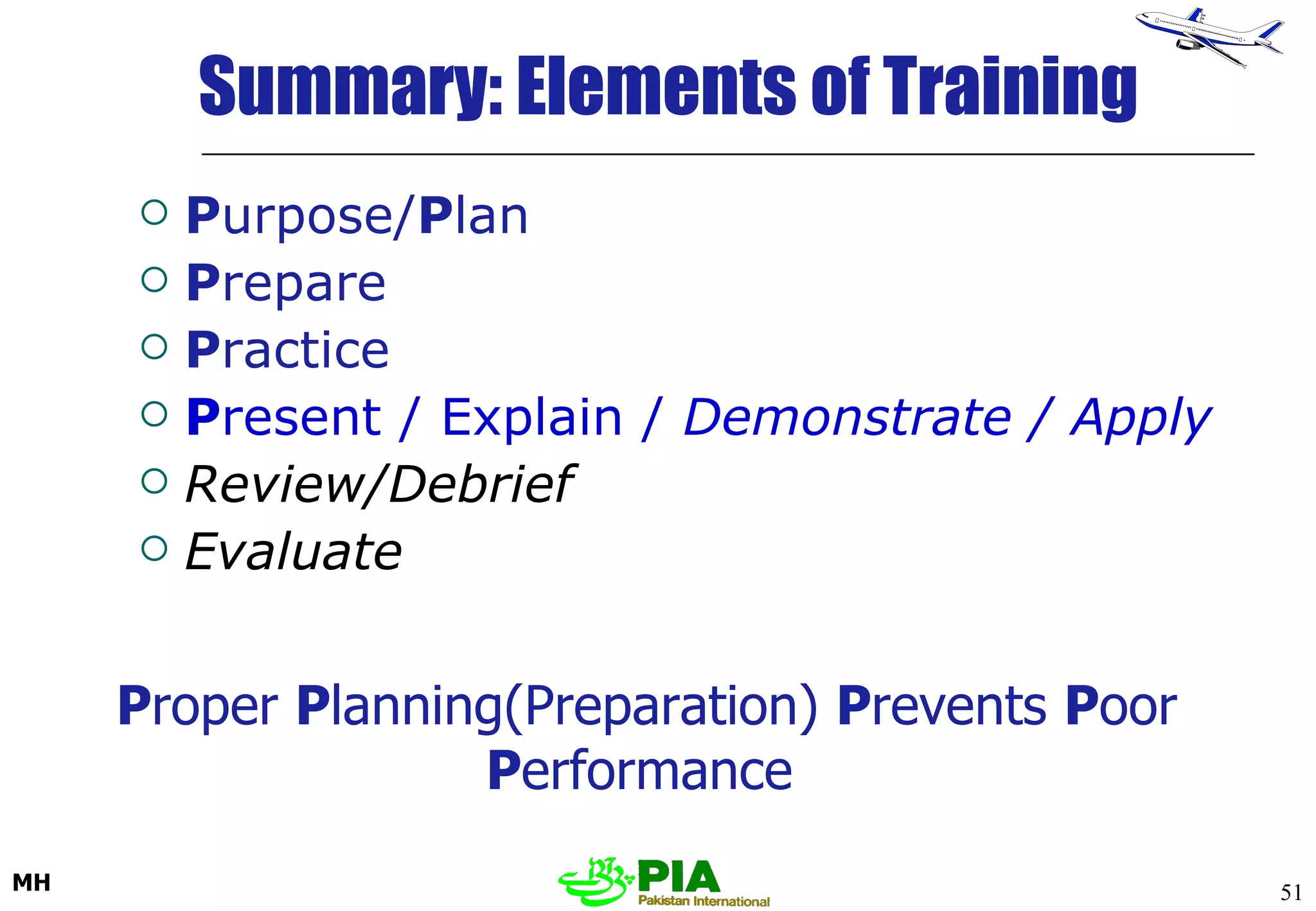
P urpose/ P lan P repare  P ractice P resent / Explain /  Demonstrate / Apply Review/Debrief Evaluate Summary: Elements of Training P roper  P lanning(Preparation)  P revents  P oor  P erformance
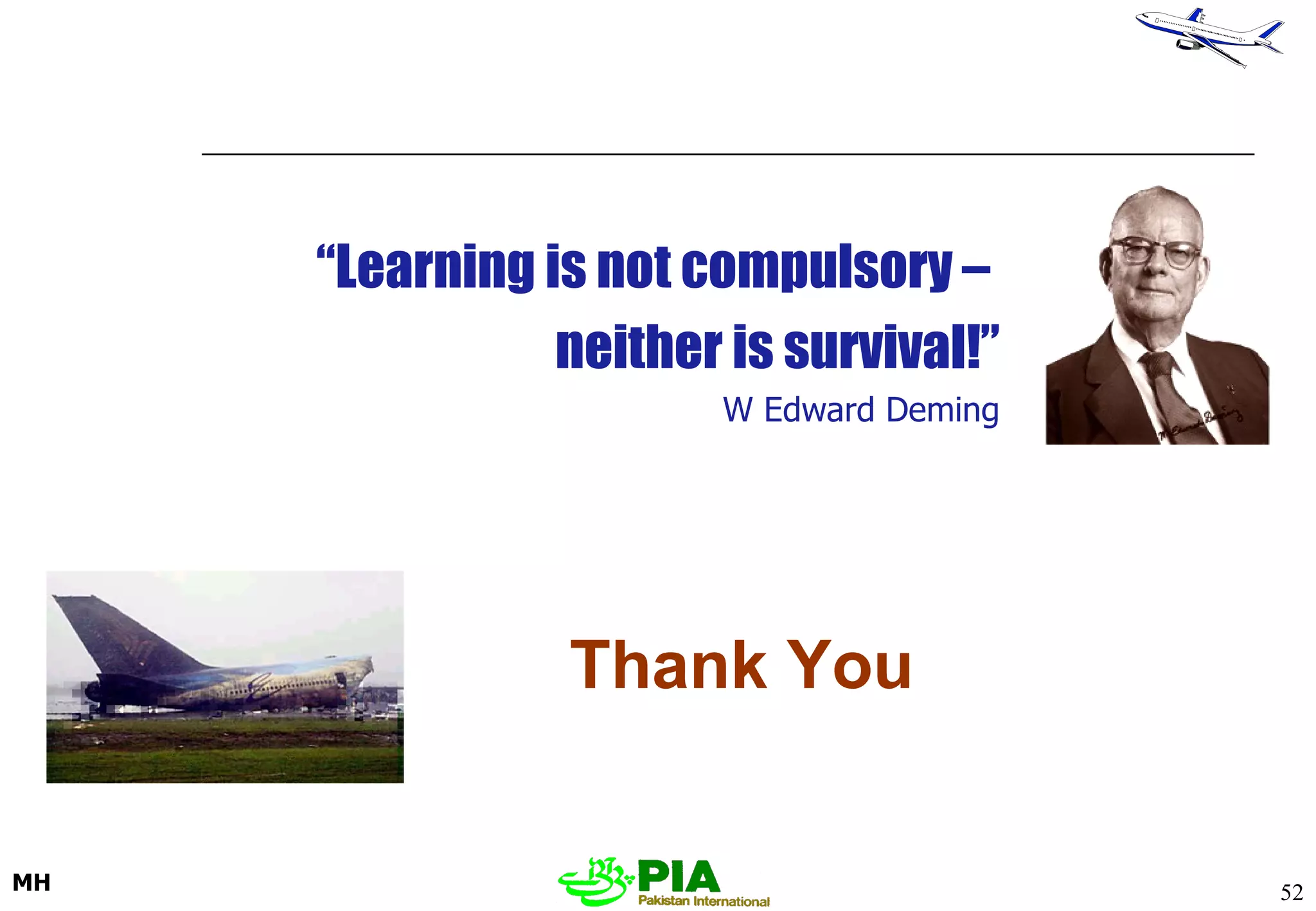
“ Learning is not compulsory –  neither is survival!” W Edward Deming Thank You

Itcpilots5

  • 1.
    Instructional Techniques Ihear, I forget. I see, I remember. I do, I understand Confucius
  • 2.
    Lao-Tse (also Lao-tzu)on Effective Learning In the 5th-century BC, this philosopher wrote: "If you tell me, I will listen . If you show me, I will see. But if you let me e xperience , I will learn."
  • 3.
    Agenda The LearningProcess The Training Process Training Methods The Human Behavior & Motivation Impact of Stress on Instructor Performance Effective Communication The Instructor as a Critic Instructional Aids
  • 4.
  • 5.
    Goals of TrainingLearning to Improve Corporate Performance Learning
  • 6.
    Definitions Adult learning – a process through which learners become aware of significant experience. Education – an activity undertaken by one or more teachers to change the knowledge and attitudes of individuals. Learning – the acquisition of skills, knowledge and attitudes that change behavior. Teaching – helping someone to learn. Training: To make proficient with specialized instruction and practice or To provide the experiences so that learning can happen.
  • 7.
    Rules of LearningStimulate Students Recognize Individual Differences Understanding and Repetition Aid Retention Show It Like It Is First and Last Impressions Are Retained Tie-In Is Essential To Learning “ Belongingness” and “Satisfiers” Aid Learning Active Practice is Best New Learning May Detract From Previous Learning
  • 8.
    Rules of LearningShowing Errors Can Aid Learning Rewards Aid Learning Recognition is Easier Than Recall Much Is Forgotten Rapidly Known Authorities Are Believed Exact Repetition Effective Fear Is Effective In Small Doses Success Begets Further Success Old and Strong Ideas Are Best Retained
  • 9.
    Raising the Barcompetence What we have KRA (Standards) time Competence development Knowledge assimilated What we need Training Observation & Supervision
  • 10.
    Focus and ASK (KAS) K nowledge : Acquaintance with facts - Understanding of concepts S kills : - Ability to apply knowledge - Proficiency in solving problems A ttitude / - High self-esteem Abilities - Positive feelings - Superior performance
  • 11.
    Knowledge Conveying concepts,ideas, facts Content – cognitive learning Ability to demonstrate acquired knowledge, comprehend information, analyze concepts Most common and easily measured
  • 12.
    Skills Change inability to do something Easier to identify and determine if met Focus on being able to perform a task or procedure Requires practice and feedback Hard to measure impact
  • 13.
    Attitudes Used tochange feelings, beliefs, values To increase awareness of or sensitivity to certain issues or ideas Most difficult to assess Observed over time
  • 14.
    ACTION! AS K Objectives always start with an action verb! Criticize Select Choose Assess Evaluate Analyze Decide Adjust Construct Measure Solve Record Demonstrate Develop Design Prove Prepare Compute Define Identify Relate Name Differentiate Explain List Describe Compare Cite
  • 15.
    First Perspective: Teaching/ Training Motivation: Why people learn Instruction: How people learn Context: How the part fits the big picture Explanation: Step by step, digestible small chunks Practice: Demonstrate, practice with supervision, solo Evaluate: Verify learning
  • 16.
    Dominant Learning StyleLearning Visual Auditory Kinesthetic                                                                                                                                                                                                                                                    
  • 17.
  • 18.
    THE LEARNING PROCESSLEARNING CHARACTERISTICS OF THE LEARNER NATURE OF THE MATERIALS CRITERIAL TASK LEARNING STRATEGIES
  • 19.
    Six Principles ofLearning R eadiness E xercise E ffect P rimacy I ntensity R ecency
  • 20.
    Law of Readiness:A person learns best when 1. He/She has the necessary background 2. Appropriate attitude 3. Is ready to learn. No reason to learn = nothing learned. THE LAWS OF LEARNING
  • 21.
    THE LAWS OF LEARNING Law of Exercise: Those things most often repeated are best remembered. It is the basis of practice and drill. After training it right, let them practice .
  • 22.
    THE LAWS OF LEARNING Law of Effect: learning is strengthened when accompanied by a pleasant or satisfying feeling, and that learning is weakened when associated with an unpleasant feeling. What effect is your training having on learning?
  • 23.
    THE LAWS OF LEARNING Law of Primacy: What is taught must be right the first time. Primacy, the state of being first, often creates a strong, almost unshakable, impression. Train right, right the first time!
  • 24.
    THE LAWS OF LEARNING Law of Intensity: A sharp, clear, or exciting learning experience teaches more than a routine or boring one. Make the experience real, applicable, lively, exciting and passionate.
  • 25.
    THE LAWS OF LEARNING Law of Recency: The things most recently learned are best remembered. Reinforce prior learning through exercise.
  • 26.
    THE LAWS OF FORGETTING Disuse : A person forgets things which are not used. Interference : People forget a thing because a certain experience has overshadowed it, or the learning of similar things has interfered. Repression : forgetting is due to the submersion of ideas into the unconscious mind. Individuals may unintentionally repress material that is unpleasant, or produces anxiety.
  • 27.
  • 28.
    Learning-Esteem Cycle Feelinggood about yourself Producing good results Leads to Leads to
  • 29.
    Learning: Great TipsPractice is more than repetition . Use it or lose it. Cognitive tools are remarkable--but some are limited Attention is a gateways to learning. Working memory fills fast Organization and elaboration support memory Knowledge and beliefs play critical roles in learning Learning is hard work: Strategic persistence pays Knowledge is difficult to transfer MH
  • 30.
    Left Brain – Right Brain Neural Pathways Interpretation Response
  • 31.
    Senses Used inLearning Vision 83% Listening 11% Smell 3 % Touch 2 % Taste 1%
  • 32.
    All learning ComesFrom Perceptions Can you see the pattern? Is there a “trick” to seeing the pattern? Can you “unsee” the pattern? How is this like learning?
  • 33.
    Perceptual Distortion CausesErrors “ A mistake is an event, the full benefit of which has not yet been turned to your advantage .” Edward Land, founder of Polaroid
  • 34.
    TRAINING– QUESTIONS toASK What is my objective? What do I know about the objective? What do I not know about the objective? Where can I find out info about the objective? What material do I need to train? What is my plan to train according to the objective? Does my plan have training value? When/how can I practice?
  • 35.
    Training Methods Lecture/PresentationMethod Demonstration Method Practical Exercise Experiential Practice Method Case Study Or Team Practice Coach And Pupil Independent
  • 36.
    Plan Prepare ExplainDemonstrate/Apply Review Evaluate Elements of Training
  • 37.
    The Active LearningTeacher A teacher is best When students barely know he exists Of a good teacher, who talks little When his work is done, his aim fulfilled They will say, “We did this ourselves.” --adapted from Lao Tzu
  • 38.
    Effective Facilitation Skillfuldelivery Enthusiastic Clear Modulated voice Eye contact Appropriate gestures
  • 39.
    The task ofthe instructor is not to take students from a state of ignorance to a state of knowledge, but from a state of ignorance to a more profound state of ignorance . If it was easy, anybody could do it
  • 40.
    Instructor Personality Type‘A’ persons may suffer from excessive stress
  • 41.
    Chronic Distress and Health Disorders Coronary heart disease Hypertension Eating disorders Ulcers Diabetes Asthma Depression Migraine headaches Sleep disorders Chronic fatigue Possibly some cancers These may impair occupational performance including functions as an effective trainer
  • 42.
    Ideas for Modifyinga Type ‘ A ’ Personality Make a contract to slow down Limit multitasking behaviors Don’t smoke Cut down on caffeine Work on redirecting impatience and controlling hostility Plan fun, relaxing activities Choose a non-Type A role model to observe Simplify life Use time management strategies Listen to your body Establish strong, nurturing relationships
  • 43.
    Diagnostic Tools“ I keep six honest serving-men (They taught me all I knew); their names are What & Why ; When & Where; Who & How. Rudyard Kipling 'Millions saw the apple fall, but Newton was the one who asked why’ Bernard M. Baruch
  • 44.
    Learning – FourStages Unconscious Incompetence Conscious Incompetence Conscious Competence Unconscious Competence
  • 45.
    Skill Development ProcessUnconscious Conscious Incompetent Competent 1 2 3 4
  • 46.
    Unconscious Incompetent Ignoranceis bliss Don’t know what I don’t know Naïve, Foolish, Insensitive, Self-Absorbed 2 Skill Development Process
  • 47.
    Conscious Incompetent Recognizeproblems Frustrating Desire change Experiment Minimal success 3 Skill Development Process
  • 48.
    Conscious Competent Gainmomentum Develop style Increased confidence Requires effort Requires adjustments 4 Skill Development Process
  • 49.
    Unconscious Competent NaturalGraceful Charisma Integrated Skill Development Process
  • 50.
    Low Competence HighCompetence High Confidence False Competence Unusable Competence Incompetence Low Confidence Mastery Trainability and Risk
  • 51.
    P urpose/ Plan P repare P ractice P resent / Explain / Demonstrate / Apply Review/Debrief Evaluate Summary: Elements of Training P roper P lanning(Preparation) P revents P oor P erformance
  • 52.
    “ Learning isnot compulsory – neither is survival!” W Edward Deming Thank You

Editor's Notes