Geothermal heat pump applications for low
energy buildings: the case of Passive House

Dr Ioannis PAPPAS, GREEN EVOLUTION SA


        From Idea To Innovation, Practicing Future in HVAC and Building Design
          Istanbul Technical University, Faculty Of Mechanical Engineering, April 5, 2013
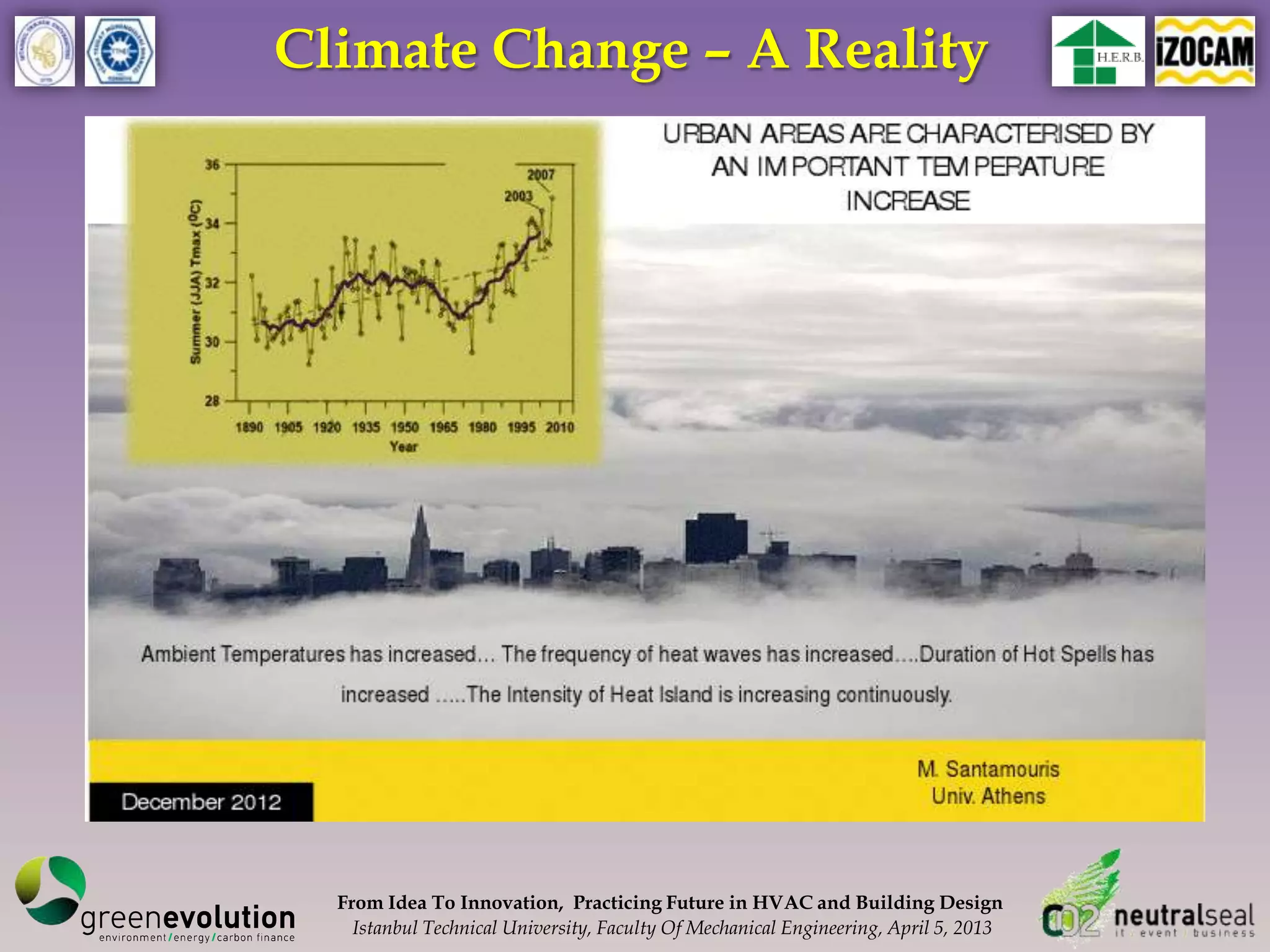
Climate Change – A Reality


  From Idea To Innovation, Practicing Future in HVAC and Building Design
    Istanbul Technical University, Faculty Of Mechanical Engineering, April 5, 2013
EUROPEAN TARGET 2013 – 2020

                                                  (Ultra) low energy (3-l) house
                                                  Solar house
                                                  Passive house                                                                              "Nearly Zero" Energy Building
                                                  Zero heating house
                                                  Net zero energy / self-sufficient house
                                                  (solar) active house
                                                  Passive house Plus
                                                  Plus energy house
                                        300
                                                                                                                                                                                                         heating demand
                                        250
specific final energy / [kWh/(m 2 a)]


                                                                                                                                                                                                         domestic hot water
                                                                                                                                                                                                         electricity
                                        200
                                                                                                                                                                                                         solar heat gen.
                                        150                                                                                                                                                              PV generation

                                        100

                                         50

                                          0

                                         -50

                                        -100
                                               building stock   WSchVO 1984 WSchVO 1995   low energy h.   3l-house   solar active h.   passive house zero-heating h. passive h. plus net zero energy h. plus house


                                                                              From Idea To Innovation, Practicing Future in HVAC and Building Design
                                                                                Istanbul Technical University, Faculty Of Mechanical Engineering, April 5, 2013
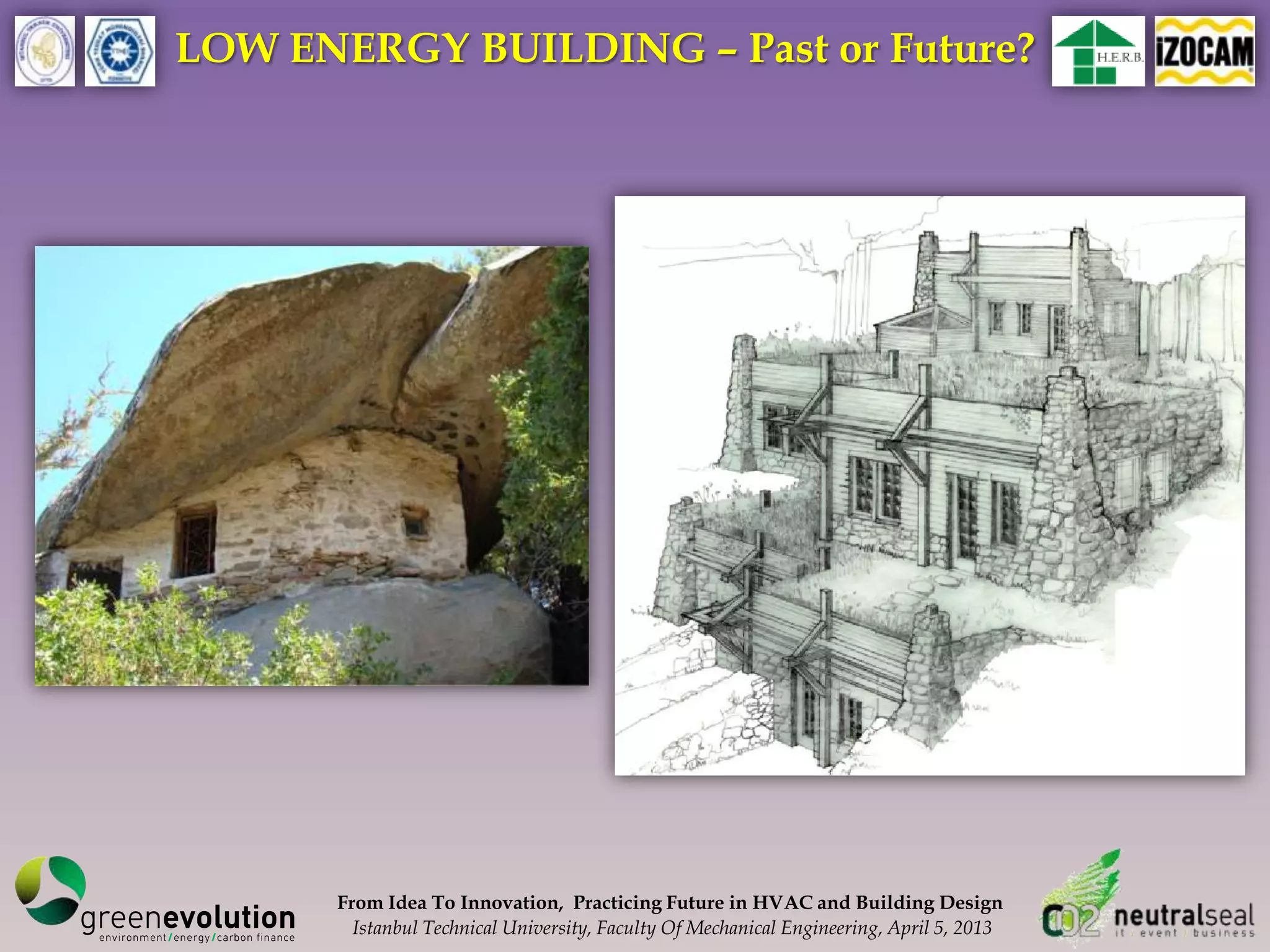
LOW ENERGY BUILDING – Past or Future?


      From Idea To Innovation, Practicing Future in HVAC and Building Design
        Istanbul Technical University, Faculty Of Mechanical Engineering, April 5, 2013
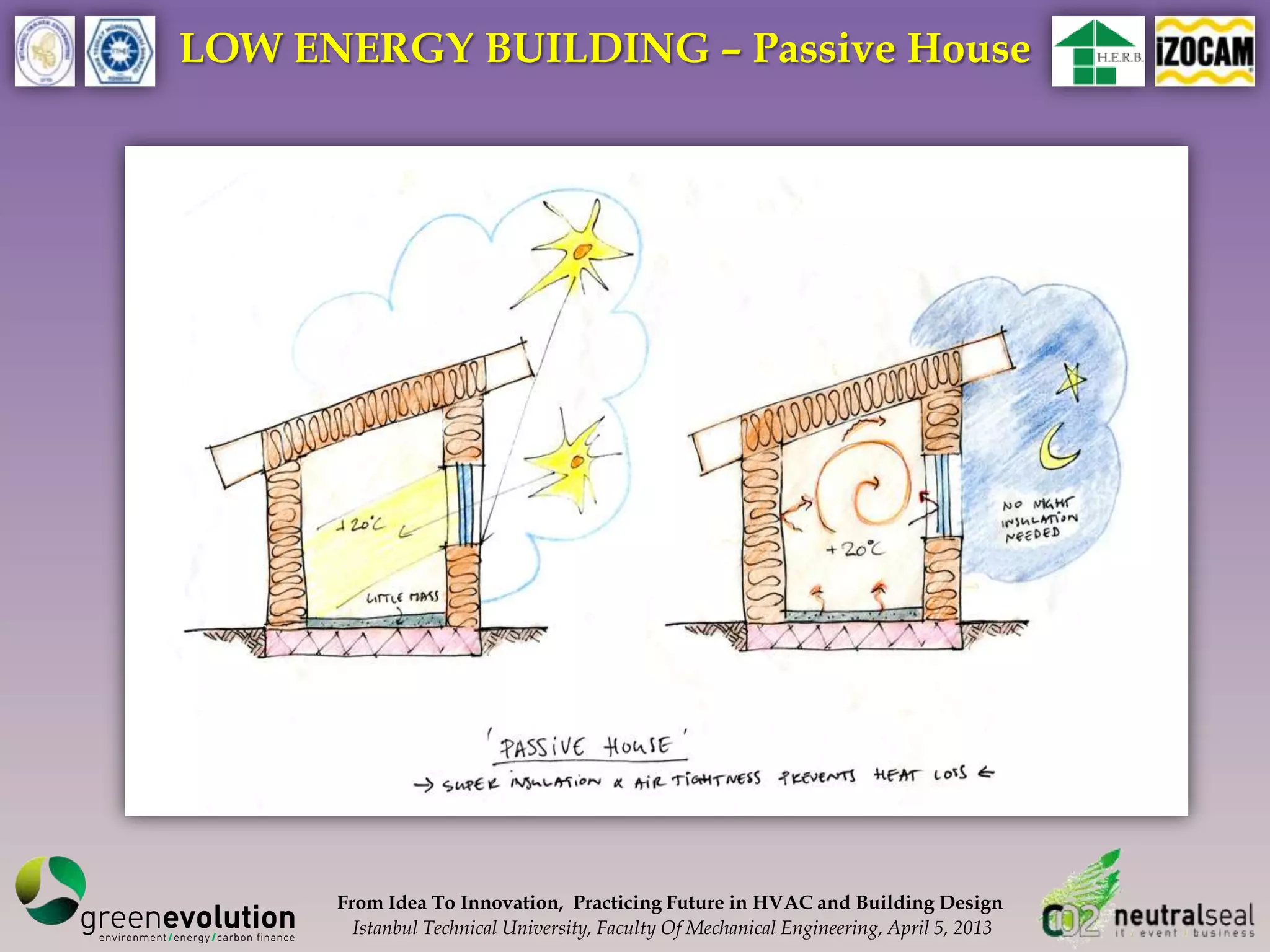
LOW ENERGY BUILDING – Passive House


      From Idea To Innovation, Practicing Future in HVAC and Building Design
        Istanbul Technical University, Faculty Of Mechanical Engineering, April 5, 2013
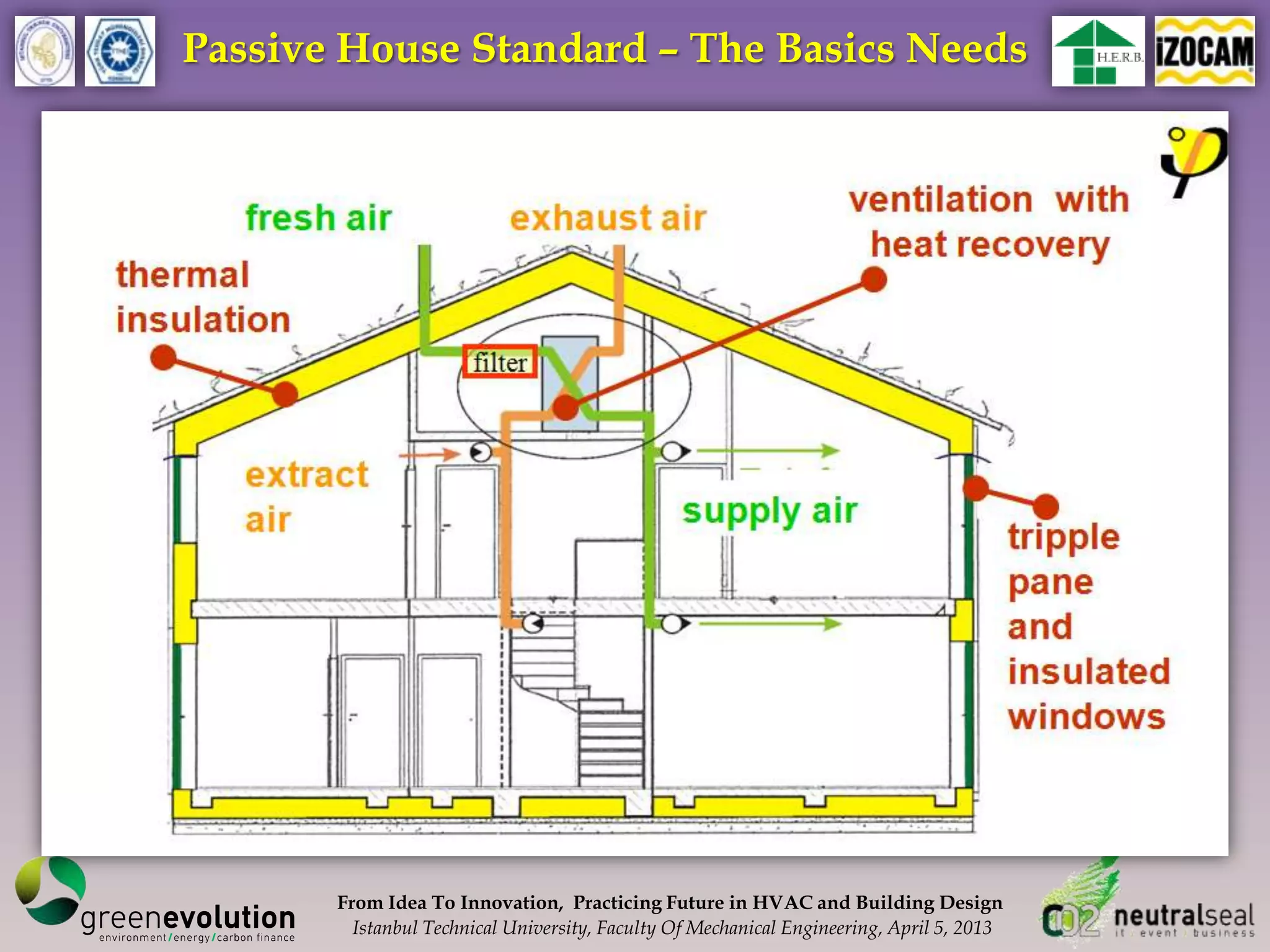
Passive House Standard – The Basics Needs


       From Idea To Innovation, Practicing Future in HVAC and Building Design
         Istanbul Technical University, Faculty Of Mechanical Engineering, April 5, 2013
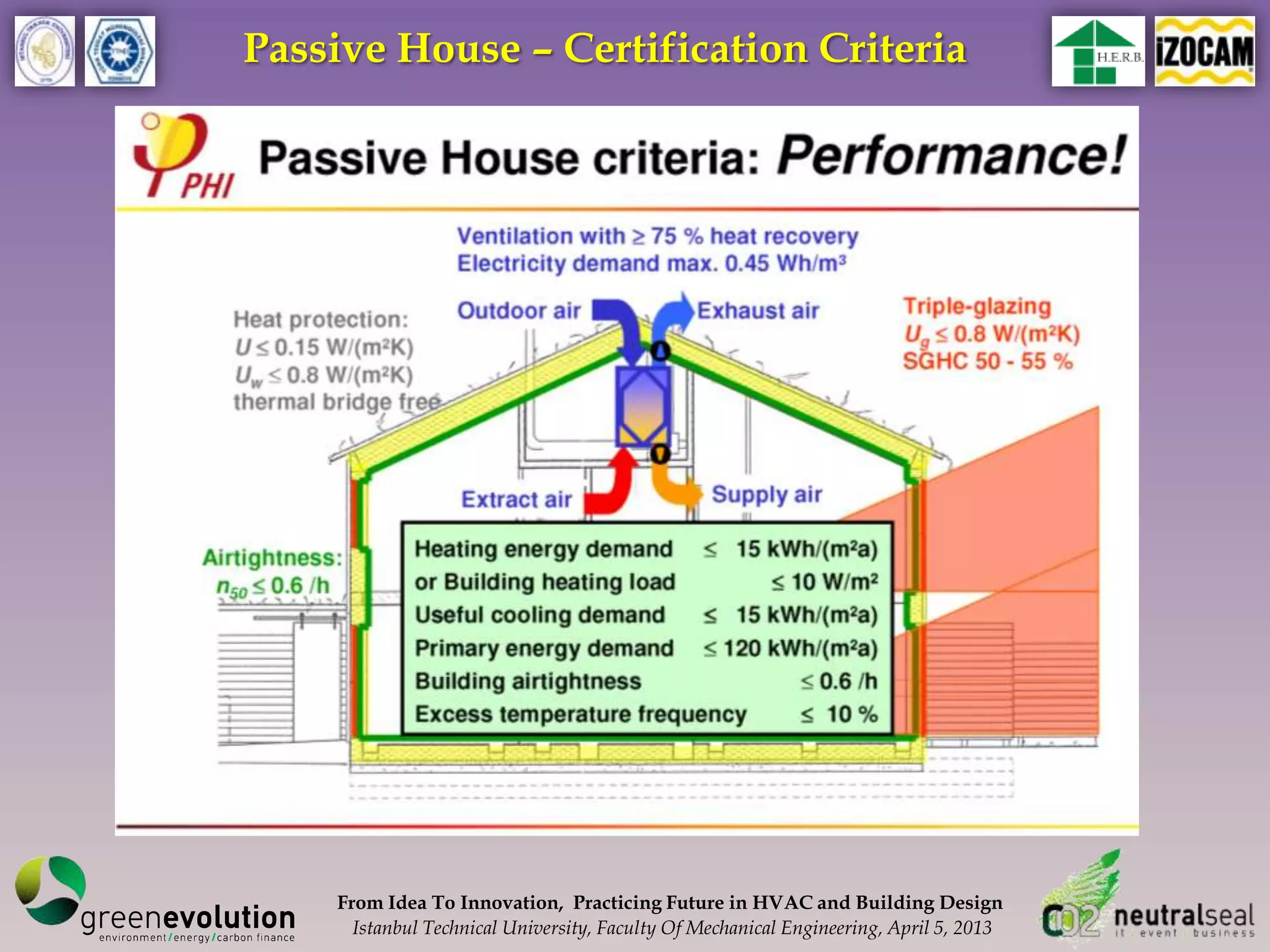
Passive House – Certification Criteria


    From Idea To Innovation, Practicing Future in HVAC and Building Design
      Istanbul Technical University, Faculty Of Mechanical Engineering, April 5, 2013
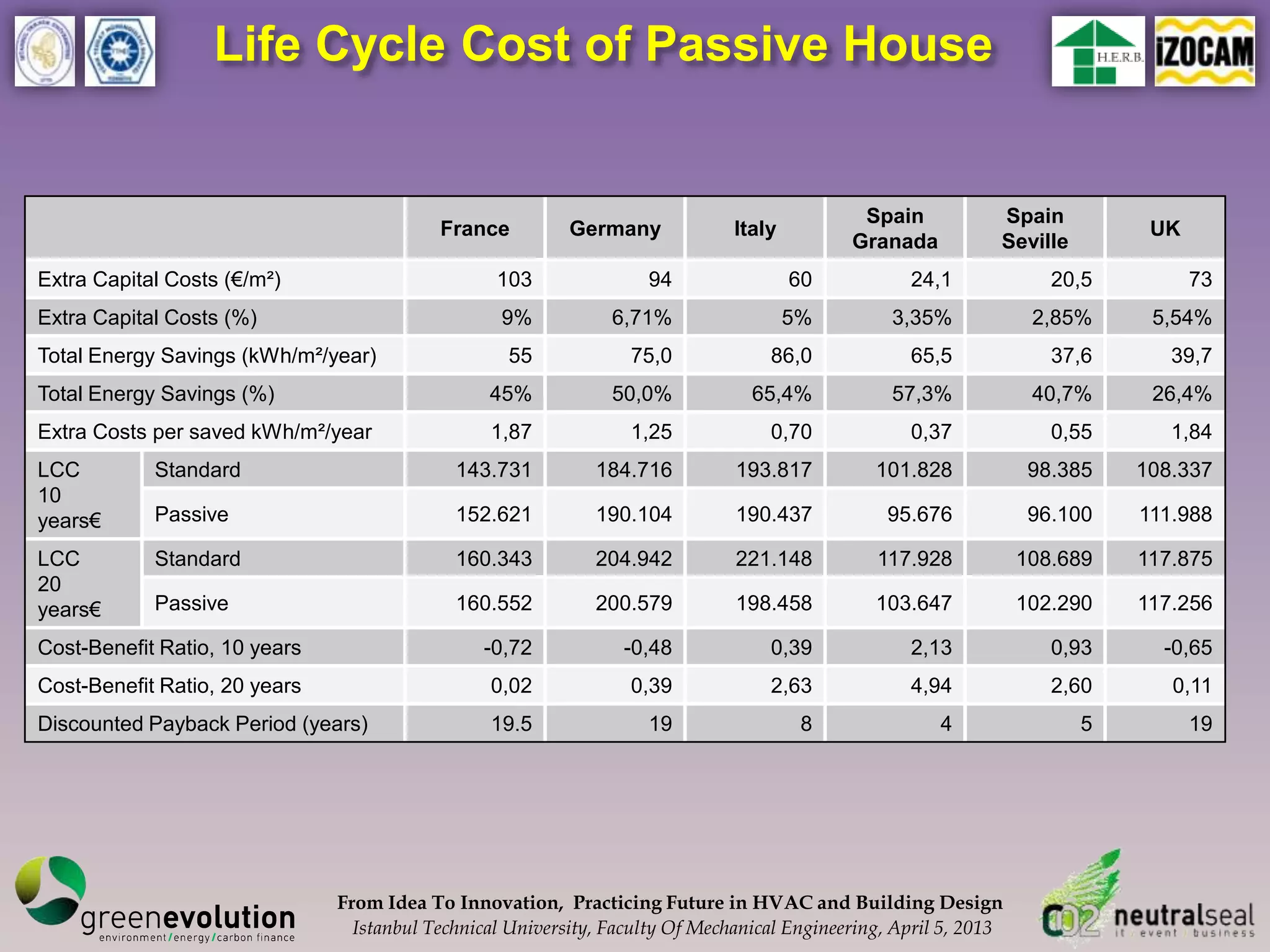
Life Cycle Cost of Passive House


                                                                                              Spain            Spain
                                           France          Germany             Italy                                          UK
                                                                                             Granada           Seville
Extra Capital Costs (€/m²)                        103               94                 60           24,1              20,5         73
Extra Capital Costs (%)                            9%           6,71%                  5%         3,35%             2,85%     5,54%
Total Energy Savings (kWh/m²/year)                 55             75,0             86,0             65,5              37,6      39,7
Total Energy Savings (%)                         45%            50,0%            65,4%            57,3%             40,7%     26,4%
Extra Costs per saved kWh/m²/year                1,87             1,25             0,70             0,37              0,55      1,84
LCC         Standard                         143.731          184.716          193.817          101.828             98.385   108.337
10
years€      Passive                          152.621          190.104          190.437           95.676             96.100   111.988

LCC         Standard                         160.343          204.942          221.148          117.928            108.689   117.875
20
years€      Passive                          160.552          200.579          198.458          103.647            102.290   117.256

Cost-Benefit Ratio, 10 years                    -0,72            -0,48             0,39             2,13              0,93     -0,65
Cost-Benefit Ratio, 20 years                     0,02             0,39             2,63             4,94              2,60      0,11
Discounted Payback Period (years)                19.5               19                  8               4                5         19


                               From Idea To Innovation, Practicing Future in HVAC and Building Design
                                 Istanbul Technical University, Faculty Of Mechanical Engineering, April 5, 2013
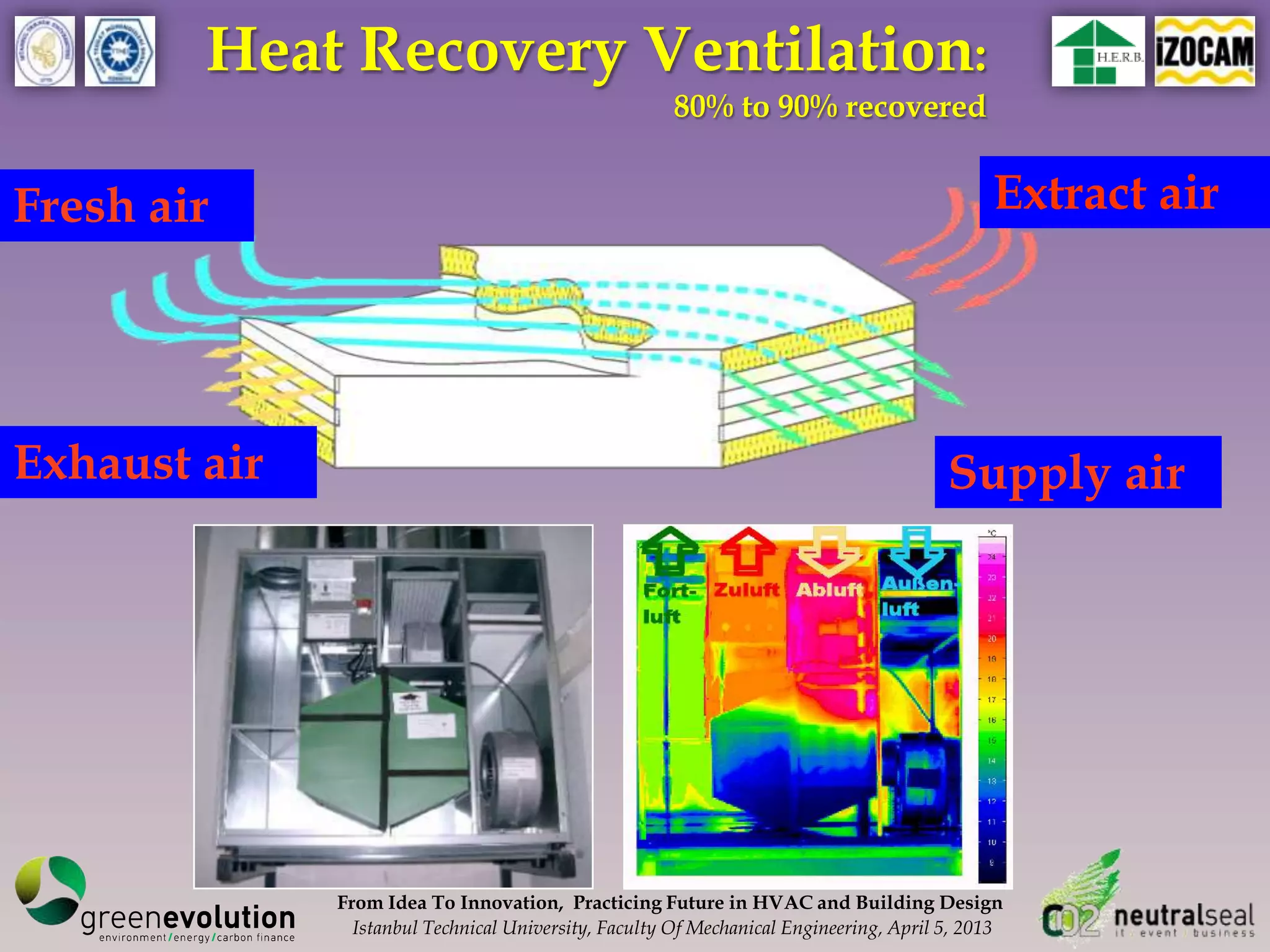
Heat Recovery Ventilation:
                                                      80% to 90% recovered


Fresh air                                                                                    Extract air


Exhaust air                                                                             Supply air


              From Idea To Innovation, Practicing Future in HVAC and Building Design
                Istanbul Technical University, Faculty Of Mechanical Engineering, April 5, 2013
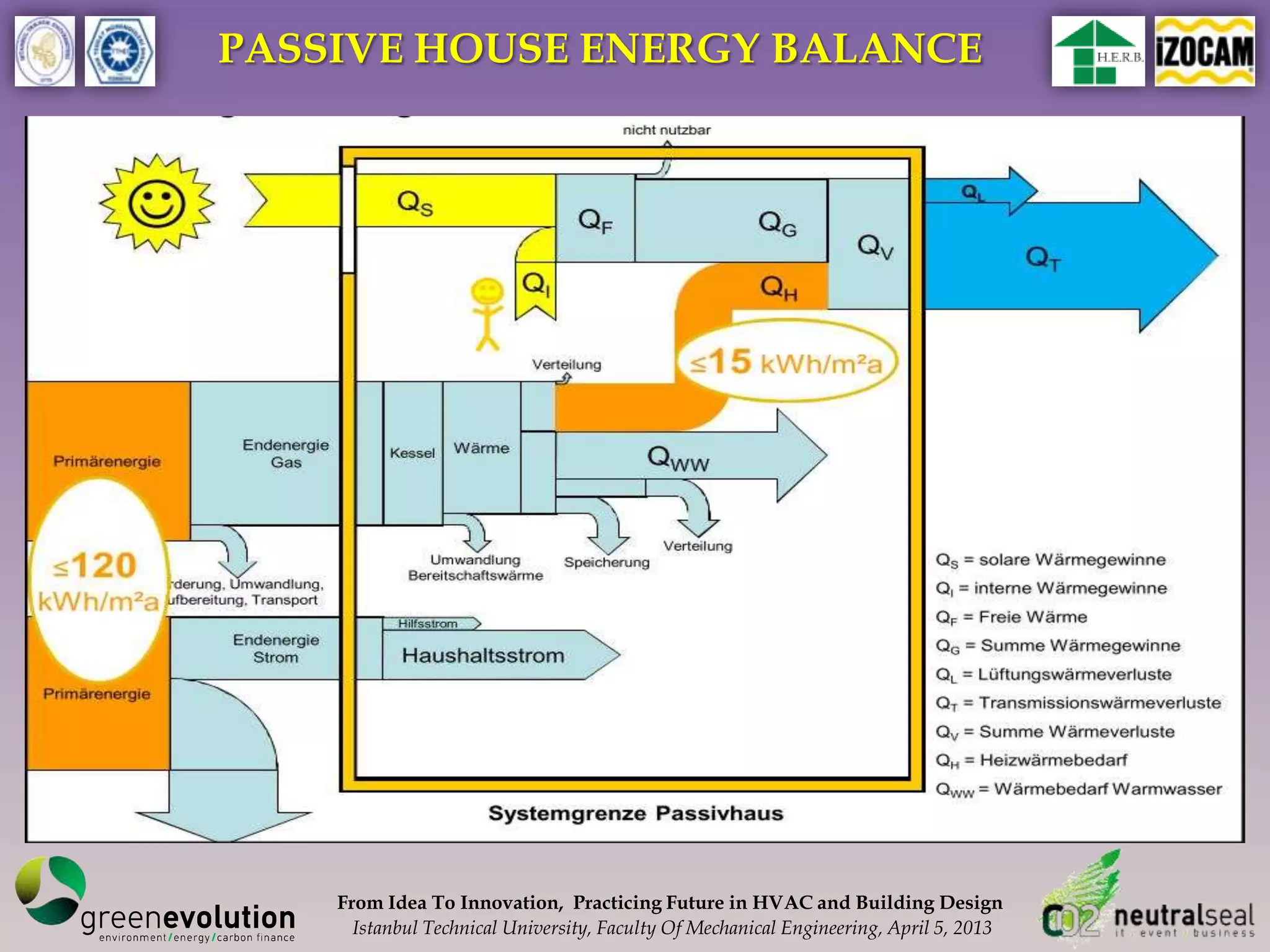
PASSIVE HOUSE ENERGY BALANCE


    From Idea To Innovation, Practicing Future in HVAC and Building Design
      Istanbul Technical University, Faculty Of Mechanical Engineering, April 5, 2013
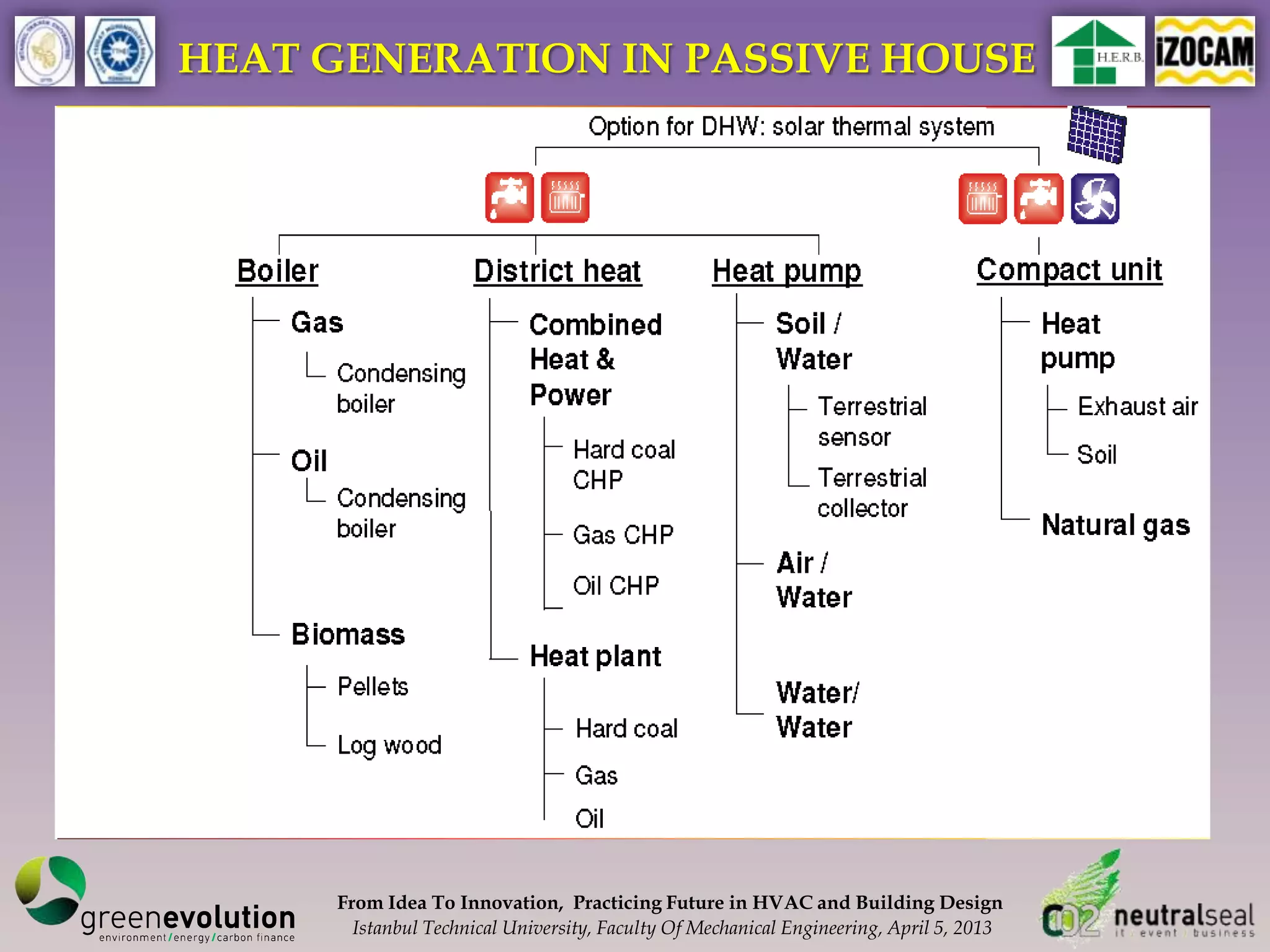
HEAT GENERATION IN PASSIVE HOUSE


     From Idea To Innovation, Practicing Future in HVAC and Building Design
       Istanbul Technical University, Faculty Of Mechanical Engineering, April 5, 2013
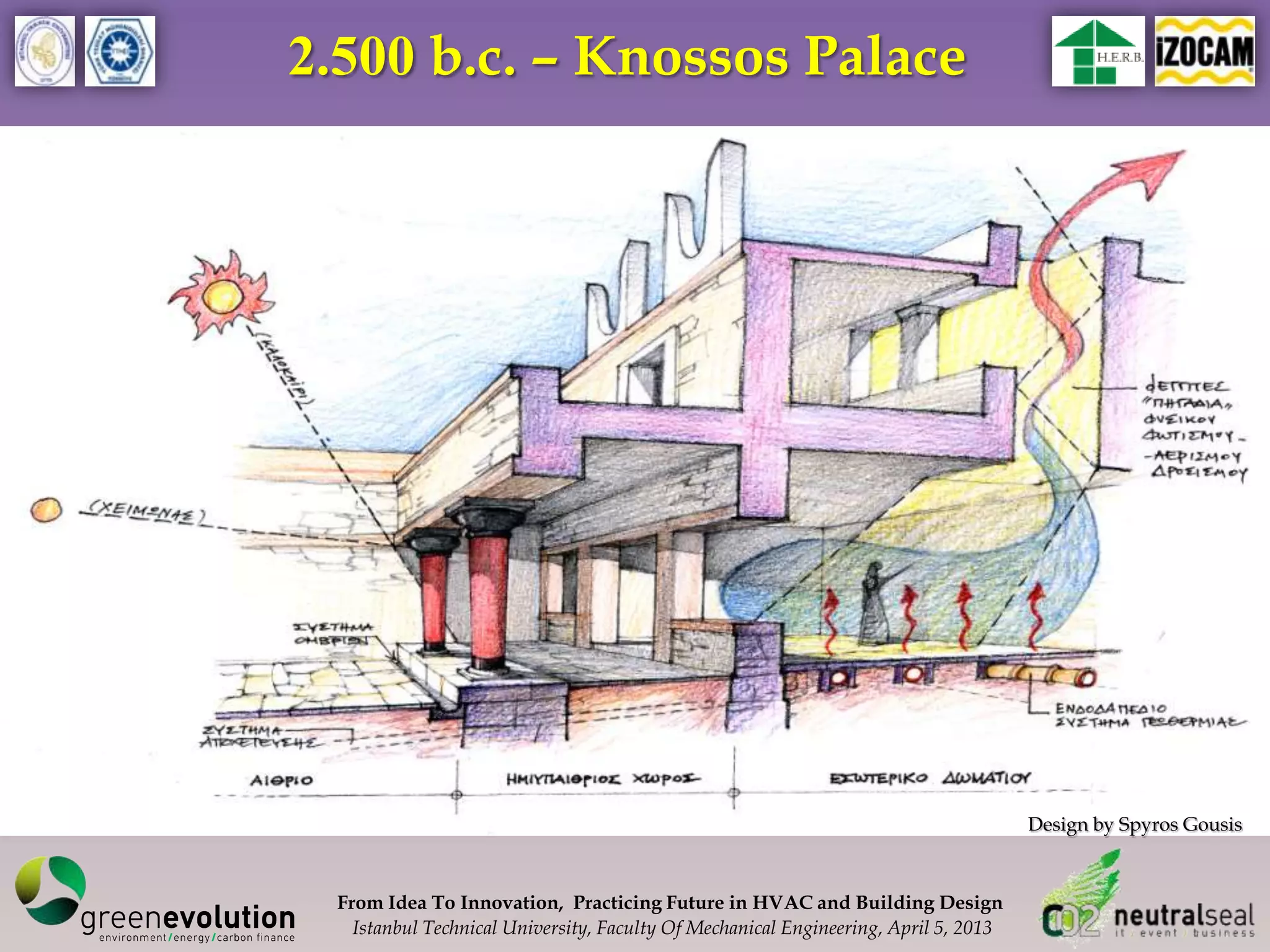
2.500 b.c. – Knossos Palace


                                                                                     Design by Spyros Gousis


 From Idea To Innovation, Practicing Future in HVAC and Building Design
   Istanbul Technical University, Faculty Of Mechanical Engineering, April 5, 2013
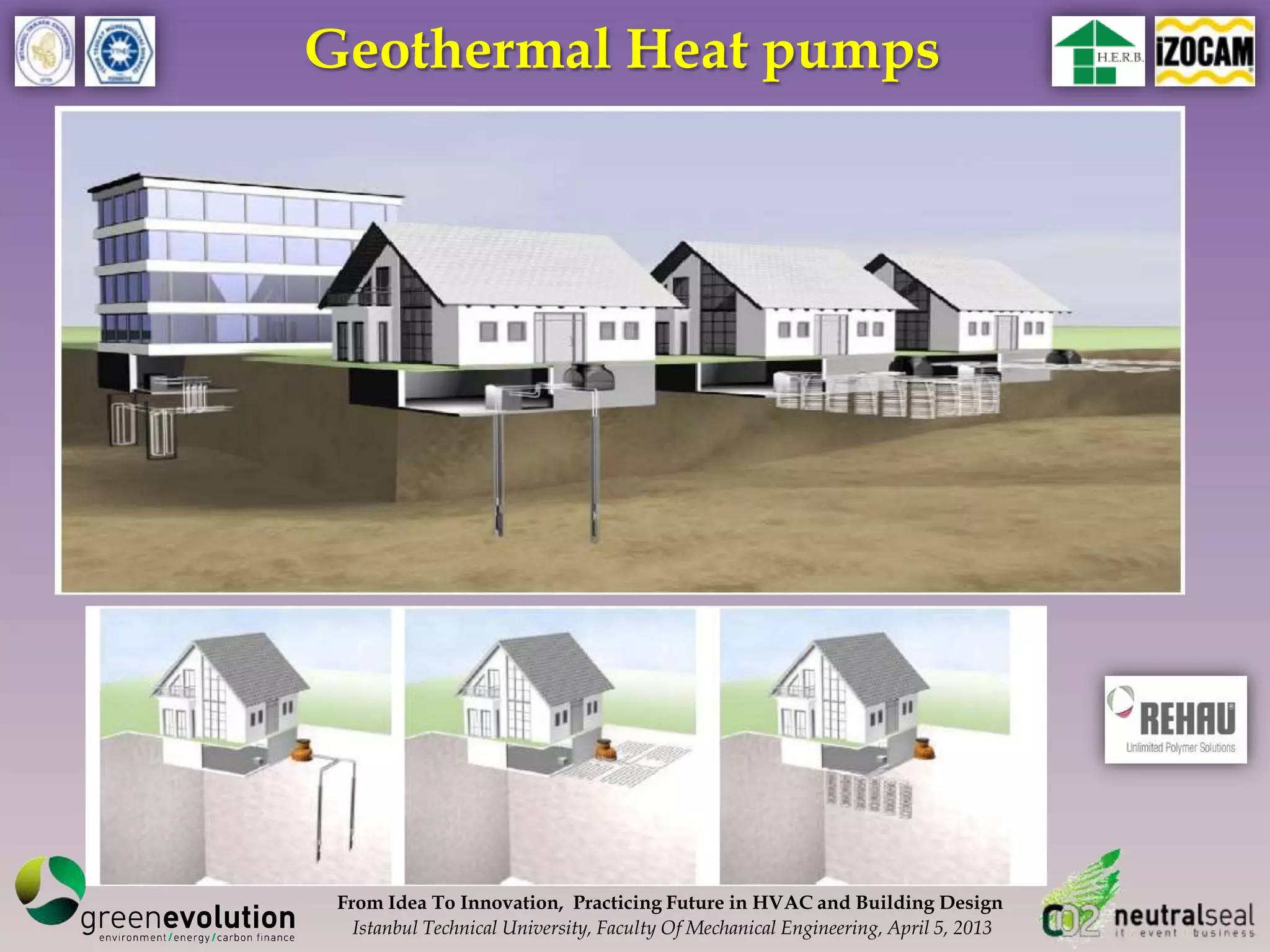
Geothermal Heat pumps


 From Idea To Innovation, Practicing Future in HVAC and Building Design
   Istanbul Technical University, Faculty Of Mechanical Engineering, April 5, 2013
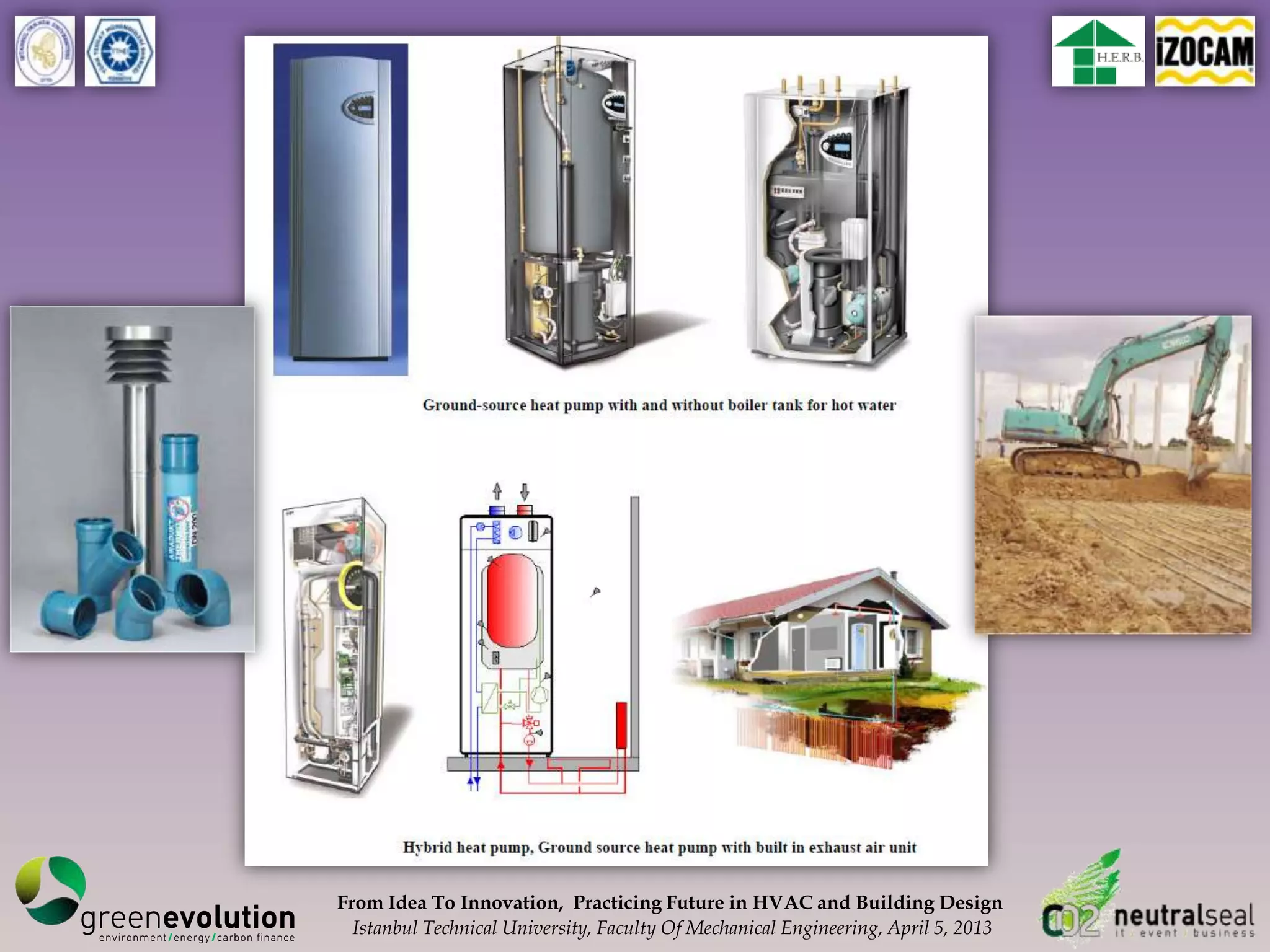
From Idea To Innovation, Practicing Future in HVAC and Building Design
  Istanbul Technical University, Faculty Of Mechanical Engineering, April 5, 2013
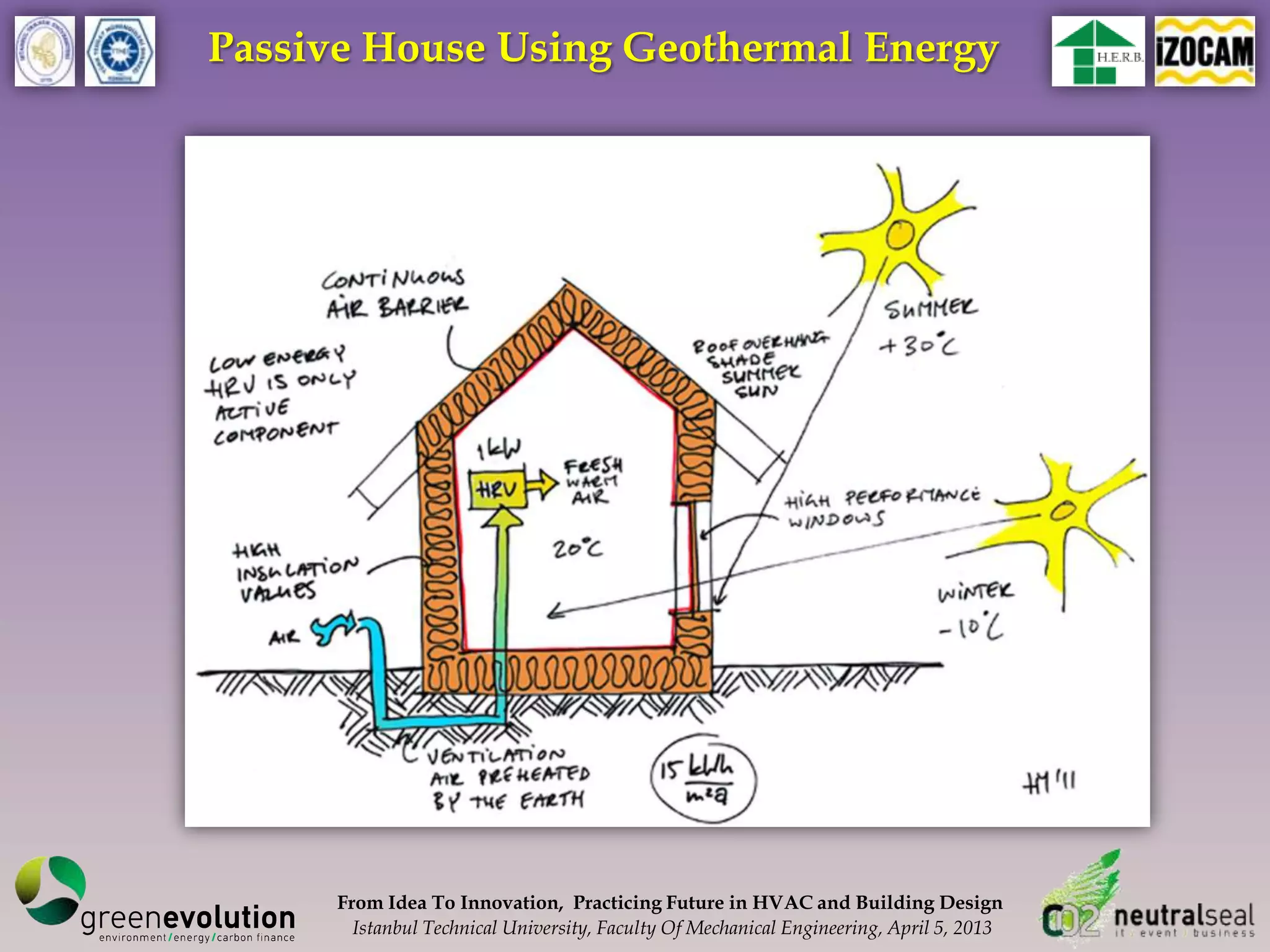
Passive House Using Geothermal Energy


      From Idea To Innovation, Practicing Future in HVAC and Building Design
        Istanbul Technical University, Faculty Of Mechanical Engineering, April 5, 2013
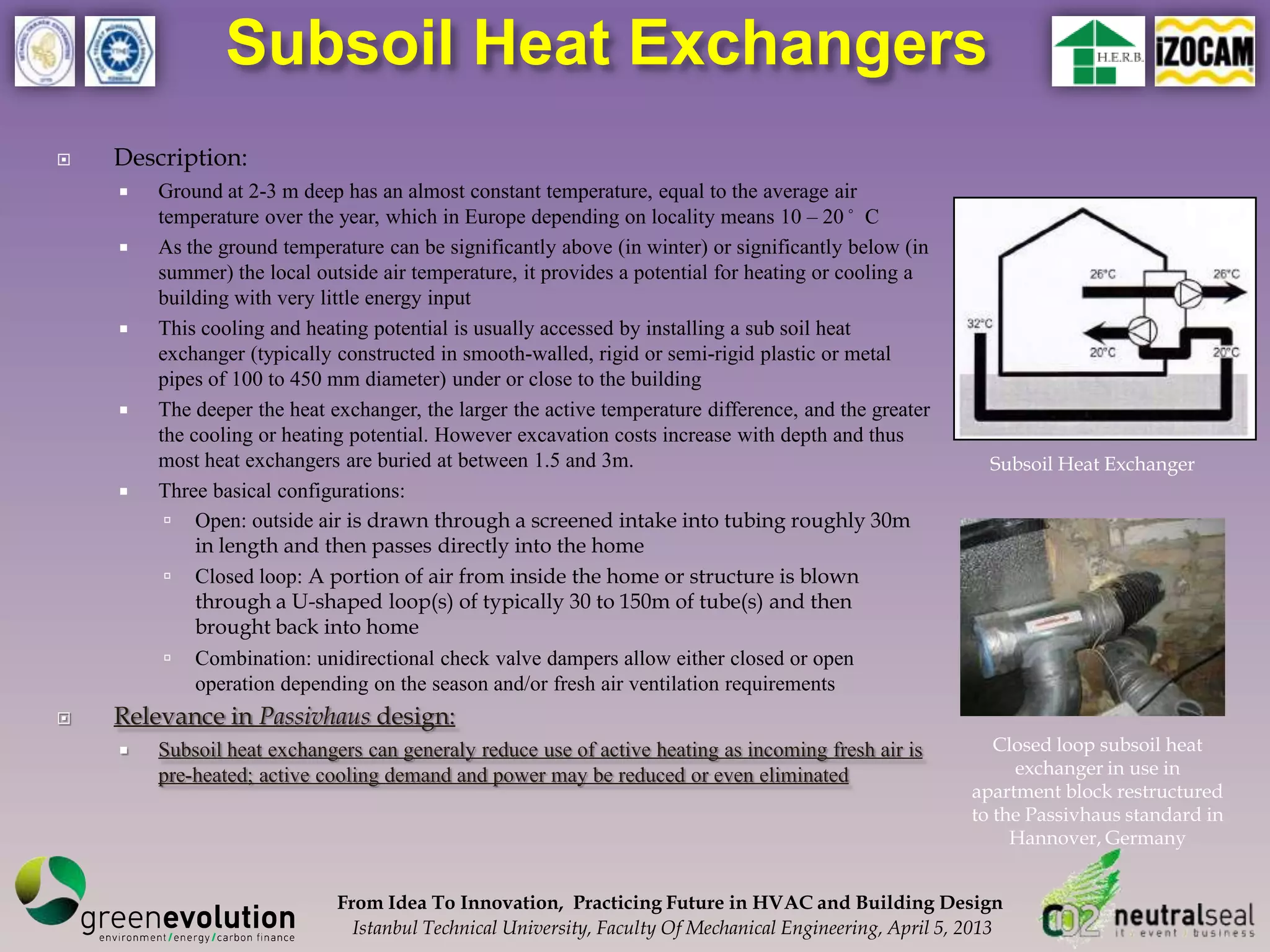
Subsoil Heat Exchangers
   Description:
       Ground at 2-3 m deep has an almost constant temperature, equal to the average air
        temperature over the year, which in Europe depending on locality means 10 – 20°C
       As the ground temperature can be significantly above (in winter) or significantly below (in
        summer) the local outside air temperature, it provides a potential for heating or cooling a
        building with very little energy input
       This cooling and heating potential is usually accessed by installing a sub soil heat
        exchanger (typically constructed in smooth-walled, rigid or semi-rigid plastic or metal
        pipes of 100 to 450 mm diameter) under or close to the building
       The deeper the heat exchanger, the larger the active temperature difference, and the greater
        the cooling or heating potential. However excavation costs increase with depth and thus
        most heat exchangers are buried at between 1.5 and 3m.                                              Subsoil Heat Exchanger
       Three basical configurations:
          Open: outside air is drawn through a screened intake into tubing roughly 30m
             in length and then passes directly into the home
          Closed loop: A portion of air from inside the home or structure is blown
             through a U-shaped loop(s) of typically 30 to 150m of tube(s) and then
             brought back into home
          Combination: unidirectional check valve dampers allow either closed or open
             operation depending on the season and/or fresh air ventilation requirements
   Relevance in Passivhaus design:
       Subsoil heat exchangers can generaly reduce use of active heating as incoming fresh air is           Closed loop subsoil heat
        pre-heated; active cooling demand and power may be reduced or even eliminated                          exchanger in use in
                                                                                                          apartment block restructured
                                                                                                          to the Passivhaus standard in
                                                                                                               Hannover, Germany


                             From Idea To Innovation, Practicing Future in HVAC and Building Design
                               Istanbul Technical University, Faculty Of Mechanical Engineering, April 5, 2013
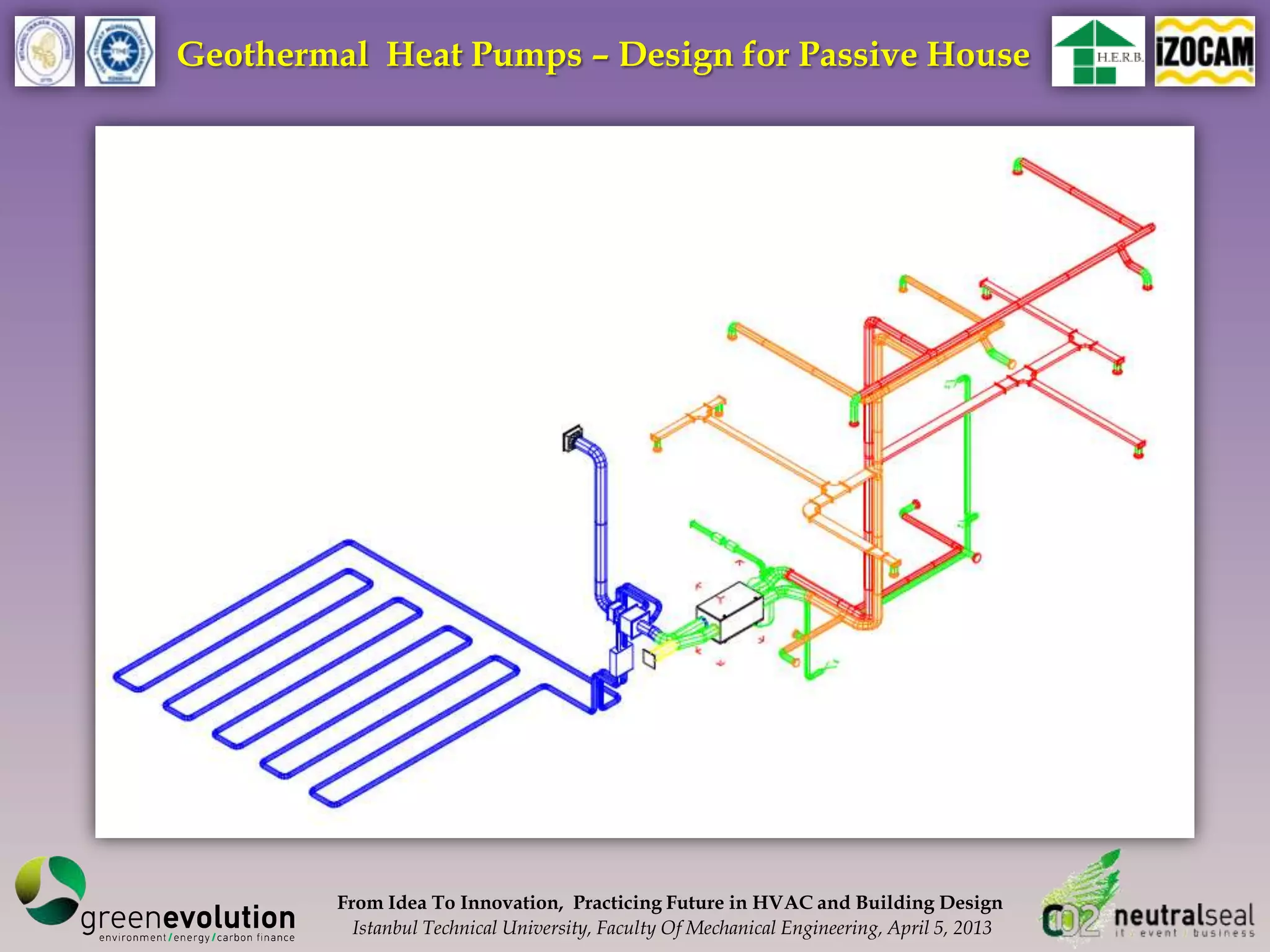
Geothermal Heat Pumps – Design for Passive House


         From Idea To Innovation, Practicing Future in HVAC and Building Design
           Istanbul Technical University, Faculty Of Mechanical Engineering, April 5, 2013
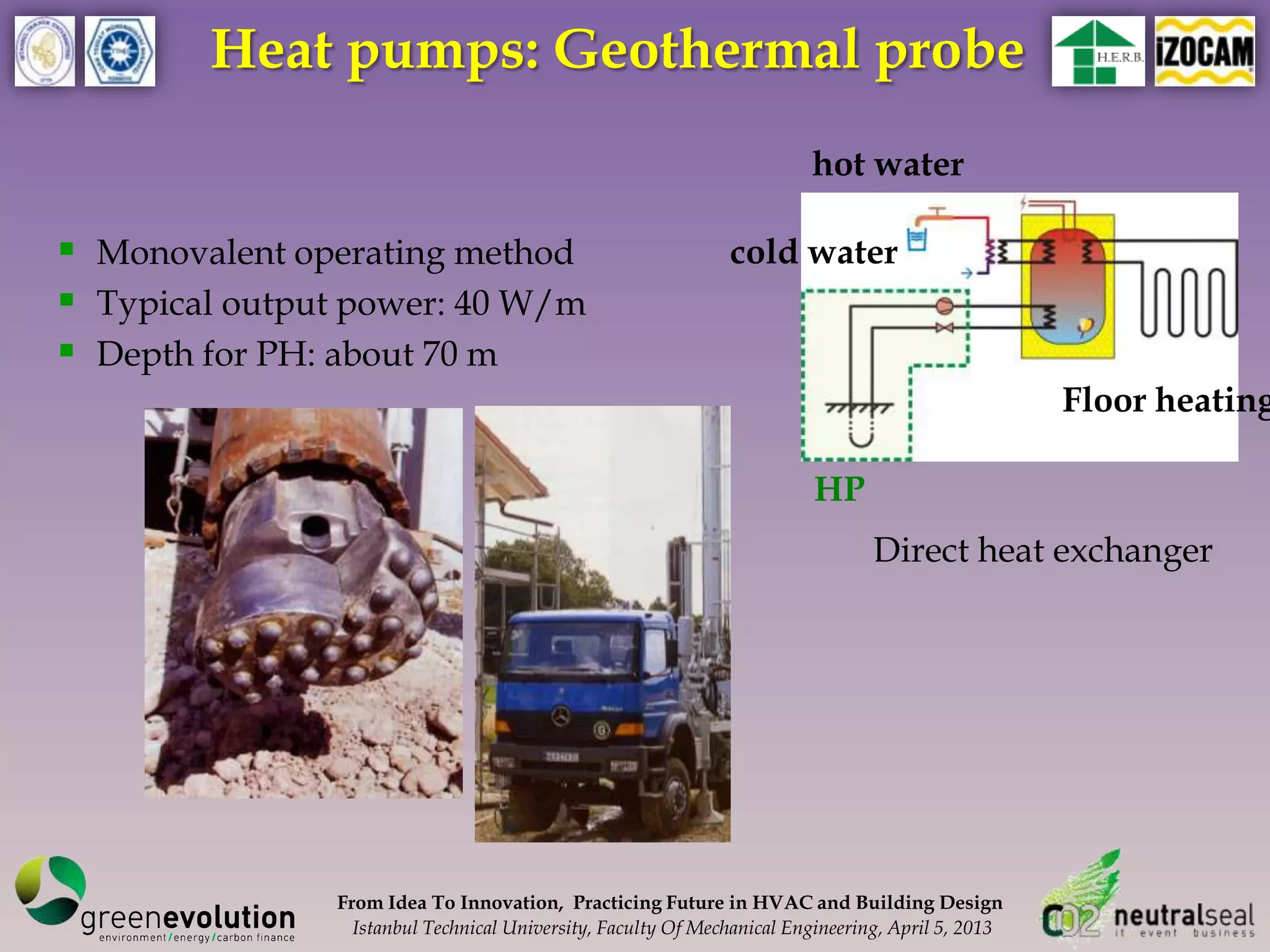
Heat pumps: Geothermal probe
                                                                        hot water

 Monovalent operating method                                 cold water
 Typical output power: 40 W/m
 Depth for PH: about 70 m
                                                                                                   Floor heating

                                                                        HP
                                                                                Direct heat exchanger


               From Idea To Innovation, Practicing Future in HVAC and Building Design
                 Istanbul Technical University, Faculty Of Mechanical Engineering, April 5, 2013
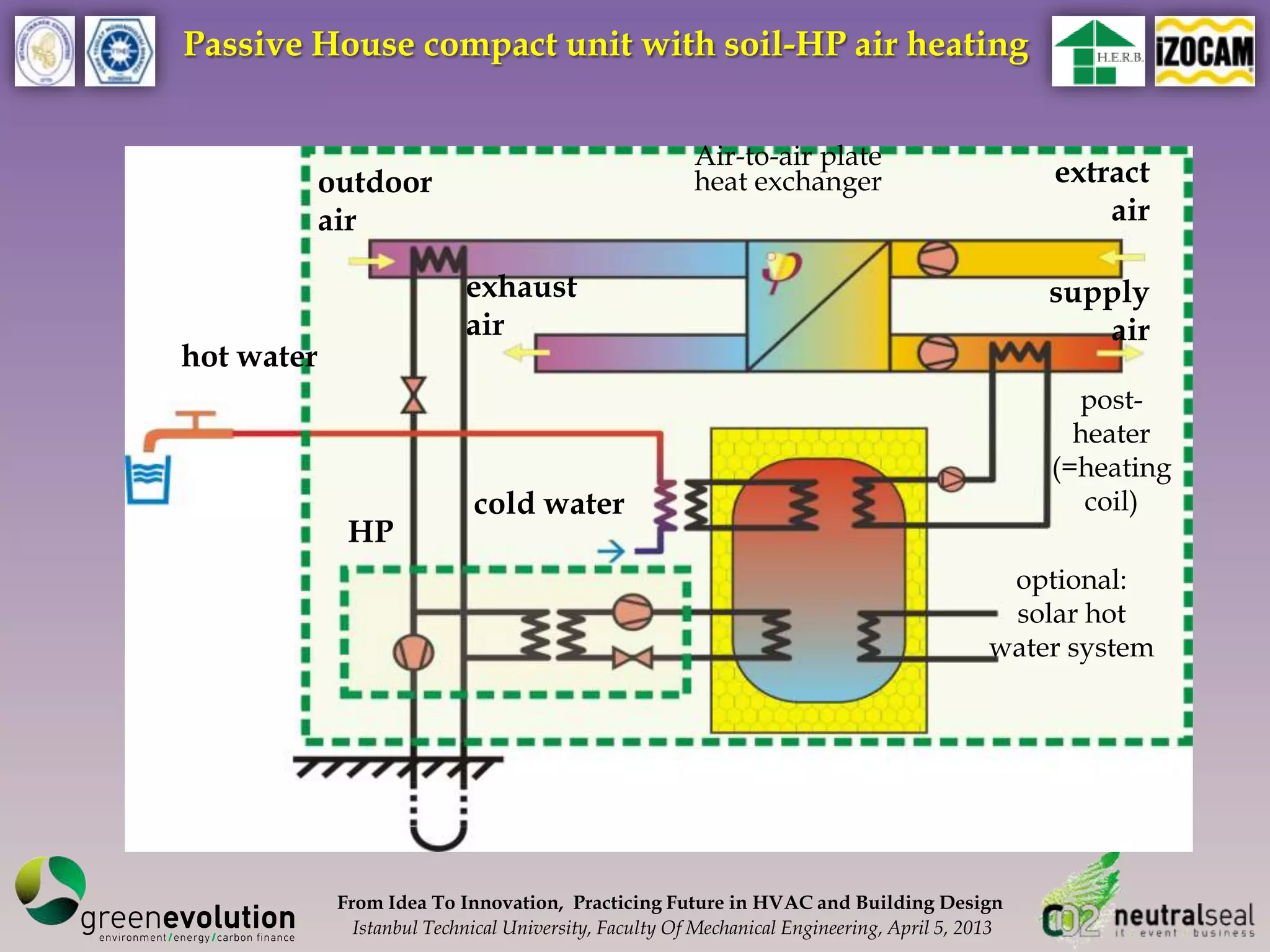
Passive House compact unit with soil-HP air heating


                                                        Air-to-air plate
            outdoor                                     heat exchanger                           extract
            air                                                                                      air

                            exhaust                                                              supply
                            air                                                                     air
hot water
                                                                                                   post-
                                                                                                   heater
                                                                                                 (=heating
                             cold water                                                             coil)
              HP
                                                                                             optional:
                                                                                             solar hot
                                                                                            water system


             From Idea To Innovation, Practicing Future in HVAC and Building Design
               Istanbul Technical University, Faculty Of Mechanical Engineering, April 5, 2013
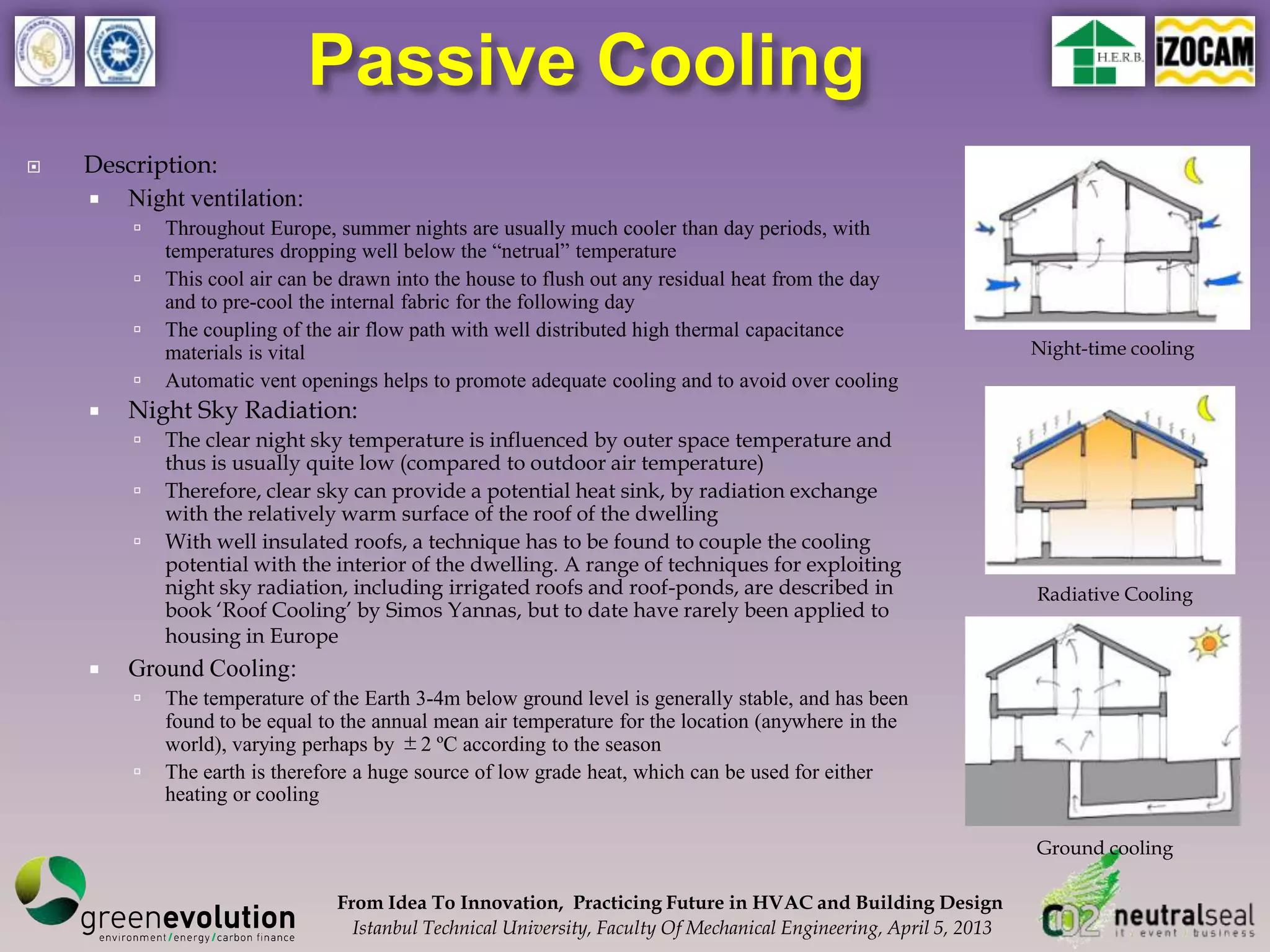
Passive Cooling
   Description:
     Night ventilation:
           Throughout Europe, summer nights are usually much cooler than day periods, with
            temperatures dropping well below the “netrual” temperature
           This cool air can be drawn into the house to flush out any residual heat from the day
            and to pre-cool the internal fabric for the following day
           The coupling of the air flow path with well distributed high thermal capacitance
            materials is vital                                                                                     Night-time cooling
           Automatic vent openings helps to promote adequate cooling and to avoid over cooling
       Night Sky Radiation:
           The clear night sky temperature is influenced by outer space temperature and
            thus is usually quite low (compared to outdoor air temperature)
           Therefore, clear sky can provide a potential heat sink, by radiation exchange
            with the relatively warm surface of the roof of the dwelling
           With well insulated roofs, a technique has to be found to couple the cooling
            potential with the interior of the dwelling. A range of techniques for exploiting
            night sky radiation, including irrigated roofs and roof-ponds, are described in                        Radiative Cooling
            book ‘Roof Cooling’ by Simos Yannas, but to date have rarely been applied to
            housing in Europe
       Ground Cooling:
           The temperature of the Earth 3-4m below ground level is generally stable, and has been
            found to be equal to the annual mean air temperature for the location (anywhere in the
            world), varying perhaps by ±2 ºC according to the season
           The earth is therefore a huge source of low grade heat, which can be used for either
            heating or cooling

                                                                                                                   Ground cooling

                               From Idea To Innovation, Practicing Future in HVAC and Building Design
                                 Istanbul Technical University, Faculty Of Mechanical Engineering, April 5, 2013
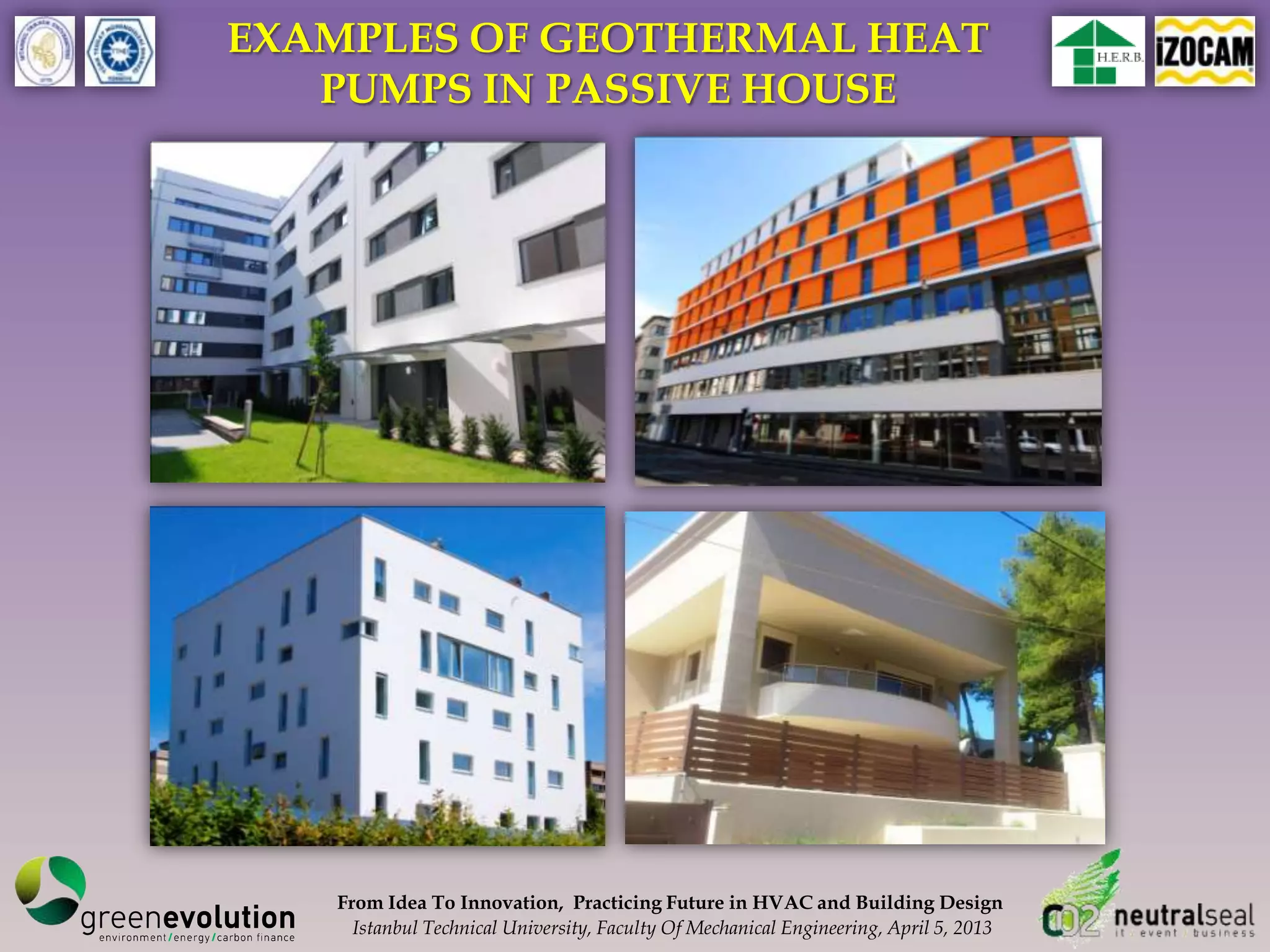
EXAMPLES OF GEOTHERMAL HEAT
   PUMPS IN PASSIVE HOUSE


   From Idea To Innovation, Practicing Future in HVAC and Building Design
     Istanbul Technical University, Faculty Of Mechanical Engineering, April 5, 2013
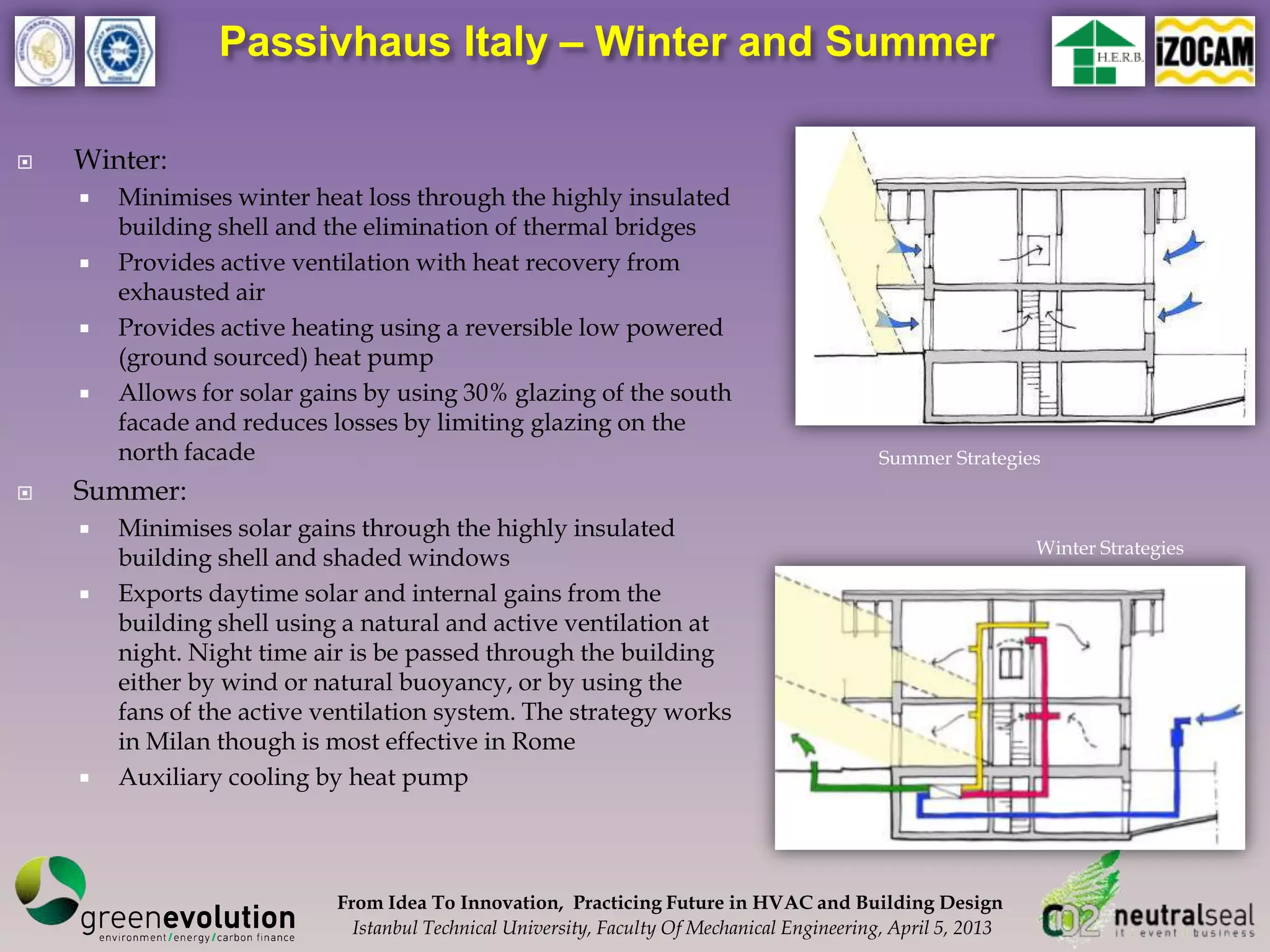
Passivhaus Italy – Winter and Summer

   Winter:
       Minimises winter heat loss through the highly insulated
        building shell and the elimination of thermal bridges
       Provides active ventilation with heat recovery from
        exhausted air
       Provides active heating using a reversible low powered
        (ground sourced) heat pump
       Allows for solar gains by using 30% glazing of the south
        facade and reduces losses by limiting glazing on the
        north facade                                                                         Summer Strategies
   Summer:
       Minimises solar gains through the highly insulated
                                                                                                                Winter Strategies
        building shell and shaded windows
       Exports daytime solar and internal gains from the
        building shell using a natural and active ventilation at
        night. Night time air is be passed through the building
        either by wind or natural buoyancy, or by using the
        fans of the active ventilation system. The strategy works
        in Milan though is most effective in Rome
       Auxiliary cooling by heat pump


                            From Idea To Innovation, Practicing Future in HVAC and Building Design
                              Istanbul Technical University, Faculty Of Mechanical Engineering, April 5, 2013
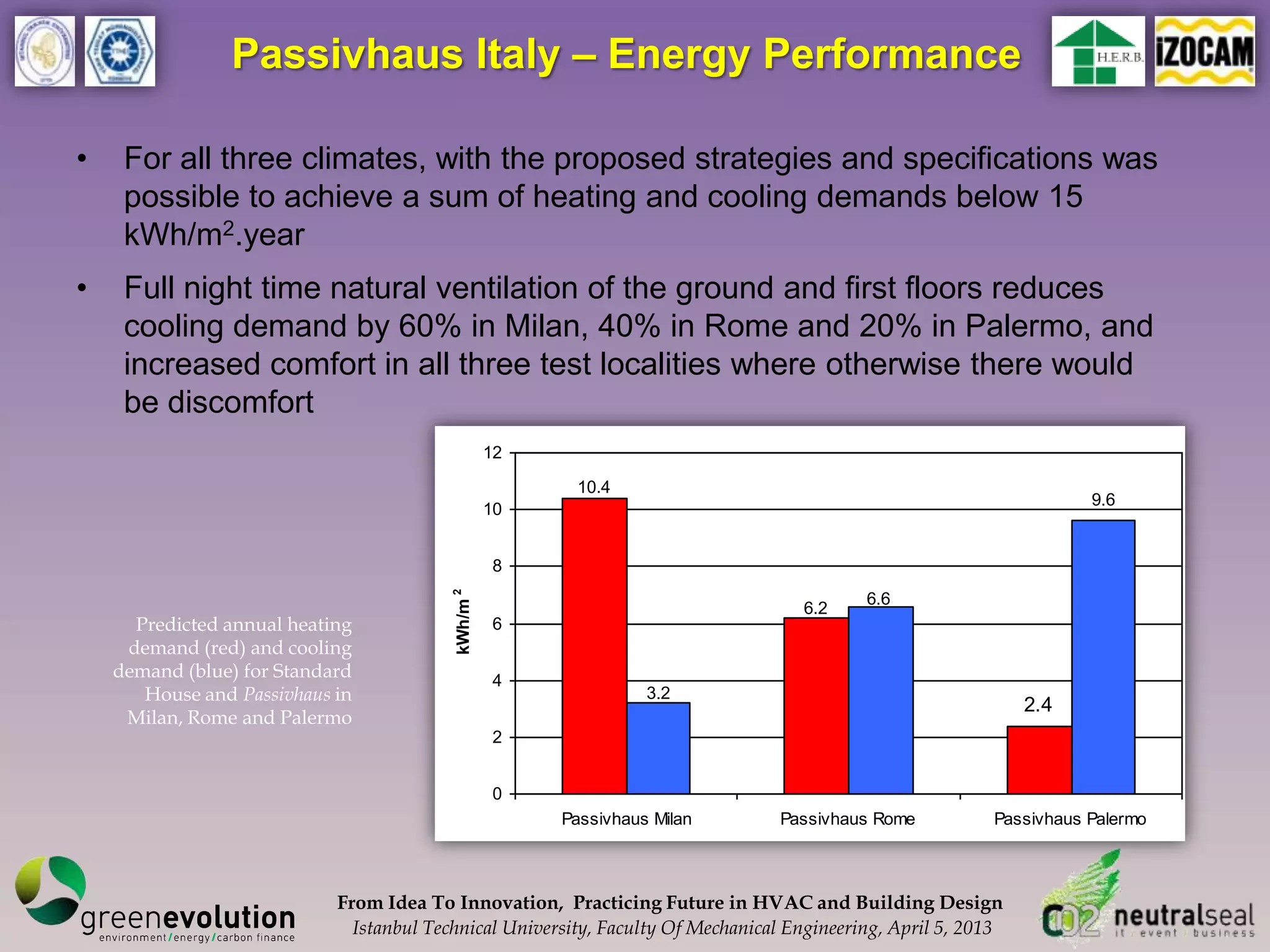
Passivhaus Italy – Energy Performance

•    For all three climates, with the proposed strategies and specifications was
     possible to achieve a sum of heating and cooling demands below 15
     kWh/m2.year
•    Full night time natural ventilation of the ground and first floors reduces
     cooling demand by 60% in Milan, 40% in Rome and 20% in Palermo, and
     increased comfort in all three test localities where otherwise there would
     be discomfort
                                                    12

                                                          10.4
                                                                                                                      9.6
                                                    10


                                                    8
                                          kWh/m 2


                                                                                            6.6
                                                                                    6.2
      Predicted annual heating                      6
     demand (red) and cooling
    demand (blue) for Standard                      4
       House and Passivhaus in                                     3.2
                                                                                                                2.4
     Milan, Rome and Palermo
                                                    2


                                                    0
                                                         Passivhaus Milan        Passivhaus Rome           Passivhaus Palermo


                            From Idea To Innovation, Practicing Future in HVAC and Building Design
                              Istanbul Technical University, Faculty Of Mechanical Engineering, April 5, 2013
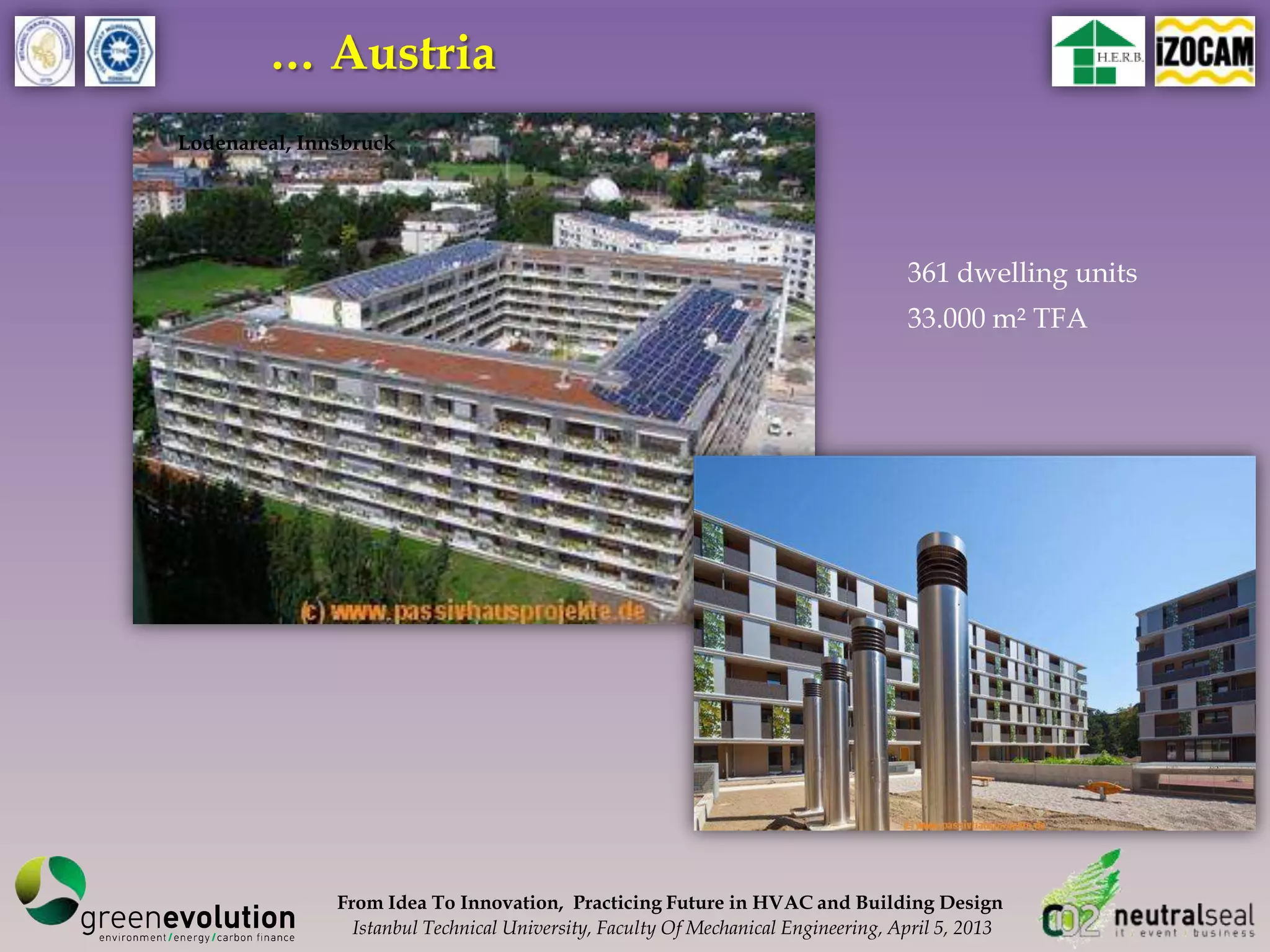
… Austria
Lodenareal, Innsbruck


                                                                                    361 dwelling units
                                                                                    33.000 m² TFA


               From Idea To Innovation, Practicing Future in HVAC and Building Design
                 Istanbul Technical University, Faculty Of Mechanical Engineering, April 5, 2013
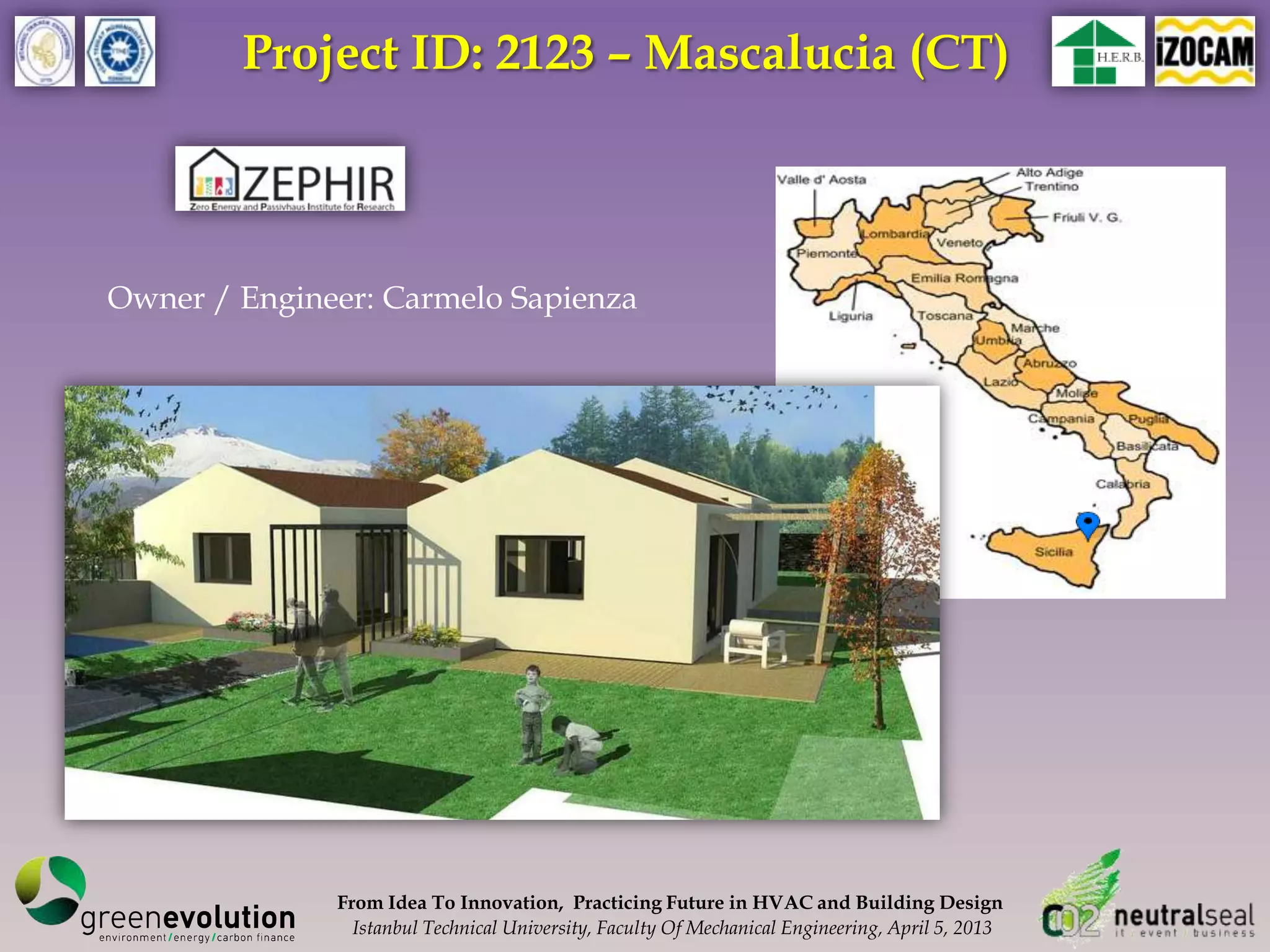
Project ID: 2123 – Mascalucia (CT)


Owner / Engineer: Carmelo Sapienza


              From Idea To Innovation, Practicing Future in HVAC and Building Design
                Istanbul Technical University, Faculty Of Mechanical Engineering, April 5, 2013
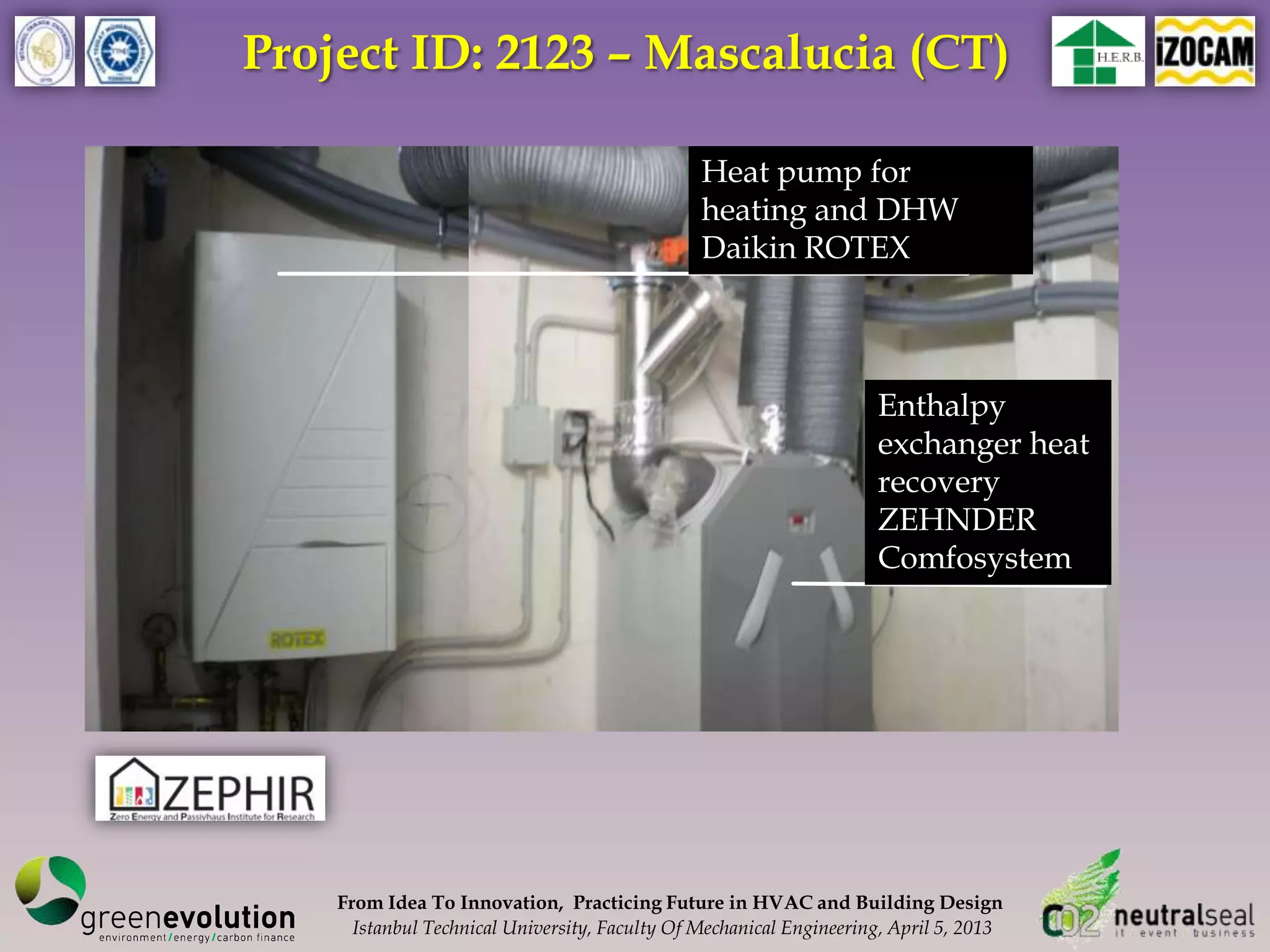
Project ID: 2123 – Mascalucia (CT)

                                                Heat pump for
                                                heating and DHW
                                                Daikin ROTEX


                                                                     Enthalpy
                                                                     exchanger heat
                                                                     recovery
                                                                     ZEHNDER
                                                                     Comfosystem


    From Idea To Innovation, Practicing Future in HVAC and Building Design
      Istanbul Technical University, Faculty Of Mechanical Engineering, April 5, 2013
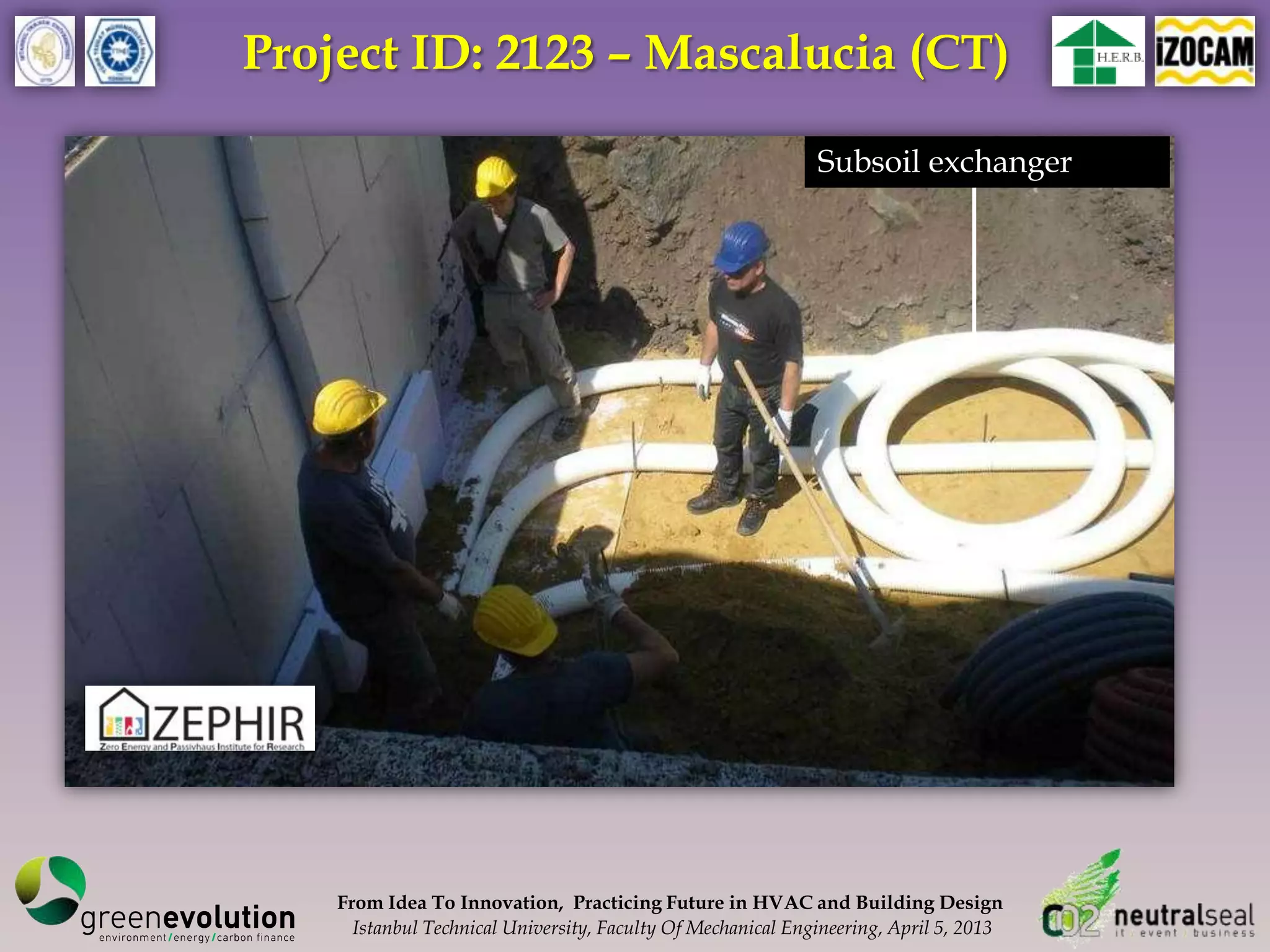
Project ID: 2123 – Mascalucia (CT)

                                                              Subsoil exchanger


    From Idea To Innovation, Practicing Future in HVAC and Building Design
      Istanbul Technical University, Faculty Of Mechanical Engineering, April 5, 2013
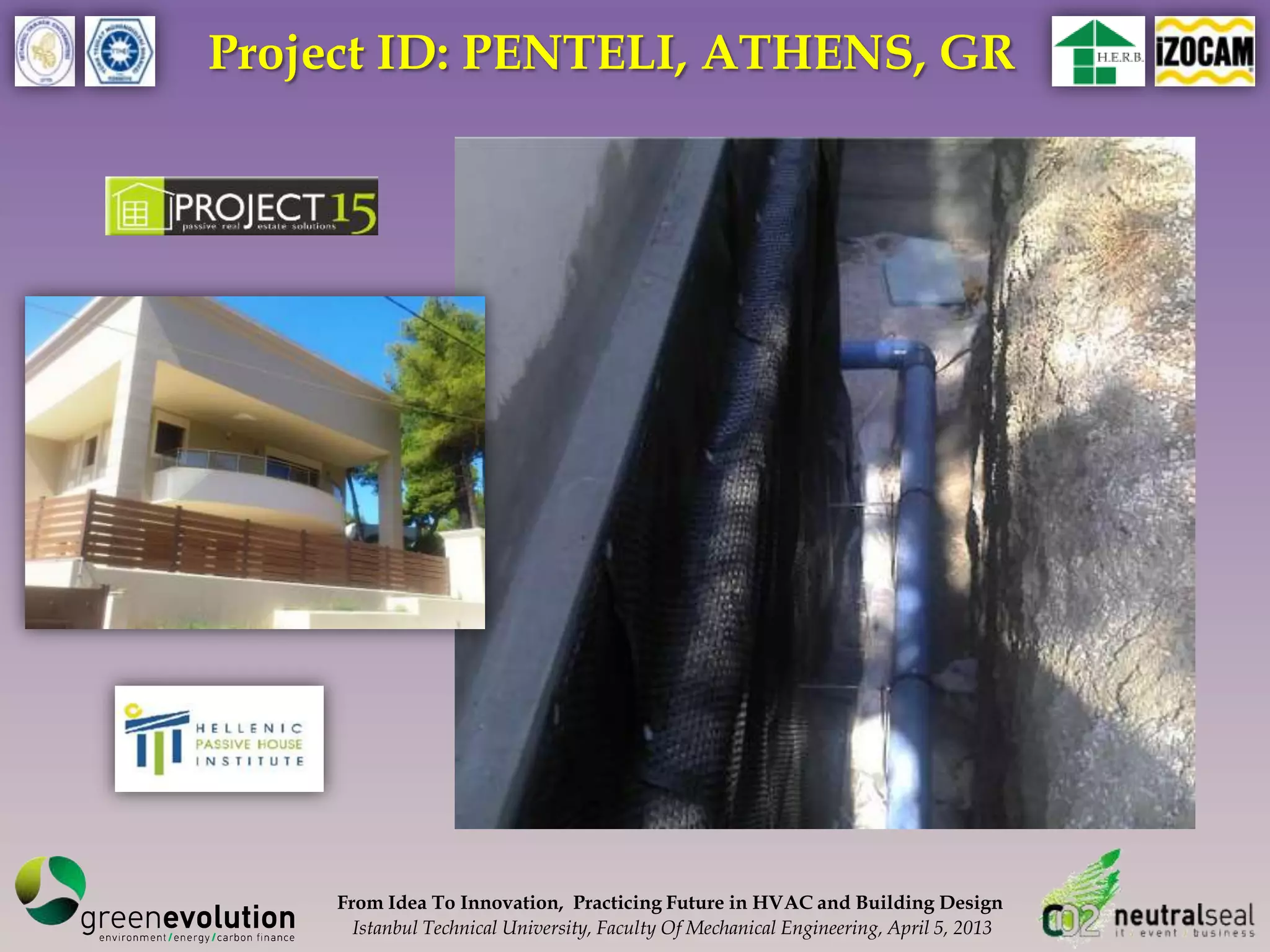
Project ID: PENTELI, ATHENS, GR


    From Idea To Innovation, Practicing Future in HVAC and Building Design
      Istanbul Technical University, Faculty Of Mechanical Engineering, April 5, 2013
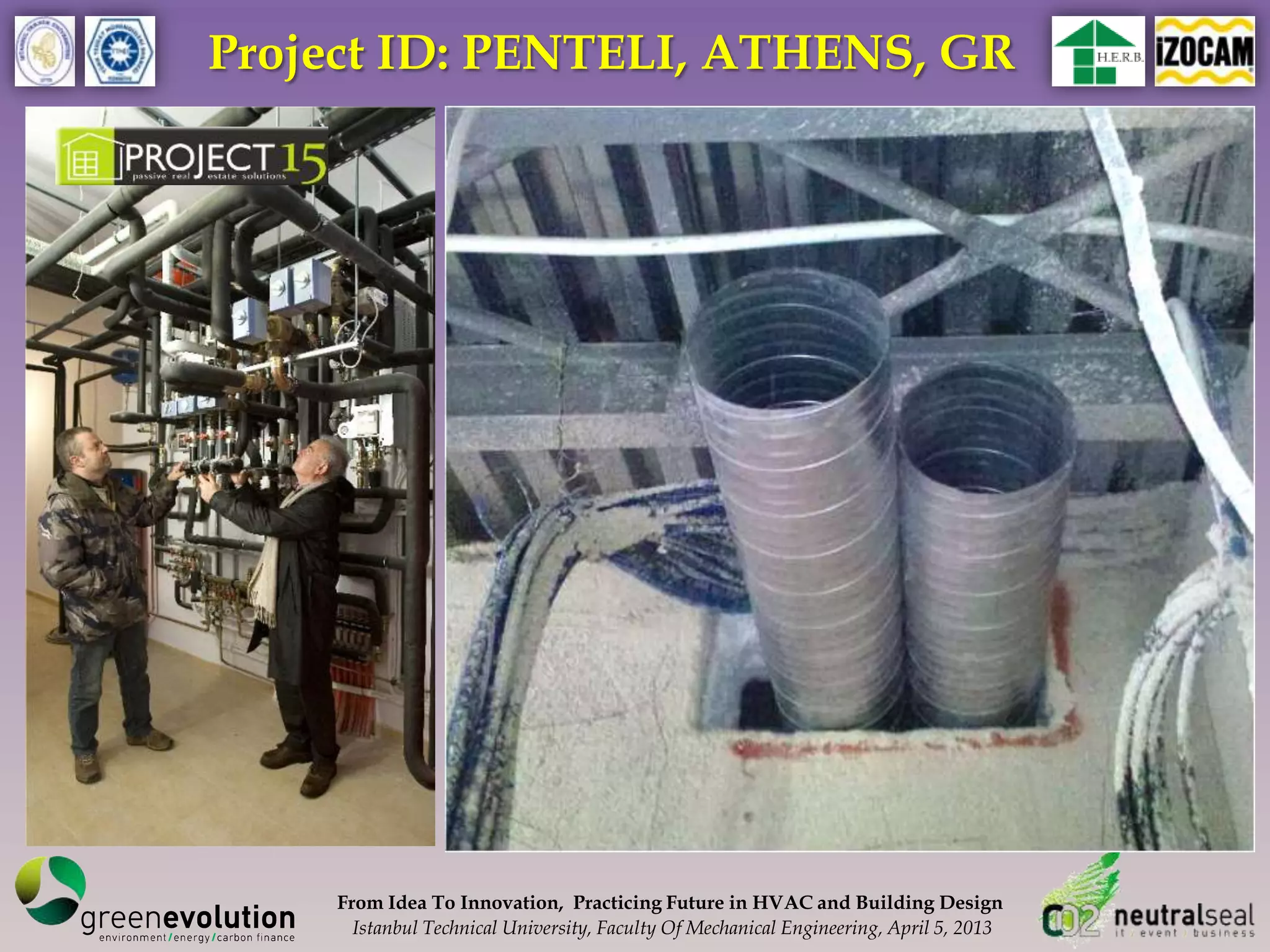
Project ID: PENTELI, ATHENS, GR


    From Idea To Innovation, Practicing Future in HVAC and Building Design
      Istanbul Technical University, Faculty Of Mechanical Engineering, April 5, 2013
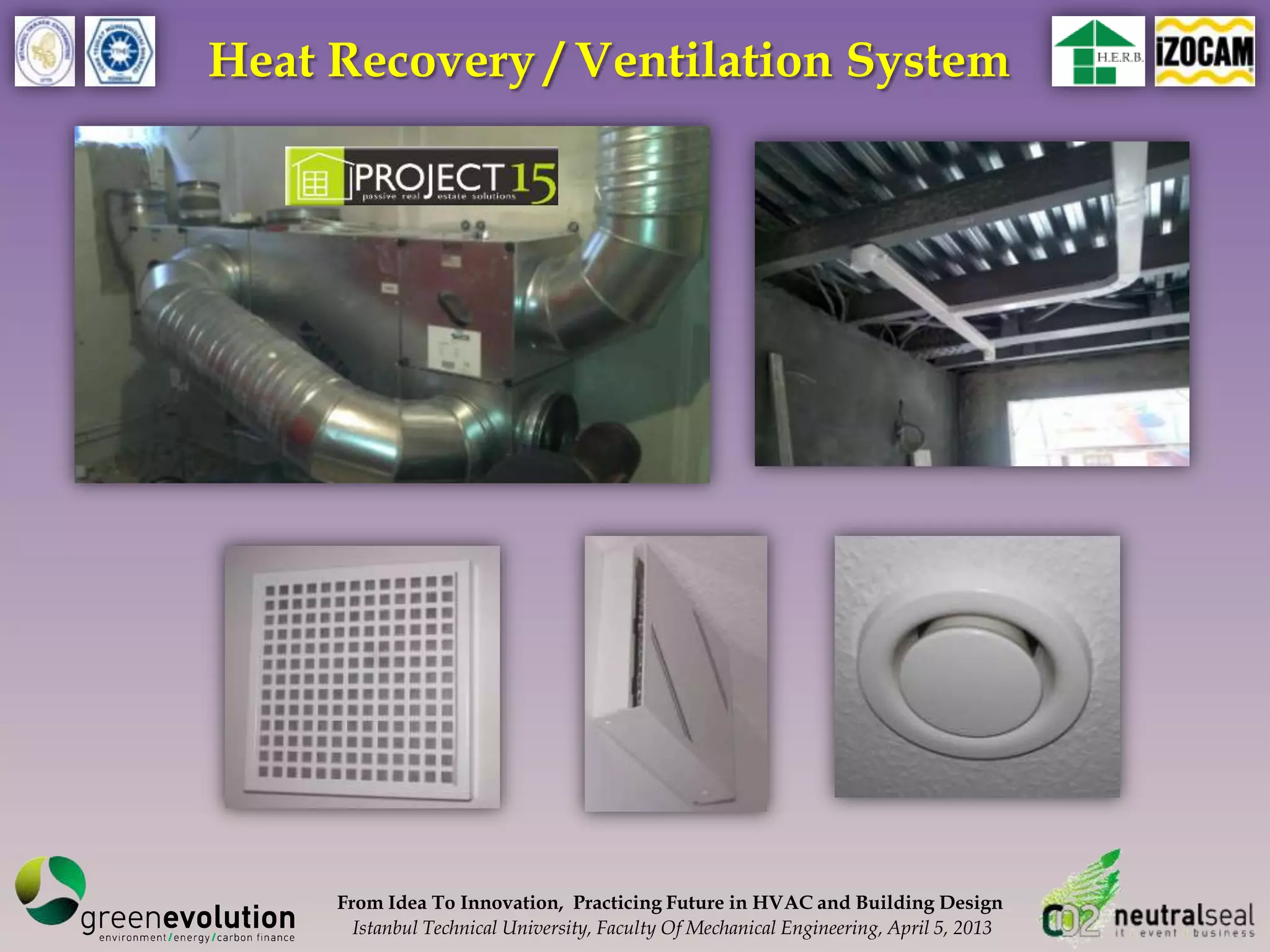
Heat Recovery / Ventilation System


     From Idea To Innovation, Practicing Future in HVAC and Building Design
       Istanbul Technical University, Faculty Of Mechanical Engineering, April 5, 2013
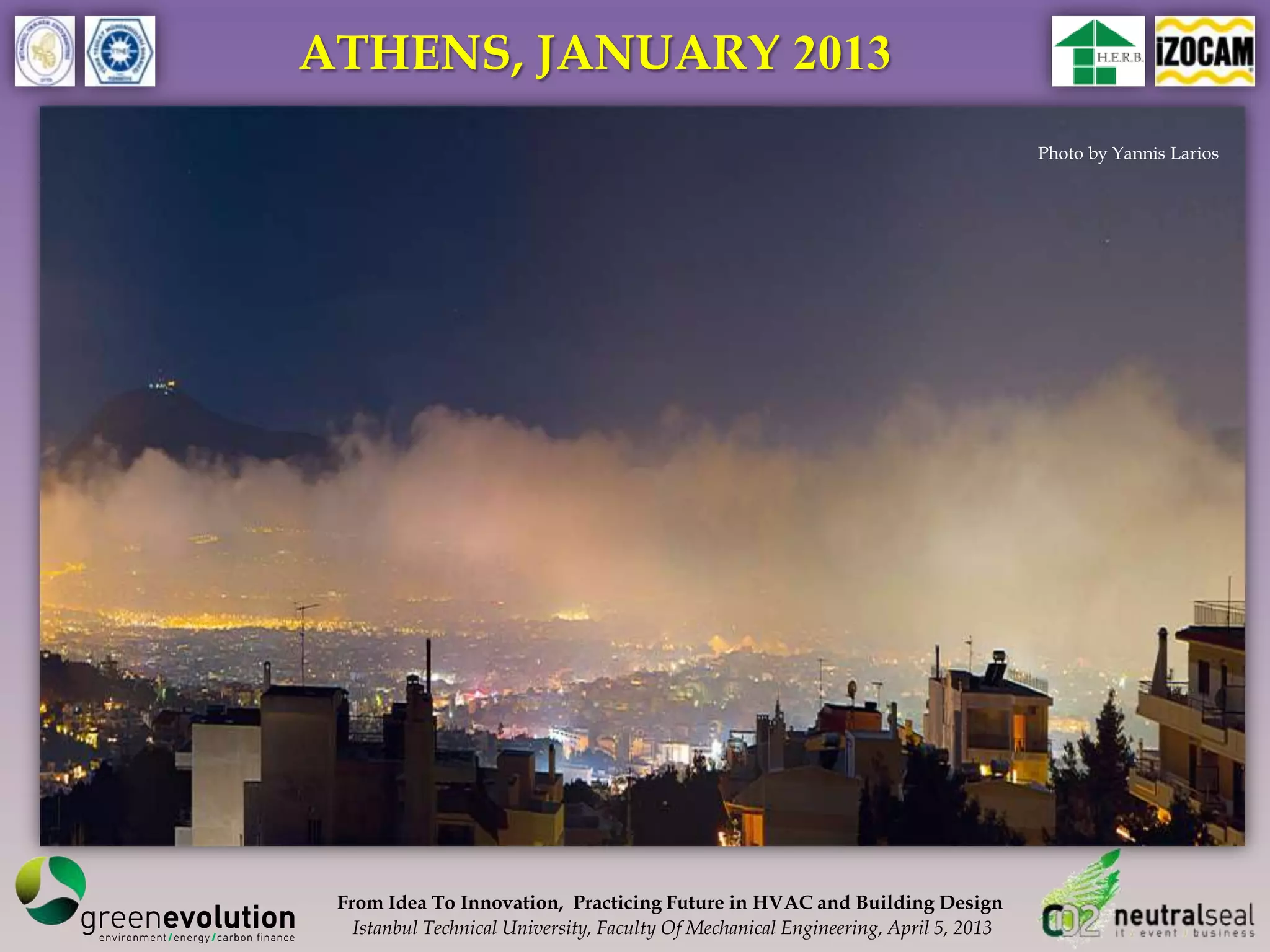
ATHENS, JANUARY 2013
                                                                                     Photo by Yannis Larios


 From Idea To Innovation, Practicing Future in HVAC and Building Design
   Istanbul Technical University, Faculty Of Mechanical Engineering, April 5, 2013
Dr Ioannis Pappas
501 Vouliagmenis Av, 16341, Ilioupolis, Attica, Greece
Tel : +302109942800, Fax : +302109942805
Mail : i.pappas@green-evolution.eu
WWW.green-evolution.eu
            From Idea To Innovation, Practicing Future in HVAC and Building Design
              Istanbul Technical University, Faculty Of Mechanical Engineering, April 5, 2013

Istanbul Technical University | Apr. 5, 2013

  • 1.
    Geothermal heat pumpapplications for low energy buildings: the case of Passive House Dr Ioannis PAPPAS, GREEN EVOLUTION SA From Idea To Innovation, Practicing Future in HVAC and Building Design Istanbul Technical University, Faculty Of Mechanical Engineering, April 5, 2013
  • 2.
    Climate Change –A Reality From Idea To Innovation, Practicing Future in HVAC and Building Design Istanbul Technical University, Faculty Of Mechanical Engineering, April 5, 2013
  • 3.
    EUROPEAN TARGET 2013– 2020  (Ultra) low energy (3-l) house  Solar house  Passive house "Nearly Zero" Energy Building  Zero heating house  Net zero energy / self-sufficient house  (solar) active house  Passive house Plus  Plus energy house 300 heating demand 250 specific final energy / [kWh/(m 2 a)] domestic hot water electricity 200 solar heat gen. 150 PV generation 100 50 0 -50 -100 building stock WSchVO 1984 WSchVO 1995 low energy h. 3l-house solar active h. passive house zero-heating h. passive h. plus net zero energy h. plus house From Idea To Innovation, Practicing Future in HVAC and Building Design Istanbul Technical University, Faculty Of Mechanical Engineering, April 5, 2013
  • 4.
    LOW ENERGY BUILDING– Past or Future? From Idea To Innovation, Practicing Future in HVAC and Building Design Istanbul Technical University, Faculty Of Mechanical Engineering, April 5, 2013
  • 5.
    LOW ENERGY BUILDING– Passive House From Idea To Innovation, Practicing Future in HVAC and Building Design Istanbul Technical University, Faculty Of Mechanical Engineering, April 5, 2013
  • 6.
    Passive House Standard– The Basics Needs From Idea To Innovation, Practicing Future in HVAC and Building Design Istanbul Technical University, Faculty Of Mechanical Engineering, April 5, 2013
  • 7.
    Passive House –Certification Criteria From Idea To Innovation, Practicing Future in HVAC and Building Design Istanbul Technical University, Faculty Of Mechanical Engineering, April 5, 2013
  • 8.
    Life Cycle Costof Passive House Spain Spain France Germany Italy UK Granada Seville Extra Capital Costs (€/m²) 103 94 60 24,1 20,5 73 Extra Capital Costs (%) 9% 6,71% 5% 3,35% 2,85% 5,54% Total Energy Savings (kWh/m²/year) 55 75,0 86,0 65,5 37,6 39,7 Total Energy Savings (%) 45% 50,0% 65,4% 57,3% 40,7% 26,4% Extra Costs per saved kWh/m²/year 1,87 1,25 0,70 0,37 0,55 1,84 LCC Standard 143.731 184.716 193.817 101.828 98.385 108.337 10 years€ Passive 152.621 190.104 190.437 95.676 96.100 111.988 LCC Standard 160.343 204.942 221.148 117.928 108.689 117.875 20 years€ Passive 160.552 200.579 198.458 103.647 102.290 117.256 Cost-Benefit Ratio, 10 years -0,72 -0,48 0,39 2,13 0,93 -0,65 Cost-Benefit Ratio, 20 years 0,02 0,39 2,63 4,94 2,60 0,11 Discounted Payback Period (years) 19.5 19 8 4 5 19 From Idea To Innovation, Practicing Future in HVAC and Building Design Istanbul Technical University, Faculty Of Mechanical Engineering, April 5, 2013
  • 9.
    Heat Recovery Ventilation: 80% to 90% recovered Fresh air Extract air Exhaust air Supply air From Idea To Innovation, Practicing Future in HVAC and Building Design Istanbul Technical University, Faculty Of Mechanical Engineering, April 5, 2013
  • 10.
    PASSIVE HOUSE ENERGYBALANCE From Idea To Innovation, Practicing Future in HVAC and Building Design Istanbul Technical University, Faculty Of Mechanical Engineering, April 5, 2013
  • 11.
    HEAT GENERATION INPASSIVE HOUSE From Idea To Innovation, Practicing Future in HVAC and Building Design Istanbul Technical University, Faculty Of Mechanical Engineering, April 5, 2013
  • 12.
    2.500 b.c. –Knossos Palace Design by Spyros Gousis From Idea To Innovation, Practicing Future in HVAC and Building Design Istanbul Technical University, Faculty Of Mechanical Engineering, April 5, 2013
  • 13.
    Geothermal Heat pumps From Idea To Innovation, Practicing Future in HVAC and Building Design Istanbul Technical University, Faculty Of Mechanical Engineering, April 5, 2013
  • 14.
    From Idea ToInnovation, Practicing Future in HVAC and Building Design Istanbul Technical University, Faculty Of Mechanical Engineering, April 5, 2013
  • 15.
    Passive House UsingGeothermal Energy From Idea To Innovation, Practicing Future in HVAC and Building Design Istanbul Technical University, Faculty Of Mechanical Engineering, April 5, 2013
  • 16.
    Subsoil Heat Exchangers  Description:  Ground at 2-3 m deep has an almost constant temperature, equal to the average air temperature over the year, which in Europe depending on locality means 10 – 20°C  As the ground temperature can be significantly above (in winter) or significantly below (in summer) the local outside air temperature, it provides a potential for heating or cooling a building with very little energy input  This cooling and heating potential is usually accessed by installing a sub soil heat exchanger (typically constructed in smooth-walled, rigid or semi-rigid plastic or metal pipes of 100 to 450 mm diameter) under or close to the building  The deeper the heat exchanger, the larger the active temperature difference, and the greater the cooling or heating potential. However excavation costs increase with depth and thus most heat exchangers are buried at between 1.5 and 3m. Subsoil Heat Exchanger  Three basical configurations:  Open: outside air is drawn through a screened intake into tubing roughly 30m in length and then passes directly into the home  Closed loop: A portion of air from inside the home or structure is blown through a U-shaped loop(s) of typically 30 to 150m of tube(s) and then brought back into home  Combination: unidirectional check valve dampers allow either closed or open operation depending on the season and/or fresh air ventilation requirements  Relevance in Passivhaus design:  Subsoil heat exchangers can generaly reduce use of active heating as incoming fresh air is Closed loop subsoil heat pre-heated; active cooling demand and power may be reduced or even eliminated exchanger in use in apartment block restructured to the Passivhaus standard in Hannover, Germany From Idea To Innovation, Practicing Future in HVAC and Building Design Istanbul Technical University, Faculty Of Mechanical Engineering, April 5, 2013
  • 17.
    Geothermal Heat Pumps– Design for Passive House From Idea To Innovation, Practicing Future in HVAC and Building Design Istanbul Technical University, Faculty Of Mechanical Engineering, April 5, 2013
  • 18.
    Heat pumps: Geothermalprobe hot water  Monovalent operating method cold water  Typical output power: 40 W/m  Depth for PH: about 70 m Floor heating HP Direct heat exchanger From Idea To Innovation, Practicing Future in HVAC and Building Design Istanbul Technical University, Faculty Of Mechanical Engineering, April 5, 2013
  • 19.
    Passive House compactunit with soil-HP air heating Air-to-air plate outdoor heat exchanger extract air air exhaust supply air air hot water post- heater (=heating cold water coil) HP optional: solar hot water system From Idea To Innovation, Practicing Future in HVAC and Building Design Istanbul Technical University, Faculty Of Mechanical Engineering, April 5, 2013
  • 20.
    Passive Cooling  Description:  Night ventilation:  Throughout Europe, summer nights are usually much cooler than day periods, with temperatures dropping well below the “netrual” temperature  This cool air can be drawn into the house to flush out any residual heat from the day and to pre-cool the internal fabric for the following day  The coupling of the air flow path with well distributed high thermal capacitance materials is vital Night-time cooling  Automatic vent openings helps to promote adequate cooling and to avoid over cooling  Night Sky Radiation:  The clear night sky temperature is influenced by outer space temperature and thus is usually quite low (compared to outdoor air temperature)  Therefore, clear sky can provide a potential heat sink, by radiation exchange with the relatively warm surface of the roof of the dwelling  With well insulated roofs, a technique has to be found to couple the cooling potential with the interior of the dwelling. A range of techniques for exploiting night sky radiation, including irrigated roofs and roof-ponds, are described in Radiative Cooling book ‘Roof Cooling’ by Simos Yannas, but to date have rarely been applied to housing in Europe  Ground Cooling:  The temperature of the Earth 3-4m below ground level is generally stable, and has been found to be equal to the annual mean air temperature for the location (anywhere in the world), varying perhaps by ±2 ºC according to the season  The earth is therefore a huge source of low grade heat, which can be used for either heating or cooling Ground cooling From Idea To Innovation, Practicing Future in HVAC and Building Design Istanbul Technical University, Faculty Of Mechanical Engineering, April 5, 2013
  • 21.
    EXAMPLES OF GEOTHERMALHEAT PUMPS IN PASSIVE HOUSE From Idea To Innovation, Practicing Future in HVAC and Building Design Istanbul Technical University, Faculty Of Mechanical Engineering, April 5, 2013
  • 22.
    Passivhaus Italy –Winter and Summer  Winter:  Minimises winter heat loss through the highly insulated building shell and the elimination of thermal bridges  Provides active ventilation with heat recovery from exhausted air  Provides active heating using a reversible low powered (ground sourced) heat pump  Allows for solar gains by using 30% glazing of the south facade and reduces losses by limiting glazing on the north facade Summer Strategies  Summer:  Minimises solar gains through the highly insulated Winter Strategies building shell and shaded windows  Exports daytime solar and internal gains from the building shell using a natural and active ventilation at night. Night time air is be passed through the building either by wind or natural buoyancy, or by using the fans of the active ventilation system. The strategy works in Milan though is most effective in Rome  Auxiliary cooling by heat pump From Idea To Innovation, Practicing Future in HVAC and Building Design Istanbul Technical University, Faculty Of Mechanical Engineering, April 5, 2013
  • 23.
    Passivhaus Italy –Energy Performance • For all three climates, with the proposed strategies and specifications was possible to achieve a sum of heating and cooling demands below 15 kWh/m2.year • Full night time natural ventilation of the ground and first floors reduces cooling demand by 60% in Milan, 40% in Rome and 20% in Palermo, and increased comfort in all three test localities where otherwise there would be discomfort 12 10.4 9.6 10 8 kWh/m 2 6.6 6.2 Predicted annual heating 6 demand (red) and cooling demand (blue) for Standard 4 House and Passivhaus in 3.2 2.4 Milan, Rome and Palermo 2 0 Passivhaus Milan Passivhaus Rome Passivhaus Palermo From Idea To Innovation, Practicing Future in HVAC and Building Design Istanbul Technical University, Faculty Of Mechanical Engineering, April 5, 2013
  • 24.
    … Austria Lodenareal, Innsbruck 361 dwelling units 33.000 m² TFA From Idea To Innovation, Practicing Future in HVAC and Building Design Istanbul Technical University, Faculty Of Mechanical Engineering, April 5, 2013
  • 25.
    Project ID: 2123– Mascalucia (CT) Owner / Engineer: Carmelo Sapienza From Idea To Innovation, Practicing Future in HVAC and Building Design Istanbul Technical University, Faculty Of Mechanical Engineering, April 5, 2013
  • 26.
    Project ID: 2123– Mascalucia (CT) Heat pump for heating and DHW Daikin ROTEX Enthalpy exchanger heat recovery ZEHNDER Comfosystem From Idea To Innovation, Practicing Future in HVAC and Building Design Istanbul Technical University, Faculty Of Mechanical Engineering, April 5, 2013
  • 27.
    Project ID: 2123– Mascalucia (CT) Subsoil exchanger From Idea To Innovation, Practicing Future in HVAC and Building Design Istanbul Technical University, Faculty Of Mechanical Engineering, April 5, 2013
  • 28.
    Project ID: PENTELI,ATHENS, GR From Idea To Innovation, Practicing Future in HVAC and Building Design Istanbul Technical University, Faculty Of Mechanical Engineering, April 5, 2013
  • 29.
    Project ID: PENTELI,ATHENS, GR From Idea To Innovation, Practicing Future in HVAC and Building Design Istanbul Technical University, Faculty Of Mechanical Engineering, April 5, 2013
  • 30.
    Heat Recovery /Ventilation System From Idea To Innovation, Practicing Future in HVAC and Building Design Istanbul Technical University, Faculty Of Mechanical Engineering, April 5, 2013
  • 31.
    ATHENS, JANUARY 2013 Photo by Yannis Larios From Idea To Innovation, Practicing Future in HVAC and Building Design Istanbul Technical University, Faculty Of Mechanical Engineering, April 5, 2013
  • 32.
    Dr Ioannis Pappas 501Vouliagmenis Av, 16341, Ilioupolis, Attica, Greece Tel : +302109942800, Fax : +302109942805 Mail : i.pappas@green-evolution.eu WWW.green-evolution.eu From Idea To Innovation, Practicing Future in HVAC and Building Design Istanbul Technical University, Faculty Of Mechanical Engineering, April 5, 2013