ISA Certification Class Tree Selection
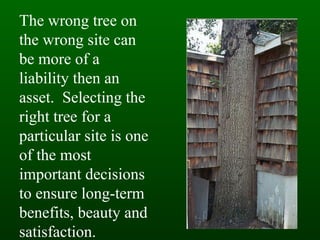
The wrong tree on the wrong site can be more of a liability then an asset.  Selecting the right tree for a particular site is one of the most important decisions to ensure long-term benefits, beauty and satisfaction.
All trees have  Cultural Requirements : Light  Water  Soil conditions Growing space Others
Each planting site has  Environmental Characteristics: Temperature extremes Soil pH Light levels Others
Adaptability: The tree species  genetic ability  to adjust to different conditions. Some trees are more adaptable then others.  Some species are found all over the country while others only grow in specific locations.
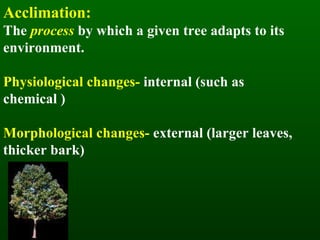
Acclimation: The  process   by which a given tree adapts to its environment. Physiological changes-  internal (such as chemical )  Morphological changes-  external (larger leaves, thicker bark)
Site Analysis Site analysis is a record of the pertinent existing site conditions that will effect site selection.  This information is compared to the functional goals (what you want to achieve with the planting) allowing for the appropriate selection of trees.
Site Considerations Planting site :  utilities (overhead and under ground),  buildings, sidewalks, paved surfaces, intersections, plans for future development Water availability :   type of soil, run off, surface type, too much (down spout, low area) Soil :  pH, nutrients, salts, drainage, compaction soil texture, bulk density,CEC, soil volume Light levels :  too much, too little, reflection, artificial
Site Considerations continued Climate :  hardiness zone, microclimate, precipitation, exposure, sunlight (too much or too little) Other plantings:  trees and shrubs, beds, turf Maintenance to be provided:   Irrigation, post planting care, ongoing maintenance
Once the site has been analyzed, the next step is to consider the  Design Criteria  (based on the functions the tree is expected to serve) Landscape Functions   include engineering and architectural considerations such as controlling pedestrian traffic,hiding unsightly building features, blocking wind, providing shade, etc….
Tree species considerations Growth Rate :  Fast growing trees are often tolerant of poor soil conditions and neglect BUT, often have weak wood that breaks and decays easily and are short-lived Size at Maturity:  height, spread, root zone requirements Growth Habit/Form Insect and Disease Resistance:  different from immunity
Species considerations cont. pH Requirements Salt Tolerance Light Requirements Known Problems:  pests, poor structure weak wood, surface roots, messy fruit/flowers/leaves, thorns Attributes:  flowers, fruit, bark, interesting foliage, good fall color
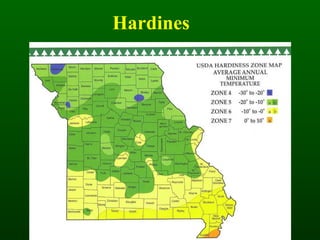
Species considerations cont.  Maintenance Requirements Hardiness:   based on the lowest minimum temperature, but the maximum temperature may also be important to a trees success  Tolerance to Drainage Problems Seed Source:  where did the genetics of the tree come
Hardines s
Other questions Where did the genetics come from? Is the seed source of the tree from within your hardiness zone? Nursery conditions where the tree is grown: Was it an upland or lowland nursery?  Does it match the planting site. Does the tree have factors that make it a liability?  thorns? messy fruit? attract bees?
Native vs. Introduced Species Native Species:  grow well in their natural zone. There is sometimes a question as to whether or not a species is native Introduced Species:  (non-native) some have become naturalized  (reproducing and thriving in their new settings for decades). Some have the possibility of becoming invasive or carrying in non-native pests or  diseases
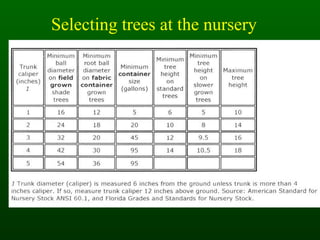
Selecting trees at the nursery
What to look for at the nursery Vigorous growth (shoot extension) Good branch spacing Trunk taper Foliage evenly distributed in the upper 2/3  Avoid many upright branches Look for single trunk and spreading branches Look for mechanical damage ANSI ASC Z60, American standards for nursery stock Collected plants?
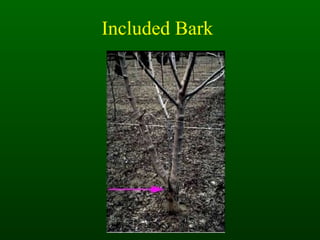
Included Bark
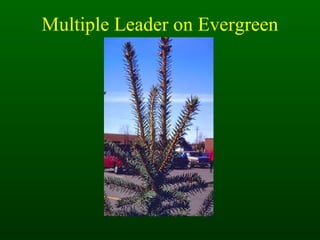
Multiple Leader on Evergreen
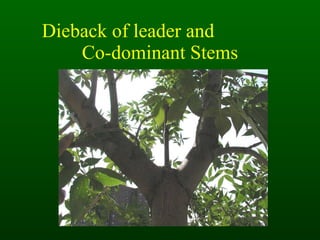
Dieback of leader and  Co-dominant Stems
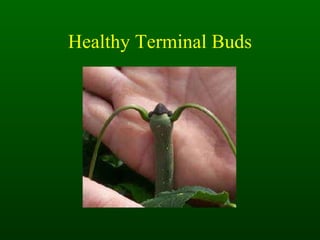
Healthy Terminal Buds
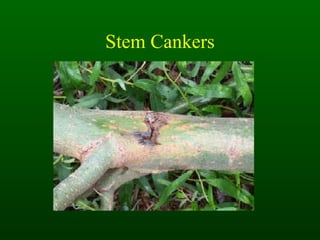
Stem Cankers
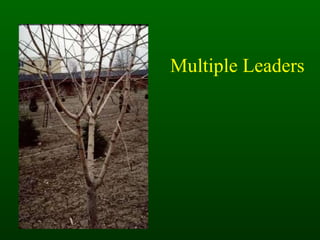
Multiple Leaders
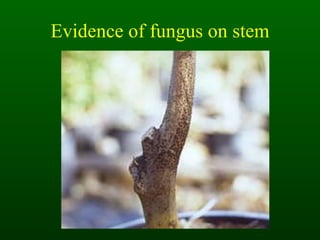
Evidence of fungus on stem
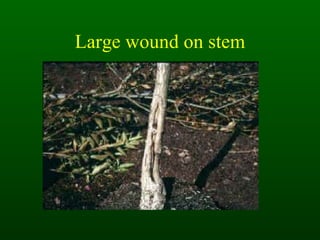
Large wound on stem
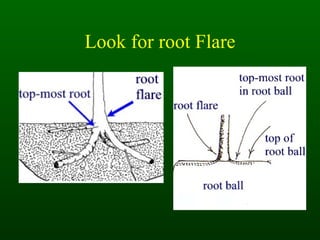
Look for root Flare
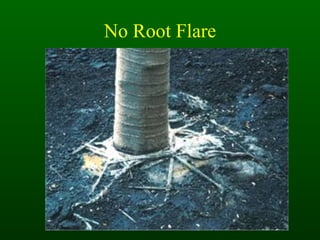
No Root Flare
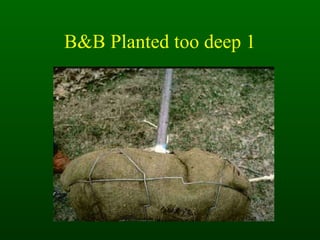
B&B Planted too deep 1
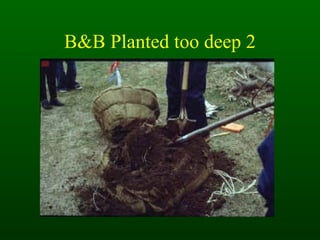
B&B Planted too deep 2
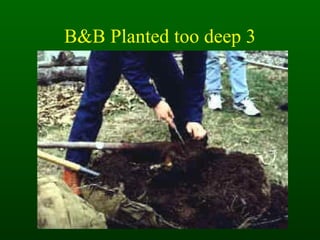
B&B Planted too deep 3
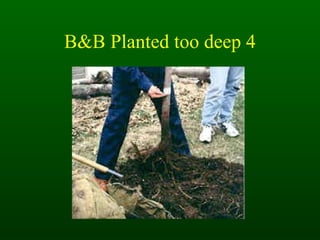
B&B Planted too deep 4
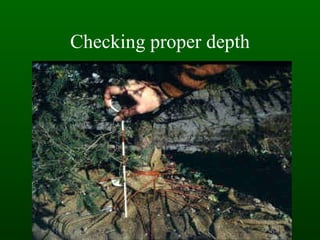
Checking proper depth
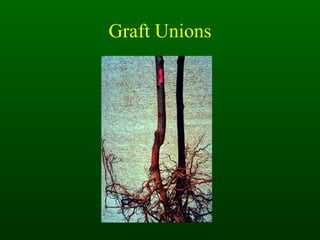
Graft Unions
Key terms Acclimation Adaptability Design criteria Growth rate Hardiness Introduced species Native species Pest resistance Site analysis Site considerations

Isa tree selection 1

  • 1.
  • 2.
    The wrong treeon the wrong site can be more of a liability then an asset. Selecting the right tree for a particular site is one of the most important decisions to ensure long-term benefits, beauty and satisfaction.
  • 3.
    All trees have Cultural Requirements : Light Water Soil conditions Growing space Others
  • 4.
    Each planting sitehas Environmental Characteristics: Temperature extremes Soil pH Light levels Others
  • 5.
    Adaptability: The treespecies genetic ability to adjust to different conditions. Some trees are more adaptable then others. Some species are found all over the country while others only grow in specific locations.
  • 6.
    Acclimation: The process by which a given tree adapts to its environment. Physiological changes- internal (such as chemical ) Morphological changes- external (larger leaves, thicker bark)
  • 7.
    Site Analysis Siteanalysis is a record of the pertinent existing site conditions that will effect site selection. This information is compared to the functional goals (what you want to achieve with the planting) allowing for the appropriate selection of trees.
  • 8.
    Site Considerations Plantingsite : utilities (overhead and under ground), buildings, sidewalks, paved surfaces, intersections, plans for future development Water availability : type of soil, run off, surface type, too much (down spout, low area) Soil : pH, nutrients, salts, drainage, compaction soil texture, bulk density,CEC, soil volume Light levels : too much, too little, reflection, artificial
  • 9.
    Site Considerations continuedClimate : hardiness zone, microclimate, precipitation, exposure, sunlight (too much or too little) Other plantings: trees and shrubs, beds, turf Maintenance to be provided: Irrigation, post planting care, ongoing maintenance
  • 10.
    Once the sitehas been analyzed, the next step is to consider the Design Criteria (based on the functions the tree is expected to serve) Landscape Functions include engineering and architectural considerations such as controlling pedestrian traffic,hiding unsightly building features, blocking wind, providing shade, etc….
  • 11.
    Tree species considerationsGrowth Rate : Fast growing trees are often tolerant of poor soil conditions and neglect BUT, often have weak wood that breaks and decays easily and are short-lived Size at Maturity: height, spread, root zone requirements Growth Habit/Form Insect and Disease Resistance: different from immunity
  • 12.
    Species considerations cont.pH Requirements Salt Tolerance Light Requirements Known Problems: pests, poor structure weak wood, surface roots, messy fruit/flowers/leaves, thorns Attributes: flowers, fruit, bark, interesting foliage, good fall color
  • 13.
    Species considerations cont. Maintenance Requirements Hardiness: based on the lowest minimum temperature, but the maximum temperature may also be important to a trees success Tolerance to Drainage Problems Seed Source: where did the genetics of the tree come
  • 14.
  • 15.
    Other questions Wheredid the genetics come from? Is the seed source of the tree from within your hardiness zone? Nursery conditions where the tree is grown: Was it an upland or lowland nursery? Does it match the planting site. Does the tree have factors that make it a liability? thorns? messy fruit? attract bees?
  • 16.
    Native vs. IntroducedSpecies Native Species: grow well in their natural zone. There is sometimes a question as to whether or not a species is native Introduced Species: (non-native) some have become naturalized (reproducing and thriving in their new settings for decades). Some have the possibility of becoming invasive or carrying in non-native pests or diseases
  • 17.
    Selecting trees atthe nursery
  • 18.
    What to lookfor at the nursery Vigorous growth (shoot extension) Good branch spacing Trunk taper Foliage evenly distributed in the upper 2/3 Avoid many upright branches Look for single trunk and spreading branches Look for mechanical damage ANSI ASC Z60, American standards for nursery stock Collected plants?
  • 19.
  • 20.
  • 21.
    Dieback of leaderand Co-dominant Stems
  • 22.
  • 23.
  • 24.
  • 25.
  • 26.
  • 27.
  • 28.
  • 29.
  • 30.
  • 31.
  • 32.
  • 33.
  • 34.
  • 35.
    Key terms AcclimationAdaptability Design criteria Growth rate Hardiness Introduced species Native species Pest resistance Site analysis Site considerations