More Related Content

PPTX
Introduction_to_AI_with_BG.pptx gjfchffh 
PPTX
Introduction_to_AI.pptxnvkgxkgxucutxutxtuxx 
PPTX
Artificial_Intelligence_Presentation.pptx 
PPTX
Introduction_to_AI_Artificial Intelligence What is AI?.pptx 
PPTX
Artificial Intelligence.pptx ajakakansnshxhja 
PPTX
A very short Introduction_to_AI_Presentation.pptx 
PPTX
Artificial_Intelligence_Presentation.pptx 
PPTX
Artificial Intelligence; Introduction to ai.pptx Similar to Introduction_to_AI_and_Applications.pptx

PPTX
artificial intelligence overview of it and more 
PPTX
An Agentic Framework for High-quality Visual Presentation Generation 
PPTX
Artificial_Intelligence_Presentation.pptx 
PPTX
AI_Overview_PPTheljjkgfyjhfygfhghgy7yy7y77y.pptx 
PPTX
AI Presentation xltzmsssssssssssssssssssssssssss 
PPTX
Artificial Intelligence Todays and Future 
PPTX
Introduction_to_AI model for 21 center.pptx 
PPTX
Advance Roles of Artificial Intelligence.pptx 
PPTX
Adobe Creative Cloud Cleaner Tool Crack Free Download Latest Version 2025 
PPTX
Artificial_Intelligence_Presentation.pptx 
PPTX
Artificial Intelligence; Introduction to ai.pptx 
PPT
Introduction of Artificial Intelligence (AI) ![Robin YouTube Video Downloader Pro 5.25.1 with Crack [Latest]](https://cdn.slidesharecdn.com/ss_thumbnails/artificialintelligence18-250602162227-4f5bbbdd-thumbnail.jpg?width=640&height=640&fit=bounds)
PPTX
Robin YouTube Video Downloader Pro 5.25.1 with Crack [Latest] ![Ashampoo UnInstaller 10 v10.00.10 with Crack Download [Latest]](https://cdn.slidesharecdn.com/ss_thumbnails/artificialintelligence17-250602162443-eac8b598-thumbnail.jpg?width=640&height=640&fit=bounds)
PPTX
Ashampoo UnInstaller 10 v10.00.10 with Crack Download [Latest] 
PPTX
About Artificial Intelligence information.pptx 
PPTX
Introduction_to_AI.pptx_changes_in_everyday_life 
PPTX
Artificial_Intelligence_Presentation.pptx 
PPTX
Artificial intelligence course in Chandigarh.pptx 
PPTX
Rhinoceros 7.10.21256.17001 Full Crack + License Key 2025 
PPTX
Voicemod Pro Crack 1.2.6.8 + License Key Free Download 2025 Introduction_to_AI_and_Applications.pptx
- 1.
- 2.
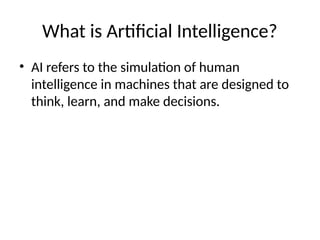
What is ArtificialIntelligence?
• AI refers to the simulation of human
intelligence in machines that are designed to
think, learn, and make decisions.
- 3.
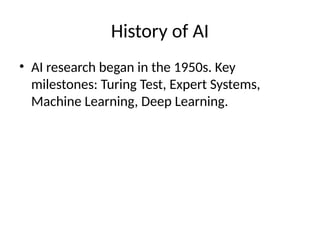
History of AI
•AI research began in the 1950s. Key
milestones: Turing Test, Expert Systems,
Machine Learning, Deep Learning.
- 4.
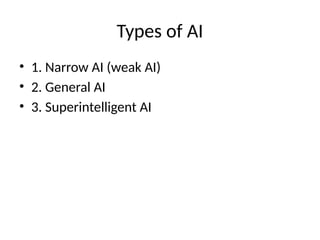
Types of AI
•1. Narrow AI (weak AI)
• 2. General AI
• 3. Superintelligent AI
- 5.
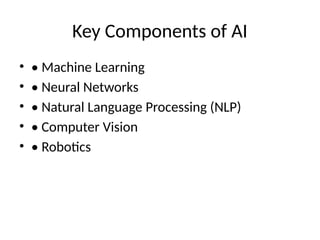
Key Components ofAI
• • Machine Learning
• • Neural Networks
• • Natural Language Processing (NLP)
• • Computer Vision
• • Robotics
- 6.
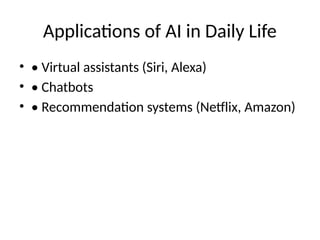
Applications of AIin Daily Life
• • Virtual assistants (Siri, Alexa)
• • Chatbots
• • Recommendation systems (Netflix, Amazon)
- 7.
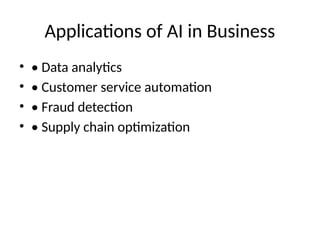
Applications of AIin Business
• • Data analytics
• • Customer service automation
• • Fraud detection
• • Supply chain optimization
- 8.
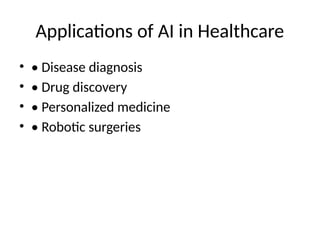
Applications of AIin Healthcare
• • Disease diagnosis
• • Drug discovery
• • Personalized medicine
• • Robotic surgeries
- 9.
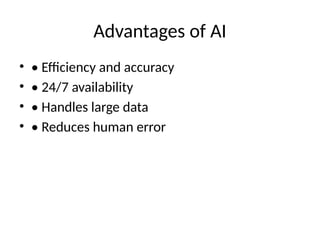
Advantages of AI
•• Efficiency and accuracy
• • 24/7 availability
• • Handles large data
• • Reduces human error
- 10.
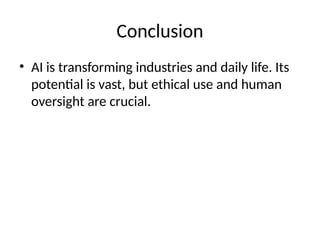
Conclusion
• AI istransforming industries and daily life. Its
potential is vast, but ethical use and human
oversight are crucial.