Introduction to
Social Media
Marketing
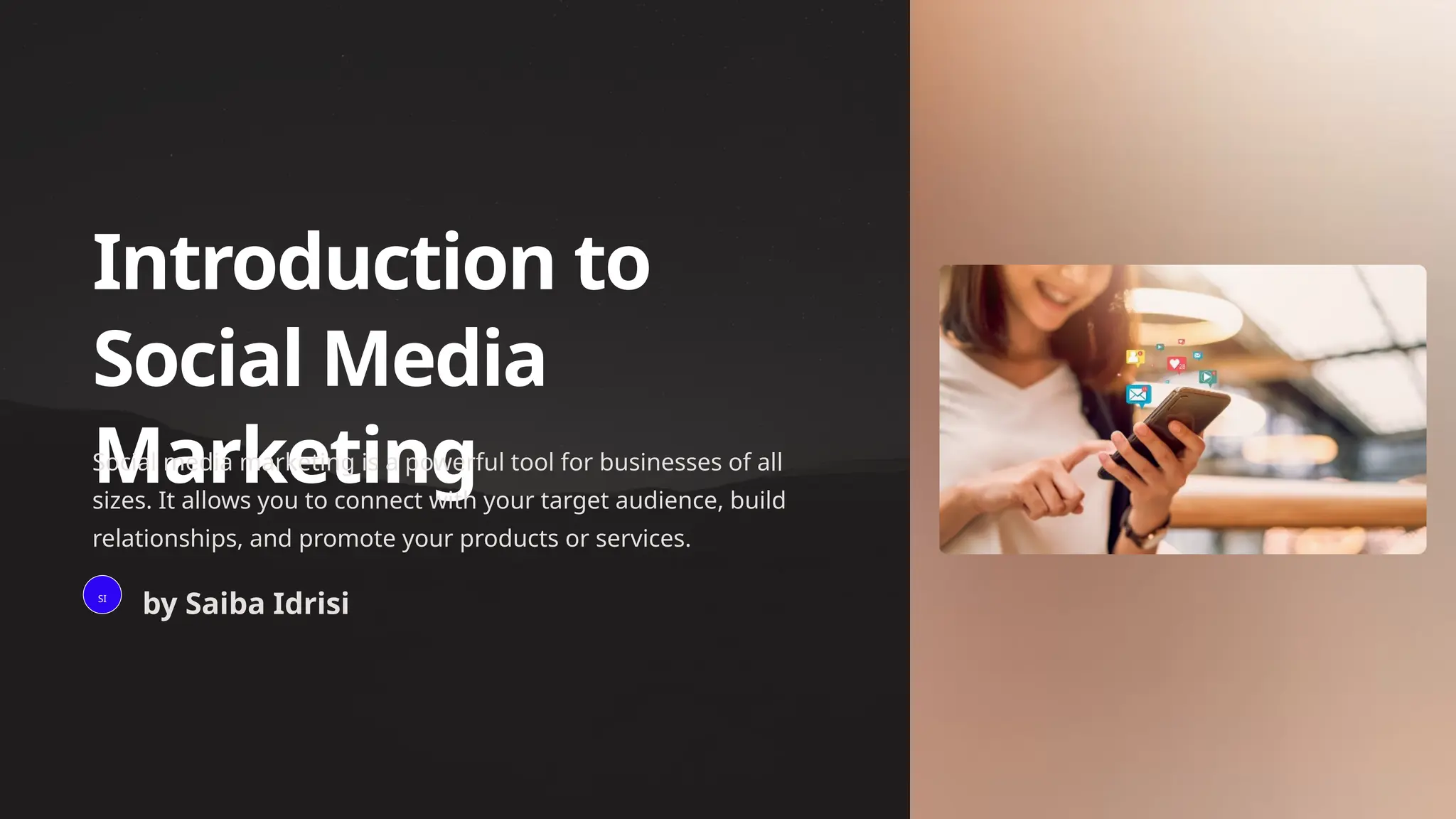
Social media marketing is a powerful tool for businesses of all
sizes. It allows you to connect with your target audience, build
relationships, and promote your products or services.
SI
by Saiba Idrisi
Benefits of Social Media
Marketing
1 Increased Brand
Awareness
Social media marketing
can help you reach a wider
audience and build brand
awareness.
2 Improved Customer
Engagement
Social media allows you to
interact with your
customers, answer their
questions, and build
relationships.
3 Enhanced Lead
Generation
Social media can be used
to generate leads and
drive traffic to your
website.
4 Cost-Effective Marketing
Social media marketing is
generally more cost-
effective than traditional
marketing methods.
Developing a Social Media Strategy
1 Identify Your Target Audience
Define the demographics, interests, and online behavior of your ideal customer.
2 Set Clear Goals
Establish measurable objectives, such as increased brand awareness or website traffic.
3 Choose the Right Platforms
Select social media platforms that align with your target audience and marketing goals.
4 Create a Content Calendar
Schedule regular content posting to ensure consistent engagement with your audience.
5 Monitor and Analyze Results
Track key metrics and adjust your strategy based on performance data.
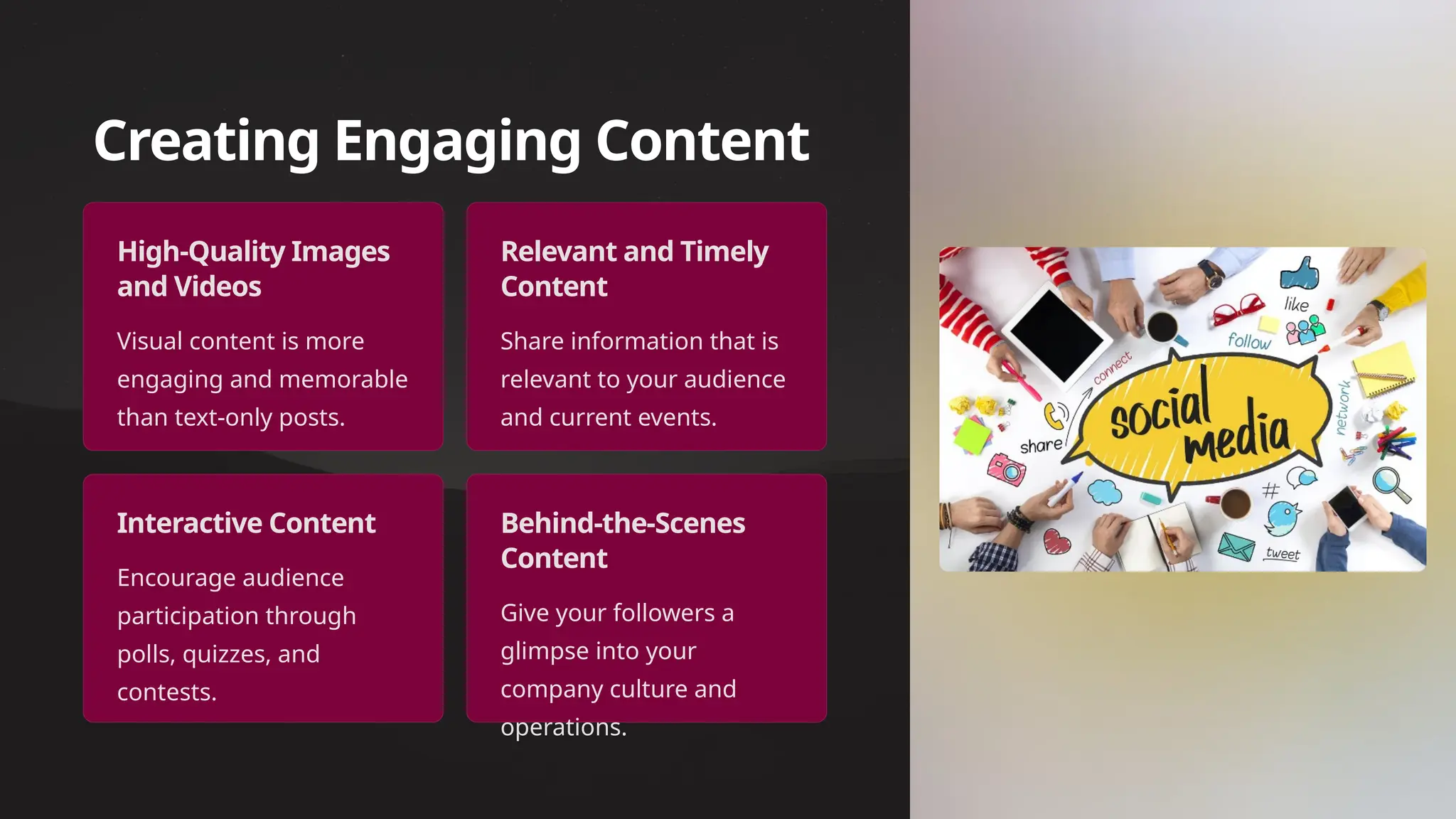
Creating Engaging Content
High-Quality Images
and Videos
Visual content is more
engaging and memorable
than text-only posts.
Relevant and Timely
Content
Share information that is
relevant to your audience
and current events.
Interactive Content
Encourage audience
participation through
polls, quizzes, and
contests.
Behind-the-Scenes
Content
Give your followers a
glimpse into your
company culture and
operations.
Leveraging Influencers and Partnerships
Identify Relevant Influencers
Partner with influencers who
align with your brand values and
target audience.
Collaborate on Content
Develop co-created content that
leverages the influencer's reach
and expertise.
Track and Measure Results
Monitor the impact of influencer
campaigns on key metrics, such
as engagement and website
traffic.
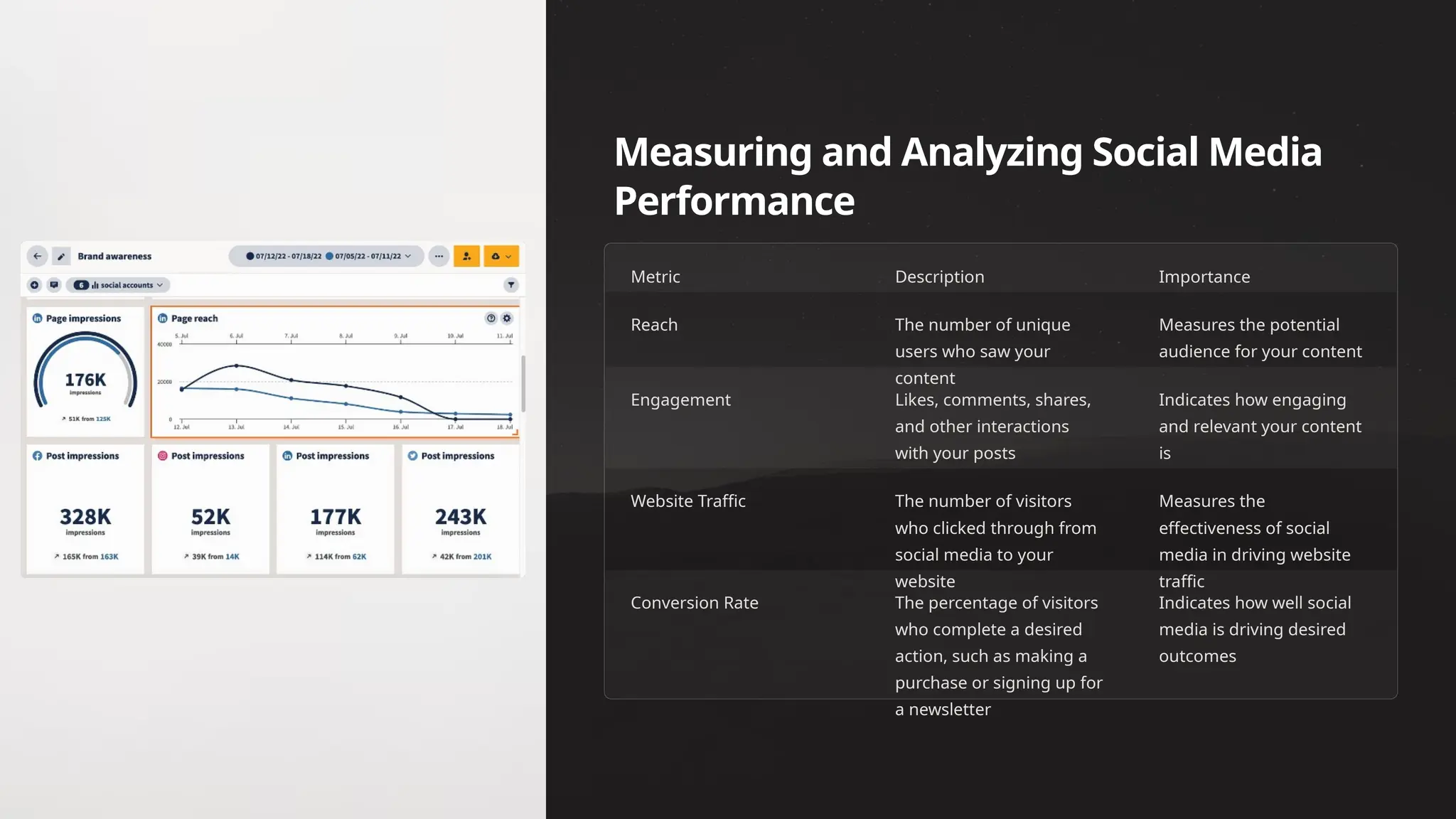
Measuring and Analyzing Social Media
Performance
Metric Description Importance
Reach The number of unique
users who saw your
content
Measures the potential
audience for your content
Engagement Likes, comments, shares,
and other interactions
with your posts
Indicates how engaging
and relevant your content
is
Website Traffic The number of visitors
who clicked through from
social media to your
website
Measures the
effectiveness of social
media in driving website
traffic
Conversion Rate The percentage of visitors
who complete a desired
action, such as making a
purchase or signing up for
a newsletter
Indicates how well social
media is driving desired
outcomes
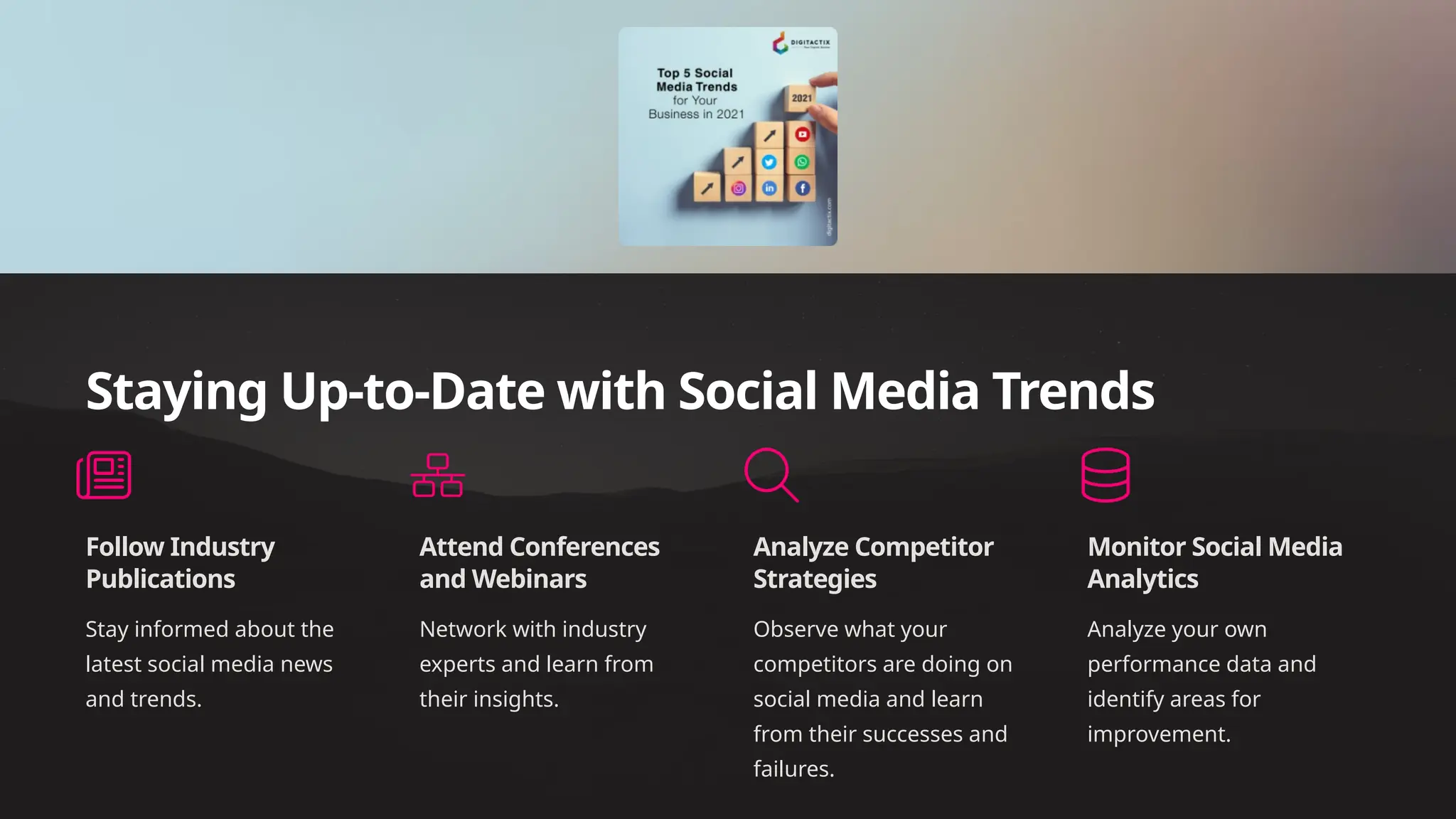
Staying Up-to-Date with Social Media Trends
Follow Industry
Publications
Stay informed about the
latest social media news
and trends.
Attend Conferences
and Webinars
Network with industry
experts and learn from
their insights.
Analyze Competitor
Strategies
Observe what your
competitors are doing on
social media and learn
from their successes and
failures.
Monitor Social Media
Analytics
Analyze your own
performance data and
identify areas for
improvement.
Conclusion and Next Steps
Develop a Comprehensive Strategy
Create a well-defined social media strategy that aligns with your
business goals.
Create High-Quality Content
Produce engaging content that resonates with your target audience.
Leverage Social Media Tools
Utilize social media management tools to streamline your efforts
and maximize efficiency.
Monitor and Analyze Results
Track your performance, make adjustments as needed, and
continuously optimize your strategy.

Introduction-to-Social-Media-Marketing.- FARFETCHDIGITAL

  • 1.
    Introduction to Social Media Marketing Socialmedia marketing is a powerful tool for businesses of all sizes. It allows you to connect with your target audience, build relationships, and promote your products or services. SI by Saiba Idrisi
  • 2.
    Benefits of SocialMedia Marketing 1 Increased Brand Awareness Social media marketing can help you reach a wider audience and build brand awareness. 2 Improved Customer Engagement Social media allows you to interact with your customers, answer their questions, and build relationships. 3 Enhanced Lead Generation Social media can be used to generate leads and drive traffic to your website. 4 Cost-Effective Marketing Social media marketing is generally more cost- effective than traditional marketing methods.
  • 3.
    Developing a SocialMedia Strategy 1 Identify Your Target Audience Define the demographics, interests, and online behavior of your ideal customer. 2 Set Clear Goals Establish measurable objectives, such as increased brand awareness or website traffic. 3 Choose the Right Platforms Select social media platforms that align with your target audience and marketing goals. 4 Create a Content Calendar Schedule regular content posting to ensure consistent engagement with your audience. 5 Monitor and Analyze Results Track key metrics and adjust your strategy based on performance data.
  • 4.
    Creating Engaging Content High-QualityImages and Videos Visual content is more engaging and memorable than text-only posts. Relevant and Timely Content Share information that is relevant to your audience and current events. Interactive Content Encourage audience participation through polls, quizzes, and contests. Behind-the-Scenes Content Give your followers a glimpse into your company culture and operations.
  • 5.
    Leveraging Influencers andPartnerships Identify Relevant Influencers Partner with influencers who align with your brand values and target audience. Collaborate on Content Develop co-created content that leverages the influencer's reach and expertise. Track and Measure Results Monitor the impact of influencer campaigns on key metrics, such as engagement and website traffic.
  • 6.
    Measuring and AnalyzingSocial Media Performance Metric Description Importance Reach The number of unique users who saw your content Measures the potential audience for your content Engagement Likes, comments, shares, and other interactions with your posts Indicates how engaging and relevant your content is Website Traffic The number of visitors who clicked through from social media to your website Measures the effectiveness of social media in driving website traffic Conversion Rate The percentage of visitors who complete a desired action, such as making a purchase or signing up for a newsletter Indicates how well social media is driving desired outcomes
  • 7.
    Staying Up-to-Date withSocial Media Trends Follow Industry Publications Stay informed about the latest social media news and trends. Attend Conferences and Webinars Network with industry experts and learn from their insights. Analyze Competitor Strategies Observe what your competitors are doing on social media and learn from their successes and failures. Monitor Social Media Analytics Analyze your own performance data and identify areas for improvement.
  • 8.
    Conclusion and NextSteps Develop a Comprehensive Strategy Create a well-defined social media strategy that aligns with your business goals. Create High-Quality Content Produce engaging content that resonates with your target audience. Leverage Social Media Tools Utilize social media management tools to streamline your efforts and maximize efficiency. Monitor and Analyze Results Track your performance, make adjustments as needed, and continuously optimize your strategy.