1
An introduction to
by Xander Steenbrugge
Reinforcement
Learning
2
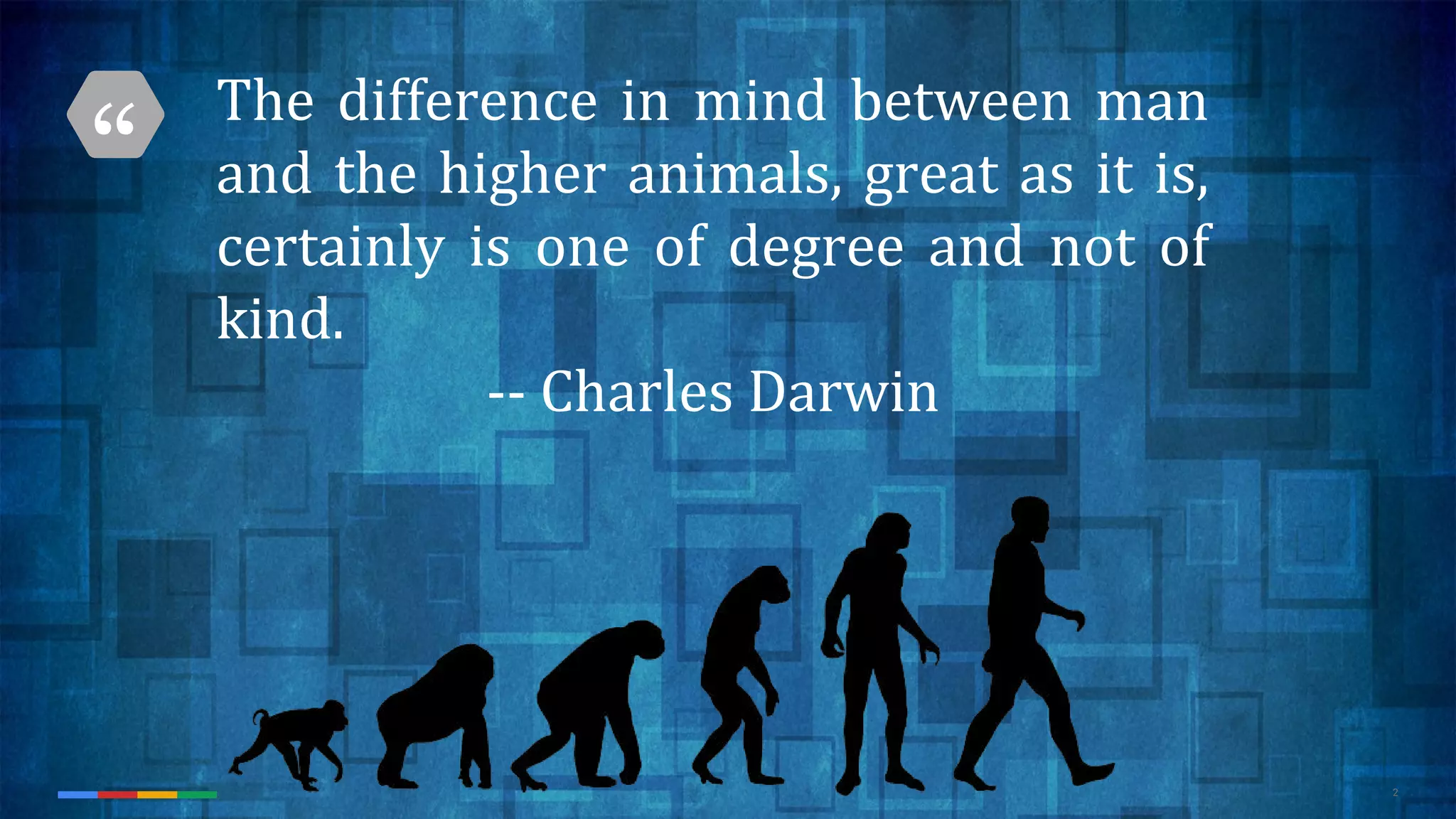
The difference in mind between man
and the higher animals, great as it is,
certainly is one of degree and not of
kind.
-- Charles Darwin
“
3
Overview
1. A brief history of AI
2. Machine Learning today
3. Introduction to Reinforcement Learning
4. Problems in Reinforcement Learning
5. Promising Research
6. A look into the future
4
A brief history of AI
5
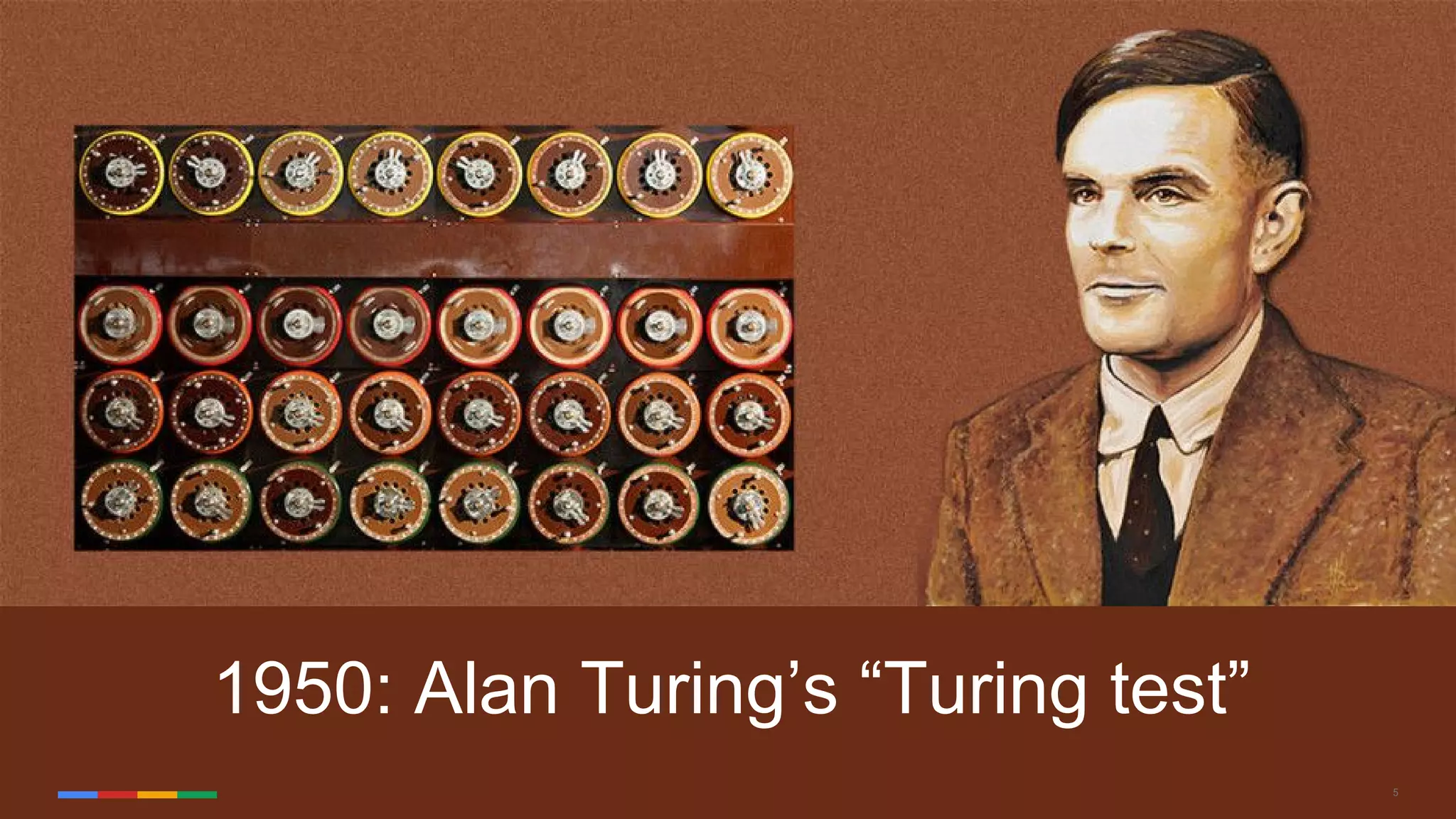
1950: Alan Turing’s “Turing test”
6
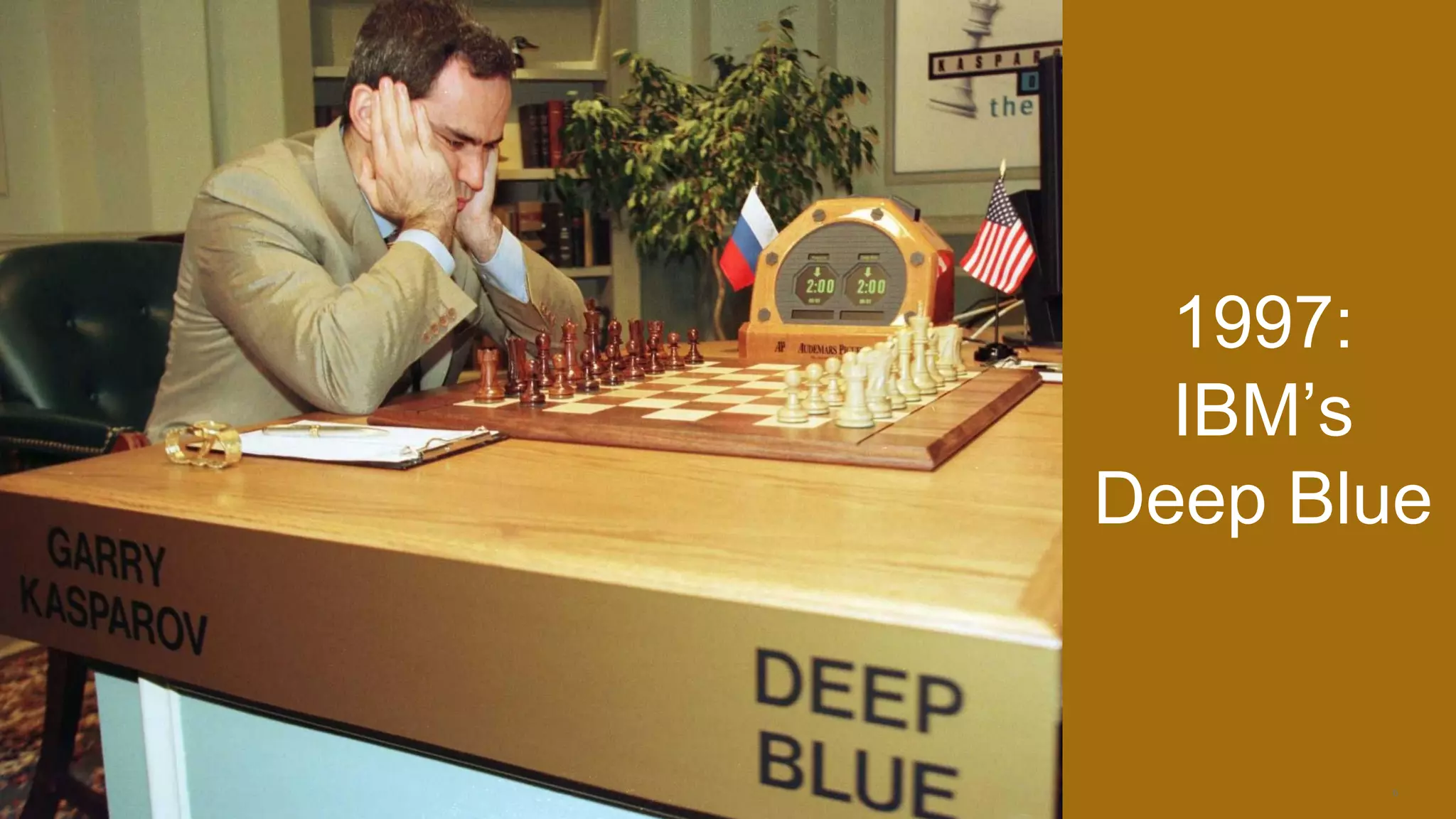
1997:
IBM’s
Deep Blue
7
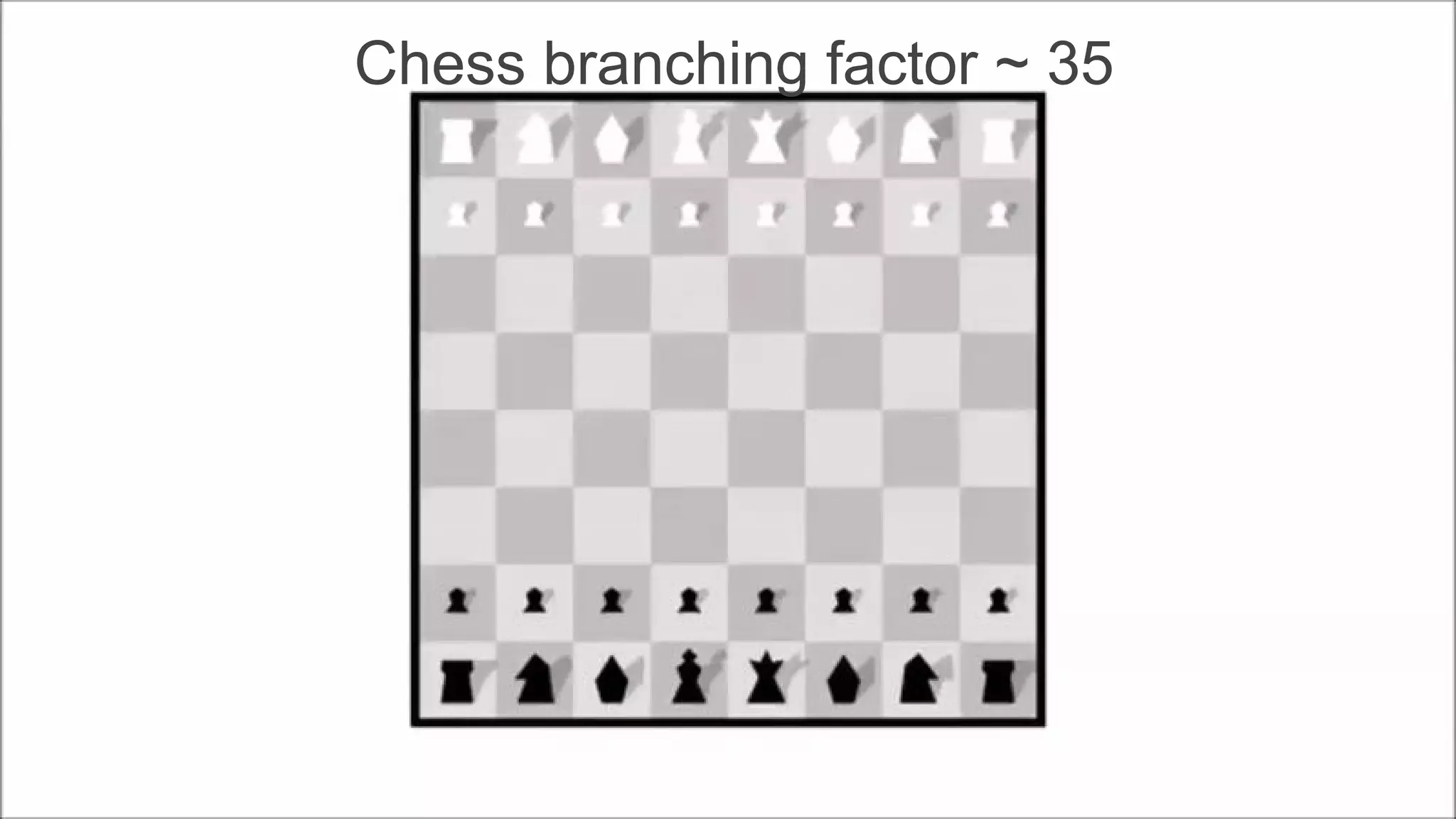
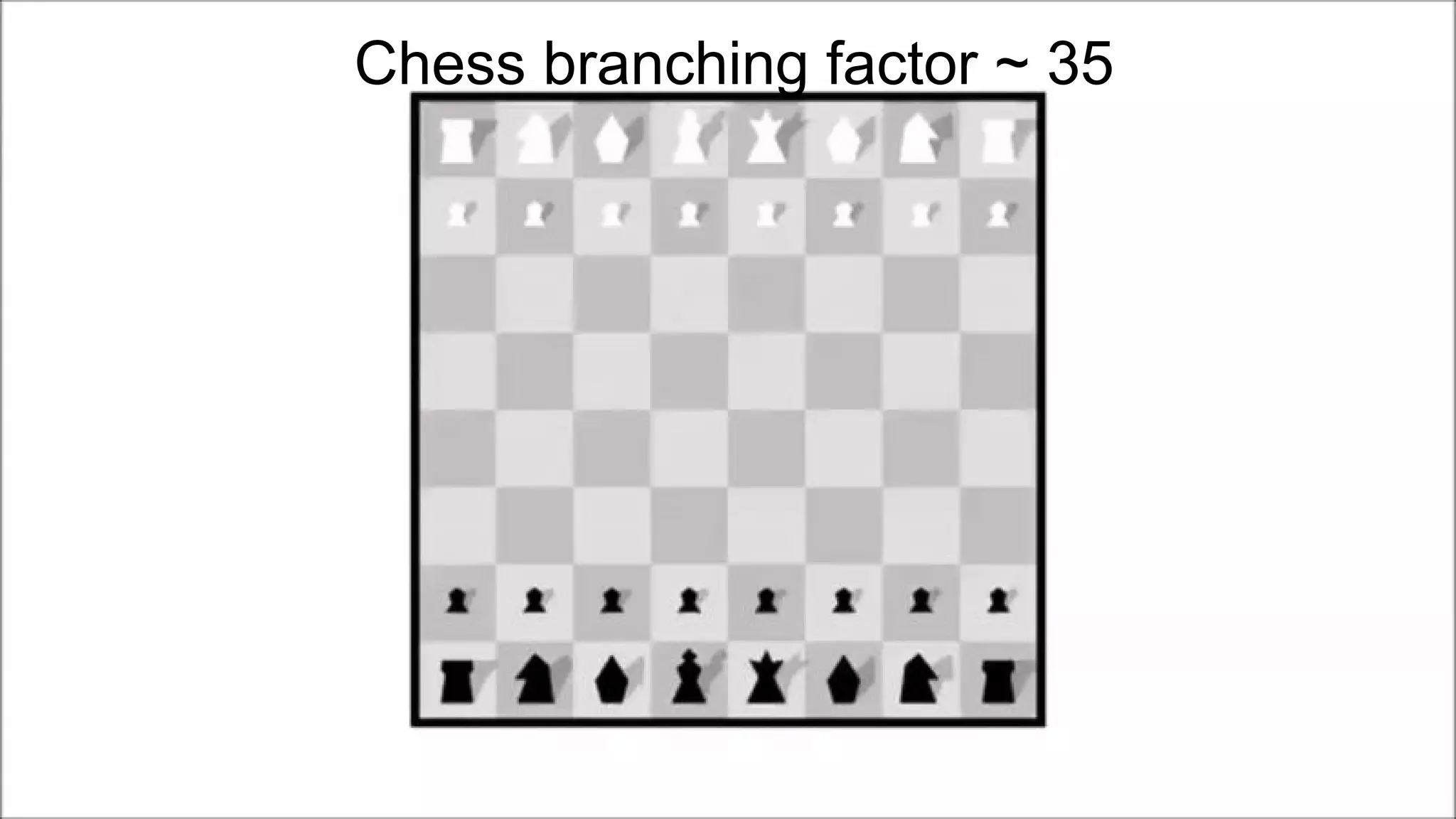
Chess branching factor ~ 35
8
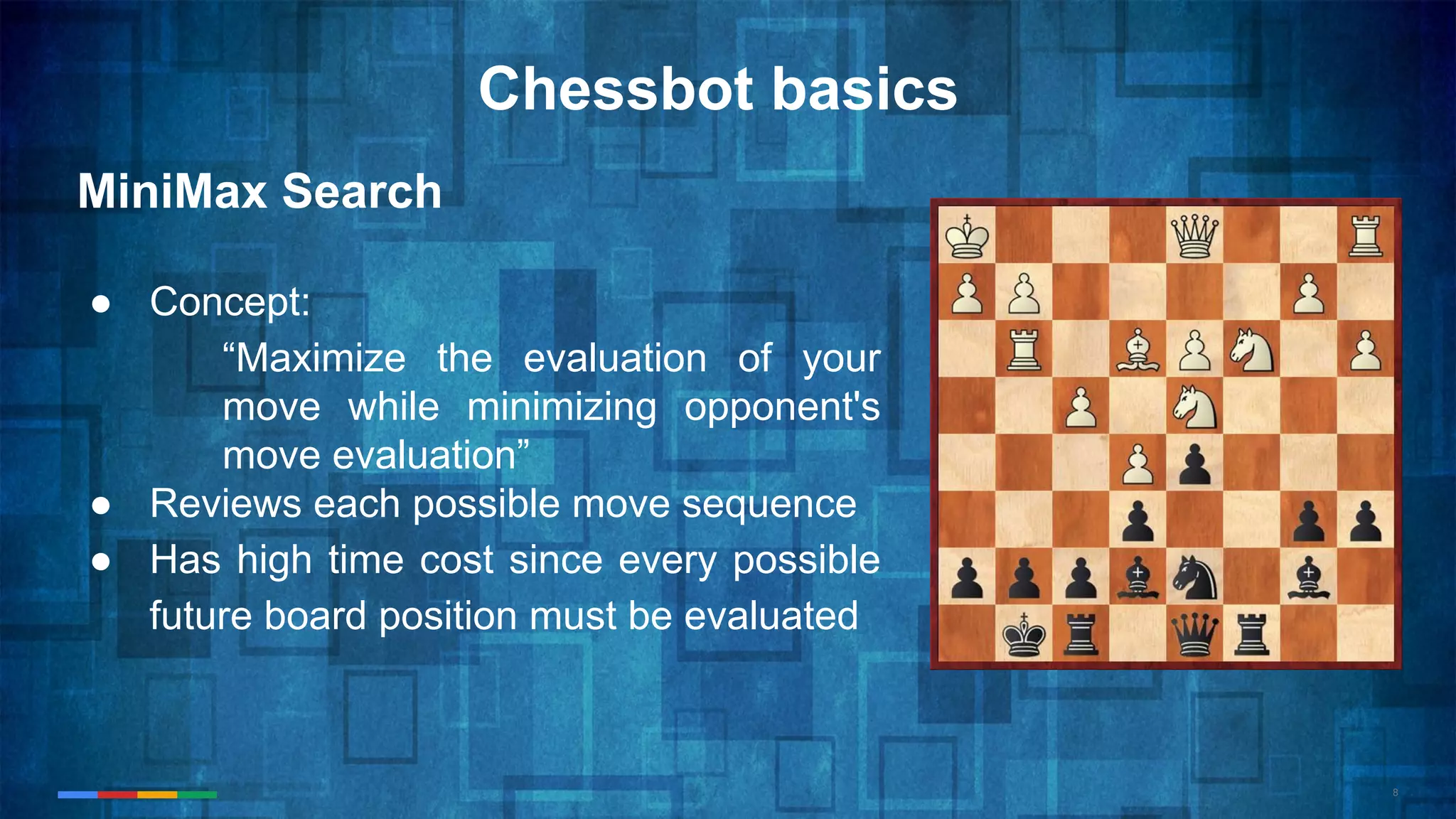
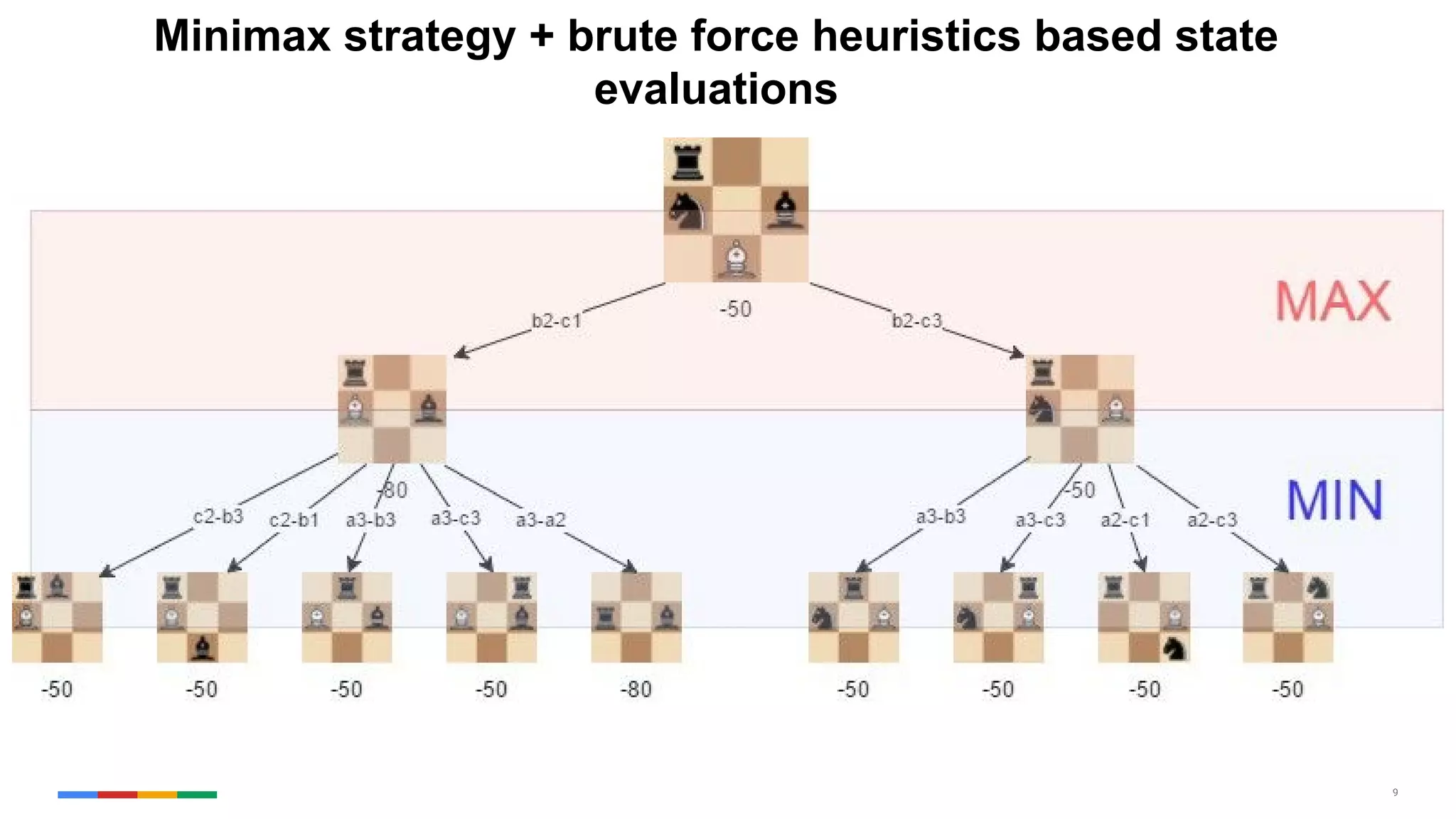
Chessbot basics
MiniMax Search
● Concept:
“Maximize the evaluation of your
move while minimizing opponent's
move evaluation”
● Reviews each possible move sequence
● Has high time cost since every possible
future board position must be evaluated
9
Minimax strategy + brute force heuristics based state
evaluations
10
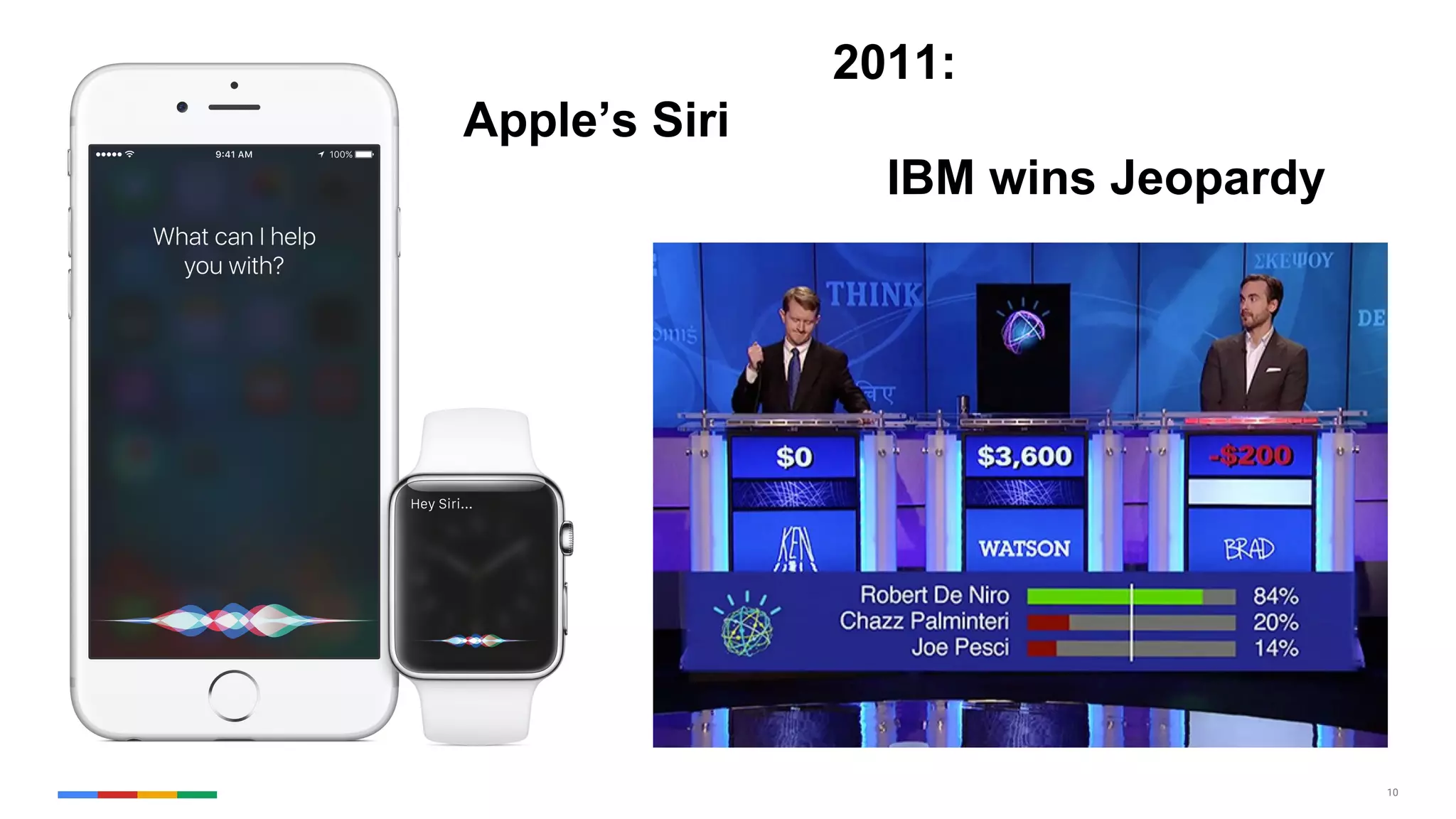
2011:
Apple’s Siri
IBM wins Jeopardy
11
12
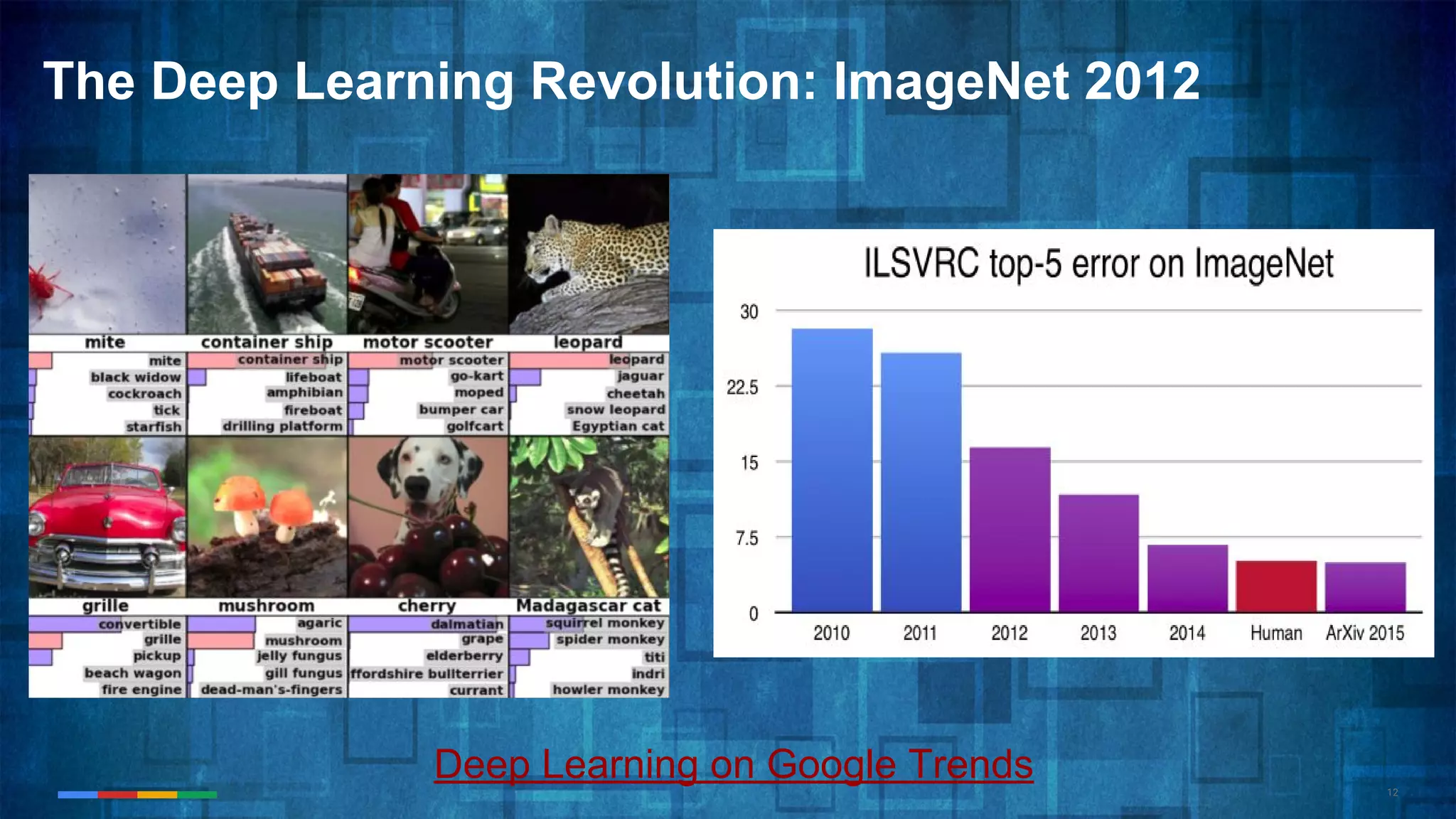
The Deep Learning Revolution: ImageNet 2012
Deep Learning on Google Trends
Ultimate Machine Learning with Google Cloud 13
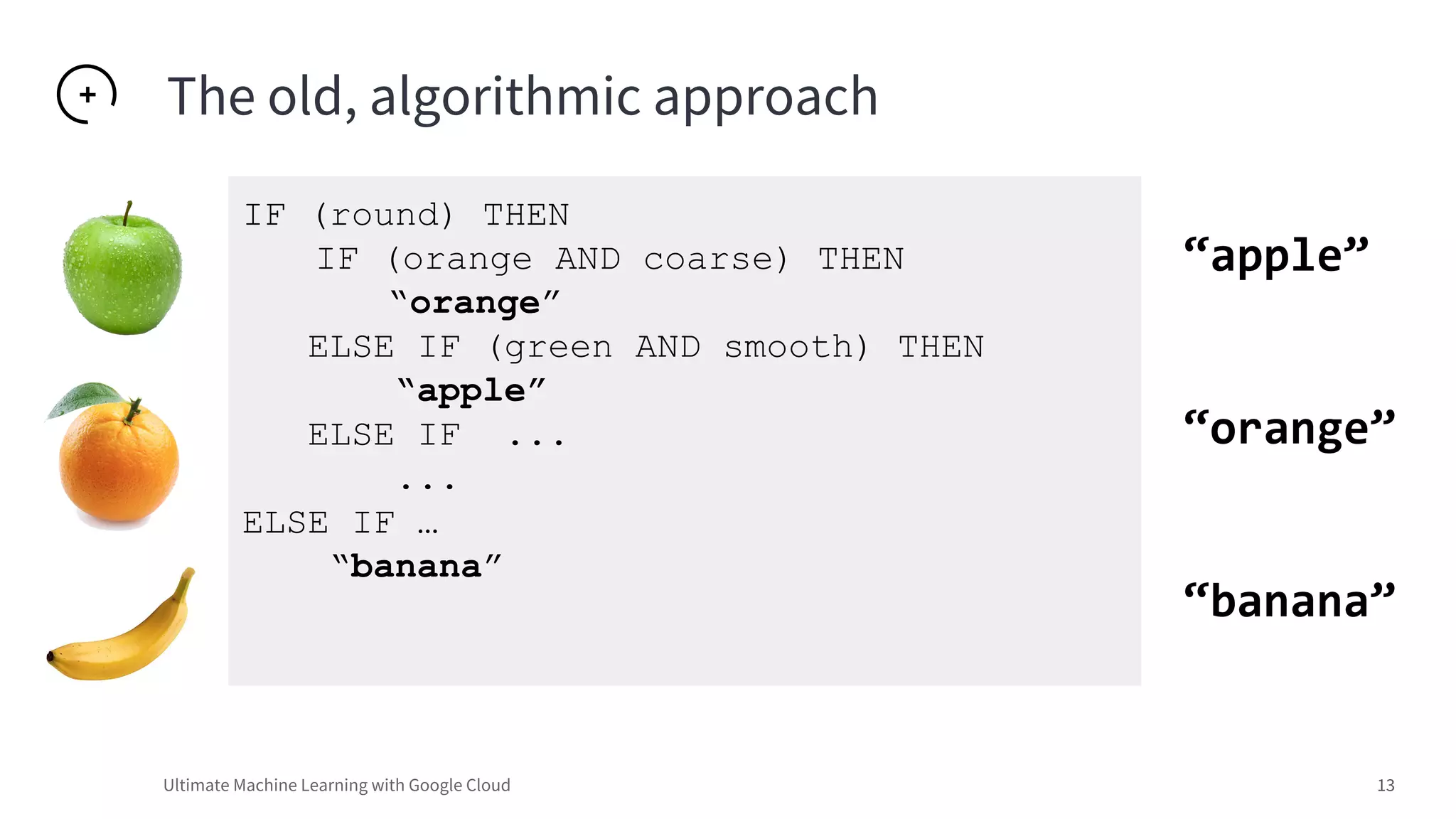
The old, algorithmic approach
“apple”
“orange”
“banana”
IF (round) THEN
IF (orange AND coarse) THEN
“orange”
ELSE IF (green AND smooth) THEN
“apple”
ELSE IF ...
...
ELSE IF …
“banana”
Ultimate Machine Learning with Google Cloud 14
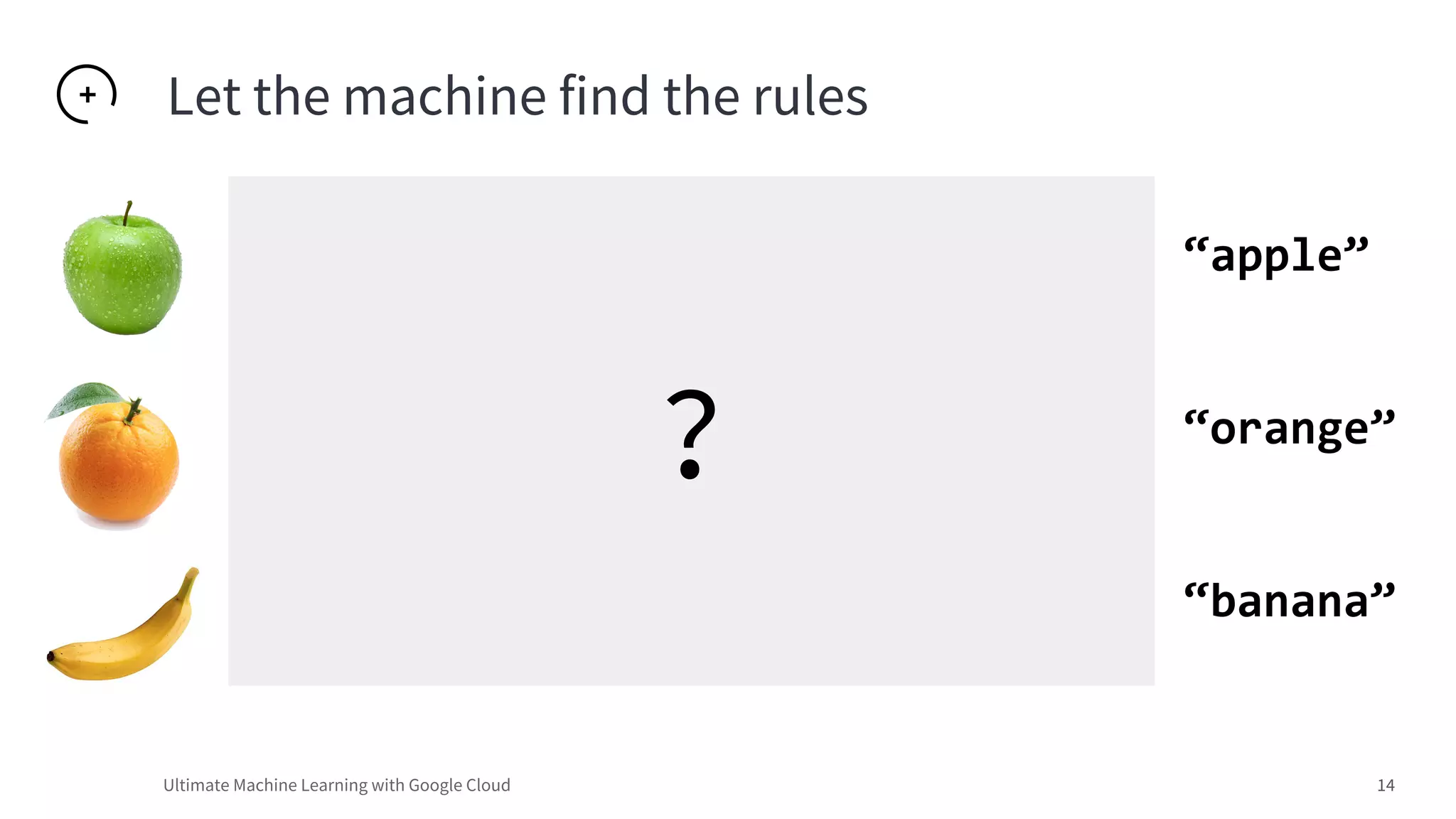
Let the machine find the rules
“apple”
“orange”
“banana”
?
Confidential & Proprietary
ConvNets
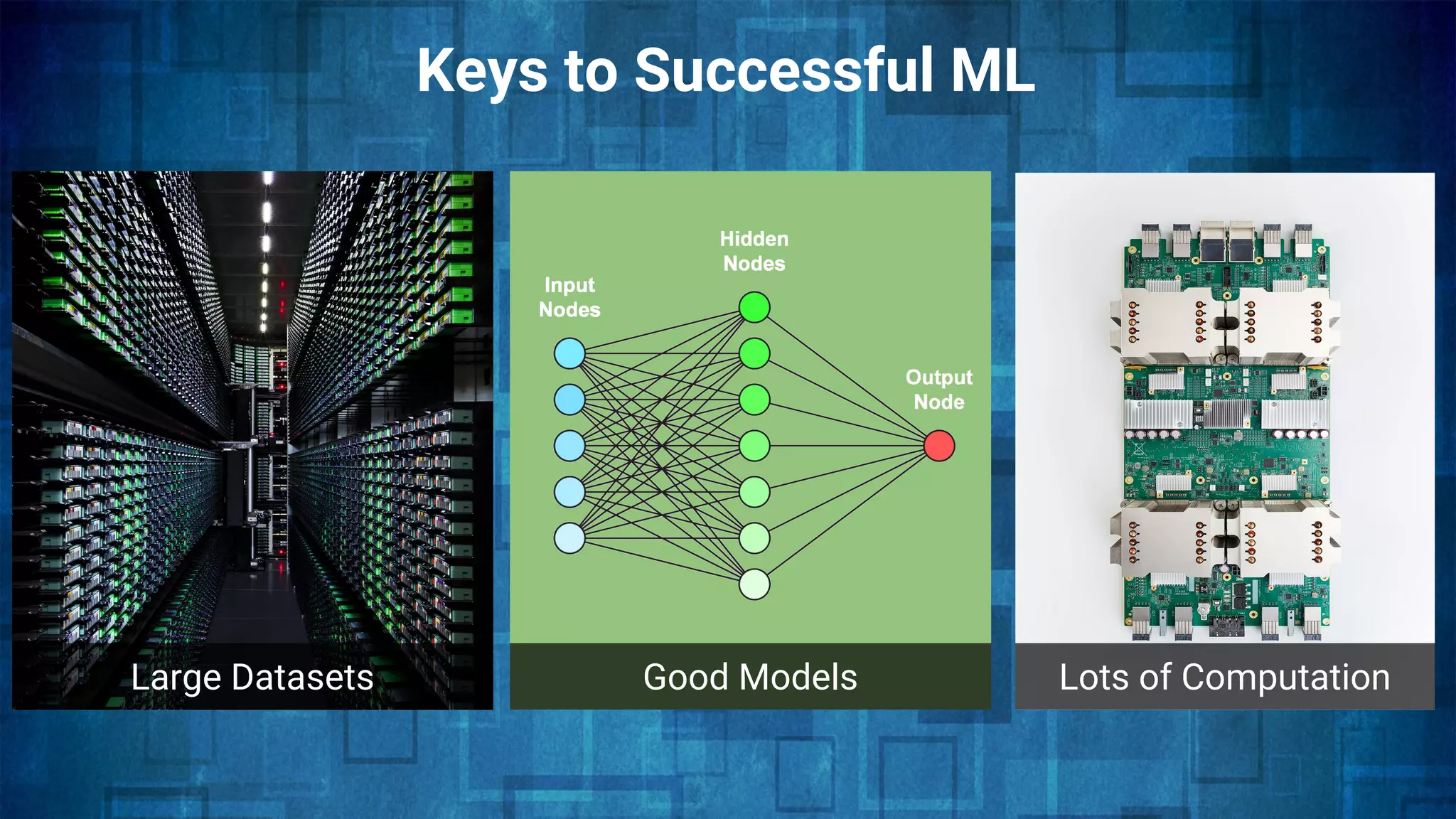
Keys to Successful ML
Large Datasets Good Models Lots of Computation
17
Machine Learning Today
Confidential + Proprietary
Machine Learning is everywhere
already…
20
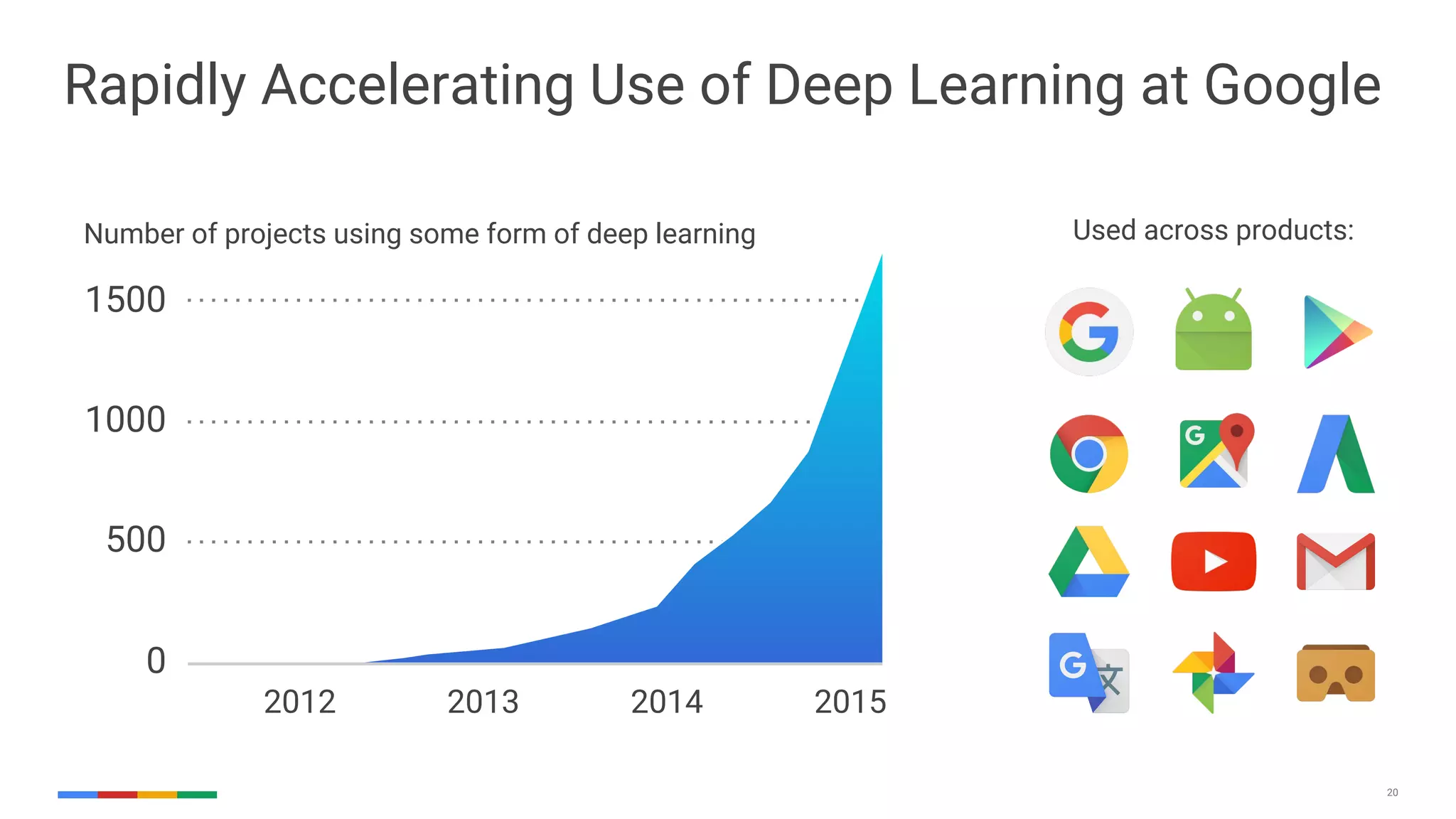
Rapidly Accelerating Use of Deep Learning at Google
Number of projects using some form of deep learning
2012 2013 2014 2015
1500
1000
500
0
Used across products:
21Confidential & ProprietaryGoogle Cloud Platform 21
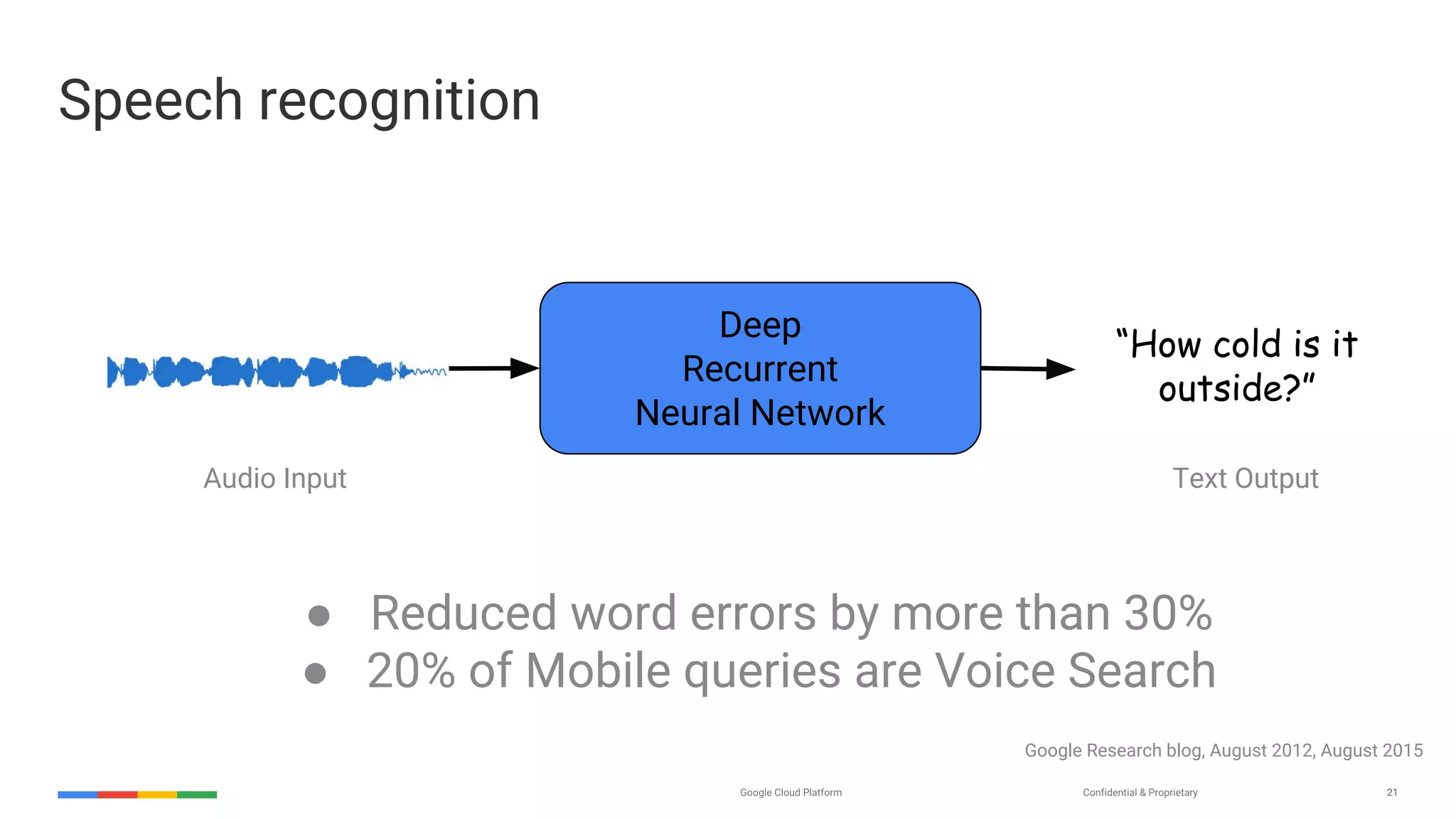
Speech recognition
Audio Input
Deep
Recurrent
Neural Network
Text Output
● Reduced word errors by more than 30%
● 20% of Mobile queries are Voice Search
Google Research blog, August 2012, August 2015
“How cold is it
outside?”
Confidential & ProprietaryGoogle Cloud Platform 22
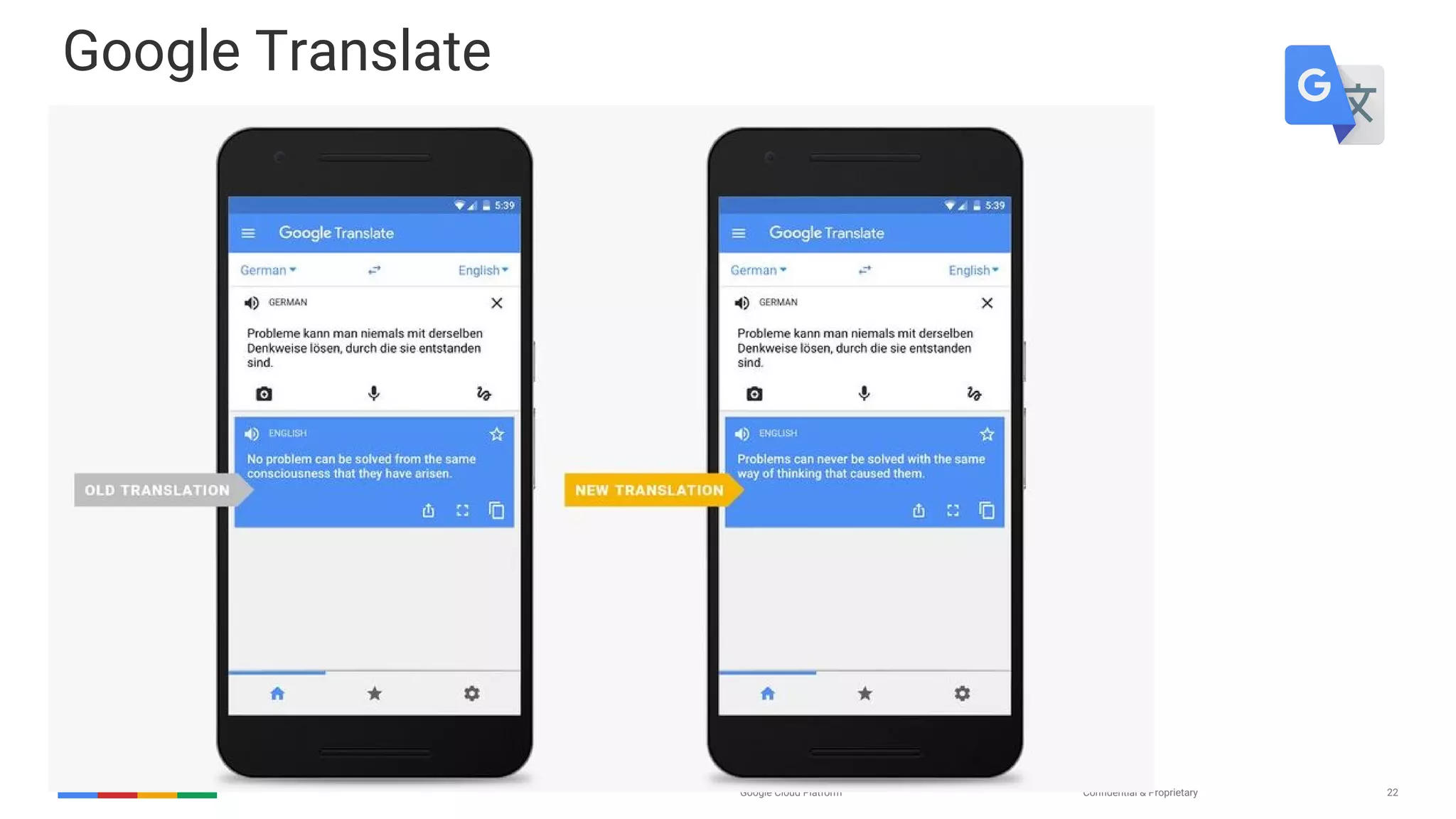
Google Translate
Confidential + Proprietary
Datatonic & you
PLACE IMAGE HERE
24
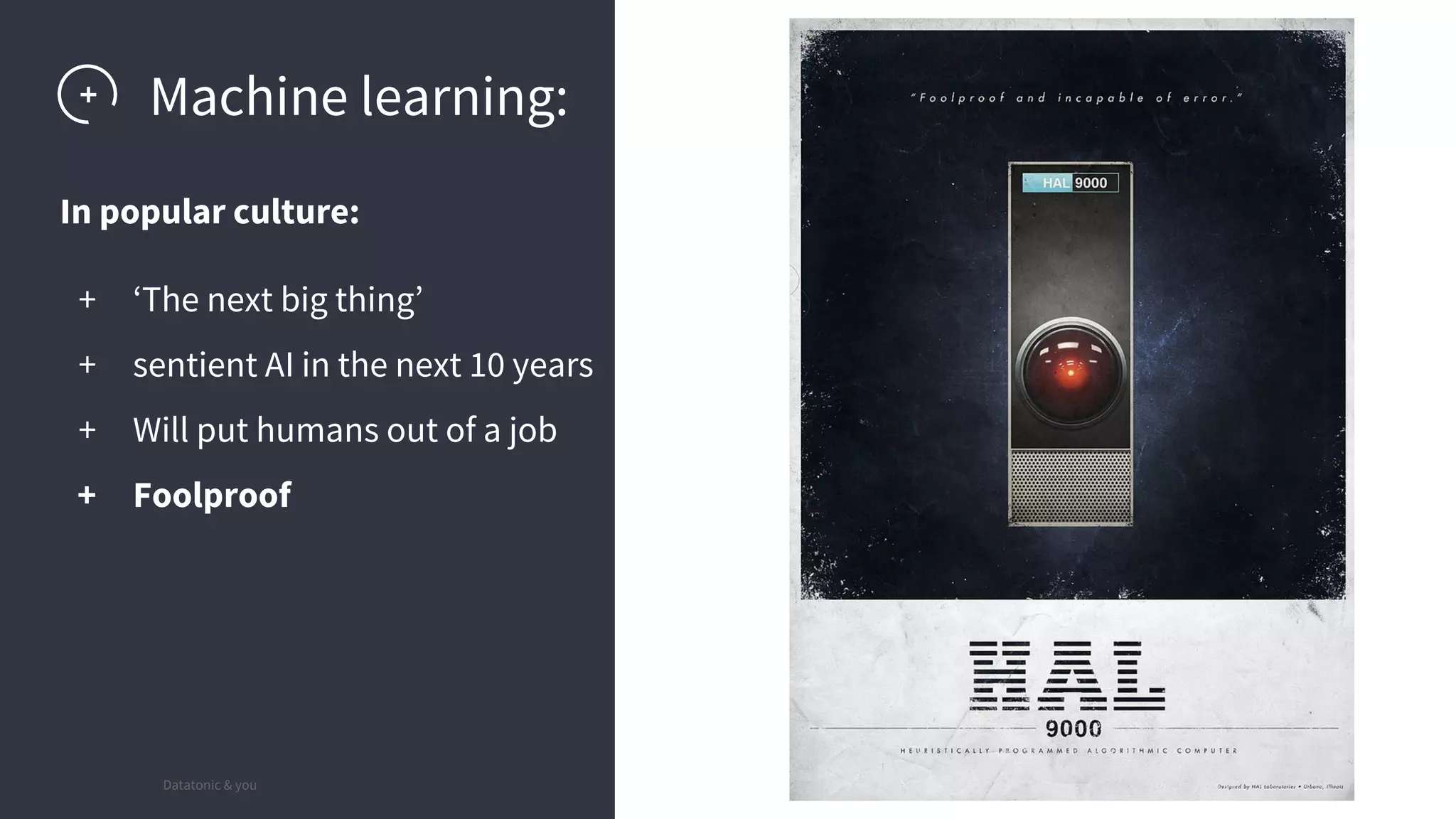
In popular culture:
+ ‘The next big thing’
+ sentient AI in the next 10 years
+ Will put humans out of a job
+ Foolproof
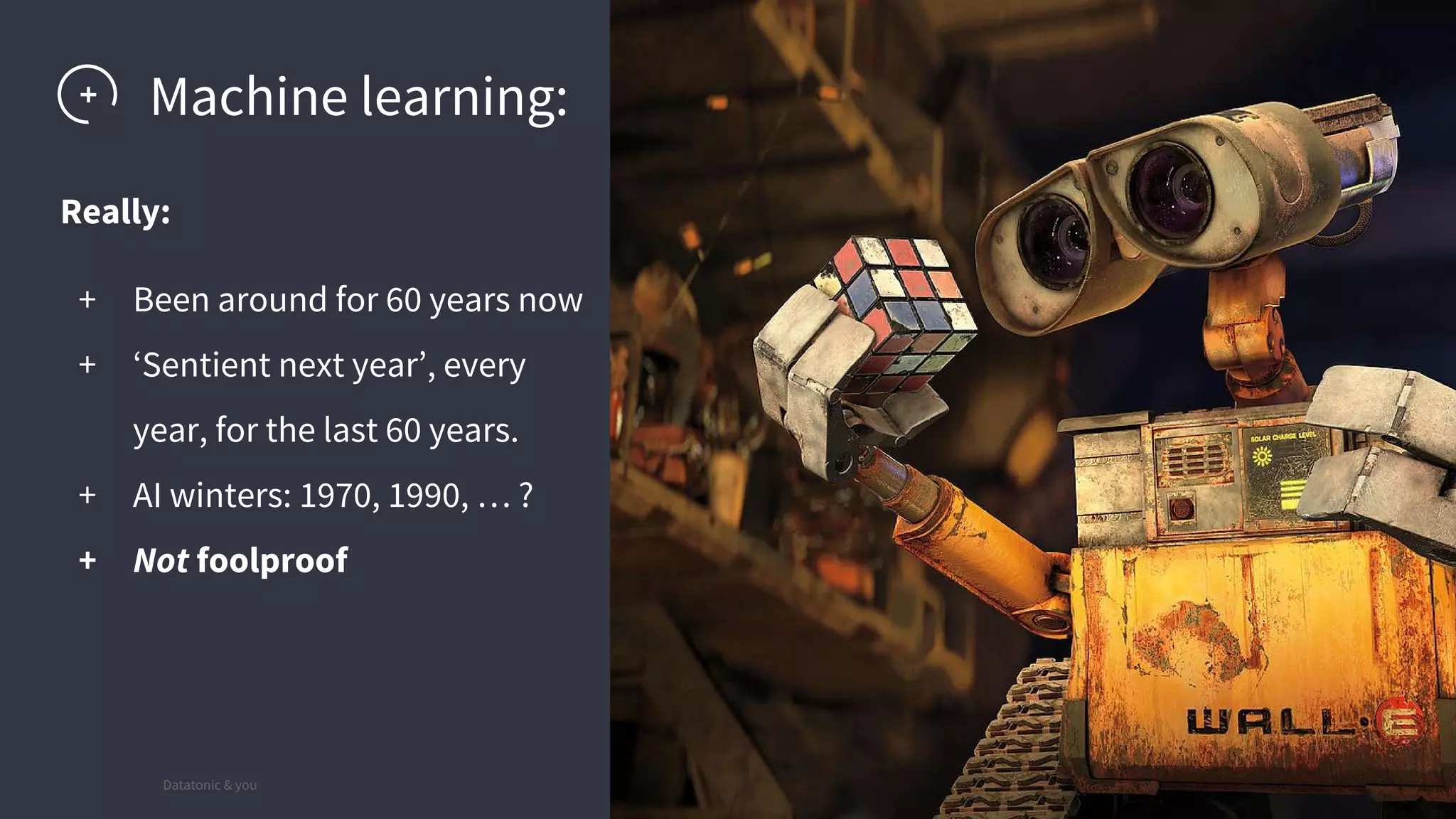
Machine learning:
Datatonic & you
PLACE IMAGE HERE
25
Really:
+ Been around for 60 years now
+ ‘Sentient next year’, every
year, for the last 60 years.
+ AI winters: 1970, 1990, … ?
+ Not foolproof
Machine learning:
26
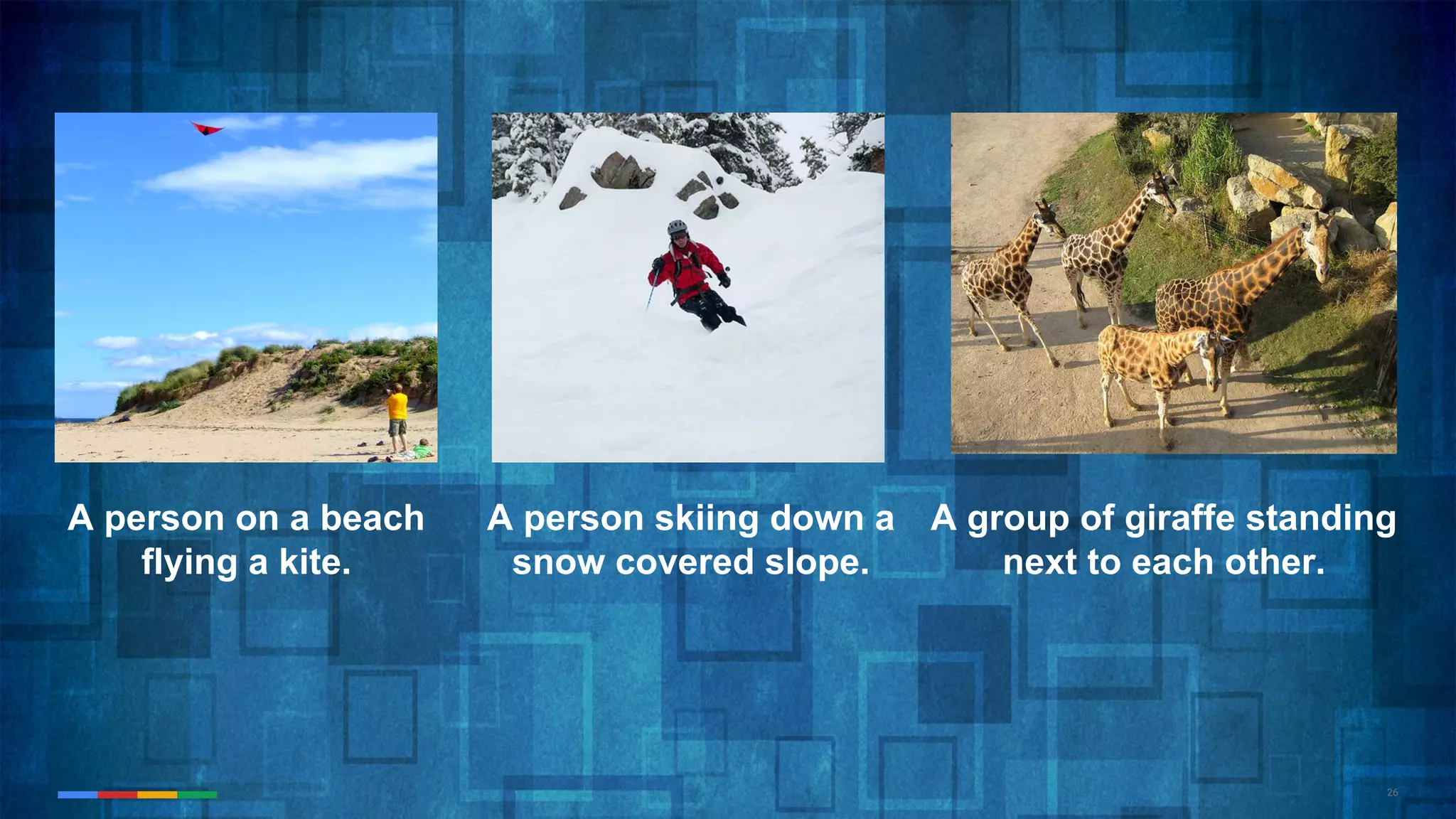
A person on a beach
flying a kite.
A person skiing down a
snow covered slope.
A group of giraffe standing
next to each other.
27
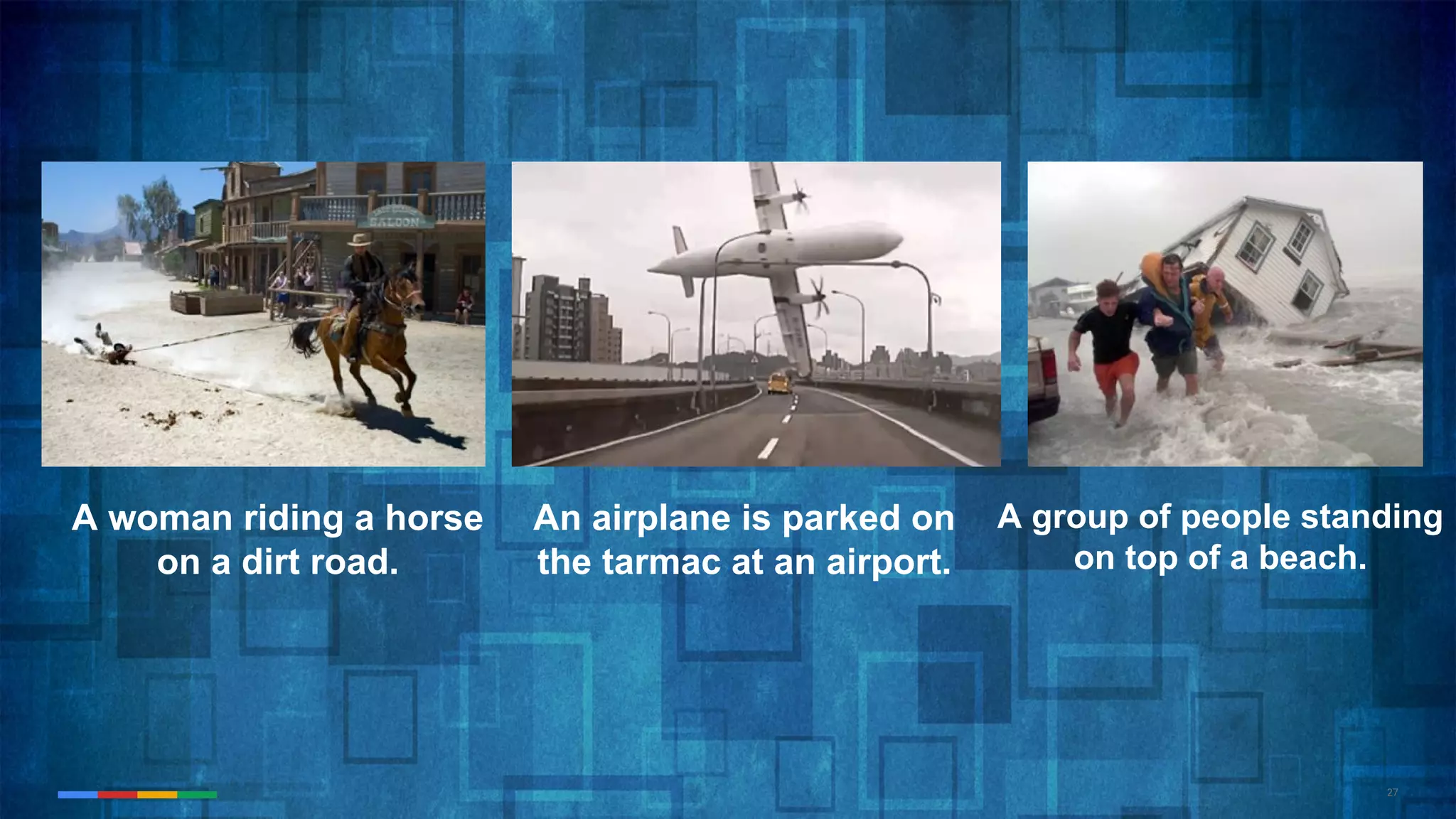
A woman riding a horse
on a dirt road.
An airplane is parked on
the tarmac at an airport.
A group of people standing
on top of a beach.
28
29
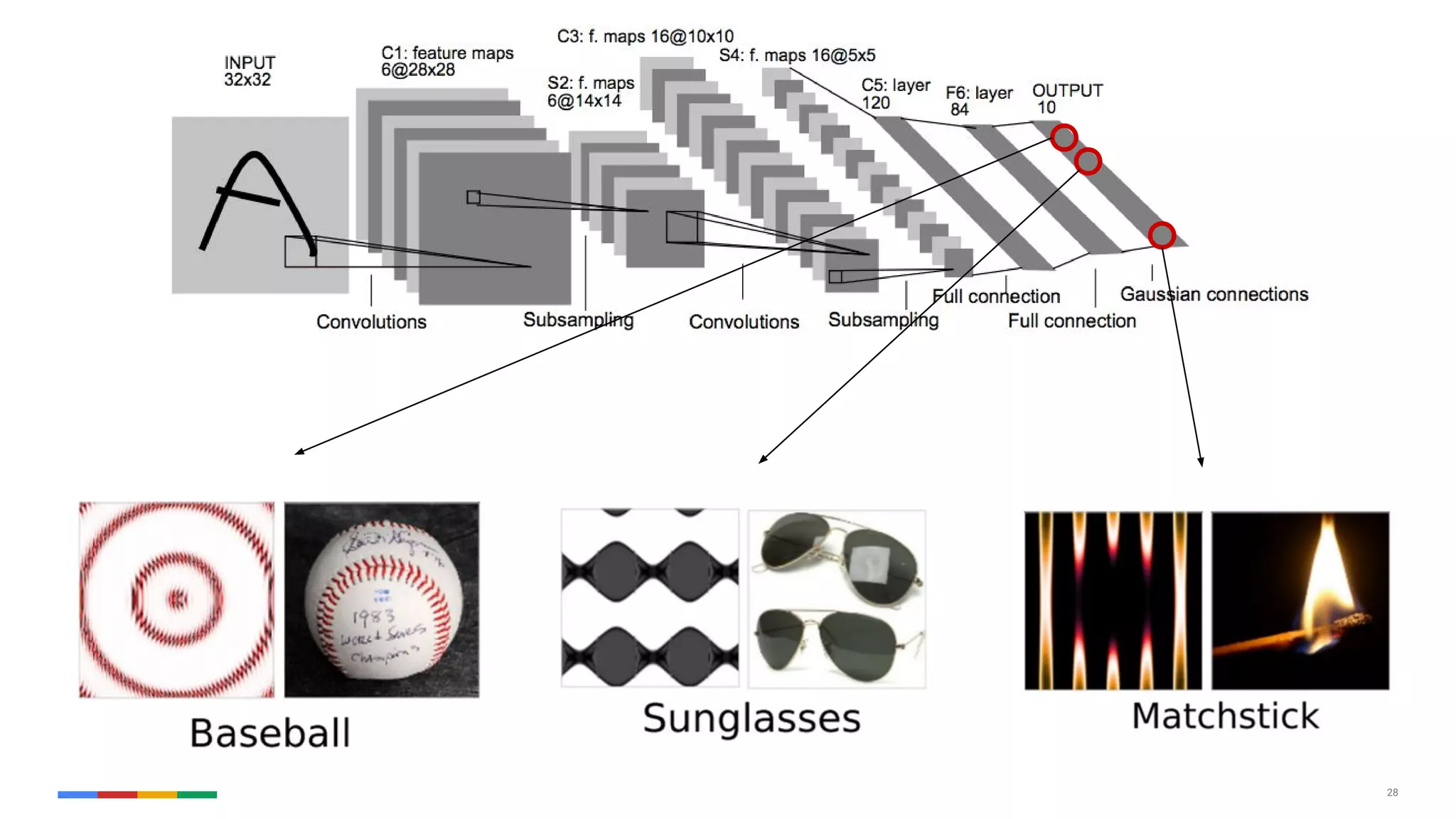
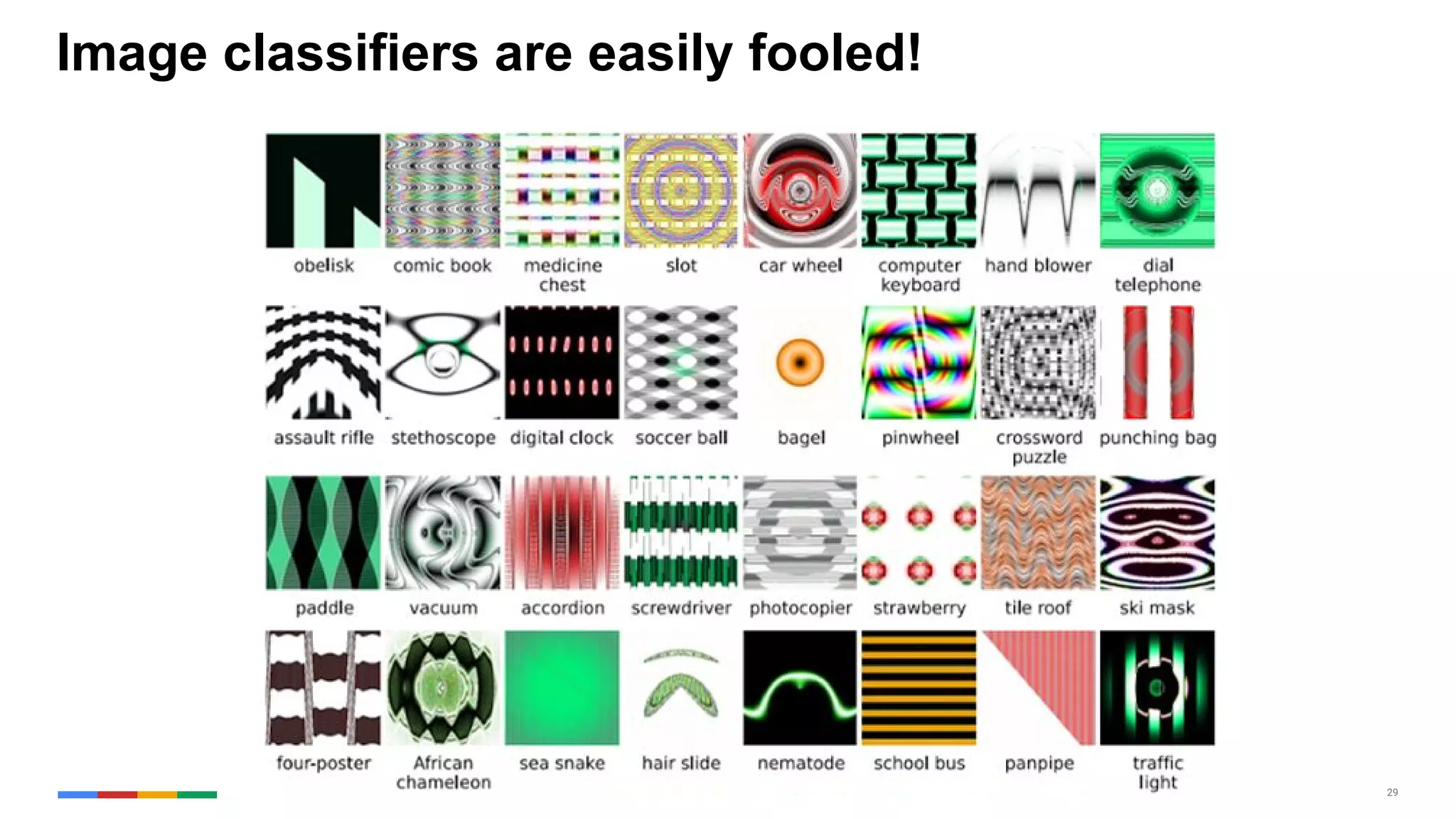
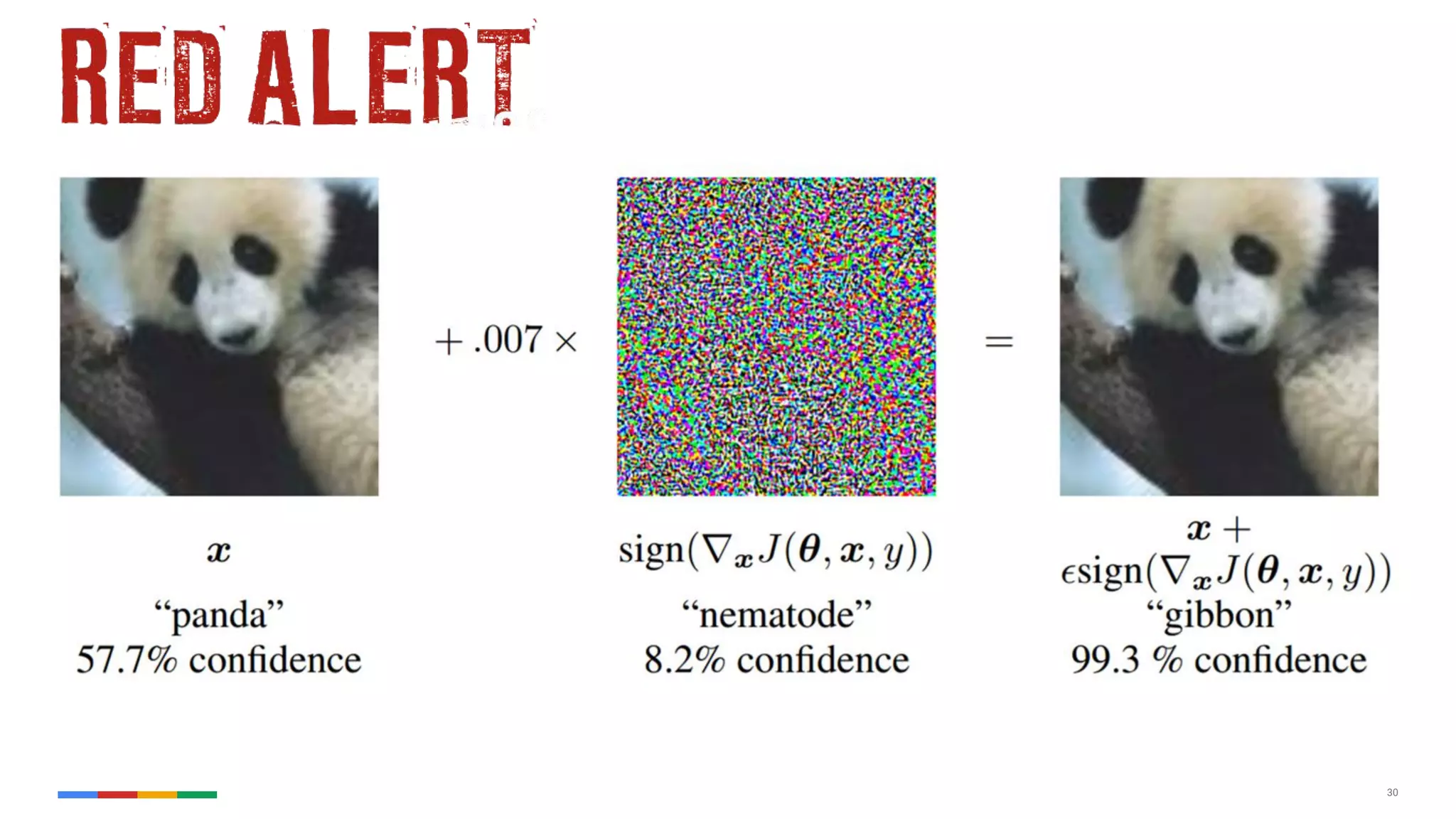
Image classifiers are easily fooled!
30
31
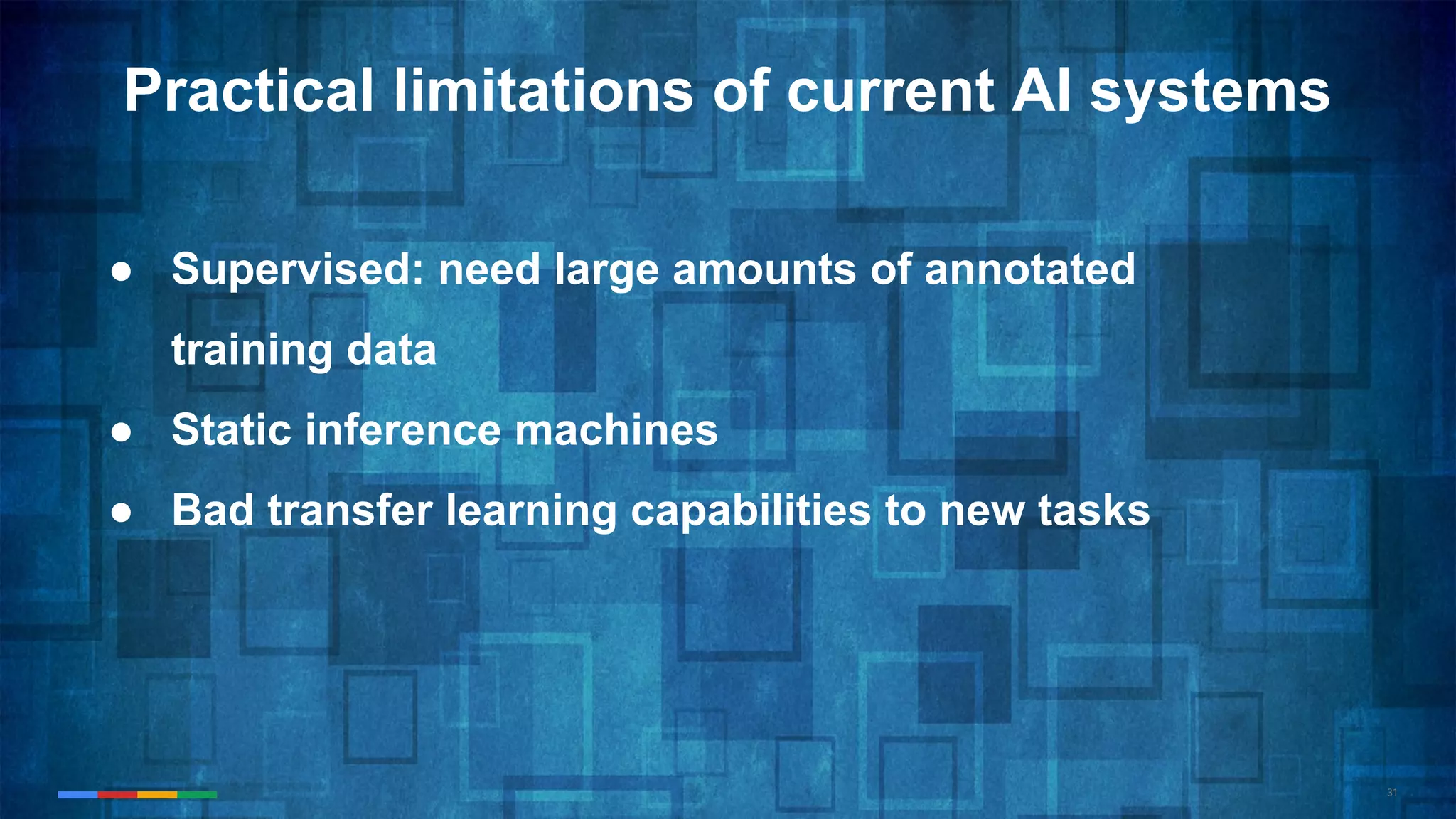
● Supervised: need large amounts of annotated
training data
● Static inference machines
● Bad transfer learning capabilities to new tasks
Practical limitations of current AI systems
32
Introduction to
Reinforcement Learning
33
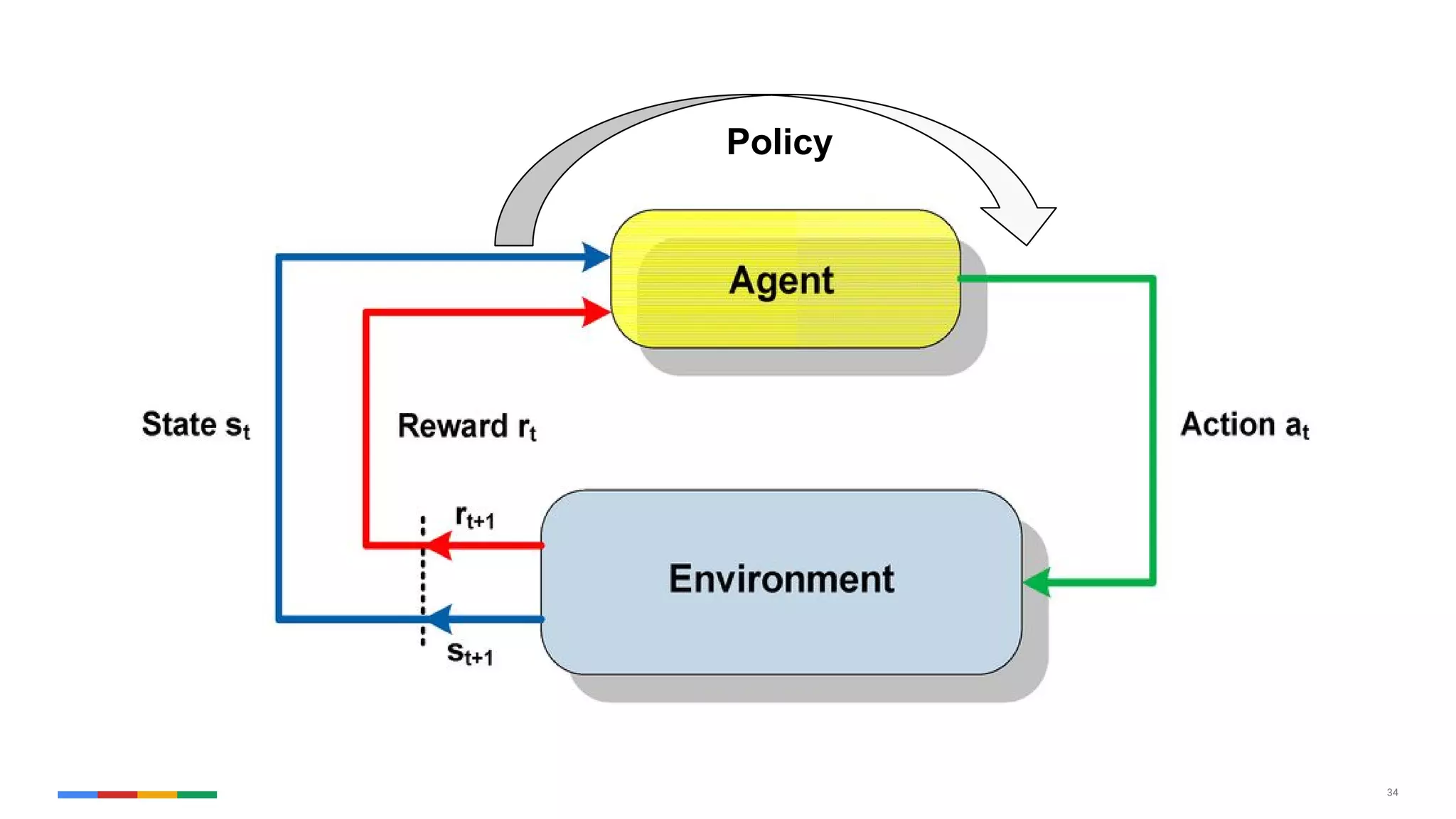
34
Policy
35
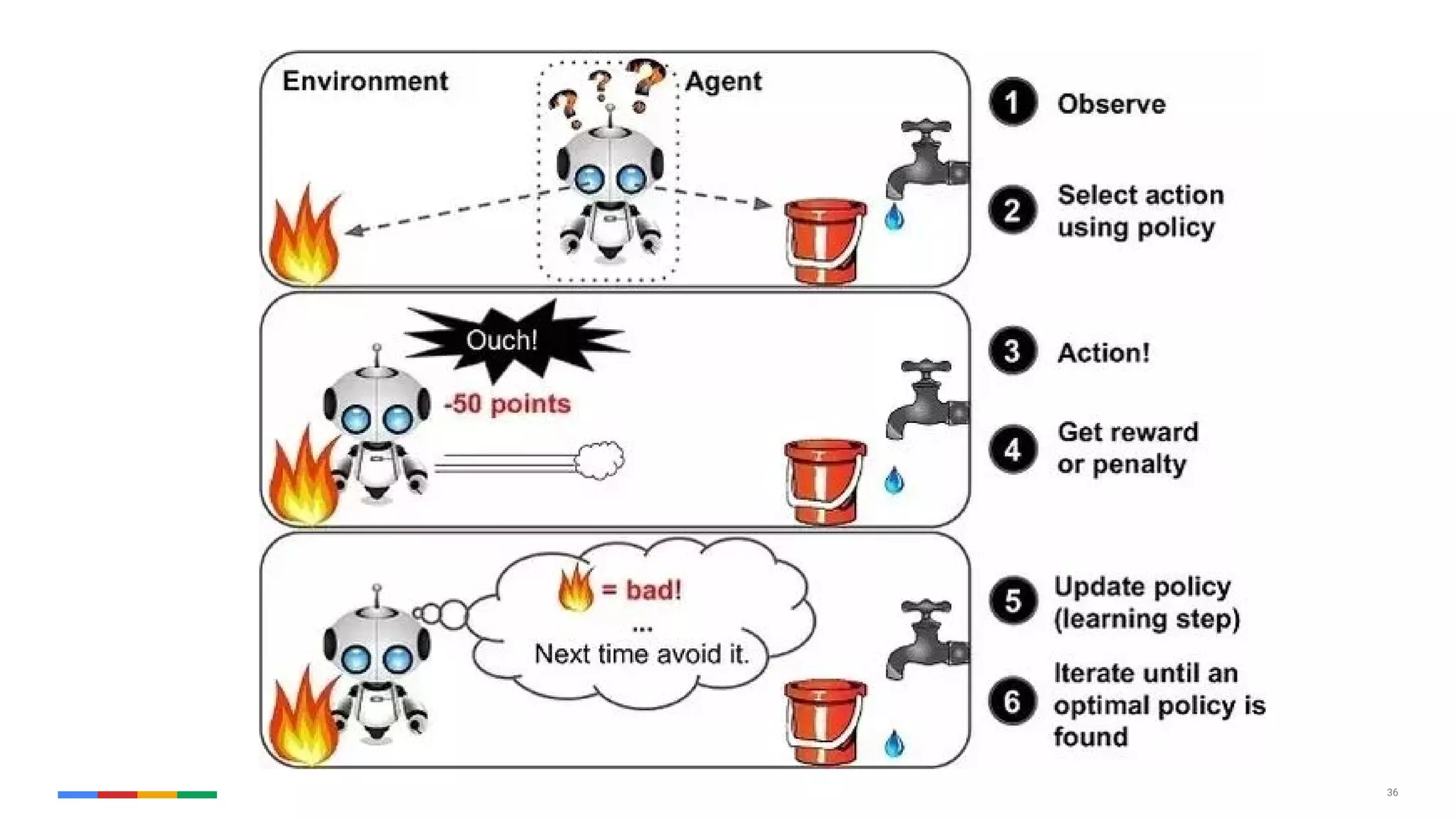
Policy
36
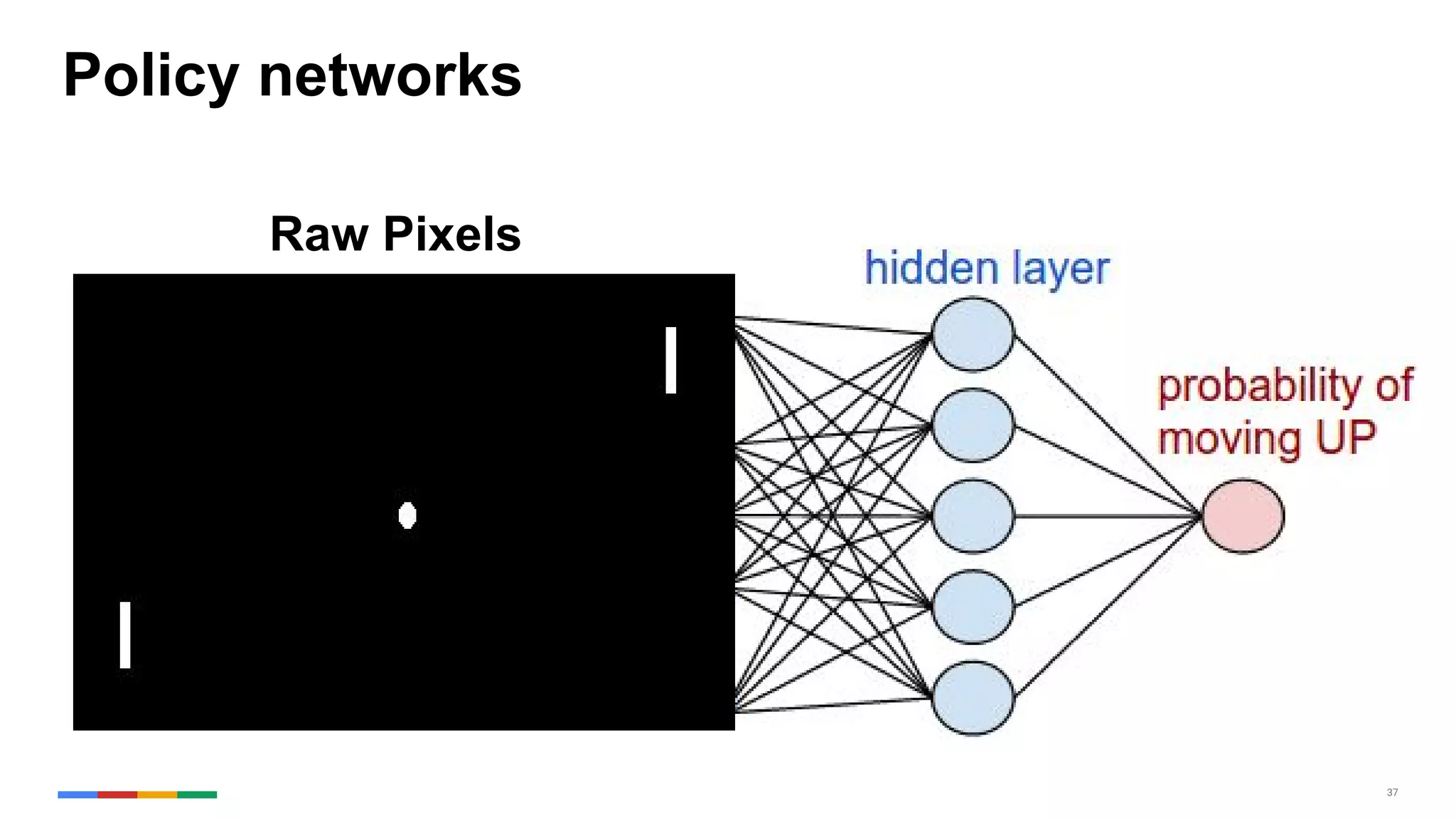
37
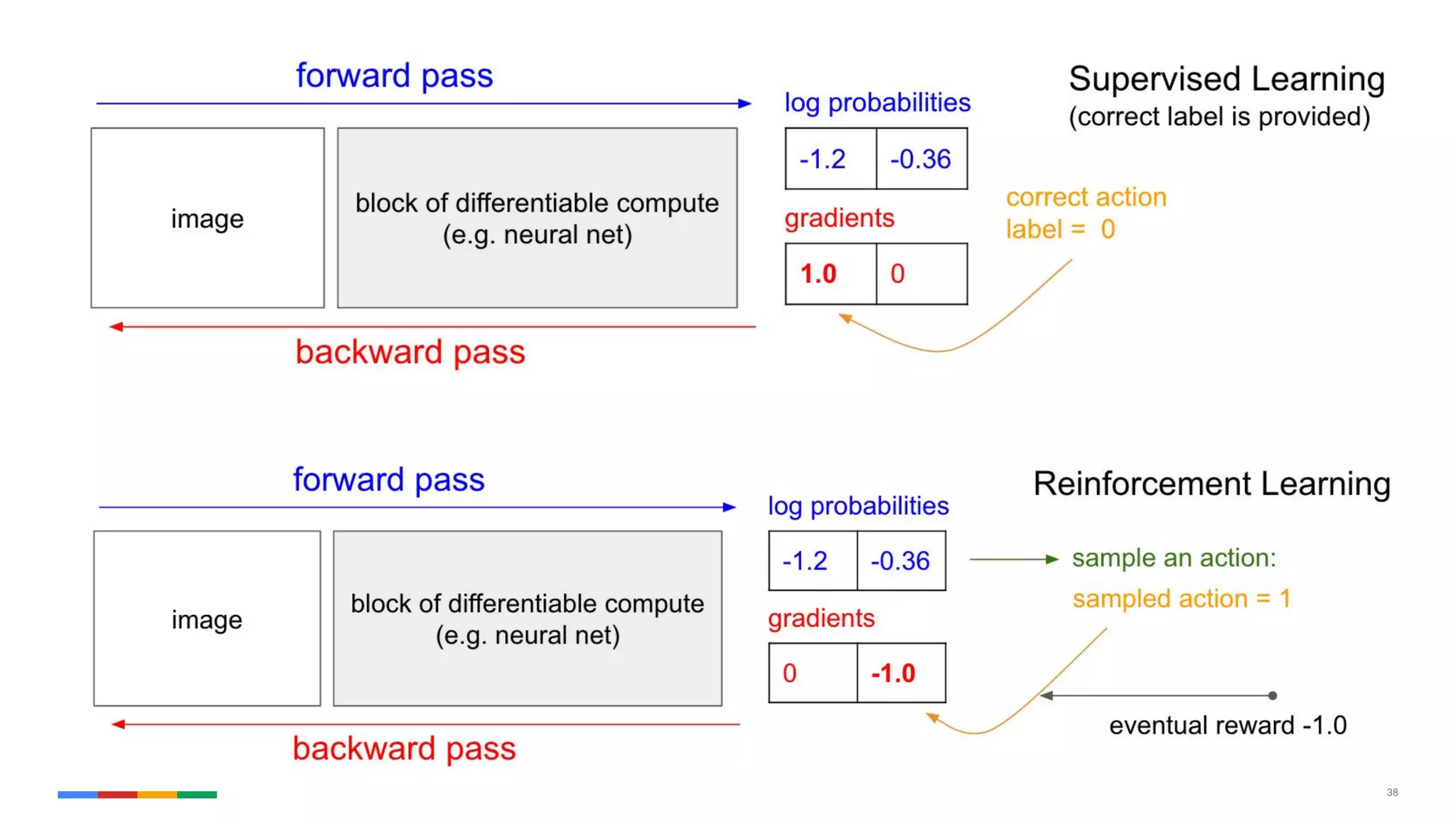
Policy networks
Raw Pixels
38
39
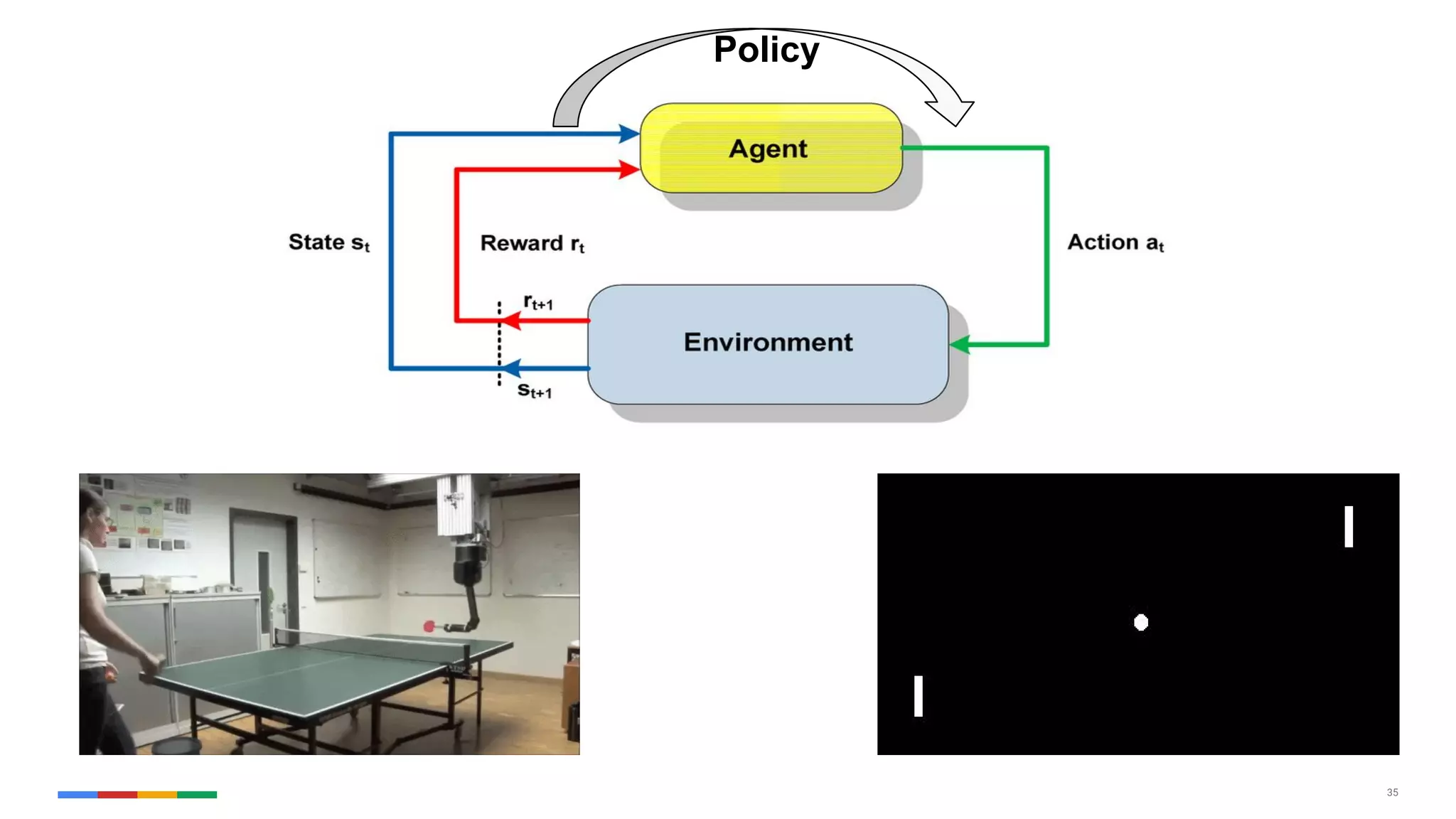
Policy Gradients
Run a policy for a while. See what actions led to high rewards. Increase their probability.
40
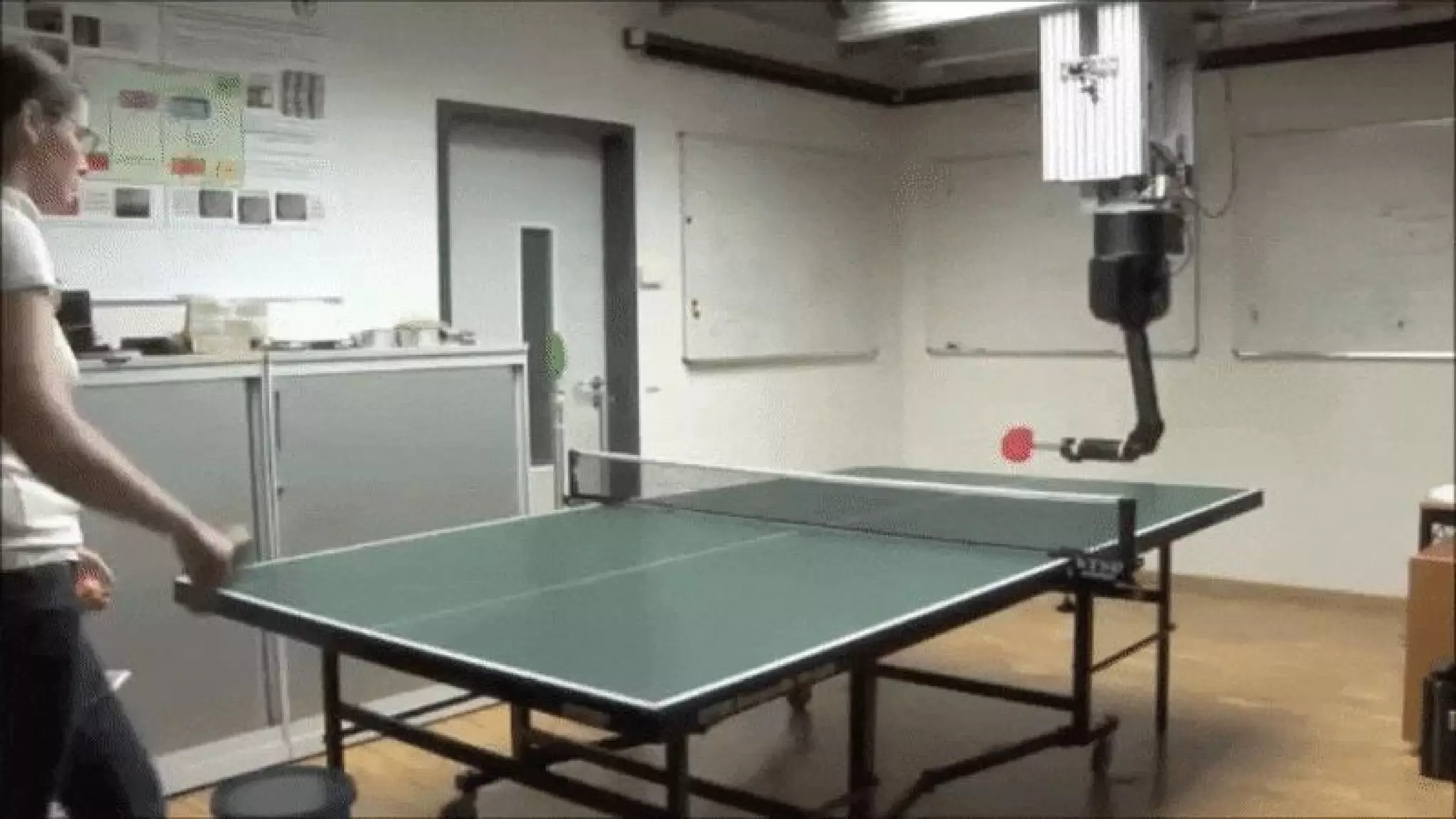
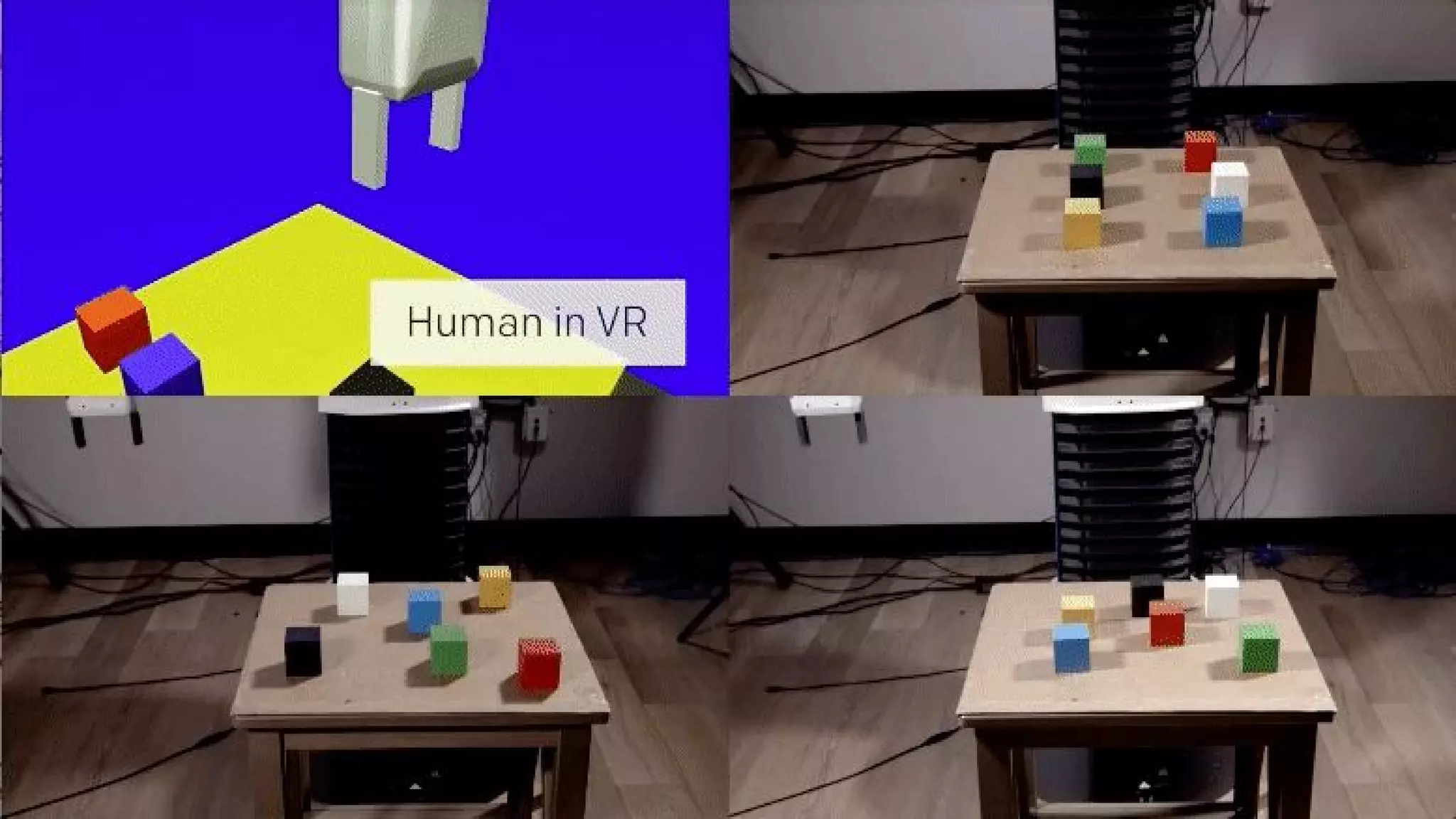
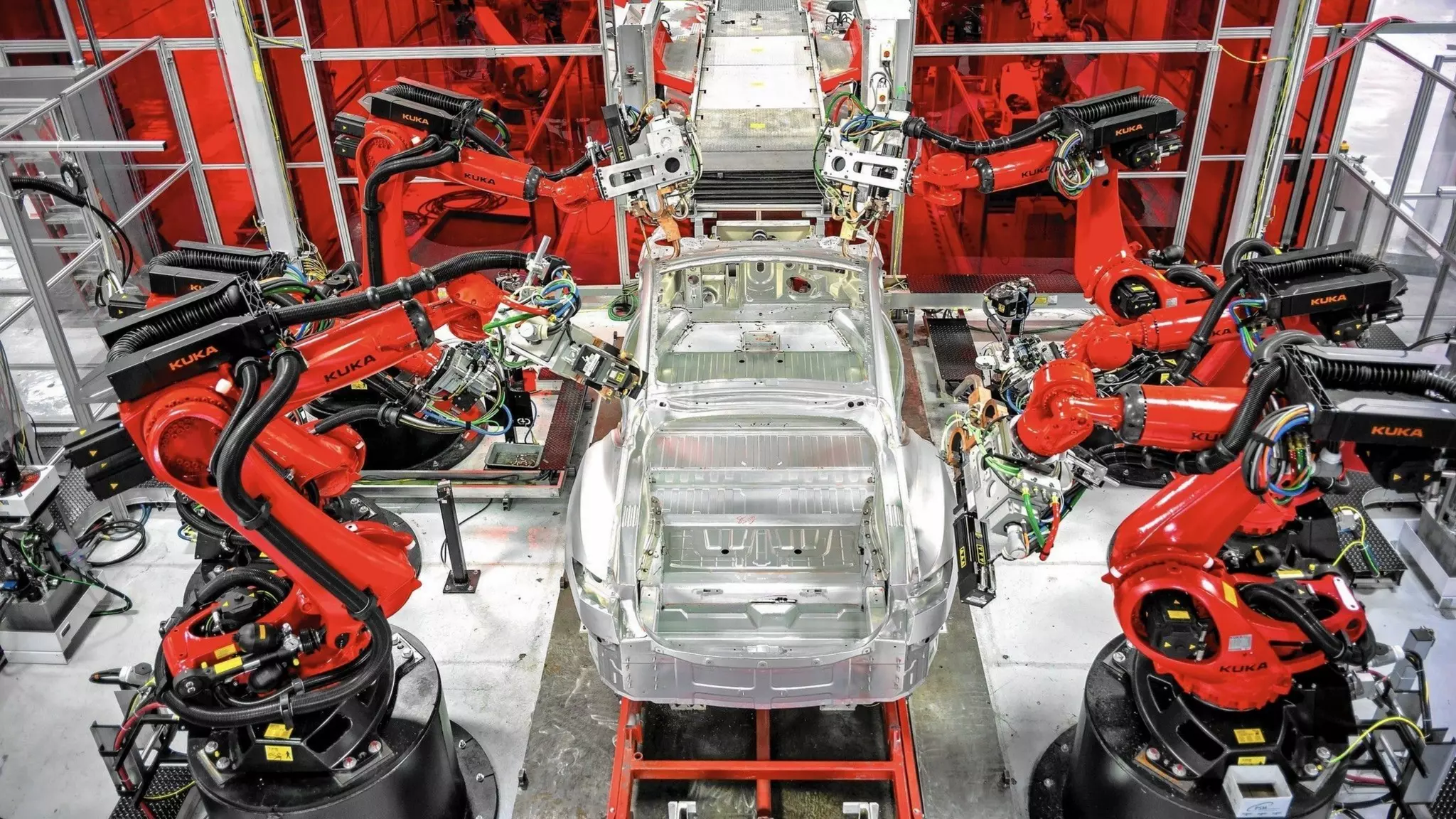
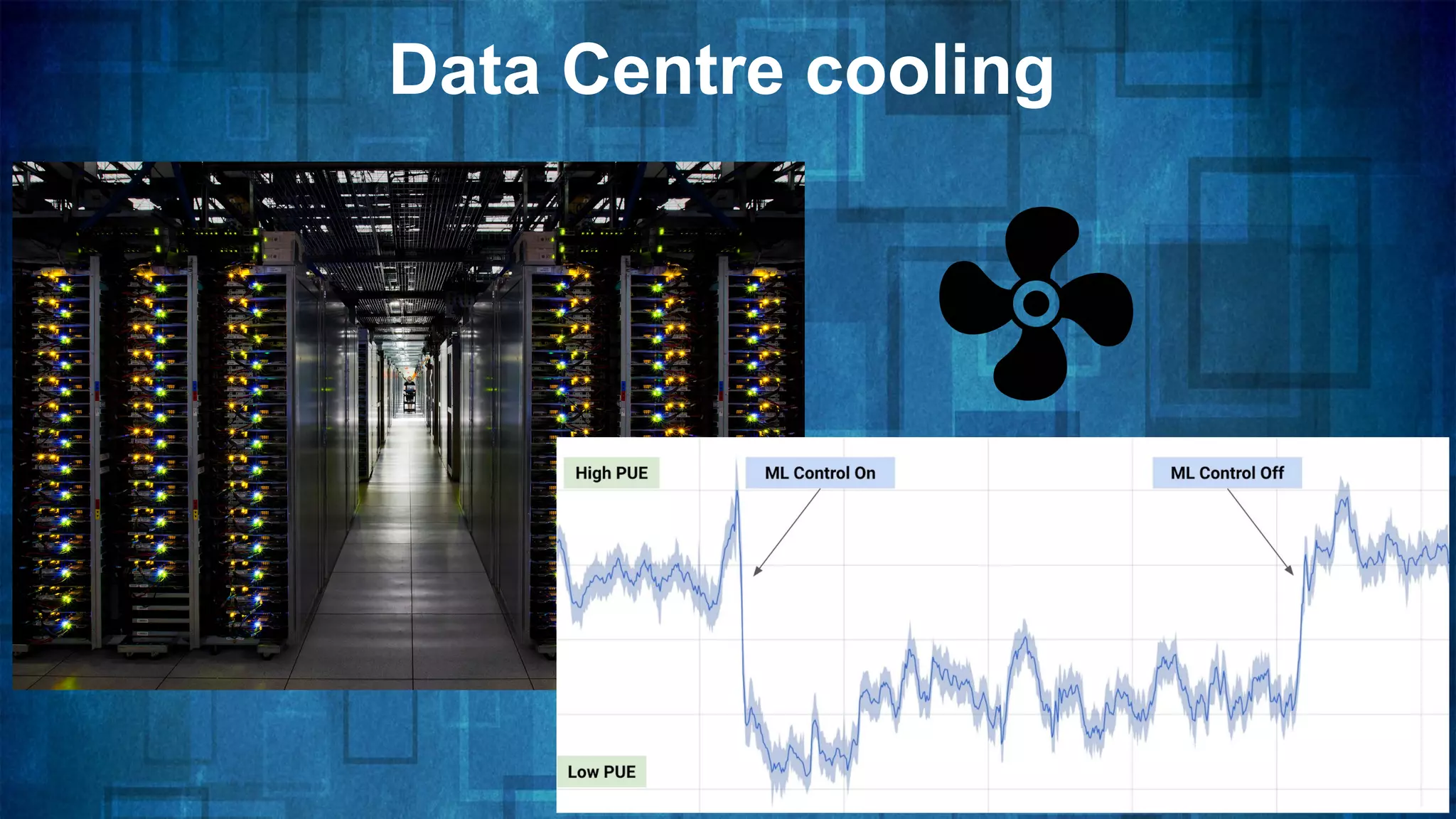
Practical Applications of RL
41
42
Data Centre cooling
Confidential + Proprietary
46
Chess branching factor ~ 35
47
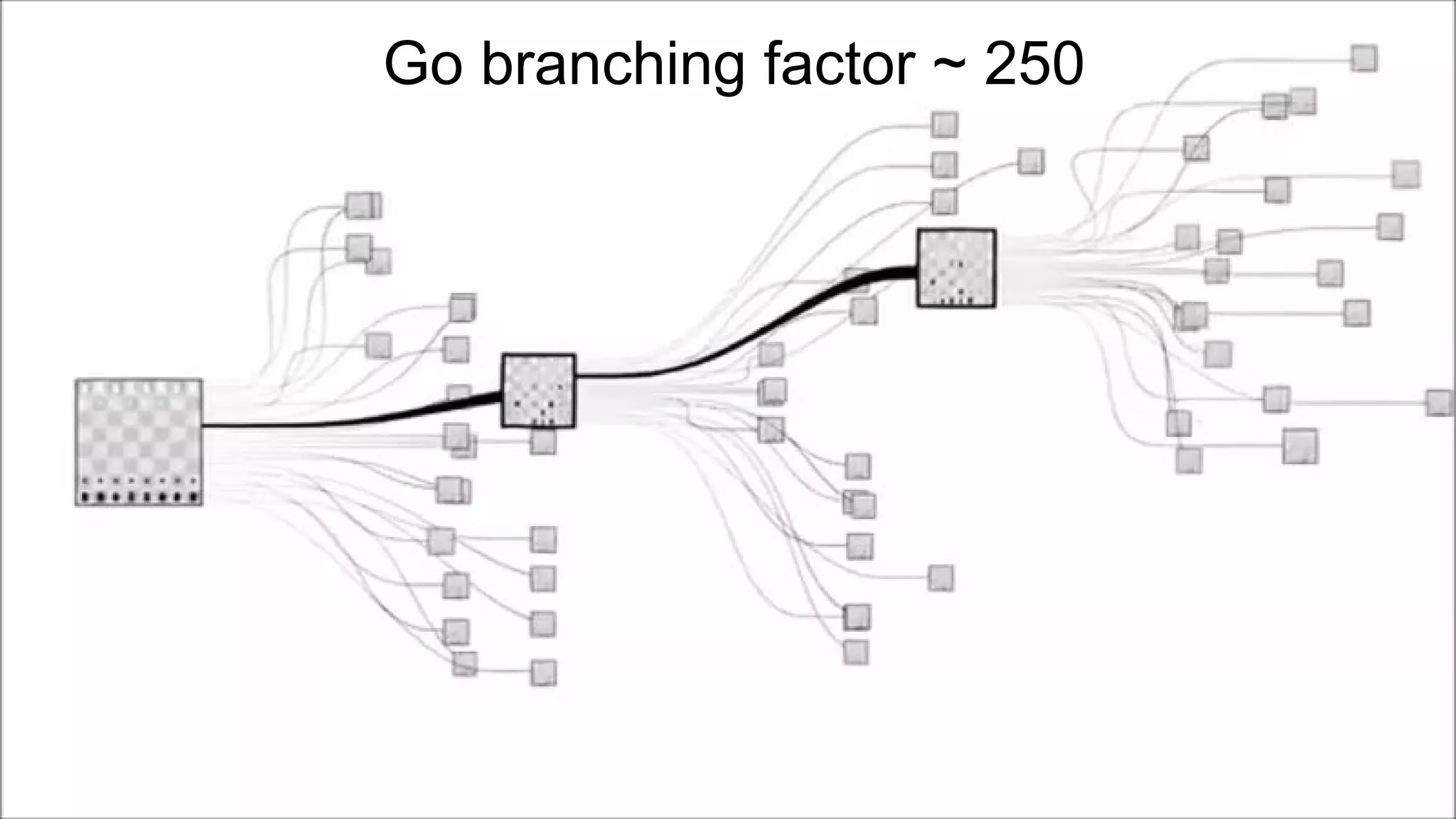
Go branching factor ~ 250
48
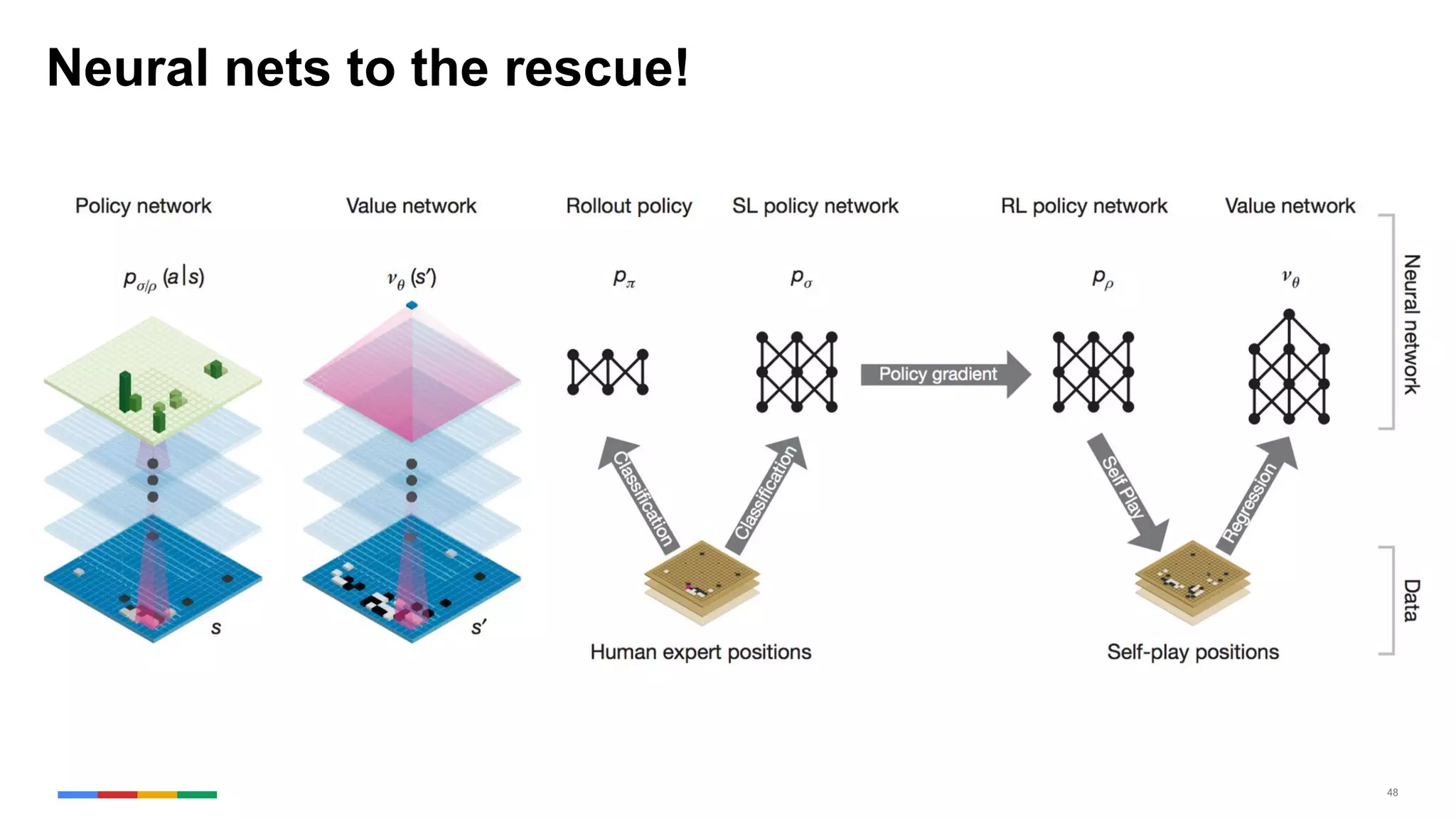
Neural nets to the rescue!
49
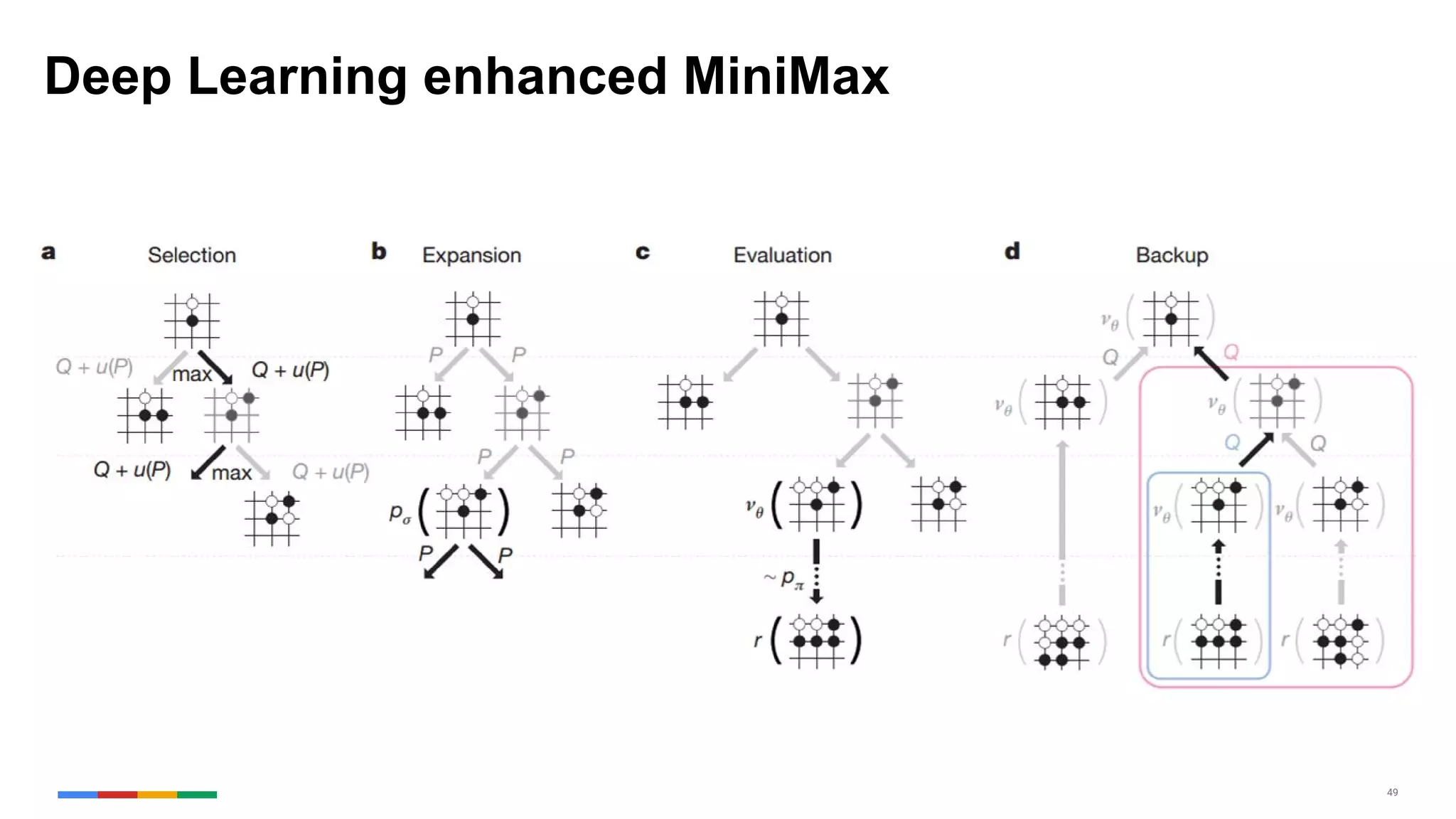
Deep Learning enhanced MiniMax
50
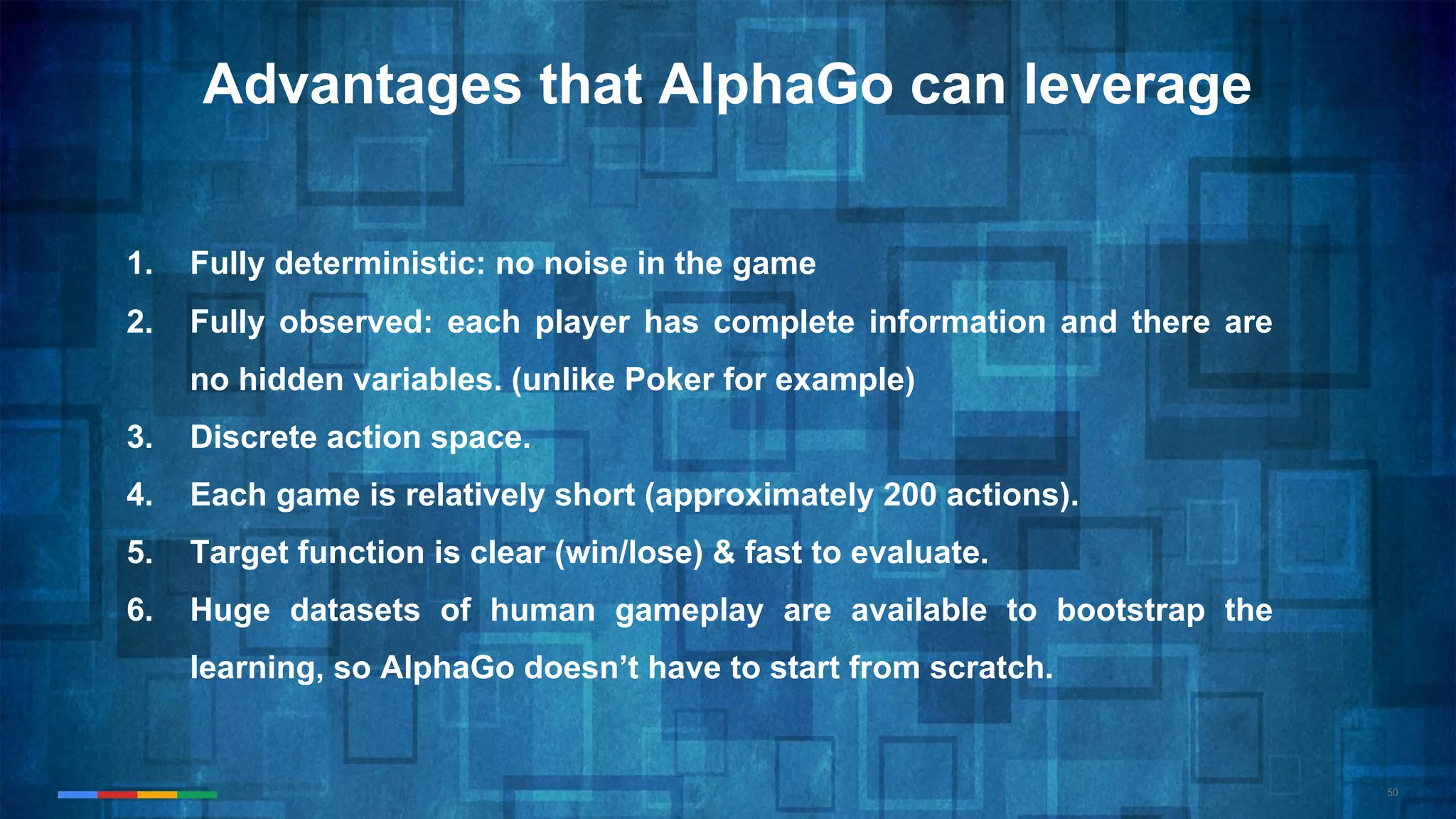
Advantages that AlphaGo can leverage
1. Fully deterministic: no noise in the game
2. Fully observed: each player has complete information and there are
no hidden variables. (unlike Poker for example)
3. Discrete action space.
4. Each game is relatively short (approximately 200 actions).
5. Target function is clear (win/lose) & fast to evaluate.
6. Huge datasets of human gameplay are available to bootstrap the
learning, so AlphaGo doesn’t have to start from scratch.
51
52
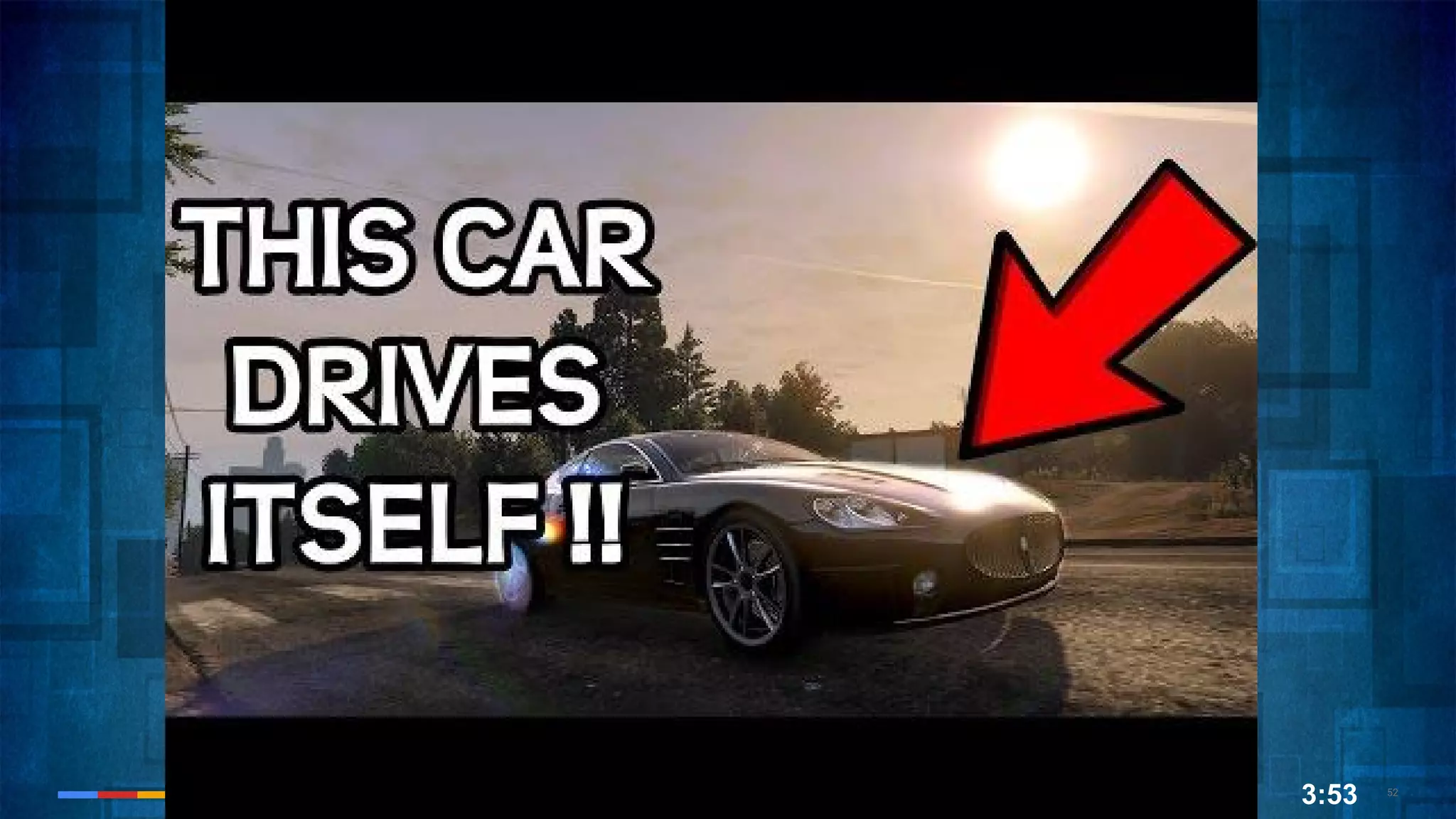
3:53
53
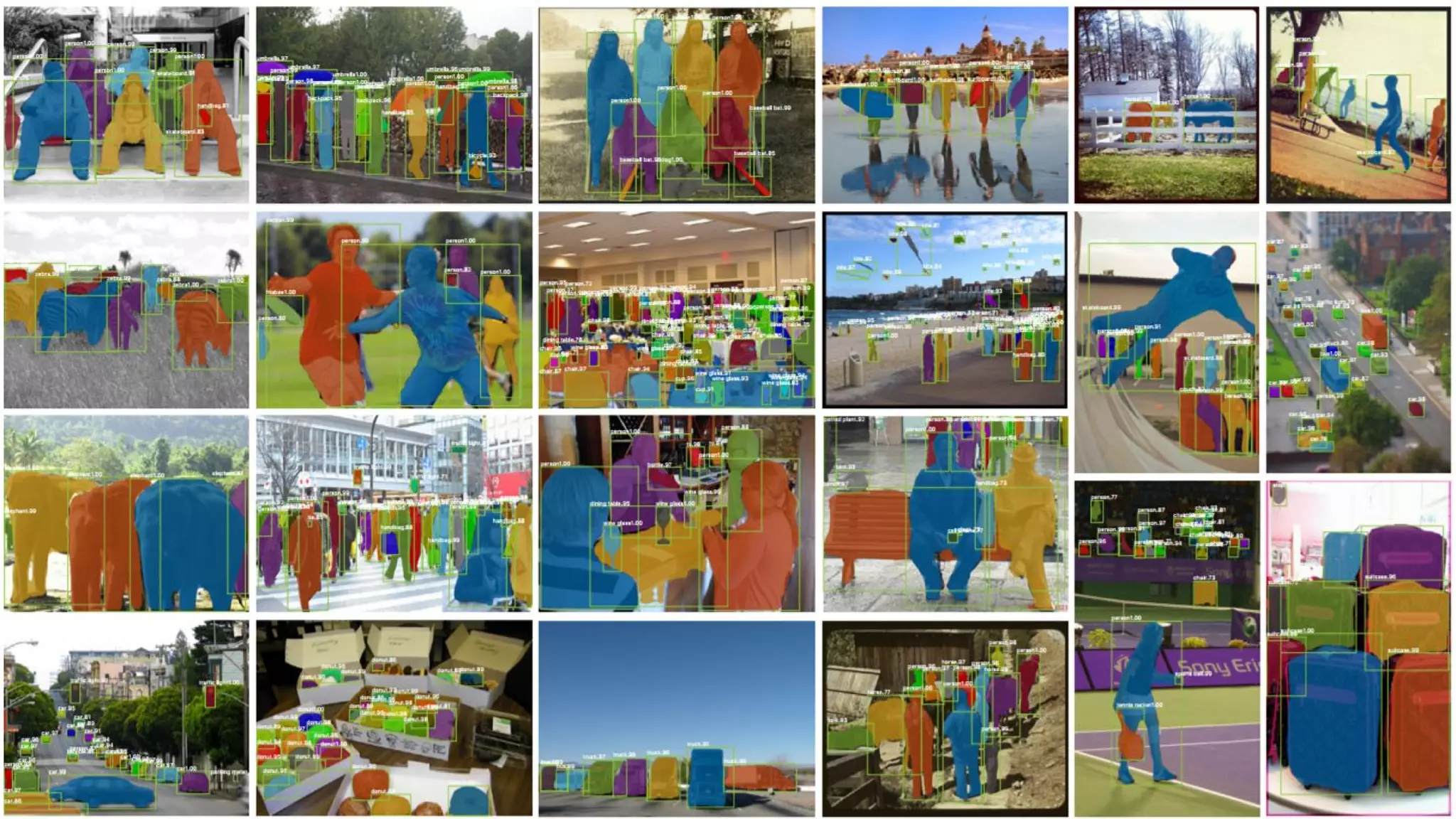
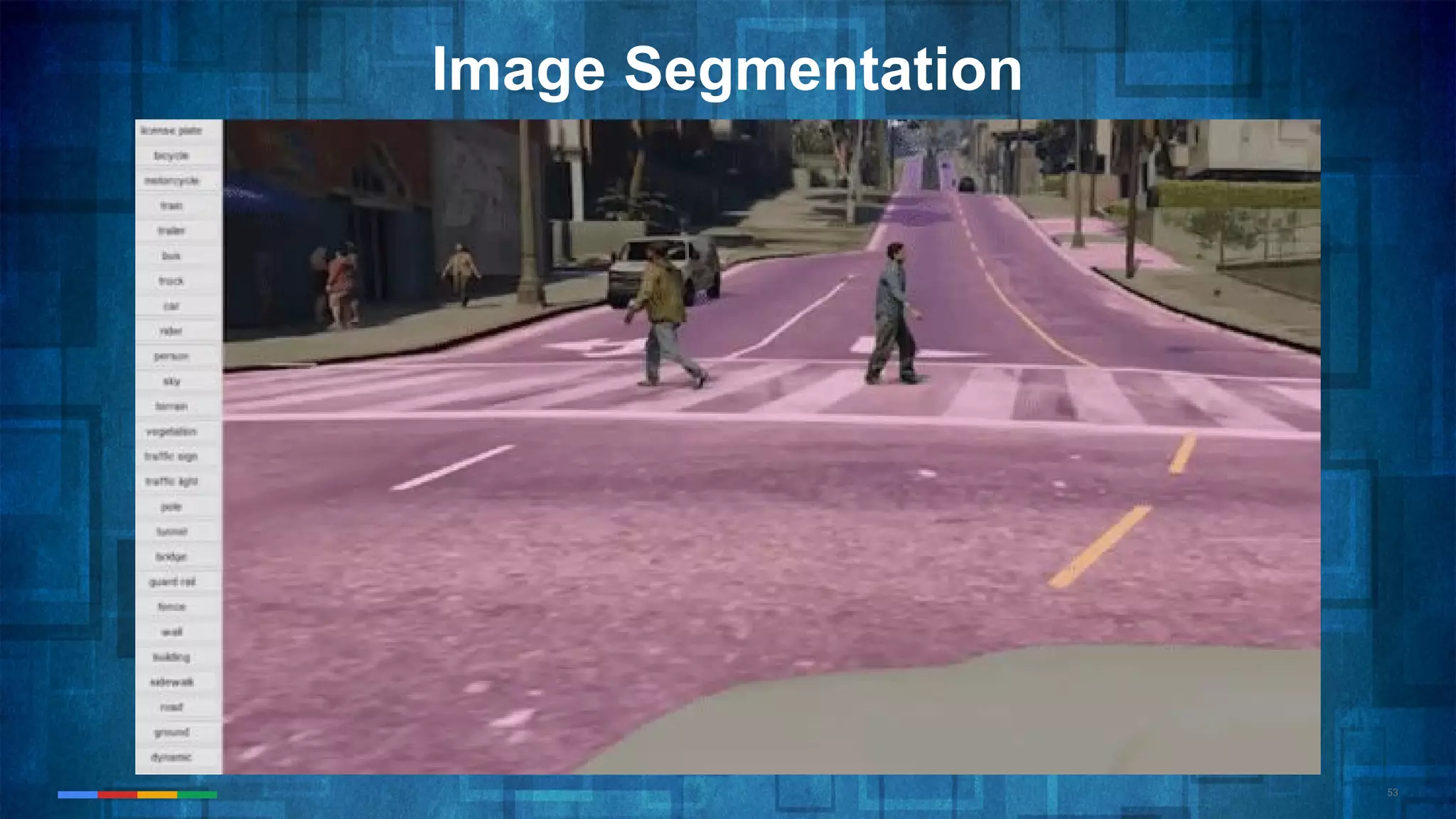
Image Segmentation
54
Deepdrive in GTA V
55
Open AI Universe
Universe Starter Agent
56
Problems in
Reinforcement Learning
57
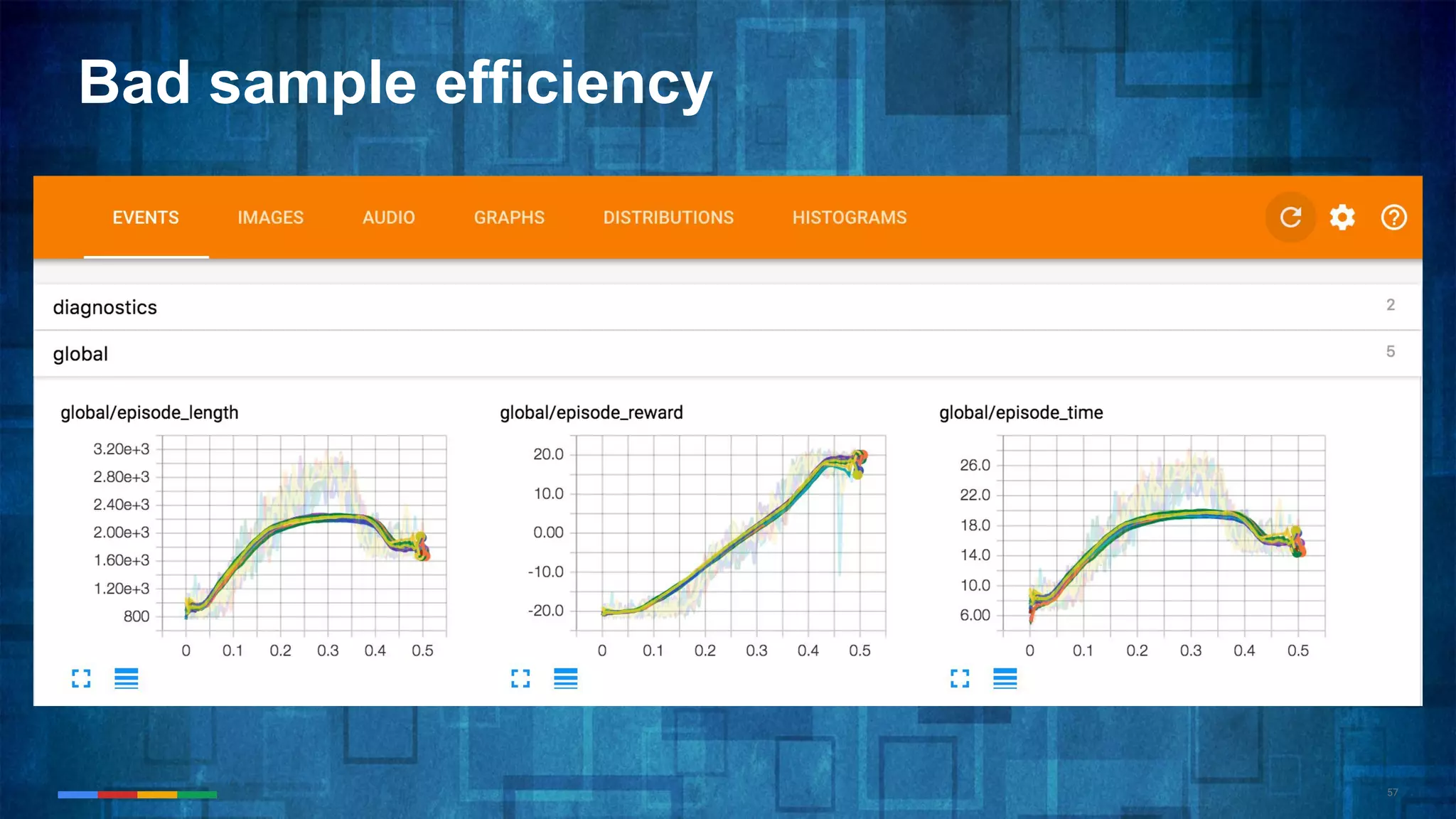
Bad sample efficiency
58
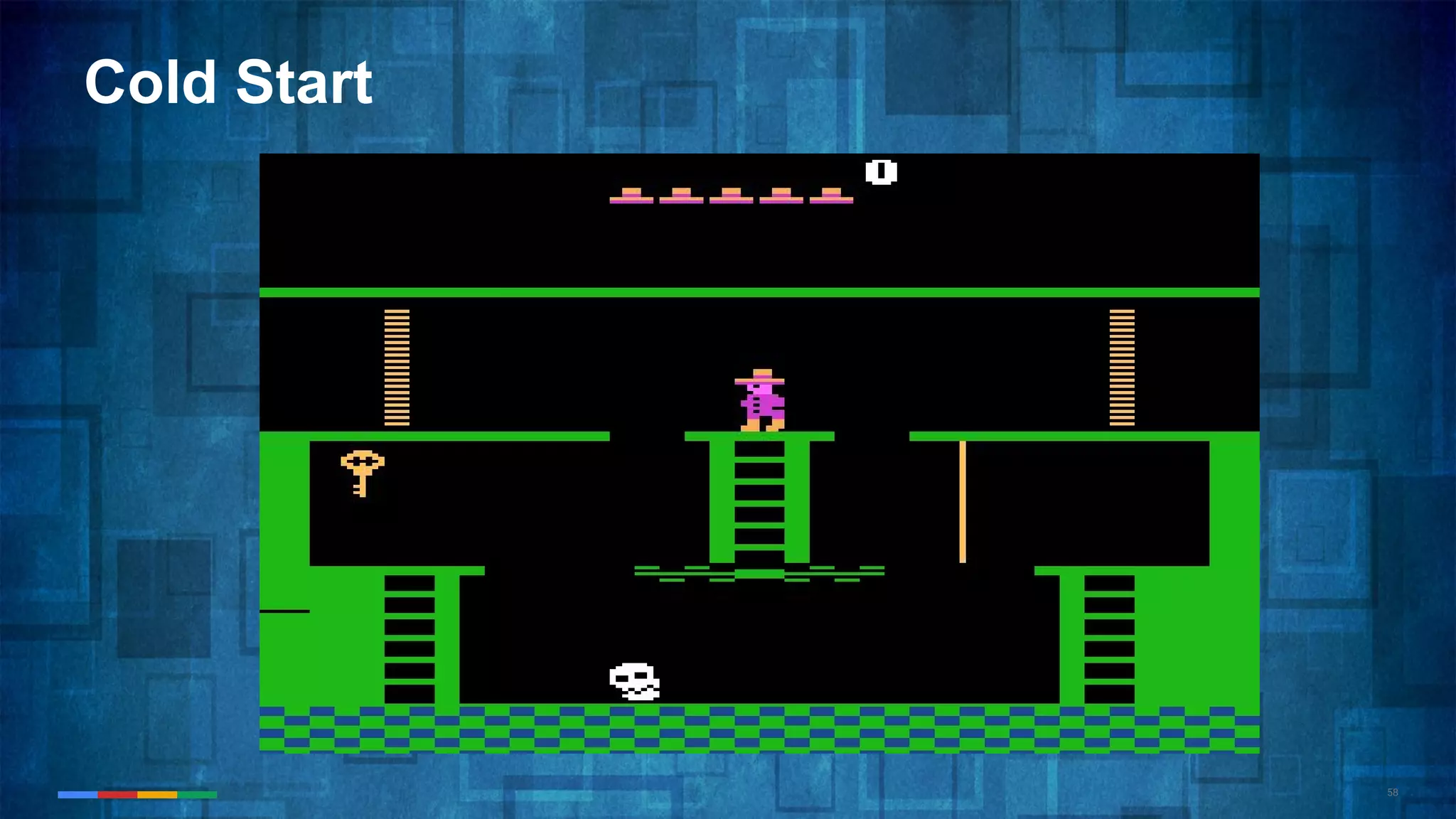
Cold Start
59
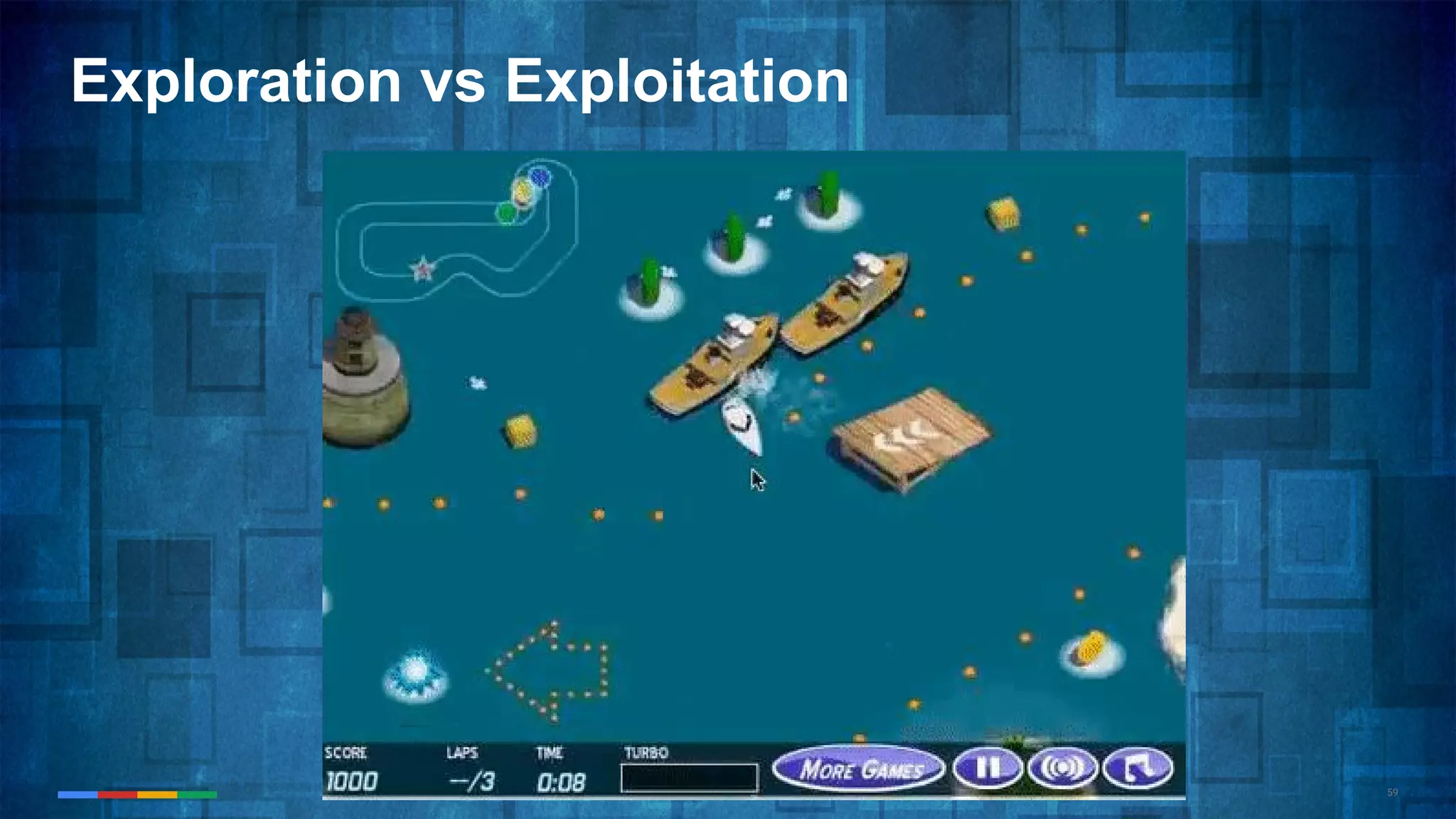
Exploration vs Exploitation
60
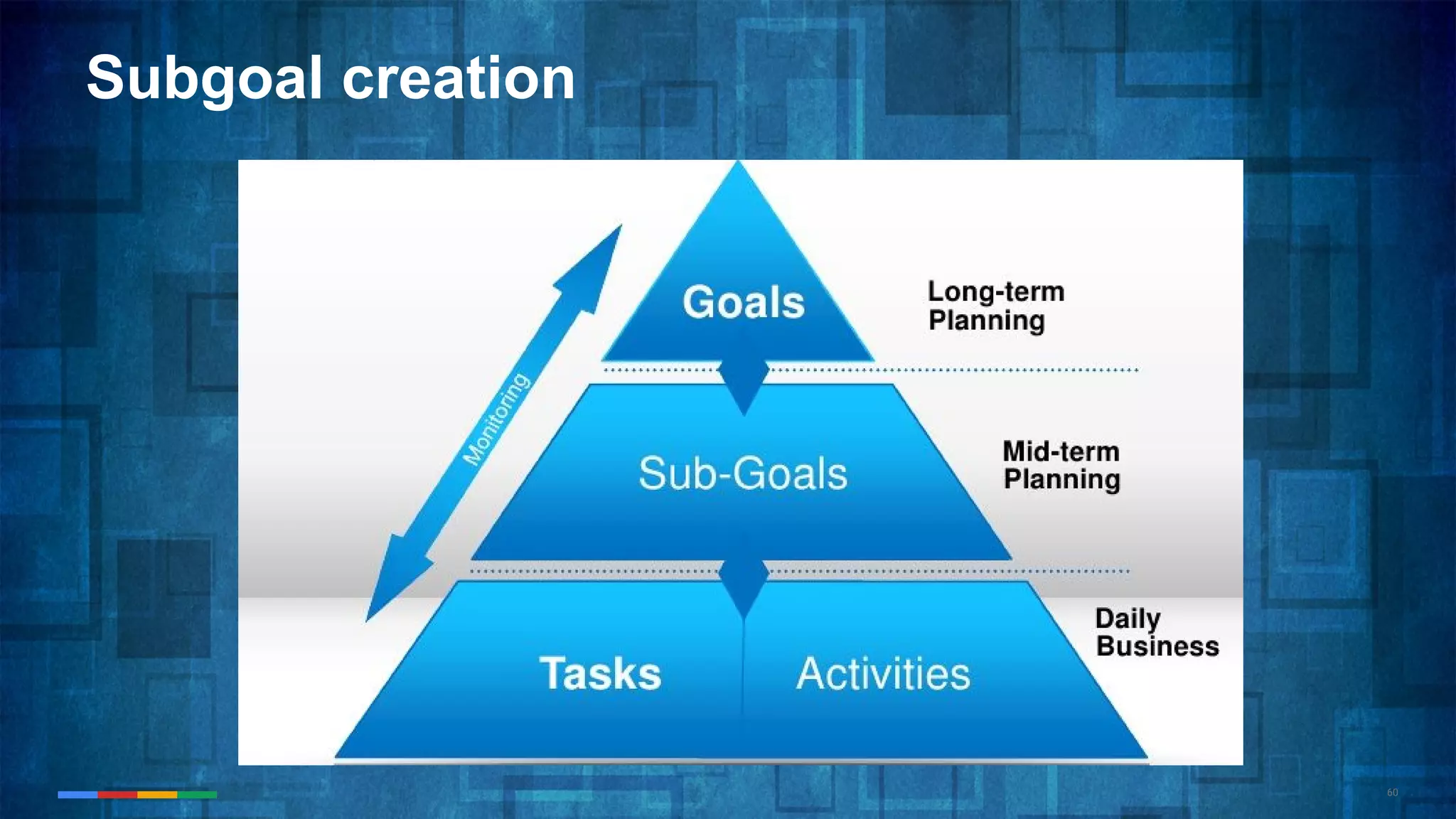
Subgoal creation
61
Promising Research
62
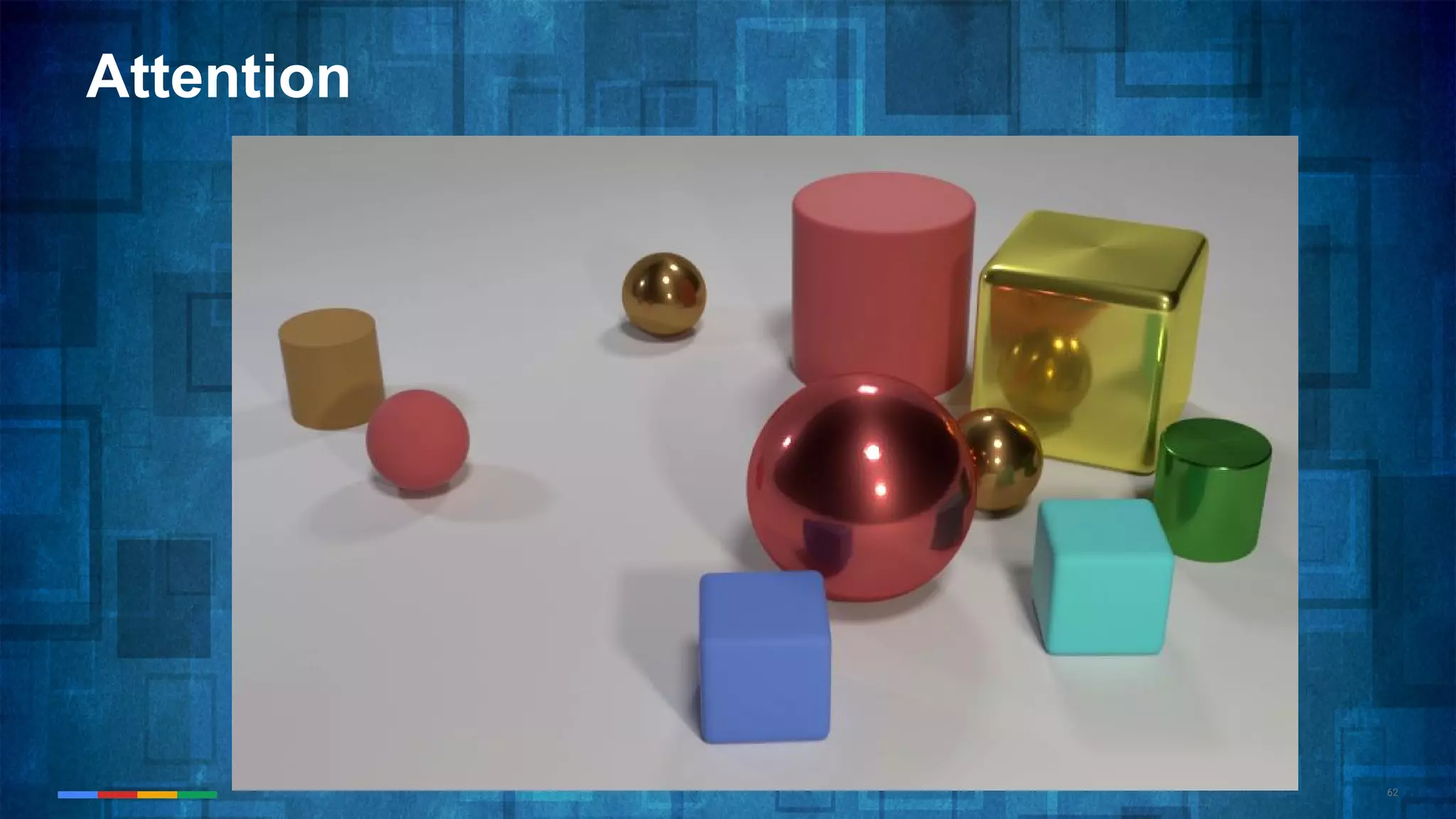
Attention
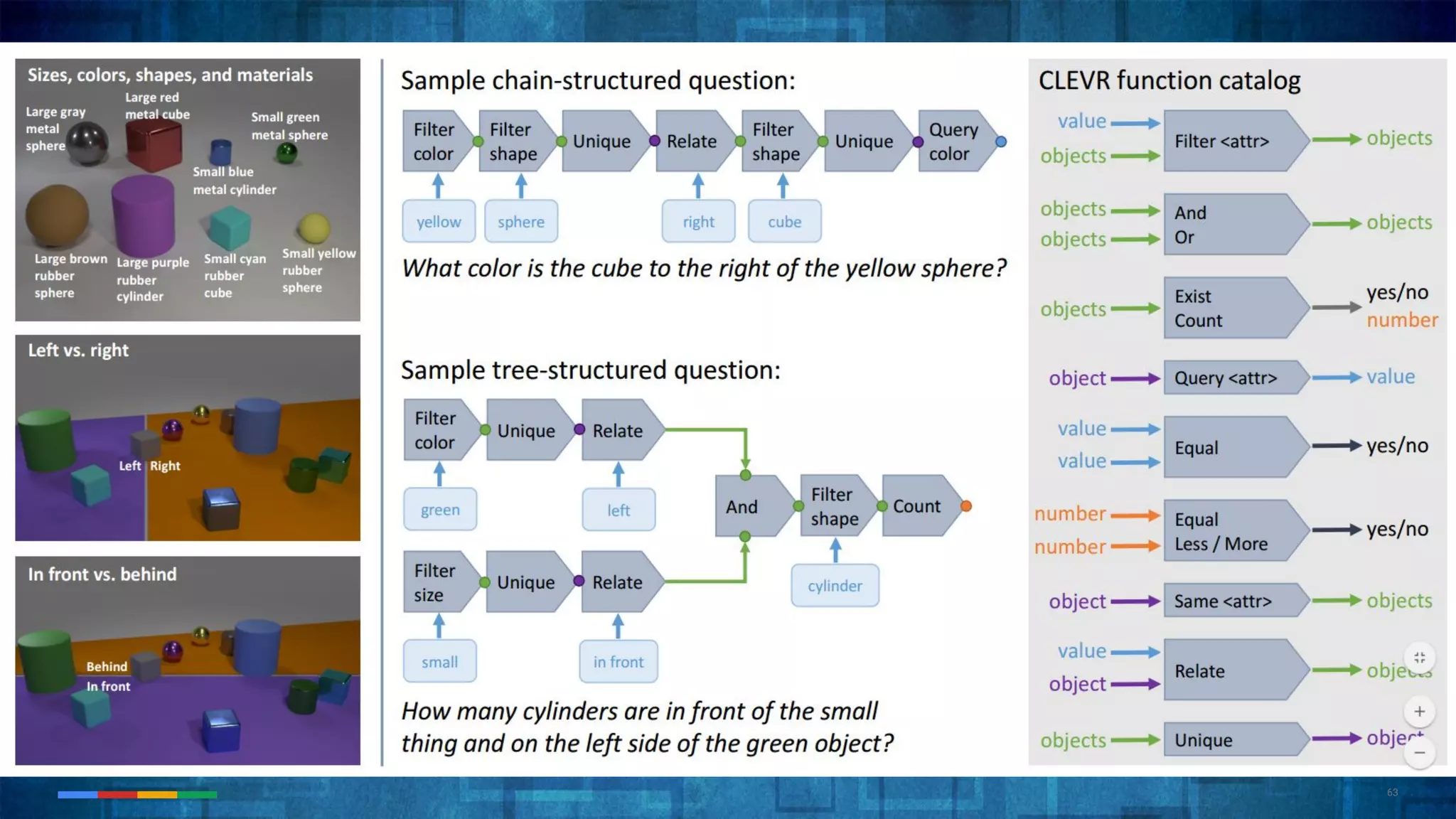
63
64
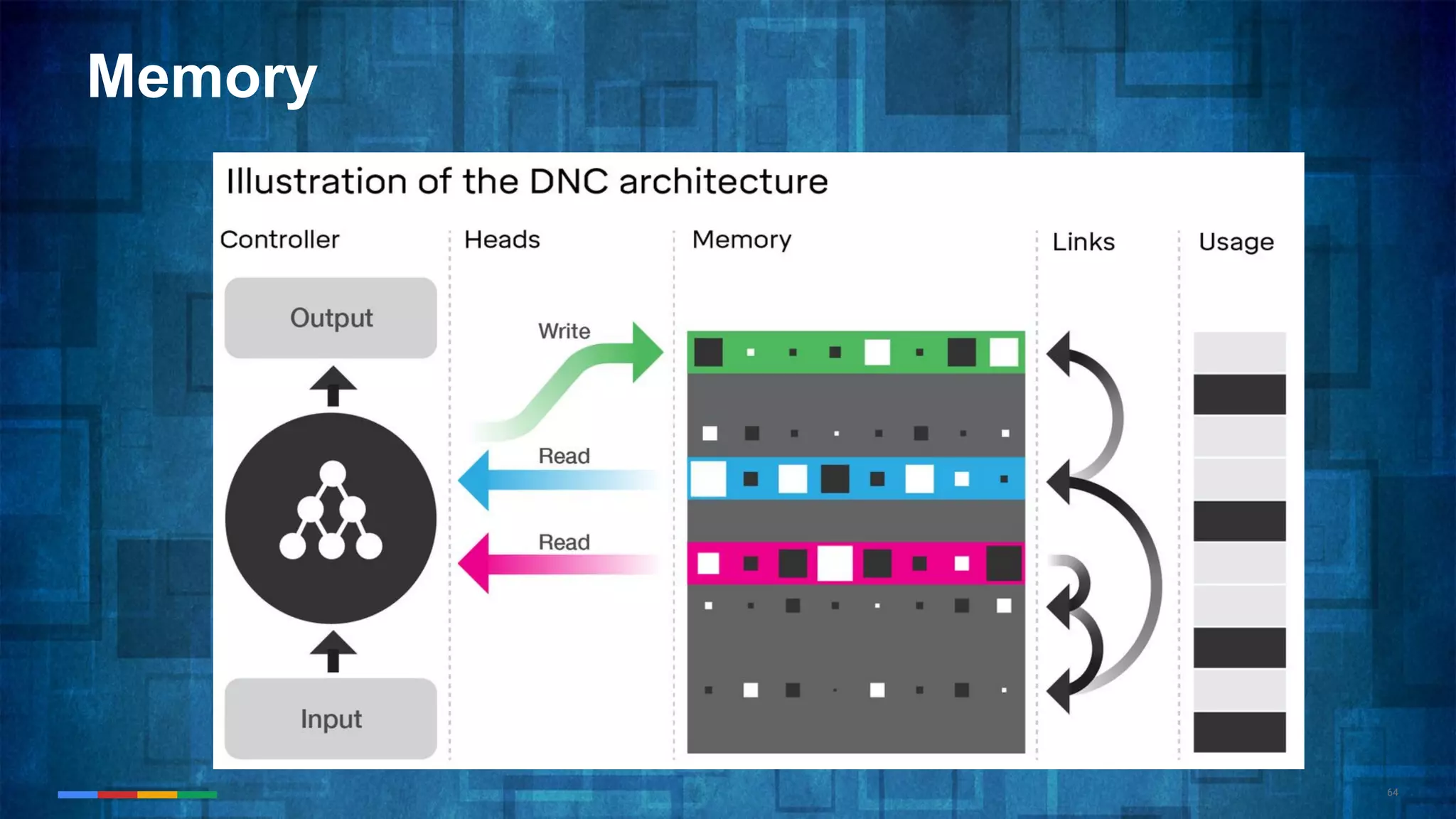
Memory
65
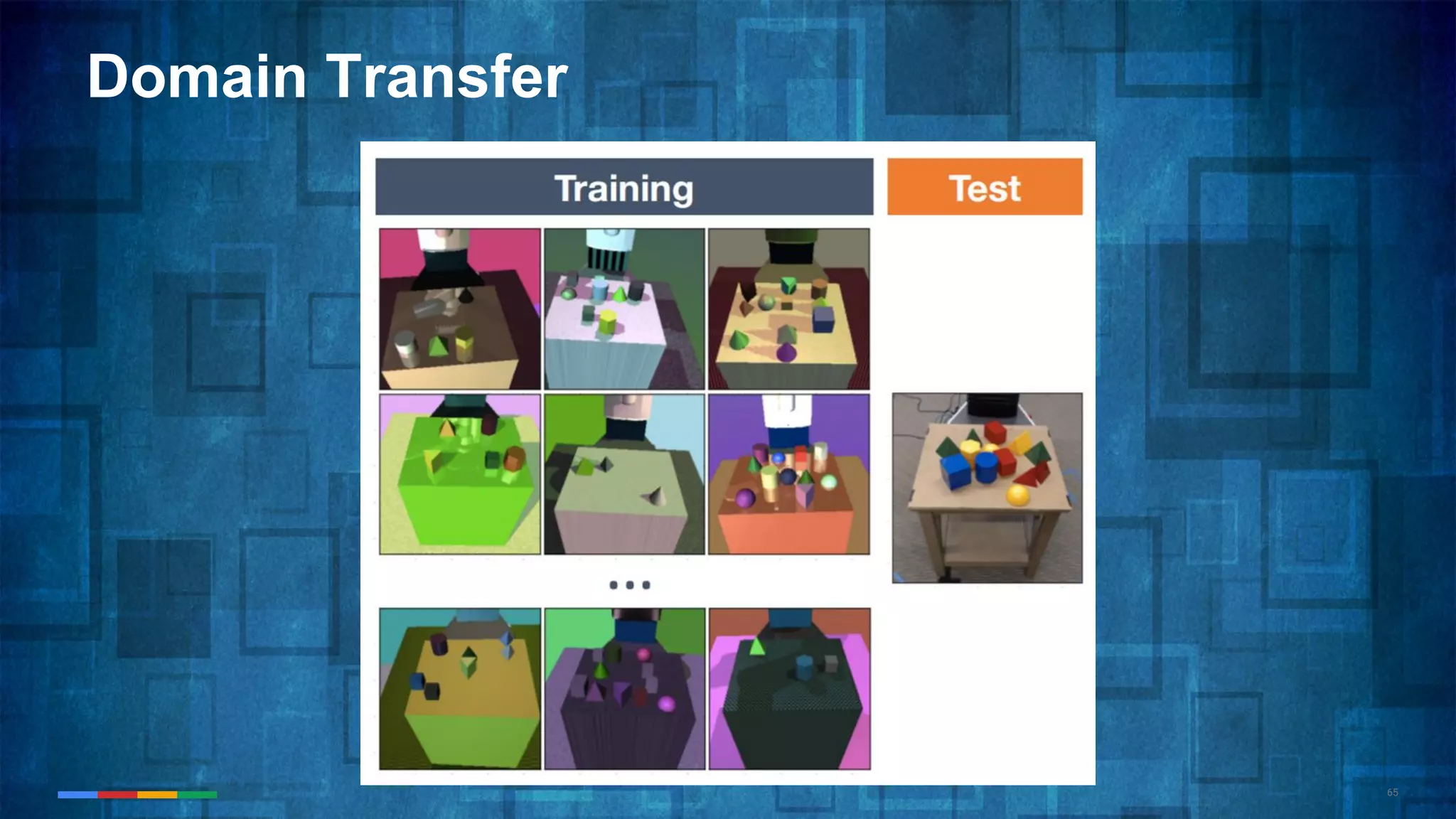
Domain Transfer
66
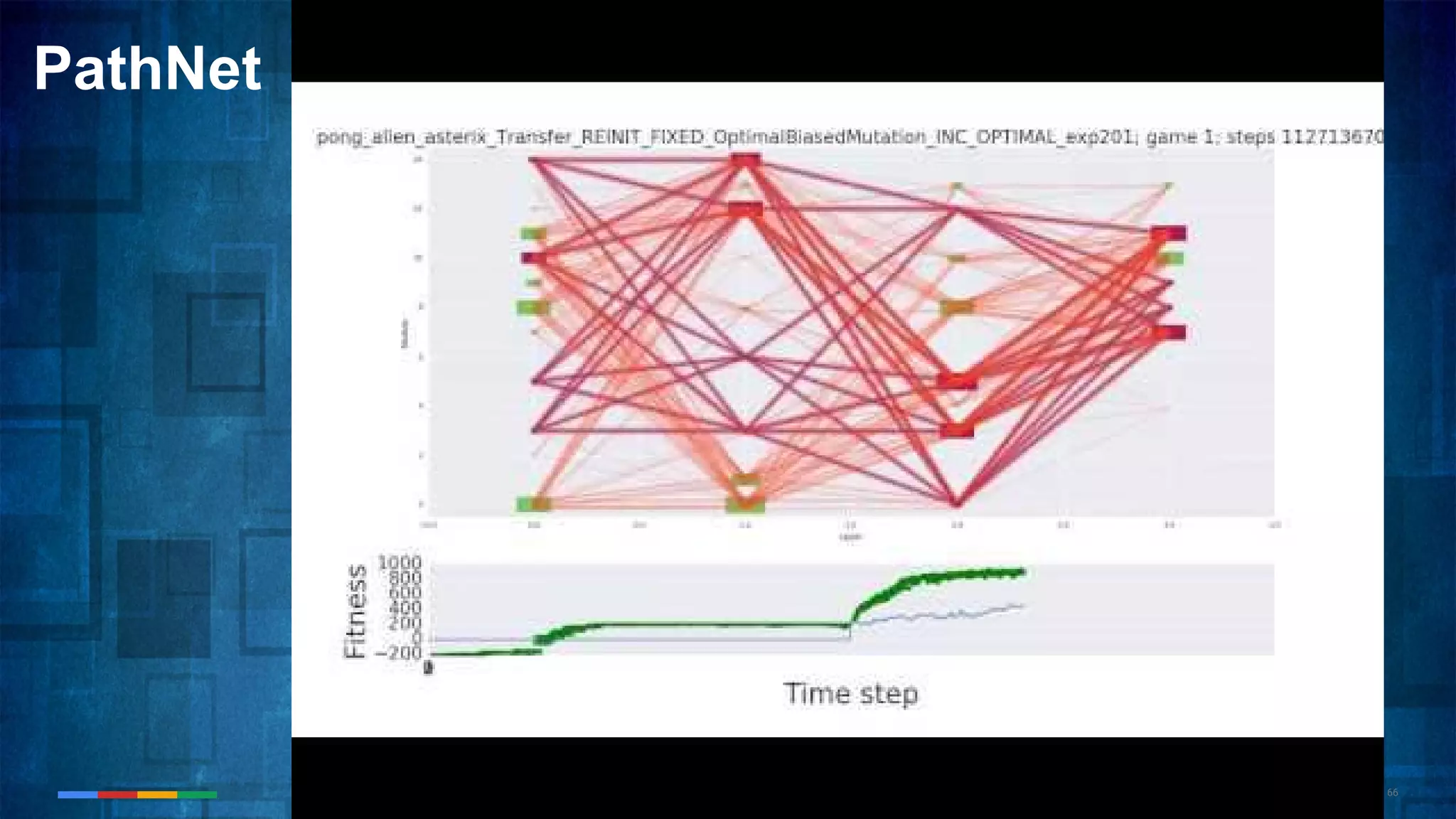
PathNet
67
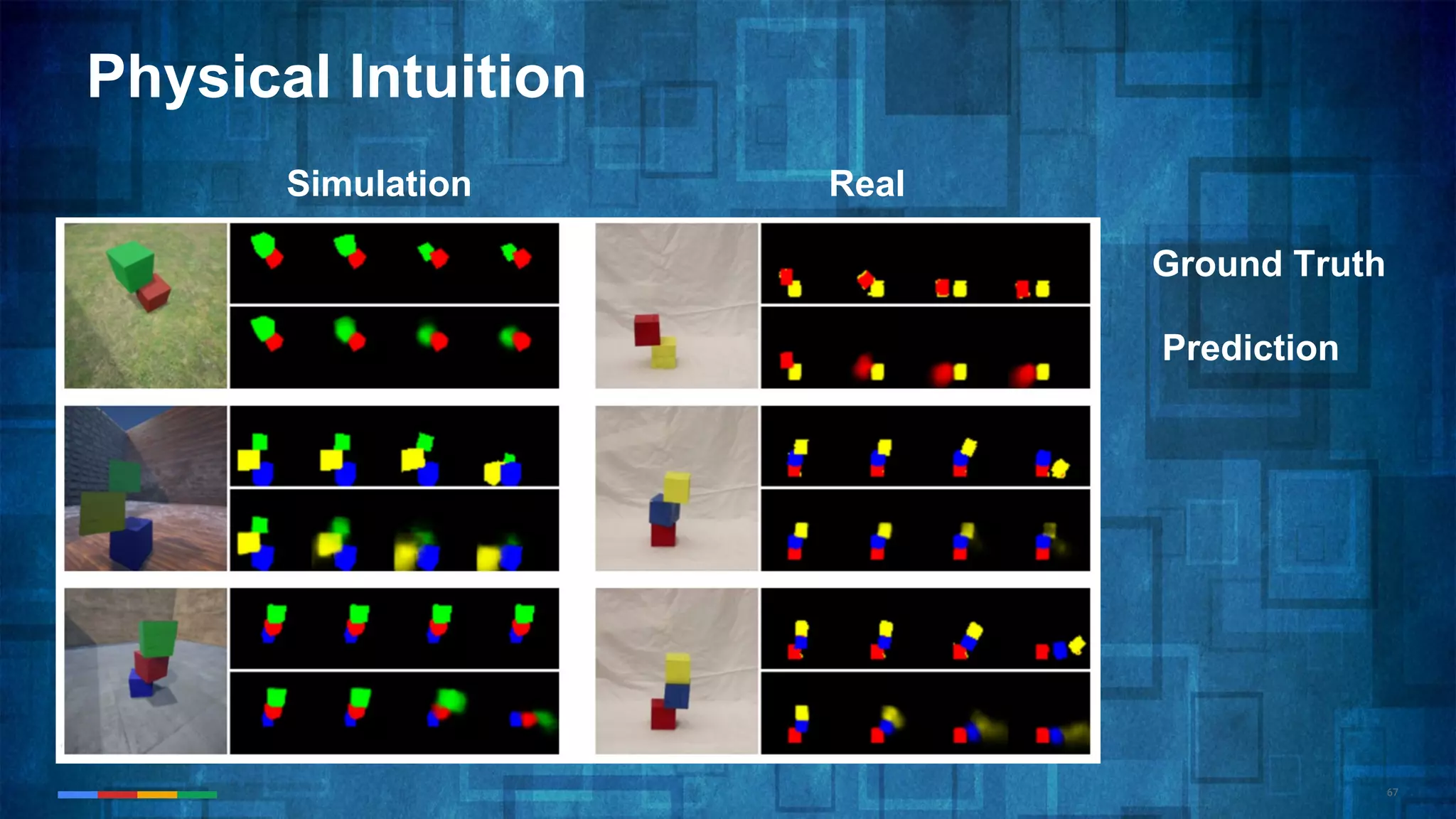
Physical Intuition
Simulation Real
Ground Truth
Prediction
68
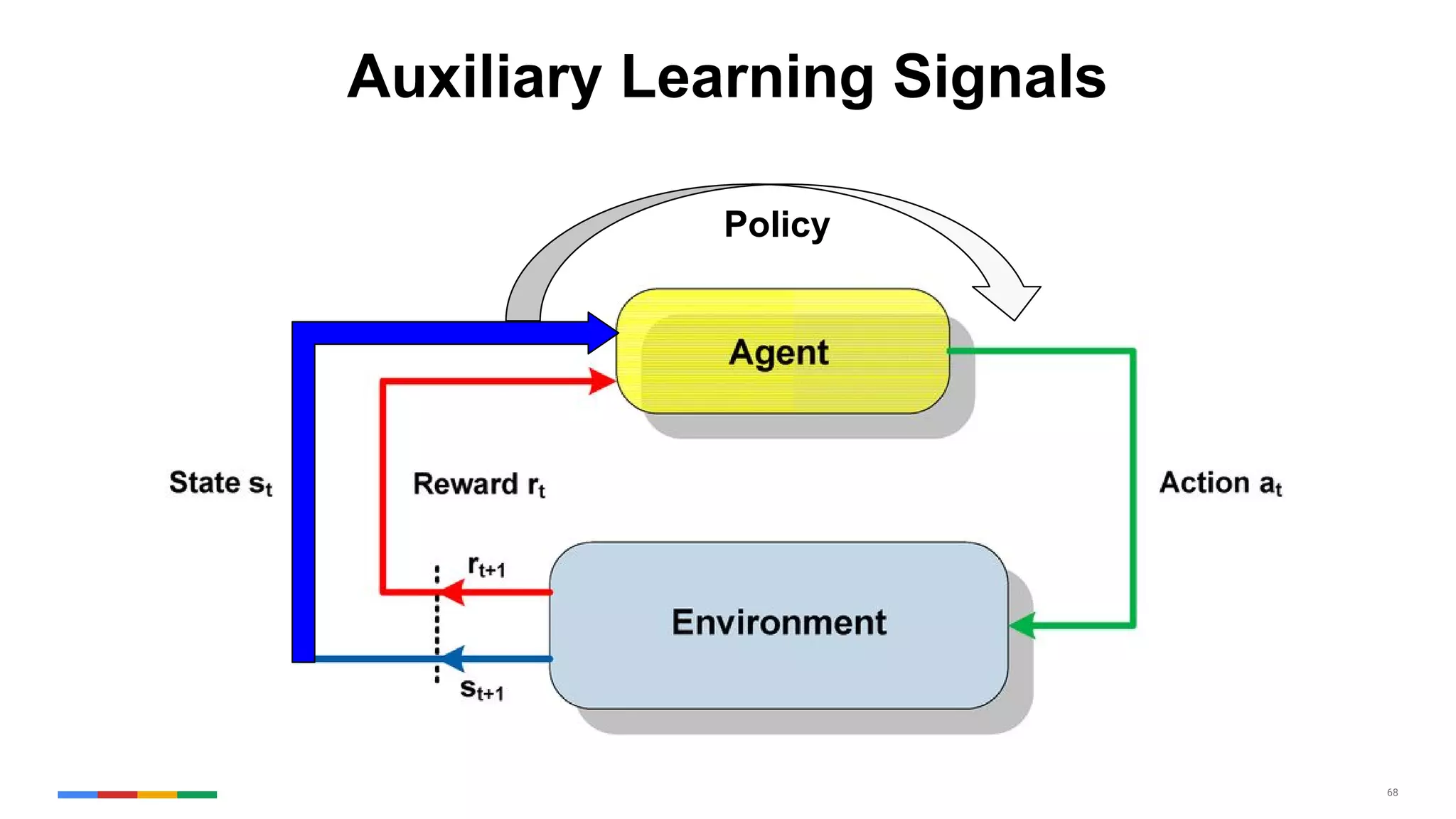
Auxiliary Learning Signals
Policy
69
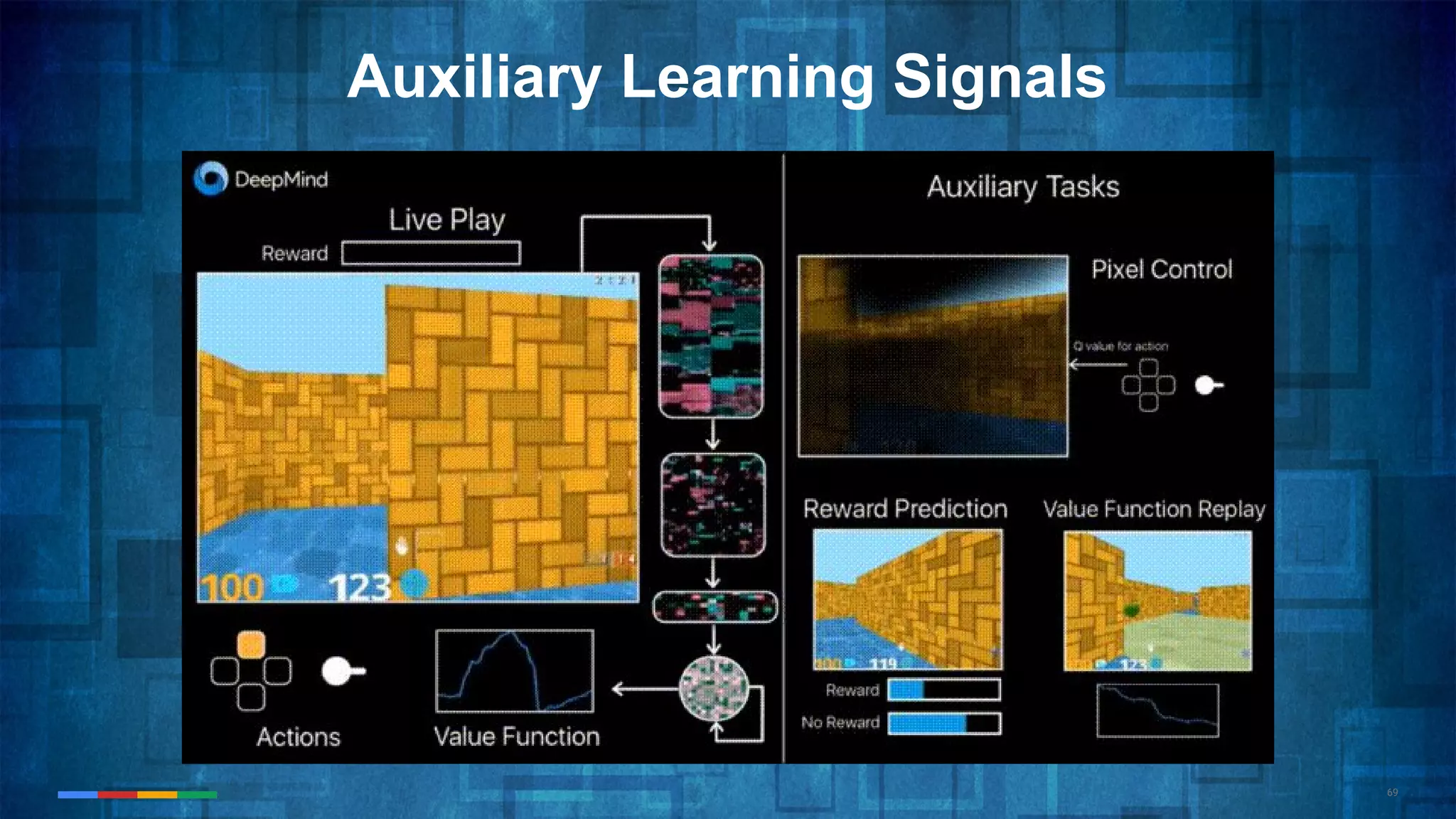
Auxiliary Learning Signals
70
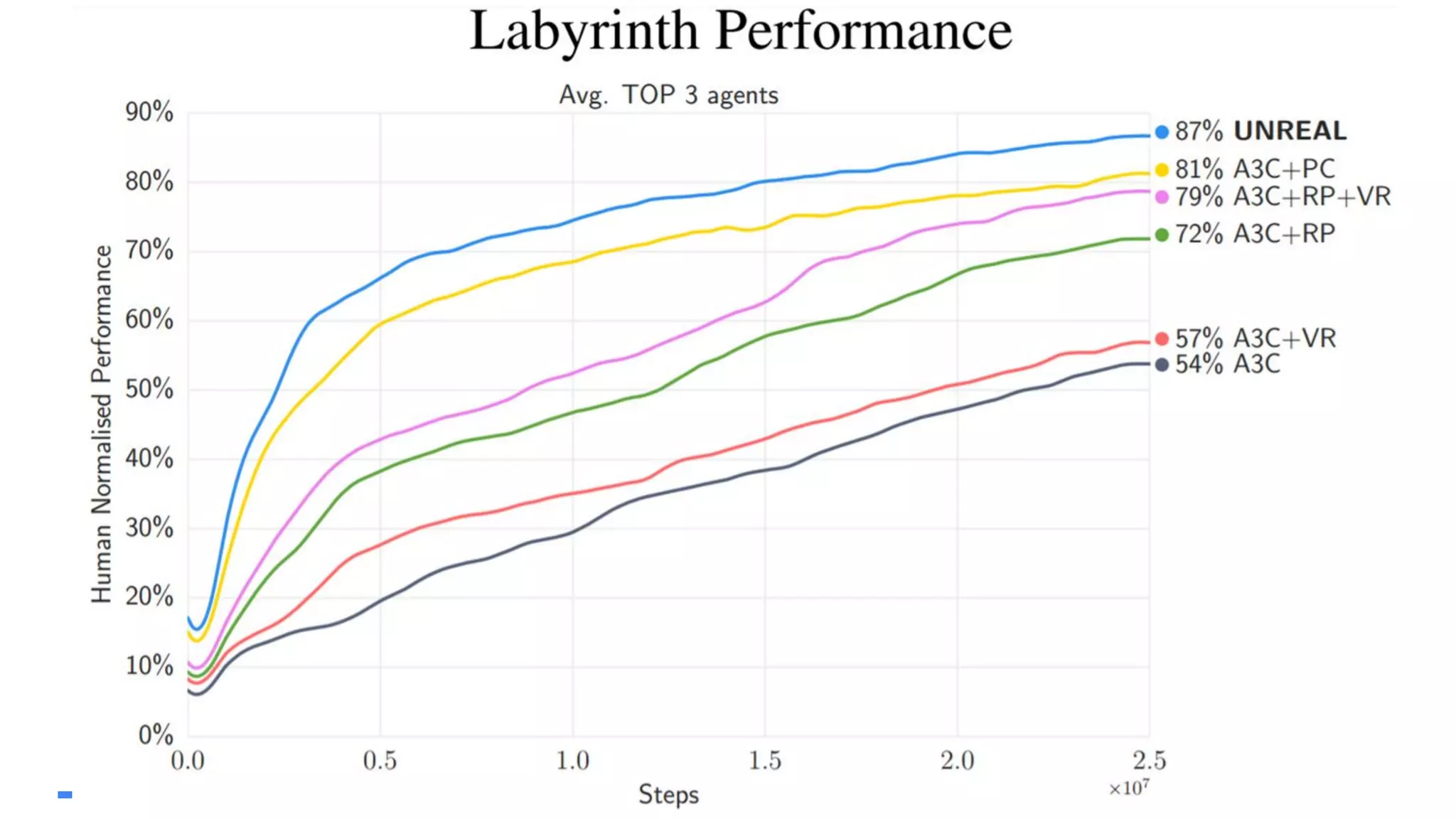
Auxiliary Learning Signals
71
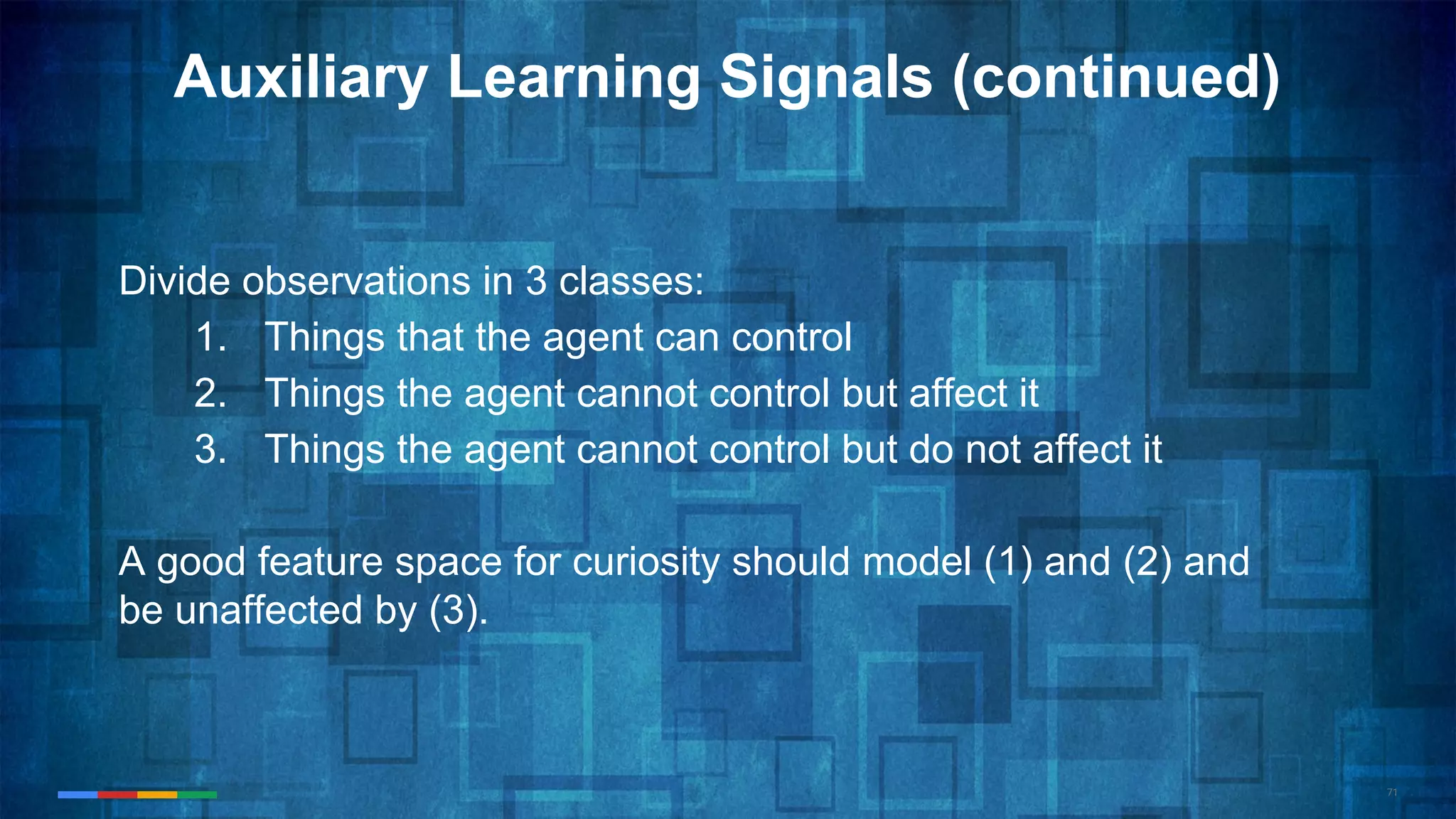
Auxiliary Learning Signals (continued)
Divide observations in 3 classes:
1. Things that the agent can control
2. Things the agent cannot control but affect it
3. Things the agent cannot control but do not affect it
A good feature space for curiosity should model (1) and (2) and
be unaffected by (3).
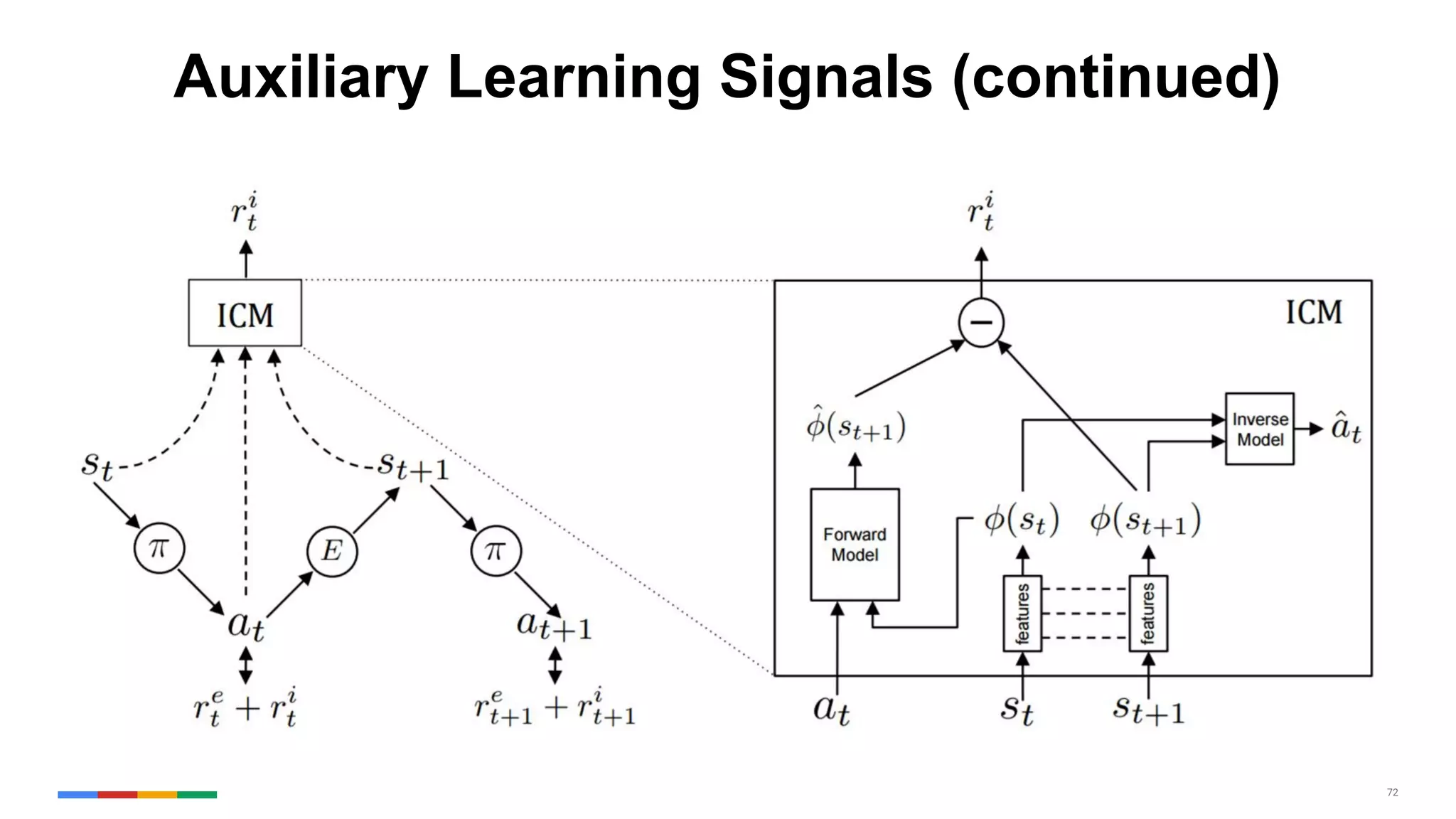
72
Auxiliary Learning Signals (continued)
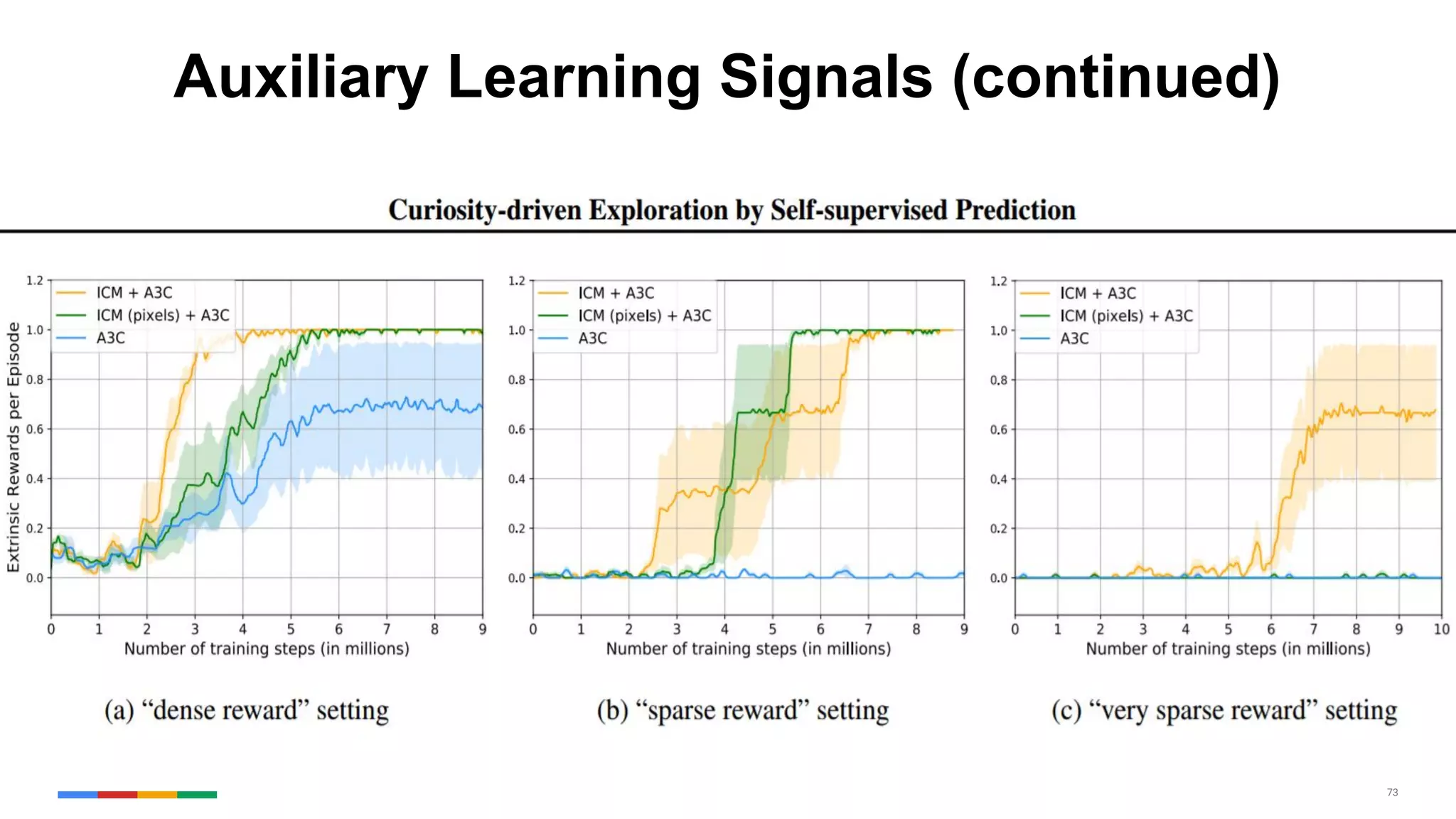
73
Auxiliary Learning Signals (continued)
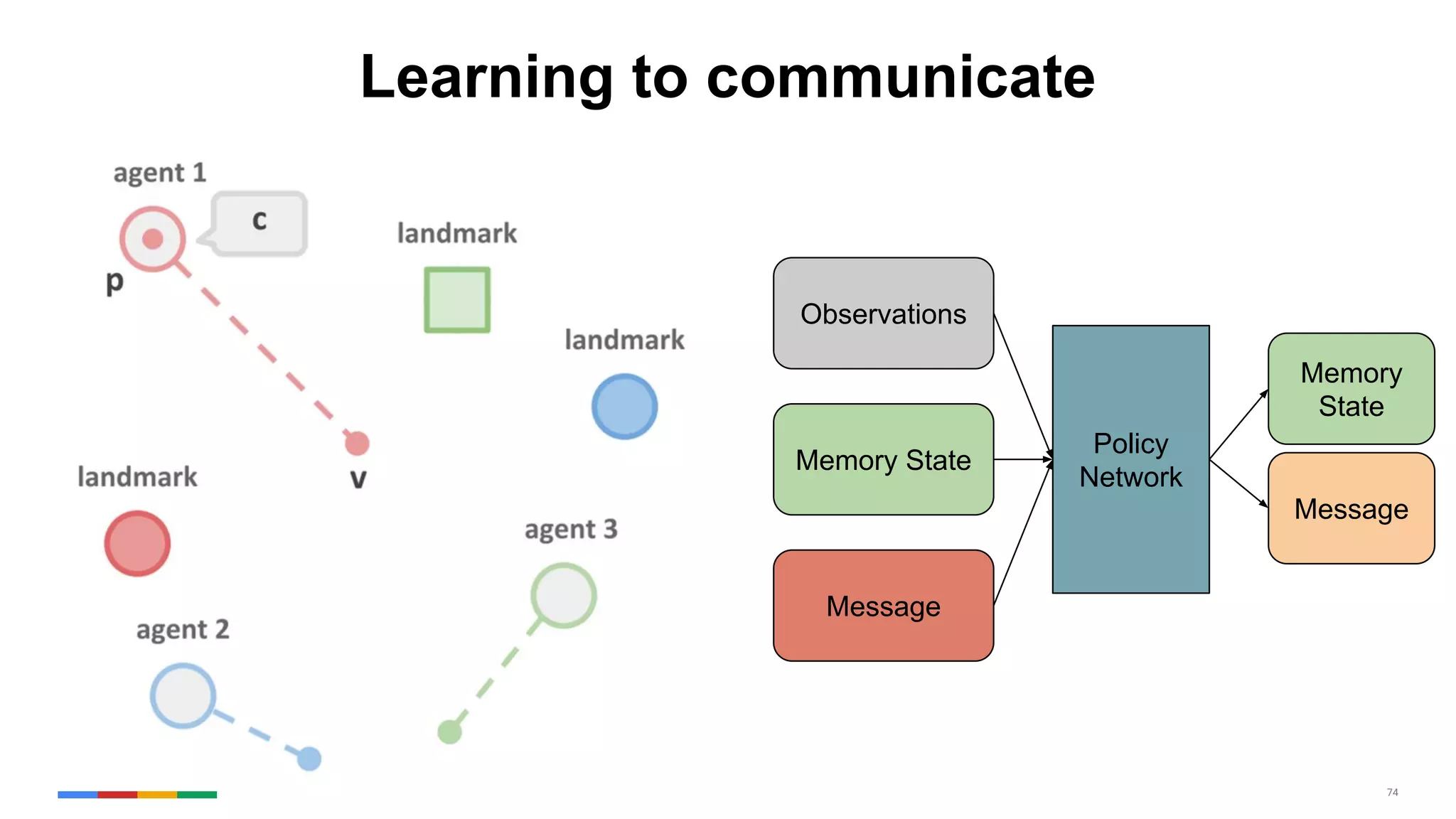
74
Learning to communicate
Observations
Memory State
Message
Policy
Network
Memory
State
Message
75
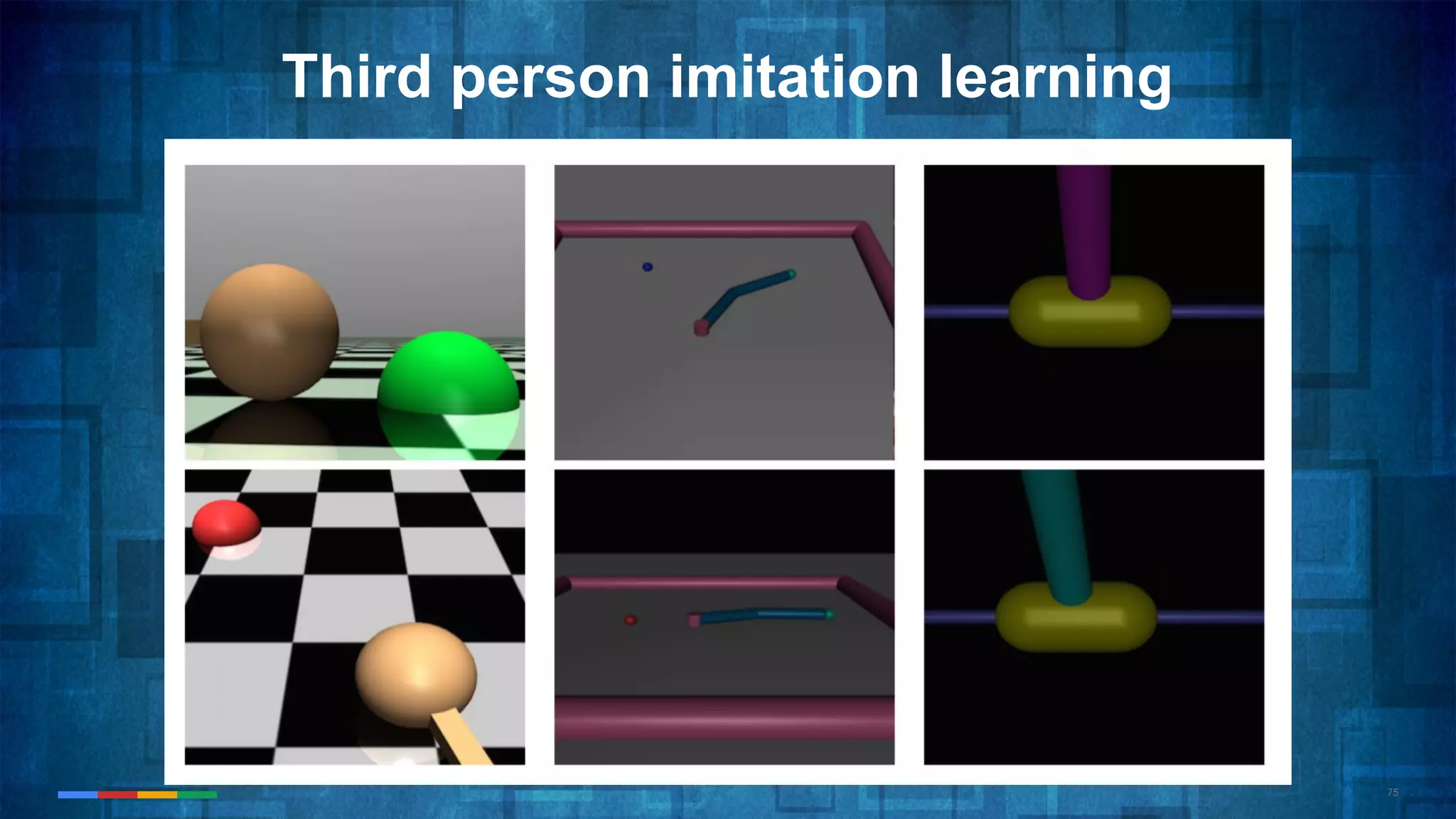
Third person imitation learning
76
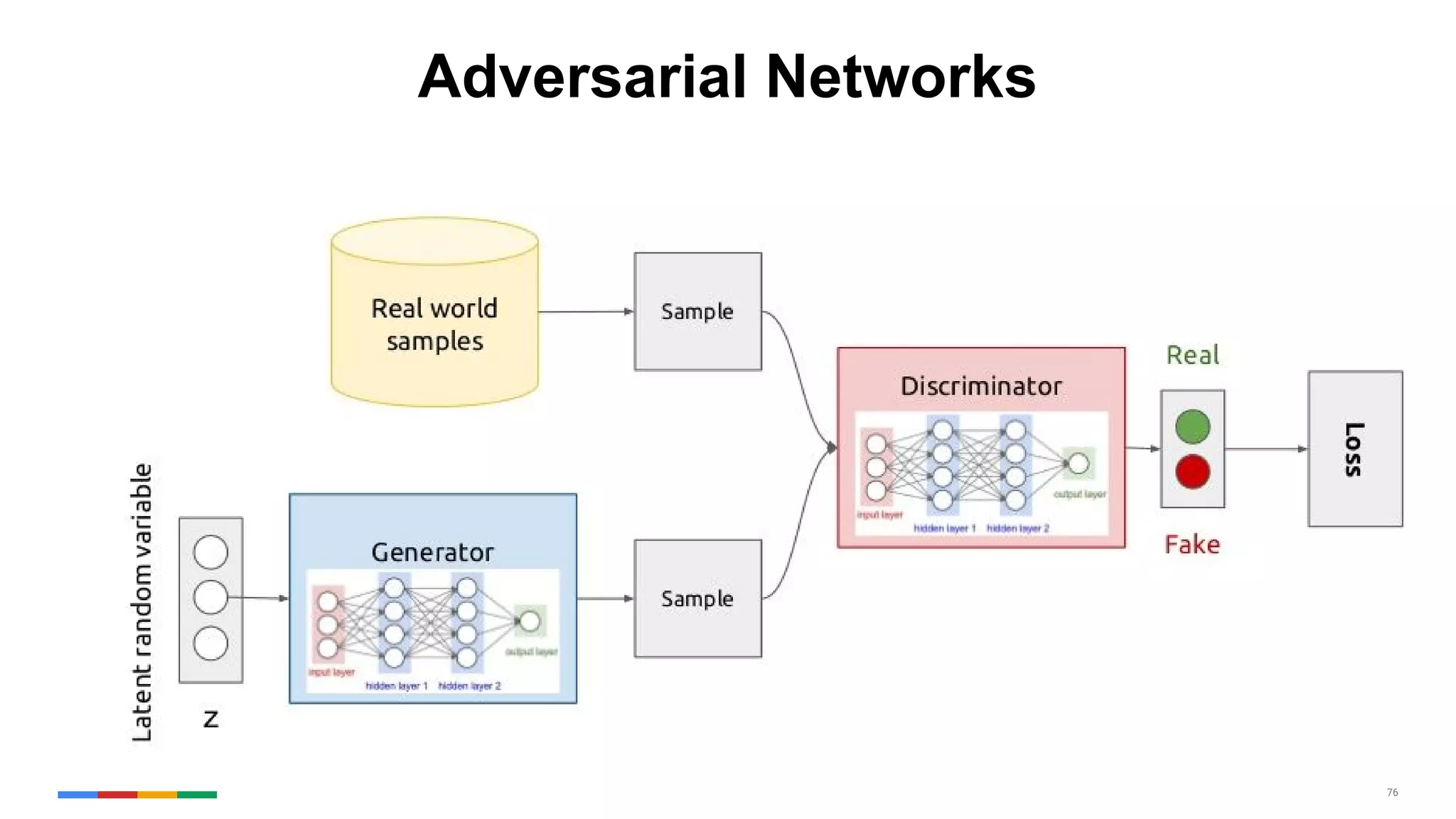
Adversarial Networks
77
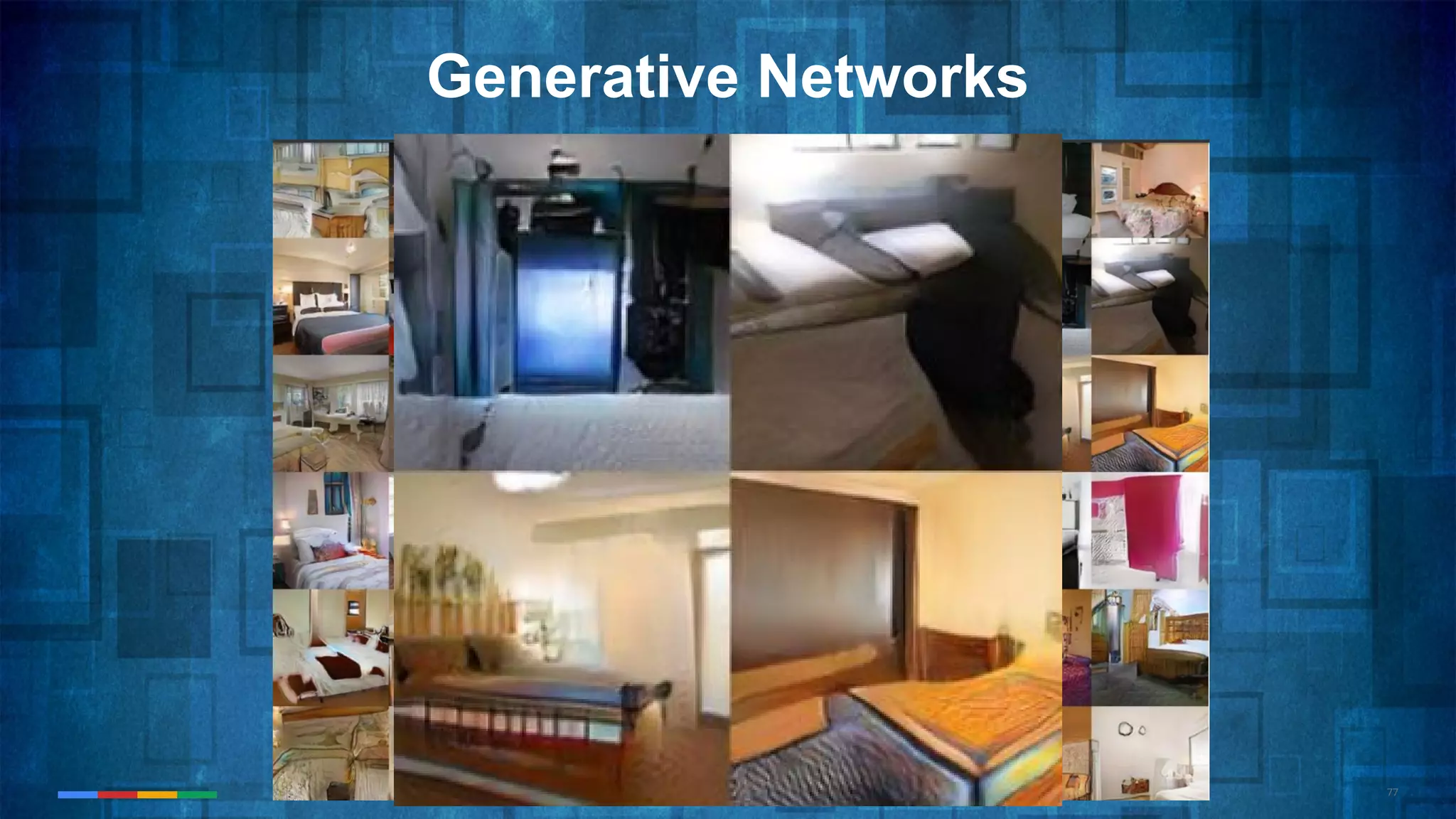
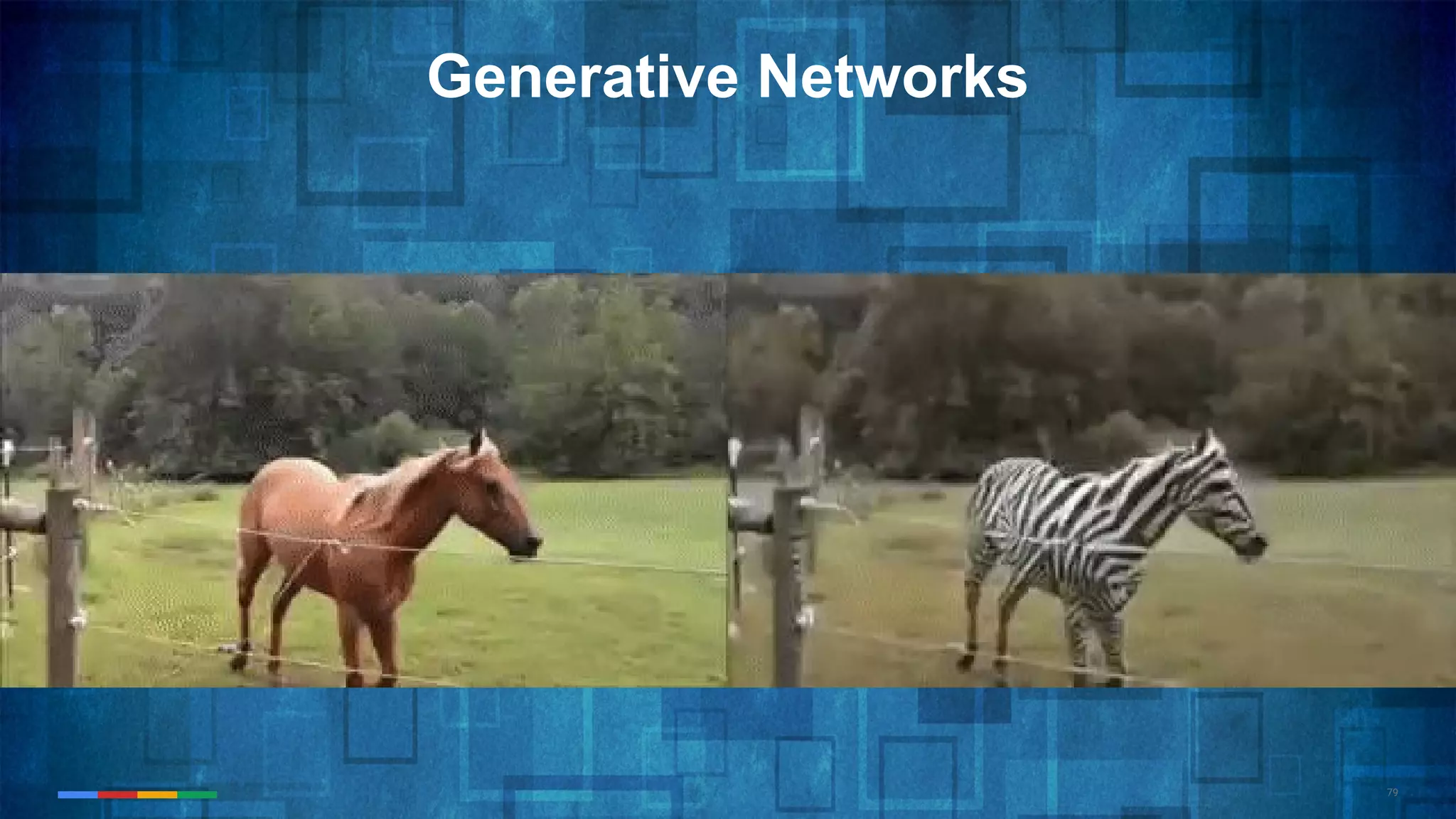
Generative Networks
78
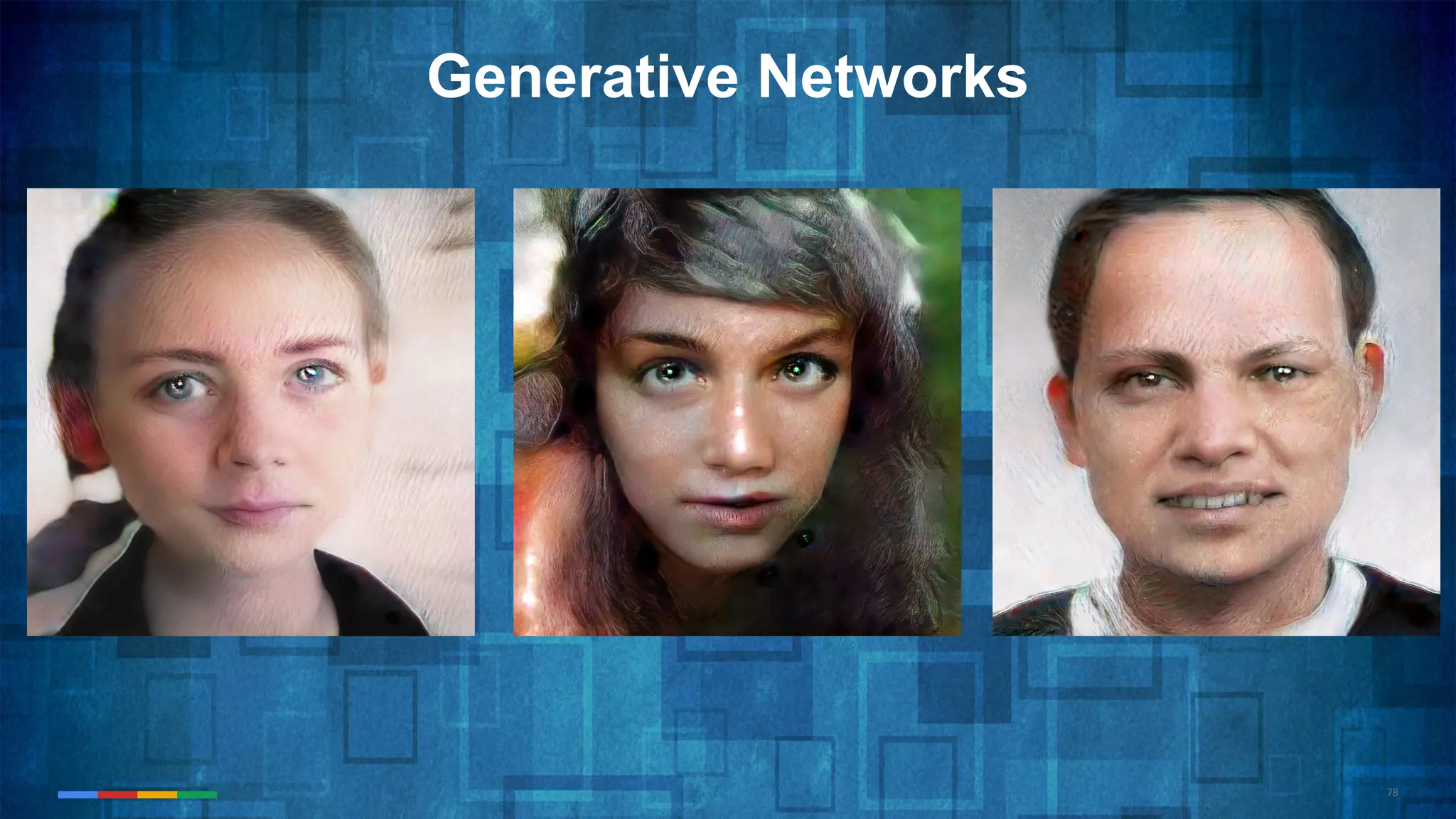
Generative Networks
79
Generative Networks
80
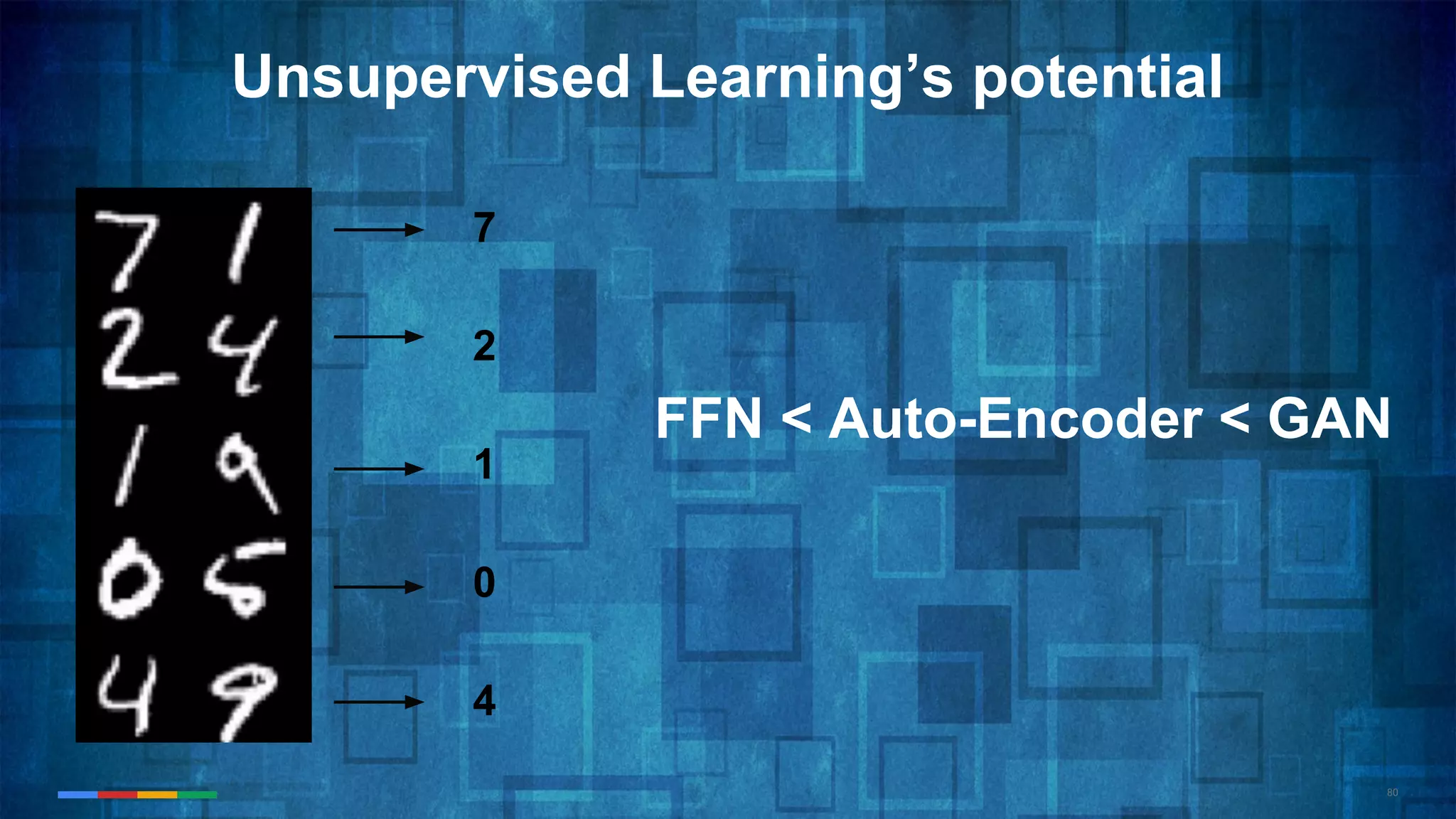
Unsupervised Learning’s potential
7
2
1
0
4
FFN < Auto-Encoder < GAN
81
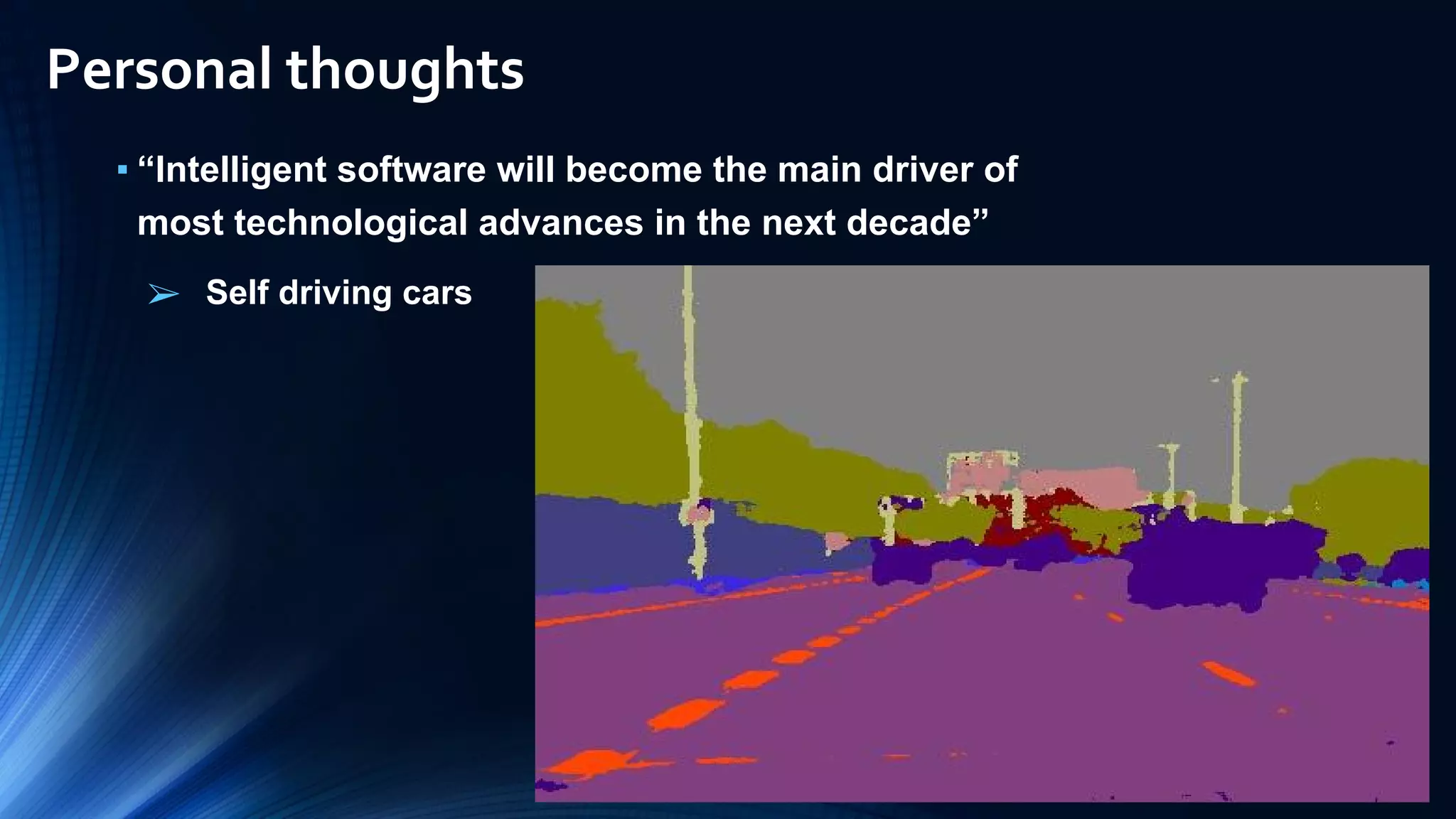
Personal thoughts
▪ “Intelligent software will become the main driver of
most technological advances in the next decade”
➢ Self driving cars
▪ “Intelligent software will become the main driver of
most technological advances in the next decade”
➢ Self driving cars
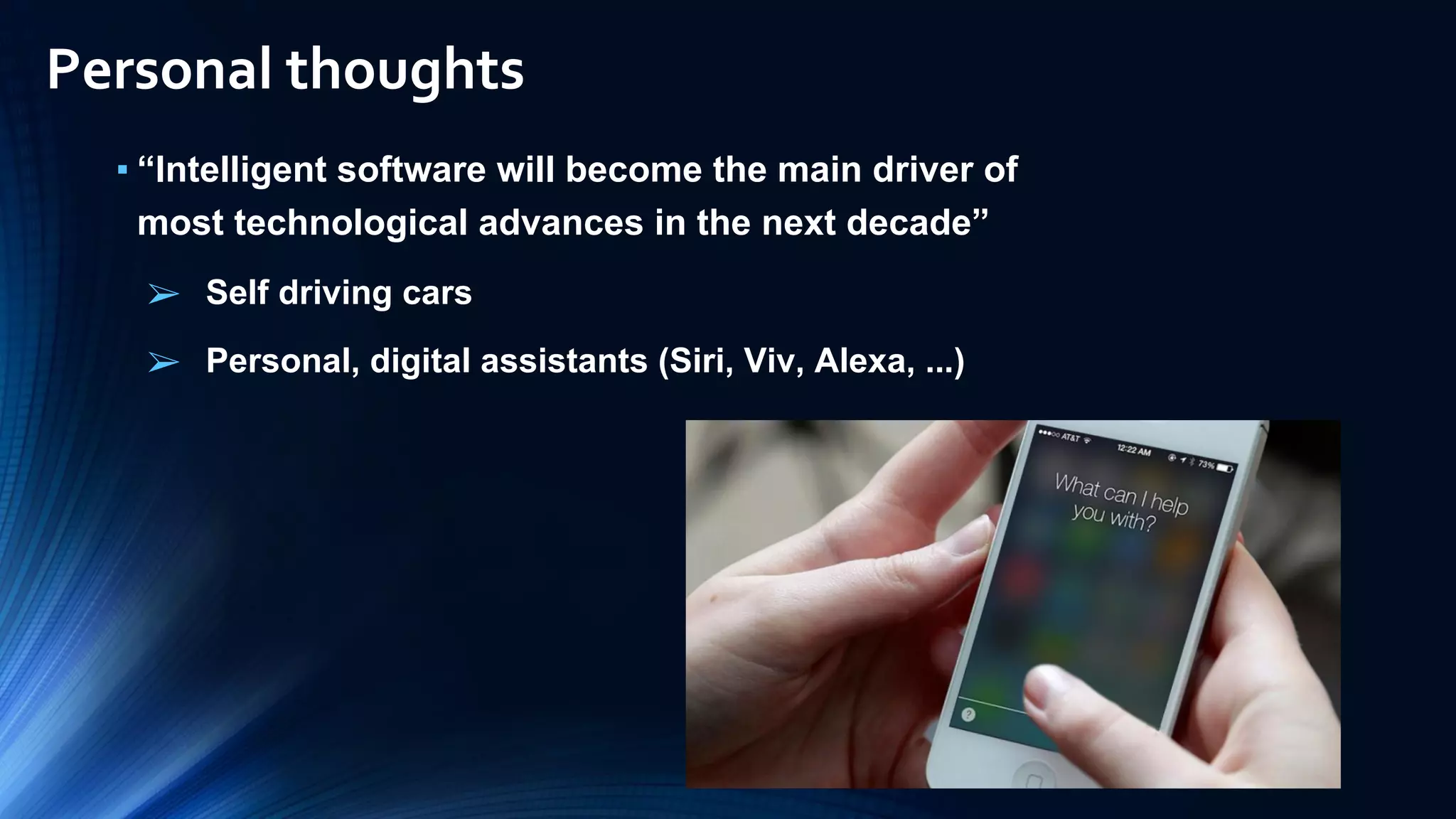
➢ Personal, digital assistants (Siri, Viv, Alexa, ...)
Personal thoughts
▪ “Intelligent software will become the main driver of
most technological advances in the next decade”
➢ Self driving cars
➢ Personal, digital assistants (Siri, Viv, Alexa, ...)
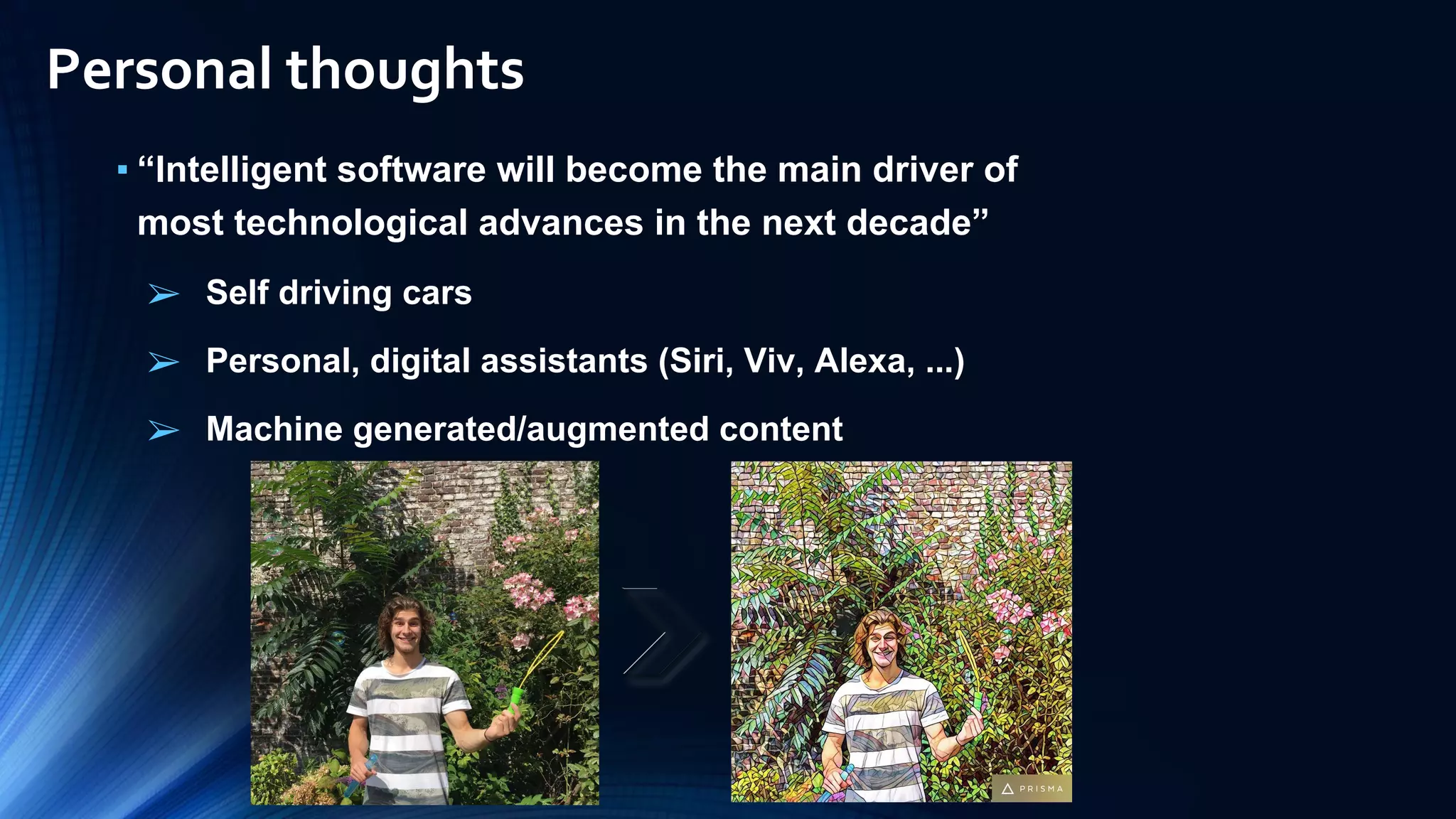
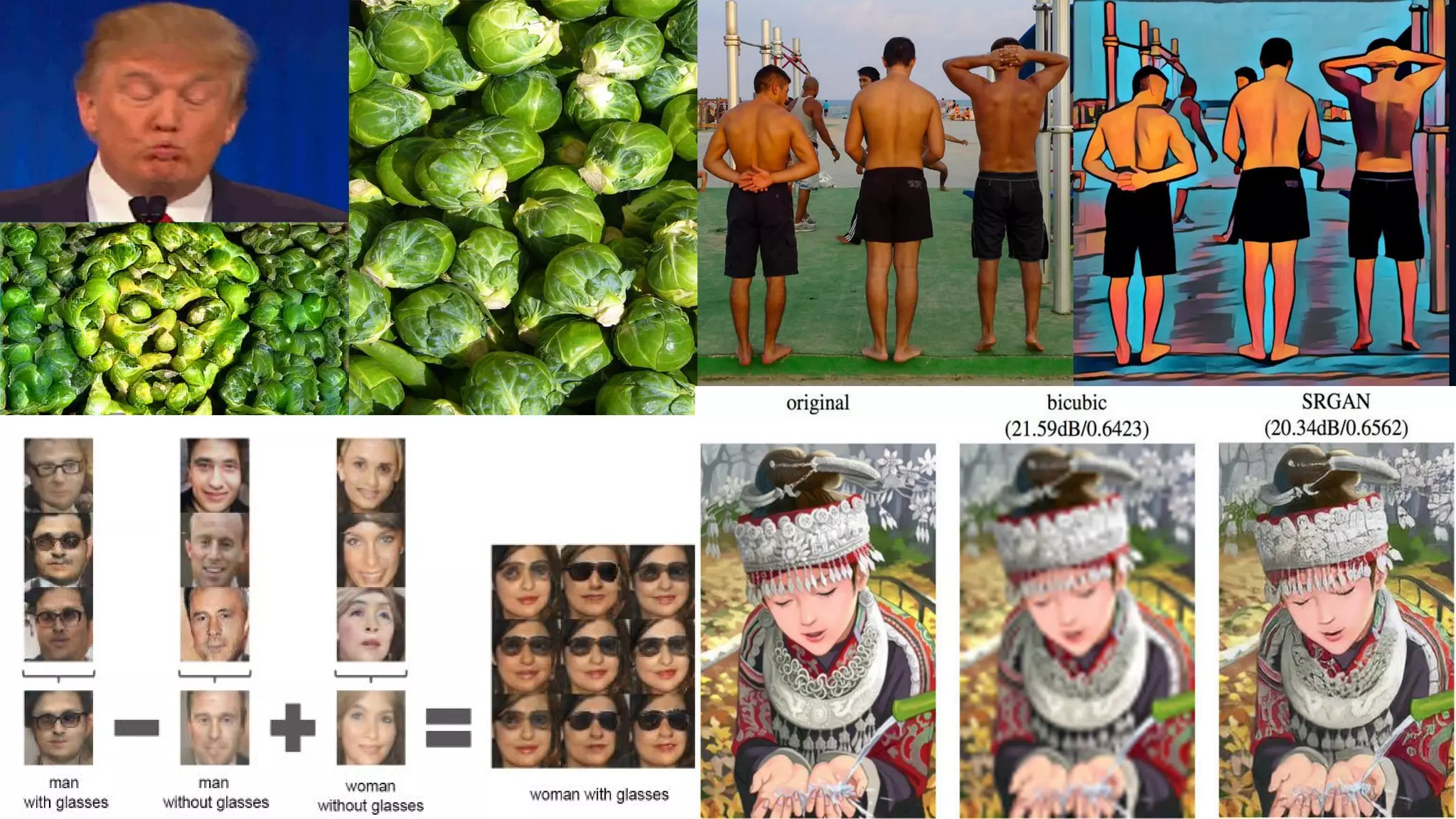
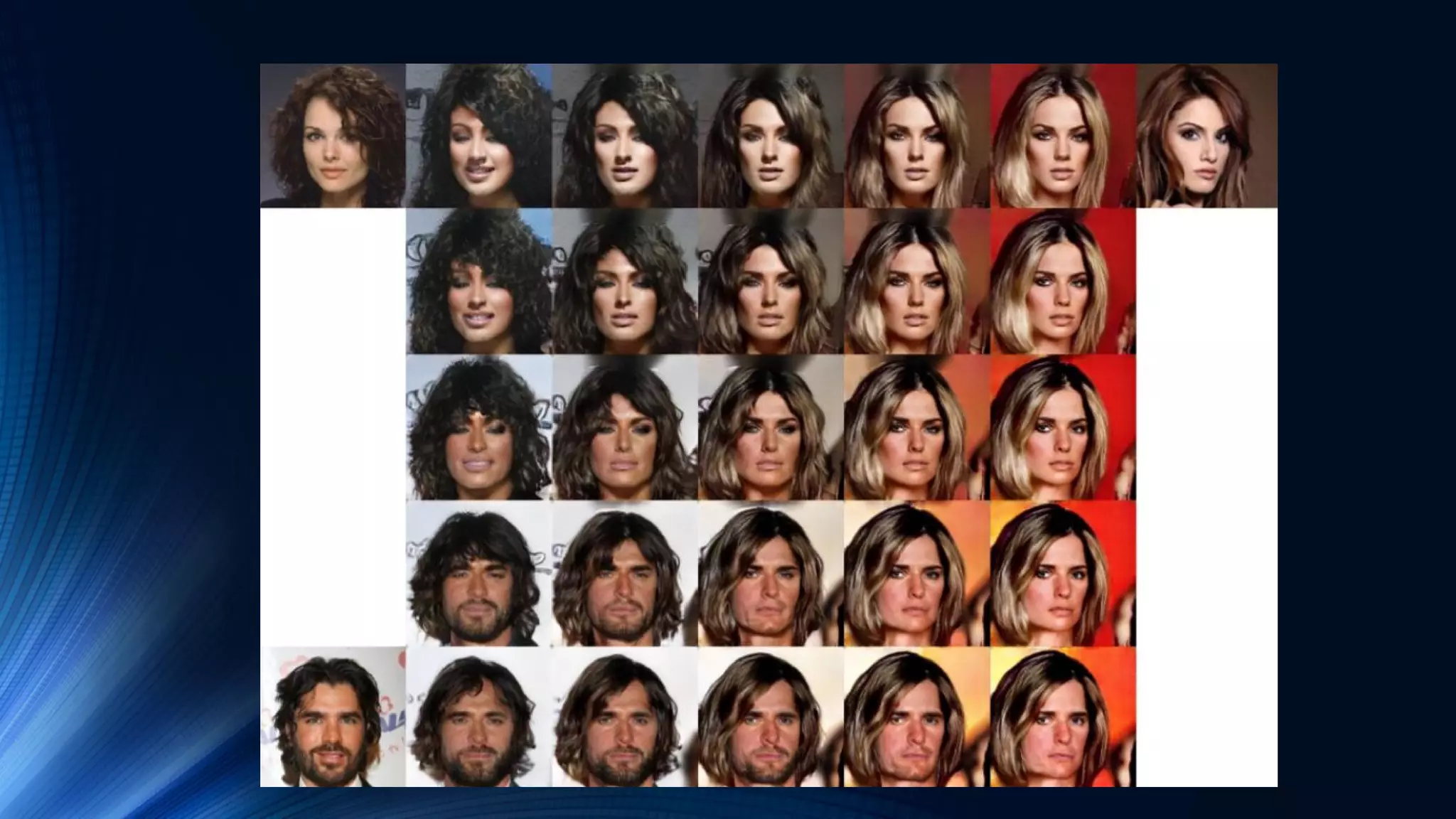
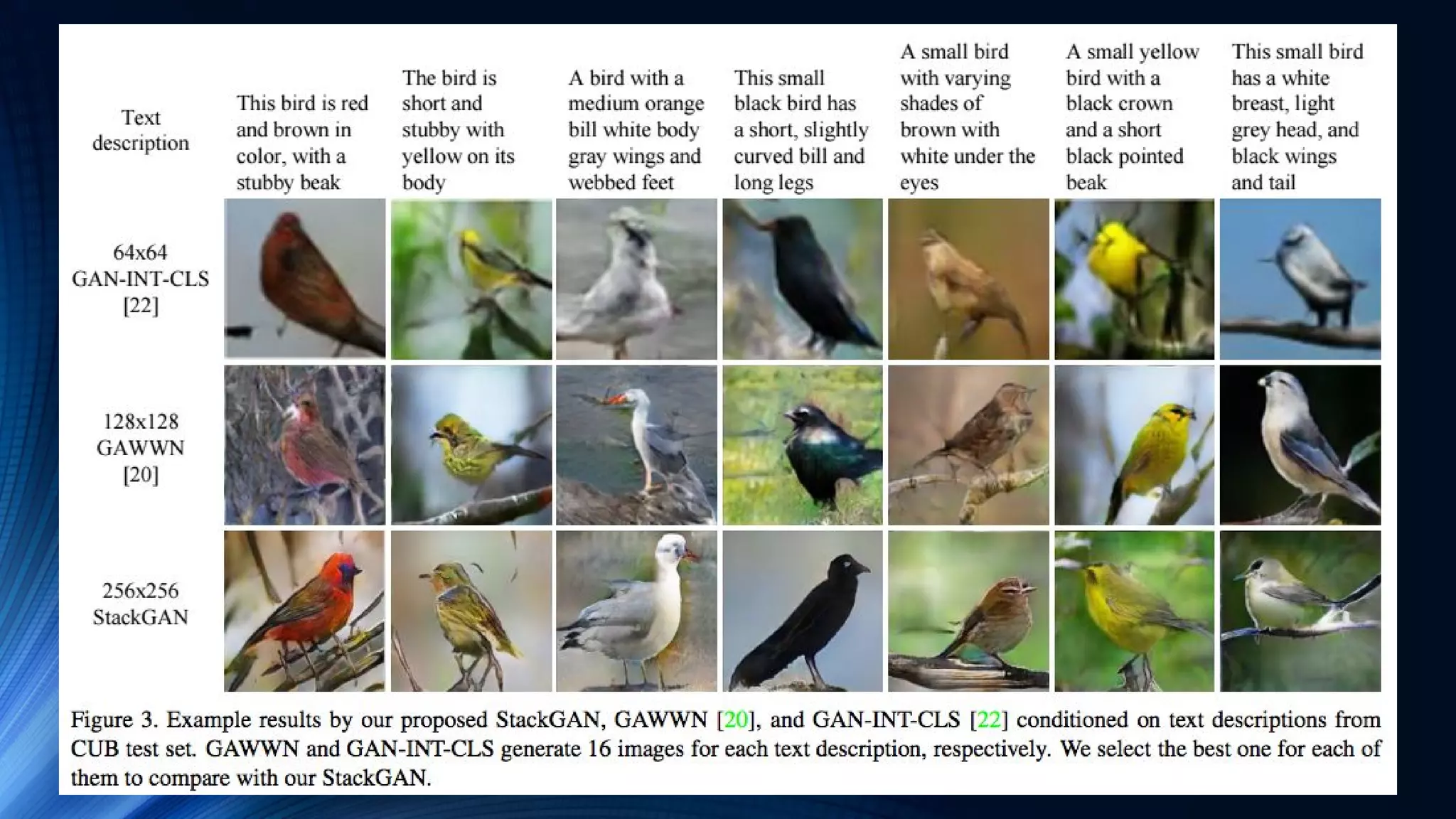
➢ Machine generated/augmented content
Personal thoughts
▪ “Intelligent software will become the main driver of
most technological advances in the next decade”
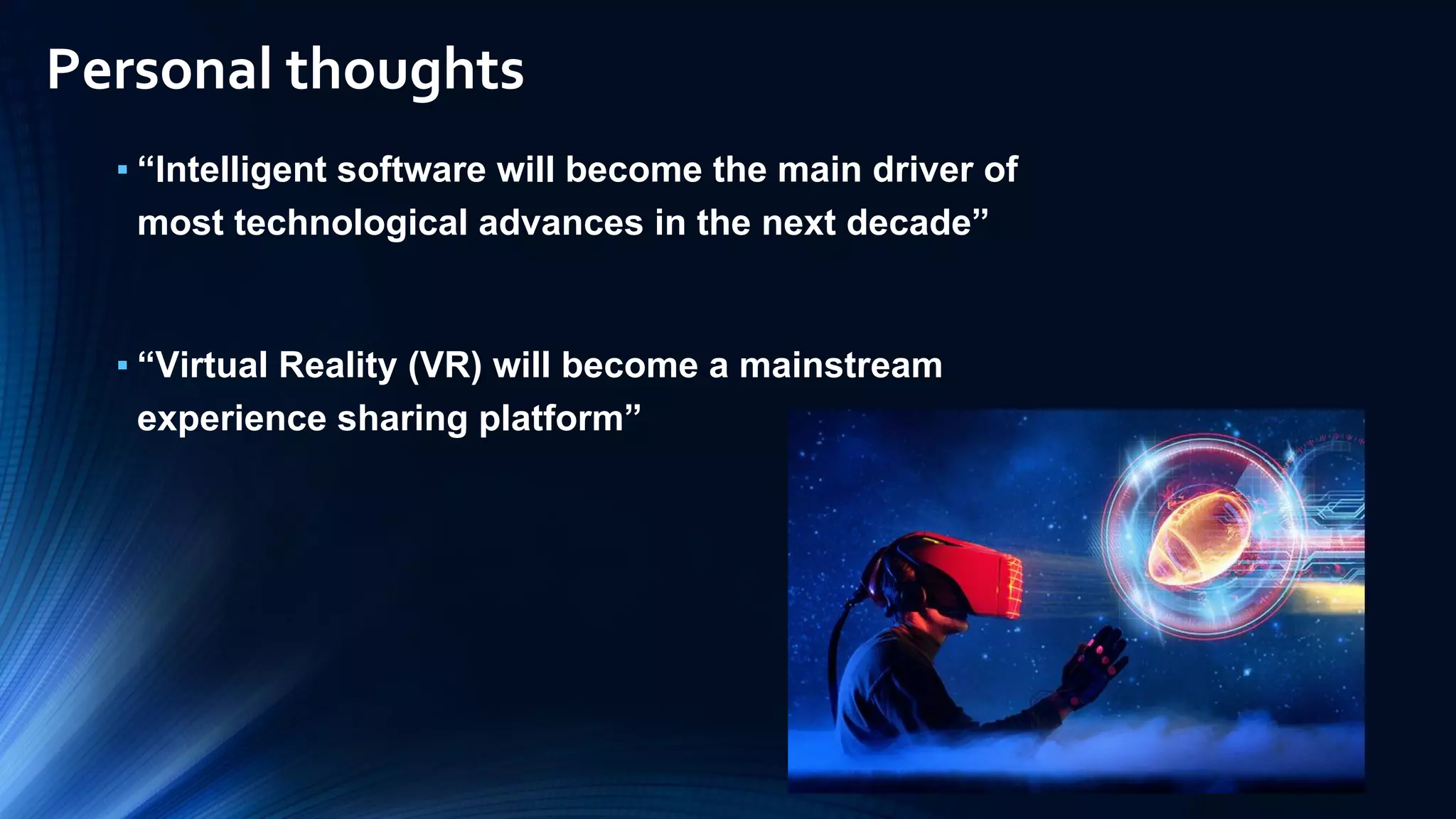
▪ “Virtual Reality (VR) will become a mainstream
experience sharing platform”
Personal thoughts
▪ “Intelligent software will become the main driver of
most technological advances in the next decade”
▪ “Virtual Reality (VR) will become a mainstream
experience sharing platform”
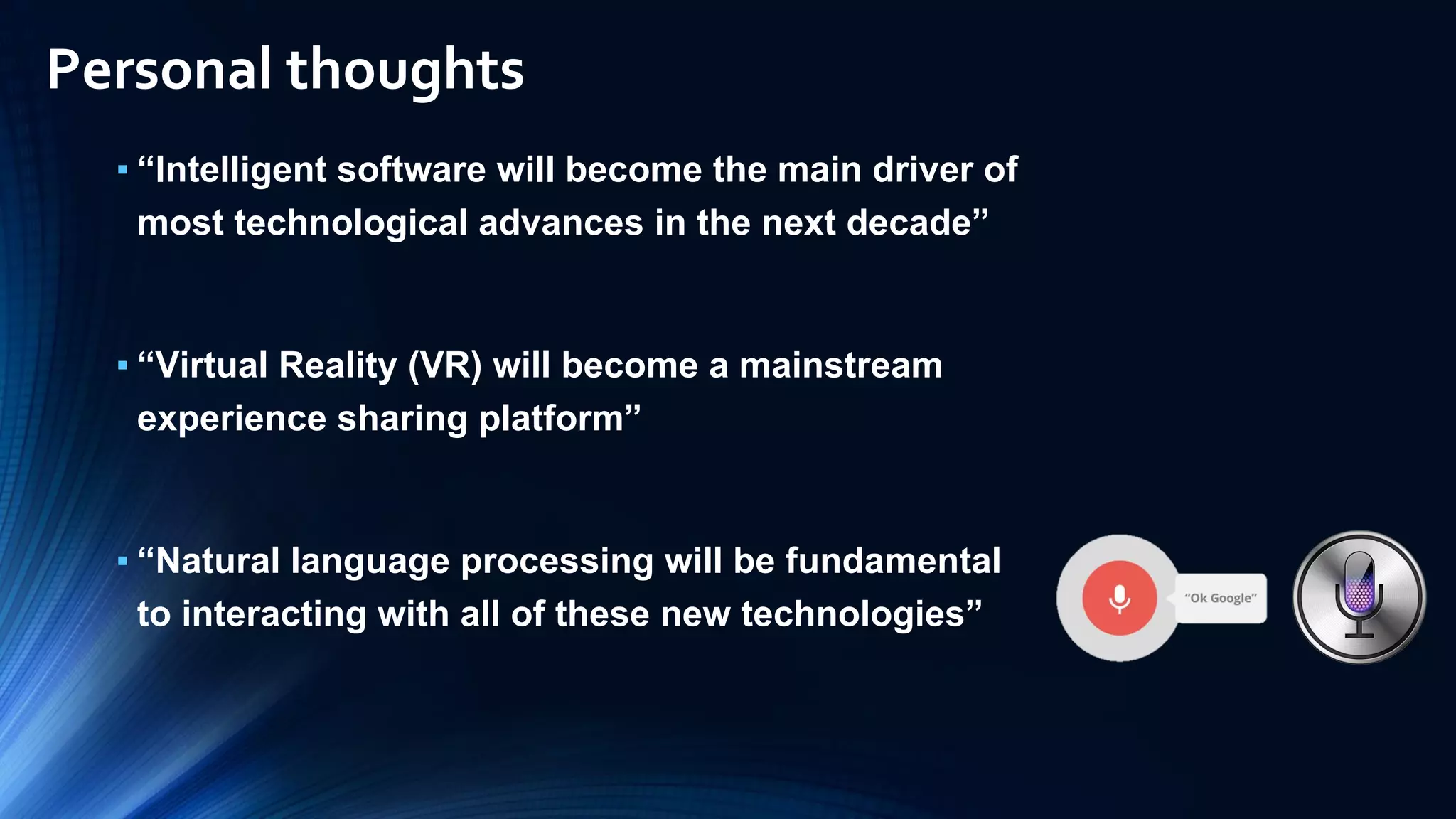
▪ “Natural language processing will be fundamental
to interacting with all of these new technologies”
Personal thoughts
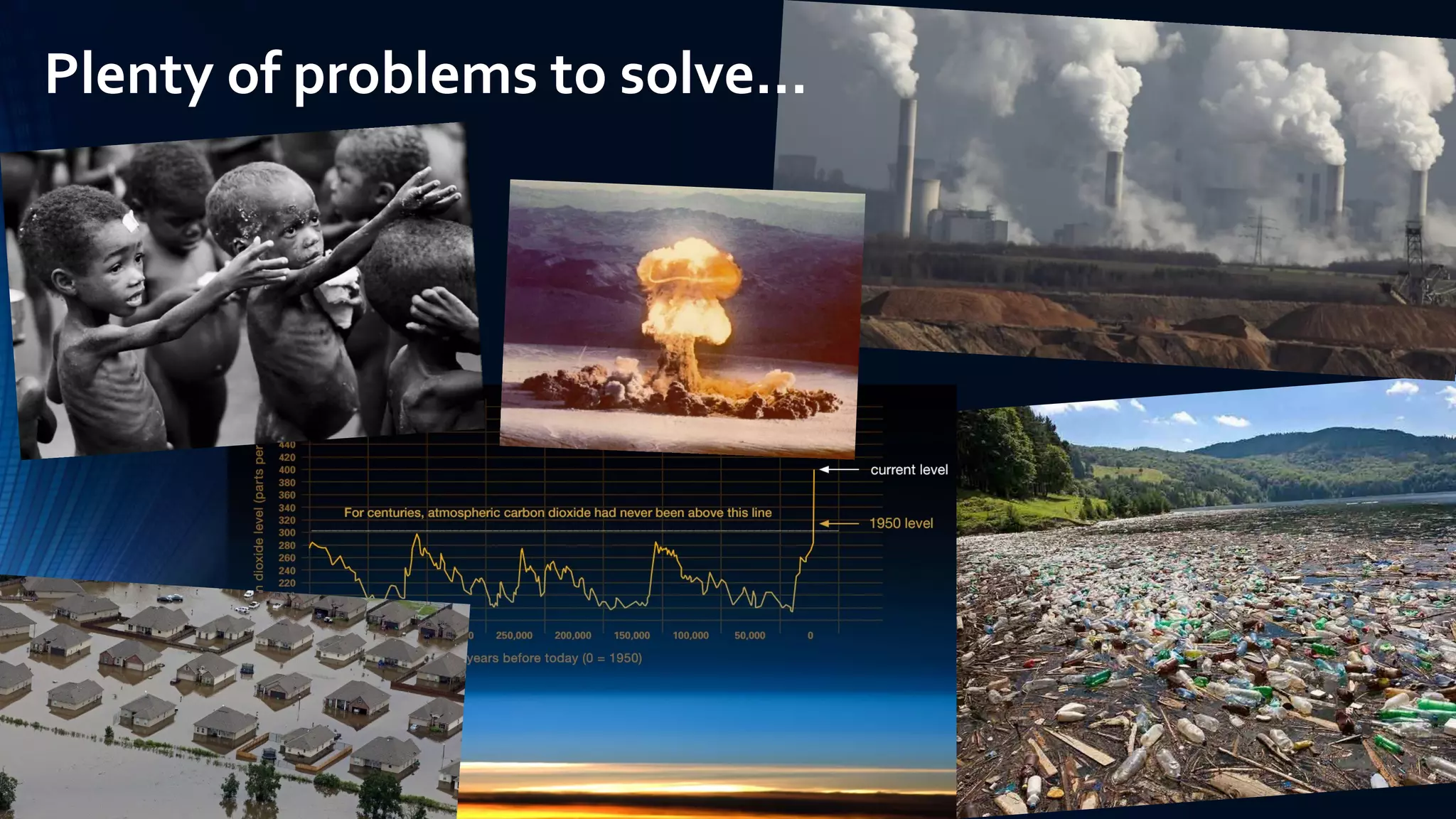
Plenty of problems to solve...
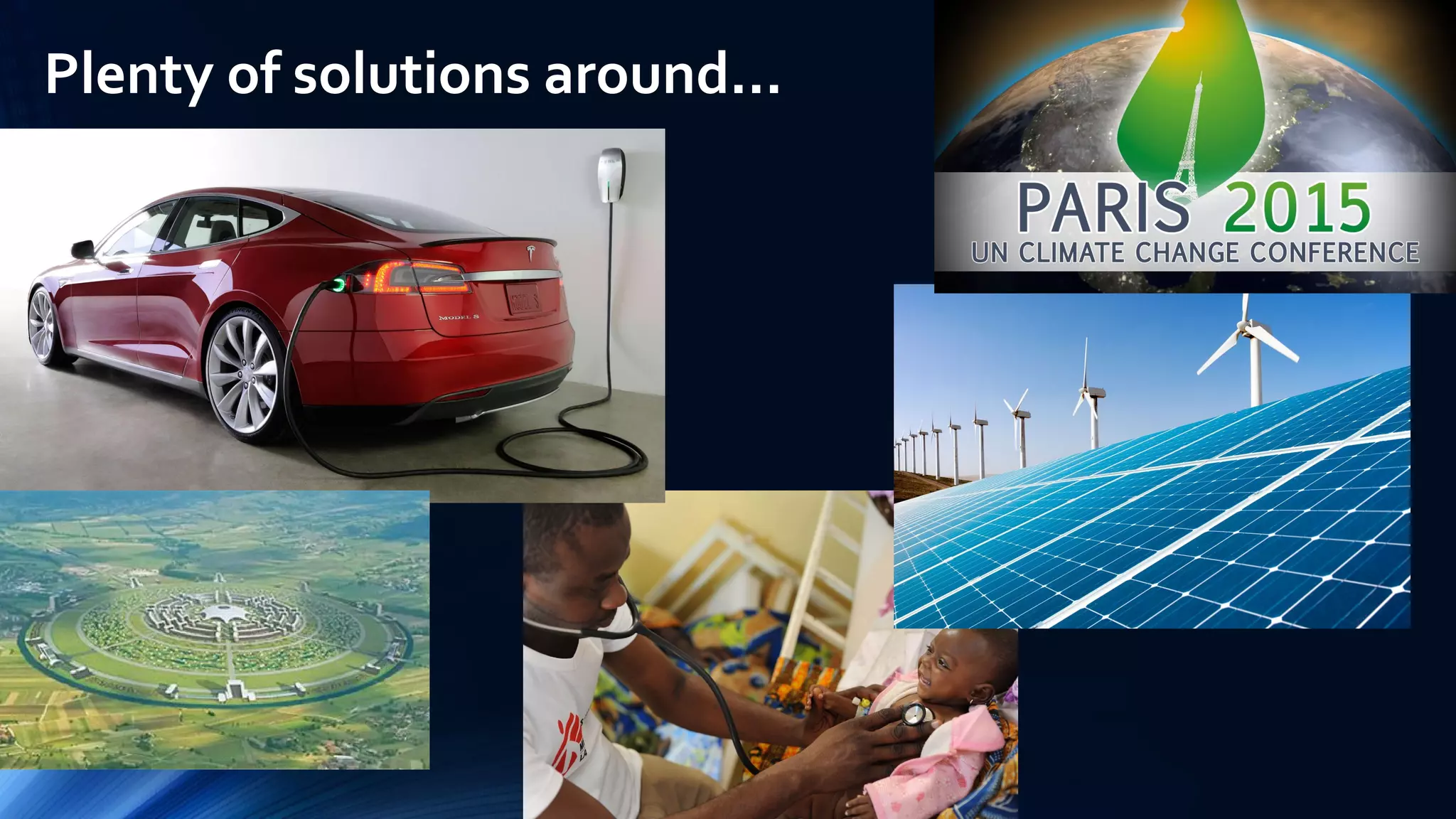
Plenty of solutions around...
93
Thanks!
94
We are hiring!
datatonic.com

Introduction to reinforcement learning