Dengue Virus
Introduction
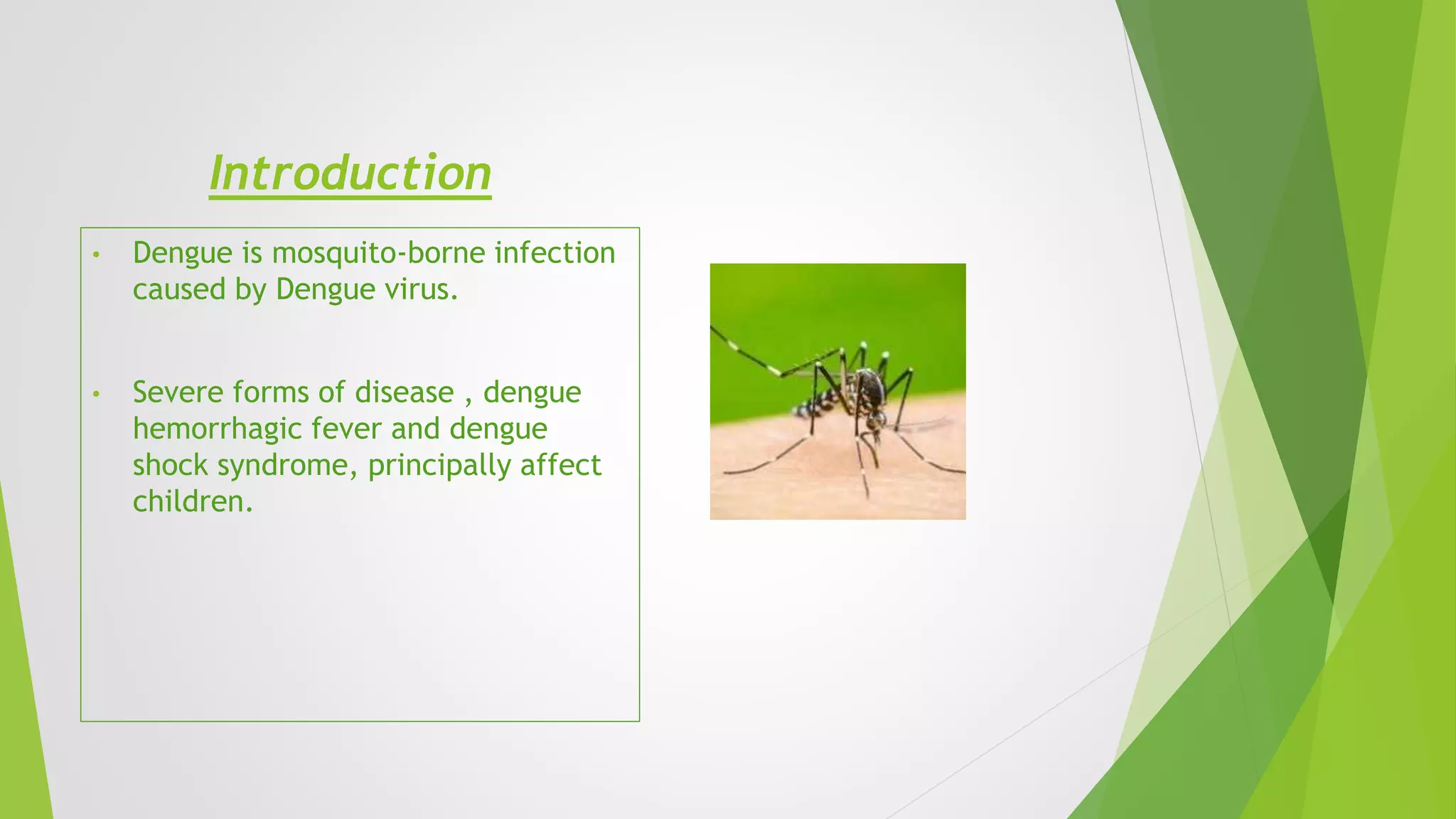
• Dengue is mosquito-borne infection
caused by Dengue virus.
• Severe forms of disease , dengue
hemorrhagic fever and dengue
shock syndrome, principally affect
children.
Introduction
Dengue is transmitted
primarily by Aedes
aegypti mosquitoes.
Introduction
• The first record of a case of probable dengue fever is in a
Chinese medical encyclopedia from the Jin Dynasty (265-420
AD).
• The first recognized Dengue epidemics occurred almost
simultaneously in Asia, Africa, and North America in the 1780s,
shortly after the identification and naming of the disease in
1799.
• The first confirmed case report dates from 1789 and is by
Benjamin Rush, who coined the term “breakbone fever”
because of the symptoms of myalgia and arthralgia.
Introduction
Worldwide dengue
distribution, 2006 Red:
Epidemic dengue.
Blue: Aedes aegypti
Signs and
symptoms
Dengue Fever:
• Sudden onset of High fever
• Severe headache (mostly in the
forehead)
• Pain behind the eyes which
worsens with eye movement
• Body aches and joint pains
• Nausea or vomiting
Signs and
symptoms
Dengue Haemorrhagic Fever:
• Severe abdominal pain.
• Persistent vomiting.
• Bleeding from your gums or nose.
• Blood in your urine, stools or vomit.
• Bleeding under the skin, which
might look like bruising.
• Difficult or rapid breathing.
Treatment for Dengue
Fever
There is no specific medicine to
treat dengue infection. If you
think you may have dengue fever,
you should use pain relievers
with acetaminophen and avoid
medicines with aspirin, which
could worsen bleeding. You should
also rest, drink plenty of fluids,
and see your doctor. If you start to
feel worse in the first 24 hours
after your fever goes down, you
should get to a hospital
immediately to be checked for
complications.
Dengue cases and No. deaths of people
Preventing Dengue
Fever
The best way to prevent the disease is
to prevent bites by infected
mosquitoes, particularly if you are
living in or traveling to a tropical area.
This involves protecting yourself and
making efforts to keep the mosquito
population down. In 2019, the FDA
approved a vaccine called Dengvaxia
to help prevent the disease from
occurring in adolescents aged 9 to 16
who have already been infected by
dengue. But, there currently is no
vaccine to prevent the general
population from contracting it.
How to protect
yourself:
• Use mosquito repellents, even
indoors.
• When outdoors, wear long-sleeved
shirts and long pants tucked into
socks.
• When indoors, use air conditioning
if available.
• Make sure window and door screens
are secure and free of holes. If
sleeping areas are not screened or
air conditioned, use mosquito nets.
• If you have symptoms of dengue,
speak to your doctor.
How to protect yourself :
To reduce the mosquito population,
get rid of places where mosquitoes
can breed. These include old tires,
cans, or flower pots that collect
rain. Regularly change the water in
outdoor bird baths and pets' water
dishes.
If someone in your home gets dengue
fever, be especially vigilant about
efforts to protect yourself and other
family members from mosquitoes.
Mosquitoes that bite the infected
family member could spread the
infection to others in your home.
Garbage mountain at Delhi’s Ghazipur landfill to rise higher
than Taj Mahal by 2020
• India’s tallest rubbish mountain in New Delhi is on
course to rise higher than the Taj Mahal in the next
year, becoming a fetid symbol for what the UN
considers the world’s most polluted capital.
• Hawks and other birds of prey hover around the
towering Ghazipur landfill on the eastern fringe of
New Delhi, stray cows, dogs and rats wander at will
over the huge expanse of smoking filth.
• Taking up the area of more than 40 football pitches,
Ghazipur rises by nearly 10 metres a year with no
end in sight to its foul-smelling growth.
• According to East Delhi’s superintendent engineer
Arun Kumar, it is already more than 65 metres (213
feet) high.
• At its current rate of growth, it will be taller than
the iconic Taj in Agra, some 73 metres high, in 2020.

Introduction to Dengue virus

  • 1.
  • 2.
    Introduction • Dengue ismosquito-borne infection caused by Dengue virus. • Severe forms of disease , dengue hemorrhagic fever and dengue shock syndrome, principally affect children.
  • 3.
  • 4.
    Introduction • The firstrecord of a case of probable dengue fever is in a Chinese medical encyclopedia from the Jin Dynasty (265-420 AD). • The first recognized Dengue epidemics occurred almost simultaneously in Asia, Africa, and North America in the 1780s, shortly after the identification and naming of the disease in 1799. • The first confirmed case report dates from 1789 and is by Benjamin Rush, who coined the term “breakbone fever” because of the symptoms of myalgia and arthralgia.
  • 5.
    Introduction Worldwide dengue distribution, 2006Red: Epidemic dengue. Blue: Aedes aegypti
  • 6.
    Signs and symptoms Dengue Fever: •Sudden onset of High fever • Severe headache (mostly in the forehead) • Pain behind the eyes which worsens with eye movement • Body aches and joint pains • Nausea or vomiting
  • 7.
    Signs and symptoms Dengue HaemorrhagicFever: • Severe abdominal pain. • Persistent vomiting. • Bleeding from your gums or nose. • Blood in your urine, stools or vomit. • Bleeding under the skin, which might look like bruising. • Difficult or rapid breathing.
  • 8.
    Treatment for Dengue Fever Thereis no specific medicine to treat dengue infection. If you think you may have dengue fever, you should use pain relievers with acetaminophen and avoid medicines with aspirin, which could worsen bleeding. You should also rest, drink plenty of fluids, and see your doctor. If you start to feel worse in the first 24 hours after your fever goes down, you should get to a hospital immediately to be checked for complications.
  • 9.
    Dengue cases andNo. deaths of people
  • 10.
    Preventing Dengue Fever The bestway to prevent the disease is to prevent bites by infected mosquitoes, particularly if you are living in or traveling to a tropical area. This involves protecting yourself and making efforts to keep the mosquito population down. In 2019, the FDA approved a vaccine called Dengvaxia to help prevent the disease from occurring in adolescents aged 9 to 16 who have already been infected by dengue. But, there currently is no vaccine to prevent the general population from contracting it.
  • 11.
    How to protect yourself: •Use mosquito repellents, even indoors. • When outdoors, wear long-sleeved shirts and long pants tucked into socks. • When indoors, use air conditioning if available. • Make sure window and door screens are secure and free of holes. If sleeping areas are not screened or air conditioned, use mosquito nets. • If you have symptoms of dengue, speak to your doctor.
  • 12.
    How to protectyourself : To reduce the mosquito population, get rid of places where mosquitoes can breed. These include old tires, cans, or flower pots that collect rain. Regularly change the water in outdoor bird baths and pets' water dishes. If someone in your home gets dengue fever, be especially vigilant about efforts to protect yourself and other family members from mosquitoes. Mosquitoes that bite the infected family member could spread the infection to others in your home.
  • 13.
    Garbage mountain atDelhi’s Ghazipur landfill to rise higher than Taj Mahal by 2020 • India’s tallest rubbish mountain in New Delhi is on course to rise higher than the Taj Mahal in the next year, becoming a fetid symbol for what the UN considers the world’s most polluted capital. • Hawks and other birds of prey hover around the towering Ghazipur landfill on the eastern fringe of New Delhi, stray cows, dogs and rats wander at will over the huge expanse of smoking filth. • Taking up the area of more than 40 football pitches, Ghazipur rises by nearly 10 metres a year with no end in sight to its foul-smelling growth. • According to East Delhi’s superintendent engineer Arun Kumar, it is already more than 65 metres (213 feet) high. • At its current rate of growth, it will be taller than the iconic Taj in Agra, some 73 metres high, in 2020.